



Fingolimod hydrochloride (Standard)
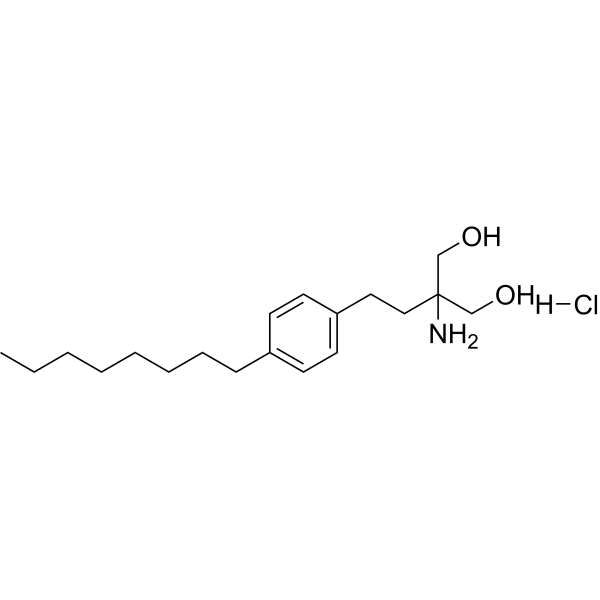
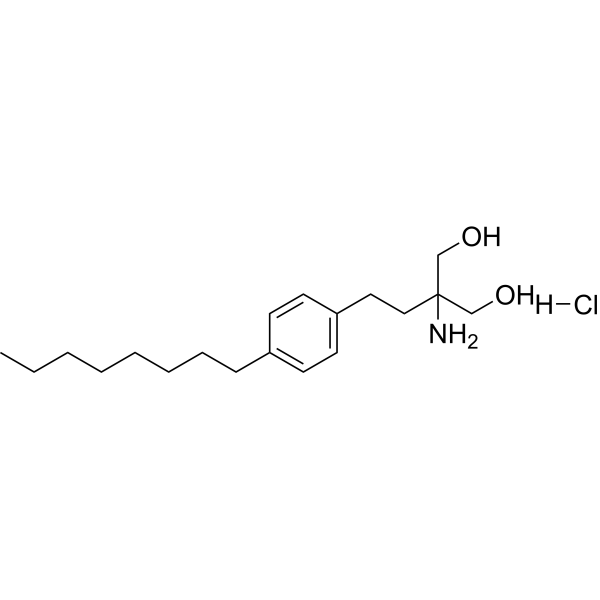
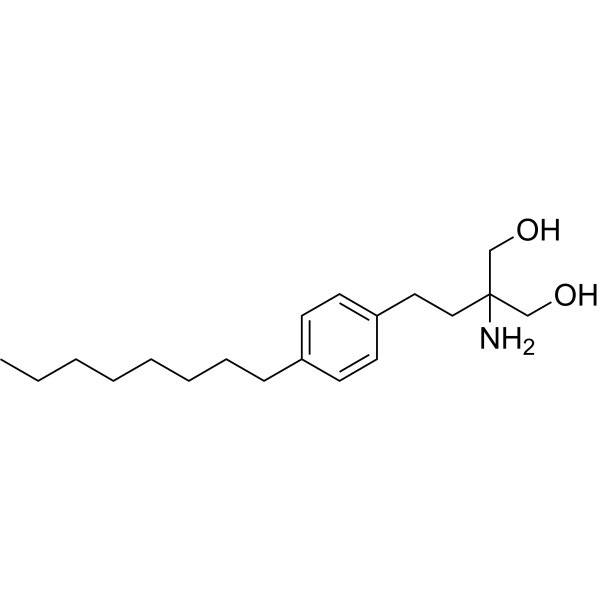
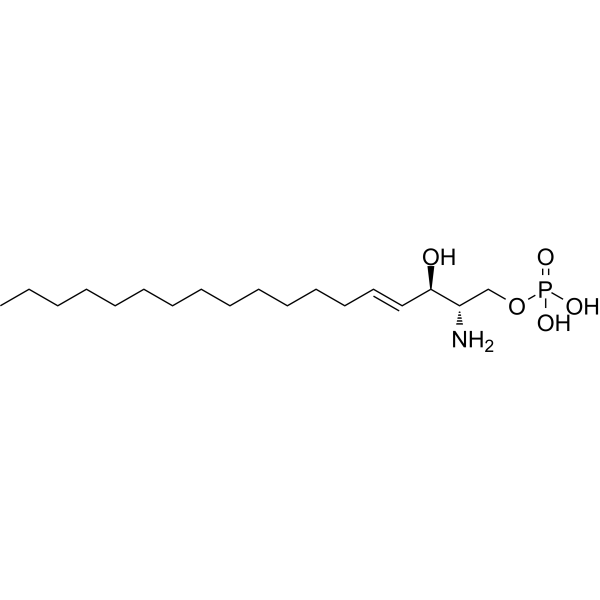
Fingolimod (hydrochloride) (Standard) is the analytical standard of Fingolimod (hydrochloride). This product is intended for research and analytical applications. Fingolimod hydrochloride (FTY720), an analog of sphingosine, is a potent sphingosine 1-phosphate (S1P) receptors modulator. Fingolimod hydrochloride is phosphorylated by sphingosine kinases, particularly by SK2, and then binds S1PR1, 3, 4, and 5. Fingolimod hydrochloride induces the internalization of S1P1, and consequently, inhibits S1P activity. Fingolimod hydrochloride also is a pak1 activator.
For research use only. We do not sell to patients.
- Purity : 98%
- CAS No.: 162359-56-0
- Formula: C19H34ClNO2
- Molecular Weight:343.93
-
Storage:
Please store the product under the recommended conditions in the Certificate of Analysis.

To place orders, for customer services and technical support, please contact: MedChemExpress USA
Tel: 609-228-6898 E-mail: [email protected] [email protected]


-
 Product Information
-
Chemical Information
- Purity & Documentation
-
 Help & FAQs





Product Information
Information
Application
The compound is the grade of analytical standard, which is the reference standard supplied assay. It is commonly used in qualitative, quantitative and methodological research experiments in HPLC, GC and MS.


Chemical Information
-
CAS No. 162359-56-0
-
Molecular Weight 343.93
-
Formula C19H34ClNO2
-
SMILES
OCC(N)(CO)CCC1=CC=C(C=C1)CCCCCCCC.[H]Cl
-
Synonyms
FTY720 (Standard)
-
Shipping
Room temperature in continental US; may vary elsewhere.
-
Storage
Please store the product under the recommended conditions in the Certificate of Analysis.


Purity & Documentation
References
[1]. Rolin J, et al. FTY720 and SEW2871 reverse the inhibitory effect of S1P on natural killer cell mediated lysis of K562 tumor cells and dendritic cells but not on cytokine release. Cancer Immunol Immunother. 2010, 59(4), 575-586. [Content Brief]
[2]. Coldewey SM, et al. Elevation of serum sphingosine-1-phosphate attenuates impaired cardiac function in experimental sepsis. Sci Rep. 2016 Jun 9;6:27594. [Content Brief]
[3]. Cipriani R, et al. FTY720 attenuates excitotoxicity and neuroinflammation. J Neuroinflammation. 2015 May 8;12:86. [Content Brief]
[4]. Arielle M Bryan, et al. Sphingosine-1-phosphate receptors and innate immunity. Cell Microbiol. 2018 May;20(5):e12836. [Content Brief]


Fingolimod hydrochloride (Standard) Related Classifications
HY-12005R Related Classifications
 Powered by Bioz