



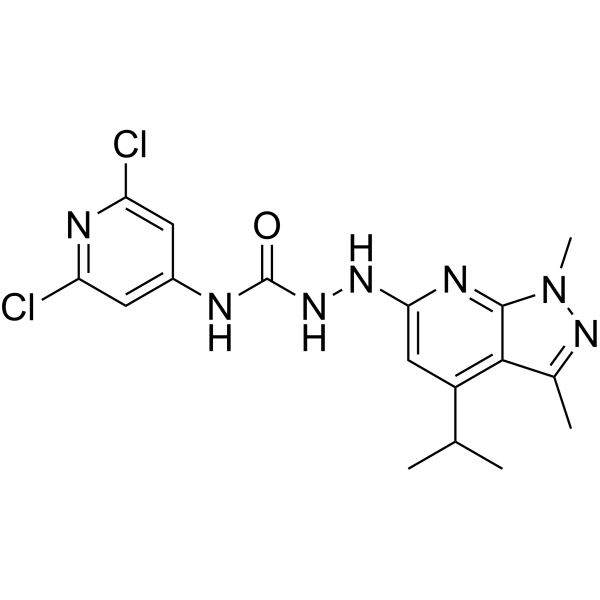
JTE-013
Based on 11 publication(s) in Google Scholar
JTE-013 is a potent and specific S1P2 (Sphingosine-1-Phosphate 2; EDG-5) antagonist. JTE-013 inhibits the specific binding of radiolabeled S1P to human and rat S1P2 with IC50s of 17 nM and 22 nM, respectively.
For research use only. We do not sell to patients.
- Purity : 99.57%
- CAS No.: 383150-41-2
- Formula: C17H19Cl2N7O
- Molecular Weight:408.29
-
Storage:Powder -20°C, 3 years , 4°C, 2 years ; In solvent -80°C, 1 year , -20°C, 6 months

To place orders, for customer services and technical support, please contact: MedChemExpress USA
Tel: 609-228-6898 E-mail: [email protected] [email protected]


-
 Biological Activity
-
Chemical Information
-
Solvent & Solubility
- Purity & Documentation
- References
-
 Help & FAQs


-
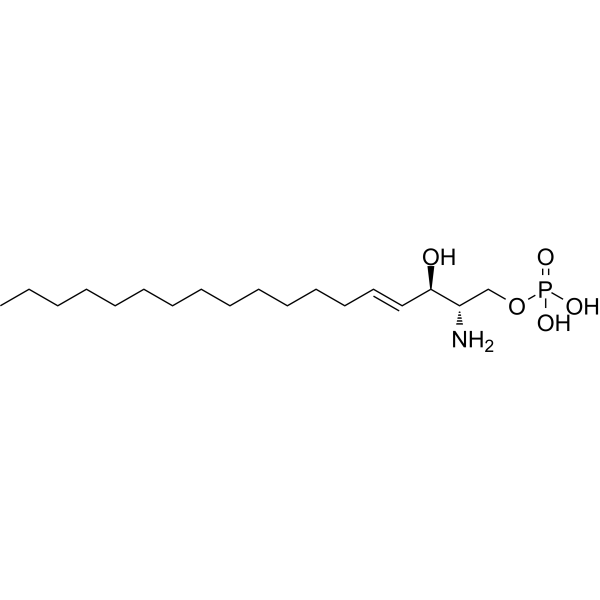
HY-108496
Sphingosine-1-phosphateS1PR Agonist -
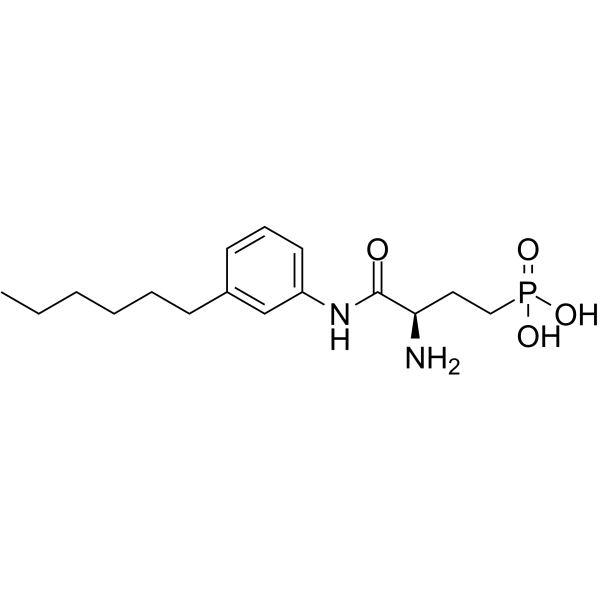
HY-101395
W146S1PR1 Antagonist -
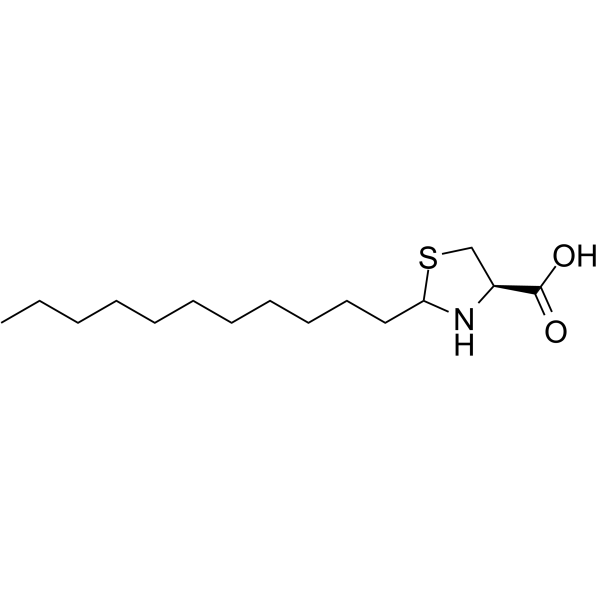
HY-119401
CAY10444S1P3 Antagonist -
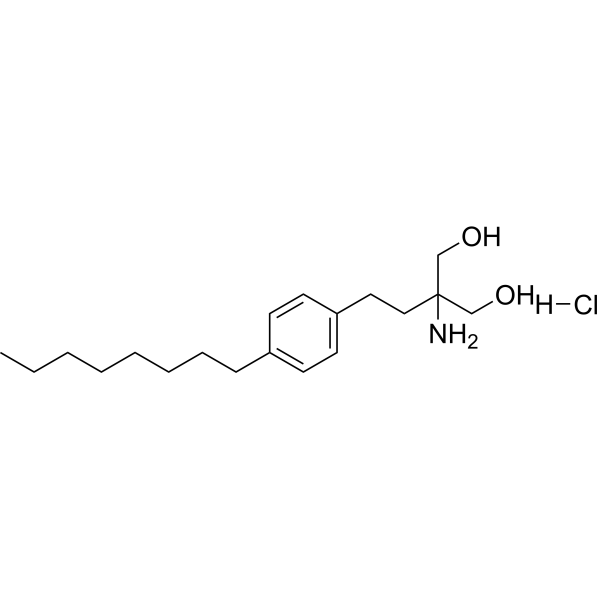
HY-12005
Fingolimod hydrochlorideS1P Receptors Modulator -
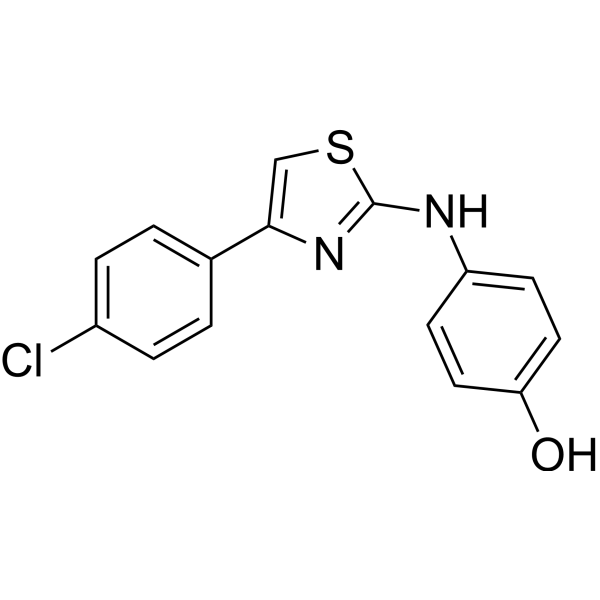
HY-13822
SKI IISphK/DES1 Inhibitor -
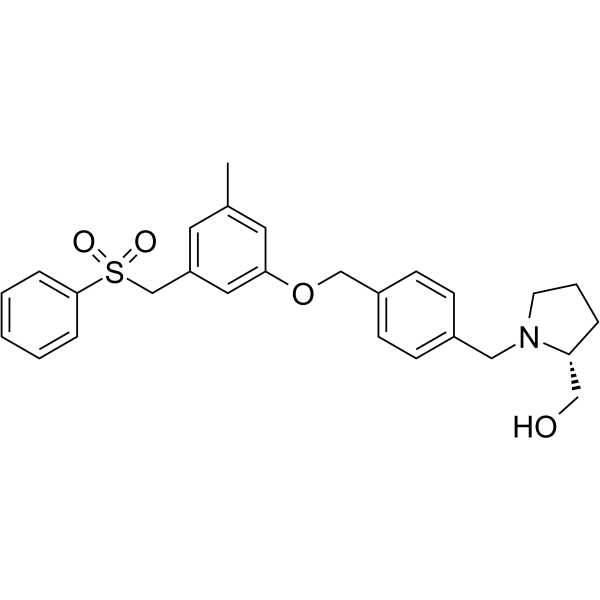
HY-15425
PF-543SPHK1 Inhibitor -
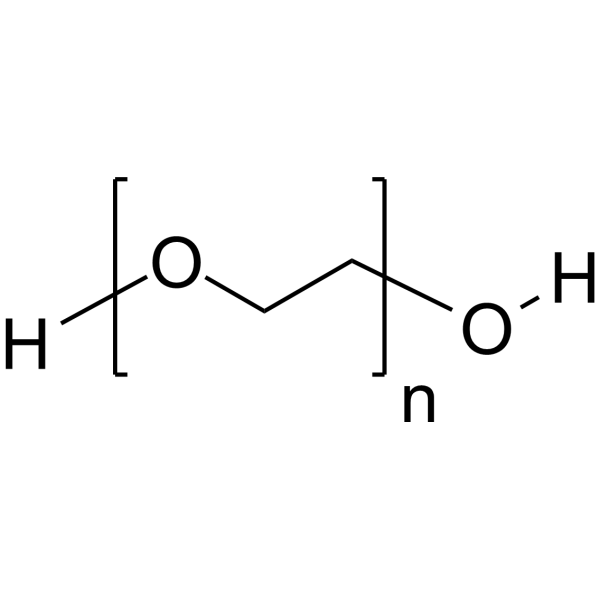
HY-Y0873
PEG300Neutral Polymer -
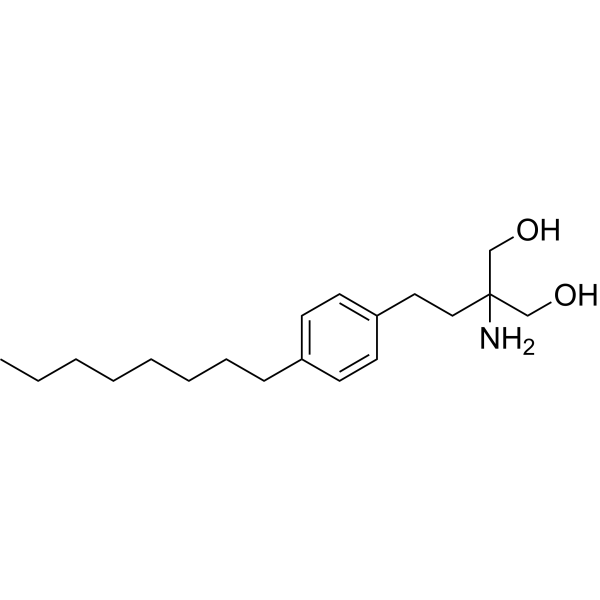
HY-11063
FingolimodS1P Antagonist -
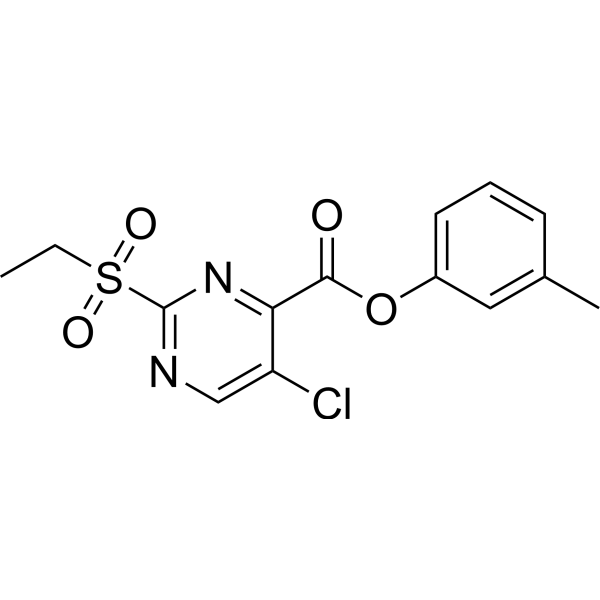
HY-111534
SBI-115TGR5 (GPCR19) Antagonist -
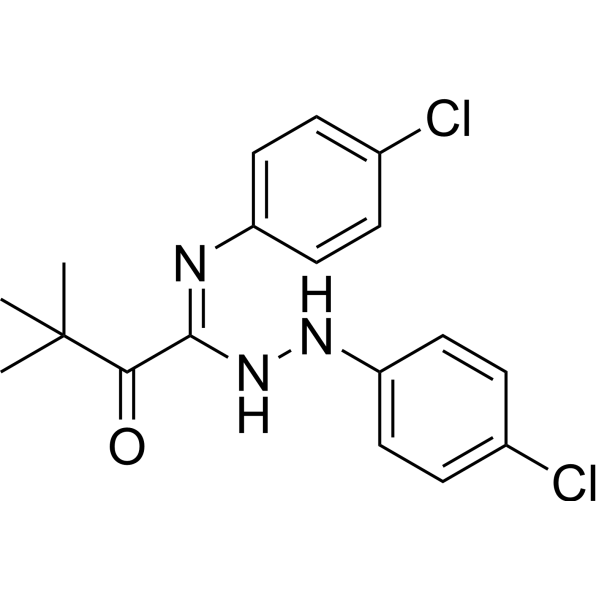
HY-19736
TY-52156LPL Receptor Antagonist -
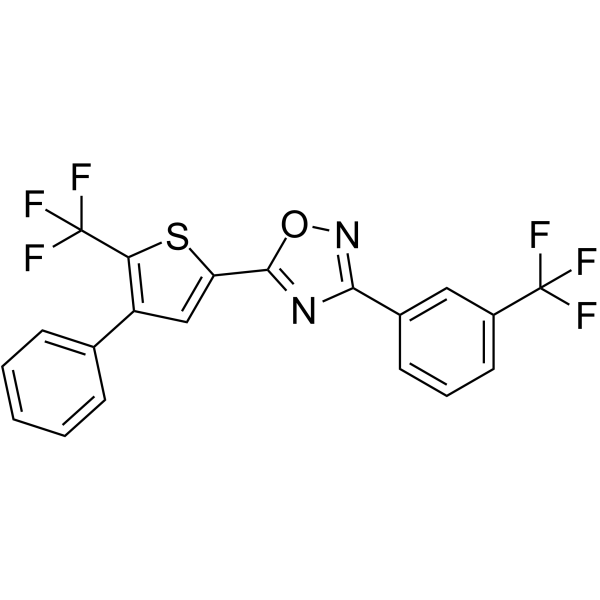
HY-W008947
SEW2871S1P1 Agonist -
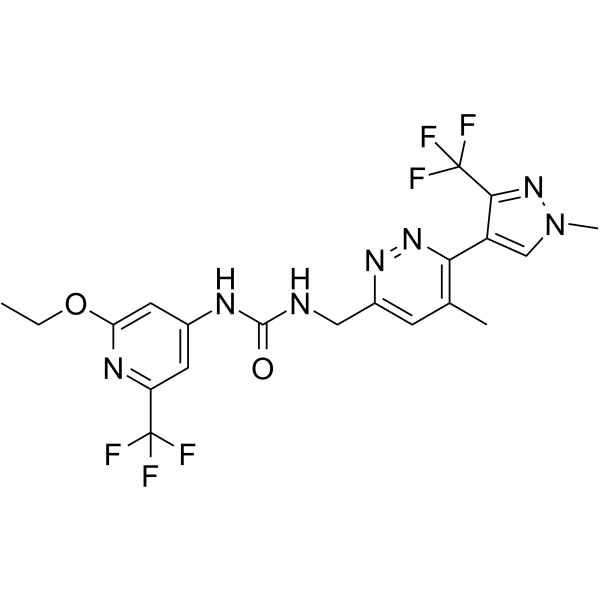
HY-139310
GLPG2938S1P2 Antagonist
Publications Citing Use of MedChemExpress (MCE) JTE-013
More- Cancer Commun (Lond). 2025 Jul 16. [Abstract]
- Autophagy. 2025 Apr 3. [Abstract]
- Nat Commun. 2023 Mar 9;14(1):1305. [Abstract]
- J Control Release. 2025 Oct 6;388(Pt 1):114278. [Abstract]
- Cell Commun Signal. 2024 Aug 7;22(1):391. [Abstract]
- Phytomedicine. 2025 Sep 19:148:157271. [Abstract]
- Br J Pharmacol. 2026 Jul 14.
- Br J Pharmacol. 2025 Dec 30. [Abstract]
- PeerJ. 2024 Jan 16:12:e16744. [Abstract]
- Discov Oncol. 2023 Jan 11;14(1):4. [Abstract]
- Exp Ther Med. 2018 Jun;15(6):5007-5016. [Abstract]
 Customer Validation & Images

-
Cell Proliferation/Viability Assay
-
Cell Proliferation/Viability Assay
-
Cell Proliferation/Viability Assay


Biological Activity
Description
IC50 & Target
IC50: 17 nM (S1P2 for human) and 22 nM (S1P2 for rat)[1]
Cellular Effect
|
Cell Line

|
Type | Value | Description | References |
|---|---|---|---|---|
| Caco-2 | CC50 |
16.45 μM
Compound: JTE-013
|
Toxicity against Caco-2 cells determined at 48 hours by intracellular ATP concentration using the CellTiter-Glo Luminescent Cell Viability Assay
Toxicity against Caco-2 cells determined at 48 hours by intracellular ATP concentration using the CellTiter-Glo Luminescent Cell Viability Assay
|
10.21203/rs.3.rs-23951/v1 |
| Caco-2 | IC50 |
5.97 μM
Compound: JTE-013
|
Determination of IC50 values for inhibition of SARS-CoV-2 induced cytotoxicity of Caco-2 cells after 48 hours by high content imaging
Determination of IC50 values for inhibition of SARS-CoV-2 induced cytotoxicity of Caco-2 cells after 48 hours by high content imaging
|
10.21203/rs.3.rs-23951/v1 |
| HCT-116 | EC50 |
17.13 μM
Compound: JTE-013
|
Reversal of 5-FU resistance against human HCT-116 cells overexpressing DPD assessed as inhibition of cell proliferation measured after 72 hrs in presence of 5-FU by MTT assay
Reversal of 5-FU resistance against human HCT-116 cells overexpressing DPD assessed as inhibition of cell proliferation measured after 72 hrs in presence of 5-FU by MTT assay
|
[PMID: 34411894] |
| HCT-116 | EC50 |
18.28 μM
Compound: JTE-013
|
Reversal of 5-FU resistance against 5-FU resistant DPD expressed human HCT-116 cells assessed as reduction in cell viability incubated for 48 hrs in presence of 5-FU by MTT assay
Reversal of 5-FU resistance against 5-FU resistant DPD expressed human HCT-116 cells assessed as reduction in cell viability incubated for 48 hrs in presence of 5-FU by MTT assay
|
[PMID: 34688013] |
| NCM460 | EC50 |
61.34 μM
Compound: JTE-013
|
Cytotoxicity against human NCM460 cells assessed as cell viability measured after 72 hrs in presence of 5-FU by MTT assay
Cytotoxicity against human NCM460 cells assessed as cell viability measured after 72 hrs in presence of 5-FU by MTT assay
|
[PMID: 34411894] |
| SW620/5-FU | EC50 |
58.58 μM
Compound: JTE-013
|
Reversal of 5-FU resistance against human SW620/5-FU cells assessed as inhibition of cell proliferation measured after 72 hrs in presence of 5-FU by MTT assay
Reversal of 5-FU resistance against human SW620/5-FU cells assessed as inhibition of cell proliferation measured after 72 hrs in presence of 5-FU by MTT assay
|
[PMID: 34411894] |
| SW620/5-FU | EC50 |
58.58 μM
Compound: JTE-013
|
Reversal of 5-FU resistance against human SW620/5-FU cells assessed as reduction in cell viability incubated for 48 hrs in presence of 5-FU by MTT assay
Reversal of 5-FU resistance against human SW620/5-FU cells assessed as reduction in cell viability incubated for 48 hrs in presence of 5-FU by MTT assay
|
[PMID: 34688013] |
In Vitro
JTE-013 (50-200 μM; 1-3 days) reduces cell viability[1].
JTE-013 (10-1000 nM; 30 mins) reverses S1P-induced Akt inhibition and inhibits S1P-induced ERK activation[1].
JTE-013 displays 4.2% inhibition of S1P3 and does not antagonize S1P1 at concentrations up to 10 μM[1].
MedChemExpress (MCE) has not independently confirmed the accuracy of these methods. They are for reference only. .
-
Cell Line:SK-N-AS cells
-
Concentration:50, 100, 150, 200 μM
-
Incubation Time:1-3 days
-
Result:Reduced cell viability.
-
Cell Line:SK-N-AS cells
-
Concentration:10, 100, 1000 nM
-
Incubation Time:30 mins
-
Result:Reversed S1P-induced Akt inhibition and inhibited S1P-induced ERK activation.
In Vivo
MedChemExpress (MCE) has not independently confirmed the accuracy of these methods. They are for reference only.
-
Animal Model:Six-week-old female athymic NCr-nu/nu nude mice[1]
-
Dosage:30 mg/kg
-
Administration:Gavage; daily for 14 consecutive days
-
Result:Reduced tumor size and tumor weight.


Chemical Information
-
CAS No. 383150-41-2
-
Appearance Solid
-
Molecular Weight 408.29
-
Formula C17H19Cl2N7O
-
Color White to off-white
-
SMILES
CC(C1=C2C(N(C)N=C2C)=NC(NNC(NC3=CC(Cl)=NC(Cl)=C3)=O)=C1)C
-
Shipping
Room temperature in continental US; may vary elsewhere.
-
Storage
Powder -20°C 3 years 4°C 2 years In solvent -80°C 1 year -20°C 6 months


Publications (11)
-
Journal Impact Factor
-
Most Recent
-
Cancer Commun (Lond)
Targeting SPHK1 in macrophages remodels the tumor microenvironment and enhances anti-PD-1 immunotherapy efficacy in colorectal cancer liver metastasis. [Abstract]2025 Jul 16. PMID: 40665874 -
Autophagy
Mitophagy-mediated S1P facilitates muscle adaptive responses to endurance exercise through SPHK1-S1PR1/S1PR2 in slow-twitch myofibers. [Abstract]2025 Apr 3. PMID: 40181214 -
Nat Commun
Gut microbiota alters host bile acid metabolism to contribute to intrahepatic cholestasis of pregnancy. [Abstract]2023 Mar 9;14(1):1305. PMID: 36894566 -
J Control Release
Fibrotic collagen-targeted delivery system blocks pancreatic intercellular crosstalk to alleviate pancreatic fibrosis. [Abstract]2025 Oct 6;388(Pt 1):114278. PMID: 41045968 -
Cell Commun Signal
Concomitant targeting of FLT3 and SPHK1 exerts synergistic cytotoxicity in FLT3-ITD+ acute myeloid leukemia by inhibiting β-catenin activity via the PP2A-GSK3β axis. [Abstract]2024 Aug 7;22(1):391. PMID: 39113090 -
Phytomedicine
Alisol A 24-acetate protects against NASH-associated fibrosis via suppression of Kupffer cell-derived SPHK1/S1P axis. [Abstract]2025 Sep 19:148:157271. PMID: 40992063 -
-
Br J Pharmacol
Inhibition of sphingosine-1-phosphate receptor-2 attenuates chronic gastritis via blocking nuclear translocation of S1P2 receptors in epithelial cells. [Abstract]2025 Dec 30. PMID: 41472315 -
PeerJ
Reversal of cholestatic liver disease by the inhibition of sphingosine 1-phosphate receptor 2 signaling. [Abstract]2024 Jan 16:12:e16744. PMID: 38250717 -
Discov Oncol
Sphingosine 1-phosphate receptor 2 promotes the onset and progression of non-alcoholic fatty liver disease-related hepatocellular carcinoma through the PI3K/AKT/mTOR pathway. [Abstract]2023 Jan 11;14(1):4. PMID: 36631680
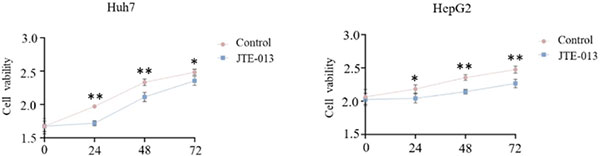
JTE-013 purchased from MedChemExpress. Usage Cited in: Discov Oncol. 2023 Jan 11;14(1):4. [Abstract]
JTE-013 (0, 24, and 48 h) significantly inhibits the growth rate of Huh7 and HepG2 cells.
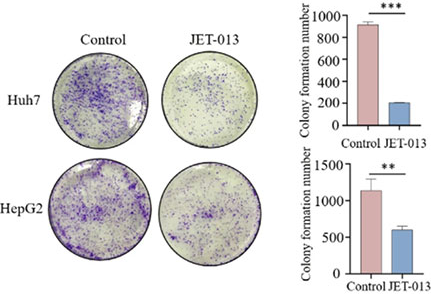
JTE-013 purchased from MedChemExpress. Usage Cited in: Discov Oncol. 2023 Jan 11;14(1):4. [Abstract]
JTE-013 significantly inhibits the proliferation ability of HCC cells.
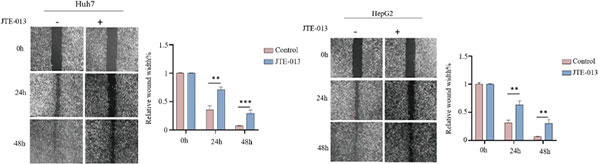
JTE-013 purchased from MedChemExpress. Usage Cited in: Discov Oncol. 2023 Jan 11;14(1):4. [Abstract]
JTE-013 significantly inhibits the proliferation and invasive ability of HCC cells.
-
Exp Ther Med
SPHK1 promotes metastasis of thyroid carcinoma through activation of the S1P/S1PR3/Notch signaling pathway. [Abstract]2018 Jun;15(6):5007-5016. PMID: 29805524


Solvent & Solubility
In Vitro:
DMSO : 100 mg/mL (244.92 mM; Need ultrasonic; Hygroscopic DMSO has a significant impact on the solubility of product, please use newly opened DMSO)
Please refer to the solubility information to select the appropriate solvent. Once prepared, please aliquot and store the solution to prevent product inactivation from repeated freeze-thaw cycles.
Storage method and period of stock solution: -80°C, 1 year; -20°C, 6 months. When stored at -80°C, please use it within 1 year. When stored at -20°C, please use it within 6 months.
Please refer to the solubility information to select the appropriate solvent. Once prepared, please aliquot and store the solution to prevent product inactivation from repeated freeze-thaw cycles.
Storage method and period of stock solution: -80°C, 1 year; -20°C, 6 months. When stored at -80°C, please use it within 1 year. When stored at -20°C, please use it within 6 months.
Concentration (start) × Volume (start) = Concentration (final) × Volume (final)
In Vivo:
Select the appropriate dissolution method based on your experimental animal and administration route.
- For the following dissolution methods, please ensure to first prepare a clear stock solution using an In Vitro approach and then sequentially add co-solvents:
- To ensure reliable experimental results, the clarified stock solution can be appropriately stored based on storage conditions. As for the working solution for In Vivo experiments, it is recommended to prepare freshly and use it on the same day.
- The percentages shown for the solvents indicate their volumetric ratio in the final prepared solution. If precipitation or phase separation occurs during preparation, heat and/or sonication can be used to aid dissolution.
Add each solvent one by one: 10% DMSO 40% PEG300 5% Tween-80 45% Saline
Solubility: ≥ 2.5 mg/mL (6.12 mM); Clear solution
This protocol yields a clear solution of ≥ 2.5 mg/mL (saturation unknown).
Taking 1 mL working solution as an example, add 100 μL DMSO stock solution (25.0 mg/mL) to 400 μL PEG300, and mix evenly; then add 50 μL Tween-80 and mix evenly; then add 450 μL Saline to adjust the volume to 1 mL.
Preparation of Saline: Dissolve 0.9 g sodium chloride in ddH₂O and dilute to 100 mL to obtain a clear Saline solution.
In Vivo Dissolution Calculator
Please enter the basic information of animal experiments:
-
-
-
-
Recommended: Prepare an additional quantity of animals to account for potential losses during experiments.
Please enter your animal formula composition:
-
%DMSO +
Recommended: Keep the proportion of DMSO in working solution below 2% if your animal is weak.
-
%+
-
+%Tween-80 + +
-
%Saline +
The co-solvents required include: DMSO, . All of co-solvents are available by MedChemExpress (MCE). , Tween 80. All of co-solvents are available by MedChemExpress (MCE).
Working solution concentration: 0.22 mg/mL
Method for preparing stock solution: mg drug dissolved in μL DMSO. Stock solution concentration: mg/mL.
1. Take μL DMSO stock solution;
2. Add μL .
μL , mix evenly;
3. Then add μL Tween 80, mix evenly;
4. Then add μL
Please ensure that the stock solution in the first step is dissolved to a clear state, and add co-solvents in sequence. You can use ultrasonic heating (ultrasonic cleaner, recommended frequency 20-40 kHz), vortexing, etc. to assist dissolution.


Purity & Documentation
-
Data Sheet (275 KB)
-
SDS (480 KB)
- English - EN (480 KB)
- Français - FR (480 KB)
- Deutsch - DE (480 KB)
- Norwegian - NO (480 KB)
- Español - ES (480 KB)
- Swedish - SV (480 KB)
- Italian - IT (480 KB)
- Korean - KR (480 KB)
- Portuguese - PT (480 KB)
-
Handling Instructions (2659 KB)
References


Complete Stock Solution Preparation Table
Please refer to the solubility information to select the appropriate solvent. Once prepared, please aliquot and store the solution to prevent product inactivation from repeated freeze-thaw cycles.
Storage method and period of stock solution: -80°C, 1 year; -20°C, 6 months. When stored at -80°C, please use it within 1 year. When stored at -20°C, please use it within 6 months.
| Optional Solvent | Concentration Solvent Mass | 1 mg | 5 mg | 10 mg | 25 mg |
|---|---|---|---|---|---|
| DMSO | 1 mM | 2.4492 mL | 12.2462 mL | 24.4924 mL | 61.2310 mL |
| 5 mM | 0.4898 mL | 2.4492 mL | 4.8985 mL | 12.2462 mL | |
| 10 mM | 0.2449 mL | 1.2246 mL | 2.4492 mL | 6.1231 mL | |
| 15 mM | 0.1633 mL | 0.8164 mL | 1.6328 mL | 4.0821 mL | |
| 20 mM | 0.1225 mL | 0.6123 mL | 1.2246 mL | 3.0615 mL | |
| 25 mM | 0.0980 mL | 0.4898 mL | 0.9797 mL | 2.4492 mL | |
| 30 mM | 0.0816 mL | 0.4082 mL | 0.8164 mL | 2.0410 mL | |
| 40 mM | 0.0612 mL | 0.3062 mL | 0.6123 mL | 1.5308 mL | |
| 50 mM | 0.0490 mL | 0.2449 mL | 0.4898 mL | 1.2246 mL | |
| 60 mM | 0.0408 mL | 0.2041 mL | 0.4082 mL | 1.0205 mL | |
| 80 mM | 0.0306 mL | 0.1531 mL | 0.3062 mL | 0.7654 mL | |
| 100 mM | 0.0245 mL | 0.1225 mL | 0.2449 mL | 0.6123 mL |


JTE-013 Related Classifications
HY-100675 Related Classifications
 Powered by Bioz