



PI3K
Phosphoinositide 3-kinase
PI3K (Phosphoinositide 3-kinase), via phosphorylation of the inositol lipid phosphatidylinositol 4,5-bisphosphate (PI(4,5)P2), forms the second messenger molecule phosphatidylinositol (3,4,5)-trisphosphate (PI(3,4,5)P3) which recruits and activates pleckstrin homology domain containing proteins, leading to downstream signalling events crucial for proliferation, survival and migration. Class I PI3K enzymes consist of four distinct catalytic isoforms, PI3Kα, PI3Kβ, PI3Kδ and PI3Kγ.
There are three major classes of PI3K enzymes, being class IA widely associated to cancer. Class IA PI3K are heterodimeric lipid kinases composed of a catalytic subunit (p110α, p110β, or p110δ; encoded by PIK3CA, PIK3CB, and PIK3CD genes, respectively) and a regulatory subunit (p85).
The PI3K pathway plays an important role in many biological processes, including cell cycle progression, cell growth, survival, actin rearrangement and migration, and intracellular vesicular transport.
PI3K Isoform Specific Products
-
PI3Kα
(240)
View all products
-
PI3Kβ
(165)
View all products
-
PI3Kγ
(185)
View all products
-
PI3Kδ
(205)
View all products
-
PI3KC2α
(8)
View all products
-
PI3KC2β
(12)
View all products
-
PI3KC2γ
(4)
View all products
-
Vps34
(25)
View all products
-
PI3K
(671)
View all products
-
PI3KC3
(1)
View all products
-
p120γ
(1)
View all products
All Product Categories
-
PI3K Inhibitors
(881)
View all products
-
PI3K Agonists
(9)
View all products
-
PI3K Antagonist
(1)
View all products
-
PI3K Activators
(133)
View all products
-
PI3K Modulators
(23)
View all products
-
PI3K Inducers
(3)
View all products
-
PI3K Degraders
(7)
View all products
-
PI3K Controls
(4)
View all products
-
PI3K Substrate
(1)
View all products
-
PI3K Ligands
(9)
View all products
-
PI3K Related Products (1133)
Related Products (1133)

-
Antibodies (16)
-
PI3K Signaling Pathway
-
PI3K Isoform Comparison
-
PI3Kα-IN-32
 0 ImagesCat. No.: HY-183285CAS No.: 3057582-20-1
-
LC-MG-10
 0 ImagesCat. No.: HY-184322LC-MG-10 is a selective molecular glue degrader targeting FGFR2, with a DC50 of 230.2 nM in KATO III cells. LC-MG-10 induces proteasomal degradation of FGFR2 via a covalent molecular glue mechanism. LC-MG-10 inhibits cancer cell proliferation. LC-MG-10 suppresses FGFR2-mediated PI3K/AKT and MAPK/ERK signaling pathways. LC-MG-10 can be used in studies related to gastric cancer.

-
MCX 28
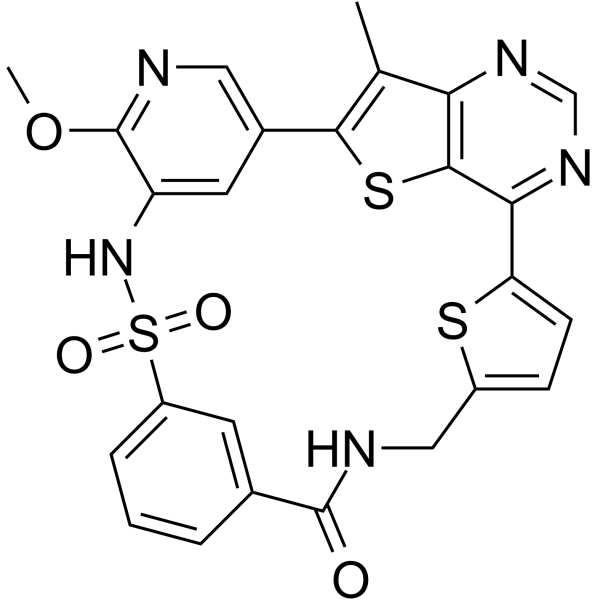 0 ImagesCat. No.: HY-139832CAS No.: 1414453-58-9MCX 28, a triple PI3K/mTOR/PIM inhibitor, displays low nanomolar activity.
-
(+)-Nortrachelogenin
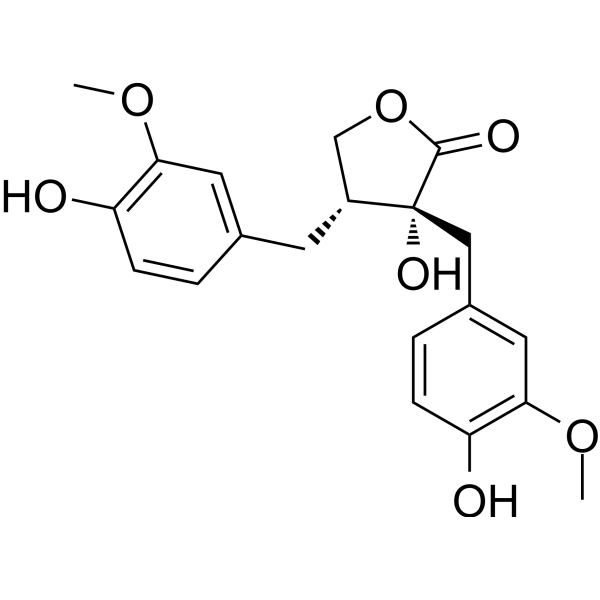 0 ImagesSynonyms: Wikstromol(+)-Nortrachelogenin (Wikstromol), a pharmacologically ligand from from wikstroemia indica, possesses antileukemic activity.
-
Desmethyl-VS-5584
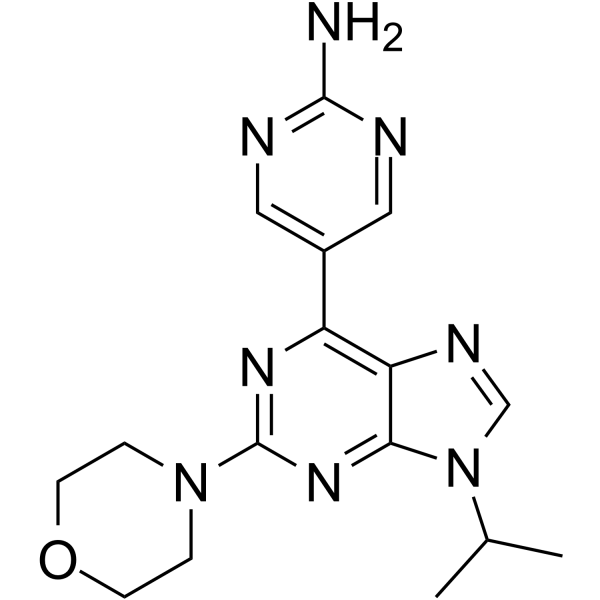 0 ImagesCat. No.: HY-101776CAS No.: 1246535-95-4Synonyms: Desmethyl-SB2343Desmethyl-VS-5584 is a dimethyl analog of VS-5584 which is an potent and selective mTOR/PI3K dual inhibitor with pyrido [2,3-d] pyrimidine structure.
-
Topoisomerase I-IN-25
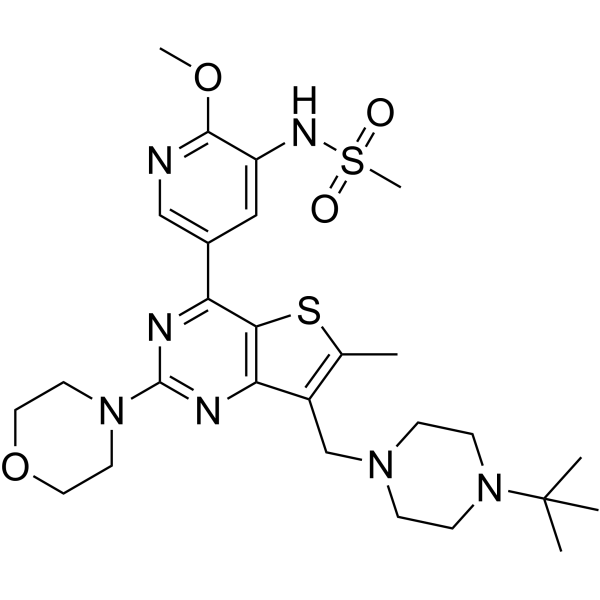
 0 ImagesCat. No.: HY-189630Topoisomerase I-IN-25 is a moderate inhibitor of Topoisomerase I-mediated DNA relaxation. Topoisomerase I-IN-25 inhibits the cAMP-PKA-CREB and PI3K-AKT-mTOR signaling pathways. Topoisomerase I-IN-25 downregulates Bcl-2, upregulates Bax, and induces Apoptosis, G2/M phase arrest, mitochondrial dysfunction, and reactive oxygen species accumulation. Topoisomerase I-IN-25 exhibits anticancer activity against hepatocellular carcinoma. Topoisomerase I-IN-25 can be used for research on hepatocellular carcinoma.
-
ALK/PI3K/AKT-IN-1
 0 ImagesCat. No.: HY-173007CAS No.: 3050831-84-7ALK/PI3K/AKT-IN-1 (Compound 45) inhibits the proliferation of cancer cell A549, H1975 and PC9 with an IC50 of 0.44, 0.83 and 1.51 μM. ALK/PI3K/AKT-IN-1 increases the expression of p21 and p27, inhibits the activity of CDK2 and p-Rb, arrests the cell cycle at G1 phase. ALK/PI3K/AKT-IN-1 inhibits the ALK/PI3K/AKT signaling pathway, promotes the depolarization of mitochondrial membrane potential, and inducing apoptosis in A549 cell. ALK/PI3K/AKT-IN-1 inhibits the formation and growth of A549 cell spheroids.
-
6-O-Isobutyrylbritannilactone
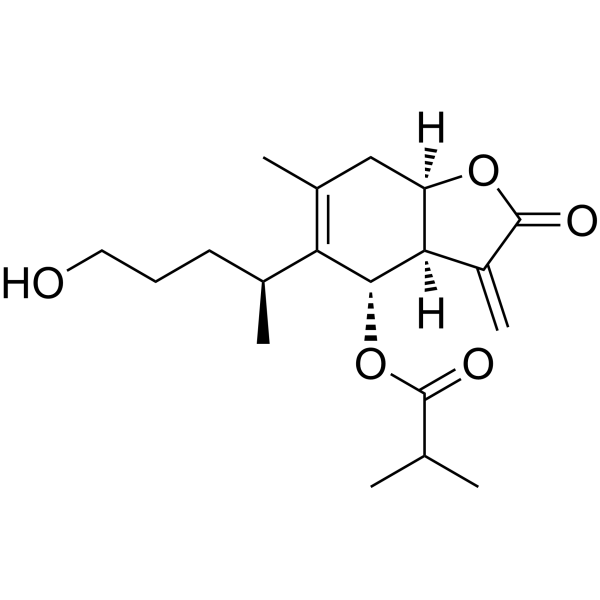 0 Images6-O-Isobutyrylbritannilactone is a natural melanogenesis inhibitor. 6-O-Isobutyrylbritannilactone, a sesquiterpene, can be isolated from the flowers of Inula britannica. 6-O-Isobutyrylbritannilactone inhibits IBMX (HY-12318)-induced melanin production in B16F10 cells. 6-O-Isobutyrylbritannilactone also regulates ERK, PI3K/AKT, and CREB, shows antimelanogenic activity in zebrafish embryos models.
-
PI3Kδ/HDAC6-IN-1
 0 ImagesCat. No.: HY-174396CAS No.: 3075011-99-0PI3Kδ/HDAC6-IN-1 (Compound 22E) is an orally active and dual inhibitor of PI3Kδ and HDAC6 with IC50 values of 2.4 nM and 6.2 nM, respectively. PI3Kδ/HDAC6-IN-1 exhibits potent antiproliferative effects on non-Hodgkin lymphoma (NHL) cells and possesses in vivo antitumor activity without significant toxicity. PI3Kδ/HDAC6-IN-1 arrests the cell cycle at the G0/G1 phase and induces apoptosis. PI3Kδ/HDAC6-IN-1 blocks the PI3K/AKT/mTOR signaling pathway and increases the acetylation levels of α-tubulin and histone H3.
-
PP162
 0 ImagesCat. No.: HY-134469CAS No.: 1092788-97-0PP162 is a selective DNA-dependent protein kinase (DNA-PK) inhibitor with an IC50 of 53 nM. PP162 selectively inhibits DNA-PK by binding to a conserved hydrophobic pocket. PP162 exhibits weak inhibitory activity against various tyrosine kinases and PI3K family members. PP162 can be used for research on selective kinase targeting.
-
PI3Kδ-IN-21
 0 ImagesCat. No.: HY-158688CAS No.: 3048633-11-7PI3Kδ-IN-21 (Compound 31) is a selective inhibitor for phosphoinositide 3-kinases δ (PI3Kδ), with an IC50 of 13.6 nM. PI3Kδ-IN-21 inhibits proliferation and differentation of T cells through PI3K/AKT/mTOR signaling pathway. PI3Kδ-IN-21 exhibits good pharmacokinetic characters in rat model, and attenuates the experimental autoimmune encephalomyelitis in myelin oligodendrocyte glycoprotein (MOG)-induced EAE model.
-
Dimethoxycurcumin-d6
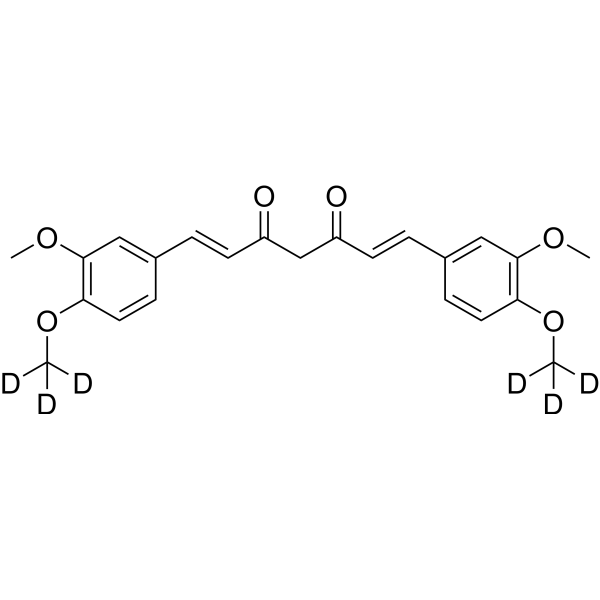 0 ImagesCat. No.: HY-100977SCAS No.: 3006902-95-7Synonyms: DiMC-d6; CHC 004-d6; Di-O-methylcurcumin-d6Dimethoxycurcumin-d6 (DiMC-d6; CHC 004-d6; Di-O-methylcurcumin-d6) is the deuterated-labeled Dimethoxycurcumin (HY-100977). Dimethoxycurcumin (DiMC) is a curcuminoid compound found in Curcuma longa. Dimethoxycurcumin is also an orally active thioredoxin reductase inhibitor (IC50 = 5.4 μM) and androgen receptor antagonist. Dimethoxycurcumin inhibits thioredoxin reductase, leading to oxidized thioredoxin accumulation, ROS production, DNA damage, glutathione depletion, mitochondrial membrane potential decrease, ATP depletion, S phase arrest, and apoptosis. Dimethoxycurcumin inhibits NF-κB, NADPH oxidase subunits, ATP synthase subunits, CDK4, cyclin-D1, FASN, ACC, and the IRS2-PI3K-Akt pathway, while activating AMPK, ERK, and JNK. Dimethoxycurcumin can be used for research on cancer, arsenic-induced hepatotoxicity, and tuberculosis.
-
PI3K-IN-19 hydrochloride
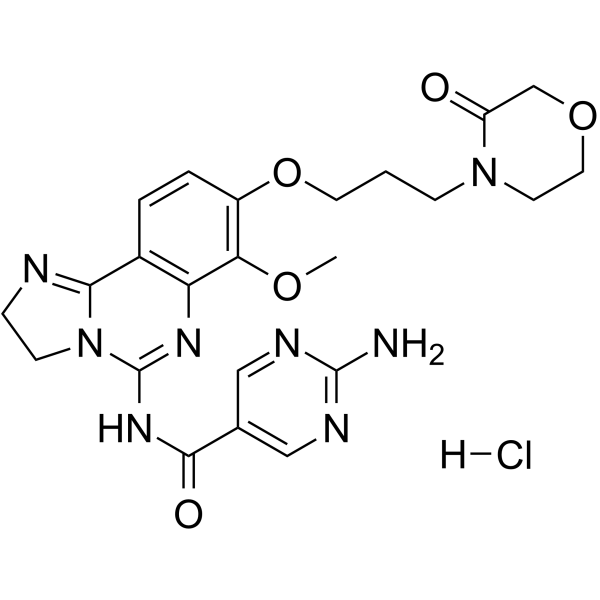 0 ImagesCat. No.: HY-141690ACAS No.: 2132943-80-5PI3K-IN-19 hydrochloride is a phosphotidylinositol-3-kinase (PI3K) inhibitor extracted from patent WO2017153220, step 5.
-
5,4'-Dihydroxy-6,8-dimethoxy-7-O-rhamnosyl flavone
 0 ImagesCat. No.: HY-N12959CAS No.: 927406-46-0Synonyms: DDR5,4'-Dihydroxy-6,8-dimethoxy-7-O-rhamnosyl flavone (DDR) is an anticancer agent that can be extracted from Indigofera ovata. 5,4'-Dihydroxy-6,8-dimethoxy-7-O-rhamnosyl flavone can inhibit the PI3K/AKT and NF-кB pathways, inhibit the invasion and migration of cancer cells, and has anticancer activity.
-
PI3K/mTOR-IN-18
 0 ImagesCat. No.: HY-176854CAS No.: 1220699-39-7PI3K/mTOR-IN-18 (Compound 12) is a highly selective dual PI3K/mTOR inhibitor. PI3K/mTOR-IN-18 shows antitumor effects via competitive binding to PI3Kα (Ki=0.130 nM) and mTOR (Ki=0.111 nM). PI3K/mTOR-IN-18 blocks the PI3K/AKT/mTOR pathway and inhibits tumor cell proliferation (IC50=144 nM). PI3K/mTOR-IN-18 is promising for research of solid tumors (e.g., breast, NSCLC).
-
PI3K/mTOR Inhibitor-14
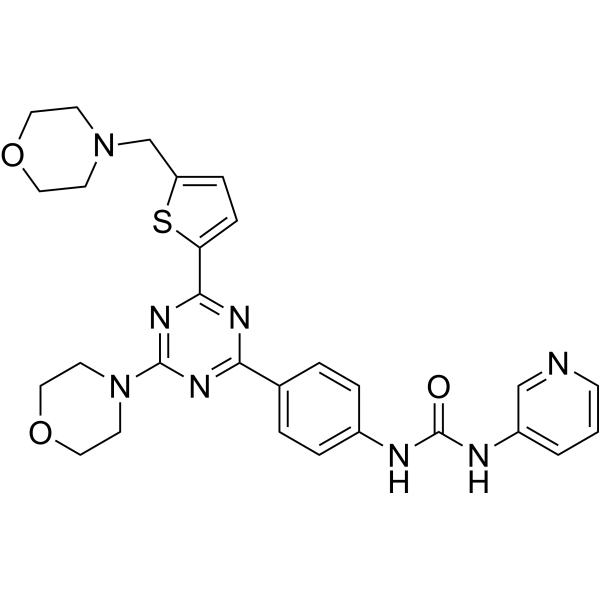 0 ImagesCat. No.: HY-156445CAS No.: 2919684-77-6
-
PI3K-IN-59
 0 ImagesCat. No.: HY-172892PI3K-IN-59 (Compound 3d) is a PI3K inhibitor (IC50: 17.44 μM). PI3K-IN-59 has significant antiproliferative activity and exhibits potent inhibitory effects on breast cancer 4T1 cells (IC50: 3.70 μM) and colon cancer CT26 cells (IC50: 1.98 μM) as well as human breast cancer cells (IC50: 19.72 μM). PI3K-IN-59 exerts a dual anti-tumor mechanism by inhibiting PI3Kα enzymatic activity and triggering the Fenton reaction to generate hydroxyl radicals (•OH). PI3K-IN-59 shows promising anti-4T1 tumor effects and is suitable for synergistic targeting studies in breast and colon cancers.
-
PI3Kδ-IN-18
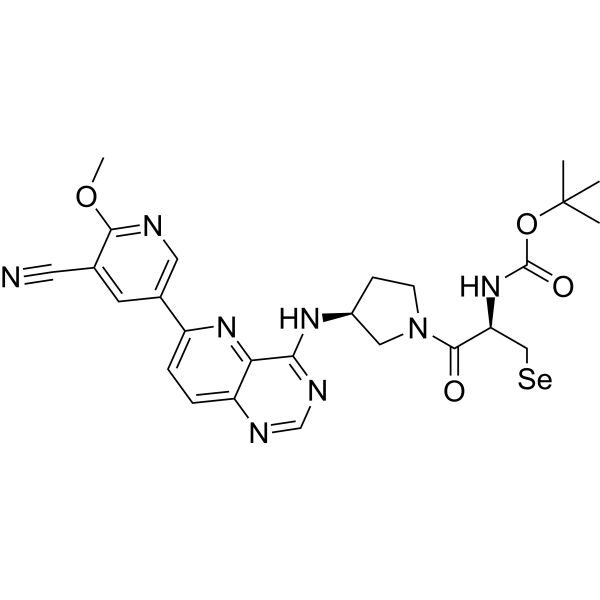 0 ImagesCat. No.: HY-157128CAS No.: 3019965-38-6Se15 is a selective inhibitor of PI3Kδ with an IC50 value less than 0.1nM. Se15 can be used in research on autoimmune.




