1. Signaling Pathways
  2. PI3K/Akt/mTOR
  3. PI3K

PI3K

Phosphoinositide 3-kinase

PI3K (Phosphoinositide 3-kinase), via phosphorylation of the inositol lipid phosphatidylinositol 4,5-bisphosphate (PI(4,5)P2), forms the second messenger molecule phosphatidylinositol (3,4,5)-trisphosphate (PI(3,4,5)P3) which recruits and activates pleckstrin homology domain containing proteins, leading to downstream signalling events crucial for proliferation, survival and migration. Class I PI3K enzymes consist of four distinct catalytic isoforms, PI3Kα, PI3Kβ, PI3Kδ and PI3Kγ.

There are three major classes of PI3K enzymes, being class IA widely associated to cancer. Class IA PI3K are heterodimeric lipid kinases composed of a catalytic subunit (p110α, p110β, or p110δ; encoded by PIK3CA, PIK3CB, and PIK3CD genes, respectively) and a regulatory subunit (p85).

The PI3K pathway plays an important role in many biological processes, including cell cycle progression, cell growth, survival, actin rearrangement and migration, and intracellular vesicular transport.

Cat. No. Product Name Effect Purity Chemical Structure
  • HY-N13200
    Cranberry Extract
    Inhibitor
    Cranberry Extract is the extract of Cranberry, with content of 25% -50% Proanthocyanidins. Cranberry Extract exhibits anti-virus and antimicrbiol activity. Cranberry Extract suppresses fungal growth and biofilm formation. Cranberry Extract reduces NF-κB p65 phosphorylation, and PI3K/AKT signaling; increases caspase-8/9 activity to induce apoptosis, modulates oxidative stress, inflammation, and lipid profiles. Cranberry Extract exerts antiproliferative effects and induces cell cycle arrest. Cranberry Extract can be used for the research of infection and cancers.
    Cranberry Extract
  • HY-N1431A
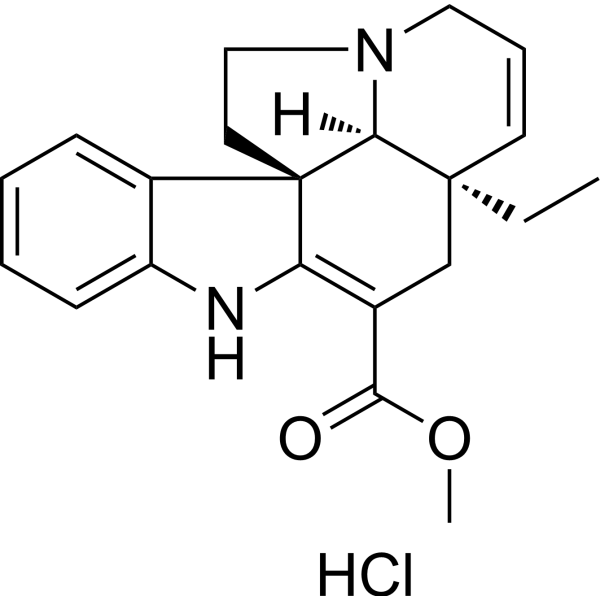
    Tabersonine hydrochloride
    Inhibitor 98.55%
    Tabersonine hydrochloride is a selective, orally active NLRP3 inhibitor. Tabersonine hydrochloride directly binds to the NACHT domain of NLRP3, inhibiting its ATPase activity and oligomerization, thereby blocking ASC spot formation and caspase-1 activation, and reducing the release of pro-inflammatory cytokines such as IL-1β. Tabersonine hydrochloride also inhibits K63-linked ubiquitination of TRAF6, blocking NF-κB, PI3K/Akt, and p38 MAPK signaling pathways. Tabersonine hydrochloride can inhibit inflammatory responses, induce apoptosis of liver cancer cells through mitochondrial pathways and death receptor pathways, reduce mitochondrial membrane potential, promote cytochrome c release, and activate caspase proteins. Tabersonine hydrochloride is mainly used in the study of NLRP3-driven inflammatory diseases (such as acute lung injury, sepsis, peritonitis) and tumors such as liver cancer.
    Tabersonine hydrochloride
  • HY-N10133
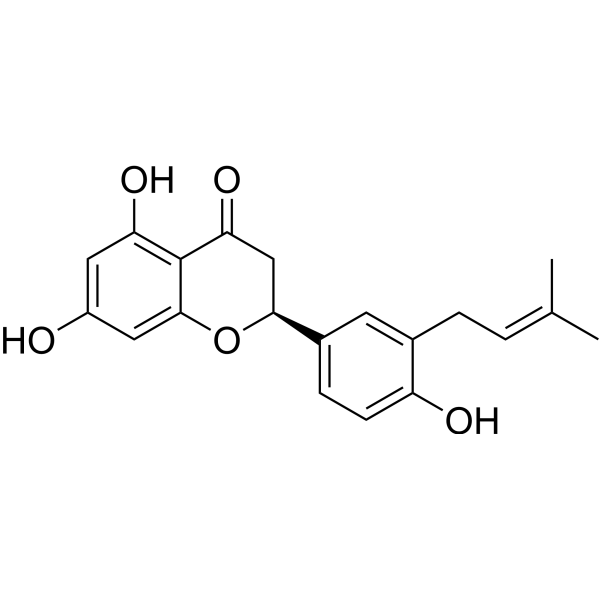
    Licoflavanone
    Inhibitor
    Licoflavanone (3′-Prenylnaringenin) is a flavanone with antioxidant, anti-inflammatory and anticancer activities. Licoflavanone can be isolated from the leaf extract of Glycyrrhiza glabra. Licoflavanone downregulates the mTOR/PI3K/AKT signaling pathway to inhibit the proliferation, migration and invasion of cancer cells, while activates Bax, Bad and multiple caspase enzymes to induce apoptosis. Its anti-inflammatory effect is manifested by reducing the nuclear translocation of NF-κB, decreasing the phosphorylation levels of p38, JNK and ERK1/2, thereby inhibiting the expression of nitric oxide, proinflammatory cytokines, COX-2 and iNOS. Licoflavanone is used in studies on nasopharyngeal carcinoma and related mechanisms.
    Licoflavanone
  • HY-117923
    PF-06465603
    Inhibitor
    PF-06465603 is a highly potent and selective ATP-competitive kinase inhibitor and a class 1 PI3K and mTOR inhibitor. PF-06465603 is a metabolite of PF-04691502 with a terminal carboxylic acid structure.
    PF-06465603
  • HY-128393S1
    Trilinolein-13C54
    Inhibitor
    Trilinolein-13C54 is the 13C-labeled Trilinolein (HY-128393). Trilinolein is an orally active triglyceride that inhibits the PI3K/Akt, Ras/MEK/ERK signaling pathways, and MMP-2. Trilinolein can reduce oxidative stress, induce apoptosis, and inhibit cell migration. Trilinolein can be used in the research fields of cardiovascular disease, cerebrovascular disease (such as cerebral ischemia), and non-small cell lung cancer.
    Trilinolein-<sup>13</sup>C<sub>54</sub>
  • HY-10549
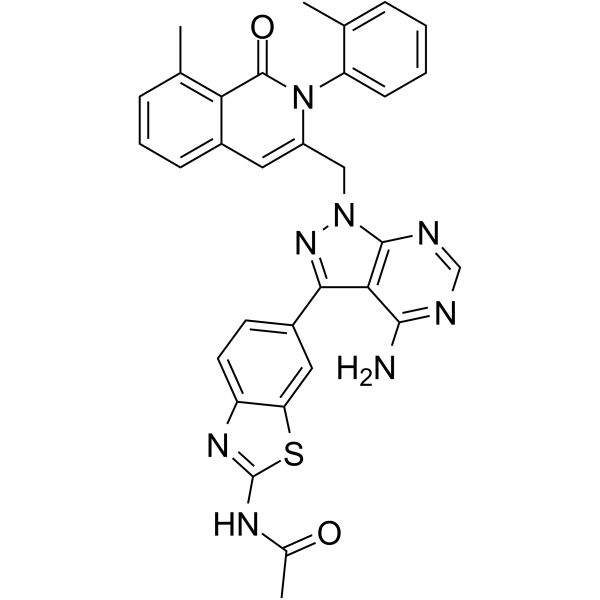
    PI3Kγ inhibitor 1
    Inhibitor
    PI3Kγ inhibitor 1 is a PI3Kδ and PI3Kγ inhibitor extracted from patent WO2014004470A1, Compound 168 in Table 4, has IC50s of <100 nM.
    PI3Kγ inhibitor 1
  • HY-N2110R
    Phellopterin (Standard)
    Inhibitor
    Phellopterin (Standard) is the analytical standard of Phellopterin. Phellopterin, an orally active furocoumarin with multiple biological activities. Phellopterin is a partial agonist of the central benzodiazepine receptors. Phellopterin exerts anti-inflammatory effects by upregulating SIRT1, downregulating ICAM-1 (reducing chronic inflammation, aiding diabetic ulcer healing), inhibiting STAT3 phosphorylation (easing atopic dermatitis inflammation), regulating Akt/PKC pathways (lowering TNF-α-induced VCAM-1 to block monocyte adhesion), and inhibiting TLR4/NF-κB pathway and macrophage M2 polarization (alleviating colitis-related cancers). Phellopterin suppresses ovarian cancer progression via inhibiting the PU.1/CLEC5A/PI3K-AKT loop (inducing cell cycle arrest, apoptosis, DNA damage). Phellopterin alleviates murine diabetes by promoting adipocyte differentiation and increasing PPARγ. Phellopterin also has anti-HSV-1 activity. Phellopterin can be used for studying anti-inflammation, anti-cancer (e.g., ovarian cancer, colitis cancer), blood glucose lowering, anti-diabetes, and anti-virus.
    Phellopterin (Standard)
  • HY-N4189
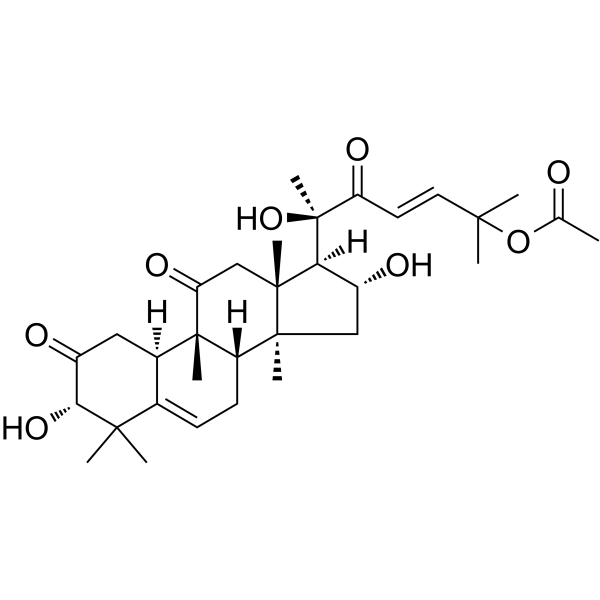
    Isocucurbitacin B
    Inhibitor 98.98%
    Isocucurbitacin B is a natural terpenoid compound found in Pedicellus Melo. Isocucurbitacin B can inhibit the PI3K/AKT, MAPK, and STAT3 signaling pathways and downregulate CAV1 expression. Isocucurbitacin B can inhbit cancer cell proliferation, migration and invision. Isocucurbitacin B can induce apoptosis and cause G2/M phase arrest. Isocucurbitacin B can decrease intracellular cholesterol and PH levels and increase intracellular calcium levels. Isocucurbitacin B can be used for the research of cancer, such as glioma[1][2].

    Isocucurbitacin B
  • HY-16754R
    Seletalisib (Standard)
    Inhibitor
    Seletalisib (Standard) is the analytical standard of Seletalisib. This product is intended for research and analytical applications. Seletalisib (UCB5857) is potent and selective PI3Kδ inhibitor with an IC50 of 12 nM.
    Seletalisib (Standard)
  • HY-158652
    (R)-CCG-1423
    Inhibitor
    (R)-CCG-1423 is an inhibitor of RhoA. (R)-CCG-1423 inhibits downstream of Rho and shows specificity for SRE.
    (R)-CCG-1423
  • HY-N2393A
    Kukoamine B mesylate
    Inhibitor
    Kukoamine B, a spermine alkaloid, is a potent dual LPS and CpG DNA inhibitor with Kd values of 1.23 µM and 0.66 µM, respectively. Kukoamine B exerts anti-inflammatory, anti-diabetic, anti-oxidant, anti-osteoporotic and neuroprotective effects. Kukoamine B has the potential for the study of sepsis. .
    Kukoamine B mesylate
  • HY-10111R
    TG100-115 (Standard)
    Inhibitor
    TG100-115 (Standard) is the analytical standard of TG100-115 (HY-10111). This product is intended for research and analytical applications. TG100-115 is a selective PI3Kγ/PI3Kδ inhibitor with IC50s of 83 and 235 nM, respectively.
    TG100-115 (Standard)
  • HY-109068AR
    Parsaclisib hydrochloride (Standard)
    Inhibitor
    Parsaclisib hydrochloride (Standard) is the analytical standard of Parsaclisib (hydrochloride) (HY-109068A). This product is intended for research and analytical applications. Parsaclisib hydrochloride (INCB050465 hydrochloride) is a potent, selective and orally active inhibitor of PI3Kδ, with an IC50 of 1 nM at 1 mM ATP. Parsaclisib hydrochloride shows approximately 20000-fold selectivity over other PI3K class I isoforms. Parsaclisib hydrochloride can be used for the research of relapsed or refractory B-cell malignancies.
    Parsaclisib hydrochloride (Standard)
  • HY-118374
    AM-9635
    Inhibitor
    AM-9635 is a selective PI3Kδ inhibitor with oral bioavailability, good in vitro and in vivo activity and pharmacodynamic properties. AM-9635 inhibits PI3Kδ-dependent B cell receptor-mediated AKT phosphorylation and suppresses the production of specific IgG and IgM antibodies in rats immunized with Aplysia leocyanin (KLH).
    AM-9635
  • HY-123790
    AS2541019
    Inhibitor
    AS2541019 is a PI3Kδ (p110δ) inhibitor. AS2541019 inhibits B cell activation and proliferation, and suppresses xenograft antibody production.
    AS2541019
  • HY-N0847R
    Micheliolide (Standard)
    Inhibitor
    Micheliolide is a sesquiterpene lactone with anti-cancer and anti-inflammatory effects, which is derived from Michelia compressa and Michelia champaca. Micheliolide can attenuate high glucose-stimulated NF-κB activation, IκBα degradation, and the expression of MCP-1, TGF-β1, and FN in mouse mesangial cells. Micheliolide inhibits LPS (HY-D1056)-induced activation of NF-κB and PI3K/Akt/p70S6K pathways to play an anti-inflammatory role. Micheliolide inhibits dextran sodium sulphate (DSS) (HY-116282)-induced inflammatory intestinal disease, colitis-associated cancer and rheumatic arthritis.
    Micheliolide (Standard)
  • HY-10115R
    PI-103 (Standard)
    Inhibitor
    PI-103 (Standard) is the analytical standard of PI-103. This product is intended for research and analytical applications. PI-103 is a potent PI3K and mTOR inhibitor with IC50s of 8 nM, 88 nM, 48 nM, 150 nM, 20 nM, and 83 nM for p110α, p110β, p110δ, p110γ, mTORC1, and mTORC2. PI-103 also inhibits DNA-PK with an IC50 of 2 nM. PI-103 induces autophagy.
    PI-103 (Standard)
  • HY-162024
    mTOR inhibitor-16
    Inhibitor
    mTOR inhibitor-16 (Compound 9f) is a selective inhibitor for mTOR. mTOR inhibitor-10 inhibits mTOR and PI3K-α, with IC50 of 1.25 and 82 nM. mTOR inhibitor-10 inhibits proliferation of LNCaP with IC50 of 140 nM.
    mTOR inhibitor-16
  • HY-103224R
    PIT-1 (Standard)
    Inhibitor
    PIT-1 (Standard) is the analytical standard of PIT-1. This product is intended for research and analytical applications. PIT-1 is a selective PIP3 (phosphatidylinositol 3,4,5-trisphosphate) antagonist. PIT-1 inhibits cancer cell survival and induces apoptosis by inhibition of PIP3 dependent PI3K / Akt signaling. PIT-1 exhibits antitumor activity in vivo.
    PIT-1 (Standard)
  • HY-10108AR
    LY294002 hydrochloride (Standard)
    Inhibitor
    LY294002 (hydrochloride) (Standard) is the analytical standard of LY294002 (hydrochloride). This product is intended for research and analytical applications. LY294002 hydrochloride is a potent and broad-spectrum PI3K inhibitor, with IC50 values of 0.5, 0.57, and 0.97 μM for P110α, P110δ and P110β, respectively. LY294002 hydrochloride also inhibits CK2 with an IC50 of 98 nM. LY294002 hydrochloride can be used for pancreatic cancer research.
    LY294002 hydrochloride (Standard)
Cat. No. Product Name / Synonyms Application Reactivity

Phosphatidylinositol 3 kinases (PI3Ks) are a family of lipid kinases that integrate signals from growth factors, cytokines and other environmental cues, translating them into intracellular signals that regulate multiple signaling pathways. These pathways control many physiological functions and cellular processes, which include cell proliferation, growth, survival, motility and metabolism[1]


In the absence of activating signals, p85 interacts with p110 and inhibits p110 kinase activity. Following receptor tyrosine kinase (RTK) or G protein-coupled receptor (GPCR) activation, class I PI3Ks are recruited to the plasma membrane, where p85 inhibition of p110 is relieved and p110 phosphorylates PIP2 to generate PIP3. The activated insulin receptor recruits intracellular adaptor protein IRS1. Phosphorylation of IRS proteins on tyrosine residues by the insulin receptor initiates the recruitment and activation of PI3K. PIP3 acts as a second messenger which promotes the phosphorylation of Akt at Thr308 by PDK-1. RTK activation can also trigger Ras-Raf-MEK-ERK pathway. Activated Akt, ERK and RSK phosphorylate TSC2 at multiple sites to inhibit TSC1-TSC2-TBC1D7, which is the TSC complex that acts as a GTPase-activating protein (GAP) for the small GTPase RHEB. During inhibition of the TSC complex, GTP-loaded RHEB binds the mTOR catalytic domain to activate mTORC1. Glycogen synthase kinase 3β (GSK-3β) activates the TSC complex by phosphorylating TSC2 at Ser1379 and Ser1383. Phosphorylation of these two residues requires priming by AMPK-dependent phosphorylation of Ser1387. Wnt signaling inhibits GSK-3β and the TSC complex, and thus activates mTORC1. mTORC2 is activated by Wnt in a manner dependent on the small GTPase RAC1. Akt activation contributes to diverse cellular activities which include cell survival, growth, proliferation, angiogenesis, metabolism, and migration. Important downstream targets of Akt are GSK-3, FOXOs, BAD, AS160, eNOS, and mTOR. mTORC1 negatively regulates autophagy through multiple inputs, including inhibitory phosphorylation of ULK1, and promotes protein synthesis through activation of the translation initiation promoter S6K and through inhibition of the inhibitory mRNA cap binding 4E-BP1[1][2][3].


PI3Kδ is a heterodimeric enzyme, typically composed of a p85α regulatory subunit and a p110δ catalytic subunit. In T cells, the TCR, the costimulatory receptor ICOS and the IL-2R can activate PI3Kδ. In B cells, PI3Kδ is activated upon crosslinking of the B cell receptor (BCR). The BCR co-opts the co-receptor CD19 or the adaptor B cell associated protein (BCAP), both of which have YXXM motifs to which the p85α SH2 domains can bind. In lumphocytes, BTK and ITK contribute to the activation of PLCγ and promotes the generation of DAG and the influx of Ca2+, which in turn activate PKC and the CARMA1-, BCL 10- and MALT1 containing (CBM) complex. The resulting NF-κB inhibitor kinase (IKK) activation leads to the phosphorylation and the degradation of IκB, and to the nuclear accumulation of the p50-p65 NF-κB heterodimer. MyD88 is an adapter protein that mediates signal transduction for most TLRs and leads to activation of PI3K[4].


Reference:

[1]. Thorpe LM, et al. PI3K in cancer: divergent roles of isoforms, modes of activation and therapeutic targeting.Nat Rev Cancer. 2015 Jan;15(1):7-24. 
[2]. Vanhaesebroeck B, et al. PI3K signalling: the path to discovery and understanding.Nat Rev Mol Cell Biol. 2012 Feb 23;13(3):195-203. 
[3]. Fruman DA, et al. The PI3K Pathway in Human Disease.Cell. 2017 Aug 10;170(4):605-635.
[4]. Lucas CL, et al. PI3Kδ and primary immunodeficiencies.Nat Rev Immunol. 2016 Nov;16(11):702-714. 

Your Search Returned No Results.

Sorry. There is currently no product that acts on isoform together.

Please try each isoform separately.