Search Result
Results for "
allyl-
" in MedChemExpress (MCE) Product Catalog:
19
Biochemical Assay Reagents
6
Isotope-Labeled Compounds
| Cat. No. |
Product Name |
Target |
Research Areas |
Chemical Structure |
-
- HY-N0315
-
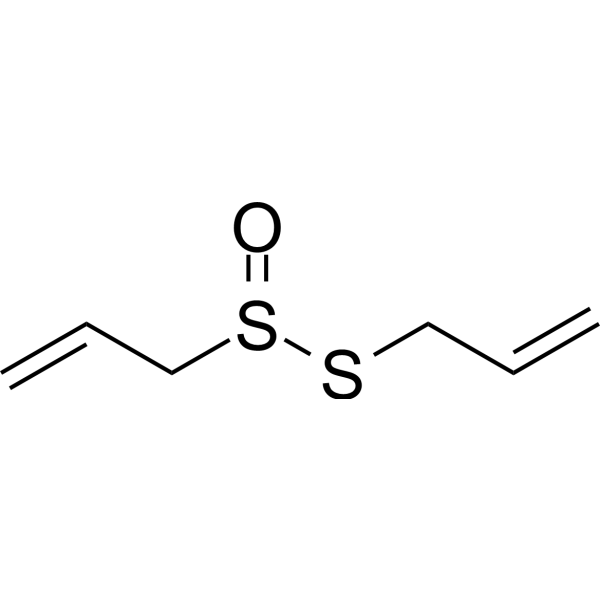
Allicin
Maximum Cited Publications
17 Publications Verification
Diallyl thiosulfinate
|
Bacterial
Antibiotic
|
Infection
|
|
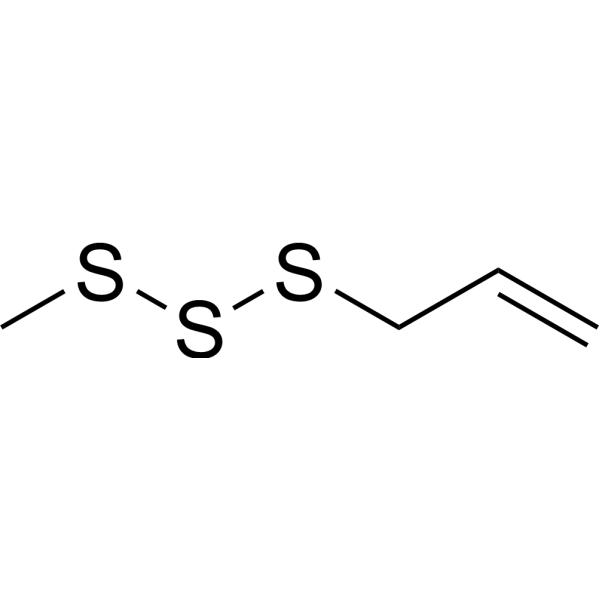
Allicin (diallyl thiosulfinate) is isolated from garlic including Diallyl monosulfide, Diallyl disulfide, Diallyl trisulfide, Diallyl tetrasulfide, and Methyl allyl disulphide etc. They accounts for 98% of the extract. Allicin (diallyl thiosulfinate) has highly potent antimicrobial activity, and inhibits growth of a variety of microorganisms, among them antibiotic-resistant strains .
|
-
-
- HY-N0404
-
-
-
- HY-W007052
-
-
-
- HY-108472
-
|
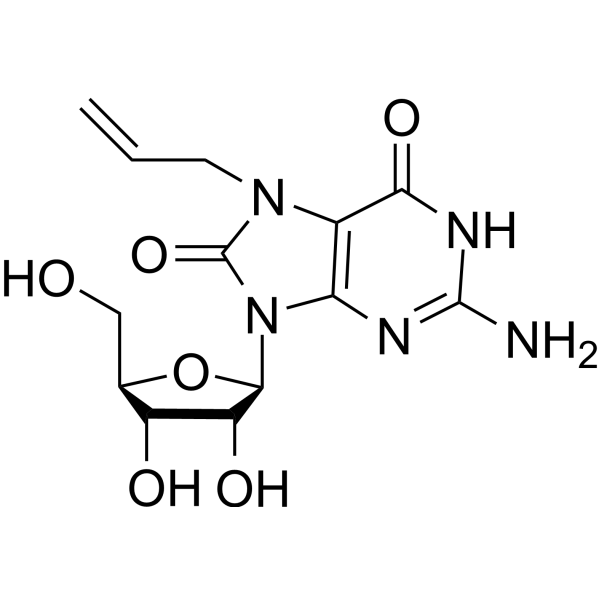
7-allyl-8-oxoguanosine; RWJ 21757
|
Toll-like Receptor (TLR)
Influenza Virus
|
Infection
Cancer
|
|
Loxoribine (7-Allyl-8-oxoguanosine) is a guanosine analog with anti-viral and anti-tumor activities. Loxoribine is an orally bioavailable and selective Toll-like receptor (TLR) 7 agonist .
|
-
-
- HY-D1244
-
|
|
Fluorescent Dye
|
Cardiovascular Disease
Inflammation/Immunology
|
|
CO probe 1 (probe 2) is a highly efficient fluorescent CO probe (Ex=493 nm) with an allyl ether reaction site. In the presence of PdCl₂, CO reduces Pd 2+ to Pd 0, triggering a Tsuji-Trost reaction that removes the allyl protecting group, releases fluorescein, and generates a significant fluorescence signal. CO probe 1 has high selectivity, rapid response (fluorescence enhancement of 150 times within 20 minutes), and low cytotoxicity, and can be used for real-time imaging of CO in living cells. CO probe 1 may be used to study pathological mechanisms involving CO signaling regulation, such as inflammation, vascular disease, or cancer .
|
-

-
- HY-W071967
-
|
|
ADC Linker
|
Cancer
|
|
Alloc-Val-Ala-PAB is a peptide cleavable linker used in the synthesis of antibody-drug conjugates (ADCs). The Val-Ala will specifically be cleaved by Cathepsin B. The Alloc group is stable to treatment with piperidine and TFA, but can be easily removed under mild conditions by palladium catalyzed allyl transfer.
|
-

-
- HY-128447
-
|
|
Endogenous Metabolite
SOD
NF-κB
GLUT
|
Metabolic Disease
Inflammation/Immunology
|
|
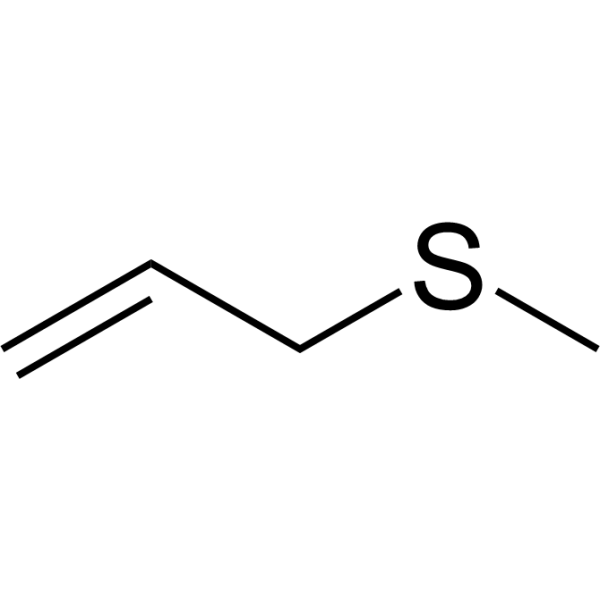
Allyl methyl sulfide is an orally active organic sulfide. Allyl methyl sulfide is one of the main active ingredients in garlic volatile metabolites. Allyl methyl sulfide can be extracted from garlic. Allyl methyl sulfide enhances SOD activity, inhibits NF-κB signaling pathway, and upregulates pancreatic GLUT2 expression. Allyl methyl sulfide has significant antioxidant, anti-inflammatory and hypoglycemic activities. Allyl methyl sulfide can be used in the research of diabetes and its complications .
|
-
-
- HY-W013573
-
-
-
- HY-15065
-
-
-
- HY-178872
-
|
Sodium 2-propenyl thiosulfate; 2PTS
|
COX
|
Inflammation/Immunology
Cancer
|
|
Allyl thiosulfate (Sodium 2-propenyl thiosulfate) is found in Allium plants such as garlic and onion. Allyl thiosulfate can inhibit COX activity and reduce GSH concentration in platelets. Allyl thiosulfate exhibits anti-aggregatory and anti-cancer effects. Allyl thiosulfate can be used for the researches of cancer, inflammation and cardiovascular disease .
|
-

-
- HY-W012907
-
-
-
- HY-134900
-
-
-
- HY-N2423
-
-
-
- HY-101376
-
|
(+)-SKF 10047 hydrochloride; (+)-N-allyl-N-normetazocine hydrochloride
|
Opioid Receptor
|
Neurological Disease
|
|
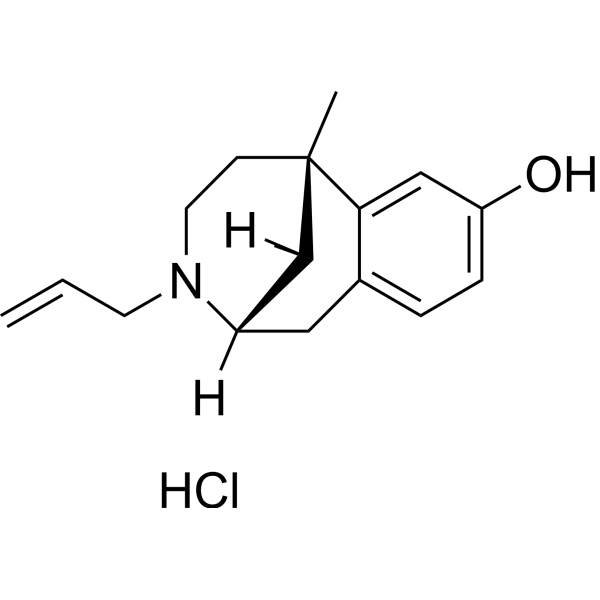
(+)-N-Allylnormetazocine ((+)-SKF 10047) hydrochloride is a benzomorphan opioid with psychotomi metic effects. (+)-N-Allylnormetazocine hydrochloride is an opioid receptor antagonist with Ki values of 300 nM and 27 μM for σ1 and σ2 opioid receptors, respectively. (+)-N-Allylnormetazocine hydrochloride can be used for the research of neurological disease .
|
-
-
- HY-111827
-
-
-
- HY-W102303
-
|
|
PROTAC Linkers
|
Cancer
|
|
(E)-tert-Butyldimethyl((3-(4,4,5,5-tetramethyl-1,3,2-dioxaborolan-2-yl)allyl)oxy)silane is a PROTAC linker that can be used in the synthesis of PROTACs.
|
-

-
- HY-Y0549
-
|
Diphenylmethane-α-carboxylic Acid
|
Biochemical Assay Reagents
|
Others
|
|
Diphenylacetic acid (Diphenylmethane-α-carboxylic Acid) is a biochemical reagent that can be used as a biological material or organic compound for life science related research. Diphenylacetic acid can be used as a reagent in the kinetic resolution of racemic 2-hydroxy-y-butyrolactones by asymmetric esterification in the presence of pivalic anhydride and chiral acyl-transfer catalyst. Diphenylacetic acid can act as a catalyst to synthesize 2-allyl-3-oxazolin-5-one derivatives via Rh-catalyzed coupling reaction of azlactones and alkynes followed by aza-Cope rearrangement .
|
-

-
- HY-W039915
-
|
|
Glycosidase
|
Others
|
|
Allyl α-D-galactopyranoside is an α-galactoside and acceptor/donor substrate for transgalactosylation reactions. Allyl α-D-galactopyranoside acts as an acceptor substrate in α-galactosidase-catalyzed transgalactosylation, and serves as a donor substrate to form longer α-galactosyl-containing oligosaccharides. Allyl α-D-galactopyranoside serves as a model compound for investigating the catalytic mechanism and substrate specificity of glycoside hydrolases and glycosyltransferases .
|
-

-
- HY-W016976
-
|
Prop-2-en-1-yl heptanoate
|
Environmental Pollutants
Biochemical Assay Reagents
|
Others
|
|
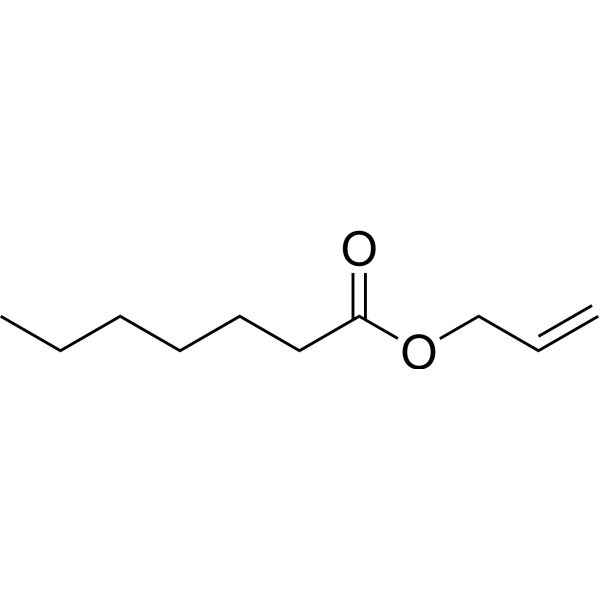
Allyl heptanoate is an ester that is formed by the esterification of medium-chain fatty acids, heptanoic acid and allyl alcohol. The compound has a fruity smell and is commonly used as a flavoring in foods such as baked goods, candy and beverages.
|
-
-
- HY-W013779
-
-
-
- HY-W001538
-
|
SPRC
|
STAT
MDM-2/p53
|
Inflammation/Immunology
|
|
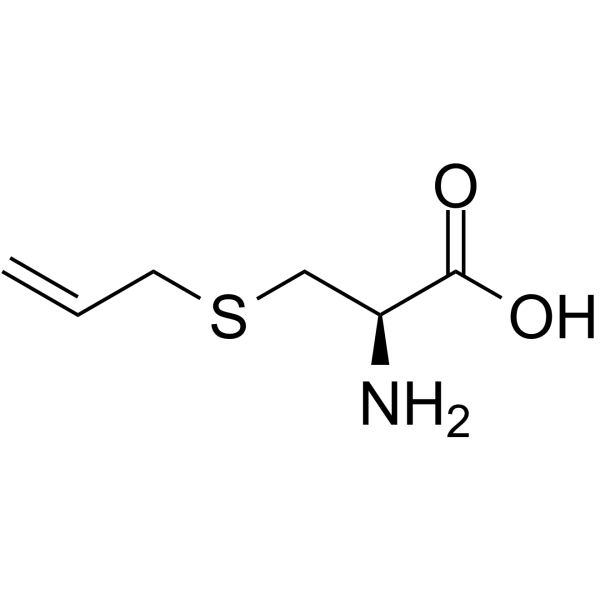
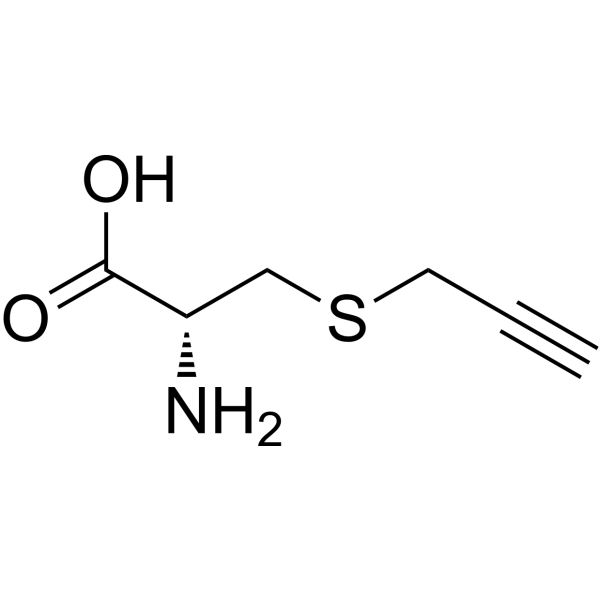
S-Propargylcysteine (SPRC), a structural analog of S-allyl cysteine (SAC), is a slow H2S-releasing compound. S-Propargylcysteine reduces Ca 2+ accumulation and inflammatory cytokines, inhibits STAT3, and elevates p53 and Bax. S-Propargylcysteine has anti-inflammatory activity and protects mice against acute pancreatitis. S-Propargylcysteine also has cardioprotective, neuroprotective acitivties .
|
-
-
- HY-106784A
-
|
|
Fungal
Apoptosis
|
Neurological Disease
|
|
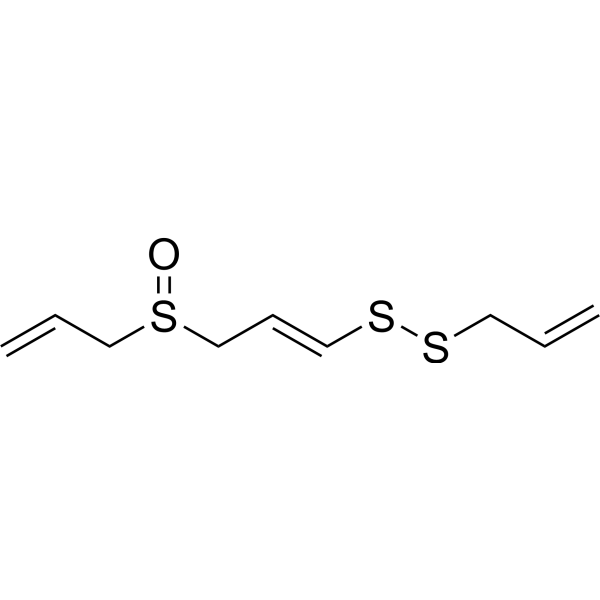
(E)-Ajoene is a oxygenated ajoene and organosulfur compound, which can be acquired via allicin decomposing. The polysulfides from garlic can be converted by human red blood cells into hydrogen sulfide (H2S) and allyl glutathione. (E)-Ajoene has been proved to show neuroprotective effects against ischemic damage. (E)-Ajoene is orally active to inhibit lipid peroxidation. (E)-Ajoene increases the number of cresyl violet-positive neurons and decreases the number of reactive gliosis in the CA1 region .
|
-
-
- HY-W743888
-
|
6-allyl-6-nor-LSD
|
5-HT Receptor
Dopamine Receptor
|
Neurological Disease
|
|
AL-LAD (6-Allyl-6-nor-LSD) is an activator for 5-HT2A receptor with Ki of 3.4-8.1 nM. AL-LAD exhibits affinity for dopamine receptor D1 and dopamine receptor D2 with absolute affinitiesK0.5 of 189 nM and 12.3 nM. AL-LAD acts as psychoactive substance in mouse model .
|
-

-
- HY-W047691
-
-

-
- HY-W127576
-
|
Pelargonic acid allyl ester
|
Biochemical Assay Reagents
|
Others
|
|
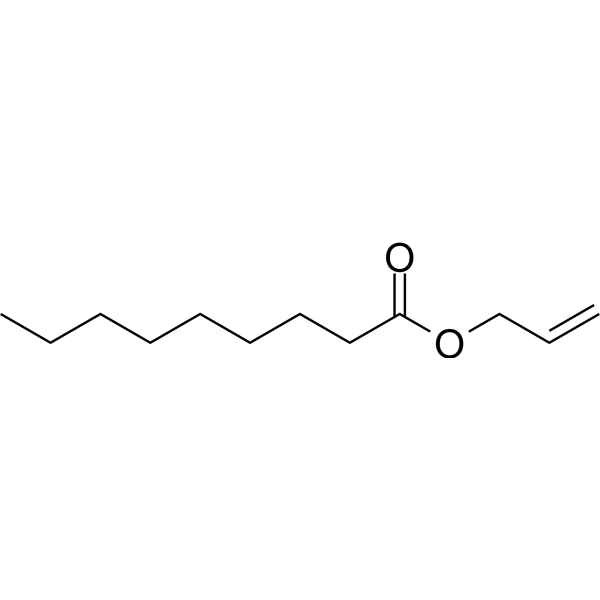
Allyl Nonanoate is a biochemical reagent that can be used as a biological material or organic compound for life science related research.
|
-
-
- HY-W048286
-
-
-
- HY-N0404R
-
-

-
- HY-154358
-
|
|
Nucleoside Antimetabolite/Analog
|
Cancer
|
|
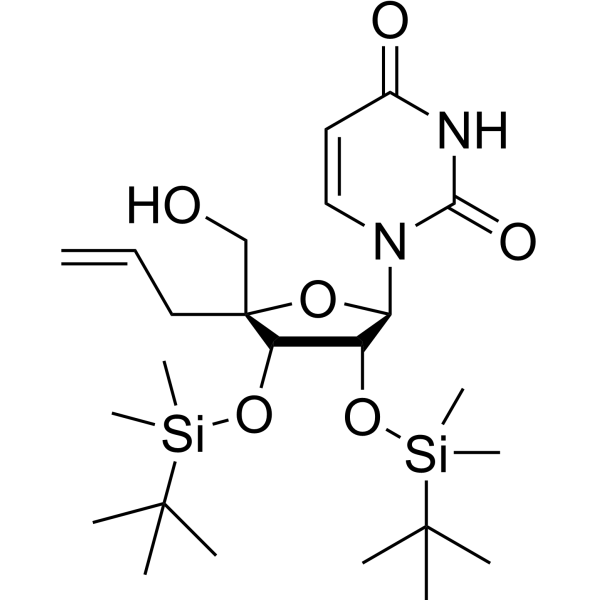
4’-alpha-C-Allyl-2’,3’-bis(O-t-butyldimethylsilyl) uridine is a uridine analog. Uridine has potential antiepileptic effects, and its analogs can be used to study anticonvulsant and anxiolytic activities, as well as to develop new antihypertensive agents .
|
-
-
- HY-W092607
-
|
|
Drug Intermediate
|
Others
|
|
Allyl (11S,11aS)-11-((tert-butyldimethylsilyl)oxy)-8-hydroxy-7-methoxy-2-methyl-5-oxo-11,11a-dihydro-1H-benzo[e]pyrrolo[1,2-a][1,4]diazepine-10(5H)-carboxylate is a drug intermediate for synthesis of various active compounds.
|
-
![Allyl (11S,11aS)-11-((tert-butyldimethylsilyl)oxy)-8-hydroxy-7-methoxy-2-methyl-5-oxo-11,11a-dihydro-1H-benzo[e]pyrrolo[1,2-a][1,4]diazepine-10(5H)-carboxylate](//file.medchemexpress.com/product_pic/hy-w092607.gif)
-
- HY-145735
-
-
-
- HY-W098764
-
|
|
ADC Linker
|
Others
|
|
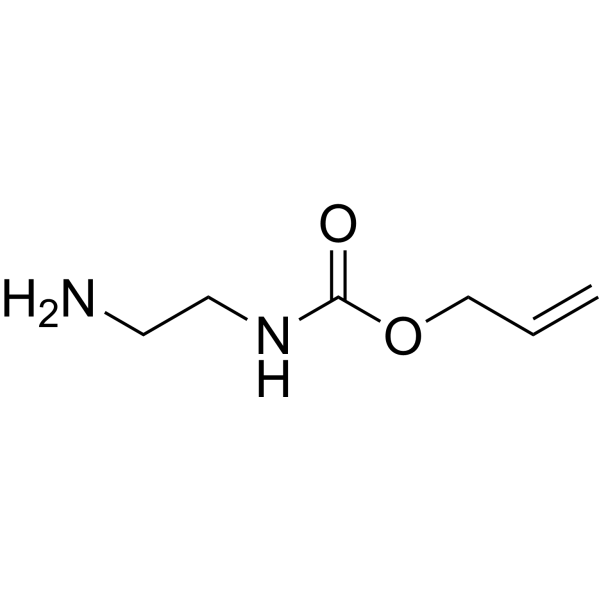
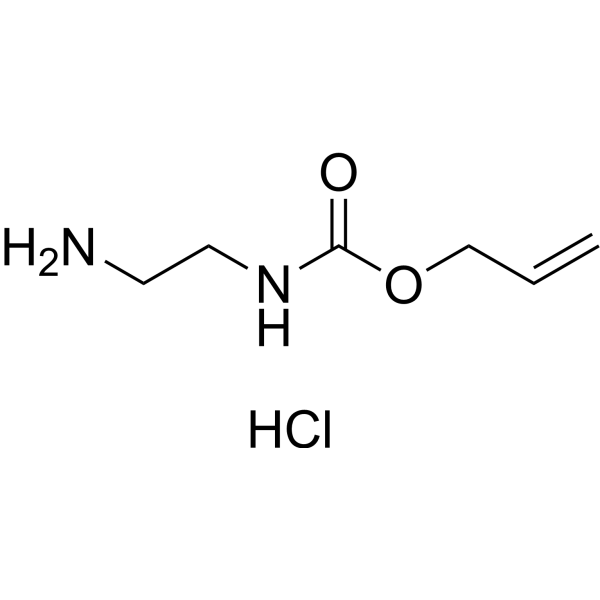
Allyl (2-aminoethyl)carbamate hydrochloride is a cleavable linker.
|
-
-
- HY-W008560
-
-
-
- HY-138263
-
|
|
Biochemical Assay Reagents
|
Others
|
|
Allyl 2-acetamido-2-deoxy-β-D-glucopyranoside is a NodC substrate and chitooligosaccharide chain initiator. Allyl 2-acetamido-2-deoxy-β-D-glucopyranoside acts as an initial acceptor to enable the extension of chitooligosaccharide chains and the synthesis of allyl penta-N-acetylchitopentaose .
|
-

-
- HY-W048232
-
|
|
Biochemical Assay Reagents
|
Others
|
|
Allyl α-D-mannopyranoside is a class of biochemical reagents used in glycobiology research. Glycobiology studies the structure, synthesis, biology, and evolution of sugars. It involves carbohydrate chemistry, enzymology of glycan formation and degradation, protein-glycan recognition, and the role of glycans in biological systems. This field is closely related to basic research, biomedicine, and biotechnology .
|
-

-
- HY-W087043
-
|
N-phenylallylamine; N-allyl-N-phenylamine
|
Biochemical Assay Reagents
|
Others
|
|
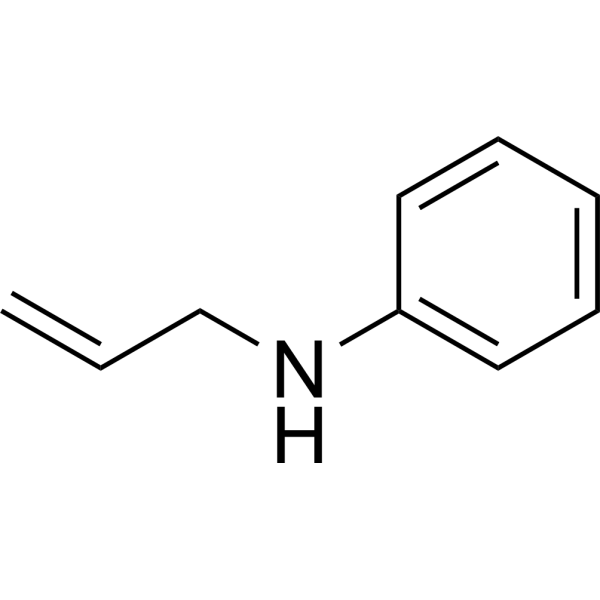
N-Allylaniline (N-phenylallylamine) is an aromatic amine that acts as a metal complex .
|
-
-
- HY-N15237
-
|
allyl β-D-lactose
|
Biochemical Assay Reagents
|
Others
|
|
Allyl β-lactoside (Allyl β-D-lactose) is a lactoside, which can be generated by incubating lactose and allyl alcohol with cellulase preparation, and can be used as a starting material for the synthesis of glycopolymers .
|
-

-
- HY-128447R
-
|
|
Reference Standards
Endogenous Metabolite
SOD
NF-κB
GLUT
|
Metabolic Disease
Inflammation/Immunology
|
|
Allyl methyl sulfide (Standard) is the analytical standard of Allyl methyl sulfide (HY-128447). This product is intended for research and analytical applications. Allyl methyl sulfide is an orally active organic sulfide. Allyl methyl sulfide is one of the main active ingredients in garlic volatile metabolites. Allyl methyl sulfide can be extracted from garlic. Allyl methyl sulfide enhances SOD activity, inhibits NF-κB signaling pathway, and upregulates pancreatic GLUT2 expression. Allyl methyl sulfide has significant antioxidant, anti-inflammatory and hypoglycemic activities. Allyl methyl sulfide can be used in the research of diabetes and its complications .
|
-

-
- HY-155912S
-
-
-
- HY-138426
-
|
|
PROTAC Linkers
|
Cancer
|
|
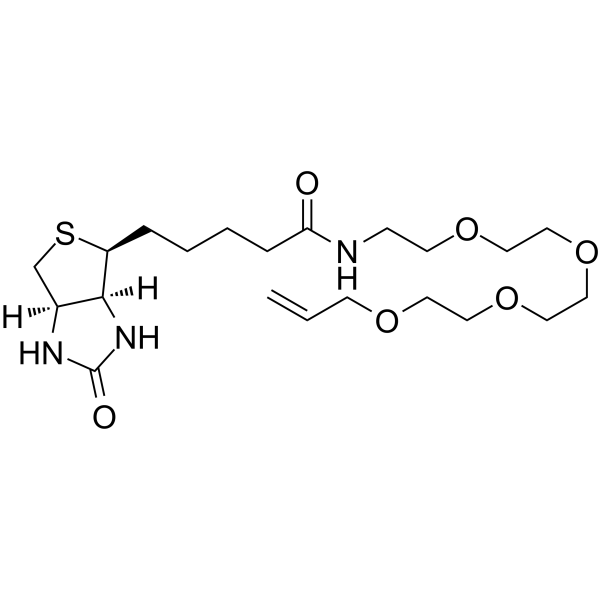
Biotin-PEG4-allyl is a PEG-based PROTAC linker that can be used in the synthesis of PROTACs .
|
-
-
- HY-W710830
-
-

-
- HY-115750
-
|
|
NO Synthase
|
Neurological Disease
|
|
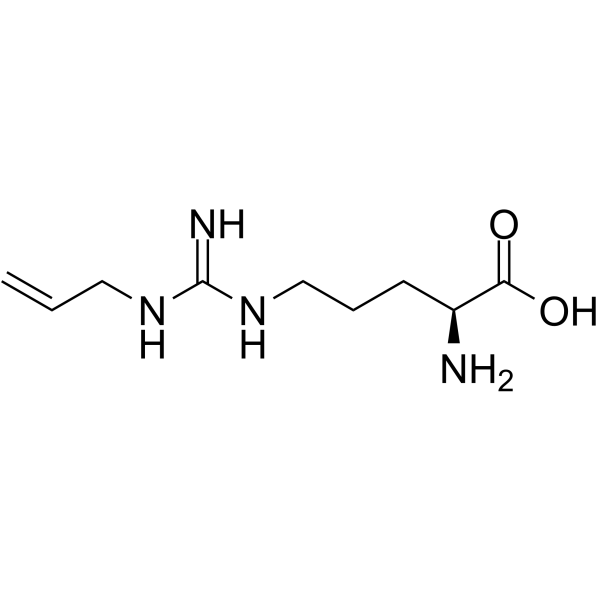
Nω-allyl-L-arginine is a competitive and reversible inhibitor of bovine brain nitric oxide synthase (nNOS). Nω-allyl-L-arginine can inactivate nNOS in a time-dependent manner. Nω-allyl-L-arginine also is a substrate, producing L-arginine, acrolein, and H2O .
|
-
-
- HY-W013573R
-
-

-
- HY-114983
-
|
(S)-9-allyl-10-Hydroxycamptothecin
|
Topoisomerase
|
Cancer
|
|
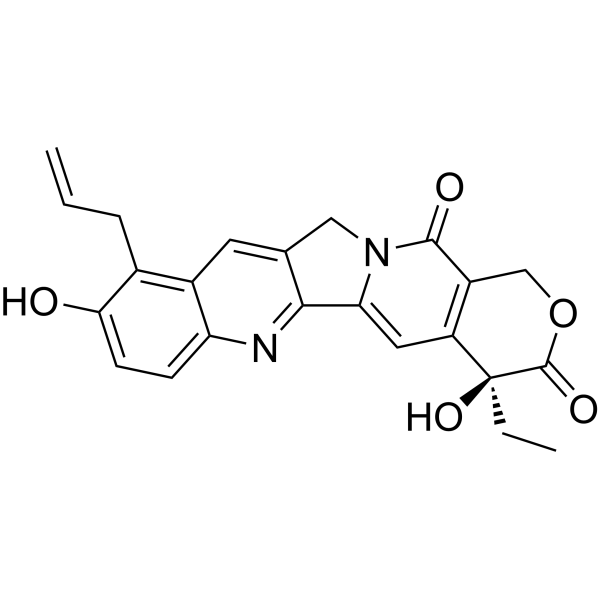
Chimmitecan ((S)-9-Allyl-10-Hydroxycamptothecin), a novel 9-small-alkyl-substituted lipophilic Camptothecin (HY-16560), is a potent inhibitor of topoisomerase I. Chimmitecan exhibits anticancer activity .
|
-
-
- HY-W145552
-
|
4-Methoxyphenyl 3-O-allyl-beta-D-galactopyranoside
|
Biochemical Assay Reagents
|
Others
|
|
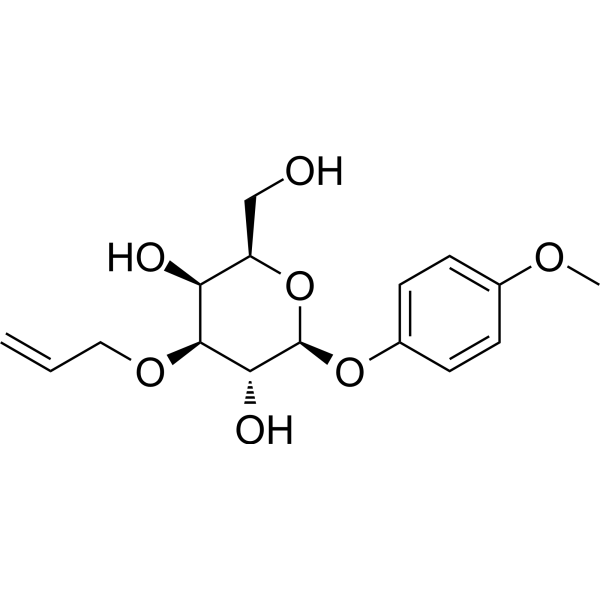
4-Methoxyphenyl 3-O-Allyl-β-D-galactopyranoside is an organic compound belonging to the family of galactopyranosides. It is often used as a building block for the synthesis of more complex glycosides and glycoconjugates. 4-Methoxyphenyl 3-O-Allyl-β-D-galactopyranoside has various applications in biochemical research, especially in the study of carbohydrate metabolism and protein-carbohydrate interactions. This compound contains an allyl protecting group that can be selectively removed using palladium-catalyzed conditions to reveal hydroxyl functionality for further chemical modification.
|
-
-
- HY-400191A
-
|
|
ADC Linker
|
Cancer
|
|
Fmoc-Gly-Gly-allyl propionate is a cleavable linker that can be used to synthesize Antibody-Drug Conjugates (ADCs) .
|
-

-
- HY-W142921S
-
-
-
- HY-172790
-
|
|
COX
Lipoxygenase
|
Inflammation/Immunology
|
|
Cbz-(S,S)-Pro-Pro-allyl (compound 1a) is a dual inhibitor of cyclooxygenase-2 and 5-lipoxygenase with IC50 values of 0.146 nM, 0.003 nM, 0.64 nM for COX-1, COX-2, 5-LOX, respectively. Cbz-(S,S)-Pro-Pro-allyl has anti-inflammatory activity .
|
-

-
- HY-400191
-
|
|
ADC Linker
|
Cancer
|
|
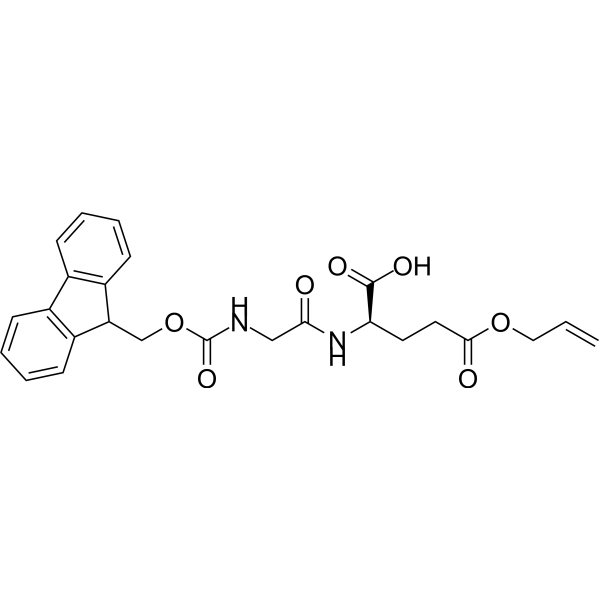
Fmoc-Gly-(d-Gly)-allyl propionate is a cleavable linker that can be used to synthesize Antibody-Drug Conjugates (ADCs).
|
-
-
- HY-W328494
-
-

-
- HY-138290
-
-

- HY-147065
-
|
|
Others
|
Others
|
|
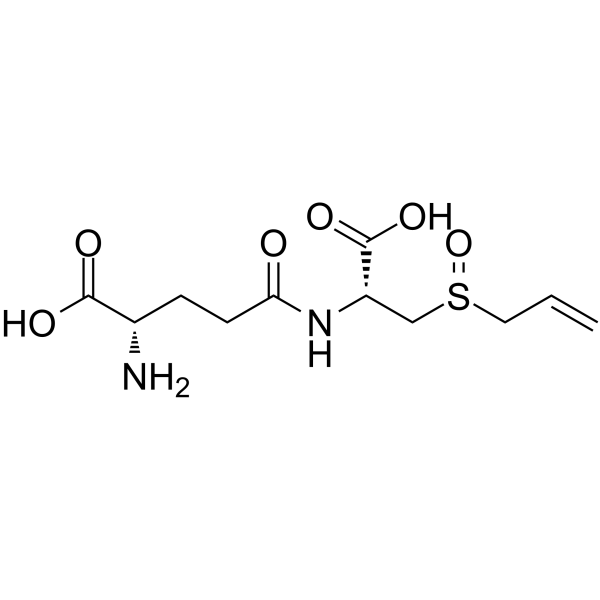
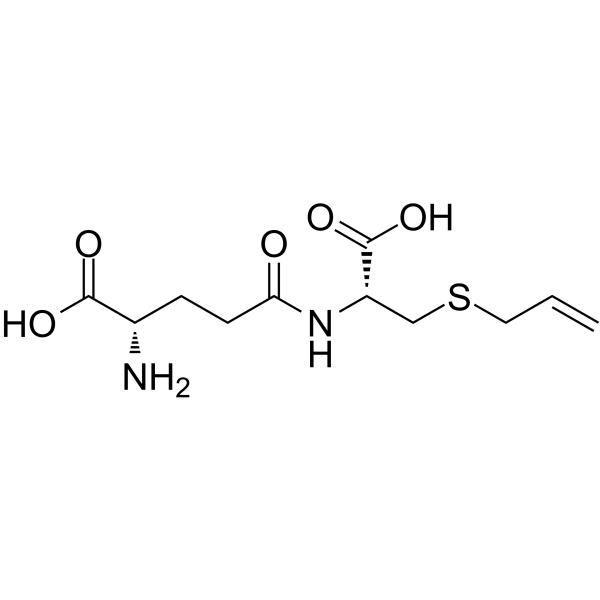
γ-L-Glutamyl-S-allyl-L-cysteine is a naturally occurring organosulfur compound found in garlic .
|
-
- HY-114976S
-
|
N-(Acetyl-d3)-S-allyl-L-cysteine
|
Isotope-Labeled Compounds
|
Others
|
|
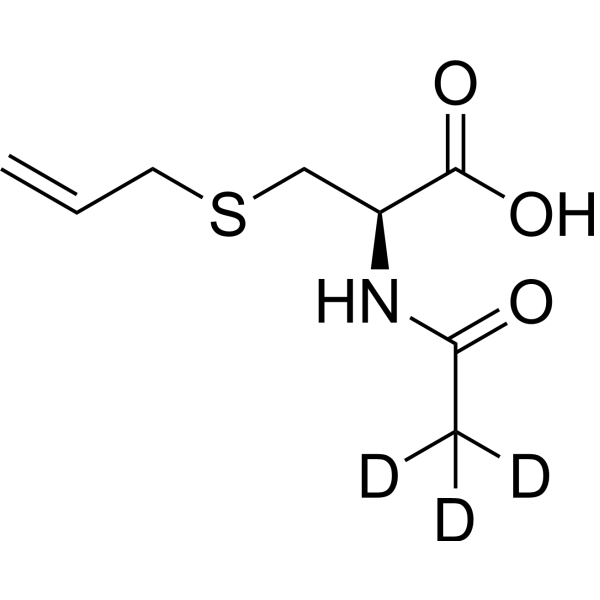
N-Acetyl-S-allyl-L-cysteine-d3 is the deuterium labeled N-Acetyl-S-allyl-L-cysteine (HY-114976) .
|
-
- HY-108472R
-
|
7-allyl-8-oxoguanosine (Standard); RWJ 21757 (Standard)
|
Toll-like Receptor (TLR)
Influenza Virus
Reference Standards
|
Infection
Cancer
|
|
Loxoribine (Standard) is the analytical standard of Loxoribine. This product is intended for research and analytical applications. Loxoribine (7-Allyl-8-oxoguanosine) is a guanosine analog with anti-viral and anti-tumor activities. Loxoribine is an orally bioavailable and selective Toll-like receptor (TLR) 7 agonist .
|
-

- HY-152531
-
|
|
Nucleoside Antimetabolite/Analog
|
Cancer
|
|
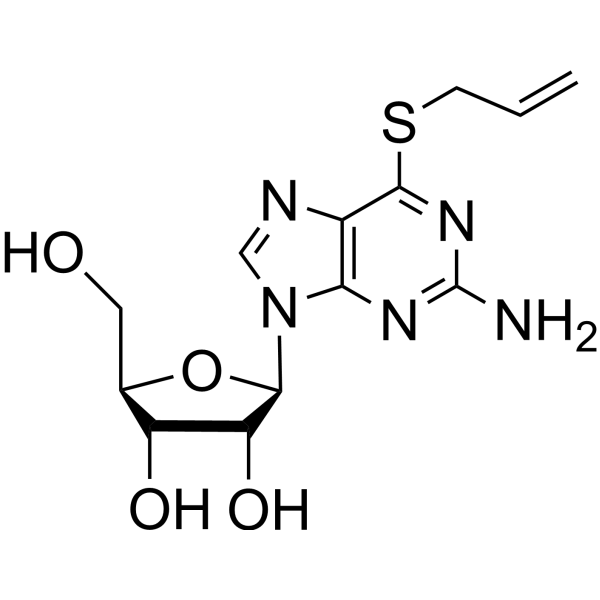
2-Amino-6-allyl thio-9-(beta-D-ribofuranosyl)-9H-purine is a purine nucleoside analog. Purine nucleoside analogs have broad antitumor activity targeting indolent lymphoid malignancies. Anticancer mechanisms in this process rely on inhibition of DNA synthesis, induction of apoptosis, etc .
|
-
- HY-152407
-
|
|
Nucleoside Antimetabolite/Analog
|
Others
|
|
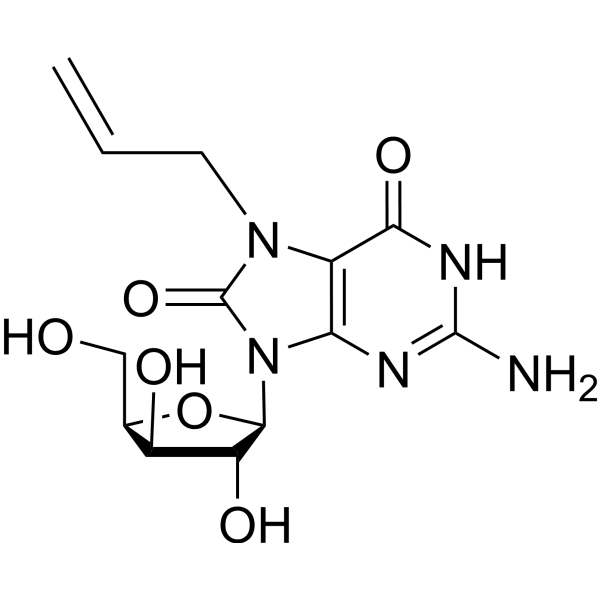
7-Allyl-7,8-dihydro-8-oxo-9-(β-D-xylofuranosyl) guanine is a purine nucleoside analogue. Purine nucleoside analogs have broad antitumor activity targeting indolent lymphoid malignancies. Anticancer mechanisms in this process rely on inhibition of DNA synthesis, induction of apoptosis, etc .
|
-
- HY-W145600
-
|
1,2,4,6-Tetra-O-acetyl-3-O-allyl-beta-D-glucopyranose
|
Biochemical Assay Reagents
|
Others
|
|
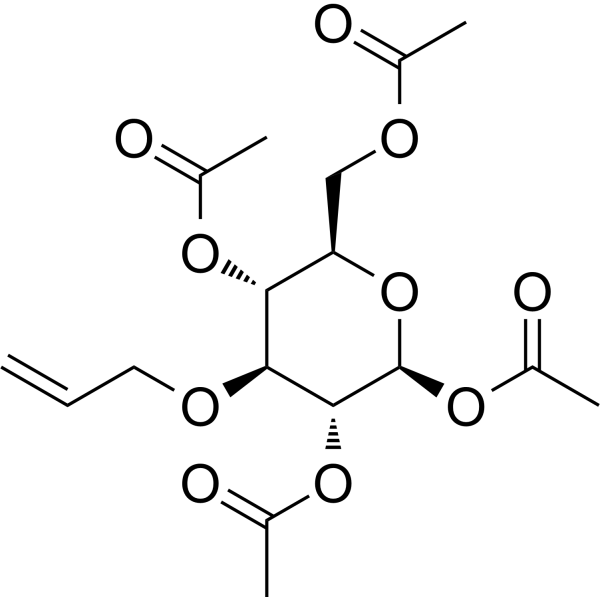
1,2,4,6-Tetra-O-acetyl-3-O-allyl-β-D-glucopyranose is a biochemical reagent that can be used as a biological material or organic compound for life science related research.
|
-
- HY-N9071
-
|
|
Others
|
Others
|
|
5-Allyl-3-methoxy-6-methyl-7-(3,4,5-trimethoxyphenyl)bicyclo[3.2.1]oct-3-ene-2,8-dione is a Lignans product that can be isolated from the herbs of Cassia fistula .
|
-
![5-Allyl-3-methoxy-6-methyl-7-(3,4,5-trimethoxyphenyl)bicyclo[3.2.1]oct-3-ene-2,8-dione](//file.medchemexpress.com/product_pic/hy-n9071.gif)
- HY-W145601
-
|
|
Biochemical Assay Reagents
|
Others
|
|
4-Methoxyphenyl 3-O-Allyl-4,6-O-benzylidene-β-D-galactopyranoside is a class of biochemical reagents used in glycobiology research. Glycobiology studies the structure, synthesis, biology, and evolution of sugars. It involves carbohydrate chemistry, enzymology of glycan formation and degradation, protein-glycan recognition, and the role of glycans in biological systems. This field is closely related to basic research, biomedicine, and biotechnology .
|
-

- HY-W698356
-
|
|
Biochemical Assay Reagents
|
Others
|
|
Methyl 2-O-allyl-3-O-benzyl-4,6-O-benzylidene-α-D-mannopyranoside is a class of biochemical reagents used in glycobiology research. Glycobiology studies the structure, synthesis, biology, and evolution of sugars. It involves carbohydrate chemistry, enzymology of glycan formation and degradation, protein-glycan recognition, and the role of glycans in biological systems. This field is closely related to basic research, biomedicine, and biotechnology .
|
-

- HY-W145572
-
|
|
Biochemical Assay Reagents
|
Others
|
|
Phenyl 2,4,6-tri-O-acetyl-3-O-allyl-1-thio-β-D-glucopyranoside is a class of biochemical reagents used in glycobiology research. Glycobiology studies the structure, synthesis, biology, and evolution of sugars. It involves carbohydrate chemistry, enzymology of glycan formation and degradation, protein-glycan recognition, and the role of glycans in biological systems. This field is closely related to basic research, biomedicine, and biotechnology .
|
-

- HY-135762
-
-

- HY-W010209S
-
-
- HY-164073
-
|
|
Biochemical Assay Reagents
|
Others
|
|
Allylate Dextran is an allyl dextran with good biocompatibility and stability, which can be used for research on immune modulation and targeted delivery .
|
-

- HY-W076556
-
|
((allyloxy)carbonyl)-L-valyl-L-alanine
|
Biochemical Assay Reagents
|
Others
|
|
Alloc-Val-Ala-OH (((Allyloxy)carbonyl)-L-valyl-L-alanine) is a building block in the synthesis of Tesirine, a clinical antibody-drug conjugate (ADC) pyrrolobenzodiazepine (PBD) dimer payload. The Val-Ala will specifically be cleaved by Cathepsin B. The Alloc group is stable to treatment with piperidine and TFA, but can be easily removed under mild conditions by palladium catalyzed allyl transfer.
|
-

- HY-D1258
-
|
VDP-green
|
Fluorescent Dye
|
Others
|
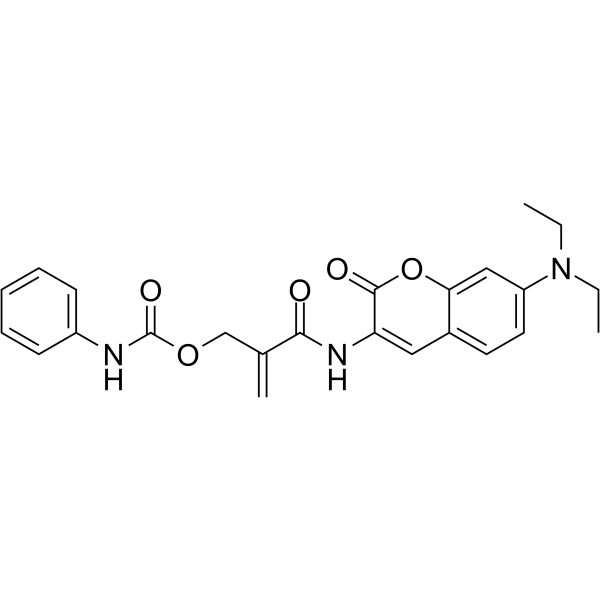
AC-green (VDP-green) is a β-allyl carbamate fluorescent probe for specifically imaging vicinal dithiol proteins (VDPs) in living systems (λex/λem=400/475 nm). AC-green can detect the reduced bovine serum albumin (rBSA) with high sensitivity. AC-green displays low toxicity and features high sensitivity, and is suitable for sensing VDPs in living cells and zebrafishes .
|
-
- HY-W145524
-
|
Phenyl 3-O-allyl-2,4,6-tri-O-benzyl-1-thio-β-D-galactopyranoside
|
Biochemical Assay Reagents
|
Others
|
|
Gal[246Bn,3All]-β-SPh is a biochemical reagent that can be used as a biological material or organic compound for life science related research.
|
-
![Gal[246Bn,3All]-β-SPh](//file.medchemexpress.com/product_pic/hy-w145524.gif)
- HY-111827R
-
|
|
Histamine Receptor
|
Cardiovascular Disease
Others
Metabolic Disease
Inflammation/Immunology
|
|
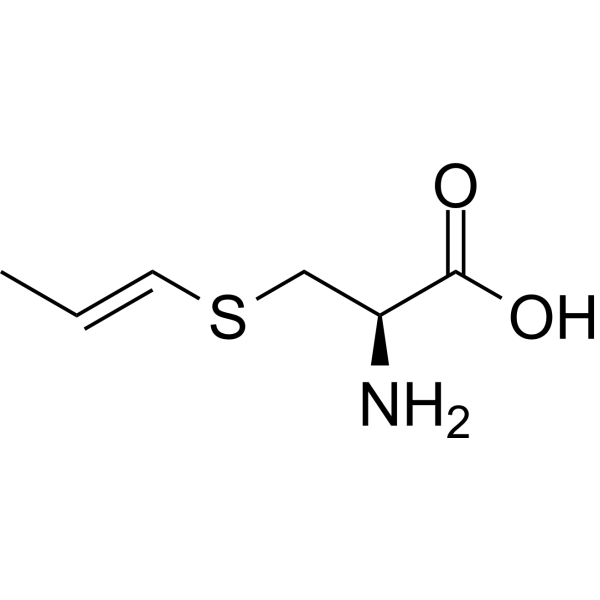
S-1-Propenyl-L-cysteine (Standard) is the analytical standard of S-1-Propenyl-L-cysteine. This product is intended for research and analytical applications. S-1-Propenyl-L-cysteine is a stereoisomer of S-allyl-l-cysteine, extracted from garlic, with immunomodulatory effects and reduces blood pressure in a hypertensive animal model . S-1-Propenyl-L-cysteine exhibits antioxidative efficacy through a NO-dependent BACH1 signaling pathway . S-1-Propenyl-L-cysteine is orally active.
|
-

- HY-W668661
-
-

- HY-170708
-
-

- HY-185479
-
-

- HY-185482
-
-

- HY-185481
-
-

- HY-185480
-
-

- HY-164396
-
|
|
Drug Intermediate
LYTACs
|
Cancer
|
|
Allyl-mannose-6-phosphonate (M6Pn; Compound 6) is a stable analogue of mannose-6-phosphate (M6P). Allyl-mannose-6-phosphonate can be used to synthesize M6Pn-peptide conjugates and construct lysosome-targeting chimeras (LYTAC) .
|
-

- HY-W702387
-
|
Rosuvastatin acid allyl ester
|
Drug Intermediate
|
Others
|
|
Rosuvastatin impurity 35 (Rosuvastatin acid allyl ester) is an impurity of Rosuvastatin.
|
-

- HY-W796380
-
|
Acryloyl-PEG3-OH
|
Biochemical Assay Reagents
|
Others
|
|
Allyl-PEG3-OH (Acryloyl-PEG3-OH) is a PEG derivative with a hydroxyl (OH) functional group that can be used for drug delivery.
|
-

- HY-W397977S
-
|
4-Hydroxy cinnamyl alcohol diacetate-d6
|
Isotope-Labeled Compounds
|
Others
|
|
(E)-3-(4-Acetoxyphenyl)allyl acetate-d6 (4-Hydroxy cinnamyl alcohol diacetate-d6) is the deuterium labeled (E)-3-(4-Acetoxyphenyl)allyl acetate.
|
-

- HY-W700583
-
|
|
Biochemical Assay Reagents
|
Others
|
|
Allyl 2-(acetylamino)-2-deoxy-4,6-O-(phenylmethylene)-α-D-glucopyranoside is a class of biochemical reagents used in glycobiology research. Glycobiology studies the structure, synthesis, biology, and evolution of sugars. It involves carbohydrate chemistry, enzymology of glycan formation and degradation, protein-glycan recognition, and the role of glycans in biological systems. This field is closely related to basic research, biomedicine, and biotechnology .
|
-

- HY-W700423
-
|
|
Biochemical Assay Reagents
|
Others
|
|
Allyl 2-Acetamido-3,4,6-tri-O-acetyl-2-deoxy-β-D-glucopyranoside is a class of biochemical reagents used in glycobiology research. Glycobiology studies the structure, synthesis, biology, and evolution of sugars. It involves carbohydrate chemistry, enzymology of glycan formation and degradation, protein-glycan recognition, and the role of glycans in biological systems. This field is closely related to basic research, biomedicine, and biotechnology .
|
-

- HY-N2423B
-
|
(E/Z)-allyl-glucosinolate free base; (E/Z)-2-Propenyl-glucosinolate free base
|
NF-κB
p38 MAPK
Apoptosis
|
Cardiovascular Disease
Infection
Inflammation/Immunology
Cancer
|
|
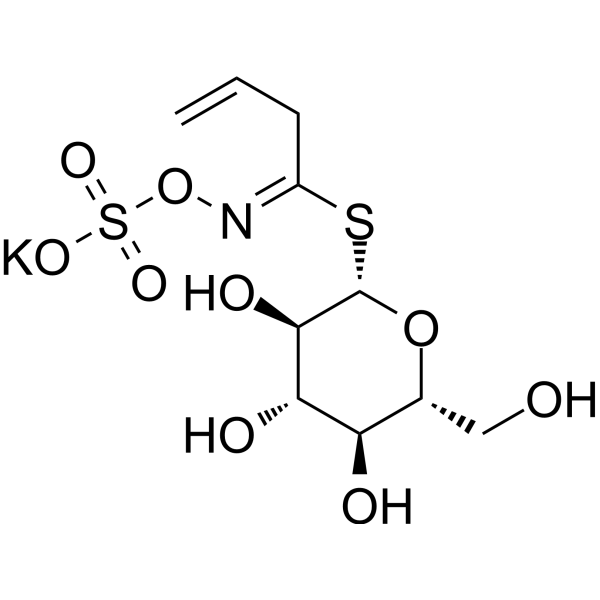
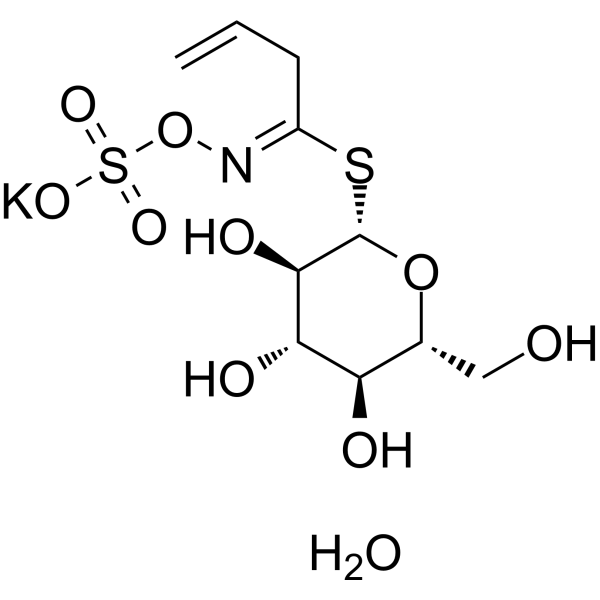
(E/Z)-Sinigrin ((E/Z)-Allyl-glucosinolate; (E/Z)-2-Propenyl-glucosinolate) free base is an orally active aliphatic thioglucoside anti-leukemia compound. Allyl isothiocyanate, produced by the hydrolysis of (E/Z)-sinigrin free base by myrosinase, has an IC50 of 2.71 μM against HL60 leukemia cells. The hydrolysis products of (E/Z)-sinigrin free base can further activate apoptosis pathways, inhibit NF-κB and MAPK signaling pathways, and induce phase II metabolic enzyme activity, thus exhibiting anti-cancer, anti-inflammatory, antibacterial, antioxidant, and wound healing activities. (E/Z)-Sinigrin free base can be used in research on cancer, inflammation-related diseases (such as atherosclerosis), and infectious diseases. (E/Z)-Sinigrin free base can be naturally extracted from the seeds of Brassica nigra, Brassica juncea, and other Brassicaceae plants such as broccoli and Brussels sprouts. Methyl pechueloate is a guaiane-type sesquiterpene ester compound and a potential precursor of xerantholide. It is useful in the structural elucidation and biosynthetic pathway studies of sesquiterpenoids. Methyl pechueloate can be naturally extracted from the aerial parts of Pechuel-Loeschea leibnitziae (Kuntze) O. Hoffm .
|
-

- HY-W393498
-
|
Gal[246Ac,3All]-β-SPh
|
Biochemical Assay Reagents
|
|
|
Phenyl 2,4, 6-tri-o-acetyl-3-o-allyl-β-d-Thiogalactopyranoside (Gal[246Ac,3All]-β-SPh) is a class of biochemical reagents used for glycobiology research. Glycobiology studies the structure, synthesis, biology, and evolution of sugars. It deals with carbohydrate chemistry, glycan formation and degradation enzymology, protein-glycan recognition, and the role of glycans in biological systems. The field is closely related to basic research, biomedicine and biotechnology .
|
-

- HY-W700579
-
-

- HY-W047405
-
|
|
Biochemical Assay Reagents
|
Others
|
|
Allylα-D-glucopyranoside is a class of biochemical reagents used in glycobiology research. Glycobiology studies the structure, synthesis, biology, and evolution of sugars. It involves carbohydrate chemistry, enzymology of glycan formation and degradation, protein-glycan recognition, and the role of glycans in biological systems. This field is closely related to basic research, biomedicine, and biotechnology .
|
-

- HY-P11694
-
|
|
Biochemical Assay Reagents
|
Neurological Disease
|
|
Alloc-Aeg (Fmoc)-OH is a protected serine triphosphate building block and an Nα-Fmoc protected amino acid. Alloc-Aeg (Fmoc)-OH contains serine protected by α-N-allyloxycarbonyl (Alloc) and bis (allyl) phosphate groups, and it can be used in the synthesis of peptide nucleic acids (PNAs). Alloc-Aeg (Fmoc)-OH is applicable to research related to Alzheimer's disease .
|
-

| Cat. No. |
Product Name |
Type |
-
- HY-D1244
-
|
|
Fluorescent Dyes
|
|
CO probe 1 (probe 2) is a highly efficient fluorescent CO probe (Ex=493 nm) with an allyl ether reaction site. In the presence of PdCl₂, CO reduces Pd 2+ to Pd 0, triggering a Tsuji-Trost reaction that removes the allyl protecting group, releases fluorescein, and generates a significant fluorescence signal. CO probe 1 has high selectivity, rapid response (fluorescence enhancement of 150 times within 20 minutes), and low cytotoxicity, and can be used for real-time imaging of CO in living cells. CO probe 1 may be used to study pathological mechanisms involving CO signaling regulation, such as inflammation, vascular disease, or cancer .
|
-
- HY-D1258
-
|
VDP-green
|
Fluorescent Dyes
|
AC-green (VDP-green) is a β-allyl carbamate fluorescent probe for specifically imaging vicinal dithiol proteins (VDPs) in living systems (λex/λem=400/475 nm). AC-green can detect the reduced bovine serum albumin (rBSA) with high sensitivity. AC-green displays low toxicity and features high sensitivity, and is suitable for sensing VDPs in living cells and zebrafishes .
|
| Cat. No. |
Product Name |
Type |
-
- HY-Y0549
-
|
Diphenylmethane-α-carboxylic Acid
|
Biochemical Assay Reagents
|
|
Diphenylacetic acid (Diphenylmethane-α-carboxylic Acid) is a biochemical reagent that can be used as a biological material or organic compound for life science related research. Diphenylacetic acid can be used as a reagent in the kinetic resolution of racemic 2-hydroxy-y-butyrolactones by asymmetric esterification in the presence of pivalic anhydride and chiral acyl-transfer catalyst. Diphenylacetic acid can act as a catalyst to synthesize 2-allyl-3-oxazolin-5-one derivatives via Rh-catalyzed coupling reaction of azlactones and alkynes followed by aza-Cope rearrangement .
|
-
- HY-W039915
-
|
|
Biochemical Assay Reagents
|
|
Allyl α-D-galactopyranoside is an α-galactoside and acceptor/donor substrate for transgalactosylation reactions. Allyl α-D-galactopyranoside acts as an acceptor substrate in α-galactosidase-catalyzed transgalactosylation, and serves as a donor substrate to form longer α-galactosyl-containing oligosaccharides. Allyl α-D-galactopyranoside serves as a model compound for investigating the catalytic mechanism and substrate specificity of glycoside hydrolases and glycosyltransferases .
|
-
- HY-W016976
-
|
Prop-2-en-1-yl heptanoate
|
Biochemical Assay Reagents
|
|
Allyl heptanoate is an ester that is formed by the esterification of medium-chain fatty acids, heptanoic acid and allyl alcohol. The compound has a fruity smell and is commonly used as a flavoring in foods such as baked goods, candy and beverages.
|
-
- HY-W047691
-
|
Acryloyl-PEG2-OH
|
Biochemical Assay Reagents
|
|
Allyl-PEG2-OH (Acryloyl-PEG2-OH) is a PEG derivative that can be used for drug delivery and other research .
|
-
- HY-W127576
-
|
Pelargonic acid allyl ester
|
Biochemical Assay Reagents
|
|
Allyl Nonanoate is a biochemical reagent that can be used as a biological material or organic compound for life science related research.
|
-
- HY-W048232
-
|
|
Biochemical Assay Reagents
|
|
Allyl α-D-mannopyranoside is a class of biochemical reagents used in glycobiology research. Glycobiology studies the structure, synthesis, biology, and evolution of sugars. It involves carbohydrate chemistry, enzymology of glycan formation and degradation, protein-glycan recognition, and the role of glycans in biological systems. This field is closely related to basic research, biomedicine, and biotechnology .
|
-
- HY-W145552
-
|
4-Methoxyphenyl 3-O-allyl-beta-D-galactopyranoside
|
Biochemical Assay Reagents
|
|
4-Methoxyphenyl 3-O-Allyl-β-D-galactopyranoside is an organic compound belonging to the family of galactopyranosides. It is often used as a building block for the synthesis of more complex glycosides and glycoconjugates. 4-Methoxyphenyl 3-O-Allyl-β-D-galactopyranoside has various applications in biochemical research, especially in the study of carbohydrate metabolism and protein-carbohydrate interactions. This compound contains an allyl protecting group that can be selectively removed using palladium-catalyzed conditions to reveal hydroxyl functionality for further chemical modification.
|
-
- HY-W145600
-
|
1,2,4,6-Tetra-O-acetyl-3-O-allyl-beta-D-glucopyranose
|
Biochemical Assay Reagents
|
|
1,2,4,6-Tetra-O-acetyl-3-O-allyl-β-D-glucopyranose is a biochemical reagent that can be used as a biological material or organic compound for life science related research.
|
-
- HY-W145601
-
|
|
Biochemical Assay Reagents
|
|
4-Methoxyphenyl 3-O-Allyl-4,6-O-benzylidene-β-D-galactopyranoside is a class of biochemical reagents used in glycobiology research. Glycobiology studies the structure, synthesis, biology, and evolution of sugars. It involves carbohydrate chemistry, enzymology of glycan formation and degradation, protein-glycan recognition, and the role of glycans in biological systems. This field is closely related to basic research, biomedicine, and biotechnology .
|
-
- HY-W698356
-
|
|
Biochemical Assay Reagents
|
|
Methyl 2-O-allyl-3-O-benzyl-4,6-O-benzylidene-α-D-mannopyranoside is a class of biochemical reagents used in glycobiology research. Glycobiology studies the structure, synthesis, biology, and evolution of sugars. It involves carbohydrate chemistry, enzymology of glycan formation and degradation, protein-glycan recognition, and the role of glycans in biological systems. This field is closely related to basic research, biomedicine, and biotechnology .
|
-
- HY-W145572
-
|
|
Biochemical Assay Reagents
|
|
Phenyl 2,4,6-tri-O-acetyl-3-O-allyl-1-thio-β-D-glucopyranoside is a class of biochemical reagents used in glycobiology research. Glycobiology studies the structure, synthesis, biology, and evolution of sugars. It involves carbohydrate chemistry, enzymology of glycan formation and degradation, protein-glycan recognition, and the role of glycans in biological systems. This field is closely related to basic research, biomedicine, and biotechnology .
|
-
- HY-W145524
-
|
Phenyl 3-O-allyl-2,4,6-tri-O-benzyl-1-thio-β-D-galactopyranoside
|
Biochemical Assay Reagents
|
|
Gal[246Bn,3All]-β-SPh is a biochemical reagent that can be used as a biological material or organic compound for life science related research.
|
-
- HY-W668661
-
-
- HY-W796380
-
|
Acryloyl-PEG3-OH
|
Biochemical Assay Reagents
|
|
Allyl-PEG3-OH (Acryloyl-PEG3-OH) is a PEG derivative with a hydroxyl (OH) functional group that can be used for drug delivery.
|
-
- HY-W700583
-
|
|
Biochemical Assay Reagents
|
|
Allyl 2-(acetylamino)-2-deoxy-4,6-O-(phenylmethylene)-α-D-glucopyranoside is a class of biochemical reagents used in glycobiology research. Glycobiology studies the structure, synthesis, biology, and evolution of sugars. It involves carbohydrate chemistry, enzymology of glycan formation and degradation, protein-glycan recognition, and the role of glycans in biological systems. This field is closely related to basic research, biomedicine, and biotechnology .
|
-
- HY-W700423
-
|
|
Biochemical Assay Reagents
|
|
Allyl 2-Acetamido-3,4,6-tri-O-acetyl-2-deoxy-β-D-glucopyranoside is a class of biochemical reagents used in glycobiology research. Glycobiology studies the structure, synthesis, biology, and evolution of sugars. It involves carbohydrate chemistry, enzymology of glycan formation and degradation, protein-glycan recognition, and the role of glycans in biological systems. This field is closely related to basic research, biomedicine, and biotechnology .
|
-
- HY-W393498
-
|
Gal[246Ac,3All]-β-SPh
|
Biochemical Assay Reagents
|
|
Phenyl 2,4, 6-tri-o-acetyl-3-o-allyl-β-d-Thiogalactopyranoside (Gal[246Ac,3All]-β-SPh) is a class of biochemical reagents used for glycobiology research. Glycobiology studies the structure, synthesis, biology, and evolution of sugars. It deals with carbohydrate chemistry, glycan formation and degradation enzymology, protein-glycan recognition, and the role of glycans in biological systems. The field is closely related to basic research, biomedicine and biotechnology .
|
-
- HY-W700579
-
-
- HY-W047405
-
|
|
Biochemical Assay Reagents
|
|
Allylα-D-glucopyranoside is a class of biochemical reagents used in glycobiology research. Glycobiology studies the structure, synthesis, biology, and evolution of sugars. It involves carbohydrate chemistry, enzymology of glycan formation and degradation, protein-glycan recognition, and the role of glycans in biological systems. This field is closely related to basic research, biomedicine, and biotechnology .
|
| Cat. No. |
Product Name |
Target |
Research Area |
-
- HY-W007052
-
-
- HY-W012907
-
-
- HY-N9413
-
|
L-γ-Glutamyl-(S)-allyl-Cysteine
|
Peptides
|
Metabolic Disease
|
|
γ-Glutamyl-S-allylcysteine (L-γ-Glutamyl-(S)-Allyl-Cysteine) is a naturally occurring organosulfur compound found in garlic. γ-Glutamyl-S-allylcysteine has antiglycative effect and shows radical-scavenging and metal-chelating capacities .
|
-
- HY-W013779
-
-
- HY-W048286
-
-
- HY-W008560
-
-
- HY-P11694
-
|
|
Biochemical Assay Reagents
|
Neurological Disease
|
|
Alloc-Aeg (Fmoc)-OH is a protected serine triphosphate building block and an Nα-Fmoc protected amino acid. Alloc-Aeg (Fmoc)-OH contains serine protected by α-N-allyloxycarbonyl (Alloc) and bis (allyl) phosphate groups, and it can be used in the synthesis of peptide nucleic acids (PNAs). Alloc-Aeg (Fmoc)-OH is applicable to research related to Alzheimer's disease .
|
| Cat. No. |
Product Name |
Category |
Target |
Chemical Structure |
-
- HY-N0315
-
-
-
- HY-N0404
-
-
-
- HY-128447
-
-
-
- HY-W013573
-
-
-
- HY-134900
-
-
-
- HY-N2423
-
-
-
- HY-111827
-
-
-
- HY-N9413
-
-
-
- HY-106784A
-
|
|
Natural Products
Allium sativum L.
Plants
Amaryllidaceae
Source Classification
|
Fungal
Apoptosis
|
|
(E)-Ajoene is a oxygenated ajoene and organosulfur compound, which can be acquired via allicin decomposing. The polysulfides from garlic can be converted by human red blood cells into hydrogen sulfide (H2S) and allyl glutathione. (E)-Ajoene has been proved to show neuroprotective effects against ischemic damage. (E)-Ajoene is orally active to inhibit lipid peroxidation. (E)-Ajoene increases the number of cresyl violet-positive neurons and decreases the number of reactive gliosis in the CA1 region .
|
-
-
- HY-N0404R
-
-
-
- HY-N15237
-
-
-
- HY-128447R
-
-
-
- HY-W013573R
-
-
-
- HY-147065
-
-
-
- HY-N9071
-
-
-
- HY-111827R
-
|
|
Liliaceae
Ketones, Aldehydes, Acids
Allium sativum Linn.
Plants
Source Classification
|
Histamine Receptor
|
|
S-1-Propenyl-L-cysteine (Standard) is the analytical standard of S-1-Propenyl-L-cysteine. This product is intended for research and analytical applications. S-1-Propenyl-L-cysteine is a stereoisomer of S-allyl-l-cysteine, extracted from garlic, with immunomodulatory effects and reduces blood pressure in a hypertensive animal model . S-1-Propenyl-L-cysteine exhibits antioxidative efficacy through a NO-dependent BACH1 signaling pathway . S-1-Propenyl-L-cysteine is orally active.
|
-
-
- HY-N2423B
-
|
(E/Z)-allyl-glucosinolate free base; (E/Z)-2-Propenyl-glucosinolate free base
|
Structural Classification
Glucosinolates
Plants
Brassicaceae
Source Classification
Mutarda nigra (L.) Bernh.
|
NF-κB
p38 MAPK
Apoptosis
|
|
(E/Z)-Sinigrin ((E/Z)-Allyl-glucosinolate; (E/Z)-2-Propenyl-glucosinolate) free base is an orally active aliphatic thioglucoside anti-leukemia compound. Allyl isothiocyanate, produced by the hydrolysis of (E/Z)-sinigrin free base by myrosinase, has an IC50 of 2.71 μM against HL60 leukemia cells. The hydrolysis products of (E/Z)-sinigrin free base can further activate apoptosis pathways, inhibit NF-κB and MAPK signaling pathways, and induce phase II metabolic enzyme activity, thus exhibiting anti-cancer, anti-inflammatory, antibacterial, antioxidant, and wound healing activities. (E/Z)-Sinigrin free base can be used in research on cancer, inflammation-related diseases (such as atherosclerosis), and infectious diseases. (E/Z)-Sinigrin free base can be naturally extracted from the seeds of Brassica nigra, Brassica juncea, and other Brassicaceae plants such as broccoli and Brussels sprouts. Methyl pechueloate is a guaiane-type sesquiterpene ester compound and a potential precursor of xerantholide. It is useful in the structural elucidation and biosynthetic pathway studies of sesquiterpenoids. Methyl pechueloate can be naturally extracted from the aerial parts of Pechuel-Loeschea leibnitziae (Kuntze) O. Hoffm .
|
-
| Cat. No. |
Product Name |
Chemical Structure |
-
- HY-155912S
-
|
|
|
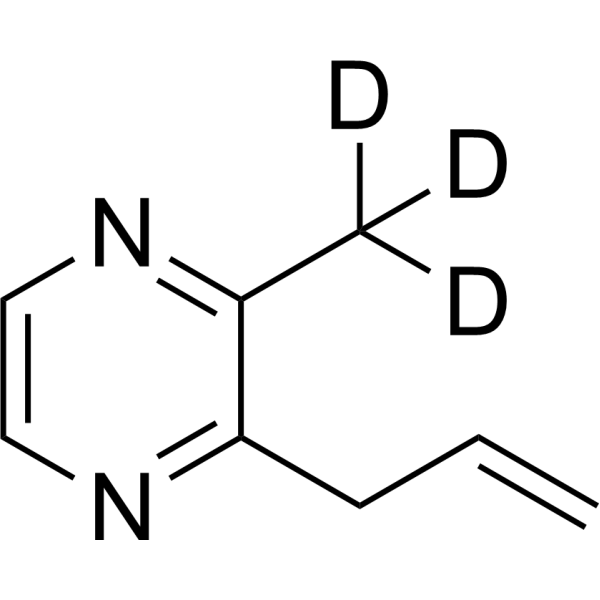
2-Allyl-3-methylpyrazine-d3 is deuterated labeled 2-Allyl-3-methylpyrazine.
|
-
-
- HY-W710830
-
|
|
|
4-Allyl-2-(methoxy-d3)phenyl methanesulfonate is the deuterium labeled 4-Allyl-2-(methoxy)phenyl methanesulfonate.
|
-
-
- HY-W142921S
-
|
|
|
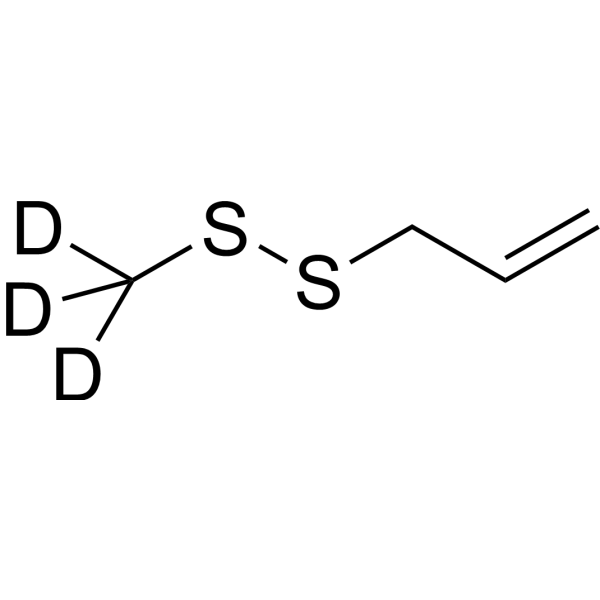
Allyl methyl disulfide-d3 is deuterated labeled Allyl methyl disulfide.
|
-
-
- HY-114976S
-
|
|
|
N-Acetyl-S-allyl-L-cysteine-d3 is the deuterium labeled N-Acetyl-S-allyl-L-cysteine (HY-114976) .
|
-
-
- HY-W010209S
-
|
|
|
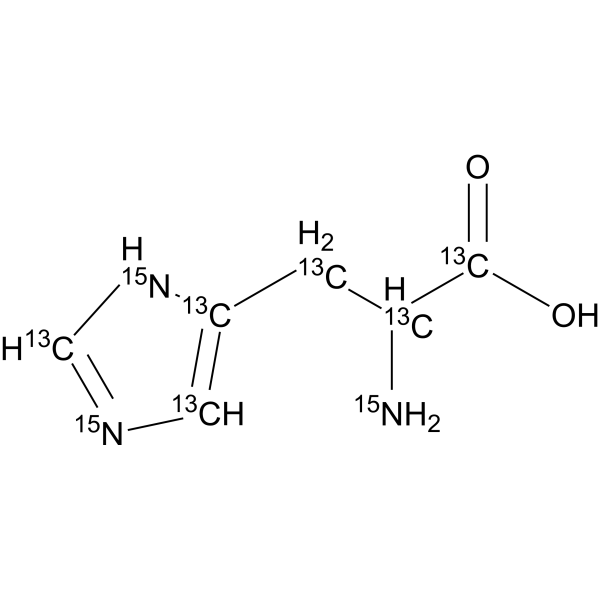
DL-Histidine- 13C6, 15N3 N-Acetyl-S-allyl-L-cysteine
|
-
-
- HY-W397977S
-
|
|
|
(E)-3-(4-Acetoxyphenyl)allyl acetate-d6 (4-Hydroxy cinnamyl alcohol diacetate-d6) is the deuterium labeled (E)-3-(4-Acetoxyphenyl)allyl acetate.
|
-
| Cat. No. |
Product Name |
|
Classification |
-
- HY-W001538
-
|
SPRC
|
|
Alkynes
|
|
S-Propargylcysteine (SPRC), a structural analog of S-allyl cysteine (SAC), is a slow H2S-releasing compound. S-Propargylcysteine reduces Ca 2+ accumulation and inflammatory cytokines, inhibits STAT3, and elevates p53 and Bax. S-Propargylcysteine has anti-inflammatory activity and protects mice against acute pancreatitis. S-Propargylcysteine also has cardioprotective, neuroprotective acitivties .
|
| Cat. No. |
Product Name |
|
Classification |
-
- HY-154358
-
|
|
|
Nucleoside Analogs
Uridine
|
|
4’-alpha-C-Allyl-2’,3’-bis(O-t-butyldimethylsilyl) uridine is a uridine analog. Uridine has potential antiepileptic effects, and its analogs can be used to study anticonvulsant and anxiolytic activities, as well as to develop new antihypertensive agents .
|
-
- HY-152531
-
|
|
|
Nucleoside Analogs
|
|
2-Amino-6-allyl thio-9-(beta-D-ribofuranosyl)-9H-purine is a purine nucleoside analog. Purine nucleoside analogs have broad antitumor activity targeting indolent lymphoid malignancies. Anticancer mechanisms in this process rely on inhibition of DNA synthesis, induction of apoptosis, etc .
|
-
- HY-152407
-
|
|
|
Nucleoside Analogs
Guanosine
|
|
7-Allyl-7,8-dihydro-8-oxo-9-(β-D-xylofuranosyl) guanine is a purine nucleoside analogue. Purine nucleoside analogs have broad antitumor activity targeting indolent lymphoid malignancies. Anticancer mechanisms in this process rely on inhibition of DNA synthesis, induction of apoptosis, etc .
|
Your information is safe with us. * Required Fields.
Inquiry Information
- Product Name:
- Cat. No.:
- Quantity:
- MCE Japan Authorized Agent:





![Allyl (11S,11aS)-11-((tert-butyldimethylsilyl)oxy)-8-hydroxy-7-methoxy-2-methyl-5-oxo-11,11a-dihydro-1H-benzo[e]pyrrolo[1,2-a][1,4]diazepine-10(5H)-carboxylate](http://file.medchemexpress.com/product_pic/hy-w092607.gif)


![5-Allyl-3-methoxy-6-methyl-7-(3,4,5-trimethoxyphenyl)bicyclo[3.2.1]oct-3-ene-2,8-dione](http://file.medchemexpress.com/product_pic/hy-n9071.gif)


![Gal[246Bn,3All]-β-SPh](http://file.medchemexpress.com/product_pic/hy-w145524.gif)





