Search Result
Results for "
3-O-(2
" in MedChemExpress (MCE) Product Catalog:
6
Biochemical Assay Reagents
| Cat. No. |
Product Name |
Target |
Research Areas |
Chemical Structure |
-
- HY-107425A
-
|
|
PROTACs
Epigenetic Reader Domain
|
Cancer
|
|
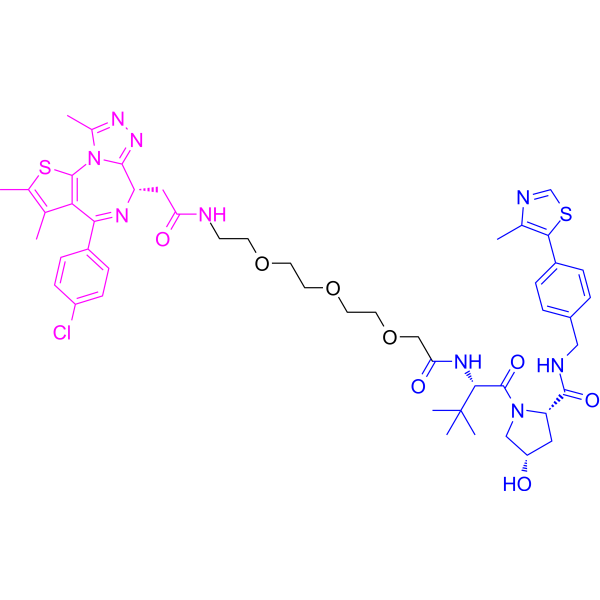
cis-MZ 1 is a cis isomer of meso-zeaxanthin, a xanthophyll carotenoid component of total zeaxanthin measured in serum and egg yolks.cis-MZ 1 is a triphenyltin benzoate that adopts either a tetrahedral monomeric structure (I) or a trans-SnR3O2 polymeric structure (III), with structure determined by a balance of steric and electronic factors .
|
-
-
- HY-N6964
-
|
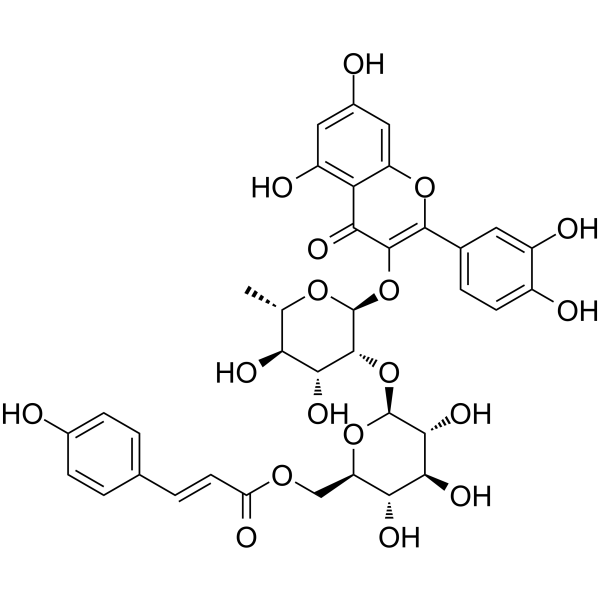
Quercetin-3-O-[2-O-(6-O-p-hydroxyl-E-coumaroyl)-D-glucosyl]-(1→2)-L-rhamnoside
|
Drug Derivative
|
Inflammation/Immunology
|
|
Quercetin 3-O-β-D-(6''-p-coumaroyl) glucopyranosyl (1→2)-α-L-rhamnopyranoside (Quercetin-3-O-[2-O-(6-O-p-hydroxyl-E-coumaroyl)-D-glucosyl]-(1→2)-L-rhamnoside) is a flavonoid glycoside present in Ginkgo biloba leaves, with antioxidant activity. Quercetin 3-O-β-D-(6''-p-coumaroyl) glucopyranosyl (1→2)-α-L-rhamnopyranoside serves as the major antioxidant component in Shuxuening Injection .
|
-
-
- HY-N5119
-
|
|
Others
|
Others
|
|
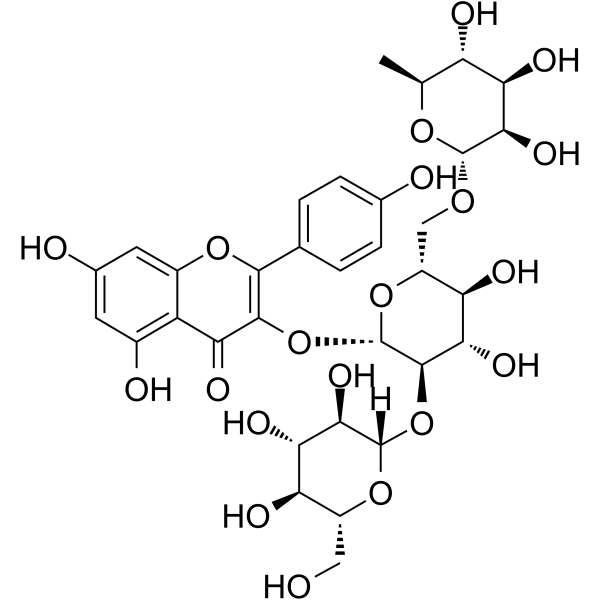
Kaempferol-3-O-(2''-O-β-D-glucopyl)-β-D-rutinoside is a natural glycoside that could be found in Camellia oleifera seeds .
|
-
-
- HY-N9529
-
|
|
Others
|
Others
|
|
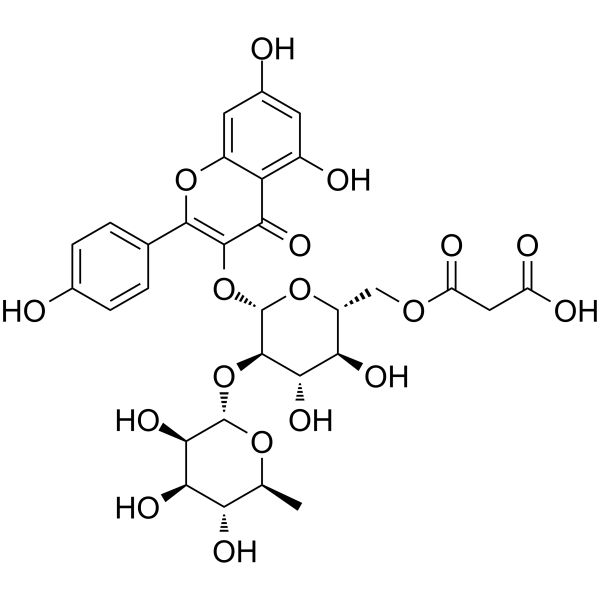
Kaempferol 3-O-(2′′-O-α-rhamnosyl-6′′-O-malonyl-β-glucoside) is a flavonoid glycoside compound .
|
-
-
- HY-152493
-
|
|
Nucleoside Antimetabolite/Analog
|
Others
|
|
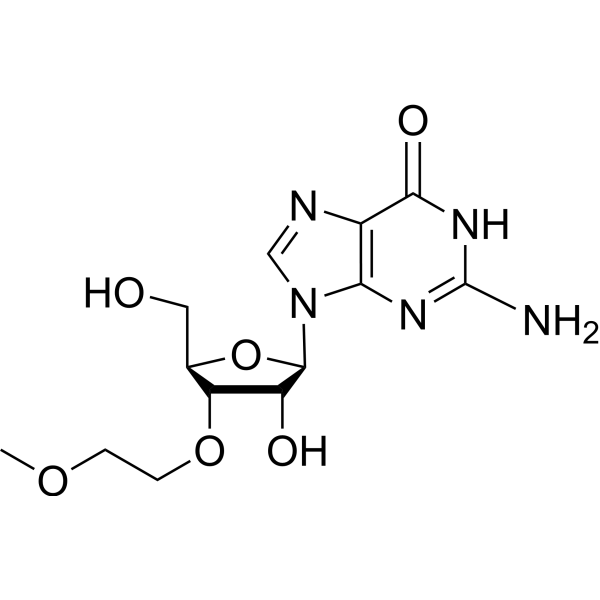
3’-O-(2-Methoxyethyl)guanosine is a guanosine analogue. Some guanosine analogs have immunostimulatory activity. In some animal models, they also induce type I interferons, producing antiviral effects. Studies have shown that the functional activity of guanosine analogs is dependent on the activation of Toll-like receptor 7 (TLR7) .
|
-
-
- HY-15254
-
|
25-Hydroxy Vitamin D3 3,3’-Aminopropyl Ether
|
VD/VDR
|
Metabolic Disease
|
|
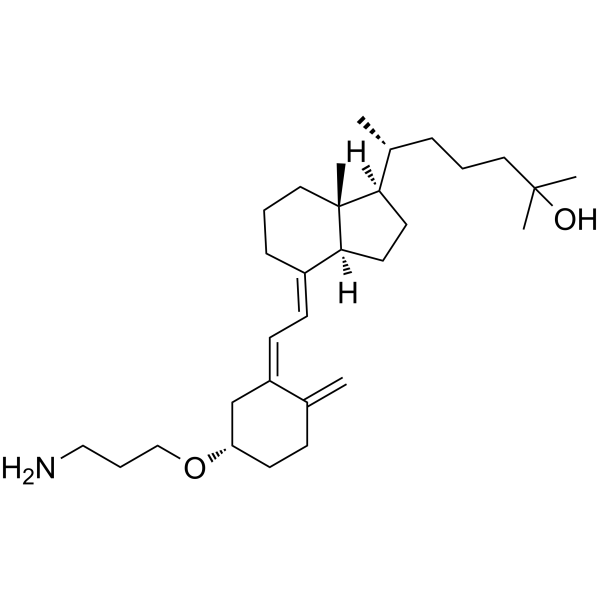
3-O-(2-Aminoethyl)-25-hydroxyvitamin D3 is a Vitamin D3 derivative.
|
-
-
- HY-154285
-
|
|
Nucleoside Antimetabolite/Analog
|
Cancer
|
|
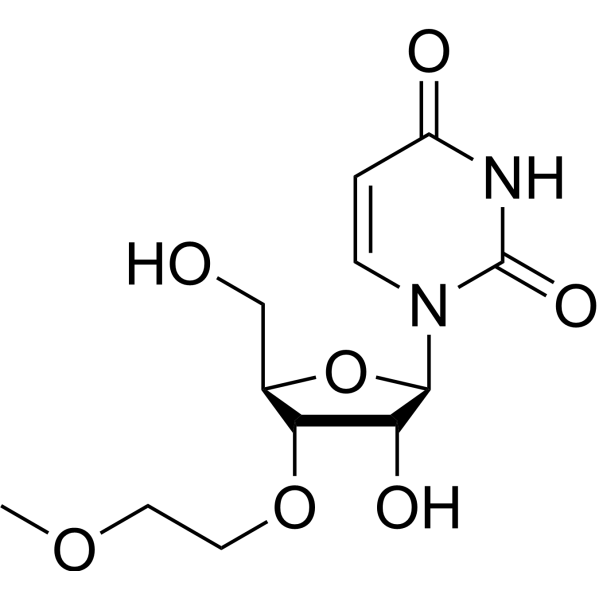
3’-O-(2-Methoxyethyl) uridine is a uridine analog. Uridine has potential antiepileptic effects, and its analogs can be used to study anticonvulsant and anxiolytic activities, as well as to develop new antihypertensive agents .
|
-
-
- HY-154434
-
|
|
Nucleoside Antimetabolite/Analog
|
Cancer
|
|
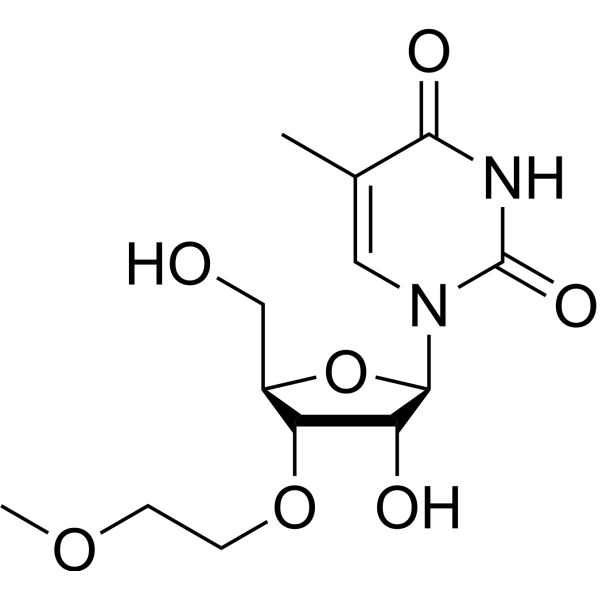
3’-O-(2-Methoxyethyl)-5-methyluridine is a thymidine analog. Analogs of this series have insertional activity towards replicated DNA. They can be used to label cells and track DNA synthesis .
|
-
-
- HY-N11538
-
|
|
Others
|
Inflammation/Immunology
|
|
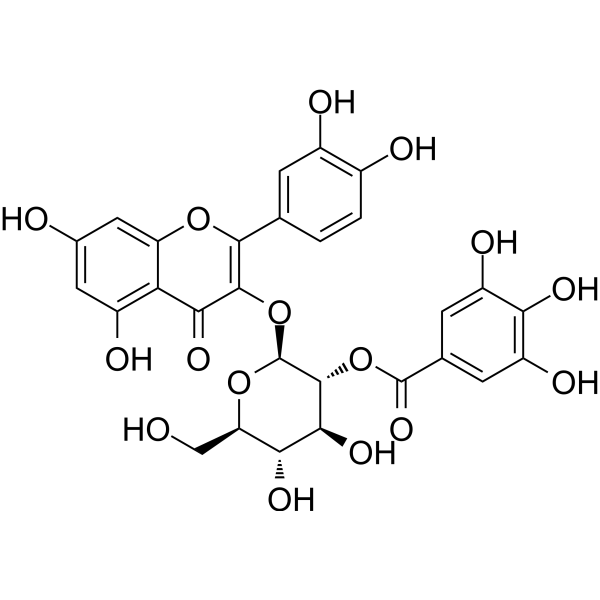
Quercetin-3-O-(2′′-O-galloyl)-β-D-glucopyranoside is a orally active phenolic compound that can be isolated from the Geranium species. Quercetin-3-O-(2′′-O-galloyl)-β-D-glucopyranoside has anti-inflammatory activities and has potential application in edema and aortic endothelium-dependent relaxation injury .
|
-
-
- HY-152498
-
|
|
Nucleoside Antimetabolite/Analog
|
Others
|
|
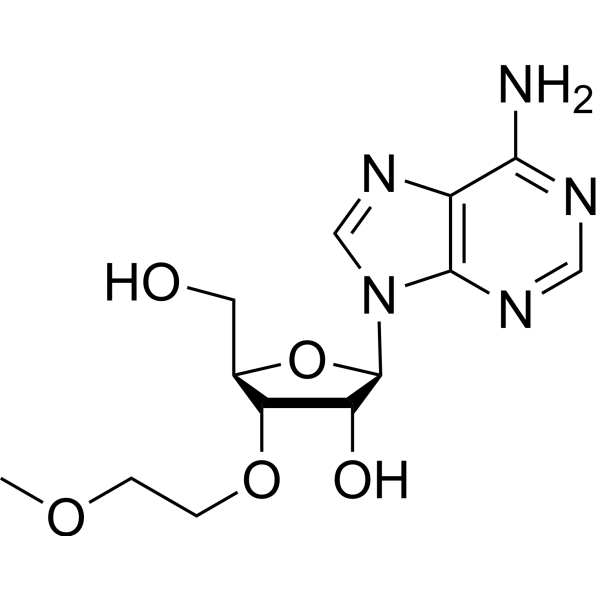
3’-O-(2-Methoxyethyl)adenosine is an adenosine analogue. Adenosine analogs mostly act as smooth muscle vasodilators and have also been shown to inhibit cancer progression. The popular products in this series are adenosine phosphate, Acadesine (HY-13417), Clofarabine (HY-A0005), Fludarabine phosphate (HY-B0028) and Vidarabine (HY-B0277) .
|
-
-
- HY-152646
-
|
|
Nucleoside Antimetabolite/Analog
|
Cancer
|
|
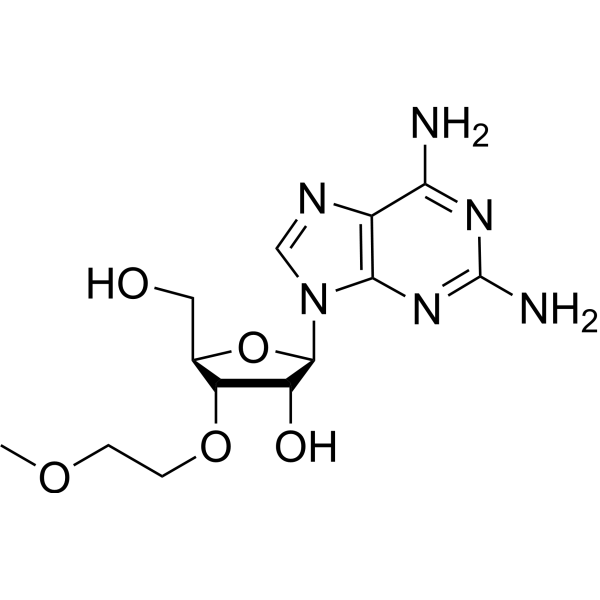
3’-O-(2-Methoxyethyl)-2-aminoadenosine is an adenosine analog. Adenosine analogs mostly act as smooth muscle vasodilators and have also been shown to inhibit cancer progression. Its popular products are adenosine phosphate, Acadesine (HY-13417), Clofarabine (HY-A0005), Fludarabine phosphate (HY-B0028) and Vidarabine (HY-B0277) .
|
-
-
- HY-152503
-
|
|
Nucleoside Antimetabolite/Analog
|
Others
|
|
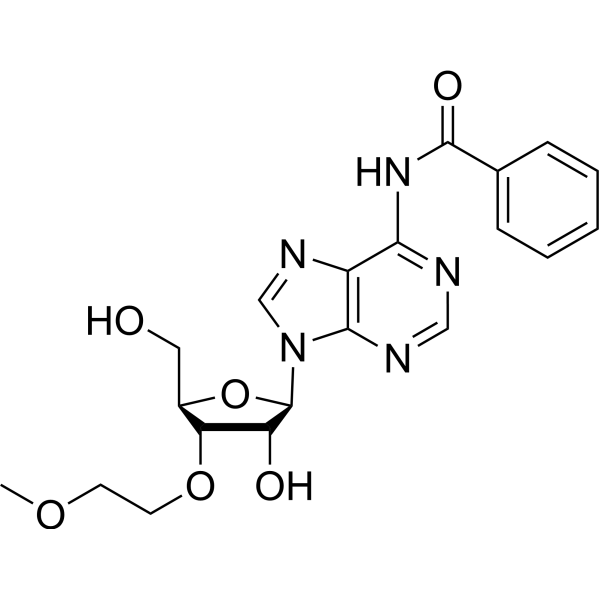
N6-Benzoyl-3’-O-(2-methoxyethyl)adenosine is a purine nucleoside analogue. Purine nucleoside analogs have broad antitumor activity targeting indolent lymphoid malignancies. Anticancer mechanisms in this process rely on inhibition of DNA synthesis, induction of apoptosis, etc .
|
-
-
- HY-151650
-
|
|
ADC Linker
|
Others
|
|
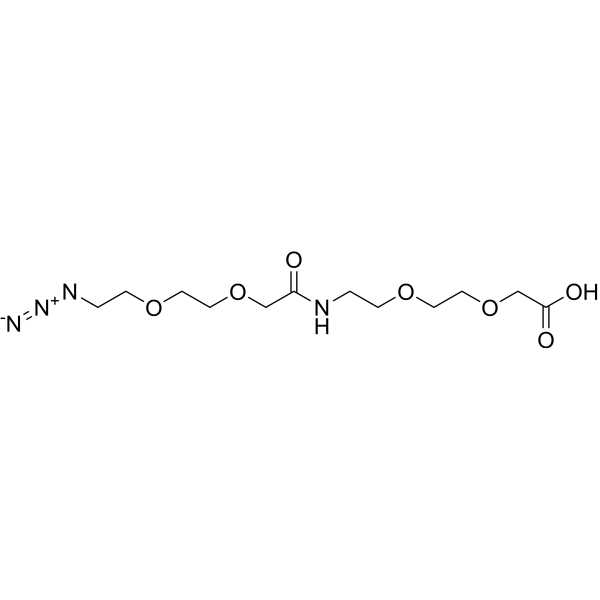
N3-O2Oc-O2Oc-OH is a click chemistry reagent containing an azide . N3-O2Oc-O2Oc-OH is a click chemistry reagent, it contains an Azide group and can undergo copper-catalyzed azide-alkyne cycloaddition reaction (CuAAc) with molecules containing Alkyne groups. It can also undergo strain-promoted alkyne-azide cycloaddition (SPAAC) reactions with molecules containing DBCO or BCN groups.
|
-
-
- HY-N7168
-
|
|
Others
|
Others
|
|
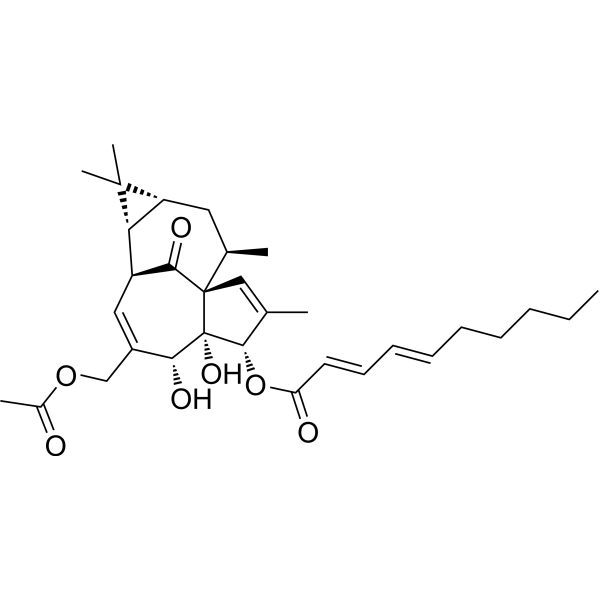
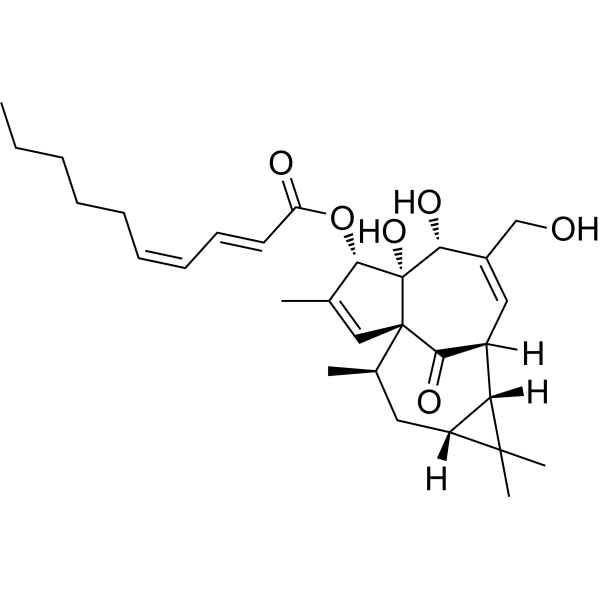
3-O-(2'E ,4'E-Decadienoyl)-20-O-acetylingenol is a ingenol-type diterpenoid that contains a 2,4-decadienoyloxy group .
|
-
-
- HY-N10784
-
|
|
Insecticide
|
Others
|
|
Kaempferol-3-O-[2″,6″-di-O-E-p-coumaroyl]-β-D-glucopyranoside is a acylated keampferol glucoside. Kaempferol-3-O-[2″,6″-di-O-E-p-coumaroyl]-β-D-glucopyranoside can be isolated from the leaves of O. dentata, acts as a repellent against a fouling organism, the blue mussel M. edulis .
|
-
![Kaempferol-3-O-[2″,6″-di-O-E-p-coumaroyl]-β-D-glucopyranoside](//file.medchemexpress.com/product_pic/hy-n10784.gif)
-
- HY-152868
-
|
|
Nucleoside Antimetabolite/Analog
|
Others
|
|
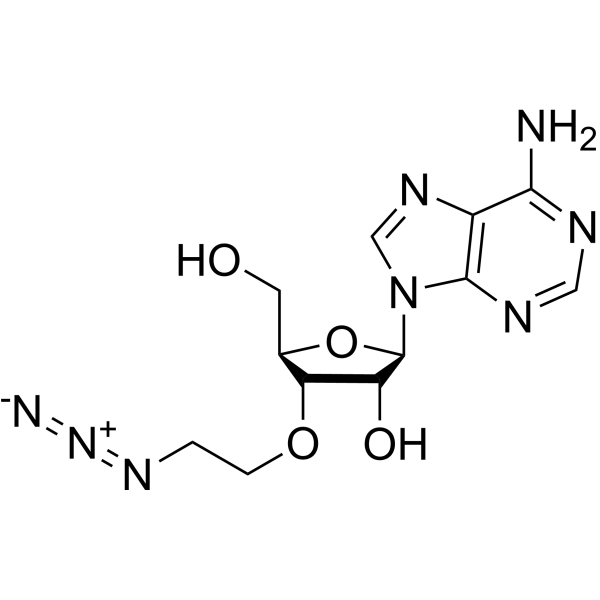
3’-O-(2-Azidoethyl)adenosine is a purine nucleoside analogue. Purine nucleoside analogs have broad antitumor activity targeting indolent lymphoid malignancies. Anticancer mechanisms in this process rely on inhibition of DNA synthesis, induction of apoptosis, etc . 3’-O-(2-Azidoethyl)adenosine is a click chemistry reagent, it contains an Azide group and can undergo copper-catalyzed azide-alkyne cycloaddition reaction (CuAAc) with molecules containing Alkyne groups. It can also undergo strain-promoted alkyne-azide cycloaddition (SPAAC) reactions with molecules containing DBCO or BCN groups.
|
-
-
- HY-152382
-
|
|
Nucleoside Antimetabolite/Analog
|
Cancer
|
|
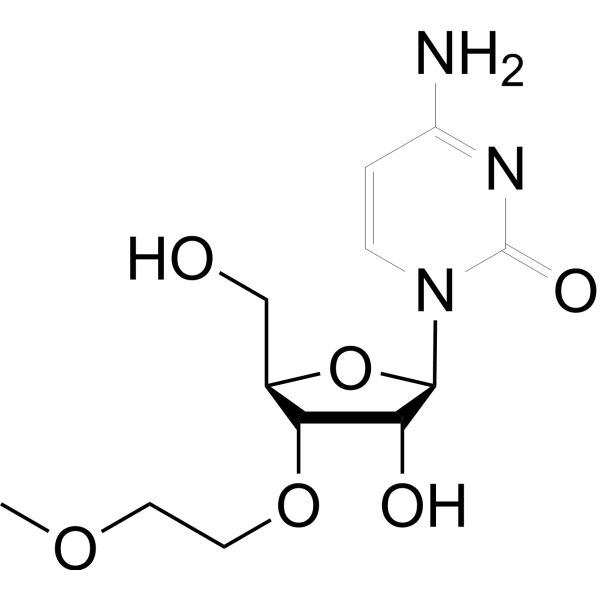
3’-O-(2-Methoxyethyl)cytidine is a cytidine analog. Cytidine analogs have a mechanism of inhibiting DNA methyltransferases (such as Zebularine, HY-13420), and have potential anti-metabolic and anti-tumor activities .
|
-
-
- HY-152577
-
|
|
Nucleoside Antimetabolite/Analog
|
Cancer
|
|
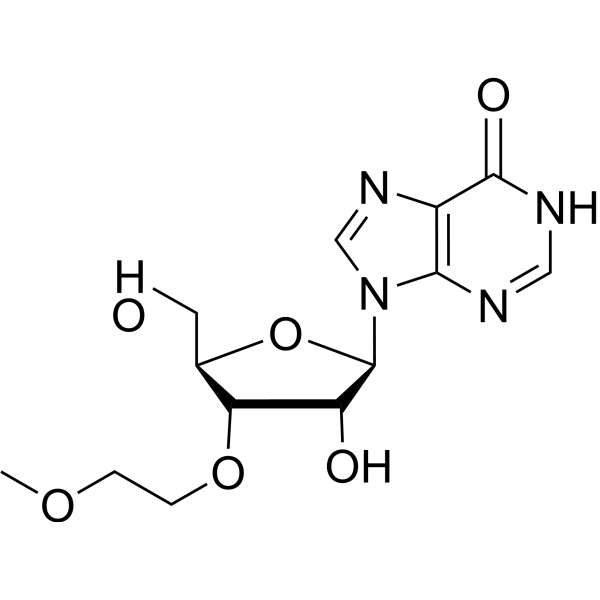
3’-O-(2-Methoxyethyl) inosine is a purine nucleoside analog. Purine nucleoside analogs have broad antitumor activity targeting indolent lymphoid malignancies. Anticancer mechanisms in this process rely on inhibition of DNA synthesis, induction of apoptosis, etc .
|
-
-
- HY-152480
-
|
|
Nucleoside Antimetabolite/Analog
|
Cancer
|
|
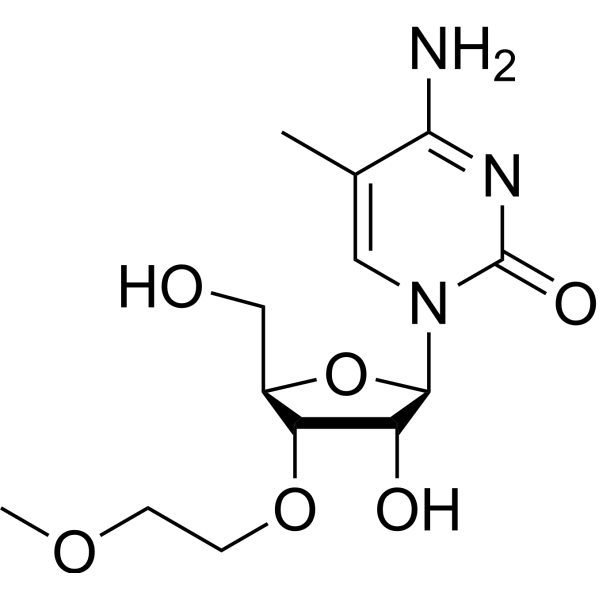
3’-O-(2-Methoxyethyl)-5-methylcytidine is a cytidine analog. Cytidine analogs have a mechanism of inhibiting DNA methyltransferases (such as Zebularine, HY-13420), and have potential anti-metabolic and anti-tumor activities .
|
-
-
- HY-N7166
-
-
-
- HY-152482
-
|
|
Nucleoside Antimetabolite/Analog
|
Cancer
|
|
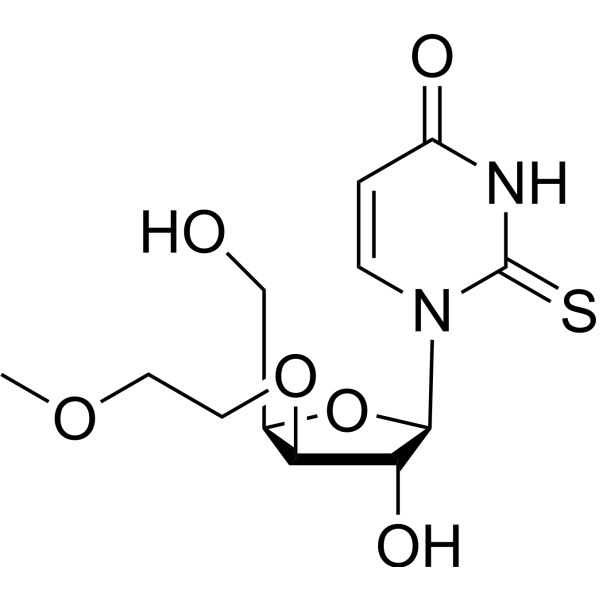
3’-O-(2-Methoxyethyl)-2-thiouridine is a purine nucleoside analog. Purine nucleoside analogs have broad antitumor activity targeting indolent lymphoid malignancies. Anticancer mechanisms in this process rely on inhibition of DNA synthesis, induction of apoptosis, etc .
|
-
-
- HY-N7168A
-
|
|
Others
|
Others
|
|
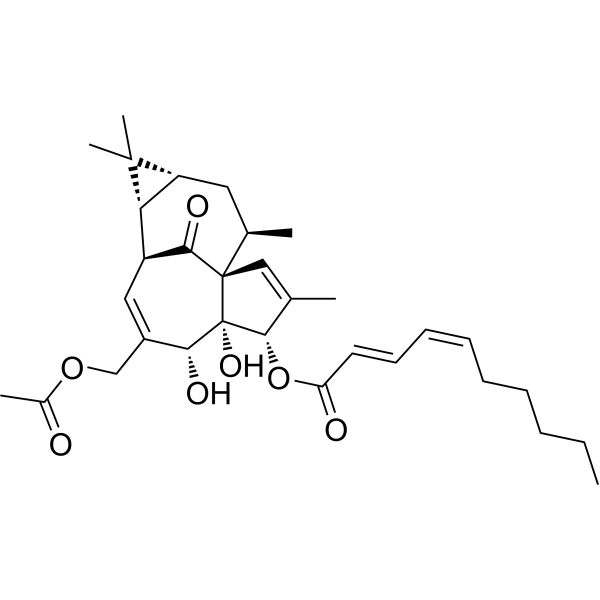
3-O-(2'E ,4'Z-Decadienoyl)-20-O-acetylingenol (compound 6) is a diterpene that can be isolated from Euphorbia kansui. 3-O-(2'E ,4'Z-Decadienoyl)-20-O-acetylingenol shows cleavage inhibition activity of individual Xenopus cells at the blastular stage .
|
-
-
- HY-152575
-
|
|
Nucleoside Antimetabolite/Analog
|
Cancer
|
|
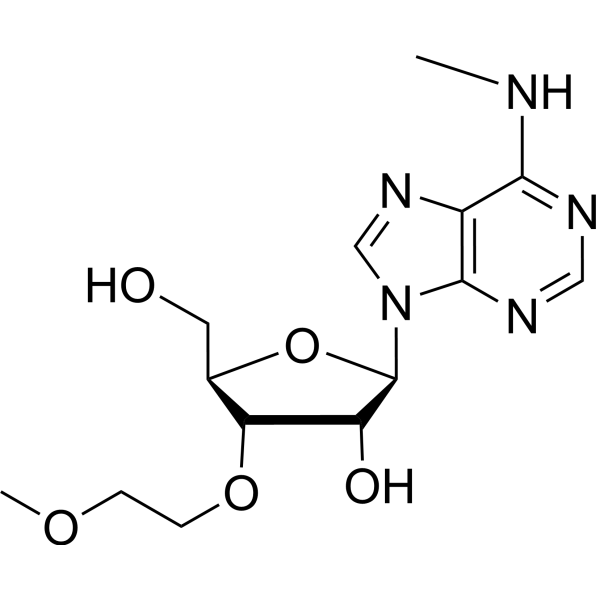
N6-Methyl-3’-O-(2-methoxyethyl) adenosine is a purine nucleoside analog. Purine nucleoside analogs have broad antitumor activity targeting indolent lymphoid malignancies. Anticancer mechanisms in this process rely on inhibition of DNA synthesis, induction of apoptosis, etc .
|
-
-
- HY-152587
-
|
|
Nucleoside Antimetabolite/Analog
|
Cancer
|
|
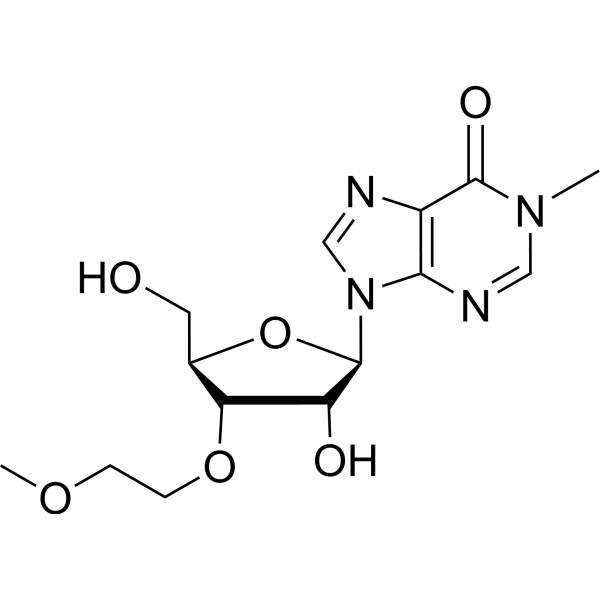
N1-Methyl-3’-O-(2-methoxyethyl) inosine is a purine nucleoside analog. Purine nucleoside analogs have broad antitumor activity targeting indolent lymphoid malignancies. Anticancer mechanisms in this process rely on inhibition of DNA synthesis, induction of apoptosis, etc .
|
-
-
- HY-152573
-
|
|
Nucleoside Antimetabolite/Analog
|
Cancer
|
|
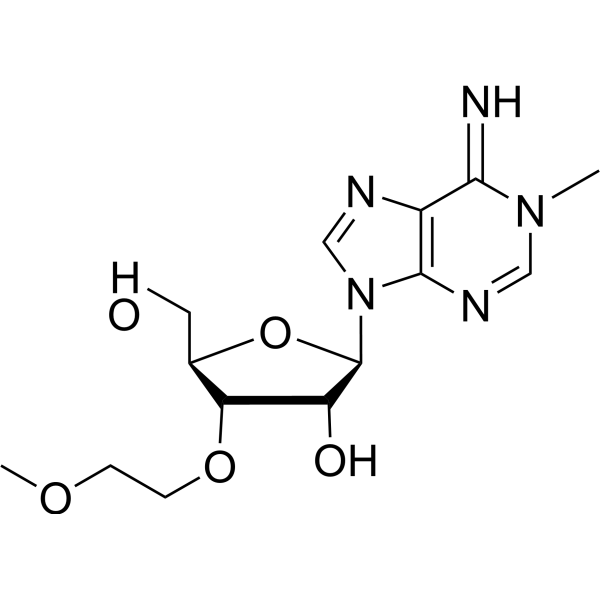
N1-Methyl-3’-O-(2-methoxyethyl) adenosine is a purine nucleoside analog. Purine nucleoside analogs have broad antitumor activity targeting indolent lymphoid malignancies. Anticancer mechanisms in this process rely on inhibition of DNA synthesis, induction of apoptosis, etc .
|
-
-
- HY-N7161
-
|
|
Others
|
Others
|
|
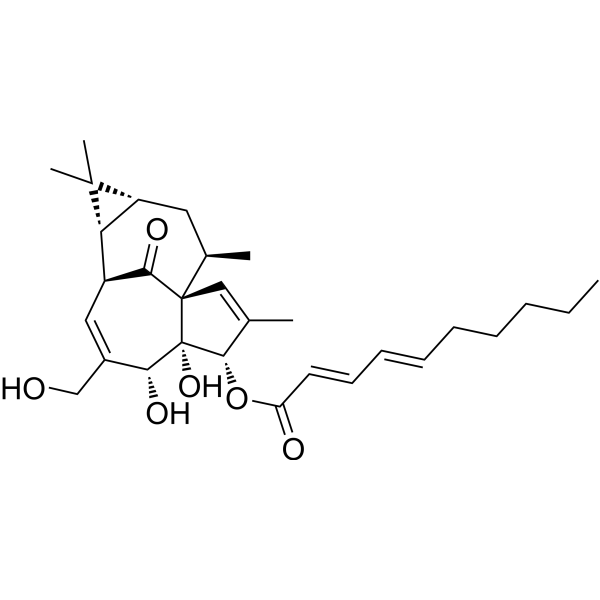
3-O-(2'E,4'E-Decadienoyl)-ingenol is a natural diterpenoid that shows cytotoxicity against human normal cell lines L-O2 and GES-1, with IC50s of 8.22 μM and 6.67 μM, respectively .
|
-
-
- HY-154449
-
|
|
Nucleoside Antimetabolite/Analog
|
Cancer
|
|
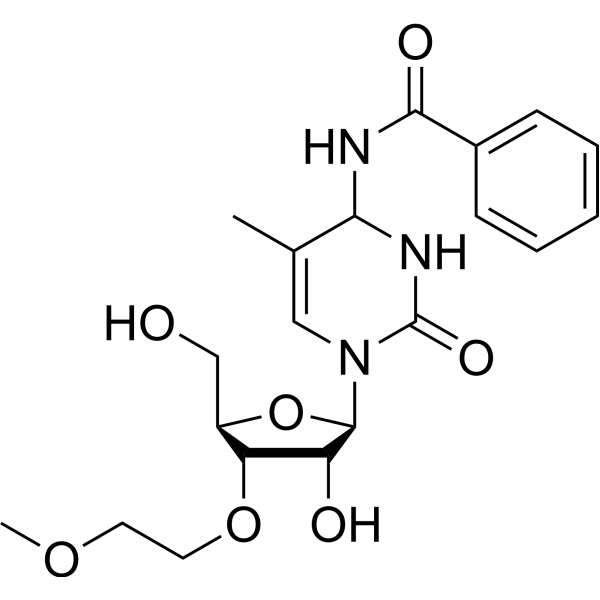
N4-Benzoyl-3’-O-(2-methoxyethyl)-5-methylcytidine is a purine nucleoside analog. Purine nucleoside analogs have broad antitumor activity targeting indolent lymphoid malignancies. Anticancer mechanisms in this process rely on inhibition of DNA synthesis, induction of apoptosis, etc .
|
-
-
- HY-154543
-
|
|
Nucleoside Antimetabolite/Analog
|
Cancer
|
|
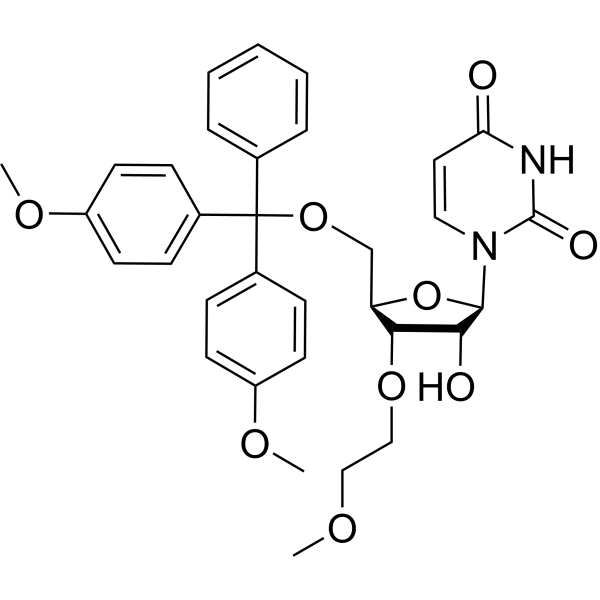
5’-O-(4,4’-Dimethoxytrityl)-3’-O-(2-methoxyethyl) uridine is a purine nucleoside analog. Purine nucleoside analogs have broad antitumor activity targeting indolent lymphoid malignancies. Anticancer mechanisms in this process rely on inhibition of DNA synthesis, induction of apoptosis, etc .
|
-
-
- HY-154552
-
|
|
Nucleoside Antimetabolite/Analog
|
Cancer
|
|
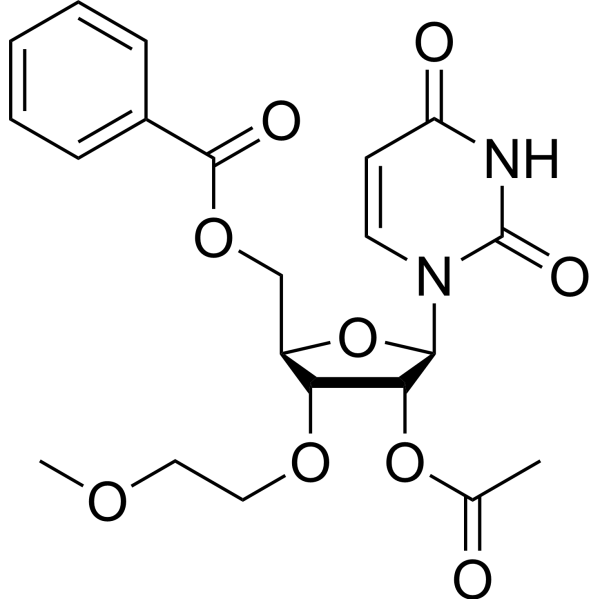
2’-O-Acetyl-5’-O-benzoyl-3’-O-(2-methoxyethyl) uridine is a uridine analog. Uridine has potential antiepileptic effects, and its analogs can be used to study anticonvulsant and anxiolytic activities, as well as to develop new antihypertensive agents .
|
-
-
- HY-N13116
-
|
|
Parasite
|
Others
|
|
3-O-(2",3"-Dimethylbutanoyl)-13-O-decanoylingenol (compound 2) is a diterpenoid with antinematode activity, which can be isolated from Euphorbia kansui .
|
-

-
- HY-154450
-
|
|
Nucleoside Antimetabolite/Analog
Phosphoramidites
|
Cancer
|
|
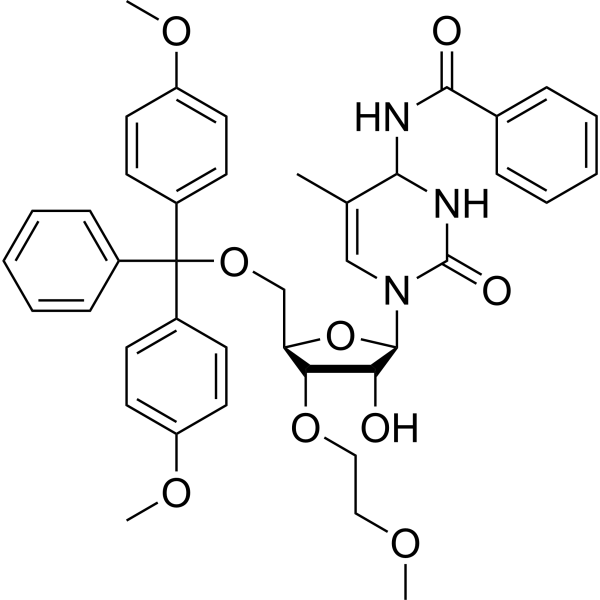
N4-Benzoyl-5’-O-DMT-3’-O-(2-methoxyethyl)-5-methylcytidine is a cytidine analog. Cytidine analogs have a mechanism of inhibiting DNA methyltransferases (such as Zebularine, HY-13420), and have potential anti-metabolic and anti-tumor activities .
|
-
-
- HY-154060
-
|
|
Nucleoside Antimetabolite/Analog
|
Cancer
|
|
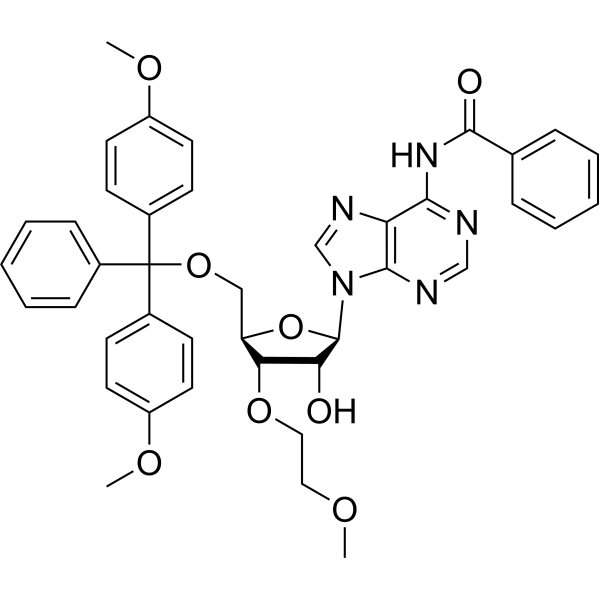
N6-Benzoyl-5'-O-(4,4'-dimethoxytrityl)-3'-O-(2-methoxyethyl)adenosine is a purine nucleoside analog. Purine nucleoside analogs have broad antitumor activity targeting indolent lymphoid malignancies. Anticancer mechanisms in this process rely on inhibition of DNA synthesis, induction of apoptosis, etc .
|
-
-
- HY-W698471
-
|
|
Biochemical Assay Reagents
|
Others
|
|
Methyl 4,6-O-(phenylmethylene)-3-O-2-propen-1-yl-α-D-mannopyranoside is a class of biochemical reagents used in glycobiology research. Glycobiology studies the structure, synthesis, biology, and evolution of sugars. It involves carbohydrate chemistry, enzymology of glycan formation and degradation, protein-glycan recognition, and the role of glycans in biological systems. This field is closely related to basic research, biomedicine, and biotechnology .
|
-

-
- HY-173579
-
|
2'(3')-AEC-ADP trisodium
|
Nucleoside Antimetabolite/Analog
|
Others
|
|
2'(3')-O-(2-Aminoethylcarbamoyl)adenosine-5'-O-diphosphate (2'(3')-AEC-ADP) trisodium is a derivative of Adenosine 5'-diphosphate (ADP) (HY-W010918).
|
-

-
- HY-N9676
-
|
|
Others
|
Others
|
|
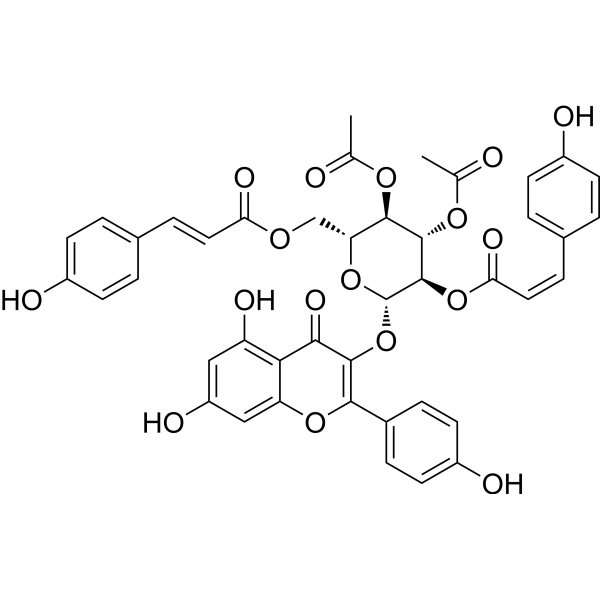
Kaempferol 3-O-(2'',4''-di-acetyl-3''-cis-p-coumaroyl-6''-trans-p-coumaroyl)-β-D-glucopyranoside is a flavonoid compound that can be isolated from Quercus dentata. Kaempferol 3-O-(2'',4''-di-acetyl-3''-cis-p-coumaroyl-6''-trans-p-coumaroyl)-β-D-glucopyranoside suppresses the superoxide generation induced by arachidonic acid .
|
-
-
- HY-W698908
-
|
Methyl 3-O-[2-(acetylamino)-2-deoxy-β-D-galactopyranosyl]-α-D-galactopyranoside
|
Biochemical Assay Reagents
|
Others
|
|
GalNAc1-b-3Gal-α-Ome (Methyl 3-O-[2-(acetylamino)-2-deoxy-β-D-galactopyranosyl]-α-D-galactopyranoside) is a class of biochemical reagents used in glycobiology research. Glycobiology studies the structure, synthesis, biology, and evolution of sugars. It involves carbohydrate chemistry, enzymology of glycan formation and degradation, protein-glycan recognition, and the role of glycans in biological systems. This field is closely related to basic research, biomedicine, and biotechnology .
|
-

-
- HY-W699294
-
|
|
Biochemical Assay Reagents
|
Others
|
|
Benzyl 2-acetamido-2-deoxy-3-O-(2',3',4',6'-tetra- O-acetyl-β-D-galactopyranosyl)-α-D-galactopyranoside is a class of biochemical reagents used in glycobiology research. Glycobiology studies the structure, synthesis, biology and evolution of sugars. It involves carbohydrate chemistry, enzymology of glycan formation and degradation, protein-Glycan recognition and the role of glycans in biological systems. This field is closely related to basic research, biomedicine and biotechnology.
|
-

-
- HY-N1742
-
|
2''-O-p-Cumaroyleuglanin; Kaempferol 3-O-[2′′-(E)-p-coumaroyl]-α-L-arabinofuranoside
|
Others
|
Others
|
|
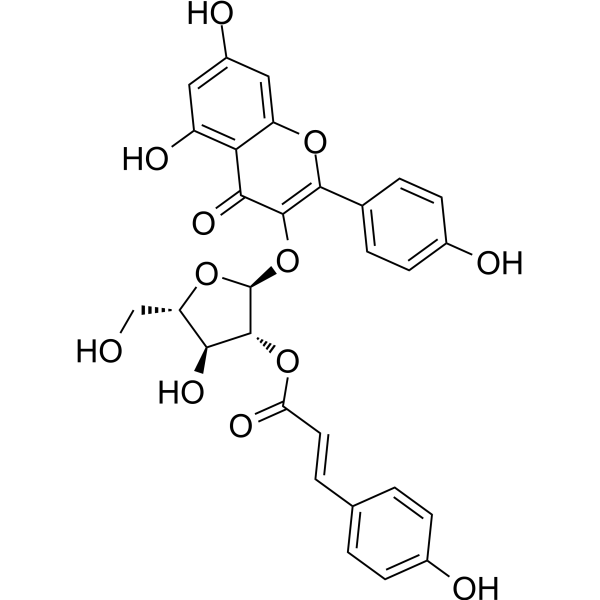
2''-O-Coumaroyljuglanin (2''-O-p-Cumaroyleuglanin) is a flavonoid which can be isolated from the flowers of Prunus spinosa .
|
-
-
- HY-185272
-
|
|
DNA/RNA Synthesis
|
Others
|
|
3'-O-(2-Nitrobenzyl)-dCTP is a reversible terminator. 3'-O-(2-Nitrobenzyl)-dCTP can be recognized and incorporated by polymerases, thereby temporarily terminating primer extension during DNA synthesis. After incorporation into the extending DNA strand, 3'-O-(2-Nitrobenzyl)-dCTP temporarily halts the DNA polymerase extension reaction, and its 3'-O-(2-nitrobenzyl) blocking group can be removed by laser irradiation to regenerate a free 3'-OH for subsequent primer extension cycles. 3'-O-(2-Nitrobenzyl)-dCTP is applicable for resolving homopolymeric regions in DNA templates .
|
-

-
- HY-185274
-
|
|
DNA/RNA Synthesis
|
Others
|
|
3'-O-(2-Nitrobenzyl)-dTTP acts as a reversible terminator for DNA chain elongation. 3'-O-(2-Nitrobenzyl)-dTTP interacts with 9°N polymerase (exo-) A485L/Y409V, gets recognized and incorporated into the elongating DNA chain, thereby temporarily terminating the polymerase reaction. 3'-O-(2-Nitrobenzyl)-dTTP carries a 3'-O-(2-nitrobenzyl) blocking group, which can be removed by laser irradiation to regenerate the free 3'-OH − group and restore polymerase activity. 3'-O-(2-Nitrobenzyl)-dTTP is applicable in DNA sequencing studies .
|
-

-
- HY-177901
-
|
|
DNA/RNA Synthesis
|
Others
|
|
3'-O-(2-Nitrobenzyl)-dATP is a reversible and photolabile DNA synthesis terminator. 3'-O-(2-Nitrobenzyl)-dATP incorporates into growing DNA strands to terminate synthesis in a base-specific manner. 3'-O-(2-Nitrobenzyl)-dATP undergoes efficient photolytic removal of its 3'-protecting group upon UV exposure to enable reinitiation of DNA synthesis. 3'-O-(2-Nitrobenzyl)-dATP supports development of the Base Addition Sequencing Scheme (BASS) via a complete stop-start DNA synthesis cycle .
|
-

-
- HY-185273
-
|
|
DNA/RNA Synthesis
|
Others
|
|
3'-O-(2-Nitrobenzyl)-dGTP is a reversible terminator. 3'-O-(2-Nitrobenzyl)-dGTP can be recognized and incorporated by DNA polymerases, thereby temporarily terminating DNA primer extension; after the 2-nitrobenzyl blocking group is removed via laser irradiation, a free 3'-OH can be regenerated to allow subsequent polymerase-mediated extension. 3'-O-(2-Nitrobenzyl)-dGTP can be used in DNA sequencing studies .
|
-

-
- HY-N17258
-
|
|
Insecticide
|
Infection
|
|
Quercetin 3-O-(2G-β-D-xylopyranosylrutinoside) is an oviposition inhibitory factor. Quercetin 3-O-(2G-β-D-xylopyranosylrutinoside) can be isolated from the leaves of Orixa japonica. When presented together with the oviposition stimulant from Citrus unshiu (Satsuma mandarin), Quercetin 3-O-(2G-β-D-xylopyranosylrutinoside) inhibits oviposition by gravid female Papilio xuthus (Asian swallowtail) .
|
-

-
- HY-W706305
-
-
![3-O-[2-Acetamido-2-deoxy-β-D-glucopyranosyl]-D-mannopyranose](//file.medchemexpress.com/product_pic/hy-w706305.gif)
-
- HY-N18025
-
-

-
- HY-N19757
-
|
|
Fungal
|
Infection
|
|
3-O-(2-Acetamido-2-deoxy-β-D-glucopyranosyl) echinocystic acid is an oleanane-type triterpenoid saponin. 3-O-(2-Acetamido-2-deoxy-β-D-glucopyranosyl) echinocystic acid acts as a dermatophyte growth inhibitor with a MIC range of 6.25-25 μg/mL. 3-O-(2-Acetamido-2-deoxy-β-D-glucopyranosyl) echinocystic acid can be used in the research of dermatophyte infections, bacterial infections and yeast infections .
|
-

-
- HY-N17833
-
|
Kaempferol 3-O-2,4'''-acetylrhamninoside
|
Reactive Oxygen Species (ROS)
|
Cardiovascular Disease
|
|
Actinoside E (Kaempferol 3-O-2,4'''-acetylrhamninoside) is a flavonoid triglycoside with antioxidant activity. Actinoside E scavenges DPPH, superoxide anion and hydroxyl radicals, and inhibits lipid peroxidation in mouse liver homogenate. Actinoside E can be used in studies related to myocardial ischemia .
|
-

-
- HY-W698499
-
|
|
Biochemical Assay Reagents
|
Others
|
|
Benzyl 2-acetamido-3-O-(2,3,4,6-tetra-O-acetyl-β-D-galactopyranosyl-2-deoxy-α-D-glucopyranoside is a class of biochemical reagents used in glycobiology research. Glycobiology studies the structure, synthesis, biology, and evolution of sugars. It involves carbohydrate chemistry, enzymology of glycan formation and degradation, protein-glycan recognition, and the role of glycans in biological systems. This field is closely related to basic research, biomedicine, and biotechnology .
|
-

-
- HY-W699023
-
|
|
Biochemical Assay Reagents
|
Others
|
|
p-Nitrophenyl 2-acetamido-2-deoxy-3-O-(2,3,4,6-tetra-O-acetyl-β-D-galactopyranosyl)-α-D-galactopyranoside is a class of biochemical reagents used in glycobiology research. Glycobiology studies the structure, synthesis, biology, and evolution of sugars. It involves carbohydrate chemistry, enzymology of glycan formation and degradation, protein-glycan recognition, and the role of glycans in biological systems. This field is closely related to basic research, biomedicine, and biotechnology .
|
-

-
- HY-N17450
-
|
|
Drug Derivative
|
Others
|
|
3′-O-Henryoside (Compound 3) is a glycoside found in the leaves of Viburnum plicatum Thunb. var. tomentosum Miq, and is a (2S)-2-methylbutyryl derivative of Henryoside (HY-N4054) .
|
-
![3′-O-[(2S)-2-Methylbutanoyl]henryoside](//file.medchemexpress.com/product_pic/hy-n17450.gif)
| Cat. No. |
Product Name |
Type |
-
- HY-W698471
-
|
|
Biochemical Assay Reagents
|
|
Methyl 4,6-O-(phenylmethylene)-3-O-2-propen-1-yl-α-D-mannopyranoside is a class of biochemical reagents used in glycobiology research. Glycobiology studies the structure, synthesis, biology, and evolution of sugars. It involves carbohydrate chemistry, enzymology of glycan formation and degradation, protein-glycan recognition, and the role of glycans in biological systems. This field is closely related to basic research, biomedicine, and biotechnology .
|
-
- HY-W698908
-
|
Methyl 3-O-[2-(acetylamino)-2-deoxy-β-D-galactopyranosyl]-α-D-galactopyranoside
|
Biochemical Assay Reagents
|
|
GalNAc1-b-3Gal-α-Ome (Methyl 3-O-[2-(acetylamino)-2-deoxy-β-D-galactopyranosyl]-α-D-galactopyranoside) is a class of biochemical reagents used in glycobiology research. Glycobiology studies the structure, synthesis, biology, and evolution of sugars. It involves carbohydrate chemistry, enzymology of glycan formation and degradation, protein-glycan recognition, and the role of glycans in biological systems. This field is closely related to basic research, biomedicine, and biotechnology .
|
-
- HY-W699294
-
|
|
Biochemical Assay Reagents
|
|
Benzyl 2-acetamido-2-deoxy-3-O-(2',3',4',6'-tetra- O-acetyl-β-D-galactopyranosyl)-α-D-galactopyranoside is a class of biochemical reagents used in glycobiology research. Glycobiology studies the structure, synthesis, biology and evolution of sugars. It involves carbohydrate chemistry, enzymology of glycan formation and degradation, protein-Glycan recognition and the role of glycans in biological systems. This field is closely related to basic research, biomedicine and biotechnology.
|
-
- HY-W706305
-
-
- HY-W698499
-
|
|
Biochemical Assay Reagents
|
|
Benzyl 2-acetamido-3-O-(2,3,4,6-tetra-O-acetyl-β-D-galactopyranosyl-2-deoxy-α-D-glucopyranoside is a class of biochemical reagents used in glycobiology research. Glycobiology studies the structure, synthesis, biology, and evolution of sugars. It involves carbohydrate chemistry, enzymology of glycan formation and degradation, protein-glycan recognition, and the role of glycans in biological systems. This field is closely related to basic research, biomedicine, and biotechnology .
|
-
- HY-W699023
-
|
|
Biochemical Assay Reagents
|
|
p-Nitrophenyl 2-acetamido-2-deoxy-3-O-(2,3,4,6-tetra-O-acetyl-β-D-galactopyranosyl)-α-D-galactopyranoside is a class of biochemical reagents used in glycobiology research. Glycobiology studies the structure, synthesis, biology, and evolution of sugars. It involves carbohydrate chemistry, enzymology of glycan formation and degradation, protein-glycan recognition, and the role of glycans in biological systems. This field is closely related to basic research, biomedicine, and biotechnology .
|
| Cat. No. |
Product Name |
Category |
Target |
Chemical Structure |
| Cat. No. |
Product Name |
|
Classification |
-
- HY-151650
-
|
|
|
Azide
|
|
N3-O2Oc-O2Oc-OH is a click chemistry reagent containing an azide . N3-O2Oc-O2Oc-OH is a click chemistry reagent, it contains an Azide group and can undergo copper-catalyzed azide-alkyne cycloaddition reaction (CuAAc) with molecules containing Alkyne groups. It can also undergo strain-promoted alkyne-azide cycloaddition (SPAAC) reactions with molecules containing DBCO or BCN groups.
|
-
- HY-152868
-
|
|
|
Azide
|
|
3’-O-(2-Azidoethyl)adenosine is a purine nucleoside analogue. Purine nucleoside analogs have broad antitumor activity targeting indolent lymphoid malignancies. Anticancer mechanisms in this process rely on inhibition of DNA synthesis, induction of apoptosis, etc . 3’-O-(2-Azidoethyl)adenosine is a click chemistry reagent, it contains an Azide group and can undergo copper-catalyzed azide-alkyne cycloaddition reaction (CuAAc) with molecules containing Alkyne groups. It can also undergo strain-promoted alkyne-azide cycloaddition (SPAAC) reactions with molecules containing DBCO or BCN groups.
|
| Cat. No. |
Product Name |
|
Classification |
-
- HY-152493
-
|
|
|
Nucleoside Analogs
Guanosine
|
|
3’-O-(2-Methoxyethyl)guanosine is a guanosine analogue. Some guanosine analogs have immunostimulatory activity. In some animal models, they also induce type I interferons, producing antiviral effects. Studies have shown that the functional activity of guanosine analogs is dependent on the activation of Toll-like receptor 7 (TLR7) .
|
-
- HY-154285
-
|
|
|
Nucleoside Analogs
Uridine
|
|
3’-O-(2-Methoxyethyl) uridine is a uridine analog. Uridine has potential antiepileptic effects, and its analogs can be used to study anticonvulsant and anxiolytic activities, as well as to develop new antihypertensive agents .
|
-
- HY-154434
-
|
|
|
Nucleoside Analogs
Uridine
|
|
3’-O-(2-Methoxyethyl)-5-methyluridine is a thymidine analog. Analogs of this series have insertional activity towards replicated DNA. They can be used to label cells and track DNA synthesis .
|
-
- HY-152498
-
|
|
|
Nucleoside Analogs
Adenosine
|
|
3’-O-(2-Methoxyethyl)adenosine is an adenosine analogue. Adenosine analogs mostly act as smooth muscle vasodilators and have also been shown to inhibit cancer progression. The popular products in this series are adenosine phosphate, Acadesine (HY-13417), Clofarabine (HY-A0005), Fludarabine phosphate (HY-B0028) and Vidarabine (HY-B0277) .
|
-
- HY-152646
-
|
|
|
Nucleoside Analogs
Adenosine
|
|
3’-O-(2-Methoxyethyl)-2-aminoadenosine is an adenosine analog. Adenosine analogs mostly act as smooth muscle vasodilators and have also been shown to inhibit cancer progression. Its popular products are adenosine phosphate, Acadesine (HY-13417), Clofarabine (HY-A0005), Fludarabine phosphate (HY-B0028) and Vidarabine (HY-B0277) .
|
-
- HY-152503
-
|
|
|
Nucleoside Analogs
Adenosine
|
|
N6-Benzoyl-3’-O-(2-methoxyethyl)adenosine is a purine nucleoside analogue. Purine nucleoside analogs have broad antitumor activity targeting indolent lymphoid malignancies. Anticancer mechanisms in this process rely on inhibition of DNA synthesis, induction of apoptosis, etc .
|
-
- HY-152868
-
|
|
|
Nucleoside Analogs
Adenosine
|
|
3’-O-(2-Azidoethyl)adenosine is a purine nucleoside analogue. Purine nucleoside analogs have broad antitumor activity targeting indolent lymphoid malignancies. Anticancer mechanisms in this process rely on inhibition of DNA synthesis, induction of apoptosis, etc . 3’-O-(2-Azidoethyl)adenosine is a click chemistry reagent, it contains an Azide group and can undergo copper-catalyzed azide-alkyne cycloaddition reaction (CuAAc) with molecules containing Alkyne groups. It can also undergo strain-promoted alkyne-azide cycloaddition (SPAAC) reactions with molecules containing DBCO or BCN groups.
|
-
- HY-152382
-
|
|
|
Nucleoside Analogs
Cytidine
|
|
3’-O-(2-Methoxyethyl)cytidine is a cytidine analog. Cytidine analogs have a mechanism of inhibiting DNA methyltransferases (such as Zebularine, HY-13420), and have potential anti-metabolic and anti-tumor activities .
|
-
- HY-152577
-
|
|
|
Nucleoside Analogs
Inosine
|
|
3’-O-(2-Methoxyethyl) inosine is a purine nucleoside analog. Purine nucleoside analogs have broad antitumor activity targeting indolent lymphoid malignancies. Anticancer mechanisms in this process rely on inhibition of DNA synthesis, induction of apoptosis, etc .
|
-
- HY-152480
-
|
|
|
Nucleoside Analogs
Cytidine
|
|
3’-O-(2-Methoxyethyl)-5-methylcytidine is a cytidine analog. Cytidine analogs have a mechanism of inhibiting DNA methyltransferases (such as Zebularine, HY-13420), and have potential anti-metabolic and anti-tumor activities .
|
-
- HY-152482
-
|
|
|
Nucleoside Analogs
Uridine
|
|
3’-O-(2-Methoxyethyl)-2-thiouridine is a purine nucleoside analog. Purine nucleoside analogs have broad antitumor activity targeting indolent lymphoid malignancies. Anticancer mechanisms in this process rely on inhibition of DNA synthesis, induction of apoptosis, etc .
|
-
- HY-152575
-
|
|
|
Nucleoside Analogs
Adenosine
|
|
N6-Methyl-3’-O-(2-methoxyethyl) adenosine is a purine nucleoside analog. Purine nucleoside analogs have broad antitumor activity targeting indolent lymphoid malignancies. Anticancer mechanisms in this process rely on inhibition of DNA synthesis, induction of apoptosis, etc .
|
-
- HY-152587
-
|
|
|
Nucleoside Analogs
Inosine
|
|
N1-Methyl-3’-O-(2-methoxyethyl) inosine is a purine nucleoside analog. Purine nucleoside analogs have broad antitumor activity targeting indolent lymphoid malignancies. Anticancer mechanisms in this process rely on inhibition of DNA synthesis, induction of apoptosis, etc .
|
-
- HY-152573
-
|
|
|
Nucleoside Analogs
Adenosine
|
|
N1-Methyl-3’-O-(2-methoxyethyl) adenosine is a purine nucleoside analog. Purine nucleoside analogs have broad antitumor activity targeting indolent lymphoid malignancies. Anticancer mechanisms in this process rely on inhibition of DNA synthesis, induction of apoptosis, etc .
|
-
- HY-154449
-
|
|
|
Nucleoside Analogs
Cytidine
|
|
N4-Benzoyl-3’-O-(2-methoxyethyl)-5-methylcytidine is a purine nucleoside analog. Purine nucleoside analogs have broad antitumor activity targeting indolent lymphoid malignancies. Anticancer mechanisms in this process rely on inhibition of DNA synthesis, induction of apoptosis, etc .
|
-
- HY-154543
-
|
|
|
Nucleoside Analogs
Uridine
|
|
5’-O-(4,4’-Dimethoxytrityl)-3’-O-(2-methoxyethyl) uridine is a purine nucleoside analog. Purine nucleoside analogs have broad antitumor activity targeting indolent lymphoid malignancies. Anticancer mechanisms in this process rely on inhibition of DNA synthesis, induction of apoptosis, etc .
|
-
- HY-154552
-
|
|
|
Nucleoside Analogs
Uridine
|
|
2’-O-Acetyl-5’-O-benzoyl-3’-O-(2-methoxyethyl) uridine is a uridine analog. Uridine has potential antiepileptic effects, and its analogs can be used to study anticonvulsant and anxiolytic activities, as well as to develop new antihypertensive agents .
|
-
- HY-154450
-
|
|
|
Phosphoramidites
Cytosine
|
|
N4-Benzoyl-5’-O-DMT-3’-O-(2-methoxyethyl)-5-methylcytidine is a cytidine analog. Cytidine analogs have a mechanism of inhibiting DNA methyltransferases (such as Zebularine, HY-13420), and have potential anti-metabolic and anti-tumor activities .
|
-
- HY-154060
-
|
|
|
Nucleoside Analogs
Adenosine
|
|
N6-Benzoyl-5'-O-(4,4'-dimethoxytrityl)-3'-O-(2-methoxyethyl)adenosine is a purine nucleoside analog. Purine nucleoside analogs have broad antitumor activity targeting indolent lymphoid malignancies. Anticancer mechanisms in this process rely on inhibition of DNA synthesis, induction of apoptosis, etc .
|
-
- HY-185272
-
|
|
|
Nucleotide Analogs
Cytidine Nucleotide
|
|
3'-O-(2-Nitrobenzyl)-dCTP is a reversible terminator. 3'-O-(2-Nitrobenzyl)-dCTP can be recognized and incorporated by polymerases, thereby temporarily terminating primer extension during DNA synthesis. After incorporation into the extending DNA strand, 3'-O-(2-Nitrobenzyl)-dCTP temporarily halts the DNA polymerase extension reaction, and its 3'-O-(2-nitrobenzyl) blocking group can be removed by laser irradiation to regenerate a free 3'-OH for subsequent primer extension cycles. 3'-O-(2-Nitrobenzyl)-dCTP is applicable for resolving homopolymeric regions in DNA templates .
|
-
- HY-185274
-
|
|
|
Nucleotide Analogs
Thymine Nucleotide
|
|
3'-O-(2-Nitrobenzyl)-dTTP acts as a reversible terminator for DNA chain elongation. 3'-O-(2-Nitrobenzyl)-dTTP interacts with 9°N polymerase (exo-) A485L/Y409V, gets recognized and incorporated into the elongating DNA chain, thereby temporarily terminating the polymerase reaction. 3'-O-(2-Nitrobenzyl)-dTTP carries a 3'-O-(2-nitrobenzyl) blocking group, which can be removed by laser irradiation to regenerate the free 3'-OH − group and restore polymerase activity. 3'-O-(2-Nitrobenzyl)-dTTP is applicable in DNA sequencing studies .
|
-
- HY-177901
-
|
|
|
Nucleotide Analogs
Adenine Nucleotide
|
|
3'-O-(2-Nitrobenzyl)-dATP is a reversible and photolabile DNA synthesis terminator. 3'-O-(2-Nitrobenzyl)-dATP incorporates into growing DNA strands to terminate synthesis in a base-specific manner. 3'-O-(2-Nitrobenzyl)-dATP undergoes efficient photolytic removal of its 3'-protecting group upon UV exposure to enable reinitiation of DNA synthesis. 3'-O-(2-Nitrobenzyl)-dATP supports development of the Base Addition Sequencing Scheme (BASS) via a complete stop-start DNA synthesis cycle .
|
-
- HY-185273
-
|
|
|
Nucleotide Analogs
Guanine Nucleotide
|
|
3'-O-(2-Nitrobenzyl)-dGTP is a reversible terminator. 3'-O-(2-Nitrobenzyl)-dGTP can be recognized and incorporated by DNA polymerases, thereby temporarily terminating DNA primer extension; after the 2-nitrobenzyl blocking group is removed via laser irradiation, a free 3'-OH can be regenerated to allow subsequent polymerase-mediated extension. 3'-O-(2-Nitrobenzyl)-dGTP can be used in DNA sequencing studies .
|
Your information is safe with us. * Required Fields.
Inquiry Information
- Product Name:
- Cat. No.:
- Quantity:
- MCE Japan Authorized Agent:





![Kaempferol-3-O-[2″,6″-di-O-E-p-coumaroyl]-β-D-glucopyranoside](http://file.medchemexpress.com/product_pic/hy-n10784.gif)


![3-O-[2-Acetamido-2-deoxy-β-D-glucopyranosyl]-D-mannopyranose](http://file.medchemexpress.com/product_pic/hy-w706305.gif)


![3′-O-[(2S)-2-Methylbutanoyl]henryoside](http://file.medchemexpress.com/product_pic/hy-n17450.gif)





