Search Result
Results for "
alpha-adrenergic receptors
" in MedChemExpress (MCE) Product Catalog:
6
Isotope-Labeled Compounds
| Cat. No. |
Product Name |
Target |
Research Areas |
Chemical Structure |
-
- HY-B0193
-
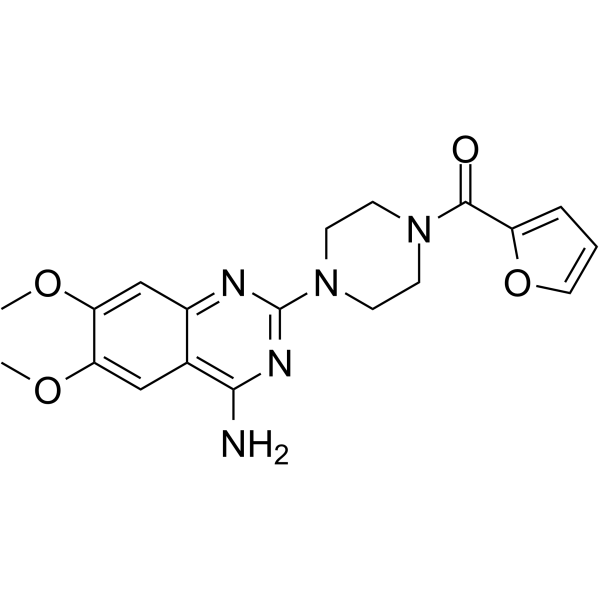
Prazosin
Maximum Cited Publications
17 Publications Verification
|
Adrenergic Receptor
|
Cardiovascular Disease
Endocrinology
|
|
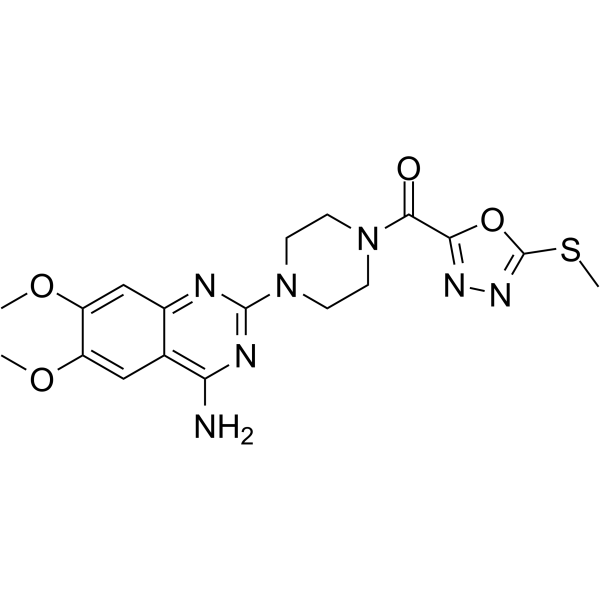
Prazosin is an α-adrenergic receptor antagonist. Prazosin can reduce inflammation, relieve anxiety, alleviate panic, prevent memory decline, and modulate the pain-relieving effects of opioids. Prazosin can be used in the study of hypertension and Alzheimer’s disease .
|
-
-
- HY-B0225
-
-
-
- HY-B0225B
-
|
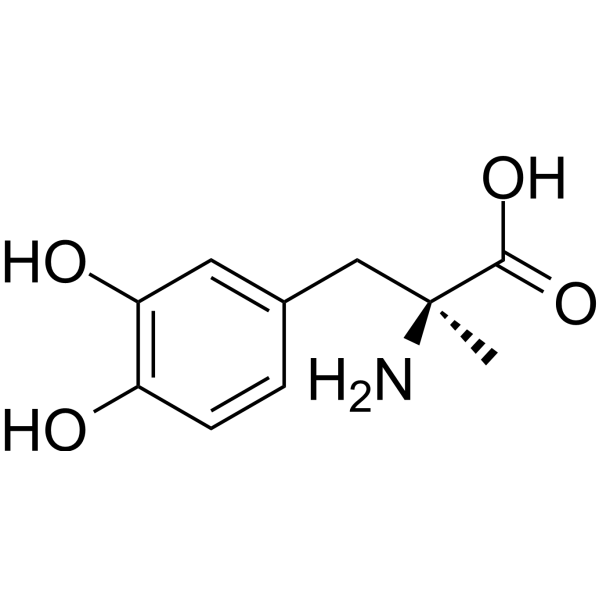
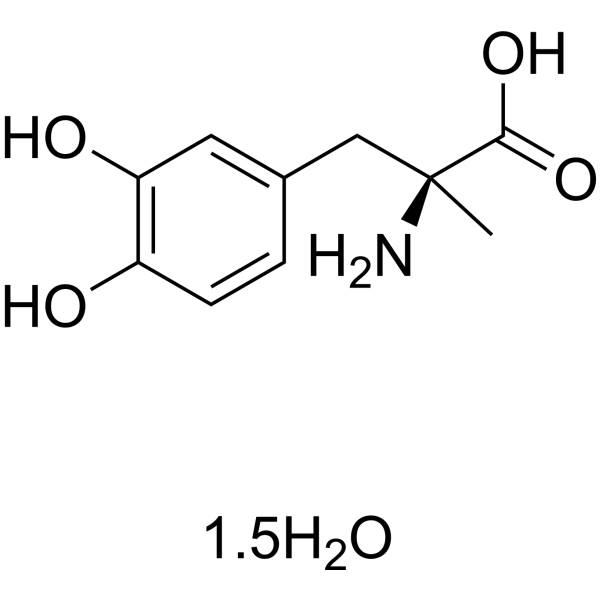
L-(-)-α-Methyldopa hydrate; MK-351 hydrate
|
Adrenergic Receptor
Endogenous Metabolite
|
Cardiovascular Disease
Endocrinology
|
|
Methyldopa hydrate (L-(-)-α-Methyldopa hydrate), a potent antihyoertensive agent, is an alpha-adrenergic agonist (selective for α2-adrenergic receptors). Methyldopa hydrate is a proagent and is metabolized (α-Methylepinephrine) in the central nervous system .
|
-
-
- HY-B1470
-
|
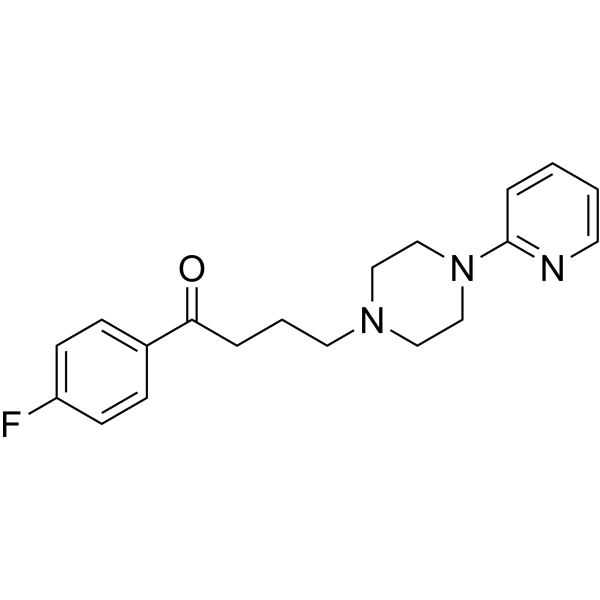
R-1929
|
Dopamine Receptor
Adrenergic Receptor
|
Neurological Disease
|
|
Azaperone is an antagonist of dopamine D2 receptor (Dopamine D2 Receptor) and α-adrenergic receptor (AR). Azaperone reduces vasomotor tone, mean arterial pressure, hematocrit, hemoglobin concentration, and etorphine-induced duration; induces transient tachycardia followed by bradycardia, splenic uptake of red blood cells, and sedation; alters animal behaviors; and produces sedation with distinct onset and duration in foals. Azaperone is used for sedation and tranquilization in various animals to reduce stress and aggressive behaviors, and serves as a preanesthetic agent .
|
-
-
- HY-B1111
-
-
-
- HY-B0799
-
|
Ergoloid mesylates
|
GABA Receptor
Chloride Channel
Adrenergic Receptor
Dopamine Receptor
Phosphodiesterase (PDE)
|
Cardiovascular Disease
Neurological Disease
|
|
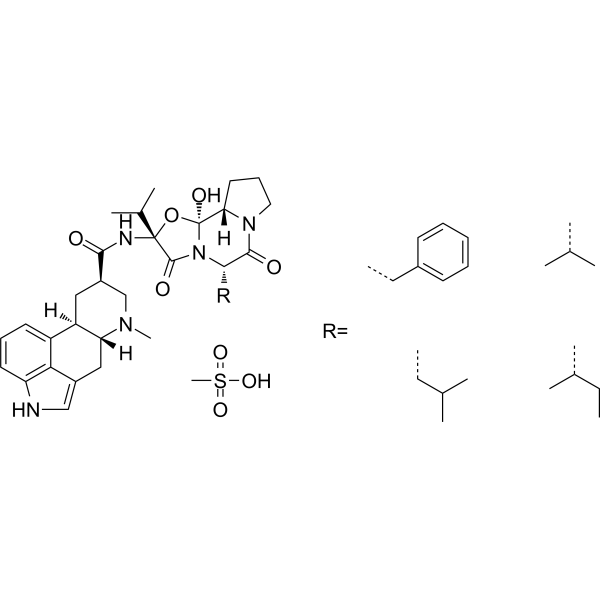
Dihydroergotoxine mesylate (Ergoloid mesylates) is an α-adrenergic blocking agent. Dihydroergotoxine mesylate binds with high affinity to the GABAA receptor associated Cl - channel. Dihydroergotoxine mesylate also interacts with central dopaminergic and serotonergic receptors. Dihydroergotoxine mesylate displays antiproliferative, antihypertensive and neuroprotective activity .Dihydroergotoxine mesylate (Ergoloid mesylates) is an α-adrenergic blocking agent. Dihydroergotoxine mesylate binds with high affinity to the GABAA receptor associated Cl - channel. Dihydroergotoxine mesylate also interacts with central dopaminergic and serotonergic receptors. Dihydroergotoxine mesylate displays antiproliferative, antihypertensive and neuroprotective activity .
|
-
-
- HY-B0475
-
|
|
Adrenergic Receptor
|
Inflammation/Immunology
|
|
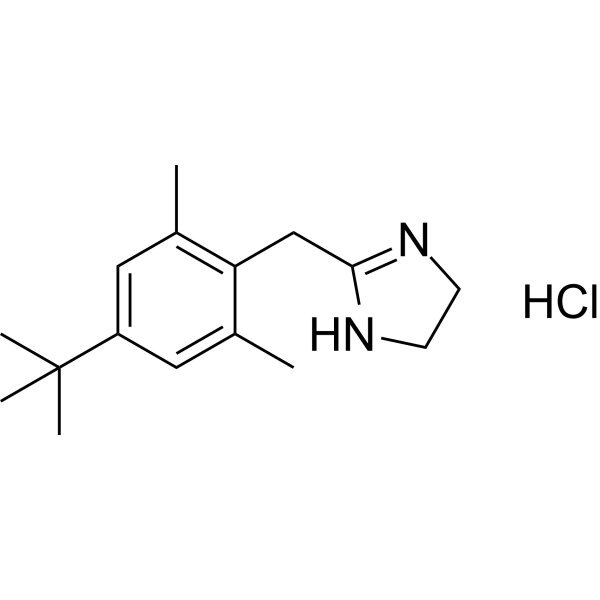
Xylometazoline hydrochloride is an α-adrenergic receptor agonist (Ki=0.05-1.7 μM). Xylometazoline hydrochloride can constrict nasal blood vessels and increase nasal airflow. Xylometazoline hydrochloride can be used in nose stuffiness and runny nose research .
|
-
-
- HY-A0066A
-
|
Imidaline hydrochloride; NSC35110 hydrochloride
|
Adrenergic Receptor
|
Cardiovascular Disease
Endocrinology
|
|
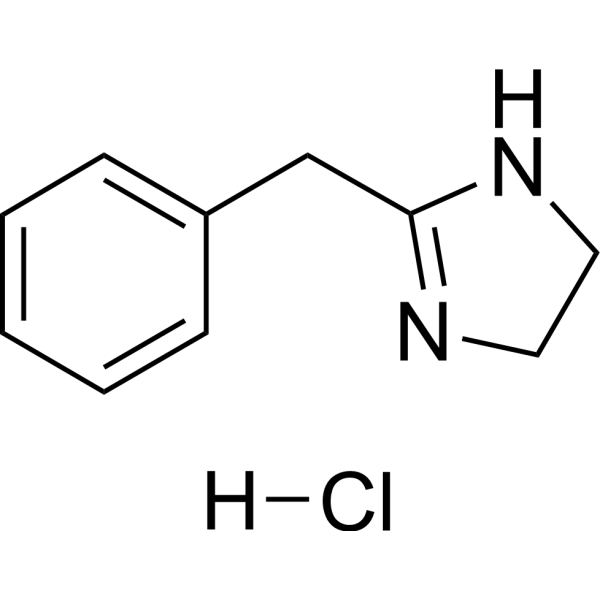
Tolazoline hydrochloride (Imidaline hydrochloride) is an α-adrenergic receptor antagonist. Tolazoline hydrochloride inhibits Noradrenaline (HY-13715)-induced cell contraction, modulates vascular resistance, increases arterial pressure, and reverses bradycardia and tachypnea. Tolazoline hydrochloride can be used to study erectile dysfunction, α2-adrenergic receptor agonist-related poisoning, and skin vascular disease research .
|
-
-
- HY-12717A
-
|
|
Adrenergic Receptor
|
Cardiovascular Disease
Endocrinology
|
|
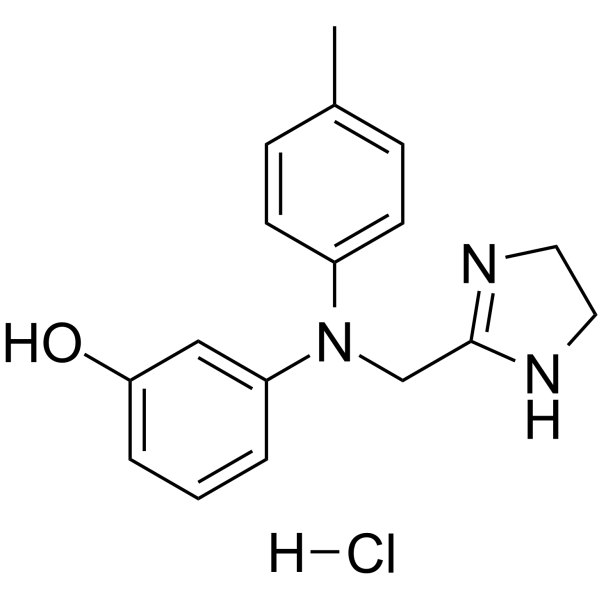
Phentolamine hydrochloride is an orally active, selective α1 and α2 Adrenergic receptor antagonist. Phentolamine hydrochloride antagonizes the vasodilatory effect of Cromakalim (HY-110011) on isolated circumflex coronary artery segments in dogs. Phentolamine hydrochloride reduces systemic vascular resistance and increases cardiac output. Phentolamine hydrochloride improves erectile dysfunction. Phentolamine hydrochloride can be used for the research of erectile dysfunction .
|
-
-
- HY-14537
-
-
-
- HY-107915
-
|
(-)-Cobefrin; (-)-α-Methylnoradrenaline; (-)-Nordefrin
|
Adrenergic Receptor
|
Cardiovascular Disease
|
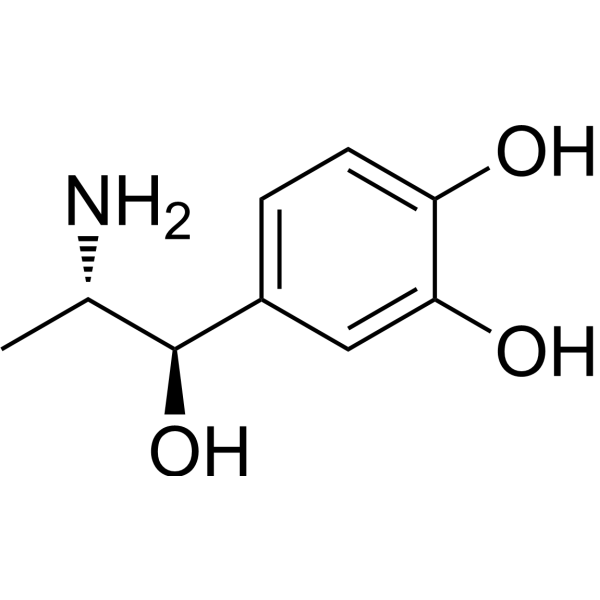
Levonordefrin ((-)-Cobefrin; (-)-α-Methylnoradrenaline; (-)-Nordefrin) is an α-adrenergic receptor agonist with blood pressure regulatory properties. Levonordefrin is a key metabolite responsible for the hypotensive effect of α-methyldopa. By stimulating central α-adrenergic receptors in the nucleus tractus solitarius region of the medulla oblongata, Levonordefrin induces centrally mediated hypotension and bradycardia. When administered intravenously, Levonordefrin increases mean arterial blood pressure in a dose-dependent manner. Levonordefrin is applicable for research on the pathophysiology of hypertension and drug metabolism .
|
-
-
- HY-A0066
-
|
Imidaline; NSC35110
|
Adrenergic Receptor
|
Cardiovascular Disease
Endocrinology
|
|
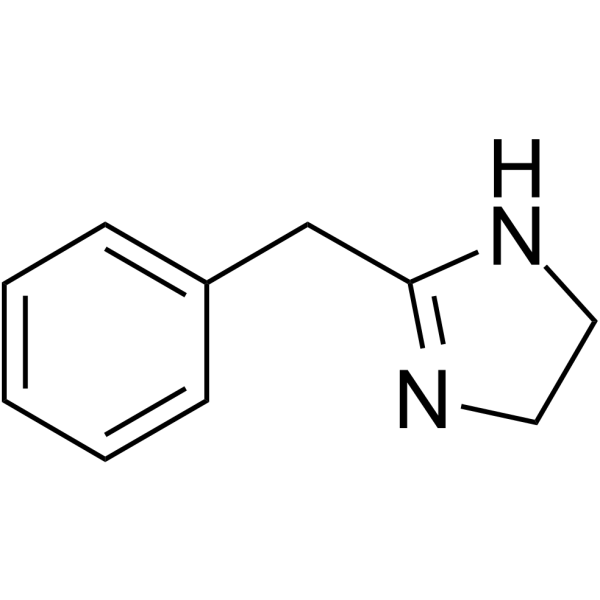
Tolazoline (Imidaline) is an α-adrenergic receptor antagonist. Tolazoline inhibits Noradrenaline (HY-13715)-induced cell contraction, modulates vascular resistance, increases arterial pressure, and reverses bradycardia and tachypnea. Tolazoline can be used to study erectile dysfunction, α2-adrenergic receptor agonist-related poisoning, and skin vascular disease research .
|
-
-
- HY-B0446
-
|
Naphthazoline hydrochloride
|
Adrenergic Receptor
TNF Receptor
Interleukin Related
VEGFR
|
Cardiovascular Disease
Inflammation/Immunology
Cancer
|
|
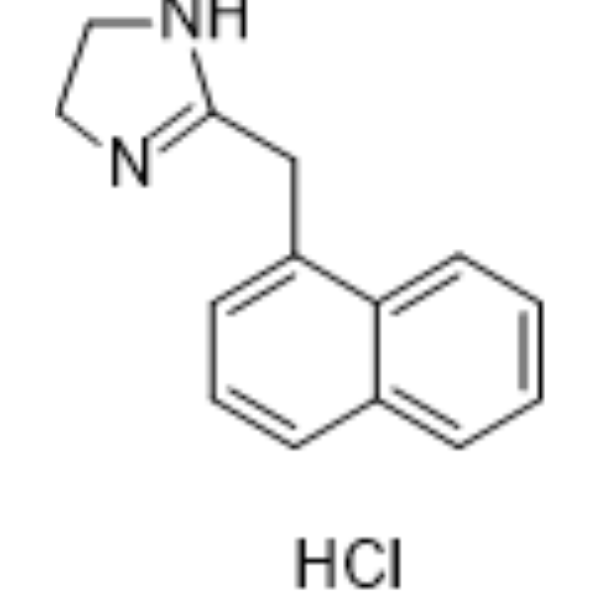
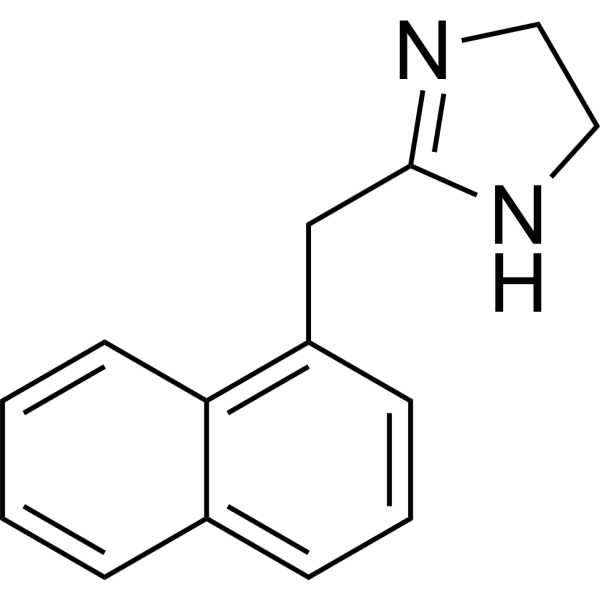
Naphazoline (Naphthazoline) hydrochloride is a potent α-adrenergic receptor agonist. Naphazoline hydrochloride reduces vascular hyperpermeability and promotes vasoconstriction. Naphazoline hydrochloride reduces the levels of inflammatory factors (TNF-α, IL-1β and IL-6), cytokines (IFN-γ and IL-4), IgE, GMCSF, and NGF. Naphazoline hydrochloride can be used for non-bacterial conjunctivitis research .
|
-
-
- HY-111326
-
-
-
- HY-N4225
-
-
-
- HY-14862
-
-

-
- HY-B1116
-
|
Metaradrine tartrate
|
Adrenergic Receptor
|
Cardiovascular Disease
Endocrinology
|
|
Metaraminol tartrate?(Metaradrine tartrate) is an α-adrenergic agonist . Metaraminol tartrate is a sympathomimetic amine that directly and indirectly affects adrenergic receptors, with alpha effects being predominant.Metaraminol tartrate acts as a vasopressor agent .
|
-

-
- HY-B1696
-
|
|
Adrenergic Receptor
|
Cardiovascular Disease
|
|
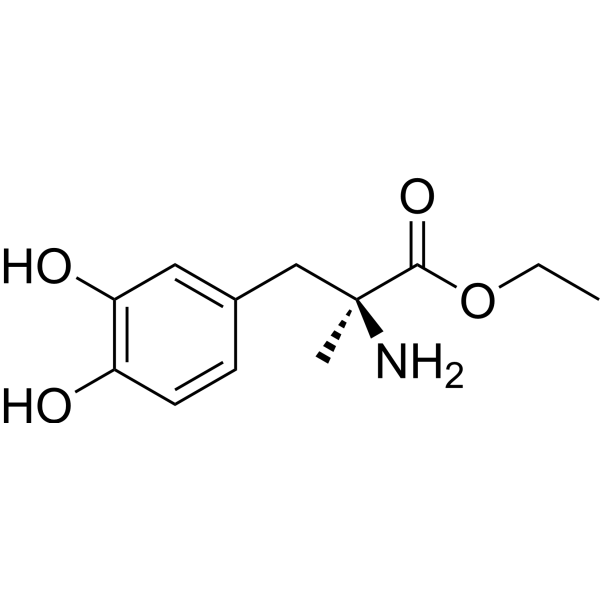
Methyldopate is an ethyl ester proagent of α-Methyldopa (α-MD; HY-B0225). Methyldopa (L-(-)-α-Methyldopa) is an α-adrenergic agonist (selective for α2-adrenergic receptors). Methyldopate has the potential for severe hypertension research .
|
-
-
- HY-111326A
-
-
-
- HY-B1111S1
-
-
-
- HY-B0225A
-
|
L-(-)-α-Methyldopa hydrochloride; MK-351 hydrochloride
|
Adrenergic Receptor
Endogenous Metabolite
|
Cardiovascular Disease
Endocrinology
|
|
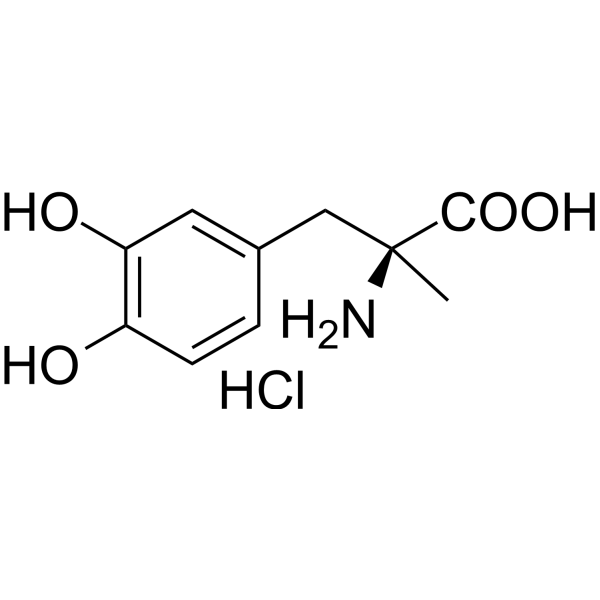
Methyldopa hydrochloride (L-(-)-α-Methyldopa hydrochloride) hydrochloride, a potent antihyoertensive agent, is an alpha-adrenergic agonist (selective for α2-adrenergic receptors). Methyldopa hydrochloride is a proagent and is metabolized (α-Methylepinephrine) in the central nervous system .
|
-
-
- HY-B1111R
-
|
BTS-27419 (Standard)
|
Reference Standards
Adrenergic Receptor
Monoamine Oxidase
Parasite
|
Infection
Endocrinology
|
|
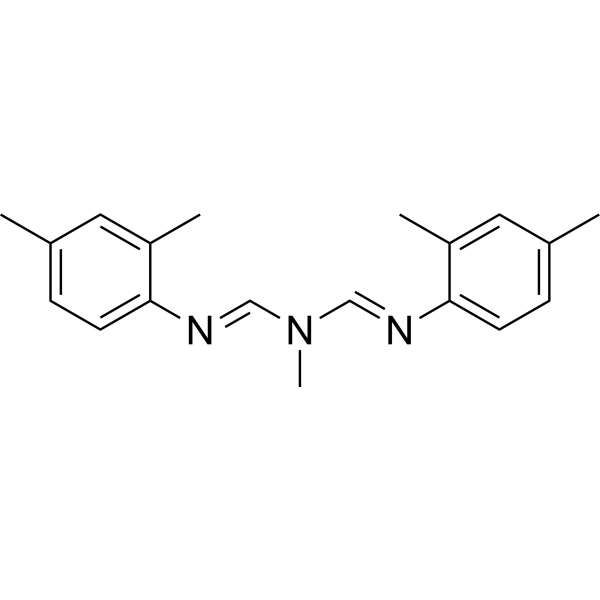
Amitraz (Standard) is the analytical standard of Amitraz. This product is intended for research and analytical applications. Amitraz is a non-systemic acaricide and insecticide with alpha-adrenergic agonist activity that interacts with octopamine receptors in the central nervous system and inhibits monoamine oxidase and prostaglandin synthesis.
|
-

-
- HY-B1696A
-
|
|
Adrenergic Receptor
|
Cardiovascular Disease
|
|
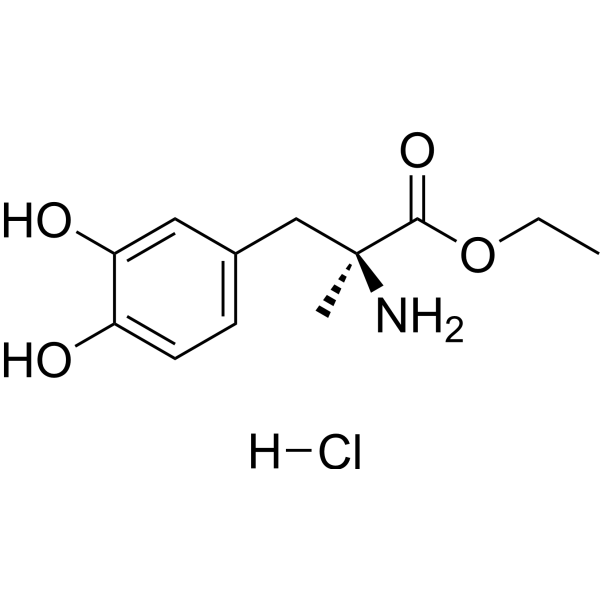
Methyldopate hydrochloride is an ethyl ester hydrochloride proagent of α-Methyldopa (α-MD; HY-B0225). Methyldopa (L-(-)-α-Methyldopa) is an α-adrenergic agonist (selective for α2-adrenergic receptors). Methyldopate hydrochloride has the potential for severe hypertension research .
|
-
-
- HY-W722796
-
|
|
Adrenergic Receptor
|
Others
|
|
Tuaminoheptane sulfate is an alpha-adrenergic receptor agonist. Tuaminoheptane sulfate exerts its decongestant and irritant effects by inhibiting norepinephrine reuptake and promoting its release. Tuaminoheptane sulfate can be used in research on nasal diseases such as decongestion .
|
-

-
- HY-B0670
-
-

-
- HY-B1111S
-
-

-
- HY-W752502
-
|
|
Dopamine Receptor
Vasopressin Receptor
Adrenergic Receptor
|
Cardiovascular Disease
|
|
Docarpamine is an orally active dopamine prodrug that can be hydroxylated in the small intestine and liver to form active dopamine. Docarpamine mainly activates D1-like receptors in peripheral blood vessels to lower blood pressure and heart rate in a state of spontaneous hypertension. Docarpamine exerts a pressor and tachycardic effect by activating D1-like receptors, vasopressin V1 receptors, and α-adrenergic receptors in normal blood pressure conditions. Docarpamine can be used for research on renal vascular dilation and diuresis .
|
-

-
- HY-100255
-
-
-
- HY-120408
-
|
Atroscine
|
Adrenergic Receptor
|
Neurological Disease
|
|
(±)-Scopolamine (Atroscine) is the racemic modification of Scopolamine. (±)-Scopolamine inhibits α-adrenergic receptor activity. (±)-Scopolamine has Ki values of 33 μM and 7.25 nM for α1-adrenerg receptor and muscarinic cholinergic receptor, respectively .
|
-

-
- HY-B0475A
-
|
|
Adrenergic Receptor
|
Inflammation/Immunology
|
|
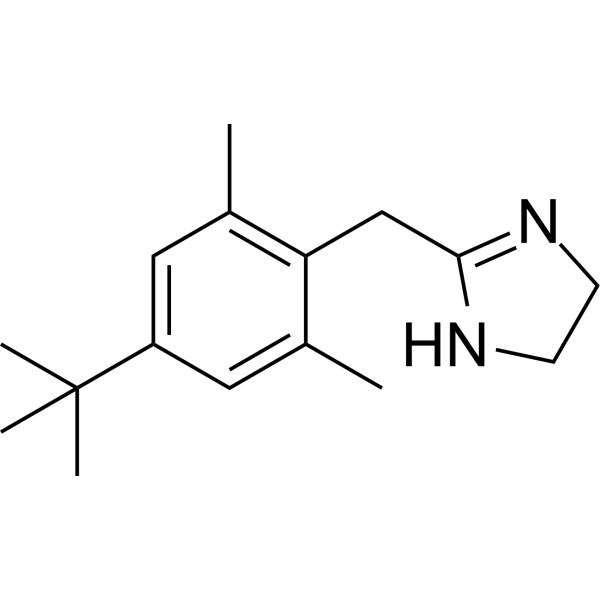
Xylometazoline is an α-adrenergic receptor agonist (Ki=0.05-1.7 μM). Xylometazoline can constrict nasal blood vessels and increase nasal airflow. Xylometazoline hydrochloride can be used in nose stuffiness and runny nose research .
|
-
-
- HY-B1470S
-
|
R-1929-d4
|
Isotope-Labeled Compounds
Dopamine Receptor
Adrenergic Receptor
|
Neurological Disease
|
|
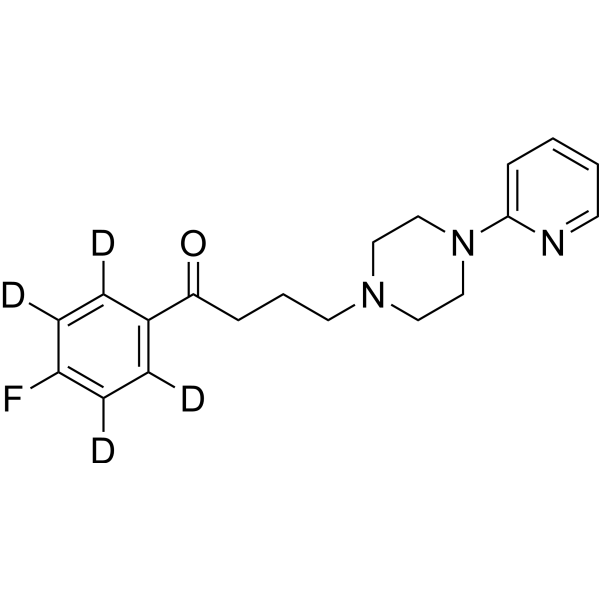
Azaperone-d4 (R-1929-d4) is the deuterium labeled Azaperone (HY-B1470). Azaperone is an antagonist of dopamine D2 receptor (Dopamine D2 Receptor) and α-adrenergic receptor (AR). Azaperone reduces vasomotor tone, mean arterial pressure, hematocrit, hemoglobin concentration, and etorphine-induced duration; induces transient tachycardia followed by bradycardia, splenic uptake of red blood cells, and sedation; alters animal behaviors; and produces sedation with distinct onset and duration in foals. Azaperone is used for sedation and tranquilization in various animals to reduce stress and aggressive behaviors, and serves as a preanesthetic agent.
|
-
-
- HY-14560A
-
|
(R,R)-FCE20124 mesylate; (R,R)-PNU155950E mesylate; (R,R)-(-)-Reboxetine mesylate
|
Adrenergic Receptor
mAChR
|
Neurological Disease
|
|
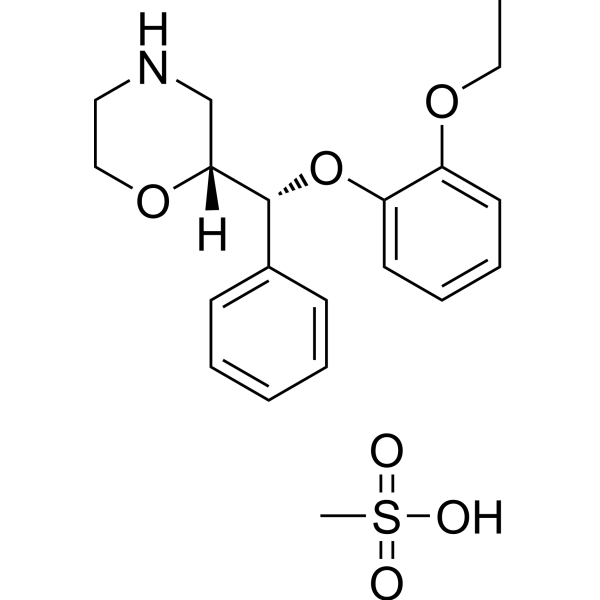
(R,R)-Reboxetine mesylate is an antidepressant agent with great bioavailability. (R,R)-Reboxetine is the enantiomer of Reboxetine, which is a selective noradrenaline reuptake inhibitor. Reboxetine consists of (R,R) and (S,S) enantiomer, has low affinity for alpha-adrenergic and muscarinic receptors and low toxicity in animals .
|
-
-
- HY-B0225AS
-
|
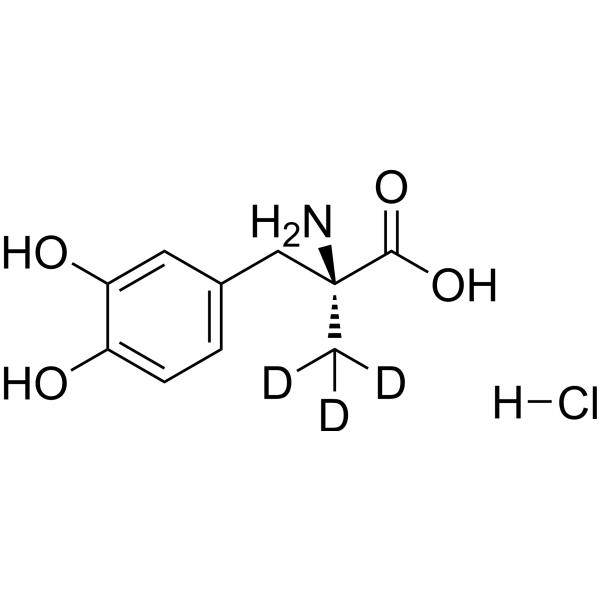
L-(-)-α-Methyldopa-d3 hydrochloride; MK-351-d3 hydrochloride
|
Isotope-Labeled Compounds
Adrenergic Receptor
Endogenous Metabolite
|
Cardiovascular Disease
Endocrinology
|
|
Methyldopa-d3 (hydrochloride) is deuterium labeled Methyldopa (hydrochloride). Methyldopa hydrochloride (L-(-)-α-Methyldopa hydrochloride) hydrochloride, a potent antihyoertensive agent, is an alpha-adrenergic agonist (selective for α2-adrenergic receptors). Methyldopa hydrochloride is a proagent and is metabolized (α-Methylepinephrine) in the central nervous system .
|
-
-
- HY-B0225BR
-
|
L-(-)-α-Methyldopa hydrate (Standard); MK-351 hydrate (Standard)
|
Reference Standards
Adrenergic Receptor
Endogenous Metabolite
|
Cardiovascular Disease
Endocrinology
|
|
Methyldopa (hydrate) (Standard) is the analytical standard of Methyldopa (hydrate). This product is intended for research and analytical applications. Methyldopa hydrate (L-(-)-α-Methyldopa hydrate), a potent antihyoertensive agent, is an alpha-adrenergic agonist (selective for α2-adrenergic receptors). Methyldopa hydrate is a proagent and is metabolized (α-Methylepinephrine) in the central nervous system .
|
-

-
- HY-U00313
-
-
-
- HY-117063
-
|
|
5-HT Receptor
|
Endocrinology
|
|
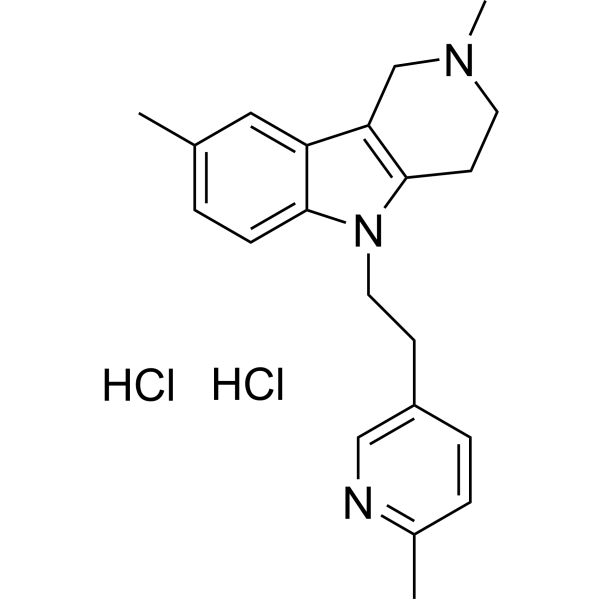
LEK 8841 methanesulfonate is a gastrointestinal calming agent with strong selective 5-HT2 receptor antagonist activity. The antipsychotic potential of LEK 8841 has made it the focus of research into alternative medicines. LEK 8841 behaves as a pure competitive antagonist in response to 5-HT and norepinephrine, with pA2 values of 7.93 and 6.45, respectively. The selectivity of LEK 8841 is better than that of the comparative drug ketanserin, making it an important reference value in corresponding receptor research. Studies related to structural modifications have shown that LEK 8841 exhibits high affinity for 5-HT2 receptors and low alpha-adrenergic receptor activity .
|
-

-
- HY-126635
-
|
|
Dopamine Receptor
Adrenergic Receptor
|
Others
|
|
Mafoprazine is a phenylpiperazine derivative with variable affinities for neuronal receptors. It may exert its antipsychotic effects primarily through D2 receptor blockade and α-adrenergic activity, and may increase the activity of dopamine metabolites.
|
-

-
- HY-107915R
-
|
(-)-Cobefrin (Standard); (-)-α-Methylnoradrenaline (Standard); (-)-Nordefrin (Standard)
|
Reference Standards
Adrenergic Receptor
|
Others
|
|
Levonordefrin (Standard) is the analytical standard of Levonordefrin. This product is intended for research and analytical applications. Levonordefrin ((-)-Cobefrin; (-)-α-Methylnoradrenaline; (-)-Nordefrin) is an α-adrenergic receptor agonist with blood pressure regulatory properties. Levonordefrin is a key metabolite responsible for the hypotensive effect of α-methyldopa. By stimulating central α-adrenergic receptors in the nucleus tractus solitarius region of the medulla oblongata, Levonordefrin induces centrally mediated hypotension and bradycardia. When administered intravenously, Levonordefrin increases mean arterial blood pressure in a dose-dependent manner. Levonordefrin is applicable for research on the pathophysiology of hypertension and drug metabolism .
|
-

-
- HY-126635R
-
|
|
Adrenergic Receptor
Dopamine Receptor
Reference Standards
|
Others
|
|
Mafoprazine (Standard) is the analytical standard of Mafoprazine. This product is intended for research and analytical applications. Mafoprazine is a phenylpiperazine derivative with variable affinities for neuronal receptors. It may exert its antipsychotic effects primarily through D2 receptor blockade and α-adrenergic activity, and may increase the activity of dopamine metabolites.
|
-

-
- HY-14537R
-
-

-
- HY-133214
-
|
|
Adrenergic Receptor
|
Cardiovascular Disease
|
|
Cyclazosin hydrochloride is an α1B-adrenergic receptor antagonist. Cyclazosin hydrochloride has high specificity for α-adrenergic receptors, with pKi values of 9.23-9.57 and 8.18-8.41 for O/1A (O/la) and OflB (alb) adrenergic receptors, respectively. However, Cyclazosin hydrochloride cannot distinguish between cloned alb and alo adrenergic receptors, which have pKi values of 9.23 and 9.28, respectively .
|
-

-
- HY-B1116R
-
|
Metaradrine tartrate (Standard)
|
Reference Standards
Adrenergic Receptor
|
Cardiovascular Disease
Endocrinology
|
|
Metaraminol (tartrate) (Standard) is the analytical standard of Metaraminol (tartrate). This product is intended for research and analytical applications. Metaraminol tartrate?(Metaradrine tartrate) is an α-adrenergic agonist . Metaraminol tartrate is a sympathomimetic amine that directly and indirectly affects adrenergic receptors, with alpha effects being predominant.Metaraminol tartrate acts as a vasopressor agent .
|
-

-
- HY-B0475S
-
|
|
Adrenergic Receptor
Isotope-Labeled Compounds
|
Inflammation/Immunology
|
|
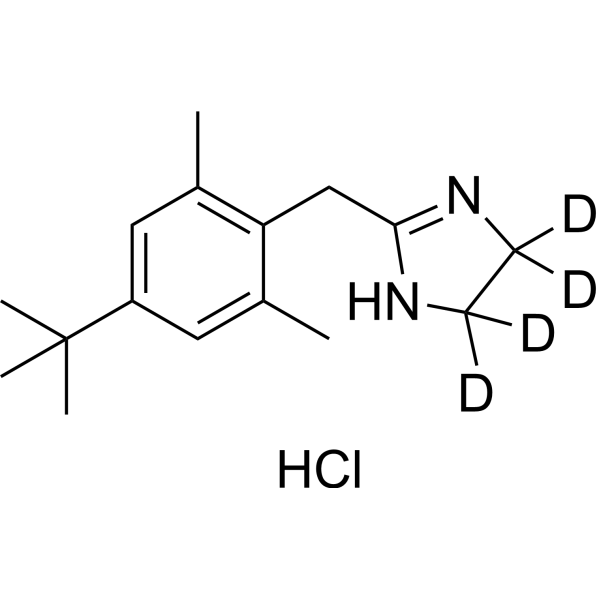
Xylometazoline-d4 hydrochloride is deuterated labeled Xylometazoline hydrochloride (HY-B0475). Xylometazoline hydrochloride is an α-adrenergic receptor agonist (Ki=0.05-1.7 μM). Xylometazoline hydrochloride can constrict nasal blood vessels and increase nasal airflow. Xylometazoline hydrochloride can be used in nose stuffiness and runny nose research .
|
-
-
- HY-B0475R
-
|
|
Reference Standards
Adrenergic Receptor
|
Inflammation/Immunology
|
|
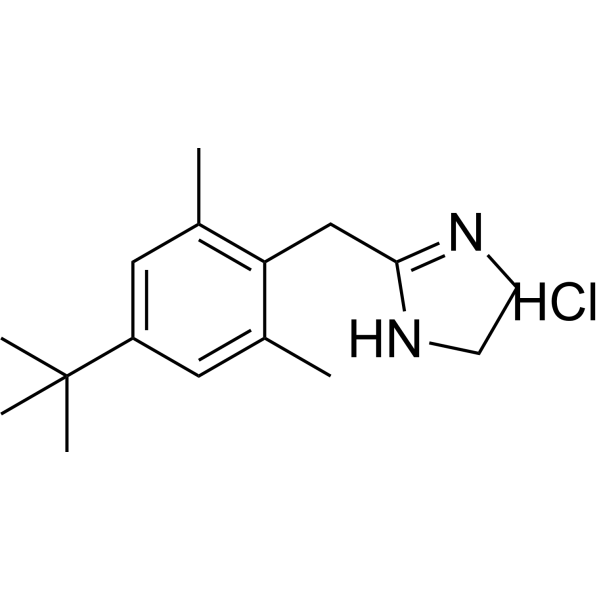
Xylometazoline (hydrochloride) (Standard) is the analytical standard of Xylometazoline (hydrochloride). This product is intended for research and analytical applications. Xylometazoline hydrochloride is an α-adrenergic receptor agonist (Ki=0.05-1.7 μM). Xylometazoline hydrochloride can constrict nasal blood vessels and increase nasal airflow. Xylometazoline hydrochloride can be used in nose stuffiness and runny nose research .
|
-
-
- HY-101390
-
|
(S)-Niguldipine hydrochloride
|
Calcium Channel
Adrenergic Receptor
|
Cardiovascular Disease
|
|
(+)-Niguldipine hydrochloride is a 1,4-DHP receptor ligand associated with L-type Ca 2+ channels (with Ki values of 85 pmol/L in guinea pig skeletal muscle, 140 pmol/L in brain, and 45 pmol/L in heart) as well as an α1-adrenergic receptor ligand (with a Ki value of 78 nmol/L). (+)-Niguldipine hydrochloride shows much higher binding selectivity for α1α-adrenergic receptors than for α1B-adrenergic receptors. (+)-Niguldipine hydrochloride can be used in studies related to hypertension .
|
-

-
- HY-A0066R
-
|
Imidaline (Standard); NSC35110 (Standard)
|
Adrenergic Receptor
Reference Standards
|
Cardiovascular Disease
Endocrinology
|
|
Tolazoline (Standard) is the analytical standard of Tolazoline. This product is intended for research and analytical applications. Tolazoline (Imidaline) is an α-adrenergic receptor antagonist. Tolazoline inhibits Noradrenaline (HY-13715)-induced cell contraction, modulates vascular resistance, increases arterial pressure, and reverses bradycardia and tachypnea. Tolazoline can be used to study erectile dysfunction, α2-adrenergic receptor agonist-related poisoning, and skin vascular disease research .
|
-

-
- HY-B1470R
-
|
R-1929 (Standard)
|
Reference Standards
Dopamine Receptor
Adrenergic Receptor
|
Neurological Disease
|
|
Azaperone (R-1929) (Standard) is the analytical standard of Azaperone (HY-B1470). This product is intended for research and analytical applications. Azaperone is an antagonist of dopamine D2 receptor (Dopamine D2 Receptor) and α-adrenergic receptor (AR). Azaperone reduces vasomotor tone, mean arterial pressure, hematocrit, hemoglobin concentration, and etorphine-induced duration; induces transient tachycardia followed by bradycardia, splenic uptake of red blood cells, and sedation; alters animal behaviors; and produces sedation with distinct onset and duration in foals. Azaperone is used for sedation and tranquilization in various animals to reduce stress and aggressive behaviors, and serves as a preanesthetic agent.
|
-

-
- HY-A0066AR
-
|
Imidaline hydrochloride (Standard); NSC35110 hydrochloride (Standard)
|
Reference Standards
Adrenergic Receptor
|
Cardiovascular Disease
Endocrinology
|
|
Tolazoline (hydrochloride) (Standard) is the analytical standard of Tolazoline hydrochloride (HY-A0066A). This product is intended for research and analytical applications. Tolazoline hydrochloride (Imidaline hydrochloride) is an α-adrenergic receptor antagonist. Tolazoline hydrochloride inhibits Noradrenaline (HY-13715)-induced cell contraction, modulates vascular resistance, increases arterial pressure, and reverses bradycardia and tachypnea. Tolazoline hydrochloride can be used to study erectile dysfunction, α2-adrenergic receptor agonist-related poisoning, and skin vascular disease research .
|
-

-
- HY-B0446R
-
|
Naphthazoline hydrochloride (Standard)
|
Reference Standards
Adrenergic Receptor
TNF Receptor
Interleukin Related
VEGFR
|
Cardiovascular Disease
Inflammation/Immunology
|
|
Naphazoline (hydrochloride) (Standard) is the analytical standard of Naphazoline (hydrochloride). This product is intended for research and analytical applications. Naphazoline (Naphthazoline) hydrochloride is a potent α-adrenergic receptor agonist. Naphazoline hydrochloride reduces vascular hyperpermeability and promotes vasoconstriction. Naphazoline hydrochloride reduces the levels of inflammatory factors (TNF-α, IL-1β and IL-6), cytokines (IFN-γ and IL-4), IgE, GMCSF, and NGF。Naphazoline hydrochloride can be used for non-bacterial conjunctivitis research .
|
-

-
- HY-111326AR
-
|
Naphthazoline nitrate (Standard)
|
Reference Standards
Adrenergic Receptor
TNF Receptor
Interleukin Related
VEGFR
|
Cardiovascular Disease
Inflammation/Immunology
|
|
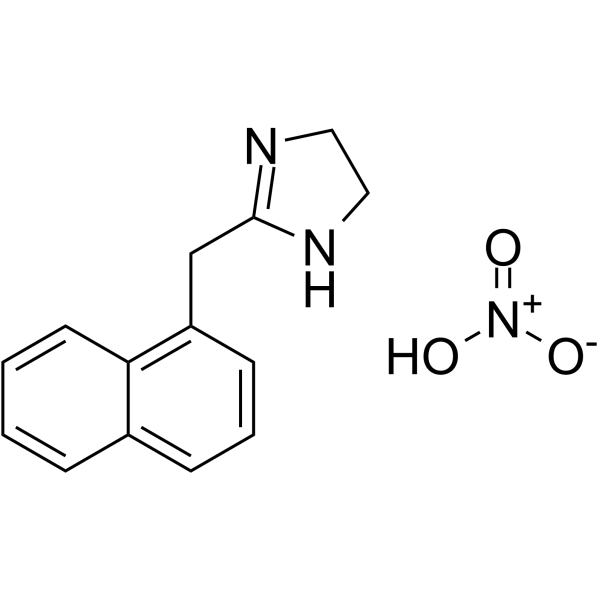
Naphazoline (nitrate) (Standard) is the analytical standard of Naphazoline (nitrate). This product is intended for research and analytical applications. Naphazoline (Naphthazoline) nitrate is an α-adrenergic receptor agonist. Naphazoline nitrate reduces vascular hyperpermeability and promotes vasoconstriction. Naphazoline nitrate reduces the levels of inflammatory factors (TNF-α, IL-1β and IL-6), cytokines (IFN-γ and IL-4), IgE, GMCSF, and NGF. Naphazoline nitrate can be used for non-bacterial conjunctivitis research .
|
-

- HY-17018
-
|
ABT 200 free acid; A-75200
|
Adrenergic Receptor
|
Neurological Disease
|
|
Napitane (A 75200) is a groundbreaking catecholamine uptake inhibitor that exhibits inhibitory effects on α-adrenergic receptors and shows promise for antidepressant activity in depression research.
|
-

- HY-A0027S
-
-

- HY-126635A
-
-

- HY-119512
-
|
Ethomoxane
|
Adrenergic Receptor
|
Cardiovascular Disease
|
|
Ethoxomane (Ethomoxane) is an α-adrenergic receptor blocker. Ethoxomane elevates the hissing threshold induced by perifornical hypothalamic stimulation in cats. Ethoxomane exhibits antihypertensive effects. Ethoxomane can be used in the research of cardiovascular and cerebrovascular diseases .
|
-

- HY-183177
-
|
|
Adrenergic Receptor
|
Cardiovascular Disease
|
|
Zolertine is an α-adrenergic receptor antagonist, with a pKi of 6.35 for rabbit α1A-adrenergic receptor and a pKi of 6.81 for rat α1B-adrenergic receptor. Zolertine competitively blocks α1D-adrenergic receptor-mediated vasoconstriction and α1A-adrenergic receptor-mediated vasoconstriction in arteries. Zolertine can be used in the research of hypertension .
|
-

- HY-181635
-
|
|
Adrenergic Receptor
|
Cardiovascular Disease
|
|
Azapetine is an α-adrenergic receptor antagonist, with a IC50 of 0.205 μM against rat α1-adrenergic receptors and a IC50 of 1.3 μM against rat α2-adrenergic receptors. Azapetine blocks α1/α2-adrenergic receptor-mediated contraction of blood vessels and vascular smooth muscles. Azapetine can be used for the research of peripheral vascular diseases .
|
-

- HY-180379
-
|
|
5-HT Receptor
Adrenergic Receptor
|
Cardiovascular Disease
|
|
Pelanserin (Compound 1) is an orally active antihypertensive agent. Pelanserin is a potent 5-HT2 receptor antagonist. Pelanserin has the ability to block the activity of α-adrenergic receptor, with its ED50 being 0.03 μg/mL. Pelanserin has vasodilatory activity, with its ED100 being 5 μg. Pelanserin exhibits antihypertensive activity in hypertensive rats and renal hypertensive dog breeds. Pelanserin can be used for research on hypertension .
|
-

- HY-N18279
-
|
|
Dopamine Receptor
Adrenergic Receptor
|
Neurological Disease
|
|
Bulbocapnine is an aporphine isoquinoline alkaloid that exerts antagonistic effects on dopamine Receptor) and α-adrenergic receptors, as well as anti-peroxidative effects. The Ki value of bulbocapnine for tyrosine hydroxylase (TH) is 0.20 mM. Bulbocapnine reduces intracellular dopamine content, inhibits TH activity, and decreases Ca 2+ concentration. Bulbocapnine antagonizes the dose-dependent inhibitory effect of dopamine on the heart rate acceleration induced by stimulating the postganglionic fibers of the right cardiac accelerator nerve .
|
-

| Cat. No. |
Product Name |
Category |
Target |
Chemical Structure |
| Cat. No. |
Product Name |
Chemical Structure |
-
- HY-B1111S1
-
|
|
|
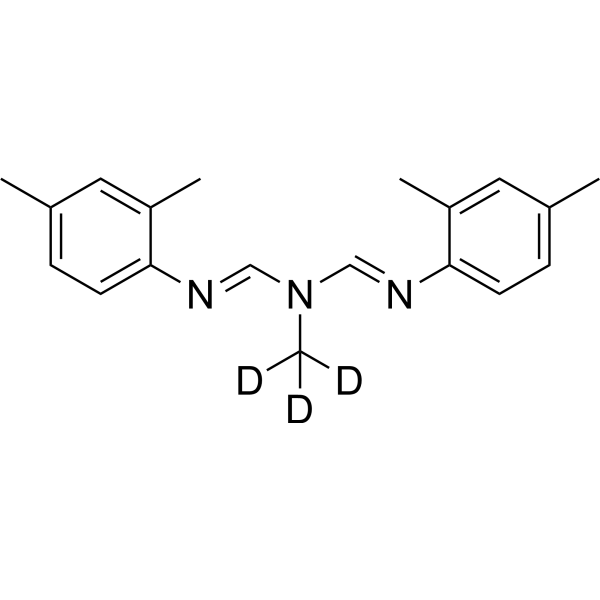
Amitraz-d3 is the deuterium labeled Amitraz. Amitraz is a non-systemic acaricide and insecticide, with alpha-adrenergic agonist activity, interaction with octopamine receptors of the central nervous system and inhibition of monoamine oxidases and prostaglandin synthesis.
|
-
-
- HY-B1111S
-
|
|
|
Amitraz-d6 (BTS-27419-d6) is the deuterium labeled Amitraz. Amitraz is a non-systemic acaricide and insecticide, with alpha-adrenergic agonist activity, interaction with octopamine receptors of the central nervous system and inhibition of monoamine oxidases and prostaglandin synthesis.
|
-
-
- HY-B1470S
-
|
|
|
Azaperone-d4 (R-1929-d4) is the deuterium labeled Azaperone (HY-B1470). Azaperone is an antagonist of dopamine D2 receptor (Dopamine D2 Receptor) and α-adrenergic receptor (AR). Azaperone reduces vasomotor tone, mean arterial pressure, hematocrit, hemoglobin concentration, and etorphine-induced duration; induces transient tachycardia followed by bradycardia, splenic uptake of red blood cells, and sedation; alters animal behaviors; and produces sedation with distinct onset and duration in foals. Azaperone is used for sedation and tranquilization in various animals to reduce stress and aggressive behaviors, and serves as a preanesthetic agent.
|
-
-
- HY-B0225AS
-
|
|
|
Methyldopa-d3 (hydrochloride) is deuterium labeled Methyldopa (hydrochloride). Methyldopa hydrochloride (L-(-)-α-Methyldopa hydrochloride) hydrochloride, a potent antihyoertensive agent, is an alpha-adrenergic agonist (selective for α2-adrenergic receptors). Methyldopa hydrochloride is a proagent and is metabolized (α-Methylepinephrine) in the central nervous system .
|
-
-
- HY-B0475S
-
|
|
|
Xylometazoline-d4 hydrochloride is deuterated labeled Xylometazoline hydrochloride (HY-B0475). Xylometazoline hydrochloride is an α-adrenergic receptor agonist (Ki=0.05-1.7 μM). Xylometazoline hydrochloride can constrict nasal blood vessels and increase nasal airflow. Xylometazoline hydrochloride can be used in nose stuffiness and runny nose research .
|
-
-
- HY-A0027S
-
|
|
|
Fenspiride-d5 hydrochloride is the deuterium labeled Fenspiride hydrochloride (HY-A0027). Fenspiride hydrochloride is an α adrenergic and H1 histamine receptor antagonist .
|
-
Your information is safe with us. * Required Fields.
Inquiry Information
- Product Name:
- Cat. No.:
- Quantity:
- MCE Japan Authorized Agent:








