



Azaperone

Based on 1 Customer Validation
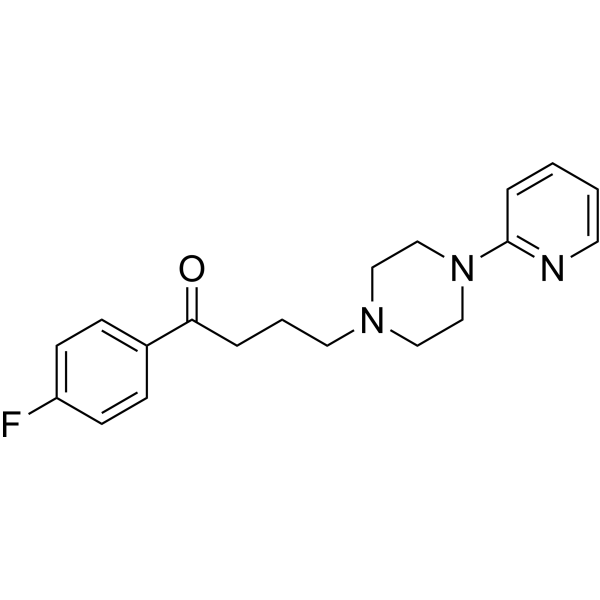
Azaperone is an antagonist of dopamine D2 receptor (Dopamine D2 Receptor) and α-adrenergic receptor (AR). Azaperone reduces vasomotor tone, mean arterial pressure, hematocrit, hemoglobin concentration, and etorphine-induced duration; induces transient tachycardia followed by bradycardia, splenic uptake of red blood cells, and sedation; alters animal behaviors; and produces sedation with distinct onset and duration in foals. Azaperone is used for sedation and tranquilization in various animals to reduce stress and aggressive behaviors, and serves as a preanesthetic agent.
For research use only. We do not sell to patients.
- Purity : 99.23%
- CAS No.: 1649-18-9
- Formula: C19H22FN3O
- Molecular Weight:327.40
-
Storage:Powder -20°C, 3 years , 4°C, 2 years ; In solvent -80°C, 2 years , -20°C, 1 year

To place orders, for customer services and technical support, please contact: MedChemExpress USA
Tel: 609-228-6898 E-mail: [email protected] [email protected]


-
 Biological Activity
-
Chemical Information
-
Solvent & Solubility
- Purity & Documentation
- References
-
 Help & FAQs


-
HY-B0901
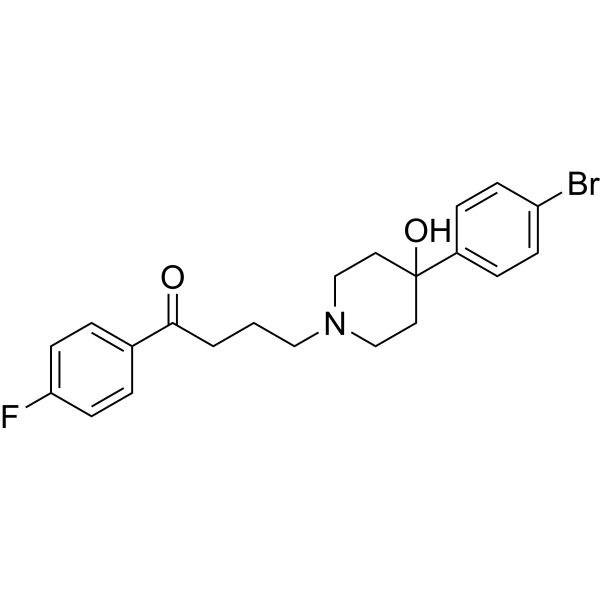
BromperidolAntipsychotic Agent -
HY-14538
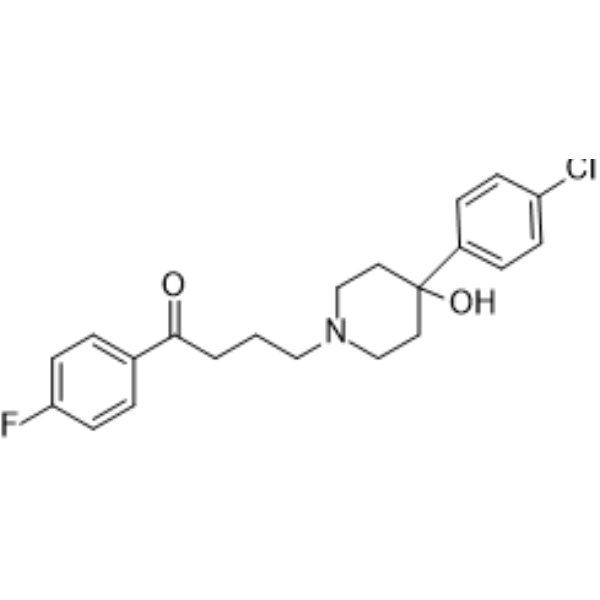
HaloperidolDopamine Receptor Antagonist -
HY-A0019
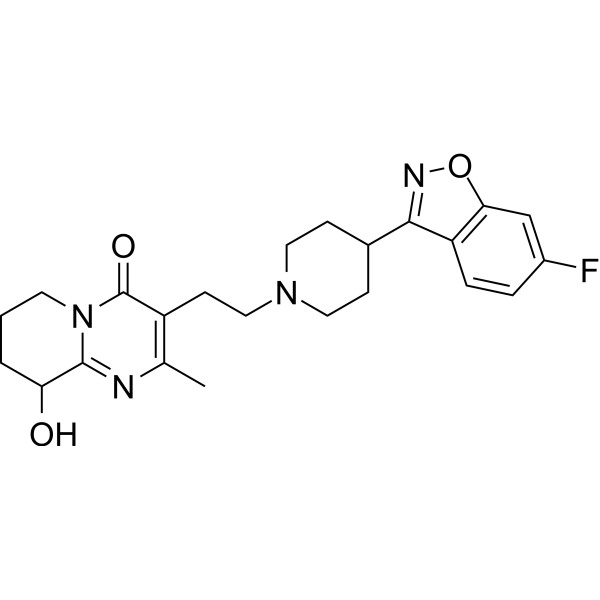
PaliperidoneDopamine D2/5-HT2A Antagonist -
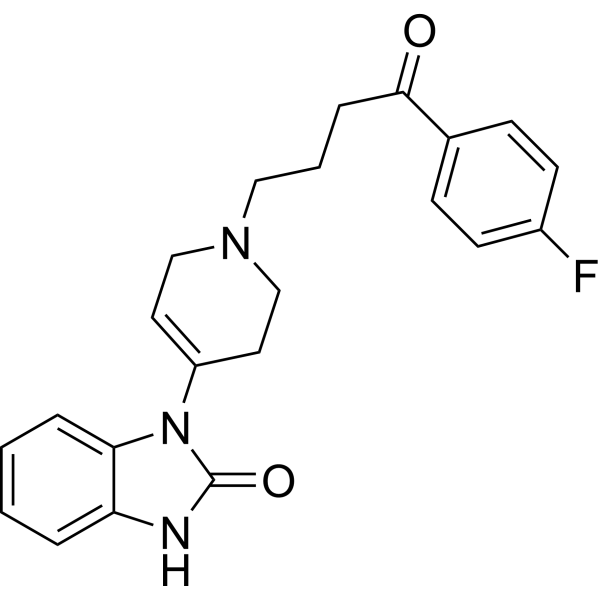
HY-B1240
DroperidolDopamine Receptor Antagonist -

HY-B1470R
Azaperone (Standard)Analytical Standard -
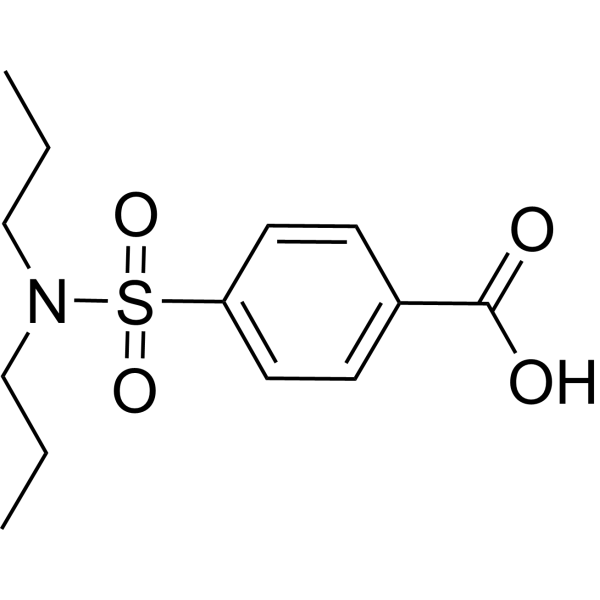
HY-B0545
ProbenecidBacterial Inhibitor -
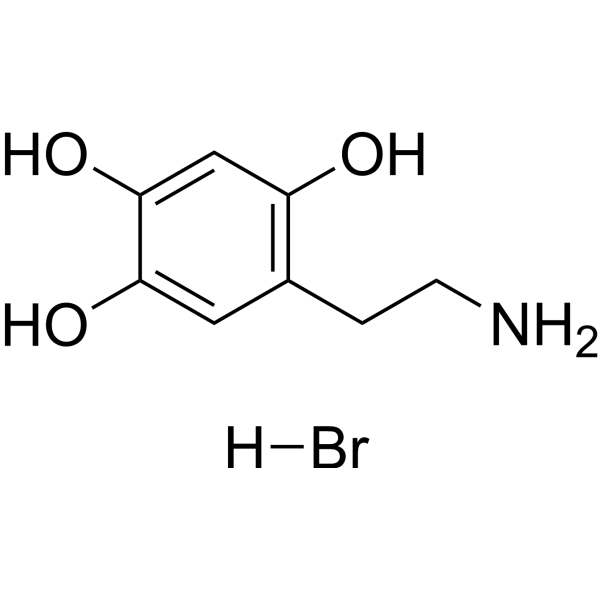
HY-B1081A
Oxidopamine hydrobromideNeurotoxin -
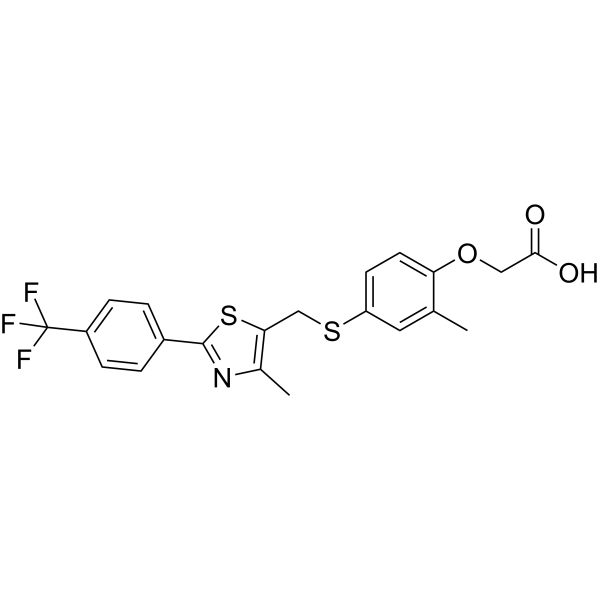
HY-10838
GW 501516PPARδ Agonist -
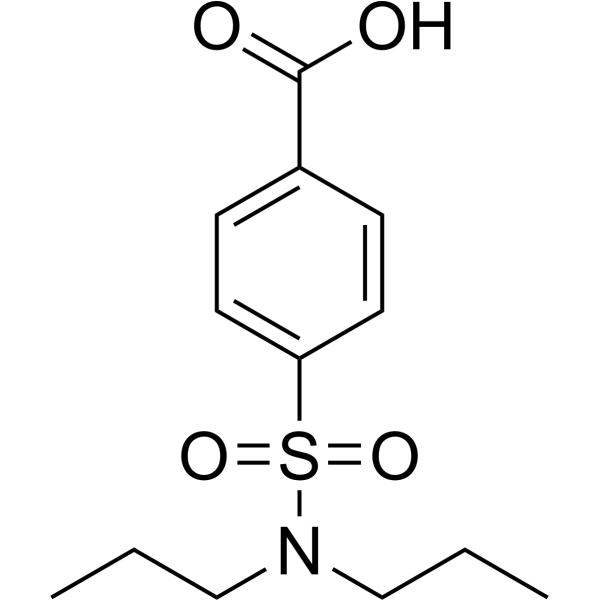
HY-B0545R
Probenecid (Standard) -
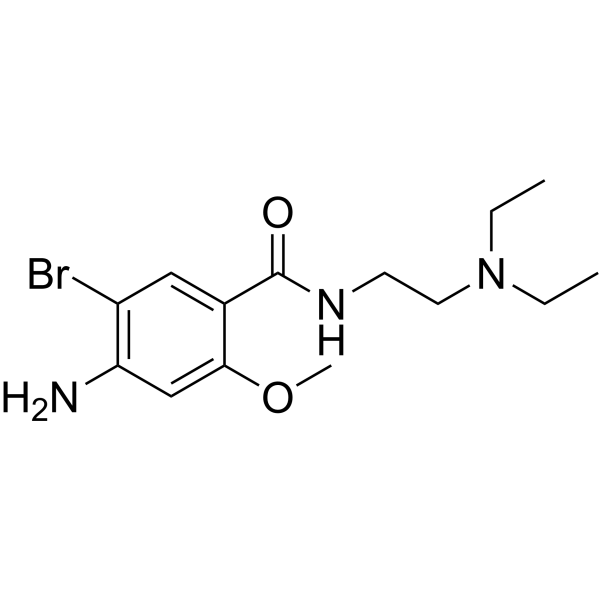
HY-B1164
BromoprideDopamine Receptor Antagonist -

HY-10838R
GW 501516 (Standard)PPARδ Agonist


Biological Activity
Description
In Vivo
Co-administration of Azaperone (0.03-0.0375 mg/kg; i.m.) with Etorphine reduces the median induction time of white rhinoceroses to 6.25 min while maintaining a median immobilization quality score of 2[2].
Azaperone (2-4 mg/kg; i.m., intranasal administration; single dose) exerts sedative effects on healthy weaned piglets[3].
MedChemExpress (MCE) has not independently confirmed the accuracy of these methods. They are for reference only.
-
Animal Model:Welsh Mountain ponies (either sex, 3-5 years old, 202-300 kg)[1]
-
Dosage:0.4 mg/kg; 0.8 mg/kg
-
Administration:i.m.; single dose
-
Result:Produced a moderate blood pressure-lowering effect that lasts for at least 4 hours, with an average systolic blood pressure reduction of 30-38% at 0.8 mg/kg.
-
Animal Model:Ceratotherium simum (male, 5-6 years old, 1000-1500 kg)[2]
-
Dosage:0.03 mg/kg (for 1000-1250 kg rhinoceros); 0.0375 mg/kg (for 1250-1500 kg rhinoceros)
-
Administration:i.m.; single dose
-
Result:Reduced median induction time to 6.25 minutes (range 5.35-6.9 minutes), a ~30% reduction compared to etorphine alone.
Maintained median immobilization quality score at 2 (range 2-3), identical to etorphine alone.
-
Animal Model:gilts (weaned, ~28 days old, mean body weight 8.10-8.80 kg)[3]
-
Dosage:2 mg/kg (i.m.); 2 mg/kg (intranasal); 4 mg/kg (intranasal)
-
Administration:i.m.; single dose; intranasal; single dose via LMA MAD Nasal applicator
-
Result:To achieve a sedative level comparable to that of standard intramuscular injection (2 mg/kg), a dose of 4 mg/kg via nasal administration is required.
Nasal administration of 2 mg/kg took longer to take effect (60 minutes) and Had a weaker effect than intramuscular injection.


Chemical Information
-
CAS No. 1649-18-9
-
Appearance Solid
-
Molecular Weight 327.40
-
Formula C19H22FN3O
-
Color Light yellow to yellow
-
SMILES
O=C(C1=CC=C(F)C=C1)CCCN2CCN(C3=NC=CC=C3)CC2
-
Synonyms
R-1929
-
Shipping
Room temperature in continental US; may vary elsewhere.
-
Storage
Powder -20°C 3 years 4°C 2 years In solvent -80°C 2 years -20°C 1 year


Solvent & Solubility
In Vitro:
DMSO : 50 mg/mL (152.72 mM; Need ultrasonic; Hygroscopic DMSO has a significant impact on the solubility of product, please use newly opened DMSO)
Please refer to the solubility information to select the appropriate solvent. Once prepared, please aliquot and store the solution to prevent product inactivation from repeated freeze-thaw cycles.
Storage method and period of stock solution: -80°C, 2 years; -20°C, 1 year. When stored at -80°C, please use it within 2 years. When stored at -20°C, please use it within 1 year.
Please refer to the solubility information to select the appropriate solvent. Once prepared, please aliquot and store the solution to prevent product inactivation from repeated freeze-thaw cycles.
Storage method and period of stock solution: -80°C, 2 years; -20°C, 1 year. When stored at -80°C, please use it within 2 years. When stored at -20°C, please use it within 1 year.
Concentration (start) × Volume (start) = Concentration (final) × Volume (final)
In Vivo:
Select the appropriate dissolution method based on your experimental animal and administration route.
- For the following dissolution methods, please ensure to first prepare a clear stock solution using an In Vitro approach and then sequentially add co-solvents:
- To ensure reliable experimental results, the clarified stock solution can be appropriately stored based on storage conditions. As for the working solution for In Vivo experiments, it is recommended to prepare freshly and use it on the same day.
- The percentages shown for the solvents indicate their volumetric ratio in the final prepared solution. If precipitation or phase separation occurs during preparation, heat and/or sonication can be used to aid dissolution.
Add each solvent one by one: 10% DMSO 40% PEG300 5% Tween-80 45% Saline
Solubility: ≥ 2.5 mg/mL (7.64 mM); Clear solution
This protocol yields a clear solution of ≥ 2.5 mg/mL (saturation unknown).
Taking 1 mL working solution as an example, add 100 μL DMSO stock solution (25.0 mg/mL) to 400 μL PEG300, and mix evenly; then add 50 μL Tween-80 and mix evenly; then add 450 μL Saline to adjust the volume to 1 mL.
Preparation of Saline: Dissolve 0.9 g sodium chloride in ddH₂O and dilute to 100 mL to obtain a clear Saline solution.
Add each solvent one by one: 10% DMSO 90% (20% SBE-β-CD in Saline)
Solubility: ≥ 2.5 mg/mL (7.64 mM); Clear solution
This protocol yields a clear solution of ≥ 2.5 mg/mL (saturation unknown).
Taking 1 mL working solution as an example, add 100 μL DMSO stock solution (25.0 mg/mL) to 900 μL 20% SBE-β-CD in Saline, and mix evenly.
Preparation of 20% SBE-β-CD in Saline (4°C, storage for one week): 2 g SBE-β-CD powder is dissolved in 10 mL Saline, completely dissolve until clear.
In Vivo Dissolution Calculator
Please enter the basic information of animal experiments:
-
-
-
-
Recommended: Prepare an additional quantity of animals to account for potential losses during experiments.
Please enter your animal formula composition:
-
%DMSO +
Recommended: Keep the proportion of DMSO in working solution below 2% if your animal is weak.
-
%+
-
+%Tween-80 + +
-
%Saline +
The co-solvents required include: DMSO, . All of co-solvents are available by MedChemExpress (MCE). , Tween 80. All of co-solvents are available by MedChemExpress (MCE).
Working solution concentration: 0.22 mg/mL
Method for preparing stock solution: mg drug dissolved in μL DMSO. Stock solution concentration: mg/mL.
1. Take μL DMSO stock solution;
2. Add μL .
μL , mix evenly;
3. Then add μL Tween 80, mix evenly;
4. Then add μL
Please ensure that the stock solution in the first step is dissolved to a clear state, and add co-solvents in sequence. You can use ultrasonic heating (ultrasonic cleaner, recommended frequency 20-40 kHz), vortexing, etc. to assist dissolution.


Purity & Documentation
-
Data Sheet (279 KB)
-
SDS (480 KB)
- English - EN (480 KB)
- Français - FR (480 KB)
- Deutsch - DE (480 KB)
- Norwegian - NO (480 KB)
- Español - ES (480 KB)
- Swedish - SV (480 KB)
- Italian - IT (480 KB)
- Korean - KR (480 KB)
- Portuguese - PT (480 KB)
-
Handling Instructions (2659 KB)
References
[1]. Lees P, et al. Effects of azaperone on cardiovascular and respiratory functions in the horse. Br J Pharmacol. 1976;56(3):263-269. [Content Brief]
[2].
Buss P, et al. Effect of Azaperone on Induction Times in Etorphine-Immobilized White Rhinoceros (Ceratotherium simum). J Wildl Dis. 2022 Jan 1;58(1):245-247.
[Content Brief]
[3]. Svoboda M, et al. Efficacy of the intranasal application of azaperone for sedation in weaned piglets. Vet Med (Praha). 2023;68(4):145-151. Published 2023 Apr 26. [Content Brief]


Complete Stock Solution Preparation Table
Please refer to the solubility information to select the appropriate solvent. Once prepared, please aliquot and store the solution to prevent product inactivation from repeated freeze-thaw cycles.
Storage method and period of stock solution: -80°C, 2 years; -20°C, 1 year. When stored at -80°C, please use it within 2 years. When stored at -20°C, please use it within 1 year.
| Optional Solvent | Concentration Solvent Mass | 1 mg | 5 mg | 10 mg | 25 mg |
|---|---|---|---|---|---|
| DMSO | 1 mM | 3.0544 mL | 15.2718 mL | 30.5437 mL | 76.3592 mL |
| 5 mM | 0.6109 mL | 3.0544 mL | 6.1087 mL | 15.2718 mL | |
| 10 mM | 0.3054 mL | 1.5272 mL | 3.0544 mL | 7.6359 mL | |
| 15 mM | 0.2036 mL | 1.0181 mL | 2.0362 mL | 5.0906 mL | |
| 20 mM | 0.1527 mL | 0.7636 mL | 1.5272 mL | 3.8180 mL | |
| 25 mM | 0.1222 mL | 0.6109 mL | 1.2217 mL | 3.0544 mL | |
| 30 mM | 0.1018 mL | 0.5091 mL | 1.0181 mL | 2.5453 mL | |
| 40 mM | 0.0764 mL | 0.3818 mL | 0.7636 mL | 1.9090 mL | |
| 50 mM | 0.0611 mL | 0.3054 mL | 0.6109 mL | 1.5272 mL | |
| 60 mM | 0.0509 mL | 0.2545 mL | 0.5091 mL | 1.2727 mL | |
| 80 mM | 0.0382 mL | 0.1909 mL | 0.3818 mL | 0.9545 mL | |
| 100 mM | 0.0305 mL | 0.1527 mL | 0.3054 mL | 0.7636 mL |


Azaperone Related Classifications
HY-B1470 Related Classifications
 Powered by Bioz