



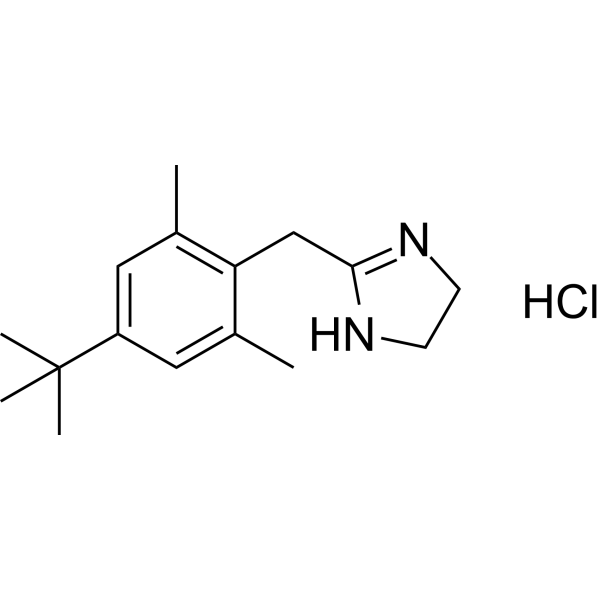
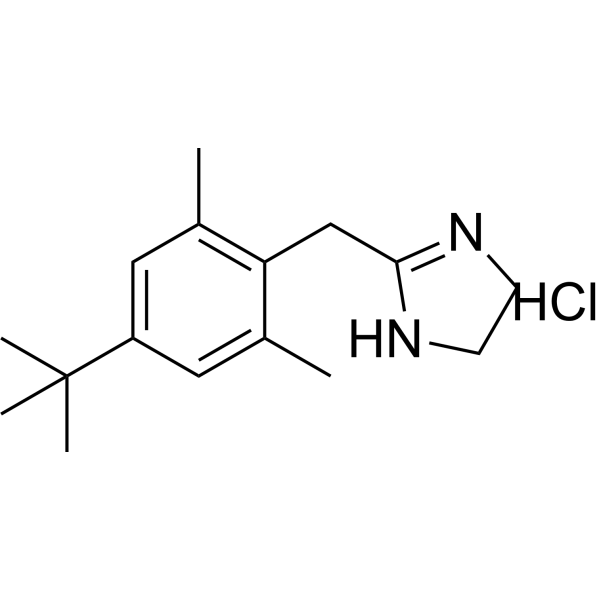
Xylometazoline hydrochloride

Based on 1 Customer Validation
Xylometazoline hydrochloride is an α-adrenergic receptor agonist (Ki=0.05-1.7 μM). Xylometazoline hydrochloride can constrict nasal blood vessels and increase nasal airflow. Xylometazoline hydrochloride can be used in nose stuffiness and runny nose research.
For research use only. We do not sell to patients.
- Purity : 99.94%
- CAS No.: 1218-35-5
- Formula: C16H25ClN2
- Molecular Weight:280.84
-
Storage:
4°C, sealed storage, away from moisture
* In solvent : -80°C, 6 months; -20°C, 1 month (sealed storage, away from moisture)

To place orders, for customer services and technical support, please contact: MedChemExpress USA
Tel: 609-228-6898 E-mail: [email protected] [email protected]


-
 Biological Activity
-
Chemical Information
-
Solvent & Solubility
- Purity & Documentation
- References
-
 Help & FAQs


-
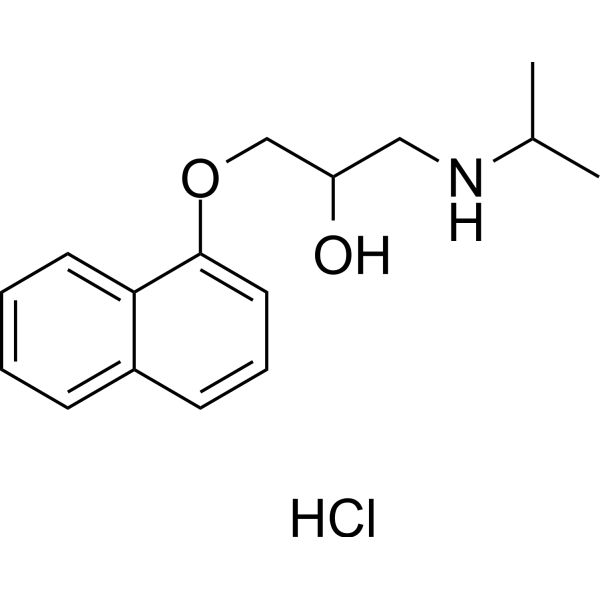
HY-B0573
Propranolol hydrochloride -
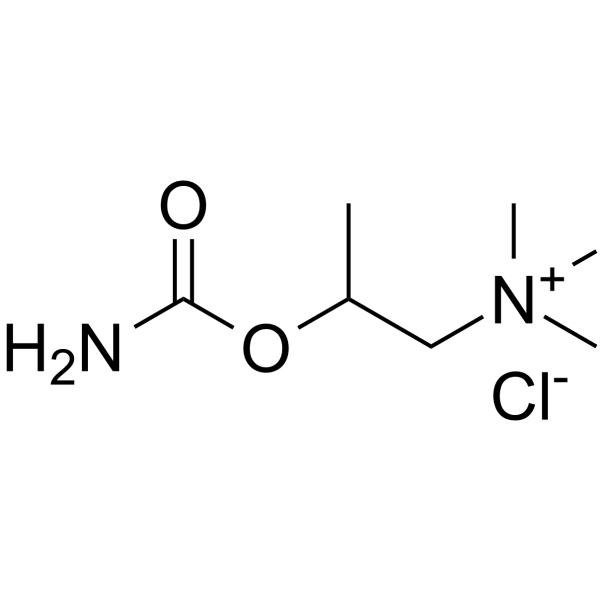
HY-B0406A
Bethanechol chloride -
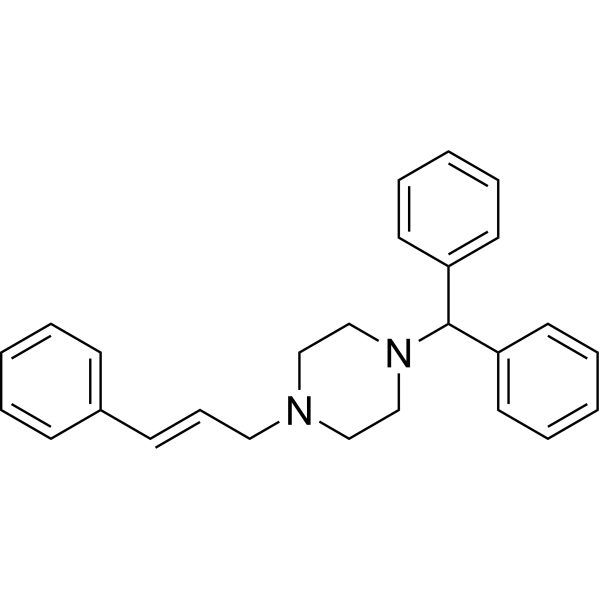
HY-B1090
Cinnarizine -
HY-B0475R
Xylometazoline hydrochloride (Standard) -
HY-B0137
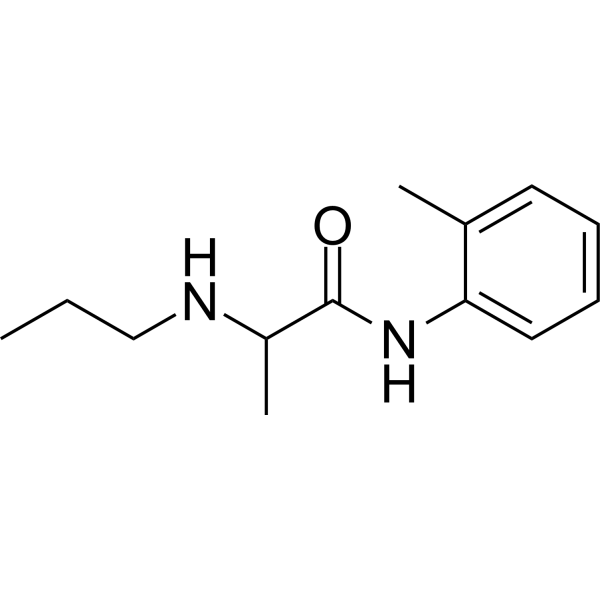
Prilocaine -

HY-B0137R
Prilocaine (Standard) -
HY-B0659
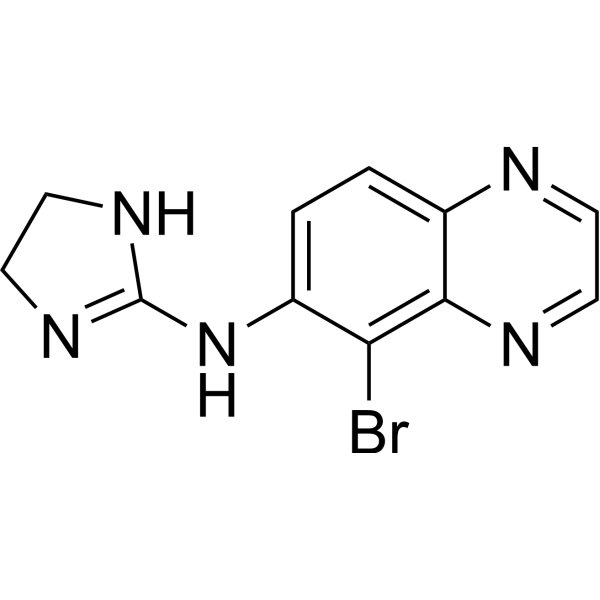
Brimonidine -
HY-B0452
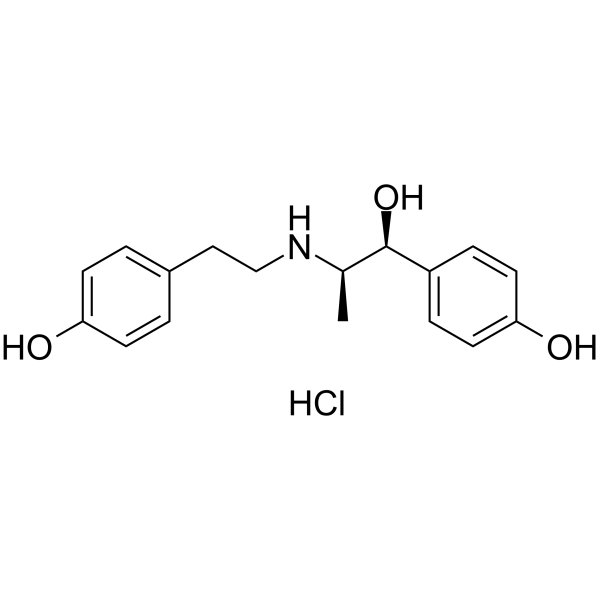
Ritodrine hydrochloride -
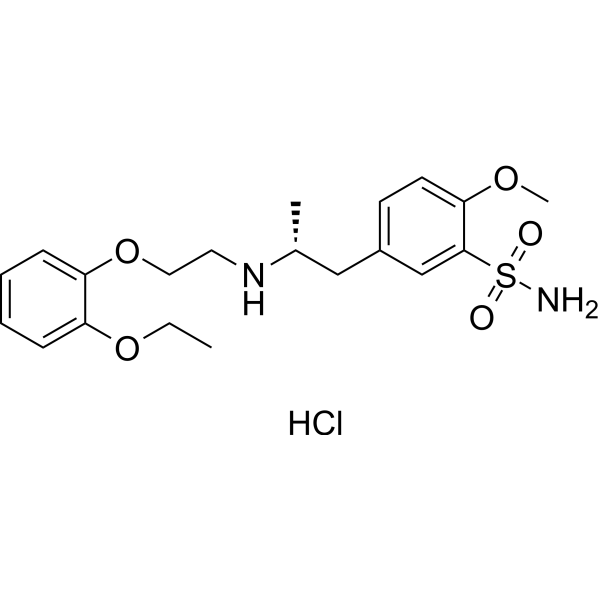
HY-B0661A
Tamsulosin hydrochloride -
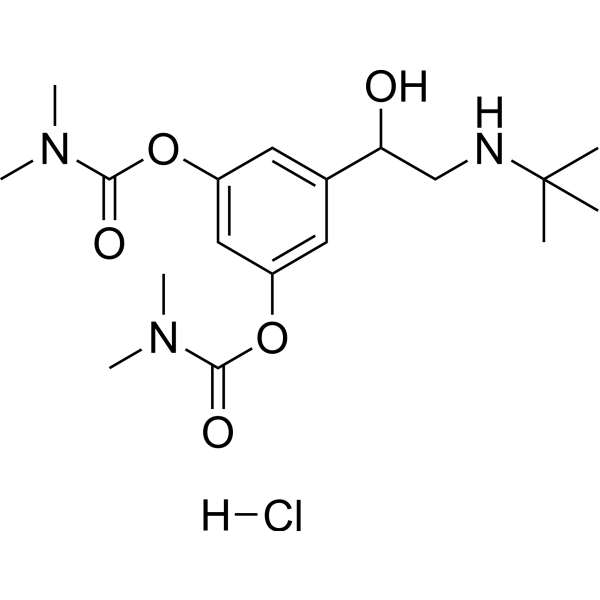
HY-17501A
Bambuterol hydrochloride -

HY-B0659R
Brimonidine (Standard) -

HY-B0661AR
Tamsulosin hydrochloride (Standard)
All Adrenergic Receptor Isoforms
More

Biological Activity
Description
IC50 & Target
[2]|
Alpha-1A adrenergic receptor 0.05 μM (Ki) |
Alpha-1B adrenergic receptor 0.30 μM (Ki) |
Alpha-1D adrenergic receptor 0.15 μM (Ki) |
Alpha-2A adrenergic receptor 0.88 μM (Ki) |
Alpha-2B adrenergic receptor 1.7 μM (Ki) |
Alpha-2C adrenergic receptor 0.19 μM (Ki) |
In Vitro
Xylometazoline hydrochloride has affinity for α1A-adrenoceptor and α2B-adrenoceptor in HEK293 cells[2].
MedChemExpress (MCE) has not independently confirmed the accuracy of these methods. They are for reference only.
In Vivo
Xylometazoline hydrochloride and its excipients, when used for prolonged periods, may cause ophthalmic problems such as dry eyes, corneal edema, cataracts, retinal nerve fiber layer damage, and vascular damage[4].
MedChemExpress (MCE) has not independently confirmed the accuracy of these methods. They are for reference only.
-
Animal Model:SpragueDawley rat induced by platelet-activating factor[3]
-
Dosage:1 mg/mL; single dose
-
Administration:Intranasal administration
-
Result:Showed almost no vascular congestion, little infiltration, and the epithelium was completely intact.


Chemical Information
-
CAS No. 1218-35-5
-
Appearance Solid
-
Molecular Weight 280.84
-
Formula C16H25ClN2
-
Color White to off-white
-
SMILES
CC1=C(CC2=NCCN2)C(C)=CC(C(C)(C)C)=C1.Cl
-
Shipping
Room temperature in continental US; may vary elsewhere.
-
Storage
4°C, sealed storage, away from moisture
* In solvent : -80°C, 6 months; -20°C, 1 month (sealed storage, away from moisture)


Solvent & Solubility
In Vitro:
H2O : 50 mg/mL (178.04 mM; Need ultrasonic)
DMSO : 25 mg/mL (89.02 mM; Need ultrasonic; Hygroscopic DMSO has a significant impact on the solubility of product, please use newly opened DMSO)
Please refer to the solubility information to select the appropriate solvent. Once prepared, please aliquot and store the solution to prevent product inactivation from repeated freeze-thaw cycles.
Storage method and period of stock solution: -80°C, 6 months; -20°C, 1 month (sealed storage, away from moisture). When stored at -80°C, please use it within 6 months. When stored at -20°C, please use it within 1 month.
* Note: If you choose water as the stock solution, please dilute it to the working solution, then filter and sterilize it with a 0.22 μm filter before use.
Please refer to the solubility information to select the appropriate solvent. Once prepared, please aliquot and store the solution to prevent product inactivation from repeated freeze-thaw cycles.
Storage method and period of stock solution: -80°C, 6 months; -20°C, 1 month (sealed storage, away from moisture). When stored at -80°C, please use it within 6 months. When stored at -20°C, please use it within 1 month.
* Note: If you choose water as the stock solution, please dilute it to the working solution, then filter and sterilize it with a 0.22 μm filter before use.
Concentration (start) × Volume (start) = Concentration (final) × Volume (final)
In Vivo:
Select the appropriate dissolution method based on your experimental animal and administration route.
- For the following dissolution methods, please ensure to first prepare a clear stock solution using an In Vitro approach and then sequentially add co-solvents:
- To ensure reliable experimental results, the clarified stock solution can be appropriately stored based on storage conditions. As for the working solution for In Vivo experiments, it is recommended to prepare freshly and use it on the same day.
- The percentages shown for the solvents indicate their volumetric ratio in the final prepared solution. If precipitation or phase separation occurs during preparation, heat and/or sonication can be used to aid dissolution.
Add each solvent one by one: 10% DMSO 40% PEG300 5% Tween-80 45% Saline
Solubility: ≥ 2.5 mg/mL (8.90 mM); Clear solution
This protocol yields a clear solution of ≥ 2.5 mg/mL (saturation unknown).
Taking 1 mL working solution as an example, add 100 μL DMSO stock solution (25.0 mg/mL) to 400 μL PEG300, and mix evenly; then add 50 μL Tween-80 and mix evenly; then add 450 μL Saline to adjust the volume to 1 mL.
Preparation of Saline: Dissolve 0.9 g sodium chloride in ddH₂O and dilute to 100 mL to obtain a clear Saline solution.
Add each solvent one by one: 10% DMSO 90% (20% SBE-β-CD in Saline)
Solubility: ≥ 2.5 mg/mL (8.90 mM); Clear solution
This protocol yields a clear solution of ≥ 2.5 mg/mL (saturation unknown).
Taking 1 mL working solution as an example, add 100 μL DMSO stock solution (25.0 mg/mL) to 900 μL 20% SBE-β-CD in Saline, and mix evenly.
Preparation of 20% SBE-β-CD in Saline (4°C, storage for one week): 2 g SBE-β-CD powder is dissolved in 10 mL Saline, completely dissolve until clear.
For the following dissolution methods, please prepare the working solution directly:
It is recommended to prepare fresh solutions and use them promptly within a short period of time.
The percentages shown for the solvents indicate their volumetric ratio in the final prepared solution. If precipitation or phase separation occurs during preparation, heat and/or sonication can be used to aid dissolution.
Add each solvent one by one: PBS
Solubility: 16.67 mg/mL (59.36 mM); Clear solution; Need ultrasonic
In Vivo Dissolution Calculator
Please enter the basic information of animal experiments:
-
-
-
-
Recommended: Prepare an additional quantity of animals to account for potential losses during experiments.
Working solution concentration: 0.22 mg/mL
This product has good water solubility, please refer to the measured solubility data in water/PBS/Saline for details.


Purity & Documentation
-
Data Sheet (273 KB)
-
SDS (419 KB)
- English - EN (419 KB)
- Français - FR (419 KB)
- Deutsch - DE (419 KB)
- Norwegian - NO (419 KB)
- Español - ES (419 KB)
- Swedish - SV (419 KB)
- Italian - IT (419 KB)
- Korean - KR (419 KB)
- Portuguese - PT (419 KB)
-
Handling Instructions (2659 KB)
References
[1]. Ronald Eccles, et al. The nasal decongestant effect of xylometazoline in the common cold. Am J Rhinol. 2008 Sep-Oct;22(5):491-6. [Content Brief]
[2]. Britta Haenisch, et al. Alpha-adrenoceptor agonistic activity of oxymetazoline and xylometazoline. Fundam Clin Pharmacol. 2010 Dec;24(6):729-39. [Content Brief]
[3]. M Kar, et al. Development of an intranasal formulation containing indomethacin and xylometazoline for rhinosinusitis treatment. Eur Rev Med Pharmacol Sci. 2022 Dec;26(2 Suppl):65-71. [Content Brief]
[4]. Ayse Ipek Akyuz Unsal, et al. Ophthalmic adverse effects of nasal decongestants on an experimental rat model. Arq Bras Oftalmol. 2018 Jan-Feb;81(1):53-58. [Content Brief]


Complete Stock Solution Preparation Table
Please refer to the solubility information to select the appropriate solvent. Once prepared, please aliquot and store the solution to prevent product inactivation from repeated freeze-thaw cycles.
Storage method and period of stock solution: -80°C, 6 months; -20°C, 1 month (sealed storage, away from moisture). When stored at -80°C, please use it within 6 months. When stored at -20°C, please use it within 1 month.
| Optional Solvent | Concentration Solvent Mass | 1 mg | 5 mg | 10 mg | 25 mg |
|---|---|---|---|---|---|
| DMSO / H2O | 1 mM | 3.5607 mL | 17.8035 mL | 35.6071 mL | 89.0177 mL |
| 5 mM | 0.7121 mL | 3.5607 mL | 7.1214 mL | 17.8035 mL | |
| 10 mM | 0.3561 mL | 1.7804 mL | 3.5607 mL | 8.9018 mL | |
| 15 mM | 0.2374 mL | 1.1869 mL | 2.3738 mL | 5.9345 mL | |
| 20 mM | 0.1780 mL | 0.8902 mL | 1.7804 mL | 4.4509 mL | |
| 25 mM | 0.1424 mL | 0.7121 mL | 1.4243 mL | 3.5607 mL | |
| 30 mM | 0.1187 mL | 0.5935 mL | 1.1869 mL | 2.9673 mL | |
| 40 mM | 0.0890 mL | 0.4451 mL | 0.8902 mL | 2.2254 mL | |
| 50 mM | 0.0712 mL | 0.3561 mL | 0.7121 mL | 1.7804 mL | |
| 60 mM | 0.0593 mL | 0.2967 mL | 0.5935 mL | 1.4836 mL | |
| 80 mM | 0.0445 mL | 0.2225 mL | 0.4451 mL | 1.1127 mL | |
| H2O | 100 mM | 0.0356 mL | 0.1780 mL | 0.3561 mL | 0.8902 mL |
* Note: If you choose water as the stock solution, please dilute it to the working solution, then filter and sterilize it with a 0.22 μm filter before use.


Xylometazoline hydrochloride Related Classifications
HY-B0475 Related Classifications
 Powered by Bioz