


1. Search Result
Search Result
Pathways Recommended: Metabolic Enzyme/Protease
Results for "

enzymic cleavage

" in MedChemExpress (MCE) Product Catalog:

45

Inhibitors & Agonists

1

Fluorescent Dyes

2

Biochemical Assay Reagents

8

Peptides

6

Natural
Products

1

Oligonucleotides

Cat. No. Product Name Target Research Areas Chemical Structure
  • HY-108882
    DNase I, Bovine pancreas
    Maximum Cited Publications
    29 Publications Verification

    DNase

    Others Inflammation/Immunology Cancer
    DNase I (EC 3.1.21.1) is an enzyme that degrade DNA, it plays a key role in the cleavage of extracellular DNA is crucial for limiting the inflammatory response and maintaining homeostasis. Exogenous deoxyribonuclease shows beneficial effects in inflammatory diseases and cancer .
    DNase I, Bovine pancreas
  • HY-N0499
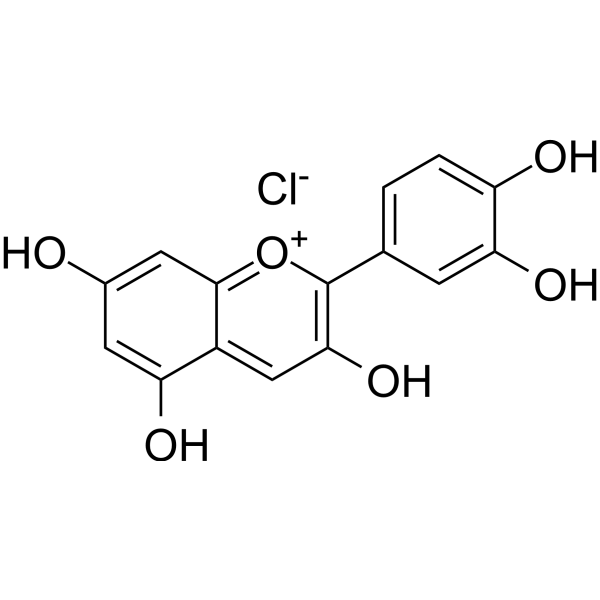
    Cyanidin Chloride
    4 Publications Verification

    IdB 1027

    Prostaglandin Receptor Inflammation/Immunology
    Cyanidin Chloride (IdB 1027) is an orally active antioxidant and enzyme inhibitor. Cyanidin Chloride has IC50 values of 90 μM and 60 μM against PGHS-1 and PGHS-2, respectively. Cyanidin Chloride exhibits excellent antioxidant and anti-inflammatory activities, scavenges free radicals, inhibits lipid peroxidation, and protects DNA from cleavage. Cyanidin Chloride can be used in the research of inflammatory diseases .
    Cyanidin Chloride
  • HY-108882A
    Recombinant DNase I (RNase-free)
    Maximum Cited Publications
    29 Publications Verification

    Endonuclease Others
    Recombinant DNase I (RNase-free) is a recombinant deoxyribonuclease that degrades DNA. Recombinant DNase I is essential for limiting inflammatory responses and maintaining homeostasis .
    Recombinant  DNase I (RNase-free)
  • HY-153102

    Biochemical Assay Reagents Others
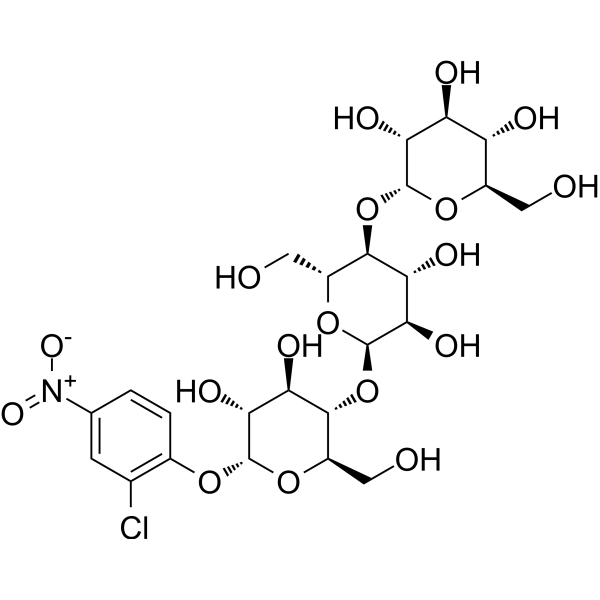
    G3-CNP is an α-amylase substrate. The absorbance of G3-CNP cleavage product 2-chloro-4-nitrophenol is measured at 405 nm, which can be used to detect enzyme activity .
    G3-CNP
  • HY-13438
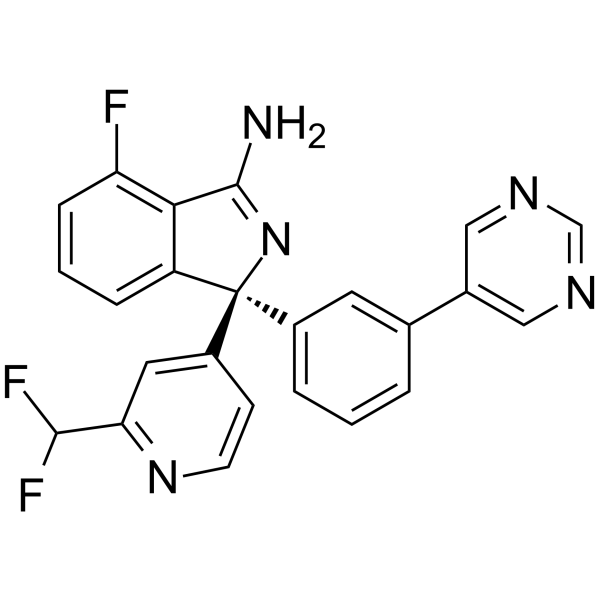
    AZD3839 free base
    2 Publications Verification

    Beta-secretase Neurological Disease
    AZD3839 is an orally available, selective, reversible inhibitor of the β-site amyloid precursor protein cleaving enzyme BACE1 that can cross the blood-brain barrier. AZD3839 inhibits recombinant human BACE1 with a Ki=26.1 nM. AZD3839 inhibits A40 production in SH-SY5Y cells with an IC50 of 4.8 nM. AZD3839 binds to BACE1 and reduces the Aβ amyloid produced by the cleavage of amyloid precursor protein (APP) by BACE1 and γ-secretase. AZD3839 can be used in the field of Alzheimer's disease research .
    AZD3839 free base
  • HY-B0237

    DL-Aminoglutethimide

    Cytochrome P450 Neurological Disease Endocrinology Cancer
    Aminoglutethimide (DL-Aminoglutethimide) is an orally active anticonvulsant with various endocrine-related side effects. Aminoglutethimide blocks multiple steroid hormone synthesis pathways by inhibiting several cytochrome P-450-dependent hydroxylases, such as aromatase, cholesterol side-chain cleavage enzyme, 11-hydroxylase, and 18-hydroxylase, with IC50 values of 0.3, 3.5, 120, and 20 μM, respectively. Aminoglutethimide reduces cortisol levels. Aminoglutethimide can be used in research on Cushing's syndrome, breast cancer, and other conditions .
    Aminoglutethimide
  • HY-108882C

    DNA/RNA Synthesis Inflammation/Immunology
    DNase I is an enzyme that degrades DNA. DNase I is mainly produced by digestive system organs, such as the pancreas and parotid gland. Three types of DNase I are known in mammals: pancreatic type, parotid type, and pancreatico-parotid type. DNase I plays a key role in the cleavage of extracellular DNA, and is critical for limiting inflammatory responses and maintaining homeostasis. DNase I is responsible for digesting extracellular nucleoproteins, which may be essential for preventing autoimmune reactions. Decreased DNase I activity may be associated with the occurrence and development of systemic lupus erythematosus (SLE). DNase I (filtered) is filtered through a 0.22 μM membrane and is not tested for pyrogenicity .
    DNase I (filtered)
  • HY-108882B
    DNase I RNase & Protease free
    Maximum Cited Publications
    29 Publications Verification

    DNA/RNA Synthesis Inflammation/Immunology
    DNase I is an enzyme that degrades DNA. DNase I is mainly produced by digestive system organs, such as the pancreas and parotid gland. Three types of DNase I are known in mammals: pancreatic type, parotid type, and pancreatico-parotid type. DNase I plays a key role in the cleavage of extracellular DNA, and is critical for limiting inflammatory responses and maintaining homeostasis. DNase I is responsible for digesting extracellular nucleoproteins, which may be essential for preventing autoimmune responses. Decreased DNase I activity may be associated with the onset and progression of systemic lupus erythematosus (SLE). DNase I (RNase & Protease free) is a molecular biology-grade DNase I purified by chromatography to remove RNase and protease .
    DNase I RNase & Protease free
  • HY-P2726

    Fructose-diphosphate aldolase

    Fructose-1,6-bisphosphate aldolase Endogenous Metabolite Metabolic Disease
    Aldolase, Rabbit muscle (Fructose-diphosphate aldolase) is a glycolytic enzyme and glucose availability sensor. Aldolase, Rabbit muscle catalyzes the reversible carbon-carbon cleavage of fructose-1,6-bisphosphate to produce dihydroxyacetone phosphate and glyceraldehyde 3-phosphate. Aldolase, Rabbit muscle is an essential component for v-ATPase activity. Aldolase, Rabbit muscle participates in processes such as gluconeogenesis, the Calvin cycle and glycolysis .
    Aldolase, Rabbit muscle
  • HY-110197
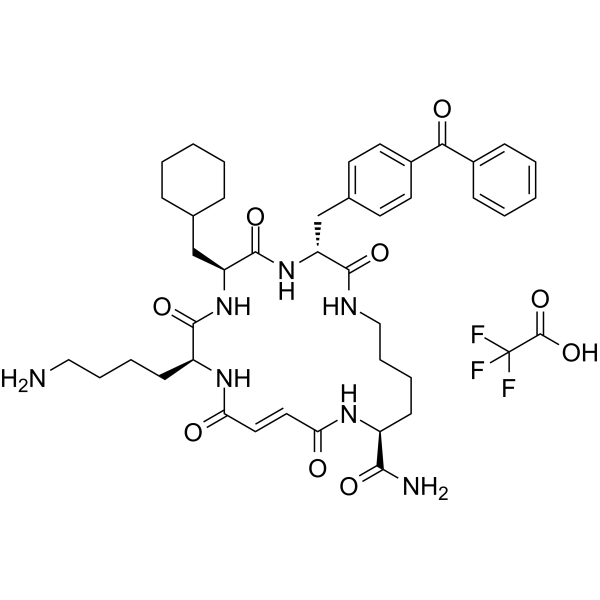
    6bK TFA
    2 Publications Verification

    IDE Metabolic Disease
    6bK TFA is a selective insulin-degrading enzyme (IDE) inhibitor with an IC50 of 50 nM. 6bK TFA binds to the distal pocket of IDE, thereby blocking substrate binding, peptide unfolding and cleavage processes, and reducing the degradation of insulin, glucagon and amylin. 6bK TFA improves oral glucose tolerance but impairs intraperitoneal glucose tolerance. 6bK TFA can be used in research related to type 2 diabetes .
    6bK TFA
  • HY-123931
    ZLDI-8
    1 Publications Verification

    Notch Phosphatase Apoptosis Cancer
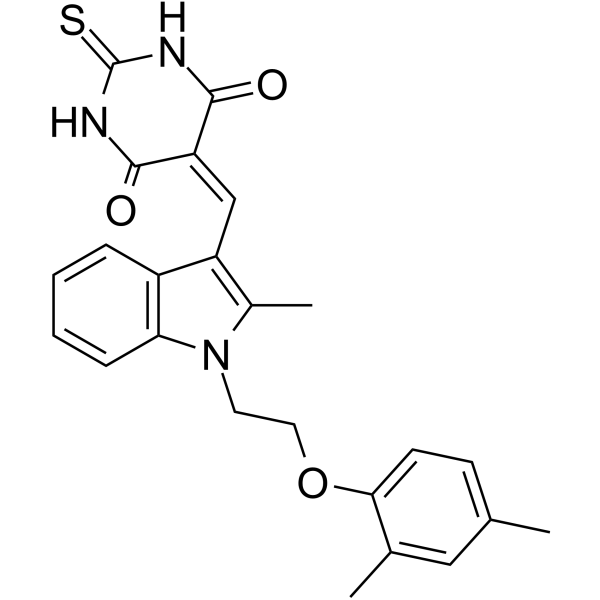
    ZLDI-8 is a Notch activating/cleaving enzyme ADAM-17 inhibitor and inhibits the cleavage of Notch protein. ZLDI-8 decreases the expression of pro-survival/anti-apoptosis and epithelial-mesenchymal transition (EMT) related proteins. ZLDI-8 is also a competitive and irreversible tyrosine phosphatase (Lyp) inhibitor with an IC50 of 31.6 μM and a Ki of 26.22 μM. ZLDI-8 inhibits the growth of MHCC97-H cells with an IC50 of 5.32 μM .
    ZLDI-8
  • HY-P2915
    Protocatechuate 3,4-dioxygenase
    1 Publications Verification

    Biochemical Assay Reagents Bacterial Infection
    Protocatechuate 3,4-dioxygenase is a dioxygenase. Protocatechuate 3,4-dioxygenase belongs to the non-heme iron dioxygenase class. Protocatechuate 3,4-dioxygenase catalyzes the cleavage of the aromatic ring of 3,4-dihydroxybenzoate, attaching two atoms of molecular oxygen to the compound to generate β-carboxy-cis,cis-muconate. Protocatechuate 3,4-dioxygenase is a key enzyme in the β-ketoadipic acid pathway. It is found in marine bacteria associated with Roseobacter. Protocatechuate 3,4-dioxygenase can be isolated from Pseudomonas aeruginosa .
    Protocatechuate 3,4-dioxygenase
  • HY-137855

    Biochemical Assay Reagents Others
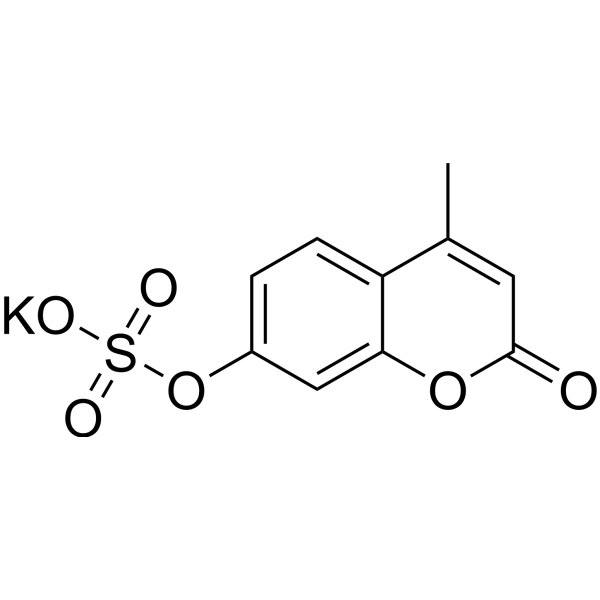
    4-Methylumbelliferyl sulfate (potassium), a fluorescent substrate, is commonly used to detect sulfatase activity in biochemical and biomedical research. It consists of a sulfate group attached to a fluorescent molecule, which can be cleaved by sulfatase enzymes. Upon cleavage, 4-Methylumbelliferyl sulfate releases a highly fluorescent product that can be detected using fluorescence microscopy or spectroscopy. The use of 4-Methylumbelliferyl sulfate as a substrate for sulfatase enzymes allows accurate detection and quantification of these enzymes in a variety of biological samples.
    4-Methylumbelliferyl sulfate potassium
  • HY-P3749

    Fluorescent Dye Others
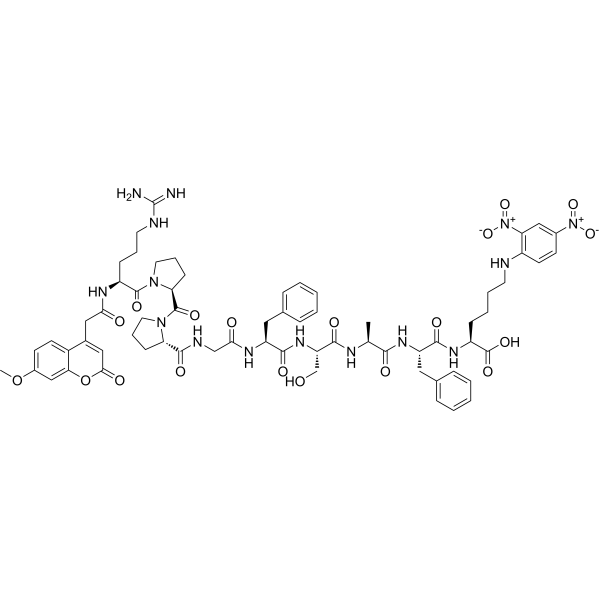
    Mca-(ala7,lys(dnp)9)-bradykinin is a sensitive fluorogenic substrate for ECE-1 (endothelin-converting enzyme-1). The incorporation of a (7-methoxycoumarin-4-yl)acetyl (Mca) fluorescent group and a 2,4-dinitrophenyl (Dnp) quenching group has resulted in a large fluorescence increase upon substrate cleavage .
    Mca-(ala7,lys(dnp)9)-bradykinin
  • HY-P3722
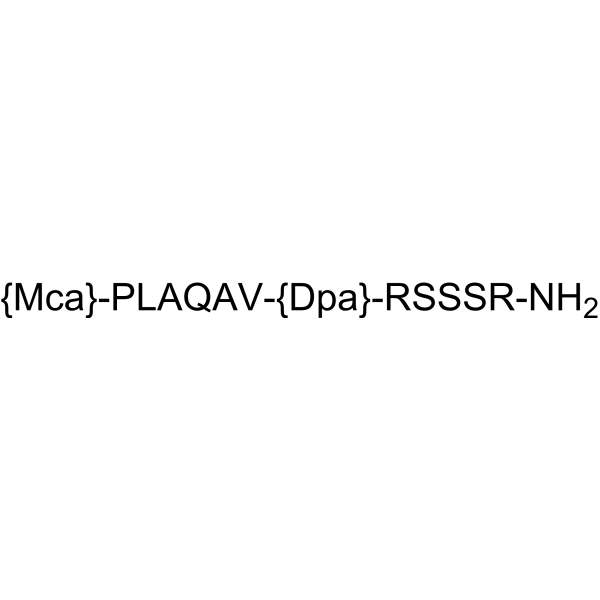
    Mca-PLAQAV-Dpa-RSSSR-NH2
    1 Publications Verification

    Fluorescent Dye MMP Others
    Mca-PLAQAV-Dpa-RSSSR-NH2 is a fluorescent substrate peptide that can be used to detect ADAM9, ADAM10, and tumor necrosis factor-α converting enzyme (TACE/ADAM17). Mca-PLAQAV-Dpa-RSSSR-NH2 is a fluorescence resonance energy transfer-based substrate, and its activity can be determined by changes in fluorescence intensity upon cleavage (Ex = 320 nm ; Em = 405 nm) .
    Mca-PLAQAV-Dpa-RSSSR-NH2
  • HY-W748591

    Apoptosis Amyloid-β KMO Neurological Disease Inflammation/Immunology Cancer
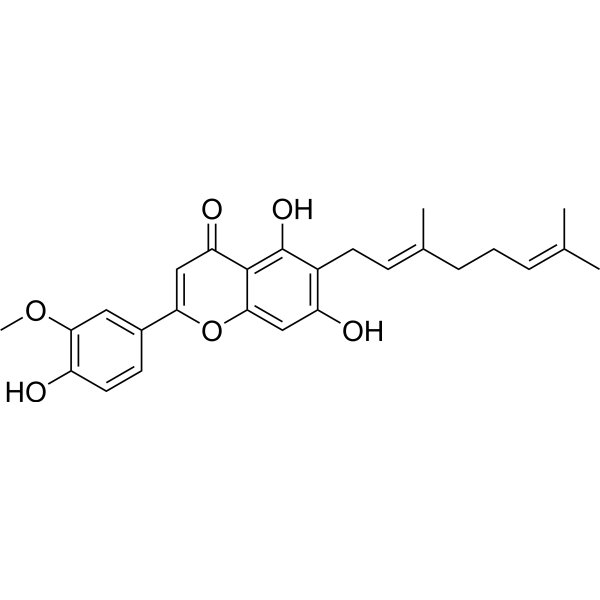
    Cannflavin A can be isolated from Cannabis sativa L.. Cannflavin A has anti-cancer, neuroprotective and anti-inflammatory activity. Cannflavin A inhibits 1-42 aggregation. Cannflavin A also inhibits kynurenine-3-monooxygenase (KMO) (IC50 = 29.4 μM). Cannflavin A activates apoptosis via caspase-3 cleavage. Cannflavin A exerts anti-inflammatory effects by inhibiting pro-inflammatory enzymes, including prostaglandin E2 and cytochrome c oxidases I and II in PC12 cell line .
    Cannflavin A
  • HY-W009454

    4-Nitopheyl Sulfate potassium

    Fluorescent Dye Others
    Potassium p-nitrophenyl sulfate (4-Nitophenyl Sulfate potassium) serves as a chromogenic substrate for arylsulfatases. Potassium p-nitrophenyl sulfate releases nitrophenol under the cleavage action of arylsulfatases, and the activity of arylsulfatases can be quantitatively determined via colorimetric detection at 400 nm. Potassium p-nitrophenyl sulfate is commonly used in enzyme inhibition assays and metabolite analog-related studies .
    Potassium p-nitrophenyl sulfate
  • HY-N0499A

    Prostaglandin Receptor Inflammation/Immunology
    Cyanidin is an orally active antioxidant and enzyme inhibitor. Cyanidin has IC50 values of 90 μM and 60 μM against PGHS-1 and PGHS-2, respectively. Cyanidin exhibits excellent antioxidant and anti-inflammatory activities, scavenges free radicals, inhibits lipid peroxidation, and protects DNA from cleavage. Cyanidin can be used in the research of inflammatory diseases .
    Cyanidin
  • HY-P3722A
    Mca-PLAQAV-Dpa-RSSSR-NH2 TFA
    1 Publications Verification

    Fluorescent Dye MMP Others
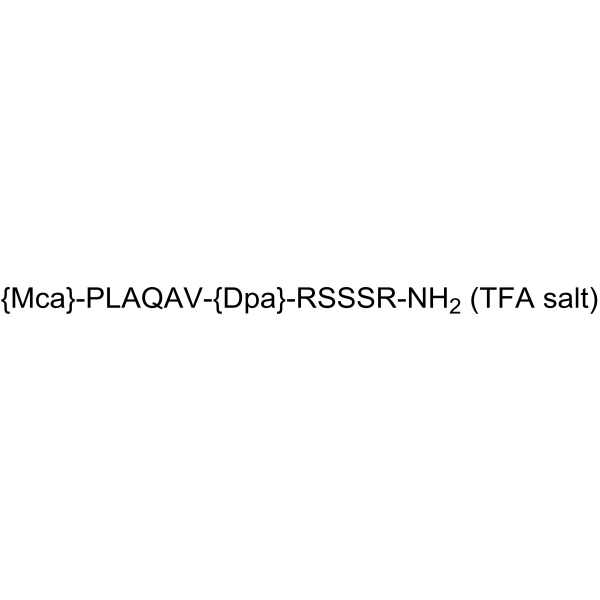
    Mca-PLAQAV-Dpa-RSSSR-NH2 TFA is a fluorescent substrate peptide that can be used to detect ADAM9, ADAM10, and tumor necrosis factor-α converting enzyme (TACE/ADAM17). Mca-PLAQAV-Dpa-RSSSR-NH2 TFA is a fluorescence resonance energy transfer-based substrate, and its activity can be determined by changes in fluorescence intensity upon cleavage (Ex = 320 nm ; Em = 405 nm) .
    Mca-PLAQAV-Dpa-RSSSR-NH2 TFA
  • HY-169491

    Fluorescent Dye Metabolic Disease
    Pantothenate-AMC is a fluorogenic substrate used for detecting the enzymatic activity of vanin-1, an enzyme involved in the recycling of L-pantothenic acid. Upon enzymatic cleavage by vanin-1, 7-amino-7-methylcoumarin (AMC) is released, and its fluorescence can be used to quantify vanin-1 activity. The excitation/emission maxima of AMC are 340-360 nm and 440-460 nm, respectively .
    Pantothenate-AMC
  • HY-W010706

    5'-O-DMT-N4-Bz-dC

    Nucleoside Antimetabolite/Analog Others
    N4-Benzoyl-5'-O-(4,4'-dimethoxytrityl)-2'-deoxycytidine (5'-O-DMT-N4-Bz-dC) can be used for synthesis oligodeoxynucleotides containing a 3'-S-phosphorothiolate (3'-PS) linkage. N4-Benzoyl-5'-O-(4,4'-dimethoxytrityl)-2'-deoxycytidine is an useful tool for probing enzyme-catalyzed cleavage processes in DNA .
    N4-Benzoyl-5'-O-(4,4'-dimethoxytrityl)-2'-deoxycytidine
  • HY-P3632

    DADAD

    Opioid Receptor Neurological Disease Metabolic Disease
    [DAla2, DArg6] Dynorphin A, (1-13) (porcine) (DADAD) is an opioid peptide (dynorphinl-13, DYN) derivative found in porcine pituitary extracts. DYN is highly potent at the peripheral opioid receptors GPI and MVD, but is readily and rapidly degraded in vivo. [DAla2, DArg6] Dynorphin A, (1-13) (porcine) has some resistance to enzymatic cleavage and prevents peptide cleavage by enzymes .
    [DAla2, DArg6] Dynorphin A, (1-13) (porcine)
  • HY-P4739

    GnRH Receptor Others
    LHRH (1-5) (free acid) is a polypeptide generated by the cleavage of LHRH at the Tyr 55-Gly 66 site. LHRH (1-5) (free acid) is converted into LHRH (1-3) and LHRH (4-5) fragments under the catalysis of Angiotensin-converting enzyme (HY-P2983) .
    LHRH (1-5) free acid
  • HY-N0499R

    IdB 1027 (Standard)

    Reference Standards Prostaglandin Receptor Inflammation/Immunology
    Cyanidin Chloride (IdB 1027) (Standard) is the analytical standard of Cyanidin Chloride (IdB 1027). This product is intended for research and analytical applications. Cyanidin Chloride (IdB 1027) is an orally active antioxidant and enzyme inhibitor. Cyanidin Chloride has IC50 values of 90 μM and 60 μM against PGHS-1 and PGHS-2, respectively. Cyanidin Chloride exhibits excellent antioxidant and anti-inflammatory activities, scavenges free radicals, inhibits lipid peroxidation, and protects DNA from cleavage. Cyanidin Chloride can be used in the research of inflammatory diseases.
    Cyanidin Chloride (Standard)
  • HY-120791

    L-Lysyl-L-lysine

    Drug Intermediate Others
    Lysyllysine (L-Lysyl-L-lysine) is a dipeptide composed of two L-lysine amino acids linked together. Lysyllysine is often used as an enzyme cleavage linker for connecting bioactive peptides, or as a component of more complex antibacterial agents .
    Lysyllysine
  • HY-P2724A

    PNP, Bacillus sp.

    Endogenous Metabolite Metabolic Disease
    Purine nucleoside phosphorylase, Bacillus sp. is a key enzyme in purine metabolism, involved in the purine salvage pathway. A deficiency in Purine nucleoside phosphorylase, Bacillus sp. can lead to impaired T-cell function. In the presence of inorganic phosphate as a second substrate, Purine nucleoside phosphorylase, Bacillus sp. catalyzes the cleavage of the glycosidic bond of ribonucleosides and deoxyribonucleosides, producing purine bases and ribose (or deoxyribose)-1-phosphate. Purine nucleoside phosphorylase, Bacillus sp. can be used for the determination of inorganic phosphate .
    Purine nucleoside phosphorylase, Bacillus sp.
  • HY-13438A

    Beta-secretase Cancer
    AZD3839 fumarate is an orally available, selective, reversible inhibitor of the β-site amyloid precursor protein cleaving enzyme BACE1 that can cross the blood-brain barrier. AZD3839 fumarate inhibits recombinant human BACE1 with a Ki=26.1 nM. AZD3839 fumarate inhibits A40 production in SH-SY5Y cells with an IC50 of 4.8 nM. AZD3839 fumarate binds to BACE1 and reduces the Aβ amyloid produced by the cleavage of amyloid precursor protein (APP) by BACE1 and γ-secretase. AZD3839 fumarate can be used in the field of Alzheimer's disease research .
    AZD3839 fumarate
  • HY-148994

    Dihydrofolate reductase (DHFR) Cancer
    Methotrexate-γ-aspartate is a Ll210 cell dihydrofolate reductase inhibitor. Methotrexate-γ-aspartate is apparently more resistant to enzymic cleavage than is methotrexate-y-glutamate. Methotrexate-γ-aspartate can be used in antibody-targeted liposomes and is promising for research of leukemic .
    Methotrexate-γ-aspartate
  • HY-155693

    Topoisomerase Parasite Infection
    Topoisomerase II inhibitor 16 (compound CT3) is a selective, orally active, brain-penetrant and irreversible trypanosomal topoisomerase II inhibitor by stabilizing double-stranded DNA:enzyme cleavage complexes. Topoisomerase II inhibitor 16 has the potential for Chagas disease research .
    Topoisomerase II inhibitor 16
  • HY-P2630

    Interleukin Related Inflammation/Immunology
    Suc-YVAD-pNA is a substrate of ICE. Interleukin-1β-converting enzyme (ICE) is a cysteine protease responsible for the cleavage of pre-interleukin-1β (pre-IL-1β) to the mature cytokine and a member of a family of related proteases (the caspases) .
    Suc-YVAD-pNA
  • HY-163885
    SSZ
    1 Publications Verification

    Cholinesterase (ChE) Beta-secretase γ-secretase Neurological Disease
    SSZ is a multi-target inhibitor, which targets multiple pathological mechanisms of Alzheimer's disease (AD). SSZ targets acetylcholinesterase, butyrylcholinesterase, β-site amyloid precursor protein cleavage enzyme 1 (BACE1), and γ-secretase. SSZ ameliorates Alzheimer’s diseases and exhibits neuroprotective effect in mice .
    SSZ
  • HY-18112

    Beta-secretase Neurological Disease
    AZ-4217 is an inhibitor for β-site amyloid precursor protein cleavage enzyme 1 (BACE1), with IC50 of 160 pM in human SH-SY5Y cells. AZ-4217 reduces amyloid deposition in Tg2576 mouse models, and is used for Alzheimer’s Disease research .
    AZ-4217
  • HY-W748591R

    Amyloid-β Apoptosis Reference Standards KMO Neurological Disease Inflammation/Immunology Cancer
    Cannflavin A (Standard) is the analytical standard of Cannflavin A. This product is intended for research and analytical applications. Cannflavin A can be isolated from Cannabis sativa L.. Cannflavin A has anti-cancer, neuroprotective and anti-inflammatory activity. Cannflavin A inhibits 1-42 aggregation. Cannflavin A also inhibits kynurenine-3-monooxygenase (KMO) (IC50 = 29.4 μM). Cannflavin A activates apoptosis via caspase-3 cleavage. Cannflavin A exerts anti-inflammatory effects by inhibiting pro-inflammatory enzymes, including prostaglandin E2 and cytochrome c oxidases I and II in PC12 cell line .
    Cannflavin A (Standard)
  • HY-N17617

    Phosphodiesterase (PDE) Apoptosis NO Synthase Caspase PPAR Bcl-2 Family PARP Metabolic Disease Inflammation/Immunology Cancer
    S-Petasin is a phosphodiesterase (PDE) inhibitor with IC50 values of 25.5 μM and 17.5 μM for PDE3 and PDE4, respectively. S-Petasin inhibits cholesterol side-chain cleavage enzyme, 11β-hydroxylase, PPAR-γ, and iNOS induction at RNA and protein levels. S-Petasin induces apoptosis, activates caspases, cleaves PARP, modulates mitochondrial membrane permeability, and regulates BCL2/BAX, p53, Bcl-XL, MMP-2, MMP-9, p21, CDK4, and cyclin D1 expression. S-Petasin reduces inflammatory cell accumulation, cytokine and IgE levels, and enhances serum IgG2a levels. S-Petasin relaxes isolated sensitized guinea pig trachealis and exhibits gastrointestinal anti-spasmodic activity. S-Petasin reduces tonsillitis severity and asthmatic attack frequency. S-Petasin can be used for the research of prostate cancer, obesity, melanoma, allergic asthma, asthma, and peritonitis .
    S-Petasin
  • HY-120791A

    L-Lysyl-L-lysine trihydrochloride

    Drug Intermediate Others
    Lysyllysine (L-Lysyl-L-lysine) trihydrochloride is a dipeptide composed of two L-lysine amino acids linked together. Lysyllysine trihydrochloride is often used as an enzyme cleavage linker for connecting bioactive peptides, or as a component of more complex antibacterial agents .
    Lysyllysine trihydrochloride
  • HY-E71248

    Biochemical Assay Reagents Others
    α-Rhamnosidase 78A, Streptomyces avermitilis (EC 3.2.1.40) is a thermostable Alpha-L-Rhamnosidase (Naringinase, RhamA) that catalyzes the cleavage of the bond between terminal L (+)-rhamnose and the aglycone of rhamnose-containing glycosides. The enzyme is very active on naringin but has also substantial activity with hesperidin as substrate.
    α-Rhamnosidase 78A, Streptomyces avermitilis
  • HY-E70119D

    Biochemical Assay Reagents Metabolic Disease
    Pectate Lyase, Aspergillus sp. (EC 4.2.2.2) is an enzyme involved in the maceration and soft rotting of plant tissue. Pectate lyase is responsible for the eliminative cleavage of pectate, yielding oligosaccharides with 4-deoxy-α-D-mann-4-enuronosyl groups at their non-reducing ends.
    Pectate Lyase, Aspergillus sp.
  • HY-E70119C

    Biochemical Assay Reagents Metabolic Disease
    Pectate Lyase, Caulobacter crescentus (EC 4.2.2.2) is an enzyme involved in the maceration and soft rotting of plant tissue. Pectate lyase is responsible for the eliminative cleavage of pectate, yielding oligosaccharides with 4-deoxy-α-D-mann-4-enuronosyl groups at their non-reducing ends.
    Pectate Lyase, Caulobacter crescentus
  • HY-E70119B

    Biochemical Assay Reagents Metabolic Disease
    Pectate Lyase, Cellvibrio japonicus (EC 4.2.2.2) is an enzyme involved in the maceration and soft rotting of plant tissue. Pectate lyase is responsible for the eliminative cleavage of pectate, yielding oligosaccharides with 4-deoxy-α-D-mann-4-enuronosyl groups at their non-reducing ends.
    Pectate Lyase, Cellvibrio japonicus
  • HY-E70119A

    Biochemical Assay Reagents Metabolic Disease
    Pectate Lyase, Clostridium acetobutylicum (EC 4.2.2.2) is an enzyme involved in the maceration and soft rotting of plant tissue. Pectate lyase is responsible for the eliminative cleavage of pectate, yielding oligosaccharides with 4-deoxy-α-D-mann-4-enuronosyl groups at their non-reducing ends.
    Pectate Lyase, Clostridium acetobutylicum
  • HY-P2824A

    Endogenous Metabolite Metabolic Disease
    Streptokinase, Streptococcus hemolyticus (EC 3.4.99.0) is an enzyme secreted by several species of streptococci that can bind and activate human plasminogen. Streptokinase belongs to a group of medications known as fibrinolytics, and complexes of streptokinase with human plasminogen can hydrolytically activate other unbound plasminogen by activating through bond cleavage to produce plasmin.
    Streptokinase, Streptococcus hemolyticus
  • HY-179686

    Cytochrome P450 Cancer
    CYP11A1-IN-2 (Compound 61) is a selective cholesterol side-chain cleavage enzyme (CYP11A1) inhibitor. CYP11A1-IN-2 can inhibitor steroid biosynthesis and can be used for the research of steroid hormone-dependent cancers, such as prostate cancer .
    CYP11A1-IN-2
  • HY-P2835A

    Biochemical Assay Reagents Others
    Alginate lyase, Sphingomonas sp. (EC 4.2.2.3) is an enzyme that catalyzes the chemical reaction:Eliminative cleavage of polysaccharides containing beta-D-mannuronate residues to give oligosaccharides with 4-deoxy-alpha-L-erythro-hex-4-enopyranuronosyl groups at their ends. Alginate lyase, Sphingomonas sp. (EC 4.2.2.3) belongs to the family of lyases, participates in fructose and mannose metabolism.
    Alginate lyase, Sphingomonas sp.
  • HY-116267

    HDAC Apoptosis PARP Bcl-2 Family Androgen Receptor Cancer
    MHY219 is a histone deacetylase (HDAC) inhibitor with an IC50 of 0.276 μM. MHY219 inhibits total HDAC enzyme activity, increases histone H3 and H4 hyperacetylation. MHY219 induces cance cells phase arrest, apoptosis and inhibits proliferationin. MHY219 increases cleavage of PARP, Bax, cytochrome c levels, androgen receptor expression and decreases Bcl-2 expression. MHY219 can be used for the research of prostate cancer .
    MHY219
  • HY-P2915A

    Biochemical Assay Reagents Bacterial Infection
    Protocatechuate 3,4-Dioxygenase, Bacteria is a dioxygenase. Protocatechuate 3,4-Dioxygenase, Bacteria belongs to the non-heme iron dioxygenase class. Protocatechuate 3,4-Dioxygenase, Bacteria catalyzes the cleavage of the aromatic ring of 3,4-dihydroxybenzoate, attaching two atoms of molecular oxygen to the compound to generate β-carboxy-cis,cis-muconate. Protocatechuate 3,4-Dioxygenase, Bacteria is a key enzyme in the β-ketoadipic acid pathway. Protocatechuate 3,4-Dioxygenase, Bacteria is found in marine bacteria associated with Roseobacter. Protocatechuate 3,4-Dioxygenase, Bacteria can be isolated from Pseudomonas aeruginosa .
    Protocatechuate 3,4-Dioxygenase, Bacteria

Inquiry Online

Your information is safe with us. * Required Fields.

Salutation


Country or Region *

Applicant Name *


Organization Name *

Department *


Email Address *


Product Name *

Cat. No.


Requested quantity *

Phone Number *


Remarks

Inquiry Online

Inquiry Information

Product Name:
Cat. No.:
Quantity:
MCE Japan Authorized Agent:

