1. Search Result
Search Result
Results for "

human MAO-B

" in MedChemExpress (MCE) Product Catalog:

32

Inhibitors & Agonists

3

Fluorescent Dyes

2

Natural
Products

1

Recombinant Proteins

1

Click Chemistry

1

Oligonucleotides

Targets Recommended:
Cat. No. Product Name Target Research Areas Chemical Structure
  • HY-D0004

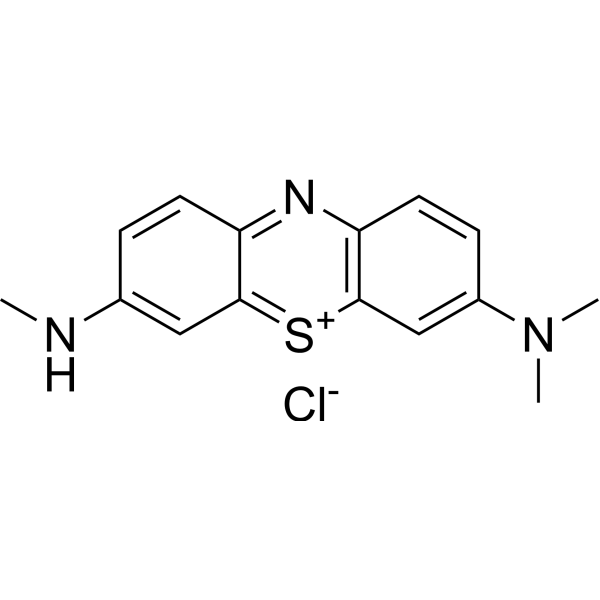
    Azure B chloride

    Monoamine Oxidase Neurological Disease
    Azure B is a cationic dye and the major metabolite of Methylene blue. Azure B is used in making Azure eosin stains for blood smear staining. Azure B is a high-potency, selective and reversible inhibitor of monoamine oxidases (MAO)-A, with IC50s of 11 and 968 nM for recombinant human MAO-A and MAO-B, respectively. Azure B possesses significant antidepressant-like effects .
    Azure B
  • HY-125515

    Leptaflorine

    Monoamine Oxidase Neurological Disease
    Tetrahydroharmine (Leptaflorine) is a selective reversible monoamine oxidase A (MAO-A) inhibitor with an IC50 of 74 nM. Tetrahydroharmine can be used for the research of parkinson’s disease .
    Tetrahydroharmine
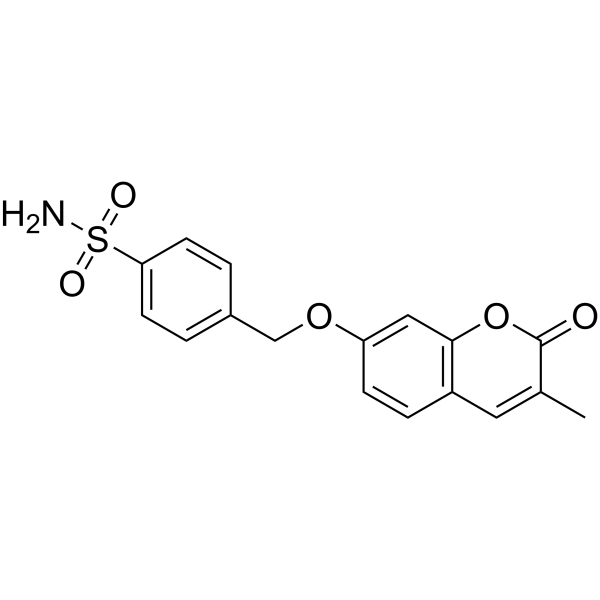
  • HY-100588

    mGluR Neurological Disease
    VU0364770 is a selective and potent positive allosteric modulator (PAM) of mGlu4. VU0346770 exhibits EC50s of 290 nM and 1.1 μM at rat mGlu4 and human mGlu4 receptor, respectively. VU0364770 exhibits antagonist activity at mGlu5 with a potency of 17.9 μM and PAM activity at mGlu6 with a potency of 6.8 μM. VU0364770 also possesses activity at MAO with Ki values of 8.5 and 0.72 μM for human MAO-A and human MAO-B, respectively .
    VU0364770
  • HY-142026

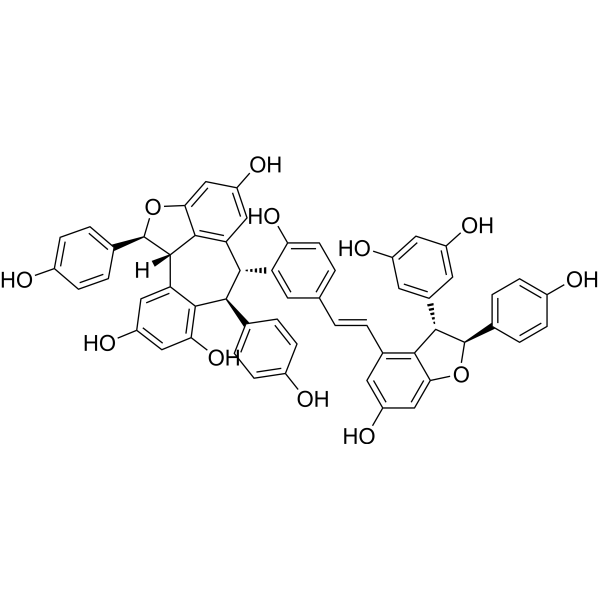
    (+)-Vitisin A

    Caspase ERK NF-κB Influenza Virus PAK LDLR PPAR PCSK9 Androgen Receptor Keap1-Nrf2 Monoamine Oxidase Cholinesterase (ChE) IKK Wnt β-catenin Reactive Oxygen Species (ROS) Apoptosis Cuproptosis Infection Neurological Disease Metabolic Disease Inflammation/Immunology Cancer
    Vitisin A ((+)-Vitisin A) is an orally active natural product with multiple pharmacological activities including anti-inflammatory, anti-tumor, anti-oxidant, anti-pathogenic microorganism, hypoglycemic and lipid-regulating, anti-osteoporotic, neuroprotective and cardiovascular protective effects. Vitisin A exhibits inhibitory effects on human AChE and MAO-B with IC50 values of 1.29 µM and 4.94 µM, respectively. Vitisin A inhibits the ERK, MAPK, NF-κB, STAT1, HMGCR and TRAF6 pathways, downregulates the related phosphorylation and protein expression, while activates the Nrf2/HO-1 pathway and upregulates p21 expression. Vitisin A induces tumor cell apoptosis and cell cycle arrest, inhibits adipogenesis and lipid accumulation, while alleviates oxidative stress, suppresses inflammatory responses, blocks hepatic fibrosis, Cuproptosis and cholesterol synthesis, and increases the expression levels of central BDNF and TrkB. Vitisin A can be used in the research of tumors, infectious diseases, metabolic diseases, bone and joint diseases, liver diseases, skin injuries, as well as neurodegenerative and cognitive dysfunction-related diseases .
    Vitisin A
  • HY-W049881

    Dopamine Receptor PI3K Monoamine Oxidase Neurological Disease
    9-Methyl-β-carboline is a monoamine oxidase inhibitor and dopaminergic modulator, with an IC50 of 1 μM against human MAO-A and an IC50 of 15.5 μM against human MAO-B. 9-Methyl-β-carboline possesses cognitive enhancement potential and can cross the blood-brain barrier. 9-Methyl-β-carboline increases dopamine levels by inhibiting monoamine oxidase activity and microglial proliferation. 9-Methyl-β-carboline activates PKA/PKC and mitochondrial respiratory chain complex I, promotes neurotrophic factor expression and reduces α-synuclein (α-synuclein) levels, thereby reversing neurotoxin-induced dopaminergic neuron damage. 9-Methyl-β-carboline also regulates the PI3K pathway and exerts an anti-proliferative effect on astrocytes. 9-Methyl-β-carboline is widely used in Parkinson's disease-related studies .
    9-Methyl-β-carboline
  • HY-151562

    Cholinesterase (ChE) Monoamine Oxidase Neurological Disease
    AChE/BuChE/MAO-B-IN-1 (compound 19) is an inhibitor of human acetyl- (hAChE), butyrylcholinesterase (hBuChE) and monoamine oxidase-B (hMAO-B) with IC50s of 4.8 μM, 13.7 μM, and 1.11 μM, respectively. AChE/BuChE/MAO-B-IN-1 also exhibits high affinity to both the σ1 and σ2 receptors with Ki values of 42.8 nM (human σ1 receptor) and 191 nM (rat σ2 receptor), respectively. AChE/BuChE/MAO-B-IN-1 can be used for Alzheimer’s disease research .
    AChE/BuChE/MAO-B-IN-1
  • HY-120826

    Monoamine Oxidase Adenosine Receptor Neurological Disease
    A2AAR/hMAO-B-IN-1 (compoudn 17) is a non-xanthine dual-target inhibitor targeting the A2A adenosine receptor (A2AAR) (IC50: 34.9 nM) andMAO-B (Ki: 39.5 nM, human). A2AAR/hMAO-B-IN-1 inhibits A2AAR-induced cAMP accumulation and exhibits competitive, reversible inhibition of MAO-B. A2AAR/hMAO-B-IN-1 can be used in the study of neurodegenerative diseases such as Parkinson's disease (PD) .
    A2AAR/hMAO-B-IN-1
  • HY-147362

    Monoamine Oxidase Neurological Disease
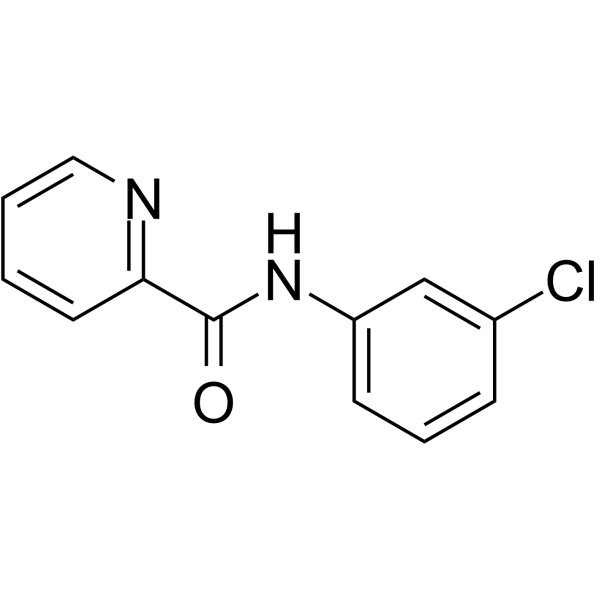
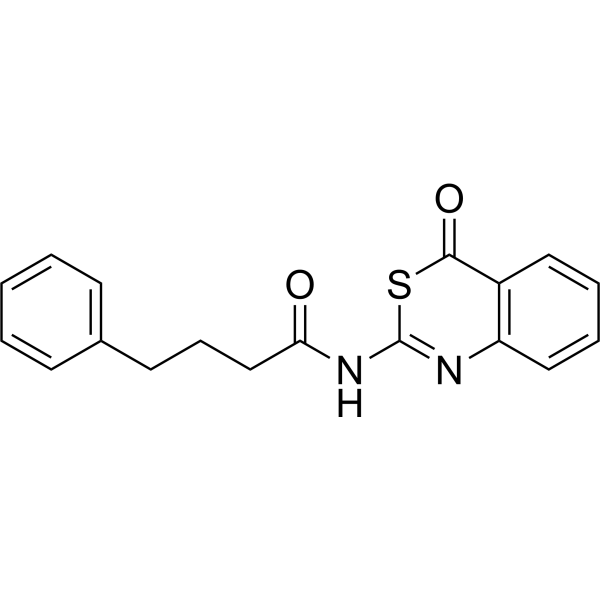
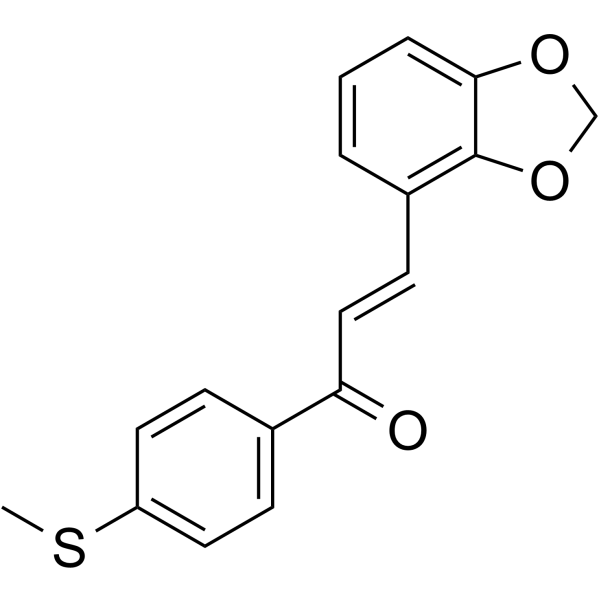
    MAO-B-IN-14 (Compound 9) is a potent and selective monoamine oxidase-B (MAO-B) inhibitor with an IC50 of 0.95 μM and a Ki of 0.55 μM against human MAO-B.
    MAO-B-IN-14
  • HY-D0004R

    Azure B chloride (Standard)

    Reference Standards Monoamine Oxidase Neurological Disease
    Azure B (Standard) is the analytical standard of Azure B. This product is intended for research and analytical applications. Azure B is a cationic dye and the major metabolite of Methylene blue. Azure B is used in making Azure eosin stains for blood smear staining. Azure B is a high-potency, selective and reversible inhibitor of monoamine oxidases (MAO)-A, with IC50s of 11 and 968 nM for recombinant human MAO-A and MAO-B, respectively. Azure B possesses significant antidepressant-like effects .
    Azure B (Standard)
  • HY-W207699

    Monoamine Oxidase Amylases Neurological Disease Metabolic Disease Inflammation/Immunology
    MAO-B-IN-46 (Compound 16) is a selective hMAO-B inhibitor (IC50: 26.8 nM), with weak activity against hMAO-A (IC50: 7.2054 μM). MAO-B-IN-46 (Compound 8) also acts as an α-amylase inhibitor (IC50: 19.46 μM). MAO-B-IN-46 exhibits certain neuroprotective effects and shows no significant toxicity to human gingival fibroblasts and SH-SY5Y cells. Additionally, MAO-B-IN-46 can scavenge DPPH and ABTS free radicals, with IC50 values of 17.86 μM and 17.71 μM, respectively. MAO-B-IN-46 can be used in the research of neurodegenerative diseases such as Parkinson's disease, diabetes, and diseases related to oxidative stress resistance .
    MAO-B-IN-46
  • HY-123665

    Monoamine Oxidase Neurological Disease
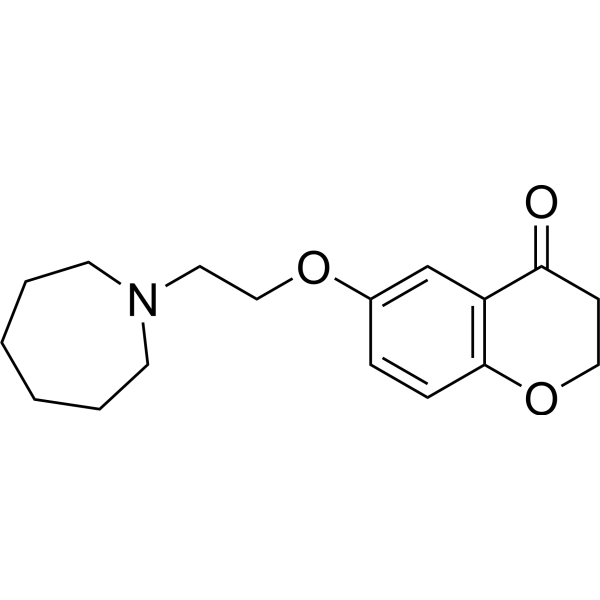
    PSB-1410 is a monoamine oxidase B (MAO-B) inhibitor, with an IC50 of 0.227 nM against human MAO-B and an IC50 of 1.01 nM against rat MAO-B. PSB-1410 can be used for the research of Parkinson's disease .
    PSB-1410
  • HY-RS08022

    Small Interfering RNA (siRNA) Others

    MAOB Human Pre-designed siRNA Set A contains three designed siRNAs for MAOB gene (Human), as well as a negative control, a positive control, and a FAM-labeled negative control.

    MAOB Human Pre-designed siRNA Set A
    MAOB Human Pre-designed siRNA Set A
  • HY-117502

    Monoamine Oxidase Others
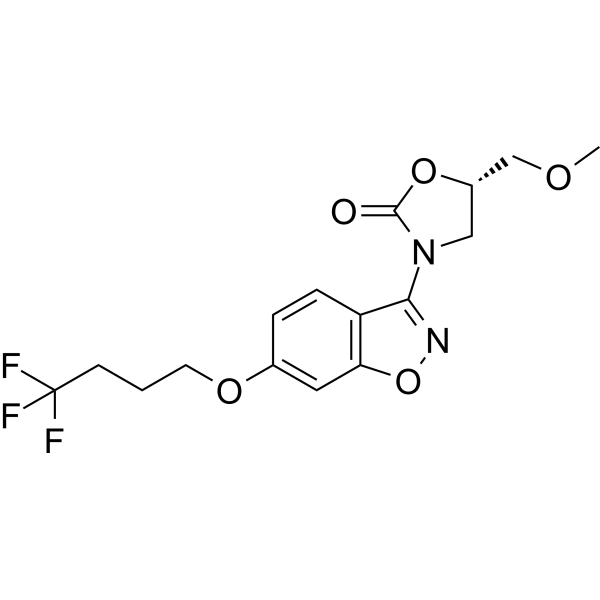
    SL-25.1188 is a potent monoamine oxidase B (MAO-B) inhibitor with Ki values of 2.9 and 8.5 nM for human MAO-B and rat MAO-B, respectively. SL-25.1188 can be used for positron emission tomography .
    SL-25.1188
  • HY-146762

    Monoamine Oxidase Cholinesterase (ChE) Reactive Oxygen Species (ROS) Neurological Disease Inflammation/Immunology
    MAO-B-IN-7 is a potent and blood-brain barrier permeable MAO-B and AChE inhibitor with IC50s of 41 nM, 87 nM and 0.3 μM for human AChE, electric eel AChE and MAO-B, respectively. MAO-B-IN-7 can effectively alleviate oxidative stress and neuroinflammatory damage .
    MAO-B-IN-7
  • HY-152111

    Cholinesterase (ChE) Monoamine Oxidase Amyloid-β Neurological Disease
    AChE/MAO-B-IN-3 (Compound D30) is a dual AChE and MAO-B inhibitor with IC50s of 0.0257 μM and 0.0456 μM against human AChE and MAO-B, respectively. AChE/MAO-B-IN-3 can be used for the research of Alzheimer’s disease .
    AChE/MAO-B-IN-3
  • HY-178352

    Monoamine Oxidase Reactive Oxygen Species (ROS) Neurological Disease Inflammation/Immunology
    MAO-B-IN-49 is a selective and reversible MAO-B inhibitor (IC50 of 1 nM for human MAO-B). MAO-B-IN-49 shows much higher selectivity for MAO-B than for MAO-A (IC50 = 633.9 μM). MAO-B-IN-49 can reduce ROS production induced by Lipopolysaccharides (HY-D1056) (LPS) in HT22 cells. MAO-B-IN-49 demonstrates substantial neuroprotective properties and significantly improves motor dysfunction in MPTP (HY-W114750)-induced mouse models of Parkinson’s disease (PD). MAO-B-IN-49 can be used for the study of PD .
    MAO-B-IN-49
  • HY-152109

    Cholinesterase (ChE) Monoamine Oxidase Amyloid-β Neurological Disease
    AChE/MAO-IN-1 (Compound D28) is a potent AChE, MAO-A and MAO-B inhibitor with IC50s of 0.0248, 0.0409 and 0.1108 μM against human AChE, MAO-B and MAO-A, respectively .
    AChE/MAO-IN-1
  • HY-152113

    Monoamine Oxidase Cholinesterase (ChE) Neurological Disease
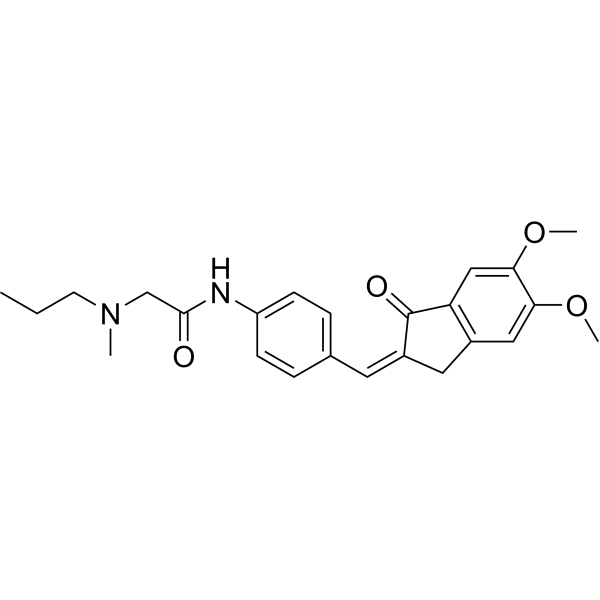
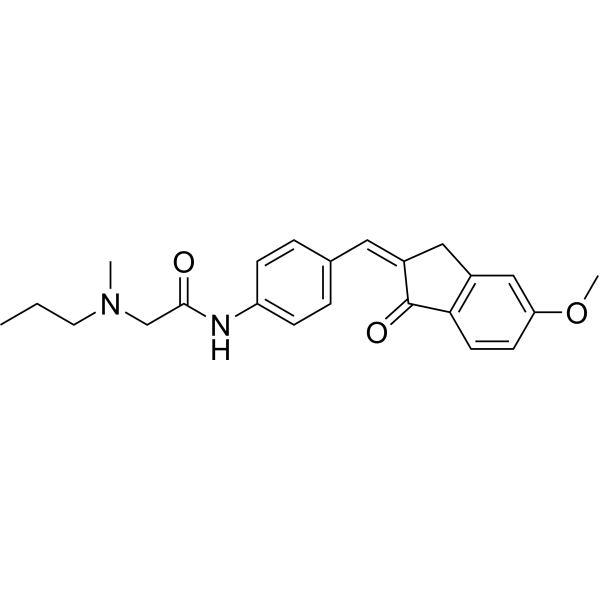
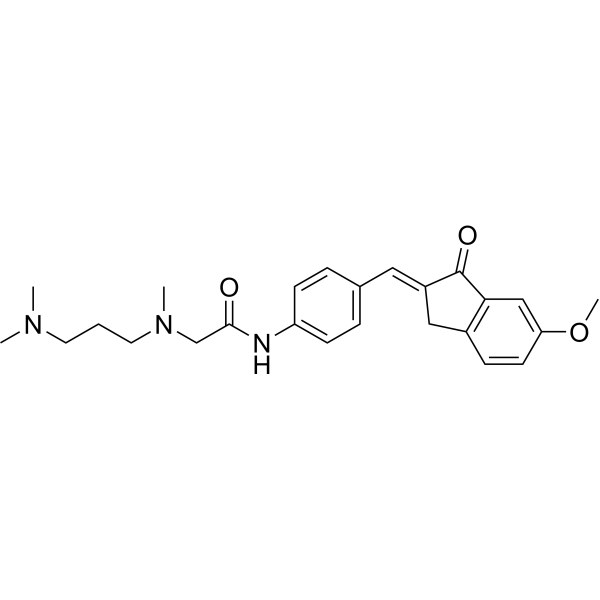
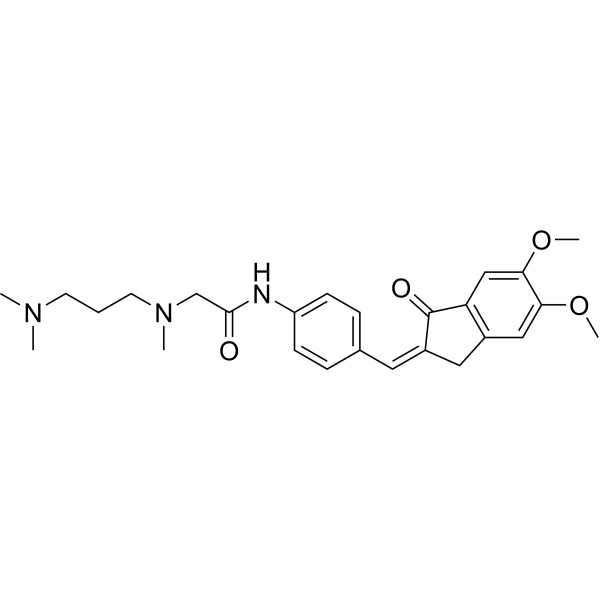
    AChE/BChE/MAO-B-IN-3, an indan-1-one derivative, is a potent MAO-B inhibitor with an IC50 of 0.0359 μM for human MAO-B. AChE/BChE/MAO-B-IN-3 is a potent AChE and BChE enzyme inhibitor, with IC50s of 0.0473 μM and 0.0782 μM for human AChE and BChE enzyme, respectively. AChE/BChE/MAO-B-IN-3 shows significant antioxidant activity and has the potential for Alzheimer's disease (AD) research .
    AChE/BChE/MAO-B-IN-3
  • HY-152114

    Monoamine Oxidase Cholinesterase (ChE) Neurological Disease
    AChE/BChE/MAO-B-IN-4, an indan-1-one derivative, is a potent MAO-B inhibitor with an IC50 of 0.0393 μM for human MAO-B. AChE/BChE/MAO-B-IN-4 is a potent AChE and BChE enzyme inhibitor, with IC50s of 0.0458 μM and 0.075 μM for human AChE and BChE enzyme, respectively. AChE/BChE/MAO-B-IN-4 shows significant antioxidant activity and prevent β-amyloid plaque aggregation. AChE/BChE/MAO-B-IN-4 has the potential for Alzheimer's disease (AD) research .
    AChE/BChE/MAO-B-IN-4
  • HY-168728

    Monoamine Oxidase Neurological Disease
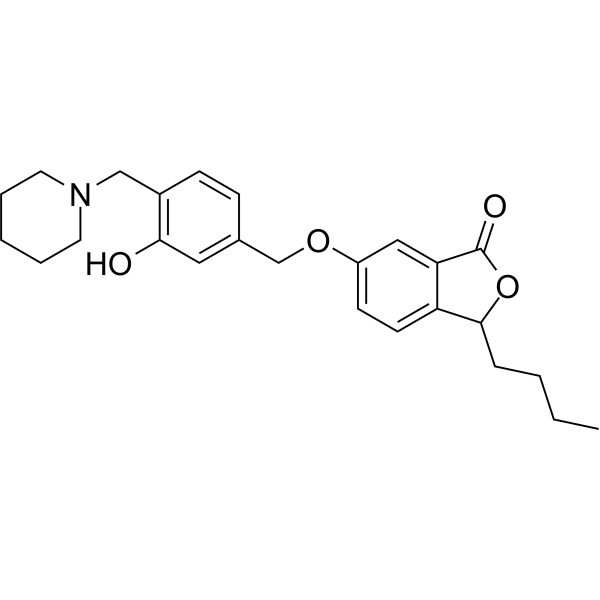
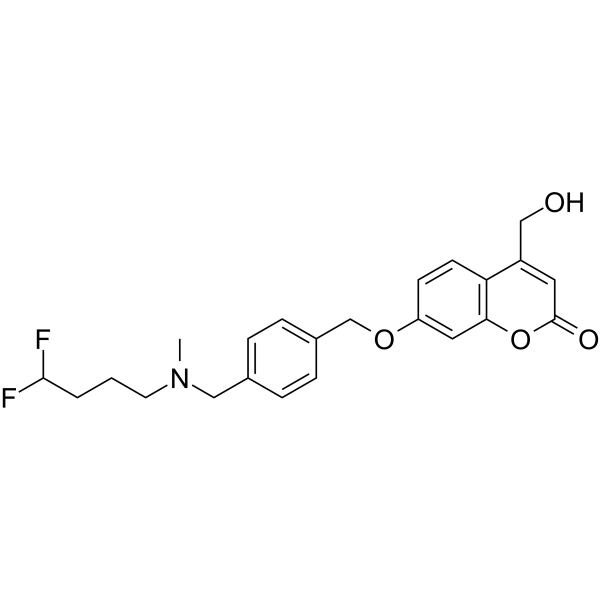
    MAO-B-IN-37 (Compound 37) is a derivative of TT01001 (HY-114520), and a selective inhibitor for monoamine oxidase B (MAO-B) with an IC50 of 270 nM. MAO-B-IN-37 exhibits good metabolic stability in mice microsomes and good affinity with human serum albumin .
    MAO-B-IN-37
  • HY-163380

    Carbonic Anhydrase Neurological Disease
    CA/MAO-B-IN-1 (Compound 78) is a dual inhibitor for human brain carbonic anhydrases (CA) and Monoamine Oxidase-B (MAO-B), with IC50s of 8.8 and 7.0 nM, respectively. CA/MAO-B-IN-1 reveals a human oral absorption of 71.9% through in silico prediction .
    CA/MAO-B-IN-1
  • HY-W205529

    Fluorescent Dye Neurological Disease
    RO 16-6491 Free base is a selective, reversible inhibitor of monoamine oxidase type B (MAO-B), exhibiting high affinity and specificity for binding sites in human frontal cortex mitochondria and platelet membranes. RO 16-6491 demonstrates a fast dissociation of bound radioactivity at 20 degrees C, indicating its dynamic binding properties. RO 16-6491 also acts as a substrate for MAO-B, suggesting that its oxidation may produce a stable intermediate responsible for its potent inhibitory effects. RO 16-6491 serves as an excellent radioligand probe for investigating the regional tissue distribution of MAO-B in various physiological and pathological states.
    RO 16-6491 free base
  • HY-123556

    Monoamine Oxidase Neurological Disease
    SZV-558 is a potent and selective MAO-B inhibitor with IC50 values of 50 and 60 nM for rats and humans, respectively. SZV-558 can be used in studies of Parkinson's disease (PD) models .
    SZV-558
  • HY-100588A

    mGluR Neurological Disease
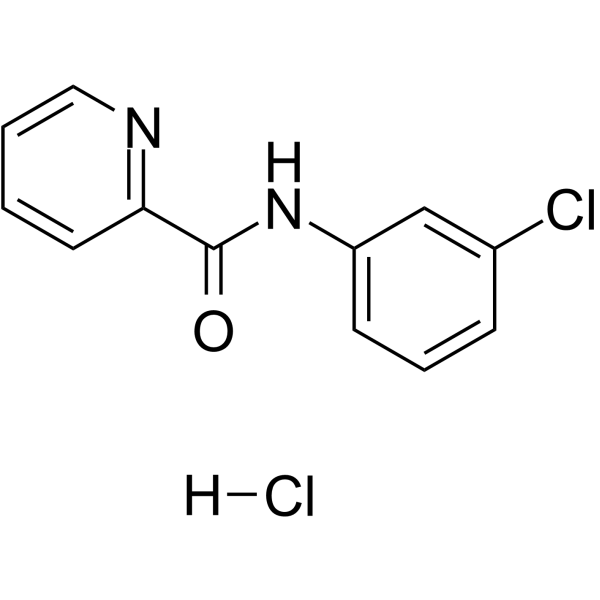
    VU0364770 hydrochloride is a selective and potent positive allosteric modulator (PAM) of mGlu4. VU0346770 hydrochloride exhibits EC50s of 290 nM and 1.1 μM at rat mGlu4 and human mGlu4 receptor, respectively. VU0364770 hydrochloride exhibits antagonist activity at mGlu5 with a potency of 17.9 μM and PAM activity at mGlu6 with a potency of 6.8 μM. VU0364770 hydrochloride also possesses activity at MAO with Ki values of 8.5 and 0.72 μM for human MAO-A and human MAO-B, respectively .
    VU0364770 hydrochloride
  • HY-183437

    Monoamine Oxidase Neurological Disease
    MAO-B-IN-57 is a selective MAO-B inhibitor with an IC50 of 41.38 nM against human MAO-B. MAO-B-IN-57 shows no significant in vitro cytotoxicity and can significantly increase the survival rate of PC12 cells damaged by 6-OHDA. MAO-B-IN-57 can be used in studies related to Parkinson's disease .
    MAO-B-IN-57
  • HY-145695

    Cholinesterase (ChE) Monoamine Oxidase Neurological Disease
    Dual AChE-MAO B-IN-1 (compound 15) is an orally bioavailable CNS-permeant potent inhibitor of both human AChE (IC50=550 nM) and MAO B (IC50=8.2 nM). Dual AChE-MAO B-IN-1 behaves as a safe and metabolically stable neuroprotective agent, devoid of cytochrome liability .
    Dual AChE-MAO B-IN-1
  • HY-131660

    Monoamine Oxidase Amyloid-β Reactive Oxygen Species (ROS) Neurological Disease
    MAO-B-IN-54 is a selective, reversible and competitiv monoamine oxidase B (MAOB) inhibitor with a human IC50 of 0.052 μM and a Ki of 0.028 μM. MAO-B-IN-54 shows weak activity MAOA. MAO-B-IN-54 occupies both the entrance and substrate cavity of MAOB, forming hydrophobic and hydrogen bonding interactions. MAO-B-IN-54 inhibits aggregation and ROS production. MAO-B-IN-54 can be used for the research of Alzheimer’s disease .
    MAO-B-IN-54
  • HY-181268

    Monoamine Oxidase Neurological Disease
    MAO-B-IN-53 is a human monoamine oxidase B (hMAO-B) inhibitor with an IC50 of 0.066 μM. MAO-B-IN-53 exhibits mixed reversible inhibition, binds stably to the hMAO-B active site, and shows high selectivity over hMAO-A. MAO-B-IN-53 acts as a neuroprotective agent, protects against 6-OHDA-induced damage, and exhibits low neurotoxicity in neuroblastoma cells. MAO-B-IN-53 can be used for the research of Parkinson's disease .
    MAO-B-IN-53
  • HY-100588AR

    mGluR Reference Standards Neurological Disease
    VU0364770 (hydrochloride) (Standard) is the analytical standard of VU0364770 (hydrochloride) (HY-100588A). This product is intended for research and analytical applications. VU0364770 hydrochloride is a selective and potent positive allosteric modulator (PAM) of mGlu4. VU0346770 hydrochloride exhibits EC50s of 290 nM and 1.1 μM at rat mGlu4 and human mGlu4 receptor, respectively. VU0364770 hydrochloride exhibits antagonist activity at mGlu5 with a potency of 17.9 μM and PAM activity at mGlu6 with a potency of 6.8 μM. VU0364770 hydrochloride also possesses activity at MAO with Ki values of 8.5 and 0.72 μM for human MAO-A and human MAO-B, respectively .
    VU0364770 hydrochloride (Standard)
  • HY-100588R

    mGluR Reference Standards Neurological Disease
    VU0364770 (Standard) is the analytical standard of VU0364770 (HY-100588). This product is intended for research and analytical applications. VU0364770 is a selective and potent positive allosteric modulator (PAM) of mGlu4. VU0346770 exhibits EC50s of 290 nM and 1.1 μM at rat mGlu4 and human mGlu4 receptor, respectively. VU0364770 exhibits antagonist activity at mGlu5 with a potency of 17.9 μM and PAM activity at mGlu6 with a potency of 6.8 μM. VU0364770 also possesses activity at MAO with Ki values of 8.5 and 0.72 μM for human MAO-A and human MAO-B, respectively .
    VU0364770 (Standard)
  • HY-114620

    Monoamine Oxidase Neurological Disease
    MAO-B-IN-55 (Compound 5c) is a reversible competitive MAO-B inhibitor with an IC50 of 2.9 nM, and it exhibits approximately 2750-fold higher selectivity for MAO-B over MAO-A. MAO-B-IN-55 can be used for the research of Parkinson's disease .
    MAO-B-IN-55
  • HY-D3208

    Fluorescent Dye Inflammation/Immunology
    oLOX is a fluorescent activity reporter. oLOX can be activated by lysyl oxidase family (LOXF) enzymes, which in turn releases a luciferin fluorescent product that reports LOXF enzyme activity. After oLOX is activated in in vitro fibrotic lung tissues, the fluorescence intensity increases, enabling real-time detection of fibrotic activity. oLOX can be used in studies related to pulmonary fibrosis .
    oLOX

Inquiry Online

Your information is safe with us. * Required Fields.

Salutation


Country or Region *

Applicant Name *


Organization Name *

Department *


Email Address *


Product Name *

Cat. No.


Requested quantity *

Phone Number *


Remarks

Inquiry Online

Inquiry Information

Product Name:
Cat. No.:
Quantity:
MCE Japan Authorized Agent: