



Vitisin A

Based on 1 Customer Validation
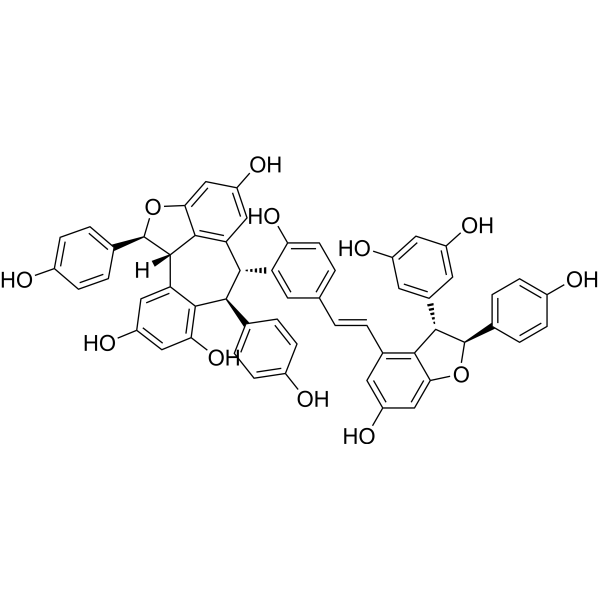
Vitisin A ((+)-Vitisin A) is an orally active natural product with multiple pharmacological activities including anti-inflammatory, anti-tumor, anti-oxidant, anti-pathogenic microorganism, hypoglycemic and lipid-regulating, anti-osteoporotic, neuroprotective and cardiovascular protective effects. Vitisin A exhibits inhibitory effects on human AChE and MAO-B with IC50 values of 1.29 µM and 4.94 µM, respectively. Vitisin A inhibits the ERK, MAPK, NF-κB, STAT1, HMGCR and TRAF6 pathways, downregulates the related phosphorylation and protein expression, while activates the Nrf2/HO-1 pathway and upregulates p21 expression. Vitisin A induces tumor cell apoptosis and cell cycle arrest, inhibits adipogenesis and lipid accumulation, while alleviates oxidative stress, suppresses inflammatory responses, blocks hepatic fibrosis, Cuproptosis and cholesterol synthesis, and increases the expression levels of central BDNF and TrkB. Vitisin A can be used in the research of tumors, infectious diseases, metabolic diseases, bone and joint diseases, liver diseases, skin injuries, as well as neurodegenerative and cognitive dysfunction-related diseases.
For research use only. We do not sell to patients.
- Purity : 97%
- CAS No.: 142449-89-6
- Formula: C56H42O12
- Molecular Weight:906.93
-
Storage:
-20°C, protect from light
* In solvent : -80°C, 6 months; -20°C, 1 month (protect from light)

To place orders, for customer services and technical support, please contact: MedChemExpress USA
Tel: 609-228-6898 E-mail: [email protected] [email protected]


-
 Biological Activity
-
Chemical Information
- Protocols
- Purity & Documentation
- References
-
 Help & FAQs


All Caspase Isoforms
More

Biological Activity
Description
|
Caspase 3 |
ERK1 |
ERK2 |
NF-κB |
PPAR-γ |
MAO-B |
Cellular Effect
|
Cell Line

|
Type | Value | Description | References |
|---|---|---|---|---|
| A549 | CC50 |
22.4 μM
Compound: (+)-Vitisin A
|
Cytotoxicity against human A549 cells assessed as reduction in cell viability by Alamar blue assay
Cytotoxicity against human A549 cells assessed as reduction in cell viability by Alamar blue assay
|
[PMID: 32652408] |
| Huh-7.5 | CC50 |
>10 μM
Compound: (+)-Vitisin A
|
Cytotoxicity against human Huh7.5 cells infected with Hepatitis C virus assessed as reduction in cell viability
Cytotoxicity against human Huh7.5 cells infected with Hepatitis C virus assessed as reduction in cell viability
|
[PMID: 32652408] |
| Platelet | IC50 |
10.3 μM
Compound: (+)-vitisin A
|
Antiplatelet activity against citreated rabbit platelet assessed as arachidonic acid-induced platelet aggregation
Antiplatelet activity against citreated rabbit platelet assessed as arachidonic acid-induced platelet aggregation
|
[PMID: 15730246] |
| Platelet | IC50 |
13.3 μM
Compound: (+)-vitisin A
|
Antiplatelet activity against citreated rabbit platelet assessed as inhibition of 9,11-dideoxy-11 alpha, 9 alpha epoxy-methanoprostaglandin F2alpha-induced platelet aggregation
Antiplatelet activity against citreated rabbit platelet assessed as inhibition of 9,11-dideoxy-11 alpha, 9 alpha epoxy-methanoprostaglandin F2alpha-induced platelet aggregation
|
[PMID: 15730246] |
In Vitro
Vitisin A exhibits antioxidant activity via free radical scavenging and iron reduction, with FRAP and DPPH values of 2.38 mM Trolox/g phenol and 1.24 mM Trolox/g phenol, respectively[1].
Vitisin A is highly cytotoxic to human cancer cell lines, with an IC50 of 1.11 μM against MES-SA cells, and induces apoptosis via sub-G1 cell cycle arrest[1].
Vitisin A induces G2/M phase cell cycle arrest and apoptosis in HepG2 human hepatocellular carcinoma cells via increased ROS, caspase 3 activity, and modified Bax/Bcl-2 ratios, but has no effect on Hep3B cells[1].
Vitisin A (4, 8 μM; 24 h) acts as a TRAIL sensitizer in PC-3, DU145, and LNCaP human prostate cancer cells by upregulating DR5 expression and inducing ROS generation, enhancing TRAIL-mediated apoptosis[1].
Vitisin A inhibits influenza A virus-induced RANTES production in A549 human alveolar epithelial cells by modulating Akt and STAT1 phosphorylation[1].
Vitisin A inhibits preadipocyte proliferation and differentiation by inducing G1 phase arrest and regulating p21, PPARγ, and C/EBPα expression, supporting anti-obesity activity[1].
Vitisin A exerts hypocholesterolemic effects by regulating LDLR, HMG-CoA reductase, and PCSK9, and reduces triglyceride levels in HepG2 cells via modulation of lipogenesis and fatty acid oxidation pathways[1].
Vitisin A inhibits osteoclast differentiation in RAW264.7 mouse macrophage cells and primary mouse bone marrow cells by targeting TRAF6-TAK1-NFATc1 signaling, supporting antiosteoporotic activity[1].
Vitisin A enhances viability of H2O2-exposed SH-SY5Y human neuronal cells and provides partial protection against glutamate-induced neurotoxicity in primary rat cortical cells at 10 μM[1].
Vitisin A inhibits androgen receptor activity and protects human dermal papilla cells from DHT-induced damage, supporting potential use in treating androgenetic alopecia[1].
Vitisin A exhibits antifungal activity against Plasmopara viticola[1].
Vitisin A (0-10 nM; 0-24 h) dose-dependently and time-dependently restores cell viability in TGF-β1-activated LX-2 cells[2].
Vitisin A attenuates ES-Cu-induced cytotoxicity in TGF-β1-activated LX-2 cells[2].
Vitisin A can inhibit fibrosis, copper death, lipid synthesis, and oxidative stress in TGF-β1-activated LX-2 cells in a dose-dependent manner by upregulating the Nrf2/HO-1 signaling pathway; and these effects can be eliminated by knocking down Nrf2 with siRNA, confirming that the Nrf2/HO-1 pathway is a key mediator[2].
Vitisin A (1-10 μM; 8 days) potently inhibits 3T3-L1 preadipocyte differentiation with an IC50 of 5.0 μM, reducing lipid accumulation in a dose-dependent manner[3].
Vitisin A (1-10 μM; 8 days) dose-dependently reduces PPARγ and C/EBPα protein expression in differentiated 3T3-L1 cells[3].
Vitisin A (1-10 μM; 24 h) weakly but significantly inhibits Rosiglitazone (HY-17386)-induced PPARγ transcriptional activity in transiently transfected COS-7 cells[3].
Vitisin A (5-10 μM; 24-48 h) significantly inhibits differentiation medium-induced proliferation of 3T3-L1 preadipocytes, reducing proliferation to near growth-arrested levels[3].
Vitisin A (1-50 μM; 24 h) is non-cytotoxic to 3T3-L1 preadipocytes at concentrations up to 25 μM, with cytotoxicity only detected at 50 μM[3].
Vitisin A (10 μM; 0-2 days, 2-5 days, 5-8 days, or 0-8 days) primarily inhibits 3T3-L1 adipocyte differentiation by targeting the preadipocyte proliferation stage during the first 2 days of adipogenic induction, with minimal effect when administered after this period[3].
Vitisin A (5-10 μM; 24 hours) blocks 3T3-L1 preadipocyte cell cycle progression at the G1-S transition, maintaining cells in the G0/G1 phase similar to non-differentiated growth-arrested cells[3].
Vitisin A (1-10 μM; 6-24 hours) dose-dependently reduces cyclin A and cyclin B expression, delays CDK2 expression, and does not affect cyclin E expression in differentiation-induced 3T3-L1 preadipocytes, supporting G1 phase cell cycle arrest[3].
Vitisin A (1-10 μM; 0.25-3 hours, 24 hours) modulates mitotic regulation in differentiation-induced 3T3-L1 preadipocytes by restoring p21 expression and reducing Rb phosphorylation[3].
Vitisin A (1-10 μM; 24 h) dose-dependently inhibits LPS-induced NO production in RAW 264.7 macrophage cells[4].
Vitisin A (1-10 μM; 8 h) dose-dependently inhibits LPS-induced iNOS expression in RAW 264.7 macrophage cells[4].
Vitisin A (1-10 μM; 20 min) dose-dependently inhibits LPS-induced ERK1/2 and p38 phosphorylation in RAW 264.7 macrophage cells[4].
Vitisin A (10 μM; 15 min) inhibits LPS-induced NF-κB activation in RAW 264.7 macrophage cells by suppressing IκB-α phosphorylation and degradation[4].
Vitisin A potently inhibits recombinant human AChE with an IC50 of 1.29 μM[5].
Vitisin A potently inhibits recombinant human MAO-B with an IC50 of 4.94 μM[5].
Vitisin A (2.5-20 μM; 24 h pre-treatment) significantly protects human SH-SY5Y neuroblastoma cells against MGO-induced cell death[5].
MedChemExpress (MCE) has not independently confirmed the accuracy of these methods. They are for reference only.
-
Cell Line:Human prostate cancer cell lines (PC-3, DU145, LNCaP)
-
Concentration:4, 8 μM (combined with 20, 40 ng/mL TRAIL)
-
Incubation Time:24 h
-
Result:Enhanced cytotoxicity and sub-G1 accumulation in PC-3, DU145, and LNCaP cells with TRAIL, most potently in PC-3 cells.
Upregulated caspase 3, FADD, DR4, and DR5 expression when combined with TRAIL.
Downregulated pro-caspase 7/8, DcR1, Bcl-XL, and Bcl-2 expression with TRAIL combination.
Elevated DR5 promoter activity, cell-surface DR5, and ROS production with TRAIL.
Induced PARP cleavage when combined with TRAIL.
-
Cell Line:TGF-β1-activated human hepatic stellate cell line LX-2
-
Concentration:0, 2.5, 5.0, 7.5, 10 nM
-
Incubation Time:0, 2, 4, 6, 8, 12, 24 h
-
Result:Restored cell viability in a dose-dependent manner with increasing viability from 0 to 10 nM.
Restored cell viability in a time-dependent manner with increasing viability from 0 to 24 h incubation.
-
Cell Line:3T3-L1 preadipocytes
-
Concentration:1, 5, 10 μM
-
Incubation Time:8 days
-
Result:Inhibited 3T3-L1 adipocyte differentiation in a dose-dependent manner.
Reduced relative lipid content to ~70% at 1 μM, ~35% at 5 μM, and nearly 0% at 10 μM relative to untreated control.
Almost completely suppressed differentiation at 10 μM.
Showed an IC50 of 5.0 μM for adipocyte differentiation inhibition.
-
Cell Line:differentiated 3T3-L1 cells
-
Concentration:1, 5, 10 μM
-
Incubation Time:8 days
-
Result:Reduced the expression of PPARγ and C/EBPα, key adipogenic transcription factors.
Lowered protein levels of both factors at 1 μM.
-
Cell Line:3T3-L1 preadipocytes
-
Concentration:5, 10 μM
-
Incubation Time:24, 48 hours
-
Result:Significantly inhibited differentiation medium-induced mitosis of 3T3-L1 preadipocytes, reducing proliferation nearly to the level of normal growth-arrested cells.
Suppressed proliferation at both 5 and 10 μM, with no significant difference between the two concentrations at 24 and 48 hours.
-
Cell Line:3T3-L1 preadipocytes
-
Concentration:1, 5, 10, 25, 50 μM
-
Incubation Time:24 hours
-
Result:Showed no cytotoxicity at concentrations up to 25 μM, as released LDH remained at control levels.
Increased released LDH to ~140% of the control at 50 μM, indicating cytotoxicity.
-
Cell Line:3T3-L1 preadipocytes
-
Concentration:10 μM
-
Incubation Time:0-2 days, 2-5 days, 5-8 days, or 0-8 days
-
Result:Reduced relative lipid content to 2.7% of the control when applied during days 0-2, nearly equivalent to the effect of continuous treatment over 8 days (1.6% of control).
Resulted in much weaker inhibition when applied from days 2-5 or 5-8, with relative lipid contents of 70.4% and 72.8% of the control, respectively.
-
Cell Line:differentiation-induced 3T3-L1 preadipocytes
-
Concentration:5, 10 μM
-
Incubation Time:24 hours
-
Result:Blocked differentiation medium-induced cell cycle progression at the G1-S transition.
Maintained 84.0% of cells in G0/G1 phase at 5 μM, with 7.7% in S phase and 7.9% in G2/M phase.
Maintained 89.6% of cells in G0/G1 phase at 10 μM, with 6.6% in S phase and 3.8% in G2/M phase.
-
Cell Line:differentiation-induced 3T3-L1 preadipocytes
-
Concentration:1, 5, 10 μM
-
Incubation Time:6, 12, 18, 24 hours
-
Result:Dose-dependently repressed the differentiation medium-induced increase in cyclin A and cyclin B expression.
Significantly reduced cyclin A and B levels at 10 μM starting at 12-18 hours post-induction.
Delayed CDK2 expression, while cyclin E expression was unaffected.
-
Cell Line:differentiation-induced 3T3-L1 preadipocytes
-
Concentration:1, 5, 10 μM
-
Incubation Time:0.25, 0.5, 1, 2, 3 hours; 24 hours
-
Result:Did not affect ERK or Akt phosphorylation at any tested time point.
Restored the differentiation-induced decrease in p21 expression in a dose-dependent manner.
Reduced differentiation-induced phosphorylation of retinoblastoma protein (Rb) at Ser780 in a dose-dependent manner.
-
Cell Line:RAW 264.7 macrophage cells
-
Concentration:1, 5, 10 μM (8 h incubation after LPS stimulation); 10 μM (non-LPS-treated cells)
-
Incubation Time:8 h (after LPS stimulation); 30 min (pre-incubation with vitisin A prior to LPS treatment)
-
Result:Dose-dependently inhibited LPS-induced iNOS expression, with significant suppression observed at all tested concentrations relative to LPS-only treated cells.
-
Cell Line:RAW 264.7 macrophage cells
-
Concentration:1, 5, 10 μM (20 min incubation after LPS stimulation); 10 μM (non-LPS-treated cells)
-
Incubation Time:20 min (after LPS stimulation); 30 min (pre-incubation with vitisin A prior to LPS treatment)
-
Result:Dose-dependently inhibited LPS-induced ERK1/2 and p38 phosphorylation.
Completely blocked LPS-induced ERK1/2 and p38 phosphorylation at 10 µM.
-
Cell Line:RAW 264.7 macrophage cells
-
Concentration:10 μM (15 min incubation after LPS stimulation); 10 μM (non-LPS-treated cells)
-
Incubation Time:15 min (after LPS stimulation); 30 min (pre-incubation with vitisin A prior to LPS treatment)
-
Result:Significantly suppressed LPS-induced IκB-α degradation and reduced LPS-induced IκB-α phosphorylation, relative to LPS-only treated cells.
-
Cell Line:human SH-SY5Y neuroblastoma cells
-
Concentration:2.5, 5, 10, 20 μM
-
Incubation Time:24 h (pre-treatment)
-
Result:Significantly elevated cell viability compared to the MGO-only control , showing robust neuroprotective effects.
In Vivo
Vitisin A (central administration) restores cognitive function and hippocampal synaptic plasticity in scopolamine-treated C57BL/6 mice via activation of BDNF-CREB signaling[1].
Vitisin A (topical application) protects against DHT-induced androgenetic alopecia in mice by preserving hair follicle structure and regulating Wnt/β-catenin signaling[1].
Vitisin A (100 mg/kg; dietary intake) reduces body weight gain and plasma triglycerides in high-fat diet-fed mice by modulating hepatic lipid metabolism pathways[1].
Vitisin A reduces body weight and improves plasma lipid profiles[1].
Vitisin A (i.p.) dose-dependently inhibits liver fibrosis in CCl4-induced mice by activating the Nrf2/HO-1 pathway and suppressing cuproptosis, lipid peroxidation, and hepatic stellate cell activation[2].
Vitisin A (40 mg/kg; p.o.; daily; 13 days) significantly improves scopolamine-induced amnesia in male ICR mice, as shown by increased retention trial step-through latency, reduced brain AChE activity and oxidative stress, and restored BDNF/TrkB protein expression[5].
Vitisin A (10 mg/kg; p.o.; single dose) significantly reduces systolic and diastolic blood pressure in spontaneously hypertensive rats, with peak effects observed at 8 hours post-treatment[5].
Vitisin A (25 mg/kg; p.o.; daily; 36 days) reduces weight gain and improves obesity-related plasma lipid parameters in high-fat diet-fed C57BL/6 mice[5].
MedChemExpress (MCE) has not independently confirmed the accuracy of these methods. They are for reference only.
-
Animal Model:ICR mice (scopolamine-induced amnesia)[1]
-
Dosage:40 mg/kg
-
Administration:single administration
-
Result:Significantly improved impaired learning behaviors in scopolamine-treated mice.
Decreased acetylcholinesterase activity and malondialdehyde levels in brain extracts.
Increased expression of brain-derived neurotrophic factor and its receptor tropomyosin receptor kinase B.
Enhanced expression of synaptic plasticity proteins synapsin I, calcium/calmodulin-dependent protein kinase II, and Akt.
-
Animal Model:ICR (6-week-old male, scopolamine-induced amnesia)[5]
-
Dosage:40 mg/kg
-
Administration:p.o.; daily; 13 days
-
Result:Increased step-through latency in the retention trial of the passive avoidance test compared with scopolamine-treated control mice.
Reduced acetylcholinesterase (AChE) activity and malondialdehyde (MDA) levels in brain tissue extracts compared with the control group.
Restored protein expressions of brain-derived neurotrophic factor (BDNF; BDNF/β-actin = 1.25) and its receptor tropomyosin receptor kinase B (TrkB; TrkB/β-actin = 1.16) from scopolamine-induced decreases.
-
Animal Model:C57BL/6 (high-fat diet-induced obesity)[5]
-
Dosage:25 mg/kg
-
Administration:p.o.; daily; 36 days
-
Result:Reduced weight gain in high-fat diet-fed mice.
Improved plasma cardiovascular risk parameters, including reduced total cholesterol, total triglycerides, low-density lipoproteins, and free fatty acids.
- Western Blot
- RNA extraction experimental
- Collagen: Sirius Red Staining
- Annexin V plus membrane-impermeant dye apoptosis staining
- BrdU Incorporation Assay
- ROS/oxidative-stress fluorescent staining
- Connective Tissue: Masson's Trichrome/Collagen Trichrome Staining
- Protocol for Cell Cycle
- Research Protocol for Inflammation-related Diseases
- Protocol For Protein Expression And Purification
- Kinase activity and phosphorylation assays
- Fibrosis/Collagen Morphometry
- 3T3-L1 preadipocyte-to-adipocyte differentiation
- Detection of Apoptosis
- TUNEL staining for apoptotic DNA fragmentation
- Flow cytometric DNA-content cell-cycle staining
- Apoptosis Solutions
- Protocol for Kinase activity and phosphorylation assays
- Cuproptosis Solutions
- Lipid Droplets: Oil Red O/Sudan Dye Lipid Staining


Chemical Information
-
CAS No. 142449-89-6
-
Appearance Solid
-
Molecular Weight 906.93
-
Formula C56H42O12
-
Color Brown to black
-
SMILES
OC1=CC2=C(C3=C1)[C@]([C@@H](C(C=C4)=CC=C4O)O3)([H])C5=CC(O)=CC(O)=C5[C@H](C(C=C6)=CC=C6O)[C@H]2C7=CC(/C=C/C8=C9[C@H](C%10=CC(O)=CC(O)=C%10)[C@@H](C(C=C%11)=CC=C%11O)OC9=CC(O)=C8)=CC=C7O
-
Synonyms
(+)-Vitisin A
-
Structure Classification
-
Initial Source
-
Shipping
Room temperature in continental US; may vary elsewhere.
-
Storage
-20°C, protect from light
* In solvent : -80°C, 6 months; -20°C, 1 month (protect from light)


Purity & Documentation
-
Data Sheet (304 KB)
-
SDS (252 KB)
- English - EN (252 KB)
- Français - FR (252 KB)
- Deutsch - DE (252 KB)
- Norwegian - NO (252 KB)
- Español - ES (252 KB)
- Swedish - SV (252 KB)
- Italian - IT (252 KB)
- Korean - KR (252 KB)
- Portuguese - PT (252 KB)
-
Handling Instructions (2659 KB)
References
[2]. Ding S, et al. Vitisin A inhibits liver fibrosis by promoting Nrf2/HO-1 pathway and inhibiting Cuproptosis. Sci Rep. 2025;15(1):44186. Published 2025 Dec 19. [Content Brief]
[4]. Mi Jeong Sung, et al. Vitisin A suppresses LPS-induced NO production by inhibiting ERK, p38, and NF-kappaB activation in RAW 264.7 cells. Int Immunopharmacol. 2009;9(3):319-323. [Content Brief]
[5]. Chen LG, et al. Vitisin A, a Resveratrol Tetramer, Improves Scopolamine-Induced Impaired Learning and Memory Functions in Amnesiac ICR Mice. Biomedicines. 2022;10(2):273. Published 2022 Jan 26. [Content Brief]

Calculators
Concentration (start) × Volume (start) = Concentration (final) × Volume (final)


Vitisin A Related Classifications
HY-142026 Related Classifications
 Powered by Bioz
Keywords
- Vitisin A
- 142449-89-6
- (+)-Vitisin A
- Caspase
- ERK
- NF-κB
- Influenza Virus
- PAK
- LDLR
- PPAR
- PCSK9
- Androgen Receptor
- Keap1-Nrf2
- Monoamine Oxidase
- Cholinesterase (ChE)
- IKK
- Wnt
- β-catenin
- Reactive Oxygen Species (ROS)
- Apoptosis
- Cuproptosis
- AChE
- HMGCR
- MAO-B
- Vitis thunbergii Sieb. & Zucc.
- STAT1
- Vitis thunbergii var. taiwaniana
- TRAF6
- Nrf2/HO-1
- MAPK
- Inhibitor
- inhibitor
- inhibit