
Search Result
Results for "
luciferase activity
" in MedChemExpress (MCE) Product Catalog:
2
Biochemical Assay Reagents
1
Isotope-Labeled Compounds
| Cat. No. |
Product Name |
Target |
Research Areas |
Chemical Structure |
-
- HY-12684
-
CH-223191
Maximum Cited Publications
113 Publications Verification
|
Aryl Hydrocarbon Receptor
|
Cancer
|
|
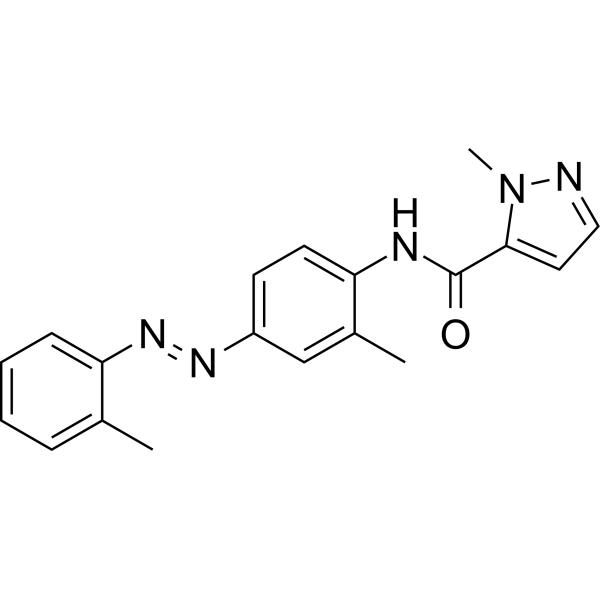
CH-223191 is a potent and specific antagonist of aryl hydrocarbon receptor (AhR).
CH-223191 inhibits TCDD-mediated nuclear translocation and DNA binding of AhR, and inhibits TCDD-induced luciferase activity with an IC50 of 0.03 μM .
|
-
-
- HY-13250
-
|
|
Drug Derivative
|
Cancer
|
|
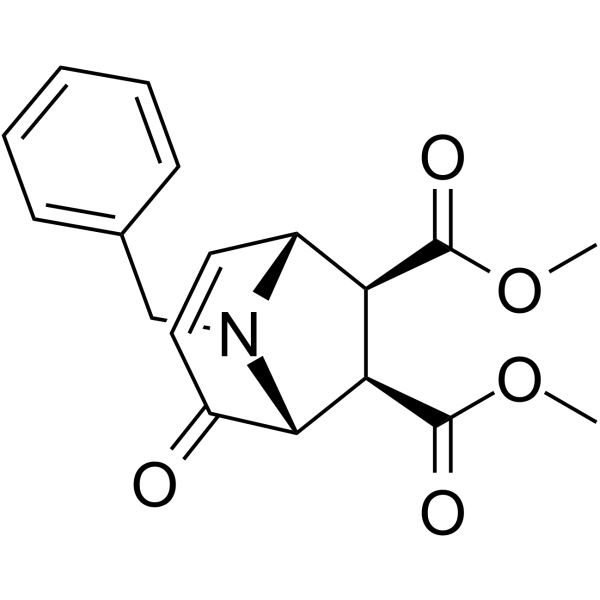
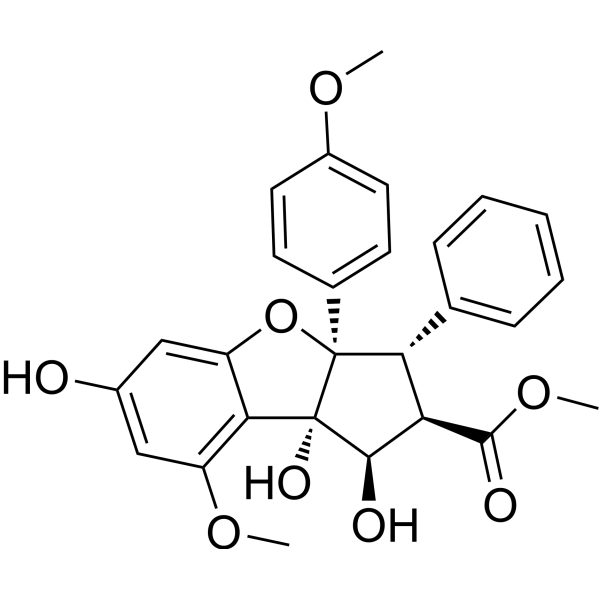
Silvestrol aglycone is a Silvestrol analogue, inhibits protein translation initiation in cancer cells, with EC50s of 10 and 200 nM for myc-LUC and tub-LUC luciferase reporter protein translation, respectively. Anti-cancer activity .
|
-
-
- HY-153229
-
|
|
mRNA
Biochemical Assay Reagents
|
Others
|
|
Firefly luciferase mRNA-LNP is a lipid nanoparticle (LNP) containing firefly luciferase mRNA. Firefly luciferase mRNA-LNP exhibits a stable nanostructure, in which LNP plays a key role in effectively protecting and transporting mRNA to cells. Luciferase is a bioluminescent reporter gene for gene regulation and functional studies. Firefly Luciferase mRNA-LNP expresses firefly luciferase protein after entering the cells, which is often used for promoter activity detection or dual fluorescent molecular complementation experiments. Firefly luciferase mRNA-LNP is studied in research for RNA delivery, cell viability, and translation efficiency .
|
-
-
- HY-145267
-
|
|
PARP
Wnt
|
Cancer
|
|
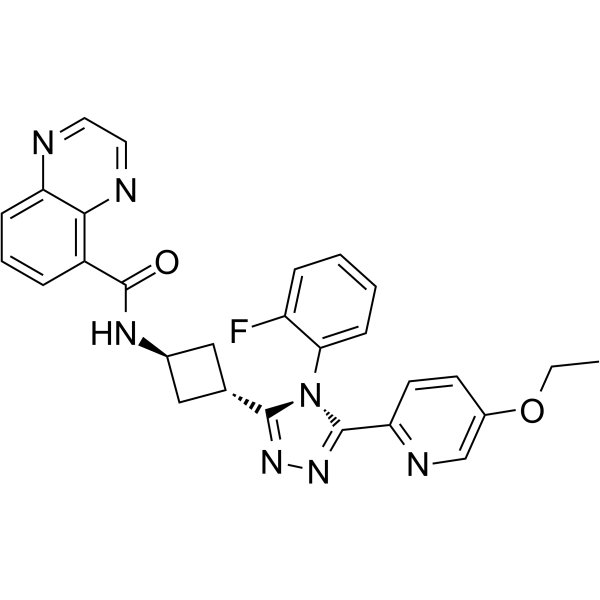
OM-153 is a potent and orally active tankyrase inhibitor with IC50s of 13 nM and 2 nM for tankyrase 1 and tankyrase 2 (TNKS1/2), respectively. OM-153 inhibits luciferase-based Wnt/β-catenin signaling reporter activity with an IC50 value of 0.63 nM. OM-153 shows inhibition of Wnt/β-catenin signaling and proliferation in COLO 320DM .
|
-
-
- HY-175357
-
|
|
YAP
|
Cancer
|
|
YAP/TEAD-IN-2 (Compound T-1) is a YAP/TEAD inhibitor. YAP/TEAD-IN-2 inhibits the luciferase activity driven by YAP/TEAD in 293T cells. YAP/TEAD-IN-2 exhibits strong anti-proliferative activity against human pleural mesothelioma NCI-H226 cells. YAP/TEAD-IN-2 can be used for the study of diseases associated with Hippo pathway dysregulation, particularly cancers .
|
-
-
- HY-162723
-
|
|
PROTACs
AP-1
|
Cancer
|
|
FOSL1 degrader 1 is a FOSL1 PROTAC degrader with a DC50 of 2.3 μM. FOSL1 degrader 1 induces proteasomal degradation of FOSL1. FOSL1 degrader 1 eliminates cancer stem cells in head and neck squamous cell carcinoma. FOSL1 degrader 1 suppresses head and neck squamous cell carcinoma tumorigenesis. FOSL1 degrader 1 can be used for the research of head and neck squamous cell carcinoma .
|
-
-
- HY-122234
-
|
|
DNA/RNA Synthesis
|
Cancer
|
VPC-18005 inhibits ERG-induced transcription and interacts directly with the ERG-ETS domain, and disrupts the ERG binding to DNA. VPC-18005 is a potent inhibitor of luciferase activity .
|
-
-
- HY-15672
-
|
|
HIF/HIF Prolyl-Hydroxylase
|
Neurological Disease
Cancer
|
|
FM19G11 is a hypoxia-inducible factor-1-alpha (HIF-1α) inhibitor, and it inhibits hypoxia-induced luciferase activity with an IC50 of 80 nM in HeLa cells. FM19G11 modulates other signaling pathways, including mTOR and PI3K/Akt/eNOS, when the HIF-1α pathway is inactivated under normoxic conditions .
|
-
-
- HY-N11422
-
|
|
Antibiotic
Bacterial
|
Infection
|
|
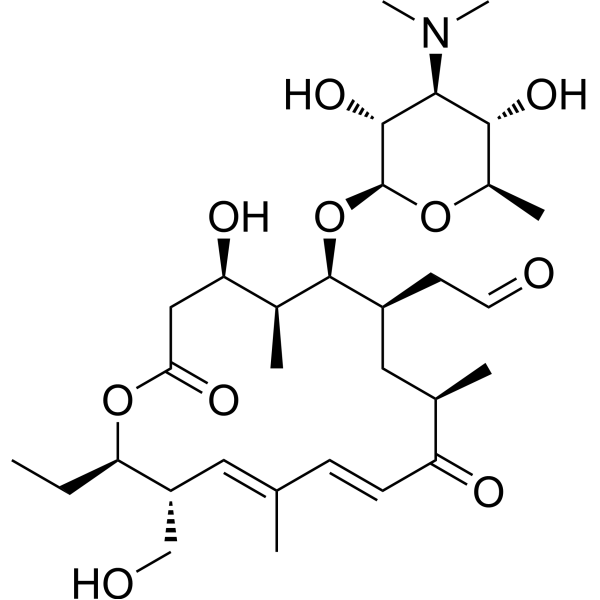
Mycaminosyltylonolide is a potent antibiotic. Mycaminosyltylonolide shows antibacterial activity. Mycaminosyltylonolide inhibits luciferase synthesis .
|
-
-
- HY-151480
-
|
|
STAT
Apoptosis
|
Cancer
|
|
HP590 is an orally active, novel and potent STAT3 inhibitor (STAT3 luciferase activity: IC50=27.8 nM; ATP inhibition: IC50=24.7 nM). HP590 shows anti-proliferative activity to gastric cancer cells and induces apoptosis .
|
-
-
- HY-134258
-
|
|
HOXA
|
Cardiovascular Disease
Others
Cancer
|
|
MEISi-1 is a homeodomain inhibitor of small molecule MEIS1 protein. MEISi-1 significantly inhibited the activity of luciferase reporter genes containing MEIS binding sites (TGACAG) and induced self-renewal of mouse and human HSCS in vitro and in vivo. MEISi-1 can be used for research in blood diseases, heart regeneration and cancer .
|
-
-
- HY-160496
-
|
|
STAT
|
Cancer
|
|
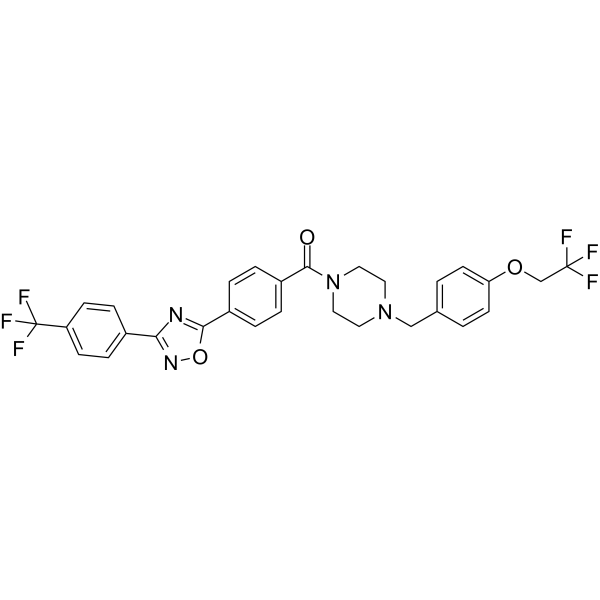
STAT3-IN-25 (Compound 2p) is a potent STAT3 inhibitor with a p-trifluoroethoxy benzyl substituent. STAT3-IN-25 shows STAT3 luciferase inhibition activity using HEK293T cells with an IC50 of 22.3 nM and ATP production inhibition activity using BxPC-3 cells with an IC50 of 32.5 nM. STAT3-IN-25 has the potential for pancreatic cancer research .
|
-
-
- HY-160870
-
|
|
Fluorescent Dye
|
Others
|
|
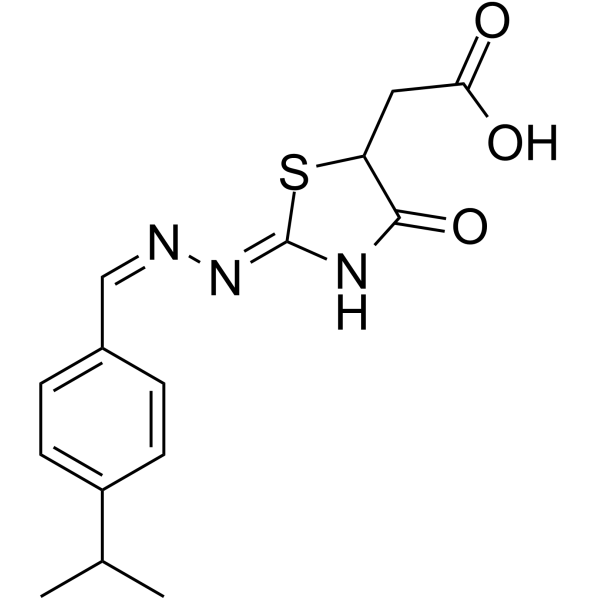
Firefly luciferase-IN-3 (CID: 17087944) is an inhibitor of ATP-dependent luciferase (Firefly luciferase) and has nM-level inhibitory activity against NanoLuc (pIC50=7.5) .
|
-
-
- HY-N16500
-
|
|
NF-κB
|
Neurological Disease
|
|
Hericenone C is a metabolite derived from Hericium erinaceus. Hericenone C inhibits LPS (HY-D1056)-induced NRE::Luc luciferase activity, reduces phosphorylation of p65 and inhibits NF-κB signaling. Hericenone C exhibits neuroprotective effect .
|
-
-
- HY-161982
-
|
|
TNF Receptor
|
Cancer
|
|
JNU-0921 is a potent and orally active CD137 agonist. JNU-0921 increases the mRNA expression of IFN-γ and GZMB. JNU-0921 induces luciferase activity with an EC50 value of 64.07 nM.JNU-0921 enhances effector and memory function of cytotoxic CD8 + T cells (CTLs) and alleviates their exhaustion. JNU-0921 also skews polarization of helper T cells toward T helper 1 type and enhances their activity to boost CTL function. JNU-0921 shows anticancer activity .
|
-
-
- HY-160873
-
|
|
Fluorescent Dye
|
Others
|
|
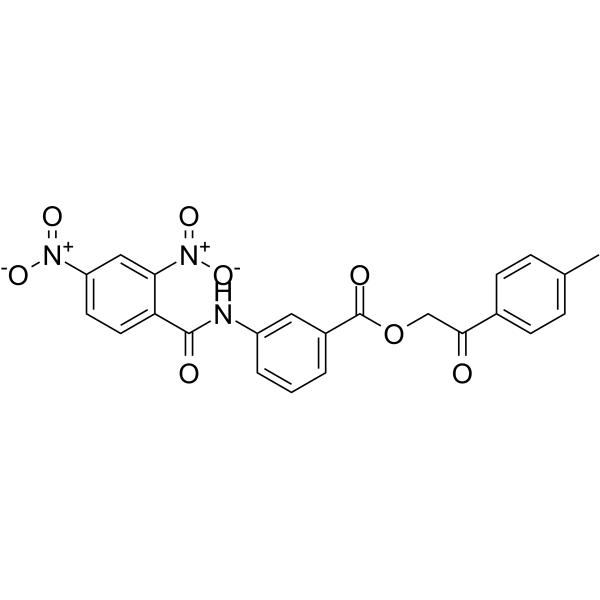
Firefly luciferase-IN-5 (CID: 16031203) is an inhibitor of ATP-dependent luciferase (Firefly luciferase). It has nM-level inhibitory activity against GRLuc, RLuc8, and RLuc respectively (pIC50=8.5,7.5,5.5) .
|
-
-
- HY-143494
-
|
|
RSV
Influenza Virus
|
Infection
|
|
RSV/IAV-IN-3 (compound 14'i) is a dual inhibitor of respiratory syncytial virus (RSV) and influenza A virus (IAV) with EC50 values of 2.92 µM and 1.90 µM,respectively. RSV/IAV-IN-3 has antiviral effect against H1N1 and H3N2 with EC50 values of 3.25 µM and 1.50 µM in MDCK cells, respectively. RSV/IAV-IN-3 significantly inhibits the activity of luciferase in a dose-dependent manner, with an EC50 of 3.89 µM. RSV/IAV-IN-3 inhibits IAV infectivity and RdRp activity. RSV/IAV-IN-3 inhibits IAV and RSV replication at the post-entry stage .
|
-
-
- HY-158257
-
|
|
Fluorescent Dye
|
Others
|
|
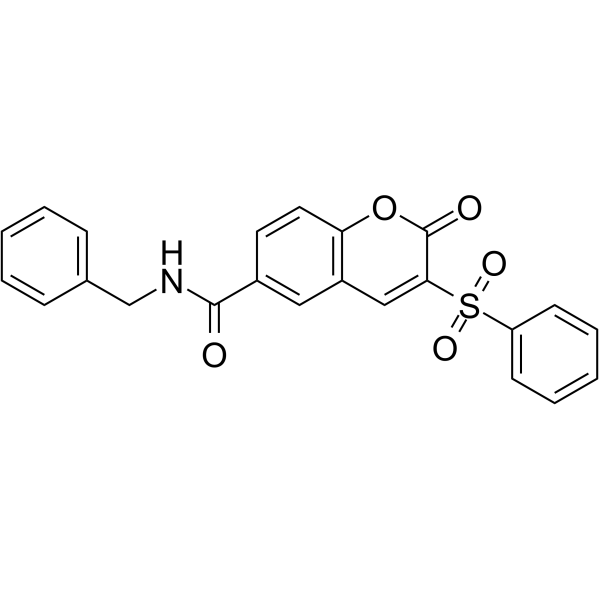
Firefly luciferase-IN-4 (CID: 3987260) is an inhibitor of ATP-dependent luciferase (Firefly luciferase). It has nM-level inhibitory activity (pIC< sub>50=6.5) .
|
-
-
- HY-P10256A
-
|
|
Kisspeptin Receptor
PKA
PKC
|
Endocrinology
|
|
Kiss2 peptide acetate is the acetate form of Kiss2 pepride (HY-P10256). Kiss2 peptide acetate is a positive regulator of reproduction. Kiss2 peptide acetate binds with its cognate receptor Kiss2R (GPR54) in COS-7 cells, activates PKA and PKC signaling pathways through Gas and Gaq proteins, and thus enhances the activity of cAMP response element-dependent luciferase (CRE-luc) and serum response element-dependent luciferase (SRE-luc) .
|
-
-
- HY-19498
-
|
SIM-688
|
NF-κB
|
Inflammation/Immunology
|
|
WAY-204688 is an estrogen receptor (ER-α) selective, orally active inhibitor of NF-κB transcriptional activity with an IC50 of 122 ± 30 nM for NF-κB-luciferase (NF-κB-luc) in HAECT-1 cells.
|
-
-
- HY-D1343
-
|
|
Fluorescent Dye
|
|
|
DMNPE-caged D-luciferin is a heterocyclic luminescent compound that is a natural ligand for luciferase, an enzyme used to detect cell activity. Its reaction requires ATP and emits yellow-green light with a peak wavelength of about 530 nm. The luciferin in the DMNPE cage easily crosses the cell membrane.
|
-
-
- HY-160686
-
|
|
VEGFR
|
Others
|
|
GSK248233A is a dual inhibitor of Fluc and VEGFR2 with IC50 of 1.03 μM and 2 nM, respectively. GSK248233A also shows activity against the AGC family. GSK248233A acts as a protein kinase inhibitor across ATP-dependent and -independent luciferases with potential implications for Fluc reporter assays .
|
-
-
- HY-N12011
-
|
|
PGC-1α
|
Others
|
|
11-Oxoisomogroside V (compound 3) is a cucurbitacin isolated from the crude extract of Luo Han Guo. 11-Oxoisomogroside V activates the transcriptional activity of PGC-1α. In the luciferase experiment, the results showed that 10 μM and 20 μM 11-Oxoisomogroside V could increase the luciferase activity to 133.79% and 143.81% .
|
-
-
- HY-W106688
-
|
|
Estrogen Receptor/ERR
|
Endocrinology
|
|
Triisopropyl phosphate inhibits TFF1 and EGR3 gene expression, exhibits anti-estrogenic activity that inhibits Estradiol (HY-B0141)-induced MCF-7 cell proliferation with an EC50 of 341 μM. Triisopropyl phosphate inhibits the estrogen response element (ERE)-stimulated luciferase activity in MVLN cells with an EC50 of 900 μM .
|
-
-
- HY-107595
-
SD-1008
1 Publications Verification
|
JAK
STAT
Apoptosis
|
Cancer
|
|
SD-1008 is a potent JAK inhibitor. SD-1008 inhibits tyrosyl phosphorylation of STAT3, JAK2 and Src. SD-1008 also reduces STAT3-dependent luciferase activity. SD-1008 enhances apoptosis induced by Paclitaxel in ovarian cancer cells via directly blocking the JAK-STAT3 signaling pathway .
|
-
-
- HY-N4308
-
|
Hexa-O-methylquercetagetin; Quercetagetin hexamethyl ether; 3,5,6,7,3',4'-Hexamethoxyflavone
|
NF-κB
IKK
Bcl-2 Family
|
Cancer
|
|
Hexamethylquercetagetin (Hexa-O-methylquercetagetin; Quercetagetin hexamethyl ether; 3,5,6,7,3',4'-Hexamethoxyflavone) is an orally active NF-κB inhibitor. Hexamethylquercetagetin inhibits NF-κB-derived luciferase activity, reduces phosphorylated p65 and IκBα, Cyclin D1, Bcl-2 and blocks TNFα-induced NF-κB activation. Hexamethylquercetagetin inhibits survival and proliferation of cervical carcinoma cells. Hexamethylquercetagetin suppresses tumor volume and weight in BALB/c nude mouse xenograft models of cervical carcinoma. Hexamethylquercetagetin can be used for the research of cancer, such as cervical carcinoma .
|
-
-
- HY-159912
-
|
|
YAP
|
Cancer
|
|
pan-TEAD-IN-1 (Compound 3) is an orally active pan-TEAD inhibitor targeting the palmitoylation site of TEAD, disrupting its interaction with the coactivators YAP/TAZ, thereby suppressing the transcriptional upregulation of oncogenes (e.g., Ctgf and Cyr61) in the Hippo signaling pathway. pan-TEAD-IN-1 exhibits excellent activity with a luciferase IC50 of 0.36 nM and an H226 cell IC50 of 1.52 nM. It also shows favorable pharmacokinetics (AUC0–∞ = 228.7 μg/mL·min, T1/2 = 183.9 min). In TEAD-dependent xenograft mouse models, pan-TEAD-IN-1 significantly inhibited tumor growth, showing promise for research in TEAD-dependent cancers .
|
-
-
- HY-153230
-
|
|
Liposome
Biochemical Assay Reagents
|
Others
|
|
Firefly luciferase circRNA-LNP is a lipid nanoparticle (LNP) containing Firefly luciferase circRNA, suitable for assays of RNA delivery, translation efficiency, cell viability, etc. Luciferase is commonly used as a bioluminescent reporter gene for gene regulation and function studies. Firefly Luciferase circRNA will express firefly luciferase protein after entering the cells, which is often used for promoter activity detection or dual fluorescent molecular complementation experiments. Common luciferase are firefly luciferase and sea kidney luciferase .
|
-
-
- HY-163470
-
|
|
Reactive Oxygen Species (ROS)
|
Others
|
|
Luciferase activator-1 (Compound D2) is an activator for luciferase, which increases the luciferase activity up 1.04 fold (at the concentration of 50 nM) .
|
-
-
- HY-P10256
-
|
|
Kisspeptin Receptor
PKA
PKC
|
Endocrinology
|
|
Kiss2 peptide is a positive regulator of reproduction. Kiss2 peptide binds with its cognate receptor Kiss2R (GPR54) in COS-7 cells, activates PKA and PKC signaling pathways through Gas and Gaq proteins, and thus enhances the activity of cAMP response element-dependent luciferase (CRE-luc) and serum response element-dependent luciferase (SRE-luc) .
|
-
-
- HY-153982
-
|
|
PPAR
|
Metabolic Disease
|
|
PPARγ agonist 8 is an agonist of PPARγ. PPARγ agonist 8 induces peroxisome proliferator response element (PPRE)-luciferase activity with an EC50 of 0.2 μM .
|
-
-
- HY-147747
-
|
|
HSP
|
Cancer
|
|
Among vibsanin a analogues, vibsanin a analog C (VAC) showed anti proliferative effect on various cancer cell lines, and the anti proliferative activity was the strongest among vibsanin a analogues. In addition, VAC fluctuated the amount of hsp90 related proteins in cells and inhibited hsp90 mediated protein refolding of luciferase in vitro.
|
-
-
- HY-139855
-
|
|
HIF/HIF Prolyl-Hydroxylase
|
Metabolic Disease
|
|
ZG-2033 (Compound 26) is an orally active HIF-2α agonist that demonstrates nanomolar activity in luciferase reporter gene assays (EC50 = 490 nM). ZG-2033 has the effect of alleviating anemia and exhibits synergistic action with AKB-6548 (HY-101277) in anemia, and can be used in the study of renal anemia .
|
-
-
- HY-106827S1
-
|
RU 27987-13C,d3
|
Androgen Receptor
Phosphatase
Progesterone Receptor
Isotope-Labeled Compounds
|
Endocrinology
|
|
Trimegestone- 13C,d3 is 13C and deuterated labeled Trimegestone (HY-106827). Trimegestone (RU 27987) is an orally active 19-norpregnane progestin. Trimegestone binds to progesterone receptor (PR) with an IC50 value of 3.3 nM (rat PR). Trimegestone increases alkaline phosphatase activity (EC50=0.1 nM) but not luciferase activity. Trimegestone also shows a weak antiandrogenic activity (weak androgen receptor affinity). Trimegestone can be used in studies of contraception or menopausal syndromes .
|
-
-
- HY-121888
-
|
|
PPAR
|
Metabolic Disease
|
|
20-HEPE is a metabolite of eicosapentaenoic acid formed by ω-oxidation of EPA by cytochrome P450 (CYP) ω-oxidases, including human CYP4F3B. At 10 μM, it activates peroxisome proliferator-activated receptor α (PPARα) in COS-7 cells expressing a luciferase reporter gene. 20-HEPE also activates mouse transient receptor potential vanilloid receptor 1 (mTRPV1) in vitro but lacks analgesic activity in rats.
|
-
-
- HY-134997
-
|
4-oxo DHA
|
PPAR
|
Cancer
|
|
4-oxo Docosahexaenoic acid (4-oxo DHA) is a putative metabolite of Docosahexaenoic acid (HY-B2167) with antiproliferative and PPARγ agonist activity. It inhibits the growth of several triple negative breast cancer cell lines (MCF-10F, trMCF, bsMCF, MDA-MB-231, and BT549) at 50-100 μM, however it increased proliferation of MCF-7 cells. 4-oxo DHA binds covalently to PPARγ and activates gene transcription in luciferase reporter assays and in dendritic cells with EC50 values of approximately 8-16 μM.
|
-
-
- HY-182673
-
|
|
YAP
|
Cancer
|
|
VT102 is a TEAD1 inhibitor with a human IC50 of 391 nM. VT102 inhibits auto-palmitoylation, attenuates YAP/TEAD1 interaction, reduces expression of TEAD target genes, and inhibits YAP-mediated luciferase reporter activity. VT102 exerts weak cell growth inhibitory activity in cancer cells. VT102 can be used for the research of cancer .
|
-
-
- HY-179559
-
|
|
YAP
|
Cancer
|
|
OPN-9643 is a covalent inhibitor targeting the central palmitate binding pocket of TEADs with an IC50 of 15 nM, preventing autopalmitoylation and reducing TEAD-driven luciferase activity and canonical TEAD targets, CTGF and CYR61. OPN-9643 can be used for the research of cancer, such as melanoma .
|
-
-
- HY-N12481
-
|
|
Others
|
Inflammation/Immunology
|
|
Cephalandole B is an indigo alkaloid that has the activity of inhibiting IL-17A gene expression. Cephalandole B significantly inhibited the activity of IL-17A luciferase reporter gene in Jukat cells, and this inhibitory effect was dose-dependent. Cephalandole B may have important application prospects in inflammation-related research .
|
-
-
- HY-17437C
-
|
(Rac)-Mefloquin
|
NF-κB
IKK
Apoptosis
|
Cancer
|
|
(Rac)-Mefloquine ((Rac)-Mefloquin) is an orally active NF-κB inhibitor. (Rac)-Mefloquine inhibits the NF-κB and IKK signaling pathways, suppresses NF-κB-Luc luciferase activity, blocks the activation of p65 and IκBα, and reduces the expression of downstream target genes of NF-κB. (Rac)-Mefloquine activates apoptosis-related factors and induces apoptosis in tumor cells. (Rac)-Mefloquine functions as a tumor cell inhibitor. (Rac)-Mefloquine can be used for the research of colorectal cancer .
|
-
-
- HY-182026
-
|
|
FXR
G protein-coupled Bile Acid Receptor 1
TNF Receptor
Reactive Oxygen Species (ROS)
|
Inflammation/Immunology
|
|
FXR agonist 17 is an orally active, steroidal FXR agonist with EC50 values of 42.2 nM (TR-FRET) and 176.4 nM (luciferase reporter assay), respectively. FXR agonist 17 activates TGR5 (EC50 = 2.6 μM) but does not activate hMRGPRX4. FXR agonist 17 exerts anti-inflammatory, hepatoprotective and antifibrotic effects, improves the non-alcoholic steatohepatitis (NAFLD) activity score and reduces the severity of liver fibrosis. FXR agonist 17 can be used for the research of NAFLD, cholestatic liver disease and liver fibrosis .
|
-
-
- HY-W585917
-
|
BFDGE·2HCl
|
Androgen Receptor
|
Metabolic Disease
|
|
Bisphenol F bis(2-chloro-1-propanol) ether (BFDGE·2HCl) is an androgen receptor antagonist with a human IC50 of 18 μM. Bisphenol F bis(2-chloro-1-propanol) ether binds to the androgen receptor. Bisphenol F bis(2-chloro-1-propanol) ether (BFDGE·2HCl) can be used for research on hormonal activity .
|
-
| Cat. No. |
Product Name |
Type |
-
- HY-D1343
-
|
|
Fluorescent Dyes
|
|
DMNPE-caged D-luciferin is a heterocyclic luminescent compound that is a natural ligand for luciferase, an enzyme used to detect cell activity. Its reaction requires ATP and emits yellow-green light with a peak wavelength of about 530 nm. The luciferin in the DMNPE cage easily crosses the cell membrane.
|
| Cat. No. |
Product Name |
Type |
-
- HY-153229
-
|
|
Biochemical Assay Reagents
|
|
Firefly luciferase mRNA-LNP is a lipid nanoparticle (LNP) containing firefly luciferase mRNA. Firefly luciferase mRNA-LNP exhibits a stable nanostructure, in which LNP plays a key role in effectively protecting and transporting mRNA to cells. Luciferase is a bioluminescent reporter gene for gene regulation and functional studies. Firefly Luciferase mRNA-LNP expresses firefly luciferase protein after entering the cells, which is often used for promoter activity detection or dual fluorescent molecular complementation experiments. Firefly luciferase mRNA-LNP is studied in research for RNA delivery, cell viability, and translation efficiency .
|
-
- HY-153230
-
|
|
Biochemical Assay Reagents
|
|
Firefly luciferase circRNA-LNP is a lipid nanoparticle (LNP) containing Firefly luciferase circRNA, suitable for assays of RNA delivery, translation efficiency, cell viability, etc. Luciferase is commonly used as a bioluminescent reporter gene for gene regulation and function studies. Firefly Luciferase circRNA will express firefly luciferase protein after entering the cells, which is often used for promoter activity detection or dual fluorescent molecular complementation experiments. Common luciferase are firefly luciferase and sea kidney luciferase .
|
| Cat. No. |
Product Name |
Target |
Research Area |
-
- HY-P10256A
-
|
|
Kisspeptin Receptor
PKA
PKC
|
Endocrinology
|
|
Kiss2 peptide acetate is the acetate form of Kiss2 pepride (HY-P10256). Kiss2 peptide acetate is a positive regulator of reproduction. Kiss2 peptide acetate binds with its cognate receptor Kiss2R (GPR54) in COS-7 cells, activates PKA and PKC signaling pathways through Gas and Gaq proteins, and thus enhances the activity of cAMP response element-dependent luciferase (CRE-luc) and serum response element-dependent luciferase (SRE-luc) .
|
-
- HY-P10256
-
|
|
Kisspeptin Receptor
PKA
PKC
|
Endocrinology
|
|
Kiss2 peptide is a positive regulator of reproduction. Kiss2 peptide binds with its cognate receptor Kiss2R (GPR54) in COS-7 cells, activates PKA and PKC signaling pathways through Gas and Gaq proteins, and thus enhances the activity of cAMP response element-dependent luciferase (CRE-luc) and serum response element-dependent luciferase (SRE-luc) .
|
-
- HY-P10477
-
|
|
Peptides
|
Cancer
|
|
CT-08 (CT8, Compound 3) is a macrocyclic Sec61 modulator, blocks protein secretion in a signal sequence-dependent manner. CT-08 blocks Sec61-mediated translocation of VCAMss-GLuc into the ER, resulting in a loss of luciferase activity. CT-08 inhibits VCAM expression in transfected cells .
|
| Cat. No. |
Product Name |
Category |
Target |
Chemical Structure |
-
- HY-N11422
-
-
-
- HY-N16500
-
-
-
- HY-N12011
-
-
-
- HY-N4308
-
|
Hexa-O-methylquercetagetin; Quercetagetin hexamethyl ether; 3,5,6,7,3',4'-Hexamethoxyflavone
|
Flavonols
Structural Classification
Flavonoids
other families
Classification of Application Fields
Plants
Disease Research Fields
Source Classification
Cancer
|
NF-κB
IKK
Bcl-2 Family
|
|
Hexamethylquercetagetin (Hexa-O-methylquercetagetin; Quercetagetin hexamethyl ether; 3,5,6,7,3',4'-Hexamethoxyflavone) is an orally active NF-κB inhibitor. Hexamethylquercetagetin inhibits NF-κB-derived luciferase activity, reduces phosphorylated p65 and IκBα, Cyclin D1, Bcl-2 and blocks TNFα-induced NF-κB activation. Hexamethylquercetagetin inhibits survival and proliferation of cervical carcinoma cells. Hexamethylquercetagetin suppresses tumor volume and weight in BALB/c nude mouse xenograft models of cervical carcinoma. Hexamethylquercetagetin can be used for the research of cancer, such as cervical carcinoma .
|
-
-
- HY-N12481
-
-
-
- HY-W585917
-
-
| Cat. No. |
Product Name |
Chemical Structure |
-
- HY-106827S1
-
|
|
|
Trimegestone- 13C,d3 is 13C and deuterated labeled Trimegestone (HY-106827). Trimegestone (RU 27987) is an orally active 19-norpregnane progestin. Trimegestone binds to progesterone receptor (PR) with an IC50 value of 3.3 nM (rat PR). Trimegestone increases alkaline phosphatase activity (EC50=0.1 nM) but not luciferase activity. Trimegestone also shows a weak antiandrogenic activity (weak androgen receptor affinity). Trimegestone can be used in studies of contraception or menopausal syndromes .
|
-
| Cat. No. |
Product Name |
|
Classification |
-
- HY-153229
-
|
|
|
mRNA
Liposome
|
|
Firefly luciferase mRNA-LNP is a lipid nanoparticle (LNP) containing firefly luciferase mRNA. Firefly luciferase mRNA-LNP exhibits a stable nanostructure, in which LNP plays a key role in effectively protecting and transporting mRNA to cells. Luciferase is a bioluminescent reporter gene for gene regulation and functional studies. Firefly Luciferase mRNA-LNP expresses firefly luciferase protein after entering the cells, which is often used for promoter activity detection or dual fluorescent molecular complementation experiments. Firefly luciferase mRNA-LNP is studied in research for RNA delivery, cell viability, and translation efficiency .
|
-
- HY-153230
-
|
|
|
Liposome
|
|
Firefly luciferase circRNA-LNP is a lipid nanoparticle (LNP) containing Firefly luciferase circRNA, suitable for assays of RNA delivery, translation efficiency, cell viability, etc. Luciferase is commonly used as a bioluminescent reporter gene for gene regulation and function studies. Firefly Luciferase circRNA will express firefly luciferase protein after entering the cells, which is often used for promoter activity detection or dual fluorescent molecular complementation experiments. Common luciferase are firefly luciferase and sea kidney luciferase .
|
Your information is safe with us. * Required Fields.
Inquiry Information
- Product Name:
- Cat. No.:
- Quantity:
- MCE Japan Authorized Agent:

