
Search Result
Results for "
methyltetrazine
" in MedChemExpress (MCE) Product Catalog:
2
Biochemical Assay Reagents
2
Isotope-Labeled Compounds
| Cat. No. |
Product Name |
Target |
Research Areas |
Chemical Structure |
-
- HY-134124
-
|
|
Reactive Oxygen Species (ROS)
|
Metabolic Disease
|
|
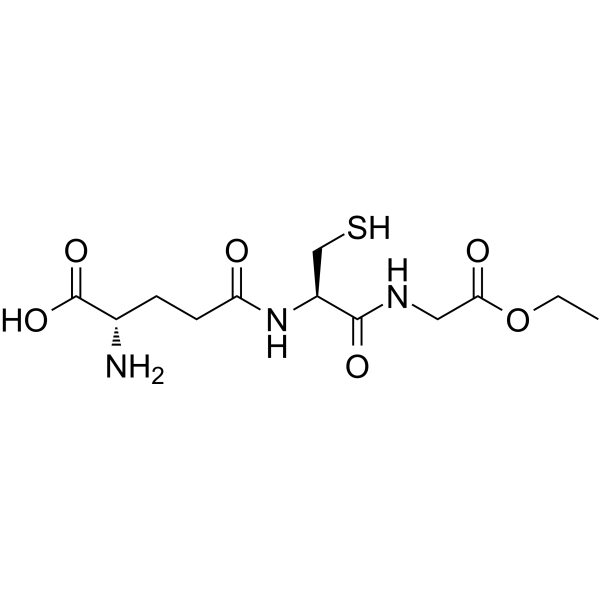
Glutathione ethyl ester is a cell-permeable GSH donor and provides an efficient supply of GSH to the oocyte. Glutathione ethyl ester shows positive effect on the in vitro production of embryos by enhancement of the antioxidative defense .
|
-
-
- HY-141269
-
|
|
PROTAC Linkers
|
Cancer
|
|
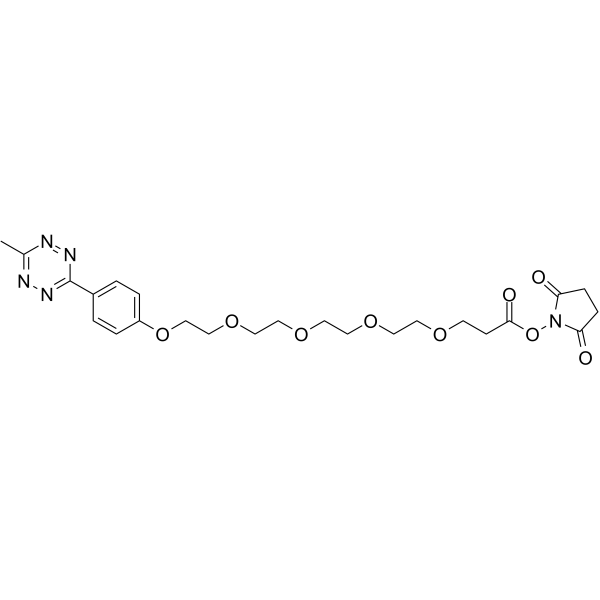
Methyltetrazine-PEG5-NHS ester is a PEG-based PROTAC linker that can be used in the synthesis of PROTACs .
|
-
-
- HY-141263
-
|
|
PROTAC Linkers
|
Cancer
|
|
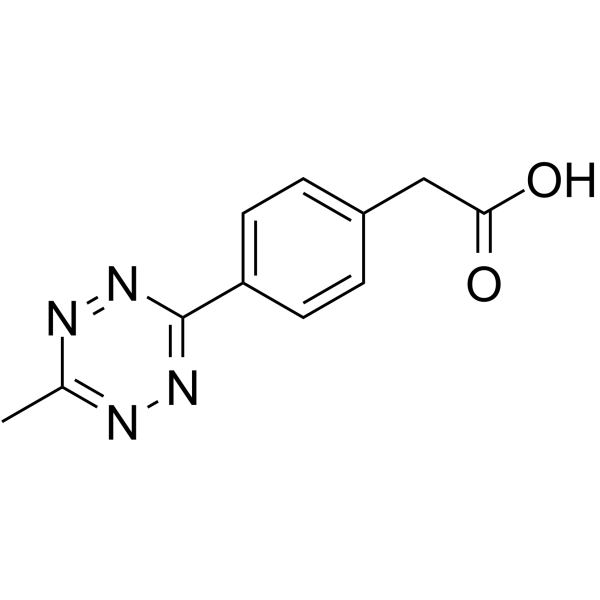
Methyltetrazine-acid is an alkyl chain-based PROTAC linker that can be used in the synthesis of PROTACs .
|
-
-
- HY-135140
-
|
|
Biochemical Assay Reagents
|
Others
|
|
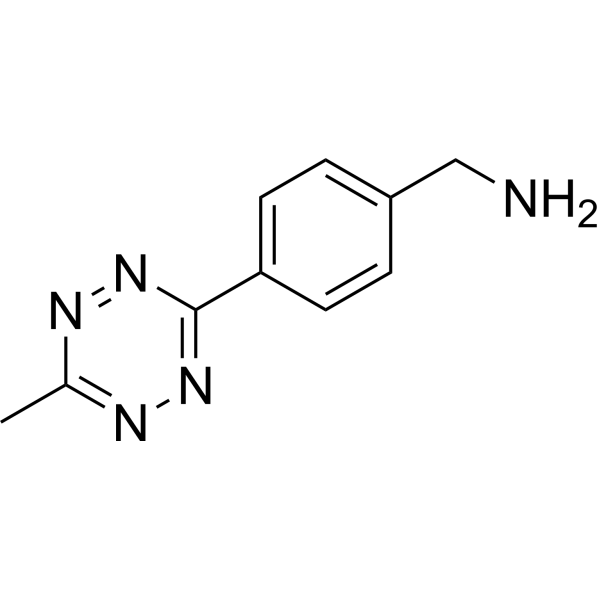
Methyltetrazine-amine, a tetrazine compound, is used for the site-specific dual functionalization of the resulting bioconjugates .
|
-
-
- HY-130283
-
|
|
PROTAC Linkers
|
Cancer
|
|
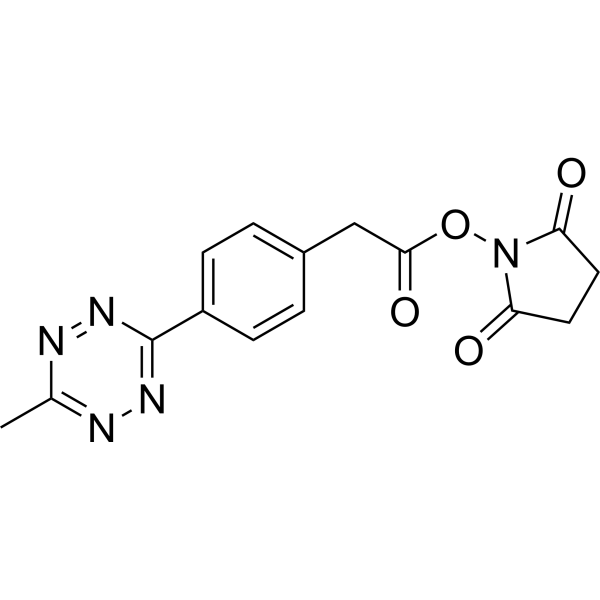
Methyltetrazine-Ph-NHS ester is an alkyl/ether-based PROTAC linker that can be used in the synthesis of PROTACs . Methyltetrazine-Ph-NHS ester is a click chemistry reagent, it contains a Tetrazine group that can undergo an inverse electron demand Diels-Alder reaction (iEDDA) with molecules containing TCO groups.
|
-
-
- HY-P10272
-
|
PTG-300
|
Ferroportin
|
Others
|
|
Rusfertide is a peptide mimetic of natural hepcidin, which targets and degrades ferroportin, reduces serum iron and transferrin-saturation, and thus regulates the production of red blood cells. Rusfertide ameliorates the polycythemia vera, β-thalassemia and hereditary hemochromatosis .
|
-
-
- HY-A0248A
-
|
|
Bacterial
|
Infection
|
|
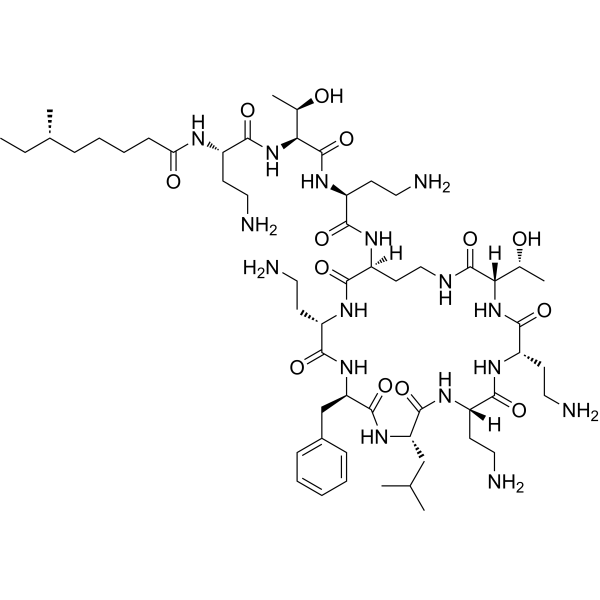
Polymyxin B1 is a potent antimicrobial lipopeptide first derived from Bacilus polymyxa. Polymyxin B1 is the major component in Polymyxin B (HY-A0248). Polymyxin B1 can induce lysis of bacterial cells through interaction with their membranes. Polymyxin B1 has the potential for multidrug-resistant Gram-negative bacterial infections treatment .
|
-
-
- HY-135140A
-
|
|
Biochemical Assay Reagents
|
Others
|
|
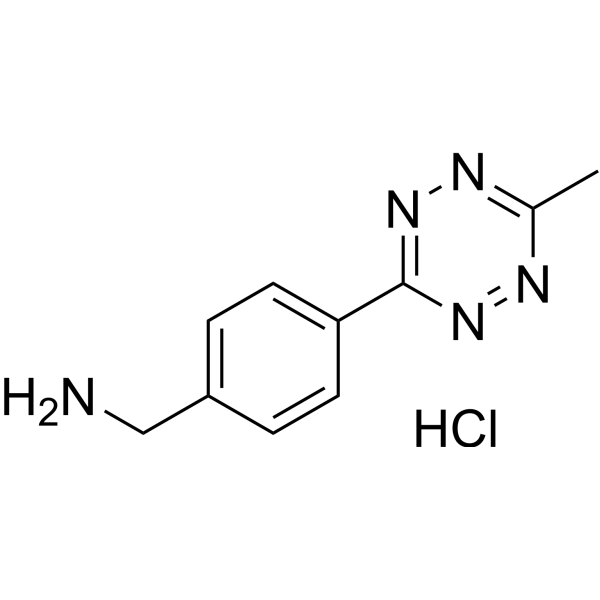
Methyltetrazine-Amine hydrochloride is a tetrazine compound. Methyltetrazine-Amine hydrochloride can be used for the site-specific dual functionalization of the resulting bioconjugates. Methyltetrazine-Amine hydrochloride can be added during protein precipitation in experiments using trans-cyclooctene .
|
-
-
- HY-141264
-
|
|
PROTAC Linkers
|
Cancer
|
|
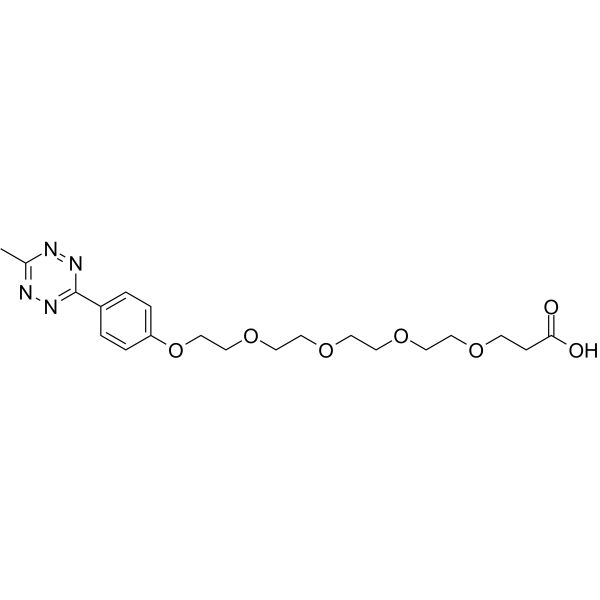
Methyltetrazine-PEG4-acid is a PEG-based PROTAC linker that can be used in the synthesis of PROTACs .
|
-
-
- HY-P1108A
-
|
|
CRFR
|
Neurological Disease
Inflammation/Immunology
|
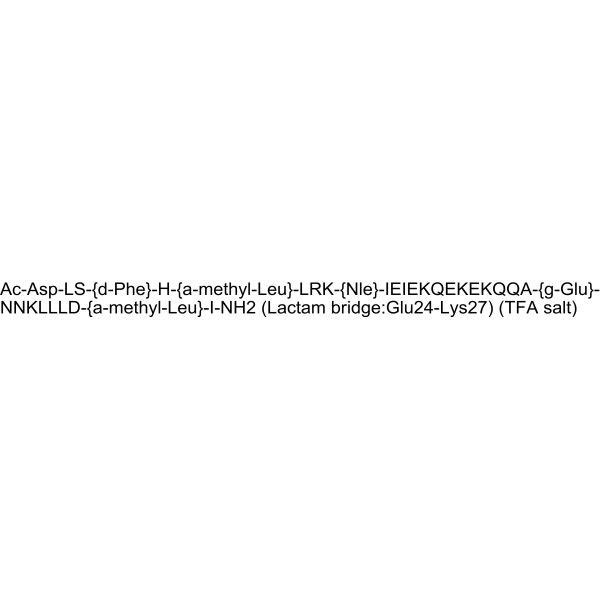
Astressin 2B TFA is a blood-brain barrier-impermeable, highly selective CRFR2 antagonist (rCRFR2, IC50=0.57 nM). Astressin 2B TFA blocks the protective effects mediated by CRFR2, thereby exacerbating indomethacin (HY-14397)-induced hemorrhagic intestinal injury in rats. Astressin 2B TFA reverses the protective effects of Urocortin 1 against intestinal hypermotility, bacterial invasion and upregulation of inflammatory mediators. Astressin 2B TFA also blocks the anxiogenic effect of Urocortin 2 and attenuates stress-induced anxiety-related behaviors. In the Clostridioides difficile toxin A (C. difficile toxin A)-mediated enteritis model, Astressin 2B TFA mimics the phenotype of CRFR2-deficient mice, significantly exacerbating intestinal epithelial damage, edema, neutrophil migration and the expression of multiple proinflammatory cytokines. Astressin 2B TFA is an important tool molecule for investigating the intestinal protective mechanisms of CRFR2 .
|
-
-
- HY-P1108
-
|
|
CRFR
|
Neurological Disease
Inflammation/Immunology
|
Astressin 2B is a blood-brain barrier-impermeable, highly selective CRFR2 antagonist (rCRFR2, IC50=0.57 nM). Astressin 2B blocks the protective effects mediated by CRFR2, thereby exacerbating indomethacin (HY-14397)-induced hemorrhagic intestinal injury in rats. Astressin 2B reverses the protective effects of Urocortin 1 against intestinal hypermotility, bacterial invasion and upregulation of inflammatory mediators. Astressin 2B also blocks the anxiogenic effect of Urocortin 2 and attenuates stress-induced anxiety-related behaviors. In the Clostridioides difficile toxin A (C. difficile toxin A)-mediated enteritis model, Astressin 2B mimics the phenotype of CRFR2-deficient mice, significantly exacerbating intestinal epithelial damage, edema, neutrophil migration and the expression of multiple proinflammatory cytokines. Astressin 2B is an important tool molecule for investigating the intestinal protective mechanisms of CRFR2 .
|
-
-
- HY-140313
-
|
|
ADC Linker
|
Cancer
|
|
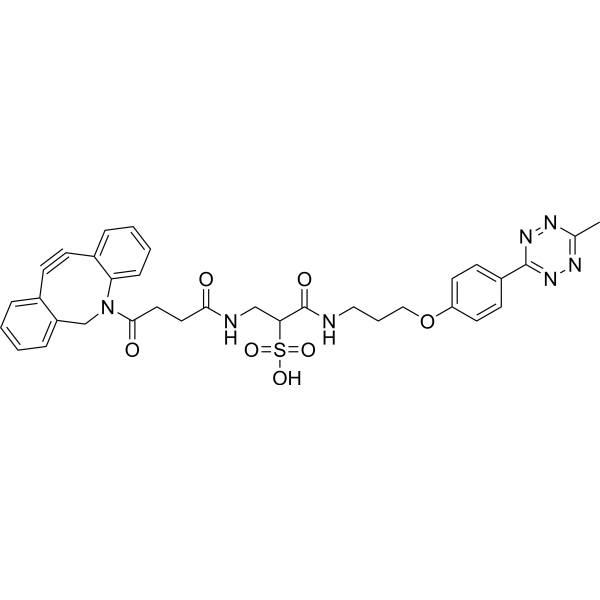
Methyltetrazine-DBCO is a non-cleavable ADC linker used in the synthesis of antibody-drug conjugates (ADCs) . Methyltetrazine-DBCO is a click chemistry reagent, it contains a DBCO group that can undergo strain-promoted alkyne-azide cycloaddition (SPAAC) with molecules containing Azide groups. Methyltetrazine-DBCO also contains a Tetrazine group that can undergo an inverse electron demand Diels-Alder reaction (iEDDA) with molecules containing TCO groups.
|
-
-
- HY-136104
-
|
|
ADC Linker
|
Cancer
|
|
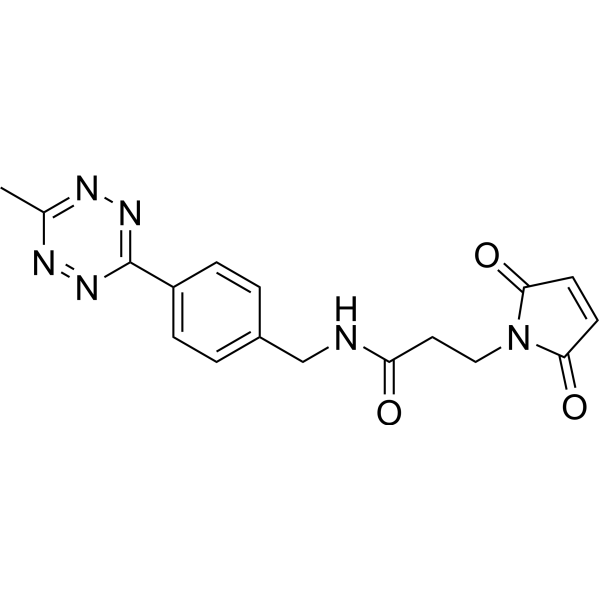
Methyltetrazine-Maleimide is a cleavable ADC linker used in the synthesis of antibody-drug conjugates (ADCs) . Methyltetrazine-Maleimide is a click chemistry reagent, it contains a Tetrazine group that can undergo an inverse electron demand Diels-Alder reaction (iEDDA) with molecules containing TCO groups.
|
-
-
- HY-141278
-
|
|
PROTAC Linkers
|
Cancer
|
|
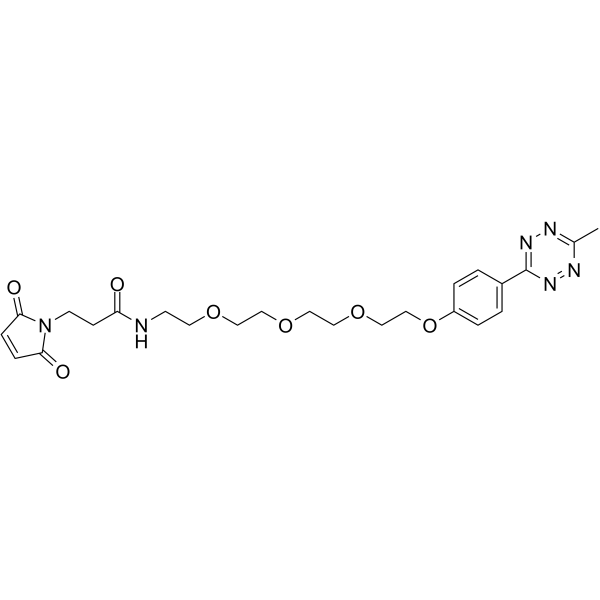
Methyltetrazine-PEG4-maleimide is a PEG-based PROTAC linker that can be used in the synthesis of PROTACs . Methyltetrazine-PEG4-maleimide is a click chemistry reagent, it contains a Tetrazine group that can undergo an inverse electron demand Diels-Alder reaction (iEDDA) with molecules containing TCO groups.
|
-
-
- HY-151776
-
|
TZ-Cy3
|
Fluorescent Dye
|
Others
|
|
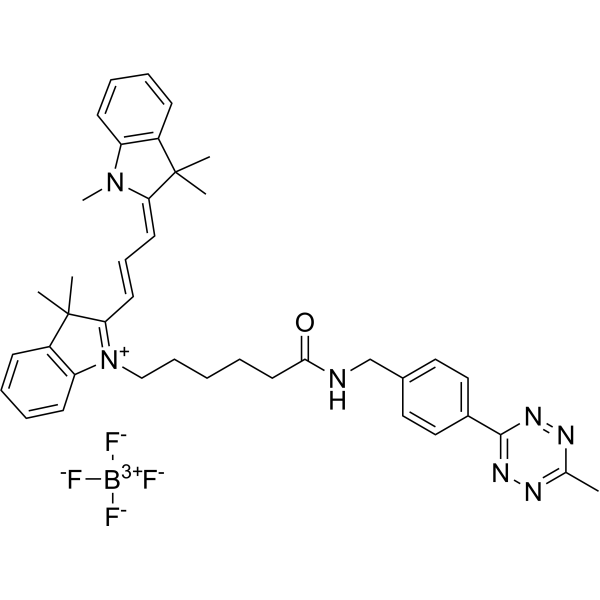
Cy3 methyltetrazine (TZ-Cy3) is a click chemistry reagent with methyltetrazine building blocks that is highly reactive towards cyclooctene. Cy3 methyltetrazine is also a tetrazine-modified fluorescent probe that can be used to analyze protein phosphorylation in solution and living cells .
|
-
-
- HY-140940
-
|
|
PROTAC Linkers
|
Cancer
|
|
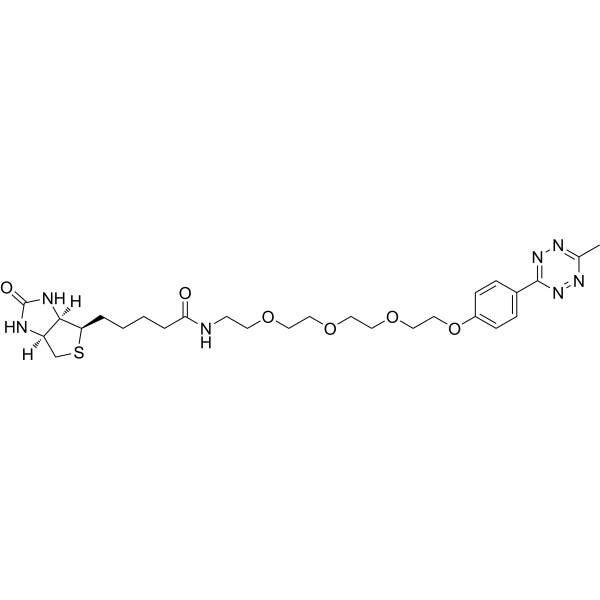
Biotin-PEG4-methyltetrazine is a PEG-based PROTAC linker that can be used in the synthesis of PROTACs . Biotin-PEG4-methyltetrazine is a click chemistry reagent, it contains a Tetrazine group that can undergo an inverse electron demand Diels-Alder reaction (iEDDA) with molecules containing TCO groups.
|
-
-
- HY-141284
-
|
|
ADC Linker
|
Cancer
|
|
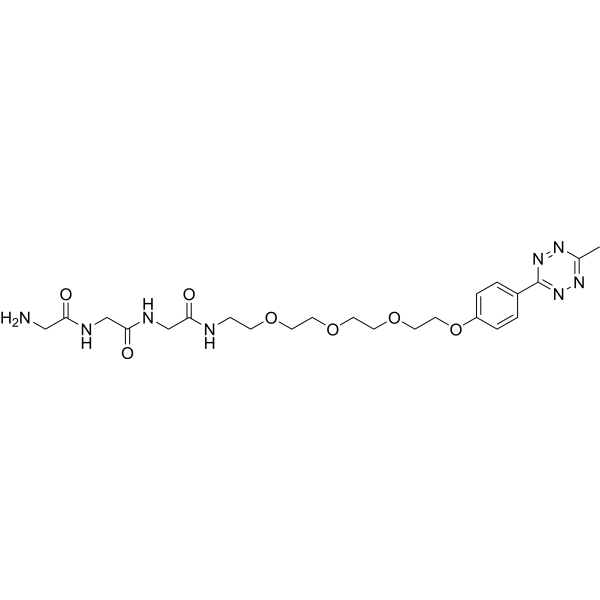
Gly-Gly-Gly-PEG4-methyltetrazine is a cleavable 4 unit PEG ADC linker used in the synthesis of antibody-drug conjugates (ADCs) . Gly-Gly-Gly-PEG4-methyltetrazine is a click chemistry reagent, it contains a Tetrazine group that can undergo an inverse electron demand Diels-Alder reaction (iEDDA) with molecules containing TCO groups.
|
-
-
- HY-159794
-
|
|
ADC Linker
|
Cancer
|
|
Azido-methyltetrazine di-arm linker is a multivalent ADC linker for the synthesis of antibody-drug conjugates (ADCs) .
|
-
-
- HY-141261A
-
|
|
Biochemical Assay Reagents
|
Others
|
|
Methyltetrazine-PEG4-amine hydrochloride is a PEG derivative containing a free amine and a methyltetrazine group. Methyltetrazine-PEG4-amine hydrochloride is a click chemistry reagent, it contains a Tetrazine group that can undergo an inverse electron demand Diels-Alder reaction (iEDDA) with molecules containing TCO groups .
|
-
-
- HY-160776
-
|
|
ADC Linker
|
Cancer
|
|
Diazido-methyltetrazine tri-arm is an ADC linker that can be used to synthesize antibody-drug conjugates (ADCs). Diazido-methyltetrazine tri-arm can be applied to the research of refractory breast cancer .
|
-
-
- HY-133467
-
|
|
PROTAC Linkers
|
Cancer
|
|
Methyltetrazine-PEG5-methyltetrazine is a PEG-based PROTAC linker that can be used in the synthesis of PROTACs . Methyltetrazine-PEG5-methyltetrazine is a click chemistry reagent, it contains a Tetrazine group that can undergo an inverse electron demand Diels-Alder reaction (iEDDA) with molecules containing TCO groups.
|
-
-
- HY-P10143
-
|
Ac-Pro-Leu-Gly-[(S)-2-mercapto-4-methyl-pentanoyl]-Leu-Gly-OEt
|
MMP
|
Others
|
|
MMP-2/MMP-9 Substrate (Ac-Pro-Leu-Gly-[(S)-2-mercapto-4-methyl-pentanoyl]-Leu-Gly-OEt) is a synthetic chromogenic polypeptide substrate whose core structure mimics the cleavage sites of MMP-2 and MMP-9 (gelatinase A and B) in collagen. After being hydrolyzed by collagenase, MMP-2/MMP-9 Substrate reacts with 4,4'-dithiodipyridine or Ellman's Reagent via its thiol fragment to produce a product with ultraviolet absorption properties .
|
-
-
- HY-A0248AS
-
|
|
Isotope-Labeled Compounds
Bacterial
|
Infection
|
|
Polymyxin B1-d7 TFA is the deuterium labeled Polymyxin B1 TFA (HY-A0248A). Polymyxin B1 is a potent antimicrobial lipopeptide first derived from Bacilus polymyxa. Polymyxin B1 is the major component in Polymyxin B (HY-A0248). Polymyxin B1 can induce lysis of bacterial cells through interaction with their membranes. Polymyxin B1 has the potential for multidrug-resistant Gram-negative bacterial infections treatment .
|
-
-
- HY-141272
-
|
|
PROTAC Linkers
|
Cancer
|
|
Methyltetrazine-PEG24-NHS ester is a PEG-based PROTAC linker that can be used in the synthesis of PROTACs .
|
-
-
- HY-133466
-
|
|
ADC Linker
|
Cancer
|
|
Methyltetrazine-PEG4-SS-NHS ester is a cleavable 4 unit PEG ADC linker used in the synthesis of antibody-drug conjugates (ADCs) . Methyltetrazine-PEG4-SS-NHS ester is a click chemistry reagent, it contains a Tetrazine group that can undergo an inverse electron demand Diels-Alder reaction (iEDDA) with molecules containing TCO groups.
|
-
-
- HY-151714
-
|
|
ADC Linker
|
Others
|
|
Biotin-MeTz shiyi is a click chemistry reagent with a terminal methyltetrazine group. Biotin-MeTz shiyi, as a biotin derivative, can be used for the preparation of biotinylated conjugates .
|
-
-
- HY-151741
-
|
|
ADC Linker
|
Others
|
|
Biotin-PEG4-MeTz is a click chemistry reagent containing a terminal methyltetrazine group that reacts with trans-cyclooctene. Biotin-PEG4-MeTz can be used for the preparation of biotinylated conjugates .
|
-
-
- HY-151713
-
|
|
Fluorescent Dye
|
Others
|
|
Sulfo-Cy3-Methyltetrazine (figure 7 compound 5) is a click chemistry reagent containing methyltetrazine and a water-soluble dye. Sulfo-Cy3-Methyltetrazine shows good stability at physiological pH. Sulfo-Cy3-Methyltetrazine can be coupled to trans-cyclooctene and is also highly reactive towards cyclooctene .
|
-
-
- HY-151712
-
|
|
Fluorescent Dye
|
Others
|
|
Sulfo-Cy5-Methyltetrazine is a click chemistry reagent containing a methyltetrazine group. Sulfo-Cy5-Methyltetrazine acts as a fluorophore linker for trans-cyclooctene-based labeling. Sulfo-Cy5-Methyltetrazine shows good stability at physiological pH and is also highly reactive towards cyclooctene.
|
-
-
- HY-P10563
-
|
BHV-1100
|
CD38
|
Cancer
|
|
Noraramtide (BHV-1100) is an antibody recruitment molecule. Noraramtide can specifically bind to CD38 molecules to recruit natural killer (NK) cells. Noraramtide enhances the ability of NK cells to kill tumor cells through antibody-dependent cellular cytotoxicity (ADCC). This mechanism allows NK cells to more effectively recognize and eliminate tumor cells while avoiding mutual killing between NK cells. Noraramtide can be used for the study of autologous cancer immunity .
|
-
-
- HY-141261
-
|
|
Biochemical Assay Reagents
|
Others
|
|
Methyltetrazine-PEG4-amine is a PEG derivative containing a free amine and a methyltetrazine group. Methyltetrazine-PEG4-amine is a click chemistry reagent, it contains a Tetrazine group that can undergo an inverse electron demand Diels-Alder reaction (iEDDA) with molecules containing TCO groups .
|
-
-
- HY-141268
-
|
|
PROTAC Linkers
|
Cancer
|
|
Methyltetrazine-Sulfo-NHS ester (sodium) is an alkyl/ether-based PROTAC linker that can be used in the synthesis of PROTACs .
|
-
-
- HY-141275
-
|
|
PROTAC Linkers
|
Cancer
|
|
Methyltetrazine-PEG5-alkyne is a PEG-based PROTAC linker that can be used in the synthesis of PROTACs .
|
-
-
- HY-136079
-
|
|
ADC Linker
|
Cancer
|
|
Methyltetrazine-PEG4-hydrazone-DBCO is a cleavable 4 unit PEG ADC linker used in the synthesis of antibody-drug conjugates (ADCs) . Methyltetrazine-PEG4-hydrazone-DBCO is a click chemistry reagent, it contains a DBCO group that can undergo strain-promoted alkyne-azide cycloaddition (SPAAC) with molecules containing Azide groups. Methyltetrazine-PEG4-hydrazone-DBCO also contains a Tetrazine group that can undergo an inverse electron demand Diels-Alder reaction (iEDDA) with molecules containing TCO groups.
|
-
-
- HY-P3066
-
|
d(CH2)5Tyr(Et)VAVP
|
Vasopressin Receptor
|
Metabolic Disease
|
|
SKF 100398 (d(CH2)5Tyr(Et)VAVP), an arginine vasopressin (AVP) analogue, is a specific antagonist of the antidiuretic effect of exogenous and endogenous AVP .
|
-
-
- HY-141260
-
|
|
PROTAC Linkers
|
Cancer
|
|
Methyltetrazine-propylamine is an alkyl chain-based PROTAC linker that can be used in the synthesis of PROTACs .
|
-
-
- HY-130953
-
|
|
ADC Linker
|
Cancer
|
|
Mal-PEG4-bis-PEG3-methyltetrazine is a cleavable 7 unit PEG ADC linker used in the synthesis of antibody-drug conjugates (ADCs) . Mal-PEG4-bis-PEG3-methyltetrazine is a click chemistry reagent, it contains a Tetrazine group that can undergo an inverse electron demand Diels-Alder reaction (iEDDA) with molecules containing TCO groups.
|
-
-
- HY-140312
-
|
|
PROTAC Linkers
|
Cancer
|
|
Methyltetrazine-PEG12-DBCO is a PEG-based PROTAC linker that can be used in the synthesis of PROTACs . Methyltetrazine-PEG12-DBCO is a click chemistry reagent, it contains a DBCO group that can undergo strain-promoted alkyne-azide cycloaddition (SPAAC) with molecules containing Azide groups. Methyltetrazine-PEG12-DBCO also contains a Tetrazine group that can undergo an inverse electron demand Diels-Alder reaction (iEDDA) with molecules containing TCO groups.
|
-
-
- HY-141266
-
|
|
PROTAC Linkers
|
Cancer
|
|
Methyltetrazine-PEG13-acid is a PEG-based PROTAC linker that can be used in the synthesis of PROTACs .
|
-
-
- HY-130508
-
|
|
PROTAC Linkers
|
Cancer
|
|
Methyltetrazine-Ph-PEG4-azide is a PEG-based PROTAC linker that can be used in the synthesis of PROTACs . Methyltetrazine-Ph-PEG4-azide is a click chemistry reagent, it contains a Tetrazine group that can undergo an inverse electron demand Diels-Alder reaction (iEDDA) with molecules containing TCO groups. It contains an azide group and can undergo copper-catalyzed azide-alkyne cycloaddition (CuAAc) with molecules containing alkyne groups. It can also undergo ring strain-promoted alkyne-azide cycloaddition (SPAAC) with molecules containing DBCO or BCN groups.
|
-
-
- HY-151773
-
|
|
ADC Linker
|
Others
|
|
Methyltetrazine-PEG12-acid is a click chemistry PEG reagent containing a tetrazine group. Click chemistry has great potential for use in binding between nucleic acids, lipids, proteins, and other molecules, and has been used in many research fields because of its beneficial characteristics, including high yield, high specificity, and simplicity .
|
-
-
- HY-151691
-
|
|
ADC Linker
|
Others
|
|
Trisulfo-Cy3 Methyltetrazine is a click chemistry reagent containing an methyltetrazine group. Methyltetrazine-activated Cy3 probe reacts with TCO-containing compounds via an Inverse-Electron-Demand Diels-Alder reaction to form a stable covalent bond and does not require Cu-catalyst or elevated temperatures .
|
-
-
- HY-P10828
-
|
|
Virus Protease
|
Infection
Inflammation/Immunology
|
|
MAPI is a polypeptide irreversible 3C cysteine protease (SV3CP) inhibitor. MAPI inhibits SV3CP by covalently binding its C-terminal Michael-acceptor extension to the active site thiol of SV3CP Cys 139. MAPI is promising for research of noroviruses infection .
|
-
-
- HY-151686
-
|
|
Biochemical Assay Reagents
|
Others
|
|
Bz-(Me)Tz-NHS is a methyltetrazine carboxylic acid NHS ester that enables conjugation of the tetrazine moiety to the 5' end of oligonucleotides via amide coupling reaction, and it is used in oligonucleotide template-mediated fluorescent bioorthogonal cycloaddition reactions. Bz-(Me) Tz-NHS is applicable to click chemistry-related studies .
|
-
-
- HY-130943
-
|
|
ADC Linker
|
Cancer
|
|
Methyltetrazine-PEG4-SS-PEG4-methyltetrazine is a cleavable 8 unit PEG ADC linker used in the synthesis of antibody-drug conjugates (ADCs) . Methyltetrazine-PEG4-SS-PEG4-methyltetrazine is a click chemistry reagent, it contains a Tetrazine group that can undergo an inverse electron demand Diels-Alder reaction (iEDDA) with molecules containing TCO groups.
|
-
-
- HY-141286
-
|
|
Fluorescent Dye
|
Others
|
|
TAMRA-PEG4-methyltetrazine is a dye derivative of TAMRA (HY-135640) containing 4 PEG units. TAMRA-PEG4-methyltetrazine contains a Tetrazine group that can undergo an inverse electron demand Diels-Alder reaction (iEDDA) with molecules containing TCO groups.
|
-
-
- HY-140313A
-
|
|
ADC Linker
|
Cancer
|
|
Methyltetrazine-DBCO TEA is a non-cleavable ADC linker used in the synthesis of antibody-drug conjugates (ADCs). Methyltetrazine-DBCO TEA is a click chemistry reagent, it contains a DBCO group that can undergo strain-promoted alkyne-azide cycloaddition (SPAAC) with molecules containing Azide groups. Methyltetrazine-DBCO TEA also contains a Tetrazine group that can undergo an inverse electron demand Diels-Alder reaction (iEDDA) with molecules containing TCO groups .
|
-
-
- HY-151758
-
|
|
ADC Linker
|
Others
|
|
Methyltetrazine-PEG12-NHS ester is a click chemistry reagent containing an azide group. Methyltetrazine-PEG12-NHS ester reacts with compounds containing TCO to form stable covalent bonds .
|
-
-
- HY-136033
-
|
|
ADC Linker
|
Cancer
|
|
Methyltetrazine-SS-NHS is a cleavable ADC linker used in the synthesis of antibody-drug conjugates (ADCs) . Methyltetrazine-SS-NHS is a click chemistry reagent, it contains a Tetrazine group that can undergo an inverse electron demand Diels-Alder reaction (iEDDA) with molecules containing TCO groups.
|
-
-
- HY-130970
-
|
|
ADC Linker
|
Cancer
|
|
Amino-PEG4-bis-PEG3-methyltetrazine is a cleavable 7 unit PEG ADC linker used in the synthesis of antibody-drug conjugates (ADCs) . Amino-PEG4-bis-PEG3-methyltetrazine is a click chemistry reagent, it contains a Tetrazine group that can undergo an inverse electron demand Diels-Alder reaction (iEDDA) with molecules containing TCO groups.
|
-
- HY-141265
-
|
|
PROTAC Linkers
|
Cancer
|
|
Methyltetrazine-PEG8-acid is a PEG-based PROTAC linker that can be used in the synthesis of PROTACs .
|
-
- HY-141267
-
|
|
PROTAC Linkers
|
Cancer
|
|
Methyltetrazine-PEG25-acid is a PEG-based PROTAC linker that can be used in the synthesis of PROTACs .
|
-
- HY-W800724
-
|
|
Biochemical Assay Reagents
|
Others
|
|
Methyltetrazine-PEG4-DBCO is a PEG linker with a terminal TCO reactive reagent and a DBCO group. DBCO is commonly used for copper-free Click Chemistry reactions. Methyltetrazine can be used to convert azido-containing peptides or proteins into tetrazine-modified peptides or protein without catalyst or axillary reagents.
|
-
- HY-130974
-
|
|
ADC Linker
|
Cancer
|
|
Ald-Ph-PEG4-bis-PEG3-methyltetrazine is a cleavable 7 unit PEG ADC linker used in the synthesis of antibody-drug conjugates (ADCs) . Ald-Ph-PEG4-bis-PEG3-methyltetrazine is a click chemistry reagent, it contains a Tetrazine group that can undergo an inverse electron demand Diels-Alder reaction (iEDDA) with molecules containing TCO groups.
|
-
- HY-W544595
-
-
- HY-141273
-
|
|
PROTAC Linkers
|
Cancer
|
|
Methyltetrazine-PEG8-PFP ester is a PEG-based PROTAC linker that can be used in the synthesis of PROTACs . Methyltetrazine-PEG8-PFP ester is a click chemistry reagent, it contains a Tetrazine group that can undergo an inverse electron demand Diels-Alder reaction (iEDDA) with molecules containing TCO groups.
|
-
- HY-133508
-
|
|
PROTAC Linkers
|
Cancer
|
|
Methyltetrazine-PEG4-SSPy is a PEG-based PROTAC linker that can be used in the synthesis of PROTACs . Methyltetrazine-PEG4-SSPy is a click chemistry reagent, it contains a Tetrazine group that can undergo an inverse electron demand Diels-Alder reaction (iEDDA) with molecules containing TCO groups.
|
-
- HY-133468
-
|
|
PROTAC Linkers
|
Cancer
|
|
Methyltetrazine-PEG6-maleimide is a PEG-based PROTAC linker that can be used in the synthesis of PROTACs . Methyltetrazine-PEG6-maleimide is a click chemistry reagent, it contains a Tetrazine group that can undergo an inverse electron demand Diels-Alder reaction (iEDDA) with molecules containing TCO groups.
|
-
- HY-156301
-
|
|
Biochemical Assay Reagents
|
Others
|
|
Methyltetrazine-amido-PEG8-amine Trifluoroacetate is a heterobifunctional linker containing a terminal methyltetrazine, which can react with TCO-containing compounds without the catalysis of Cu or elevated temperatures, and terminal amine, which reacts with NHS ester specifically and efficiently. The PEG spacer enhances water solubility.
|
-
- HY-136074
-
|
|
ADC Linker
|
Cancer
|
|
Methyltetrazine-PEG4-aldehyde is a cleavable 4 unit PEG ADC linker used in the synthesis of antibody-drug conjugates (ADCs) . Methyltetrazine-PEG4-aldehyde is a click chemistry reagent, it contains a Tetrazine group that can undergo an inverse electron demand Diels-Alder reaction (iEDDA) with molecules containing TCO groups.
|
-
- HY-136056
-
|
|
ADC Linker
|
Cancer
|
|
Methyltetrazine-PEG4-oxyamine is a cleavable 4 unit PEG ADC linker used in the synthesis of antibody-drug conjugates (ADCs) . Methyltetrazine-PEG4-oxyamine is a click chemistry reagent, it contains a Tetrazine group that can undergo an inverse electron demand Diels-Alder reaction (iEDDA) with molecules containing TCO groups.
|
-
- HY-141270
-
|
|
PROTAC Linkers
|
Cancer
|
|
Methyltetrazine-PEG8-NHS ester is a PEG-based PROTAC linker that can be used in the synthesis of PROTACs .
|
-
- HY-141262
-
|
|
PROTAC Linkers
|
Cancer
|
|
Methyltetrazine-PEG24-amine is a PEG-based PROTAC linker that can be used in the synthesis of PROTACs .
|
-
- HY-141283
-
|
|
PROTAC Linkers
|
Cancer
|
|
Methyltetrazine-PEG5-triethoxysilane is a PEG-based PROTAC linker that can be used in the synthesis of PROTACs .
|
-
- HY-141281
-
|
|
PROTAC Linkers
|
Cancer
|
|
Methyltetrazine-PEG13-Boc is a PEG-based PROTAC linker that can be used in the synthesis of PROTACs .
|
-
- HY-141271
-
|
|
PROTAC Linkers
|
Cancer
|
|
Methyltetrazine-PEG13-NHS ester is a PEG-based PROTAC linker that can be used in the synthesis of PROTACs .
|
-
- HY-141282
-
|
|
PROTAC Linkers
|
Cancer
|
|
Methyltetrazine-PEG24-Boc is a PEG-based PROTAC linker that can be used in the synthesis of PROTACs .
|
-
- HY-136035
-
|
|
ADC Linker
|
Cancer
|
|
Methyltetrazine-SS-PEG4-Biotin is a cleavable 4 unit PEG ADC linker used in the synthesis of antibody-drug conjugates (ADCs) . Methyltetrazine-SS-PEG4-Biotin is a click chemistry reagent, it contains a Tetrazine group that can undergo an inverse electron demand Diels-Alder reaction (iEDDA) with molecules containing TCO groups.
|
-
- HY-141276
-
|
|
PROTAC Linkers
|
Cancer
|
|
Methyltetrazine-amido-PEG5-alkyne is a PEG-based PROTAC linker that can be used in the synthesis of PROTACs .
|
-
- HY-141280
-
|
|
PROTAC Linkers
|
Cancer
|
|
Methyltetrazine-PEG24-NH-Boc is a PEG-based PROTAC linker that can be used in the synthesis of PROTACs .
|
-
- HY-141279
-
|
|
PROTAC Linkers
|
Cancer
|
|
Methyltetrazine-PEG4-NH-Boc is a PEG-based PROTAC linker that can be used in the synthesis of PROTACs .
|
-
- HY-140141
-
|
|
PROTAC Linkers
|
Cancer
|
|
PC Methyltetrazine-PEG4-NHS carbonate ester is a PEG-based PROTAC linker that can be used in the synthesis of PROTACs . PC Methyltetrazine-PEG4-NHS carbonate ester is a click chemistry reagent, it contains a Tetrazine group that can undergo an inverse electron demand Diels-Alder reaction (iEDDA) with molecules containing TCO groups.
|
-
- HY-151772
-
|
|
ADC Linker
|
Others
|
|
Methyltetrazine-PEG12-t-butyl ester is a monodisperse PEG compound. Methyltetrazine-PEG12-t-butyl ester is a click chemistry reagent containing a tetrazine group. Click chemistry has great potential for use in binding between nucleic acids, lipids, proteins, and other molecules, and has been used in many research fields because of its beneficial characteristics, including high yield, high specificity, and simplicity .
|
-
- HY-151833
-
|
|
ADC Linker
|
Others
|
|
Methyltetrazine-amido-N-bis(PEG4-acid) is a click chemistry reagent containing an azide group. Methyltetrazine-amido-N-bis(PEG4-acid) is a PEG derivative that contains a methyltetrazine group and two acid groups. This reagent can react with TCO-containing compounds to form a stable covalent bond without the catalysis of Cu or elevated temperatures. The inverse-electron demand Diels-Alder cycloaddition reaction of TCO with tetrazines is the fastest bioorthogonal reaction with exceptional selectivity. The terminal carboxylic acid can react with primary amine groups in the presence of activators (e.g. EDC, or HATU) to form a stable amide bond. PEG linker increases the water solubility of the compound. Reagent grade, for research use only . Methyltetrazine-amido-N-bis(PEG4-acid) is a click chemistry reagent, it contains a Tetrazine group that can undergo an inverse electron demand Diels-Alder reaction (iEDDA) with molecules containing TCO groups.
|
-
- HY-133469
-
|
|
PROTAC Linkers
|
Cancer
|
|
Methyltetrazine-PEG8-N3 is a PEG-based PROTAC linker that can be used in the synthesis of PROTACs . Methyltetrazine-PEG8-N3 is a click chemistry reagent, it contains an Azide group and can undergo copper-catalyzed azide-alkyne cycloaddition reaction (CuAAc) with molecules containing Alkyne groups. It can also undergo strain-promoted alkyne-azide cycloaddition (SPAAC) reactions with molecules containing DBCO or BCN groups.
|
-
- HY-141277
-
|
|
PROTAC Linkers
|
Cancer
|
|
Methyltetrazine-amido-PEG7-azide is a PEG-based PROTAC linker that can be used in the synthesis of PROTACs . Methyltetrazine-amido-PEG7-azide is a click chemistry reagent, it contains an Azide group and can undergo copper-catalyzed azide-alkyne cycloaddition reaction (CuAAc) with molecules containing Alkyne groups. It can also undergo strain-promoted alkyne-azide cycloaddition (SPAAC) reactions with molecules containing DBCO or BCN groups.
|
-
- HY-172513
-
|
|
Biochemical Assay Reagents
|
Others
|
|
Methyltetrazine-PEG11-DBCO is a TCO reactive reagent with a DBCO group and water-soluble PEG spacer. This reagent can be used to convert azido-containing peptides or proteins into tetrazine-modified peptides or protein without catalyst or axillary reagents. DBCO is commonly used for copper-free Click Chemistry reactions.
|
-
- HY-W800723
-
|
|
Biochemical Assay Reagents
|
Others
|
|
Methyltetrazine-PEG2-DBCO is a TCO reactive reagent with a DBCO group and water-soluble PEG spacer. This reagent can be used to convert azido-containing peptides or proteins into tetrazine-modified peptides or protein without catalyst or axillary reagents. DBCO is commonly used for copper-free Click Chemistry reactions.
|
-
- HY-D2219
-
|
|
Fluorescent Dye
|
Others
|
|
Sulfo-Cy7 tetrazine is a near-infrared water-soluble fluorophore. Sulfo-Cy7 tetrazine contains the methyltetrazine group for rapid, efficient, and metal-free conjugation to cycloolefin in a reaction called TCO linkage .
|
-
- HY-D1598
-
|
|
Fluorescent Dye
|
Others
|
|
Sulfo-CY3 tetrazine potassium is a sulfo-Cyanine3 derivative that contains methyltetrazine moiety (Ex=548 nm, Em=563 nm). Sulfo-CY3 tetrazine potassium can be used for the labeling of metabolically engineered cell-surface glycoconjugates . Sulfo-CY3 tetrazine (potassium) is a click chemistry reagent, it contains a Tetrazine group that can undergo an inverse electron demand Diels-Alder reaction (iEDDA) with molecules containing TCO groups.
|
-
- HY-P2592
-
-
- HY-125628
-
|
|
Endogenous Metabolite
|
Infection
|
|
Kahalalide A is an anti-mycobacterial compound with antimicrobial activity. Kahalalide A is derived from the marine mollusk Elysia rufescens. Kahalalide A has attracted extensive attention in natural product research due to its potential medicinal value .
|
-
- HY-166993
-
|
|
Biochemical Assay Reagents
|
Others
|
|
Cy5-PEG5000-methyltetrazine is a PEG derivative that modulates the release of drugs from microparticle systems for parenteral administration. Cy5-PEG5000-methyltetrazine can be used in drug delivery studies .
|
-
- HY-159794A
-
|
|
ADC Linker
|
Cancer
|
|
Azido-methyltetrazine di-arm linker hydrochloride is a multivalent ADC linker for the synthesis of antibody-drug conjugates (ADCs) .
|
-
- HY-W800721
-
|
|
Biochemical Assay Reagents
|
Others
|
|
Methyltetrazine-amido-bis-(carboxyethoxymethyl)-methane is a click chemistry PEG reagent which contains three carboxylic acid groups and a methyltetrazine group. This reagent can react with TCO-containing compounds to form a stable covalent bond without the catalysis of Cu or elevated temperatures. The inverse-electron demand Diels-Alder cycloaddition reaction of TCO with tetrazines is the fastest bioorthogonal reaction with exceptional selectivity. The terminal carboxylic acid can react with primary amine groups in the presence of activators (e.g. EDC, or HATU) to form a stable amide bond.
|
-
- HY-W800718
-
|
|
Biochemical Assay Reagents
|
Others
|
|
Methyltetrazine-amido-Tri-(acid-PEG1-ethoxymethyl)-methane is a click chemistry PEG reagent which contains three carboxylic acid groups and a methyltetrazine group. This reagent can react with TCO-containing compounds to form a stable covalent bond without the catalysis of Cu or elevated temperatures. The inverse-electron demand Diels-Alder cycloaddition reaction of TCO with tetrazines is the fastest bioorthogonal reaction with exceptional selectivity. The terminal carboxylic acid can react with primary amine groups in the presence of activators (e.g. EDC, or HATU) to form a stable amide bond.
|
-
- HY-W749169
-
|
|
Fluorescent Dye
|
Others
|
|
FAM tetrazine, 5-isomer is a universal dye that has terminal tetrazine group. The terminal methyltetrazine enables fast click reactions with TCO (trans-cycloctene).
|
-
- HY-A0248AS1
-
|
|
Isotope-Labeled Compounds
Bacterial
|
Infection
|
|
Polymyxin B1-D-Leu-d7 TFA is the deuterium labeled Polymyxin B1 (HY-A0248A). Polymyxin B1 is a potent antimicrobial lipopeptide first derived from Bacilus polymyxa. Polymyxin B1 is the major component in Polymyxin B (HY-A0248). Polymyxin B1 can induce lysis of bacterial cells through interaction with their membranes. Polymyxin B1 has the potential for multidrug-resistant Gram-negative bacterial infections treatment .
|
-
| Cat. No. |
Product Name |
Type |
-
- HY-151776
-
|
TZ-Cy3
|
Fluorescent Dyes
|
|
Cy3 methyltetrazine (TZ-Cy3) is a click chemistry reagent with methyltetrazine building blocks that is highly reactive towards cyclooctene. Cy3 methyltetrazine is also a tetrazine-modified fluorescent probe that can be used to analyze protein phosphorylation in solution and living cells .
|
-
- HY-151713
-
|
|
Fluorescent Dyes
|
|
Sulfo-Cy3-Methyltetrazine (figure 7 compound 5) is a click chemistry reagent containing methyltetrazine and a water-soluble dye. Sulfo-Cy3-Methyltetrazine shows good stability at physiological pH. Sulfo-Cy3-Methyltetrazine can be coupled to trans-cyclooctene and is also highly reactive towards cyclooctene .
|
-
- HY-151712
-
|
|
Fluorescent Dyes
|
|
Sulfo-Cy5-Methyltetrazine is a click chemistry reagent containing a methyltetrazine group. Sulfo-Cy5-Methyltetrazine acts as a fluorophore linker for trans-cyclooctene-based labeling. Sulfo-Cy5-Methyltetrazine shows good stability at physiological pH and is also highly reactive towards cyclooctene.
|
-
- HY-D2219
-
|
|
Fluorescent Dyes
|
|
Sulfo-Cy7 tetrazine is a near-infrared water-soluble fluorophore. Sulfo-Cy7 tetrazine contains the methyltetrazine group for rapid, efficient, and metal-free conjugation to cycloolefin in a reaction called TCO linkage .
|
-
- HY-D1598
-
|
|
Fluorescent Dyes
|
|
Sulfo-CY3 tetrazine potassium is a sulfo-Cyanine3 derivative that contains methyltetrazine moiety (Ex=548 nm, Em=563 nm). Sulfo-CY3 tetrazine potassium can be used for the labeling of metabolically engineered cell-surface glycoconjugates . Sulfo-CY3 tetrazine (potassium) is a click chemistry reagent, it contains a Tetrazine group that can undergo an inverse electron demand Diels-Alder reaction (iEDDA) with molecules containing TCO groups.
|
| Cat. No. |
Product Name |
Type |
-
- HY-W544595
-
-
- HY-166993
-
|
|
Biochemical Assay Reagents
|
|
Cy5-PEG5000-methyltetrazine is a PEG derivative that modulates the release of drugs from microparticle systems for parenteral administration. Cy5-PEG5000-methyltetrazine can be used in drug delivery studies .
|
| Cat. No. |
Product Name |
Target |
Research Area |
-
- HY-134124
-
|
|
Reactive Oxygen Species (ROS)
|
Metabolic Disease
|
|
Glutathione ethyl ester is a cell-permeable GSH donor and provides an efficient supply of GSH to the oocyte. Glutathione ethyl ester shows positive effect on the in vitro production of embryos by enhancement of the antioxidative defense .
|
-
- HY-P10272
-
|
PTG-300
|
Ferroportin
|
Others
|
|
Rusfertide is a peptide mimetic of natural hepcidin, which targets and degrades ferroportin, reduces serum iron and transferrin-saturation, and thus regulates the production of red blood cells. Rusfertide ameliorates the polycythemia vera, β-thalassemia and hereditary hemochromatosis .
|
-
- HY-A0248A
-
|
|
Bacterial
|
Infection
|
|
Polymyxin B1 is a potent antimicrobial lipopeptide first derived from Bacilus polymyxa. Polymyxin B1 is the major component in Polymyxin B (HY-A0248). Polymyxin B1 can induce lysis of bacterial cells through interaction with their membranes. Polymyxin B1 has the potential for multidrug-resistant Gram-negative bacterial infections treatment .
|
-
- HY-P1108A
-
|
|
CRFR
|
Neurological Disease
Inflammation/Immunology
|
Astressin 2B TFA is a blood-brain barrier-impermeable, highly selective CRFR2 antagonist (rCRFR2, IC50=0.57 nM). Astressin 2B TFA blocks the protective effects mediated by CRFR2, thereby exacerbating indomethacin (HY-14397)-induced hemorrhagic intestinal injury in rats. Astressin 2B TFA reverses the protective effects of Urocortin 1 against intestinal hypermotility, bacterial invasion and upregulation of inflammatory mediators. Astressin 2B TFA also blocks the anxiogenic effect of Urocortin 2 and attenuates stress-induced anxiety-related behaviors. In the Clostridioides difficile toxin A (C. difficile toxin A)-mediated enteritis model, Astressin 2B TFA mimics the phenotype of CRFR2-deficient mice, significantly exacerbating intestinal epithelial damage, edema, neutrophil migration and the expression of multiple proinflammatory cytokines. Astressin 2B TFA is an important tool molecule for investigating the intestinal protective mechanisms of CRFR2 .
|
-
- HY-P1108
-
|
|
CRFR
|
Neurological Disease
Inflammation/Immunology
|
Astressin 2B is a blood-brain barrier-impermeable, highly selective CRFR2 antagonist (rCRFR2, IC50=0.57 nM). Astressin 2B blocks the protective effects mediated by CRFR2, thereby exacerbating indomethacin (HY-14397)-induced hemorrhagic intestinal injury in rats. Astressin 2B reverses the protective effects of Urocortin 1 against intestinal hypermotility, bacterial invasion and upregulation of inflammatory mediators. Astressin 2B also blocks the anxiogenic effect of Urocortin 2 and attenuates stress-induced anxiety-related behaviors. In the Clostridioides difficile toxin A (C. difficile toxin A)-mediated enteritis model, Astressin 2B mimics the phenotype of CRFR2-deficient mice, significantly exacerbating intestinal epithelial damage, edema, neutrophil migration and the expression of multiple proinflammatory cytokines. Astressin 2B is an important tool molecule for investigating the intestinal protective mechanisms of CRFR2 .
|
-
- HY-P10143
-
|
Ac-Pro-Leu-Gly-[(S)-2-mercapto-4-methyl-pentanoyl]-Leu-Gly-OEt
|
MMP
|
Others
|
|
MMP-2/MMP-9 Substrate (Ac-Pro-Leu-Gly-[(S)-2-mercapto-4-methyl-pentanoyl]-Leu-Gly-OEt) is a synthetic chromogenic polypeptide substrate whose core structure mimics the cleavage sites of MMP-2 and MMP-9 (gelatinase A and B) in collagen. After being hydrolyzed by collagenase, MMP-2/MMP-9 Substrate reacts with 4,4'-dithiodipyridine or Ellman's Reagent via its thiol fragment to produce a product with ultraviolet absorption properties .
|
-
- HY-A0248AS
-
|
|
Isotope-Labeled Compounds
Bacterial
|
Infection
|
|
Polymyxin B1-d7 TFA is the deuterium labeled Polymyxin B1 TFA (HY-A0248A). Polymyxin B1 is a potent antimicrobial lipopeptide first derived from Bacilus polymyxa. Polymyxin B1 is the major component in Polymyxin B (HY-A0248). Polymyxin B1 can induce lysis of bacterial cells through interaction with their membranes. Polymyxin B1 has the potential for multidrug-resistant Gram-negative bacterial infections treatment .
|
-
- HY-P10563
-
|
BHV-1100
|
CD38
|
Cancer
|
|
Noraramtide (BHV-1100) is an antibody recruitment molecule. Noraramtide can specifically bind to CD38 molecules to recruit natural killer (NK) cells. Noraramtide enhances the ability of NK cells to kill tumor cells through antibody-dependent cellular cytotoxicity (ADCC). This mechanism allows NK cells to more effectively recognize and eliminate tumor cells while avoiding mutual killing between NK cells. Noraramtide can be used for the study of autologous cancer immunity .
|
-
- HY-P3066
-
|
d(CH2)5Tyr(Et)VAVP
|
Vasopressin Receptor
|
Metabolic Disease
|
|
SKF 100398 (d(CH2)5Tyr(Et)VAVP), an arginine vasopressin (AVP) analogue, is a specific antagonist of the antidiuretic effect of exogenous and endogenous AVP .
|
-
- HY-P10828
-
|
|
Virus Protease
|
Infection
Inflammation/Immunology
|
|
MAPI is a polypeptide irreversible 3C cysteine protease (SV3CP) inhibitor. MAPI inhibits SV3CP by covalently binding its C-terminal Michael-acceptor extension to the active site thiol of SV3CP Cys 139. MAPI is promising for research of noroviruses infection .
|
-
- HY-P4756
-
|
|
Peptides
|
Others
|
|
N-(2-Carbamoyl-ethyl)-Val-Leu-anilide is a polypeptide that can be found by peptide screening. Peptide screening is a research tool that pools active peptides primarily by immunoassay. Peptide screening can be used for protein interaction, functional analysis, epitope screening, especially in the field of agent research and development .
|
-
- HY-P2592
-
-
- HY-125628
-
|
|
Endogenous Metabolite
|
Infection
|
|
Kahalalide A is an anti-mycobacterial compound with antimicrobial activity. Kahalalide A is derived from the marine mollusk Elysia rufescens. Kahalalide A has attracted extensive attention in natural product research due to its potential medicinal value .
|
-
- HY-A0248AS1
-
|
|
Isotope-Labeled Compounds
Bacterial
|
Infection
|
|
Polymyxin B1-D-Leu-d7 TFA is the deuterium labeled Polymyxin B1 (HY-A0248A). Polymyxin B1 is a potent antimicrobial lipopeptide first derived from Bacilus polymyxa. Polymyxin B1 is the major component in Polymyxin B (HY-A0248). Polymyxin B1 can induce lysis of bacterial cells through interaction with their membranes. Polymyxin B1 has the potential for multidrug-resistant Gram-negative bacterial infections treatment .
|
| Cat. No. |
Product Name |
Category |
Target |
Chemical Structure |
| Cat. No. |
Product Name |
Chemical Structure |
-
- HY-A0248AS
-
|
|
|
Polymyxin B1-d7 TFA is the deuterium labeled Polymyxin B1 TFA (HY-A0248A). Polymyxin B1 is a potent antimicrobial lipopeptide first derived from Bacilus polymyxa. Polymyxin B1 is the major component in Polymyxin B (HY-A0248). Polymyxin B1 can induce lysis of bacterial cells through interaction with their membranes. Polymyxin B1 has the potential for multidrug-resistant Gram-negative bacterial infections treatment .
|
-
-
- HY-A0248AS1
-
|
|
|
Polymyxin B1-D-Leu-d7 TFA is the deuterium labeled Polymyxin B1 (HY-A0248A). Polymyxin B1 is a potent antimicrobial lipopeptide first derived from Bacilus polymyxa. Polymyxin B1 is the major component in Polymyxin B (HY-A0248). Polymyxin B1 can induce lysis of bacterial cells through interaction with their membranes. Polymyxin B1 has the potential for multidrug-resistant Gram-negative bacterial infections treatment .
|
-
| Cat. No. |
Product Name |
|
Classification |
-
- HY-141269
-
|
|
|
Tetrazine
|
|
Methyltetrazine-PEG5-NHS ester is a PEG-based PROTAC linker that can be used in the synthesis of PROTACs .
|
-
- HY-141263
-
|
|
|
Tetrazine
|
|
Methyltetrazine-acid is an alkyl chain-based PROTAC linker that can be used in the synthesis of PROTACs .
|
-
- HY-135140
-
|
|
|
Tetrazine
|
|
Methyltetrazine-amine, a tetrazine compound, is used for the site-specific dual functionalization of the resulting bioconjugates .
|
-
- HY-130283
-
|
|
|
PROTAC Synthesis
Tetrazine
|
|
Methyltetrazine-Ph-NHS ester is an alkyl/ether-based PROTAC linker that can be used in the synthesis of PROTACs . Methyltetrazine-Ph-NHS ester is a click chemistry reagent, it contains a Tetrazine group that can undergo an inverse electron demand Diels-Alder reaction (iEDDA) with molecules containing TCO groups.
|
-
- HY-141264
-
|
|
|
Tetrazine
|
|
Methyltetrazine-PEG4-acid is a PEG-based PROTAC linker that can be used in the synthesis of PROTACs .
|
-
- HY-140313
-
|
|
|
Tetrazine
DBCO
ADC Synthesis
|
|
Methyltetrazine-DBCO is a non-cleavable ADC linker used in the synthesis of antibody-drug conjugates (ADCs) . Methyltetrazine-DBCO is a click chemistry reagent, it contains a DBCO group that can undergo strain-promoted alkyne-azide cycloaddition (SPAAC) with molecules containing Azide groups. Methyltetrazine-DBCO also contains a Tetrazine group that can undergo an inverse electron demand Diels-Alder reaction (iEDDA) with molecules containing TCO groups.
|
-
- HY-136104
-
|
|
|
Tetrazine
ADC Synthesis
|
|
Methyltetrazine-Maleimide is a cleavable ADC linker used in the synthesis of antibody-drug conjugates (ADCs) . Methyltetrazine-Maleimide is a click chemistry reagent, it contains a Tetrazine group that can undergo an inverse electron demand Diels-Alder reaction (iEDDA) with molecules containing TCO groups.
|
-
- HY-141278
-
|
|
|
PROTAC Synthesis
Tetrazine
|
|
Methyltetrazine-PEG4-maleimide is a PEG-based PROTAC linker that can be used in the synthesis of PROTACs . Methyltetrazine-PEG4-maleimide is a click chemistry reagent, it contains a Tetrazine group that can undergo an inverse electron demand Diels-Alder reaction (iEDDA) with molecules containing TCO groups.
|
-
- HY-151776
-
|
TZ-Cy3
|
|
Labeling and Fluorescence Imaging
Tetrazine
|
|
Cy3 methyltetrazine (TZ-Cy3) is a click chemistry reagent with methyltetrazine building blocks that is highly reactive towards cyclooctene. Cy3 methyltetrazine is also a tetrazine-modified fluorescent probe that can be used to analyze protein phosphorylation in solution and living cells .
|
-
- HY-140940
-
|
|
|
PROTAC Synthesis
Tetrazine
|
|
Biotin-PEG4-methyltetrazine is a PEG-based PROTAC linker that can be used in the synthesis of PROTACs . Biotin-PEG4-methyltetrazine is a click chemistry reagent, it contains a Tetrazine group that can undergo an inverse electron demand Diels-Alder reaction (iEDDA) with molecules containing TCO groups.
|
-
- HY-141284
-
|
|
|
Tetrazine
ADC Synthesis
|
|
Gly-Gly-Gly-PEG4-methyltetrazine is a cleavable 4 unit PEG ADC linker used in the synthesis of antibody-drug conjugates (ADCs) . Gly-Gly-Gly-PEG4-methyltetrazine is a click chemistry reagent, it contains a Tetrazine group that can undergo an inverse electron demand Diels-Alder reaction (iEDDA) with molecules containing TCO groups.
|
-
- HY-159794
-
|
|
|
Azide
Tetrazine
|
|
Azido-methyltetrazine di-arm linker is a multivalent ADC linker for the synthesis of antibody-drug conjugates (ADCs) .
|
-
- HY-133467
-
|
|
|
PROTAC Synthesis
Tetrazine
|
|
Methyltetrazine-PEG5-methyltetrazine is a PEG-based PROTAC linker that can be used in the synthesis of PROTACs . Methyltetrazine-PEG5-methyltetrazine is a click chemistry reagent, it contains a Tetrazine group that can undergo an inverse electron demand Diels-Alder reaction (iEDDA) with molecules containing TCO groups.
|
-
- HY-141272
-
|
|
|
Tetrazine
|
|
Methyltetrazine-PEG24-NHS ester is a PEG-based PROTAC linker that can be used in the synthesis of PROTACs .
|
-
- HY-133466
-
|
|
|
ADC Synthesis
Tetrazine
|
|
Methyltetrazine-PEG4-SS-NHS ester is a cleavable 4 unit PEG ADC linker used in the synthesis of antibody-drug conjugates (ADCs) . Methyltetrazine-PEG4-SS-NHS ester is a click chemistry reagent, it contains a Tetrazine group that can undergo an inverse electron demand Diels-Alder reaction (iEDDA) with molecules containing TCO groups.
|
-
- HY-151714
-
|
|
|
Tetrazine
|
|
Biotin-MeTz shiyi is a click chemistry reagent with a terminal methyltetrazine group. Biotin-MeTz shiyi, as a biotin derivative, can be used for the preparation of biotinylated conjugates .
|
-
- HY-151741
-
|
|
|
Labeling and Fluorescence Imaging
Tetrazine
|
|
Biotin-PEG4-MeTz is a click chemistry reagent containing a terminal methyltetrazine group that reacts with trans-cyclooctene. Biotin-PEG4-MeTz can be used for the preparation of biotinylated conjugates .
|
-
- HY-151713
-
|
|
|
Labeling and Fluorescence Imaging
Tetrazine
|
|
Sulfo-Cy3-Methyltetrazine (figure 7 compound 5) is a click chemistry reagent containing methyltetrazine and a water-soluble dye. Sulfo-Cy3-Methyltetrazine shows good stability at physiological pH. Sulfo-Cy3-Methyltetrazine can be coupled to trans-cyclooctene and is also highly reactive towards cyclooctene .
|
-
- HY-151712
-
|
|
|
Labeling and Fluorescence Imaging
Tetrazine
|
|
Sulfo-Cy5-Methyltetrazine is a click chemistry reagent containing a methyltetrazine group. Sulfo-Cy5-Methyltetrazine acts as a fluorophore linker for trans-cyclooctene-based labeling. Sulfo-Cy5-Methyltetrazine shows good stability at physiological pH and is also highly reactive towards cyclooctene.
|
-
- HY-141261
-
|
|
|
Tetrazine
PROTAC Synthesis
|
|
Methyltetrazine-PEG4-amine is a PEG derivative containing a free amine and a methyltetrazine group. Methyltetrazine-PEG4-amine is a click chemistry reagent, it contains a Tetrazine group that can undergo an inverse electron demand Diels-Alder reaction (iEDDA) with molecules containing TCO groups .
|
-
- HY-141268
-
|
|
|
Tetrazine
|
|
Methyltetrazine-Sulfo-NHS ester (sodium) is an alkyl/ether-based PROTAC linker that can be used in the synthesis of PROTACs .
|
-
- HY-141275
-
|
|
|
Tetrazine
Alkynes
|
|
Methyltetrazine-PEG5-alkyne is a PEG-based PROTAC linker that can be used in the synthesis of PROTACs .
|
-
- HY-136079
-
|
|
|
Tetrazine
DBCO
ADC Synthesis
|
|
Methyltetrazine-PEG4-hydrazone-DBCO is a cleavable 4 unit PEG ADC linker used in the synthesis of antibody-drug conjugates (ADCs) . Methyltetrazine-PEG4-hydrazone-DBCO is a click chemistry reagent, it contains a DBCO group that can undergo strain-promoted alkyne-azide cycloaddition (SPAAC) with molecules containing Azide groups. Methyltetrazine-PEG4-hydrazone-DBCO also contains a Tetrazine group that can undergo an inverse electron demand Diels-Alder reaction (iEDDA) with molecules containing TCO groups.
|
-
- HY-141260
-
|
|
|
Tetrazine
|
|
Methyltetrazine-propylamine is an alkyl chain-based PROTAC linker that can be used in the synthesis of PROTACs .
|
-
- HY-130953
-
|
|
|
Tetrazine
ADC Synthesis
|
|
Mal-PEG4-bis-PEG3-methyltetrazine is a cleavable 7 unit PEG ADC linker used in the synthesis of antibody-drug conjugates (ADCs) . Mal-PEG4-bis-PEG3-methyltetrazine is a click chemistry reagent, it contains a Tetrazine group that can undergo an inverse electron demand Diels-Alder reaction (iEDDA) with molecules containing TCO groups.
|
-
- HY-140312
-
|
|
|
Tetrazine
DBCO
PROTAC Synthesis
|
|
Methyltetrazine-PEG12-DBCO is a PEG-based PROTAC linker that can be used in the synthesis of PROTACs . Methyltetrazine-PEG12-DBCO is a click chemistry reagent, it contains a DBCO group that can undergo strain-promoted alkyne-azide cycloaddition (SPAAC) with molecules containing Azide groups. Methyltetrazine-PEG12-DBCO also contains a Tetrazine group that can undergo an inverse electron demand Diels-Alder reaction (iEDDA) with molecules containing TCO groups.
|
-
- HY-141266
-
|
|
|
Tetrazine
|
|
Methyltetrazine-PEG13-acid is a PEG-based PROTAC linker that can be used in the synthesis of PROTACs .
|
-
- HY-130508
-
|
|
|
Tetrazine
Azide
PROTAC Synthesis
|
|
Methyltetrazine-Ph-PEG4-azide is a PEG-based PROTAC linker that can be used in the synthesis of PROTACs . Methyltetrazine-Ph-PEG4-azide is a click chemistry reagent, it contains a Tetrazine group that can undergo an inverse electron demand Diels-Alder reaction (iEDDA) with molecules containing TCO groups. It contains an azide group and can undergo copper-catalyzed azide-alkyne cycloaddition (CuAAc) with molecules containing alkyne groups. It can also undergo ring strain-promoted alkyne-azide cycloaddition (SPAAC) with molecules containing DBCO or BCN groups.
|
-
- HY-151773
-
|
|
|
Tetrazine
|
|
Methyltetrazine-PEG12-acid is a click chemistry PEG reagent containing a tetrazine group. Click chemistry has great potential for use in binding between nucleic acids, lipids, proteins, and other molecules, and has been used in many research fields because of its beneficial characteristics, including high yield, high specificity, and simplicity .
|
-
- HY-151691
-
|
|
|
Tetrazine
|
|
Trisulfo-Cy3 Methyltetrazine is a click chemistry reagent containing an methyltetrazine group. Methyltetrazine-activated Cy3 probe reacts with TCO-containing compounds via an Inverse-Electron-Demand Diels-Alder reaction to form a stable covalent bond and does not require Cu-catalyst or elevated temperatures .
|
-
- HY-151686
-
|
|
|
Tetrazine
|
|
Bz-(Me)Tz-NHS is a methyltetrazine carboxylic acid NHS ester that enables conjugation of the tetrazine moiety to the 5' end of oligonucleotides via amide coupling reaction, and it is used in oligonucleotide template-mediated fluorescent bioorthogonal cycloaddition reactions. Bz-(Me) Tz-NHS is applicable to click chemistry-related studies .
|
-
- HY-130943
-
|
|
|
ADC Synthesis
Tetrazine
|
|
Methyltetrazine-PEG4-SS-PEG4-methyltetrazine is a cleavable 8 unit PEG ADC linker used in the synthesis of antibody-drug conjugates (ADCs) . Methyltetrazine-PEG4-SS-PEG4-methyltetrazine is a click chemistry reagent, it contains a Tetrazine group that can undergo an inverse electron demand Diels-Alder reaction (iEDDA) with molecules containing TCO groups.
|
-
- HY-141286
-
|
|
|
PROTAC Synthesis
Tetrazine
|
|
TAMRA-PEG4-methyltetrazine is a dye derivative of TAMRA (HY-135640) containing 4 PEG units. TAMRA-PEG4-methyltetrazine contains a Tetrazine group that can undergo an inverse electron demand Diels-Alder reaction (iEDDA) with molecules containing TCO groups.
|
-
- HY-140313A
-
|
|
|
DBCO
|
|
Methyltetrazine-DBCO TEA is a non-cleavable ADC linker used in the synthesis of antibody-drug conjugates (ADCs). Methyltetrazine-DBCO TEA is a click chemistry reagent, it contains a DBCO group that can undergo strain-promoted alkyne-azide cycloaddition (SPAAC) with molecules containing Azide groups. Methyltetrazine-DBCO TEA also contains a Tetrazine group that can undergo an inverse electron demand Diels-Alder reaction (iEDDA) with molecules containing TCO groups .
|
-
- HY-151758
-
|
|
|
Tetrazine
|
|
Methyltetrazine-PEG12-NHS ester is a click chemistry reagent containing an azide group. Methyltetrazine-PEG12-NHS ester reacts with compounds containing TCO to form stable covalent bonds .
|
-
- HY-136033
-
|
|
|
Tetrazine
ADC Synthesis
|
|
Methyltetrazine-SS-NHS is a cleavable ADC linker used in the synthesis of antibody-drug conjugates (ADCs) . Methyltetrazine-SS-NHS is a click chemistry reagent, it contains a Tetrazine group that can undergo an inverse electron demand Diels-Alder reaction (iEDDA) with molecules containing TCO groups.
|
-
- HY-130970
-
|
|
|
ADC Synthesis
Tetrazine
|
|
Amino-PEG4-bis-PEG3-methyltetrazine is a cleavable 7 unit PEG ADC linker used in the synthesis of antibody-drug conjugates (ADCs) . Amino-PEG4-bis-PEG3-methyltetrazine is a click chemistry reagent, it contains a Tetrazine group that can undergo an inverse electron demand Diels-Alder reaction (iEDDA) with molecules containing TCO groups.
|
-
- HY-141265
-
|
|
|
Tetrazine
|
|
Methyltetrazine-PEG8-acid is a PEG-based PROTAC linker that can be used in the synthesis of PROTACs .
|
-
- HY-141267
-
|
|
|
Tetrazine
|
|
Methyltetrazine-PEG25-acid is a PEG-based PROTAC linker that can be used in the synthesis of PROTACs .
|
-
- HY-W800724
-
|
|
|
DBCO
|
|
Methyltetrazine-PEG4-DBCO is a PEG linker with a terminal TCO reactive reagent and a DBCO group. DBCO is commonly used for copper-free Click Chemistry reactions. Methyltetrazine can be used to convert azido-containing peptides or proteins into tetrazine-modified peptides or protein without catalyst or axillary reagents.
|
-
- HY-130974
-
|
|
|
ADC Synthesis
Tetrazine
|
|
Ald-Ph-PEG4-bis-PEG3-methyltetrazine is a cleavable 7 unit PEG ADC linker used in the synthesis of antibody-drug conjugates (ADCs) . Ald-Ph-PEG4-bis-PEG3-methyltetrazine is a click chemistry reagent, it contains a Tetrazine group that can undergo an inverse electron demand Diels-Alder reaction (iEDDA) with molecules containing TCO groups.
|
-
- HY-141273
-
|
|
|
PROTAC Synthesis
Tetrazine
|
|
Methyltetrazine-PEG8-PFP ester is a PEG-based PROTAC linker that can be used in the synthesis of PROTACs . Methyltetrazine-PEG8-PFP ester is a click chemistry reagent, it contains a Tetrazine group that can undergo an inverse electron demand Diels-Alder reaction (iEDDA) with molecules containing TCO groups.
|
-
- HY-133508
-
|
|
|
Tetrazine
PROTAC Synthesis
|
|
Methyltetrazine-PEG4-SSPy is a PEG-based PROTAC linker that can be used in the synthesis of PROTACs . Methyltetrazine-PEG4-SSPy is a click chemistry reagent, it contains a Tetrazine group that can undergo an inverse electron demand Diels-Alder reaction (iEDDA) with molecules containing TCO groups.
|
-
- HY-133468
-
|
|
|
Tetrazine
PROTAC Synthesis
|
|
Methyltetrazine-PEG6-maleimide is a PEG-based PROTAC linker that can be used in the synthesis of PROTACs . Methyltetrazine-PEG6-maleimide is a click chemistry reagent, it contains a Tetrazine group that can undergo an inverse electron demand Diels-Alder reaction (iEDDA) with molecules containing TCO groups.
|
-
- HY-156301
-
|
|
|
Tetrazine
|
|
Methyltetrazine-amido-PEG8-amine Trifluoroacetate is a heterobifunctional linker containing a terminal methyltetrazine, which can react with TCO-containing compounds without the catalysis of Cu or elevated temperatures, and terminal amine, which reacts with NHS ester specifically and efficiently. The PEG spacer enhances water solubility.
|
-
- HY-136074
-
|
|
|
Tetrazine
ADC Synthesis
|
|
Methyltetrazine-PEG4-aldehyde is a cleavable 4 unit PEG ADC linker used in the synthesis of antibody-drug conjugates (ADCs) . Methyltetrazine-PEG4-aldehyde is a click chemistry reagent, it contains a Tetrazine group that can undergo an inverse electron demand Diels-Alder reaction (iEDDA) with molecules containing TCO groups.
|
-
- HY-136056
-
|
|
|
Tetrazine
ADC Synthesis
|
|
Methyltetrazine-PEG4-oxyamine is a cleavable 4 unit PEG ADC linker used in the synthesis of antibody-drug conjugates (ADCs) . Methyltetrazine-PEG4-oxyamine is a click chemistry reagent, it contains a Tetrazine group that can undergo an inverse electron demand Diels-Alder reaction (iEDDA) with molecules containing TCO groups.
|
-
- HY-141270
-
|
|
|
Tetrazine
|
|
Methyltetrazine-PEG8-NHS ester is a PEG-based PROTAC linker that can be used in the synthesis of PROTACs .
|
-
- HY-141262
-
|
|
|
Tetrazine
|
|
Methyltetrazine-PEG24-amine is a PEG-based PROTAC linker that can be used in the synthesis of PROTACs .
|
-
- HY-141283
-
|
|
|
Tetrazine
|
|
Methyltetrazine-PEG5-triethoxysilane is a PEG-based PROTAC linker that can be used in the synthesis of PROTACs .
|
- HY-141281
-
|
|
|
Tetrazine
|
|
Methyltetrazine-PEG13-Boc is a PEG-based PROTAC linker that can be used in the synthesis of PROTACs .
|
- HY-141271
-
|
|
|
Tetrazine
|
|
Methyltetrazine-PEG13-NHS ester is a PEG-based PROTAC linker that can be used in the synthesis of PROTACs .
|
- HY-141282
-
|
|
|
Tetrazine
|
|
Methyltetrazine-PEG24-Boc is a PEG-based PROTAC linker that can be used in the synthesis of PROTACs .
|
- HY-136035
-
|
|
|
Tetrazine
ADC Synthesis
|
|
Methyltetrazine-SS-PEG4-Biotin is a cleavable 4 unit PEG ADC linker used in the synthesis of antibody-drug conjugates (ADCs) . Methyltetrazine-SS-PEG4-Biotin is a click chemistry reagent, it contains a Tetrazine group that can undergo an inverse electron demand Diels-Alder reaction (iEDDA) with molecules containing TCO groups.
|
- HY-141276
-
|
|
|
Tetrazine
Alkynes
|
|
Methyltetrazine-amido-PEG5-alkyne is a PEG-based PROTAC linker that can be used in the synthesis of PROTACs .
|
- HY-141280
-
|
|
|
Tetrazine
|
|
Methyltetrazine-PEG24-NH-Boc is a PEG-based PROTAC linker that can be used in the synthesis of PROTACs .
|
- HY-141279
-
|
|
|
Tetrazine
|
|
Methyltetrazine-PEG4-NH-Boc is a PEG-based PROTAC linker that can be used in the synthesis of PROTACs .
|
- HY-140141
-
|
|
|
PROTAC Synthesis
Tetrazine
|
|
PC Methyltetrazine-PEG4-NHS carbonate ester is a PEG-based PROTAC linker that can be used in the synthesis of PROTACs . PC Methyltetrazine-PEG4-NHS carbonate ester is a click chemistry reagent, it contains a Tetrazine group that can undergo an inverse electron demand Diels-Alder reaction (iEDDA) with molecules containing TCO groups.
|
- HY-151772
-
|
|
|
Tetrazine
|
|
Methyltetrazine-PEG12-t-butyl ester is a monodisperse PEG compound. Methyltetrazine-PEG12-t-butyl ester is a click chemistry reagent containing a tetrazine group. Click chemistry has great potential for use in binding between nucleic acids, lipids, proteins, and other molecules, and has been used in many research fields because of its beneficial characteristics, including high yield, high specificity, and simplicity .
|
- HY-151833
-
|
|
|
Tetrazine
|
|
Methyltetrazine-amido-N-bis(PEG4-acid) is a click chemistry reagent containing an azide group. Methyltetrazine-amido-N-bis(PEG4-acid) is a PEG derivative that contains a methyltetrazine group and two acid groups. This reagent can react with TCO-containing compounds to form a stable covalent bond without the catalysis of Cu or elevated temperatures. The inverse-electron demand Diels-Alder cycloaddition reaction of TCO with tetrazines is the fastest bioorthogonal reaction with exceptional selectivity. The terminal carboxylic acid can react with primary amine groups in the presence of activators (e.g. EDC, or HATU) to form a stable amide bond. PEG linker increases the water solubility of the compound. Reagent grade, for research use only . Methyltetrazine-amido-N-bis(PEG4-acid) is a click chemistry reagent, it contains a Tetrazine group that can undergo an inverse electron demand Diels-Alder reaction (iEDDA) with molecules containing TCO groups.
|
- HY-133469
-
|
|
|
Azide
Tetrazine
PROTAC Synthesis
|
|
Methyltetrazine-PEG8-N3 is a PEG-based PROTAC linker that can be used in the synthesis of PROTACs . Methyltetrazine-PEG8-N3 is a click chemistry reagent, it contains an Azide group and can undergo copper-catalyzed azide-alkyne cycloaddition reaction (CuAAc) with molecules containing Alkyne groups. It can also undergo strain-promoted alkyne-azide cycloaddition (SPAAC) reactions with molecules containing DBCO or BCN groups.
|
- HY-141277
-
|
|
|
PROTAC Synthesis
Tetrazine
Azide
|
|
Methyltetrazine-amido-PEG7-azide is a PEG-based PROTAC linker that can be used in the synthesis of PROTACs . Methyltetrazine-amido-PEG7-azide is a click chemistry reagent, it contains an Azide group and can undergo copper-catalyzed azide-alkyne cycloaddition reaction (CuAAc) with molecules containing Alkyne groups. It can also undergo strain-promoted alkyne-azide cycloaddition (SPAAC) reactions with molecules containing DBCO or BCN groups.
|
- HY-172513
-
|
|
|
DBCO
Tetrazine
|
|
Methyltetrazine-PEG11-DBCO is a TCO reactive reagent with a DBCO group and water-soluble PEG spacer. This reagent can be used to convert azido-containing peptides or proteins into tetrazine-modified peptides or protein without catalyst or axillary reagents. DBCO is commonly used for copper-free Click Chemistry reactions.
|
- HY-W800723
-
|
|
|
DBCO
|
|
Methyltetrazine-PEG2-DBCO is a TCO reactive reagent with a DBCO group and water-soluble PEG spacer. This reagent can be used to convert azido-containing peptides or proteins into tetrazine-modified peptides or protein without catalyst or axillary reagents. DBCO is commonly used for copper-free Click Chemistry reactions.
|
- HY-D2219
-
|
|
|
Tetrazine
|
|
Sulfo-Cy7 tetrazine is a near-infrared water-soluble fluorophore. Sulfo-Cy7 tetrazine contains the methyltetrazine group for rapid, efficient, and metal-free conjugation to cycloolefin in a reaction called TCO linkage .
|
- HY-D1598
-
|
|
|
Labeling and Fluorescence Imaging
Tetrazine
|
|
Sulfo-CY3 tetrazine potassium is a sulfo-Cyanine3 derivative that contains methyltetrazine moiety (Ex=548 nm, Em=563 nm). Sulfo-CY3 tetrazine potassium can be used for the labeling of metabolically engineered cell-surface glycoconjugates . Sulfo-CY3 tetrazine (potassium) is a click chemistry reagent, it contains a Tetrazine group that can undergo an inverse electron demand Diels-Alder reaction (iEDDA) with molecules containing TCO groups.
|
Your information is safe with us. * Required Fields.
Inquiry Information
- Product Name:
- Cat. No.:
- Quantity:
- MCE Japan Authorized Agent:

