Search Result
Results for "
vasorelaxant
" in MedChemExpress (MCE) Product Catalog:
4
Isotope-Labeled Compounds
| Cat. No. |
Product Name |
Target |
Research Areas |
Chemical Structure |
-
- HY-N0711
-
Carvacrol
Maximum Cited Publications
10 Publications Verification
Cymophenol
|
Environmental Pollutants
Apoptosis
Endogenous Metabolite
Notch
Fungal
Bacterial
|
Infection
Neurological Disease
Inflammation/Immunology
Cancer
|
|
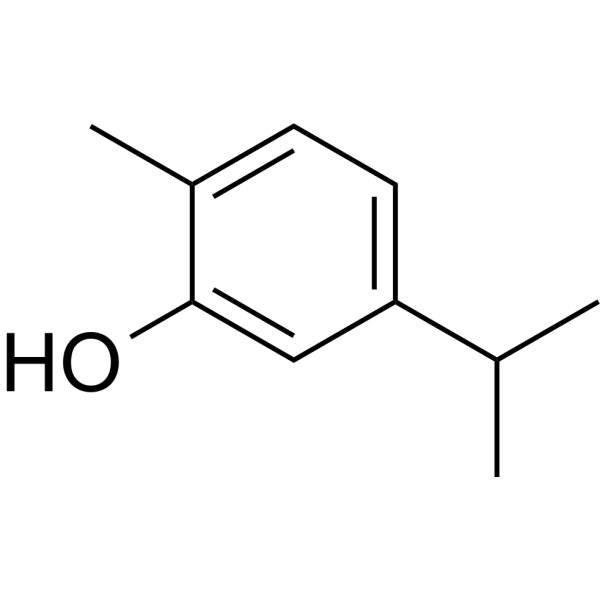
Carvacrol is an orally active and blood-brain barrier-permeable monoterpenic phenol that can be extract from an abundant number of aromatic plants, including thyme and oregano, possessing antioxidant, antibacterial, antifungal, anticancer, anti-inflammatory, hepatoprotective, spasmolytic, and vasorelaxant properties. Carvacrol also causes cell cycle arrest in G0/G1, downregulates Notch-1, and Jagged-1, and induces apoptosis. Carvacrol is used in low concentrations as a food flavoring ingredient and preservative, as well as a fragrance ingredient in cosmetic formulations .
|
-
-
- HY-14290
-
|
P-1134
|
Potassium Channel
|
Cardiovascular Disease
|
|
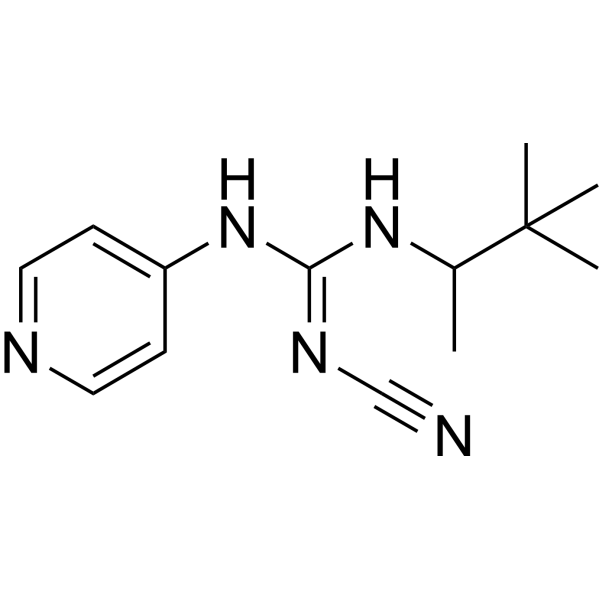
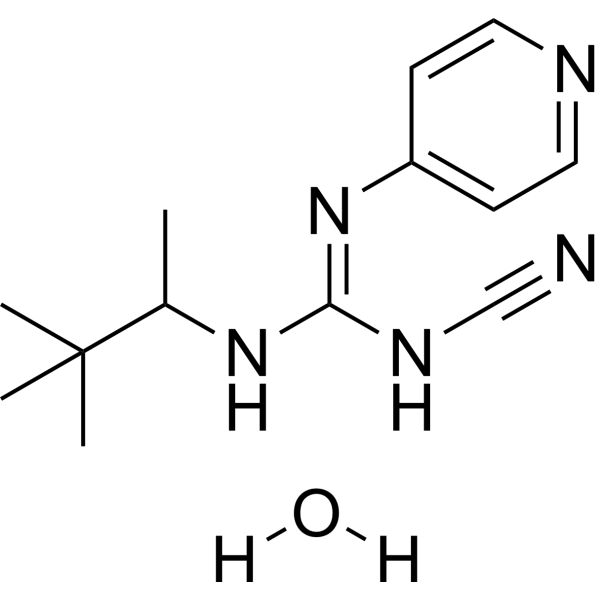
Pinacidil (P-1134) is a potent activator of ATP-sensitive potassium channel. Pinacidil is an antihypertensive agent hyperpolarizes vascular smooth muscle by opening K + channels. Pinacidil enhances K +-efflux in smooth muscle. Pinacidil has vasorelaxant properties. Pinacidil is able to inhibit spontaneous tone and of reducing agonist induced contractions. Pinacidil can be studied in research area such as cardiovascular diseases .
|
-
-
- HY-N1469
-
-
-
- HY-106467B
-
|
|
iGluR
|
Neurological Disease
|
|
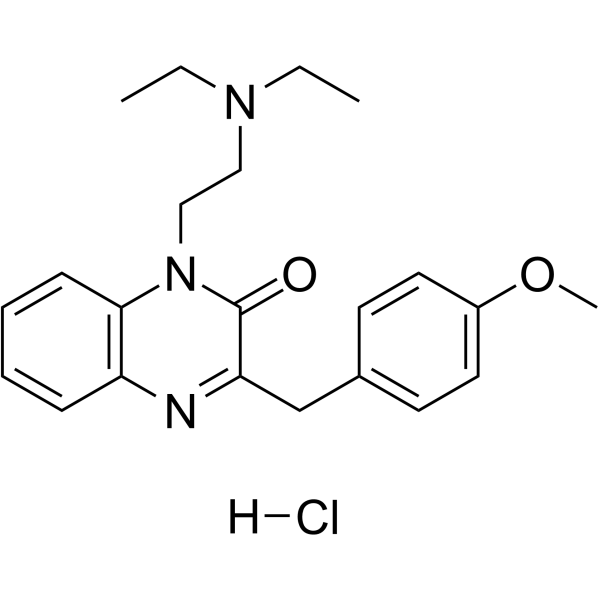
Caroverine hydrochloride is a potent, competitive and reversible antagonist of NMDA and AMPA glutamate receptor. Caroverine hydrochloride is also an antioxidant and calcium-blocking agent that exhibits vasorelaxant action. Caroverine hydrochloride can be used for the research of inner ear tinnitus .
|
-
-
- HY-N0228
-
-
-
- HY-W011641
-
|
|
Potassium Channel
Toll-like Receptor (TLR)
NF-κB
Apoptosis
Caspase
|
Cardiovascular Disease
Neurological Disease
Inflammation/Immunology
Cancer
|
|
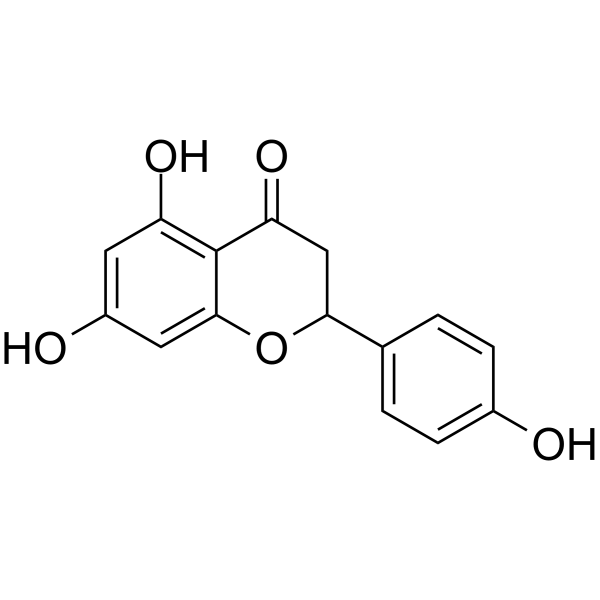
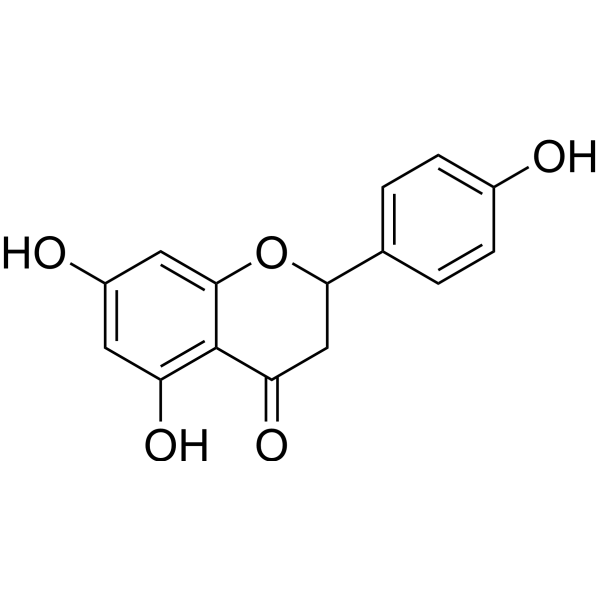
(±)-Naringenin is an orally available anti-inflammatory agent that can regulate both acute and chronic inflammation responses, while also showing antioxidant, neuroprotective, liver-protective, and anti-cancer effects. (±)-Naringenin promotes vasodilation in endothelial cells by activating BKCa channels in muscle cells. It also exerts protective effects against experimental colitis by inhibiting Toll-like receptor 4/NF-κB signaling, making it useful in studies related to sepsis, fulminant hepatitis, fibrosis, and cancer research .
|
-
-
- HY-14290A
-
|
P-1134 monohydrate
|
Potassium Channel
|
Cardiovascular Disease
|
|
Pinacidil (P-1134) monohydrate is a potent activator of ATP-sensitive potassium channel. Pinacidil monohydrate is an antihypertensive agent hyperpolarizes vascular smooth muscle by opening K + channels. Pinacidil monohydrate enhances K +-efflux in smooth muscle. Pinacidil monohydrate has vasorelaxant properties. Pinacidil monohydrate is able to inhibit spontaneous tone and of reducing agonist induced contractions. Pinacidil monohydrate can be studied in research area such as cardiovascular diseases .
|
-
-
- HY-Y0121
-
|
|
Environmental Pollutants
Apoptosis
Parasite
VEGFR
|
Cardiovascular Disease
Cancer
|
|
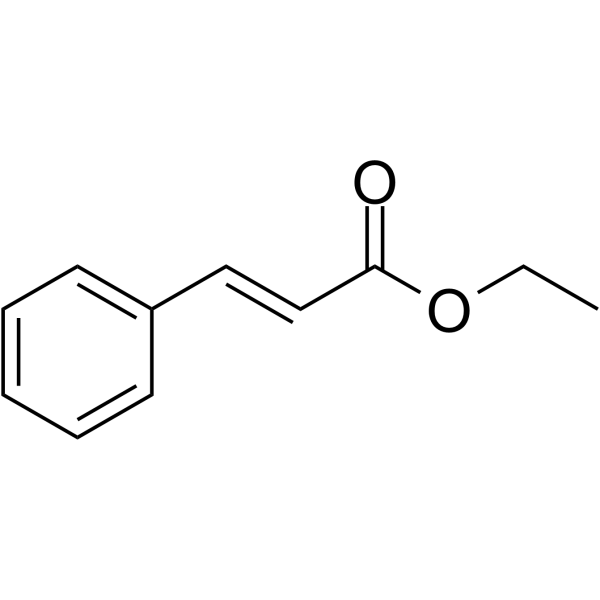
Ethyl cinnamate, an orally active chemical constituent of the rhizome of Kaempferia galanga, exhibits anti-cancer, nematocidal, sedative and vasorelaxant activities. Ethyl cinnamate is a fragrance ingredient used as a food flavor and additive for cosmetic products. Ethyl cinnamate is also an excellent clearing reagent for mammalian tissues. Ethyl cinnamate suppresses tumor growth through anti-angiogenesis by attenuating VEGFR2 signal pathway in colorectal cancer. Ethyl cinnamate inhibits the tonic contractions induced by high K+ and phenylephrine (PE) with respective IC50 values of 0.30 mM and 0.38 mM in rat aorta .
|
-
-
- HY-N11478
-
-
-
- HY-138686
-
-
-
- HY-N6995
-
|
|
Others
|
Metabolic Disease
|
|
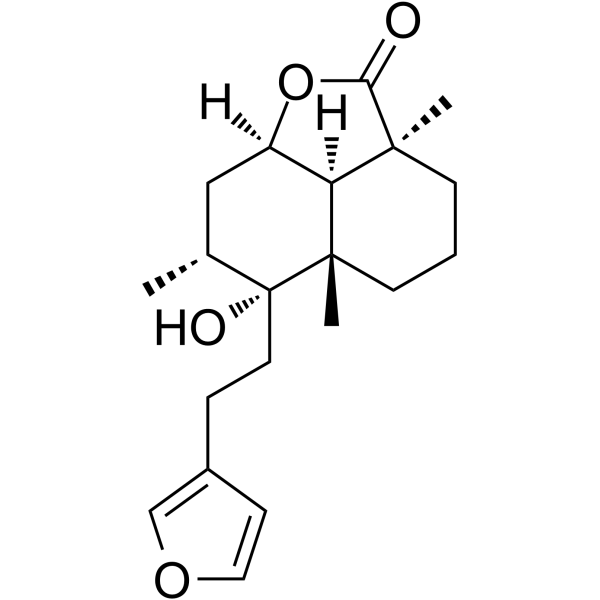
Marrubiin, isolated from Marrubium vulgare, exhibits vasorelaxant and antioedematogenic activity. Marrubiin alleviates diabetic symptoms in animals .
|
-
-
- HY-N1798
-
-
-
- HY-W011641R
-
|
|
Reference Standards
Potassium Channel
|
Cardiovascular Disease
|
|
(±)-Naringenin (Standard) is the analytical standard of (±)-Naringenin. This product is intended for research and analytical applications. (±)-Naringenin is a naturally-occurring flavonoid. (±)-Naringenin displays vasorelaxant effect on endothelium-denuded vessels via the activation of BKCa channels in myocytes .
|
-
-
- HY-P3762
-
-
-
- HY-115363
-
|
|
Others
|
Cardiovascular Disease
Metabolic Disease
|
|
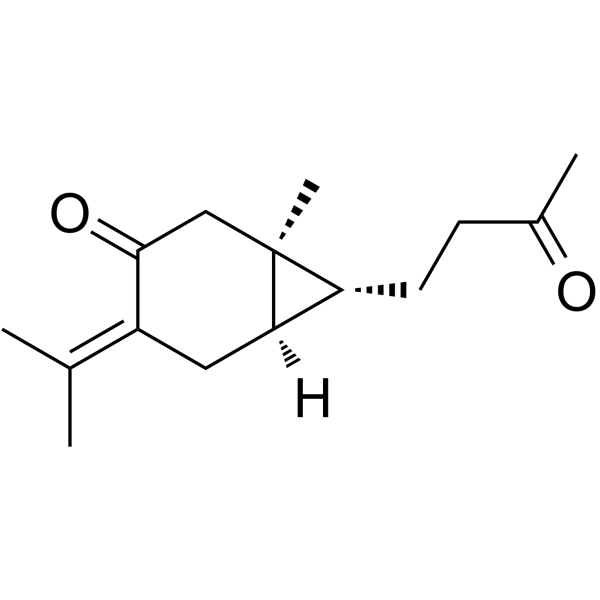
Curcumenone is a major constituent of the plants of medicinally important genus of Curcuma. Curcumenone, a caraborane type sesquiterpene has been reported to be a vasorelaxant, hepatoprotective and an effective inhibitor of intoxication .
|
-
-
- HY-15378
-
|
ZD2079 hydrochloride
|
Adrenergic Receptor
|
Cardiovascular Disease
|
|
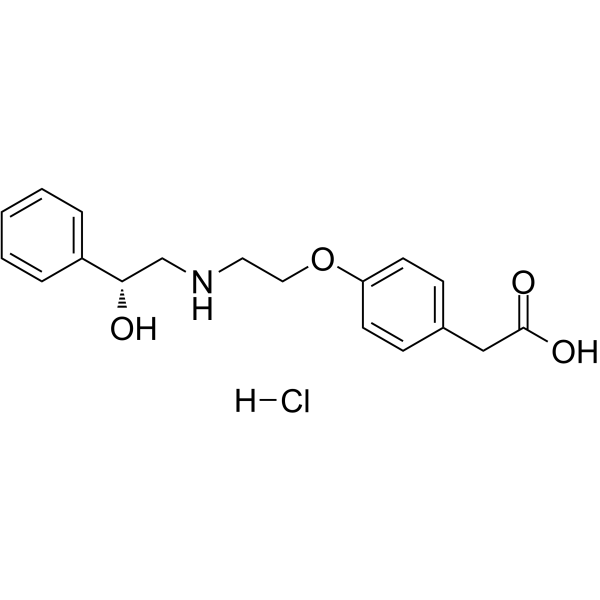
Talibegron hydrochloride (ZD2079 hydrochloride) is a potent β3-adrenoceptor agonist with a pD2 of 3.72 on phenylephrine-preconstricted rat mesenteric artery. Talibegron hydrochloride has potent vasorelaxant effect .
|
-
-
- HY-Y0121R
-
|
|
Reference Standards
Parasite
VEGFR
Apoptosis
|
Cardiovascular Disease
Cancer
|
|
Ethyl cinnamate (Standard) is the analytical standard of Ethyl cinnamate. This product is intended for research and analytical applications. Ethyl cinnamate, an orally active chemical constituent of the rhizome of Kaempferia galanga, exhibits anti-cancer, nematocidal, sedative and vasorelaxant activities. Ethyl cinnamate is a fragrance ingredient used as a food flavor and additive for cosmetic products. Ethyl cinnamate is also an excellent clearing reagent for mammalian tissues. Ethyl cinnamate suppresses tumor growth through anti-angiogenesis by attenuating VEGFR2 signal pathway in colorectal cancer. Ethyl cinnamate inhibits the tonic contractions induced by high K+ and phenylephrine (PE) with respective IC50 values of 0.30 mM and 0.38 mM in rat aorta .
|
-
-
- HY-N10781
-
|
|
Cholinesterase (ChE)
|
Cardiovascular Disease
Neurological Disease
Cancer
|
|
Isograndifoliol is a selective inhibitor of butyrylcholinesterase (BChE) with an IC50 value of 0.9 μM. And Isograndifoliol moderately inhibits acetylcholinesterase (AChE) with an IC50 value of 342.9 μM. Isograndifoliol also has vasorelaxant effect and anti-tumor effect. Isograndifoliol can be used for research against dementia caused by neurodegenerative diseases .
|
-
-
- HY-W103372
-
|
|
Adrenergic Receptor
|
Cardiovascular Disease
|
|
Vasorelaxant agent-2 (Compound 8h) targets α1A-adrenergic receptor with an affinity of pD2=5.4. Vasorelaxant agent-2 exhibits vasodilator activity in rats aortic rings with an EC50 of 0.79 μM .
|
-
-
- HY-P2619
-
-
-
- HY-N0711R
-
|
Cymophenol (Standard)
|
Reference Standards
Notch
Apoptosis
Fungal
Endogenous Metabolite
Bacterial
|
Infection
Inflammation/Immunology
Cancer
|
|
Carvacrol (Standard) is the analytical standard of Carvacrol. This product is intended for research and analytical applications. Carvacrol is an orally active and blood-brain barrier-permeable monoterpenic phenol that can be extract from an abundant number of aromatic plants, including thyme and oregano, possessing antioxidant, antibacterial, antifungal, anticancer, anti-inflammatory, hepatoprotective, spasmolytic, and vasorelaxant properties. Carvacrol also causes cell cycle arrest in G0/G1, downregulates Notch-1, and Jagged-1, and induces apoptosis. Carvacrol is used in low concentrations as a food flavoring ingredient and preservative, as well as a fragrance ingredient in cosmetic formulations .
|
-
-
- HY-P10259
-
|
pBNP-32
|
Natriuretic Peptide Receptor (NPR)
|
Neurological Disease
|
|
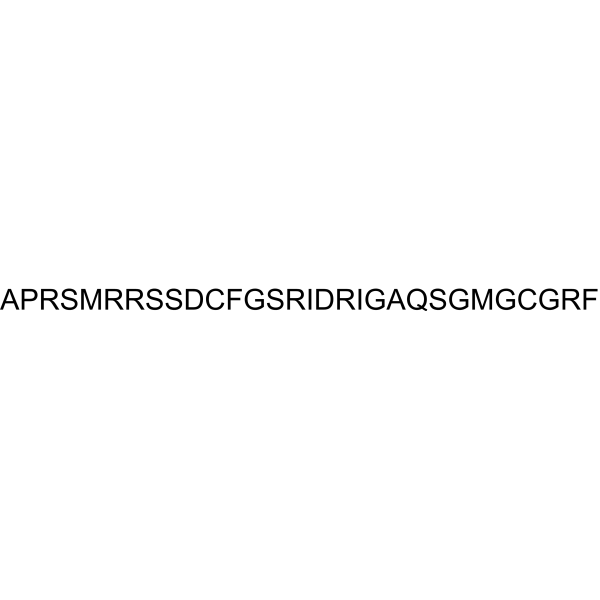
BNP(1-32), porcine (pBNP-32) is a cardiac hormone. BNP(1-32), porcine is an atrial natriuretic peptide, which exhibits natriuretic, diuretic and vasorelaxant effects. BNP(1-32), porcine affects passive avoidance learning in rats with dopaminergic, cholinergic, α-and β-adrenergic mediation .
|
-
-
- HY-N12528
-
|
|
Epoxide Hydrolase
|
Cardiovascular Disease
|
|
10,11-EDT, a soluble epoxide hydrolase (sEH) substrate, is a metabolic product of adrenic acid. 10,11-EDT is an endothelium-derived hyperpolarizing factor with strong vasorelaxant effects .
|
-
-
- HY-142050
-
|
|
Calcium Channel
|
Cardiovascular Disease
|
|
(R)-IDHP is an isomer of IDHP, a salvia metabolite that exerts vasorelaxant effects by inhibiting Ca 2+ release and Ca 2+ inward flow in voltage-dependent and receptor-operated calcium channels in vascular smooth muscle cells. IDHP is used in studies of cardiovascular disease .
|
-
-
- HY-106467
-
|
|
iGluR
|
Neurological Disease
|
|
Caroverine is a potent, competitive and reversible antagonist of NMDA and AMPA glutamate receptor. Caroverine is also an antioxidant and calcium-blocking agent that exhibits vasorelaxant action. Caroverine can be used for the research of inner ear tinnitus .
|
-
-
- HY-106467BR
-
|
|
Reference Standards
iGluR
|
Neurological Disease
|
|
Caroverine (hydrochloride) (Standard) is the analytical standard of Caroverine (hydrochloride). This product is intended for research and analytical applications. Caroverine hydrochloride is a potent, competitive and reversible antagonist of NMDA and AMPA glutamate receptor. Caroverine hydrochloride is also an antioxidant and calcium-blocking agent that exhibits vasorelaxant action. Caroverine hydrochloride can be used for the research of inner ear tinnitus .
|
-
-
- HY-W047432
-
|
DL0805
|
ROCK
|
Cardiovascular Disease
|
|
5-Nitro-1H-indazole-3-carbonitrile (DL0805) is a Rho kinase(ROCK) inhibitor with an IC50 of 6.67 μM for ROCK-I. 5-Nitro-1H-indazole-3-carbonitrile reduces Norepinephrine (HY-13715)-induced transient contraction and inhibits contraction induced by increasing external calcium in the endothelium-denuded rings of rat models. 5-Nitro-1H-indazole-3-carbonitrile has a vasorelaxant activity but high toxicity. 5-Nitro-1H-indazole-3-carbonitrile can be used for cardiovascular diseases, especially hypertension research .
|
-
-
- HY-101661
-
-
-
- HY-W615780
-
-
-
- HY-N11925
-
|
|
Others
|
Cardiovascular Disease
|
|
(+)-Osbeckic acid is a vasorelaxatant that can be isolated from Tartary Buckwheat. (+)-Osbeckic acid has a potent vasorelaxant effect in Sprague-Dawley rat thoracic aorta rings with an EC50 of 887 μM .
|
-
-
- HY-138166S
-
|
|
Isotope-Labeled Compounds
Potassium Channel
Drug Metabolite
NO Synthase
|
Cardiovascular Disease
|
|
Rosuvastatin lactone-d6 is the deuterium labeled Rosuvastatin lactone. Rosuvastatin lactone is a metabolite of Rosuvastatin (HY-17504A), a statin lipid-lowering agent and HMG-CoA inhibitor. Rosuvastatin lactone exhibits endothelium-independent and HMG-CoA reductase-independent vasorelaxant activity in rat aortic rings, and its vasorelaxant effect is jointly mediated by NO produced by inducible nitric oxide synthase (iNOS) located in vascular smooth muscle and activation of potassium channels. Rosuvastatin lactone itself has no lipid-lowering effect .
|
-
-
- HY-N0228R
-
|
|
Reference Standards
Others
|
Cardiovascular Disease
Cancer
|
|
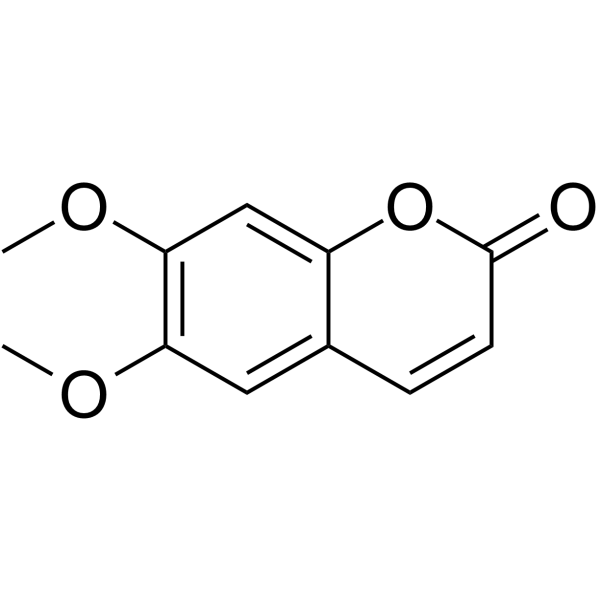
Scoparone (Standard) is the analytical standard of Scoparone. This product is intended for research and analytical applications. Scoparone is isolated from Artemisia capillaris Thunb., has anticoagulant, vasorelaxant antioxidant, anti-inflammatory activities .
|
-
-
- HY-138166R
-
|
|
Reference Standards
Potassium Channel
Drug Metabolite
NO Synthase
|
Cardiovascular Disease
|
|
Rosuvastatin lactone (Standard) is the analytical standard of Rosuvastatin lactone. This product is intended for research and analytical applications. Rosuvastatin lactone is a metabolite of Rosuvastatin (HY-17504A), a statin lipid-lowering agent and HMG-CoA inhibitor. Rosuvastatin lactone exhibits endothelium-independent and HMG-CoA reductase-independent vasorelaxant activity in rat aortic rings, and its vasorelaxant effect is jointly mediated by NO produced by inducible nitric oxide synthase (iNOS) located in vascular smooth muscle and activation of potassium channels. Rosuvastatin lactone itself has no lipid-lowering effect .
|
-
-
- HY-139421
-
|
|
Drug Isomer
|
Cardiovascular Disease
|
|
(Z)-16-(Ethylcarbamoylamino)hexadec-11-enoic acid (Compound 21) is a vasorelaxant (EC50=5.7 μM) that can be used in cardiovascular disease research .
|
-
-
- HY-N6995R
-
|
|
Reference Standards
Others
|
Metabolic Disease
|
|
Marrubiin (Standard) is the analytical standard of Marrubiin. This product is intended for research and analytical applications. Marrubiin, isolated from Marrubium vulgare, exhibits vasorelaxant and antioedematogenic activity. Marrubiin alleviates diabetic symptoms in animals .
|
-
-
- HY-170392
-
|
|
Drug Derivative
|
Cardiovascular Disease
|
|
Vasorelaxant agent-1 (Compound 2j) is a BBB-penetrable vasodilator. Vasorelaxant agent-1 has excellent vasodilator activity with an EC50 of 0.02916 μM. Vasorelaxant agent-1 is non-carcinogenic and can be used in the study of hypertension .
|
-
-
- HY-W032013S3
-
|
Octanol-d5
|
Calcium Channel
Endogenous Metabolite
Isotope-Labeled Compounds
|
Others
|
|
1-Octanol-d5 is deuterated labeled 1-Octanol (HY-W032013). 1-Octanol (Octanol), a saturated fatty alcohol, is a T-type calcium channels (T-channels) inhibitor with an IC50 of 4 μM for native T-currents . 1-Octanol is a highly attractive biofuel with diesel-like properties .
|
-
-
- HY-14290R
-
|
P-1134 (Standard)
|
Reference Standards
Potassium Channel
|
Cardiovascular Disease
|
|
Pinacidil (Standard) is the analytical standard of Pinacidil. This product is intended for research and analytical applications. Pinacidil is a potent activator of ATP-sensitive potassium channel. Pinacidil is an antihypertensive agent hyperpolarizes vascular smooth muscle by opening K + channels. Pinacidil enhances K +-efflux in smooth muscle. Pinacidil has vasorelaxant properties. Pinacidil is able to inhibit spontaneous tone and of reducing agonist induced contractions. Pinacidil can be studied in research area such as cardiovascular diseases .
|
-
-
- HY-Y0121S1
-
|
|
Isotope-Labeled Compounds
|
Others
|
|
Ethyl cinnamate-d7 is deuterated labeled Ethyl cinnamate (HY-Y0121). Ethyl cinnamate, an orally active chemical constituent of the rhizome of Kaempferia galanga, exhibits anti-cancer, nematocidal, sedative and vasorelaxant activities. Ethyl cinnamate is a fragrance ingredient used as a food flavor and additive for cosmetic products. Ethyl cinnamate is also an excellent clearing reagent for mammalian tissues. Ethyl cinnamate suppresses tumor growth through anti-angiogenesis by attenuating VEGFR2 signal pathway in colorectal cancer. Ethyl cinnamate inhibits the tonic contractions induced by high K+ and phenylephrine (PE) with respective IC50 values of 0.30 mM and 0.38 mM in rat aorta .
|
-
-
- HY-N9206
-
|
|
Others
|
Cardiovascular Disease
|
|
Kimcuongin (compound 1)is a coumarin that can be found in Murraya paniculata. Kimcuongin shows vasorelaxant activity with an IC50 value of 37.7 μM. Kimcuongin can be used as a vasodilator .
|
-
-
- HY-14290AR
-
|
P-1134 monohydrate (Standard)
|
Potassium Channel
Reference Standards
|
Cardiovascular Disease
|
|
Pinacidil (monohydrate) (Standard) is the analytical standard of Pinacidil (monohydrate). This product is intended for research and analytical applications. Pinacidil (P-1134) monohydrate is a potent activator of ATP-sensitive potassium channel. Pinacidil monohydrate is an antihypertensive agent hyperpolarizes vascular smooth muscle by opening K+ channels. Pinacidil monohydrate enhances K+-efflux in smooth muscle. Pinacidil monohydrate has vasorelaxant properties. Pinacidil monohydrate is able to inhibit spontaneous tone and of reducing agonist induced contractions. Pinacidil monohydrate can be studied in research area such as cardiovascular diseases .
|
-
-
- HY-W750238
-
|
|
Isotope-Labeled Compounds
|
Cardiovascular Disease
|
|
Scoparone- 13C2,d6 is the deuterium and 13C labeled Scoparone (HY-N0228). Scoparone is isolated from Artemisia capillaris Thunb., has anticoagulant, vasorelaxant antioxidant, anti-inflammatory activities .
|
-
-
- HY-N17738
-
|
|
Calcium Channel
|
Cardiovascular Disease
Inflammation/Immunology
|
|
Acetyljujuboside B is a saponin. Acetyljujuboside B can be isolated from seeds of Zizyphus jujuba Mill. var. spinosa. Acetyljujuboside B inhibits Ca 2+ influx. Acetyljujuboside B shows only sustained vasorelaxant effects, with no transient effect on NE-induced vasoconstrictions. Acetyljujuboside B inhibits histamine release from rat peritoneal exudate cells induced by the antigen-antibody reaction .
|
-
| Cat. No. |
Product Name |
Target |
Research Area |
| Cat. No. |
Product Name |
Category |
Target |
Chemical Structure |
-
- HY-N0711
-
Carvacrol
Maximum Cited Publications
10 Publications Verification
Cymophenol
|
Structural Classification
Monophenols
Preservatives
Classification of Application Fields
Labiatae
Phenols
Derris elliptica (Roxb.) Benth.
Plants
Inflammation/Immunology
Disease Research Fields
Food Research
|
Environmental Pollutants
Apoptosis
Endogenous Metabolite
Notch
Fungal
Bacterial
|
|
Carvacrol is an orally active and blood-brain barrier-permeable monoterpenic phenol that can be extract from an abundant number of aromatic plants, including thyme and oregano, possessing antioxidant, antibacterial, antifungal, anticancer, anti-inflammatory, hepatoprotective, spasmolytic, and vasorelaxant properties. Carvacrol also causes cell cycle arrest in G0/G1, downregulates Notch-1, and Jagged-1, and induces apoptosis. Carvacrol is used in low concentrations as a food flavoring ingredient and preservative, as well as a fragrance ingredient in cosmetic formulations .
|
-
-
- HY-N1469
-
-
-
- HY-N0228
-
-
-
- HY-W011641
-
-
-
- HY-Y0121
-
-
-
- HY-N11478
-
-
-
- HY-N6995
-
-
-
- HY-N1798
-
-
-
- HY-W011641R
-
-
-
- HY-115363
-
-
-
- HY-Y0121R
-
|
|
Structural Classification
Kaempferia galanga L.
Microorganisms
Other Phenylpropanoids
Phenylpropanoids
Plants
Source Classification
Zingiberaceae
|
Reference Standards
Parasite
VEGFR
Apoptosis
|
|
Ethyl cinnamate (Standard) is the analytical standard of Ethyl cinnamate. This product is intended for research and analytical applications. Ethyl cinnamate, an orally active chemical constituent of the rhizome of Kaempferia galanga, exhibits anti-cancer, nematocidal, sedative and vasorelaxant activities. Ethyl cinnamate is a fragrance ingredient used as a food flavor and additive for cosmetic products. Ethyl cinnamate is also an excellent clearing reagent for mammalian tissues. Ethyl cinnamate suppresses tumor growth through anti-angiogenesis by attenuating VEGFR2 signal pathway in colorectal cancer. Ethyl cinnamate inhibits the tonic contractions induced by high K+ and phenylephrine (PE) with respective IC50 values of 0.30 mM and 0.38 mM in rat aorta .
|
-
-
- HY-N0711R
-
|
Cymophenol (Standard)
|
Structural Classification
Monophenols
Labiatae
Phenols
Derris elliptica (Roxb.) Benth.
Plants
|
Reference Standards
Notch
Apoptosis
Fungal
Endogenous Metabolite
Bacterial
|
|
Carvacrol (Standard) is the analytical standard of Carvacrol. This product is intended for research and analytical applications. Carvacrol is an orally active and blood-brain barrier-permeable monoterpenic phenol that can be extract from an abundant number of aromatic plants, including thyme and oregano, possessing antioxidant, antibacterial, antifungal, anticancer, anti-inflammatory, hepatoprotective, spasmolytic, and vasorelaxant properties. Carvacrol also causes cell cycle arrest in G0/G1, downregulates Notch-1, and Jagged-1, and induces apoptosis. Carvacrol is used in low concentrations as a food flavoring ingredient and preservative, as well as a fragrance ingredient in cosmetic formulations .
|
-
-
- HY-N12528
-
-
-
- HY-142050
-
-
-
- HY-W615780
-
-
-
- HY-N11925
-
-
-
- HY-N0228R
-
-
-
- HY-N6995R
-
-
-
- HY-N9206
-
-
-
- HY-N17738
-
-
| Cat. No. |
Product Name |
Chemical Structure |
-
- HY-138166S
-
|
|
|
Rosuvastatin lactone-d6 is the deuterium labeled Rosuvastatin lactone. Rosuvastatin lactone is a metabolite of Rosuvastatin (HY-17504A), a statin lipid-lowering agent and HMG-CoA inhibitor. Rosuvastatin lactone exhibits endothelium-independent and HMG-CoA reductase-independent vasorelaxant activity in rat aortic rings, and its vasorelaxant effect is jointly mediated by NO produced by inducible nitric oxide synthase (iNOS) located in vascular smooth muscle and activation of potassium channels. Rosuvastatin lactone itself has no lipid-lowering effect .
|
-
-
- HY-W032013S3
-
|
|
|
1-Octanol-d5 is deuterated labeled 1-Octanol (HY-W032013). 1-Octanol (Octanol), a saturated fatty alcohol, is a T-type calcium channels (T-channels) inhibitor with an IC50 of 4 μM for native T-currents . 1-Octanol is a highly attractive biofuel with diesel-like properties .
|
-
-
- HY-Y0121S1
-
|
|
|
Ethyl cinnamate-d7 is deuterated labeled Ethyl cinnamate (HY-Y0121). Ethyl cinnamate, an orally active chemical constituent of the rhizome of Kaempferia galanga, exhibits anti-cancer, nematocidal, sedative and vasorelaxant activities. Ethyl cinnamate is a fragrance ingredient used as a food flavor and additive for cosmetic products. Ethyl cinnamate is also an excellent clearing reagent for mammalian tissues. Ethyl cinnamate suppresses tumor growth through anti-angiogenesis by attenuating VEGFR2 signal pathway in colorectal cancer. Ethyl cinnamate inhibits the tonic contractions induced by high K+ and phenylephrine (PE) with respective IC50 values of 0.30 mM and 0.38 mM in rat aorta .
|
-
-
- HY-W750238
-
|
|
|
Scoparone- 13C2,d6 is the deuterium and 13C labeled Scoparone (HY-N0228). Scoparone is isolated from Artemisia capillaris Thunb., has anticoagulant, vasorelaxant antioxidant, anti-inflammatory activities .
|
-
Your information is safe with us. * Required Fields.
Inquiry Information
- Product Name:
- Cat. No.:
- Quantity:
- MCE Japan Authorized Agent:

