



Caroverine hydrochloride (Standard)
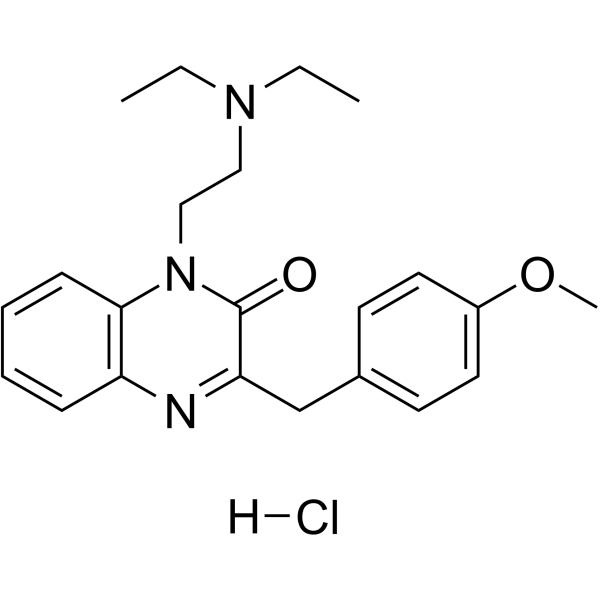
Caroverine (hydrochloride) (Standard) is the analytical standard of Caroverine (hydrochloride). This product is intended for research and analytical applications. Caroverine hydrochloride is a potent, competitive and reversible antagonist of NMDA and AMPA glutamate receptor. Caroverine hydrochloride is also an antioxidant and calcium-blocking agent that exhibits vasorelaxant action. Caroverine hydrochloride can be used for the research of inner ear tinnitus.
For research use only. We do not sell to patients.
- CAS No.: 55750-05-5
- Formula: C22H28ClN3O2
- Molecular Weight:401.93
-
Storage:
Please store the product under the recommended conditions in the Certificate of Analysis.


To place orders, for customer services and technical support, please contact: MedChemExpress USA
Tel: 609-228-6898 E-mail: [email protected] [email protected]


-
 Product Information
-
Chemical Information
- Purity & Documentation
-
 Help & FAQs


-
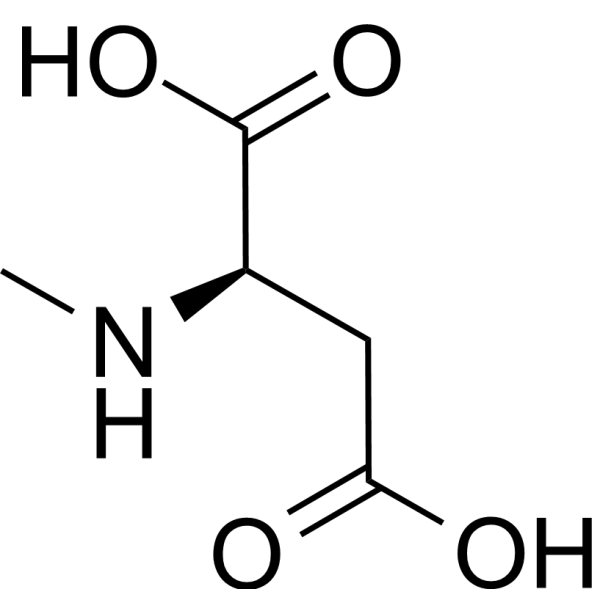
HY-17551
NMDA -
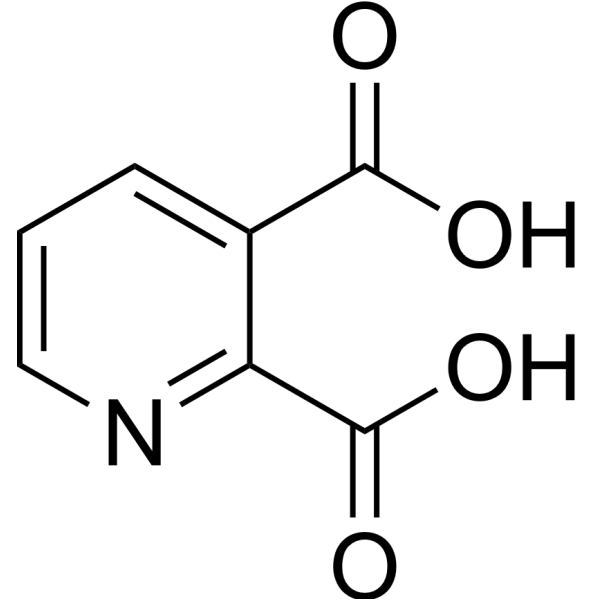
HY-100807
Quinolinic acid -
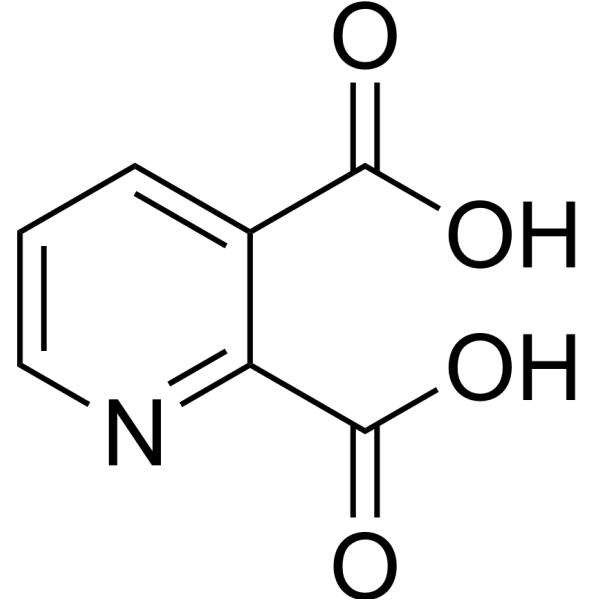
HY-100807R
Quinolinic acid (Standard) -
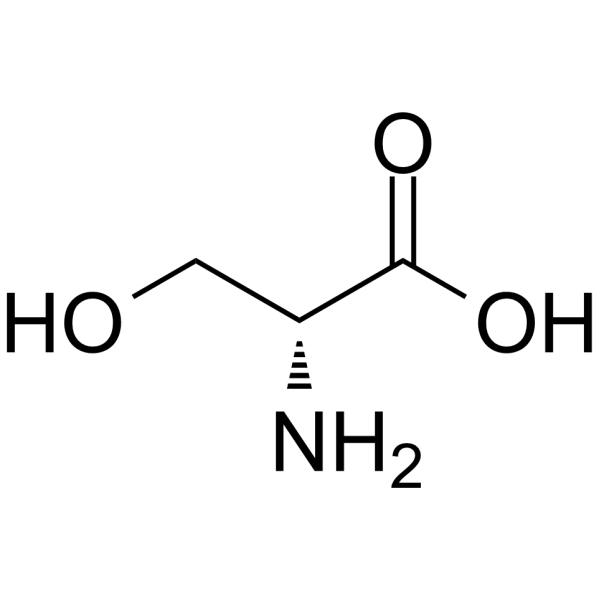
HY-100808
D-Serine -
HY-42068
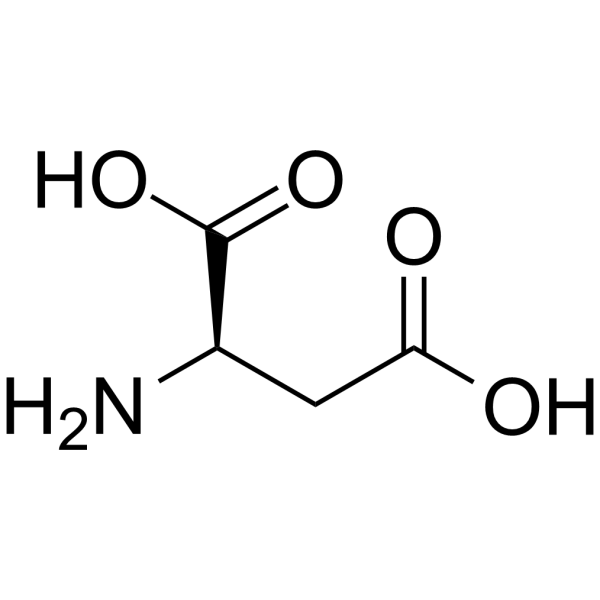
(-)-Aspartic acid -
HY-100811
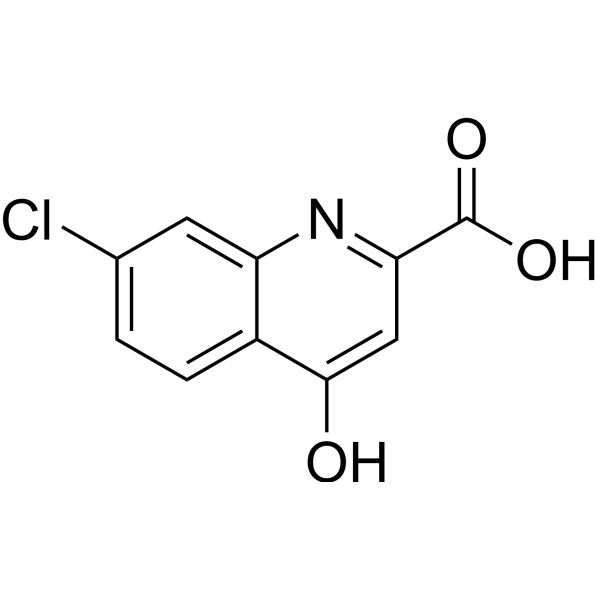
7-Chlorokynurenic acid -
HY-16312
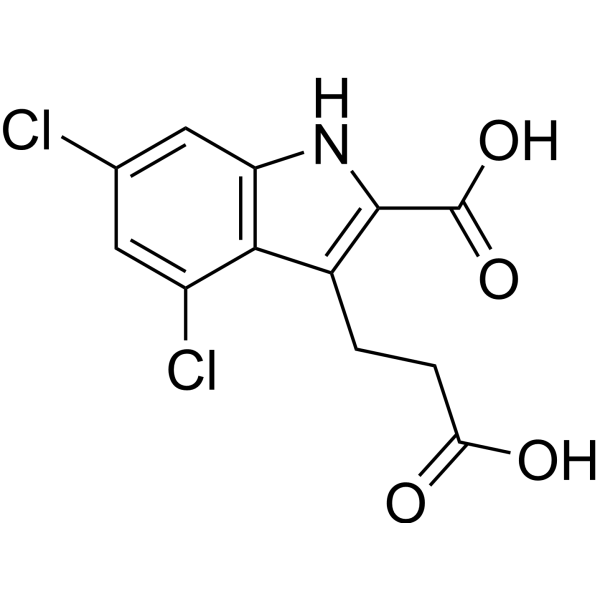
MDL-29951 -
HY-106467B
Caroverine hydrochloride -
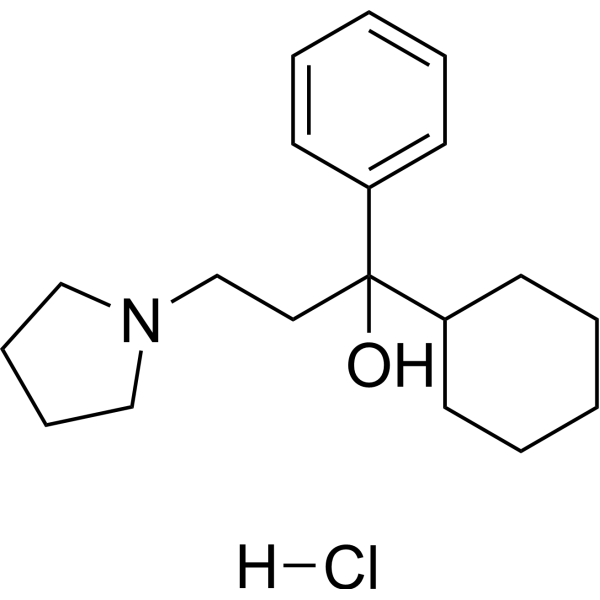
HY-B1487
Procyclidine hydrochloride -
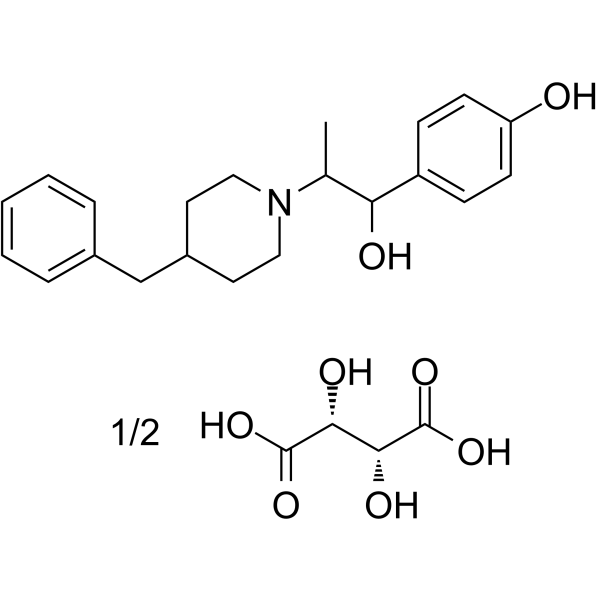
HY-12882A
Ifenprodil tartrate -
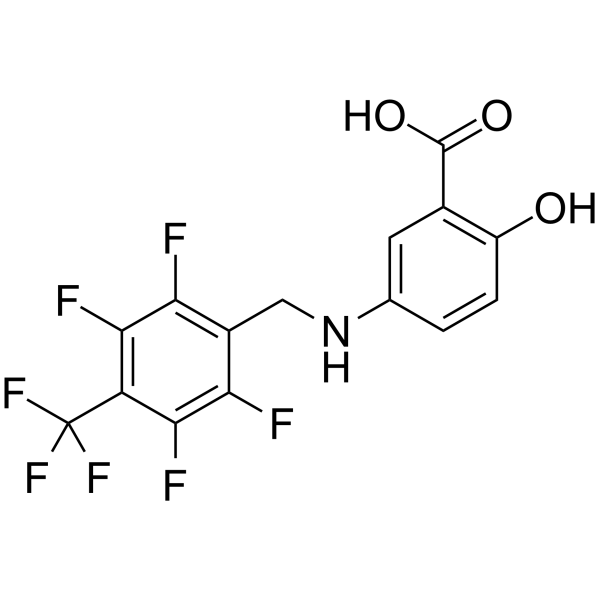
HY-106408
Nelonemdaz -
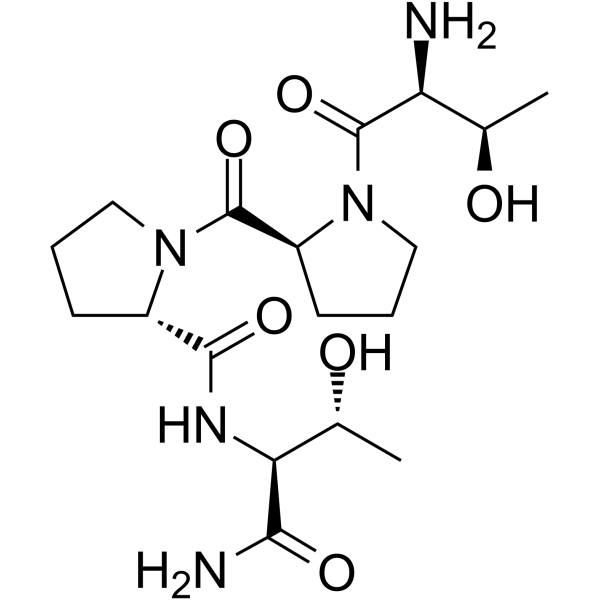
HY-16728
Rapastinel


Product Information
Information
Application
The compound is the grade of analytical standard, which is the reference standard supplied assay. It is commonly used in qualitative, quantitative and methodological research experiments in HPLC, GC and MS.


Chemical Information
-
CAS No. 55750-05-5
-
Molecular Weight 401.93
-
Formula C22H28ClN3O2
-
SMILES
O=C1N(CCN(CC)CC)C2=C(C=CC=C2)N=C1CC3=CC=C(OC)C=C3.[H]Cl
-
Shipping
Room temperature in continental US; may vary elsewhere.
-
Storage
Please store the product under the recommended conditions in the Certificate of Analysis.


Purity & Documentation
References
[1]. Chen Z, et, al. Pharmacokinetics of caroverine in the inner ear and its effects on cochlear function after systemic and local administrations in Guinea pigs. Audiol Neurootol. Jan-Feb 2003;8(1):49-56. [Content Brief]
[2]. Denk DM, et, al. Caroverine in tinnitus treatment. A placebo-controlled blind study. Acta Otolaryngol. 1997 Nov;117(6):825-30. [Content Brief]
[3]. Ishida Y, et, al. Vasorelaxant action of caroverine fumarate (a quinoxaline derivative), a calcium-blocking agent. Br J Pharmacol. 1980;71(1):343-8. [Content Brief]
[4]. Duan M, et, al. Low-dose, long-term caroverine administration attenuates impulse noise-induced hearing loss in the rat. Acta Otolaryngol. 2006 Dec;126(11):1140-7. [Content Brief]

Calculators
Concentration (start) × Volume (start) = Concentration (final) × Volume (final)


Caroverine hydrochloride (Standard) Related Classifications
HY-106467BR Related Classifications
 Powered by Bioz