



Nelonemdaz

Based on 1 Customer Validation
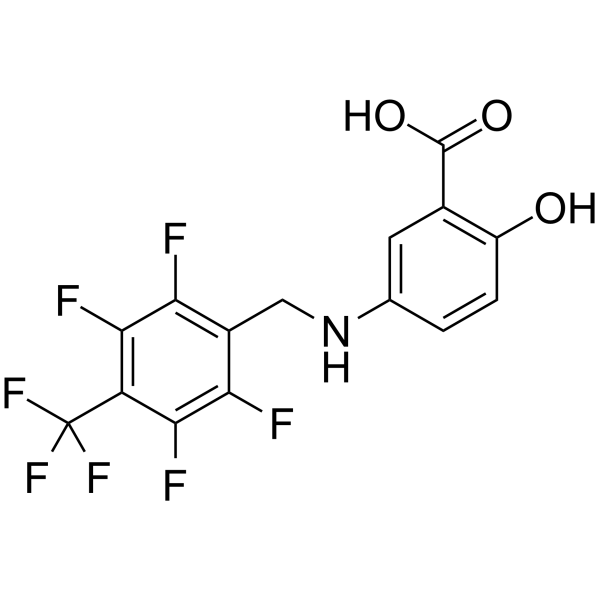
Nelonemdaz (Salfaprodil free base) is an NR2B-selective and uncompetitive antagonist of N-methyl-D-aspartate (NMDA). Nelonemdaz is also a free radical scavenger. Nelonemdaz has excellent neuroprotection against NMDA- and free radical-induced cell death.
Para uso exclusivo en investigación. No vendemos a pacientes.
- Pureza : 99.87%
- No. CAS: 640290-67-1
- Fòrmula: C15H8F7NO3
- Peso molecular:383.22
-
Almacenamiento:Powder -20°C, 3 years , 4°C, 2 years ; In solvent -80°C, 2 years , -20°C, 1 year

To place orders, for customer services and technical support, please contact: MedChemExpress USA
Tel: 609-228-6898 E-mail: [email protected] [email protected]


-
 Actividad biológica
-
Chemical Information
-
Solvente y solubilidad
- Protocolo
- Pureza y Documentación
- Referencias
-
 Help & FAQs


-
HY-17551
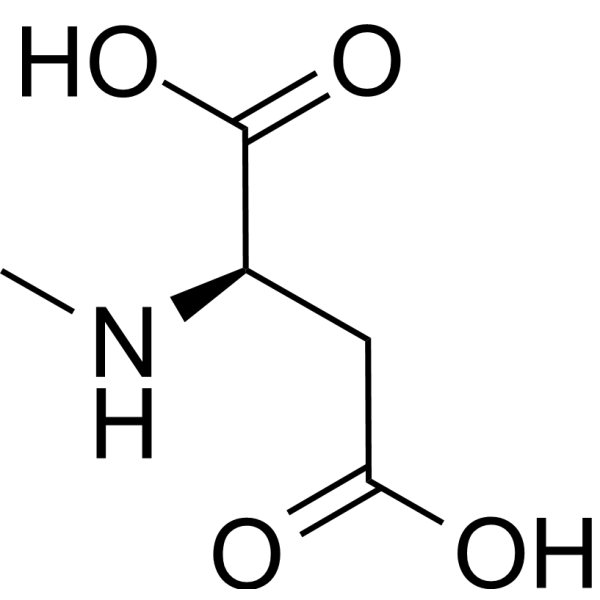
NMDAEndogenous Metabolite -
HY-100811
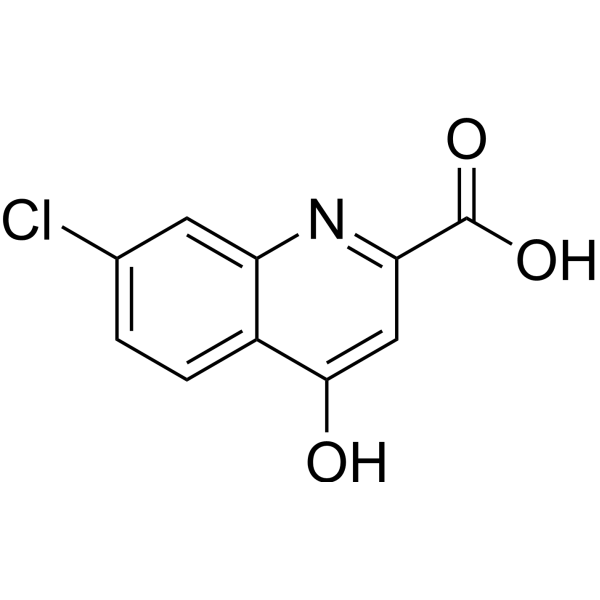
7-Chlorokynurenic acidNMDA Receptor Antagonist -
HY-16312
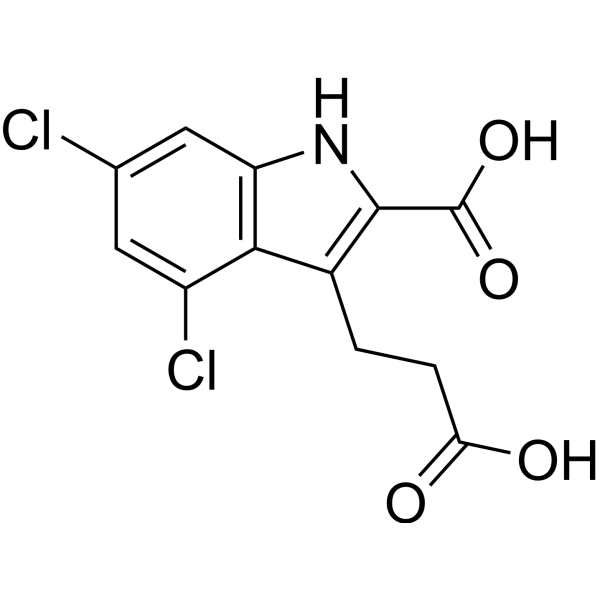
MDL-29951nMDA Receptor Antagonist -
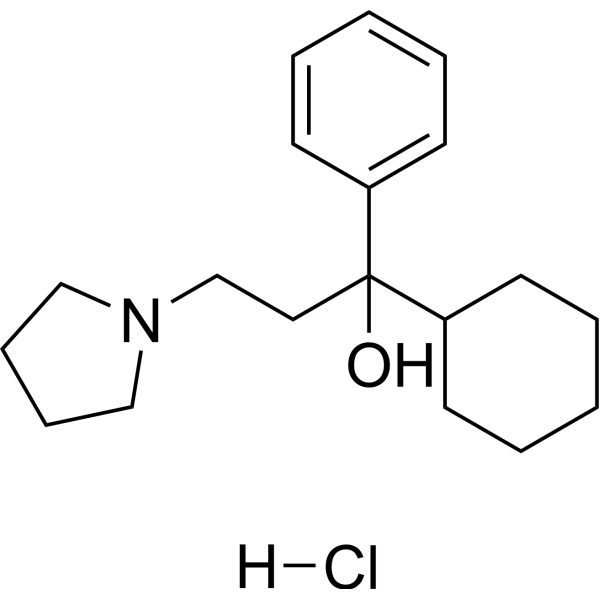
HY-B1487
Procyclidine hydrochlorideMuscarinic Receptor Antagonist -
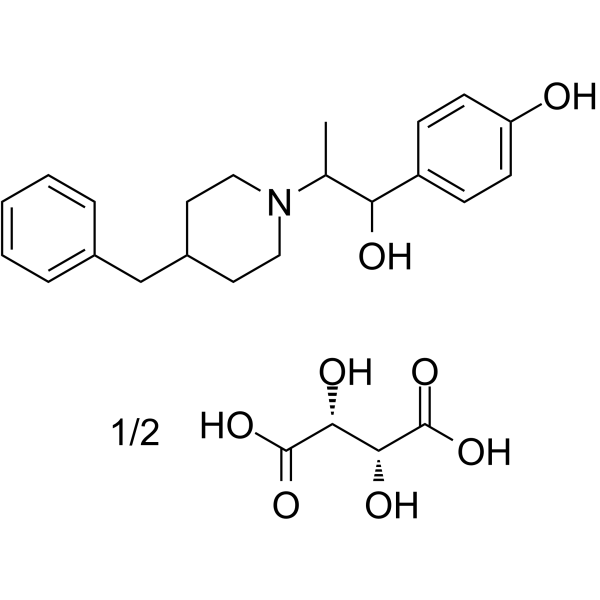
HY-12882A
Ifenprodil tartrateNMDA Receptor Antagonist -
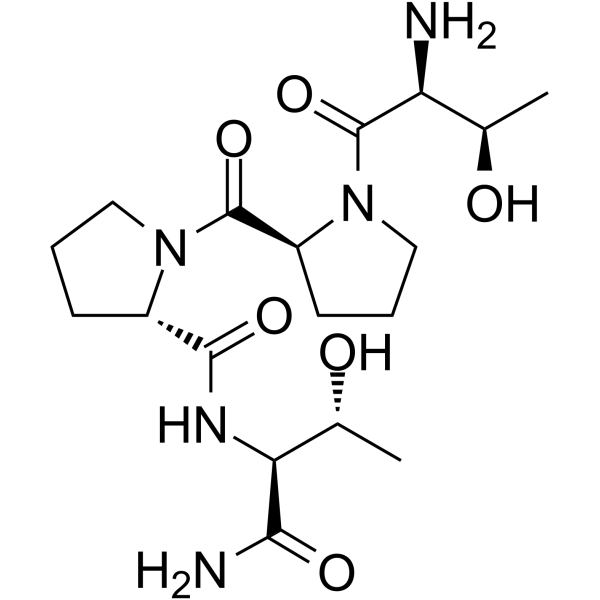
HY-16728
RapastinelNMDAR Modulator -
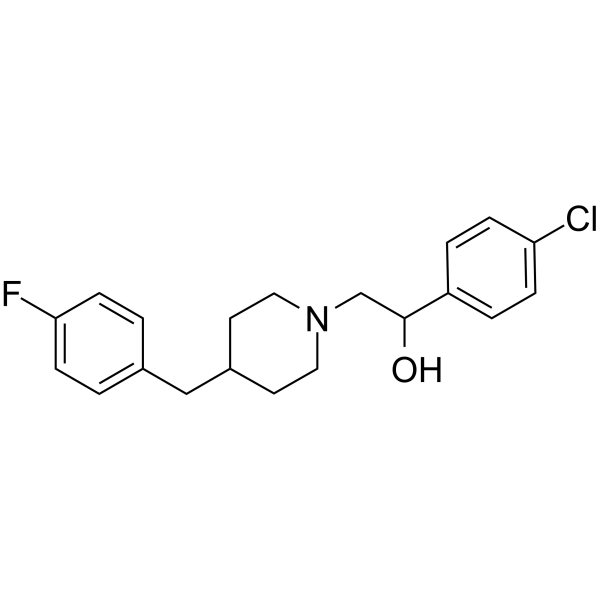
HY-12881
EliprodilNR2B-NMDA Inhibitor -
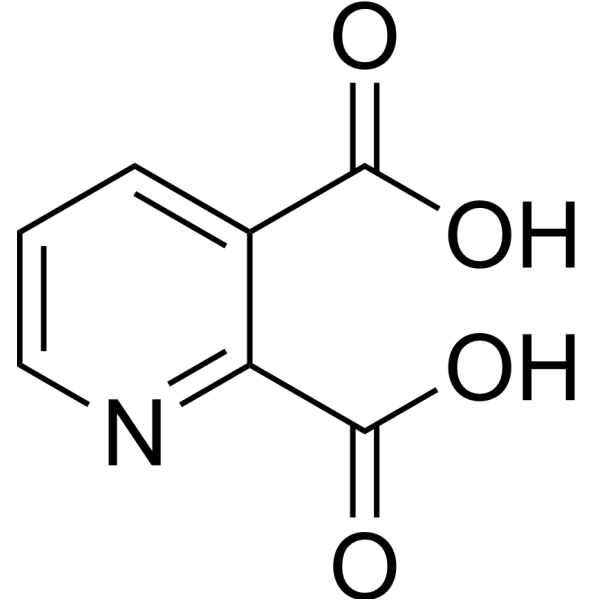
HY-100807
Quinolinic acidNMDA Receptor Agonist -

HY-B1487R
Procyclidine hydrochloride (Standard)Muscarinic Receptor Antagonist -
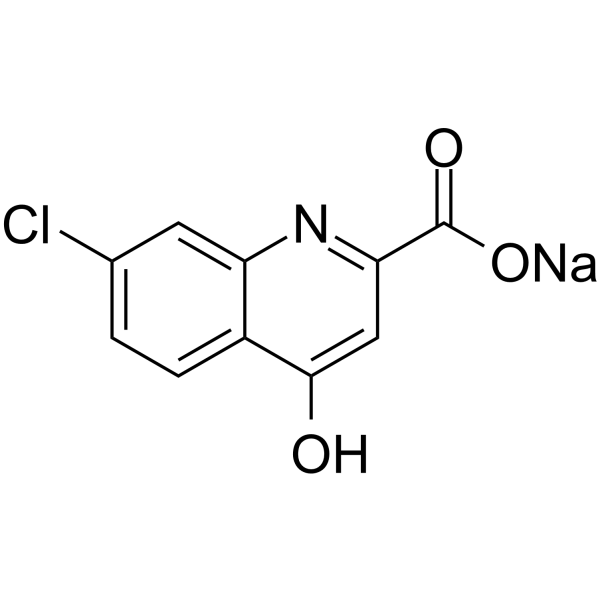
HY-100811A
7-Chlorokynurenic acid sodium saltNMDA Receptor Antagonist -
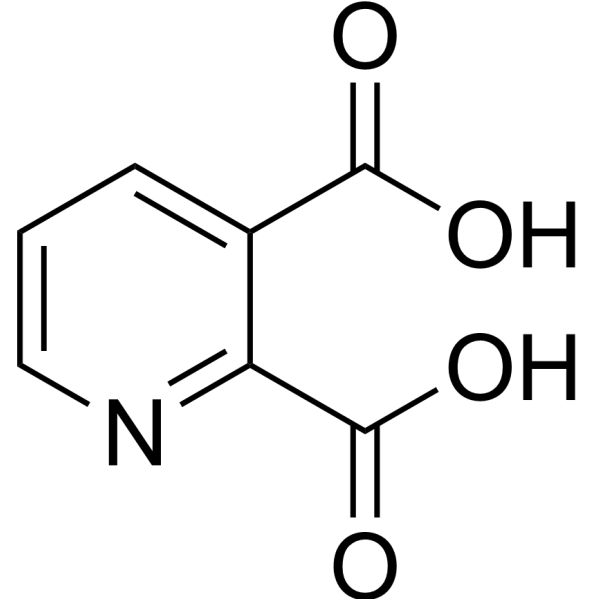
HY-100807R
Quinolinic acid (Standard)Standard of Quinolinic acid -
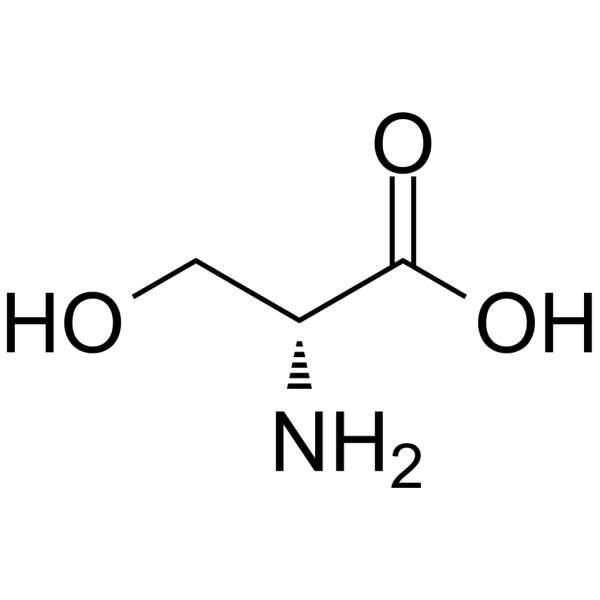
HY-100808
D-SerineEndogenous Metabolite
Ver todos los productos específicos de isoformas iGluR
More

Actividad biológica
Descripciòn
IC50 & Target
|
NMDA Receptor |
In Vitro
Nelonemdaz (10-300 μM) shows apparent neuroprotection against 300 μM N-methyl-d-aspartate (NMDA) at doses as low as 30 μM[1].
Nelonemdazl (10-500 μM) inhibits the electrophysiologic response of cultured cortical neurons to 300 μM NMDA in a concentration-dependent manner[1].
Nelonemdaz (0.1-1 μM) produces a marked reduction of Fe2+-induced neurotoxicity, even at doses of 0.1 to 0.3 μM[1].
Nelonemdaz (0.1-1 μM) blocks the degeneration of neurons and glia in cortical cell cultures[1].
Nelonemdaz (0-350 μM) effectively scavenges superoxide radicals (IC50=63.07±1.44 μM), nitric oxide (IC50=155.8±4.88 μM), and hydroxyl radicals (IC50=58.45±1.74 μM)[3].
Nelonemdaz (0.78-12.5 μM) decreases the amount of antimycin A-induced ROS/RNS formation in a dose-dependent manner, with an IC50 of 2.21±0.11 μM[3].
Nelonemdaz (0.19-12.5 μM) inhibits malondialdehyde (MDA) formation with an IC50 of 2.72±0.26 μM[3].
Nelonemdaz (0-125 μM) effectively reduces iron-ascorbate-induced lipid peroxidation (IC50=24.56±0.07 μM)[3].
MedChemExpress (MCE) has not independently confirmed the accuracy of these methods. They are for reference only.
In Vivo
Nelonemdaz (5 mg/kg; i.v.) protects white matter such as axons and myelin as well as gray matter from ischemic brain injury[1].
MedChemExpress (MCE) has not independently confirmed the accuracy of these methods. They are for reference only.
-
Animal Model:Male Sprague-Dawley rats (260 to 300 g) (clip occlusion model)[1]
-
Dosage:0.5-20 mg/kg
-
Administration:I.v. administration 5 mins after reperfusion
-
Result:Produced a large neuroprotective effect, with a maximal reduction in infarct volume of 66% at doses of 2.5 to 5 mg/kg.
Not observed neuronal damage in the most vulnerable cortical area after administration of 5 mg/kg.
-
Animal Model:Male Sprague-Dawley rats (260 to 300 g) (intraluminal thread occlusion model)[1]
-
Dosage:5 mg/kg
-
Administration:I.v. administration 30 mins after reperfusion
-
Result:Did not change physiologic variables such as arterial pH, PCO2, PO2, and hematocrit.
Reduced infarct volume evolving in the cortex and the striatum substantially.
Reduced white matter damage in the striatum and external capsule markedly.


Chemical Information
-
No. CAS 640290-67-1
-
Appearance Solid
-
Peso molecular 383.22
-
Fòrmula C15H8F7NO3
-
Color Off-white to light yellow
-
SMILES
OC(C1=C(O)C=CC(NCC2=C(C(F)=C(C(F)(F)F)C(F)=C2F)F)=C1)=O
-
Synonyms
Salfaprodil free base; Neu2000
-
Envío
Room temperature in continental US; may vary elsewhere.
-
Almacenamiento
Powder -20°C 3 years 4°C 2 years In solvent -80°C 2 years -20°C 1 year


Solvente y solubilidad
In Vitro:
DMSO : ≥ 112.5 mg/mL (293.57 mM; Hygroscopic DMSO has a significant impact on the solubility of product, please use newly opened DMSO)
* "≥" means soluble, but saturation unknown.
Please refer to the solubility information to select the appropriate solvent. Once prepared, please aliquot and store the solution to prevent product inactivation from repeated freeze-thaw cycles.
Storage method and period of stock solution: -80°C, 2 years; -20°C, 1 year. When stored at -80°C, please use it within 2 years. When stored at -20°C, please use it within 1 year.
Please refer to the solubility information to select the appropriate solvent. Once prepared, please aliquot and store the solution to prevent product inactivation from repeated freeze-thaw cycles.
Storage method and period of stock solution: -80°C, 2 years; -20°C, 1 year. When stored at -80°C, please use it within 2 years. When stored at -20°C, please use it within 1 year.
Concentration (start) × Volume (start) = Concentration (final) × Volume (final)


Pureza y Documentación
-
Ficha de datos (276 KB)
-
SDS (254 KB)
- English - EN (254 KB)
- Français - FR (254 KB)
- Deutsch - DE (254 KB)
- Norwegian - NO (254 KB)
- Español - ES (254 KB)
- Swedish - SV (254 KB)
- Italian - IT (254 KB)
- Korean - KR (254 KB)
- Portuguese - PT (254 KB)
-
Instrucciones de manejo (2659 KB)
Referencias
[1]. Gwag BJ, et al. Marked prevention of ischemic brain injury by Neu2000, an NMDA antagonist and antioxidant derived from aspirin and sulfasalazine. J Cereb Blood Flow Metab. 2007 Jun;27(6):1142-51. [Content Brief]
[2]. Sung IC, et, al. Neu2000, an NR2B-selective, Moderate NMDA Receptor Antagonist and Potent Spin Trapping Molecule for Stroke. Drug News Perspect. 2010 Nov; 23(9): 549-56. [Content Brief]
[3]. Nishant PV, et, al. Antioxidant Properties of Neu2000 on Mitochondrial Free Radicals and Oxidative Damage. Toxicol In Vitro. 2013 Mar; 27(2): 788-97. [Content Brief]


Complete Stock Solution Preparation Table
Please refer to the solubility information to select the appropriate solvent. Once prepared, please aliquot and store the solution to prevent product inactivation from repeated freeze-thaw cycles.
Storage method and period of stock solution: -80°C, 2 years; -20°C, 1 year. When stored at -80°C, please use it within 2 years. When stored at -20°C, please use it within 1 year.
| Optional Solvent | Concentration Solvent Mass | 1 mg | 5 mg | 10 mg | 25 mg |
|---|---|---|---|---|---|
| DMSO | 1 mM | 2.6095 mL | 13.0473 mL | 26.0947 mL | 65.2367 mL |
| 5 mM | 0.5219 mL | 2.6095 mL | 5.2189 mL | 13.0473 mL | |
| 10 mM | 0.2609 mL | 1.3047 mL | 2.6095 mL | 6.5237 mL | |
| 15 mM | 0.1740 mL | 0.8698 mL | 1.7396 mL | 4.3491 mL | |
| 20 mM | 0.1305 mL | 0.6524 mL | 1.3047 mL | 3.2618 mL | |
| 25 mM | 0.1044 mL | 0.5219 mL | 1.0438 mL | 2.6095 mL | |
| 30 mM | 0.0870 mL | 0.4349 mL | 0.8698 mL | 2.1746 mL | |
| 40 mM | 0.0652 mL | 0.3262 mL | 0.6524 mL | 1.6309 mL | |
| 50 mM | 0.0522 mL | 0.2609 mL | 0.5219 mL | 1.3047 mL | |
| 60 mM | 0.0435 mL | 0.2175 mL | 0.4349 mL | 1.0873 mL | |
| 80 mM | 0.0326 mL | 0.1631 mL | 0.3262 mL | 0.8155 mL | |
| 100 mM | 0.0261 mL | 0.1305 mL | 0.2609 mL | 0.6524 mL |


Nelonemdaz Related Classifications
HY-106408 Related Classifications
 Powered by Bioz