



NMDA
Based on 35 publication(s) in Google Scholar
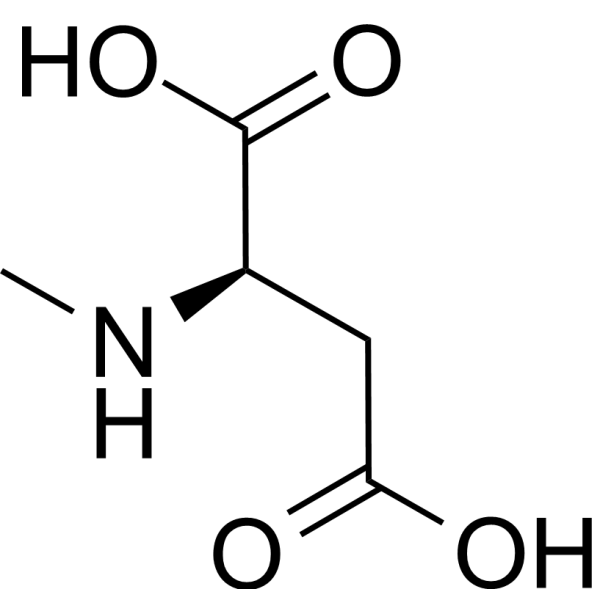
NMDA is a specific agonist for NMDA receptor mimicking the action of glutamate, the neurotransmitter which normally acts at that receptor.
For research use only. We do not sell to patients.
- Purity : 99.55%
- CAS No.: 6384-92-5
- Formula: C5H9NO4
- Molecular Weight:147.13
-
Storage:Powder -20°C, 3 years , 4°C, 2 years ; In solvent -80°C, 2 years , -20°C, 1 year

To place orders, for customer services and technical support, please contact: MedChemExpress USA
Tel: 609-228-6898 E-mail: [email protected] [email protected]


-
 Biological Activity
-
Chemical Information
-
Solvent & Solubility
- Purity & Documentation
- References
-
 Help & FAQs


-
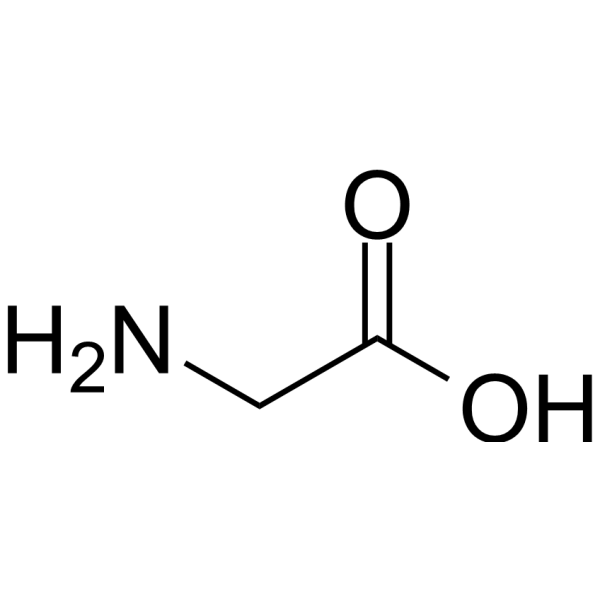
HY-Y0966
GlycineNMDAR Agonist -
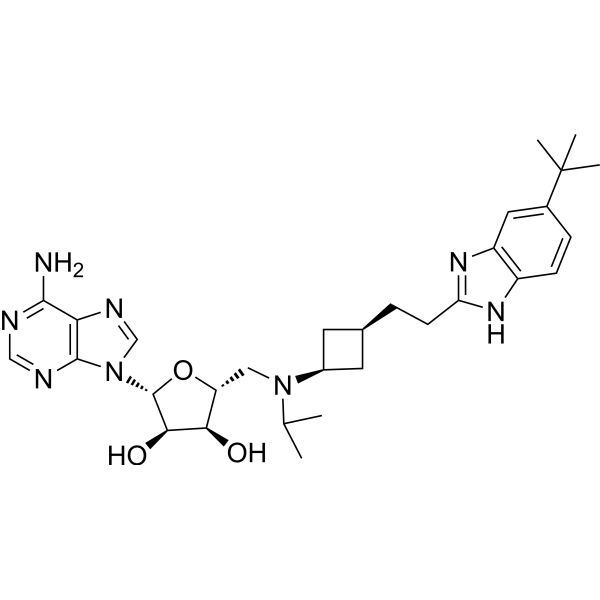
HY-15593
PinometostatDOT1L Inhibitor -
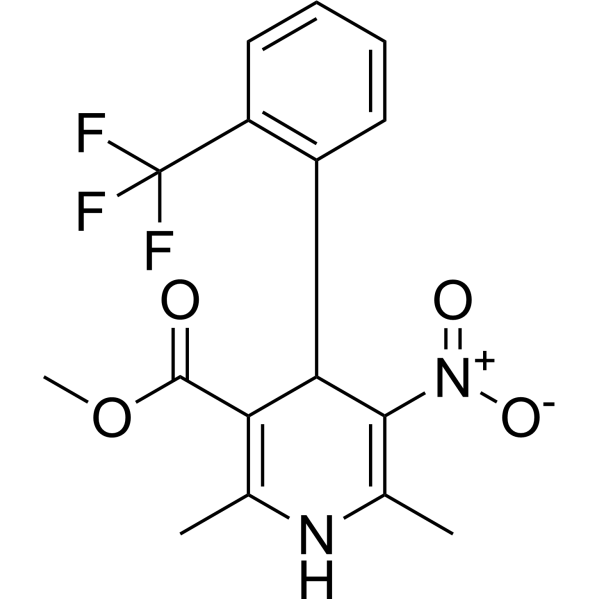
HY-10588
Bay K 8644L-type Ca2+ Channel Agonist -
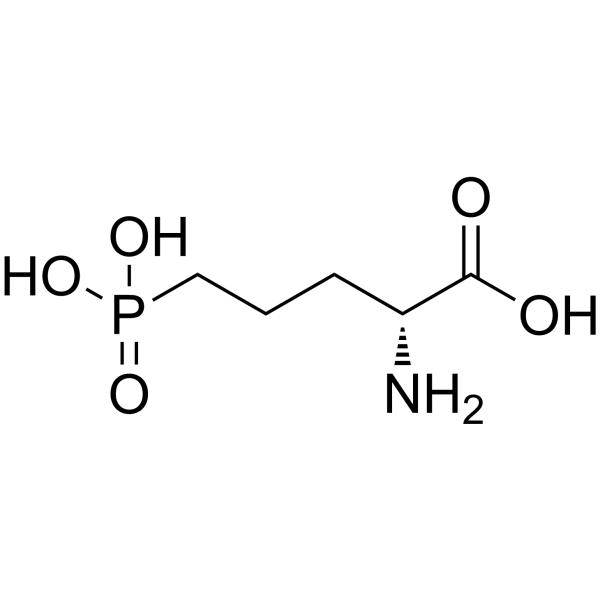
HY-100714A
D-AP5NMDA Antagonist -
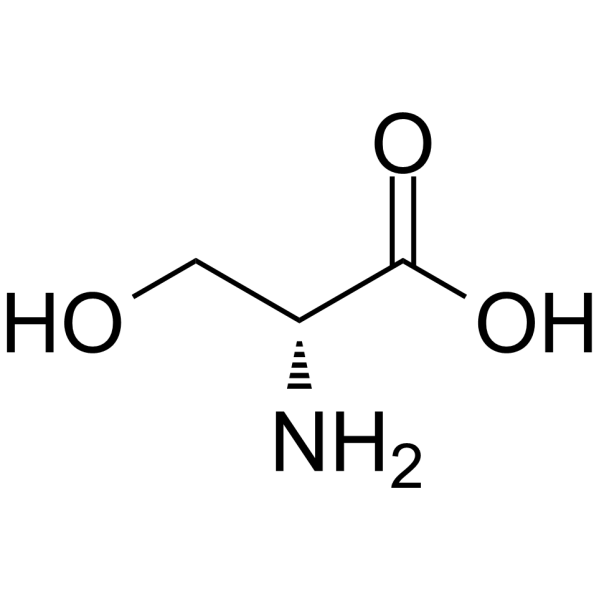
HY-100808
D-SerineEndogenous Metabolite -
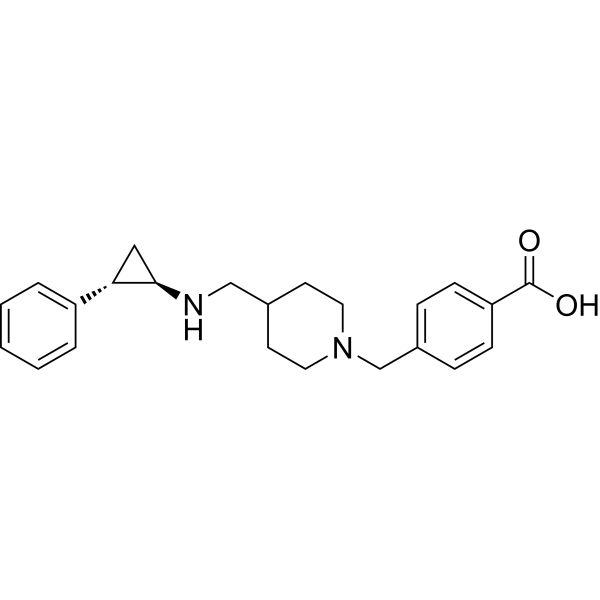
HY-18632
GSK2879552LSD1 Inhibitor -
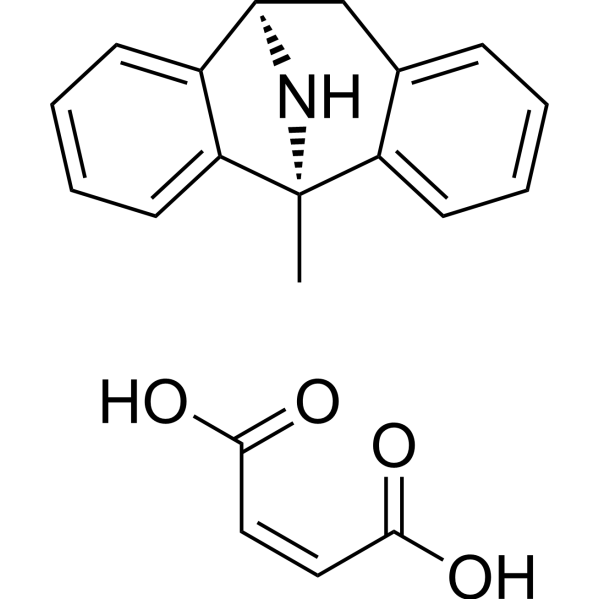
HY-15084
Dizocilpine maleateNMDA Antagonist -
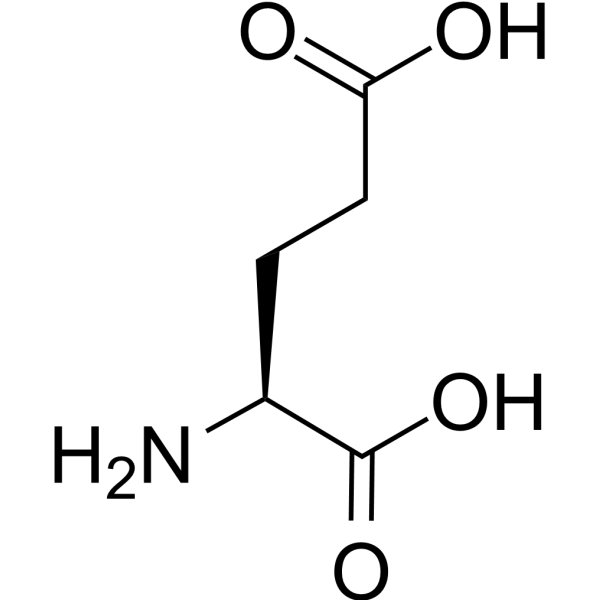
HY-14608
L-Glutamic acidGlutamate Receptors Agonist -
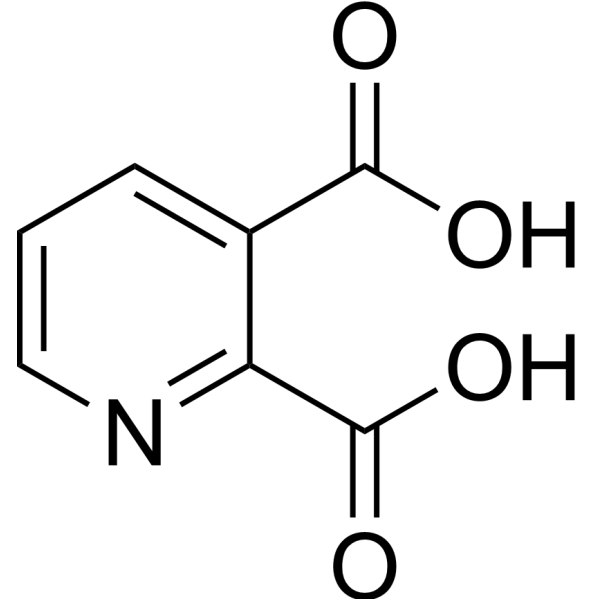
HY-100807
Quinolinic acidNMDA Receptor Agonist -
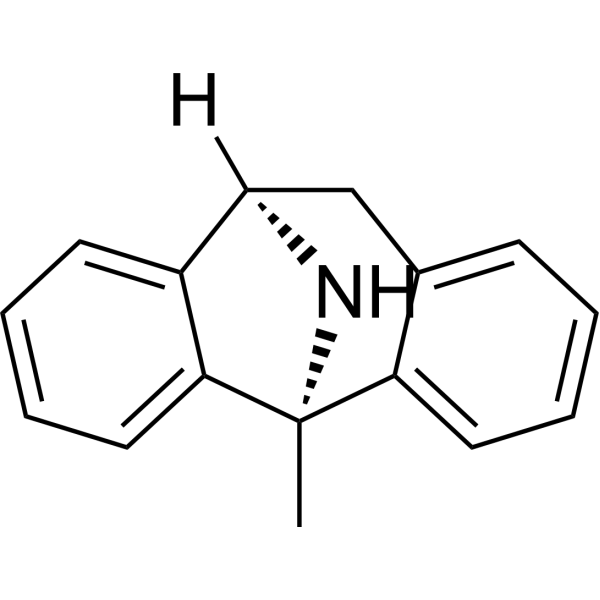
HY-15084B
DizocilpineNMDA Receptor Antagonist -
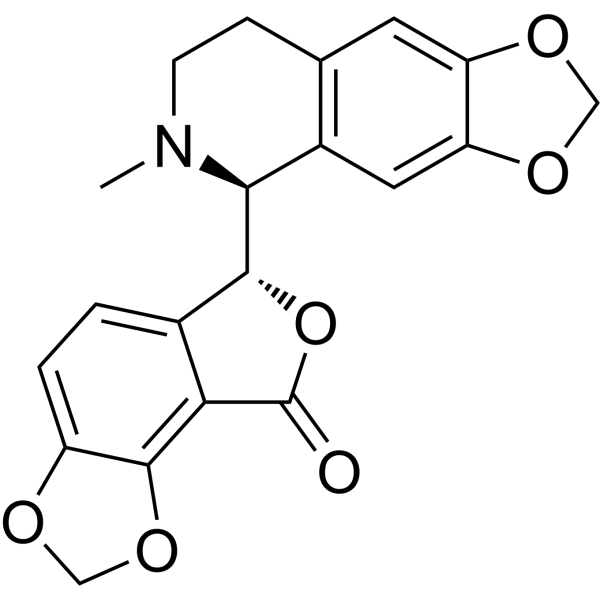
HY-N0219
BicucullineGABAA Receptor Antagonist -
HY-15066
CNQXAMPA Antagonist
Publications Citing Use of MedChemExpress (MCE) NMDA
More- Nat Commun. 2025 Apr 10;16(1):3419. [Abstract]
- Biomark Res. 2023 Aug 8;11(1):74. [Abstract]
- Adv Sci (Weinh). 2026 Sep;13(52):e76298.
- Cell Death Discov. 2024 Jan 17;10(1):34. [Abstract]
- Biol Psychiatry. 2026 Mar 16:S0006-3223(26)01107-8. [Abstract]
- Commun Biol. 2026 Apr 24;9(1):871. [Abstract]
- Respir Res. 2025 May 24;26(1):196. [Abstract]
- Int J Mol Sci. 2024 Nov 19;25(22):12404. [Abstract]
- Int J Mol Sci. 2022 Dec 18;23(24):16150. [Abstract]
- Neurochem Int. 2024 Sep:178:105787. [Abstract]
- Mol Neurobiol. 2024 Jul;61(7):4166-4177. [Abstract]
- Mol Neurobiol. 2023 Mar;60(3):1563-1579. [Abstract]
- Mol Neurobiol. 2023 Jan;60(1):133-144. [Abstract]
- Neuropharmacology. 2025 Mar 15:266:110284. [Abstract]
- J Inflamm Res. 2025 Jan 8:18:367-380. [Abstract]
- Neurochem Res. 2025 Jan 3;50(1):70. [Abstract]
- Brain Res Bull. 2020 May:158:66-76. [Abstract]
- Acta Biochim Biophys Sin (Shanghai). 2017 Sep 1;49(9):827-834. [Abstract]
- J Neurosci. 2024 Jul 10;44(28):e0222242024. [Abstract]
- Front Biosci (Landmark Ed). 2023 Jul 19;28(7):140. [Abstract]
- Neuromodulation. 2025 Aug;28(6):962-975. [Abstract]
- Toxicol Appl Pharmacol. 2024 Feb:483:116800. [Abstract]
- Diagn Pathol. 2025 Jul 2;20(1):79. [Abstract]
- J Pain Res. 2026 Jun 3:19:604818. [Abstract]
- Front Genet. 2024 Apr 17:15:1366453. [Abstract]
- Biochem Biophys Res Commun. 2024 Dec 20:739:150914. [Abstract]
- Neuroreport. 2017 May 24;28(8):444-450. [Abstract]
- Int J Ophthalmol. 2023 Nov 18;16(11):1746-1755. [Abstract]
- Folia Neuropathol. 2023;61(1):25-36. [Abstract]
- Eur J Integr Med. 2026 Aug 4;87:102742.
- bioRxiv. 2026 Jul 13.
- Authorea. 2026 May 25.
- University of Groningen. 2025 Jul 4.
- Res Sq. 2024 Jul 15.
- Heliyon. 2023 May 29;9(6):e16631. [Abstract]
 Customer Validation & Images

-
Cell Imaging/Staining
-
Cell Imaging/Staining
-
Flow Cytometry
-
WB
-
WB
All iGluR Isoforms
MoreAll Endogenous Metabolite Isoforms
More

Biological Activity
Description
IC50 & Target
|
Human Endogenous Metabolite |
NMDA Receptor |
Cellular Effect
|
Cell Line

|
Type | Value | Description | References |
|---|---|---|---|---|
| Oocyte | EC50 |
22 μM
Compound: NMDA
|
Activity at rat recombinant NR1/NR2B receptor expressed in Xenopus oocytes assessed as effect on glutamate-induced current by two voltage clamp electrophysiology
Activity at rat recombinant NR1/NR2B receptor expressed in Xenopus oocytes assessed as effect on glutamate-induced current by two voltage clamp electrophysiology
|
[PMID: 18578474] |
| Oocyte | EC50 |
23 μM
Compound: NMDA
|
Activity at rat recombinant NR1/NR2C receptor expressed in Xenopus oocytes assessed as effect on glutamate-induced current by two voltage clamp electrophysiology
Activity at rat recombinant NR1/NR2C receptor expressed in Xenopus oocytes assessed as effect on glutamate-induced current by two voltage clamp electrophysiology
|
[PMID: 18578474] |
| Oocyte | EC50 |
75 μM
Compound: NMDA
|
Activity at rat recombinant NR1/NR2A receptor expressed in Xenopus oocytes assessed as effect on glutamate-induced current by two voltage clamp electrophysiology
Activity at rat recombinant NR1/NR2A receptor expressed in Xenopus oocytes assessed as effect on glutamate-induced current by two voltage clamp electrophysiology
|
[PMID: 18578474] |
| Oocyte | EC50 |
8.3 μM
Compound: NMDA
|
Activity at rat NR1/NR2D receptor expressed in Xenopus oocytes assessed as effect on glutamate-induced current by two voltage clamp electrophysiology
Activity at rat NR1/NR2D receptor expressed in Xenopus oocytes assessed as effect on glutamate-induced current by two voltage clamp electrophysiology
|
[PMID: 18578474] |
In Vitro
NMDA exerts a significant augmentation of the adrenal binding independently of the incubation temperature in a concentration-dependent manner[2].
MedChemExpress (MCE) has not independently confirmed the accuracy of these methods. They are for reference only. .
In Vivo
MedChemExpress (MCE) has not independently confirmed the accuracy of these methods. They are for reference only.


Chemical Information
-
CAS No. 6384-92-5
-
Appearance Solid
-
Molecular Weight 147.13
-
Formula C5H9NO4
-
Color White to off-white
-
SMILES
O=C(O)C[C@H](C(O)=O)NC
-
Synonyms
N-Methyl-D-aspartic acid
-
Structure Classification
-
Initial Source
-
Shipping
Room temperature in continental US; may vary elsewhere.
-
Storage
Powder -20°C 3 years 4°C 2 years In solvent -80°C 2 years -20°C 1 year


Publications (35)
-
Journal Impact Factor
-
Most Recent
-
Nat Commun
A TLK2-mediated calcium-driven cell death pathway links neuronal degeneration to nuclear envelope disruption. [Abstract]2025 Apr 10;16(1):3419. PMID: 40210858
NMDA purchased from MedChemExpress. Usage Cited in: Nat Commun. 2025 Apr 10;16(1):3419. [Abstract]
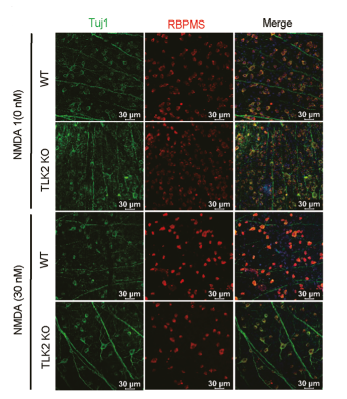
Confocal microscopy images showing the survival of retinal ganglion cells (RGCs) in wild-type and TLK2 CKO transgenic mice, double-labeled with Tuj1 and RBPMS, following intravitreal injection of sc-AAV2/2-CMV-Cre virus. Mice were intravitreally injected with 10 nmol and 30 nmol NMDA, and RGC survival rates were assessed.
-
Biomark Res
Identification of GRIN2D as a novel therapeutic target in pancreatic ductal adenocarcinoma. [Abstract]2023 Aug 8;11(1):74. PMID: 37553583 -
-
Cell Death Discov
2024 Jan 17;10(1):34. PMID: 38233385
NMDA purchased from MedChemExpress. Usage Cited in: Cell Death Discov. 2024 Jan 17;10(1):34. [Abstract]
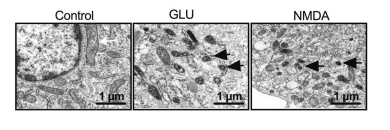
Ultrastructure of the mitochondria in HUVECs treated with GLU or NMDA (1 mM; 24 h), visualized by TEM.
NMDA purchased from MedChemExpress. Usage Cited in: Cell Death Discov. 2024 Jan 17;10(1):34. [Abstract]
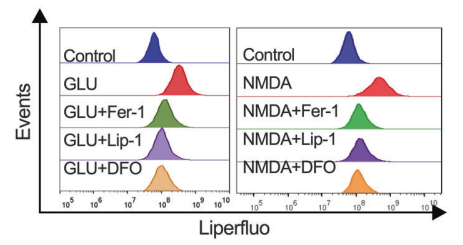
After pretreatment with Fer-1 (10 μM), Lip-1 (2 μM), or DFO (10 μM) for 1 hour, the cells were treated with GLU or NMDA (1 mM) for 24 hours, and then flow cytometry was performed.
-
Biol Psychiatry
Cannabidiol Mitigates Ketamine-Induced Hyperlocomotion Via Allosteric Potentiation of Ventral Tegmental Glycine Receptor α1 Signaling. [Abstract]2026 Mar 16:S0006-3223(26)01107-8. PMID: 41850603 -
Commun Biol
Environmental enrichment reverses ELS-induced visceral pain and depression through a prefrontal-limbic circuit involving CB1Rs. [Abstract]2026 Apr 24;9(1):871. PMID: 42032059 -
Respir Res
Phenylacetylglutamine produced from injury lung alveolar epithelial cells promotes the function of BMSCs by regulating NONRATT006276.2/Mapt pathway. [Abstract]2025 May 24;26(1):196. PMID: 40413470 -
Int J Mol Sci
2024 Nov 19;25(22):12404. PMID: 39596468 -
Int J Mol Sci
Neuroprotection of Kaji-Ichigoside F1 via the BDNF/Akt/mTOR Signaling Pathways against NMDA-Induced Neurotoxicity. [Abstract]2022 Dec 18;23(24):16150. PMID: 36555790 -
Neurochem Int
2024 Sep:178:105787. PMID: 38830510 -
Mol Neurobiol
Inhibiting Caveolin-1-Related Akt/mTOR Signaling Pathway Protects Against N-methyl-D-Aspartate Receptor Activation-Mediated Dysfunction of Blood-Brain Barrier in vitro. [Abstract]2024 Jul;61(7):4166-4177. PMID: 38066401 -
Mol Neurobiol
The Weakened Interaction Between HECTD4 and GluN2B in Ischemic Stroke Promotes Calcium Overload and Brain Injury Through a Mechanism Involving the Decrease of GluN2B and MALT1 Ubiquitination. [Abstract]2023 Mar;60(3):1563-1579. PMID: 36527595 -
Mol Neurobiol
Carnosic Acid Attenuates AβOs-Induced Apoptosis and Synaptic Impairment via Regulating NMDAR2B and Its Downstream Cascades in SH-SY5Y Cells. [Abstract]2023 Jan;60(1):133-144. PMID: 36224322 -
Neuropharmacology
Curcumin analog C16 attenuates bone cancer pain induced by MADB 106 breast cancer cells in female rats and inhibits the CREB/NLGN2 signaling axis by targeting CaMKⅠα. [Abstract]2025 Mar 15:266:110284. PMID: 39725125 -
J Inflamm Res
Potential Functions and Causal Associations of GNLY in Primary Open-Angle Glaucoma: Integration of Blood-Derived Proteome, Transcriptome, and Experimental Verification. [Abstract]2025 Jan 8:18:367-380. PMID: 39802509 -
Neurochem Res
PKR Inhibitor C16 Regulates HIV-gp120 Induced Neuronal Injury and Cognitive Impairment in Vivo and in Vitro Models. [Abstract]2025 Jan 3;50(1):70. PMID: 39752056 -
Brain Res Bull
Modulation of NR1 receptor by CaMKIIα plays an important role in chronic itch development in mice. [Abstract]2020 May:158:66-76. PMID: 32112850 -
Acta Biochim Biophys Sin (Shanghai)
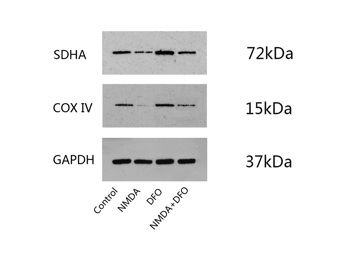
Neuroprotective effect of deferoxamine on N-methyl-d-aspartate-induced excitotoxicity in RGC-5 cells. [Abstract]2017 Sep 1;49(9):827-834. PMID: 28910980
NMDA purchased from MedChemExpress. Usage Cited in: Acta Biochim Biophys Sin (Shanghai). 2017 Sep 1;49(9):827-834. [Abstract]
NMDA (400 μM; 24 h).Representative western blots for SDHA and COX IV in the different groups of RGC-5 cells after 24 h (GAPDH is used as the reference protein).
-
J Neurosci
Obesity alters POMC and kisspeptin neuron crosstalk leading to reduced luteinizing hormone in male mice. [Abstract]2024 Jul 10;44(28):e0222242024. PMID: 38744532 -
Front Biosci (Landmark Ed)
A Metabolomics-Based Study on NMDAR-Mediated Mitochondrial Damage through Calcium Overload and ROS Accumulation in Myocardial Infarction. [Abstract]2023 Jul 19;28(7):140. PMID: 37525913 -
Neuromodulation
Kilohertz High-Frequency Electrical Stimulation Effectively Mitigates Hyperalgesia in Mice With Neuropathic Pain Through Regulation of the Calcium/Calmodulin-Dependent Protein Kinase II/N-Methyl-D-Aspartate 2B Signaling Pathway. [Abstract]2025 Aug;28(6):962-975. PMID: 40243981 -
Toxicol Appl Pharmacol
Esketamine induces apoptosis of nasopharyngeal carcinoma cells through the PERK/CHOP pathway. [Abstract]2024 Feb:483:116800. PMID: 38219984 -
Diagn Pathol
SHMT2 overexpression improves glaucoma by enhancing mitophagy in retinal ganglion cells through promoting the phospho of PINK1. [Abstract]2025 Jul 2;20(1):79. PMID: 40604870 -
J Pain Res
Wrist-Ankle Acupuncture Alleviates Paclitaxel-Induced Neuropathic Pain in Mice by Neuronal α7 Nicotinic Acetylcholine Receptor-Dependent Modulation of Spinal Glutamatergic/NMDAR Signaling. [Abstract]2026 Jun 3:19:604818. PMID: 42267150 -
Front Genet
Identification of immune-related biomarkers for glaucoma using gene expression profiling. [Abstract]2024 Apr 17:15:1366453. PMID: 38694874 -
Biochem Biophys Res Commun
2024 Dec 20:739:150914. PMID: 39536412 -
Neuroreport
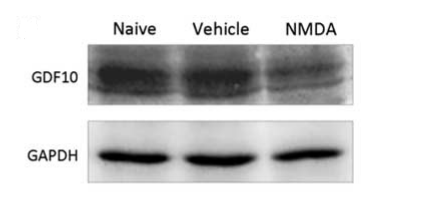
Decrease of growth and differentiation factor 10 contributes to neuropathic pain through N-methyl-D-aspartate receptor activation. [Abstract]2017 May 24;28(8):444-450. PMID: 28394782
NMDA purchased from MedChemExpress. Usage Cited in: Neuroreport. 2017 May 24;28(8):444-450. [Abstract]
NMDA (intrathecal injection of 1 μg/kg, continued for 3 days). Western blot results further confirm the decrease in GDF10 expression induced by NMDA.
-
Int J Ophthalmol
In vitro protective effect of recombinant prominin-1 combined with microRNA-29b on N-methyl-D-aspartate-induced excitotoxicity in retinal ganglion cells. [Abstract]2023 Nov 18;16(11):1746-1755. PMID: 38028520 -
Folia Neuropathol
Cognitive impairment of MRL mice is related to NMDA receptor-mediated inflammatory response and production of adhesion molecules in MRL/lpr mice-derived micro-vascular endothelial cells. [Abstract]2023;61(1):25-36. PMID: 37114958 -
-
-
-
-
-
Heliyon
Mechanism of new optimized Sheng-Mai-San Formula to regulate cardiomyocyte apoptosis through NMDAR pathway. [Abstract]2023 May 29;9(6):e16631. PMID: 37416647


Solvent & Solubility
In Vitro:
H2O : 33.33 mg/mL (226.53 mM; Need ultrasonic)
DMSO : 10 mg/mL (67.97 mM; Need ultrasonic; Hygroscopic DMSO has a significant impact on the solubility of product, please use newly opened DMSO)
Please refer to the solubility information to select the appropriate solvent. Once prepared, please aliquot and store the solution to prevent product inactivation from repeated freeze-thaw cycles.
Storage method and period of stock solution: -80°C, 2 years; -20°C, 1 year. When stored at -80°C, please use it within 2 years. When stored at -20°C, please use it within 1 year.
* Note: If you choose water as the stock solution, please dilute it to the working solution, then filter and sterilize it with a 0.22 μm filter before use.
Please refer to the solubility information to select the appropriate solvent. Once prepared, please aliquot and store the solution to prevent product inactivation from repeated freeze-thaw cycles.
Storage method and period of stock solution: -80°C, 2 years; -20°C, 1 year. When stored at -80°C, please use it within 2 years. When stored at -20°C, please use it within 1 year.
* Note: If you choose water as the stock solution, please dilute it to the working solution, then filter and sterilize it with a 0.22 μm filter before use.
Concentration (start) × Volume (start) = Concentration (final) × Volume (final)
In Vivo:
Select the appropriate dissolution method based on your experimental animal and administration route.
- For the following dissolution methods, please ensure to first prepare a clear stock solution using an In Vitro approach and then sequentially add co-solvents:
- To ensure reliable experimental results, the clarified stock solution can be appropriately stored based on storage conditions. As for the working solution for In Vivo experiments, it is recommended to prepare freshly and use it on the same day.
- The percentages shown for the solvents indicate their volumetric ratio in the final prepared solution. If precipitation or phase separation occurs during preparation, heat and/or sonication can be used to aid dissolution.
Add each solvent one by one: 10% DMSO 40% PEG300 5% Tween-80 45% Saline
Solubility: ≥ 1 mg/mL (6.80 mM); Clear solution
This protocol yields a clear solution of ≥ 1 mg/mL (saturation unknown).
Taking 1 mL working solution as an example, add 100 μL DMSO stock solution (10.0 mg/mL) to 400 μL PEG300, and mix evenly; then add 50 μL Tween-80 and mix evenly; then add 450 μL Saline to adjust the volume to 1 mL.
Preparation of Saline: Dissolve 0.9 g sodium chloride in ddH₂O and dilute to 100 mL to obtain a clear Saline solution.
Add each solvent one by one: 10% DMSO 90% (20% SBE-β-CD in Saline)
Solubility: ≥ 1 mg/mL (6.80 mM); Clear solution
This protocol yields a clear solution of ≥ 1 mg/mL (saturation unknown).
Taking 1 mL working solution as an example, add 100 μL DMSO stock solution (10.0 mg/mL) to 900 μL 20% SBE-β-CD in Saline, and mix evenly.
Preparation of 20% SBE-β-CD in Saline (4°C, storage for one week): 2 g SBE-β-CD powder is dissolved in 10 mL Saline, completely dissolve until clear.
For the following dissolution methods, please prepare the working solution directly:
It is recommended to prepare fresh solutions and use them promptly within a short period of time.
The percentages shown for the solvents indicate their volumetric ratio in the final prepared solution. If precipitation or phase separation occurs during preparation, heat and/or sonication can be used to aid dissolution.
Add each solvent one by one: PBS
Solubility: 36.67 mg/mL (249.24 mM); Clear solution; Need ultrasonic
In Vivo Dissolution Calculator
Please enter the basic information of animal experiments:
-
-
-
-
Recommended: Prepare an additional quantity of animals to account for potential losses during experiments.
Working solution concentration: 0.22 mg/mL
This product has good water solubility, please refer to the measured solubility data in water/PBS/Saline for details.


Purity & Documentation
-
Data Sheet (283 KB)
-
SDS (396 KB)
- English - EN (396 KB)
- Français - FR (396 KB)
- Deutsch - DE (396 KB)
- Norwegian - NO (396 KB)
- Español - ES (396 KB)
- Swedish - SV (396 KB)
- Italian - IT (396 KB)
- Korean - KR (396 KB)
- Portuguese - PT (396 KB)
-
Handling Instructions (2659 KB)
References
[1]. Xia JD, et al. Centrally mediated ejaculatory response via sympathetic outflow in rats: role of N-methyl-D-aspartic acid receptors in paraventricular nucleus. Andrology. 2016 Nov 16. [Content Brief]
[2]. Yoneda Y, et al. Enhancement of [3H]glutamate binding by N-methyl-D-aspartic acid in rat adrenal. Brain Res. 1987 Mar 17;406(1-2):24-31. [Content Brief]
[3]. Jiang L, et al. Decrease of growth and differentiation factor 10 contributes to neuropathic pain through N-methyl-D-aspartate receptor activation. Neuroreport. 2017 May 24;28(8):444-450. [Content Brief]


Complete Stock Solution Preparation Table
Please refer to the solubility information to select the appropriate solvent. Once prepared, please aliquot and store the solution to prevent product inactivation from repeated freeze-thaw cycles.
Storage method and period of stock solution: -80°C, 2 years; -20°C, 1 year. When stored at -80°C, please use it within 2 years. When stored at -20°C, please use it within 1 year.
| Optional Solvent | Concentration Solvent Mass | 1 mg | 5 mg | 10 mg | 25 mg |
|---|---|---|---|---|---|
| DMSO / H2O | 1 mM | 6.7967 mL | 33.9836 mL | 67.9671 mL | 169.9178 mL |
| 5 mM | 1.3593 mL | 6.7967 mL | 13.5934 mL | 33.9836 mL | |
| 10 mM | 0.6797 mL | 3.3984 mL | 6.7967 mL | 16.9918 mL | |
| 15 mM | 0.4531 mL | 2.2656 mL | 4.5311 mL | 11.3279 mL | |
| 20 mM | 0.3398 mL | 1.6992 mL | 3.3984 mL | 8.4959 mL | |
| 25 mM | 0.2719 mL | 1.3593 mL | 2.7187 mL | 6.7967 mL | |
| 30 mM | 0.2266 mL | 1.1328 mL | 2.2656 mL | 5.6639 mL | |
| 40 mM | 0.1699 mL | 0.8496 mL | 1.6992 mL | 4.2479 mL | |
| 50 mM | 0.1359 mL | 0.6797 mL | 1.3593 mL | 3.3984 mL | |
| 60 mM | 0.1133 mL | 0.5664 mL | 1.1328 mL | 2.8320 mL | |
| H2O | 80 mM | 0.0850 mL | 0.4248 mL | 0.8496 mL | 2.1240 mL |
| 100 mM | 0.0680 mL | 0.3398 mL | 0.6797 mL | 1.6992 mL |
* Note: If you choose water as the stock solution, please dilute it to the working solution, then filter and sterilize it with a 0.22 μm filter before use.


NMDA Related Classifications
HY-17551 Related Classifications
 Powered by Bioz