1. Others Stem Cell/Wnt Neuronal Signaling Apoptosis GPCR/G Protein Metabolic Enzyme/Protease TGF-beta/Smad
  2. Adrenergic Receptor PKA Environmental Pollutants Endogenous Metabolite Apoptosis PGC-1α
  3. D-Mannitol

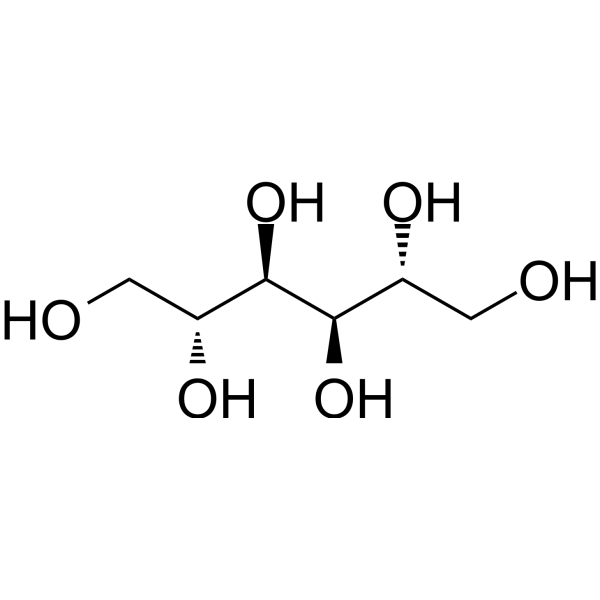
D-マンニトール  (Synonyms: D-Mannitol; Mannitol; Mannite)

製品番号: HY-N0378 純度: 99.93%
COA 取扱説明書 Technical Support

D-Mannitol (Mannitol) is an oral, resistant sugar widely used in the food and pharmaceutical industries to promote the absorption and retention of calcium and magnesium through cecal fermentation, while acting as a osmotic diuretic to reduce tissue edema. D-Mannitol can enhance brown fat formation, improve insulin effect, reduce blood sugar levels, And through the start the β3-adrenergic receptor (β3-AR), PGC1α and PKA induced by means of white fat cells into brown fat cells. D-Mannitol is commonly used to maintain osmotic pressure between the plant cytoplasm and the culture medium and protect cells when the cell wall is weakened or even removed.

商品は「研究用試薬」です。人や動物の医療用・臨床診断用・食品用の製品ではありません。
研究用途以外に使用した場合、当社は一切の責任を負いかねます。

CAS 番号 : 69-65-8

容量 価格(税別) 在庫状況 数量
Solid + Solvent (Highly Recommended)
10 mM * 1 mL in Water
ready for reconstitution
USD 60 在庫あり
Solution
10 mM * 1 mL in Water USD 60 在庫あり
Solid
500 mg $55 在庫あり
5 g $66 在庫あり
10 g $85 在庫あり
25 g $120 在庫あり
50 g $145 在庫あり
100 g $175 在庫あり
> 100 g   お問い合わせ  

* アイテムを追加する前、数量をご選択ください

This product is a controlled substance and not for sale in your territory.

カスタマーレビュー

Based on 13 publication(s) in Google Scholar

Other Forms of D-Mannitol:

Top Publications Citing Use of Products

    D-Mannitol purchased from MedChemExpress. Usage Cited in: Mediators Inflamm. 2024 May 2:2024:7524314.  [Abstract]

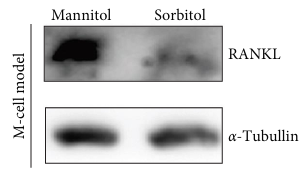
    D-Mannitol (100 mM; 24 h). After establishing M-cell model, the total protein was extracted from M-cell model treated with mannitol for 24 hr, western blotting was used to detect RANKL.

    D-Mannitol purchased from MedChemExpress. Usage Cited in: Mediators Inflamm. 2024 May 2:2024:7524314.  [Abstract]

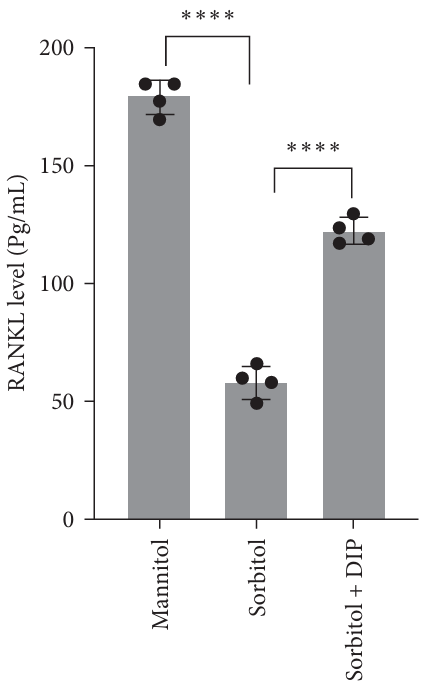
    D-Mannitol (100 mM; 24 h). After establishing M-cell model, the total protein was extracted from M-cell model treated with mannitol for 24 hr, the concentration of RANKL level in supernatant was measured in indicated group through ELISA assay.

    D-Mannitol purchased from MedChemExpress. Usage Cited in: Mediators Inflamm. 2024 May 2:2024:7524314.  [Abstract]

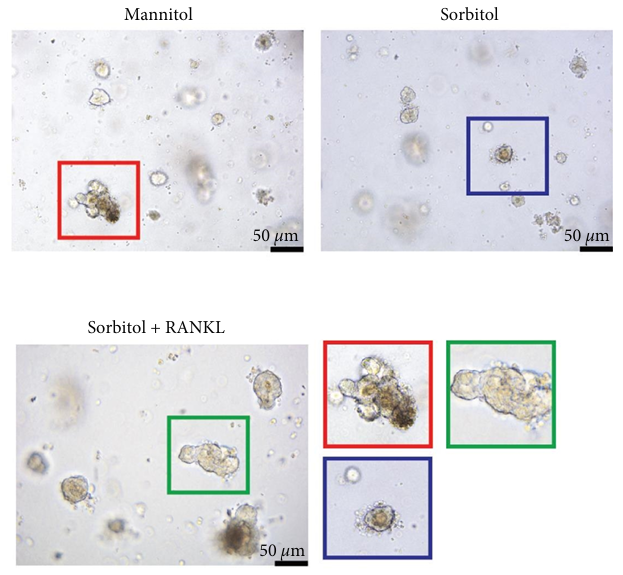
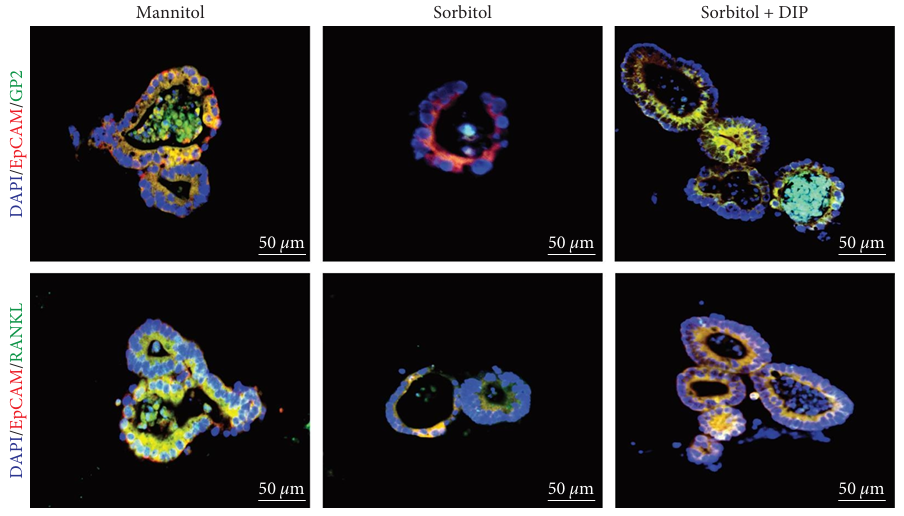
    D-Mannitol (100 mM; 7 days). Intestinal organoids culture was performed to visualize the effect of PDE4 inhibition by DIP on sorbitol-mediated M-cell development.

    D-Mannitol purchased from MedChemExpress. Usage Cited in: Mediators Inflamm. 2024 May 2:2024:7524314.  [Abstract]

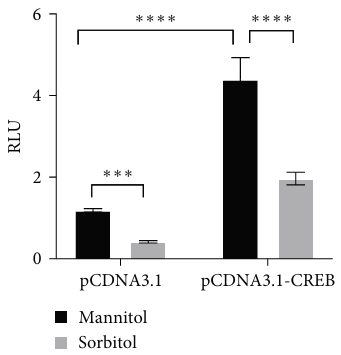
    D-Mannitol (100 mM; 24 h). Reporter gene containing RANKL promoter was transfected into CaCO2 cells combined with pGL4.74 plasmid for 24 hr, CaCO2 cell was treated with mannitol and sorbitol for further 24 hr, the relative luciferase unit was detected using dual-luciferase reporter assay system.

    D-Mannitol purchased from MedChemExpress. Usage Cited in: Mediators Inflamm. 2024 May 2:2024:7524314.  [Abstract]

    D-Mannitol (100 mM; 24 h). IF was used to detect M cells mature marker GP2 expression and RANKL expression in the indicated group.

    Adrenergic Receptor アイソフォーム固有の製品をすべて表示:

    PKA アイソフォーム固有の製品をすべて表示:

    Endogenous Metabolite アイソフォーム固有の製品をすべて表示:

    • 生物活性

    • 純度とドキュメンテーション

    • 参考文献

    • カスタマーレビュー

    製品説明

    D-Mannitol (Mannitol) is an oral, resistant sugar widely used in the food and pharmaceutical industries to promote the absorption and retention of calcium and magnesium through cecal fermentation, while acting as a osmotic diuretic to reduce tissue edema. D-Mannitol can enhance brown fat formation, improve insulin effect, reduce blood sugar levels, And through the start the β3-adrenergic receptor (β3-AR), PGC1α and PKA induced by means of white fat cells into brown fat cells[1][2][3][4][5][6][7]. D-Mannitol is commonly used to maintain osmotic pressure between the plant cytoplasm and the culture medium and protect cells when the cell wall is weakened or even removed[8].

    IC50 & Target

    Microbial Metabolite


    Beta-3 adrenergic receptor


    体外実験

    D-Mannitol (10 μM) can increase the number of mitochondria and promote the expression of brown fat related genes in differentiated 3T3-L1 cell models[7].
    D-Mannitol (10 μM; 7 days) in 3T3-L1 adipocyte cells has the effect of stimulating brown fat formation, enhancing insulin effect, reducing blood sugar levels, and promoting fat oxidation and the conversion of white fat to beige fat[7].
    D-Mannitol (10 μM; 7 days) induce Browning of white adipocytes by activating β3-adrenergic receptors (β3-AR), PGC1α and PKA[7].

    MedChemExpress (MCE) has not independently confirmed the accuracy of these methods. They are for reference only.

    Western Blot Analysis[7]

    Cell Line: 3T3-L1 Adipocytes
    Concentration: 10 μM
    Incubation Time: 7 days
    Result: Increased expression of PGC1α, a key transcriptional coactivator of UCP1, also increased expression of UCP1 and PPARγ proteins, which helped to enhance the effects of insulin and lower blood sugar levels.
    Triggered the expression of the FGF21 gene, which is associated with thermogenic programming.
    Activation of AMPK and phosphorylation of ACC and HMGCR promoted β-oxidation, and eliminated UCP1 and ACC expression when AMPK was blocked.

    RT-PCR[7]

    Cell Line: 3T3-L1 Adipocytes
    Concentration: 10 μM
    Incubation Time:
    Result: Increased the expression of brown fat associated genes such as PPARγ coactivator 1α (PGC1α), PR domain 16 (PRDM16), and UCP1.
    Increased the expression of genes related to energy expenditure and heat production.
    体内実験

    D-Mannitol (orally, 7 or 28 days) promotes calcium and magnesium absorption and retention by fermentation in the cecum in male Wistar rat models[4].
    D-Mannitol (0.5, 2.5, 1.5 g/kg; Intravenous injection (i.v.), 4-hour intervals, 24 h) in the rat model of ischemic cortex infarction repeatedly infusion, can lead to infarction area and the percentage of H2O ipsilateral hemisphere reduce and decreased tissue pressure[6].
    D-Mannitol (250, 500 mg/kg; Oral gavage (p.o.); 3 weeks) increases energy expenditure through lipid beta-oxidation in a mouse model, thereby contributing to the Browning of iWAT in vivo[7].

    MedChemExpress (MCE) has not independently confirmed the accuracy of these methods. They are for reference only.

    Animal Model: 4-wk-old growing male Wistar rats[4]
    Dosage: 20-80 g/kg
    Administration: Oral gavage (p.o.), 28 days
    Result: Improved absorption and retention of calcium (Ca) and magnesium (Mg).
    Animal Model: 9-wk-old growing male Wistar rats[4]
    Dosage: 40 g/kg, 80 g/kg
    Administration: Oral gavage (p.o.), 7 days
    Result: Increased cecal weight and tissue weight, and reduced pH.
    Animal Model: Adult cats[5]
    Dosage: 0.33 gm/kg
    Administration: Intraperitoneal injection (i.p.), 4-hour intervals, single dose or five doses
    Result: After multiple injections, the osmotic concentration gradient between vasogenic cerebral edema and plasma was reversed, which was associated with the worsening of vasogenic cerebral edema.
    Animal Model: Ischemic cortex infarction model in rats[6]
    Dosage: 0.5, 2.5, 1.5 g/kg
    Administration: Intravenous injection (i.v.), 4-hour intervals, 24h
    Result: Repeated infusion results in a dose-dependent increase in plasma osmotic pressure and a dose-dependent decrease in the percentage of water in the ischemic cerebral tissue of the arterial cortex and ipsilateral hemisphere.
    Significantly reduced organizational stress.
    Animal Model: Mouse Model[7]
    Dosage: 250 mg/kg, 500 mg/kg
    Administration: Oral gavage (p.o.), 3 weeks
    Result: Caused a significant decrease in the average body weight of the mice.
    Increased the conversion of white adipose tissue to brown tissue.
    Led to a significant increase in the expression of genes regulating mitochondrial heat production and lipid oxidation, such as Cidea, CPT1, UCP1, and PGC1α.
    臨床実験
    分子量

    182.17

    分子式

    C6H14O6

    CAS 番号
    Appearance

    Solid

    Color

    White to off-white

    SMILES

    OC[C@H]([C@H]([C@@H]([C@@H](CO)O)O)O)O

    Structure Classification
    Initial Source
    輸送条件

    Room temperature in continental US; may vary elsewhere.

    保管条件
    Powder -20°C 3 years
      4°C 2 years
    In solvent -80°C 6 months
      -20°C 1 month
    溶剤 & 溶解度
    体外: 

    H2O : ≥ 36 mg/mL (197.62 mM)

    *"≥" means soluble, but saturation unknown.

    Preparing
    Stock Solutions
    Concentration Solvent Mass 1 mg 5 mg 10 mg
    1 mM 5.4894 mL 27.4469 mL 54.8938 mL
    5 mM 1.0979 mL 5.4894 mL 10.9788 mL
    10 mM 0.5489 mL 2.7447 mL 5.4894 mL
    View the Complete Stock Solution Preparation Table

    * Please refer to the solubility information to select the appropriate solvent. Once prepared, please aliquot and store the solution to prevent product inactivation from repeated freeze-thaw cycles.
    Storage method and period of stock solution: -80°C, 2 years; -20°C, 1 year. When stored at -80°C, please use it within 2 years. When stored at -20°C, please use it within 1 year.

    * Note: If you choose water as the stock solution, please dilute it to the working solution, then filter and sterilize it with a 0.22 μm filter before use.

    • Molarity Calculator

    • Dilution Calculator

    Mass (g) = Concentration (mol/L) × Volume (L) × Molecular Weight (g/mol)

    Mass
    =
    Concentration
    ×
    Volume
    ×
    Molecular Weight *

    Concentration (start) × Volume (start) = Concentration (final) × Volume (final)

    一般には略語で表示されます:C1V1 = C2V2

    濃度 (開始)

    C1

    ×
    体積 (開始)

    V1

    =
    濃度 (終了)

    C2

    ×
    体積 (終了)

    V2

    体内:

    For the following dissolution methods, please prepare the working solution directly. It is recommended to prepare fresh solutions and use them promptly within a short period of time.
    The percentages shown for the solvents indicate their volumetric ratio in the final prepared solution. If precipitation or phase separation occurs during preparation, heat and/or sonication can be used to aid dissolution.

    • Protocol 1

      Add each solvent one by one:  PBS

      Solubility: 100 mg/mL (548.94 mM); Clear solution; Need ultrasonic

    In Vivo Dissolution Calculator
    Please enter the basic information of animal experiments:

    Dosage

    mg/kg

    Animal weight
    (per animal)

    g

    Dosing volume
    (per animal)

    μL

    Number of animals

    Recommended: Prepare an additional quantity of animals to account for potential losses during experiments.
    Calculation results:
    Working solution concentration: mg/mL
    This product has good water solubility, please refer to the measured solubility data in water/PBS/Saline for details.
    The concentration of the stock solution you require exceeds the measured solubility. The following solution is for reference only.If necessary, please contact MedChemExpress (MCE).
    純度とドキュメンテーション

    純度: 99.93%

    参考文献

    Complete Stock Solution Preparation Table

    * Please refer to the solubility information to select the appropriate solvent. Once prepared, please aliquot and store the solution to prevent product inactivation from repeated freeze-thaw cycles.
    Storage method and period of stock solution: -80°C, 2 years; -20°C, 1 year. When stored at -80°C, please use it within 2 years. When stored at -20°C, please use it within 1 year.

    Optional Solvent Concentration Solvent Mass 1 mg 5 mg 10 mg 25 mg
    H2O 1 mM 5.4894 mL 27.4469 mL 54.8938 mL 137.2345 mL
    5 mM 1.0979 mL 5.4894 mL 10.9788 mL 27.4469 mL
    10 mM 0.5489 mL 2.7447 mL 5.4894 mL 13.7234 mL
    15 mM 0.3660 mL 1.8298 mL 3.6596 mL 9.1490 mL
    20 mM 0.2745 mL 1.3723 mL 2.7447 mL 6.8617 mL
    25 mM 0.2196 mL 1.0979 mL 2.1958 mL 5.4894 mL
    30 mM 0.1830 mL 0.9149 mL 1.8298 mL 4.5745 mL
    40 mM 0.1372 mL 0.6862 mL 1.3723 mL 3.4309 mL
    50 mM 0.1098 mL 0.5489 mL 1.0979 mL 2.7447 mL
    60 mM 0.0915 mL 0.4574 mL 0.9149 mL 2.2872 mL
    80 mM 0.0686 mL 0.3431 mL 0.6862 mL 1.7154 mL
    100 mM 0.0549 mL 0.2745 mL 0.5489 mL 1.3723 mL

    * Note: If you choose water as the stock solution, please dilute it to the working solution, then filter and sterilize it with a 0.22 μm filter before use.

    • No file chosen (Maximum size is: 1024 Kb)
    • If you have published this work, please enter the PubMed ID.
    • Your name will appear on the site.
    • Molarity Calculator

    • Dilution Calculator

    The molarity calculator equation

    Mass (g) = Concentration (mol/L) × Volume (L) × Molecular Weight (g/mol)

    質量   濃度   体積   分子量 *
    = × ×

    The dilution calculator equation

    Concentration (start) × Volume (start) = Concentration (final) × Volume (final)

    一般には略語で表示されます:C1V1 = C2V2

    濃度 (開始) × 体積 (開始) = 濃度 (終了) × 体積 (終了)
    × = ×
    C1   V1   C2   V2
    Help & FAQs
    • Do most proteins show cross-species activity?

      Species cross-reactivity must be investigated individually for each product. Many human cytokines will produce a nice response in mouse cell lines, and many mouse proteins will show activity on human cells. Other proteins may have a lower specific activity when used in the opposite species.

    最近チェックした製品:

    オンラインお問い合わせ

    Your information is safe with us. * Required Fields.

    製品名


    カスタマ需要量 *

    お名前 *


    タイトル

    メールアドレス *


    電話番号 *

    デパートメント


    組纖名 *

    市区町村

    都道府県

    国或いは地域 *


    必ず会社名を記載ください。個人への返信は行いません。

    備考

    バルクお問い合わせ

    Inquiry Information

    製品名:
    D-Mannitol
    製品番号:
    HY-N0378
    数量:
    MCE 日本正規代理店: