



Mannoses
- 1
- 2
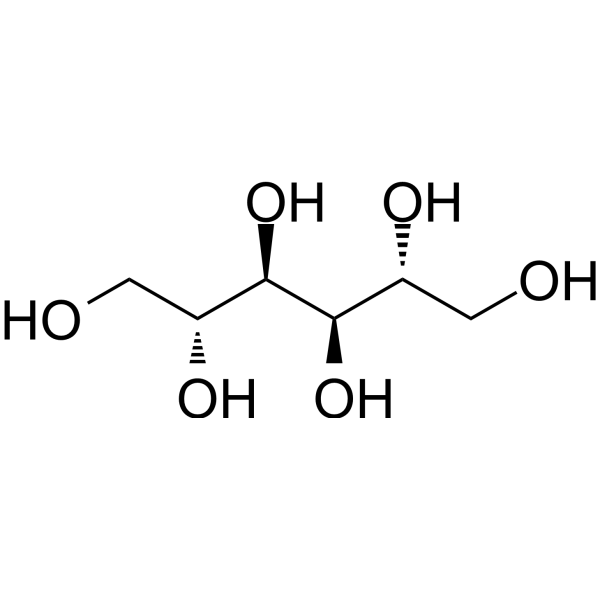
- Formula: C6H14O6
- Molecular Weight: 182.17
D-Mannitol (Mannitol) is an oral, resistant sugar widely used in the food and pharmaceutical industries to promote the absorption and retention of calcium and magnesium through cecal fermentation, while acting as a osmotic diuretic to reduce tissue edema. D-Mannitol can enhance brown fat formation, improve insulin effect, reduce blood sugar levels, And through the start the β3-adrenergic receptor (β3-AR), PGC1α and PKA induced by means of white fat cells into brown fat cells. D-Mannitol is commonly used to maintain osmotic pressure between the plant cytoplasm and the culture medium and protect cells when the cell wall is weakened or even removed.
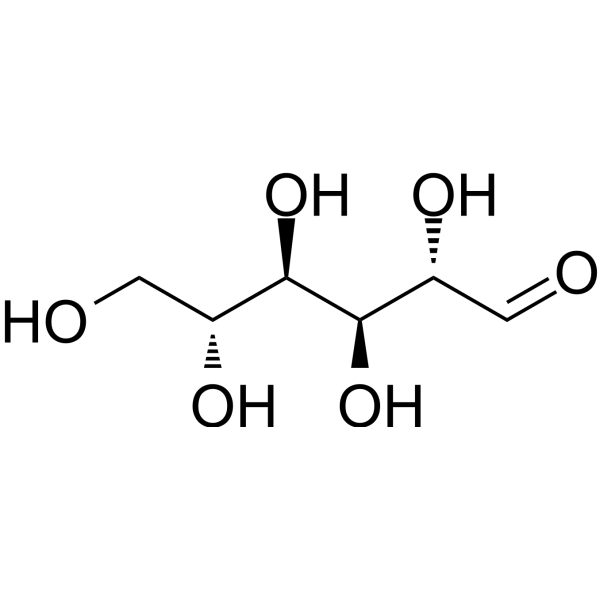
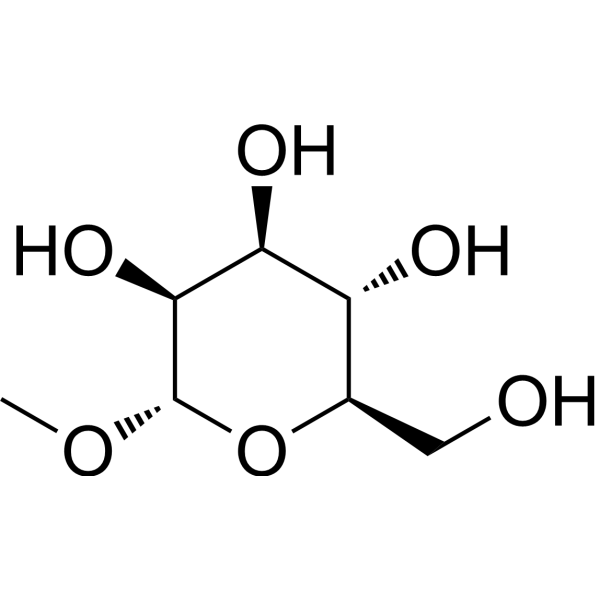
- Formula: C7H14O6
- Molecular Weight: 194.18
Methyl α-D-mannopyranoside (α-Methyl-D-mannoside) is a methyl glycoside derivative and conformational stabilizer of α-D-mannopyranose. The glycosidic bond conformation of Methyl α-D-mannopyranoside is significantly affected by the environment. In aqueous solution, Methyl α-D-mannopyranoside stabilizes into a trans conformation via intermolecular hydrogen bonds; in the gas phase, however, steric interactions drive Methyl α-D-mannopyranoside to prefer a clockwise gauche conformation. Methyl α-D-mannopyranoside also serves as a major component of secondary cell wall polymers in some bacteria and an active precursor site for virus-targeted glycoproteins. Methyl α-D-mannopyranoside acts as an acceptor substrate for alternansucrase, mediating the transfer of D-glucopyranosyl groups to generate a variety of glycosylated oligosaccharide products, with methyl α-D-glucopyranosyl-(1→6)-α-D-mannopyranoside as the main component. Methyl α-D-mannopyranoside is applicable to studies on bacterial pathogenic mechanisms associated with mannose-specific fimbrial lectins.

- Formula: C16H22O11
- Molecular Weight: 390.34
α-D-Mannose pentaacetate (1,2,3,4,6-Penta-O-acetyl-α-D-mannopyranose) acts as a lactate promoter. It increases lactate production in rat red blood cells.

- Formula: C16H18O8
- Molecular Weight: 338.31
4-Methylumbelliferyl-α-d-mannoside is a fluorescent substrate for α-D-mannosidase.
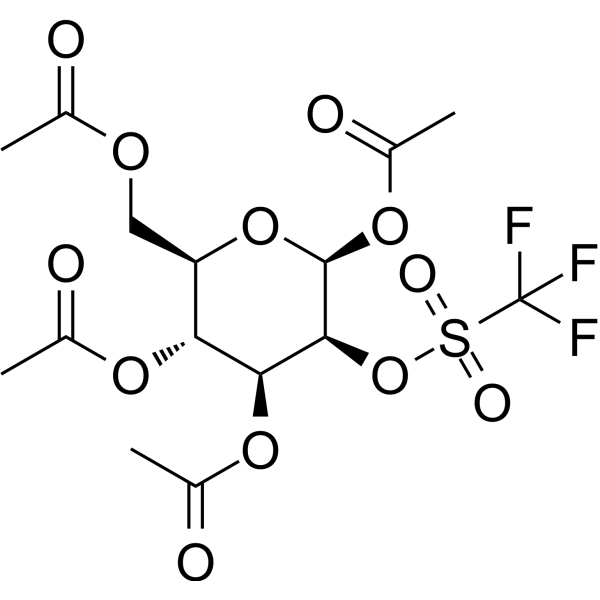
- Formula: C15H19F3O12S
- Molecular Weight: 480.36
Mannose triflate is a glucose analog. Mannose triflate is a precursor for 18F-FDG synthesis for PET applications. Mannose triflate binds to 18F via SN2 nucleophilic substitution reaction. Mannose triflate can be used for an imaging technique in detection of cancer.

- Formula: C16H22O11
- Molecular Weight: 390.34
1,2,3,4,6-Penta-O-acetyl-D-mannopyranose is an intermediate. 1,2,3,4,6-Penta-O-acetyl-D-mannopyranose can be used in the synthesis of 2,3,4,6-Tetra-O-acetyl-O-prop-1-yl-α-D-mannopyranoside.


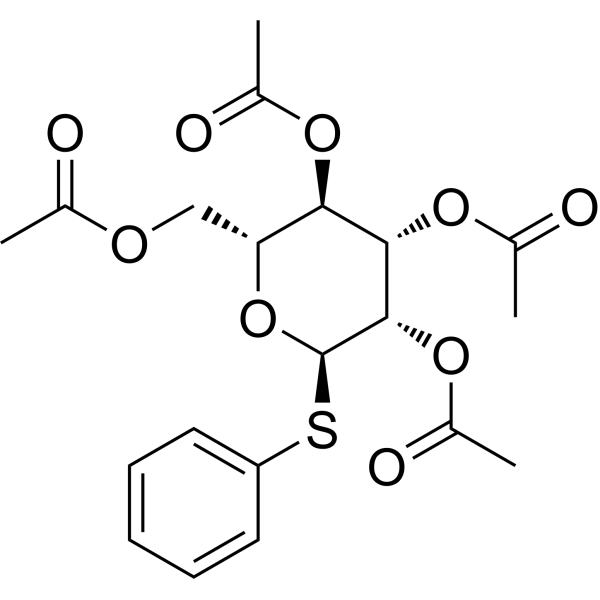
- Formula: C20H24O9S
- Molecular Weight: 440.46
Phenyl 1-thio-α-D-mannopyranoside 2,3,4,6-tetraacetate is a biochemical reagent that can be used as a biological material or organic compound for life science related research.

- Formula: C13H18O7
- Molecular Weight: 286.28
4-Methoxyphenyl α-D-mannopyranoside (4-Methoxyphenyl alpha-D-Mannopyranoside) is used in glycobiology research.

- Formula: C14H20O10
- Molecular Weight: 348.30
1,3,4,6-Tetra-O-acetyl-β-D-mannopyranose is a key intermediate in the preparation of the triflate precursor.

- Formula: C6H10O6
- Molecular Weight: 178.14
D-Mannonic acid-1,4-lactone is a kind of biochemical reagent.

- Formula: C21H26O11
- Molecular Weight: 454.42
4-Methoxyphenyl 2,3,4,6-tetra-O-acetyl-α-D-mannopyranoside is a class of biochemical reagents used in glycobiology research. Glycobiology studies the structure, synthesis, biology, and evolution of sugars. It involves carbohydrate chemistry, enzymology of glycan formation and degradation, protein-glycan recognition, and the role of glycans in biological systems. This field is closely related to basic research, biomedicine, and biotechnology.

- Formula: C21H22O6
- Molecular Weight: 370.40
Methyl 2,3:4,6-di-O-benzylidene-α-D-mannopryanoside is a class of biochemical reagents used in glycobiology research. Glycobiology studies the structure, synthesis, biology, and evolution of sugars. It involves carbohydrate chemistry, enzymology of glycan formation and degradation, protein-glycan recognition, and the role of glycans in biological systems. This field is closely related to basic research, biomedicine, and biotechnology.

- Formula: C16H20Cl3NO10
- Molecular Weight: 492.69
2,3,4,6-Tetra-O-acetyl-α-D-mannopyranosyl trichloroacetimidate is a class of biochemical reagents used in glycobiology research. Glycobiology studies the structure, synthesis, biology, and evolution of sugars. It involves carbohydrate chemistry, enzymology of glycan formation and degradation, protein-glycan recognition, and the role of glycans in biological systems. This field is closely related to basic research, biomedicine, and biotechnology.

- Formula: C12H20O6
- Molecular Weight: 260.28
2,3:5,6-Di-O-isopropylidene-α-D-mannofuranose is a biochemical reagent that can be used as a biological material or organic compound for life science related research.
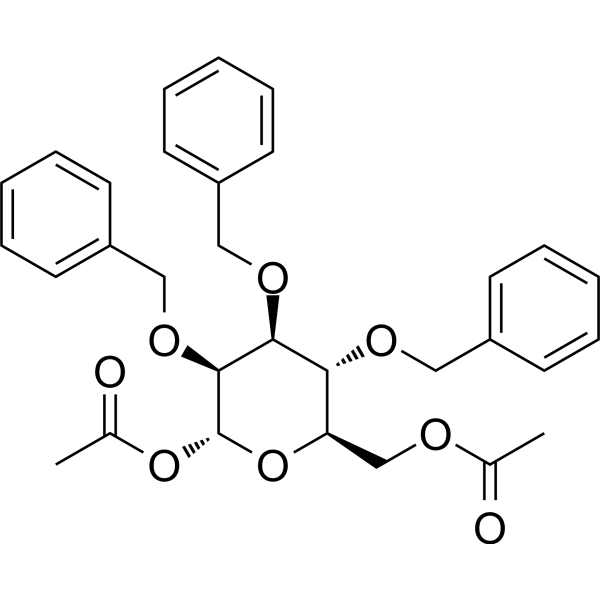
- Formula: C31H34O8
- Molecular Weight: 534.60
1,6-Di-O-acetyl-2,3,4-tri-O-benzyl-α-D-mannopyranose is a biochemical reagent that can be used as a biological material or organic compound for life science related research.
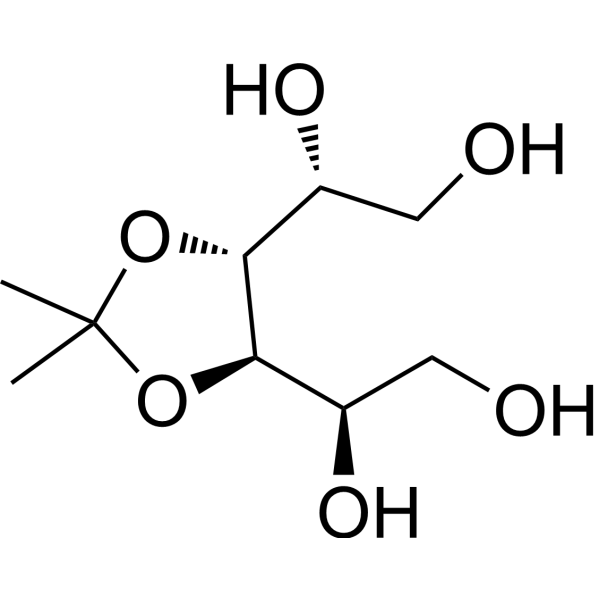
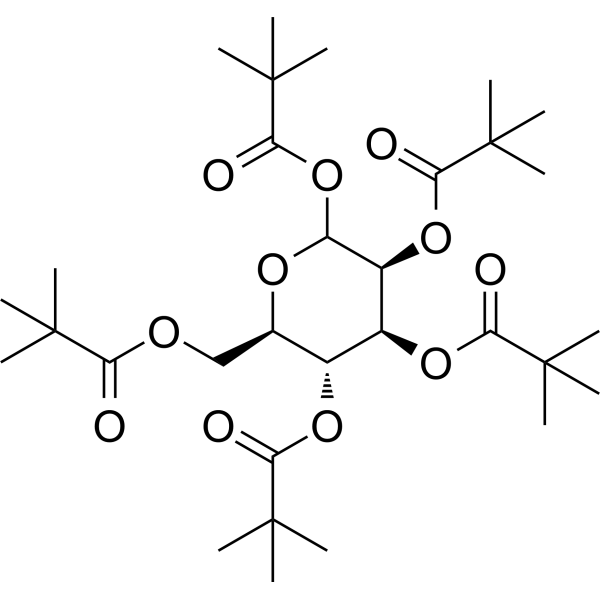
- Formula: C31H52O11
- Molecular Weight: 600.74
1,2,3,4,6-Penta-O-pivaloyl-D-mannopyranose is a biochemical reagent that can be used as a biological material or organic compound for life science related research.
- 1
- 2



