1. Stem Cell/Wnt TGF-beta/Smad Immunology/Inflammation GPCR/G Protein
  2. TGF-beta/Smad CCR
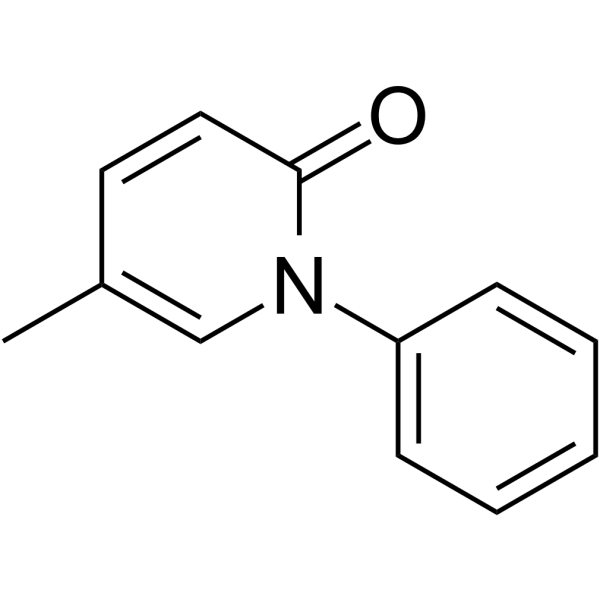
  3. Pirfenidone

Pirfenidone (AMR69) is an antifibrotic agent that attenuates CCL2 and CCL12 production in fibrocyte cells. Pirfenidone has growth-inhibitory effect and reduces TGF-β2 protein levels in human glioma cell lines. Pirfenidone also has anti-inflammatory activities.

연구목적의 판매만을 진행합니다. 환자를 대상으로 한 판매는 하지 않습니다.

CAS No. : 53179-13-8

사이즈 가격 재고 수량
Solid + Solvent (Highly Recommended)
10 mM * 1 mL in DMSO
ready for reconstitution
해외재고보유
Solution
10 mM * 1 mL in DMSO 해외재고보유
Solid
100 mg 해외재고보유
200 mg 해외재고보유
500 mg 해외재고보유
1 g 해외재고보유
5 g 해외재고보유
10 g 해외재고보유
50 g   견적 받기  

* 장바구니에 담기 전 물품의 수량을 선택해 주십시오.

This product is a controlled substance and not for sale in your territory.

고객리뷰

Based on 80 publication(s) in Google Scholar

Other Forms of Pirfenidone:

Top Publications Citing Use of Products

80 Publications Citing Use of MCE Pirfenidone

In Vivo Efficacy Study
Cell Proliferation/Viability Assay
IF
WB

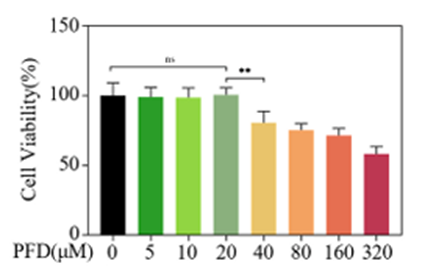
    Pirfenidone purchased from MedChemExpress. Usage Cited in: Mater Today Bio. 2025 Apr 5:32:101729.  [Abstract]

    NPCs treated with different doses of PFD (5-320 μM) for 24 h

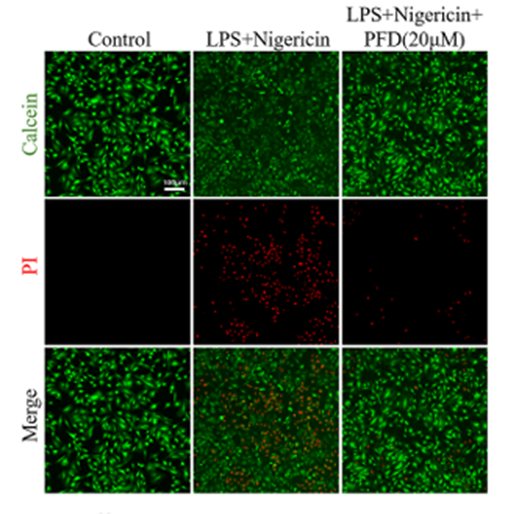
    Pirfenidone purchased from MedChemExpress. Usage Cited in: Mater Today Bio. 2025 Apr 5:32:101729.  [Abstract]

    Pirfenidone (20 μM; 24 h) was used for calcein/PI detection in the above-mentioned treated NPCs (scale bar: 100 μm; n = 3).

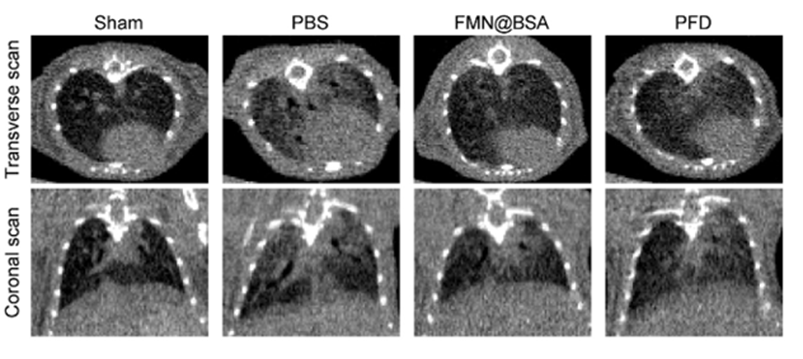
    Pirfenidone purchased from MedChemExpress. Usage Cited in: Mater Today Bio. 2023 Apr 25:20:100643.

    Pirfenidone (50 mg/kg; once every two days; 14 days) was administered. Representative transverse (top row) and coronal (bottom row) micro-CT scan images of the lungs in living mice were obtained.

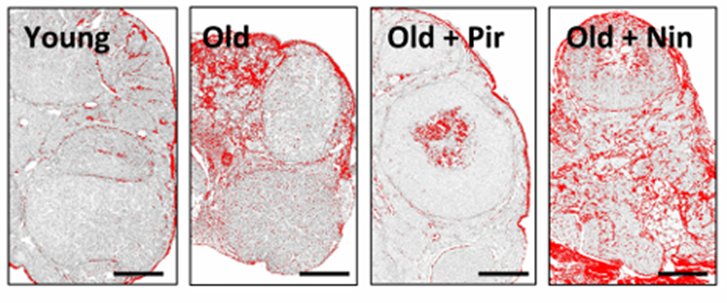
    Pirfenidone purchased from MedChemExpress. Usage Cited in: Sci Adv. 2022 Jun 17;8(24):eabn4564.  [Abstract]

    Female mice (15 months old) were treated with pirfenidone via injection (250 mg/kg, ip; 4 days) or orally (500 mg/kg, po; 2 weeks) or with nintedanib (50 mg/kg, ip; 4 days) and compared to those treated with vehicle (Veh) and young (Y; 2 months old) controls.

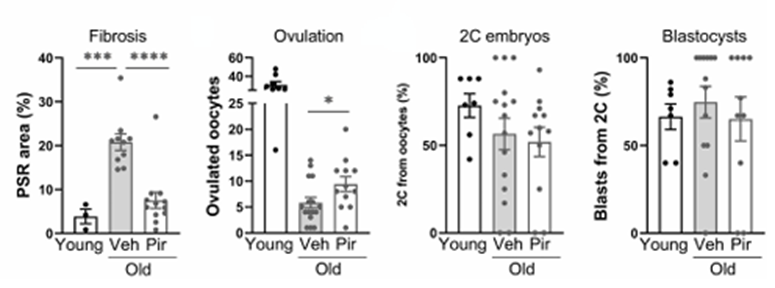
    Pirfenidone purchased from MedChemExpress. Usage Cited in: Sci Adv. 2022 Jun 17;8(24):eabn4564.  [Abstract]

    Female mice (12 months old) were treated with pirfenidone orally (500 mg/kg; 2 weeks; n = 12) or vehicle (n = 16) alongside young controls (n = 8), and ovarian fibrosis was assessed by PSR staining.

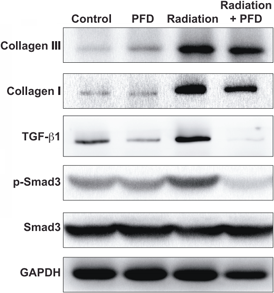
    Pirfenidone purchased from MedChemExpress. Usage Cited in: Radiat Res. 2018 Oct;190(4):396-403.  [Abstract]

    Western blots are shown of collagen I, collagen III, TGF-b1, p-Smad3 and Smad3 proteins in lung tissue homogenates from different groups.

    View All CCR Isoform Specific Products:

    • Biological Activity

    • Protocol

    • 순도&문서

    • References

    • 고객리뷰

    제품 설명

    Pirfenidone (AMR69) is an antifibrotic agent that attenuates CCL2 and CCL12 production in fibrocyte cells. Pirfenidone has growth-inhibitory effect and reduces TGF-β2 protein levels in human glioma cell lines. Pirfenidone also has anti-inflammatory activities[1][2][3].

    IC50 & Target

    TGF-β2[1]

    Cellular Effect
    Cell Line Type Value Description References
    HFL1 IC50
    0.71 3
    Compound: PIRF; NSC748456
    Antifibrotic activity in HFL1 cells assessed as inhibition of cell viability after 48 hrs by sulforhodamine B assay
    Antifibrotic activity in HFL1 cells assessed as inhibition of cell viability after 48 hrs by sulforhodamine B assay
    [PMID: 26896707]
    HFL1 IC50
    0.71 3
    Compound: PIRF; NSC748456
    Antifibrotic activity in HFL1 cells assessed as inhibition of cell viability after 48 hrs by sulforhodamine B assay
    Antifibrotic activity in HFL1 cells assessed as inhibition of cell viability after 48 hrs by sulforhodamine B assay
    [PMID: 26896707]
    HFL1 IC50
    9148 3
    Compound: PFD
    Antiproliferative activity against human HFL1 cells assessed as reduction in cell proliferation measured after 24 hrs by CCK-8 assay
    Antiproliferative activity against human HFL1 cells assessed as reduction in cell proliferation measured after 24 hrs by CCK-8 assay
    [PMID: 34355186]
    HFL1 IC50
    9148 3
    Compound: PFD
    Antiproliferative activity against human HFL1 cells assessed as reduction in cell proliferation measured after 24 hrs by CCK-8 assay
    Antiproliferative activity against human HFL1 cells assessed as reduction in cell proliferation measured after 24 hrs by CCK-8 assay
    [PMID: 34355186]
    MRC5 IC50
    14.44 2
    Compound: Pirfenidone
    Antifibrotic activity in human MRC5 cells assessed as inhibition of cell growth after 24 hrs by MTT assay
    Antifibrotic activity in human MRC5 cells assessed as inhibition of cell growth after 24 hrs by MTT assay
    [PMID: 24332090]
    MRC5 IC50
    14.44 2
    Compound: Pirfenidone
    Antifibrotic activity in human MRC5 cells assessed as inhibition of cell growth after 24 hrs by MTT assay
    Antifibrotic activity in human MRC5 cells assessed as inhibition of cell growth after 24 hrs by MTT assay
    [PMID: 24332090]
    HFL1 IC50
    0.71 3
    Compound: PIRF; NSC748456
    Antifibrotic activity in HFL1 cells assessed as inhibition of cell viability after 48 hrs by sulforhodamine B assay
    Antifibrotic activity in HFL1 cells assessed as inhibition of cell viability after 48 hrs by sulforhodamine B assay
    [PMID: 26896707]
    MRC5 IC50
    1320 3
    Compound: pirfenidone
    Anti-fibrotic activity in human MRC5 cells assessed as inhibition of TGF-beta1 induced total collagen deposition
    Anti-fibrotic activity in human MRC5 cells assessed as inhibition of TGF-beta1 induced total collagen deposition
    [PMID: 31884408]
    NIH3T3 IC50
    13.72 2
    Compound: 1; PFD
    Antiproliferative activity against TGFbeta-induced mouse NIH3T3 cells assessed as cell growth inhibition incubated for 48 hrs by CCK-8 assay
    Antiproliferative activity against TGFbeta-induced mouse NIH3T3 cells assessed as cell growth inhibition incubated for 48 hrs by CCK-8 assay
    [PMID: 35694690]
    HFL1 IC50
    9148 3
    Compound: PFD
    Antiproliferative activity against human HFL1 cells assessed as reduction in cell proliferation measured after 24 hrs by CCK-8 assay
    Antiproliferative activity against human HFL1 cells assessed as reduction in cell proliferation measured after 24 hrs by CCK-8 assay
    [PMID: 34355186]
    NIH3T3 IC50
    454 3
    Compound: 1
    Antiproliferative activity against mouse NIH/3T3 cells after 72 hrs by MTT assay
    Antiproliferative activity against mouse NIH/3T3 cells after 72 hrs by MTT assay
    [PMID: 28122457]
    NIH3T3 IC50
    454 3
    Compound: 1
    Antiproliferative activity against mouse NIH/3T3 cells after 72 hrs by MTT assay
    Antiproliferative activity against mouse NIH/3T3 cells after 72 hrs by MTT assay
    [PMID: 28122457]
    MRC5 IC50
    1320 3
    Compound: pirfenidone
    Anti-fibrotic activity in human MRC5 cells assessed as inhibition of TGF-beta1 induced total collagen deposition
    Anti-fibrotic activity in human MRC5 cells assessed as inhibition of TGF-beta1 induced total collagen deposition
    [PMID: 31884408]
    NIH3T3 IC50
    13.72 2
    Compound: 1; PFD
    Antiproliferative activity against TGFbeta-induced mouse NIH3T3 cells assessed as cell growth inhibition incubated for 48 hrs by CCK-8 assay
    Antiproliferative activity against TGFbeta-induced mouse NIH3T3 cells assessed as cell growth inhibition incubated for 48 hrs by CCK-8 assay
    [PMID: 35694690]
    MRC5 IC50
    14.44 2
    Compound: Pirfenidone
    Antifibrotic activity in human MRC5 cells assessed as inhibition of cell growth after 24 hrs by MTT assay
    Antifibrotic activity in human MRC5 cells assessed as inhibition of cell growth after 24 hrs by MTT assay
    [PMID: 24332090]
    NIH3T3 IC50
    13.72 2
    Compound: 1; PFD
    Antiproliferative activity against TGFbeta-induced mouse NIH3T3 cells assessed as cell growth inhibition incubated for 48 hrs by CCK-8 assay
    Antiproliferative activity against TGFbeta-induced mouse NIH3T3 cells assessed as cell growth inhibition incubated for 48 hrs by CCK-8 assay
    [PMID: 35694690]
    NIH3T3 IC50
    454 3
    Compound: 1
    Antiproliferative activity against mouse NIH/3T3 cells after 72 hrs by MTT assay
    Antiproliferative activity against mouse NIH/3T3 cells after 72 hrs by MTT assay
    [PMID: 28122457]
    In Vitro

    Pirfenidone (PFD) reduces the protein levels of the matrix metalloproteinase (MMP)-11, a TGF-β target gene and furin substrate involved in carcinogenesis. These data define PFD or PFD-related agents as promising agents for human cancers associated with enhanced TGF-β activity[1]. In RAW264.7 cells, a murine macrophage-like cell line, Pirfenidone suppresses the proinflammatory cytokine TNF-α by a translational mechanism, which is independent of activation of the MAPK2, p38 MAPK, and JNK. In the murine endotoxin shock model, Pirfenidone potently inhibits the production of the proinflammatory cytokines, TNF-α, interferon-γ, and interleukin-6, but enhances the production of the anti-inflammatory cytokine, interleukin-10[2]. Pirfenidone (PFD) shows its inhibitory effects on the proliferation of HLECs. Cell proliferation is attenuated in the 0.3 mg/mL group after 24 hours compare with the control group (P=0.044). The effect is more apparent in the 0.5 mg/mL group at 24, 48, and 72 hours (P<0.05). The proliferation is almost completely inhibited with 1 mg/mL PFD at all the time-points (P<0.01)[3].

    MedChemExpress (MCE) has not independently confirmed the accuracy of these methods. They are for reference only.

    In Vivo

    Administration of Pirfenidone (300 mg/kg/day) for 4 wk. Pirfenidone significantly attenuates the score when administered in Bleomycin (BLM)-treated mice (P<0.0001). Moreover, collagen content is quantified in the lungs to evaluate the anti-fibrotic effects of Pirfenidone. The collagen content in the lungs of BLM-treated mice is significantly increased compared with that in saline- or Pirfenidone-treated mice, and this increase is significantly attenuated by Pirfenidone administration on day 28 after BLM treatment (P=0.0012)[4].

    MedChemExpress (MCE) has not independently confirmed the accuracy of these methods. They are for reference only.

    Clinical Trial
    분자량

    185.22

    화학식

    C12H11NO

    CAS No.
    Appearance

    Solid

    Color

    White to light yellow

    SMILES

    O=C1C=CC(C)=CN1C2=CC=CC=C2

    선적

    Room temperature in continental US; may vary elsewhere.

    보관
    Powder -20°C 3 years
    4°C 2 years
    In solvent -80°C 6 months
    -20°C 1 month
    용액&용해도
    In Vitro: 

    DMSO : ≥ 100 mg/mL (539.90 mM; Hygroscopic DMSO has a significant impact on the solubility of product, please use newly opened DMSO)

    H2O : 12.5 mg/mL (67.49 mM; Need ultrasonic)

    *"≥" means soluble, but saturation unknown.

    Preparing
    Stock Solutions
    Concentration Solvent Mass 1 mg 5 mg 10 mg
    1 mM 5.3990 mL 26.9949 mL 53.9898 mL
    5 mM 1.0798 mL 5.3990 mL 10.7980 mL
    View the Complete Stock Solution Preparation Table

    * Please refer to the solubility information to select the appropriate solvent. Once prepared, please aliquot and store the solution to prevent product inactivation from repeated freeze-thaw cycles.
    Storage method and period of stock solution: -80°C, 6 months; -20°C, 1 month. When stored at -80°C, please use it within 6 months. When stored at -20°C, please use it within 1 month.

    * Note: If you choose water as the stock solution, please dilute it to the working solution, then filter and sterilize it with a 0.22 μm filter before use.

    • 몰농도 계산기

    • 농도 희석 계산기

    Mass (g) = Concentration (mol/L) × Volume (L) × Molecular Weight (g/mol)

    Mass
    =
    Concentration
    ×
    Volume
    ×
    Molecular Weight *

    Concentration (start) × Volume (start) = Concentration (final) × Volume (final)

    This equation is commonly abbreviated as: C1V1 = C2V2

    Concentration (start)

    C1

    ×
    Volume (start)

    V1

    =
    Concentration (final)

    C2

    ×
    Volume (final)

    V2

    In Vivo:

    Select the appropriate dissolution method based on your experimental animal and administration route.

    For the following dissolution methods, please ensure to first prepare a clear stock solution using an In Vitro approach and then sequentially add co-solvents:
    To ensure reliable experimental results, the clarified stock solution can be appropriately stored based on storage conditions. As for the working solution for in vivo experiments, it is recommended to prepare freshly and use it on the same day.
    The percentages shown for the solvents indicate their volumetric ratio in the final prepared solution. If precipitation or phase separation occurs during preparation, heat and/or sonication can be used to aid dissolution.

    • Protocol 1

      Add each solvent one by one:  5% DMSO    40% PEG300    5% Tween-80    50% Saline

      Solubility: ≥ 2.75 mg/mL (14.85 mM); Clear solution

    • Protocol 2

      Add each solvent one by one:  5% DMSO    95% (20% SBE-β-CD in Saline)

      Solubility: ≥ 2.75 mg/mL (14.85 mM); Clear solution

    For the following dissolution methods, please prepare the working solution directly. It is recommended to prepare fresh solutions and use them promptly within a short period of time.
    The percentages shown for the solvents indicate their volumetric ratio in the final prepared solution. If precipitation or phase separation occurs during preparation, heat and/or sonication can be used to aid dissolution.

    • Protocol 1

      Add each solvent one by one:  PBS

      Solubility: 9.09 mg/mL (49.08 mM); Clear solution; Need ultrasonic and warming and heat to 60°C

    • Protocol 2

      Add each solvent one by one:  Saline

      Solubility: 6.67 mg/mL (36.01 mM); Clear solution; Need ultrasonic

    In Vivo Dissolution Calculator
    Please enter the basic information of animal experiments:

    Dosage

    mg/kg

    Animal weight
    (per animal)

    g

    Dosing volume
    (per animal)

    μL

    Number of animals

    Recommended: Prepare an additional quantity of animals to account for potential losses during experiments.
    Please enter your animal formula composition:
    %
    DMSO +
    +
    %
    Tween-80 +
    %
    Saline
    Recommended: Keep the proportion of DMSO in working solution below 2% if your animal is weak.
    The co-solvents required include: DMSO, . All of co-solvents are available by MedChemExpress (MCE). , Tween 80. All of co-solvents are available by MedChemExpress (MCE).
    Calculation results:
    Working solution concentration: mg/mL
    Method for preparing stock solution: mg drug dissolved in μL  DMSO (Stock solution concentration: mg/mL).
    The concentration of the stock solution you require exceeds the measured solubility. The following solution is for reference only. If necessary, please contact MedChemExpress (MCE).
    Method for preparing in vivo working solution for animal experiments: Take μL DMSO stock solution, add μL . μL , mix evenly, next add μL Tween 80, mix evenly, then add μL Saline.
     If the continuous dosing period exceeds half a month, please choose this protocol carefully.
    Please ensure that the stock solution in the first step is dissolved to a clear state, and add co-solvents in sequence. You can use ultrasonic heating (ultrasonic cleaner, recommended frequency 20-40 kHz), vortexing, etc. to assist dissolution.
    순도&문서

    Purity: 99.99%

    References
    Cell Assay 
    [3]

    HLECs are seeded in 96-well plates (1×10⁴ cells/well) for 24 hours in α-MEM/10% FBS/1%NEAA, and are cultured in stationary tubes in serum-free medium for 24 hours. And then the culture medium is removed and cells are bathed in α-MEM with 10% FBS and 1% NEAA supplemented with 0, 0.01, 0.1, 0.2, 0.3, 0.5, or 1 mg/mL Pirfenidone for 0, 4, 12, 24, 48, or 72 hours. After incubation with 180 µL α-MEM and 20 µL of 5 mg/mL MTT for 4 hours at 37°C, the MTT solution is discarded. The Formosan precipitates are dissolved in 180 µL DMSO by agitating the dishes for 10 minutes at 200 rpm on an orbital shaker. The absorbance at 490 nm in each well is read with a micro plate reader. We further examined the effects of PFD by refining the concentrations at 0.2, 0.25, 0.3, 0.4, 0.5 and 0.6 mg/mL using the MTT assay[3].

    MCE 는 독립적으로 이러한 방법들의 정확성을 확인하지 않았습니다. 참고용으로만 봐주십시오.

    Animal Administration
    [4]

    Mice[4]
    Nine-week-old female C57BL/6 mice are used. Pirfenidone is administered orally for 14 days after osmotic pump implantation. The volume of administration is determined according to body weight. Animals are allocated into 4 groups (n=6/group): normal control, BLM, Pirfenidone (300 mg/kg/day), and BLM + Pirfenidone. The Pirfenidone dose is selected according to a report published elsewhere. Pirfenidone is also administered in a therapeutic setting beginning at day 10 to assess the effect of the drug on the fibrotic phase of BLM model mice.

    MCE 는 독립적으로 이러한 방법들의 정확성을 확인하지 않았습니다. 참고용으로만 봐주십시오.

    References

    Complete Stock Solution Preparation Table

    * Please refer to the solubility information to select the appropriate solvent. Once prepared, please aliquot and store the solution to prevent product inactivation from repeated freeze-thaw cycles.
    Storage method and period of stock solution: -80°C, 6 months; -20°C, 1 month. When stored at -80°C, please use it within 6 months. When stored at -20°C, please use it within 1 month.

    Optional Solvent Concentration Solvent Mass 1 mg 5 mg 10 mg 25 mg
    H2O / DMSO 1 mM 5.3990 mL 26.9949 mL 53.9898 mL 134.9746 mL
    5 mM 1.0798 mL 5.3990 mL 10.7980 mL 26.9949 mL
    10 mM 0.5399 mL 2.6995 mL 5.3990 mL 13.4975 mL
    15 mM 0.3599 mL 1.7997 mL 3.5993 mL 8.9983 mL
    20 mM 0.2699 mL 1.3497 mL 2.6995 mL 6.7487 mL
    25 mM 0.2160 mL 1.0798 mL 2.1596 mL 5.3990 mL
    30 mM 0.1800 mL 0.8998 mL 1.7997 mL 4.4992 mL
    40 mM 0.1350 mL 0.6749 mL 1.3497 mL 3.3744 mL
    50 mM 0.1080 mL 0.5399 mL 1.0798 mL 2.6995 mL
    60 mM 0.0900 mL 0.4499 mL 0.8998 mL 2.2496 mL
    DMSO 80 mM 0.0675 mL 0.3374 mL 0.6749 mL 1.6872 mL
    100 mM 0.0540 mL 0.2699 mL 0.5399 mL 1.3497 mL

    * Note: If you choose water as the stock solution, please dilute it to the working solution, then filter and sterilize it with a 0.22 μm filter before use.

    • No file chosen (Maximum size is: 1024 Kb)
    • If you have published this work, please enter the PubMed ID.
    • Your name will appear on the site.
    Help & FAQs
    • Do most proteins show cross-species activity?

      Species cross-reactivity must be investigated individually for each product. Many human cytokines will produce a nice response in mouse cell lines, and many mouse proteins will show activity on human cells. Other proteins may have a lower specific activity when used in the opposite species.

    최근 본 상품:

    온라인 문의

    Your information is safe with us. * Required Fields.

    상품명


    Requested Quantity *

    고객명 *


    호칭

    메일주소 *


    전화번호 *

    Department


    회사명 *

    City

    Country or Region *


    비고

    대량구매 문의

    Inquiry Information

    상품명:
    Pirfenidone
    Cat. No.:
    HY-B0673
    수량:
    MCE Japan Authorized Agent: