



CDK
Cyclin dependent kinase
CDKs (Cyclin-dependent kinases) are serine-threonine kinases first discovered for their role in regulating the cell cycle. They are also involved in regulating transcription, mRNA processing, and the differentiation of nerve cells. CDKs are relatively small proteins, with molecular weights ranging from 34 to 40 kDa, and contain little more than the kinase domain. In fact, yeast cells can proliferate normally when their CDK gene has been replaced with the homologous human gene. By definition, a CDK binds a regulatory protein called a cyclin. Without cyclin, CDK has little kinase activity; only the cyclin-CDK complex is an active kinase.
There are around 20 Cyclin-dependent kinases (CDK1-20) known till date. CDK1, 4 and 5 are involved in cell cycle, and CDK 7, 8, 9 and 11 are associated with transcription.
CDK levels remain relatively constant throughout the cell cycle and most regulation is post-translational. Most knowledge of CDK structure and function is based on CDKs of S. pombe (Cdc2), S. cerevisia (CDC28), and vertebrates (CDC2 and CDK2). The four major mechanisms of CDK regulation are cyclin binding, CAK phosphorylation, regulatory inhibitory phosphorylation, and binding of CDK inhibitory subunits (CKIs).
CDK Isoform Specific Products
-
CDK
(487)
View all products
-
CDK1
(196)
View all products
-
CDK2
(315)
View all products
-
CDK3
(28)
View all products
-
CDK4
(233)
View all products
-
CDK5
(98)
View all products
-
CDK6
(178)
View all products
-
CDK7
(119)
View all products
-
CDK8
(57)
View all products
-
CDK9
(205)
View all products
-
CDK11
(9)
View all products
-
CDK12
(53)
View all products
-
CDK13
(27)
View all products
-
CDK14
(6)
View all products
-
CDK16
(8)
View all products
-
CDK19
(25)
View all products
-
CDC
(21)
View all products
-
CLK
(31)
View all products
-
Pho85
(1)
View all products
-
CDK10
(1)
View all products
-
CDK15
(1)
View all products
-
CDK17
(2)
View all products
-
CDK18
(1)
View all products
-
CDK20
(1)
View all products
-
PITSLRE
(1)
View all products
All Product Categories
-
CDK Inhibitors
(1077)
View all products
-
CDK Agonists
(3)
View all products
-
CDK Antagonists
(2)
View all products
-
CDK Activators
(18)
View all products
-
CDK Modulators
(15)
View all products
-
CDK Degraders
(95)
View all products
-
CDK Controls
(4)
View all products
-
CDK Substrate
(1)
View all products
-
CDK Ligands
(16)
View all products
-
Cyclin-Dependent Kinases (CDKs) Proteins
(80)
View all products
-
Cyclin Dependent Kinase 1 (CDK1) Proteins
(9)
View all products
-
Cyclin-Dependent Kinase 2 (CDK2) Proteins
(12)
View all products
-
Cyclin-Dependent Kinase 3 (CDK3) Proteins
(6)
View all products
-
Cyclin-Dependent Kinase 4 (CDK4) Proteins
(4)
View all products
-
Cyclin-Dependent Kinase 5 (CDK5) Proteins
(5)
View all products
-
Cyclin-Dependent Kinase 6 (CDK6) Proteins
(6)
View all products
-
Cyclin-Dependent Kinase 7 (CDK7) Proteins
(4)
View all products
-
CDK Related Products (1353)
Related Products (1353)

-
Recombinant Proteins (82)
-
Antibodies (42)
-
CDK Isoform Comparison
-
CDK4/6-IN-3
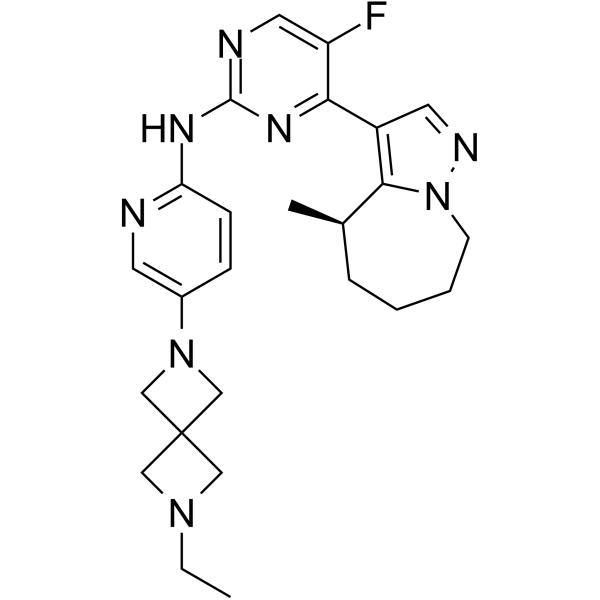 0 ImagesCat. No.: HY-126244CAS No.: 2366237-37-6CDK4/6-IN-3 is a brain-penetrant CDK4/CDK6 inhibitor with Kis of <0.3 nM and 2.2 nM, respectively. CDK4/6-IN-3 inhibits CDK1 with a Ki of 110 nM. CDK4/6-IN-3 can be used for the treatment of glioblastoma.
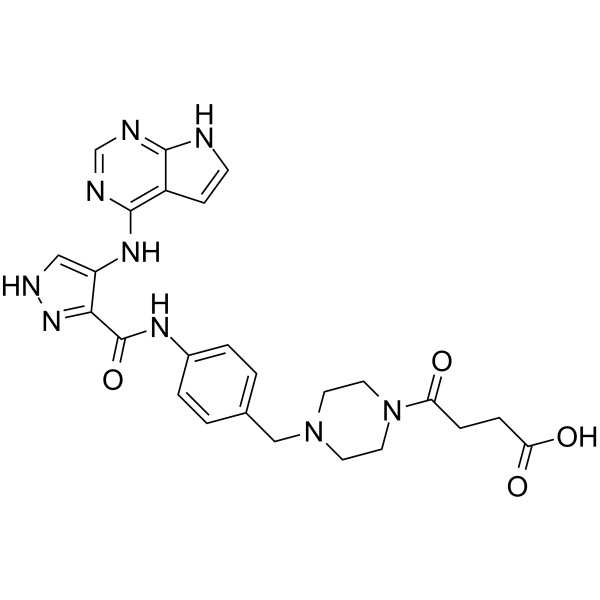
-
CDK9-IN-9
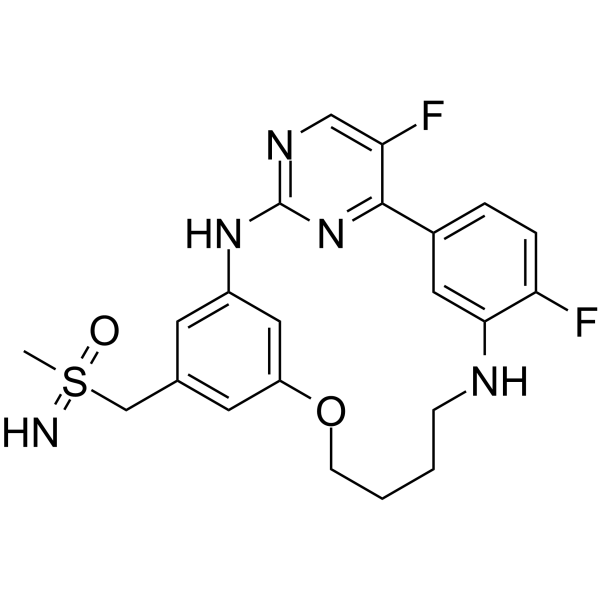 0 ImagesCat. No.: HY-130001CAS No.: 2246956-84-1
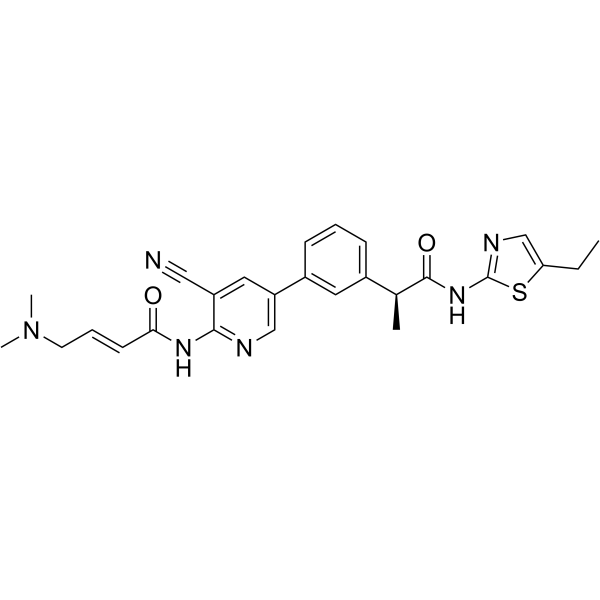

-
CDK9-IN-29
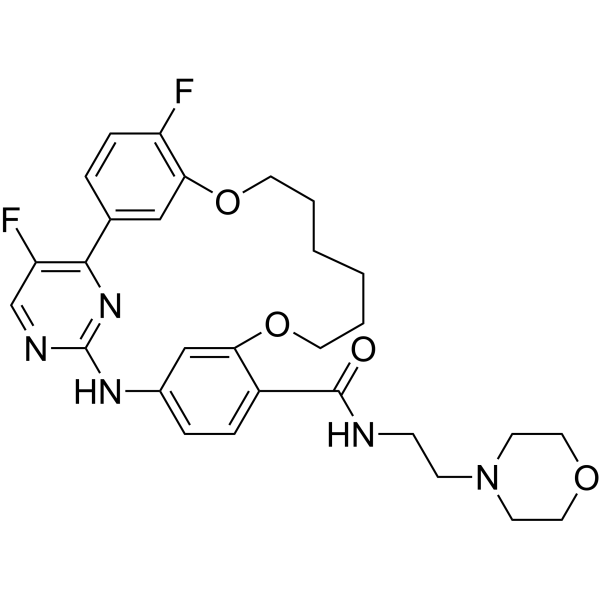 0 ImagesCat. No.: HY-149641CAS No.: 2737262-24-5
-
Riviciclib
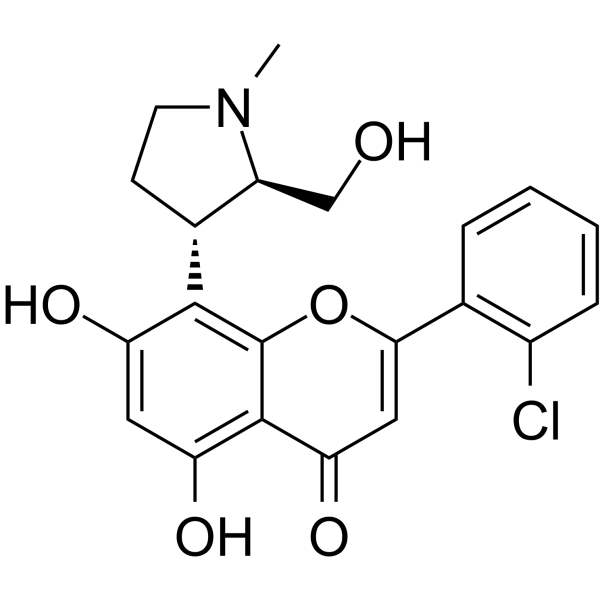 0 ImagesCat. No.: HY-16559ACAS No.: 920113-02-6Synonyms: P276-00 free baseRiviciclib (P276-00 free base) is a potent cyclin-dependent kinase (CDK) inhibitor, which inhibits CDK9-cyclinT1, CDK4-cyclin D1, and CDK1-cyclinB with IC50s of 20 nM, 63 nM, and 79 nM, respectively. Riviciclib shows antitumor activity on cisplatin-resistant cells.
-
Cdc7-IN-3
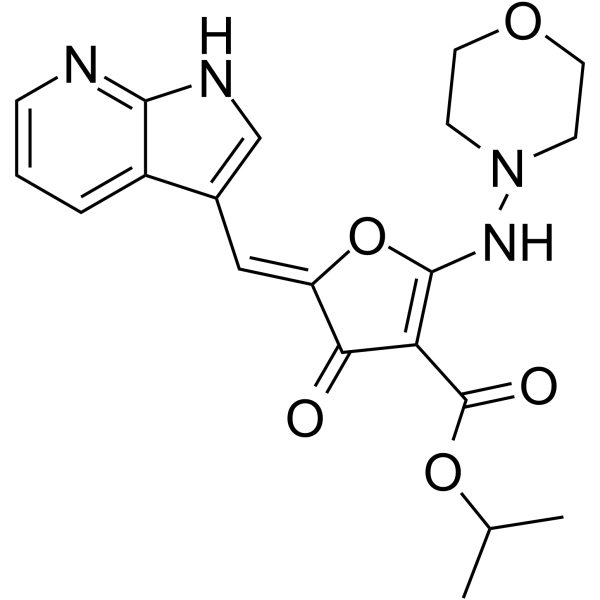 0 ImagesCat. No.: HY-130515CAS No.: 1402057-87-7
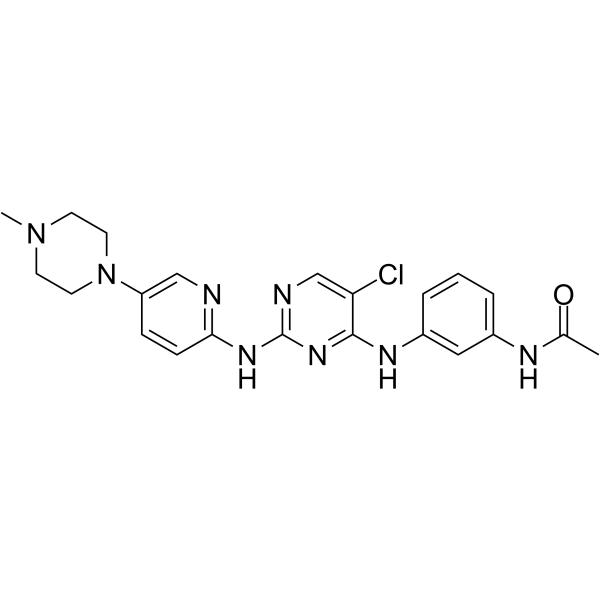
-
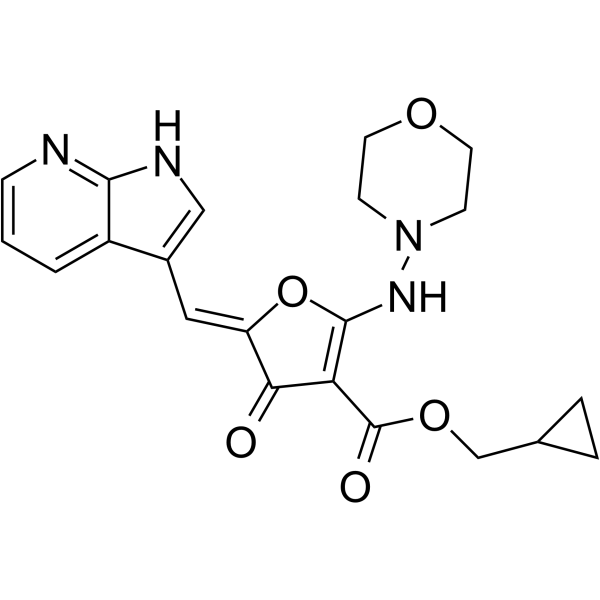
Senexin A hydrochloride
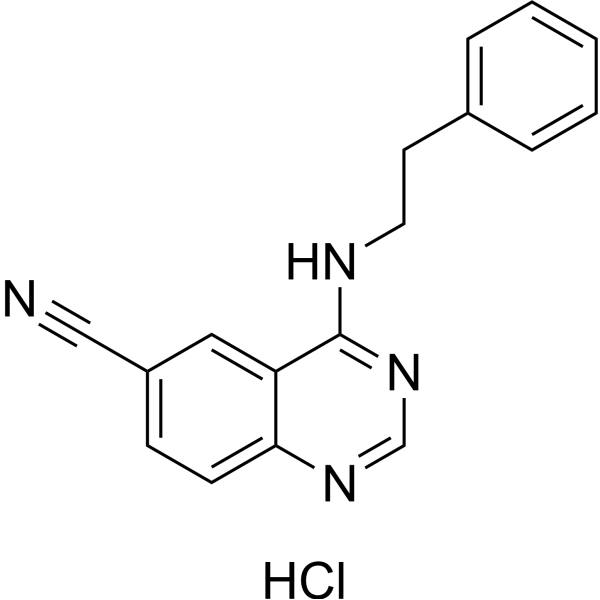 0 ImagesCat. No.: HY-15681ACAS No.: 1780390-76-2Senexin A hydrochloride is an inhibitor of CDK8/19 (IC50: 280 nM, CDK8) and an inhibitor downstream of p21 transcription. It only inhibits p21-induced transcription but does not inhibit other biological effects of p21. Senexin A hydrochloride inhibits CMV-GFP induction as well as the p21 stimulatory activity of the consensus NF-κB-dependent promoters.
-
Amantadine sulfate
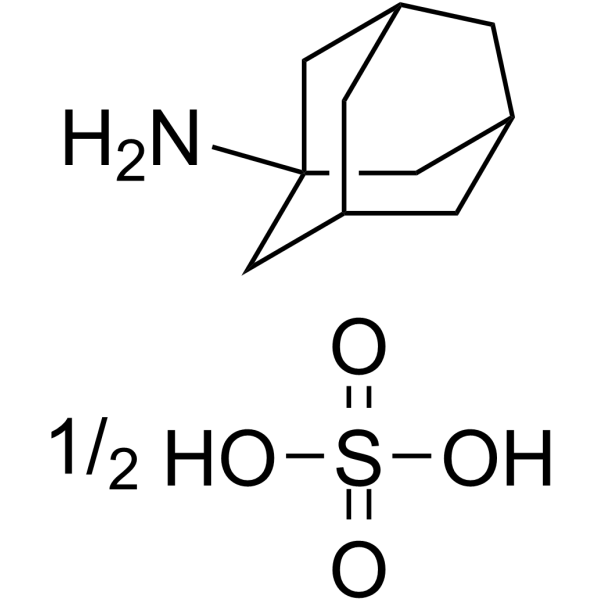 0 ImagesCat. No.: HY-B0402BCAS No.: 31377-23-8Synonyms: 1-Adamantanamine sulfate; 1-Aminoadamantane sulfateAmantadine (1-Adamantanamine) sulfate is an orally avtive and potent antiviral agent with activity against influenza A viruses. Amantadine sulfate inhibits several ion channels such as NMDA and M2, and also inhibits Coronavirus ion channels. Amantadine sulfate also has anti-orthopoxvirus and anticancer activity. Amantadine sulfate can be used for Parkinson's disease, postoperative cognitive dysfunction (POCD) and COVID-19 research.
-
QR-6401
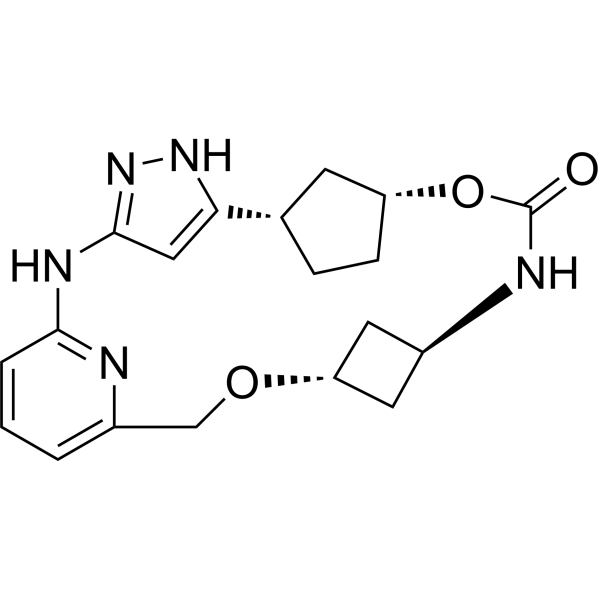 0 ImagesCat. No.: HY-153221CAS No.: 2845096-18-4QR-6401 is an orally active and selective macrocyclic CDK2 inhibitor with IC50 values of 0.37, 10, 22, 34 and 45 nM for CDK2/E1, CDK9/T1, CDK1/A2, CDK6/D3 and CDK4/D1, respectively. QR-6401 has potent antitumor activity in an OVCAR3 ovarian cancer xenograft model. QR-6401 has the potential to be used in the study of cancer.

-
CDK2-IN-41
 0 ImagesCat. No.: HY-172153CDK2-IN-41 (Compound 7a) is a CDK2 inhibitor that exerts anticancer activity by binding to CDK2, thereby inhibiting the cell cycle, inducing cytotoxicity, promoting ROS production, and triggering Apoptosis. CDK2-IN-41 exhibits an IC50 of 10 µM against acute myeloid leukemia (AML) HL-60 cells. It holds potential for research in AML-related cancer therapy.
-
A-1592668
 0 ImagesCat. No.: HY-178733CAS No.: 1628314-13-5A-1592668 is a selective CDK9 inhibitor. A-1592668 induces Apoptosis. A-1592668 plus Venetoclax (HY-15531) co-treatment inhibits the growth of Jeko-1 tumors.
-
CDK7-IN-6
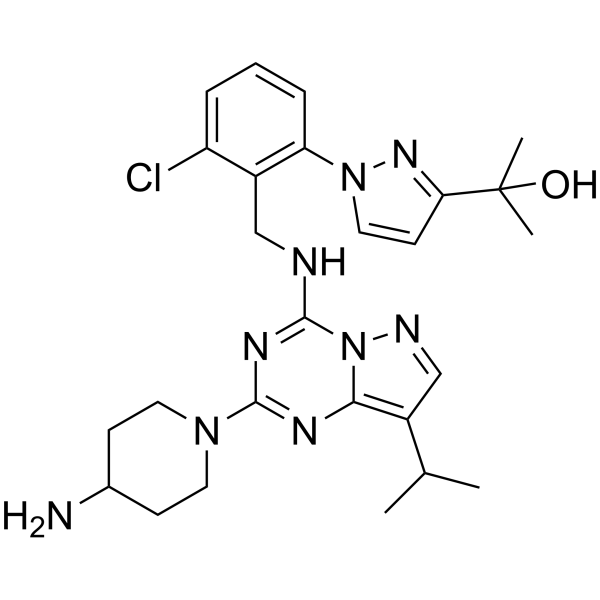 0 ImagesCat. No.: HY-145394CAS No.: 2378710-04-2
-
CDK-IN-13
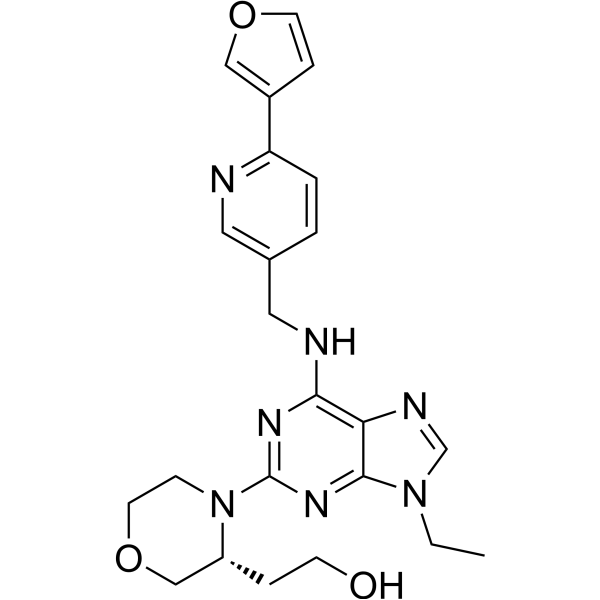 0 ImagesCat. No.: HY-157297CAS No.: 3041994-96-8CDK-IN-13 (compound 32E) is a potent and selective inhibitor of CDK12/cyclinK with an IC50 of 3 nM. CDK-IN-13 inhibits the growth of the HER2-positive breast cancer cell lines.

-
CDK2/4 ligand 1
 0 ImagesCat. No.: HY-W1047040CAS No.: 1211585-07-7




