CDK Degrader
-
PROTAC CDK2/9 Degrader-1
 0 Images
PROTAC CDK2/9 Degrader-1 (Compound F3) is a potent dual degrader for CDK2 (DC50=62 nM) and CDK9 (DC50=33 nM). PROTAC CDK2/9 Degrader-1 suppresses prostate cancer PC-3 cell proliferation (IC50=0.12 µM) by effectively blocking the cell cycle in S and G2/M phases. PROTAC CDK2/9 Degrader-1 is a PROTAC by tethering CDK inhibitor with Cereblon ligand.
-
BSJ-03-123
 0 Images
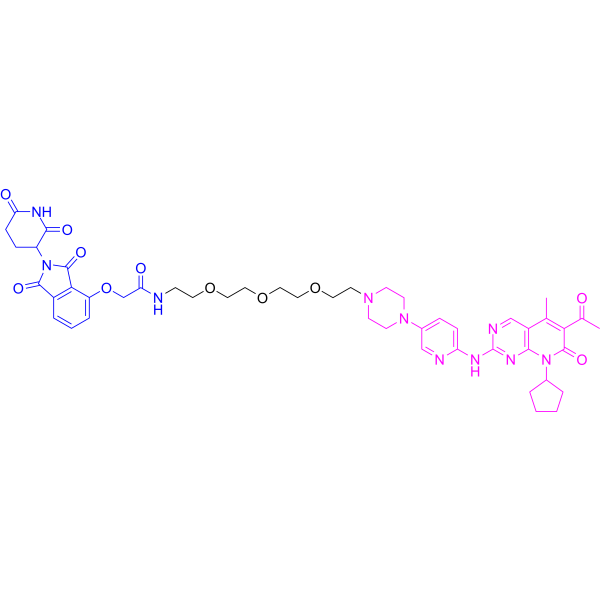
BSJ-03-123 is a selective PROTAC degrader of CDK6. BSJ-03-123 degrades CDK6, thereby inhibiting Rb S780 phosphorylation and inducing G1 phase arrest, while remodeling cell cycle and transcriptional signaling, with no effect on CDK4-dependent cancer cells. BSJ-03-123 reduces CDK6 protein levels in mouse ovarian tissues, increases the proportion of primordial follicles, and induces granulosa cell apoptosis, without impairing the ability of oocytes to resume meiosis and mature to the MII stage. BSJ-03-123 alleviates uveitis by blocking the HDACs-CDK6/ID2 axis. BSJ-03-123 can be used in studies related to acute myeloid leukemia, mantle cell lymphoma and autoimmune uveitis.
-
CDK2 degrader 1
 0 Images
CDK2 degrader 1 is a selective CDK2 molecular glue degrader. CDK2 degrader 1 binds to cereblon, induces ubiquitination of CDK2 and subsequent degradation via the proteasomal pathway. CDK2 degrader 1 is applicable for cancer-related research.
-
YJ1206
 0 ImagesCat. No.: HY-168555CAS No.: 3053716-98-3
YJ1206 is an orally active selective CDK12/CDK13 PROTAC degrader. YJ1206 induces DNA damage and genomic instability, activates the AKT pathway, and triggers apoptosis. YJ1206 reduces tumor cell viability, inhibits tumor growth, and attenuates tumor cell dissemination. YJ1206 is applicable to research related to prostate cancer and high-grade serous tubo-ovarian cancer.
-
CDK2 degrader 6
 0 Images
CDK2 degrader 6 is an orally active and potent CDK2 molecular glue degrader with a DC50 of 46.5 nM. CDK2 degrader 6 binds to cereblon and CDK2 to induce ubiquitination and subsequent proteasomal degradation of CDK2. CDK2 degrader 6 modulates cell cycle in breast cancer cells. CDK2 degrader 6 reduces proliferation of breast cancer cells. CDK2 degrader 6 exhibits in vivo antitumor activity in gastric cancer mouse models. CDK2 degrader 6 can be used for the research of breast cancer, gastric cancer.
-
KI-CDK9d-32
 0 Images
KI-CDK9d-32 is a selective CDK9 PROTAC degrader (IC50 = 3 nM; DC50 = 0.89 nM). KI-CDK9d-32 induces CDK9 degradation via the ubiquitin-proteasome pathway to abrogates CDK9 enzymatic and scaffolding functions, downregulates MYC expression and MYC-dependent signaling, represses TNF-alpha signaling pathways activity and pre-rRNA levels. KI-CDK9d-32 disrupts nucleolar homeostasis, blocks cell cycle progression and cellular translation by reducing 4EBP1 phosphorylation, and elicits cancer cell cytotoxicity in a CRBN-dependent manner, while high ABCB1 activity attenuates the efficacy. KI-CDK9d-32 can be used for the research of acute lymphoblastic leukemia, rhabdomyosarcoma, pancreatic adenocarcinoma.

-
PROTAC CDK2 Degrader-2
 0 Images
PROTAC CDK2 Degrader-2 is an orally active CDK2 PROTAC degrader, with DC50 values of 13 nM (MKN1cells) and 17 nM (TOV21G cells). PROTAC CDK2 Degrader-2 induces G1 phase arrest in MKN1 cells. PROTAC CDK2 Degrader-2 achieves tumor stasis in HCC1569 (CCNE1-amplified) xenograft models. PROTAC CDK2 Degrader-2 can be used for the study of CCNE1-amplified cancers.
-
YX-2-107
 0 Images
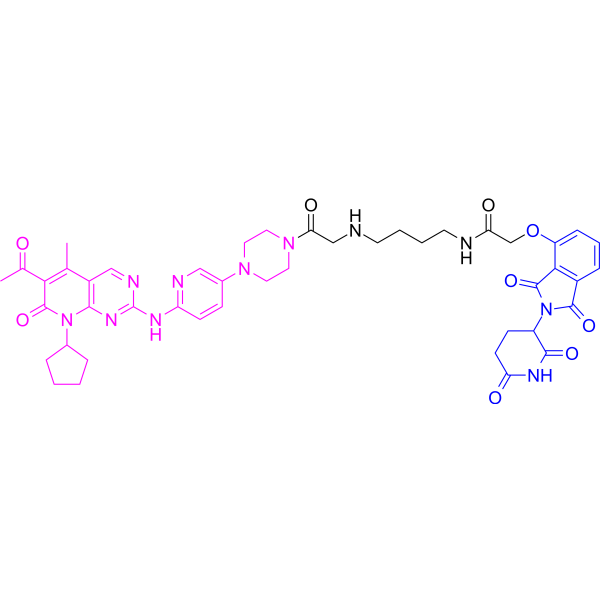
YX-2-107 is a PROTAC (IC50= 4.4 nM) that selectively degrades CDK6. YX-2-107 effectively inhibits RB phosphorylation and FOXM1 expression in vitro and inhibits the development of Ph+ ALL in rats. YX-2-107 can be used in the study of Ph chromosome-positive (Ph+) acute lymphoblastic leukemia (ALL).
-
PROTAC CDK4/6 degrader 1
 0 Images
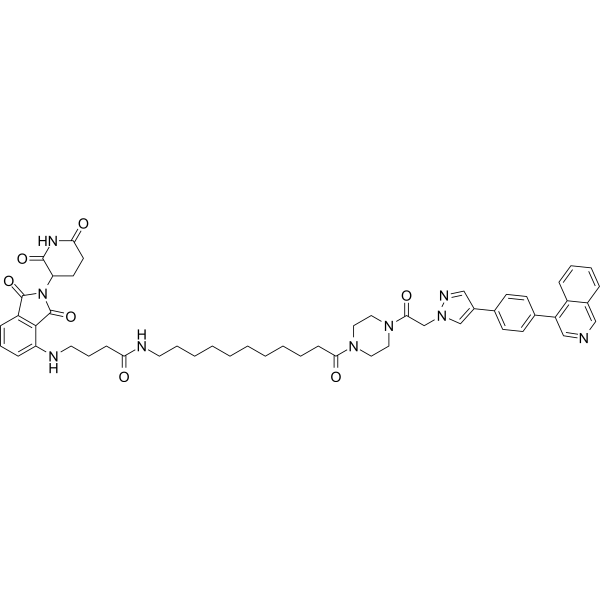
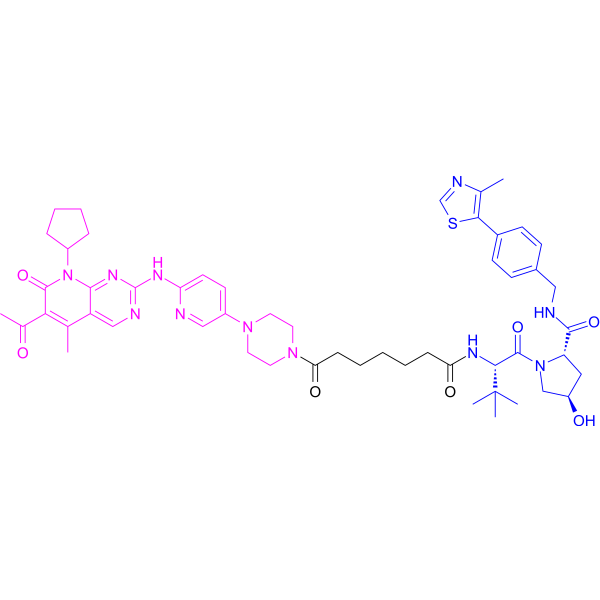
PROTAC CDK4/6 degrader 1 is a CDK4/CDK6 PROTAC degrader, with DC50 values of 10.5 nM and 2.5 nM, respectively. PROTAC CDK4/6 degrader 1 inhibits the proliferation of Jurkat cells (IC50 = 0.18 μM), arrests the cell cycle at the G1 phase, and induces apoptosis. PROTAC CDK4/6 degrader 1 can be used for cancer research.
-
LL-K8-22
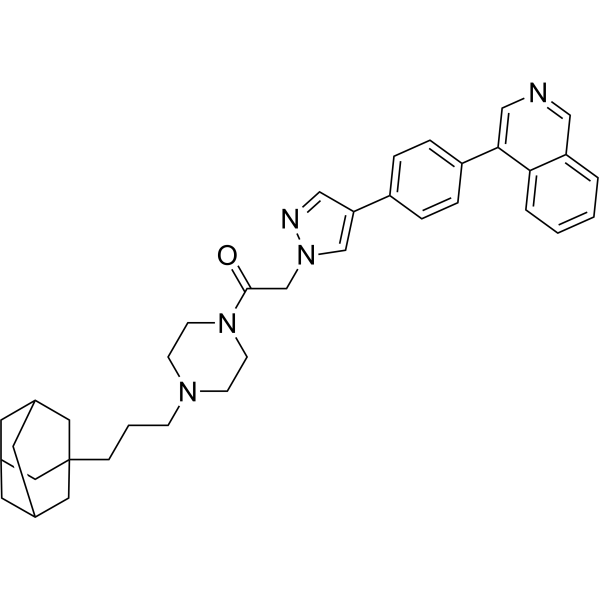 0 Images
LL-K8-22 is a dual degrader of CDK8 and cyclin C HyT, with DC50 values of 2.52 μM and 2.64 μM, respectively. LL-K8-22 inhibits phosphorylation of STAT1 Ser 727, phosphorylation of the C-terminal domain Ser 2/5 of RNA polymerase II, and phosphorylation of Rb. LL-K8-22 represses E2F- and MYC-driven transcriptional programs and exhibits antiproliferative effects. LL-K8-22 synchronously induces proteasome-dependent selective degradation of CDK8 and cyclin C without degrading CDK19, other CDK family members, or other cyclins. LL-K8-22 can be used in the research of triple-negative breast cancer and colon cancer.
-
CDK2 degrader 3
 0 Images
CDK2 degrader 3 is a selective CDK2 molecular glue-like degrader. CDK2 degrader 3 induces G1 cell cycle arrest in CCNE1-amplified cancer cells. CDK2 degrader 3 is applicable to breast cancer-related research.
-
NCT02
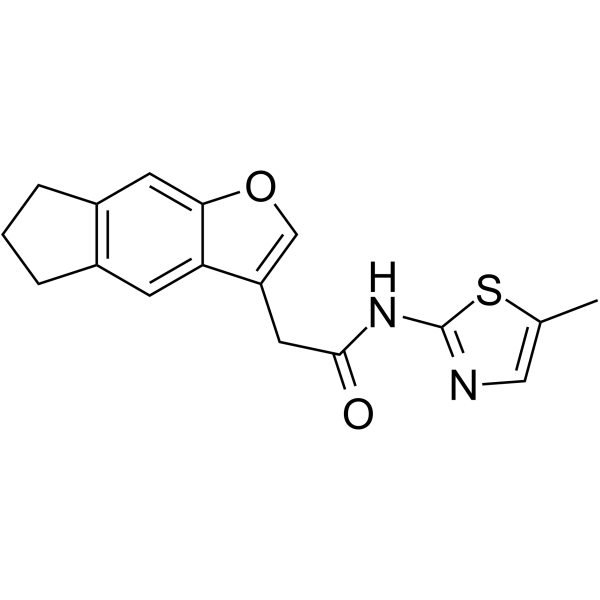 0 Images
NCT02 is a molecular glue degrader based on the E3 ubiquitin ligase DDB1 that targets CDK12 and its binding partner CCNK. NCT02 triggers the ubiquitination and proteasomal degradation of CCNK, thereby downregulating CDK12 protein levels and inhibiting its downstream signaling pathways. NCT02 can induce tumor cell apoptosis, arrest the cell cycle, and selectively inhibit the proliferation of colorectal cancer cells carrying TP53 defects or belonging to the consensus molecular subtype CMS4. NCT02 has the potential to inhibit tumor growth in in vitro and in vivo models.
-
PROTAC CDK12/13 Degrader-1 TFA
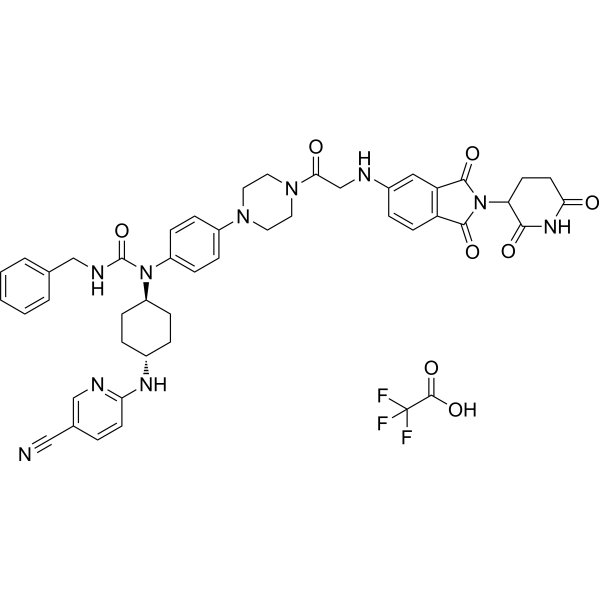 0 ImagesCat. No.: HY-151110APurity: 99.12%
-
JWZ-5-13
 0 Images
JWZ-5-13 is a CDK7 PROTAC degrader. JWZ-5-13 inhibits the proliferation of cancer cells. JWZ-5-13 is applicable to the research of ovarian cancer, diffuse large B-cell lymphoma, acute T-lymphoblastic leukemia and non-small cell lung cancer.