



BSJ-03-123
Based on 5 publication(s) in Google Scholar
BSJ-03-123 is a selective PROTAC degrader of CDK6. BSJ-03-123 degrades CDK6, thereby inhibiting Rb S780 phosphorylation and inducing G1 phase arrest, while remodeling cell cycle and transcriptional signaling, with no effect on CDK4-dependent cancer cells. BSJ-03-123 reduces CDK6 protein levels in mouse ovarian tissues, increases the proportion of primordial follicles, and induces granulosa cell apoptosis, without impairing the ability of oocytes to resume meiosis and mature to the MII stage. BSJ-03-123 alleviates uveitis by blocking the HDACs-CDK6/ID2 axis. BSJ-03-123 can be used in studies related to acute myeloid leukemia, mantle cell lymphoma and autoimmune uveitis.
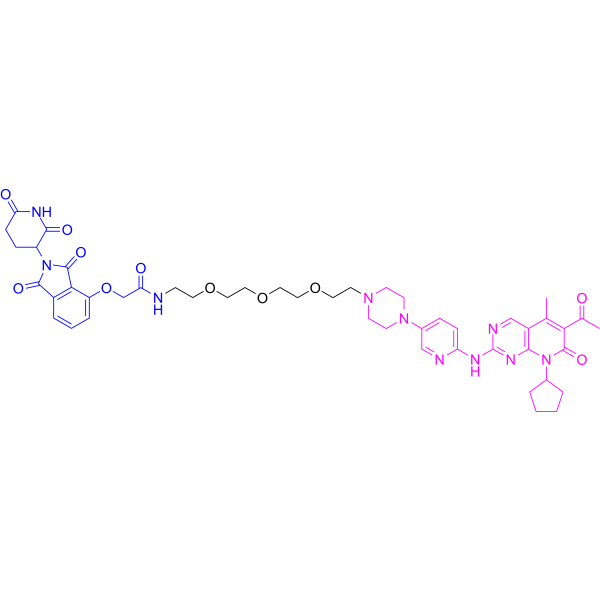
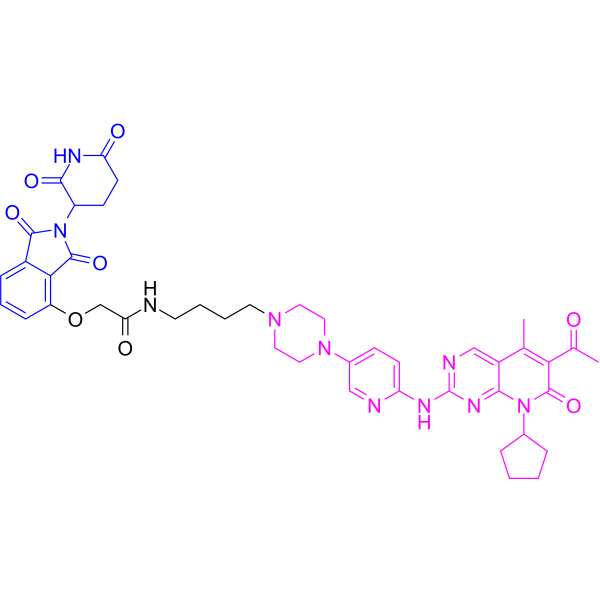
(Pink: CDK ligand (HY-50767); Blue: Cereblon ligand (HY-103597); Black: linker (HY-W046471)).
For research use only. We do not sell to patients.
- Purity : 99.19%
- CAS No.: 2361493-16-3
- Formula: C47H56N10O11
- Molecular Weight:937.01
-
Storage:
4°C, protect from light
* In solvent : -80°C, 6 months; -20°C, 1 month (protect from light)

To place orders, for customer services and technical support, please contact: MedChemExpress USA
Tel: 609-228-6898 E-mail: [email protected] [email protected]


-
 Biological Activity
-
Chemical Information
-
Solvent & Solubility
- Protocols
- Purity & Documentation
- References
-
 Help & FAQs


-
HY-136250
BSJ-03-204CDK4/CCND1 Complex Inhibitor, CDK6/CCND1 Complex Inhibitor -
HY-123937
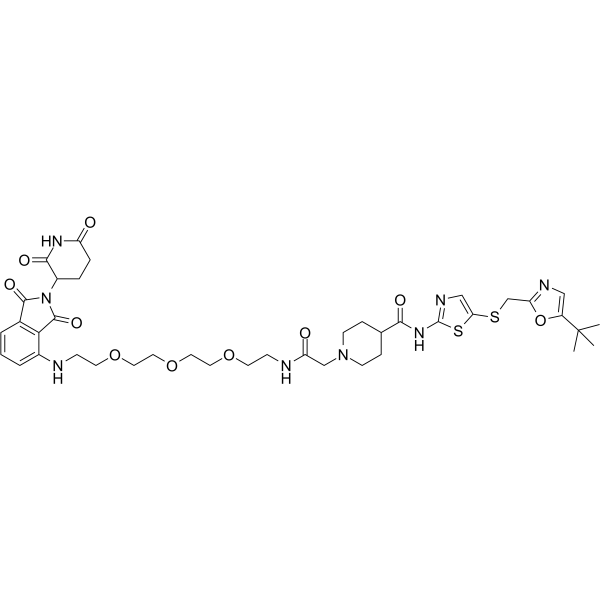
THAL-SNS-032CDK9 PROTAC Degrader -
HY-136252
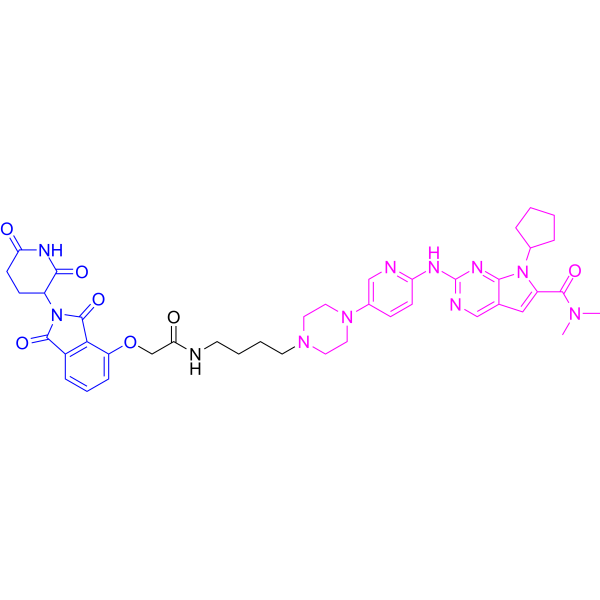
BSJ-04-132PROTAC CDK4 Degrader -
HY-125835
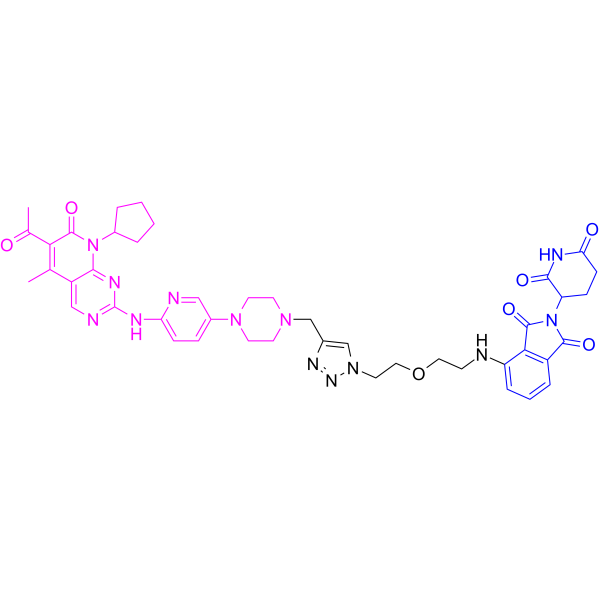
CP-10PROTAC CDK6 Degrader -
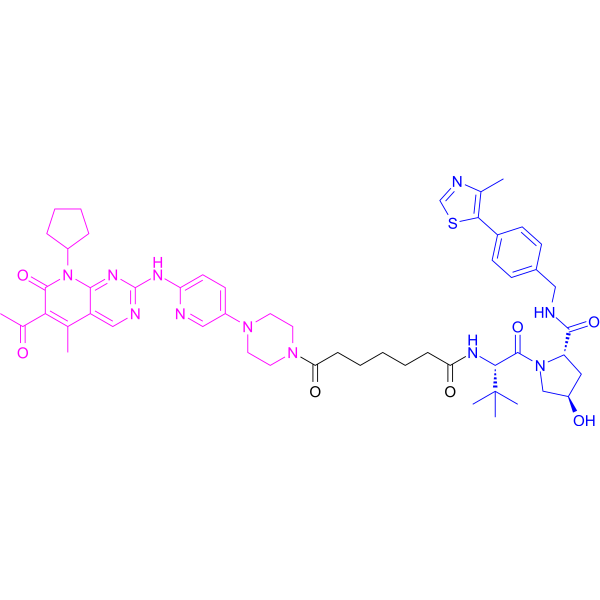
HY-129180
XY028-133CDK4/6 PROTAC Degrader -
HY-13818
StatticSTAT3 Inhibitor -
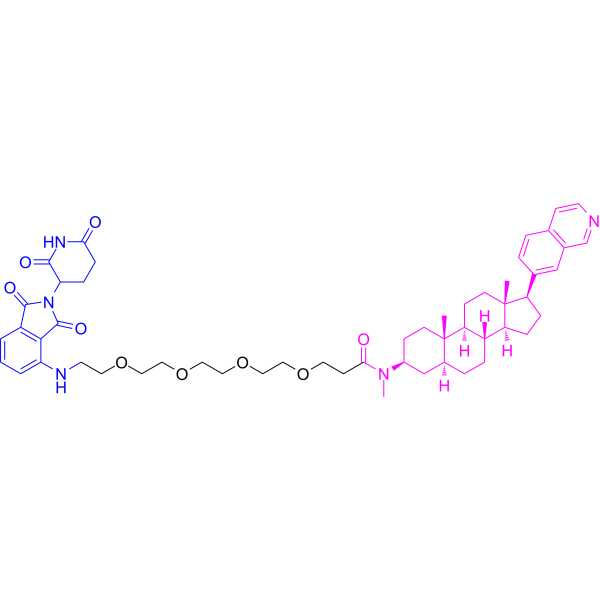
HY-111518
JH-XI-10-02PROTAC CDK8 Degrader -
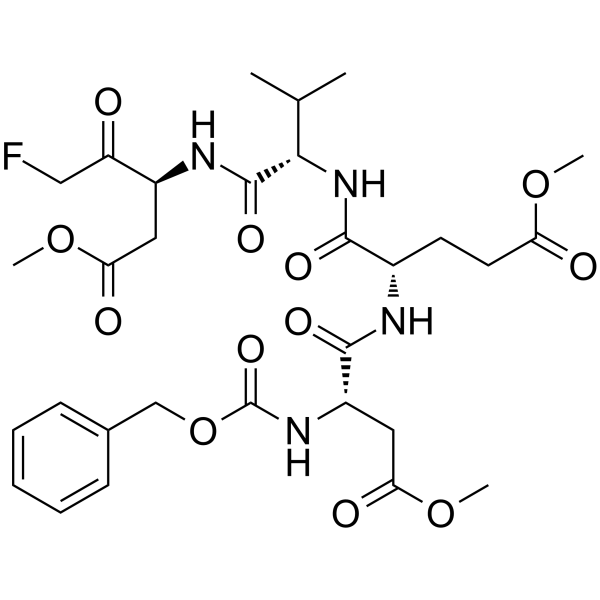
HY-12466
Z-DEVD-FMKCaspase-3 Inhibitor -
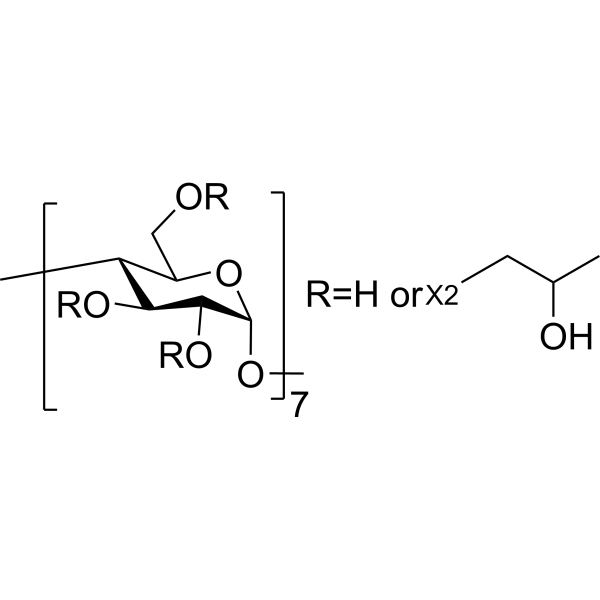
HY-101103
HP-β-CDCo-solvent -
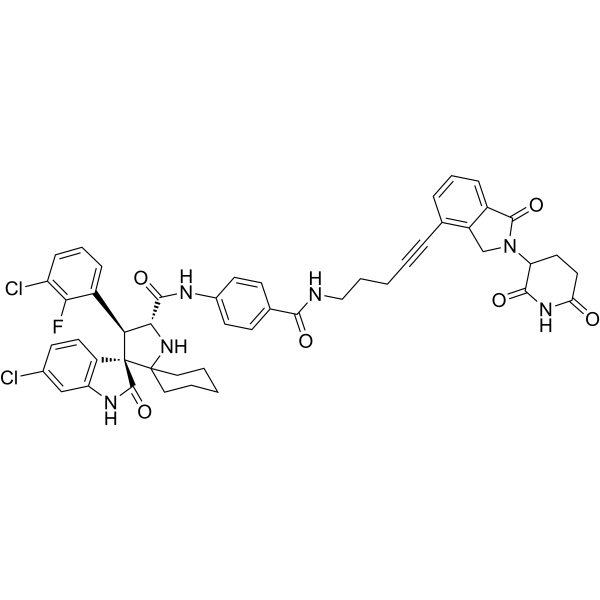
HY-114312
MD-224PROTAC MDM2 Degrader -
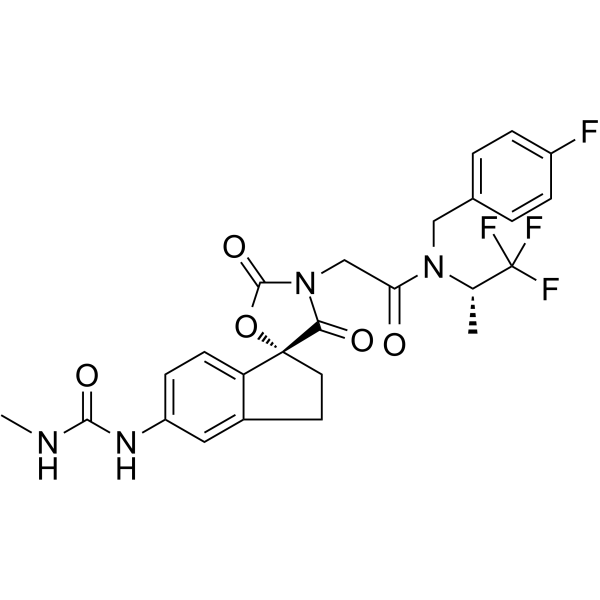
HY-107455
A-485p300/CBP Inhibitor -
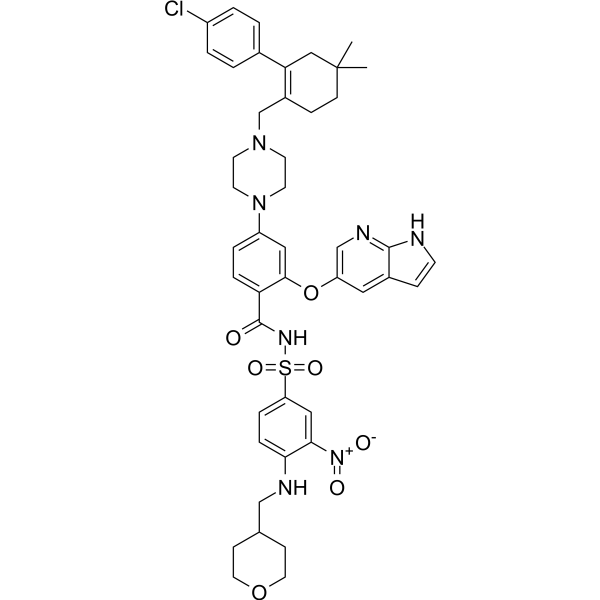
HY-15531
VenetoclaxBCL-2 Inhibitor
Publications Citing Use of MedChemExpress (MCE) BSJ-03-123
MoreAll PROTACs Isoforms
More

Biological Activity
Description
|
CDK6 |
Cereblon |
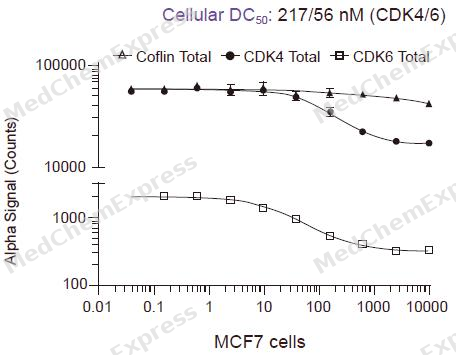
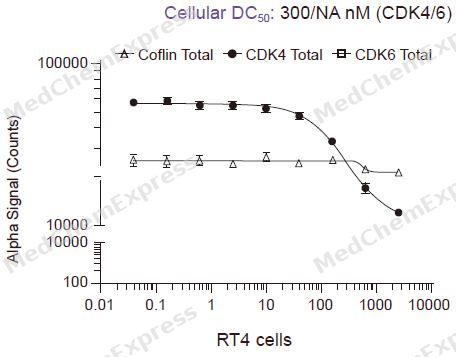
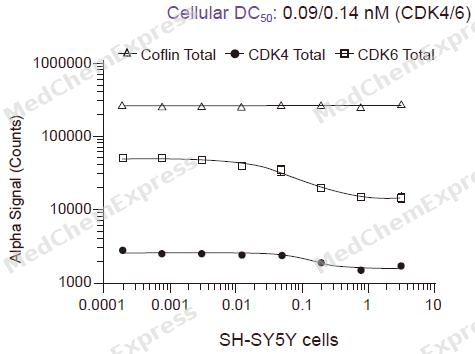
MCE Validation Data
In Vitro
BSJ-03-123 (100 nM; 2 h) exhibits genome-wide proteome selectivity for CDK6 degradation in MOLT4 cells[1].
BSJ-03-123 (200-1000 nM; 8-12 days, treatment refreshed every 2 days) selectively inhibits the proliferation of CDK6-dependent AML cell lines (MV4-11, MOLM13, P31/FUJ) without affecting CDK4-dependent cell lines[1].
BSJ-03-123 (200 nM; 24 h) induces G1-phase cell cycle arrest in MV4-11 and MOLM13 acute myeloid leukemia (AML) cells without increasing apoptosis[1].
BSJ-03-123 (200 nM; 2 h) aberrantly regulates the phosphorylation levels of 197 peptides in MV4-11 cells. Its regulatory targets are enriched in CDK motifs, and both known and novel CDK6 substrates are identified[1].
BSJ-03-123 (200 nM; 6 h) induces transcriptional changes in MV4-11 cells, which are highly correlated with those induced by palbociclib, affecting pathways including cell cycle regulation, DNA replication and chromatin organization[1].
BSJ-03-123 (0.1-5 μM; 4 h) induces CRBN-dependent selective degradation of CDK6 in wild-type Jurkat cells, with no such effect on CDK4, IKZF1 or IKZF3[2].
BSJ-03-123 (250 nM; 5 h) selectively degrades CDK6 in Molt4 cells without reducing the levels of CDK4, IKZF1 or IKZF3[2].
MedChemExpress (MCE) has not independently confirmed the accuracy of these methods. They are for reference only.
-
Cell Line:MV4-11, MV4-11 CRBN-/-
-
Concentration:50, 100, 200, 500 and 1000 nM (immunoblot); 200 nM (immunoblot, time-course, CRBN comparison); 20 μM (cellular thermal shift assay)
-
Incubation Time:4 h (immunoblot, CRBN comparison); 30 min, 1 h, 2 h and 3 h (immunoblot time-course); 3 h (cellular thermal shift assay)
-
Result:Induced concentration-dependent degradation of CDK6, with no measurable effect on CDK4 levels.
Induced time-dependent degradation of CDK6, with no effect on CDK4.
Failed to induce CDK6 degradation in CRBN-deficient MV4-11 cells.
Stabilized CDK4 and CDK6 to a similar extent as palbociclib in cellular thermal shift assay.
-
Cell Line:MV4-11, MOLM13, P31/FUJ, NCI-H358, HT29, Hs578T, CDK4-deficient MV4-11
-
Concentration:200 nM (AML cell lines, CDK4-deficient MV4-11); 0.2 and 1 μM (colony formation assays)
-
Incubation Time:8 and 10 days (AML cell lines, treatment refresh every 2 days); 12 days (colony formation assays, treatment refresh every 2 days); 8 days (CDK4-deficient MV4-11, treatment refresh every 2 days)
-
Result:Significantly reduced proliferation of CDK6-dependent AML cell lines, with a more pronounced effect than BSJ-bump.
Did not reduce colony formation in CDK4-dependent cell lines, whereas cyclin-dependent kinase 4/6 inhibitor severely impaired colony growth.
Reduced proliferation of CDK4-deficient MV4-11 cells to a similar extent as cyclin-dependent kinase 4/6 inhibitor.
-
Cell Line:MV4-11, MOLM13
-
Concentration:200 nM
-
Incubation Time:24 h
-
Result:Induced a G1 cell-cycle arrest, with no measurable increase in apoptosis.
-
Cell Line:Cultured cells, CRBN-knockout cells
-
Concentration:200 nM
-
Incubation Time:8 h, 24 h
-
Result:Reduced levels of p-Rb S780, similar to CDK4/6 inhibitor treatment.
Had no effect on Rb phosphorylation when using BSJ-bump at this concentration.
Had its effect on Rb phosphorylation rescued in CRBN-knockout cells.
-
Cell Line:wildtype Jurkat T-cells, CRBN knockout (Crbn-/-) Jurkat T-cells
-
Concentration:0.1, 0.5, 5 μM
-
Incubation Time:4 h
-
Result:Induced concentration-dependent degradation of CDK6 in wildtype Jurkat cells.
Left CDK4, IKZF1, and IKZF3 protein levels unaffected in wildtype Jurkat cells.
Completely abrogated CDK6 degradation in Crbn-/- Jurkat cells.
In Vivo
MedChemExpress (MCE) has not independently confirmed the accuracy of these methods. They are for reference only.
-
Animal Model:C57BL/6J (female, 6-8 weeks old, 20-25 g, experimental autoimmune uveitis induced by subcutaneous injection of 200 μg IRBP1-20 in complete Fuchs’ adjuvant on day 0, plus intraperitoneal injection of 0.25 μg pertussis toxin on day 0 and day 2)[3]
-
Dosage:50 mg/kg
-
Administration:i.p.; daily; 13 days
-
Result:Reduced serum levels of inflammatory cytokines including IL-17, GM-CSF, IL-6, and TNF-α.
Decreased fundus clinical scores and histopathological scores for retinal inflammation and structural destruction.
Restored Th17/Treg balance in retinal and cervical draining lymph node tissues.
Reduced pathogenic Th17 cell differentiation and inflammatory gene expression.
Increased Treg proportions with enhanced immunomodulatory effects.
- Kinase activity and phosphorylation assays
- Western Blot
- Detection of Apoptosis
- TUNEL staining for apoptotic DNA fragmentation
- Flow cytometric DNA-content cell-cycle staining
- Annexin V plus membrane-impermeant dye apoptosis staining
- BrdU Incorporation Assay
- Apoptosis Solutions
- Protocol for Cell Cycle
- Protocol for Kinase activity and phosphorylation assays


Chemical Information
-
CAS No. 2361493-16-3
-
Appearance Solid
-
Molecular Weight 937.01
-
Formula C47H56N10O11
-
Color White to yellow
-
SMILES
O=C(C(C(C)=O)=C1C)N(C2CCCC2)C3=C1C=NC(NC4=CC=C(N5CCN(CCOCCOCCOCCNC(COC6=CC=CC7=C6C(N(C8C(NC(CC8)=O)=O)C7=O)=O)=O)CC5)C=N4)=N3
-
Shipping
Room temperature in continental US; may vary elsewhere.
-
Storage
4°C, protect from light
* In solvent : -80°C, 6 months; -20°C, 1 month (protect from light)


Publications (5)
-
Journal Impact Factor
-
Most Recent
-
Cancer Cell
GABAergic neuronal lineage development determines clinically actionable targets in diffuse hemispheric glioma, H3G34-mutant. [Abstract]2024 Aug 27:S1535-6108(24)00305-2. PMID: 39232581 -
J Adv Res
Histone deacetylases facilitate Th17-cell differentiation and pathogenicity in autoimmune uveitis via CDK6/ID2 axis. [Abstract]2025 Jun:72:633-652. PMID: 39107200 -
Cell Rep
2023 Mar 30;42(4):112314. PMID: 37000627 -
Cancers (Basel)
2022 Mar 18;14(6):1554. PMID: 35326705 -
Structure
PROTAC-mediated activation, rather than degradation, of a nuclear receptor reveals complex ligand-receptor interaction network. [Abstract]2024 Dec 5;32(12):2352-2363.e8. PMID: 39389062


Solvent & Solubility
In Vitro:
DMSO : 25 mg/mL (26.68 mM; Need ultrasonic; Hygroscopic DMSO has a significant impact on the solubility of product, please use newly opened DMSO)
Please refer to the solubility information to select the appropriate solvent. Once prepared, please aliquot and store the solution to prevent product inactivation from repeated freeze-thaw cycles.
Storage method and period of stock solution: -80°C, 6 months; -20°C, 1 month (protect from light). When stored at -80°C, please use it within 6 months. When stored at -20°C, please use it within 1 month.
Please refer to the solubility information to select the appropriate solvent. Once prepared, please aliquot and store the solution to prevent product inactivation from repeated freeze-thaw cycles.
Storage method and period of stock solution: -80°C, 6 months; -20°C, 1 month (protect from light). When stored at -80°C, please use it within 6 months. When stored at -20°C, please use it within 1 month.
Concentration (start) × Volume (start) = Concentration (final) × Volume (final)


Purity & Documentation
-
Data Sheet (286 KB)
-
SDS (394 KB)
- English - EN (394 KB)
- Français - FR (394 KB)
- Deutsch - DE (394 KB)
- Norwegian - NO (394 KB)
- Español - ES (394 KB)
- Swedish - SV (394 KB)
- Italian - IT (394 KB)
- Korean - KR (394 KB)
- Portuguese - PT (394 KB)
-
Handling Instructions (2659 KB)
References
[1]. Brand M, et al. Homolog-Selective Degradation as a Strategy to Probe the Function of CDK6 in AML. Cell chemical biology. 2019 Feb 21;26(2):300-306.e9. [Content Brief]
[2]. Jiang B, et al. Development of Dual and Selective Degraders of Cyclin-Dependent Kinases 4 and 6. Angew Chem Int Ed Engl. 2019 May 6;58(19):6321-6326. [Content Brief]
[3]. Zhang C, et al. Histone deacetylases facilitate Th17-cell differentiation and pathogenicity in autoimmune uveitis via CDK6/ID2 axis. Journal of advanced research. 2025 Jun;72:633-652. [Content Brief]


Complete Stock Solution Preparation Table
Please refer to the solubility information to select the appropriate solvent. Once prepared, please aliquot and store the solution to prevent product inactivation from repeated freeze-thaw cycles.
Storage method and period of stock solution: -80°C, 6 months; -20°C, 1 month (protect from light). When stored at -80°C, please use it within 6 months. When stored at -20°C, please use it within 1 month.
| Optional Solvent | Concentration Solvent Mass | 1 mg | 5 mg | 10 mg | 25 mg |
|---|---|---|---|---|---|
| DMSO | 1 mM | 1.0672 mL | 5.3361 mL | 10.6722 mL | 26.6806 mL |
| 5 mM | 0.2134 mL | 1.0672 mL | 2.1344 mL | 5.3361 mL | |
| 10 mM | 0.1067 mL | 0.5336 mL | 1.0672 mL | 2.6681 mL | |
| 15 mM | 0.0711 mL | 0.3557 mL | 0.7115 mL | 1.7787 mL | |
| 20 mM | 0.0534 mL | 0.2668 mL | 0.5336 mL | 1.3340 mL | |
| 25 mM | 0.0427 mL | 0.2134 mL | 0.4269 mL | 1.0672 mL |


BSJ-03-123 Related Classifications
HY-111556 Related Classifications
 Powered by Bioz