



CDK Modulator
- 1

-
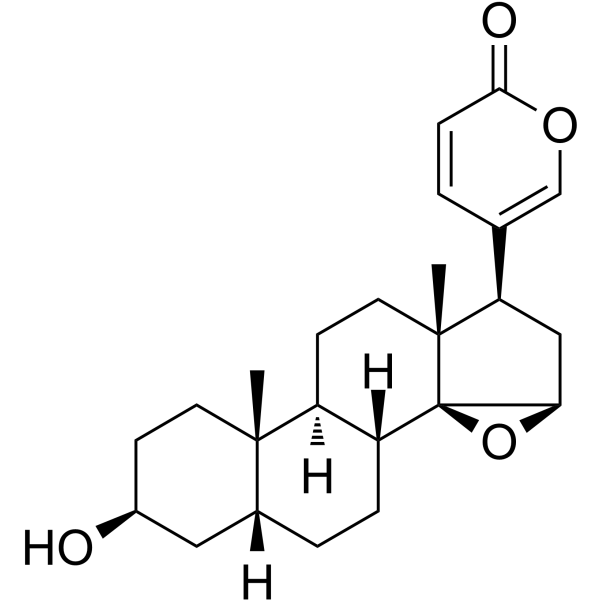
Resibufogenin
 0 Images
Resibufogenin is an orally active anticancer agent. Resibufogenin can be extracted from toad venom. Resibufogenin blocks signaling pathways such as PI3K/Akt, NF-κB, AP-1, activates GSK-3β, and regulates cyclin D1. Resibufogenin can activate central neurons. Resibufogenin has anti-inflammatory activity. Resibufogenin has anti-tumor effects on a variety of tumors such as multiple myeloma, renal cancer, colorectal cancer, pancreatic cancer, and glioma.
-
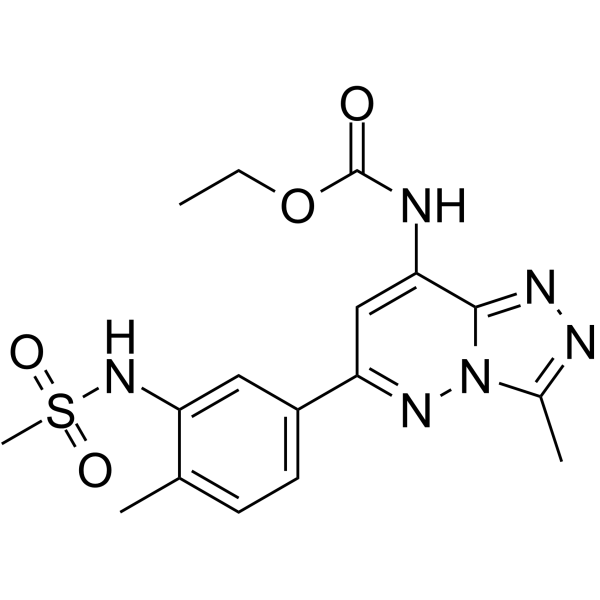
Bromosporine
 0 Images
Bromosporine, a chemical probe, is a potent BET inhibitor with an IC50 value of 2.1 μM for PCAF. Bromosporine can arrest cell cycle and induce apoptosis in cancer cells. Bromosporine exhibits excellent antitumor activity in xenograft mice model when combined with 5-Fluorouracil (HY-90006). Bromosporine can increase CDK9 T-loop phosphorylation in HIV-1 latency models, resulting the protection of reactivate HIV-1 replication from latency. Bromosporine can be used to research colorectal cancer, acute myeloid leukemia (AML) and AIDS.
-
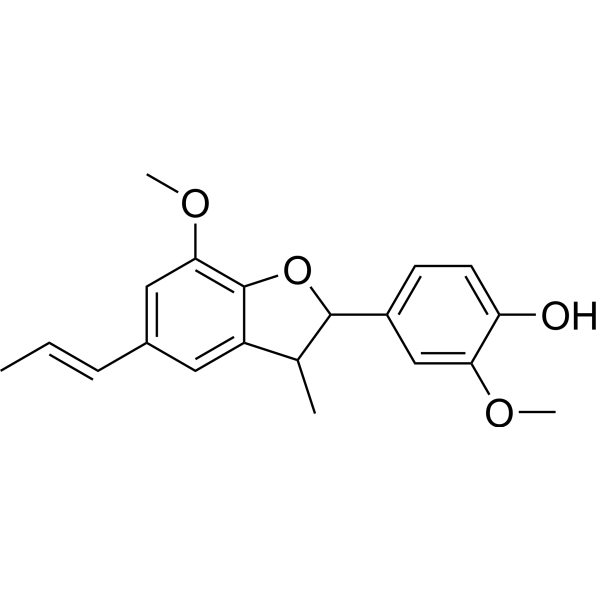
Dehydrodiisoeugenol
 0 Images
Dehydrodiisoeugenol is an orally active anti-inflammatory and anti-tumor agent. Dehydrodiisoeugenol inhibits the proliferation of colorectal cancer cells, and induces apoptosis, autophagy, endoplasmic reticulum stress and cell cycle arrest. Dehydrodiisoeugenol also exerts anti-inflammatory effects by inhibiting the activation of NF-κB and the expression of COX-2. Dehydrodiisoeugenol can be used in the research related to colorectal cancer, inflammatory diseases and ulcerative colitis.
-
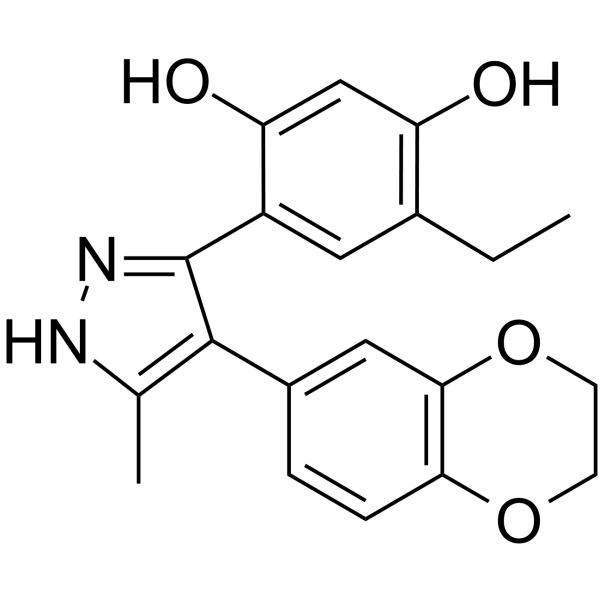
CCT018159
 0 Images
CCT018159 is an ATP-competitive HSP90β inhibitor, with an IC50 of 3.2 μM against human HSP90β ATPase and 6.6 μM against yeast HSP90β ATPase. CCT018159 induces cell cycle arrest and apoptosis in tumor cells, and inhibits invasion and angiogenesis. CCT018159 is applicable to cancer-related research.
-
TFEB activator 2
 0 Images
TFEB activator 2 is an orally active compound that can cross the blood-brain barrier. TFEB activator 2 can bind to the dopamine transporter (DAT). TFEB activator 2 promotes TFEB nuclear translocation and lysosome biogenesis by targeting the DAT-CDK9-TFEB pathway. TFEB activator 2 has neuroprotective activity and can be used in the research of Alzheimer's disease and other diseases.
-
NYX-2925
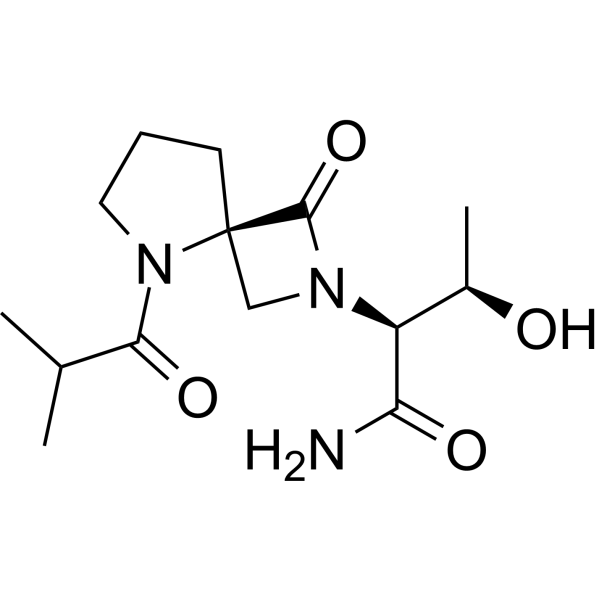 0 Images
NYX-2925 is an orally active, blood-brain barrier-permeable NMDAR modulator, with EC50 values of 55 pM, 28 fM, 11 pM and 55 pM against NR2A, NR2B, NR2C and NR2D, respectively. NYX-2925 enhances synaptic plasticity, long-term potentiation, metaplasticity, structural plasticity, learning ability, memory capacity and circadian rhythm amplitude. NYX-2925 regulates the signaling pathways of Src kinase, EIF2, mTOR, CDK5 and protein kinase A (PKA). NYX-2925 increases the levels of PSD-95, GluA1, activated Src and synaptic GluN2B. NYX-2925 is used in the research of neuropathic pain, fibromyalgia, painful diabetic peripheral neuropathy, post-traumatic stress disorder, cognitive impairment, depression, age-related cognitive decline and NMDAR-mediated central nervous system diseases.

-
Zinc acetate, 99.99% trace metals basis
 0 ImagesSynonyms: Zinc(II) acetate, 99.99% trace metals basis
Zinc (Zinc (II)) acetate, 99.99% trace metals basis is a heme oxygenase 1 (HO-1) activator and apoptosis inducer with cytotoxic and anticancer activities. Zinc acetate, 99.99% trace metals basis enhances HO-1 expression, alters the microRNA profile, and increases the level of caspase-cleaved cytokeratin 18. Zinc acetate, 99.99% trace metals basis also regulates the expression of Cdk2/cyclin E and interferes with cell cycle progression. Zinc acetate, 99.99% trace metals basis effectively inhibits cancer cell proliferation and induces their rapid death, with no significant cytotoxicity to non-tumor tissues. Zinc acetate, 99.99% trace metals basis has been widely used in studies related to hepatocellular carcinoma, prostate cancer, and other conditions.
-
CDK2 modulator 1
 0 ImagesCat. No.: HY-186126CAS No.: 3066623-95-5
CDK2 modulator 1 is a CDK2 modulator with an EC50 < 100 nM and an Emax > 100% of positive control in a TR-FRET proximity assay. CDK2 modulator 1 induces ternary complex formation with CDK2/CCNE1 and CRBN. CDK2 modulator 1 can be used for the research of cancer.
-
Dehydrodiisoeugenol-d4
 0 ImagesCat. No.: HY-N0589S
Dehydrodiisoeugenol-d4 is the deuterium labeled Dehydrodiisoeugenol (HY-N0589). Dehydrodiisoeugenol is an orally active anti-inflammatory and anti-tumor agent. Dehydrodiisoeugenol inhibits the proliferation of colorectal cancer cells, and induces apoptosis, autophagy, endoplasmic reticulum stress and cell cycle arrest. Dehydrodiisoeugenol also exerts anti-inflammatory effects by inhibiting the activation of NF-κB and the expression of COX-2. Dehydrodiisoeugenol can be used in the research related to colorectal cancer, inflammatory diseases and ulcerative colitis.
-
Tubulin-IN-66
 0 ImagesCat. No.: HY-182753CAS No.: 3110538-32-1
Tubulin-IN-66 is a tubulin (tubulin) and P-gp inhibitor with antiproliferative activity against cancer cells. Tubulin-IN-66 covalently binds to the Colchicine (HY-16569)-binding site at Cys239 of the β-tubulin subunit, inhibits tubulin polymerization and disrupts the microtubule network. Tubulin-IN-66 inhibits P-gp function to overcome multidrug resistance. Tubulin-IN-66 arrests the cell cycle at the G2/M phase and induces apoptosis (apoptosis). Tubulin-IN-66 inhibits colony formation and migration of cancer cells. Tubulin-IN-66 can be used in the research of tumors such as breast cancer.
-
Largazole
 0 ImagesCat. No.: HY-13906CAS No.: 1009815-87-5Synonyms: (+)-Largazole
Largazole ((+)-Largazole) is an orally active, blood-brain barrier-permeable class I histone deacetylase (HDAC) inhibitor with in vivo anticancer activity and osteogenic efficacy. As a prodrug, Largazole hydrolyzes to Largazole thiol (HY-170890), which has a Ki value of 0.07 nM against human HDAC2. Largazole regulates the cell cycle, induces apoptosis, upregulates tumor suppressors and osteoblast differentiation markers, inhibits osteoclast formation, and upregulates neuroprotection-related genes. Largazole can be used in the research of various cancers including colorectal cancer, as well as neurodegenerative diseases.
-
Dehydrodiisoeugenol (Standard)
 0 Images
Dehydrodiisoeugenol (Standard) is the analytical standard of Dehydrodiisoeugenol (HY-N0589). This product is intended for research and analytical applications. Dehydrodiisoeugenol is an orally active anti-inflammatory and anti-tumor agent. Dehydrodiisoeugenol inhibits the proliferation of colorectal cancer cells, and induces apoptosis, autophagy, endoplasmic reticulum stress and cell cycle arrest. Dehydrodiisoeugenol also exerts anti-inflammatory effects by inhibiting the activation of NF-κB and the expression of COX-2. Dehydrodiisoeugenol can be used in the research related to colorectal cancer, inflammatory diseases and ulcerative colitis.
-
CDK modulator 1
 0 ImagesCat. No.: HY-W809647CAS No.: 1203565-13-2
- 1



