



Cathepsin
Cathepsins are protease enzymes, categorized into multiple families. Cathepsins can be serine protease, cysteine protease, or aspartyl protease. There are about 15 classes of cathepsins in humans (Cathepsin A, B, C, D, E, F, G, H, K, L, O, S, V, W, and Z). Cathepsins are active in the low pH milieu of lysosomes and are versatile in their functions. Like other enzymes, they are vital for the normal physiological functions such as digestion, blood coagulation, bone resorption, ion channel activity, innate immunity, complement activation, apoptosis, vesicular trafficking, autophagy, angiogenesis, proliferation, and metastasis, among scores of others.
Numerous pathologies have been attributed to the dysregulated cathepsins, some of which include arthritis, periodontitis, pancreatitis, macular degeneration, muscular dystrophy, atherosclerosis, obesity, stroke, Alzheimer's disease, schizophrenia, tuberculosis, and Ebola.
Cathepsin Isoform Specific Products
All Product Categories
-
Cathepsin Inhibitors
(216)
View all products
-
Cathepsin Antagonist
(1)
View all products
-
Cathepsin Activators
(7)
View all products
-
Cathepsin Inducers
(3)
View all products
-
Cathepsin Degrader
(1)
View all products
-
Cathepsin Control
(1)
View all products
-
Cathepsin Substrates
(21)
View all products
-
Cathepsin Ligand
(1)
View all products
-
Cathepsin Proteins
(35)
View all products
-
Cathepsin B Proteins
(5)
View all products
-
Cathepsin C Proteins
(4)
View all products
-
Cathepsin D Proteins
(5)
View all products
-
Cathepsin E Proteins
(3)
View all products
-
Cathepsin K Proteins
(1)
View all products
-
Cathepsin L1 Proteins
(4)
View all products
-
Cathepsin S Proteins
(2)
View all products
-
Cathepsin Related Products (297)
Related Products (297)

-
Recombinant Proteins (35)
-
Antibodies (6)
-
Cathepsin Isoform Comparison
-
Ctsl Rat Pre-designed siRNA Set A
 0 ImagesCat. No.: HY-RS03342
Ctsl Rat Pre-designed siRNA Set A contains three designed siRNAs for Ctsl gene (Rat), as well as a negative control, a positive control, and a FAM-labeled negative control.
-
Z-LVG
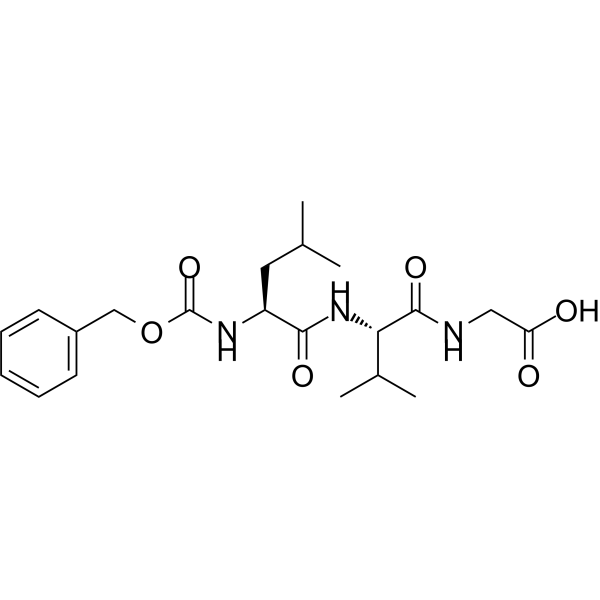 0 ImagesCat. No.: HY-156560CAS No.: 119670-31-4Z-LVG is an irreversible cysteine proteinase inhibitor. Z-LVG is a tripeptide derivative from cystatin C which can inhibit viral replication. Z-LVG can be used for virus diseases research.
-
Z-Leu-Leu-Leu-fluoromethyl ketone
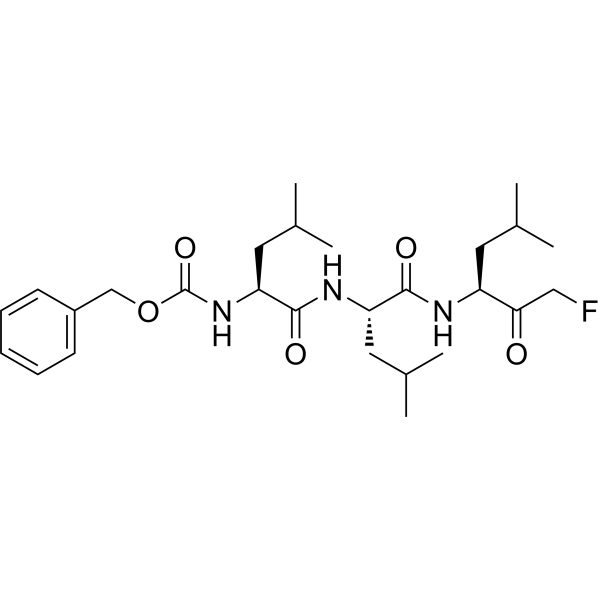 0 ImagesCat. No.: HY-P5975CAS No.: 371167-61-2Synonyms: Z-LLL-FMKZ-Leu-Leu-Leu-fluoromethyl ketone (Z-LLL-FMK) is a cysteine protease inhibitor. Z-Leu-Leu-Leu-fluoromethyl ketone inhibits SARS infection. Z-Leu-Leu-Leu-fluoromethyl ketone also protects mice against a T. crassiceps challenge.
-
GB111-NH2
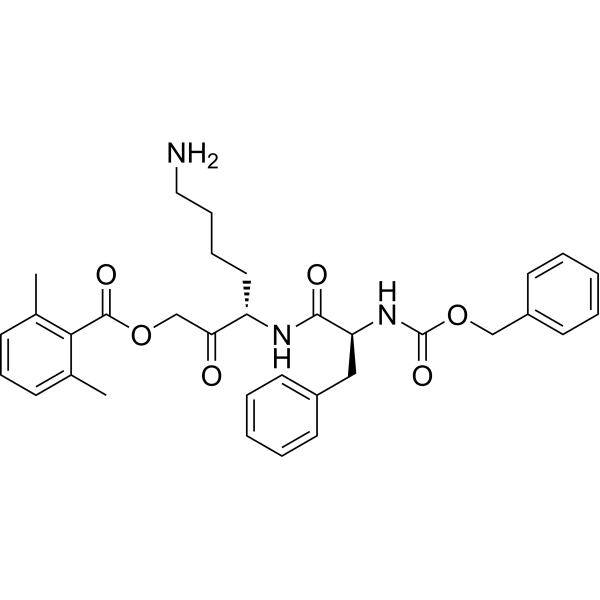 0 ImagesCat. No.: HY-115454CAS No.: 956479-18-8
-
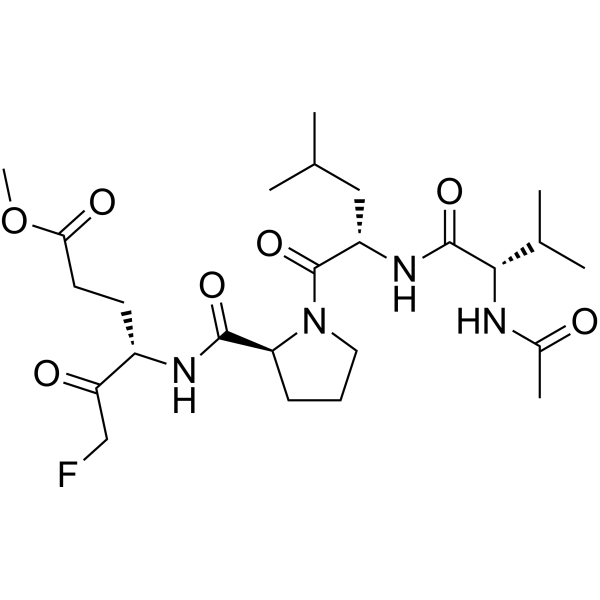
Cathepsin-IN-5
 0 ImagesCat. No.: HY-182269CAS No.: 2475078-38-5Cathepsin-IN-5 is a cathepsin inhibitor with IC50 values of 6.2 μM and 81 nM for cathepsin L and cathepsin S. Cathepsin-IN-5 inhibits cancer cells proliferation, induces apoptosis, reduces growth of hepatocellular tumors in mouse models, and modulates expression of genes linked to cell death, cell proliferation, and cellular processes. Cathepsin-IN-5 can be used for the research of hepatocellular carcinoma.
-
Tasiamide B
 0 ImagesCat. No.: HY-N15154CAS No.: 587014-85-5Tasiamide B is a Cathepsin D inhibitor, which is a linear peptide found in the marine cyanobacteria Symploca sp.. Tasiamide B is proved as a good template for the development of aspartic proteases inhibitors. Tasiamide B is effective against skin cancer by strongly interacting with the target protein HSP90.
-
Cathepsin K inhibitor 4
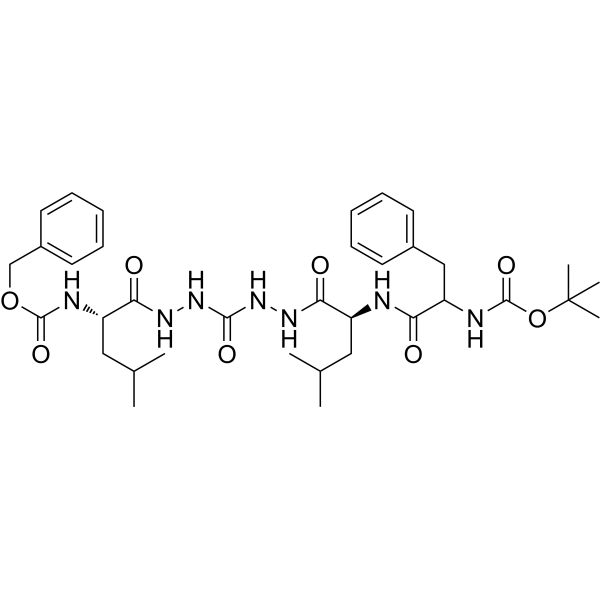 0 ImagesCat. No.: HY-P10061Cathepsin K inhibitor 4 is a potent carbohydrazide Cathepsin K inhibitor with IC50s of 13 nM, 269 nM, 296 nM for human, rat, mouse Cathepsin K, respectively.

-
Ctsk Mouse Pre-designed siRNA Set A
 0 ImagesCat. No.: HY-RS03338
Ctsk Mouse Pre-designed siRNA Set A contains three designed siRNAs for Ctsk gene (Mouse), as well as a negative control, a positive control, and a FAM-labeled negative control.
-
NB-533
 0 ImagesCat. No.: HY-182429CAS No.: 1146544-18-4NB-533 is an orally active and brain-penetrant BACE-1 inhibitor with a human IC50 of 0.002 μM. NB-533 also inhibits human cathepsin D with an IC50 of 0.001 μM. NB-533 inhibits amyloidogenic amyloid precursor protein (APP) processing and reduces Aβ40 release. NB-533 reduces brain levels of APP metabolite C99 and Aβ40 in transgenic mice. NB-533 can be used for the research of Alzheimer’s disease.
-
Ctse Mouse Pre-designed siRNA Set A
 0 ImagesCat. No.: HY-RS03332
Ctse Mouse Pre-designed siRNA Set A contains three designed siRNAs for Ctse gene (Mouse), as well as a negative control, a positive control, and a FAM-labeled negative control.
-
BI-1915
 0 ImagesCat. No.: HY-172203CAS No.: 752237-67-5BI-1915, a chemical probe, is the selective inhibitor for Cathepsin S with an IC50 of 17 nM. BI-1915 can be used in research of autoimmune diseases.
-
Cathepsin C-IN-3
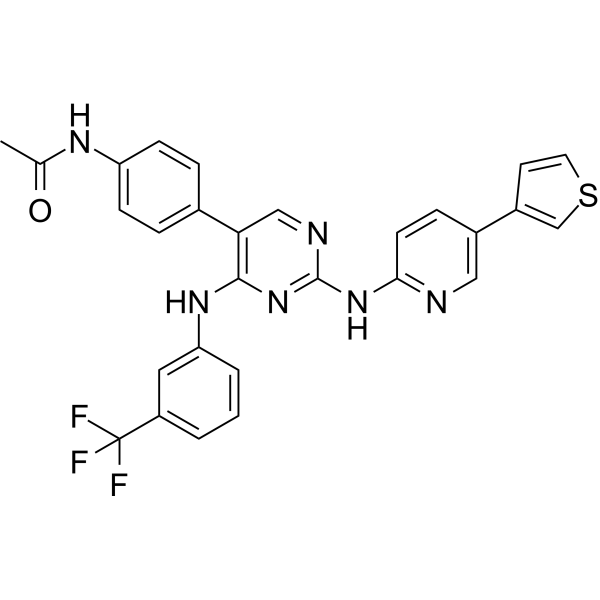 0 ImagesCat. No.: HY-146580CAS No.: 2825567-71-1Cathepsin C-IN-3 (compound SF11) is a potent Cathepsin C (Cat C) inhibitor, with an IC50 of 61.79 nM. Cathepsin C-IN-3 also inhibits THP-1 and U937 cell, with IC50 values of 101.5 and 86.5 nM, respectively.
-
N-Ethylmaleimide (Standard)
 0 ImagesBayogenin (Standard) is the analytical standard of Bayogenin. This product is intended for research and analytical applications. Bayogenin is an alfalfa saponin, shows moderate potency of glycogen phosphorylase inhibition.
-
Ctsl Mouse Pre-designed siRNA Set A
 0 ImagesCat. No.: HY-RS03341
Ctsl Mouse Pre-designed siRNA Set A contains three designed siRNAs for Ctsl gene (Mouse), as well as a negative control, a positive control, and a FAM-labeled negative control.
-
Cathepsin L-IN-7
 0 ImagesCat. No.: HY-183940CAS No.: 1194047-02-3Cathepsin L-IN-7 is an inhibitor of cathepsin L, cathepsin B and cathepsin S. Cathepsin L-IN-7 has an IC50 of 0.011 μM against cathepsin L and an IC50 of 0.062 μM against cathepsin S, while it shows weak inhibitory activity against cathepsin B. Cathepsin L-IN-7 binds to the active site of cysteine proteases and blocks their proteolytic function. Cathepsin L-IN-7 can be used in research on viral infections and cancer.
-
NB-216
 0 ImagesCat. No.: HY-11014CAS No.: 943924-04-7NB-216 is an orally active and brain-penetrant BACE-1 inhibitor (IC50 = 17 nM). NB-216 has a strong inhibitory effect on cathepsin D (IC50 = 1 nM) and cathepsin E (IC50 = 0.4 nM). NB-216 can be used for the study of Alzheimer's disease.




