From 11:00 pm to 12:00 pm EST ( 8:00 pm to 9:00 pm PST ) on January 6th, the website will be under maintenance. We are sorry for the inconvenience. Please arrange your schedule properly.
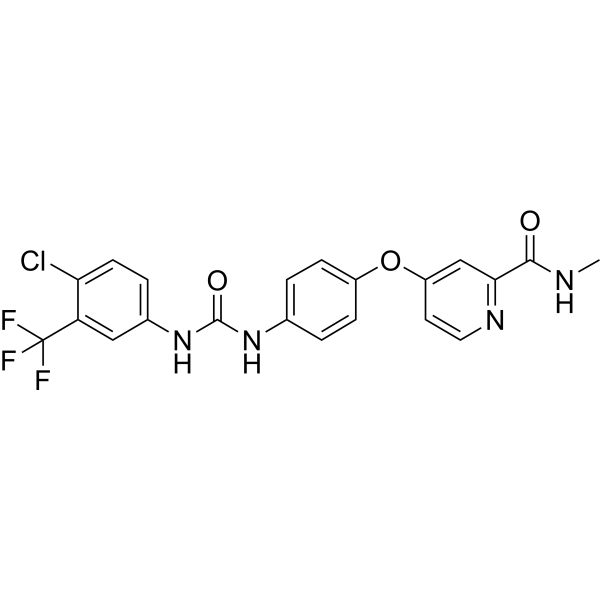
Sorafenib (Bay 43-9006) is a potent oral active multikinase inhibitor. Sorafenib blocks autophosphorylation and activity of receptor tyrosine kinases(VEGFR-2,VEGFR-3) and RAF family kinases, thereby suppressing the RAF/MEK/ERK and PI3K/Akt pathways, inhibiting STAT3 phosphorylation, and selectively inhibiting the MAPK pathway in cancer cells. Sorafenib induces cell cycle arrest, autophagy, apoptosis, and PARP cleavage, reduces Bcl-2, Bcl-XL, cyclin D1 levels, and activates Bak and Bax. Sorafenib inhibits tumor growth and metastasis in mouse and rat models. Sorafenib can be used for cancer research, such as colon, breast, non-small-cell lung cancer (NSCLC), ovarian, pancreatic, melanoma, colorectal and hepatocellular carcinoma [3] .
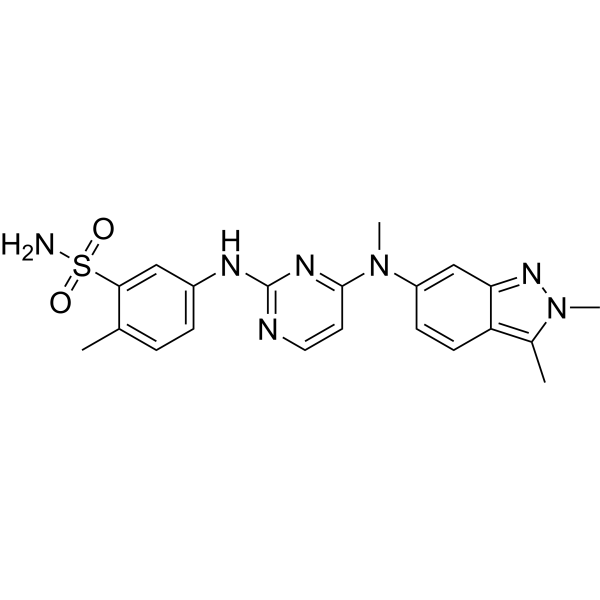
Pazopanib (GW786034) is a novel multi-target inhibitor of VEGFR1, VEGFR2, VEGFR3, PDGFRβ, c-Kit, FGFR1, and c-Fms with IC50s of 10, 30, 47, 84, 74, 140 and 146 nM, respectively.
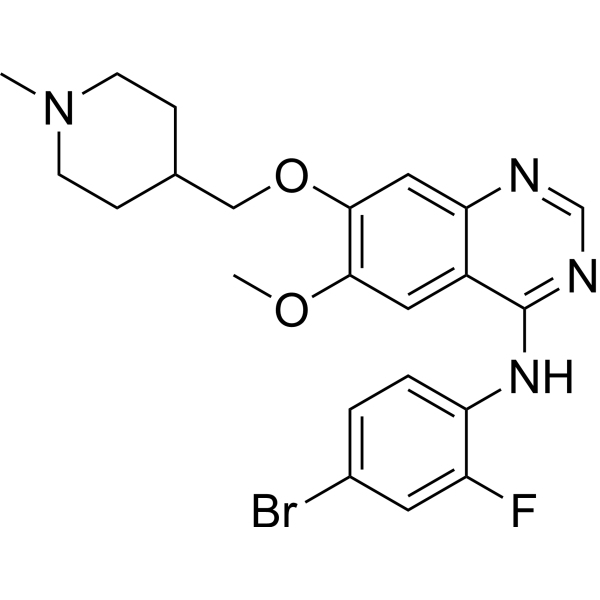
Vandetanib (D6474) is a potent, orally active, and blood-brain-barrier penetrate inhibitor of VEGFR2/KDR tyrosine kinase activity (IC50=40 nM). Vandetanib also has activity versus the tyrosine kinase activity of VEGFR3/FLT4 (IC50=110 nM) and EGFR/HER1 (IC50=500 nM) .
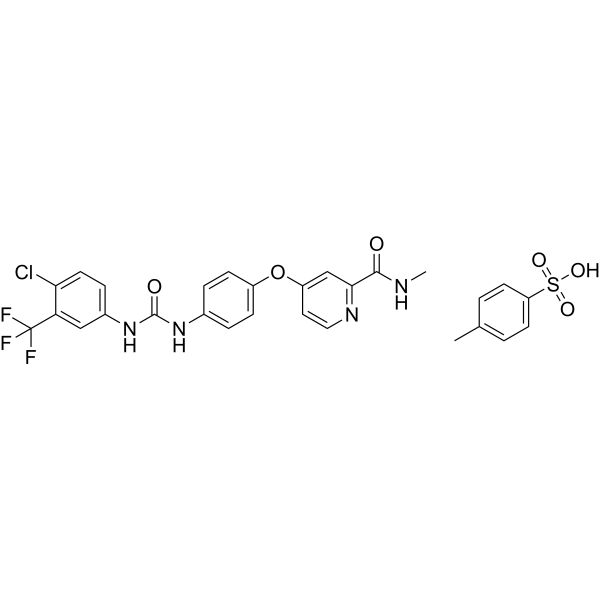
Sorafenib (Bay 43-9006) tosylate is a potent oral active multikinase inhibitor. Sorafenib blocks autophosphorylation and activity of receptor tyrosine kinases(VEGFR-2,VEGFR-3) and RAF family kinases, thereby suppressing the RAF/MEK/ERK and PI3K/Akt pathways, inhibiting STAT3 phosphorylation, and selectively inhibiting the MAPK pathway in cancer cells. Sorafenib tosylate induces cell cycle arrest, autophagy, apoptosis, and PARP cleavage, reduces Bcl-2, Bcl-XL, cyclin D1 levels, and activates Bak and Bax. Sorafenib tosylate inhibits tumor growth and metastasis in mouse and rat models. Sorafenib tosylate can be used for cancer research, such as colon, breast, non-small-cell lung cancer (NSCLC), ovarian, pancreatic, melanoma, colorectal and hepatocellular carcinoma [3] .
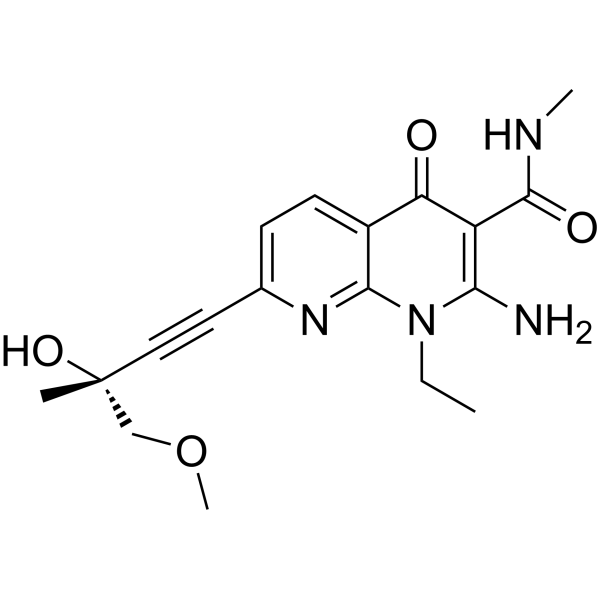
SAR131675 is a potent and selective VEGFR3 inhibitor with an IC50 of 23 nM. SAR131675 is a click chemistry reagent, it contains an Alkyne group and can undergo copper-catalyzed azide-alkyne cycloaddition (CuAAc) with molecules containing Azide groups.
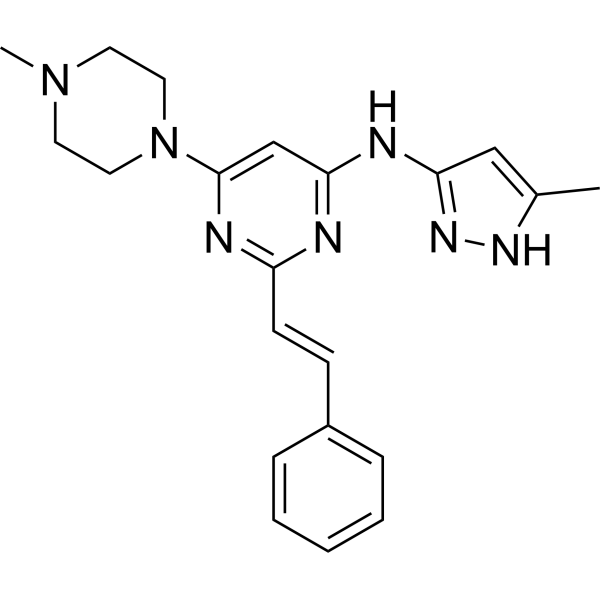
ENMD-2076 is a multi-targeted kinase inhibitor with IC50s of 1.86, 14, 58.2, 15.9, 92.7, 70.8, 56.4 nM for Aurora A, Flt3, KDR/VEGFR2, Flt4/VEGFR3, FGFR1, FGFR2, Src, PDGFRα, respectively.
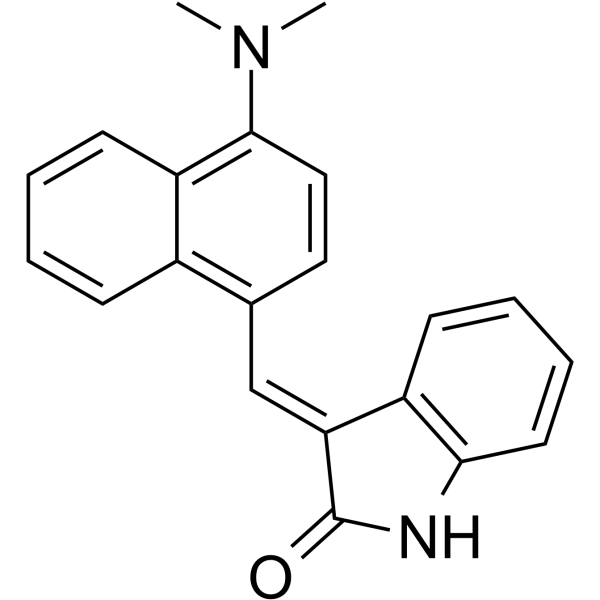
MAZ51 is a selective inhibitor of VEGFR-3 (Flt-4) tyrosine kinase. MAZ51 inhibits VEGF-C-induced activation of VEGFR-3 without blocking VEGF-C-mediated stimulation of VEGFR2. MAZ51 had no effect on ligand-induced autophosphorylation of EGFR, IGF-1R and PDGFRβ. MAZ51 blocks proliferation and induces apoptosis in a wide variety of tumor cells. Antitumor activity .
Telatinib (Bay 57-9352) is an orally active, small molecule inhibitor of VEGFR2, VEGFR3, PDGFα, and c-Kit with IC50s of 6, 4, 15 and 1 nM, respectively.
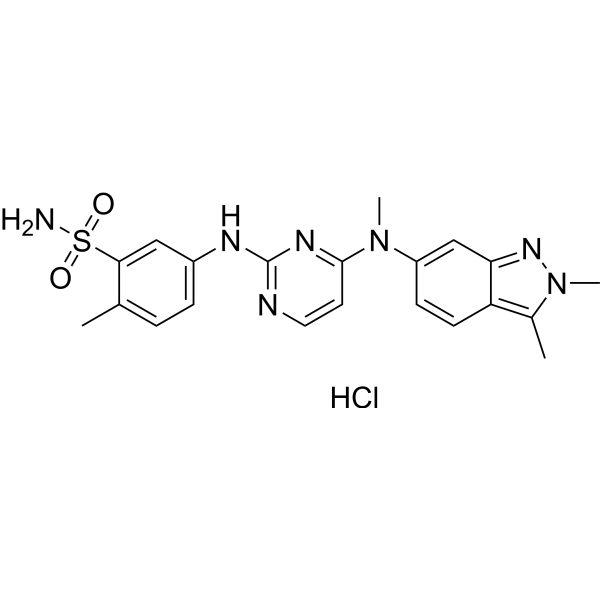
Pazopanib Hydrochloride (GW786034 Hydrochloride) is a novel multi-target inhibitor of VEGFR1, VEGFR2, VEGFR3, PDGFRβ, c-Kit, FGFR1, and c-Fms with an IC50 of 10, 30, 47, 84, 74, 140 and 146 nM, respectively.
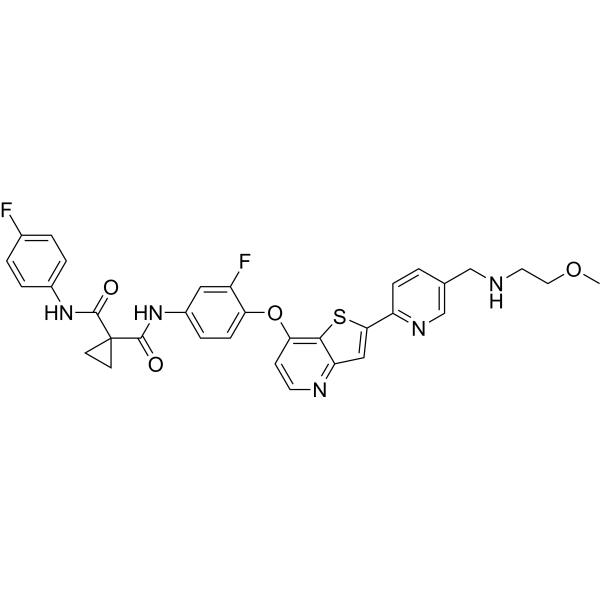
Lucitanib (E-3810) is a novel dual inhibitor of VEGFR and FGFR, potently and selectively inhibits VEGFR1, VEGFR2, VEGFR3, FGFR1 and FGFR2 with IC50s of 7 nM, 25 nM, 10 nM, 17.5 nM, and 82.5 nM, respectively [3].
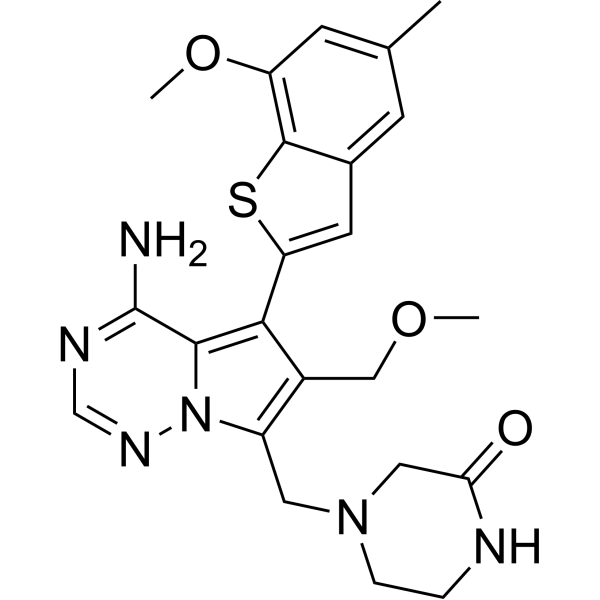
ODM-203 is an orally active and selective FGFR/VEGFR inhibitor with IC50 values of 6, 11, 16, 5, 9, 26 and 35 nM for FGFR3/1/2 and VEGFR3/2/1/4, respectively. ODM-203 has strong anti-tumour activity and activates immune responses in the tumour microenvironment .
EVT801 is an orally active and selective inhibitor of VEGFR-3 (IC50=11 nM), which has antitumor effects. EVT801 inhibits not only VEGF-C-induced human endothelial cell proliferation, but also tumor (lymphatic) angiogenesis in tumor mouse models. EVT801 can reduce tumor hypoxia, immunosuppressive cytokines (CCL4, CCL5) and myeloid derived suppressor cells (MDSC) production. EVT801 has synergistic effect with immune checkpoint therapy (ICT), which improves ICT response rate and has better inhibitory effect on cancer mouse models . EVT801 is a click chemistry reagent, it contains an Alkyne group and can undergo copper-catalyzed azide-alkyne cycloaddition (CuAAc) with molecules containing Azide groups.
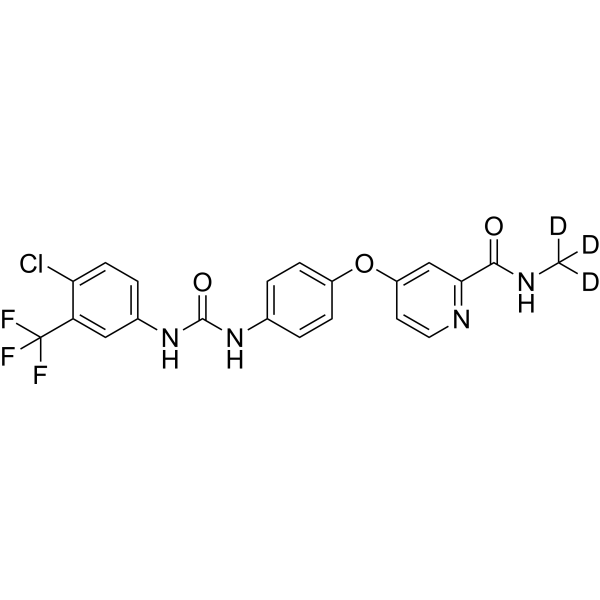
Sorafenib-d3 (Donafenib), a deuterated compound of Sorafenib, is the first deuterium-generation tumor suppressor small molecule. Sorafenib is a multikinase inhibitor IC50s of 6 nM, 20 nM, and 22 nM for Raf-1, B-Raf, and VEGFR-3, respectively .
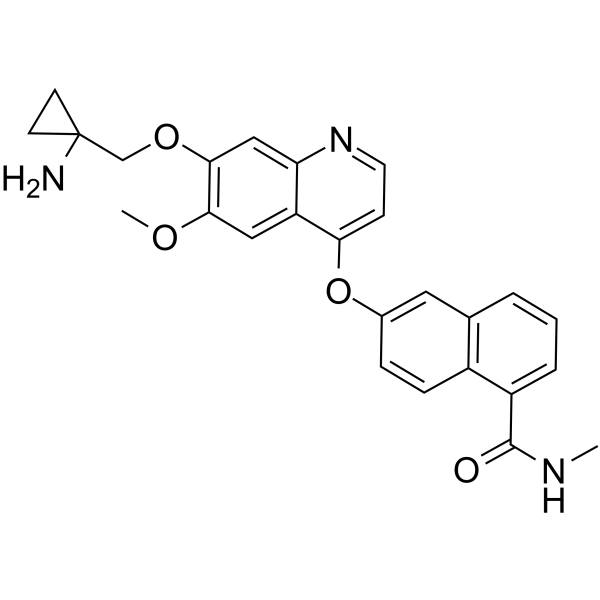
TAK-593 is a potent VEGFR and PDGFR family inhibitor with IC50s of 3.2, 0.95, 1.1, 4.3 and 13 nM for VEGFR1, VEGFR2, VEGFR3, PDFGRα and PDFGRβ, respectively.
Chiauranib (CS2164) is an orally active multi-target inhibitor against tumor angiogenesis. Chiauranib potently inhibits the angiogenesis-related kinases (VEGFR1,VEGFR2, VEGFR3, PDGFRα and c-Kit), mitosis-related kinase Aurora B, and chronic inflammation-related kinase CSF-1R, with IC50 values ranging from 1-9 nM. Chiauranib has strongly anticancer effects .
Sozinibercept (OPT 302; VGX-300) is a soluble form of VEGFR-3, potently inhibits the activity of VEGF-C/D, which are the proangiogenic factors, inhibiting angiogenesis and vascular leakage. Sozinibercept also inhibits diabetic retinal edema in rats [3].
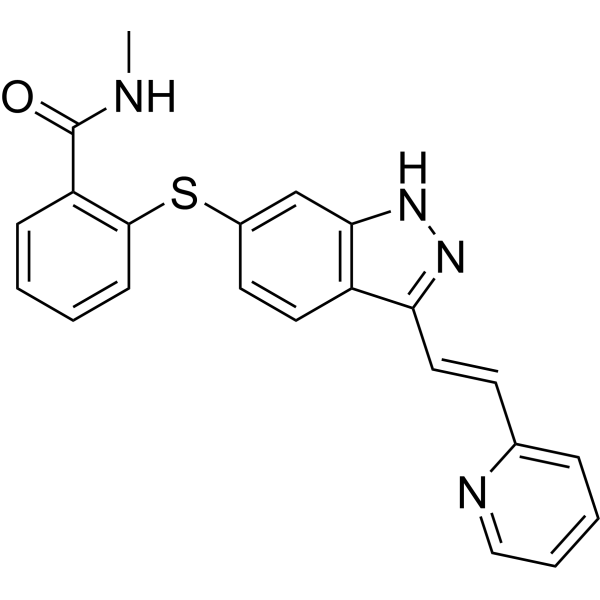
Axitinib- 13C,d3 is a 13C-labeled and deuterium labeled Axitinib. Axitinib is a multi-targeted tyrosine kinase inhibitor with IC50 values of 0.1, 0.2, 0.1-0.3, 1.6 nM for VEGFR1, VEGFR2, VEGFR3 and PDGFRβ, respectively .
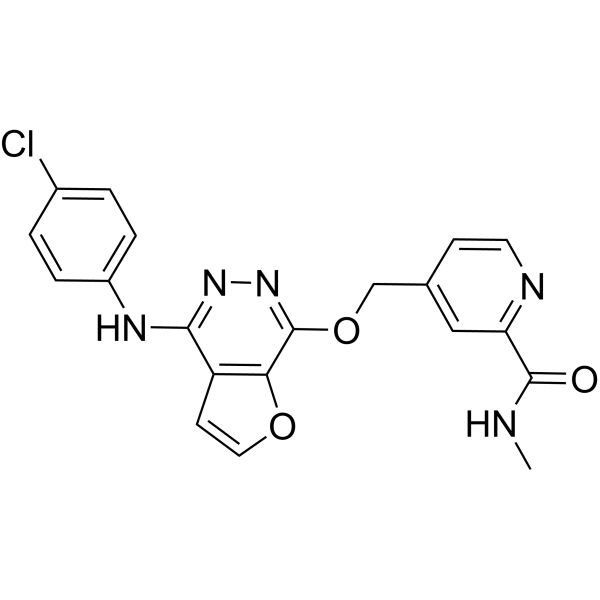
VEGFR-3-IN-1 is a potent and selective VEGFR3 inhibitor with an IC50 of 110.4 nM. VEGFR-3-IN-1 significantly inhibits proliferation and migration of VEGF-C-induced human dermal lymphatic endothelial cells (HDLEC), MDA-MB-231, and MDA-MB-436 cells by inactivating the VEGFR3 signaling pathway, and also effectively inhibits breast cancer growth .
IC50s of 130 nM, 23 nM, and 18 nM for VEGFR1, VEGFR2, and VEGFR3, respectively. AAL993 shows less potently inhibits other tyrosine kinases. AAL993 possesses potent antiangiogenic and antitumor properties .
Axitinib-d3(AG-013736-d3) is deuterium labeled Axitinib. Axitinib is a multi-targeted tyrosine kinase inhibitor with IC50s of 0.1, 0.2, 0.1-0.3, 1.6 nM for VEGFR1, VEGFR2, VEGFR3 and PDGFRβ, respectively .
Sorafenib- 13C,d3 is the 13C- and deuterium labeled Sorafenib. Sorafenib (Bay 43-9006) is a potent and orally active Raf inhibitor with IC50s of 6 nM and 20 nM for Raf-1 and B-Raf, respectively. Sorafenib is a multikinase inhibitor with IC50s of 90 nM, 15 nM, 20 nM, 57 nM and 58 nM for VEGFR2, VEGFR3, PDGFRβ, FLT3 and c-Kit, respectively. Sorafenib induces autophagy and apoptosis. Sorafenib has anti-tumor activity. Sorafenib is a ferroptosis activator .
Sorafenib (Standard) is the analytical standard of Sorafenib. This product is intended for research and analytical applications. Sorafenib (Bay 43-9006) is a potent and orally active Raf inhibitor with IC50s of 6 nM and 20 nM for Raf-1 and B-Raf, respectively. Sorafenib is a multikinase inhibitor with IC50s of 90 nM, 15 nM, 20 nM, 57 nM and 58 nM for VEGFR2, VEGFR3, PDGFRβ, FLT3 and c-Kit, respectively. Sorafenib induces autophagy and apoptosis. Sorafenib has anti-tumor activity. Sorafenib is a ferroptosis activator .
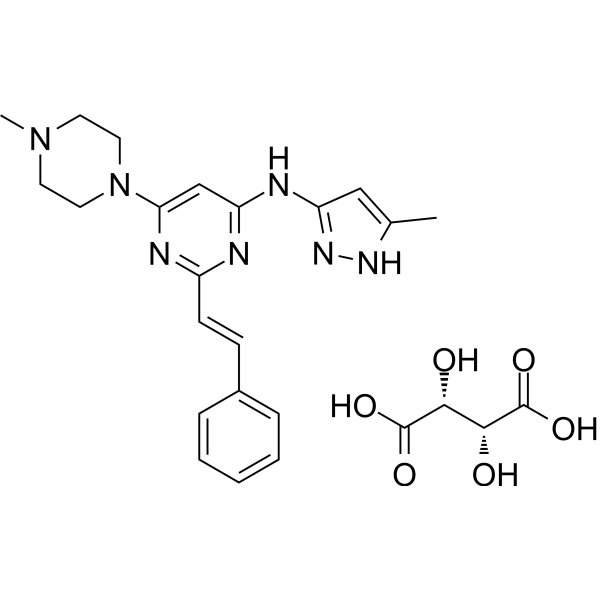
ENMD-2076 Tartrate is a multi-targeted kinase inhibitor with IC50s of 1.86, 14, 58.2, 15.9, 92.7, 70.8, 56.4 nM for Aurora A, Flt3, KDR/VEGFR2, Flt4/VEGFR3, FGFR1, FGFR2, Src, PDGFRα, respectively.
LY3022856 is a humanized antibody expressed in CHO, targeting VEGFR3/FLT4. LY3022856 has a huIgG1 heavy chain and a huκ light chain, with a predicted molecular weight (MW) of 146.18 kDa. The isotype control for LY3022856 can refer to Human IgG1 kappa, Isotype Control (HY-P99001).
Sorafenib-d4 (Bay 43-9006-d4) is the deuterium labeled Sorafenib. Sorafenib is a multikinase inhibitor IC50s of 6 nM, 20 nM, and 22 nM for Raf-1, B-Raf, and VEGFR-3, respectively.
Telatinib mesylate (Bay 57-9352 mesylate) is a potent and orally active VEGFR2, VEGFR3, PDGFα, and c-Kit inhibitor with IC50s of 6 nM, 4 nM, 15 nM and 1 nM, respectively .
Lucitanib (E-3810) dihydrochloride is a novel dual inhibitor of VEGFR and FGFR, potently and selectively inhibits VEGFR1, VEGFR2, VEGFR3, FGFR1 and FGFR2 with IC50s of 7 nM, 25 nM, 10 nM, 17.5 nM, and 82.5 nM, respectively [3].
Pazopanib-d6 is the deuterium labeled Pazopanib. Pazopanib (GW786034) is a novel multi-target inhibitor of VEGFR1, VEGFR2, VEGFR3, PDGFRβ, c-Kit, FGFR1, and c-Fms with IC50s of 10, 30, 47, 84, 74, 140 and 146 nM, respectively.
DOTA-TMVP1446 is a VEGFR-3 targeting peptide. DOTA-TMVP1446 labeled with 68Ga accurately detectes the status of lymph node metastasis, even in micrometastatic tumors, in the B16-F10 tumor mice model. DOTA-TMVP1446 can be used as a radiotracer for cancer-metastatic sentinel lymph nodes (m-SLN) imaging .
Vandetanib hydrochloride (D6474 hydrochloride) is a potent, orally active inhibitor of VEGFR2/KDR tyrosine kinase activity (IC50=40 nM). Vandetanib hydrochloride also has activity versus the tyrosine kinase activity of VEGFR3/FLT4 (IC50=110 nM) and EGFR/HER1 (IC50=500 nM) .
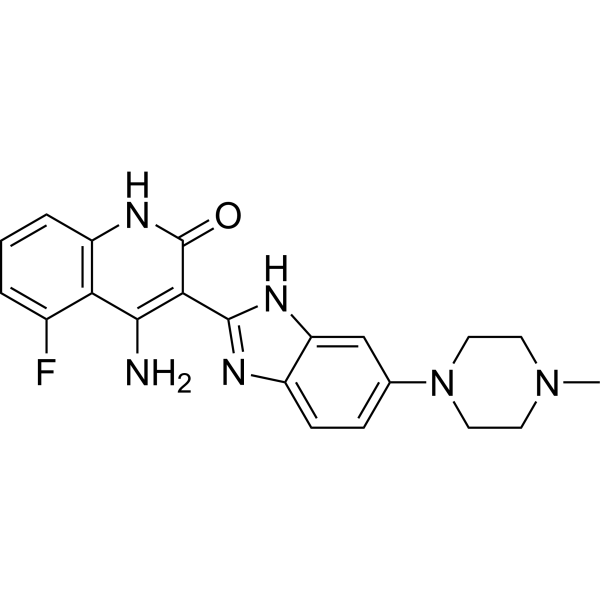
Dovitinib (Standard) is the analytical standard of Dovitinib. This product is intended for research and analytical applications. Dovitinib (CHIR-258) is an orally active, potent multi-targeted tyrosine kinase (RTK) inhibitor with IC50s of 1, 2, 36, 8/9, 10/13/8, 27/210 nM for FLT3, c-Kit, CSF-1R, FGFR1/FGFR3, VEGFR1/VEGFR2/VEGFR3 and PDGFRα/PDGFRβ, respectively. Dovitinib has potent antitumor activity .
TMVP1446 is a VEGFR-3 targeting peptide. TMVP1446 labeled with cyanine 7 can be used as a radiotracer for cancer-metastatic sentinel lymph nodes (m-SLN) imaging .
Telatinib (Standard) is the analytical standard of Telatinib. This product is intended for research and analytical applications. Telatinib (Bay 57-9352) is an orally active, small molecule inhibitor of VEGFR2, VEGFR3, PDGFα, and c-Kit with IC50s of 6, 4, 15 and 1 nM, respectively.
Telatinib (mesylate) (Standard) is the analytical standard of Telatinib (mesylate). This product is intended for research and analytical applications. Telatinib mesylate (Bay 57-9352 mesylate) is a potent and orally active VEGFR2, VEGFR3, PDGFα, and c-Kit inhibitor with IC50s of 6 nM, 4 nM, 15 nM and 1 nM, respectively .
Dovitinib-d8 is the deuterium labeled Dovitinib. Dovitinib (CHIR-258) is a multi-targeted tyrosine kinase inhibitor with IC50s of 1, 2, 8/9, 10/13/8, 27/210 nM for FLT3, c-Kit, FGFR1/FGFR3, VEGFR1/VEGFR2/VEGFR3 and PDGFRα/PDGFRβ, respectively .
Vandetanib (Standard) is the analytical standard of Vandetanib. This product is intended for research and analytical applications. Vandetanib (D6474) is a potent, orally active inhibitor of VEGFR2/KDR tyrosine kinase activity (IC50=40 nM). Vandetanib also has activity versus the tyrosine kinase activity of VEGFR3/FLT4 (IC50=110 nM) and EGFR/HER1 (IC50=500 nM) .
Axitinib (Standard) is the analytical standard of Axitinib. This product is intended for research and analytical applications. Axitinib is a multi-targeted tyrosine kinase inhibitor with IC50s of 0.1, 0.2, 0.1-0.3, 1.6 nM for VEGFR1, VEGFR2, VEGFR3 and PDGFRβ, respectively.
Pazopanib (Hydrochloride) (Standard) is the analytical standard of Pazopanib (Hydrochloride). This product is intended for research and analytical applications. Pazopanib Hydrochloride (GW786034 Hydrochloride) is a novel multi-target inhibitor of VEGFR1, VEGFR2, VEGFR3, PDGFRβ, c-Kit, FGFR1, and c-Fms with an IC50 of 10, 30, 47, 84, 74, 140 and 146 nM, respectively.
Pazopanib (Standard) is the analytical standard of Pazopanib. This product is intended for research and analytical applications. Pazopanib (GW786034) is a novel multi-target inhibitor of VEGFR1, VEGFR2, VEGFR3, PDGFRβ, c-Kit, FGFR1, and c-Fms with IC50s of 10, 30, 47, 84, 74, 140 and 146 nM, respectively.
Pazopanib-d3 (hydrochloride) (GW786034-d3 (hydrochloride)) is deuterium labeled Pazopanib (Hydrochloride). Pazopanib Hydrochloride (GW786034 Hydrochloride) is a novel multi-target inhibitor of VEGFR1, VEGFR2, VEGFR3, PDGFRβ, c-Kit, FGFR1, and c-Fms with an IC50 of 10, 30, 47, 84, 74, 140 and 146 nM, respectively.
Pazopanib-d3(GW786034-d3) is deuterium labeled Pazopanib. Pazopanib (GW786034) is a novel multi-target inhibitor of VEGFR1, VEGFR2, VEGFR3, PDGFRβ, c-Kit, FGFR1, and c-Fms with IC50s of 10, 30, 47, 84, 74, 140 and 146 nM, respectively .
XL-844 (EXEL-9844) is an inhibitor of Chk1 and Chk2. XL-844 exhibits antineoplastic activity. XL-844 can result in tumor cell apoptosis through inhibition of cell cycle arrest. XL-844 inhibits VEGFR1 and VEGFR3. XL-844 can be studied in anti-cancer research .
PARP/VEGFR3-IN-1 (Compound 18) is a dual PARP-VEGFR3 target inhibitor. Its IC50 values for PARP1, PARP2, and VEGFR3 are 0.0763, 0.0366, and 4.25 nM respectively. PARP/VEGFR3-IN-1 has no inhibitory effect on VEGFR1/2 and shows subtype selectivity. PARP/VEGFR3-IN-1 exhibits significant anti-proliferative activity in various cancer cells (leukemia, lung cancer, and triple-negative breast cancer). PARP/VEGFR3-IN-1 induces DNA damage and cell cycle arrest. PARP/VEGFR3-IN-1 triggers various forms of cell death by inducing apoptosis and autophagy. PARP/VEGFR3-IN-1 can be formulated into nanodelivery systems, significantly enhancing tumor targeting and therapeutic window .
CDK2/FLT4/PDGFRA-IN-1 (Compound 4a) is a potent inhibitor of CDK2/cyclin A, FLT4 (VEGFR3) and PDGFRA, with IC50s of 1.672, 0.554, and 0.629 μM, respectively. CDK2/FLT4/PDGFRA-IN-1 exhibits potent antiproliferative effects against cancer cells (lung EBC-1, pancreatic ductal adenocarcinoma AsPC-1, colorectal HT-29 cells). CDK2/FLT4/PDGFRA-IN-1 can also induce apoptosis in cancer cells .
Chloropyramine hydrochloride (Standard) is the analytical standard of Chloropyramine hydrochloride. This product is intended for research and analytical applications. Chloropyramine hydrochloride is a histamine receptor H1 antagonist which can also inhibit the biochemical function of VEGFR-3 and FAK.
Vandetanib trifluoroacetate (D6474 trifluoroacetate) is a potent, orally active inhibitor of VEGFR2/KDR tyrosine kinase activity (IC50=40 nM). Vandetanib trifluoroacetate also has activity versus the tyrosine kinase activity of VEGFR3/FLT4 (IC50=110 nM) and EGFR/HER1 (IC50=500 nM) .
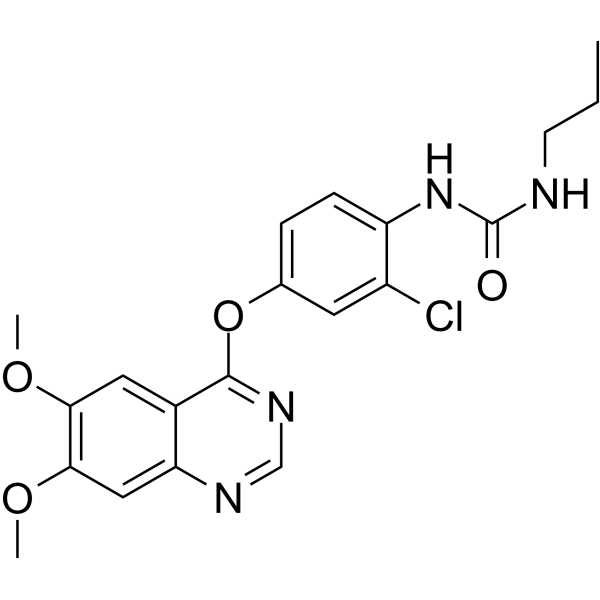
T-1840383 is a potent, ATP-competitive inhibitor of c-Met/VEGFR-2, with the IC50s of 1.9 nM, 7.7 nM, 2.2 nM and 5.5 nM for c-Met, VEGFR1, VEGFR2 and VEGFR3, respectively .
Vandetanib-d6 is the deuterium labeled Vandetanib. Vandetanib (D6474) is a potent, orally active inhibitor of VEGFR2/KDR tyrosine kinase activity (IC50=40 nM). Vandetanib also has activity versus the tyrosine kinase activity of VEGFR3/FLT4 (IC50=110 nM) and EGFR/HER1 (IC50=500 nM) .
Vandetanib-d4 is the deuterium labeled Vandetanib. Vandetanib (ZD6474) is a potent, orally active inhibitor of VEGFR2/KDR tyrosine kinase activity (IC50=40 nM). Vandetanib also has activity versus the tyrosine kinase activity of VEGFR3/FLT4 (IC50=110 nM) and EGFR/HER1 (IC50=500 nM) .
Vandetanib- 13C6 is a 13C labeled Vandetanib (HY-10260) . Vandetanib (D6474) is a potent, orally active inhibitor of VEGFR2/KDR tyrosine kinase activity (IC50=40 nM). Vandetanib also has activity versus the tyrosine kinase activity of VEGFR3/FLT4 (IC50=110 nM) and EGFR/HER1 (IC50=500 nM) .
Pazopanib (Hydrochloride) (Standard) is the analytical standard of Pazopanib (Hydrochloride). This product is intended for research and analytical applications. Pazopanib Hydrochloride (GW786034 Hydrochloride) is a novel multi-target inhibitor of VEGFR1, VEGFR2, VEGFR3, PDGFRβ, c-Kit, FGFR1, and c-Fms with an IC50 of 10, 30, 47, 84, 74, 140 and 146 nM, respectively.
Pazopanib- 13C,d3 (hydrochloride) is the deuterium and 13C labeled Pazopanib hydrochloride . Pazopanib Hydrochloride (GW786034 Hydrochloride) is a novel multi-target inhibitor of VEGFR1, VEGFR2, VEGFR3, PDGFRβ, c-Kit, FGFR1, and c-Fms with an IC50 of 10, 30, 47, 84, 74, 140 and 146 nM, respectively [3].
Lucitanib (Standard) is the analytical standard of Lucitanib. This product is intended for research and analytical applications. Lucitanib (E-3810) is a novel dual inhibitor of VEGFR and FGFR, potently and selectively inhibits VEGFR1, VEGFR2, VEGFR3, FGFR1 and FGFR2 with IC50s of 7 nM, 25 nM, 10 nM, 17.5 nM, and 82.5 nM, respectively [3].
Pazopanib- 13C,d3 is the deuterium and 13C labeled Pazopanib . Pazopanib (GW786034) is a novel multi-target inhibitor of VEGFR1, VEGFR2, VEGFR3, PDGFRβ, c-Kit, FGFR1, and c-Fms with IC50s of 10, 30, 47, 84, 74, 140 and 146 nM, respectively [3].
Sorafenib tosylate (Standard) is the analytical standard of Sorafenib tosylate. This product is intended for research and analytical applications. Sorafenib tosylate (Bay 43-9006 tosylate) is a potent and orally active Raf inhibitor with IC50s of 6 nM and 20 nM for Raf-1 and B-Raf, respectively. Sorafenib tosylate is a multikinase inhibitor with IC50s of 90 nM, 15 nM, 20 nM, 57 nM and 58 nM for VEGFR2, VEGFR3, PDGFRβ, FLT3 and c-Kit, respectively. Sorafenib tosylate induces autophagy and apoptosis. Sorafenib Tosylate has anti-tumor activity. Sorafenib tosylate is a ferroptosis activator .
DW10075 is a highly selective and orally active VEGFR inhibitor targeting the VEGF/VEGFR pathway. DW10075 selectively inhibits VEGFR-1, VEGFR-2, and VEGFR-3, but has no effect on FGFR and PDGFR. DW10075 inhibits VEGF-induced HUVEC proliferation, migration, and tube formation. And DW10075 inhibits angiogenesis in both the rat aortic ring model and the chick chorionic membrane model. DW10075 also exhibits antiproliferative activity against human cancer cell lines, with IC50s of 2.2 μM and 22.2 μM against U87-MG human glioblastoma cells and A375 melanoma cells, respectively. In the nude mouse U87-MG xenograft tumor model, DW10075 (po) significantly inhibits tumor growth and reduces the expression of CD31 and Ki67 in tumor tissues.
Sorafenib-d3(Donafenib-d3) tosylate is the deuterium labeled Sorafenib (HY-10201). Sorafenib is a potent and orally active Raf inhibitor with IC50s of 6 nM and 20 nM for Raf-1 and B-Raf, respectively. Sorafenib-d3tosylate is a multikinase inhibitor with IC50s of 90 nM, 15 nM, 20 nM, 57 nM and 58 nM for VEGFR2, VEGFR3, PDGFRβ, FLT3 and c-Kit, respectively. Sorafenib-d3tosylate induces autophagy and apoptosis. Sorafenib-d3tosylate has anti-tumor activity. Sorafenib is a ferroptosis activator .
Flt4 Mouse Pre-designed siRNA Set A contains three designed siRNAs for Flt4 gene (Mouse), as well as a negative control, a positive control, and a FAM-labeled negative control.
Flt4 Rat Pre-designed siRNA Set A contains three designed siRNAs for Flt4 gene (Rat), as well as a negative control, a positive control, and a FAM-labeled negative control.
FLT4 Human Pre-designed siRNA Set A contains three designed siRNAs for FLT4 gene (Human), as well as a negative control, a positive control, and a FAM-labeled negative control.
KRN-633 (Standard) is the analytical standard of KRN-633. This product is intended for research and analytical applications. KRN-633 is a potent VEGFR inhibitor with IC50s of 170, 160 and 125 nM for VEGFR1, VEGFR2 and VEGFR3, respectively.
DOTA-TMVP1446 is a VEGFR-3 targeting peptide. DOTA-TMVP1446 labeled with 68Ga accurately detectes the status of lymph node metastasis, even in micrometastatic tumors, in the B16-F10 tumor mice model. DOTA-TMVP1446 can be used as a radiotracer for cancer-metastatic sentinel lymph nodes (m-SLN) imaging .
TMVP1446 is a VEGFR-3 targeting peptide. TMVP1446 labeled with cyanine 7 can be used as a radiotracer for cancer-metastatic sentinel lymph nodes (m-SLN) imaging .
Sozinibercept (OPT 302; VGX-300) is a soluble form of VEGFR-3, potently inhibits the activity of VEGF-C/D, which are the proangiogenic factors, inhibiting angiogenesis and vascular leakage. Sozinibercept also inhibits diabetic retinal edema in rats [3].
LY3022856 is a humanized antibody expressed in CHO, targeting VEGFR3/FLT4. LY3022856 has a huIgG1 heavy chain and a huκ light chain, with a predicted molecular weight (MW) of 146.18 kDa. The isotype control for LY3022856 can refer to Human IgG1 kappa, Isotype Control (HY-P99001).
Pazopanib (Hydrochloride) (Standard) is the analytical standard of Pazopanib (Hydrochloride). This product is intended for research and analytical applications. Pazopanib Hydrochloride (GW786034 Hydrochloride) is a novel multi-target inhibitor of VEGFR1, VEGFR2, VEGFR3, PDGFRβ, c-Kit, FGFR1, and c-Fms with an IC50 of 10, 30, 47, 84, 74, 140 and 146 nM, respectively.
VEGFR-2 protein is an important tyrosine protein kinase receptor that serves as a cell surface receptor for VEGFA, VEGFC and VEGFD to regulate angiogenesis, blood vessel development and embryonic hematopoiesis. It enhances endothelial cell proliferation, survival, migration and differentiation. VEGFR-3/FLT4 Protein, Human (HEK293, His-Avi) is the recombinant human-derived VEGFR-3/FLT4 protein, expressed by HEK293 , with C-Avi, C-His labeled tag.
VEGFR-2 protein is an important tyrosine protein kinase receptor that serves as a cell surface receptor for VEGFA, VEGFC and VEGFD to regulate angiogenesis, blood vessel development and embryonic hematopoiesis. It enhances endothelial cell proliferation, survival, migration and differentiation. VEGFR-3/FLT4 Protein, Human (Biotinylated, HEK293, His-Avi) is the recombinant human-derived VEGFR-3/FLT4 protein, expressed by HEK293 , with C-Avi, C-His labeled tag.
VEGFR-3/FLT4 proteins are tyrosine protein kinase receptors for VEGFC and VEGFD and are critical in adult lymphangiogenesis and embryonic vascular development. It promotes endothelial cell function, angiogenesis, and forms a positive feedback loop that increases VEGFC production. VEGFR-3/FLT4 Protein, Mouse (HEK293, mFc) is the recombinant mouse-derived VEGFR-3/FLT4 protein, expressed by HEK293, with C-mFc labeled tag.
VEGFR-3/FLT4 proteins are tyrosine protein kinase receptors for VEGFC and VEGFD and are critical in adult lymphangiogenesis and embryonic vascular development. It promotes endothelial cell function, angiogenesis, and forms a positive feedback loop that increases VEGFC production. VEGFR-3/FLT4 Protein, Mouse (HEK293, His) is the recombinant mouse-derived VEGFR-3/FLT4 protein, expressed by HEK293 , with C-His labeled tag.
VEGFR-2 protein is an important tyrosine protein kinase receptor that serves as a cell surface receptor for VEGFA, VEGFC and VEGFD to regulate angiogenesis, blood vessel development and embryonic hematopoiesis. It enhances endothelial cell proliferation, survival, migration and differentiation. VEGFR-3/FLT4 Protein, Human (HEK293, His) is the recombinant human-derived VEGFR-3/FLT4 protein, expressed by HEK293 , with C-His labeled tag.
VEGFR-2 protein is an important tyrosine protein kinase receptor that serves as a cell surface receptor for VEGFA, VEGFC and VEGFD to regulate angiogenesis, blood vessel development and embryonic hematopoiesis. It enhances endothelial cell proliferation, survival, migration and differentiation. VEGFR-3/FLT4 Protein, Human (HEK293, hFc) is the recombinant human-derived VEGFR-3/FLT4 protein, expressed by HEK293 , with C-hFc labeled tag.
VEGFR-3/FLT4 proteins are tyrosine protein kinase receptors for VEGFC and VEGFD and are critical in adult lymphangiogenesis and embryonic vascular development. It promotes endothelial cell function, angiogenesis, and forms a positive feedback loop that increases VEGFC production. VEGFR-3/FLT4 Protein, Mouse (HEK293, hFc) is the recombinant mouse-derived VEGFR-3/FLT4 protein, expressed by HEK293 , with C-hFc labeled tag.
Sorafenib-d3 (Donafenib), a deuterated compound of Sorafenib, is the first deuterium-generation tumor suppressor small molecule. Sorafenib is a multikinase inhibitor IC50s of 6 nM, 20 nM, and 22 nM for Raf-1, B-Raf, and VEGFR-3, respectively .
Axitinib- 13C,d3 is a 13C-labeled and deuterium labeled Axitinib. Axitinib is a multi-targeted tyrosine kinase inhibitor with IC50 values of 0.1, 0.2, 0.1-0.3, 1.6 nM for VEGFR1, VEGFR2, VEGFR3 and PDGFRβ, respectively .
Axitinib-d3(AG-013736-d3) is deuterium labeled Axitinib. Axitinib is a multi-targeted tyrosine kinase inhibitor with IC50s of 0.1, 0.2, 0.1-0.3, 1.6 nM for VEGFR1, VEGFR2, VEGFR3 and PDGFRβ, respectively .
Sorafenib- 13C,d3 is the 13C- and deuterium labeled Sorafenib. Sorafenib (Bay 43-9006) is a potent and orally active Raf inhibitor with IC50s of 6 nM and 20 nM for Raf-1 and B-Raf, respectively. Sorafenib is a multikinase inhibitor with IC50s of 90 nM, 15 nM, 20 nM, 57 nM and 58 nM for VEGFR2, VEGFR3, PDGFRβ, FLT3 and c-Kit, respectively. Sorafenib induces autophagy and apoptosis. Sorafenib has anti-tumor activity. Sorafenib is a ferroptosis activator .
Sorafenib-d4 (Bay 43-9006-d4) is the deuterium labeled Sorafenib. Sorafenib is a multikinase inhibitor IC50s of 6 nM, 20 nM, and 22 nM for Raf-1, B-Raf, and VEGFR-3, respectively.
Pazopanib-d6 is the deuterium labeled Pazopanib. Pazopanib (GW786034) is a novel multi-target inhibitor of VEGFR1, VEGFR2, VEGFR3, PDGFRβ, c-Kit, FGFR1, and c-Fms with IC50s of 10, 30, 47, 84, 74, 140 and 146 nM, respectively.
Dovitinib-d8 is the deuterium labeled Dovitinib. Dovitinib (CHIR-258) is a multi-targeted tyrosine kinase inhibitor with IC50s of 1, 2, 8/9, 10/13/8, 27/210 nM for FLT3, c-Kit, FGFR1/FGFR3, VEGFR1/VEGFR2/VEGFR3 and PDGFRα/PDGFRβ, respectively .
Pazopanib-d3 (hydrochloride) (GW786034-d3 (hydrochloride)) is deuterium labeled Pazopanib (Hydrochloride). Pazopanib Hydrochloride (GW786034 Hydrochloride) is a novel multi-target inhibitor of VEGFR1, VEGFR2, VEGFR3, PDGFRβ, c-Kit, FGFR1, and c-Fms with an IC50 of 10, 30, 47, 84, 74, 140 and 146 nM, respectively.
Pazopanib-d3(GW786034-d3) is deuterium labeled Pazopanib. Pazopanib (GW786034) is a novel multi-target inhibitor of VEGFR1, VEGFR2, VEGFR3, PDGFRβ, c-Kit, FGFR1, and c-Fms with IC50s of 10, 30, 47, 84, 74, 140 and 146 nM, respectively .
Vandetanib-d6 is the deuterium labeled Vandetanib. Vandetanib (D6474) is a potent, orally active inhibitor of VEGFR2/KDR tyrosine kinase activity (IC50=40 nM). Vandetanib also has activity versus the tyrosine kinase activity of VEGFR3/FLT4 (IC50=110 nM) and EGFR/HER1 (IC50=500 nM) .
Vandetanib-d4 is the deuterium labeled Vandetanib. Vandetanib (ZD6474) is a potent, orally active inhibitor of VEGFR2/KDR tyrosine kinase activity (IC50=40 nM). Vandetanib also has activity versus the tyrosine kinase activity of VEGFR3/FLT4 (IC50=110 nM) and EGFR/HER1 (IC50=500 nM) .
Vandetanib- 13C6 is a 13C labeled Vandetanib (HY-10260) . Vandetanib (D6474) is a potent, orally active inhibitor of VEGFR2/KDR tyrosine kinase activity (IC50=40 nM). Vandetanib also has activity versus the tyrosine kinase activity of VEGFR3/FLT4 (IC50=110 nM) and EGFR/HER1 (IC50=500 nM) .
Pazopanib- 13C,d3 (hydrochloride) is the deuterium and 13C labeled Pazopanib hydrochloride . Pazopanib Hydrochloride (GW786034 Hydrochloride) is a novel multi-target inhibitor of VEGFR1, VEGFR2, VEGFR3, PDGFRβ, c-Kit, FGFR1, and c-Fms with an IC50 of 10, 30, 47, 84, 74, 140 and 146 nM, respectively [3].
Pazopanib- 13C,d3 is the deuterium and 13C labeled Pazopanib . Pazopanib (GW786034) is a novel multi-target inhibitor of VEGFR1, VEGFR2, VEGFR3, PDGFRβ, c-Kit, FGFR1, and c-Fms with IC50s of 10, 30, 47, 84, 74, 140 and 146 nM, respectively [3].
Sorafenib-d3(Donafenib-d3) tosylate is the deuterium labeled Sorafenib (HY-10201). Sorafenib is a potent and orally active Raf inhibitor with IC50s of 6 nM and 20 nM for Raf-1 and B-Raf, respectively. Sorafenib-d3tosylate is a multikinase inhibitor with IC50s of 90 nM, 15 nM, 20 nM, 57 nM and 58 nM for VEGFR2, VEGFR3, PDGFRβ, FLT3 and c-Kit, respectively. Sorafenib-d3tosylate induces autophagy and apoptosis. Sorafenib-d3tosylate has anti-tumor activity. Sorafenib is a ferroptosis activator .
Flt4 Mouse Pre-designed siRNA Set A contains three designed siRNAs for Flt4 gene (Mouse), as well as a negative control, a positive control, and a FAM-labeled negative control.
Flt4 Rat Pre-designed siRNA Set A contains three designed siRNAs for Flt4 gene (Rat), as well as a negative control, a positive control, and a FAM-labeled negative control.
FLT4 Human Pre-designed siRNA Set A contains three designed siRNAs for FLT4 gene (Human), as well as a negative control, a positive control, and a FAM-labeled negative control.
Inquiry Online
Your information is safe with us. * Required Fields.
Western blot analysis of extracts from THP-1(lane 2(20μg), Jurkat (lane 3(20μg) and NIH3T3(lane 4(20μg) using FOXO1A (HY-P80132) Rabbit mAb. Proteins were transferred
to a PVDF membrane and blocked with 5% non-fat milk in TBST for 2 hour at room temperature. The primary antibody (1/1000) and Loading control antibody (Beta Actin, HY-P80438, 1/10000) was
used in 5% non-fat milk in TBST at 4°C overnight. Goat Anti-Mouse/Rabbit IgG-HRP Secondary Antibody (1/10000) was used for 1 hour at room temperature.
Western blot analysis of extracts from THP-1(lane 2(20μg), Jurkat (lane 3(20μg) and NIH3T3(lane 4(20μg) using FOXO1A (HY-P80132) Rabbit mAb. Proteins were transferred
to a PVDF membrane and blocked with 5% non-fat milk in TBST for 2 hour at room temperature. The primary antibody (1/1000) and Loading control antibody (Beta Actin, HY-P80438, 1/10000) was
used in 5% non-fat milk in TBST at 4°C overnight. Goat Anti-Mouse/Rabbit IgG-HRP Secondary Antibody (1/10000) was used for 1 hour at room temperature.
Western blot analysis of extracts from THP-1(lane 2(20μg), Jurkat (lane 3(20μg) and NIH3T3(lane 4(20μg) using FOXO1A (HY-P80132) Rabbit mAb. Proteins were transferred
to a PVDF membrane and blocked with 5% non-fat milk in TBST for 2 hour at room temperature. The primary antibody (1/1000) and Loading control antibody (Beta Actin, HY-P80438, 1/10000) was
used in 5% non-fat milk in TBST at 4°C overnight. Goat Anti-Mouse/Rabbit IgG-HRP Secondary Antibody (1/10000) was used for 1 hour at room temperature.
Western blot analysis of extracts from THP-1(lane 2(20μg), Jurkat (lane 3(20μg) and NIH3T3(lane 4(20μg) using FOXO1A (HY-P80132) Rabbit mAb. Proteins were transferred
to a PVDF membrane and blocked with 5% non-fat milk in TBST for 2 hour at room temperature. The primary antibody (1/1000) and Loading control antibody (Beta Actin, HY-P80438, 1/10000) was
MedchemExpress Validation 03
Western blot analysis of extracts from THP-1(lane 2(20μg), Jurkat (lane 3(20μg) and NIH3T3(lane 4(20μg) using FOXO1A (HY-P80132) Rabbit mAb. Proteins were transferred
MedchemExpress Validation 04
Western blot analysis of extracts from THP-1(lane 2(20μg), Jurkat (lane 3(20μg) and NIH3T3(lane 4(20μg) using FOXO1A (HY-P80132) Rabbit mAb. Proteins were transferred
to a PVDF membrane and blocked with 5% non-fat milk in TBST for 2 hour at room temperature. The primary antibody (1/1000) and Loading control antibody (Beta Actin, HY-P80438, 1/10000) was
used in 5% non-fat milk in TBST at 4°C overnight. Goat Anti-Mouse/Rabbit IgG-HRP Secondary Antibody (1/10000) was used for 1 hour at room temperature.
MedchemExpress Validation
Western blot analysis of extracts from THP-1(lane 2(20μg), Jurkat (lane 3(20μg) and NIH3T3(lane 4(20μg) using FOXO1A (HY-P80132) Rabbit mAb. Proteins were transferred
to a PVDF membrane and blocked with 5% non-fat milk in TBST for 2 hour at room temperature. The primary antibody (1/1000) and Loading control antibody (Beta Actin, HY-P80438, 1/10000) was
used in 5% non-fat milk in TBST at 4°C overnight. Goat Anti-Mouse/Rabbit IgG-HRP Secondary Antibody (1/10000) was used for 1 hour at room temperature.
Western blot analysis of extracts from THP-1(lane 2(20μg), Jurkat (lane 3(20μg) and NIH3T3(lane 4(20μg) using FOXO1A (HY-P80132) Rabbit mAb. Proteins were transferred
to a PVDF membrane and blocked with 5% non-fat milk in TBST for 2 hour at room temperature. The primary antibody (1/1000) and Loading control antibody (Beta Actin, HY-P80438, 1/10000) was
used in 5% non-fat milk in TBST at 4°C overnight. Goat Anti-Mouse/Rabbit IgG-HRP Secondary Antibody (1/10000) was used for 1 hour at room temperature.
MedchemExpress Validation
Western blot analysis of extracts from THP-1(lane 2(20μg), Jurkat (lane 3(20μg) and NIH3T3(lane 4(20μg) using FOXO1A (HY-P80132) Rabbit mAb. Proteins were transferred
to a PVDF membrane and blocked with 5% non-fat milk in TBST for 2 hour at room temperature. The primary antibody (1/1000) and Loading control antibody (Beta Actin, HY-P80438, 1/10000) was
used in 5% non-fat milk in TBST at 4°C overnight. Goat Anti-Mouse/Rabbit IgG-HRP Secondary Antibody (1/10000) was used for 1 hour at room temperature.
MedchemExpress Validation
Western blot analysis of extracts from THP-1(lane 2(20μg), Jurkat (lane 3(20μg) and NIH3T3(lane 4(20μg) using FOXO1A (HY-P80132) Rabbit mAb. Proteins were transferred
to a PVDF membrane and blocked with 5% non-fat milk in TBST for 2 hour at room temperature. The primary antibody (1/1000) and Loading control antibody (Beta Actin, HY-P80438, 1/10000) was
used in 5% non-fat milk in TBST at 4°C overnight. Goat Anti-Mouse/Rabbit IgG-HRP Secondary Antibody (1/10000) was used for 1 hour at room temperature.
MedchemExpress Validation
Western blot analysis of extracts from THP-1(lane 2(20μg), Jurkat (lane 3(20μg) and NIH3T3(lane 4(20μg) using FOXO1A (HY-P80132) Rabbit mAb. Proteins were transferred
to a PVDF membrane and blocked with 5% non-fat milk in TBST for 2 hour at room temperature. The primary antibody (1/1000) and Loading control antibody (Beta Actin, HY-P80438, 1/10000) was
used in 5% non-fat milk in TBST at 4°C overnight. Goat Anti-Mouse/Rabbit IgG-HRP Secondary Antibody (1/10000) was used for 1 hour at room temperature.
MedchemExpress Validation
Western blot analysis of extracts from THP-1(lane 2(20μg), Jurkat (lane 3(20μg) and NIH3T3(lane 4(20μg) using FOXO1A (HY-P80132) Rabbit mAb. Proteins were transferred
to a PVDF membrane and blocked with 5% non-fat milk in TBST for 2 hour at room temperature. The primary antibody (1/1000) and Loading control antibody (Beta Actin, HY-P80438, 1/10000) was
used in 5% non-fat milk in TBST at 4°C overnight. Goat Anti-Mouse/Rabbit IgG-HRP Secondary Antibody (1/10000) was used for 1 hour at room temperature.
MedchemExpress Validation
Western blot analysis of extracts from THP-1(lane 2(20μg), Jurkat (lane 3(20μg) and NIH3T3(lane 4(20μg) using FOXO1A (HY-P80132) Rabbit mAb. Proteins were transferred
to a PVDF membrane and blocked with 5% non-fat milk in TBST for 2 hour at room temperature. The primary antibody (1/1000) and Loading control antibody (Beta Actin, HY-P80438, 1/10000) was
used in 5% non-fat milk in TBST at 4°C overnight. Goat Anti-Mouse/Rabbit IgG-HRP Secondary Antibody (1/10000) was used for 1 hour at room temperature.
MedchemExpress Validation
Western blot analysis of extracts from THP-1(lane 2(20μg), Jurkat (lane 3(20μg) and NIH3T3(lane 4(20μg) using FOXO1A (HY-P80132) Rabbit mAb. Proteins were transferred
to a PVDF membrane and blocked with 5% non-fat milk in TBST for 2 hour at room temperature. The primary antibody (1/1000) and Loading control antibody (Beta Actin, HY-P80438, 1/10000) was
used in 5% non-fat milk in TBST at 4°C overnight. Goat Anti-Mouse/Rabbit IgG-HRP Secondary Antibody (1/10000) was used for 1 hour at room temperature.
MedChemExpress values your privacy and your trust is important to us. We use cookies to enhance your website experience. Some cookies are necessary to run the website.
Privacy and Cookie Policy

