Search Result
Results for "
brain conditions
" in MedChemExpress (MCE) Product Catalog:
2
Biochemical Assay Reagents
14
Isotope-Labeled Compounds
| Cat. No. |
Product Name |
Target |
Research Areas |
Chemical Structure |
-
- HY-13318
-
|
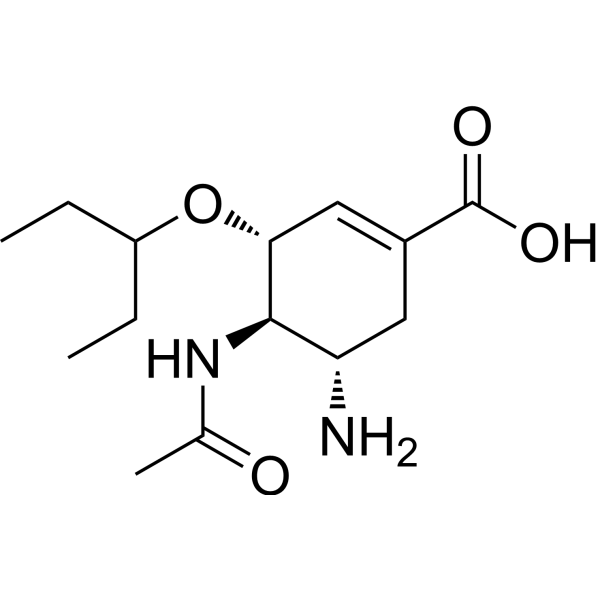
GS 4071; Ro 64-0802; Oseltamivir carboxylate
|
Influenza Virus
Drug Metabolite
|
Infection
Neurological Disease
|
|
Oseltamivir acid (GS 4071), the active metabolite of Oseltamivir phosphate, is an orally bioavailable, potent and selective inhibitor of influenza virus neuraminidase (IC50=2 nM) with activity against both influenza A and B viruses. Oseltamivir acid has an extremely weak ability to penetrate the BBB under normal physiological conditions, but its blood-brain barrier penetration is significantly enhanced under inflammatory conditions .
|
-
-
- HY-B0985
-
|
|
TRP Channel
|
Neurological Disease
|
|
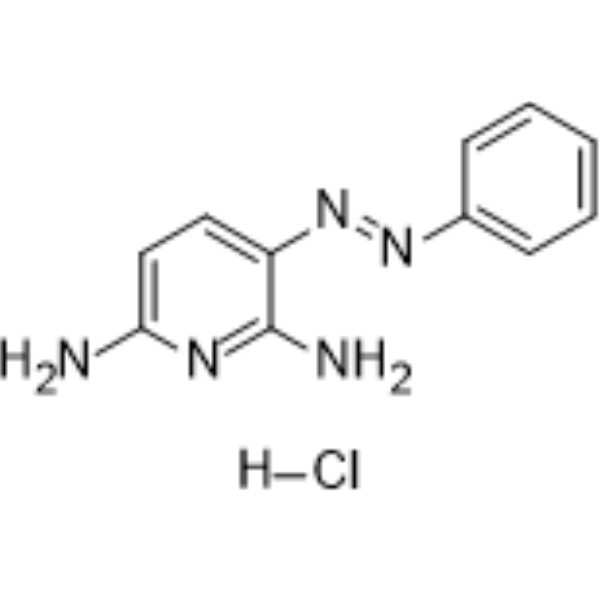
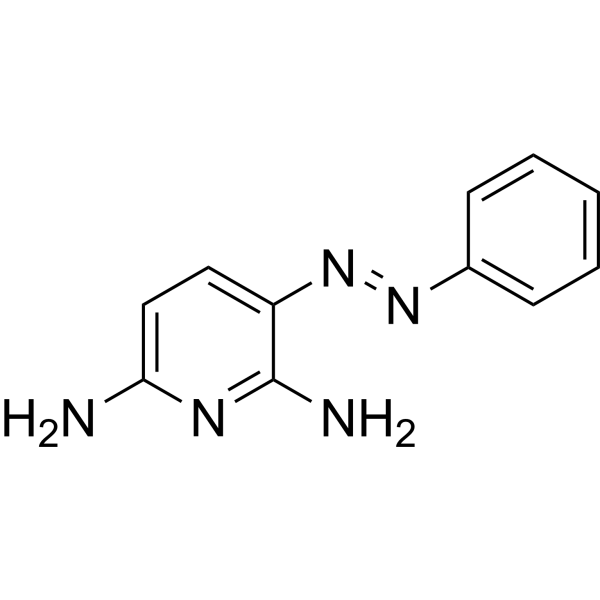
Phenazopyridine hydrochlorideis a competitive SARM1 inhibitor, with IC50 145 μM. Phenazopyridine hydrochlorideis a TRPM8 antagonist. Phenazopyridine hydrochloride has a local anesthetic/analgesic effect. Phenazopyridine hydrochlorideis used to relieve painful symptoms of conditions such as cystitis and urethritis. Phenazopyridine hydrochloridecan promote neuronal differentiation and can also be used in the study of traumatic brain injury, peripheral neuropathy and neurodegenerative diseases .
|
-
-
- HY-147423
-
|
NBI-921352; XEN901
|
Sodium Channel
|
Neurological Disease
|
|
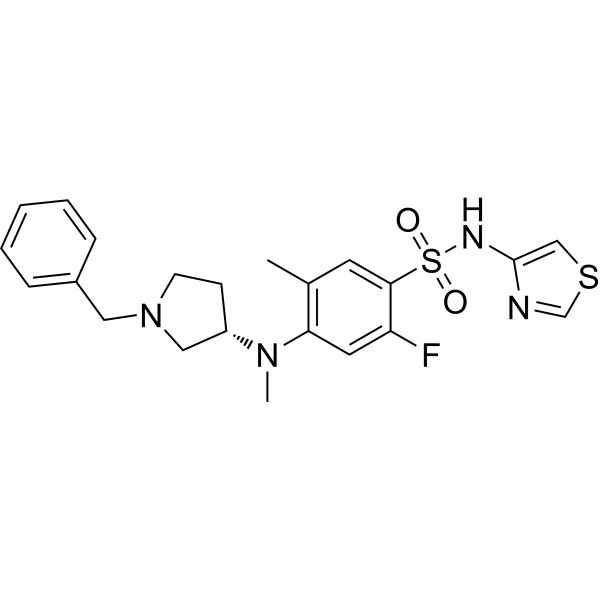
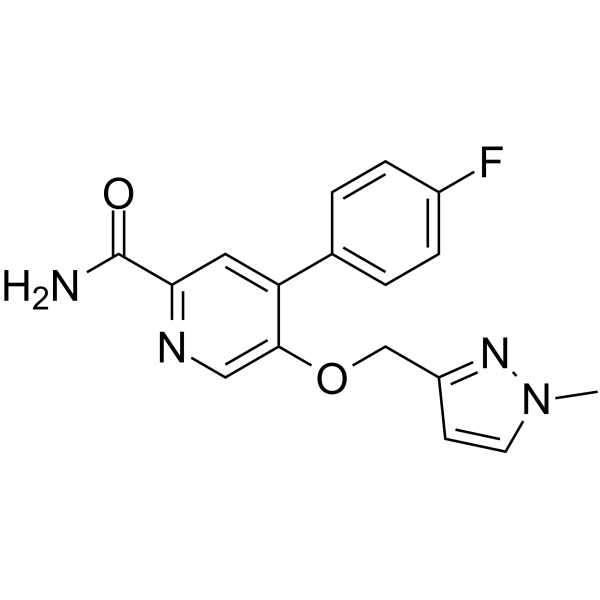
Zandatrigine (NBI-921352; XEN901) is a selective, orally active, voltage-gated sodium channel NaV1.6/SCN8A inhibitor that can penetrate the blood-brain barrier. Zandatrigine inhibits sodium influx by non-covalently binding to the VSD4 structure of NaV1.6, blocking the persistent and resuscitative currents under pathological conditions. Zandatrigine can reduce neuronal hyperexcitability and reduce epileptic seizures. Zandatrigine is 134-756-fold selective for other isoforms such as NaV1.1 and NaV1.2, and has minimal effect on NaV1.1 expressed by inhibitory interneurons. Zandatrigine can be used to study NaV1.6-mediated neuroexcitability diseases such as SCN8A-related developmental epileptic encephalopathy (SCN8A-DEE) and adult focal epilepsy .
|
-
-
- HY-11068
-
|
|
p38 MAPK
Autophagy
|
Neurological Disease
Metabolic Disease
Inflammation/Immunology
Cancer
|
|
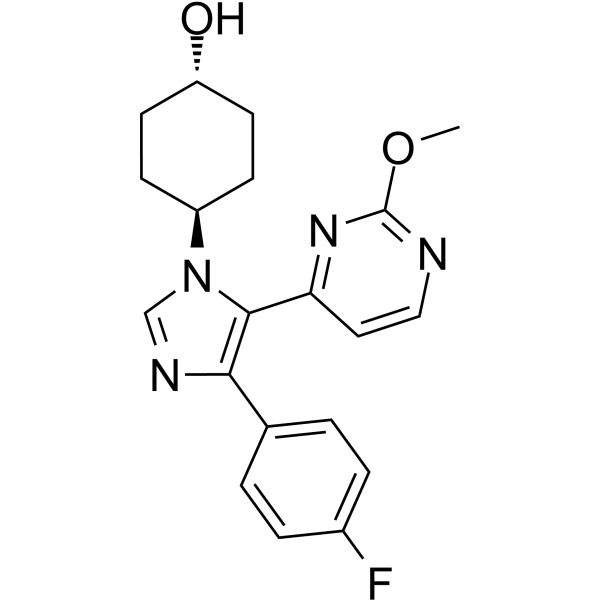
SB 239063 is a potent, selective and orally active p38 MAPK inhibitor, exhibits an IC50 of 44 nM for recombinant purified human p38α, with equipotent inhibitory activity against p38α and p38β. SB 239063 has no effect on p38γ or p38δ. With anti-asthma activity and also be used to enhance memory which is impaired due to aging or medical conditions, such as, AD. SB 239063 can penetrate the blood brain barrier (BBB) .
|
-
-
- HY-N0666S8
-
|
|
Endogenous Metabolite
|
Inflammation/Immunology
|
|
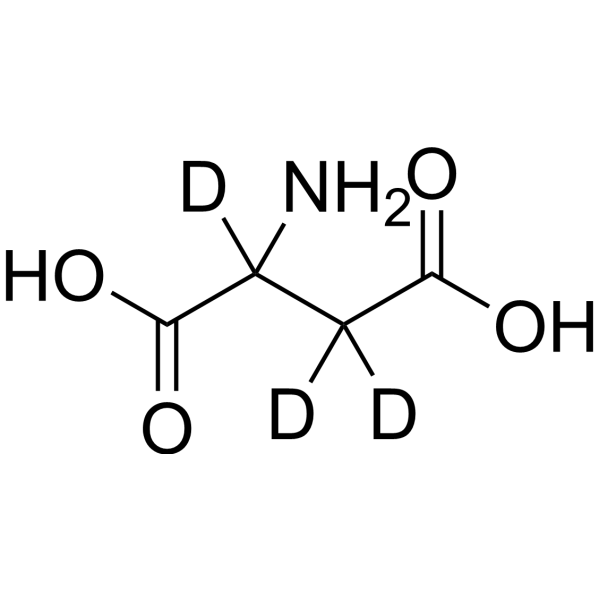
L-Aspartic acid-d3 is the deuterium labeled L-Aspartic acid. L-Aspartic aicd is an amino acid that can penetrate the blood-brain barrier. L-Aspartic aicd is commonly used for preparing prodrugs to target colon and cecal tissues. L-Aspartic aicd commonly used in the study of inflammatory conditions .
|
-
-
- HY-17474
-
|
SC 69124
|
COX
|
Infection
Neurological Disease
Inflammation/Immunology
Cancer
|
|
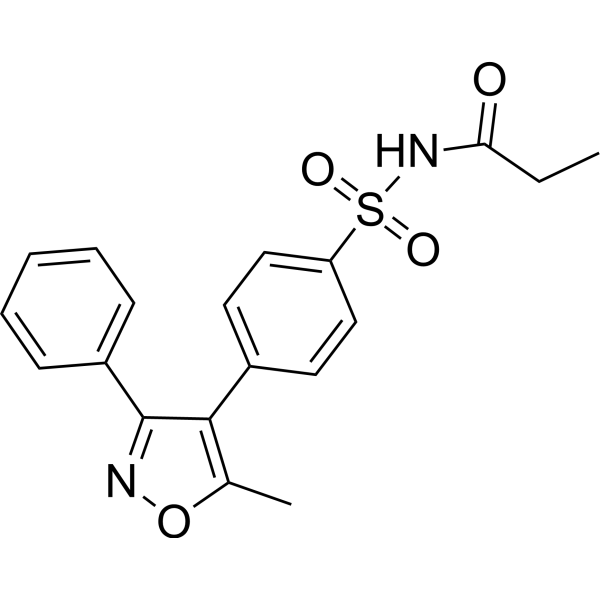
Parecoxib (SC 69124) is a highly selective and orally active COX-2 inhibitor that is permeable to the blood-brain barrier, the proagent of Valdecoxib (HY-15762). Parecoxib Sodium is a nonsteroidal anti-inflammatory agent (NSAID) and inhibits prostaglandin (PG) synthesis. Parecoxib can be used for the relief of acute postoperative pain and symptoms of chronic inflammatory conditions such as osteoarthritis and rheumatoid arthritis in vivo.
|
-
-
- HY-172318
-
|
|
NKCC
|
Neurological Disease
|
|
IAMA-6 is a selective NKCC1 inhibitor with neuroprotective effects. IAMA-6 can be used for the study of brain conditions, including drug-resistant epilepsy (e.g. temporal lobe epilepsy (TLE) and Dravet syndrome (DrS)), autism spectrum disorders (ASD) and Down syndrome (DoS) .
|
-
-
- HY-N0666S4
-
|
|
Endogenous Metabolite
|
Inflammation/Immunology
|
|
L-Aspartic acid- 13C4 is the 13C-labeled L-Aspartic acid. L-Aspartic aicd is an amino acid that can penetrate the blood-brain barrier. L-Aspartic aicd is commonly used for preparing prodrugs to target colon and cecal tissues. L-Aspartic aicd commonly used in the study of inflammatory conditions .
|
-
-
- HY-W010388AS
-
-
-
- HY-13318S
-
|
GS 4071-d3; Ro 64-0802-d3; Oseltamivir carboxylate-d3
|
Isotope-Labeled Compounds
Influenza Virus
Drug Metabolite
|
Infection
|
|
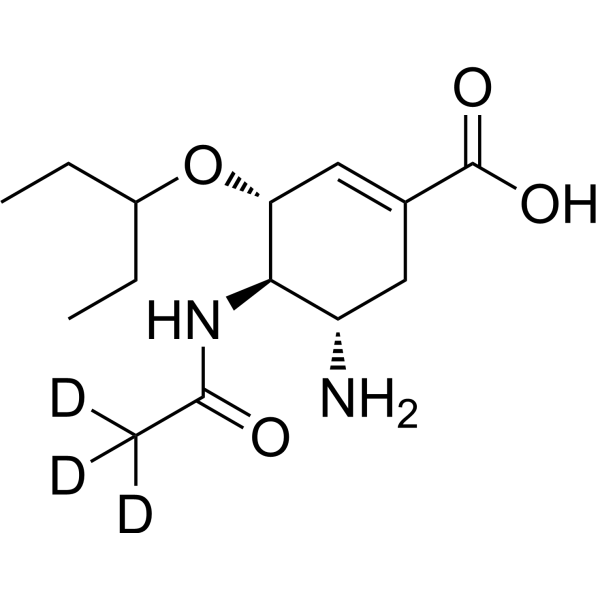
Oseltamivir acid-d3 is a deuterium labeled Oseltamivir acid (HY-13318). Oseltamivir acid, the active metabolite of Oseltamivir phosphate, is an orally bioavailable, potent and selective inhibitor of influenza virus neuraminidase (IC50=2 nM) with activity against both influenza A and B viruses. Oseltamivir acid has an extremely weak ability to penetrate the BBB under normal physiological conditions, but its blood-brain barrier penetration is significantly enhanced under inflammatory conditions .
|
-
-
- HY-N0666B
-
|
Calcium L-aspartate
|
Endogenous Metabolite
|
Inflammation/Immunology
|
|
Aspartic acid calcium (Calcium L-aspartate) is a chelate where calcium is attached to an amino acid naming L-Aspartic acid. L-Aspartic aicd calcium is an amino acid that can penetrate the blood-brain barrier. L-Aspartic aicd calcium is commonly used for preparing prodrugs to target colon and cecal tissues. L-Aspartic aicd calcium commonly used in the study of inflammatory conditions .
|
-
-
- HY-N0666S
-
|
|
Endogenous Metabolite
|
Inflammation/Immunology
|
|
L-Aspartic acid- 13C is a 13C labeled L-Aspartic acid. L-Aspartic aicd is an amino acid that can penetrate the blood-brain barrier. L-Aspartic aicd is commonly used for preparing prodrugs to target colon and cecal tissues. L-Aspartic aicd commonly used in the study of inflammatory conditions .
|
-
-
- HY-172705
-
|
|
Liposome
nAChR
|
Neurological Disease
|
|
DSPE-PEG2000-RVG29 is a PEG conjugate composed of DSPE and rabies virus glycoprotein 29 (RVG29). RVG29 specifically binds to nicotinic acetylcholine receptors (nAChR) at the blood-brain barrier (BBB), crosses the BBB, and mediates receptor-dependent transcytosis. DSPE-PEG2000-RVG29 can be used for brain-targeted drug delivery, surface modification of nanocarriers, as well as gene and nucleic acid delivery. DSPE-PEG2000-RVG29 is applicable to research related to hypoxic-ischemic brain injury, Parkinson's disease, and other conditions .
|
-
-
- HY-17474A
-
|
SC 69124A
|
COX
|
Infection
Neurological Disease
Inflammation/Immunology
Cancer
|
|
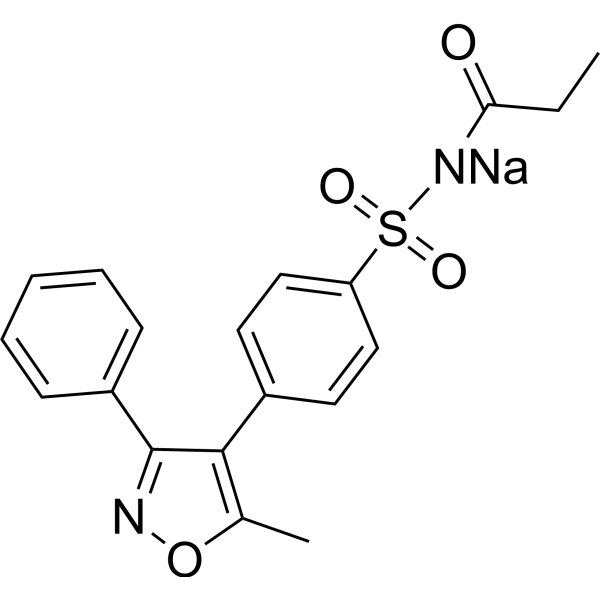
Parecoxib Sodium (SC 69124A) is a highly selective and orally active COX-2 inhibitor that is permeable to the blood-brain barrier, the proagent of Valdecoxib (HY-15762). Parecoxib Sodium is a nonsteroidal anti-inflammatory agent (NSAID) and inhibits prostaglandin (PG) synthesis. Parecoxib Sodium can be used for the relief of acute postoperative pain and symptoms of chronic inflammatory conditions such as osteoarthritis and rheumatoid arthritis in vivo.
|
-
-
- HY-151369
-
|
|
RIP kinase
|
Cardiovascular Disease
Neurological Disease
Metabolic Disease
Inflammation/Immunology
|
|
AV123 (compound 12) is a non-cytotoxic RIPK1 inhibitor (IC50=12.12 µM). AV123 blocks the TNF-α-induced necroptotic (EC50=1.7 μM) but not the apoptotic cell death. AV123 can be used in the study of necrotic chronic conditions such as ischemia-reperfusion injury of the brain, heart and kidney, inflammatory diseases, neurodegenerative diseases and infectious diseases .
|
-
-
- HY-P1047
-
|
[Pro18, Asp21] β-Amyloid (17-21)
|
Amyloid-β
|
Neurological Disease
|
|
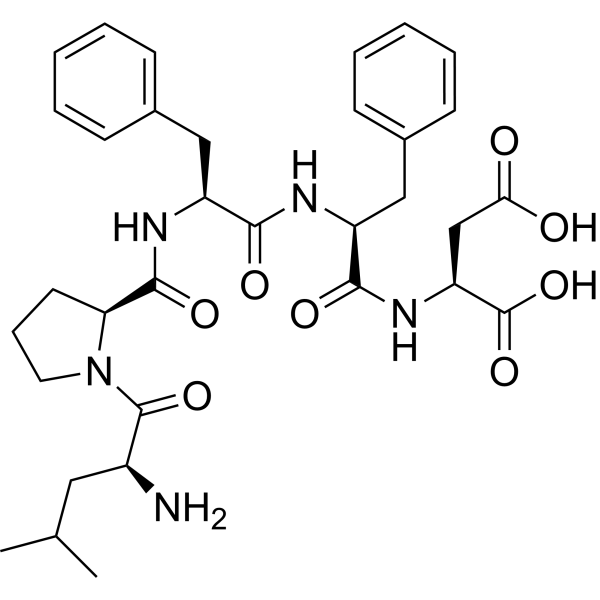
β-Sheet Breaker Peptide iAβ5 is an effective brain amyloid-β (Abeta) degrader. Abeta deposits are associated with Alzheimer's disease (AD), and the related toxicity arises from its β-sheet conformation and aggregation. β-Sheet Breaker Peptide iAβ5 can repeatedly induce the degradation of fibrillary amyloid deposits in vivo. Therefore, β-Sheet Breaker Peptide iAβ5 can prevent and/or reverse neuronal contraction caused by Abeta and reduce the range of interleukin IL-1beta positive microglial-like cells around Abeta deposits. β-Sheet Breaker Peptide iAβ5 can reduce the size and/or number of brain amyloid plaques in AD. β-Sheet Breaker Peptide iAβ5 is labeled with a hydrophobic benzyl alcohol (HBA) tag and shows a bright blue color under acidic conditions, which can be used for quantitative determination.
|
-
-
- HY-120717
-
|
|
mGluR
Cytochrome P450
|
Neurological Disease
|
|
VU6001966 is a brain-penetrant and selective mGlu2 receptor inhibitor. VU6001966 blocks mGlu2 receptor activity, counteracts LY379268 (HY-103558)-mediated blood-brain barrier protection and inflammatory cytokine dampening in microglia under inflammatory conditions. VU6001966 enhances antidepressant effects when combined with Scopolamine (HY-N0296). VU6001966 can be used for the research of major depressive disorder .
|
-
-
- HY-N0666S3
-
|
|
Endogenous Metabolite
|
Inflammation/Immunology
|
|
L-Aspartic acid- 15N is the 15N-labeled L-Aspartic acid. L-Aspartic aicd is an amino acid that can penetrate the blood-brain barrier. L-Aspartic aicd is commonly used for preparing prodrugs to target colon and cecal tissues. L-Aspartic aicd commonly used in the study of inflammatory conditions .
|
-
-
- HY-N0666S2
-
|
|
Isotope-Labeled Compounds
Endogenous Metabolite
|
Inflammation/Immunology
|
|
DL-Aspartic acid-d3 is the deuterium labeled L-Aspartic acid. L-Aspartic aicd is an amino acid that can penetrate the blood-brain barrier. L-Aspartic aicd is commonly used for preparing prodrugs to target colon and cecal tissues. L-Aspartic aicd commonly used in the study of inflammatory conditions .
|
-
-
- HY-B0985A
-
|
|
TRP Channel
|
Neurological Disease
|
|
Phenazopyridine is a competitive SARM1 inhibitor, with IC50 145 μM. Phenazopyridine is a TRPM8 antagonist. Phenazopyridine has a local anesthetic/analgesic effect. Phenazopyridine is used to relieve painful symptoms of conditions such as cystitis and urethritis. Phenazopyridine can promote neuronal differentiation and can also be used in the study of traumatic brain injury, peripheral neuropathy and neurodegenerative diseases .
|
-
-
- HY-N0666S1
-
|
|
Endogenous Metabolite
|
Cardiovascular Disease
|
|
L-Aspartic acid- 13C4, 15N is the 13C-labeled and 15N-labeled L-Aspartic acid. L-Aspartic aicd is an amino acid that can penetrate the blood-brain barrier. L-Aspartic aicd is commonly used for preparing prodrugs to target colon and cecal tissues. L-Aspartic aicd commonly used in the study of inflammatory conditions .
|
-
-
- HY-135525
-
|
|
Dopamine Receptor
Adrenergic Receptor
|
Neurological Disease
Inflammation/Immunology
|
|
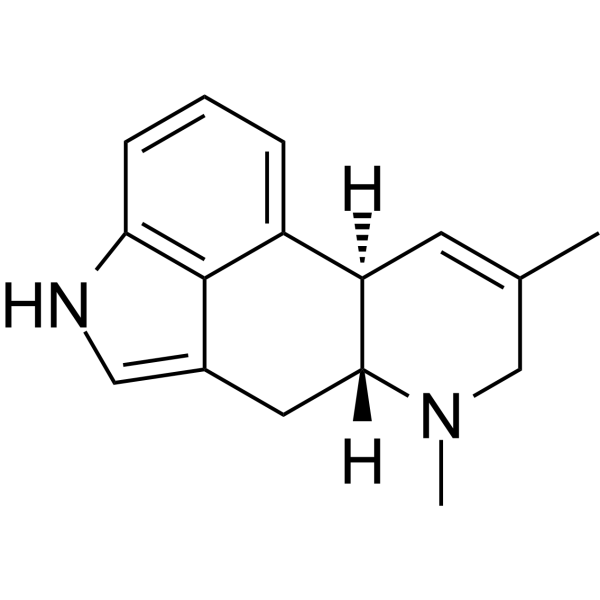
Agroclavine acts as an agonist of the D1-dopamine receptor and α1-adrenergic receptor. Agroclavine enhances the sensitivity of the brain to magnetic fields; it impairs spatial memory without affecting hippocampal long-term potentiation (LTP). Agroclavine exerts bidirectional regulatory effects on immune activity: it enhances NK cell activity with low toxicity under normal conditions, while it inhibits NK cell activity and exhibits significant cardiac and hepatic toxicity under stress conditions. Agroclavine can be used for research on neuroelectrophysiology, learning and memory, and immunoregulation .
|
-
-
- HY-144874
-
|
|
PARP
|
Neurological Disease
Cancer
|
|
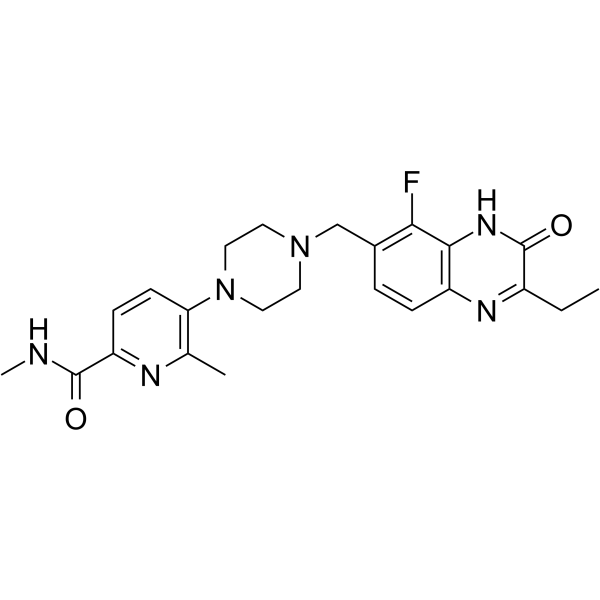
AZ3391 is a potent inhibitor of PARP. AZ3391 is a quinoxaline derivative. PARP family of enzymes play an important role in a number of cellular processes, such as replication, recombination, chromatin remodeling, and DNA damage repair. AZ3391 has the potential for the research of diseases and conditions occurring in tissues in the central nervous system, such as the brain and spinal cord (extracted from patent WO2021260092A1, compound 23) .
|
-
-
- HY-P99146
-
|
|
CD3
|
Infection
Neurological Disease
Inflammation/Immunology
Cancer
|
|
Anti-Mouse TCR gamma/delta Antibody (UC7-13D5) is an anti-mouse TCR gamma/delta IgG monoclonal antibody. Anti-Mouse TCR gamma/delta Antibody (UC7-13D5) can enter the blood-brain barrier. Anti-Mouse TCR gamma/delta Antibody (UC7-13D5) effectively depletes γδ T cells and reduces macrophage and neutrophil infiltration. Anti-Mouse TCR gamma/delta Antibody (UC7-13D5) can reduce the immune response of transplants. Anti-Mouse TCR gamma/delta Antibody (UC7-13D5) can be used for researches on inflammation conditions, virus infection and cancer such as arthritis, JHM virus and breast cancer .
|
-
-
- HY-N0666S6
-
|
|
Endogenous Metabolite
|
Inflammation/Immunology
|
|
L-Aspartic acid-1,4- 13C2 is the 13C-labeled L-Aspartic acid. L-Aspartic aicd is an amino acid that can penetrate the blood-brain barrier. L-Aspartic aicd is commonly used for preparing prodrugs to target colon and cecal tissues. L-Aspartic aicd commonly used in the study of inflammatory conditions .
|
-
-
- HY-W015824S6
-
|
|
Isotope-Labeled Compounds
Endogenous Metabolite
|
Inflammation/Immunology
|
|
L-Aspartic acid- 13C-2 is the 13C-labeled L-Aspartic acid (HY-N0666). L-Aspartic aicd is an amino acid that can penetrate the blood-brain barrier. L-Aspartic aicd is commonly used for preparing prodrugs to target colon and cecal tissues. L-Aspartic aicd commonly used in the study of inflammatory conditions .
|
-
-
- HY-P11244
-
|
|
Ephrin Receptor
|
Neurological Disease
|
|
150D4 is an efficient, selective, and blood-brain barrier penetrable EphA4 agonist. 150D4 has excitatory activity and neuroprotective effects. 150D4 can be used for research on neurological conditions .
|
-
-
- HY-127022
-
|
Daturamine; α-Hydroxyscopolamine
|
mAChR
Calcium Channel
Reactive Oxygen Species (ROS)
|
Neurological Disease
|
|
Anisodine (Daturamine) is a neuroprotective compound that reduces exacerbated M1, M2, M4, and M5 receptor expression in brain tissues under hypoxia/reoxygenation conditions. Anisodine inhibits calcium ion influx and reactive oxygen species (ROS)levels. Anisodine leads to decreased aspartate levels during hypoxia .
|
-
-
- HY-127022A
-
|
Daturamine hydrobromide; α-Hydroxyscopolamine hydrobromide
|
mAChR
Calcium Channel
Reactive Oxygen Species (ROS)
|
Neurological Disease
|
|
Anisodine (Daturamine) hydrobromide is a neuroprotective compound that reduces exacerbated M1, M2, M4, and M5 receptor expression in brain tissues under hypoxia/reoxygenation conditions. Anisodine hydrobromide inhibits calcium ion influx and reactive oxygen species (ROS)levels. Anisodine hydrobromide leads to decreased aspartate levels during hypoxia .
|
-
-
- HY-106110
-
|
|
Prostaglandin Receptor
|
Metabolic Disease
|
OP-2507 is a prostacyclin analog. OP-2507 can increase brain glucose levels in mice, suppress the breakdown of energy metabolism under hypoxic conditions, and has a protective effect against changes in cyclic nucleotides in hypoxic brain tissue (specifically, an increase in cyclic AMP and a decrease in cyclic GMP). OP-2507 provides protective effects against brain hypoxia and edema .
|
-
-
- HY-172705A
-
|
|
Liposome
nAChR
|
Infection
|
|
DSPE-PEG3400-RVG29 is a PEG conjugate composed of DSPE and rabies virus glycoprotein 29 (RVG29). RVG29 specifically binds to nicotinic acetylcholine receptors (nAChR) at the blood-brain barrier (BBB), crosses the BBB, and mediates receptor-dependent transcytosis. DSPE-PEG3400-RVG29 can be used for brain-targeted drug delivery, surface modification of nanocarriers, as well as gene and nucleic acid delivery. DSPE-PEG3400-RVG29 is applicable to research related to hypoxic-ischemic brain injury, Parkinson's disease, and other conditions
|
-
-
- HY-N0666E
-
|
|
Endogenous Metabolite
|
Inflammation/Immunology
|
|
L-Aspartic acid monocesium is the monocesium salt form of L-Aspartic acid (HY-N0666). L-Aspartic aicd monocesium is an amino acid that can penetrate the blood-brain barrier. L-Aspartic aicd monocesium is commonly used for preparing prodrugs to target colon and cecal tissues. L-Aspartic aicd monocesium commonly used in the study of inflammatory conditions .
|
-
-
- HY-N0666S9
-
|
|
Isotope-Labeled Compounds
Endogenous Metabolite
|
Cardiovascular Disease
|
|
L-Aspartic acid- 15N,d3 is the deuterium and 15N-labeled L-Aspartic acid. L-Aspartic aicd is an amino acid that can penetrate the blood-brain barrier. L-Aspartic aicd is commonly used for preparing prodrugs to target colon and cecal tissues. L-Aspartic aicd commonly used in the study of inflammatory conditions .
|
-
-
- HY-N0666S10
-
|
[3-13C]Aspartic acid
|
Isotope-Labeled Compounds
Endogenous Metabolite
|
Inflammation/Immunology
|
|
L-Aspartic acid- 13C-1 is the 13C-labeled L-Aspartic acid (HY-N0666). L-Aspartic aicd is an amino acid that can penetrate the blood-brain barrier. L-Aspartic aicd is commonly used for preparing prodrugs to target colon and cecal tissues. L-Aspartic aicd commonly used in the study of inflammatory conditions .
|
-
-
- HY-19454
-
|
|
GHSR
|
Cardiovascular Disease
|
|
CP-464709 is a Ghrelin receptor agonist that can penetrate the blood-brain barrier. CP-464709 causes an increase in blood pressure by activating pre sympathetic neurons in the spinal cord. CP-464709 causes biphasic blood pressure response when administered intravenously, while intrathecal administration only causes pressor. CP-464709 can be used for research on cardiovascular conditions .
|
-
-
- HY-N0666S7
-
|
|
Isotope-Labeled Compounds
Endogenous Metabolite
|
Cardiovascular Disease
|
|
L-Aspartic acid-1,4- 13C2, 15N is the 13C- and 15N-labeled L-Aspartic acid. L-Aspartic aicd is an amino acid that can penetrate the blood-brain barrier. L-Aspartic aicd is commonly used for preparing prodrugs to target colon and cecal tissues. L-Aspartic aicd commonly used in the study of inflammatory conditions .
|
-
-
- HY-N0666S5
-
|
|
Isotope-Labeled Compounds
Endogenous Metabolite
|
Inflammation/Immunology
|
|
L-Aspartic acid- 13C4, 15N,d3 is the deuterium, 13C-, and 15-labeled L-Aspartic acid. L-Aspartic aicd is an amino acid that can penetrate the blood-brain barrier. L-Aspartic aicd is commonly used for preparing prodrugs to target colon and cecal tissues. L-Aspartic aicd commonly used in the study of inflammatory conditions .
|
-
-
- HY-B0985R
-
|
|
Reference Standards
TRP Channel
|
Neurological Disease
|
|
Phenazopyridine (hydrochloride) (Standard) is the analytical standard of Phenazopyridine (hydrochloride). This product is intended for research and analytical applications. Phenazopyridine hydrochlorideis a competitive SARM1 inhibitor, with IC50 145 μM. Phenazopyridine hydrochlorideis a TRPM8 antagonist. Phenazopyridine hydrochloride has a local anesthetic/analgesic effect. Phenazopyridine hydrochlorideis used to relieve painful symptoms of conditions such as cystitis and urethritis. Phenazopyridine hydrochloridecan promote neuronal differentiation and can also be used in the study of traumatic brain injury, peripheral neuropathy and neurodegenerative diseases .
|
-
-
- HY-161461
-
|
|
Amylases
|
Neurological Disease
|
|
E234G HYPE-IN-1 (Compound I2.10) is an inhibitor of AMPylation directed by the Huntingtin-interacting protein E (HYPE), possessing low micromolar bioactivity, low cytotoxicity, and blood-brain barrier permeability. E234G HYPE-IN-1 can inhibit the AMPylation of B-cell immunoglobulin-binding protein (BiP), the primary substrate of HYPE. E234G HYPE-IN-1 is suitable for development as a HYPE-specific therapeutic agent for clinical conditions such as neurodegenerative diseases and diabetes .
|
-
-
- HY-136258
-
|
|
nAChR
|
Neurological Disease
|
|
nAChR agonist CMPI hydrochloride is a potent and selective positive allosteric modulator (PAM) of nAChR containing a α4:α4 subunit interface. nAChR agonist CMPI hydrochloride enhances the response of (α4)3(β2)2 nAChR to ACh (10 µM) with an EC50 of 0.26 µM. nAChR agonist CMPI hydrochloride has potential for the research of nicotine dependence and many neuropsychiatric conditions associated with decreased brain cholinergic activity .
|
-
-
- HY-15076
-
|
NS-1209 sodium
|
iGluR
|
Neurological Disease
|
|
SPD-502 sodium is a novel glutamate antagonist with potential neuroprotective properties, particularly in brain ischemia. It selectively targets the AMPA receptor, showing high affinity (IC50 = 0.043 μM) and competitive inhibition of AMPA-induced effects in rat cortical membranes and cultured mouse cortical neurons. In vivo, SPD-502 sodium effectively blocks AMPA-evoked spike activity in the hippocampus after intravenous administration, significantly increasing the seizure threshold in mice and demonstrating robust protection against ischemia-induced damage to hippocampal neurons in gerbils. These findings suggest SPD-502 sodium may be promising for studying neurodegenerative conditions associated with glutamate excitotoxicity .
|
-
-
- HY-15074
-
|
NS-1209
|
iGluR
|
Neurological Disease
|
|
SPD-502 is a novel glutamate antagonist with potential neuroprotective properties, particularly in brain ischemia. It selectively targets the AMPA receptor, showing high affinity (IC50 = 0.043 μM) and competitive inhibition of AMPA-induced effects in rat cortical membranes and cultured mouse cortical neurons. In vivo, SPD-502 effectively blocks AMPA-evoked spike activity in the hippocampus after intravenous administration, significantly increasing the seizure threshold in mice and demonstrating robust protection against ischemia-induced damage to hippocampal neurons in gerbils. These findings suggest SPD-502 may be promising for studying neurodegenerative conditions associated with glutamate excitotoxicity .
|
-
-
- HY-176546
-
|
|
Neurokinin Receptor
|
Endocrinology
|
|
NK3R-IN-2 is an orally active NK3R inhibitor with an IC50 of 330.50 nM for human NK3R. NK3R-IN-2 can pass through the blood-brain barrier. NK3R-IN-2 has excellent NK3R binding affinity (IC50 = 87.31 nM) in CHO-K1 cells. NK3R-IN-2 effectively inhibits the level of luteinizing hormone (LH). NK3R-IN-2 can be used for research on hormone related conditions .
|
-
-
- HY-161972
-
|
|
HyT
Ferroptosis
Glutathione Peroxidase
|
Cancer
|
|
ZX782 is a HyT GPX4 degrader and a ferroptosis inducer, which induces GPX4 degradation and significantly increases lipid ROS accumulation in HT1080 cells. ZX782 can be used to treat AD by reducing the size and/or number of brain amyloid plaques and by inhibiting the spread of IL-1beta-positive microglial-like cells around amyloid plaques. ZX782 is labeled with hydrophobic benzyl alcohol (HBA) and appears bright blue under acidic conditions, which can be used for quantitative determination . ZX782 is composed of target protein ligand (red part) ML-210 (HY-100003), PROTAC linker (black part) Bromo-PEG2-CH2-Boc (HY-141371) and Hty molecule (blue part) Adamantan-1-ylmethanamine (HY-W037848). The conjugate consisting of Hyt and linker parts is Adamantan-C-amide-PEG2-C-Br (HY-161974), and the activity control of the target protein ligand is Hydroxyl-ML-210 (HY-161973).
|
-
-
- HY-D2975
-
|
|
Fluorescent Dye
|
Cardiovascular Disease
|
|
TTVP is a high-performance, blood activated AIE near-infrared fluorescent probe. TTVP can display hemorrhagic areas in the mouse brain with ultra sensitivity and high contrast specificity. TTVP provides a visual assessment tool for the study of hemorrhagic conditions .
|
-
-
- HY-178631
-
|
|
Biochemical Assay Reagents
|
Metabolic Disease
|
|
UDP-Mannose exists in mouse brain, especially hypothalamus and neocortex at a higher concentration compared to other organs. UDP-Mannose regulates glycosylation, in particular mannosylation in specific organs or conditions. UDP-Mannose can be used as a substrate for structural study of glycosyltransferase .
|
-
-
- HY-183336
-
|
|
Dihydroorotate Dehydrogenase
Apoptosis
|
Cancer
|
|
MEDS700 is a blood-brain barrier permeable inhibitor of human dihydroorotate dehydrogenase (hDHODH) with an IC50 of 1.5 nM. MEDS700 induces apoptosis and differentiation, and inhibits proliferation of cancer cells. MEDS700 can be used in research on acute myeloid leukemia and other conditions .
|
-
-
- HY-180406
-
|
|
Neuropeptide Y Receptor
|
Neurological Disease
|
|
NPY Y2 antagonist 2 is a modulator targeting the neuropeptide Y (NPY) receptor Y2, with pKi values of 6.8 nM and 7.2 nM in human and rat brains, respectively, and demonstrating blood-brain barrier penetration. NPY Y2 antagonist 2 shows selectivity for the Y1 and Y5 receptors. NPY Y2 antagonist 2 blocks the negative feedback regulation mediated by the NPY Y2 receptor, thereby increasing endogenous NPY release and enhancing Y1 receptor activation, resulting in the modulation of central neurotransmitter release. NPY Y2 antagonist 2 exhibits moderate in vivo clearance, high free fraction in rat brain, and a favorable brain/plasma ratio and brain exposure. NPY Y2 antagonist 2 is applicable for research in conditions such as mood disorders, anxiety induced by alcohol withdrawal, and social anxiety associated with nicotine withdrawal .
|
-
-
- HY-150306B
-
|
(R)-IM-250
|
HSV
DNA/RNA Synthesis
|
Infection
|
|
(R)-Adibelivir ((R)-IM-250) is a blood-brain barrier-permeable HSV helicase-primase inhibitor. (R)-Adibelivir specifically inhibits the activity of the HSV UL5-UL52-UL8 helicase-primase complex. (R)-Adibelivir affects viral reactivation and significantly reduces the reactivation capacity of latent neuronal HSV reservoirs. (R)-Adibelivir can be used in studies related to herpes simplex virus infection, herpes encephalitis, neonatal herpes, and other related conditions .
|
-
-
- HY-181545A
-
|
|
NO Synthase
IFNAR
|
Cancer
|
|
nNOS-IN-2 trihydrochloride is a blood-brain barrier-permeable nitric oxide synthase (nNOS) inhibitor. nNOS-IN-2 trihydrochloride exhibits Ki values of 1.7 nM and 2.3 nM against human and rat nNOS, respectively, and shows high selectivity for human eNOS and iNOS. nNOS-IN-2 trihydrochloride also effectively reduces PD-L1 expression in human melanoma cells under both basal conditions and IFN-γ exposure. nNOS-IN-2 trihydrochloride can be used for the study of melanoma and related signaling pathways .
|
-
- HY-179568
-
|
|
Monoamine Transporter
|
Neurological Disease
|
|
F3288-0031 is a brain-penetrant norepinephrine transporter (NET) allosteric inhibitor with inhibitory rates of 73.5% at 20 μM. F3288-0031 binds within the inner vestibule of NET, stabilizing the inward-open state and has a preferential NET/SERT inhibition with pIC50 = 5.9. F3288-0031 shows no detectable off-target functional activity in vitro. F3288-0031 demonstrates robust antidepressant-like efficacy in vivo without confounding locomotor effects, F3288-0031 can be used for depressive disorder and related neuropsychiatric conditions .
|
-
| Cat. No. |
Product Name |
Type |
-
- HY-D2975
-
|
|
Fluorescent Dyes
|
|
TTVP is a high-performance, blood activated AIE near-infrared fluorescent probe. TTVP can display hemorrhagic areas in the mouse brain with ultra sensitivity and high contrast specificity. TTVP provides a visual assessment tool for the study of hemorrhagic conditions .
|
| Cat. No. |
Product Name |
Type |
-
- HY-172705
-
|
|
Biochemical Assay Reagents
|
|
DSPE-PEG2000-RVG29 is a PEG conjugate composed of DSPE and rabies virus glycoprotein 29 (RVG29). RVG29 specifically binds to nicotinic acetylcholine receptors (nAChR) at the blood-brain barrier (BBB), crosses the BBB, and mediates receptor-dependent transcytosis. DSPE-PEG2000-RVG29 can be used for brain-targeted drug delivery, surface modification of nanocarriers, as well as gene and nucleic acid delivery. DSPE-PEG2000-RVG29 is applicable to research related to hypoxic-ischemic brain injury, Parkinson's disease, and other conditions .
|
-
- HY-172705A
-
|
|
Biochemical Assay Reagents
|
|
DSPE-PEG3400-RVG29 is a PEG conjugate composed of DSPE and rabies virus glycoprotein 29 (RVG29). RVG29 specifically binds to nicotinic acetylcholine receptors (nAChR) at the blood-brain barrier (BBB), crosses the BBB, and mediates receptor-dependent transcytosis. DSPE-PEG3400-RVG29 can be used for brain-targeted drug delivery, surface modification of nanocarriers, as well as gene and nucleic acid delivery. DSPE-PEG3400-RVG29 is applicable to research related to hypoxic-ischemic brain injury, Parkinson's disease, and other conditions
|
| Cat. No. |
Product Name |
Target |
Research Area |
-
- HY-P1047
-
|
[Pro18, Asp21] β-Amyloid (17-21)
|
Amyloid-β
|
Neurological Disease
|
|
β-Sheet Breaker Peptide iAβ5 is an effective brain amyloid-β (Abeta) degrader. Abeta deposits are associated with Alzheimer's disease (AD), and the related toxicity arises from its β-sheet conformation and aggregation. β-Sheet Breaker Peptide iAβ5 can repeatedly induce the degradation of fibrillary amyloid deposits in vivo. Therefore, β-Sheet Breaker Peptide iAβ5 can prevent and/or reverse neuronal contraction caused by Abeta and reduce the range of interleukin IL-1beta positive microglial-like cells around Abeta deposits. β-Sheet Breaker Peptide iAβ5 can reduce the size and/or number of brain amyloid plaques in AD. β-Sheet Breaker Peptide iAβ5 is labeled with a hydrophobic benzyl alcohol (HBA) tag and shows a bright blue color under acidic conditions, which can be used for quantitative determination.
|
-
- HY-P11244
-
|
|
Ephrin Receptor
|
Neurological Disease
|
|
150D4 is an efficient, selective, and blood-brain barrier penetrable EphA4 agonist. 150D4 has excitatory activity and neuroprotective effects. 150D4 can be used for research on neurological conditions .
|
| Cat. No. |
Product Name |
Target |
Research Area |
Image |
-
- HY-P99146
-
|
|
CD3
|
Infection
Neurological Disease
Inflammation/Immunology
Cancer
|
|
Anti-Mouse TCR gamma/delta Antibody (UC7-13D5) is an anti-mouse TCR gamma/delta IgG monoclonal antibody. Anti-Mouse TCR gamma/delta Antibody (UC7-13D5) can enter the blood-brain barrier. Anti-Mouse TCR gamma/delta Antibody (UC7-13D5) effectively depletes γδ T cells and reduces macrophage and neutrophil infiltration. Anti-Mouse TCR gamma/delta Antibody (UC7-13D5) can reduce the immune response of transplants. Anti-Mouse TCR gamma/delta Antibody (UC7-13D5) can be used for researches on inflammation conditions, virus infection and cancer such as arthritis, JHM virus and breast cancer .
|
-
(5)
| Cat. No. |
Product Name |
Category |
Target |
Chemical Structure |
| Cat. No. |
Product Name |
Chemical Structure |
-
- HY-N0666S8
-
|
|
|
L-Aspartic acid-d3 is the deuterium labeled L-Aspartic acid. L-Aspartic aicd is an amino acid that can penetrate the blood-brain barrier. L-Aspartic aicd is commonly used for preparing prodrugs to target colon and cecal tissues. L-Aspartic aicd commonly used in the study of inflammatory conditions .
|
-
-
- HY-N0666S4
-
|
|
|
L-Aspartic acid- 13C4 is the 13C-labeled L-Aspartic acid. L-Aspartic aicd is an amino acid that can penetrate the blood-brain barrier. L-Aspartic aicd is commonly used for preparing prodrugs to target colon and cecal tissues. L-Aspartic aicd commonly used in the study of inflammatory conditions .
|
-
-
- HY-W010388AS
-
|
|
|
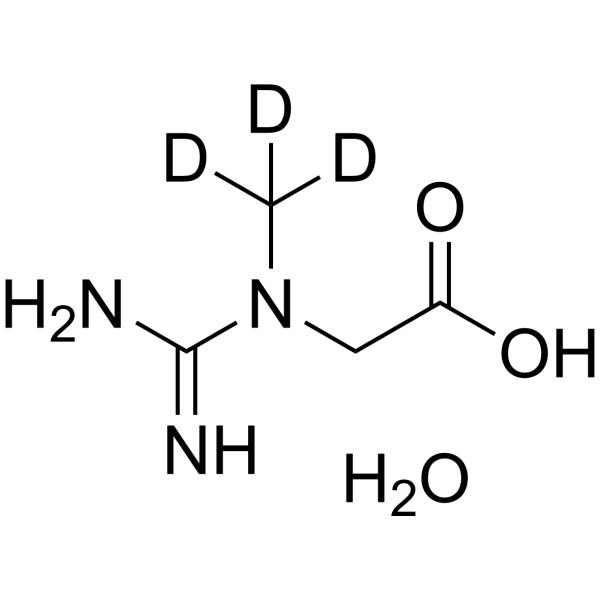
Creatine-d3 (hydrate) is a deuterium labeled Creatine hydrate. Creatine hydrate is pivotal in energy metabolism of muscle and brain cells, both in physiological and in pathological conditions .
|
-
-
- HY-13318S
-
|
|
|
Oseltamivir acid-d3 is a deuterium labeled Oseltamivir acid (HY-13318). Oseltamivir acid, the active metabolite of Oseltamivir phosphate, is an orally bioavailable, potent and selective inhibitor of influenza virus neuraminidase (IC50=2 nM) with activity against both influenza A and B viruses. Oseltamivir acid has an extremely weak ability to penetrate the BBB under normal physiological conditions, but its blood-brain barrier penetration is significantly enhanced under inflammatory conditions .
|
-
-
- HY-N0666S
-
|
|
|
L-Aspartic acid- 13C is a 13C labeled L-Aspartic acid. L-Aspartic aicd is an amino acid that can penetrate the blood-brain barrier. L-Aspartic aicd is commonly used for preparing prodrugs to target colon and cecal tissues. L-Aspartic aicd commonly used in the study of inflammatory conditions .
|
-
-
- HY-N0666S3
-
|
|
|
L-Aspartic acid- 15N is the 15N-labeled L-Aspartic acid. L-Aspartic aicd is an amino acid that can penetrate the blood-brain barrier. L-Aspartic aicd is commonly used for preparing prodrugs to target colon and cecal tissues. L-Aspartic aicd commonly used in the study of inflammatory conditions .
|
-
-
- HY-N0666S2
-
|
|
|
DL-Aspartic acid-d3 is the deuterium labeled L-Aspartic acid. L-Aspartic aicd is an amino acid that can penetrate the blood-brain barrier. L-Aspartic aicd is commonly used for preparing prodrugs to target colon and cecal tissues. L-Aspartic aicd commonly used in the study of inflammatory conditions .
|
-
-
- HY-N0666S1
-
|
|
|
L-Aspartic acid- 13C4, 15N is the 13C-labeled and 15N-labeled L-Aspartic acid. L-Aspartic aicd is an amino acid that can penetrate the blood-brain barrier. L-Aspartic aicd is commonly used for preparing prodrugs to target colon and cecal tissues. L-Aspartic aicd commonly used in the study of inflammatory conditions .
|
-
-
- HY-N0666S6
-
|
|
|
L-Aspartic acid-1,4- 13C2 is the 13C-labeled L-Aspartic acid. L-Aspartic aicd is an amino acid that can penetrate the blood-brain barrier. L-Aspartic aicd is commonly used for preparing prodrugs to target colon and cecal tissues. L-Aspartic aicd commonly used in the study of inflammatory conditions .
|
-
-
- HY-W015824S6
-
|
|
|
L-Aspartic acid- 13C-2 is the 13C-labeled L-Aspartic acid (HY-N0666). L-Aspartic aicd is an amino acid that can penetrate the blood-brain barrier. L-Aspartic aicd is commonly used for preparing prodrugs to target colon and cecal tissues. L-Aspartic aicd commonly used in the study of inflammatory conditions .
|
-
-
- HY-N0666S9
-
|
|
|
L-Aspartic acid- 15N,d3 is the deuterium and 15N-labeled L-Aspartic acid. L-Aspartic aicd is an amino acid that can penetrate the blood-brain barrier. L-Aspartic aicd is commonly used for preparing prodrugs to target colon and cecal tissues. L-Aspartic aicd commonly used in the study of inflammatory conditions .
|
-
-
- HY-N0666S10
-
|
|
|
L-Aspartic acid- 13C-1 is the 13C-labeled L-Aspartic acid (HY-N0666). L-Aspartic aicd is an amino acid that can penetrate the blood-brain barrier. L-Aspartic aicd is commonly used for preparing prodrugs to target colon and cecal tissues. L-Aspartic aicd commonly used in the study of inflammatory conditions .
|
-
-
- HY-N0666S7
-
|
|
|
L-Aspartic acid-1,4- 13C2, 15N is the 13C- and 15N-labeled L-Aspartic acid. L-Aspartic aicd is an amino acid that can penetrate the blood-brain barrier. L-Aspartic aicd is commonly used for preparing prodrugs to target colon and cecal tissues. L-Aspartic aicd commonly used in the study of inflammatory conditions .
|
-
-
- HY-N0666S5
-
|
|
|
L-Aspartic acid- 13C4, 15N,d3 is the deuterium, 13C-, and 15-labeled L-Aspartic acid. L-Aspartic aicd is an amino acid that can penetrate the blood-brain barrier. L-Aspartic aicd is commonly used for preparing prodrugs to target colon and cecal tissues. L-Aspartic aicd commonly used in the study of inflammatory conditions .
|
-
| Cat. No. |
Product Name |
|
Classification |
-
- HY-172705
-
|
|
|
Pegylated Lipids
|
|
DSPE-PEG2000-RVG29 is a PEG conjugate composed of DSPE and rabies virus glycoprotein 29 (RVG29). RVG29 specifically binds to nicotinic acetylcholine receptors (nAChR) at the blood-brain barrier (BBB), crosses the BBB, and mediates receptor-dependent transcytosis. DSPE-PEG2000-RVG29 can be used for brain-targeted drug delivery, surface modification of nanocarriers, as well as gene and nucleic acid delivery. DSPE-PEG2000-RVG29 is applicable to research related to hypoxic-ischemic brain injury, Parkinson's disease, and other conditions .
|
Your information is safe with us. * Required Fields.
Inquiry Information
- Product Name:
- Cat. No.:
- Quantity:
- MCE Japan Authorized Agent:

