1. Anti-infection Cell Cycle/DNA Damage Apoptosis
  2. Influenza Virus DNA/RNA Synthesis Apoptosis Parasite Bacterial Fungal
  3. Cynaroside

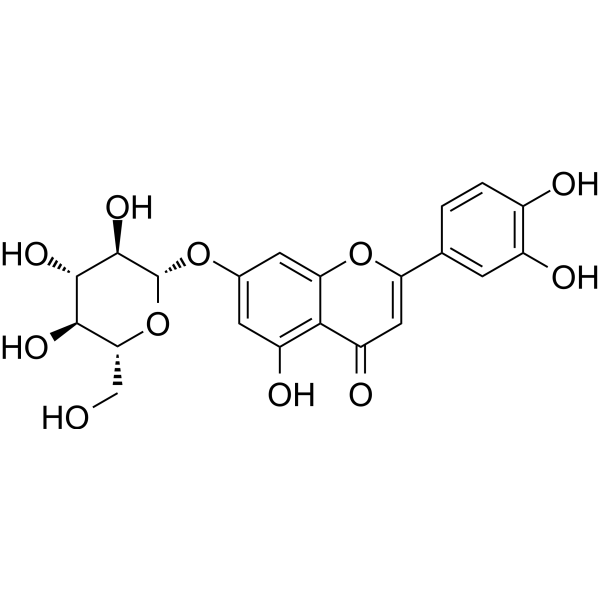
Cynaroside  (Synonyms: Luteolin 7-glucoside; Luteolin 7-O-β-D-glucoside)

Cat. No.: HY-N0540 Purity: 99.37%
Handling Instructions Technical Support

Cynaroside (Luteolin 7-glucoside) is a flavonoid compound that exhibits anti-oxidative capabilities. Cynaroside is also a potent influenza RNA-dependent RNA polymerase inhibitor with an IC50 of 32 nM. Cynaroside also is a promising inhibitor for H2O2-induced apoptosis, has cytoprotection against oxidative stress-induced cardiovascular diseases. Cynaroside also has antibacterial, antifungal and anticancer activities, antioxidant and anti-inflammatory activities.

For research use only. We do not sell to patients.

CAS No. : 5373-11-5

Size Price Stock Quantity
Free Sample (0.1 - 0.2 mg)   Apply Now  
Solid + Solvent (Highly Recommended)
10 mM * 1 mL in DMSO
ready for reconstitution
In-stock
Solution
10 mM * 1 mL in DMSO In-stock
Solid
5 mg In-stock
10 mg In-stock
25 mg In-stock
50 mg In-stock
100 mg In-stock
200 mg   Get quote  
500 mg   Get quote  

* Please select Quantity before adding items.

This product is a controlled substance and not for sale in your territory.

Customer Review

Based on 14 publication(s) in Google Scholar

Other Forms of Cynaroside:

Top Publications Citing Use of Products

    Cynaroside purchased from MedChemExpress. Usage Cited in: Eur J Pharmacol. 2025 Sep 24:178196.  [Abstract]

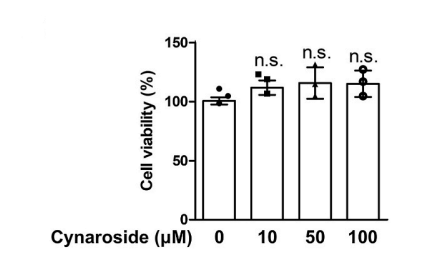
    RAW 264.7 cells were treated with Cynaroside at the indicated concentrations. After 24 h of incubation, cell viability was assessed using the MTT assay.

    Cynaroside purchased from MedChemExpress. Usage Cited in: Eur J Pharmacol. 2025 Sep 24:178196.  [Abstract]

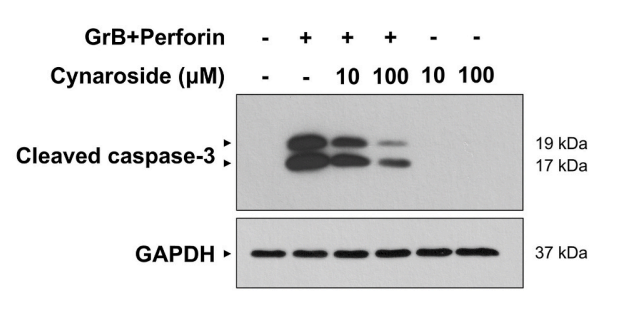
    RAW 264.7 cells were treated with Cynaroside (10 or 100 μM) for 30 min before they were treated with GrB (25 nM) and perforin (1 nM) for 24 h. Cleaved caspase-3 protein was detected by Western blotting.

    Cynaroside purchased from MedChemExpress. Usage Cited in: Eur J Pharmacol. 2025 Sep 24:178196.  [Abstract]

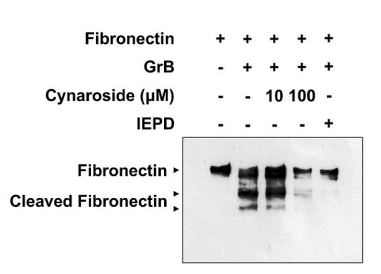
    Human plasma fibronectin was incubated with GrB and either Cynaroside (10 or 100 μM) or IEPD (100 μM) in vitro, and the results were visualized by Western blotting.

    Cynaroside purchased from MedChemExpress. Usage Cited in: Eur J Pharmacol. 2025 Sep 24:178196.  [Abstract]

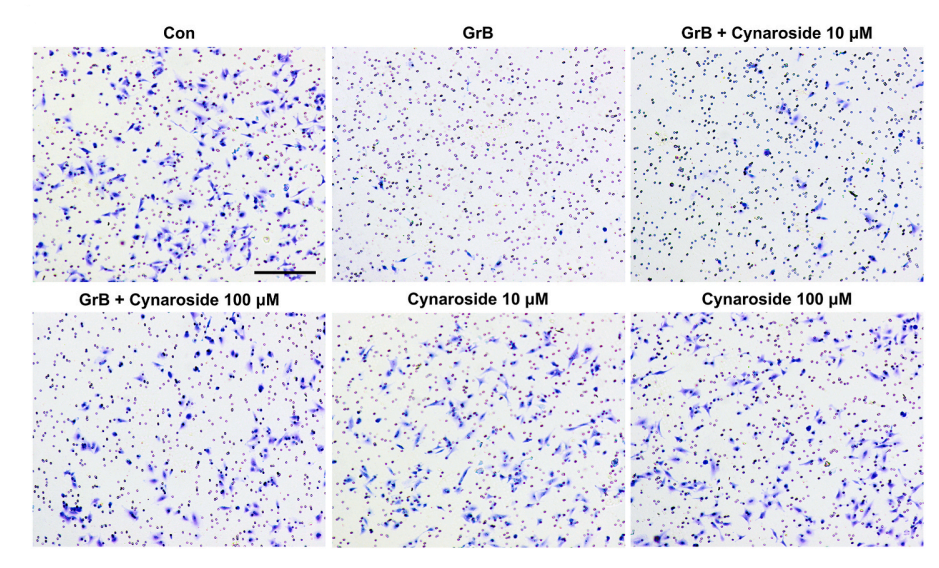
    MCF-7 cells were plated on fibronectin-coated Transwell plates in serum-free DMEM and allowed to migrate toward 5 % FBS for 24 h in the presence of the indicated concentrations of Cynaroside (10 or 100 μM) and GrB (25 nM). The cells on the underside of the membrane were stained with 0.5 % crystal violet.

    Cynaroside purchased from MedChemExpress. Usage Cited in: Eur J Pharmacol. 2025 Sep 24:178196.  [Abstract]

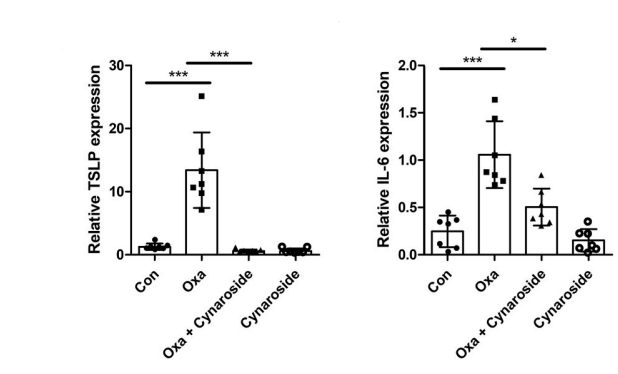
    Cynaroside (10 mg/kg). The expression levels of TSLP and IL-6 mRNA in ear skin tissue on day 26 were detected by qRT-PCR.
    • Biological Activity

    • Purity & Documentation

    • References

    • Customer Review

    Description

    Cynaroside (Luteolin 7-glucoside) is a flavonoid compound that exhibits anti-oxidative capabilities. Cynaroside is also a potent influenza RNA-dependent RNA polymerase inhibitor with an IC50 of 32 nM. Cynaroside also is a promising inhibitor for H2O2-induced apoptosis, has cytoprotection against oxidative stress-induced cardiovascular diseases. Cynaroside also has antibacterial, antifungal and anticancer activities, antioxidant and anti-inflammatory activities[1][3][4][5].

    IC50 & Target

    RNA Polymerase


    Cellular Effect
    Cell Line Type Value Description References
    B16-4A5 IC50
    > 100 μM
    Compound: 6
    Inhibition of melanogenesis in theophylline-stimulated mouse B16-4A5 cells after 72 hrs by microplate reader analysis
    Inhibition of melanogenesis in theophylline-stimulated mouse B16-4A5 cells after 72 hrs by microplate reader analysis
    [PMID: 25987378]
    CCRF-CEM IC50
    > 10 μg/mL
    Compound: 10
    Cytotoxicity against human CEM cells after 3 days by MTT assay
    Cytotoxicity against human CEM cells after 3 days by MTT assay
    [PMID: 11421746]
    H9 EC50
    7 μM
    Compound: 6
    Antiviral activity against HIV1 3B infected in human H9 cells assessed as inhibition of viral replication after 3 days by p24 antigen capture assay
    Antiviral activity against HIV1 3B infected in human H9 cells assessed as inhibition of viral replication after 3 days by p24 antigen capture assay
    [PMID: 8158164]
    H9 IC50
    25 μM
    Compound: 6
    Cytotoxicity against human H9 cells after 3 days
    Cytotoxicity against human H9 cells after 3 days
    [PMID: 8158164]
    H9c2 EC50
    5.04 μM
    Compound: 7
    Cytoprotective activity against doxorubicin-induced cytotoxicity in rat H9c2 cells assessed as cell viability after 24 hrs by MTT assay
    Cytoprotective activity against doxorubicin-induced cytotoxicity in rat H9c2 cells assessed as cell viability after 24 hrs by MTT assay
    [PMID: 20932762]
    HL-60 IC50
    > 10 μg/mL
    Compound: 10
    Cytotoxicity against human HL60 cells after 3 days by MTT assay
    Cytotoxicity against human HL60 cells after 3 days by MTT assay
    [PMID: 11421746]
    HeLa S3 IC50
    > 10 μM
    Compound: 13
    Cytotoxicity against human HeLa S3 cells assessed as cell viability incubated for 48 hrs by microscopic analysis
    Cytotoxicity against human HeLa S3 cells assessed as cell viability incubated for 48 hrs by microscopic analysis
    [PMID: 35704432]
    HepG2 IC50
    20.8 μM
    Compound: 6
    Anticancer activity against human HepG2 cells assessed as cell viability after 24 hrs by MTT assay
    Anticancer activity against human HepG2 cells assessed as cell viability after 24 hrs by MTT assay
    [PMID: 24974349]
    Huh-7 CC50
    > 50 μM
    Compound: 9
    Cytotoxicity against human Huh7.5.1 cells by MTT assay
    Cytotoxicity against human Huh7.5.1 cells by MTT assay
    [PMID: 22445328]
    MDCK CC50
    > 1116 μM
    Compound: 5
    Cytotoxicity against MDCK cells by MTT assay
    Cytotoxicity against MDCK cells by MTT assay
    [PMID: 18640042]
    MDCK CC50
    > 446 μM
    Compound: Luteolin-7-glucoside
    Cytotoxicity against MDCK cells
    Cytotoxicity against MDCK cells
    [PMID: 25096296]
    RAW264.7 CC50
    > 100 μM
    Compound: 20
    Cytotoxicity against mouse RAW264.7 cells assessed as reduction in cell viability measured after 24 hrs by MTT assay
    Cytotoxicity against mouse RAW264.7 cells assessed as reduction in cell viability measured after 24 hrs by MTT assay
    [PMID: 33667099]
    RAW264.7 IC50
    6.1 μM
    Compound: 9
    Antiinflammatory activity against LPS-stimulated mouse RAW264.7 cells assessed as decrease in PGE2 production preincubated for 1 hr followed by LPS stimulation and measured after 24 hrs by ELISA
    Antiinflammatory activity against LPS-stimulated mouse RAW264.7 cells assessed as decrease in PGE2 production preincubated for 1 hr followed by LPS stimulation and measured after 24 hrs by ELISA
    [PMID: 31747281]
    RAW264.7 IC50
    8.3 μM
    Compound: 13
    Inhibition of NO production in LPS-stimulated mouse RAW264.7 cells pre-incubated for 2 hrs before LPS stimulation for 24 hrs by Griess assay method
    Inhibition of NO production in LPS-stimulated mouse RAW264.7 cells pre-incubated for 2 hrs before LPS stimulation for 24 hrs by Griess assay method
    [PMID: 25176187]
    RAW264.7 IC50
    87.5 μM
    Compound: 20
    Inhibition of LPS induced NO production in mouse RAW264.7 cells measured after 24 hrs by Griess reagent based assay
    Inhibition of LPS induced NO production in mouse RAW264.7 cells measured after 24 hrs by Griess reagent based assay
    [PMID: 33667099]
    RAW264.7 IC50
    > 20 μM
    Compound: luteolin-7-O-beta-D-glucopyranoside
    Antiinflammatory activity against mouse RAW264.7 cells assessed as inhibition of LPS-induced nitrite accumulation after 24 hrs by Griess reagent method
    Antiinflammatory activity against mouse RAW264.7 cells assessed as inhibition of LPS-induced nitrite accumulation after 24 hrs by Griess reagent method
    [PMID: 19778086]
    RD EC50
    0.43 mM
    Compound: Luteoloside
    Antiviral activity against EV71 infected in human RD cells assessed as protection against virus-induced cytopathic effect after 48 hrs by MTS assay
    Antiviral activity against EV71 infected in human RD cells assessed as protection against virus-induced cytopathic effect after 48 hrs by MTS assay
    [PMID: 27776325]
    SW1573 IC50
    > 10 μg/mL
    Compound: 10
    Cytotoxicity against human SW1573 cells after 3 days by MTT assay
    Cytotoxicity against human SW1573 cells after 3 days by MTT assay
    [PMID: 11421746]
    In Vitro

    Cynaroside promots macrophage phenotypic transition from pro-inflammatory M1 to anti-inflammatory M2, and mitigates sepsis-associated liver inflammatory damage.
    Cynaroside reduces binding of PKM2 to hypoxia-inducible factor-1α (HIF-1α) by abolishing translocation of PKM2 to the nucleus and promoting PKM2 tetramer formation, as well as suppressing phosphorylation of PKM2 at Y105 in vivo and in vitro.
    Cynaroside restores pyruvate kinase activity, inhibits glycolysis-related proteins including PFKFB3, HK2 and HIF-1α, and inhibits glycolysisrelated hyperacetylation of HMGB1 in septic liver.
    Cynaroside protects H9c2 cells against H2O2-induced apoptosis by decreasing ROS generation and inhibiting caspase activation in both the mitochondrial and death receptor pathways.
    Cynaroside maintains mitochondrial function by regulating Bcl-2 protein expression, as well as JNK and P53 expression[2][3].

    MedChemExpress (MCE) has not independently confirmed the accuracy of these methods. They are for reference only.

    Western Blot Analysis[2]

    Cell Line: RAW264.7 cell
    Concentration: 5µM, 10µM
    Incubation Time: 2 h
    Result: Reduced expression levels of IL-1β, IL-6 and TNF-α and HMGB1, suppressed M1 polarized phenotype in RAW264.7 cells.

    Immunofluorescence[2]

    Cell Line: RAW264.7 cell
    Concentration:
    Incubation Time: 4 h
    Result: Decreased PKM2 nuclear translocation in hepatic macrophages of septic mice.

    RT-PCR[2]

    Cell Line: RAW264.7 cell
    Concentration: 2.5µM, 5µM, 10µM
    Incubation Time:
    Result: Increased increased expression levels of M2 markers Arg-1, IL-10 andCD206.

    Cell Viability Assay[3]

    Cell Line: H9c2 cells
    Concentration: 25, 50, 100 μg/mL
    Incubation Time: 4 h
    Result: Protected H9c2 cells from oxidative stress-induced cell injury.

    Apoptosis Analysis[3]

    Cell Line: H9c2 cells
    Concentration: 25, 50, 100 μg/mL
    Incubation Time: 4 h
    Result: Decreased H2O2-induced apoptosis in H9C2 cells.
    In Vivo

    Cynaroside (i.p.; 5 mg/kg) reduces binding of PKM2 to hypoxia-inducible factor-1α (HIF-1α) by abolishing translocation of PKM2 to the nucleus and promoting PKM2 tetramer formation, as well as suppressing phosphorylation of PKM2 at Y105[2].

    MedChemExpress (MCE) has not independently confirmed the accuracy of these methods. They are for reference only.

    Animal Model: Mice model of sepsis[2]
    Dosage: 5mg/kg
    Administration: Cynaroside (i.p.; 5mg/kg)
    Result: Inhibited PKM2 dimer formation in liver of septic mice.
    Molecular Weight

    448.38

    Formula

    C21H20O11

    CAS No.
    Appearance

    Solid

    Color

    Light yellow to green yellow

    SMILES

    O=C(C=C(C1=CC(O)=C(O)C=C1)OC2=CC(O[C@@H]([C@@H]([C@@H](O)[C@@H]3O)O)O[C@@H]3CO)=C4)C2=C4O

    Structure Classification
    Initial Source
    Shipping

    Room temperature in continental US; may vary elsewhere.

    Storage
    Powder -20°C 3 years
    4°C 2 years
    In solvent -80°C 6 months
    -20°C 1 month
    Solvent & Solubility
    In Vitro: 

    DMSO : 83.33 mg/mL (185.85 mM; Need ultrasonic; Hygroscopic DMSO has a significant impact on the solubility of product, please use newly opened DMSO)

    Preparing
    Stock Solutions
    Concentration Solvent Mass 1 mg 5 mg 10 mg
    1 mM 2.2303 mL 11.1513 mL 22.3025 mL
    5 mM 0.4461 mL 2.2303 mL 4.4605 mL
    View the Complete Stock Solution Preparation Table

    * Please refer to the solubility information to select the appropriate solvent. Once prepared, please aliquot and store the solution to prevent product inactivation from repeated freeze-thaw cycles.
    Storage method and period of stock solution: -80°C, 6 months; -20°C, 1 month. When stored at -80°C, please use it within 6 months. When stored at -20°C, please use it within 1 month.

    • Molarity Calculator

    • Dilution Calculator

    Mass (g) = Concentration (mol/L) × Volume (L) × Molecular Weight (g/mol)

    Mass
    =
    Concentration
    ×
    Volume
    ×
    Molecular Weight *

    Concentration (start) × Volume (start) = Concentration (final) × Volume (final)

    This equation is commonly abbreviated as: C1V1 = C2V2

    Concentration (start)

    C1

    ×
    Volume (start)

    V1

    =
    Concentration (final)

    C2

    ×
    Volume (final)

    V2

    In Vivo:

    Select the appropriate dissolution method based on your experimental animal and administration route.

    For the following dissolution methods, please ensure to first prepare a clear stock solution using an In Vitro approach and then sequentially add co-solvents:
    To ensure reliable experimental results, the clarified stock solution can be appropriately stored based on storage conditions. As for the working solution for in vivo experiments, it is recommended to prepare freshly and use it on the same day.
    The percentages shown for the solvents indicate their volumetric ratio in the final prepared solution. If precipitation or phase separation occurs during preparation, heat and/or sonication can be used to aid dissolution.

    • Protocol 1

      Add each solvent one by one:  10% DMSO    40% PEG300    5% Tween-80    45% Saline

      Solubility: ≥ 2.08 mg/mL (4.64 mM); Clear solution

      This protocol yields a clear solution of ≥ 2.08 mg/mL (saturation unknown).

      Taking 1 mL working solution as an example, add 100 μL DMSO stock solution (20.8 mg/mL) to 400 μL PEG300, and mix evenly; then add 50 μL Tween-80 and mix evenly; then add 450 μL Saline to adjust the volume to 1 mL.

      Preparation of Saline: Dissolve 0.9 g sodium chloride in ddH₂O and dilute to 100 mL to obtain a clear Saline solution.
    • Protocol 2

      Add each solvent one by one:  10% DMSO    90% (20% SBE-β-CD in Saline)

      Solubility: ≥ 2.08 mg/mL (4.64 mM); Clear solution

      This protocol yields a clear solution of ≥ 2.08 mg/mL (saturation unknown).

      Taking 1 mL working solution as an example, add 100 μL DMSO stock solution (20.8 mg/mL) to 900 μL 20% SBE-β-CD in Saline, and mix evenly.

      Preparation of 20% SBE-β-CD in Saline (4°C, storage for one week): 2 g SBE-β-CD powder is dissolved in 10 mL Saline, completely dissolve until clear.

    For the following dissolution methods, please prepare the working solution directly. It is recommended to prepare fresh solutions and use them promptly within a short period of time.
    The percentages shown for the solvents indicate their volumetric ratio in the final prepared solution. If precipitation or phase separation occurs during preparation, heat and/or sonication can be used to aid dissolution.

    • Protocol 1

      Add each solvent one by one:  50% PEG300    50% Saline

      Solubility: 16.67 mg/mL (37.18 mM); Suspended solution; Need ultrasonic

    In Vivo Dissolution Calculator
    Please enter the basic information of animal experiments:

    Dosage

    mg/kg

    Animal weight
    (per animal)

    g

    Dosing volume
    (per animal)

    μL

    Number of animals

    Recommended: Prepare an additional quantity of animals to account for potential losses during experiments.
    Please enter your animal formula composition:
    %
    DMSO +
    +
    %
    Tween-80 +
    %
    Saline
    Recommended: Keep the proportion of DMSO in working solution below 2% if your animal is weak.
    The co-solvents required include: DMSO, . All of co-solvents are available by MedChemExpress (MCE). , Tween 80. All of co-solvents are available by MedChemExpress (MCE).
    Calculation results:
    Working solution concentration: mg/mL
    Method for preparing stock solution: mg drug dissolved in μL  DMSO (Stock solution concentration: mg/mL).
    The concentration of the stock solution you require exceeds the measured solubility. The following solution is for reference only. If necessary, please contact MedChemExpress (MCE).
    Method for preparing in vivo working solution for animal experiments: Take μL DMSO stock solution, add μL . μL , mix evenly, next add μL Tween 80, mix evenly, then add μL Saline.
     If the continuous dosing period exceeds half a month, please choose this protocol carefully.
    Please ensure that the stock solution in the first step is dissolved to a clear state, and add co-solvents in sequence. You can use ultrasonic heating (ultrasonic cleaner, recommended frequency 20-40 kHz), vortexing, etc. to assist dissolution.
    Purity & Documentation

    Purity: 99.37%

    References

    Complete Stock Solution Preparation Table

    * Please refer to the solubility information to select the appropriate solvent. Once prepared, please aliquot and store the solution to prevent product inactivation from repeated freeze-thaw cycles.
    Storage method and period of stock solution: -80°C, 6 months; -20°C, 1 month. When stored at -80°C, please use it within 6 months. When stored at -20°C, please use it within 1 month.

    Optional Solvent Concentration Solvent Mass 1 mg 5 mg 10 mg 25 mg
    DMSO 1 mM 2.2303 mL 11.1513 mL 22.3025 mL 55.7563 mL
    5 mM 0.4461 mL 2.2303 mL 4.4605 mL 11.1513 mL
    10 mM 0.2230 mL 1.1151 mL 2.2303 mL 5.5756 mL
    15 mM 0.1487 mL 0.7434 mL 1.4868 mL 3.7171 mL
    20 mM 0.1115 mL 0.5576 mL 1.1151 mL 2.7878 mL
    25 mM 0.0892 mL 0.4461 mL 0.8921 mL 2.2303 mL
    30 mM 0.0743 mL 0.3717 mL 0.7434 mL 1.8585 mL
    40 mM 0.0558 mL 0.2788 mL 0.5576 mL 1.3939 mL
    50 mM 0.0446 mL 0.2230 mL 0.4461 mL 1.1151 mL
    60 mM 0.0372 mL 0.1859 mL 0.3717 mL 0.9293 mL
    80 mM 0.0279 mL 0.1394 mL 0.2788 mL 0.6970 mL
    100 mM 0.0223 mL 0.1115 mL 0.2230 mL 0.5576 mL
    • No file chosen (Maximum size is: 1024 Kb)
    • If you have published this work, please enter the PubMed ID.
    • Your name will appear on the site.
    Help & FAQs
    • Do most proteins show cross-species activity?

      Species cross-reactivity must be investigated individually for each product. Many human cytokines will produce a nice response in mouse cell lines, and many mouse proteins will show activity on human cells. Other proteins may have a lower specific activity when used in the opposite species.

    Your Recently Viewed Products:

    Inquiry Online

    Your information is safe with us. * Required Fields.

    Product Name


    Requested Quantity *

    Applicant Name *


    Salutation

    Email Address *


    Phone Number *

    Department


    Organization Name *

    City

    State

    Country or Region *


    Remarks

    Bulk Inquiry

    Inquiry Information

    Product Name:
    Cynaroside
    Cat. No.:
    HY-N0540
    Quantity:
    MCE Japan Authorized Agent: