CDK
Cyclin dependent kinase
CDKs (Cyclin-dependent kinases) are serine-threonine kinases first discovered for their role in regulating the cell cycle. They are also involved in regulating transcription, mRNA processing, and the differentiation of nerve cells. CDKs are relatively small proteins, with molecular weights ranging from 34 to 40 kDa, and contain little more than the kinase domain. In fact, yeast cells can proliferate normally when their CDK gene has been replaced with the homologous human gene. By definition, a CDK binds a regulatory protein called a cyclin. Without cyclin, CDK has little kinase activity; only the cyclin-CDK complex is an active kinase.
There are around 20 Cyclin-dependent kinases (CDK1-20) known till date. CDK1, 4 and 5 are involved in cell cycle, and CDK 7, 8, 9 and 11 are associated with transcription.
CDK levels remain relatively constant throughout the cell cycle and most regulation is post-translational. Most knowledge of CDK structure and function is based on CDKs of S. pombe (Cdc2), S. cerevisia (CDC28), and vertebrates (CDC2 and CDK2). The four major mechanisms of CDK regulation are cyclin binding, CAK phosphorylation, regulatory inhibitory phosphorylation, and binding of CDK inhibitory subunits (CKIs).
CDK Isoform Specific Products
-
CDK
(488)
View all products
-
CDK1
(187)
View all products
-
CDK2
(303)
View all products
-
CDK3
(28)
View all products
-
CDK4
(223)
View all products
-
CDK5
(96)
View all products
-
CDK6
(168)
View all products
-
CDK7
(115)
View all products
-
CDK8
(56)
View all products
-
CDK9
(200)
View all products
-
CDK11
(8)
View all products
-
CDK12
(50)
View all products
-
CDK13
(25)
View all products
-
CDK14
(6)
View all products
-
CDK16
(8)
View all products
-
CDK19
(25)
View all products
-
CDC
(21)
View all products
-
CLK
(31)
View all products
-
Pho85
(1)
View all products
-
CDK10
(1)
View all products
-
CDK15
(1)
View all products
-
CDK17
(2)
View all products
-
CDK18
(1)
View all products
-
CDK20
(1)
View all products
-
PITSLRE
(1)
View all products
All Product Categories
-
CDK Inhibitors
(1062)
View all products
-
CDK Agonists
(3)
View all products
-
CDK Antagonists
(2)
View all products
-
CDK Activators
(15)
View all products
-
CDK Modulators
(14)
View all products
-
CDK Degraders
(83)
View all products
-
CDK Controls
(4)
View all products
-
CDK Substrate
(1)
View all products
-
CDK Ligands
(15)
View all products
-
Cyclin-Dependent Kinases (CDKs) Proteins
(81)
View all products
-
Cyclin Dependent Kinase 1 (CDK1) Proteins
(9)
View all products
-
Cyclin-Dependent Kinase 2 (CDK2) Proteins
(12)
View all products
-
Cyclin-Dependent Kinase 3 (CDK3) Proteins
(6)
View all products
-
Cyclin-Dependent Kinase 4 (CDK4) Proteins
(5)
View all products
-
Cyclin-Dependent Kinase 5 (CDK5) Proteins
(5)
View all products
-
Cyclin-Dependent Kinase 6 (CDK6) Proteins
(6)
View all products
-
Cyclin-Dependent Kinase 7 (CDK7) Proteins
(4)
View all products
-
CDK Related Products (1319)
Related Products (1319)

-
Recombinant Proteins (83)
-
Antibodies (42)
-
CDK Isoform Comparison
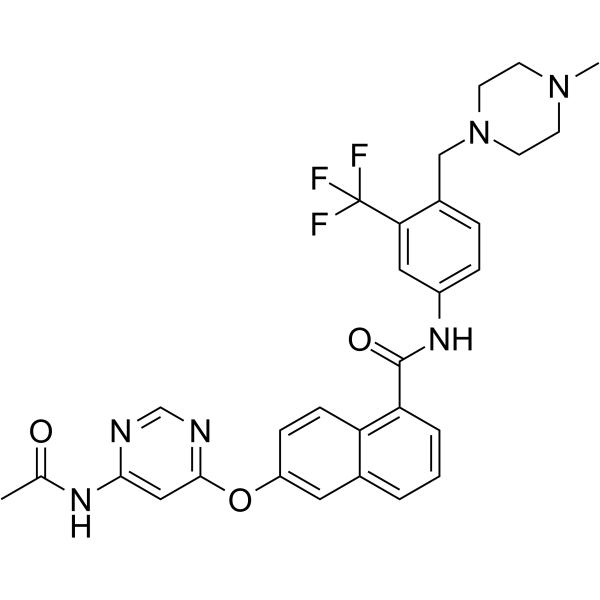
-
FMF-04-159-R
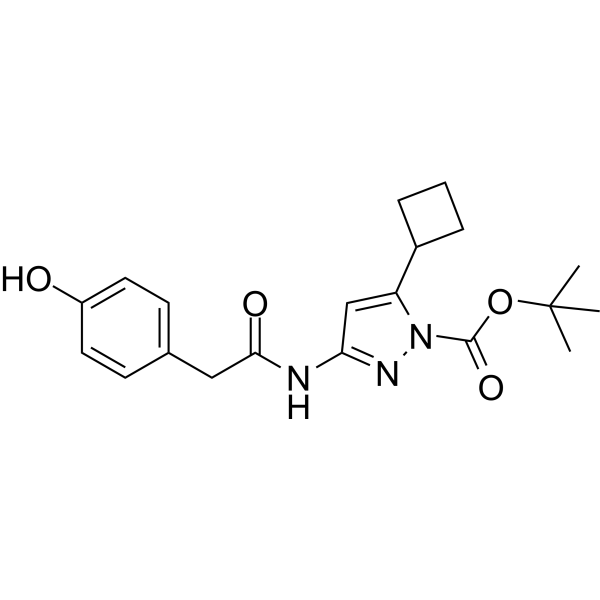
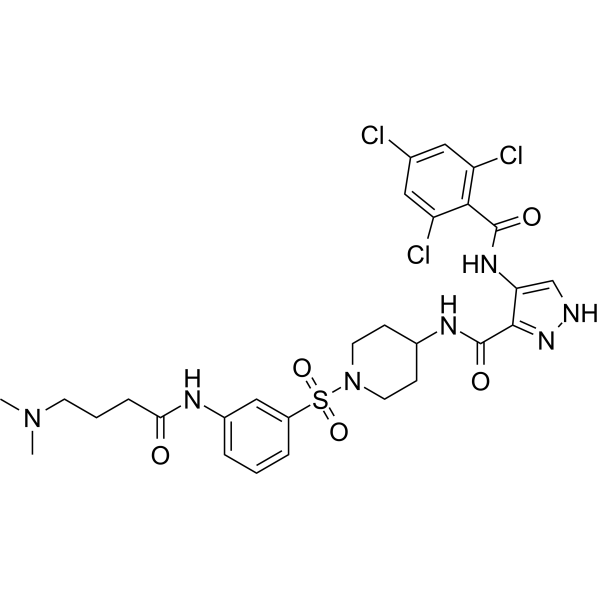 0 ImagesFMF-04-159-R is a cyclin-dependent kinase CDK14 and CDK16 inhibitor with IC50 values of 5.9 and 139.1 nM.
-
Damulin B
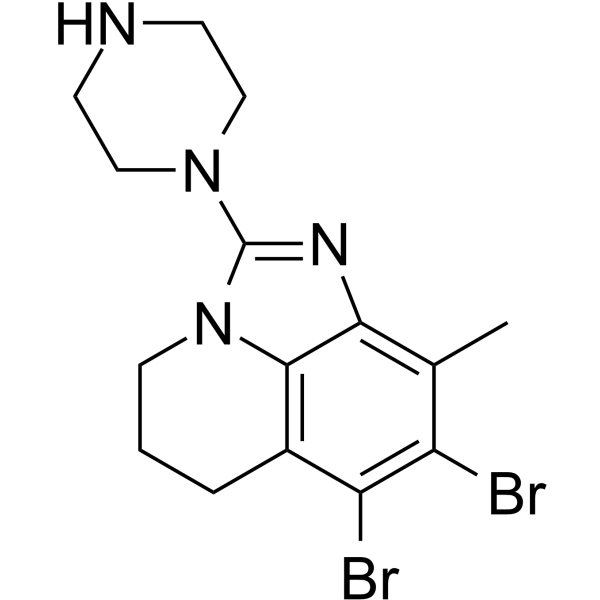
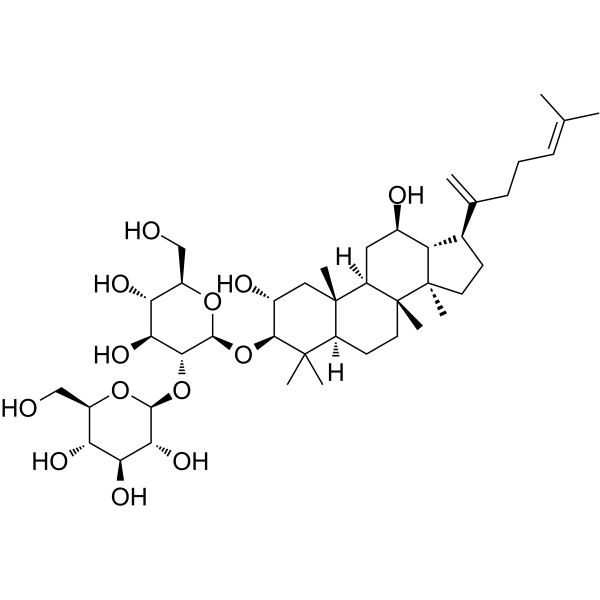 0 ImagesCat. No.: HY-16942CAS No.: 1202868-75-4Damulin B is a dammarane-type saponin found in Gynostemma pentaphyllum. Damulin B can inhibit cancer cell apoptosis, decrease mitochondrial membrane potential, inhibit ROS production and cause G0/G1 phase arrest. Damulin B can prevent Cisplatin (HY-17394)-induced acute kidney injury and induce hair growth. Damulin B shows anti-inflammation anti-diabetic and anti-obesity effect. Damulin B can be used for the researches of cancer, inflammation, metabolic disease, such as lung cancer, osteoarthritis and diabetes.
-
CDK2-IN-3
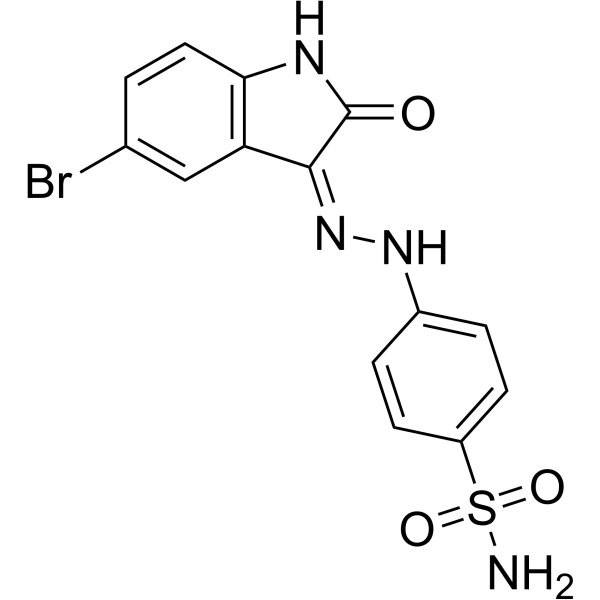 0 ImagesCat. No.: HY-112460CAS No.: 222035-13-4CDK2-IN-3 (compound 3) is a potent and selective CDK2 inhibitor with an IC50 of 60 nM.

-
7-Hydroxystaurosporine
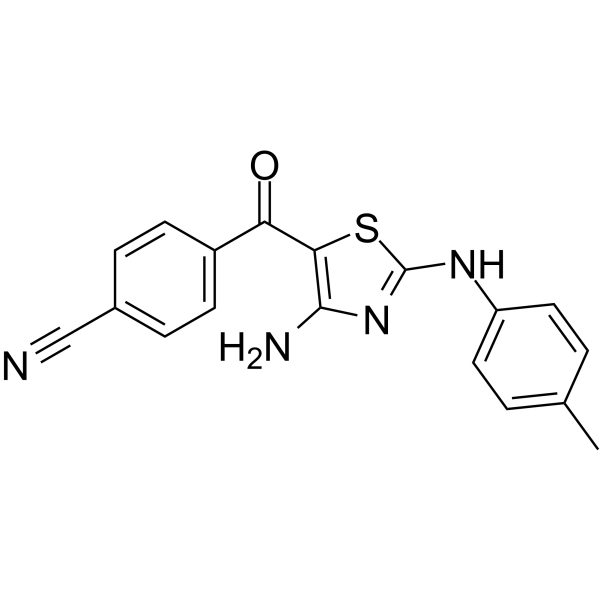
 0 ImagesCat. No.: HY-13661CAS No.: 112953-11-4Synonyms: UCN-01; KRX-06017-Hydroxystaurosporine (UCN-01), a derivative of Staurosporine (HY-15141), is a selective protein kinase C (PKC) inhibitor with antitumor activity. 7-hydroxystaurosporine induces apoptosis and inhibits cell proliferation in colon carcinoma and leukemia cells, suppresses invasion and migration in glioblastoma cells. 7-Hydroxystaurosporine exhibits efficacy in breast cancer xenograft mouse models. 7-Hydroxystaurosporine can be used for colon carcinoma, breast cancer, glioblastoma and leukemia research.
-
PNU-292137
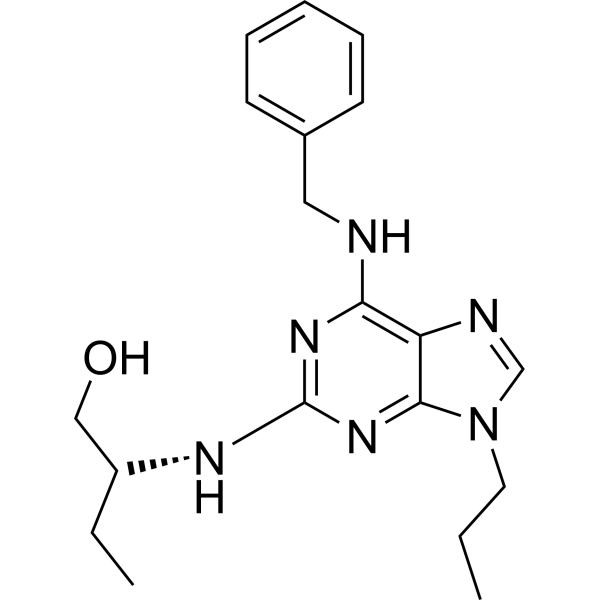
 0 ImagesPNU-292137 is an orally active, potent CDK2 inhibitor with IC50s of 37 nM and 92 nM for CDK2/cyclin A and CDK2/cyclin E, respectively. PNU-292137 makes interactions with the hydrophobic pocket at the back of the CDK2 ATP pocket. PNU-292137 efficiently inhibits tumor cell proliferation in human colon and prostate tumor cell lines. PNU-292137 exhibits antitumor activity (TGI>50%) in a mouse xenograft model.
-
CDK9-IN-7
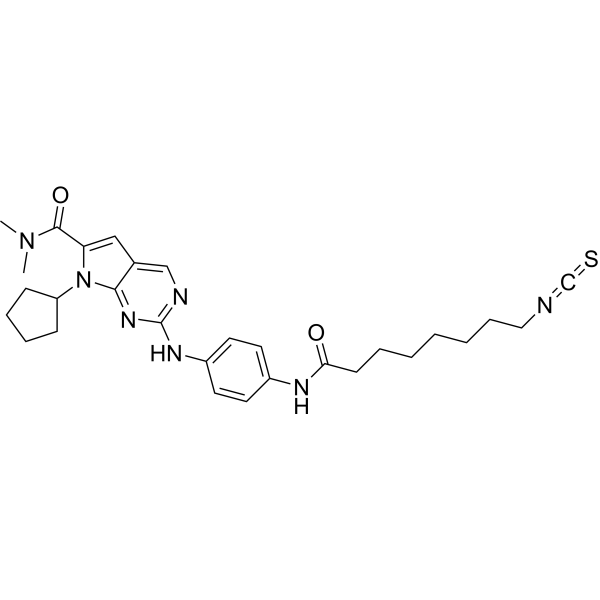 0 ImagesCDK9-IN-7 (compound 21e) is a selective, highly potent, and orally active CDK9/cyclin T inhibitor (IC50=11 nM), which exhibits more potent over other CDKs (CDK4/cyclinD=148 nM; CDK6/cyclinD=145 nM). CDK9-IN-7 shows antitumor activity without obvious toxicity. CDK9-IN-7 induces NSCLC cell apoptosis, arrests the cell cycle in the G2 phase, and suppresses the stemness properties of NSCLC.
-
BI-1622
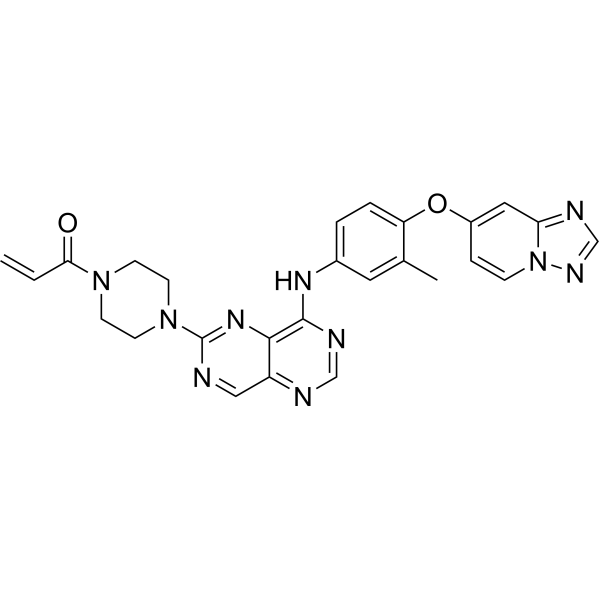 0 ImagesBI-1622 is an orally active, potent and highly selective HER2 (ERBB2) inhibitor, with an IC50 of 7 nM. BI-1622 shows greater than 25-fold selectivity over EGFR. BI-1622 shows high antitumor efficacy in vivo in xenograft mouse tumor models with engineered H2170 and PC9 cells and had a favorable agent metabolism and pharmacokinetics profile.
-
Avotaciclib hydrochloride
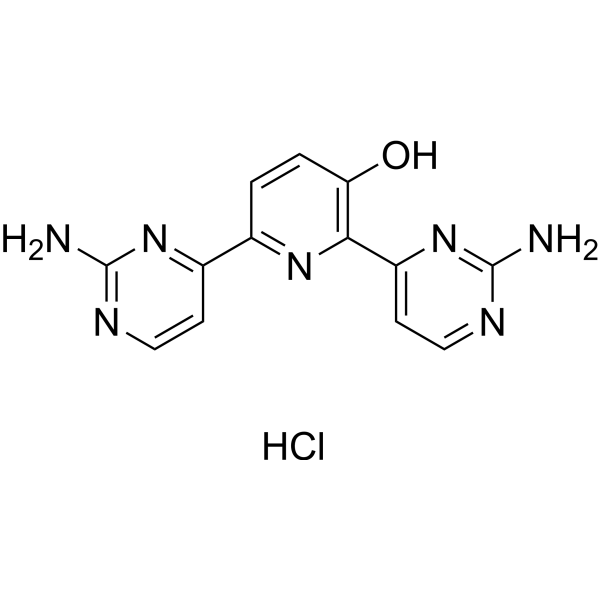 0 ImagesCat. No.: HY-137432BPurity: 99.75%Synonyms: BEY1107 hydrochloride
-
Eciruciclib
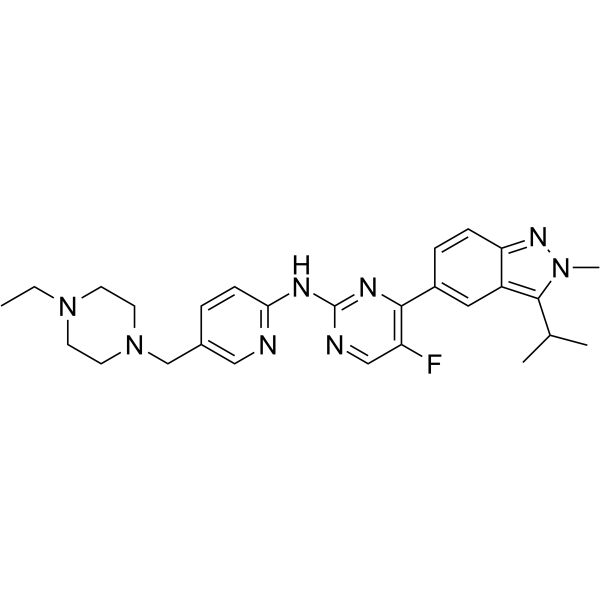 0 ImagesEciruciclib is an antineoplastic and potent cyclin dependent kinase (CDK) inhibitor.

-
CDK7-IN-2
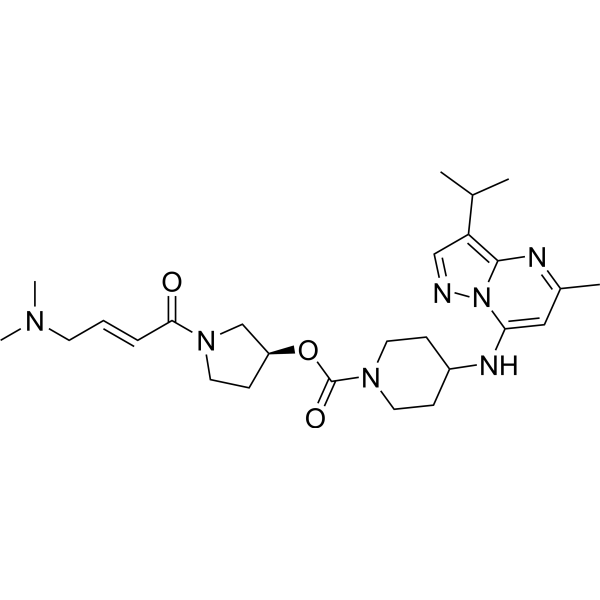 0 ImagesCDK7-IN-2 is a potent inhibitor of CDK7. CDK7 is implicated in both temporal control of the cell cycle and transcriptional activity. CDK7 is implicated in the transcriptional initiation process by phosphorylation of Rbpl subunit of RNA Polymerase II (RNAPII). CDK7 has the potential for the research of cancer disease, in particular aggressive and hard- to-treat cancers (extracted from patent WO2019099298A1, compound 1).
-
Inixaciclib
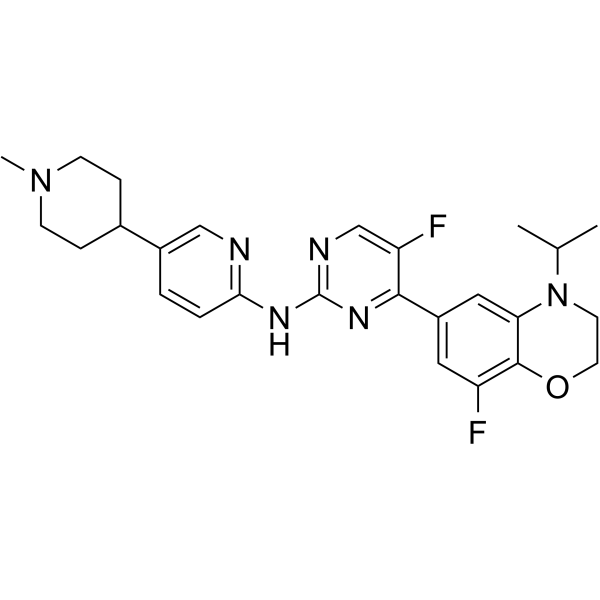 0 ImagesSynonyms: NUV-422Inixaciclib (NUV-422) is a blood-brain barrier-penetrant inhibitor of CDK2, CDK4 and CDK6. Inixaciclib inhibits cancer cell growth. Inixaciclib induces anti-tumor activity in xenograft models of glioblastoma, CDK4/CDK6 inhibitor-resistant HR+ HER2- metastatic breast cancer, and anti-androgen-resistant prostate cancer. Inixaciclib can be used for the research of relapsed or metastatic castration-resistant prostate cancer.