Search Result
Results for "
MSSA ATCC 25923
" in MedChemExpress (MCE) Product Catalog:
1
Isotope-Labeled Compounds
| Cat. No. |
Product Name |
Target |
Research Areas |
Chemical Structure |
-
- HY-100180
-
|
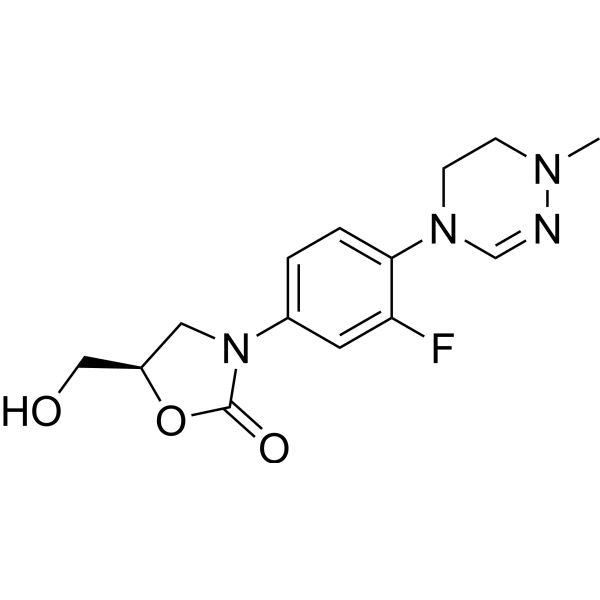
LCB01-0371
|
Bacterial
Antibiotic
|
Infection
|
|
Delpazolid is a novel oxazolidinone antibiotic agent which can inhibit the growth of MSSA and MRSA with a MIC90 of 2 μg/mL for both of them.
|
-
-
- HY-B2234
-
|
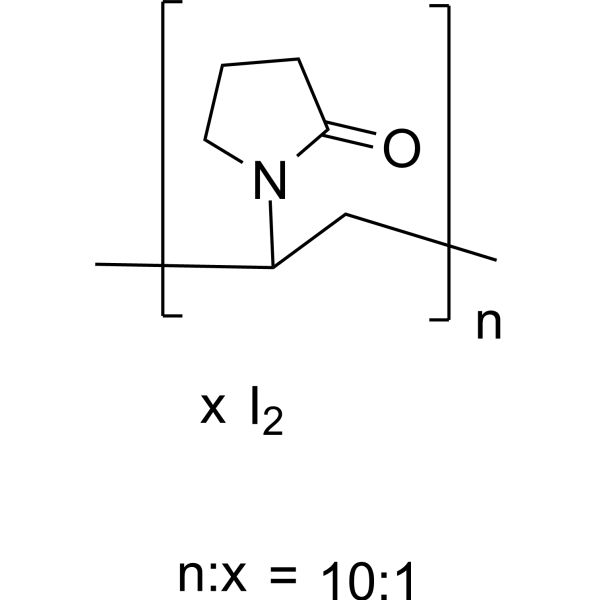
iodopovidone
|
Environmental Pollutants
Bacterial
|
Infection
|
|
Povidone iodine (iodopovidone) displays excellent antibacterial activity which can against MRSA and MSSA strains with MICs of 31.25 mg/L and 7.82 mg/L, respectively.
|
-
-
- HY-133119
-
|
|
Bacterial
|
Infection
|
|
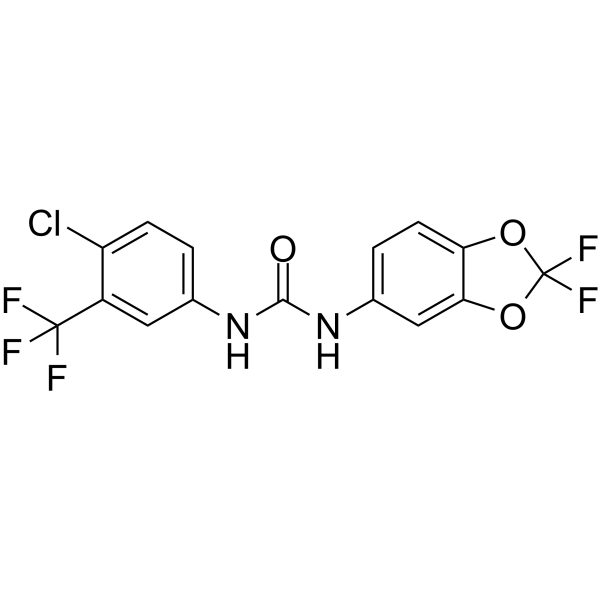
PK150, an analogue of Sorafenib, shows oral bioavailability and antibacterial activity against several pathogenic strains at submicromolar concentrations. PK150 inhibits Gram-positive Methicillin-sensitive S. aureus (MSSA), Methicillin-resistant S. aureus (MRSA), Vancomycin intermediate S. aureus (VISA) with MICs of 0.3, 0.3-1, 0.3 μM, respectively .
|
-
-
- HY-B0960
-
|
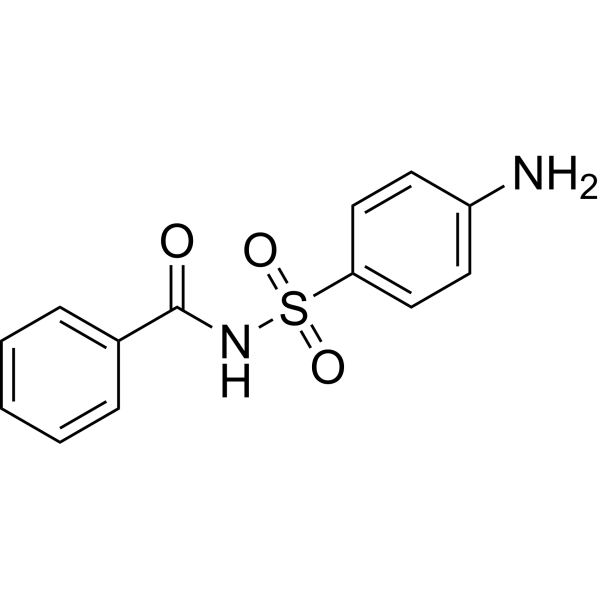
N-Sulfanilylbenzamide
|
Bacterial
Autophagy
MDM-2/p53
Caspase
PARP
DNA-PK
Akt
|
Infection
Cancer
|
|
Sulfabenzamide (N-Sulfanilylbenzamide) is a sulfonamide antibacterial agent. Sulfabenzamide exhibit antibacterial activity against Staphylococcus aureus (ATCC 25923) and Escherichia coli (ATCC 8739). Sulfabenzamide can promote autophagic cell autophagy in breast cancer cells through p53/ DRAM pathway. Sulfabenzamide increases caspase-3 activity, deactivates PARP1 and DNA-PK, downregulates AKT1 and AKT2. Sulfabenzamide can be used for the researches of breast cancer and bacterial infections .
|
-
-
- HY-18702
-
|
|
Bacterial
|
Infection
|
|
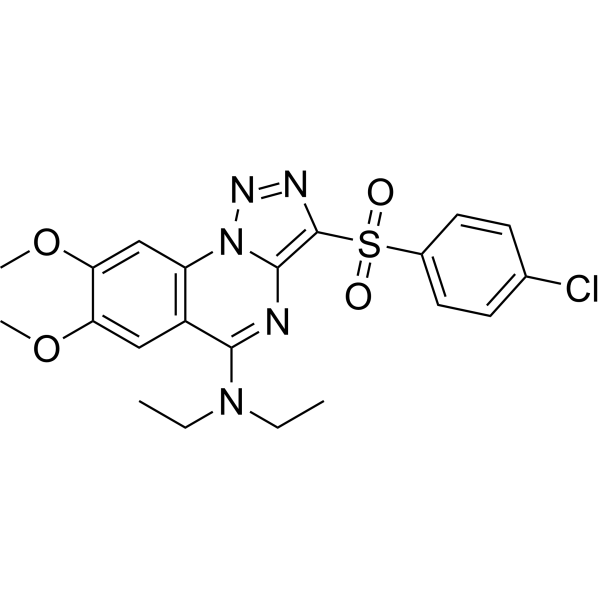
Targocil functions as a bacteriostatic inhibitor of wall teichoic acid (WTA) biosynthesis which can inhibit the growth of methicillin-susceptible S. aureus (MSSA) and methicillin-resistant S. aureus (MRSA) with MIC90s of 2 μg/ mL for both MRSA and MSSA.
|
-
-
- HY-14926
-
|
(S)-(-)-Nadifloxacin; WCK 771
|
Antibiotic
Bacterial
|
Infection
|
|
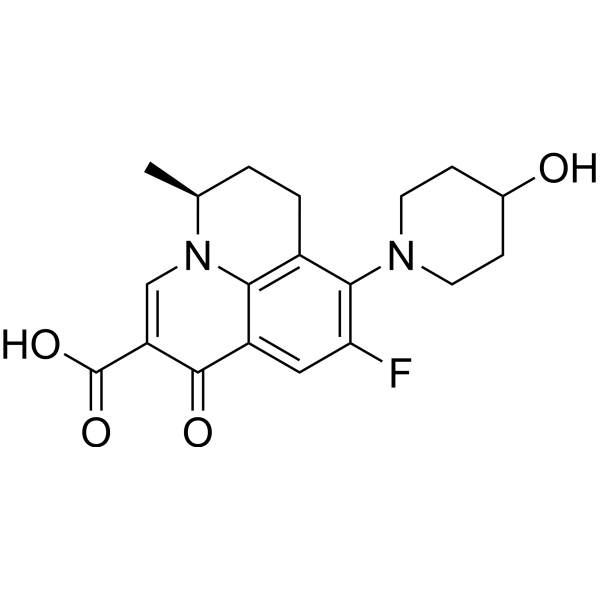
Levonadifloxacin ((S)-(-)-Nadifloxacin; WCK 771) is a broad-spectrum anti-staphylococcal agent. Levonadifloxacin shows antibacterial activity against Methicillin (HY-121544)-susceptible Staphylococcus aureus (MSSA) and Methicillin-resistant S. aureus (MRSA) strains, with a reduction of which phagocytized in THP-1 monocytes .
|
-
-
- HY-14956
-
|
TG-873870
|
Antibiotic
Bacterial
|
Infection
Inflammation/Immunology
|
|
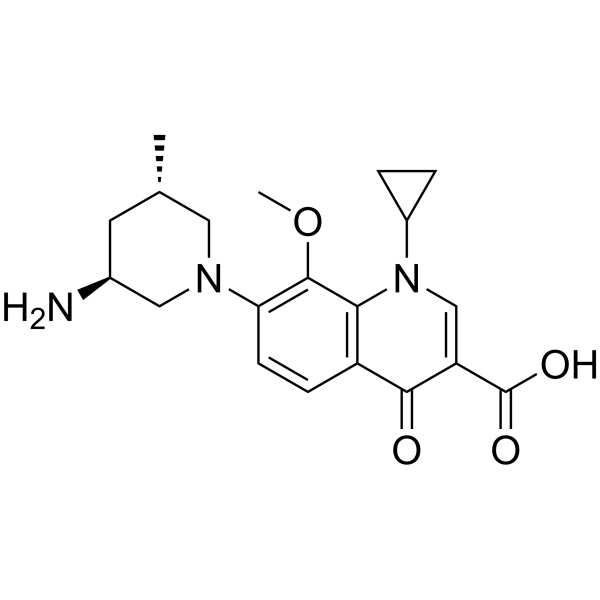
Nemonoxacin (TG-873870) is an orally active and potent broad-spectrum antibiotic. Nemonoxacin shows good inhibitory activity against different species of staphylococci, streptococci, and enterococci, Neisseria gonorrhoeae, and Haemophilus influenza. Nemonoxacin can be used in the study of bacterial infections and community-acquired pneumonia .
|
-
-
- HY-103645
-
|
|
Bacterial
Aurora Kinase
Apoptosis
|
Infection
Cancer
|
|
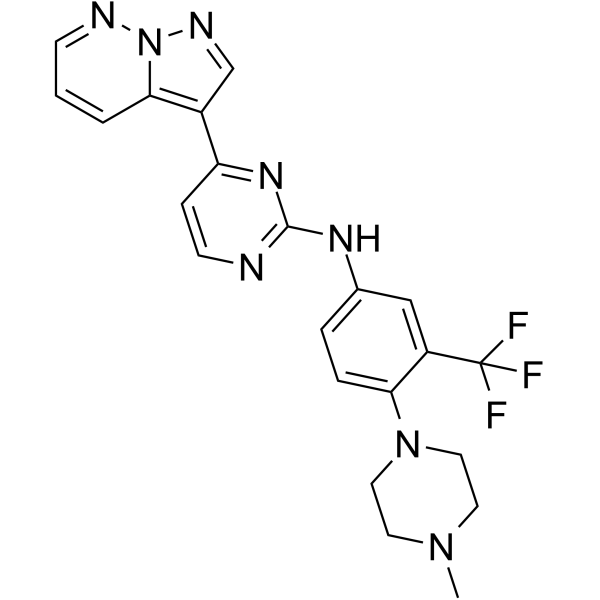
GW779439X is a pyrazolopyridazine identified in an inhibitor of the S. aureus PASTA kinase Stk1. GW779439X potentiates the activity of β-lactam antibiotics against various MRSA and MSSA isolates, some even crossing the breakpoint from resistant to sensitive. GW779439X is an AURKA inhibitor and induces apoptosis by the caspases 3/7 pathway . MRSA:methicillin-resistant S. aureus; MSSA: methicillin-sensitive S. aureus
|
-
-
- HY-W076794
-
|
|
Bacterial
|
Infection
|
|
3-Bromo-1H-pyrrole-2,5-dione (compound 2c) is a 3-substituted pyrrole-2,5-dione compound with antibacterial activity. 3-Bromo-1H-pyrrole-2,5-dione inhibits pathogenic strains of S. aureus ATCC 25923, E. coli ATCC 25922, P. aeruginosa ATCC 27853, with MIC values of 32 μg/mL, 32 μg/mL, and 64 μg/mL, respectively .
|
-

-
- HY-N7430
-
|
|
Bacterial
|
Infection
Inflammation/Immunology
|
|
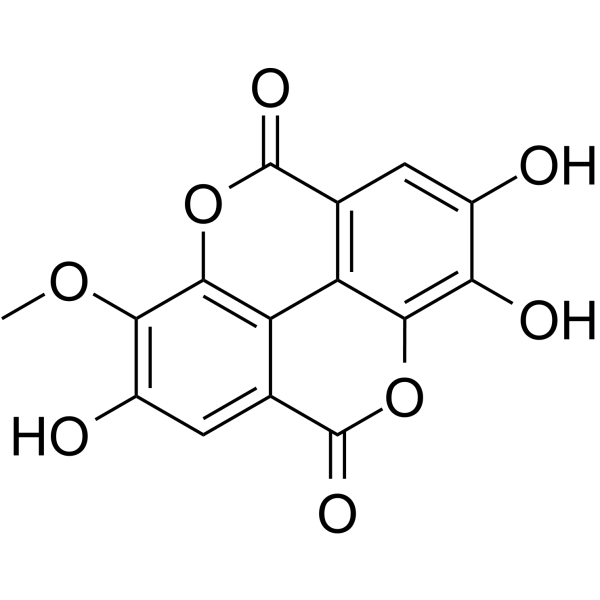
3-O-Methylellagic acid is a nature product that can be isolated from Myrciaria cauliflora, with anti-inflammatory activity. 3-O-Methylellagic acid shows an inhibitory effect on glucose transport assay. 3-O-Methylellagic acid has antibacterial activity, with a MIC of 32 μg/mL for Staph. Aureus ATCC 25923 .
|
-
-
- HY-B0960S
-
|
N-Sulfanilylbenzamide-d4
|
Bacterial
Autophagy
Isotope-Labeled Compounds
MDM-2/p53
Caspase
PARP
DNA-PK
Akt
|
Infection
Cancer
|
|
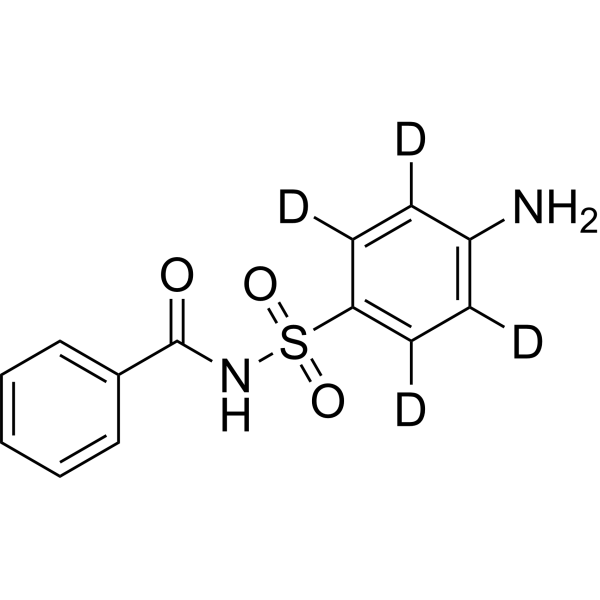
Sulfabenzamide (N-Sulfanilylbenzamide)-d4 is the deuterium labeled Sulfabenzamide (HY-B0960). Sulfabenzamide is a sulfonamide antibacterial agent. Sulfabenzamide exhibit antibacterial activity against Staphylococcus aureus (ATCC 25923) and Escherichia coli (ATCC 8739). Sulfabenzamide can promote autophagic cell autophagy in breast cancer cells through p53/ DRAM pathway. Sulfabenzamide increases caspase-3 activity, deactivates PARP1 and DNA-PK, downregulates AKT1 and AKT2. Sulfabenzamide can be used for the researches of breast cancer and bacterial infections .
|
-
-
- HY-N16339
-
|
|
Bacterial
|
Infection
|
|
8-Desmethyleleutherin (Compound 2) is an antibacterial agent that can be extracted from the bulbs of Eleutherine americana. 8-Desmethyleleutherin has MIC values of both 62.5 µg/mL for S. aureus strains ATCC27664 and ATCC25923 .
|
-

-
- HY-173054
-
|
|
Bacterial
|
Infection
|
|
FtsZ-IN-12 (Compound 16e) is the inhibitor for filamentous temperature-sensitive mutant Z (FtsZ) that promotes the polymerization of FtsZ protein, inhibits its GTPase activity, thereby interfering with bacterial cell division process. FtsZ-IN-12 exhibits boardspectrum antibacterial activity that inhibits B. subtilis ATCC9372, B. pumilus CMCC63202, S. aureus ATCC25923, E. coli BW25113 and A. baumannii ATCC19606 with MIC of 0.062-1 μg/mL. FtsZ-IN-12 inhibits the formation of bacterial biofilms and exhibits a clearing effect on mature biofilms. FtsZ-IN-12 exhibits bactericidal activity without hemolytic toxicity to mammalian red blood cells (15 mg/kg) .
|
-

-
- HY-N10211
-
|
|
Bacterial
Endogenous Metabolite
|
Infection
|
|
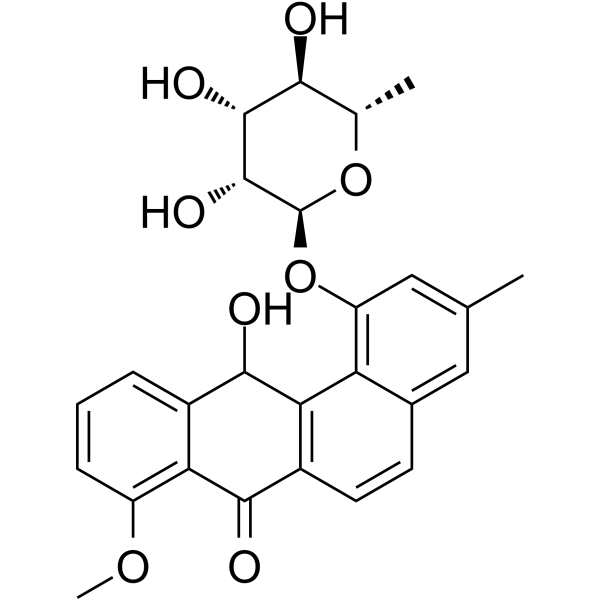
Saccharothrixin K, a glycosylated saccharothrixin, shows moderate inhibition against Helicobacter pylori G27, H. pylori 159, and Staphylococcus aureus ATCC25923 with MIC values of 16 μg/mL .
|
-
-
- HY-B0960R
-
|
N-Sulfanilylbenzamide (Standard)
|
Reference Standards
Bacterial
Autophagy
MDM-2/p53
Caspase
PARP
DNA-PK
Akt
|
Infection
Cancer
|
|
Sulfabenzamide (N-Sulfanilylbenzamide) (Standard) is the analytical standard of Sulfabenzamide (HY-B0960). This product is intended for research and analytical applications. Sulfabenzamide is a sulfonamide antibacterial agent. Sulfabenzamide exhibit antibacterial activity against Staphylococcus aureus (ATCC 25923) and Escherichia coli (ATCC 8739). Sulfabenzamide can promote autophagic cell autophagy in breast cancer cells through p53/ DRAM pathway. Sulfabenzamide increases caspase-3 activity, deactivates PARP1 and DNA-PK, downregulates AKT1 and AKT2. Sulfabenzamide can be used for the researches of breast cancer and bacterial infections .
|
-

-
- HY-146330
-
|
|
Bacterial
|
Infection
|
|
FtsZ-IN-2 (Compound 19) is an inhibitor of the bacterial cell division protein FtsZ with GTPase inhibitory activity. FtsZ-IN-2 exhibits anti-staphylococcal activity with MIC values of 2 µg/ml for MSSA and MRSA .
|
-
-
- HY-147960
-
|
|
Glycosyltransferase
|
Infection
|
|
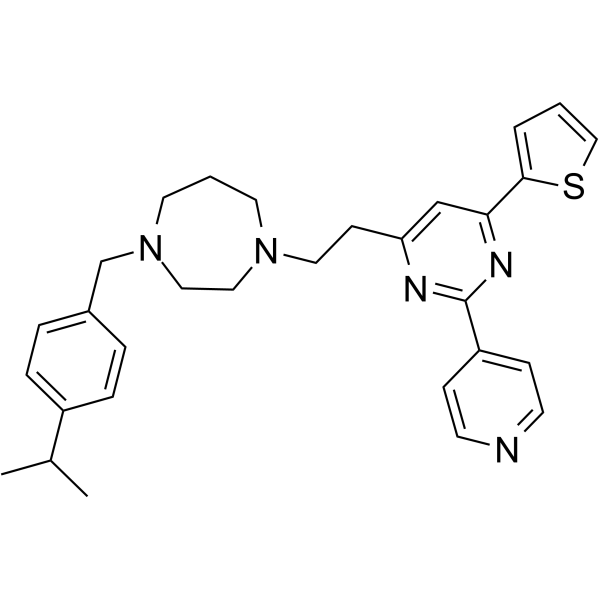
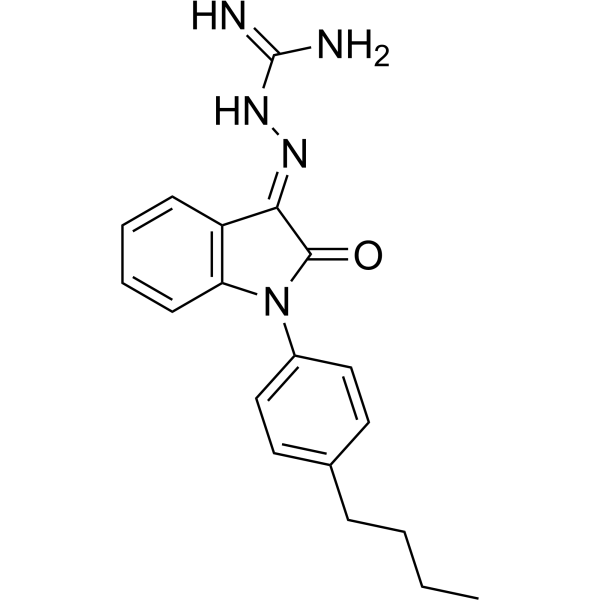
Glycosyltransferase-IN-1 (compound 5m) is a potent glycosyltransferase inhibitor, with an IC50 of 82.8 μM. Glycosyltransferase-IN-1 shows antibacterial activity, with MIC values of 6 μg/mL for MSSA, MRSA, B. subtilis and 12 μg/mL for E. coli .
|
-
-
- HY-164051
-
|
|
Bacterial
|
Infection
|
|
1650-M15 is an inhibitor of lipoteichoic acid synthase (LtaS). It has inhibitory activity against Gram-positive bacteria but has no significant inhibitory effect against Gram-negative bacteria. The IC50s of 1650-M15 against MRSA and MSSA are 62.44 μM and 66.42 μM, respectively, and the MICs are both 200 μM .
|
-

-
- HY-P5206
-
|
|
Bacterial
|
Infection
|
|
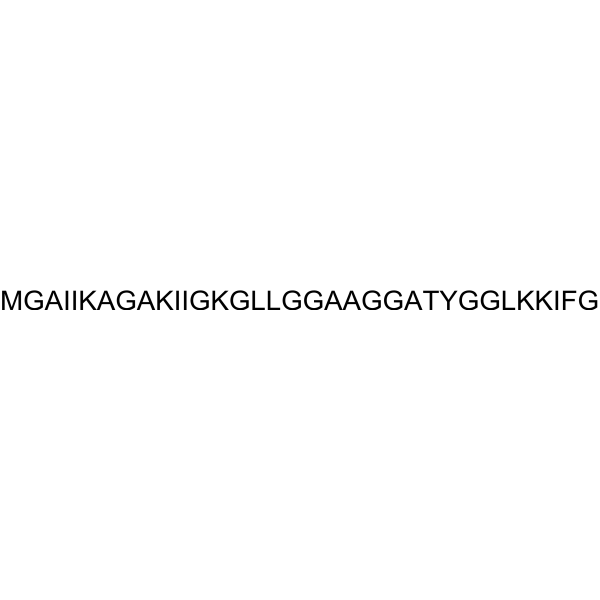
Garvicin KS, GakB is a peptide at sizes of 34 amino acids to form bacteriocin garvicin KS (GarKS), with other 2 peptides, GakA, and GakC. Garvicin KS, GakB inhibits fibroblast viability and proliferation. Garvicin KS, GakB with GakA, is a potent combination with good peptide stability, antimicrobial efficacy, and fibroblast viability/proliferation effects. Garvicin KS peptides inhibit MSSA with MIC values in the order GakB >GakC >GakA .
|
-
-
- HY-P5205
-
|
|
Bacterial
|
Infection
|
|
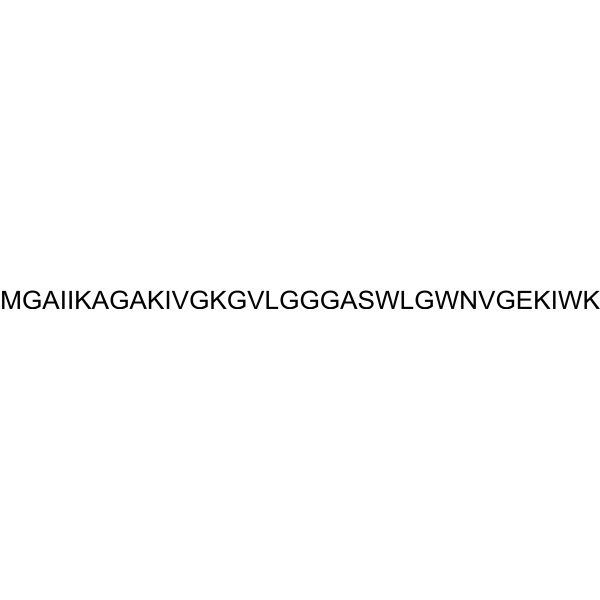
Garvicin KS, GakA is a peptide at sizes of 34 amino acids to form bacteriocin garvicin KS (GarKS), with other 2 peptides, GakB, and GakC. Garvicin KS, GakA inhibits fibroblast viability and proliferation. Garvicin KS, GakA with GakB, is a potent combination with good peptide stability, antimicrobial efficacy, and fibroblast viability/proliferation effects. Garvicin KS peptides inhibit MSSA with MIC values in the order GakB >GakC >GakA .
|
-
-
- HY-177539
-
|
|
Drug Isomer
Bacterial
Parasite
|
Infection
|
|
ent-Epanorin is an enantiomer of Epanorin (HY-N16418). ent-Epanorin has more potent antibacterial and antiparasitic activity against Bacillus subtilis (ATCC 6633), Staphylococcus aureus (ATCC 25923) and Giardiaduodenalis 713 compared to Epanorin .
|
-

-
- HY-155282
-
-
-
- HY-142097
-
|
|
Bacterial
|
Infection
|
|
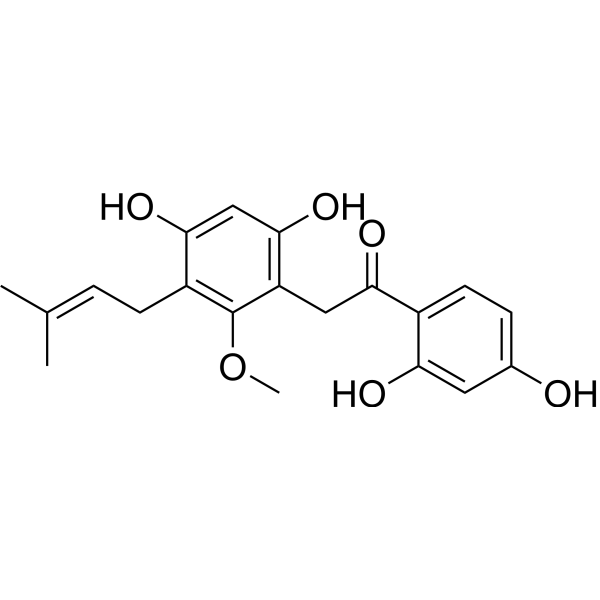
Glicophenone is an antibacterial agent with MICs of both 32 μg/mL against MRSA OM481, MRSA OM505, MRSA OM584, MRSA OM623 and MSSA 209P .
|
-
-
- HY-177540
-
|
|
Drug Isomer
Bacterial
Parasite
|
Infection
Cancer
|
|
ent-Rhizocarpic acid is an enantiomer of Rhizocarpic acid. ent-Rhizocarpic acid has more potent antibacterial and antiparasitic activity against Staphylococcus aureus (ATCC 25923) and Giardiaduodenalis 713 compared to Rhizocarpic acid. ent-Rhizocarpic acid also has a weak but selective antitumor activity against NS-1 cells .
|
-

-
- HY-168486
-
|
|
Bacterial
|
Infection
|
|
Biotin protein ligase-IN-1 (Compound Bio-9) is an inhibitor of biotin protein ligase (BPL) with a Kd value of 7 nM. Biotin protein ligase-IN-1 exhibits antibacterial activity, with MIC values of 0.2 and 20 μM against Staphylococcus aureus (including MRSA and MSSA) and Mycobacterium tuberculosis, respectively .
|
-

-
- HY-108021
-
|
|
Bacterial
|
Infection
|
|
HT-61 is a quinolone antibacterial agent. HT-61 exhibits bactericidal activity against gram-positive bacteria including methicillin-susceptible Staphylococcus aureus (MSSA) and methicillin-resistant Staphylococcus aureus (MRSA). HT-61 can enhance the effect of Tobramycin (HY-B0441) against Pseudomonas aeruginosa .
|
-

-
- HY-175723
-
|
|
Bacterial
Monoamine Oxidase
|
Infection
|
|
MAO-A/B-IN-4 is an orally active MAO-A/B inhibitor, with IC50 values of 51.3 μM and 47.0 μM, respectively. MAO-A/B-IN-4 exhibits potent activity against S. aureus, MSSA, MRSA, LRSA, and LREFa. MAO-A/B-IN-4 demonstrates potent antibacterial efficacy in a mouse model of LRSA peritonitis infection. MAO-A/B-IN-4 can be used for the study of bacterial infections .
|
-

-
- HY-173240
-
|
|
Bacterial
|
Infection
|
|
IPMCL-28b is an antibacterial agent targeting the bacterial cell membrane. Its minimum inhibitory concentration (MIC) against Staphylococcus aureus ATCC 25923 is 1.56 μg/mL, and the MIC against methicillin-resistant Staphylococcus aureus (MRSA) is 6.25 μg/mL. IPMCL-28b is expected to be used in the research of the anti-infection field .
|
-

-
- HY-125424
-
|
|
Bacterial
|
Inflammation/Immunology
|
|
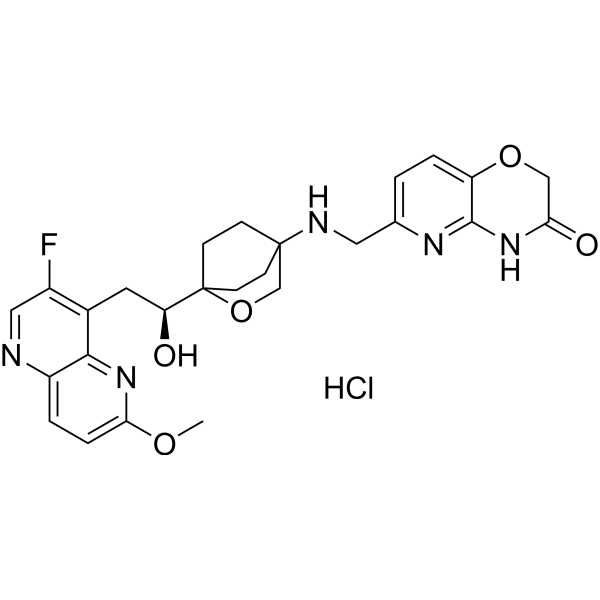
AM8191 is an orally active bactericidal and selectively inhibits DNA synthesis and Staphylococcus aureus gyrase (IC50=1.02 μM) and topo IV (IC50=10.4 μM). AM8191 inhibits S. aureus MSSA (MIC=0.02 μg/mL) and S. aureus MRSA (MIC=0.06 μg/mL) .
|
-
-
- HY-N10907
-
|
|
Bacterial
|
Infection
|
|
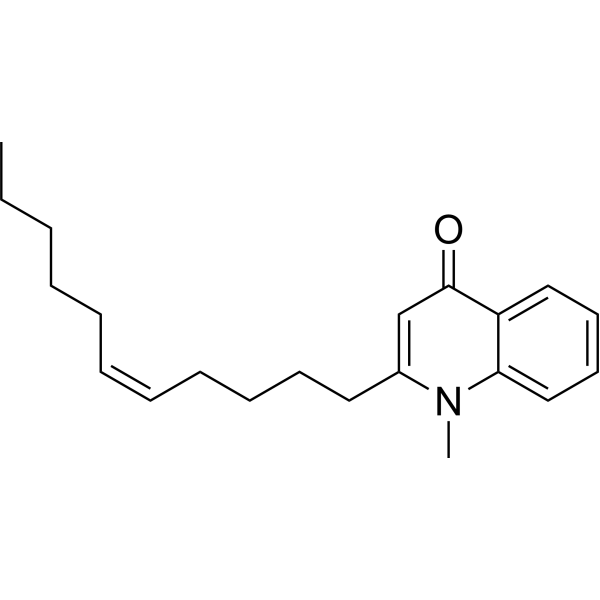
4(1H)-Quinolinone, 1-methyl-2-(5Z)-5-undecen-1-yl- (compound 2) is a quinolone alkaloid that can be isolated from Cnidium. 4(1H)-Quinolinone, 1-methyl-2-(5Z)-5-undecen-1-yl- has methicillin-resistant Staphylococcus aureus (MRSA) activity, with MIC values of 32 μg/mL (ATCC 33591) and 16 μM/mL (ATCC 25923), respectively .
|
-
-
- HY-122008
-
|
|
Bacterial
|
Infection
|
|
Levonadifloxacin ((S)-(-)-Nadifloxacin; WCK 771) arginine is a broad-spectrum antistaphylococcal agent. Levonadifloxacin arginine has antimicrobial activity against methicillin-susceptible Staphylococcus aureus (MSSA) and methicillin-resistant Staphylococcus aureus and reduces phagocytosis of MRSA and MSSA strains by monocytic THP-1.
|
-

-
- HY-14926B
-
|
(S)-(-)-Nadifloxacin arginine; WCK 771 arginine
|
Bacterial
|
Infection
|
|
Levonadifloxacin ((S)-(-)-Nadifloxacin; WCK 771) arginine is a broad-spectrum antistaphylococcal agent. Levonadifloxacin arginine has antimicrobial activity against methicillin-sensitive Staphylococcus aureus (MSSA) and methicillin-resistant Staphylococcus aureus and reduces phagocytosis of MRSA and MSSA strains by monocytic THP-1 cells .
|
-

-
- HY-150983
-
|
|
ATP Synthase
Bacterial
|
Infection
|
|
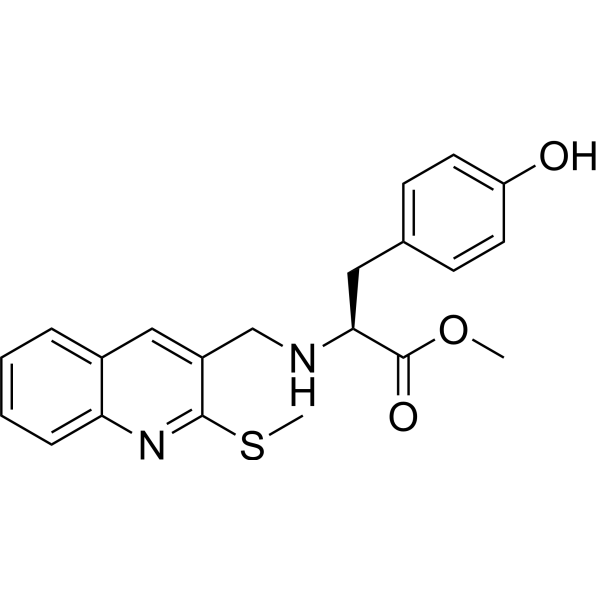
ATP synthase inhibitor 2 is a Pseudomonas aeruginosa (PA) ATP synthase inhibitor (IC50=10 μg/mL). ATP synthase inhibitor 2 can inhibit Pseudomonas aeruginosa (PA) ATP synthesis activity completely at 128 μg/mL .
|
-
-
- HY-150983A
-
|
|
ATP Synthase
Bacterial
|
Infection
|
|
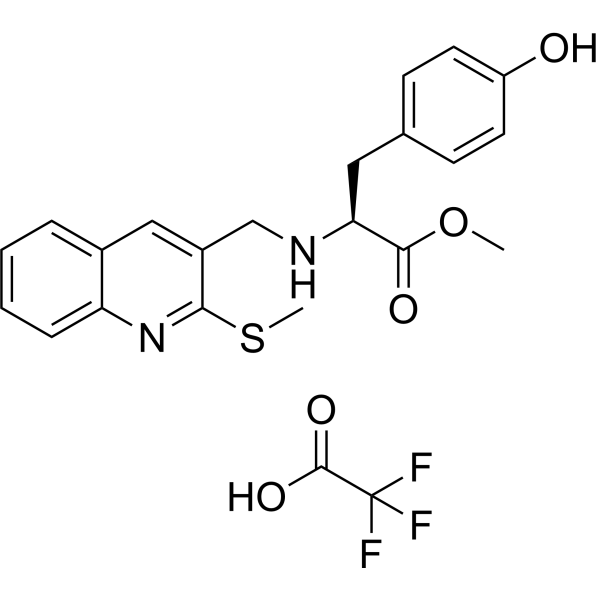
ATP synthase inhibitor 2 (Compound 22) TFA is a Pseudomonas aeruginosa (PA) ATP synthase inhibitor (IC50=10 μg/mL). ATP synthase inhibitor 2 TFA can inhibit Pseudomonas aeruginosa (PA) ATP synthesis activity completely at 128 μg/mL .
|
-
-
- HY-163762
-
|
|
Bacterial
|
Infection
|
|
Antibacterial agent 226 (Compound 7f) is an antibacterial agent, that inhibits Staphylococcus aureus strains and methicillin-resistant S. aureus strain with MIC of 2 μg/mL. Antibacterial agent 226 exhibits cytotoxicity to HEK293 with IC50 of 1.9 μM .
|
-

-
- HY-151937
-
|
|
Bacterial
|
Infection
|
|
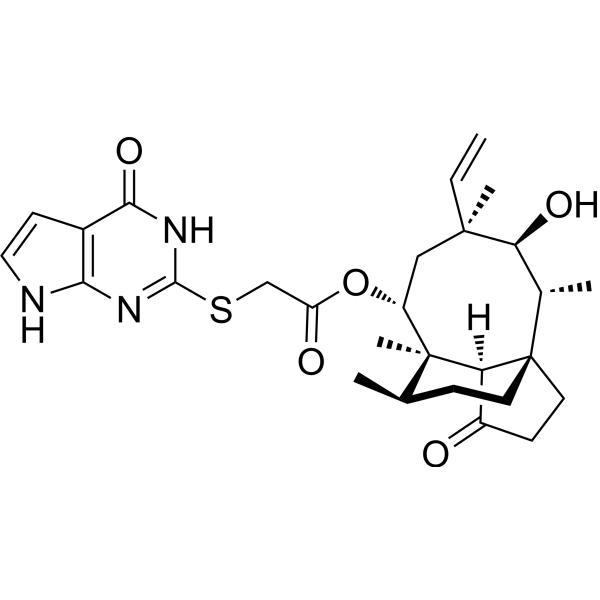
Antibacterial agent 127 (Compound 23) is a potent antibacterial agent .
|
-
-
- HY-14926A
-
|
(S)-(-)-Nadifloxacin arginine hydrate; WCK-771A arginine hydrate
|
Antibiotic
Bacterial
|
Infection
|
|
Levonadifloxacin (arginine) hydrate is a broad-spectrum anti-staphylococcal agent. Levonadifloxacin (arginine) hydrate shows antibacterial activity against Methicillin (HY-121544)-susceptible Staphylococcus aureus (MSSA) and Methicillin-resistant S. aureus (MRSA) strains, with a reduction of which phagocytized in THP-1 monocytes .
|
-

-
- HY-P5207
-
|
|
Bacterial
|
Infection
|
|
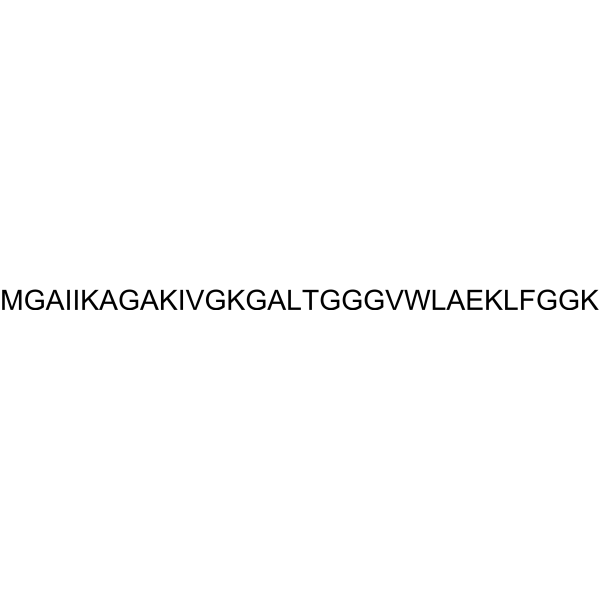
Garvicin KS, GakC is a peptide at sizes of 32 amino acids to form bacteriocin garvicin KS (GarKS), with other 2 peptides, GakA, and GakB. Garvicin KS, GakC inhibits fibroblast viability and proliferation. Garvicin KS peptides inhibit MSSA with MIC values in the order GakB >GakC >GakA .
|
-
-
- HY-14926R
-
|
(S)-(-)-Nadifloxacin (Standard); WCK 771 (Standard)
|
Reference Standards
Antibiotic
Bacterial
|
Infection
|
|
Levonadifloxacin (Standard) is the analytical standard of Levonadifloxacin. This product is intended for research and analytical applications. Levonadifloxacin ((S)-(-)-Nadifloxacin; WCK 771) is a broad-spectrum anti-staphylococcal agent. Levonadifloxacin shows antibacterial activity against Methicillin (HY-121544)-susceptible Staphylococcus aureus (MSSA) and Methicillin-resistant S. aureus (MRSA) strains, with a reduction of which phagocytized in THP-1 monocytes .
|
-

-
- HY-125533
-
|
|
Bacterial
|
Infection
|
|
TXA497 is a potent local topical bactericide. TXA497 exerts its bactericidal effect by interfering with the polymerization kinetics of the bacterial cell division protein FtsZ, rather than inhibiting it. TXA497 shows strong activity against various Staphylococcus aureus strains, including MRSA and MSSA, with an MIC value ranging from 1.0 to 2.0 μg/mL. TXA497 skin deposition is concentration-dependent in its formulation, consistent with Fick's first law. TXA497 has limited systemic permeability through the lipid pathway of the stratum corneum and is easily absorbed through this route. TXA497 can be used for research on topical bactericidal agents .
|
-

-
- HY-151458
-
|
|
VEGFR
Bacterial
Dihydrofolate reductase (DHFR)
Fungal
|
Infection
Cancer
|
|
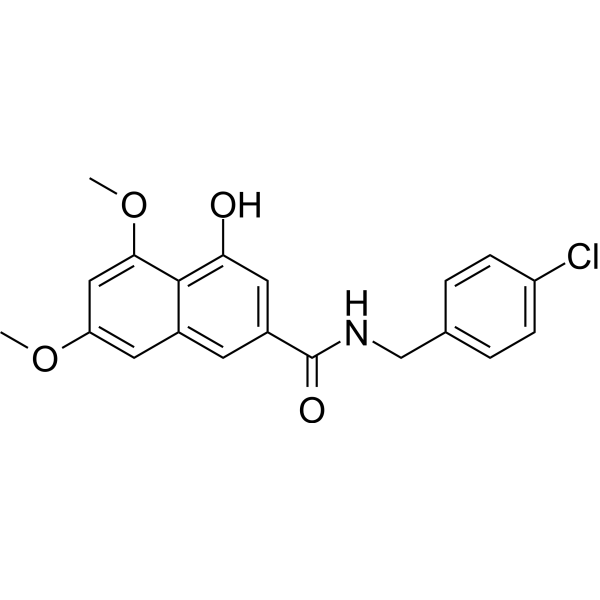
VEGFR-2/DHFR-IN-1 (compound 8b) is an inhibitor of VEGFR-2 and DHFR with IC50s of 0.384 and 7.881 μM, respectively. VEGFR-2/DHFR-IN-1 shows good antibacterial activities against Escherichia coli, Streptococcus faecalis, Salmonella enterica, MSSA and MRSA with MIC values of 16, 16, 16, 8, and 16 μg/mL, respectively. VEGFR-2/DHFR-IN-1 exhibits good cytotoxic activities against C26, HepG2, and MCF7 cancer cell lines with IC50 values of 2.97-7.12 μM. VEGFR-2/DHFR-IN-1 can be used for the research of cancer .
|
-
-
- HY-N18009
-
|
|
Bacterial
|
Infection
Cancer
|
|
1-Hydroxy-3,5-dimethoxyxanthone is a xanthone and Antibacterial agent. 1-Hydroxy-3,5-dimethoxyxanthone can be isolated from Lomatogonium rotatum. 1-Hydroxy-3,5-dimethoxyxanthone inhibits the growth of Pseudomonas aeruginosa ATCC27853 and Escherichia coli ATCC25923 with an MIC of 640 μg/mL. 1-Hydroxy-3,5-dimethoxyxanthone exhibits anticancer activity against cervical cancer, breast cancer, melanoma, liver cancer, and gastric cancer .
|
-

-
- HY-P11468
-
|
|
Bacterial
Antibiotic
|
Cardiovascular Disease
Infection
|
|
wkwkwNGwkwkw-NH2 is a self-assembling β-hairpin antimicrobial peptide. wkwkwNGwkwkw-NH2 self-assembles into nanofibers. wkwkwNGwkwkw-NH2 interacts with LPS on the surface of the bacterial membrane and then disrupts the bacterial outer membrane, inner membrane, and cytoplasmic membrane to exert its antibacterial effects. wkwkwNGwkwkw-NH2 has high antibacterial activity and low hemolytic activity. wkwkwNGwkwkw-NH2 significantly reduces the S. aureus ATCC 25923 load at the skin wound. wkwkwNGwkwkw-NH2 displays synergistic effects when combined with antibiotics. wkwkwNGwkwkw-NH2 facilitates wound healing .
|
-

-
- HY-N16526
-
|
|
Bacterial
|
Infection
|
|
Juncatrin B is a type of dihydrophenanthrene compound. Juncatrin B exhibits inhibitory activity against both Methicillin (HY-121544)-sensitive Staphylococcus aureus (MSSA) and Methicillin-resistant Staphylococcus aureus (MRSA). Juncatrin B can inhibit the formation of biofilms in MSSA and MRSA. Juncatrin B has no significant activity against Gram-negative bacteria. Juncatrin B can be used in the research of anti-Staphylococcus aureus .
|
-

-
- HY-103645R
-
|
|
Reference Standards
Bacterial
Aurora Kinase
Apoptosis
|
Infection
Cancer
|
|
GW779439X (Standard) is the analytical standard of GW779439X (HY-103645). This product is intended for research and analytical applications. GW779439X is a pyrazolopyridazine identified in an inhibitor of the S. aureus PASTA kinase Stk1. GW779439X potentiates the activity of β-lactam antibiotics against various MRSA and MSSA isolates, some even crossing the breakpoint from resistant to sensitive. GW779439X is an AURKA inhibitor and induces apoptosis by the caspases 3/7 pathway . MRSA:methicillin-resistant S. aureus; MSSA: methicillin-sensitive S. aureus
|
-

-
- HY-N16702
-
-

-
- HY-P11622
-
|
|
Drug Derivative
|
Infection
|
|
Gramicidin S analogue 9 is a bactericidal agent that can be found as a cyclic peptide analogue. Gramicidin S analogue 9 disrupts bacterial cell membranes. Gramicidin S analogue 9 can be used for the research of methicillin-resistant staphylococcus aureus infection .
|
-

-
- HY-185443
-
|
|
Bacterial
Dihydrofolate reductase (DHFR)
|
Infection
|
|
UCP1172 is an antibacterial (Antibacterial) agent and Dihydrofolate reductase inhibitor, with an IC50 of 0.0089 μM against Staphylococcus aureus DfrB, 0.22 μM against DfrG, 0.41 μM against DfrA, and 0.030 μM against DfrK. UCP1172 potently inhibits the growth of MRSA/MSSA isolates carrying dfrG and dfrK (MIC values of 0.3125-0.625 μg/mL), shows weak activity against MRSA carrying dfrA (MIC of 5 μg/mL), and exerts extremely potent inhibitory effects on wild-type S. aureus ATCC 43300 (MIC of 0.0098 μg/mL). UCP1172 can be used in studies related to tuberculosis and Staphylococcus aureus infections .
|
-

-
- HY-182461
-
|
|
Bacterial
|
Infection
|
|
Deoxymorellin is a caged xanthone found in resins and fruits of Garcinia hanburyi hook. f.. Deoxymorellin exhibits cytotoxicity. Deoxymorellin can be used for research of Methicillin (HY-121544)-resistant or Methicillin-susceptible Staphylococcus aureus .
|
-

-
- HY-182022
-
|
|
Bacterial
Reactive Oxygen Species (ROS)
Drug Derivative
DNA/RNA Synthesis
|
Infection
|
|
ZLWH-67 is a β-Carboline derivative and Antibacterial agent. ZLWH-67 inhibits DNA synthesis, suppresses biofilm formation, and increases reactive oxygen species (ROS) levels. ZLWH-67 exhibits potent in vitro antibacterial activity against MRSA (MIC = 0.5-4 μg/mL), S. epidermidis (MIC = 4 μg/mL), E. faecalis (MIC = 4-8 μg/mL), and S. pneumoniae (MIC = 16 μg/mL). ZLWH-67 displays anti-MRSA effects in murine skin and pneumonia infection models .
|
-

| Cat. No. |
Product Name |
Target |
Research Area |
-
- HY-P5206
-
|
|
Bacterial
|
Infection
|
|
Garvicin KS, GakB is a peptide at sizes of 34 amino acids to form bacteriocin garvicin KS (GarKS), with other 2 peptides, GakA, and GakC. Garvicin KS, GakB inhibits fibroblast viability and proliferation. Garvicin KS, GakB with GakA, is a potent combination with good peptide stability, antimicrobial efficacy, and fibroblast viability/proliferation effects. Garvicin KS peptides inhibit MSSA with MIC values in the order GakB >GakC >GakA .
|
-
- HY-P5205
-
|
|
Bacterial
|
Infection
|
|
Garvicin KS, GakA is a peptide at sizes of 34 amino acids to form bacteriocin garvicin KS (GarKS), with other 2 peptides, GakB, and GakC. Garvicin KS, GakA inhibits fibroblast viability and proliferation. Garvicin KS, GakA with GakB, is a potent combination with good peptide stability, antimicrobial efficacy, and fibroblast viability/proliferation effects. Garvicin KS peptides inhibit MSSA with MIC values in the order GakB >GakC >GakA .
|
-
- HY-P5207
-
|
|
Bacterial
|
Infection
|
|
Garvicin KS, GakC is a peptide at sizes of 32 amino acids to form bacteriocin garvicin KS (GarKS), with other 2 peptides, GakA, and GakB. Garvicin KS, GakC inhibits fibroblast viability and proliferation. Garvicin KS peptides inhibit MSSA with MIC values in the order GakB >GakC >GakA .
|
-
- HY-P11468
-
|
|
Bacterial
Antibiotic
|
Cardiovascular Disease
Infection
|
|
wkwkwNGwkwkw-NH2 is a self-assembling β-hairpin antimicrobial peptide. wkwkwNGwkwkw-NH2 self-assembles into nanofibers. wkwkwNGwkwkw-NH2 interacts with LPS on the surface of the bacterial membrane and then disrupts the bacterial outer membrane, inner membrane, and cytoplasmic membrane to exert its antibacterial effects. wkwkwNGwkwkw-NH2 has high antibacterial activity and low hemolytic activity. wkwkwNGwkwkw-NH2 significantly reduces the S. aureus ATCC 25923 load at the skin wound. wkwkwNGwkwkw-NH2 displays synergistic effects when combined with antibiotics. wkwkwNGwkwkw-NH2 facilitates wound healing .
|
-
- HY-P11622
-
|
|
Drug Derivative
|
Infection
|
|
Gramicidin S analogue 9 is a bactericidal agent that can be found as a cyclic peptide analogue. Gramicidin S analogue 9 disrupts bacterial cell membranes. Gramicidin S analogue 9 can be used for the research of methicillin-resistant staphylococcus aureus infection .
|
| Cat. No. |
Product Name |
Category |
Target |
Chemical Structure |
| Cat. No. |
Product Name |
Chemical Structure |
-
- HY-B0960S
-
|
|
|
Sulfabenzamide (N-Sulfanilylbenzamide)-d4 is the deuterium labeled Sulfabenzamide (HY-B0960). Sulfabenzamide is a sulfonamide antibacterial agent. Sulfabenzamide exhibit antibacterial activity against Staphylococcus aureus (ATCC 25923) and Escherichia coli (ATCC 8739). Sulfabenzamide can promote autophagic cell autophagy in breast cancer cells through p53/ DRAM pathway. Sulfabenzamide increases caspase-3 activity, deactivates PARP1 and DNA-PK, downregulates AKT1 and AKT2. Sulfabenzamide can be used for the researches of breast cancer and bacterial infections .
|
-
| Cat. No. |
Product Name |
|
Classification |
-
- HY-N16526
-
|
|
|
Alkynes
|
|
Juncatrin B is a type of dihydrophenanthrene compound. Juncatrin B exhibits inhibitory activity against both Methicillin (HY-121544)-sensitive Staphylococcus aureus (MSSA) and Methicillin-resistant Staphylococcus aureus (MRSA). Juncatrin B can inhibit the formation of biofilms in MSSA and MRSA. Juncatrin B has no significant activity against Gram-negative bacteria. Juncatrin B can be used in the research of anti-Staphylococcus aureus .
|
Your information is safe with us. * Required Fields.
Inquiry Information
- Product Name:
- Cat. No.:
- Quantity:
- MCE Japan Authorized Agent:








