1. Search Result
Search Result
Results for "
addition reaction

" in MedChemExpress (MCE) Product Catalog:

142

Inhibitors & Agonists

3

Screening Libraries

10

Fluorescent Dyes

97

Biochemical Assay Reagents

4

Peptides

9

Natural
Products

7

Isotope-Labeled Compounds

6

Click Chemistry

1

Oligonucleotides

Cat. No. Product Name Target Research Areas Chemical Structure
  • HY-W021042

    THPTA

    Biochemical Assay Reagents Others
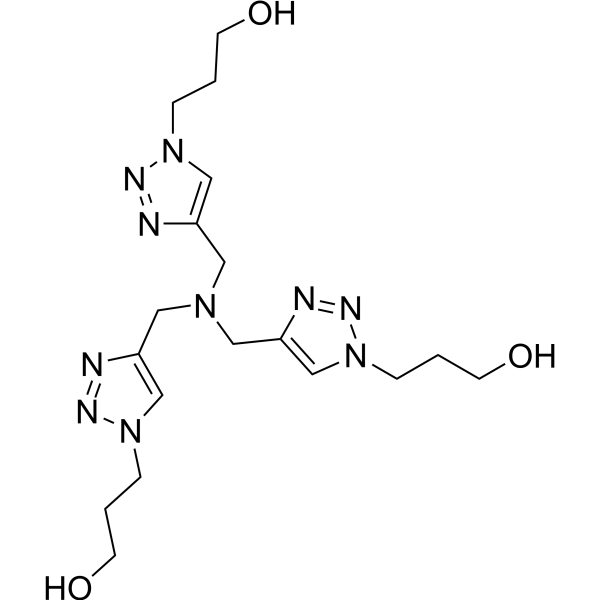
    Tris(3-hydroxypropyltriazolylmethyl)amine (THPTA) is an accelerating ligand in the copper-catalyzed azide-alkyne cycloaddition reaction (CuAAC) and protects cells from oxidants generated by copper-catalyzed reduction of oxygen by ascorbate. In addition, Tris(3-hydroxypropyltriazolylmethyl)amine can also protect the histidine moiety of biomolecules in a manner proportional to the ligand concentration .
    Tris(3-hydroxypropyltriazolylmethyl)amine
  • HY-D0860

    Biochemical Assay Reagents Others
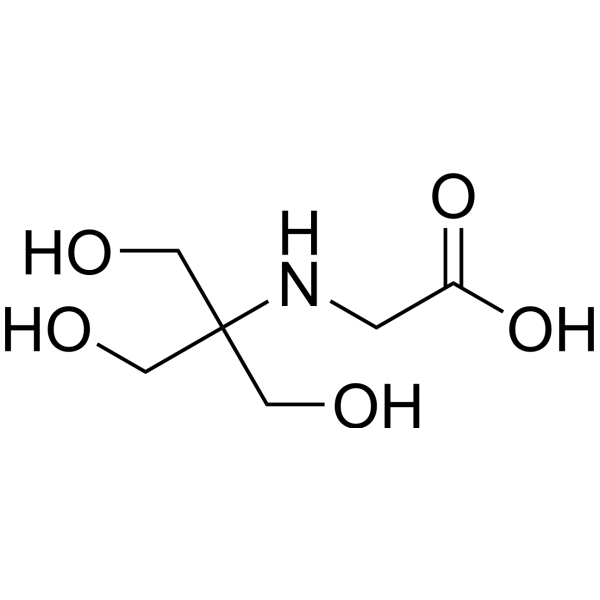
    Tricine is widely used as a buffer in protein electrophoresis, nucleic acid analysis, and immunology, which can help adjust pH and stabilize chemical reactions. In addition, the compound can also be used in research in certain medical fields, such as in antibody detection and drug screening.
    Tricine
  • HY-151851

    ADC Linker Others
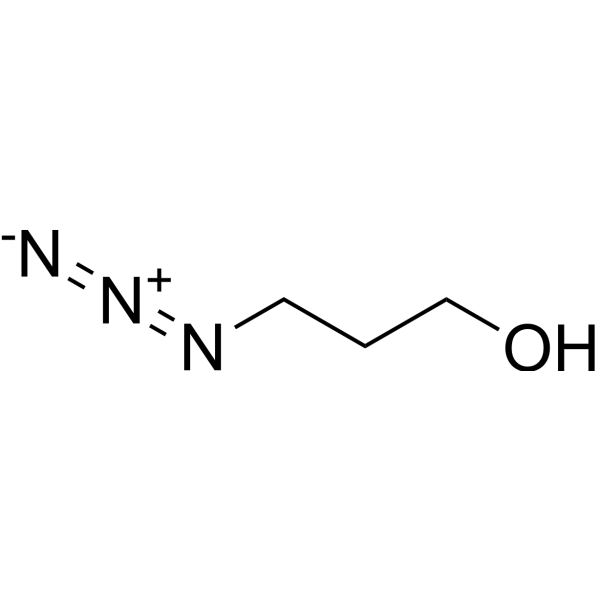
    3-Azidopropanol is an azide-containing alcohol and a click reaction substrate. 3-Azidopropanol undergoes Cu-catalyzed addition reaction with propargyl alcohol .
    3-Azidopropanol
  • HY-W007801

    TPAP

    Biochemical Assay Reagents Others
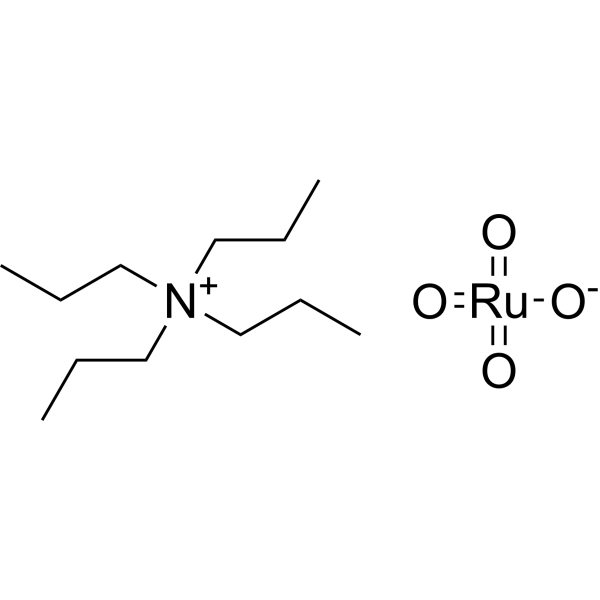
    Tetrapropylammonium perruthenate (TPAP) is an organic compound commonly used as a catalyst and oxidizing agent. It can play an oxidation role in some organic synthesis reactions, and can catalyze the oxidation reactions of olefins and aromatic compounds. In addition, the compound is widely used in some industrial production areas, such as in the application of plastics, rubber and textile manufacturing processes.
    Tetrapropylammonium perruthenate
  • HY-W004563
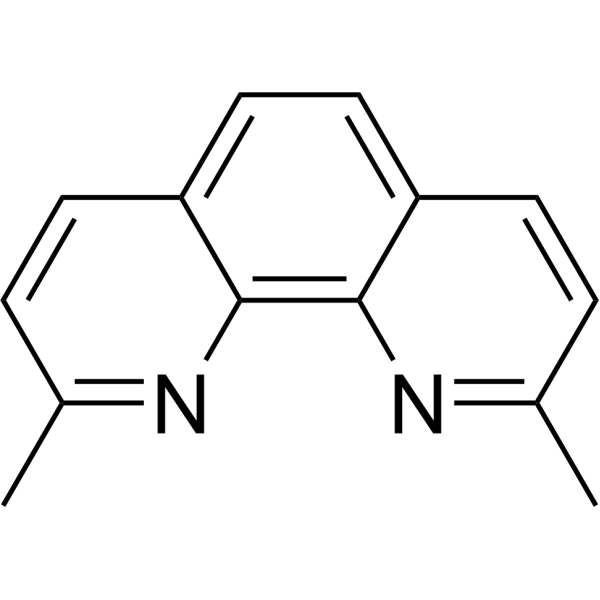
    Neocuproine
    1 Publications Verification

    Biochemical Assay Reagents Others
    Neocuproine is an organic compound commonly used as a complexing reagent and copper ion detector. It can form stable complexes with copper ions, and can play a catalytic role in certain chemical reactions and analytical methods. In addition, this compound is also widely used in some biomedical fields, such as in the study of copper metabolism disorders and neurodegenerative diseases
    Neocuproine
  • HY-W442186

    Methyl-phenyl-chlorosilane

    Biochemical Assay Reagents Others
    Chloro(methyl)(phenyl)silane (Methyl-phenyl-chlorosilane) is a silicon hydride. Chloro(methyl)(phenyl)silane undergoes an addition reaction with long-chain unsaturated fatty acid esters .
    Chloro(methyl)(phenyl)silane
  • HY-Y1332

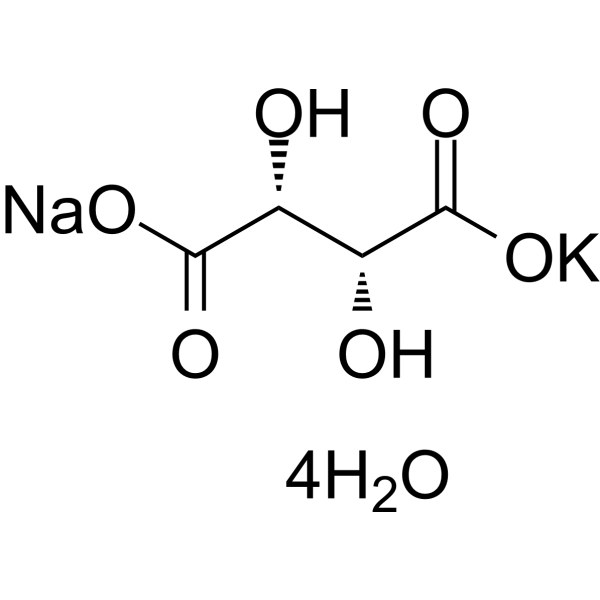
    L-Tartaric acid potassium sodium salt tetrahydrate; Potassium sodium tartrate tetrahydrate; Sodium potassium tartrate tetrahydrate

    Biochemical Assay Reagents Others
    Rochelle salt is an organic-inorganic compound commonly used as a catalyst and complexing reagent. It can be used to catalyze or promote certain chemical reactions, and is widely used in batteries, pharmaceuticals and food industries. In addition, this compound is also used as a substrate or intermediate in some biochemical reactions.
    Rochelle salt
  • HY-Y0971

    TBAF

    Biochemical Assay Reagents Others
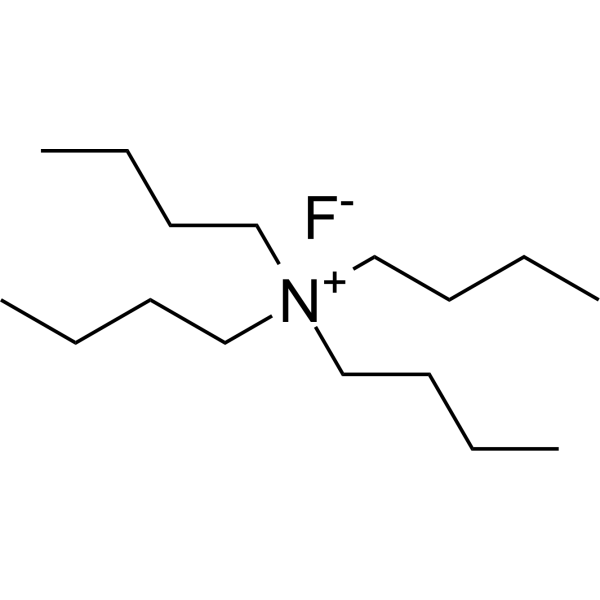
    Tetrabutylammonium fluoride is an organic compound containing both ammonium and fluorine functional groups. It is commonly used as a reagent in various chemical synthesis applications, especially as a source of fluoride ions for nucleophilic reactions. Tetrabutylammonium fluoride has several properties that make it suitable for these applications, including its high solubility in polar solvents and its ability to selectively activate certain chemical bonds. In addition, it can be used as a catalyst for organic reactions and as an electrolyte for batteries.
    Tetrabutylammonium fluoride (solution),1M in THF
  • HY-34717

    Tetra-n-butylammonium tetrafluoroborate

    Biochemical Assay Reagents Others
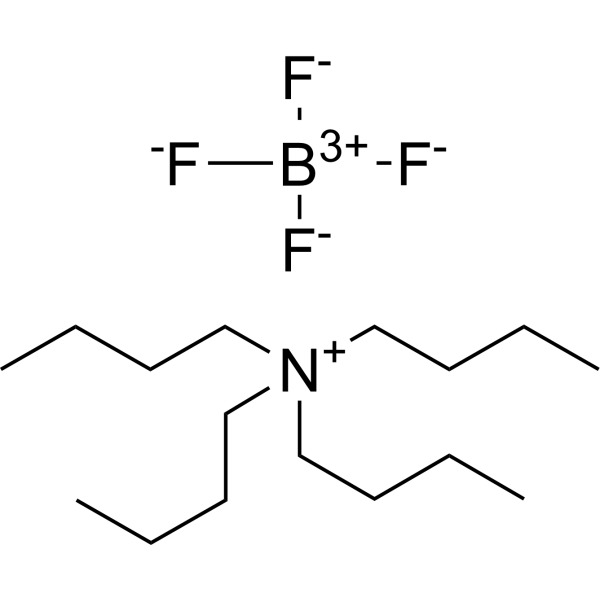
    Tetrabutylammonium tetrafluoroborate is an inorganic salt commonly used in organic synthesis reactions and electrochemical applications. It is usually used as a catalyst or reagent, and is widely used in the field of organic synthesis, such as fluorination reaction, olefin addition and cyclization reaction, etc. In addition, it can also be used in electrochemical deposition and electroplating, and plays an important role in some electronic devices. Although it has no direct application in the medical field, it plays an important role in chemical research and industrial production.
    Tetrabutylammonium tetrafluoroborate
  • HY-Y0232

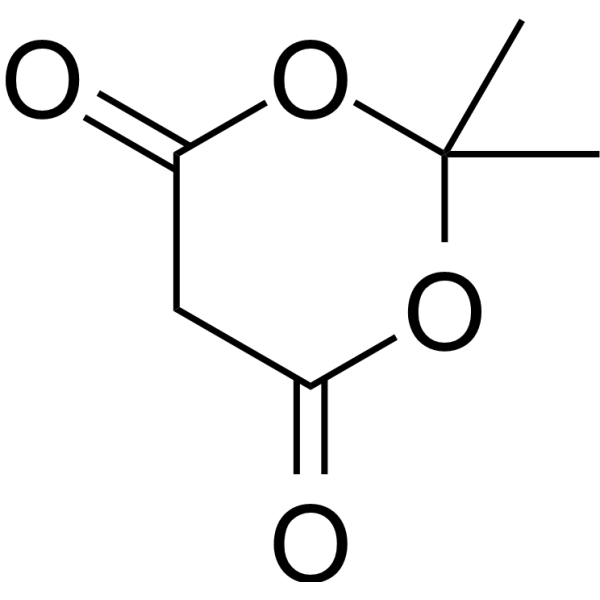
    2,2-Dimethyl-1,3-dioxane-4,6-dione

    Biochemical Assay Reagents Others
    Meldrum's acid (2,2-Dimethyl-1,3-dioxane-4,6-dione) is a nucleophilic reagent. Meldrum's acid participates in Michael addition reactions. Meldrum's acid can be used in asymmetric organocatalysis .
    Meldrum's acid
  • HY-W009938
    Anthrone
    1 Publications Verification

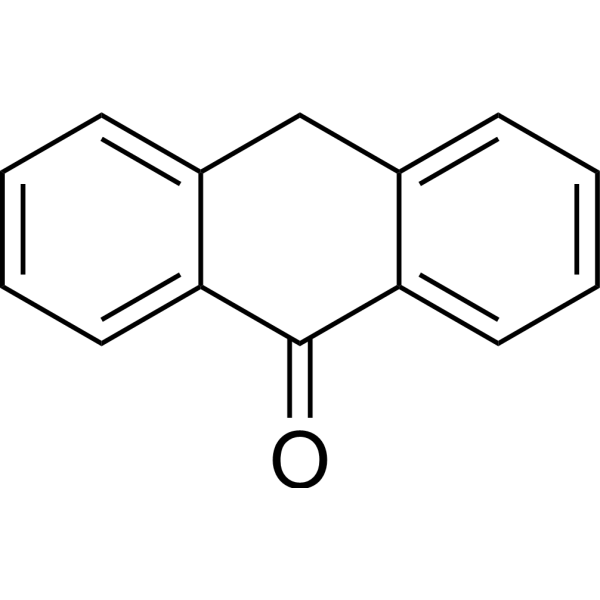
    Anthracen-9(10H)-one

    Biochemical Assay Reagents Others
    Anthrone is an organic compound commonly used as a dye and intermediate. It can be used to make products such as pigments, dyes and fluorescent whitening agents, and is widely used in certain industrial production fields such as textile manufacturing, soap making and paper making. In addition, this compound is also used as a reagent and catalyst in some organic synthesis reactions.
    Anthrone
  • HY-Y1131

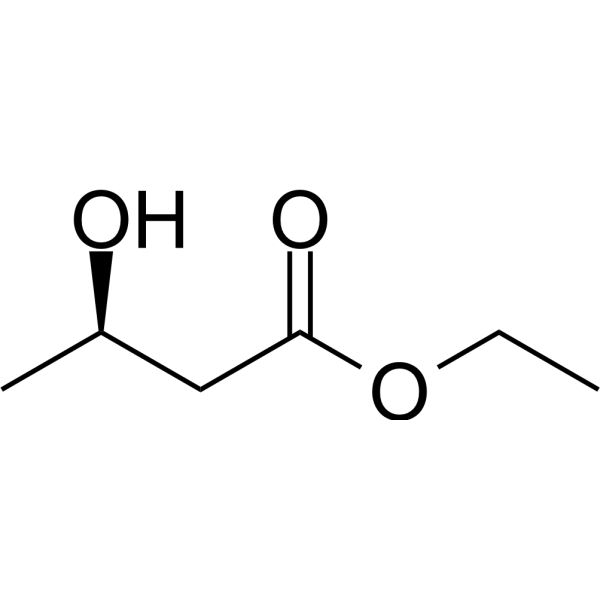
    Ethyl (R)-3-hydroxybutanoate

    Biochemical Assay Reagents Others
    Ethyl (R)-3-hydroxybutyrate is an organic compound commonly used as a starting material for chiral chemical synthesis. It can be used in the preparation of medicines, spices, fine chemicals and food additives, etc., and is widely used in medicine, cosmetics and food industries. In addition, this compound is also used as a substrate or intermediate in some biochemical reactions
    Ethyl (R)-3-hydroxybutyrate
  • HY-B2210

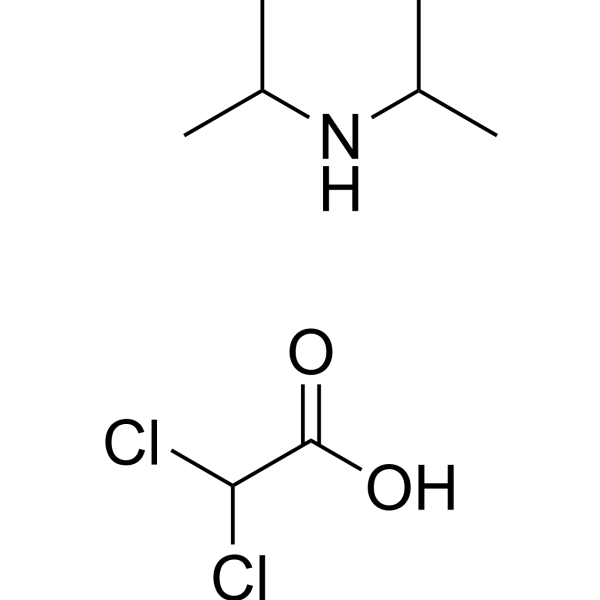
    DIPA; Diisopropylamine dichloroacetate

    Biochemical Assay Reagents Others
    Diisopropylammonium dichloroacetate is an organic compound commonly used as a catalyst and ligand for organic reactions. It can promote various organic chemical reactions, such as olefin addition, carbonylation reaction and asymmetric catalytic reaction, etc. In addition, the compound is also widely used in the research of some medical fields, for example, in the application of anti-tumor therapy.
    Diisopropylammonium dichloroacetate
  • HY-B1148
    Furaltadone hydrochloride
    1 Publications Verification

    Altafur hydrochloride

    Bacterial Infection Inflammation/Immunology
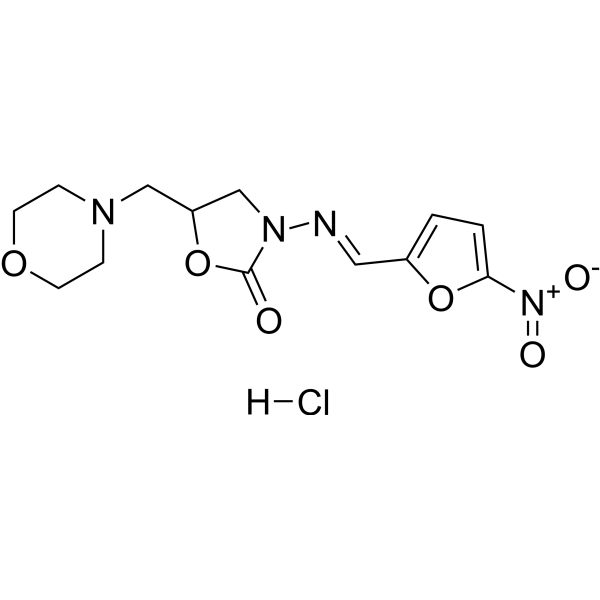
    Furaltadone hydrochloride is an orally active antibacterial agent that can be used for the study of intestinal Salmonella infections. Furaltadone has in vitro inhibitory effects on Staphylococcus. In addition, Furaltadone shows inhibitory effects on allergic reactions .
    Furaltadone hydrochloride
  • HY-34643

    Hept-6-ynoic acid

    Drug Intermediate Others
    Hexanoylic acid (Hex-6-ynoic acid) is a drug intermediate. Hexanoylic acid can be functionalized by esterification reaction to paclitaxel (HY-B0015), enabling it to undergo an efficient ring addition reaction with β-cyclodextrin, thereby enhancing its water solubility, stability and targeting properties .
    6-Heptynoic acid
  • HY-D0172

    AP 6G; Actiron 43-65; Aliquat 100

    Biochemical Assay Reagents Others
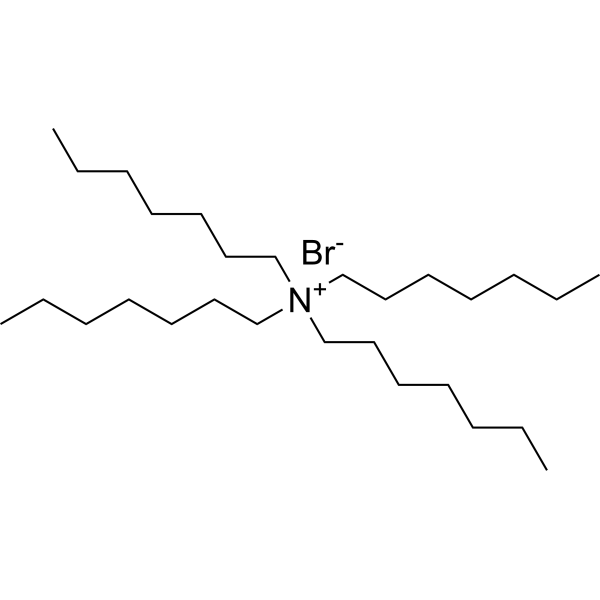
    Tetrabutylammonium bromide is an organic ammonium compound, which is often used in catalytic reactions and separation and purification processes. It has a significant catalytic effect in some organic synthesis reactions, and can be used as a surfactant, stabilizer and antibacterial agent, etc. In addition, in some laboratory studies, this compound has also been used as an ion exchanger, solvent extractant, etc.
    Tetrabutylammonium bromide
  • HY-W015695

    Drug Intermediate Others
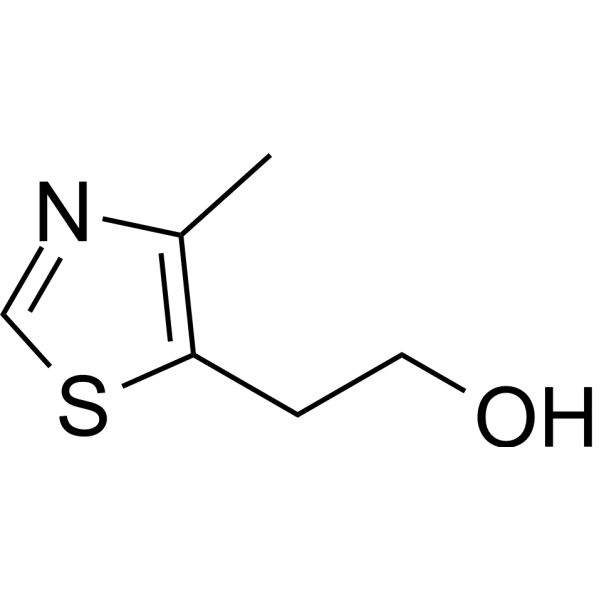
    4-Methyl-5-thiazoleethanol is a natural sulfur-containing flavor compound with the aroma of beef and nuts. In addition, the composite material prepared by modifying graphene oxide with 4-Methyl-5-thiazoleethanol through a one-step esterification reaction can selectively adsorb copper ions (Cu 2+) in aqueous solutions .
    4-Methyl-5-thiazoleethanol
  • HY-W042557

    Biochemical Assay Reagents Others
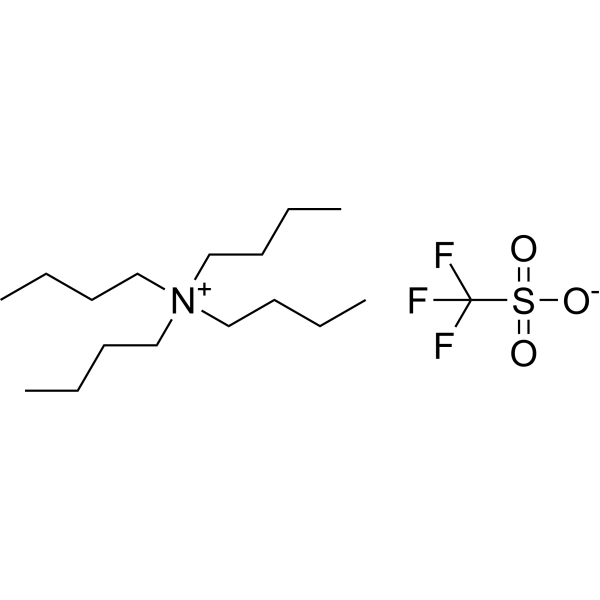
    Tetrabutylammonium trifluoromethanesulfonate, commonly known as TBAOTf. TBAOTf is widely used as a strong acid catalyst and phase transfer agent in organic synthesis, especially for reactions involving nucleophilic substitution, elimination, and rearrangement, in addition, it is also used as an electrolyte additive for rechargeable batteries and a stabilizer of supercritical fluids Due to its high stability, solubility and selectivity, TBAOTf is considered to be a highly efficient and multifunctional reagent in various applications.
    Tetrabutylammonium trifluoromethanesulfonate
  • HY-151672

    ADC Linker Others
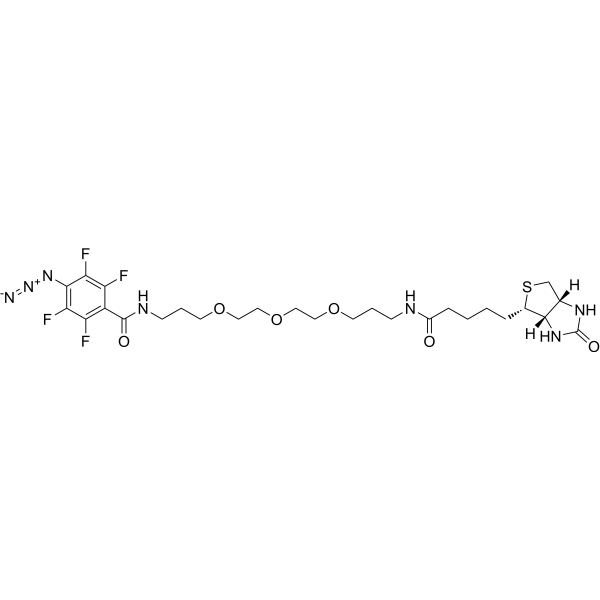
    Biotin-TEG-ATFBA is a click chemistry reagent containing a perfluorophenylazide group. Biotin-TEG-ATFBA forms a highly stable azene intermediate that undergoes insertion and addition reactions (non-intermolecular rearrangement) in moderate to good yields after photolysis. It contains an azide group and can undergo copper-catalyzed azide-alkyne cycloaddition (CuAAc) with molecules containing alkyne groups. It can also undergo ring strain-promoted alkyne-azide cycloaddition (SPAAC) with molecules containing DBCO or BCN groups.
    Biotin-TEG-ATFBA
  • HY-Y1699

    Biochemical Assay Reagents Others
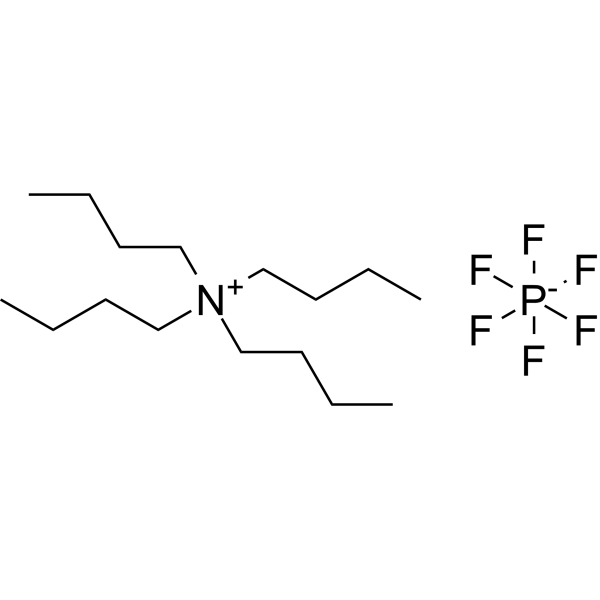
    Tetrabutylammonium hexafluorophosphate is an organic-inorganic compound commonly used as an ionic solvent and catalyst. It can be used to catalyze or promote reactions in certain chemical reactions, and is widely used in batteries, solar cells and pigments. In addition, this compound is also widely used in organic synthesis and chemical analysis.
    Tetrabutylammonium hexafluorophosphate
  • HY-W008145

    Biochemical Assay Reagents Others
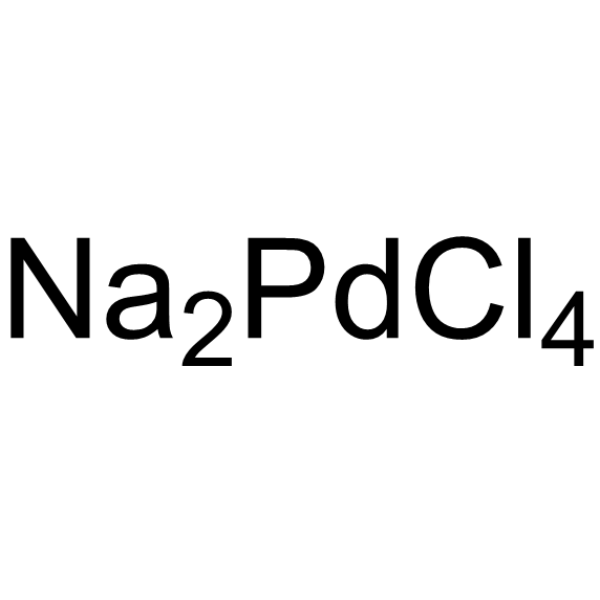
    Sodium tetrachloropalladate(II) is an organic compound commonly used as a catalyst and as a raw material for dye production. It can be used to catalyze or promote reactions in certain chemical reactions, and is widely used in the fields of organic synthesis and dye preparation. In addition, the compound is also used for metallization, silver plating and electroplating of circuit boards.
    Sodium tetrachloropalladate(II)
  • HY-24312

    Biochemical Assay Reagents Others
    AD-mix-α is a mixture of organic compounds, commonly used to distinguish and identify asymmetric carbon atoms in chiral compounds. It consists of compounds containing catalytically active metals and chiral ligands. AD-mix-α is widely used in various organic synthesis reactions, such as hydrogenation, addition, and carbonylation reactions, to increase yield and reduce the formation of side reaction products. Although it has no direct application in the medical field, it plays an important role in the pharmaceutical industry and chemical research.
    AD-mix-α
  • HY-B1952

    2,2'-Oxybis(ethan-1-ol)

    Environmental Pollutants Biochemical Assay Reagents Others
    Diethylene glycol (2,2'-Oxybis(ethan-1-ol)) has excellent solubility and reactivity in certain chemical reactions and can help accelerate the activation of certain reactants. In addition, it is widely used in the production process of pigments, resins and other chemicals.
    Diethylene glycol
  • HY-W127702

    Methscopolamine nitrate

    Biochemical Assay Reagents Others
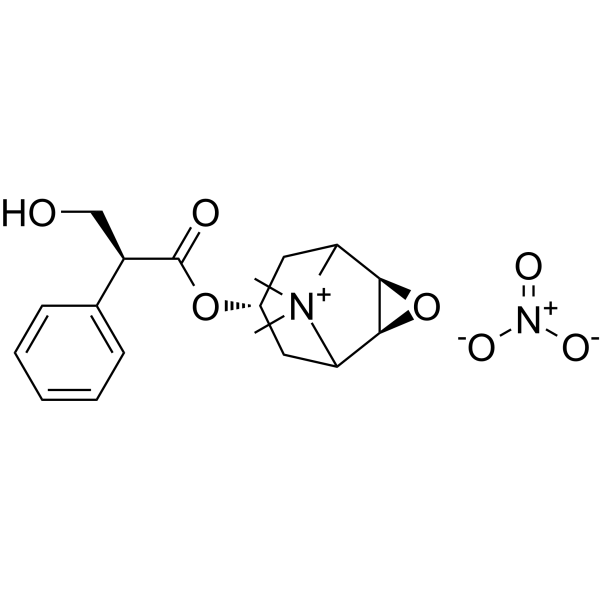
    Scopolamine methyl nitrate is an organic compound commonly used in neuroscience research and pharmacology research. It can be used to study the role and structure of acetylcholine receptors, and is widely used in drug development and research in related fields. In addition, this compound is also used as a substrate or catalyst in certain biochemical reactions.
    Scopolamine methyl nitrate
  • HY-P4566

    Pro-Val

    Dipeptidyl Peptidase Others
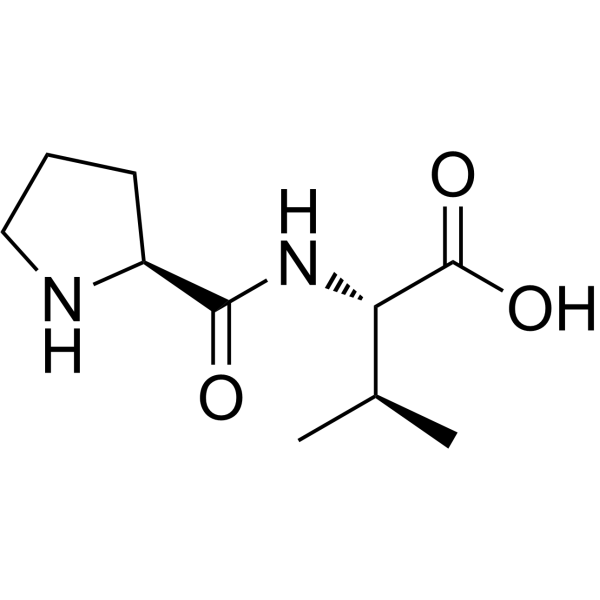
    H-Pro-Val-OH is a deprotonation dipeptide containing proline, which can catalyze the Michael addition reaction of acetone to trans-β-nitrostyrene. H-Pro Val OH can also serve as a substrate for fibroblast enzymes and prolinase, and has potential applications in biochemical analysis .
    H-Pro-Val-OH
  • HY-W008039

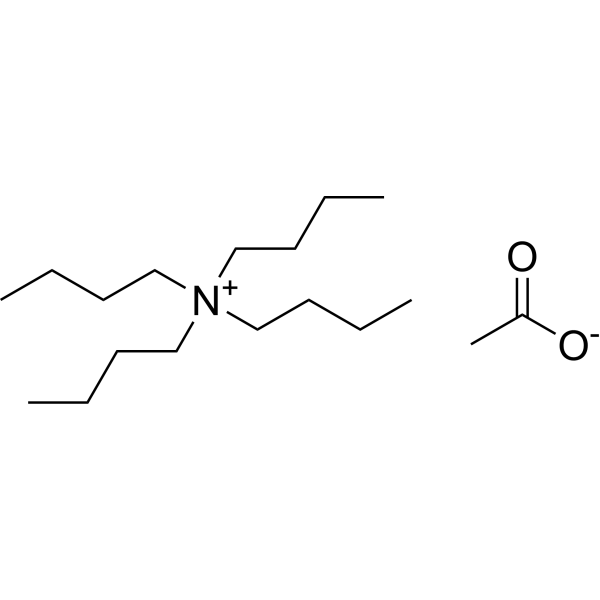
    Tetra-n-butylammonium acetate

    Biochemical Assay Reagents Others
    Tetrabutylammonium acetate is an organic compound commonly used as a catalyst and solvent. It can be used to catalyze or promote reactions in certain organic reactions, and is widely used in batteries, solar cells and pigments. In addition, this compound is widely used in the oil and gas industry, for example as a carbonate dissolver.
    Tetrabutylammonium acetate (contains 10-15%AcOH)
  • HY-W127452

    Environmental Pollutants Biochemical Assay Reagents Others
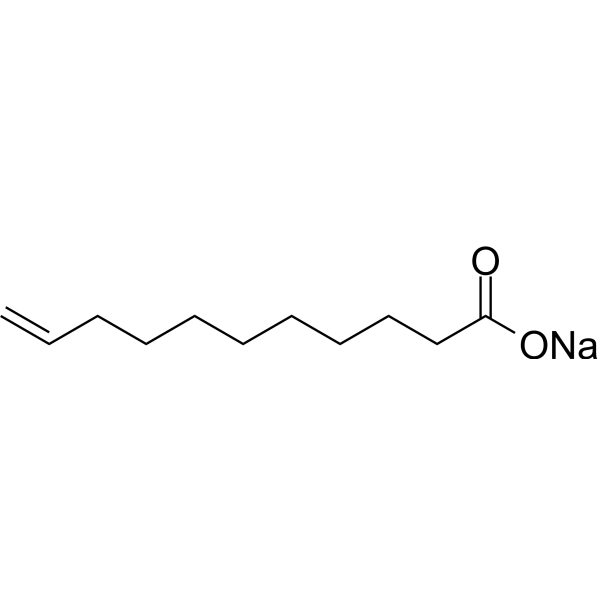
    Undecylenate SodiumIt is an organic compound belonging to the class of carboxylates. It is formed by the reaction of undecylenic acid and sodium hydroxide. Undecylenate SodiumIt has a variety of applications in the cosmetic and personal care industries, especially as an antifungal agent in products such as face creams, lotions and shampoos. In addition, it can be used as a preservative in various formulations.
    Undecylenate sodium
  • HY-W127699

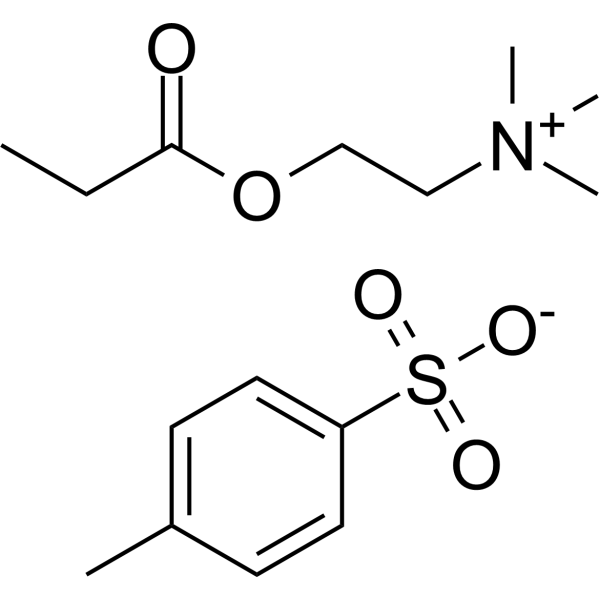
    N,N,N-Trimethyl-2-(propionyloxy)ethanaminium (p-toluenesulfonate)

    Biochemical Assay Reagents Others
    Propionylcholine (p-toluenesulfonate) is an organic compound commonly used in biochemical research and neuroscience research. It can be used to study cholinergic signal transduction and esterase activity, and is widely used in biomedical research and pharmacological research. In addition, this compound is also used as a substrate or catalyst in certain biochemical reactions.
    Propionylcholine (p-toluenesulfonate)
  • HY-W004963

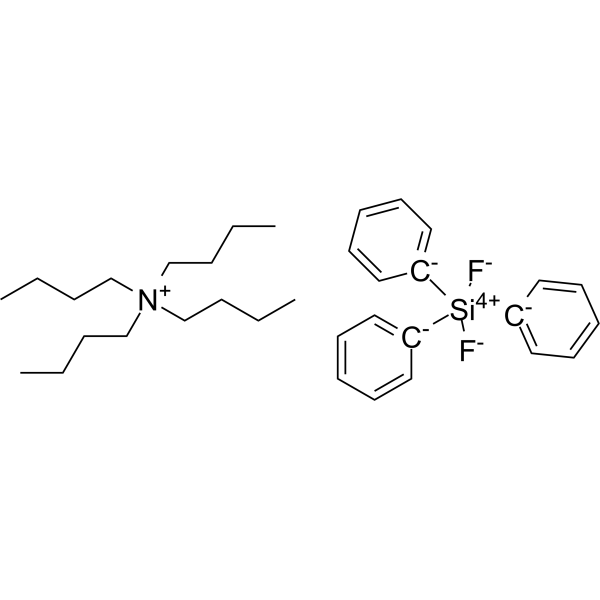
    TBAT

    Biochemical Assay Reagents Others
    Tetrabutylammonium difluorotriphenylsilicate(IV) (TBAT) is an organic compound commonly used as a catalyst and surfactant. It can play a catalytic role in some organic synthesis reactions, and can be used as a cleaning agent, lubricant and stabilizer. In addition, the compound is widely used in certain industrial fields, such as in the plastic, rubber and textile manufacturing processes.
    Tetrabutylammonium difluorotriphenylsilicate(IV)
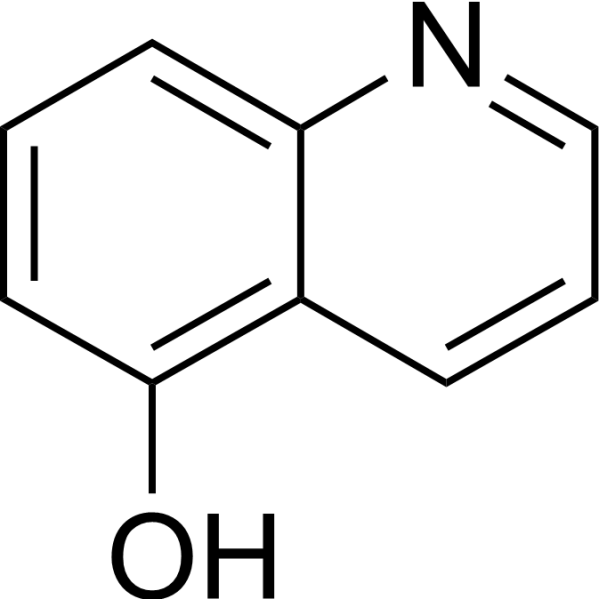
  • HY-32100

    Quinolin-5(1H)-one

    Biochemical Assay Reagents Others
    5-Hydroxyquinoline is an organic compound commonly used in certain chemical reactions and biological research. It can be used in the manufacture of dyes, cellulase, oxidants and passivators, etc., and is widely used in the pigment, paint and rubber industries. In addition, the compound is also used as the precursor, intermediate and metal ion complexing agent of certain drugs.
    5-Hydroxyquinoline
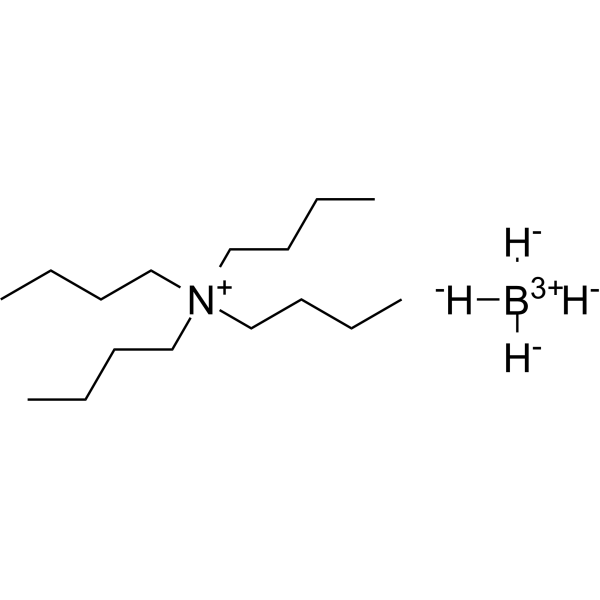
  • HY-W008635

    Biochemical Assay Reagents Others
    Tetrabutylammonium tetrahydroborate is an organic compound commonly used as a reducing agent and catalyst. It can act as a reducing agent in certain chemical reactions and can promote the reduction of organic compounds such as esters, aldehydes and ketones. In addition, this compound is also widely used in organic synthesis and chemical analysis, and also has important uses in some production processes.
    Tetrabutylammonium tetrahydroborate
  • HY-N2018

    α-D-Xylopyranose

    Endogenous Metabolite Metabolic Disease
    α-D-Xylose (α-D-Xylopyranose) is a basic component of the five-carbon fraction of biomass and a precursor of hemicellulose. α-D-Xylose participates in a variety of enzyme-catalyzed reactions, which in turn participate in a variety of metabolic pathways. In addition, α-D-Xylose is also used in tanning, dyeing and as a diabetic food .
    α-D-Xylose
  • HY-W094511

    Gold chloride sodium dihydrate

    Biochemical Assay Reagents Others
    Tetrachloroaurate III sodium dihydrate (Gold chloride sodium dihydrate) is utilized as catalyst in reactions like nucleophilic addition to multiple bonds, nucleophilic substitution of propargylic alcohols, and nonsymmetrical etherization .
    Tetrachloroaurate(III) sodium dihydrate
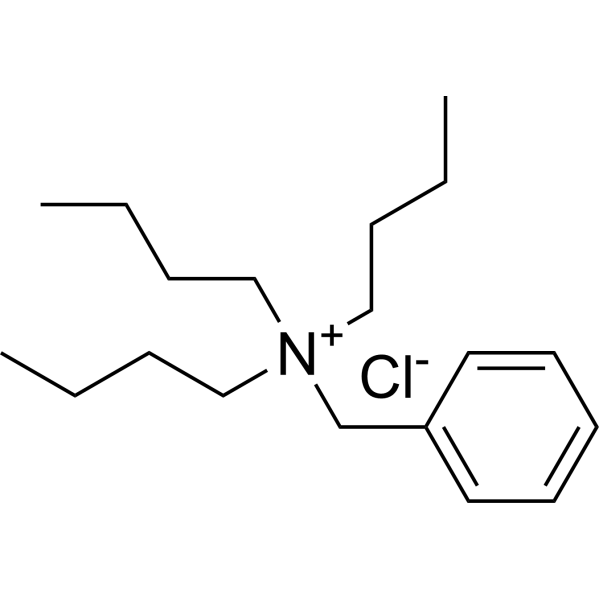
  • HY-ER019

    N-Benzyl-N,N-dibutylbutan-1-aminium chloride

    Biochemical Assay Reagents Others
    Benzyltributylammonium chloride is an organic salt compound, usually used in catalytic reactions and surfactants. It can play a catalytic role in some organic synthesis reactions, and can be used as a cleaning agent, lubricant and emulsifier. In addition, the compound is widely used in certain industrial fields, such as in the plastic, rubber and textile manufacturing processes.
    Benzyltributylammonium chloride
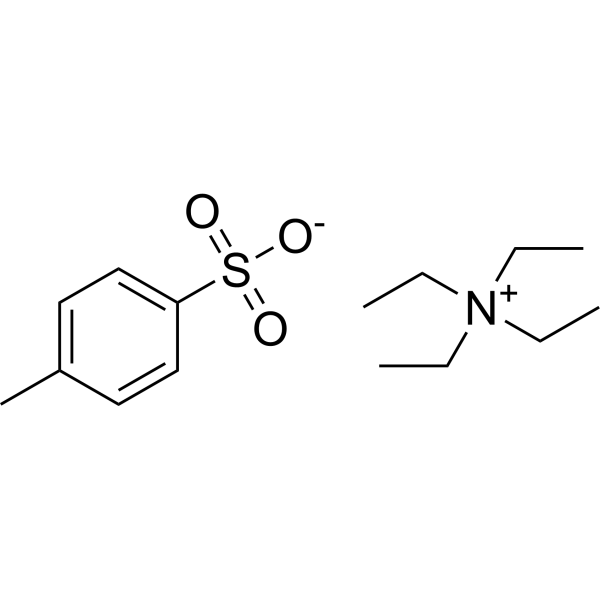
  • HY-W009235

    Tetraethylammonium 4-methylbenzenesulfonate

    Biochemical Assay Reagents Others
    Tetraethylammonium p-toluenesulfonate p-toluenesulfonate is an organic compound commonly used as a catalyst and surfactant. It can be used to catalyze or promote reactions in certain organic synthesis reactions, and is widely used in the fields of surfactants, lubricants and antistatic agents. In addition, the compound is also used for metallization, silver plating and electroplating of circuit boards.
    Tetraethylammonium p-toluenesulfonate
  • HY-W005507

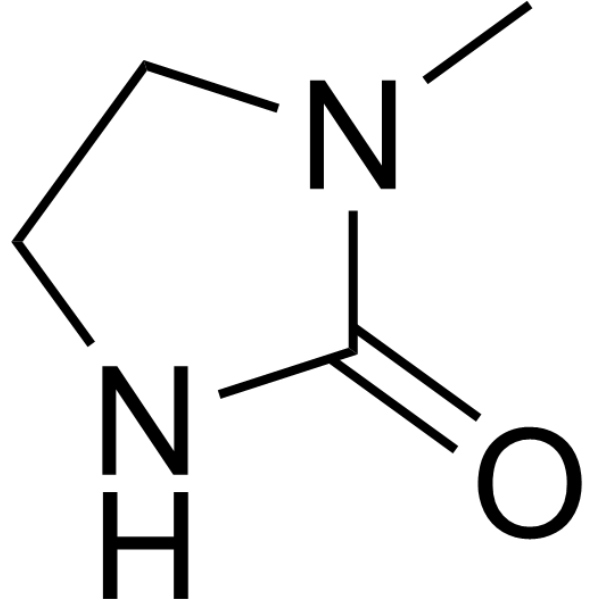
    2-imidazolidinone, 1-methyl-

    Biochemical Assay Reagents Others
    1-Methylimidazolidin-2-one is an organic compound commonly used as a solvent and intermediate. It can play a buffering and stabilizing role in some organic synthesis reactions, and can be used as a solvent in some chemical reactions and industrial production processes. In addition, the compound also has good toxicity and biocompatibility, and is widely used in some medical fields.
    1-Methylimidazolidin-2-one
  • HY-W005176

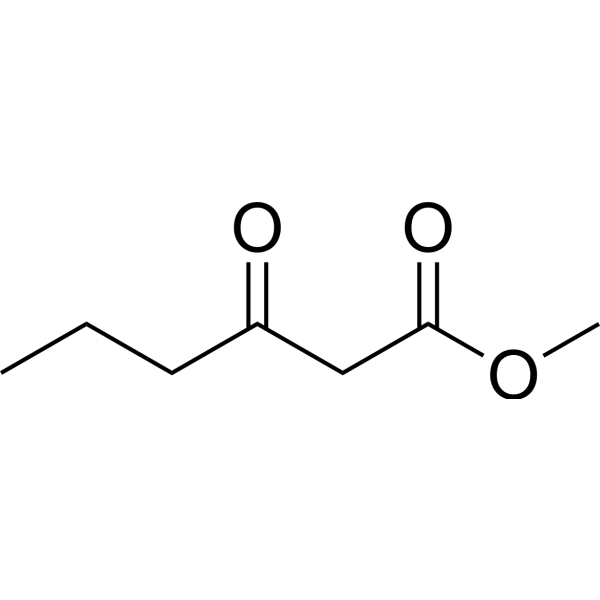
    Methyl Butyrylacetate; Methyl 3-oxohexanoate

    Biochemical Assay Reagents Others
    Methyl 3-oxohexanoate (Methyl Butyrylacetate) is an organic compound commonly used in the manufacture of fragrances, drugs, and other chemicals. It can be used as a condensation reagent, a diazotization reagent and an addition reagent, and it plays a catalytic role in some organic synthesis reactions, and can also play a role in some drug synthesis. In addition, the compound is widely used in the food industry, for example in products such as juices, beer and confectionery.
    Methyl 3-oxohexanoate
  • HY-W009684

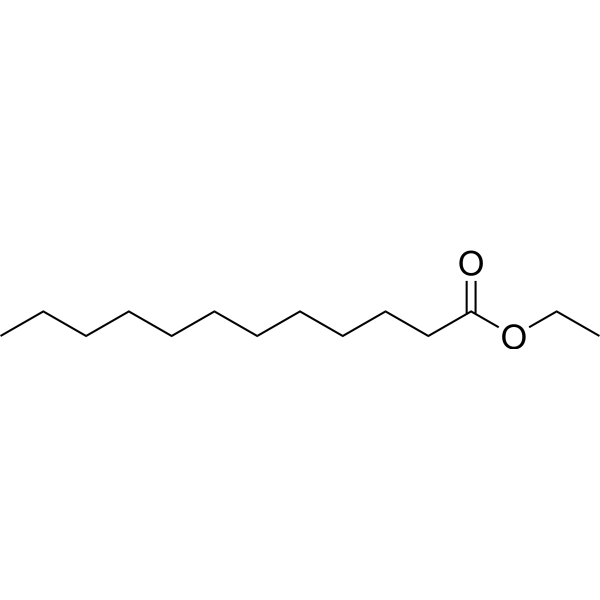
    Ethyl dodecanoate

    Environmental Pollutants Biochemical Assay Reagents Others
    Ethyl Laurate is an organic compound commonly used as a flavoring and food additive. It can be used to make fruit, mint and sweet flavors, and is widely used in some food processing and cosmetic production. In addition, this compound is also used as a reagent and intermediate in some organic synthesis reactions.
    Ethyl Laurate
  • HY-W020887

    Chlorobis(cyclooctene)iridium(I)dimer

    Biochemical Assay Reagents Endogenous Metabolite
    [IrCl(COE)2]2 (Chlorobis(cyclooctene)iridium(I)dimer) is a transition metal catalyst with remarkable catalytic activity. It is widely used in catalyzing a variety of organic reactions, especially in the synthesis of unsaturated compounds. In addition, [IrCl(COE)2]2 has shown potential anti-tumor properties in biochemical research.
    [IrCl(COE)2]2
  • HY-W127637
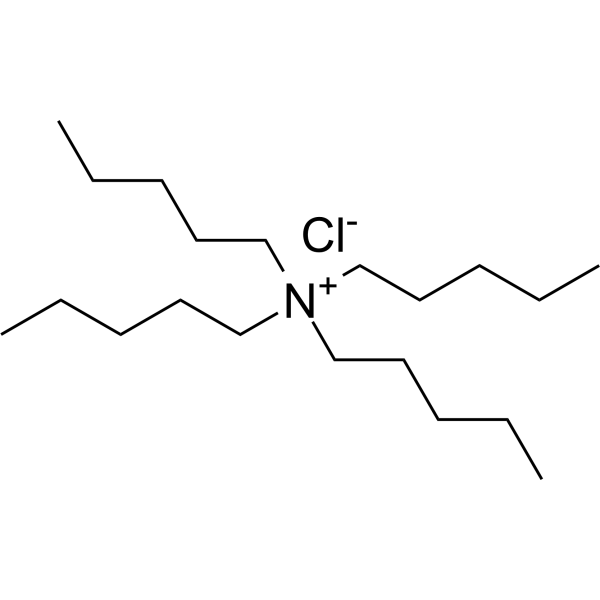
    Tetraamylammonium chloride
    1 Publications Verification

    Tetrapentylammonium chloride

    Biochemical Assay Reagents Others
    Tetraamylammonium chloride is an organic compound containing ammonium and chloride ions. It is commonly used as a phase transfer catalyst in organic synthesis, especially in the production of pharmaceuticals and agrochemicals. Tetraamylammonium Chloride has a strong base that facilitates the transfer of reactants between immiscible solvents, resulting in more efficient chemical reactions. In addition, it can also be used as an intermediate in the synthesis of other quaternary ammonium compounds.
    Tetraamylammonium chloride
  • HY-D1625

    Fluorescent Dye Others
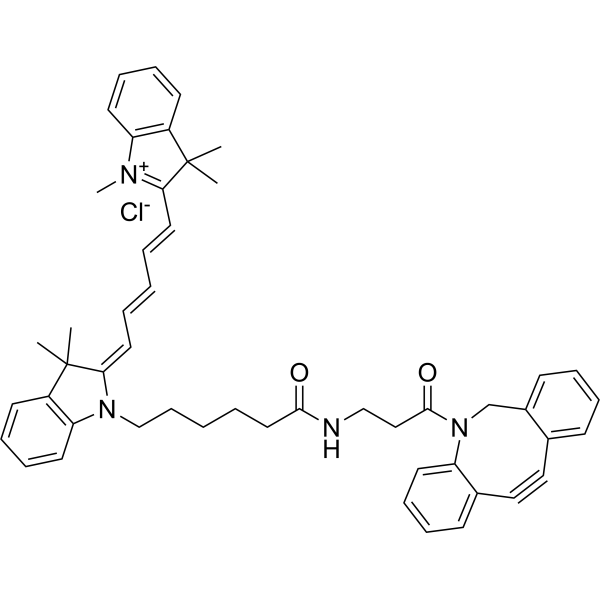
    Cy5 DBCO chloride is an azide reaction probe and the addition of DBCO molecules allows the imaging of azide-labelled biomolecules by a copper-free "Click Chemistry" reaction . Cy5 DBCO (chloride) is a click chemistry reagent, it contains a DBCO group that can undergo strain-promoted alkyne-azide cycloaddition (SPAAC) with molecules containing Azide groups.
    Cy5 DBCO chloride
  • HY-W190755

    Biochemical Assay Reagents Others
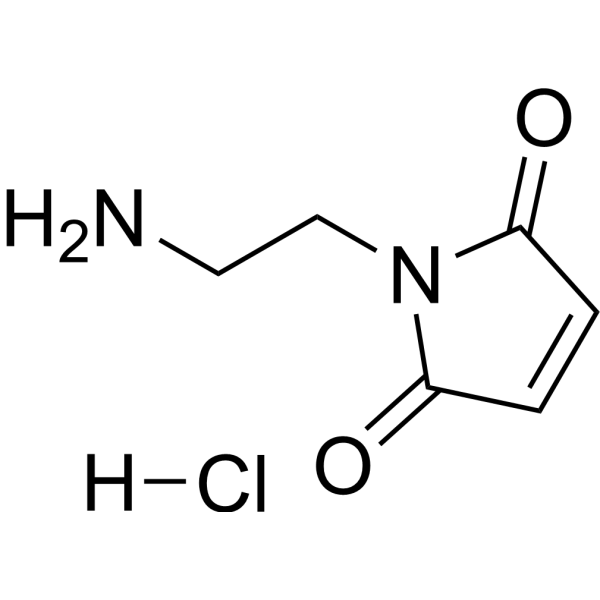
    Mal-PEG4-Mal is a PEG derivative with maleimide groups at both ends. Maleimide is a functional group that can undergo Michael addition reactions with sulfhydryl groups (–SH) and can be used for bioconjugation .
    Mal-PEG4-mal
  • HY-W014884

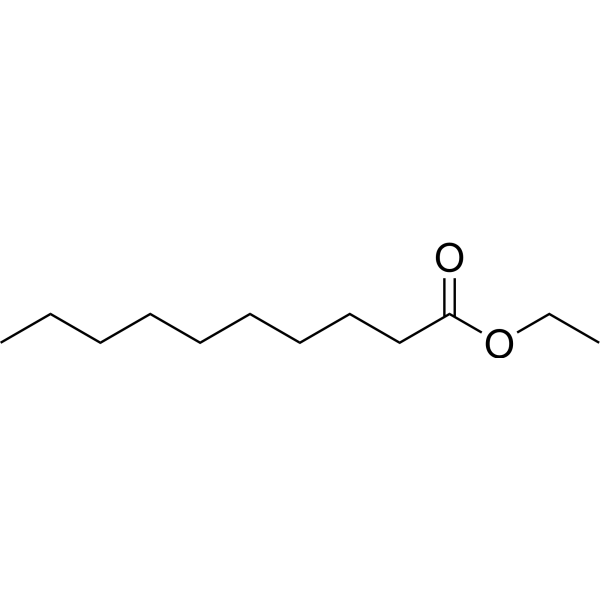
    Decanoic Acid Ethyl Ester

    Environmental Pollutants Biochemical Assay Reagents Others
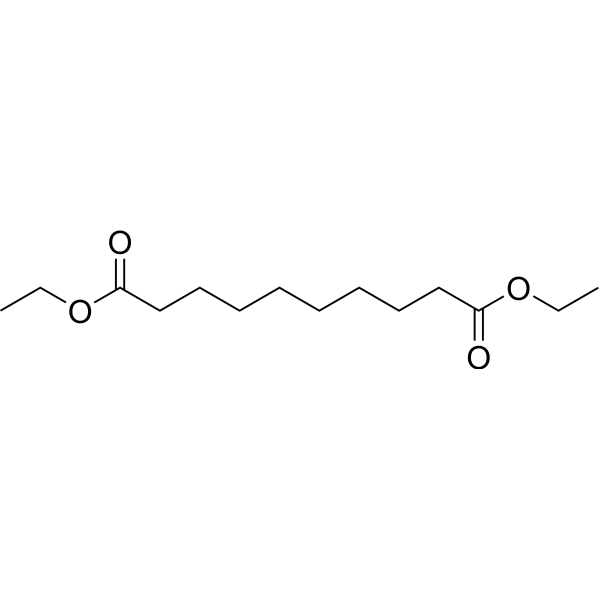
    Ethyl decanoate is an organic compound commonly used as a flavoring and food additive. It can be used to prepare flavors and food seasonings with various flavors, and is widely used in food, flavors and cosmetics. In addition, this compound is also used as a substrate or intermediate in some biochemical reactions.
    Ethyl decanoate
  • HY-W009400

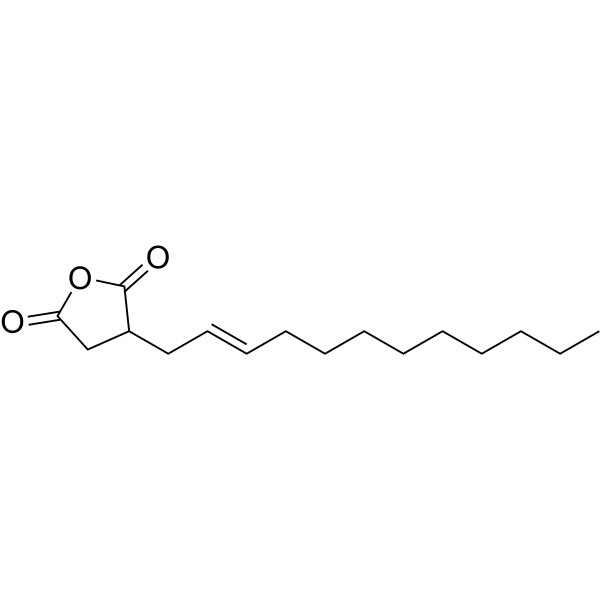
    Drug Intermediate Others
    (2-Dodecen-1-yl)succinic anhydride is an organic compound commonly used in certain polymerization reactions. It is used in the manufacture of products such as plastics and resins, and is widely used in certain industrial fields, such as coatings, inks and textile manufacturing. In addition, the compound is also used as a raw material for pharmaceutical intermediates and surfactants.
    (2-Dodecen-1-yl)succinic anhydride
  • HY-W040184

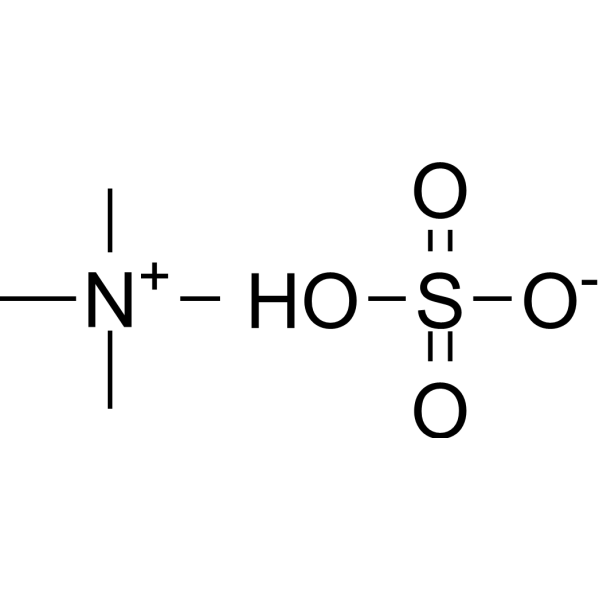
    TMAHS

    Biochemical Assay Reagents Others
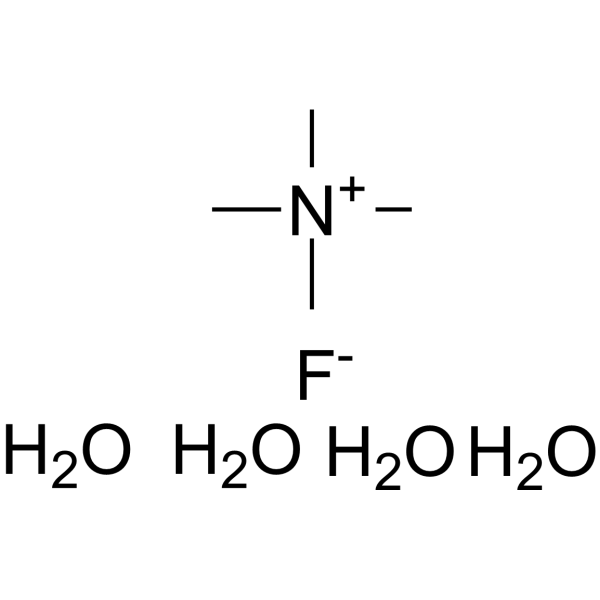
    Tetramethylammonium hydrogensulfate, sometimes abbreviated as TMAHS, is a quaternary ammonium salt commonly used as a catalyst and phase transfer agent in chemical reactions, especially in organic synthesis. In addition, it is used as an electrolyte additive in electrochemical and rechargeable batteries. TMAHSs have also been investigated for their potential use in various applications such as wastewater treatment, gas separation, and fuel cells.
    Tetramethylammonium hydrogensulfate
  • HY-W025838

    Drug Intermediate Others
    4,5-Dimethylbenzene-1,2-diamine is a substitute for aromatic diamine compound. 4,5-Dimethylbenzene-1,2-diamine act as a bidentate nucleophilic reagent and participates in the palladium (II)-mediated isocyanate addition reaction to construct a diaminocarbene palladium complex with potential catalytic activity .
    4,5-Dimethylbenzene-1,2-diamine
  • HY-W127342

    Decanoic acid chloride

    Biochemical Assay Reagents Others
    Decanoyl chloride is an organic compound belonging to the class of acid chlorides. It is a colorless liquid with a pungent odor and is commonly used as a reagent in various organic chemical reactions, especially in the synthesis of esters, amides and fatty acids. Decanoyl chloride has numerous applications in synthetic organic chemistry, especially in the production of pharmaceuticals, agrochemicals and specialty chemicals. In addition, it can be used as a precursor for the synthesis of surfactants and detergents.
    Decanoyl chloride
  • HY-W127654

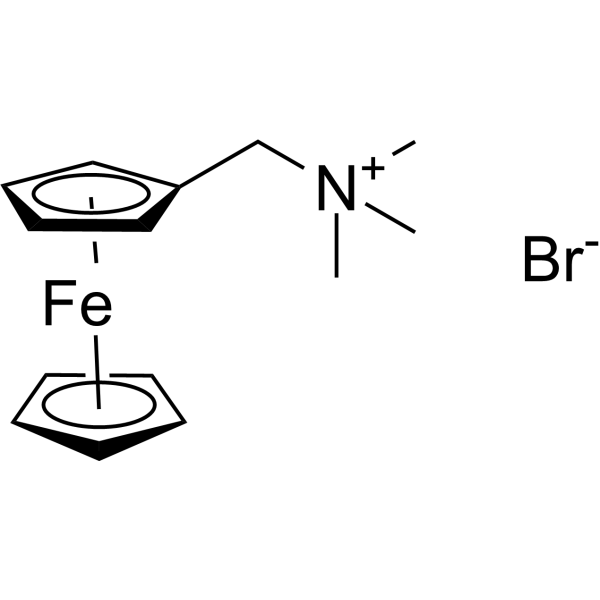
    Biochemical Assay Reagents Others
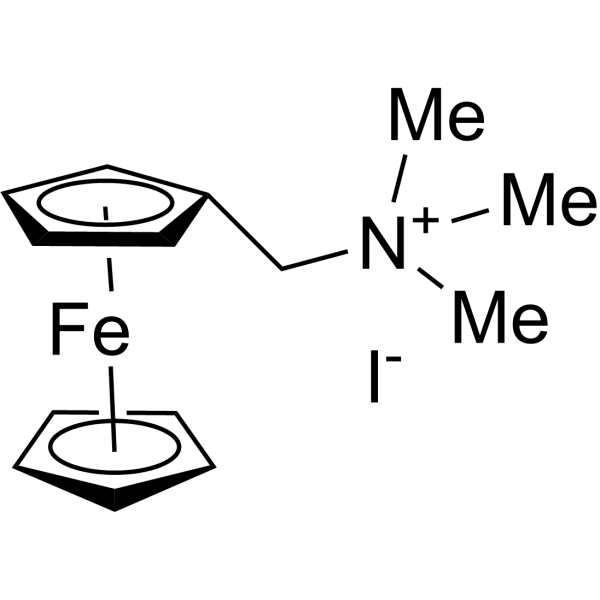
    (Ferrocenylmethyl)trimethylammonium bromide is an organic compound containing ammonium and bromide ions. It is commonly used as a phase transfer catalyst in organic synthesis, especially in the production of pharmaceuticals and agrochemicals. (Ferrocenylmethyl)trimethylammonium Bromide has a strong base that facilitates the transfer of reactants between immiscible solvents for more efficient chemical reactions. In addition, it can also be used as an intermediate in the synthesis of other organic compounds.
    (Ferrocenylmethyl)trimethylammonium bromide
  • HY-W152363

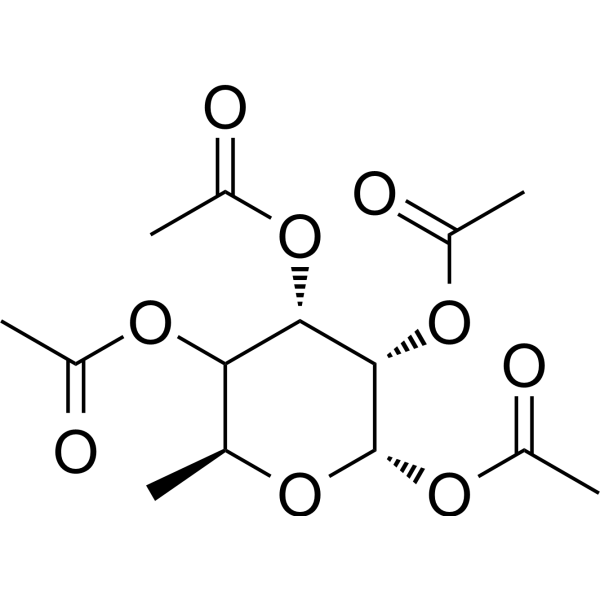
    1,2,3,4-Tetra-O-acetyl-α-L-fucopyranose

    Biochemical Assay Reagents Others
    1,2,3,4-Tetra-O-acetyl-alpha-L-fucopyranoseIt is an organic compound commonly used as a substrate or reference standard in enzymology and sugar chemistry research. It can be used in the synthesis of polysaccharide analogs, drug development and biotechnology, and is widely used in the research of glycosyl chemistry and sugar metabolism pathways. In addition, this compound is used as a catalyst or buffer in certain biochemical reactions.
    1,2,3,4-Tetra-O-acetyl-alpha-L-fucopyranose
  • HY-N12962

    Others Others
    11S(12R)-EET is a dominant enantiomer of epoxytrienoic acid (EET) that is metabolized at a higher rate in rat organs. It shows enantiomeric-dependent reaction selectivity in hydration, especially in the case of 11,12-EET, where water addition is non-regioselective, while in 8,9-EET, water addition occurs mainly at the C9 position. In addition, 11S(12R)-EET generates diol products with specific stereochemistry through enzymatic hydration reactions, which are affected by the selective recognition of epoxidases, reaction conversion rates, and substrate binding parameters .
    11S(12R)-EET

Inquiry Online

Your information is safe with us. * Required Fields.

Salutation


Country or Region *

Applicant Name *


Organization Name *

Department *


Email Address *


Product Name *

Cat. No.


Requested quantity *

Phone Number *


Remarks

Inquiry Online

Inquiry Information

Product Name:
Cat. No.:
Quantity:
MCE Japan Authorized Agent: