



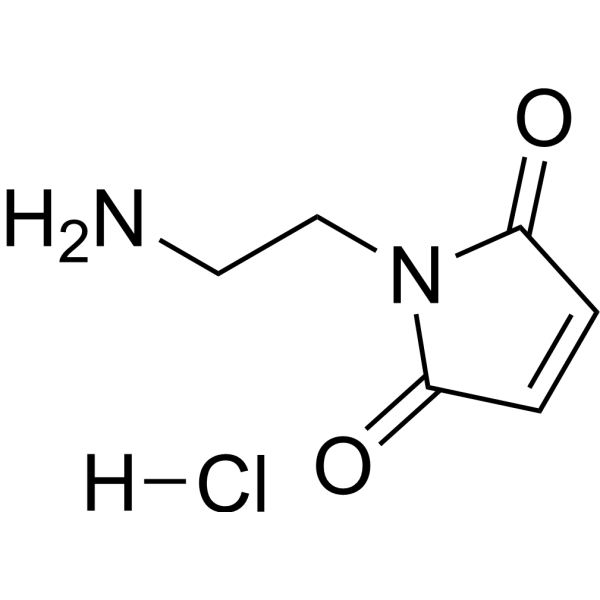
N-(2-Aminoethyl)maleimide hydrochloride

Based on 1 Customer Validation
N-(2-Aminoethyl)maleimide (2-Maleimidoethylamine) hydrochloride is a selective covalent binding agent for thiol groups (RSGs), covalently binding to thiols via an irreversible thioether bond to prepare MMP-2-sensitive nanosystems. Under near-neutral conditions, the maleimide group in N-(2-Aminoethyl)maleimide hydrochloride binds to thiol groups via a nucleophilic addition reaction, and can be used to modify polymers or biological interfaces, enhancing mucosal adhesion and regulating the surface charge of biological interfaces. N-(2-Aminoethyl)maleimide hydrochloride can optimize the adhesion performance of drug delivery carriers and cell interactions with biological interfaces, and is applied in transmucosal drug delivery systems (such as drug carriers for oral and bladder sites) and biomaterial surface engineering research, providing support for tissue implantation, regeneration, and related drug delivery.
For research use only. We do not sell to patients.
- Purity : 99.97%
- CAS No.: 134272-64-3
- Formula: C6H9ClN2O2
- Molecular Weight:176.60
-
Storage:
4°C, sealed storage, away from moisture and light
* In solvent : -80°C, 6 months; -20°C, 1 month (sealed storage, away from moisture and light)

To place orders, for customer services and technical support, please contact: MedChemExpress USA
Tel: 609-228-6898 E-mail: [email protected] [email protected]


-
 Biological Activity
-
Chemical Information
-
Solvent & Solubility
- Protocols
- Purity & Documentation
- References
-
 Help & FAQs


-
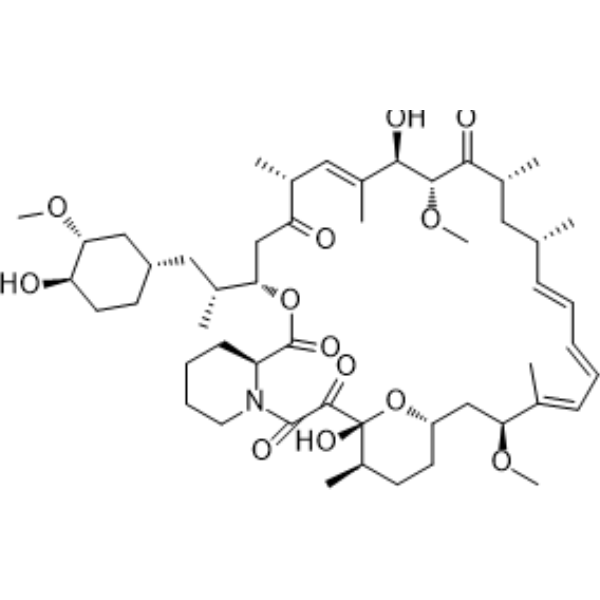
HY-10219
RapamycinmTOR Inhibitor -
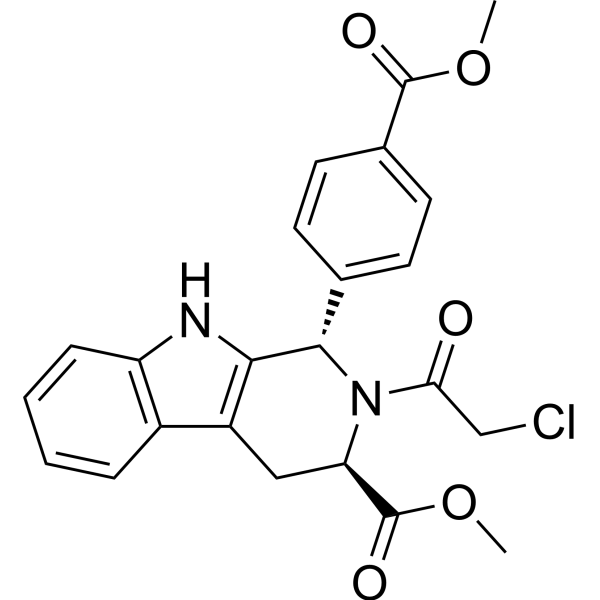
HY-100218A
RSL3GPX4 Inhibitor -
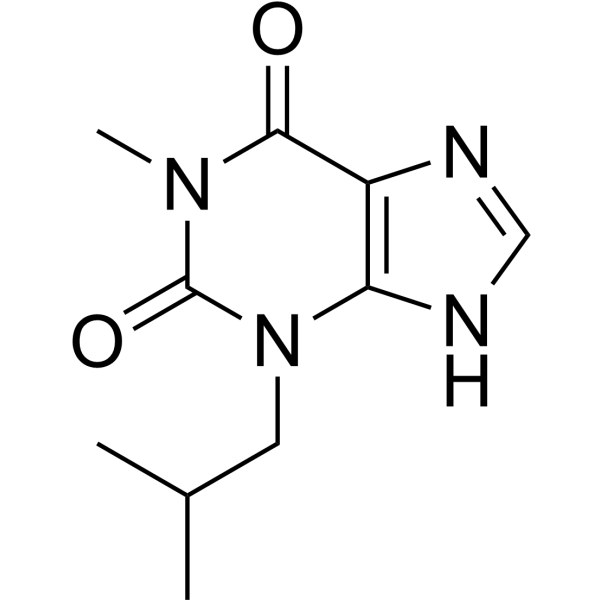
HY-12318
IBMXPDE Inhibitor -
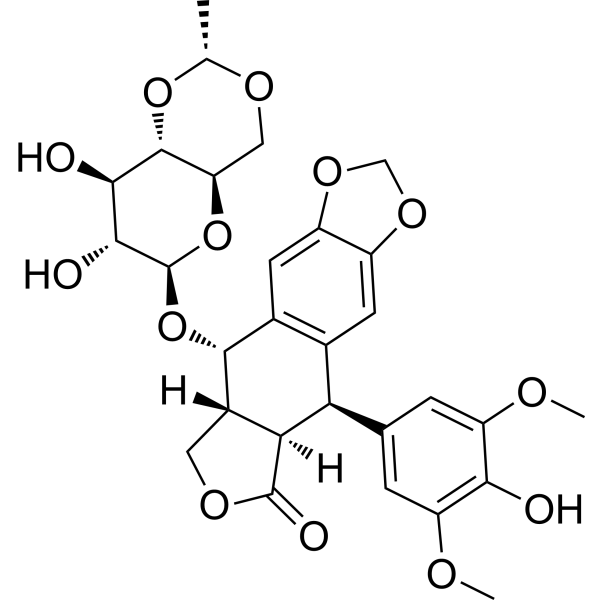
HY-13629
EtoposideTopoisomerase II Inhibitor -
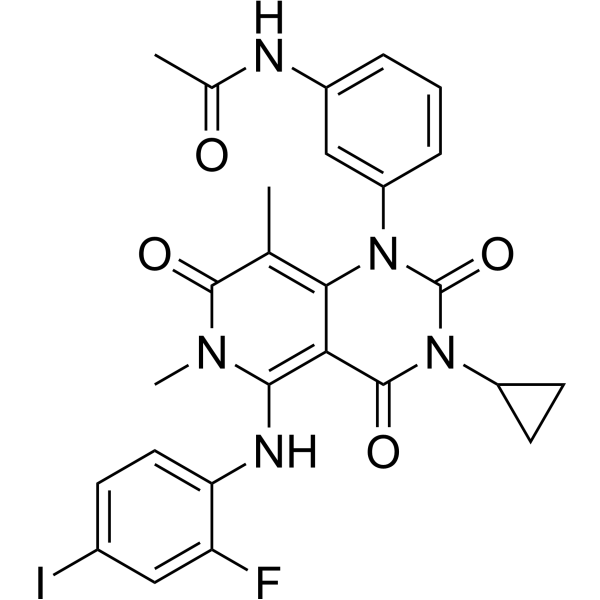
HY-10999
TrametinibMEK Inhibitor -
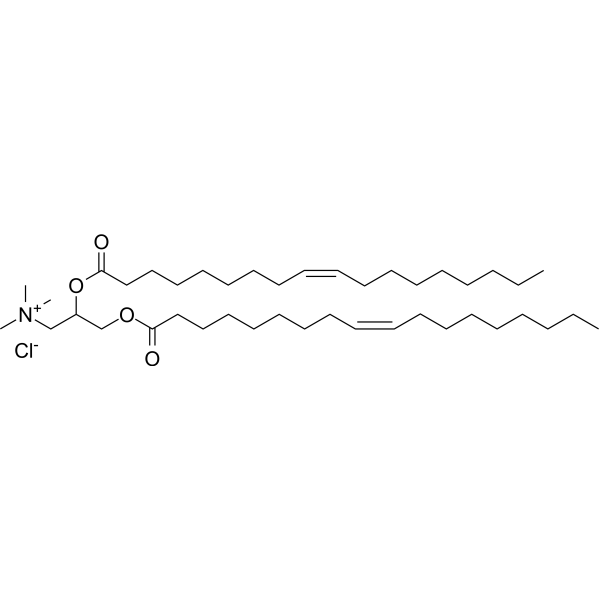
HY-112754A
DOTAP chlorideCationic Lipid -
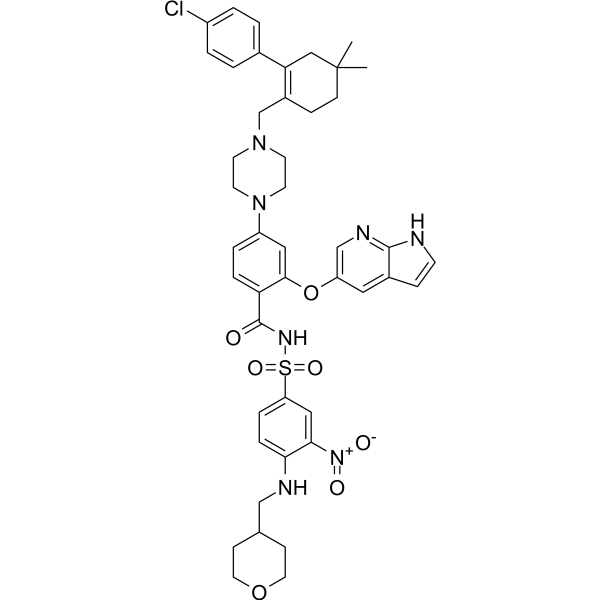
HY-15531
VenetoclaxBCL-2 Inhibitor -
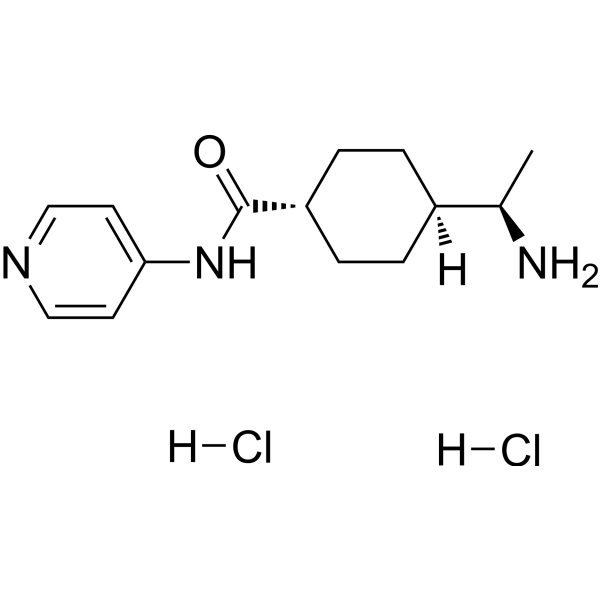
HY-10583
Y-27632 dihydrochlorideROCK Inhibitor -
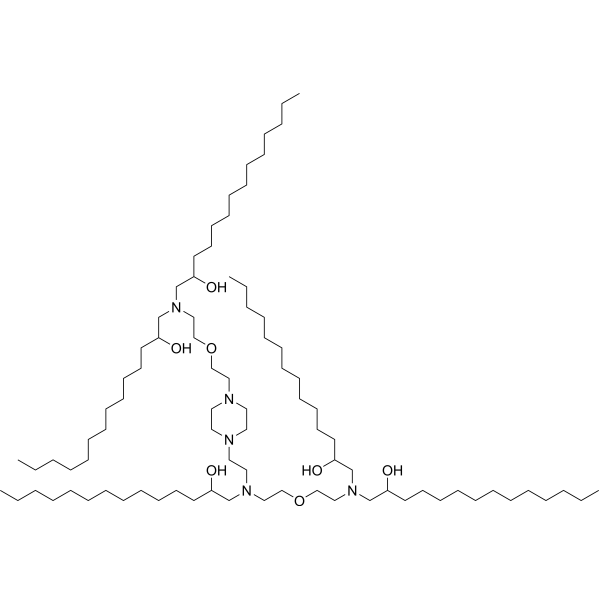
HY-148842
C14-4Ionizable lipid -
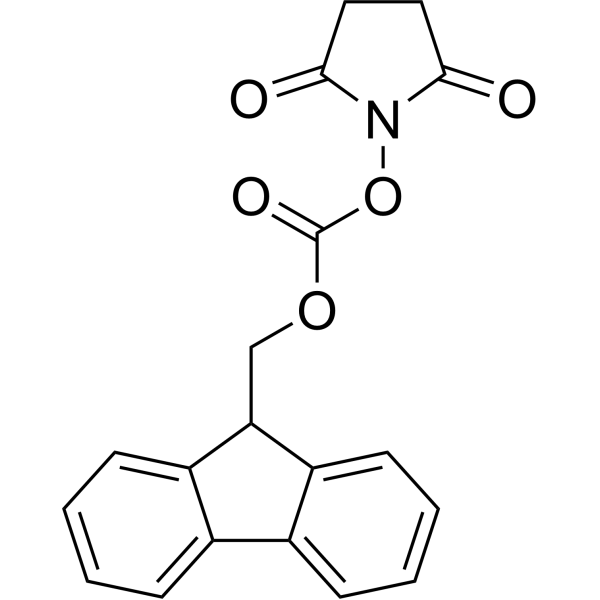
HY-79647
Fmoc-OSuAcylating Agent -
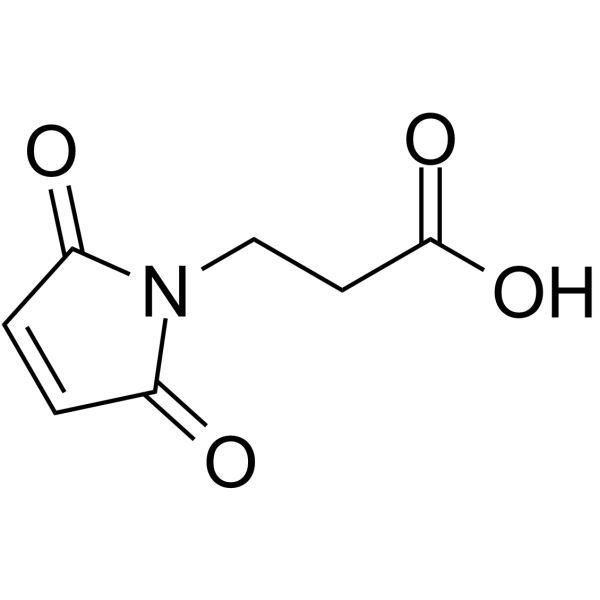
HY-42145
3-Maleimidopropionic acidPROTAC Linkers


Biological Activity
Description
In Vitro
N-(2-Aminoethyl)maleimide hydrochloride (AEM·HCl) functionalized CMC material (CMC-MAL) exhibits improved biocompatibility and mucoadhesive properties[1].
Low cytotoxicity: In a human gingival fibroblast (HGF-1) model, after 24 hours of treatment with CMC-MAL at concentrations of 0.1-5000 μg/mL, the relative cell viability exceeded 80%, with no significant differences in toxicity and no apparent trend of cell damage.
Basis for biosafety: CMC is a commonly used excipient in the pharmaceutical industry and has been proven to be biocompatible. AEM·HCl modification did not introduce toxicity, and its cytocompatibility was not significantly different from unmodified CMC.
N-(2-Aminoethyl)maleimide hydrochloride (AEM·HCl) functionalized CMC material (CMC-MAL) exhibits improved mucoadhesive properties[2].
1. Strong and persistent adhesion: Flow-through analysis showed that over 40% of the polymer remained on the mucosal surface after 1 hour of washing, while less than 30% of unmodified CMC remained.
2. Strong adhesive force: The viscosity of a mixture of 5% CMC-MAL and 5% mucin was 1.4 times that of 5% CMC + mucin. The maximum peel force and total adhesion work of CMC-MAL were significantly higher than those of unmodified CMC and chitosan (a first-generation mucoadhesive polymer).
3. Clear mechanism of action: Irreversible adhesion is achieved through the formation of covalent thioether bonds between the maleimide group and the thiol groups in the cysteine-rich domains of mucin; after pretreatment of the mucosa with cysteine, the adhesion force of CMC-MAL decreased significantly.
MedChemExpress (MCE) has not independently confirmed the accuracy of these methods. They are for reference only. Further protocols information, click here.
In Vivo
MedChemExpress (MCE) has not independently confirmed the accuracy of these methods. They are for reference only.


Chemical Information
-
CAS No. 134272-64-3
-
Appearance Solid
-
Molecular Weight 176.60
-
Formula C6H9ClN2O2
-
Color White to off-white
-
SMILES
O=C(C=C1)N(CCN)C1=O.[H]Cl
-
Synonyms
2-Maleimidoethylamine hydrochloride
-
Shipping
Room temperature in continental US; may vary elsewhere.
-
Storage
4°C, sealed storage, away from moisture and light
* In solvent : -80°C, 6 months; -20°C, 1 month (sealed storage, away from moisture and light)


Solvent & Solubility
In Vitro:
DMSO : 50 mg/mL (283.13 mM; ultrasonic and warming and heat to 60°C; Hygroscopic DMSO has a significant impact on the solubility of product, please use newly opened DMSO)
Please refer to the solubility information to select the appropriate solvent. Once prepared, please aliquot and store the solution to prevent product inactivation from repeated freeze-thaw cycles.
Storage method and period of stock solution: -80°C, 6 months; -20°C, 1 month (sealed storage, away from moisture and light). When stored at -80°C, please use it within 6 months. When stored at -20°C, please use it within 1 month.
Please refer to the solubility information to select the appropriate solvent. Once prepared, please aliquot and store the solution to prevent product inactivation from repeated freeze-thaw cycles.
Storage method and period of stock solution: -80°C, 6 months; -20°C, 1 month (sealed storage, away from moisture and light). When stored at -80°C, please use it within 6 months. When stored at -20°C, please use it within 1 month.
Concentration (start) × Volume (start) = Concentration (final) × Volume (final)

Protocols
-
Trophoblast Invasion Assay
The trophoblast invasion assay is commonly based on the Matrigel-coated Transwell invasion system, in which invasive cells migrate through a reconstituted basement membrane matrix toward a chemoattractant gradient, thereby modeling extracellular matrix (ECM) penetration and invasive behavior in vitro. The readout is typically the number of cells that traverse the Matrigel barrier and attach to the lower surface of a porous membrane, reflecting invasive capacity through ECM-like substrates and basement membrane components. This system was originally developed to quantify invasive cell behavior using Matrigel as a basement membrane analog in a Boyden chamber format.
-
Mitochondrial membrane-potential fluorescent assay
Mitochondrial membrane potential fluorescent assays estimate ΔΨm in living cells using lipophilic cationic dyes such as TMRM, TMRE, rhodamine 123, and JC-1, which accumulate in mitochondria according to membrane polarization; loss of signal after FCCP or CCCP treatment is interpreted as mitochondrial depolarization. TMRM/TMRE and rhodamine 123 are commonly used for semi-quantitative live-cell microscopy or flow cytometry, while JC-1 can report a shift from red aggregate fluorescence to green monomer fluorescence during depolarization; interpretation requires controls because dye concentration, quenching mode, cell type, dye efflux, and mitochondrial mass can affect fluorescence independently of ΔΨm.
-
Mitochondrial membrane-potential and mitochondrial mass staining
Mitochondrial membrane potential staining measures the electrochemical polarization across the mitochondrial inner membrane in live cells using lipophilic cationic fluorescent probes; early rhodamine-based work showed that selective mitochondrial dye accumulation is lost when the mitochondrial transmembrane potential is dissipated. JC-1 reports mitochondrial polarization by shifting from green monomer fluorescence to red J-aggregate fluorescence as dye concentration increases within energized mitochondria; therefore, the red/green fluorescence ratio is used as a relative readout of mitochondrial membrane potential. TMRE or TMRM staining provides a single-channel relative readout because these cationic rhodamine esters accumulate in polarized mitochondria, and lower fluorescence indicates reduced mitochondrial polarization when acquisition and dye-loading conditions are controlled. Mitochondrial mass staining is commonly performed with MitoTracker Green FM or related MitoTracker dyes as


Purity & Documentation
-
Data Sheet (277 KB)
-
SDS (394 KB)
- English - EN (394 KB)
- Français - FR (394 KB)
- Deutsch - DE (394 KB)
- Norwegian - NO (394 KB)
- Español - ES (394 KB)
- Swedish - SV (394 KB)
- Italian - IT (394 KB)
- Korean - KR (394 KB)
- Portuguese - PT (394 KB)
-
Handling Instructions (2659 KB)
References
[1]. Pornpitchanarong C, et al. Maleimide-functionalized carboxymethyl cellulose: A novel mucoadhesive polymer for transmucosal drug delivery. Carbohydr Polym. 2022 Jul 15;288:119368. [Content Brief]
[2]. Xu LP, et al. Amplified effect of surface charge on cell adhesion by nanostructures. Nanoscale. 2016 Jul 7;8(25):12540-3. [Content Brief]


Complete Stock Solution Preparation Table
Please refer to the solubility information to select the appropriate solvent. Once prepared, please aliquot and store the solution to prevent product inactivation from repeated freeze-thaw cycles.
Storage method and period of stock solution: -80°C, 6 months; -20°C, 1 month (sealed storage, away from moisture and light). When stored at -80°C, please use it within 6 months. When stored at -20°C, please use it within 1 month.
| Optional Solvent | Concentration Solvent Mass | 1 mg | 5 mg | 10 mg | 25 mg |
|---|---|---|---|---|---|
| DMSO | 1 mM | 5.6625 mL | 28.3126 mL | 56.6251 mL | 141.5628 mL |
| 5 mM | 1.1325 mL | 5.6625 mL | 11.3250 mL | 28.3126 mL | |
| 10 mM | 0.5663 mL | 2.8313 mL | 5.6625 mL | 14.1563 mL | |
| 15 mM | 0.3775 mL | 1.8875 mL | 3.7750 mL | 9.4375 mL | |
| 20 mM | 0.2831 mL | 1.4156 mL | 2.8313 mL | 7.0781 mL | |
| 25 mM | 0.2265 mL | 1.1325 mL | 2.2650 mL | 5.6625 mL | |
| 30 mM | 0.1888 mL | 0.9438 mL | 1.8875 mL | 4.7188 mL | |
| 40 mM | 0.1416 mL | 0.7078 mL | 1.4156 mL | 3.5391 mL | |
| 50 mM | 0.1133 mL | 0.5663 mL | 1.1325 mL | 2.8313 mL | |
| 60 mM | 0.0944 mL | 0.4719 mL | 0.9438 mL | 2.3594 mL | |
| 80 mM | 0.0708 mL | 0.3539 mL | 0.7078 mL | 1.7695 mL | |
| 100 mM | 0.0566 mL | 0.2831 mL | 0.5663 mL | 1.4156 mL |


N-(2-Aminoethyl)maleimide hydrochloride Related Classifications
HY-W068119A Related Classifications
 Powered by Bioz