1. GPCR/G Protein Metabolic Enzyme/Protease Autophagy Apoptosis
  2. Prostaglandin Receptor Endogenous Metabolite Autophagy Apoptosis
  3. Dinoprost

Dinoprost  (Synonyms: Prostaglandin F2α; PGF2α)

Art. -Nr.: HY-12956 Reinheit: 99.84%
Handling Instructions Technical Support

Dinoprost (Prostaglandin F2α) is an orally active, potent prostaglandin F (PGF) receptor (FP receptor) agonist. Dinoprost is a luteolytic hormone produced locally in the endometrial luminal epithelium and corpus luteum (CL). Dinoprost plays a key role in the onset and progression of labour.

Nur für Forschungszwecke. Wir verkaufen nicht an Patienten.

CAS. Nr. : 551-11-1

Größe Preis Verfügbarkeit Menge
Solid or liquid + Solvent (Highly Recommended)
10 mM * 1 mL in DMSO
ready for reconstitution
Auf Lager
Solution
10 mM * 1 mL in DMSO Auf Lager
Solid or liquid
5 mg Auf Lager
10 mg Auf Lager
25 mg Auf Lager
50 mg Auf Lager
100 mg Auf Lager
200 mg   Angebot einholen  
500 mg   Angebot einholen  

* Bitte wählen Sie Menge, bevor Sie Artikel hinzufügen.

This product is a controlled substance and not for sale in your territory.

Kundenbewertung

Based on 9 publication(s) in Google Scholar

Other Forms of Dinoprost:

Top Publications Citing Use of Products

    Dinoprost purchased from MedChemExpress. Usage Cited in: Phytomedicine. 2025 May 14:143:156866.  [Abstract]

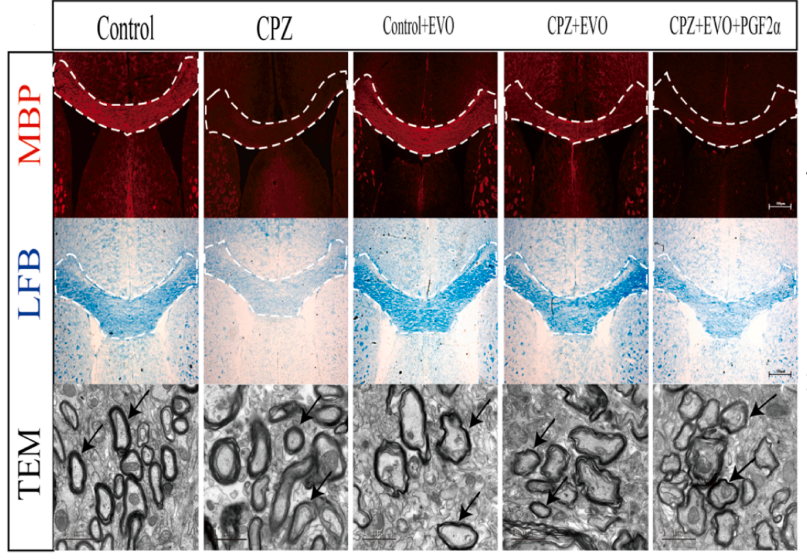
    Dinoprost (20 mg/kg/d for 10 days, intraperitoneally injected). Representative images of MBP and LFB staining (scale bar, 500 μm) (n = 6), and transmission electron microscopy (scale bar, 1 μm) (n = 6) in the corpus callosum region of different groups of mice.

    Dinoprost purchased from MedChemExpress. Usage Cited in: Phytomedicine. 2025 May 14:143:156866.  [Abstract]

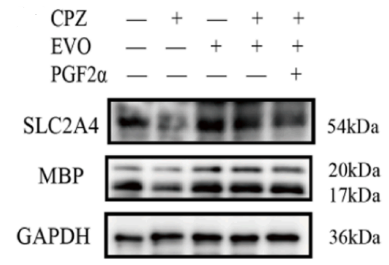
    Dinoprost (20 mg/kg/d for 10 days, intraperitoneally injected). Expression of SLC2A4 and MBP in the mouse corpus callosum determined and statistically analyzed by protein immunoblotting.

    Dinoprost purchased from MedChemExpress. Usage Cited in: Phytomedicine. 2025 May 14:143:156866.  [Abstract]

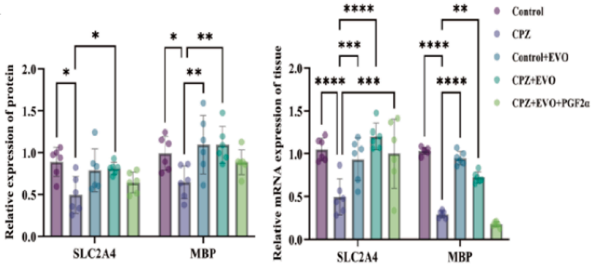
    Dinoprost (20 mg/kg/d for 10 days, intraperitoneally injected). Expression of SLC2A4 and MBP in the mouse corpus callosum determined and statistically analyzed by real-time PCR.

    Dinoprost purchased from MedChemExpress. Usage Cited in: Phytomedicine. 2025 May 14:143:156866.  [Abstract]

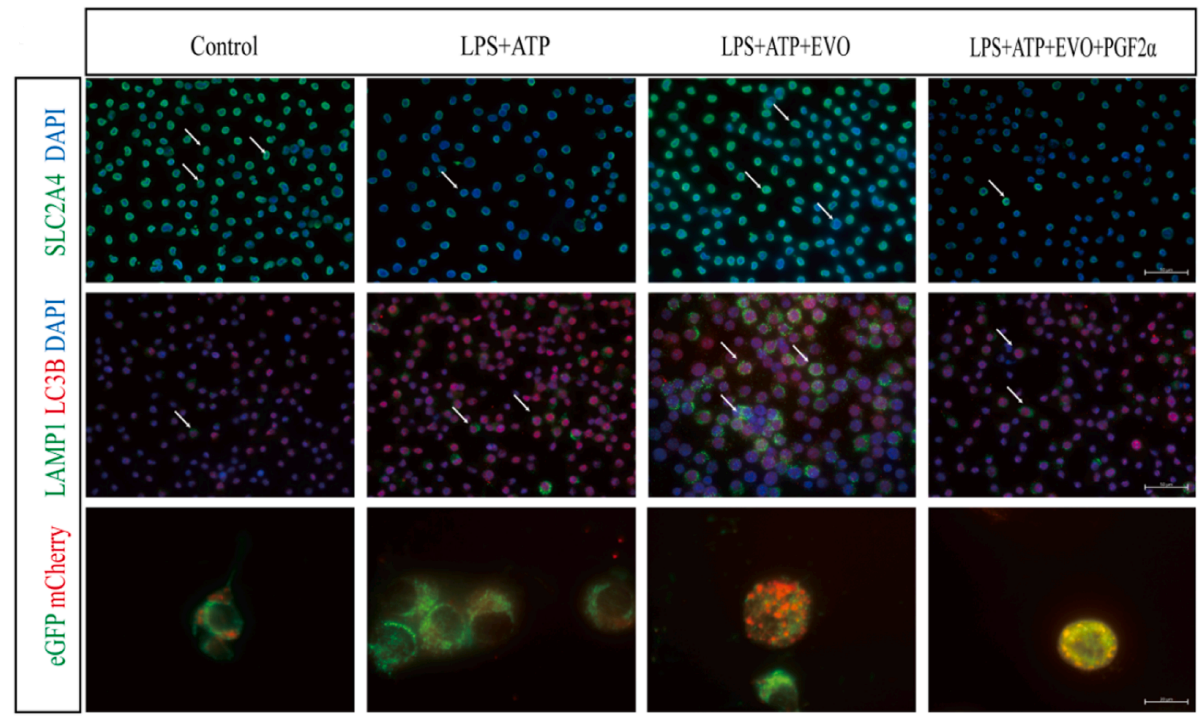
    LPS+ATP-induced pyroptosis treated with EVO (at different concentrations) and SLC2A4 inhibitor Dinoprost (PGF2α, 1 μM, 24 h) followed by eGFP-mCherry probe detection of autophagic flux (scale bar, 20 μm) and fluorescence detection of SLC2A4 (scale bar, 50 μm): LAMP1 (green), LC3B (red), and DAPI (blue) (scale bar, 50 μm).

    Dinoprost purchased from MedChemExpress. Usage Cited in: Phytomedicine. 2025 May 14:143:156866.  [Abstract]

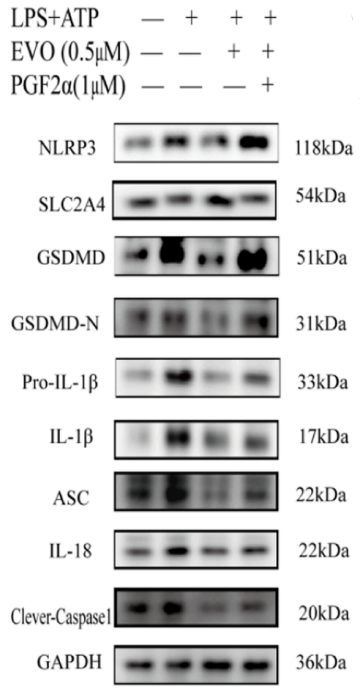
    Western blot analysis of pyroptotic proteins GSDMD, GSDMD-N, and NLRP3 inflammasome expression after LPS+ATP induced-pyroptosis, and EVO and SLC2A4 inhibitor Dinoprost (PGF2α, 1 μM, 24 h) treatment.

    Dinoprost purchased from MedChemExpress. Usage Cited in: Phytomedicine. 2025 May 14:143:156866.  [Abstract]

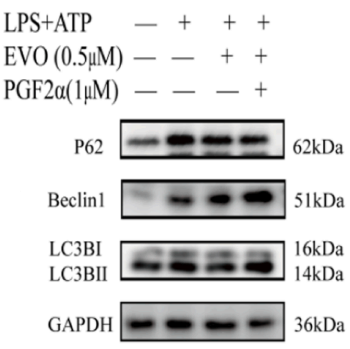
    Expressions of autophagy-related proteins P62, Beclin1, and LC3B detected by western blot after LPS+ATP induced-pyroptosis, and EVO and SLC2A4 inhibitor PGF2α treatment.

    Alle Prostaglandin Receptor Isoform-spezifische Produkte anzeigen:

    Alle Endogenous Metabolite Isoform-spezifische Produkte anzeigen:

    • Biologische Aktivität

    • Reinheit & Dokumentation

    • Verweise

    • Kundenbewertung

    Beschreibung

    Dinoprost (Prostaglandin F2α) is an orally active, potent prostaglandin F (PGF) receptor (FP receptor) agonist. Dinoprost is a luteolytic hormone produced locally in the endometrial luminal epithelium and corpus luteum (CL). Dinoprost plays a key role in the onset and progression of labour[1][2].

    IC50 & Target[1][2]

    FP Receptor


    Human Endogenous Metabolite


    Cellular Effect
    Cell Line Type Value Description References
    CHO IC50
    >10 3
    Compound: PGF2
    Affinity for Prostaglandin I2 receptor expressed in CHO cells
    Affinity for Prostaglandin I2 receptor expressed in CHO cells
    [PMID: 10715159]
    CHO IC50
    322 1
    Compound: PGF2
    Affinity for Prostanoid EP3 receptor expressed in CHO cell line
    Affinity for Prostanoid EP3 receptor expressed in CHO cell line
    [PMID: 10715159]
    NIH3T3 EC50
    24.5 1
    Compound: PGF2alpha
    Agonist activity at FP receptor in Swiss mouse 3T3 cells assessed as [3H]-IP accumulation by scintillation counting
    Agonist activity at FP receptor in Swiss mouse 3T3 cells assessed as [3H]-IP accumulation by scintillation counting
    [PMID: 19101156]
    CHO IC50
    4200 1
    Compound: PGF2
    Affinity for Prostanoid EP4 receptor expressed in CHO cells
    Affinity for Prostanoid EP4 receptor expressed in CHO cells
    [PMID: 10715159]
    COS-7 IC50
    7 1
    Compound: PGF2
    Affinity for human Prostanoid FP receptor expressed in COS-7 cells
    Affinity for human Prostanoid FP receptor expressed in COS-7 cells
    [PMID: 10715159]
    CHO IC50
    > 10000 1
    Compound: PGF2
    Affinity for Prostaglandin I2 receptor expressed in CHO cells
    Affinity for Prostaglandin I2 receptor expressed in CHO cells
    [PMID: 10715159]
    NIH3T3 EC50
    24.5 1
    Compound: PGF2alpha
    Agonist activity at FP receptor in Swiss mouse 3T3 cells assessed as [3H]-IP accumulation by scintillation counting
    Agonist activity at FP receptor in Swiss mouse 3T3 cells assessed as [3H]-IP accumulation by scintillation counting
    [PMID: 19101156]
    CHO IC50
    > 10000 1
    Compound: PGF2
    Affinity for Prostanoid EP2 receptor expressed in CHO cells
    Affinity for Prostanoid EP2 receptor expressed in CHO cells
    [PMID: 10715159]
    NIH3T3 EC50
    24.5 1
    Compound: PGF2 alpha
    Efficacy for stimulation of prostanoid FP receptor-linked phosphoinositide turnover in Swiss 3T3 mouse fibroblast cells
    Efficacy for stimulation of prostanoid FP receptor-linked phosphoinositide turnover in Swiss 3T3 mouse fibroblast cells
    [PMID: 15357985]
    CHO IC50
    > 10000 1
    Compound: PGF2
    Affinity for Prostanoid TP receptor expressed in CHO cells
    Affinity for Prostanoid TP receptor expressed in CHO cells
    [PMID: 10715159]
    K562 IC50
    >700 3
    Compound: 1
    In vitro antiproliferative activity was measured on human leukemia K562 cells
    In vitro antiproliferative activity was measured on human leukemia K562 cells
    10.1016/S0960-894X(00)80372-8
    COS-7 IC50
    380 1
    Compound: PGF2
    Affinity for Prostanoid EP1 receptor expressed in COS-7 cells.
    Affinity for Prostanoid EP1 receptor expressed in COS-7 cells.
    [PMID: 10715159]
    CHO IC50
    322 1
    Compound: PGF2
    Affinity for Prostanoid EP3 receptor expressed in CHO cell line
    Affinity for Prostanoid EP3 receptor expressed in CHO cell line
    [PMID: 10715159]
    COS-7 IC50
    7 1
    Compound: PGF2
    Affinity for human Prostanoid FP receptor expressed in COS-7 cells
    Affinity for human Prostanoid FP receptor expressed in COS-7 cells
    [PMID: 10715159]
    Oocyte IC50
    0.287 3
    Compound: Prostaglandin F2alpha
    TP_TRANSPORTER: inhibition of PGD2 uptake in Xenopus laevis oocytes
    TP_TRANSPORTER: inhibition of PGD2 uptake in Xenopus laevis oocytes
    [PMID: 10973807]
    COS-7 IC50
    380 1
    Compound: PGF2
    Affinity for Prostanoid EP1 receptor expressed in COS-7 cells.
    Affinity for Prostanoid EP1 receptor expressed in COS-7 cells.
    [PMID: 10715159]
    CHO IC50
    4200 1
    Compound: PGF2
    Affinity for Prostanoid EP4 receptor expressed in CHO cells
    Affinity for Prostanoid EP4 receptor expressed in CHO cells
    [PMID: 10715159]
    HEK293 IC50
    4500 1
    Compound: PGF2
    Affinity for human Prostaglandin D2 receptor expressed in HEK293 cells
    Affinity for human Prostaglandin D2 receptor expressed in HEK293 cells
    [PMID: 10715159]
    HEK293 IC50
    4500 1
    Compound: PGF2
    Affinity for human Prostaglandin D2 receptor expressed in HEK293 cells
    Affinity for human Prostaglandin D2 receptor expressed in HEK293 cells
    [PMID: 10715159]
    K562 IC50
    > 700 3
    Compound: 1
    In vitro antiproliferative activity was measured on human leukemia K562 cells
    In vitro antiproliferative activity was measured on human leukemia K562 cells
    10.1016/S0960-894X(00)80372-8
    NIH3T3 EC50
    24.5 1
    Compound: PGF2 alpha
    Efficacy for stimulation of prostanoid FP receptor-linked phosphoinositide turnover in Swiss 3T3 mouse fibroblast cells
    Efficacy for stimulation of prostanoid FP receptor-linked phosphoinositide turnover in Swiss 3T3 mouse fibroblast cells
    [PMID: 15357985]
    NIH3T3 EC50
    24.5 1
    Compound: PGF2alpha
    Agonist activity at FP receptor in Swiss mouse 3T3 cells assessed as [3H]-IP accumulation by scintillation counting
    Agonist activity at FP receptor in Swiss mouse 3T3 cells assessed as [3H]-IP accumulation by scintillation counting
    [PMID: 19101156]
    Oocyte IC50
    0.287 3
    Compound: Prostaglandin F2alpha
    TP_TRANSPORTER: inhibition of PGD2 uptake in Xenopus laevis oocytes
    TP_TRANSPORTER: inhibition of PGD2 uptake in Xenopus laevis oocytes
    [PMID: 10973807]
    In Vitro

    Dinoprost (Prostaglandin F2α; 1 μM; for 24 hours) induces ER stress, autophagy, and apoptosis in goat luteal cells[1].
    Dinoprost (1 μM; for 24 hours) significantly increases the expression of GRP78 and UPR sensors[1].

    MedChemExpress (MCE) has not independently confirmed the accuracy of these methods. They are for reference only.

    Apoptosis Analysis[1]

    Cell Line: Goat luteal cells
    Concentration: 1 μM
    Incubation Time: For 24 hours
    Result: Significantly increased the apoptotic rate (15.62±3.12%).

    Cell Autophagy Assay[1]

    Cell Line: Goat luteal cells
    Concentration: 1 μM
    Incubation Time: For 24 hours
    Result: There was extensive overlap between LC3 and LAMP1 in luteal cells and autophagolysosomes were formed in goat luteal cells.

    Western Blot Analysis[1]

    Cell Line: Goat luteal cells
    Concentration: 1 μM
    Incubation Time: For 24 hours
    Result: The expression of GRP78 and UPR sensors including cleaved ATF6, phosphorylated-EIF2S1, EIF2S1, ATF4, phosphorylated-IRE1, autophagy-related protein LC3-II, and pro-apoptosis factor cleaved Caspase3 increased significantly in the cells.
    Klinische Studie
    Molekulargewicht

    354.48

    Formel

    C20H34O5

    CAS. Nr.
    Appearance

    <25°C Solid,>35°C Liquid

    Color

    White to light brown

    SMILES

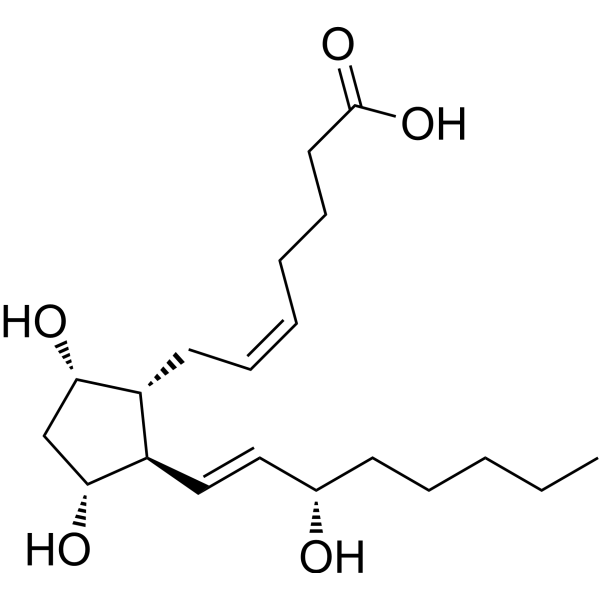
    CCCCC[C@H](O)/C=C/[C@H]1[C@H](O)C[C@H](O)[C@@H]1C/C=C\CCCC(O)=O

    Structure Classification
    Initial Source
    Versand

    Room temperature in continental US; may vary elsewhere.

    Speicherung
    Pure form -20°C 3 years
    4°C 2 years
    In solvent -80°C 6 months
    -20°C 1 month
    Lösungsmittel & Löslichkeit
    In Vitro: 

    DMSO : 100 mg/mL (282.10 mM; Need ultrasonic; Hygroscopic DMSO has a significant impact on the solubility of product, please use newly opened DMSO)

    Preparing
    Stock Solutions
    Concentration Solvent Mass 1 mg 5 mg 10 mg
    1 mM 2.8210 mL 14.1052 mL 28.2103 mL
    5 mM 0.5642 mL 2.8210 mL 5.6421 mL
    View the Complete Stock Solution Preparation Table

    * Please refer to the solubility information to select the appropriate solvent. Once prepared, please aliquot and store the solution to prevent product inactivation from repeated freeze-thaw cycles.
    Storage method and period of stock solution: -80°C, 6 months; -20°C, 1 month. When stored at -80°C, please use it within 6 months. When stored at -20°C, please use it within 1 month.

    • Molaritätsrechner

    • Verdünnungsrechner

    Mass (g) = Concentration (mol/L) × Volume (L) × Molecular Weight (g/mol)

    Mass
    =
    Concentration
    ×
    Volume
    ×
    Molecular Weight *

    Concentration (start) × Volume (start) = Concentration (final) × Volume (final)

    This equation is commonly abbreviated as: C1V1 = C2V2

    Concentration (start)

    C1

    ×
    Volume (start)

    V1

    =
    Concentration (final)

    C2

    ×
    Volume (final)

    V2

    In Vivo:

    Select the appropriate dissolution method based on your experimental animal and administration route.

    For the following dissolution methods, please ensure to first prepare a clear stock solution using an In Vitro approach and then sequentially add co-solvents:
    To ensure reliable experimental results, the clarified stock solution can be appropriately stored based on storage conditions. As for the working solution for in vivo experiments, it is recommended to prepare freshly and use it on the same day.
    The percentages shown for the solvents indicate their volumetric ratio in the final prepared solution. If precipitation or phase separation occurs during preparation, heat and/or sonication can be used to aid dissolution.

    • Protocol 1

      Add each solvent one by one:  10% DMSO    40% PEG300    5% Tween-80    45% Saline

      Solubility: ≥ 2.5 mg/mL (7.05 mM); Clear solution

      This protocol yields a clear solution of ≥ 2.5 mg/mL (saturation unknown).

      Taking 1 mL working solution as an example, add 100 μL DMSO stock solution (25.0 mg/mL) to 400 μL PEG300, and mix evenly; then add 50 μL Tween-80 and mix evenly; then add 450 μL Saline to adjust the volume to 1 mL.

      Preparation of Saline: Dissolve 0.9 g sodium chloride in ddH₂O and dilute to 100 mL to obtain a clear Saline solution.
    • Protocol 2

      Add each solvent one by one:  10% DMSO    90% (20% SBE-β-CD in Saline)

      Solubility: ≥ 2.5 mg/mL (7.05 mM); Clear solution

      This protocol yields a clear solution of ≥ 2.5 mg/mL (saturation unknown).

      Taking 1 mL working solution as an example, add 100 μL DMSO stock solution (25.0 mg/mL) to 900 μL 20% SBE-β-CD in Saline, and mix evenly.

      Preparation of 20% SBE-β-CD in Saline (4°C, storage for one week): 2 g SBE-β-CD powder is dissolved in 10 mL Saline, completely dissolve until clear.
    In Vivo Dissolution Calculator
    Please enter the basic information of animal experiments:

    Dosage

    mg/kg

    Animal weight
    (per animal)

    g

    Dosing volume
    (per animal)

    μL

    Number of animals

    Recommended: Prepare an additional quantity of animals to account for potential losses during experiments.
    Please enter your animal formula composition:
    %
    DMSO +
    +
    %
    Tween-80 +
    %
    Saline
    Recommended: Keep the proportion of DMSO in working solution below 2% if your animal is weak.
    The co-solvents required include: DMSO, . All of co-solvents are available by MedChemExpress (MCE). , Tween 80. All of co-solvents are available by MedChemExpress (MCE).
    Calculation results:
    Working solution concentration: mg/mL
    Method for preparing stock solution: mg drug dissolved in μL  DMSO (Stock solution concentration: mg/mL).
    The concentration of the stock solution you require exceeds the measured solubility. The following solution is for reference only. If necessary, please contact MedChemExpress (MCE).
    Method for preparing in vivo working solution for animal experiments: Take μL DMSO stock solution, add μL . μL , mix evenly, next add μL Tween 80, mix evenly, then add μL Saline.
     If the continuous dosing period exceeds half a month, please choose this protocol carefully.
    Please ensure that the stock solution in the first step is dissolved to a clear state, and add co-solvents in sequence. You can use ultrasonic heating (ultrasonic cleaner, recommended frequency 20-40 kHz), vortexing, etc. to assist dissolution.
    Reinheit & Dokumentation

    Purity: 99.84%

    Verweise

    Complete Stock Solution Preparation Table

    * Please refer to the solubility information to select the appropriate solvent. Once prepared, please aliquot and store the solution to prevent product inactivation from repeated freeze-thaw cycles.
    Storage method and period of stock solution: -80°C, 6 months; -20°C, 1 month. When stored at -80°C, please use it within 6 months. When stored at -20°C, please use it within 1 month.

    Optional Solvent Concentration Solvent Mass 1 mg 5 mg 10 mg 25 mg
    DMSO 1 mM 2.8210 mL 14.1052 mL 28.2103 mL 70.5258 mL
    5 mM 0.5642 mL 2.8210 mL 5.6421 mL 14.1052 mL
    10 mM 0.2821 mL 1.4105 mL 2.8210 mL 7.0526 mL
    15 mM 0.1881 mL 0.9403 mL 1.8807 mL 4.7017 mL
    20 mM 0.1411 mL 0.7053 mL 1.4105 mL 3.5263 mL
    25 mM 0.1128 mL 0.5642 mL 1.1284 mL 2.8210 mL
    30 mM 0.0940 mL 0.4702 mL 0.9403 mL 2.3509 mL
    40 mM 0.0705 mL 0.3526 mL 0.7053 mL 1.7631 mL
    50 mM 0.0564 mL 0.2821 mL 0.5642 mL 1.4105 mL
    60 mM 0.0470 mL 0.2351 mL 0.4702 mL 1.1754 mL
    80 mM 0.0353 mL 0.1763 mL 0.3526 mL 0.8816 mL
    100 mM 0.0282 mL 0.1411 mL 0.2821 mL 0.7053 mL
    • No file chosen (Maximum size is: 1024 Kb)
    • If you have published this work, please enter the PubMed ID.
    • Your name will appear on the site.
    Help & FAQs
    • Do most proteins show cross-species activity?

      Species cross-reactivity must be investigated individually for each product. Many human cytokines will produce a nice response in mouse cell lines, and many mouse proteins will show activity on human cells. Other proteins may have a lower specific activity when used in the opposite species.

    Ihre kürzlich angesehenen Produkte:

    Online-Anfrage

    Your information is safe with us. * Required Fields.

    Produktname


    Requested Quantity *

    Name des Antragstellers *


    Anrede

    E-Mail-Addresse *


    Telefonnummer *

    Department


    Name der Organisation *

    City

    Bundesland

    Country or Region *


    Bemerkungen

    Massenanfrage

    Inquiry Information

    Produktname:
    Dinoprost
    Art. -Nr.:
    HY-12956
    Menge:
    MCE Japan Authorized Agent: