



HDAC
Histone deacetylases
HDAC (Histone deacetylases) are a class of enzymes that remove acetyl groups (O=C-CH3) from an ε-N-acetyl lysine amino acid on ahistone, allowing the histones to wrap the DNA more tightly. This is important because DNA is wrapped around histones, and DNA expression is regulated by acetylation and de-acetylation. Its action is opposite to that of histone acetyltransferase. HDAC proteins are now also called lysine deacetylases (KDAC), to describe their function rather than their target, which also includes non-histone proteins. Together with the acetylpolyamine amidohydrolases and the acetoin utilization proteins, the histone deacetylases form an ancient protein superfamily known as the histone deacetylase superfamily.
HDAC Isoform Specific Products
-
HDAC
(386)
View all products
-
HDAC1
(316)
View all products
-
HDAC2
(211)
View all products
-
HDAC3
(203)
View all products
-
HDAC4
(72)
View all products
-
HDAC5
(56)
View all products
-
HDAC6
(332)
View all products
-
HDAC7
(53)
View all products
-
HDAC8
(186)
View all products
-
HDAC9
(41)
View all products
-
HDAC10
(66)
View all products
-
HDAC11
(71)
View all products
-
HD1
(3)
View all products
-
HD2
(4)
View all products
All Product Categories
-
HDAC Inhibitors
(775)
View all products
-
HDAC Antagonists
(3)
View all products
-
HDAC Activators
(14)
View all products
-
HDAC Modulators
(4)
View all products
-
HDAC MDM2 Inhibitor
(1)
View all products
-
HDAC Degraders
(43)
View all products
-
HDAC Controls
(4)
View all products
-
HDAC Substrates
(3)
View all products
-
HDAC Ligands
(11)
View all products
-
HDAC Related Products (906)
Related Products (906)

-
Antibodies (16)
-
HDAC Signaling Pathway
-
HDAC Isoform Comparison
-
PROTAC HDAC8 Degrader-3
 0 ImagesCat. No.: HY-181023PROTAC HDAC8 Degrader-3 (Compound BP1) is an efficient and selective HDAC8 PROTAC degrader with a DC50 of 20 nM. PROTAC HDAC8 Degrader-3 exhibits IC50 for HDAC8 and CRBN of 0.46 and 7.5 μM, respectively. PROTAC HDAC8 Degrader-3 exhibits potent anti-proliferative activity against MM.1S and HL-60 cells. PROTAC HDAC8 Degrader-3 can be used for research on multiple myeloma and acute myeloid leukemia.
-
Syk/HDAC6-IN-1
 0 ImagesCat. No.: HY-184415Syk/HDAC6-IN-1 is a dual SYK/HDAC6 selective inhibitor with IC50 values of 0.19 nM (SYK) and 0.66 nM (HDAC6). Syk/HDAC6-IN-1 downregulates p-SYK to block downstream AKT/FOXO1 signaling, elevates acetylated histone H3 and α-tubulin via HDAC suppression, represses SREBF1 -mediated lipid biosynthetic pathways, triggers G0/G1 cell cycle arrest and robust mitochondrial-dependent caspase-3-mediated apoptosis in leukemia cells. Syk/HDAC6-IN-1 can be used for the research of FLT3-mutant acute myeloid leukemia.
-
PF1070A
 0 ImagesCat. No.: HY-P3303CAS No.: 146556-41-4PF1070A is a Pf HDAC1 inhibitor with an IC50 of 0.0011 μM. By inhibiting histone deacetylase (HDAC) activity, PF1070A induces histone H4 hyperacetylation and chromatin remodeling, arrests cell cycle progression prior to nuclear division, and exhibits antimalarial activity against multidrug-resistant Plasmodium falciparum strains with high selectivity. PF1070A is suitable for use in malaria research.
-
ZSNI-21
 0 ImagesCat. No.: HY-172394ZSNI-21 is a ADAM17/HDAC2 inhibitor with ADAM17 IC50 0.939 μM and HDAC2 IC50 0.844 μM. ZSNI-21 regulates the expression of apoptosis-related proteins (Bax, Bcl-2) and Cyclin D1, and induces apoptosis.. ZSNI-21 can be used for the research of hepatocellular carcinoma, breast cancer, and non-small cell lung cancer.
-
NR160
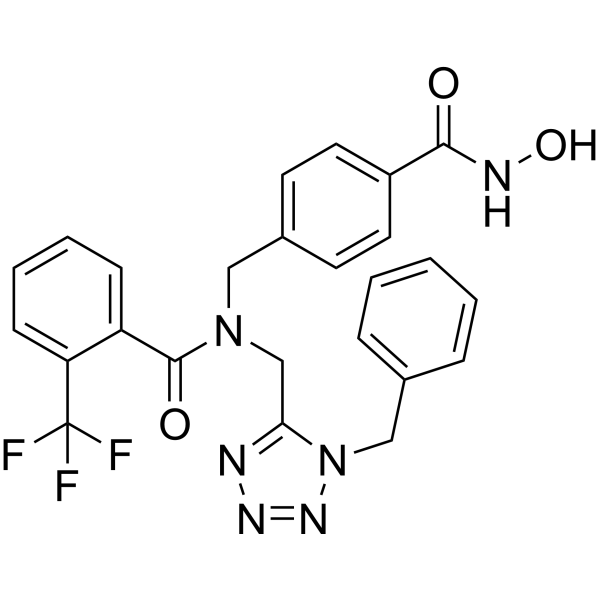 0 ImagesNR160 is a selective HDAC6 inhibitor with an IC50 value of 30 nM. NR160 shows low cytotoxicity against leukemia cell line. NR160 augments the apoptosis induction of Bortezomib (HY-10227) (proteasome inhibitor), Epirubicin (HY-13624) and Daunorubicin (HY-13062A) significantly.
-
SAP15
 0 ImagesCat. No.: HY-P10462CAS No.: 1403753-45-6Synonyms: Synthetic anti-inflammatory peptide 15SAP15 (Synthetic anti-inflammatory peptide 15) is a synthetic anti-inflammatory peptide consisting of 15 amino acids designed from human beta-defensin 3. SAP15 has the ability to penetrate cells and is able to induce downregulation of intracellular inflammation. SAP15 inhibits inflammation by inhibiting the phosphorylation of HDAC5 and thereby reducing the phosphorylation of NF-κB p65. SAP15 inhibits HDAC5 and NF-κB p65 phosphorylation in LPS (HY-D1056)-induced macrophages. SAP15 increases the expression of aggrecan and type II collagen and decreases the expression of osteocalcin in LPS-induced chondrocytes. SAP15 can be used in the study of inflammation regulation and anti-inflammatory therapy of biomaterials.
-
PHD2/HDACs-IN-1
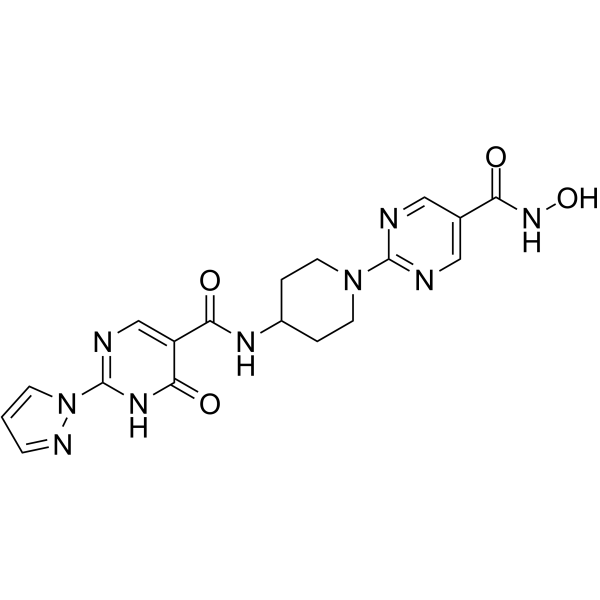 0 ImagesCat. No.: HY-144332CAS No.: 2339867-53-5
-
Valproic acid sodium (2:1)
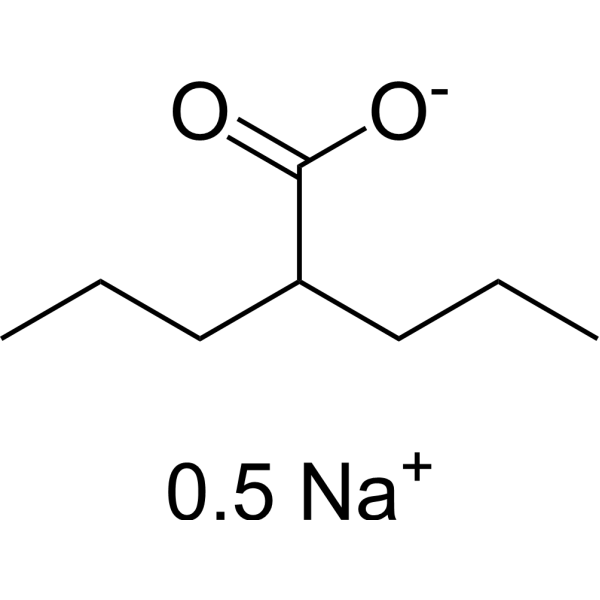 0 ImagesCat. No.: HY-10585BCAS No.: 76584-70-8Synonyms: Sodium Valproate (2:1); VPA sodium (2:1); 2-Propylpentanoic acid sodium (2:1)Valproic acid (VPA) sodium (2:1) is an orally active HDAC inhibitor, with IC50 in the range of 0.5 and 2 mM, also inhibits HDAC1 (IC50, 400 μM), and induces proteasomal degradation of HDAC2. Valproic acid sodium (2:1) activates Notch1 signaling and inhibits proliferation in small cell lung cancer (SCLC) cells. Valproic acid sodium (2:1) is used in the treatment of epilepsy, bipolar disorder, metabolic disease, HIV infection and prevention of migraine headaches.
-
YF479
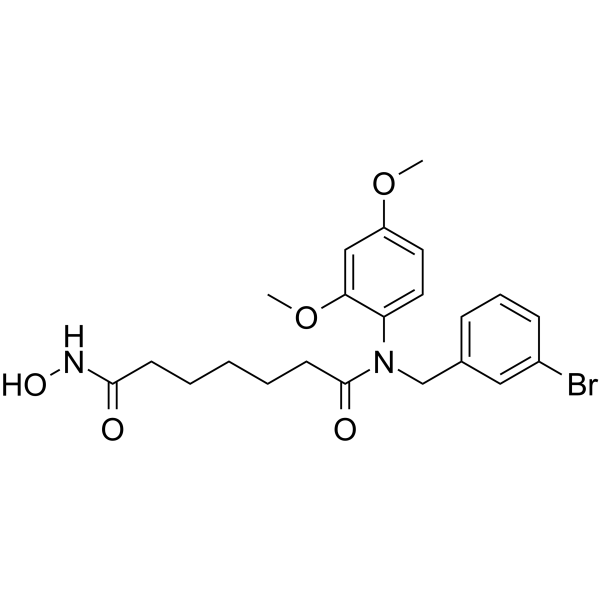 0 ImagesCat. No.: HY-120046CAS No.: 1803281-22-2YF479 is a potent inhibitor of histone deacetylase. YF479 abates cell viability, suppresses colony formation and tumor cell motility. YF479 significantly inhibits breast tumor growth and metastasis. YF479 has the potential for the research of clinical trials for breast cancer.

-
CYP17A1/HDAC6-IN-1
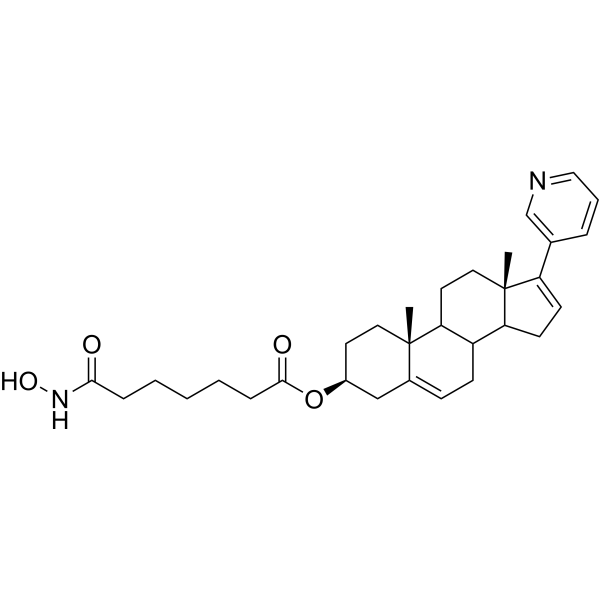 0 ImagesCat. No.: HY-163359CAS No.: 3047489-22-2CYP17A1/HDAC6-IN-1 (compound 12) is a potent inhibitor of CYP17A1/HDAC6, with IC50 of 0.284μM and 0.6015 μM,respectively. CYP17A1/HDAC6-IN-1 has anti-tumor activity.
-
HDAC8-IN-2
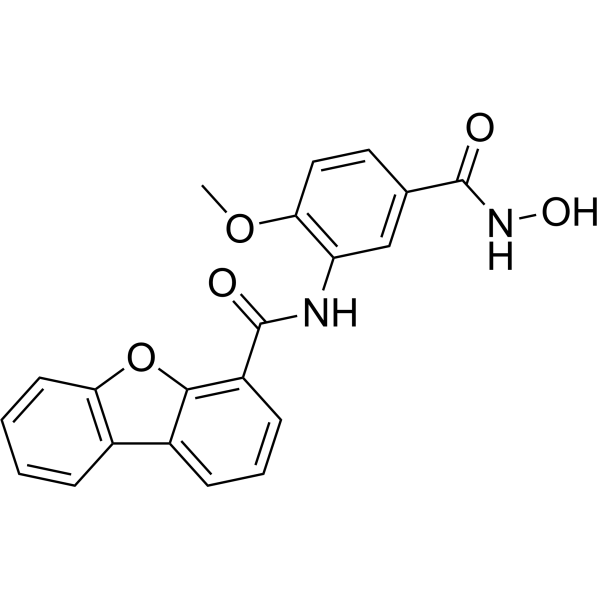 0 ImagesCat. No.: HY-144098CAS No.: 2824131-20-4HDAC8-IN-2 (compound 5o) is a potent HDAC8 inhibitor, with IC50 values of 0.27 and 0.32 μM for smHDAC8 (Schistosoma mansoni histone deacetylase 8) and hHDAC8, respectively. HDAC8-IN-2 shows significant killing of the schistosome larvae. HDAC8-IN-2 markedly impairs egg laying of adult worm pairs.

-
FT108
 0 ImagesCat. No.: HY-182720CAS No.: 2379645-28-8FT108 is a selective HDAC6 inhibitor with an IC50 of 0.026 μM. FT108 exhibits only modest in vitro activity against HDAC3 and HDAC8 with IC50 values of 6.68 and 4.07 μM. FT108 increases acetylation of tubulin and has little to no effect on acetylated histone H3 levels. FT108 lacks activity against myeloproliferative neoplasm cell lines, and does not suppress JAK2 phosphorylation or its downstream targets pSTAT3 and pSTAT5.
-
(E/Z)-Dacinostat
 0 ImagesCat. No.: HY-116619CAS No.: 591207-53-3Synonyms: (E/Z)-NVP-LAQ824; (E/Z)-LAQ824(E/Z)-Dacinostat ((E/Z)-NVP-LAQ824) is a histone deacetylase inhibitor that has the ability to induce apoptosis and enhance the activity of fludarabine in killing leukemia cells. (E/Z)-Dacinostat can trigger the production of reactive oxygen species (ROS) and DNA damage, enhance the killing effect of fludarabine on leukemia cells, and induce apoptosis. Its mechanism is related to the regulation of DNA repair processes and intracellular signaling pathways.
-
YM1240
 0 ImagesCat. No.: HY-184270YM1240 is an orally active dual EZH2/HDAC inhibitor with human EZH2 IC50 0.342 μM and human HDAC IC50 0.12 μM. YM1240 inhibits EZH2 pathway to reduce H3K27me3 levels, inhibits HDAC pathway to increase H3K9ac and H4ac levels. YM1240 suppresses proliferation, induces apoptosis, induces cell cycle arrest in lymphoma cells. YM1240 exhibits antitumor efficacy in lymphoma xenograft models. YM1240 can be used for the research of lymphoma.
-
HDAC3-IN-4
 0 ImagesCat. No.: HY-159172CAS No.: 2988762-46-3
-
FITC-SAHA
 0 ImagesCat. No.: HY-164816CAS No.: 1160823-10-8FITC-SAHA is SAHA (HY-10221) conjugated with fluorescein. SAHA is an inhibitor of histone deacetylase (HDAC). FITC-SAHA can be used in cancer and Alzheimer's disease related research.
-
SK-7041
 0 ImagesCat. No.: HY-121512CAS No.: 617690-98-9
-
HDAC1-IN-4
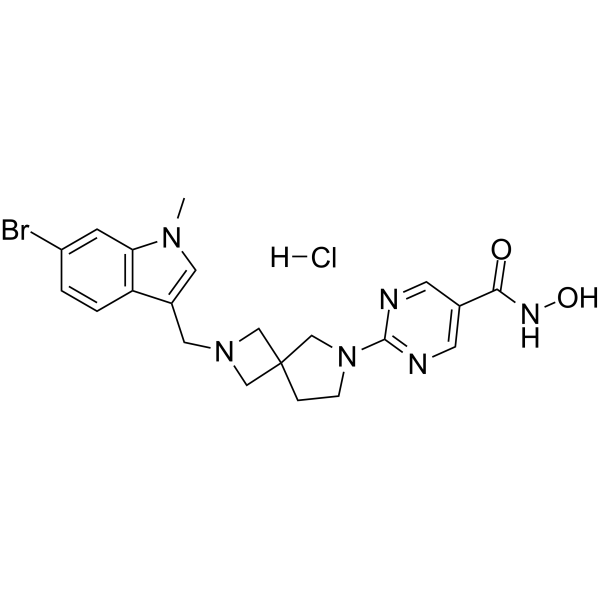 0 ImagesCat. No.: HY-144298CAS No.: 2482998-39-8HDAC1-IN-4 (JX34) is a potent Plasmodium falciparum HDAC1 inhibitor shows antimalarial activity (IC50 < 5 nM) and lower cytotoxicity.




