



HDAC
Histone deacetylases
HDAC (Histone deacetylases) are a class of enzymes that remove acetyl groups (O=C-CH3) from an ε-N-acetyl lysine amino acid on ahistone, allowing the histones to wrap the DNA more tightly. This is important because DNA is wrapped around histones, and DNA expression is regulated by acetylation and de-acetylation. Its action is opposite to that of histone acetyltransferase. HDAC proteins are now also called lysine deacetylases (KDAC), to describe their function rather than their target, which also includes non-histone proteins. Together with the acetylpolyamine amidohydrolases and the acetoin utilization proteins, the histone deacetylases form an ancient protein superfamily known as the histone deacetylase superfamily.
HDAC Isoform Specific Products
-
HDAC
(387)
View all products
-
HDAC1
(312)
View all products
-
HDAC2
(208)
View all products
-
HDAC3
(200)
View all products
-
HDAC4
(71)
View all products
-
HDAC5
(56)
View all products
-
HDAC6
(327)
View all products
-
HDAC7
(53)
View all products
-
HDAC8
(185)
View all products
-
HDAC9
(41)
View all products
-
HDAC10
(66)
View all products
-
HDAC11
(70)
View all products
-
HD1
(3)
View all products
-
HD2
(4)
View all products
All Product Categories
-
HDAC Inhibitors
(771)
View all products
-
HDAC Antagonists
(3)
View all products
-
HDAC Activators
(14)
View all products
-
HDAC Modulators
(4)
View all products
-
HDAC MDM2 Inhibitor
(1)
View all products
-
HDAC Degraders
(41)
View all products
-
HDAC Controls
(3)
View all products
-
HDAC Substrates
(3)
View all products
-
HDAC Ligands
(10)
View all products
-
HDAC Related Products (900)
Related Products (900)

-
Antibodies (16)
-
HDAC Signaling Pathway
-
HDAC Isoform Comparison
-
PI3K/HDAC-IN-2
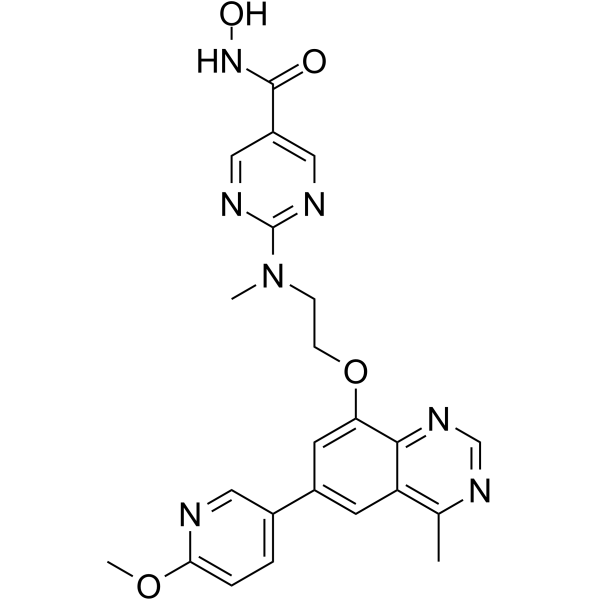 0 ImagesCat. No.: HY-146159CAS No.: 2361418-65-5PI3K/HDAC-IN-2 is a potent dual PI3K/HDAC inhibitor with IC50s of 226 nM, 279 nM, 467 nM, 29 nM for PI3Kα, PI3Kβ, PI3Kγ, PI3Kδ, respectively, and IC50s of 1.3 nM, 3.4 nM, 972 nM, 17 nM, 12 nM for HDAC1, HDAC2, HDC4, HDAC6, HDAC8, respectively. PI3K/HDAC-IN-2 exhibits PI3Kδ and class I and IIb HDAC selectivity. PI3K/HDAC-IN-2 has remarkable anticancer effects.
-
HDACs/EZH2-IN-1
 0 ImagesCat. No.: HY-169400HDACs/EZH2-IN-1 (Compound 22a) is a HDACs/EZH2 inhibitor (EZH2 Y641N inhibition rate at 50 nM: 98%), with selective inhibition against HDAC1 and HDAC6 (IC50: 0.23 μM and 0.07 μM, respectively). HDACs/EZH2-IN-1 exerts a antiproliferative effect on diffuse large B-cell lymphoma cells harboring an EZH2 mutation and on various acute myeloid leukemia cells. HDACs/EZH2-IN-1 has the ability to induce cell differentiation and Apoptosis.
-
HDAC3/BRD4-IN-1
 0 ImagesCat. No.: HY-170841HDAC3/BRD4-IN-1 (compound 26n) is an inhibitor of HDAC3/BRD4 with an IC50 of 8 nM for HDAC3 (IC50s are 220 nM and 120 nM for HDAC1 and HDAC2, respectively). HDAC3/BRD4-IN-1 has anti-tumor and anti-proliferative effects by upregulating Ac-H3 and downregulating c-Myc. The half-life of HDAC3/BRD4-IN-1 in human liver microsomes is 29.36 min.
-
Estrogen receptor β/HDAC probe 1
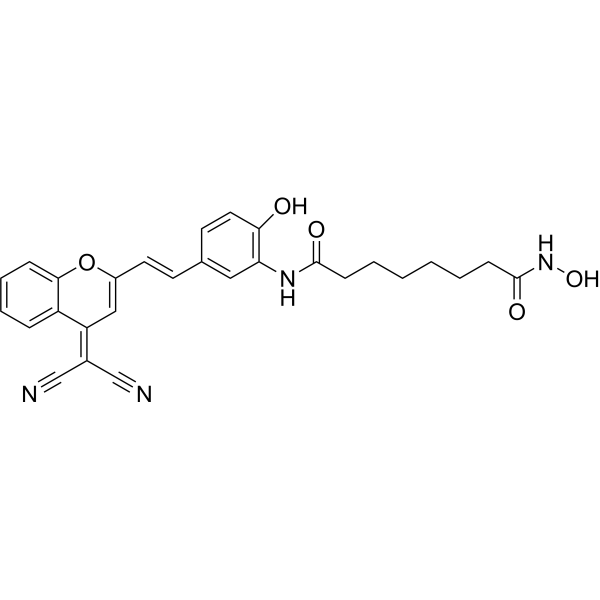 0 ImagesCat. No.: HY-D2280CAS No.: 3057270-84-2Estrogen receptor β/HDAC probe 1 (compound P1) is a near-infrared fluorescent probe that dual-targets the estrogen receptor (Estrogen Receptor/ERR) β/histone deacetylase HDAC.
-
Belinostat-d5
 0 ImagesCat. No.: HY-10225SCAS No.: 2130852-65-0Synonyms: PXD101-d5; PX105684-d5Belinostat-d5 (PXD101-d5) is the deuterium labeled Belinostat (HY-10225). Belinostat (PXD101; PX105684) is a potent HDAC inhibitor with an IC50 of 27 nM in HeLa cell extracts.
-
YKL-05-093
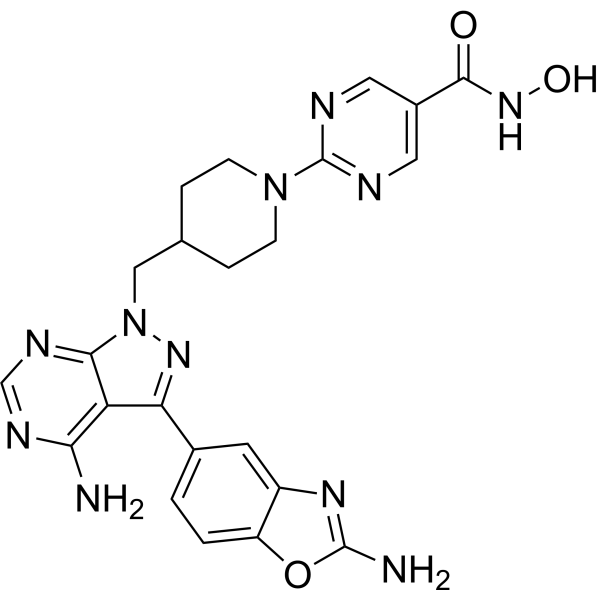
 0 ImagesCat. No.: HY-101149CAS No.: 2172616-44-1YKL-05-093 is a salt-induced kinase (SIK) inhibitor (SIK2: Kd = 7.1 nM). YKL-05-093 reduces the phosphorylation level of HDAC4/5/CRTC2, inhibits SOST expression, and stimulates RANKL expression in vitro and in vivo. YKL-05-093 can be used in research on bone diseases.
-
HDAC1-IN-3
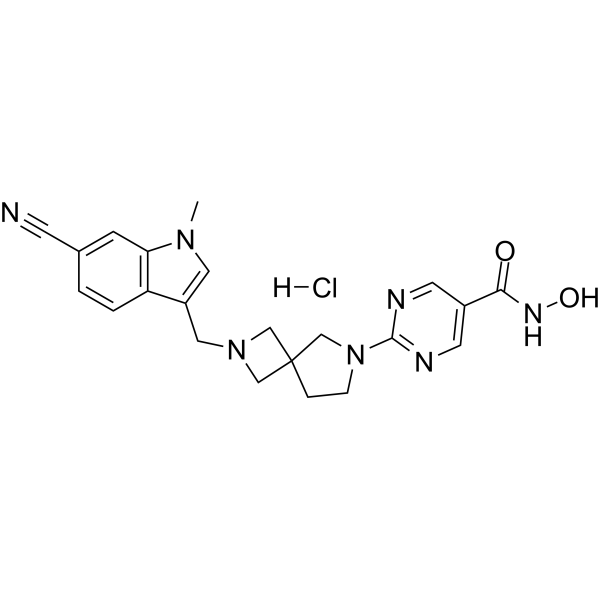 0 ImagesCat. No.: HY-144297CAS No.: 2482998-35-4
-
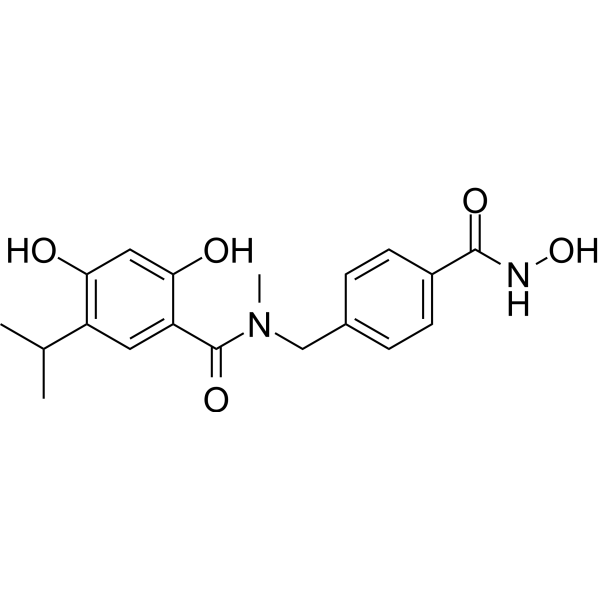
KH-1
 0 ImagesCat. No.: HY-P11901KH-1 is a KRASG12D/HDAC2 dual-target inhibitor with Kd values of 11.63 nM and 20.17 nM, respectively. KH-1 induces pancreatic cell apoptosis, cell cycle arrest, and inhibits cell proliferation, invasion and migration, as well as suppresses tumor growth in pancreatic cancer xenograft models. KH-1 can be used for the research of pancreatic cancer.
-
Wee1/HDAC-IN-1
 0 ImagesCat. No.: HY-179272CAS No.: 3037071-29-4Wee1/HDAC-IN-1 is a dual Wee1/HDAC inhibitor with an IC50 of 1.2 nM for Wee1 and IC50 values of 196 nM for HDAC1, 156 nM for HDAC3, and 55 nM for HDAC6. Wee1/HDAC-IN-1 exhibits strong antiproliferative activity against MV4-11 cells with an IC50 of 0.076 μM. Wee1/HDAC-IN-1 selectively binds to Wee1 and HDACs. Wee1/HDAC-IN-1 interferes with DNA damage repair pathways and induces apoptosis in MV4-11 cells. Wee1/HDAC-IN-1 Wee1/HDAC-IN-1 can be used for the research of acute myeloid leukemia (AML).
-
CM-545
 0 ImagesCat. No.: HY-119316ACAS No.: 1624792-70-6
-
PySAHA
 0 ImagesCat. No.: HY-174854PySAHA is a multifunctional HDAC inhibitor. PySAHA can degrade intracellular HDAC via a hydrophobic tagging mechanism. PySAHA also possesses photodynamic therapeutic activity and can generate reactive oxygen species under light irradiation. PySAHA can inhibit the proliferation, migration and induce cell apoptosis of breast cancer cells. PySAHA has antitumor activity and can be used in breast cancer research.
-
HDAC3 degrader-1
 0 ImagesCat. No.: HY-179682HDAC3 degrader-1 (Compound Z8) is a selective HDAC3 degrader with a DC50 of 2.42 μM. HDAC3 degrader-1 has almost no effect on HDAC1, HDAC2, and HDAC6. HDAC3 degrader-1 inhibits the activation of the NLRP3 inflammasome and reduces the secretion of IL-1β and caspase-1. HDAC3 degrader-1 shows significant efficacy in septic shock and colitis models. HDAC3 degrader-1 can be used in anti-inflammatory research.
-
HDAC1-IN-10
 0 ImagesCat. No.: HY-173160CAS No.: 849233-98-3HDAC1-IN-10 (Compound 2b) is a potent, selective and orally active HDAC1/2 inhibitor with IC50 values of 6 and 190 nM. HDAC1-IN-10 shows IC50 > 50 μM for HDAC3-8. HDAC1-IN-10 can inhibit tumor growth in HCT-116 colon xenograft nude mice model. HDAC1-IN-10 can be used for research of colon cancer.
-
HDAC6-IN-30
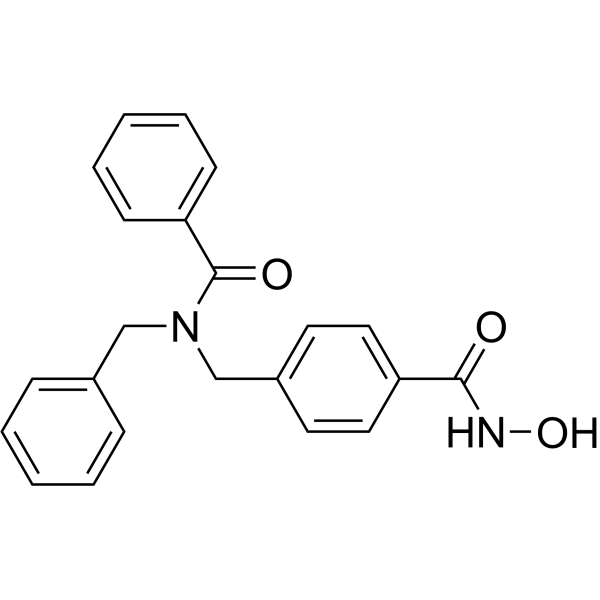 0 ImagesCat. No.: HY-157436HDAC6-IN-30 (compound 8g) is a selective HDAC6 inhibitor with the IC50 21 nM, and increase cell protein acetylation levels.
-
LTK-14A
 0 ImagesCat. No.: HY-160461CAS No.: 71118-00-8LTK-14A, a derivative of Garcinol (HY-107569), is a selective histone butyrylation inhibitor. LTK-14A does not affect acetylation. LTK-14A significantly inhibits the butyrylation of H4K5 and downregulated the expression of proadipogenic genes, thus culminating in abolished adipogenesis. LTK-14A can be used for the study of obesity.
-
J208
 0 ImagesCat. No.: HY-163535CAS No.: 2116468-11-0J208 is a dual inhibitor for histone deacetylase (HDAC) and DNA methyltransferase (DNMT). J208 inhibits proliferation of cancer cells, as well as the migration/invasion of triple-negative breast cancer (TNBC) cells. J208 induces apoptosis, arrests the cell cycle at G0/G1 phase. J2008 activates the innate immune signalling pathway in TNBC, by inducing the expression of endogenous retroviruses (ERVs).
-
DLC-50
 0 ImagesCat. No.: HY-161868CAS No.: 2928537-98-6
-
CDK9/HDAC1/HDAC3-IN-1
 0 ImagesCat. No.: HY-172891CAS No.: 2197029-81-3CDK9/HDAC1/HDAC3-IN-1 is dual-functional inhibitor of CDK9 and HDAC. CDK9/HDAC1/HDAC3-IN-1 inhibits the protein activity of CDK9/HDAC/HDAC3 with IC50 s of 0.17 μM, 1.73 μM and 1.11 μM for CDK9, HDAC1, and HDAC3, respectively. CDK9/HDAC1/HDAC3-IN-1 inhibits cancer cells by inducing cell apoptosis and cell cycle arrest in the G2/M phase, as well as tumor growth in a murine TNBC MDA-MB-231 xenograft model. CDK9/HDAC1/HDAC3-IN-1 has a broad-spectrum anti-cancer activity, such as breast cancer, cervical cancer, and liver cancer.




