Search Result
Results for "
α4β2 nAChRs
" in MedChemExpress (MCE) Product Catalog:
8
Isotope-Labeled Compounds
| Cat. No. |
Product Name |
Target |
Research Areas |
Chemical Structure |
-
- HY-10019
-
|
CP 526555
|
nAChR
|
Neurological Disease
Inflammation/Immunology
Cancer
|
|
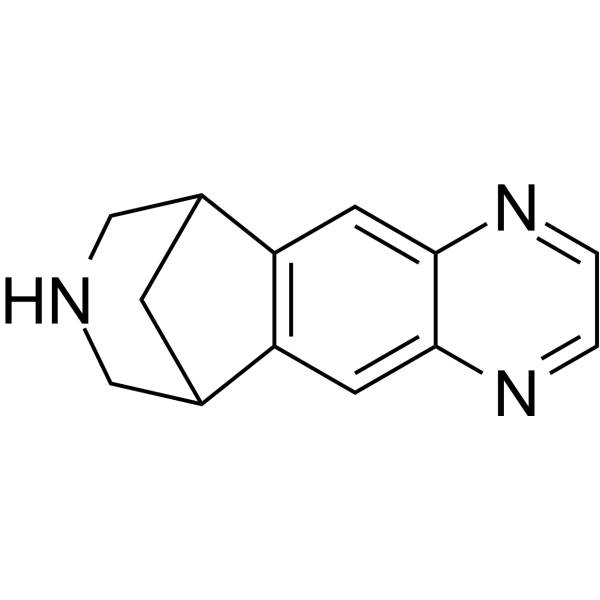
Varenicline (CP 526555) is an orally active partial agonist of α4β2 nicotinic acetylcholine receptor (α4β2 nAChR, IC50 = 250 nM), which is the principal mediator of nicotine dependence. Varenicline is also a partial agonist of α6β2 nAChR and a full agonist of α7β2 nAChR. Varenicline blocks the direct agonist effects of nicotine on nAChR while stimulates nAChR in a more moderate way, being widely used as an aid of smoking cessation .
|
-
-
- HY-10021
-
|
CP 526555-18
|
nAChR
ERK
p38 MAPK
|
Others
Neurological Disease
Cancer
|
|
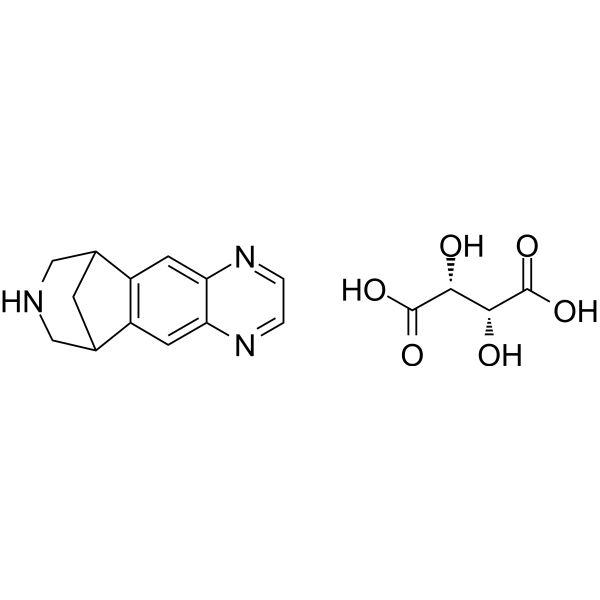
Varenicline (CP 526555) is an orally active partial agonist of α4β2 nicotinic acetylcholine receptor (α4β2 nAChR, IC50 = 250 nM), which is the principal mediator of nicotine dependence. Varenicline is also a partial agonist of α6β2 nAChR and a full agonist of α6β2 nAChR. Varenicline blocks the direct agonist effects of nicotine on nAChR while stimulates nAChR in a more moderate way, being widely used as an aid of smoking cessation .
|
-
-
- HY-N0175
-
|
Cytisine; Sophorine; Baptitoxine
|
nAChR
|
Metabolic Disease
Cancer
|
|
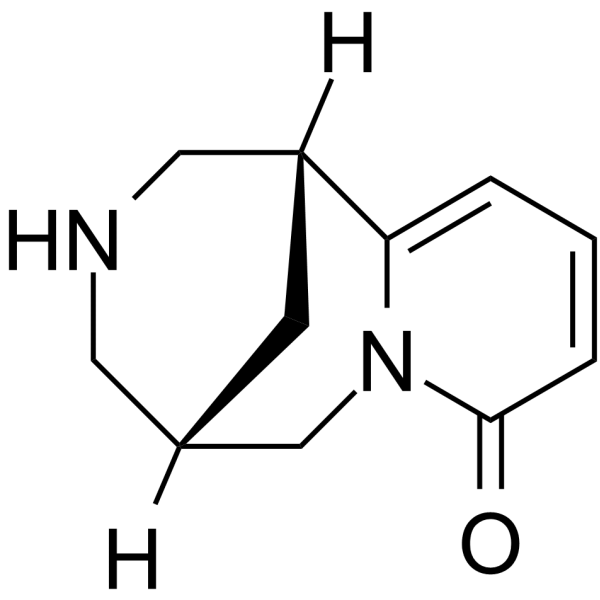
Cytisinicline (Cytisine) is an alkaloid. Cytisinicline (Cytisine) is a partial agonist of α4β2 nAChRs , and partial to full agonist at β4 containing receptors and α7 receptors . Has been used medically to help with smoking cessation .
|
-
-
- HY-14564A
-
|
DMXB-A; DMBX-anabaseine
|
nAChR
5-HT Receptor
|
Inflammation/Immunology
|
|
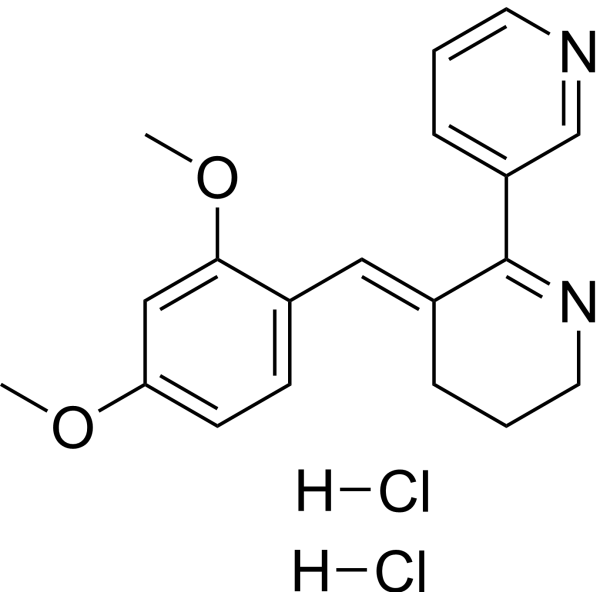
GTS-21 dihydrochloride is a selective alpha7 nicotinic acetylcholine receptor (α7-nAChR) agonist with anti inflammatory and cognition enhancing activities. GTS-21 dihydrochloride is also a α4β2 (Ki=20 nM for humanα4β2) and 5-HT3A receptor (IC50=3.1 μM) antagonist .
|
-
-
- HY-107670
-
|
DHβE hydrobromide
|
nAChR
|
Neurological Disease
|
|
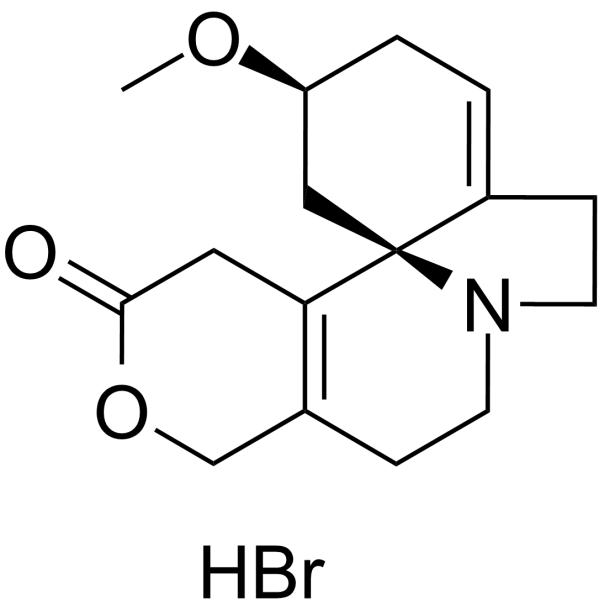
Dihydro-β-erythroidine (DHβE) hydrobromide is a potent, orally active, and competitive antagonist of neuronal nAChRs. Dihydro-β-erythroidine hydrobromide shows selectivity for α4β4 and α4β2 nAChRs, with IC50s of 0.19 and 0.37 μM, respectively. Antidepressant-like activities .
|
-
-
- HY-12152
-
|
NSC 216666
|
nAChR
|
Neurological Disease
Inflammation/Immunology
|
|
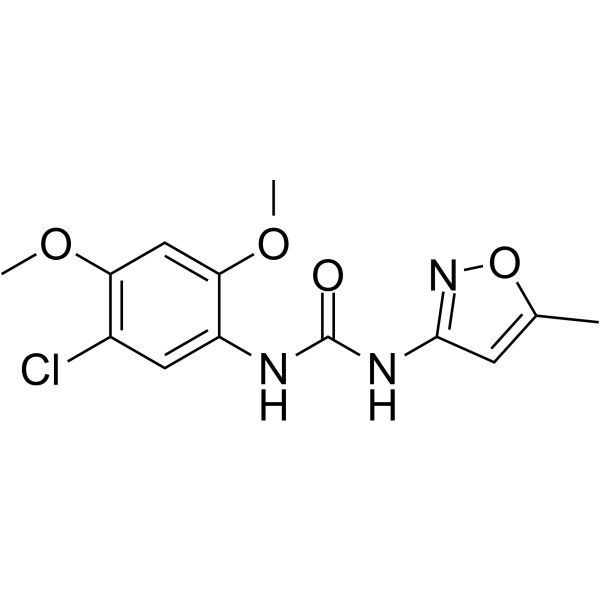
PNU-120596 (NSC 216666) is a potent and selective α7 nAChR positive allosteric modulator (PMA) that can cross the blood-brain barrier, with an EC50 of 216 nM. PNU-120596 is inactive against α4β2, α3β4, and α9α10 nAChRs. PNU-120596 has the potential for psychiatric and neurological disorders research .
|
-
-
- HY-A0009
-
|
Galantamine hydrobromide
|
Cholinesterase (ChE)
nAChR
|
Neurological Disease
|
|
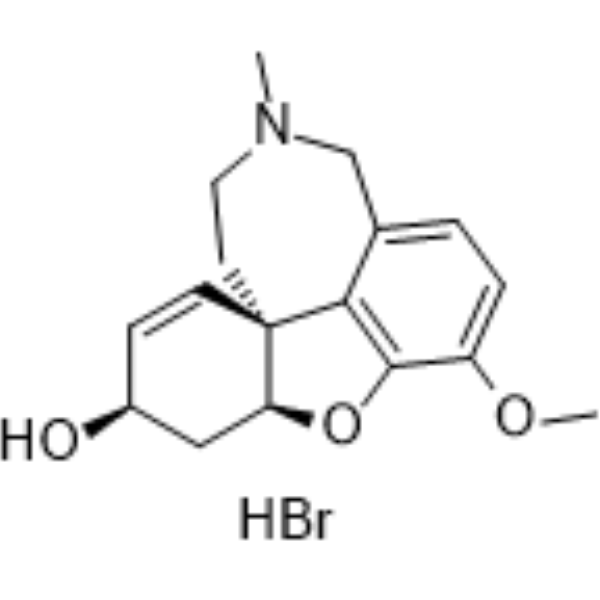
Galanthamine hydrobromide (Galantamine hydrobromide) is a selective, reversible, competitive, alkaloid AChE inhibitor, with an IC50 of 0.35 µM. Galanthamine hydrobromide is a potent allosteric potentiating ligand (APL) of human α3β4, α4β2, α6β4 nicotinic receptors ( nAChRs). Galanthamine hydrobromide is developed for the research of Alzheimer's disease (AD) .
|
-
-
- HY-B0379A
-
|
|
nAChR
|
Neurological Disease
|
|
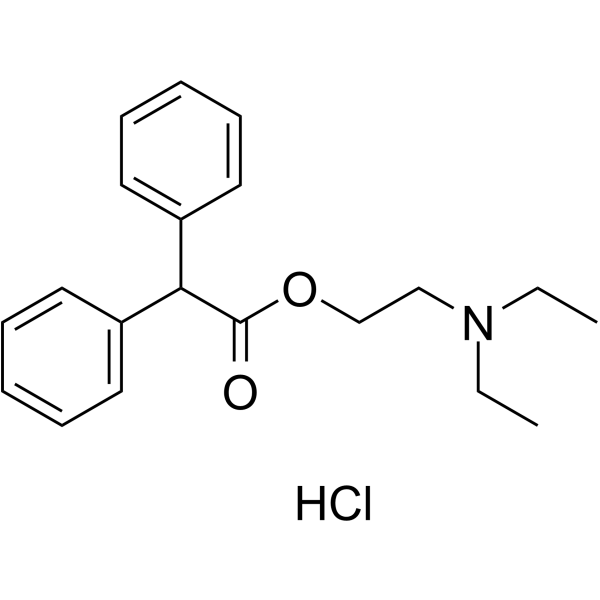
Adiphenine hydrochloride is a non-competitive inhibitor of nicotinic acetylcholine receptor (nAChR), with an IC50s of 1.9, 1.8, 3.7, and 6.3 μM for α1, α3β4, α4β2, and α4β4, respectively. Adiphenine hydrochloride has anticonvulsant effects .
|
-
-
- HY-14316A
-
|
Ebanicline dihydrochloride; ABT-594 dihydrochloride
|
nAChR
|
Neurological Disease
|
|
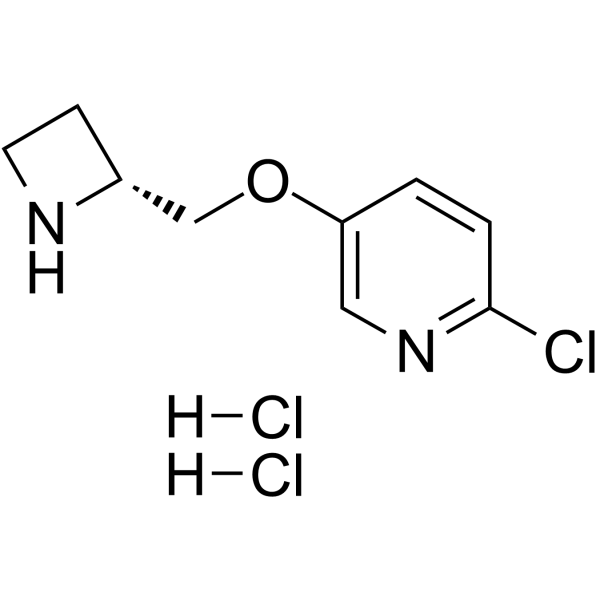
Tebanicline dihydrochloride (Ebanicline dihydrochloride) is a nAChR modulator with potent, orally effective analgesic activity. It inhibits the binding of cytisine to α4β2 neuronal nAChRs with a Ki of 37 pM .
|
-
-
- HY-10020
-
|
CP 526555 hydrochloride
|
nAChR
|
Neurological Disease
Inflammation/Immunology
Cancer
|
|
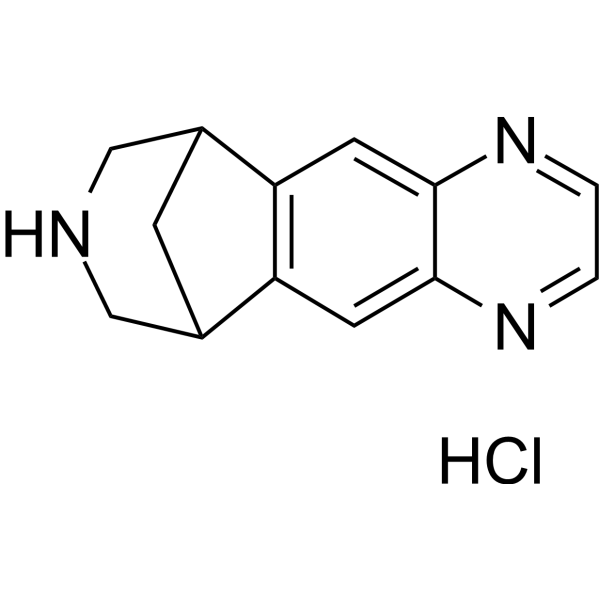
Varenicline (CP 526555) is an orally active partial agonist of α4β2 nicotinic acetylcholine receptor (α4β2 nAChR, IC50 = 250 nM), which is the principal mediator of nicotine dependence. Varenicline is also a partial agonist of α6β2 nAChR and a full agonist of α6β2 nAChR. Varenicline blocks the direct agonist effects of nicotine on nAChR while stimulates nAChR in a more moderate way, being widely used as an aid of smoking cessation .
|
-
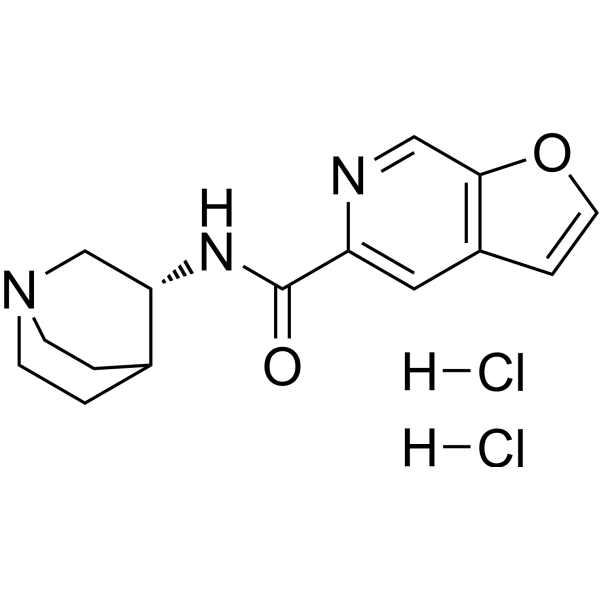
-
- HY-105670
-
|
|
nAChR
|
Neurological Disease
|
|
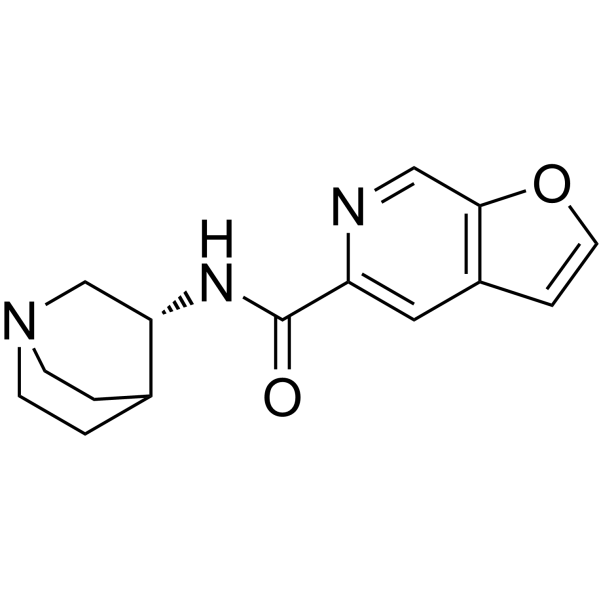
PHA-543613 is a potent, orally active, brain-penetrant and selective α7 nAChR agonist with a Ki of 8.8 nM. PHA-543613 displays selectivity for α7-nAChR over α3β4, α1β1γδ, α4β2 and 5-HT3 receptors . PHA-543613 can be used for the cognitive deficits of Alzheimer's disease and schizophrenia research .
|
-
-
- HY-110160
-
|
ABT-089 dihydrochloride
|
nAChR
|
Neurological Disease
|
|
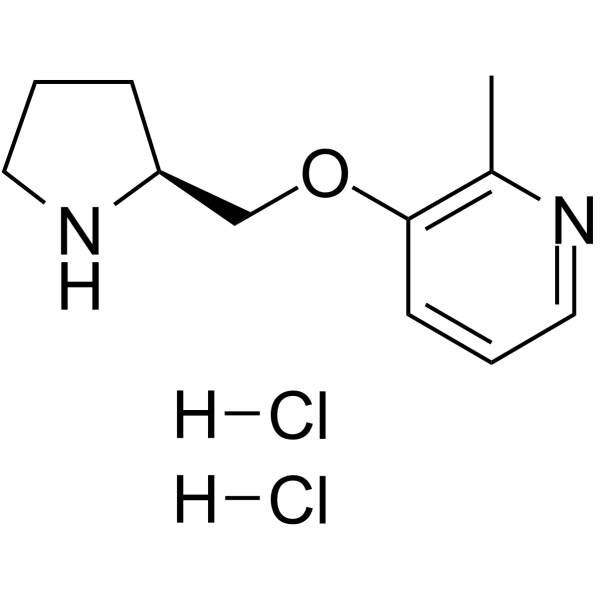
Pozanicline dihydrochloride (ABT-089 dihydrochloride) is an orally bioavailable nicotinic acetylcholine receptor (nAChR) agonist with a Ki of 16.7 nM for binding to [ 3H]cytisine sites . Pozanicline is an α4β2-selective nAChR agonist, which binds to rat brain α4β2 nAChR with a Ki of 17 nM while binding to α7 nAChR is insignificant .
|
-
-
- HY-107675
-
|
Deformylflustrabromine hydrochloride; dFBr hydrochloride
|
nAChR
|
Neurological Disease
|
|
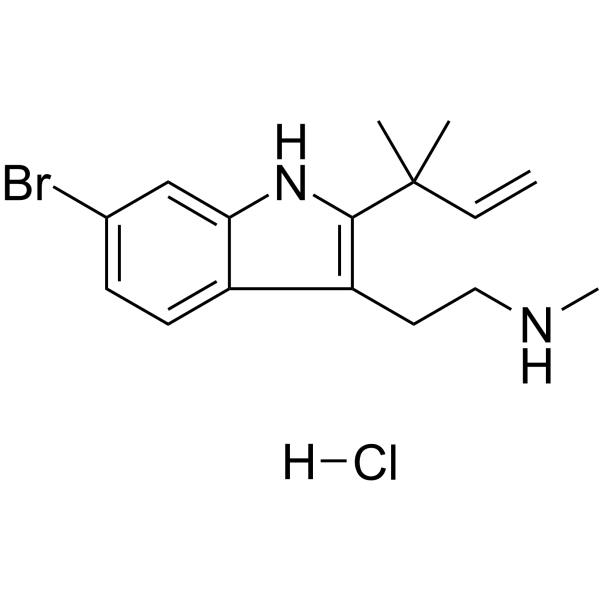
Desformylflustrabromine hydrochloride is a selective agonist of α4β2 neuronal nicotinic acetylcholine receptor (nAChR) with a pEC50 of 6.48.
|
-
-
- HY-10019A
-
|
CP 526555 dihydrochloride
|
nAChR
|
Neurological Disease
Inflammation/Immunology
Cancer
|
|
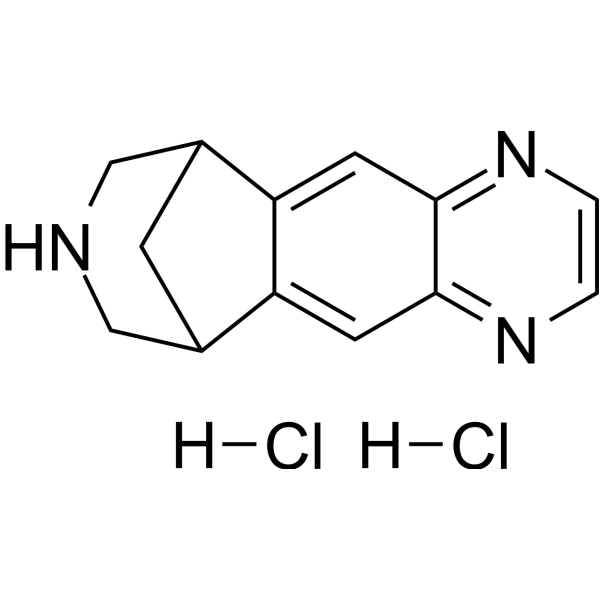
Varenicline (CP 526555-18) is an orally active partial agonist of α4β2 nicotinic acetylcholine receptor (α4β2 nAChR, IC50 = 250 nM), which is the principal mediator of nicotine dependence. Varenicline is also a partial agonist of α6β2 nAChR and a full agonist of α7β2 nAChR. Varenicline blocks the direct agonist effects of nicotine on nAChR while stimulates nAChR in a more moderate way, being widely used as an aid of smoking cessation .
|
-
-
- HY-10063
-
|
TC-1734; ACD3480
|
nAChR
|
Neurological Disease
|
|
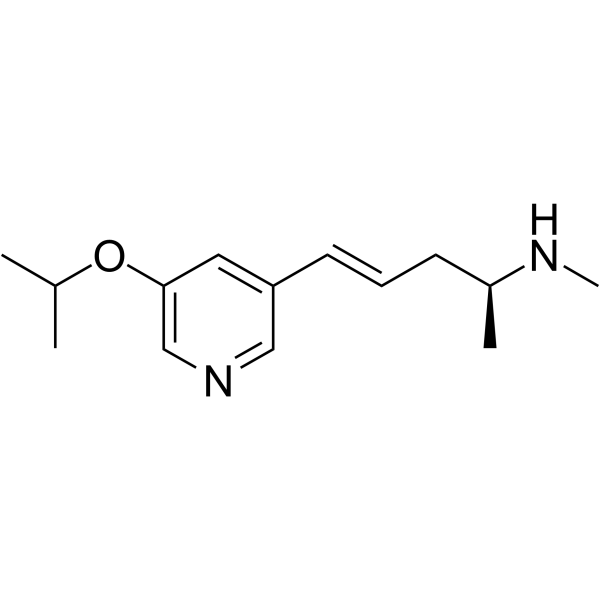
Ispronicline (TC-1734), an orally active, brain-selective α4β2 nicotine acetylcholine receptor (nAChR) partial agonist, has shown memory-enhancing properties in rodents and a good tolerability profile. Ispronicline binds to the α4β2 nAChR with high affinity (Ki=11 nM) and is highly selective to other nAChRs such as α7 nAChR and α3β4 nAChR .
|
-
-
- HY-110131
-
|
|
nAChR
|
Neurological Disease
|
|
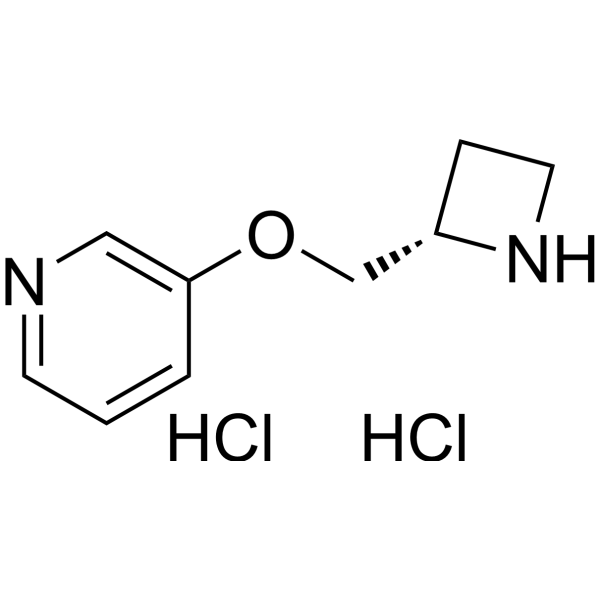
A 85380 hydrochloride is a novel, high affinity neuronal nicotinic acetylcholine receptor (nAChR) agonist. A 85380 hydrochloride exhibits selectivity for the α4β2 nAChR subtypes. A 85380 hydrochloride has a broad-spectrum analgesic profile .
|
-
-
- HY-107686
-
|
5-I A-85380 dihydrochloride
|
nAChR
|
Neurological Disease
|
|
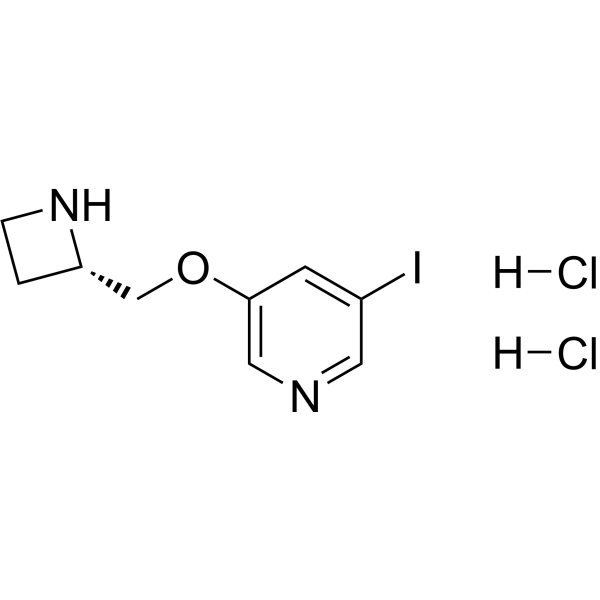
5-Iodo-A-85380 dihydrochloride is a selective ligand of nAChR. 5-Iodo-A-85380 dihydrochloride binds to α4β2 nAChRs in rat and human brain with Kds of 12 and 14 pM,respectively .
|
-
-
- HY-110121A
-
NS3861
1 Publications Verification
|
nAChR
|
Neurological Disease
|
|
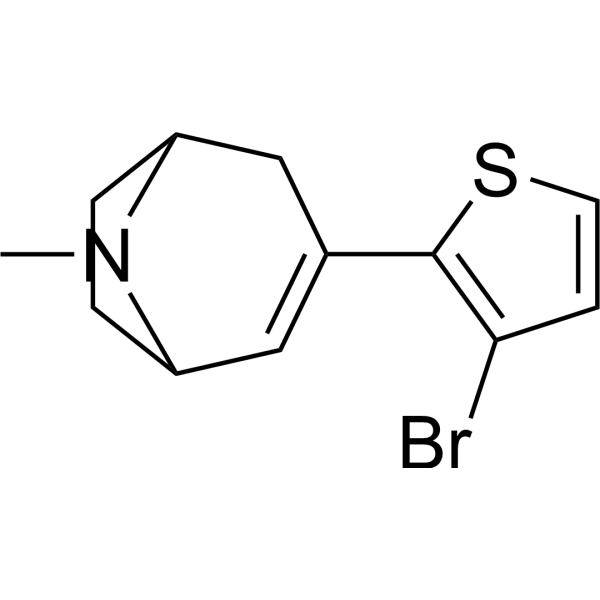
NS3861 is an agonist of nicotinic acetylcholine receptors (nAChRs) and binds with high affinity to heteromeric α3β4 nAChR. The binding Ki values of 0.62, 25, 7.8, 55 nM for α3β4, α3β2, α4β4, α4β2, respectively .
|
-
-
- HY-13225B
-
|
RJR-2403 hemioxalate; (E)-Metanicotine hemioxalate
|
nAChR
|
Neurological Disease
|
|
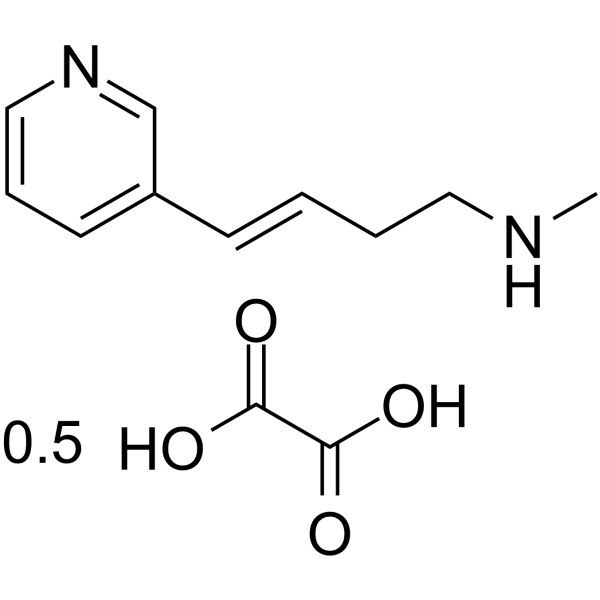
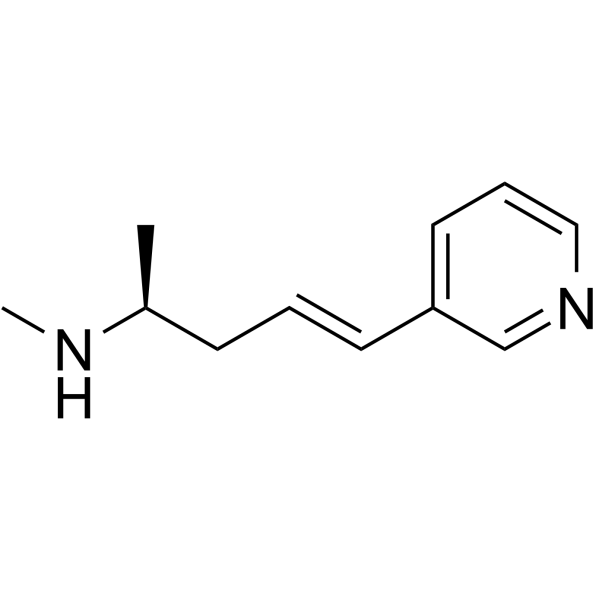
Rivanicline (RJR-2403) hemioxalate is a neuronal nicotinic receptor agonist. Rivanicline hemioxalate is highly selective for the rat brain cortex nAChRs (Ki = 26 nM, EC50 of 732 nM) and α4β2 subtype (Ki = 26 nM, EC50 = 16 μM). Rivanicline hemioxalate can significantly restore the learning impairment and cognitive dysfunction. Rivanicline hemioxalate can be used for the study of neurodegenerative diseases (such as schizophrenia or Alzheimer's disease) .
|
-
-
- HY-135783
-
AT 1001
1 Publications Verification
|
nAChR
|
Neurological Disease
Metabolic Disease
Inflammation/Immunology
|
|
AT 1001 is an orally effective α3β4 nicotinic acetylcholine receptor (α3β4 nAChR) antagonist with a Ki value of 2.64 nM. AT 1001 reversibly blocks Epibatidine (HY-101078)-induced inward currents in HEK cells transfected with α3β4 nAChR. AT 1001 dose-dependently blocks nicotine self-administration behavior in rats, alleviates gluten-induced gastrointestinal symptoms, blocks tight junction toxin-induced immune responses, and reduces the incidence of type 1 diabetes in rats. AT 1001 can be used in the research of nicotine addiction and celiac disease .
|
-

-
- HY-160959
-
|
|
nAChR
|
Neurological Disease
|
|
AN317 is a selective agonist for α6β2-containing nicotinic acetylcholine receptor (nAChR) with Ki of 6.2 nM and 4.1 nM, for α6/α3β2β3 receptor and α4β2 receptor, respectively. AN317 induces dopamine release in the synaptosomes of the rat striatum, enhances dopaminergic neuronal activity in substantia nigra, and exhibits protective efficacy to rat neurons against dopamine neurotoxin MPP +. AN317 exhibits good pharmacokinetic characteristics in rats. AN317 penetrates the blood-brain barrier (BB) .
|
-

-
- HY-136207
-
|
|
nAChR
|
Neurological Disease
|
|
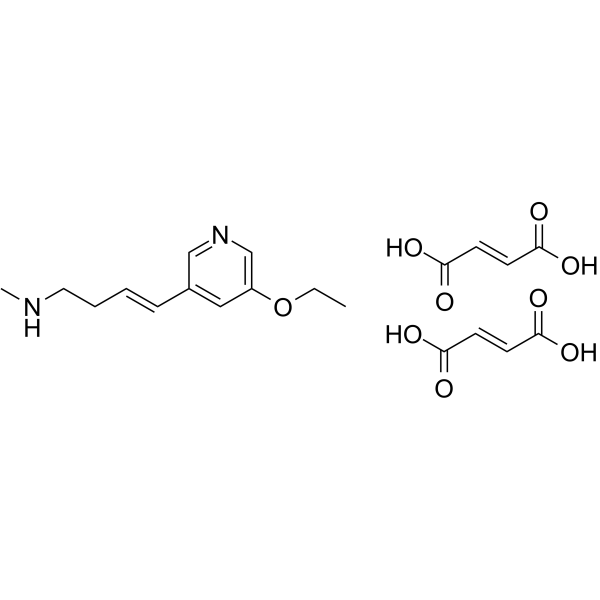
TC-2559 idifumarate is a CNS-selective, orally active α4β2 subtype of nicotinic acetylcholine receptor (nAChR) partial agonist (EC50=0.18 μM). TC-2559 difumarate shows selectivity for α4β2 over α2β4, α4β4 and α3β4 receptors, with EC50s in the range of 10-30 µM. Antinociceptive effect .
|
-
-
- HY-N0175R
-
|
Cytisine (Standard); Sophorine (Standard); Baptitoxine (Standard)
|
Reference Standards
nAChR
|
Metabolic Disease
Cancer
|
|
Cytisinicline (Standard) is the analytical standard of Cytisinicline. This product is intended for research and analytical applications. Cytisinicline (Cytisine) is an alkaloid. Cytisinicline (Cytisine) is a partial agonist of α4β2 nAChRs , and partial to full agonist at β4 containing receptors and α7 receptors . Has been used medically to help with smoking cessation .
|
-

-
- HY-108069
-
|
|
Potassium Channel
nAChR
|
Neurological Disease
|
|
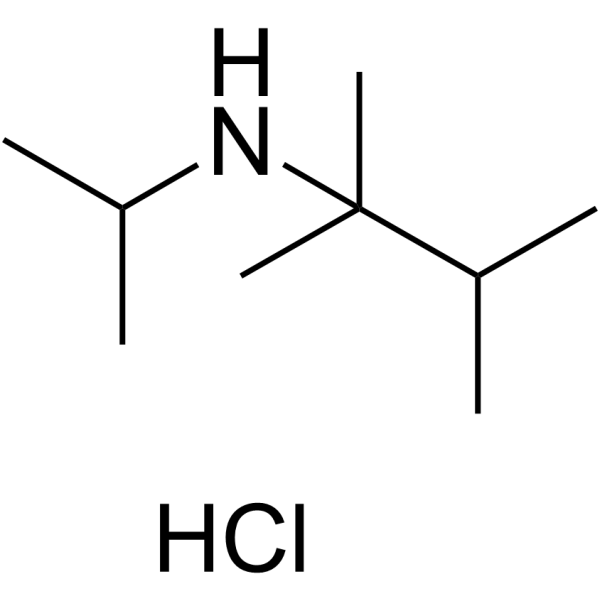
Iptakalim hydrochloride, a lipophilic para-amino compound, is a novel ATP-sensitive potassium channel (KATP) opener, as well as an α4β2-containing nicotinic acetylcholine receptor (nAChR) antagonist .
|
-
-
- HY-107684
-
|
3-Br-cytisine
|
nAChR
|
Neurological Disease
|
|
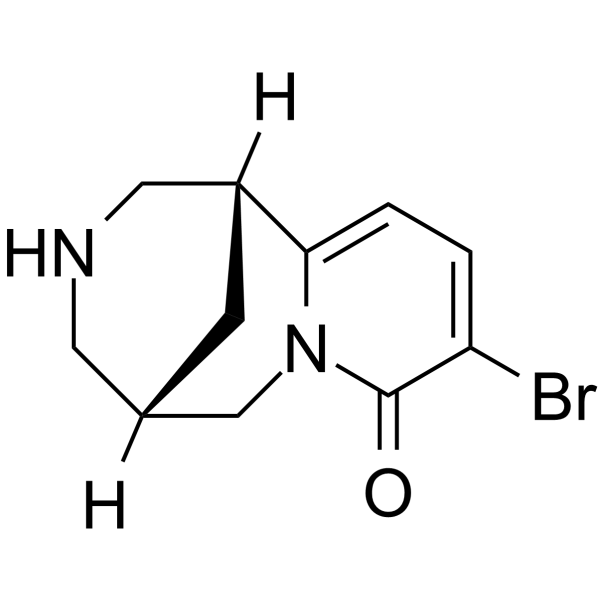
3-Bromocytisine (3-Br-cytisine) is a potent nACh receptors agonist, with IC50s are 0.28, 0.30 and 31.6 nM for hα4β4, hα4β2, and hα7-nACh, respectively. 3-Bromocytisine (3-Br-cytisine) shows different effects on high (HS) and low (LS) ACh sensitivity α4β2 nAChRs with EC50s are 8 and 50 nM, respectively .
|
-
-
- HY-138879A
-
|
|
nAChR
|
Neurological Disease
|
|
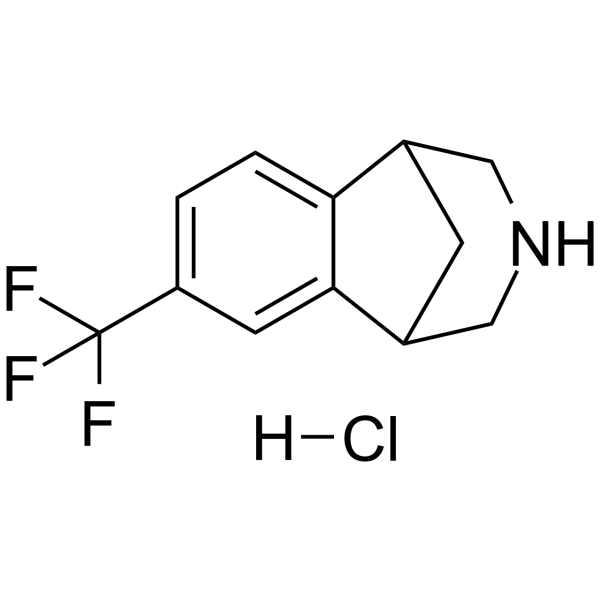
(Rac)-CP-601927 hydrochloride is the racemate of CP-601927. CP-601927 is a nAChR agonist with Ki values 1.2 nM and 102 nM for α4β2 and α3β4 nAChR, respectively .
|
-
-
- HY-115766
-
|
|
nAChR
|
Neurological Disease
|
|
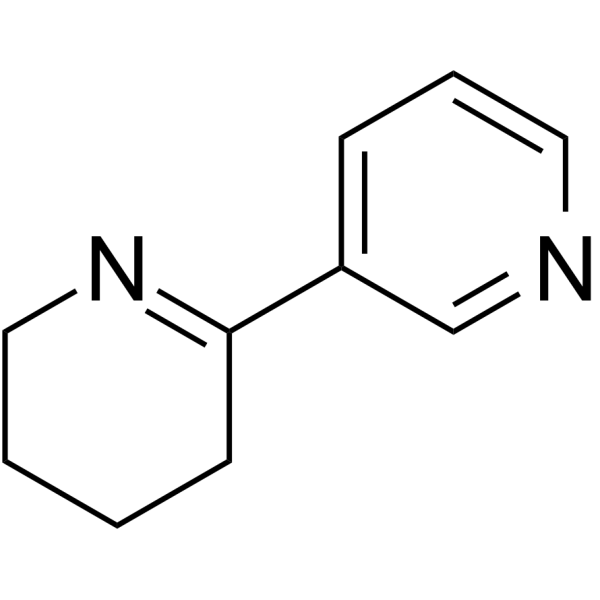
Anabaseine, a brain-penetrant occurring alkaloid toxin, is potent agonist of multiple nicotinic acetylcholine receptors (AChRs). Anabaseine stimulates the neuromuscular α12β1γδ or α12β1γɛ and α7 AChRs. Anabaseine is also a weak partial agonist at α4β2 nAChRs .
|
-
-
- HY-135483A
-
|
|
nAChR
|
Neurological Disease
|
|
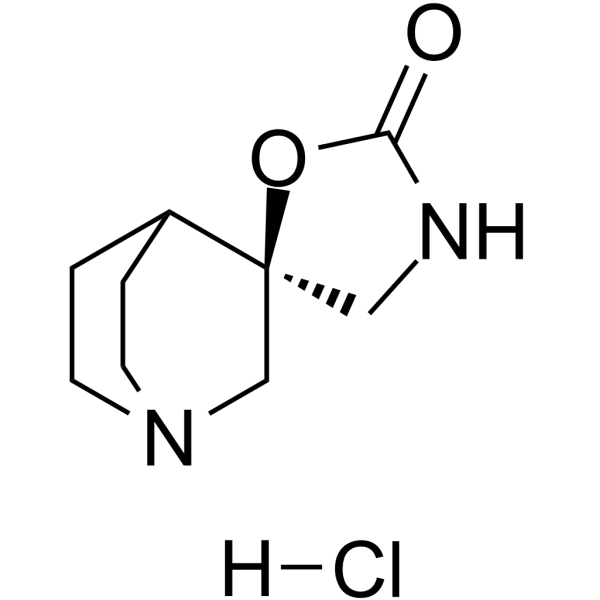
AR-R17779 hydrochloride is a potent and selective full agonist of nAChR, with Kis of 92 and 16000 nM for α7 and α4β2 subtype, respectively. AR-R17779 hydrochloride can improve learning and memory in rats. AR-R17779 hydrochloride also has anxiolytic activity. AR-R17779 hydrochloride can reduce inflammation by activating antiinflammatory cholinergic (vagal) pathways .
|
-
-
- HY-138953
-
|
|
nAChR
|
Neurological Disease
|
|
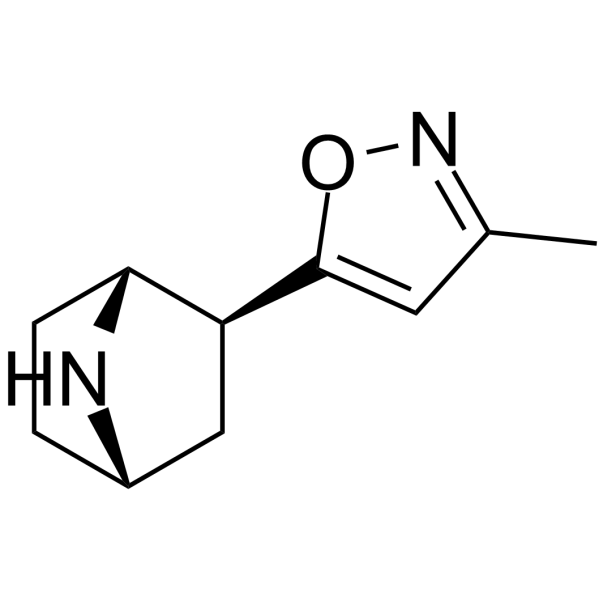
Epiboxidine is a potent and selective neural nAChR agonist with Kis of 0.46 nM and 1.2 nM for rat and human α4β2 nAChRs, respectively. Epiboxidine is a methylisoxazole analog of the alkaloid Epibatidine, and is also an analog of another nAChR agonist, ABT 418 .
|
-
-
- HY-137231B
-
|
|
nAChR
|
Neurological Disease
|
|
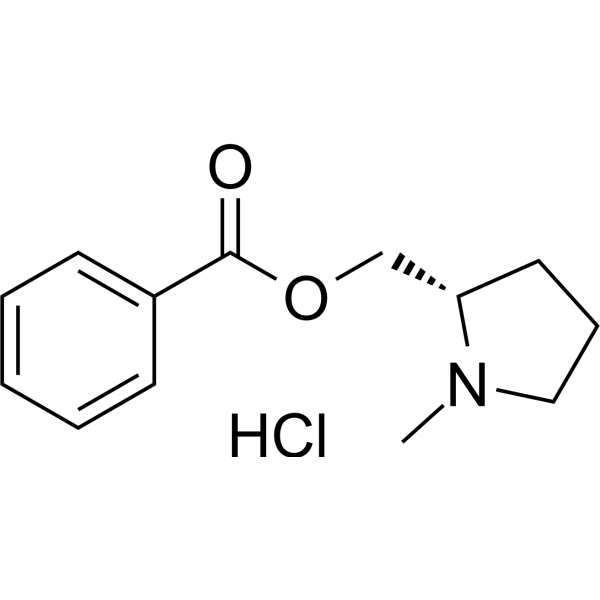
(S)-UFR2709 (hydrochloride) is a competitive nAChR antagonist?and displays higher affinity for α4β2 nAChRs than for α7 nAChRs. (S)-UFR2709 (hydrochloride) decreases anxiety and reduces ethanol consumption and ethanol preference in alcohol-preferring rats. (S)-UFR2709 (hydrochloride) acts as an anxiolytic agent and can be used for the study of nicotine addiction .
|
-
-
- HY-110121
-
|
|
nAChR
|
Neurological Disease
|
|
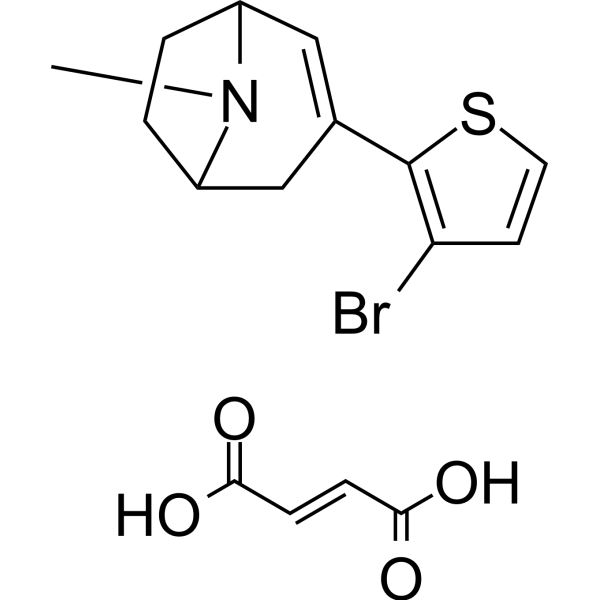
NS3861 fumarate is an agonist of nicotinic acetylcholine receptors (nAChRs) and binds with high affinity to heteromeric α3β4 nAChR. The binding Ki values of 0.62, 25, 7.8, 55 nM for α3β4, α3β2, α4β4, α4β2, respectively .
|
-
-
- HY-105670B
-
|
|
nAChR
|
Neurological Disease
|
|
PHA-543613 dihydrochloride is a potent, orally active, brain-penetrant and selective α7 nAChR agonist with a Ki value of 8.8 nM. PHA-543613 dihydrochloride displays selectivity for α7-nAChR over α3β4, α1β1γδ, α4β2 and 5-HT3 receptors . PHA-543613 dihydrochloride can be used for the cognitive deficits of Alzheimer's disease and schizophrenia research .
|
-
-
- HY-13225A
-
|
RJR-2403; (E)-Metanicotine
|
nAChR
|
Neurological Disease
|
|
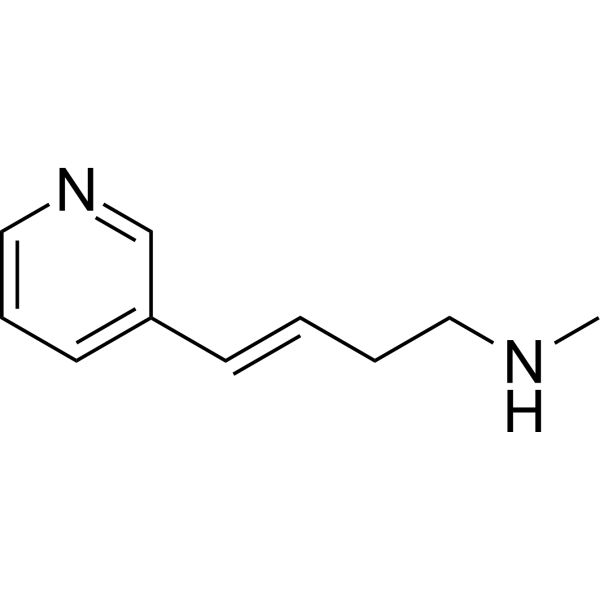
Rivanicline (RJR-2403) is a neuronal nicotinic receptor agonist. Rivanicline is highly selective for the rat brain cortex nAChRs (Ki = 26 nM, EC50 of 732 nM) and α4β2 subtype (Ki = 26 nM, EC50 = 16 μM). Rivanicline can significantly restore the learning impairment and cognitive dysfunction. Rivanicline can be used for the study of neurodegenerative diseases (such as schizophrenia or Alzheimer's disease) .
|
-
-
- HY-124110
-
|
|
nAChR
|
Neurological Disease
|
|
TC299423 is an orally active, brain-penetrant, selective and potent agonist for α6β2 ? and α4β2 ? nicotinic acetylcholine receptors (nAChRs) with anxiolytic and antinociceptive properties. TC299423 acts primarily through α6β2 ? nAChRs that are implicated in the anxiolytic effects of nicotine. TC299423 elicits reward-related behavior mediated through α6β2 ? nAChRs in hypersensitive α6L90’S mice. TC299423 elicits dopamine release and dose not suppress nicotine self-administration in rats. TC299423 is proming for rasearch of addiction and Parkinson’s disease .
|
-

-
- HY-10021R
-
|
CP 526555-18 (Standard)
|
Reference Standards
nAChR
ERK
p38 MAPK
|
Others
Neurological Disease
|
|
Varenicline (Tartrate) (Standard) is the analytical standard of Varenicline (Tartrate). This product is intended for research and analytical applications. Varenicline (CP 526555) is an orally active partial agonist of α4β2 nicotinic acetylcholine receptor (α4β2 nAChR, IC50 = 250 nM), which is the principal mediator of nicotine dependence. Varenicline is also a partial agonist of α6β2 nAChR and a full agonist of α6β2 nAChR. Varenicline blocks the direct agonist effects of nicotine on nAChR while stimulates nAChR in a more moderate way, being widely used as an aid of smoking cessation .
|
-

-
- HY-14564
-
|
|
nAChR
5-HT Receptor
|
Inflammation/Immunology
|
|
GTS-21 dihydrochloride is a selective alpha7 nicotinic acetylcholine receptor (α7-nAChR) agonist with anti inflammatory and cognition enhancing activities. GTS-21 dihydrochloride is also a α4β2 (Ki=20 nM for humanα4β2) and 5-HT3A receptor (IC50=3.1 μM) antagonist. GTS-21 can be used in age-associated memory impairment (AAMI) and Alzheimer's disease research .
|
-

-
- HY-14319B
-
|
|
nAChR
|
Neurological Disease
|
|
Sazetidine A dihydrochloride is a potent ligand for the α4β2 nAChR, with high binding affinity and selectivity for this subtype. Sazetidine A dihydrochloride exhibits favorable pharmacological properties and may contribute to research targeting nicotinic receptor-related diseases. Sazetidine A dihydrochloride has been mentioned in studies investigating the binding affinity of various analogs, highlighting its importance in understanding the nAChR ligand subtype selectivity .
|
-

-
- HY-107680
-
|
3-Pyr-Cyt
|
nAChR
|
Neurological Disease
|
|
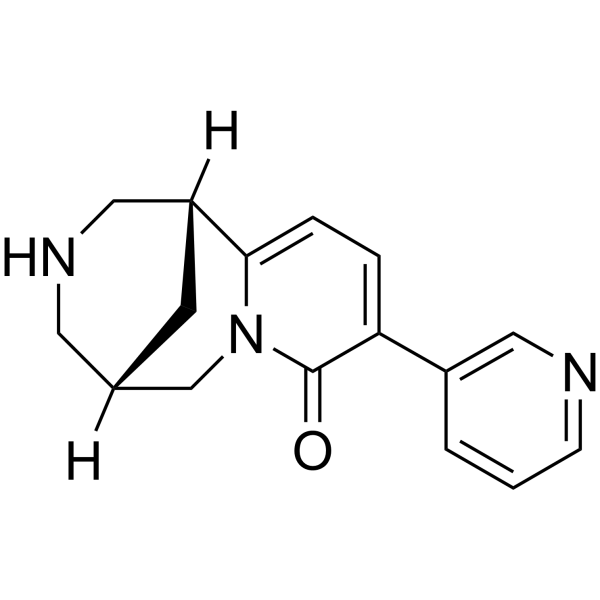
3-Pyr-Cytisine (3-Pyr-Cyt) is a cytisine derivative. 3-Pyr-Cytisine is a very weak α4β2 nAChR partial agonist that has been studied as an antidepressant .
|
-
-
- HY-169870
-
|
(+)-Mecamylamine; TC-5214
|
nAChR
|
Neurological Disease
|
|
Dexmecamylamine ((+)-Mecamylamine) is the antagonist for nicotinic acetylcholine receptor (nAChR), that antagonises the α3β4/α4β2/α7/α1β1γδ receptor with IC50 of micromolare levels. Dexmecamylamine exhibits anxiolytic and antidepressant-like activities .
|
-

-
- HY-115766S
-
|
|
Isotope-Labeled Compounds
nAChR
|
Neurological Disease
|
|
Anabaseine-d4 is the deuterium labeled Anabaseine (HY-115766). Anabaseine is a non-selective nicotinic agonist. Anabaseine stimulates all AChRs, preferentially stimulates skeletal muscle and brain α7 subtypes . Anabaseine is also a weak partial agonist at α4β2 nAChRs .
|
-

-
- HY-107677
-
|
|
nAChR
|
Neurological Disease
|
|
A 844606 is a highly potent and selective α4β2 nAChR agonist. A 844606 can be used in the study of schizophrenia, Huntington's disease, Alzheimer's disease, and Parkinson's disease .
|
-

-
- HY-14565
-
|
ABT-089
|
nAChR
|
Neurological Disease
|
|
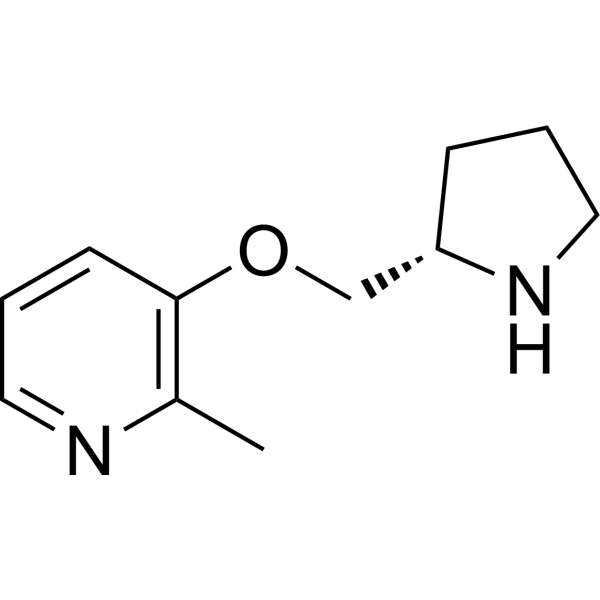
Pozanicline (ABT-089) selectively activate neuronal nicotinic acetylcholine receptor (nAChR) subtypes, is a novel cholinergic agent that is a partial agonist at α4β2* nAChRs (Ki=16 nM) and shows high selectivity for α6β2* and α4α5β2 nAChR subtypes, the binding affinity (Ki, rat) for Pozanicline to [ 3H] cytisine sites is 16.7 nM.
Pozanicline reverses nicotine withdrawal-induced cognitive deficits, may be an effective component of novel therapeutic strategies for nicotine addiction .
|
-
-
- HY-19918A
-
|
|
NF-κB
Amyloid-β
nAChR
|
Neurological Disease
Inflammation/Immunology
|
|
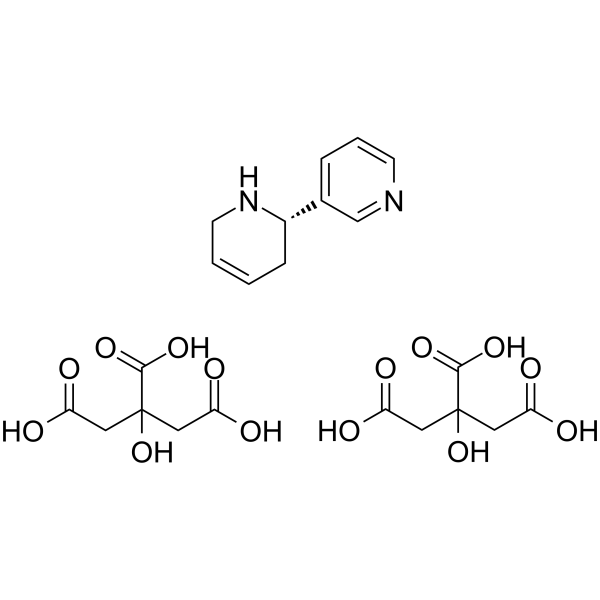
Anatabine dicitrate is a tobacco alkaloid that can cross the blood-brain barrier. Anatabine dicitrate is a potent α4β2 nAChR agonist. Anatabine dicitrate inhibits NF-κB activation lower amyloid-β (Aβ) production by preventing the β-cleavage of amyloid precursor protein (APP). Anatabine dicitrate has anti-inflammatory effects and has the potential for neurodegenerative disorders treatment .
|
-
-
- HY-13225
-
|
RJR-2403 oxalate; (E)-Metanicotine oxalate
|
nAChR
|
Neurological Disease
|
|
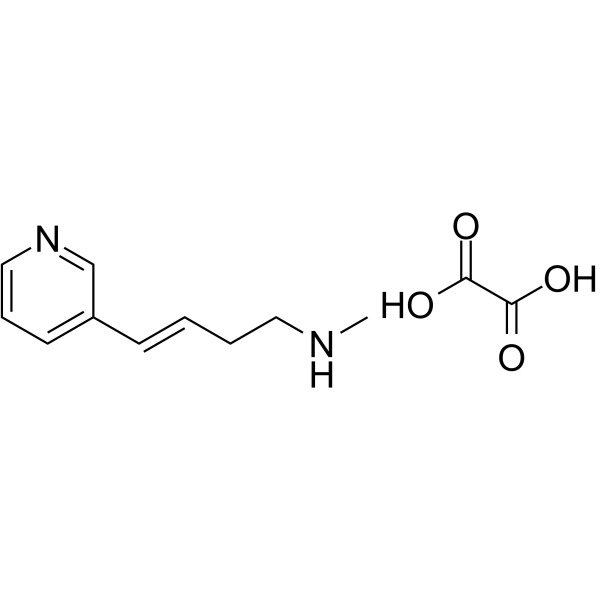
Rivanicline (RJR-2403) oxalate is a neuronal nicotinic receptor agonist. Rivanicline oxalate is highly selective for the rat brain cortex nAChRs (Ki = 26 nM, EC50 of 732 nM) and α4β2 subtype (Ki = 26 nM, EC50 = 16 μM). Rivanicline oxalate can significantly restore the learning impairment and cognitive dysfunction. Rivanicline oxalate can be used for the study of neurodegenerative diseases (such as schizophrenia or Alzheimer's disease) .
|
-
-
- HY-A0009R
-
|
Galantamine hydrobromide (Standard)
|
nAChR
Cholinesterase (ChE)
Reference Standards
|
Neurological Disease
|
|
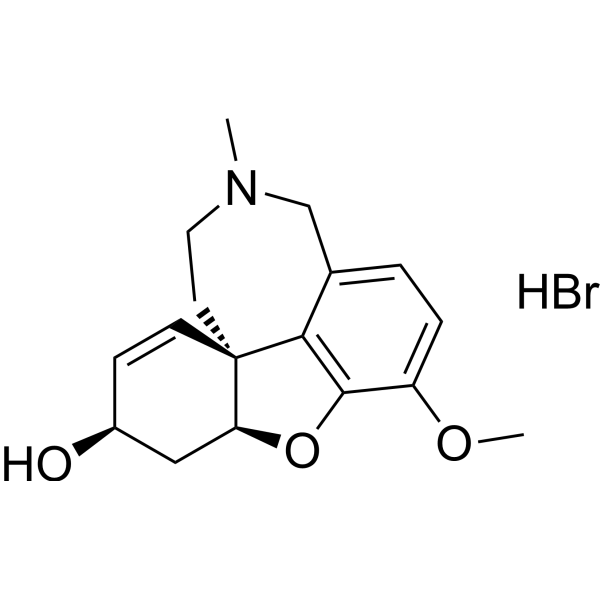
Galanthamine (hydrobromide) (Standard) is the analytical standard of Galanthamine (hydrobromide). This product is intended for research and analytical applications. Galanthamine hydrobromide (Galantamine hydrobromide) is a selective, reversible, competitive, alkaloid AChE inhibitor, with an IC50 of 0.35 µM. Galanthamine hydrobromide is a potent allosteric potentiating ligand (APL) of human α3β4, α4β2, α6β4 nicotinic receptors ( nAChRs). Galanthamine hydrobromide is developed for the research of Alzheimer's disease (AD) .
|
-
-
- HY-138879B
-
|
(1S,5R)-CP-601927
|
nAChR
|
Neurological Disease
|
|
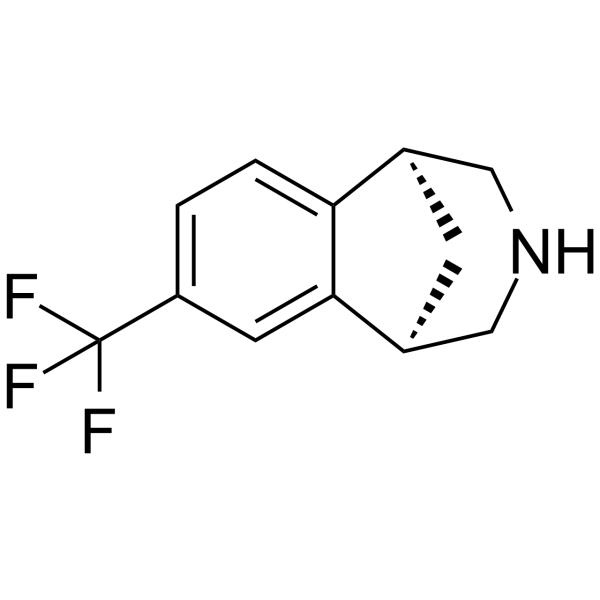
CP-601932 ((1S,5R)-CP-601927) is a high-affinity partial agonist at α3β4 nAChR (Ki=21 nM; EC50=~ 3 μM). CP-601932 has the same high-binding affinity at α4β2 nAChR (Ki=21 nM) and an order of magnitude lower affinity for α6 and α7 nAChR subtypes. CP-601932 selectively decreases ethanol but not sucrose consumption and operant self-administration following long-term exposure. CP-601932 can penetrate the CNS .
|
-
-
- HY-115764
-
-
-
- HY-171807
-
|
|
nAChR
STAT
|
Neurological Disease
Inflammation/Immunology
|
|
TC-2559 free base is a α4β2 nicotinic acetylcholine receptor (nAChR) agonists with an EC50 of 0.18 μM. TC-2559 free base shows much weaker potencies on the group of b4-containing nAChR subtypes, α2β4, α4β4 and α3β4 receptors, with EC50s in the range of 10-30 µM. TC-2559 free base can increase the discharge of dopamine cells in the ventral tegmental area (VTA) of rats in vitro, enhancing the excitability and aggressive behavior of VTA dopamine neurons. TC-2559 free base inhibits STAT3 to exert anti-inflammatory properties and relieves mice mechanical allodynia and improve rats cognitive deficits. TC-2559 free base can be used for the study of nerve pain .
|
-

-
- HY-107673
-
-
-
- HY-14316B
-
|
Ebanicline hydrochloride; ABT-594 hydrochloride
|
nAChR
|
Neurological Disease
|
|
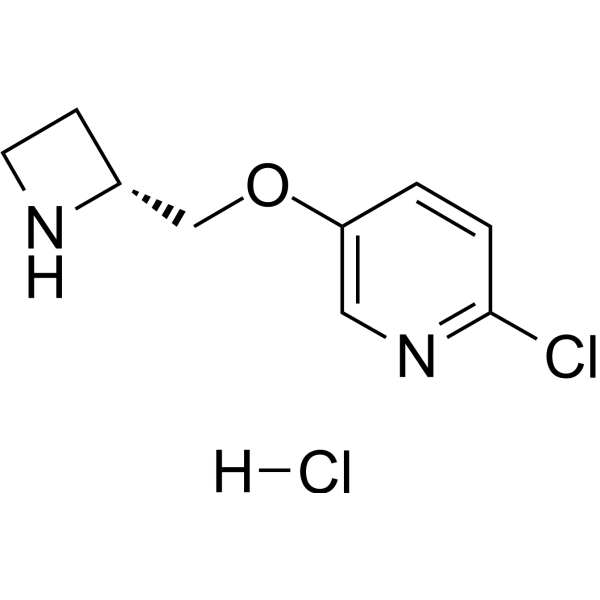
Tebanicline hydrochloride (Ebanicline hydrochloride) is a nAChR modulator with potent, orally effective analgesic activity. Tebanicline hydrochloride inhibits the binding of cytisine to α4β2 neuronal nAChRs with a Ki of 37 pM .
|
-
- HY-14312
-
|
|
nAChR
|
Neurological Disease
|
|
A 85380 is a novel, high affinity neuronal nicotinic acetylcholine receptor (nAChR) agonist. A 85380 exhibits selectivity for the α4β2 nAChR subtypes. A 85380 has a broad-spectrum analgesic profile .
|
-

- HY-138953A
-
|
|
nAChR
|
Neurological Disease
|
|
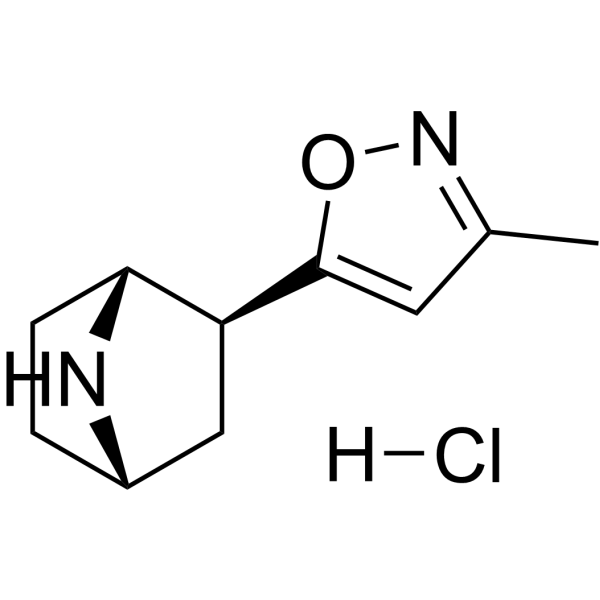
Epiboxidine hydrochloride is a potent and selective neural nAChR agonist with Kis of 0.46 nM and 1.2 nM for rat and human α4β2 nAChRs, respectively. Epiboxidine hydrochloride is a methylisoxazole analog of the alkaloid Epibatidine, and is also an analog of another nAChR agonist, ABT 418 .
|
-
- HY-10019R
-
|
CP 526555 (Standard)
|
Reference Standards
nAChR
|
Neurological Disease
Inflammation/Immunology
Cancer
|
|
Varenicline (Standard) is the analytical standard of Varenicline. This product is intended for research and analytical applications. Varenicline (CP 526555) is an orally active partial agonist of α4β2 nicotinic acetylcholine receptor (α4β2 nAChR, IC50 = 250 nM), which is the principal mediator of nicotine dependence. Varenicline is also a partial agonist of α6β2 nAChR and a full agonist of α7β2 nAChR. Varenicline blocks the direct agonist effects of nicotine on nAChR while stimulates nAChR in a more moderate way, being widely used as an aid of smoking cessation .
|
-

- HY-10019AR
-
|
CP 526555 dihydrochloride (Standard)
|
Reference Standards
nAChR
|
Neurological Disease
Inflammation/Immunology
Cancer
|
|
Varenicline (dihydrochloride) (Standard) is the analytical standard of Varenicline (dihydrochloride). This product is intended for research and analytical applications. Varenicline (CP 526555-18) is an orally active partial agonist of α4β2 nicotinic acetylcholine receptor (α4β2 nAChR, IC50 = 250 nM), which is the principal mediator of nicotine dependence. Varenicline is also a partial agonist of α6β2 nAChR and a full agonist of α7β2 nAChR. Varenicline blocks the direct agonist effects of nicotine on nAChR while stimulates nAChR in a more moderate way, being widely used as an aid of smoking cessation .
|
-

- HY-10020R
-
|
CP 526555 hydrochloride (Standard)
|
Reference Standards
nAChR
|
Neurological Disease
Inflammation/Immunology
Cancer
|
|
Varenicline (Hydrochloride) (Standard) is the analytical standard of Varenicline (Hydrochloride). This product is intended for research and analytical applications. Varenicline (CP 526555) is an orally active partial agonist of α4β2 nicotinic acetylcholine receptor (α4β2 nAChR, IC50 = 250 nM), which is the principal mediator of nicotine dependence. Varenicline is also a partial agonist of α6β2 nAChR and a full agonist of α6β2 nAChR. Varenicline blocks the direct agonist effects of nicotine on nAChR while stimulates nAChR in a more moderate way, being widely used as an aid of smoking cessation .
|
-

- HY-103066
-
|
|
nAChR
|
Neurological Disease
|
|
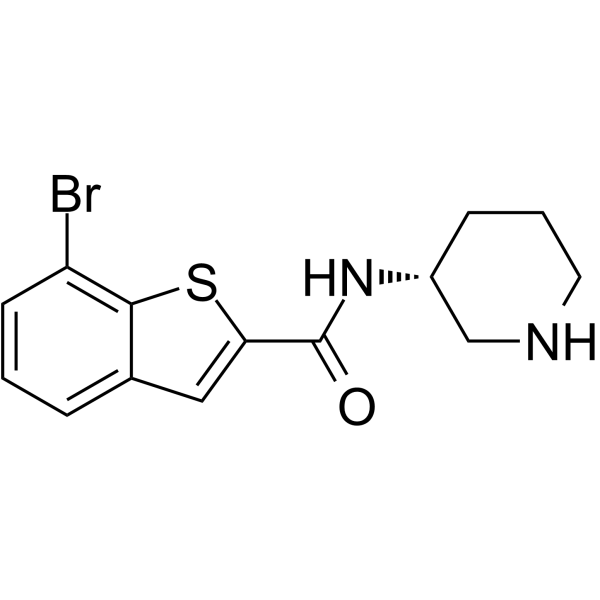
Br-PBTC is a potent, 2/4 subtype-selective positive allosteric modulator of nAChRs (nicotinic acetylcholine receptors) with α2β2, α2β4, α4β2, α4β4, (α4β2)2α4 and (α4β2)2β2 EC50 ranges from 0.1-0.6 μM. Br-PBTC acts from the c-tail of an α subunit .
|
-
- HY-107671
-
|
|
nAChR
|
Neurological Disease
|
|
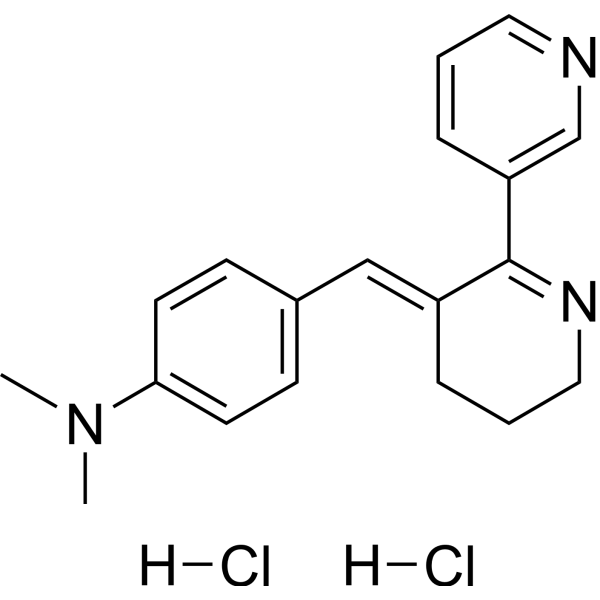
DMAB-anabaseine dihydrochloride is a selective nicotinic α7 receptor partial agonist and an α4β2 nAChR antagonist. DMAB-anabaseine dihydrochloride shows cognition-enhancing effects .
|
-
- HY-10019S2
-
|
CP 526555-13C,15N
|
Isotope-Labeled Compounds
nAChR
|
Neurological Disease
Inflammation/Immunology
Cancer
|
|
Varenicline- 13C 15N (CP 526555- 13C 15N) is 13C and 15N labeled Varenicline. Varenicline (CP 526555) is an orally active partial agonist of α4β2 nicotinic acetylcholine receptor (α4β2 nAChR, IC50 = 250 nM), which is the principal mediator of nicotine dependence. Varenicline is also a partial agonist of α6β2 nAChR and a full agonist of α7β2 nAChR. Varenicline blocks the direct agonist effects of nicotine on nAChR while stimulates nAChR in a more moderate way, being widely used as an aid of smoking cessation .
|
-

- HY-10019S1
-
|
CP 526555-15N,13C,d2
|
nAChR
Isotope-Labeled Compounds
|
Neurological Disease
Inflammation/Immunology
Cancer
|
|
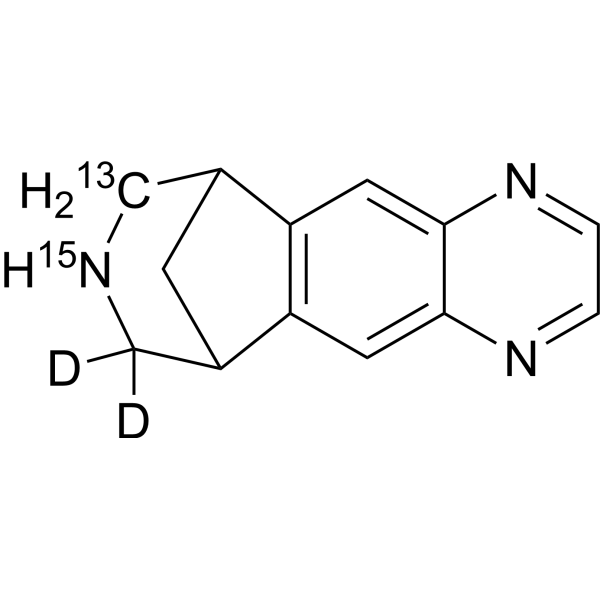
Varenicline- 15N, 13C,d2 is 15N and deuterated labeled Varenicline (HY-10019). Varenicline (CP 526555) is an orally active partial agonist of α4β2 nicotinic acetylcholine receptor (α4β2 nAChR, IC50=250 nM), which is the principal mediator of nicotine dependence. Varenicline is also a partial agonist of α6β2 nAChR and a full agonist of α7β2 nAChR. Varenicline blocks the direct agonist effects of nicotine on nAChR while stimulates nAChR in a more moderate way, being widely used as an aid of smoking cessation .
|
-
- HY-10020S
-
|
CP 526555-15N3 Hydrochloride
|
nAChR
Isotope-Labeled Compounds
|
Neurological Disease
Inflammation/Immunology
Cancer
|
|
Varenicline-15N3 Hydrochloride (CP 526555-15N3 Hydrochloride) is the 15N labeled isotope of Varenicline hydrochloride (HY-10020). Varenicline (CP 526555) is an orally active partial agonist of α4β2 nicotinic acetylcholine receptor (α4β2 nAChR, IC50 = 250 nM), which is the principal mediator of nicotine dependence. Varenicline is also a partial agonist of α6β2 nAChR and a full agonist of α6β2 nAChR. Varenicline blocks the direct agonist effects of nicotine on nAChR while stimulates nAChR in a more moderate way, being widely used as an aid of smoking cessation .
|
-

- HY-136947
-
|
|
nAChR
|
Neurological Disease
|
|
RJR-2429 is a nAChR agonist (EC50: 59 nM). RJR-2429 binds with high affinity to α4β2 receptor subtype (Ki = 1 nM). RJR-2429 induces ileum contraction .
|
-

- HY-137231A
-
|
|
nAChR
|
Neurological Disease
|
|
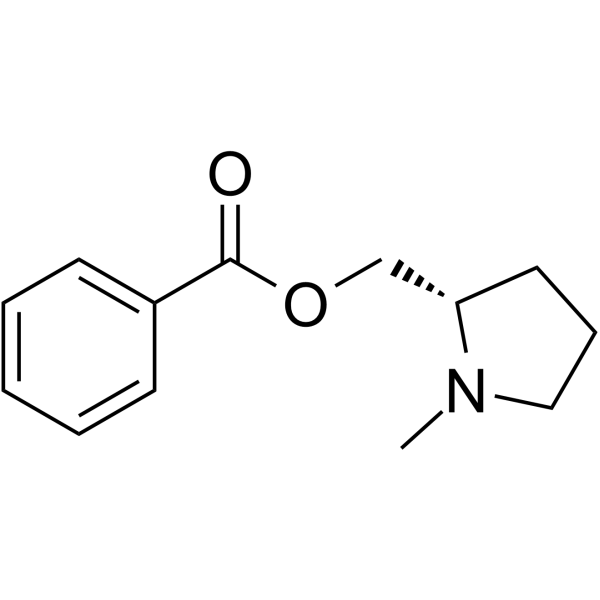
(S)-UFR2709 is a competitive nAChR antagonist and displays higher affinity for α4β2 nAChRs than for α7 nAChRs. (S)-UFR2709 decreases anxiety and reduces ethanol consumption and ethanol preference in alcohol-preferring rats. (S)-UFR2709 acts as an anxiolytic agent and can be used for the study of nicotine addiction .
|
-
- HY-131001
-
|
|
nAChR
|
Neurological Disease
|
|
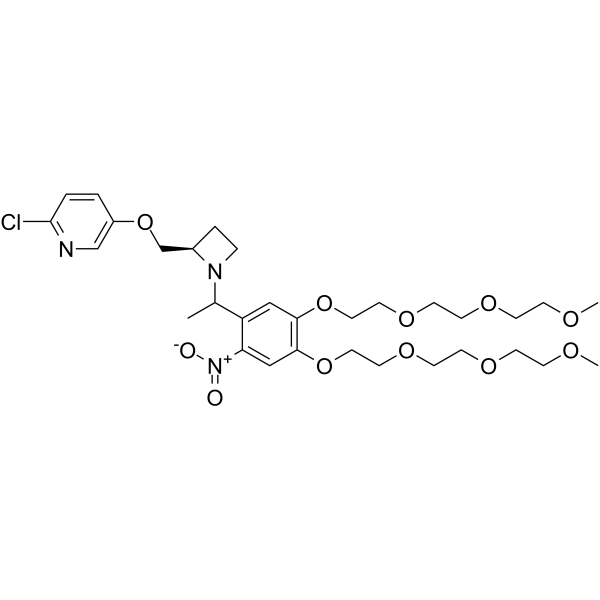
DPNB-ABT594 is a nitrobenzyl-caged ABT594 (HY-14316A) and activates nAChRs containing the α4β2 subunits with good selectivity than the α7 subunit. DPNB-ABT594 can be used to map the distribution of nAChRs on neurons of the medial habenula (MHb) and helps to gain a deeper understanding of the nAChR-mediated Ca 2+ signalling in the MHb .
|
-
- HY-138879
-
|
|
nAChR
|
Neurological Disease
|
|
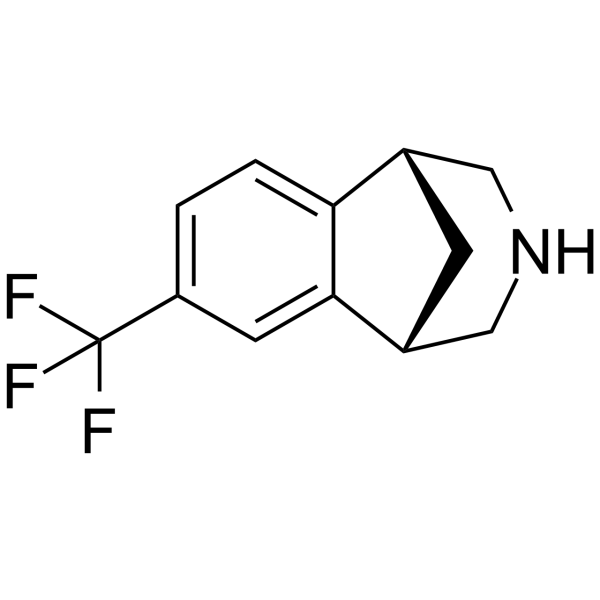
CP-601927 is a selective α4β2 nicotinic acetylcholine receptor (nAChR) partial agonist (Ki=1.2 nM; EC50=2.6 μM). CP-601927 shows good brain penetration and antidepressant-like properties .
|
-
- HY-N10132
-
|
|
nAChR
|
Infection
Neurological Disease
|
|
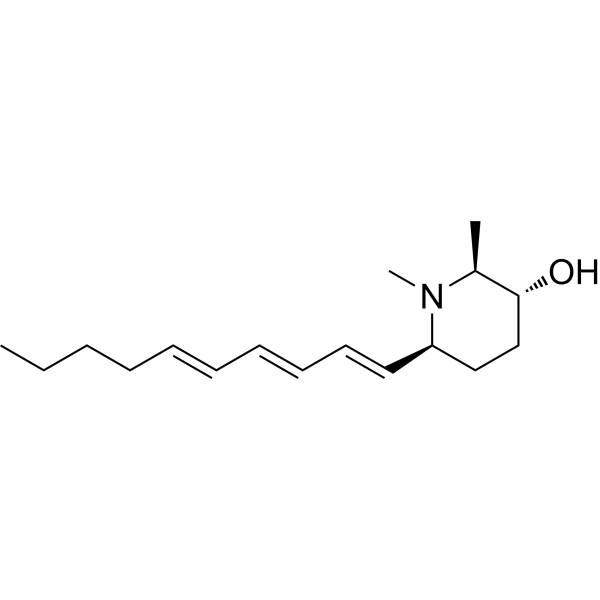
Microgrewiapine A is an antagonist of nAChR. Microgrewiapine A inhibits hα4β2 and hα3β4 activity with 60% and 70% inhibition, respectively. Microgrewiapine A has selective cytotoxic against HT-29 human colon cancer cells with an IC50 of 6.8 μM .
|
-
- HY-18159
-
|
AZD1446
|
nAChR
|
Neurological Disease
|
|
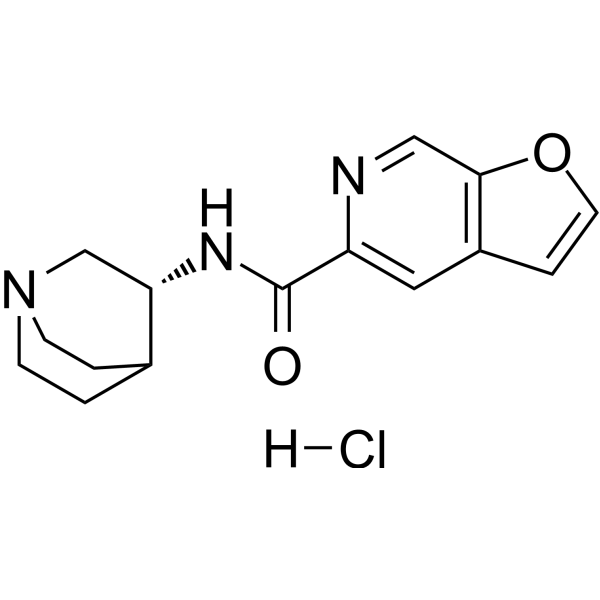
TC-6683 (AZD1446) is a selective α4β2 nicotinic acetylcholine receptor (nAChR) agonist. TC-6683 does not show significant therapeutic effects in the animal model of DYT1 dystonia.TC-6683 can be used for the research of neurological disease, such as cognitive disorder .
|
-

- HY-115766R
-
|
|
nAChR
Reference Standards
|
Neurological Disease
|
|
Anabaseine (Standard) is the analytical standard of Anabaseine. This product is intended for research and analytical applications. Anabaseine is a non-selective nicotinic agonist. Anabaseine stimulates all AChRs, preferentially stimulates skeletal muscle and brain α7 subtypes . Anabaseine is also a weak partial agonist at α4β2 nAChRs .
|
-

- HY-14824A
-
|
ABT 894 benzenesulfonate
|
nAChR
|
Neurological Disease
|
|
Sofinicline benzenesulfonate (ABT 894 benzenesulfonate) is a novel nicotinic acetylcholine receptor agonist, specifically acting on the α4β2 subtype of nAChR (IC50=0.1 nM). Sofinicline benzenesulfonate has the potential to improve cognitive function, including attention, memory and working memory. Sofinicline benzenesulfonate can be used in studies of attention deficit, hyperactivity disorder (ADHD) .
|
-

- HY-W743727
-
|
|
Isotope-Labeled Compounds
nAChR
|
Metabolic Disease
|
|
Cytisine-d4 is the deuterium labeled Cytisinicline (HY-N0175). Cytisinicline (Cytisine) is an alkaloid. Cytisinicline (Cytisine) is a partial agonist of α4β2 nAChRs , and partial to full agonist at β4 containing receptors and α7 receptors . Has been used medically to help with smoking cessation .
|
-

- HY-121141
-
|
|
nAChR
|
Neurological Disease
|
|
Adiphenine is a non-competitive inhibitor of nicotinic acetylcholine receptor (nAChR), with an IC50s of 1.9, 1.8, 3.7, and 6.3 μM for α1, α3β4, α4β2, and α4β4, respectively. Adiphenine has anticonvulsant effects .
|
-

- HY-105670A
-
|
|
nAChR
|
Neurological Disease
|
|
PHA-543613 hydrochloride is an oral or active α7 nAChR agonist with brain permeability, For α3β4, α1β1γδ, α4β2 and 5-HT3 receptors selective. PHA-543613 hydrochloride affects sensory gating and memory in an in vivo model of schizophrenia .
|
-
- HY-126047B
-
|
|
NF-κB
Amyloid-β
nAChR
|
Neurological Disease
Inflammation/Immunology
|
|
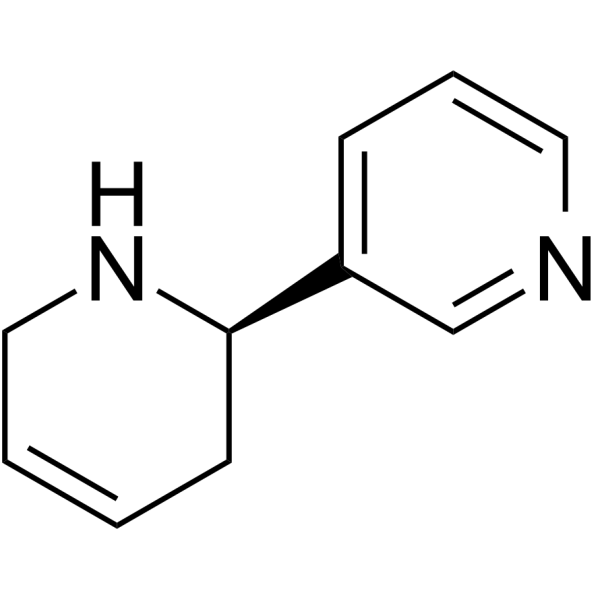
(R)-(+)-Anatabine is an less active R-enantiomer of Anatabine. Anatabine is a potent α4β2 nAChR agonist . Anatabine inhibits NF-κB activation lower amyloid-β (Aβ) production by preventing the β-cleavage of amyloid precursor protein (APP). Anatabine has anti-inflammatory effects and has the potential for neurodegenerative disorders treatment .
|
-
- HY-10019S
-
|
CP 526555-d4
|
Isotope-Labeled Compounds
nAChR
|
Neurological Disease
|
|
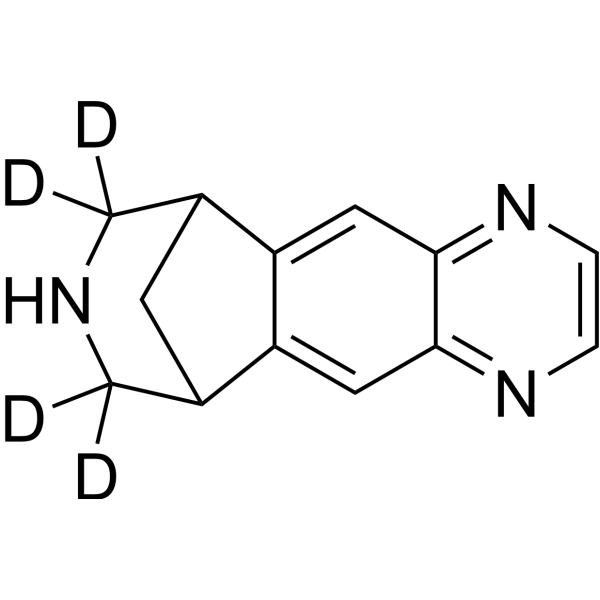
Varenicline-d4 is deuterium labeled Varenicline. Varenicline (CP 526555) is a potent partial agonist for α4β2 nicotinic acetylcholine receptor (nAChR) with an EC50 value of 2.3 μM. Varenicline is a full agonist for α3β4 and α7 nAChRs with EC50 values of 55 μM and 18 μM, respectively . Varenicline is a nicotinic ligand based on the structure of cytisine, has the potential for smoking cessation treatment .
|
-
- HY-10019AS1
-
|
|
Isotope-Labeled Compounds
nAChR
|
Inflammation/Immunology
|
|
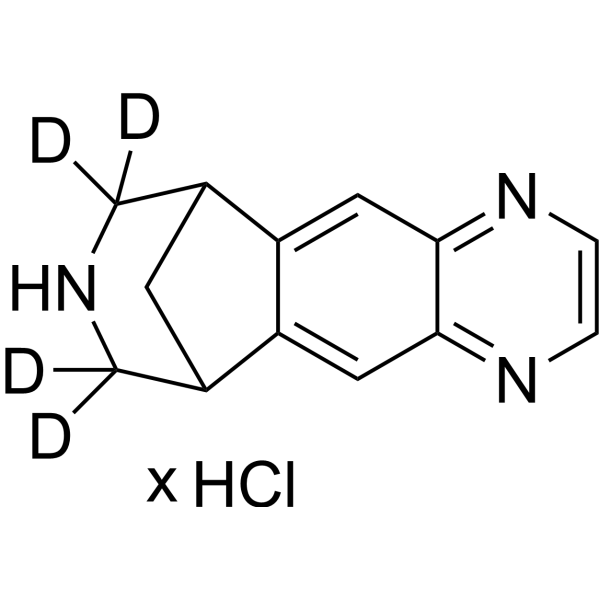
Varenicline-d4 hydrochloride is a deuterium labeled Varenicline (dihydrochloride) (HY-10019A) . Varenicline (CP 526555) dihydrochloride is a potent partial agonist for α4β2 nicotinic acetylcholine receptor (nAChR) with an EC50 value of 2.3 μM. Varenicline dihydrochloride is a full agonist for α3β4 and α7 nAChRs with EC50 values of 55 μM and 18 μM, respectively . Varenicline dihydrochloride is a nicotinic ligand based on the structure of cytosine, and has the potential for smoking cessation treatment .
|
-
- HY-13225H
-
|
RJR-2403 hydrochloride; Metanicotine hydrochloride
|
nAChR
|
Neurological Disease
|
|
Rivanicline (RJR-2403) hydrochloride is a neuronal nicotinic receptor agonist. Rivanicline hydrochloride is highly selective for the rat brain cortex nAChRs (Ki = 26 nM, EC50 of 732 nM) and α4β2 subtype (Ki = 26 nM, EC50 = 16 μM). Rivanicline hydrochloride can significantly restore the learning impairment and cognitive dysfunction. Rivanicline hydrochloride can be used for the study of neurodegenerative diseases (such as schizophrenia or Alzheimer's disease) .
|
-

- HY-14319A
-
|
|
nAChR
|
Neurological Disease
|
|
Sazetidine A hydrochloride is a potent ligand for the α4β2 nicotinic acetylcholine receptor, exhibiting high binding affinities and selectivity towards this subtype. Sazetidine A hydrochloride demonstrates promising pharmacological properties that could potentially contribute to the development of therapies targeting nicotinic receptor-related conditions. Sazetidine A hydrochloride has been implicated in studies examining the binding affinities of various analogs, highlighting its significance in understanding subtype selectivity among nAChR ligands.
|
-

- HY-A0009S
-
|
Galantamine-d3 hydrobromide
|
Isotope-Labeled Compounds
Cholinesterase (ChE)
nAChR
|
Neurological Disease
|
|
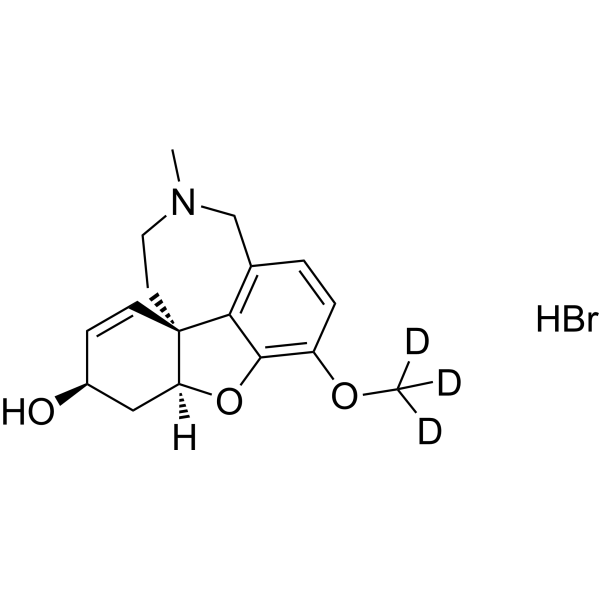
Galanthamine-d3 (hydrobromide) is deuterium labeled Galanthamine (hydrobromide). Galanthamine hydrobromide (Galantamine hydrobromide) is a selective, reversible, competitive, alkaloid AChE inhibitor, with an IC50 of 0.35 μM. Galanthamine hydrobromide is a potent allosteric potentiating ligand (APL) of human α3β4, α4β2, α6β4 nicotinic receptors ( nAChRs). Galanthamine hydrobromide is developed for the research of Alzheimer's disease (AD) .
|
-
- HY-B0379AR
-
|
|
Reference Standards
nAChR
|
Neurological Disease
|
|
Adiphenine (hydrochloride) (Standard) is the analytical standard of Adiphenine (hydrochloride). This product is intended for research and analytical applications. Adiphenine hydrochloride is a non-competitive inhibitor of nicotinic acetylcholine receptor (nAChR), with an IC50s of 1.9, 1.8, 3.7, and 6.3 μM for α1, α3β4, α4β2, and α4β4, respectively. Adiphenine hydrochloride has anticonvulsant effects .
|
-

- HY-110142
-
|
CC4
|
nAChR
|
Neurological Disease
|
|
Thermopsidine (CC4) is a selective partial agonist at α4β2/α6β2 nAChR with EC50 values of 2.2 μM target α4β2 .
|
-

- HY-107675R
-
|
Deformylflustrabromine hydrochloride (Standard); dFBr hydrochloride (Standard)
|
Reference Standards
nAChR
|
Neurological Disease
|
|
Desformylflustrabromine hydrochloride (Standard) is the analytical standard of Desformylflustrabromine hydrochloride (HY-107675). This product is intended for research and analytical applications. Desformylflustrabromine hydrochloride is a selective agonist of α4β2 neuronal nicotinic acetylcholine receptor (nAChR) with a pEC50 of 6.48.
|
-

- HY-14318
-
|
SIB-1508Y free base
|
nAChR
|
Neurological Disease
|
|
Altinicline (SIB-1508Y free base) is a selective α4β2 nicotinic acetylcholine receptor (nAChR) agonist, with no activity against α7 or α1β1γδ nAChRs and only extremely low activity against α3β4 nAChRs. Altinicline reverses escape deficits and increases avoidance responses. Altinicline is applicable to research related to depression .
|
-

- HY-183666
-
|
|
nAChR
Serotonin Transporter
|
Neurological Disease
|
|
NS3956 is a blood-brain barrier-permeable human α4β2-nicotinic acetylcholine receptor (nAChR) agonist (Ki = 0.36 nM). NS3956 induces dopamine release, produces analgesic effects, modulates rotational behavior in 6-OHDA-lesioned rats, and potentiates the effects of SSRI/SNRI in the forced swim test in mice. NS3956 can be used in research related to depression, Parkinson's disease, and acute pain .
|
-

- HY-13225D
-
|
RJR-2403 fumarate; (E)-Metanicotine fumarate
|
nAChR
|
Neurological Disease
|
|
Rivanicline (RJR-2403) fumarate is a neuronal nicotinic receptor agonist. Rivanicline fumarate is highly selective for the rat brain cortex nAChRs (Ki = 26 nM, EC50 of 732 nM) and α4β2 subtype (Ki = 26 nM, EC50 = 16 μM). Rivanicline fumarate can significantly restore the learning impairment and cognitive dysfunction. Rivanicline fumarate can be used for the study of neurodegenerative diseases (such as schizophrenia or Alzheimer's disease) .
|
-

- HY-105670R
-
|
|
Reference Standards
nAChR
|
Neurological Disease
|
|
PHA-543613 (Standard) is the analytical standard of PHA-543613 (HY-105670). This product is intended for research and analytical applications. PHA-543613 is a potent, orally active, brain-penetrant and selective α7 nAChR agonist with a Ki of 8.8 nM. PHA-543613 displays selectivity for α7-nAChR over α3β4, α1β1γδ, α4β2 and 5-HT3 receptors . PHA-543613 can be used for the cognitive deficits of Alzheimer's disease and schizophrenia research .
|
-

- HY-182010
-
|
|
nAChR
|
Neurological Disease
|
|
nAChR antagonist 3 is a selective α7 nAChR antagonist with an IC50 of 0.86 μM. nAChR antagonist 3 exerts a protective effect against paraoxon-induced toxicity. nAChR antagonist 3 can be used for the research of organophosphate poisoning .
|
-

- HY-182707
-
|
|
nAChR
Interleukin Related
TNF Receptor
NF-κB
|
Neurological Disease
|
|
JWX-A0108 is a selective human α7 nAChR positive allosteric modulator with an EC50 of 4.35 μM. JWX-A0108 potentiates α7 nAChR currents only in the presence of acetylcholine, with no direct activating effect or alteration of desensitization. JWX-A0108 enhances hippocampal GABAergic synaptic transmission by increasing spontaneous inhibitory postsynaptic currents. JWX-A0108 reduces the brain expression levels of IL-1β, TNF-α, and IL-6 by blocking the NF-κB signaling pathway, and reduces microglial activation by downregulating Iba1. JWX-A0108 effectively improves cognitive deficits, neuroinflammation, and hippocampal neuronal damage in mouse models of schizophrenia and Alzheimer's disease. JWX-A0108 can be used for research related to schizophrenia and Alzheimer's disease .
|
-

| Cat. No. |
Product Name |
Category |
Target |
Chemical Structure |
-
- HY-N0175
-
-
-
- HY-107670
-
-
-
- HY-A0009
-
|
Galantamine hydrobromide
|
Alkaloids
Other Alkaloids
Plants
Amaryllidaceae
|
Cholinesterase (ChE)
nAChR
|
|
Galanthamine hydrobromide (Galantamine hydrobromide) is a selective, reversible, competitive, alkaloid AChE inhibitor, with an IC50 of 0.35 µM. Galanthamine hydrobromide is a potent allosteric potentiating ligand (APL) of human α3β4, α4β2, α6β4 nicotinic receptors ( nAChRs). Galanthamine hydrobromide is developed for the research of Alzheimer's disease (AD) .
|
-
-
- HY-N0175R
-
-
-
- HY-A0009R
-
|
Galantamine hydrobromide (Standard)
|
Structural Classification
Alkaloids
Other Alkaloids
Plants
Amaryllidaceae
Source Classification
|
nAChR
Cholinesterase (ChE)
Reference Standards
|
|
Galanthamine (hydrobromide) (Standard) is the analytical standard of Galanthamine (hydrobromide). This product is intended for research and analytical applications. Galanthamine hydrobromide (Galantamine hydrobromide) is a selective, reversible, competitive, alkaloid AChE inhibitor, with an IC50 of 0.35 µM. Galanthamine hydrobromide is a potent allosteric potentiating ligand (APL) of human α3β4, α4β2, α6β4 nicotinic receptors ( nAChRs). Galanthamine hydrobromide is developed for the research of Alzheimer's disease (AD) .
|
-
-
- HY-N10132
-
-
| Cat. No. |
Product Name |
Chemical Structure |
-
- HY-115766S
-
|
|
|
Anabaseine-d4 is the deuterium labeled Anabaseine (HY-115766). Anabaseine is a non-selective nicotinic agonist. Anabaseine stimulates all AChRs, preferentially stimulates skeletal muscle and brain α7 subtypes . Anabaseine is also a weak partial agonist at α4β2 nAChRs .
|
-
-
- HY-10019S2
-
|
|
|
Varenicline- 13C 15N (CP 526555- 13C 15N) is 13C and 15N labeled Varenicline. Varenicline (CP 526555) is an orally active partial agonist of α4β2 nicotinic acetylcholine receptor (α4β2 nAChR, IC50 = 250 nM), which is the principal mediator of nicotine dependence. Varenicline is also a partial agonist of α6β2 nAChR and a full agonist of α7β2 nAChR. Varenicline blocks the direct agonist effects of nicotine on nAChR while stimulates nAChR in a more moderate way, being widely used as an aid of smoking cessation .
|
-
-
- HY-10019S1
-
|
|
|
Varenicline- 15N, 13C,d2 is 15N and deuterated labeled Varenicline (HY-10019). Varenicline (CP 526555) is an orally active partial agonist of α4β2 nicotinic acetylcholine receptor (α4β2 nAChR, IC50=250 nM), which is the principal mediator of nicotine dependence. Varenicline is also a partial agonist of α6β2 nAChR and a full agonist of α7β2 nAChR. Varenicline blocks the direct agonist effects of nicotine on nAChR while stimulates nAChR in a more moderate way, being widely used as an aid of smoking cessation .
|
-
-
- HY-10020S
-
|
|
|
Varenicline-15N3 Hydrochloride (CP 526555-15N3 Hydrochloride) is the 15N labeled isotope of Varenicline hydrochloride (HY-10020). Varenicline (CP 526555) is an orally active partial agonist of α4β2 nicotinic acetylcholine receptor (α4β2 nAChR, IC50 = 250 nM), which is the principal mediator of nicotine dependence. Varenicline is also a partial agonist of α6β2 nAChR and a full agonist of α6β2 nAChR. Varenicline blocks the direct agonist effects of nicotine on nAChR while stimulates nAChR in a more moderate way, being widely used as an aid of smoking cessation .
|
-
-
- HY-W743727
-
|
|
|
Cytisine-d4 is the deuterium labeled Cytisinicline (HY-N0175). Cytisinicline (Cytisine) is an alkaloid. Cytisinicline (Cytisine) is a partial agonist of α4β2 nAChRs , and partial to full agonist at β4 containing receptors and α7 receptors . Has been used medically to help with smoking cessation .
|
-
-
- HY-10019S
-
|
|
|
Varenicline-d4 is deuterium labeled Varenicline. Varenicline (CP 526555) is a potent partial agonist for α4β2 nicotinic acetylcholine receptor (nAChR) with an EC50 value of 2.3 μM. Varenicline is a full agonist for α3β4 and α7 nAChRs with EC50 values of 55 μM and 18 μM, respectively . Varenicline is a nicotinic ligand based on the structure of cytisine, has the potential for smoking cessation treatment .
|
-
-
- HY-10019AS1
-
|
|
|
Varenicline-d4 hydrochloride is a deuterium labeled Varenicline (dihydrochloride) (HY-10019A) . Varenicline (CP 526555) dihydrochloride is a potent partial agonist for α4β2 nicotinic acetylcholine receptor (nAChR) with an EC50 value of 2.3 μM. Varenicline dihydrochloride is a full agonist for α3β4 and α7 nAChRs with EC50 values of 55 μM and 18 μM, respectively . Varenicline dihydrochloride is a nicotinic ligand based on the structure of cytosine, and has the potential for smoking cessation treatment .
|
-
-
- HY-A0009S
-
|
|
|
Galanthamine-d3 (hydrobromide) is deuterium labeled Galanthamine (hydrobromide). Galanthamine hydrobromide (Galantamine hydrobromide) is a selective, reversible, competitive, alkaloid AChE inhibitor, with an IC50 of 0.35 μM. Galanthamine hydrobromide is a potent allosteric potentiating ligand (APL) of human α3β4, α4β2, α6β4 nicotinic receptors ( nAChRs). Galanthamine hydrobromide is developed for the research of Alzheimer's disease (AD) .
|
-
| Cat. No. |
Product Name |
|
Classification |
-
- HY-14318
-
|
SIB-1508Y free base
|
|
Alkynes
|
|
Altinicline (SIB-1508Y free base) is a selective α4β2 nicotinic acetylcholine receptor (nAChR) agonist, with no activity against α7 or α1β1γδ nAChRs and only extremely low activity against α3β4 nAChRs. Altinicline reverses escape deficits and increases avoidance responses. Altinicline is applicable to research related to depression .
|
Your information is safe with us. * Required Fields.
Inquiry Information
- Product Name:
- Cat. No.:
- Quantity:
- MCE Japan Authorized Agent:








