



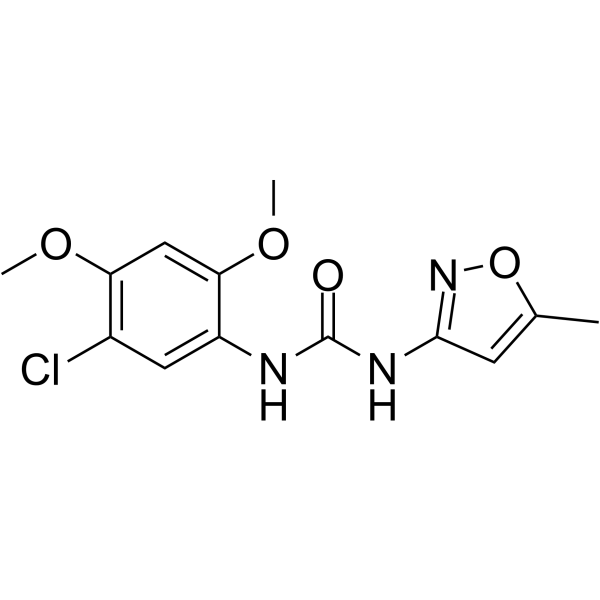
PNU-120596
Based on 2 publication(s) in Google Scholar
PNU-120596 (NSC 216666) is a potent and selective α7 nAChR positive allosteric modulator (PMA) that can cross the blood-brain barrier, with an EC50 of 216 nM. PNU-120596 is inactive against α4β2, α3β4, and α9α10 nAChRs. PNU-120596 has the potential for psychiatric and neurological disorders research.
For research use only. We do not sell to patients.
- Purity : 99.49%
- CAS No.: 501925-31-1
- Formula: C13H14ClN3O4
- Molecular Weight:311.72
-
Storage:Powder -20°C, 3 years , 4°C, 2 years ; In solvent -80°C, 2 years , -20°C, 1 year

To place orders, for customer services and technical support, please contact: MedChemExpress USA
Tel: 609-228-6898 E-mail: [email protected] [email protected]


-
 Biological Activity
-
Chemical Information
-
Solvent & Solubility
- Purity & Documentation
- References
-
 Help & FAQs


-
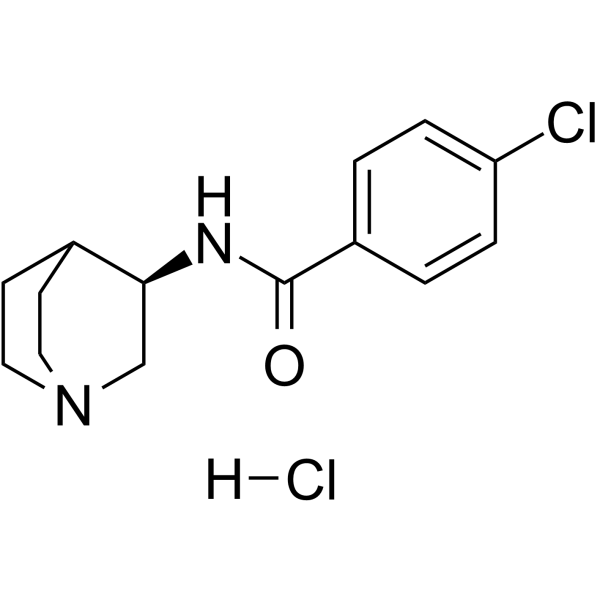
HY-12560A
PNU-282987α7 nAChR Agonist/5-HT3 antagonist -
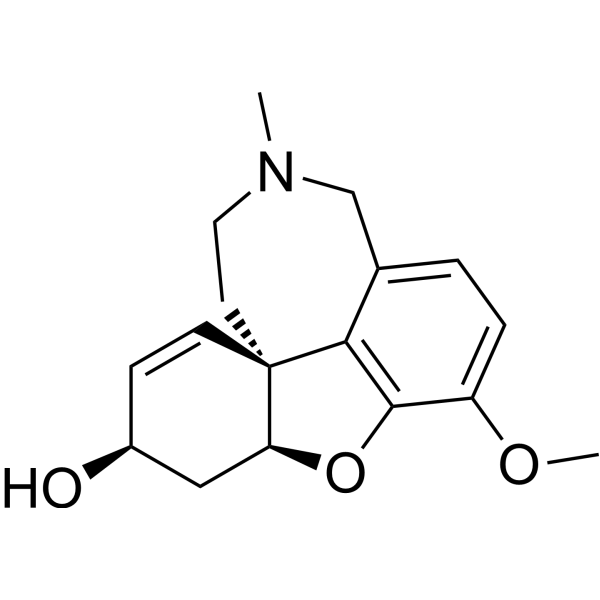
HY-76299
GalanthamineCholinesterase (ChE) Inhibitor -
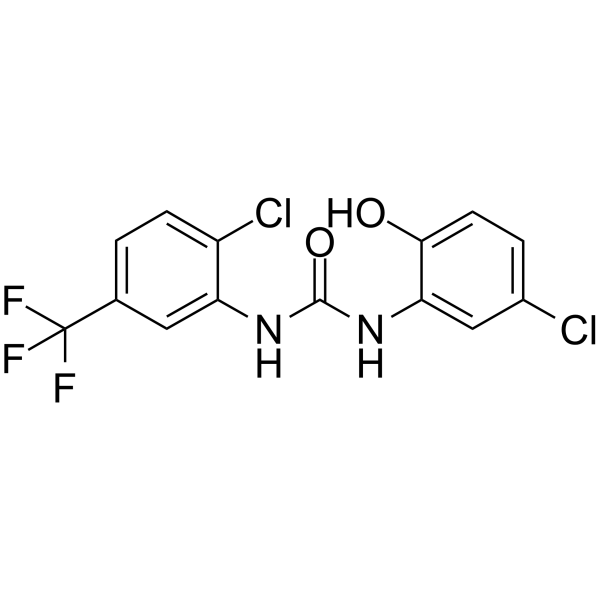
HY-12151
NS 1738nAChR Agonist -
HY-N2332A
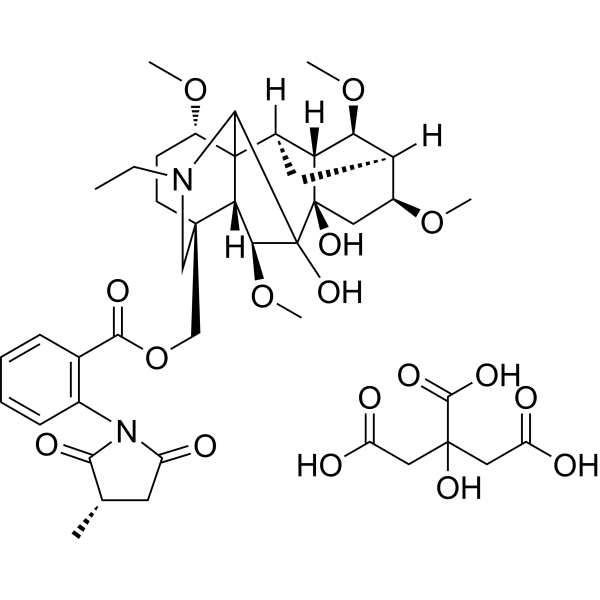
Methyllycaconitine citrateα7nAChR Antagonist -
HY-14564A
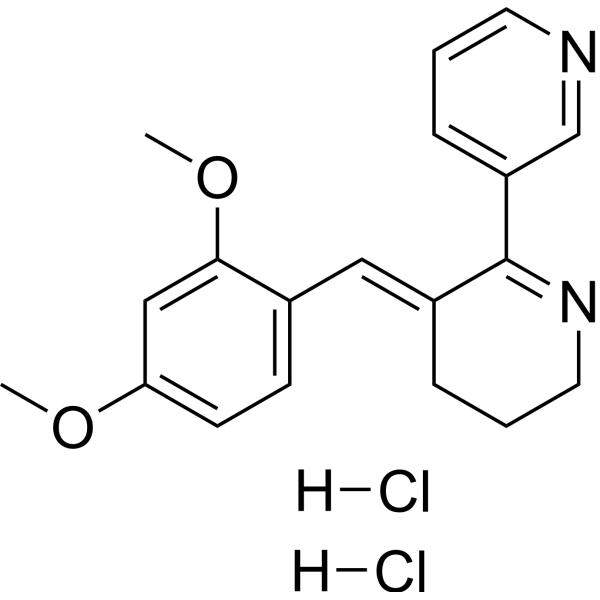
GTS-21 dihydrochlorideα7-nAChR Agonist -
HY-B0569
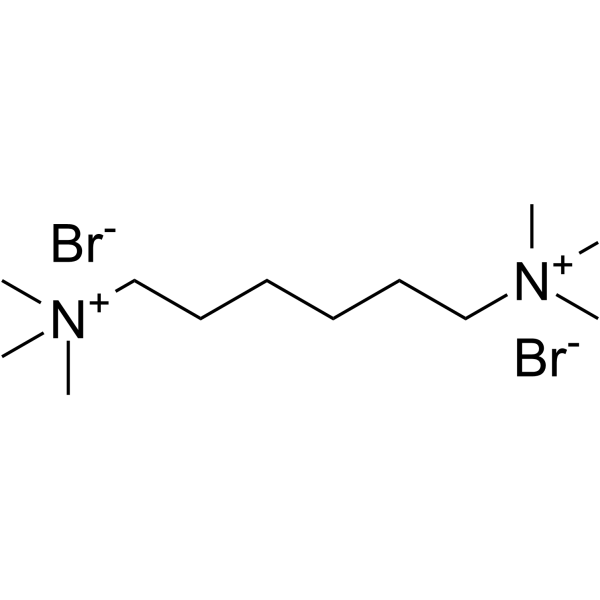
Hexamethonium BromidenAChR Antagonist -
HY-15430A
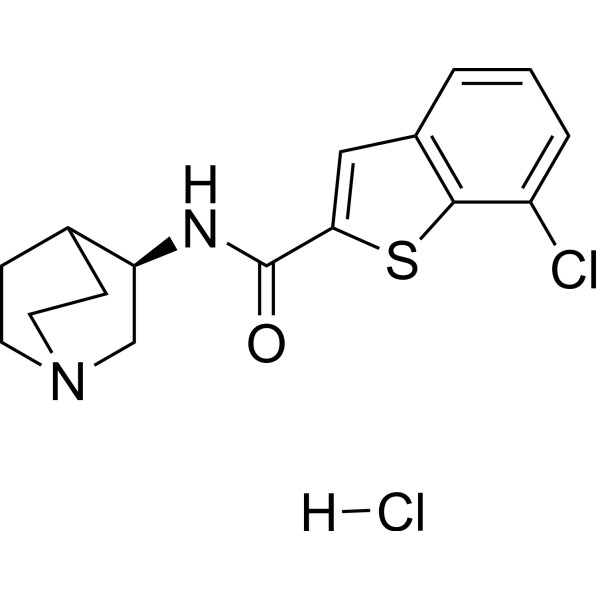
Encenicline hydrochloridenAChR Agonist -
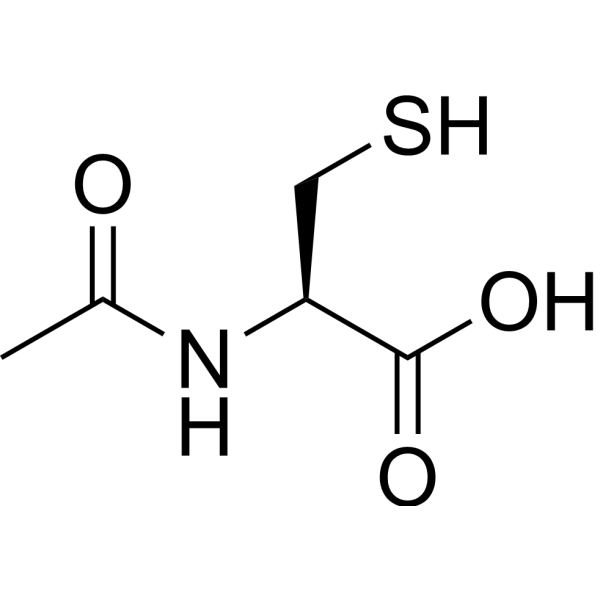
HY-B0215
AcetylcysteineMucolytic Agent -
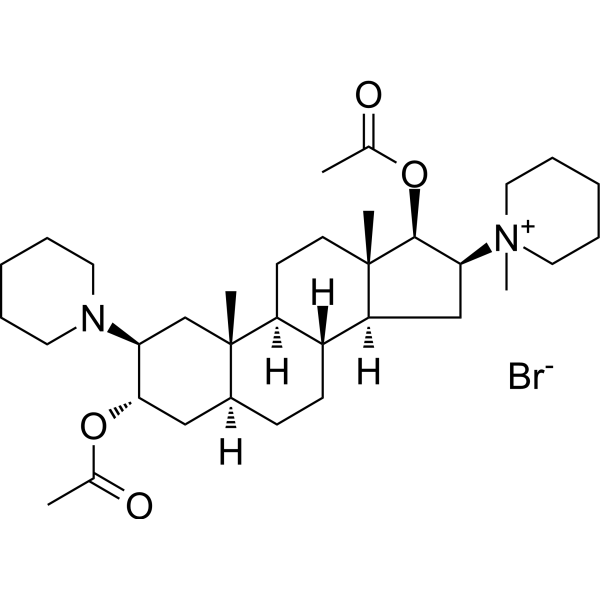
HY-B0118A
Vecuronium bromideNeuromuscular Blocking Agent -
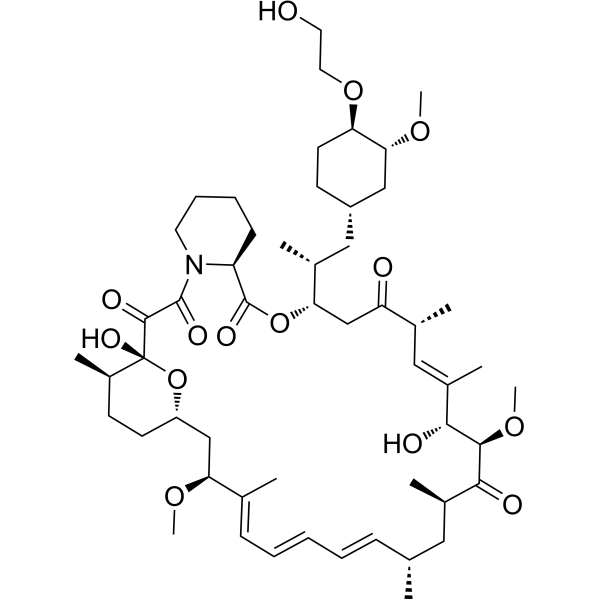
HY-10218
EverolimusmTORC Inhibitor -
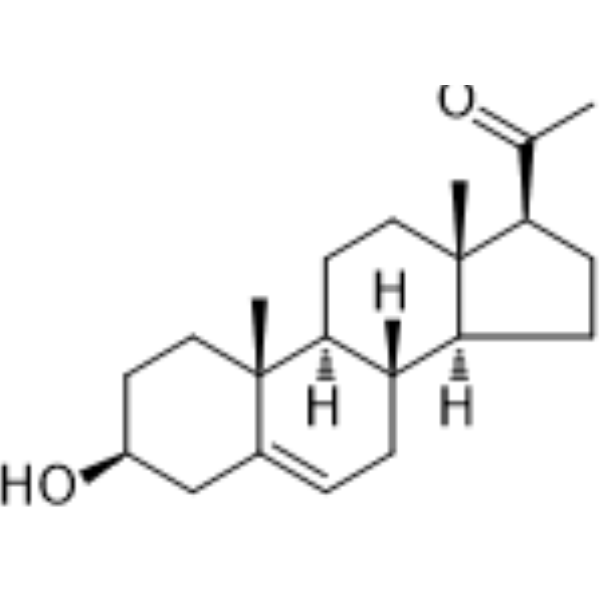
HY-B0151
PregnenoloneCB1 Inhibitor -
HY-Y0873
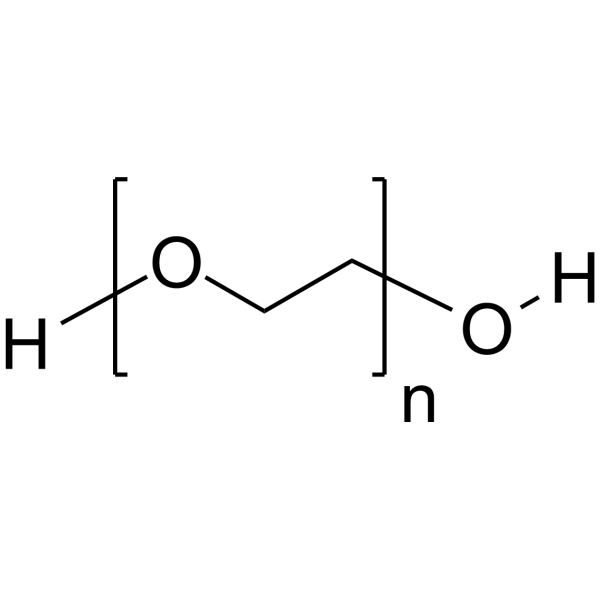
PEG300Neutral Polymer
Publications Citing Use of MedChemExpress (MCE) PNU-120596
More

Biological Activity
Description
IC50 & Target
EC50: 216 nM (α7 nAChR)[1]
In Vitro
PNU-120596 increases agonist-evoked calcium flux mediated by an engineered variant of the human α7 nAChR. Electrophysiology studies confirme that PNU-120596 increases peak agonist-evoked currents mediated by wild-type receptors and also demonstrates a pronounced prolongation of the evoked response in the continued presence of agonist. PNU-120596 increases the channel mean open time of α7 nAChRs[1].
When applied to acute hippocampal slices, PNU-120596 increases the frequency of ACh-evoked GABAergic postsynaptic currents measured in pyramidal neurons[1].
PNU-120596 enhances agonist-evoked gating of nicotinic receptors by eliciting conformational effects that are similar but nonidentical to the gating conformations promoted by ACh[2].
MedChemExpress (MCE) has not independently confirmed the accuracy of these methods. They are for reference only.
In Vivo
When administered before carrageenan, NU-120596 (30 mg/kg; i.p.) significantly reduces mechanical hyperalgesia and weight-bearing deficits for up to 4 h in Sprague-Dawley rats. PNU-120596 attenuates the carrageenan-induced increase in levels of TNF-α and IL-6 within the hind paw oedema[3].
MedChemExpress (MCE) has not independently confirmed the accuracy of these methods. They are for reference only.
-
Animal Model:Male Sprague Dawley rats (250-300 g) treated with Amphetamine[1]
-
Dosage:1 mg/kg
-
Administration:Intravenous injection; once
-
Result:Improved the auditory gating deficit caused by Amphetamine.


Chemical Information
-
CAS No. 501925-31-1
-
Appearance Solid
-
Molecular Weight 311.72
-
Formula C13H14ClN3O4
-
Color White to gray
-
SMILES
O=C(NC1=CC(Cl)=C(C=C1OC)OC)NC2=NOC(C)=C2
-
Synonyms
NSC 216666
-
Shipping
Room temperature in continental US; may vary elsewhere.
-
Storage
Powder -20°C 3 years 4°C 2 years In solvent -80°C 2 years -20°C 1 year


Publications (2)
-
Journal Impact Factor
-
Most Recent
-
Cell Death Differ
Activation of α7nAChR reduces inflammation and apoptosis, promoting muscle regeneration through the AKT-FOXO1 pathway. [Abstract]2026 Apr 3. PMID: 41933047 -
Int J Mol Sci
KYNA Ameliorates Glutamate Toxicity of HAND by Enhancing Glutamate Uptake in A2 Astrocytes. [Abstract]2024 Apr 12;25(8):4286. PMID: 38673879


Solvent & Solubility
In Vitro:
DMSO : 50 mg/mL (160.40 mM; Need ultrasonic; Hygroscopic DMSO has a significant impact on the solubility of product, please use newly opened DMSO)
Please refer to the solubility information to select the appropriate solvent. Once prepared, please aliquot and store the solution to prevent product inactivation from repeated freeze-thaw cycles.
Storage method and period of stock solution: -80°C, 2 years; -20°C, 1 year. When stored at -80°C, please use it within 2 years. When stored at -20°C, please use it within 1 year.
Please refer to the solubility information to select the appropriate solvent. Once prepared, please aliquot and store the solution to prevent product inactivation from repeated freeze-thaw cycles.
Storage method and period of stock solution: -80°C, 2 years; -20°C, 1 year. When stored at -80°C, please use it within 2 years. When stored at -20°C, please use it within 1 year.
Concentration (start) × Volume (start) = Concentration (final) × Volume (final)
In Vivo:
Select the appropriate dissolution method based on your experimental animal and administration route.
- For the following dissolution methods, please ensure to first prepare a clear stock solution using an In Vitro approach and then sequentially add co-solvents:
- To ensure reliable experimental results, the clarified stock solution can be appropriately stored based on storage conditions. As for the working solution for In Vivo experiments, it is recommended to prepare freshly and use it on the same day.
- The percentages shown for the solvents indicate their volumetric ratio in the final prepared solution. If precipitation or phase separation occurs during preparation, heat and/or sonication can be used to aid dissolution.
Add each solvent one by one: 10% DMSO 40% PEG300 5% Tween-80 45% Saline
Solubility: 2.5 mg/mL (8.02 mM); Suspended solution; Need ultrasonic
This protocol yields a suspended solution of 2.5 mg/mL. Suspended solution can be used for oral and intraperitoneal injection.
Taking 1 mL working solution as an example, add 100 μL DMSO stock solution (25.0 mg/mL) to 400 μL PEG300, and mix evenly; then add 50 μL Tween-80 and mix evenly; then add 450 μL Saline to adjust the volume to 1 mL.
Preparation of Saline: Dissolve 0.9 g sodium chloride in ddH₂O and dilute to 100 mL to obtain a clear Saline solution.
In Vivo Dissolution Calculator
Please enter the basic information of animal experiments:
-
-
-
-
Recommended: Prepare an additional quantity of animals to account for potential losses during experiments.
Please enter your animal formula composition:
-
%DMSO +
Recommended: Keep the proportion of DMSO in working solution below 2% if your animal is weak.
-
%+
-
+%Tween-80 + +
-
%Saline +
The co-solvents required include: DMSO, . All of co-solvents are available by MedChemExpress (MCE). , Tween 80. All of co-solvents are available by MedChemExpress (MCE).
Working solution concentration: 0.22 mg/mL
Method for preparing stock solution: mg drug dissolved in μL DMSO. Stock solution concentration: mg/mL.
1. Take μL DMSO stock solution;
2. Add μL .
μL , mix evenly;
3. Then add μL Tween 80, mix evenly;
4. Then add μL
Please ensure that the stock solution in the first step is dissolved to a clear state, and add co-solvents in sequence. You can use ultrasonic heating (ultrasonic cleaner, recommended frequency 20-40 kHz), vortexing, etc. to assist dissolution.


Purity & Documentation
-
Data Sheet (276 KB)
-
SDS (393 KB)
- English - EN (393 KB)
- Français - FR (393 KB)
- Deutsch - DE (393 KB)
- Norwegian - NO (393 KB)
- Español - ES (393 KB)
- Swedish - SV (393 KB)
- Italian - IT (393 KB)
- Korean - KR (393 KB)
- Portuguese - PT (393 KB)
-
Handling Instructions (2659 KB)
References
[1]. Hurst RS, et al. A novel positive allosteric modulator of the alpha7 neuronal nicotinic acetylcholine receptor: in vitro and in vivo characterization. J Neurosci, 2005, 25(17), 4396-4405. [Content Brief]
[2]. Barron SC, et al. An allosteric modulator of alpha7 nicotinic receptors, N-(5-Chloro-2,4-dimethoxyphenyl)-N'-(5-methyl-3-isoxazolyl)-urea (PNU-120596), causes conformational changes in the extracellular ligand binding domain similar to those caused by acetylcholine. Mol Pharmacol, 2009 76(2), 253-263. [Content Brief]
[3]. Munro G, et al. The α7 nicotinic ACh receptor agonist compound B and positive allosteric modulator PNU-120596 both alleviate inflammatory hyperalgesia and cytokine release in the rat. Br J Pharmacol, 2012, doi: 10.1111/j.1476-5381.2012.02003.x [Content Brief]


Complete Stock Solution Preparation Table
Please refer to the solubility information to select the appropriate solvent. Once prepared, please aliquot and store the solution to prevent product inactivation from repeated freeze-thaw cycles.
Storage method and period of stock solution: -80°C, 2 years; -20°C, 1 year. When stored at -80°C, please use it within 2 years. When stored at -20°C, please use it within 1 year.
| Optional Solvent | Concentration Solvent Mass | 1 mg | 5 mg | 10 mg | 25 mg |
|---|---|---|---|---|---|
| DMSO | 1 mM | 3.2080 mL | 16.0400 mL | 32.0801 mL | 80.2002 mL |
| 5 mM | 0.6416 mL | 3.2080 mL | 6.4160 mL | 16.0400 mL | |
| 10 mM | 0.3208 mL | 1.6040 mL | 3.2080 mL | 8.0200 mL | |
| 15 mM | 0.2139 mL | 1.0693 mL | 2.1387 mL | 5.3467 mL | |
| 20 mM | 0.1604 mL | 0.8020 mL | 1.6040 mL | 4.0100 mL | |
| 25 mM | 0.1283 mL | 0.6416 mL | 1.2832 mL | 3.2080 mL | |
| 30 mM | 0.1069 mL | 0.5347 mL | 1.0693 mL | 2.6733 mL | |
| 40 mM | 0.0802 mL | 0.4010 mL | 0.8020 mL | 2.0050 mL | |
| 50 mM | 0.0642 mL | 0.3208 mL | 0.6416 mL | 1.6040 mL | |
| 60 mM | 0.0535 mL | 0.2673 mL | 0.5347 mL | 1.3367 mL | |
| 80 mM | 0.0401 mL | 0.2005 mL | 0.4010 mL | 1.0025 mL | |
| 100 mM | 0.0321 mL | 0.1604 mL | 0.3208 mL | 0.8020 mL |


PNU-120596 Related Classifications
HY-12152 Related Classifications
 Powered by Bioz