



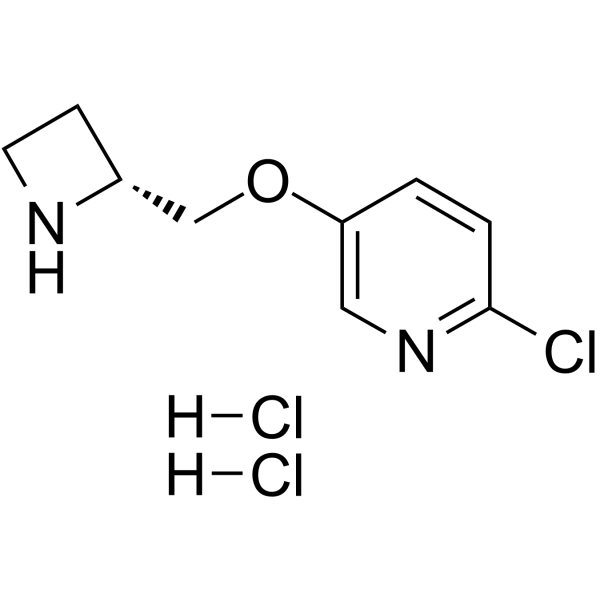
Tebanicline dihydrochloride

Based on 1 Customer Validation
Tebanicline dihydrochloride (Ebanicline dihydrochloride) is a nAChR modulator with potent, orally effective analgesic activity. It inhibits the binding of cytisine to α4β2 neuronal nAChRs with a Ki of 37 pM.
For research use only. We do not sell to patients.
- Purity : 99.49%
- CAS No.: 209326-19-2
- Formula: C9H13Cl3N2O
- Molecular Weight:271.57
-
Storage:
4°C, sealed storage, away from moisture
* In solvent : -80°C, 6 months; -20°C, 1 month (sealed storage, away from moisture)

To place orders, for customer services and technical support, please contact: MedChemExpress USA
Tel: 609-228-6898 E-mail: [email protected] [email protected]


-
 Biological Activity
-
Chemical Information
-
Solvent & Solubility
- Purity & Documentation
- References
-
 Help & FAQs


-
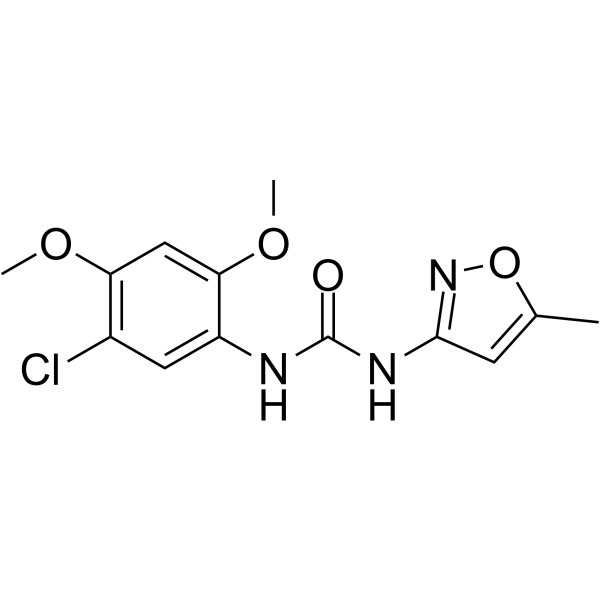
HY-12152
PNU-120596α7 nAChR PMA -
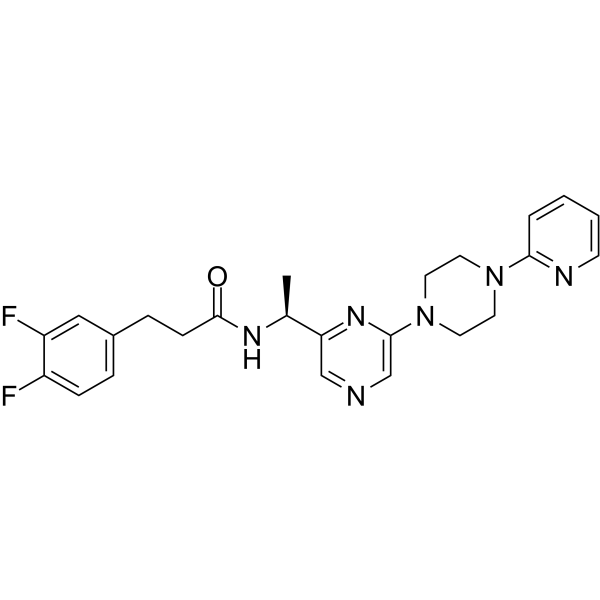
HY-114269
(-)-(S)-B-973Bα7 nAChR Activator -
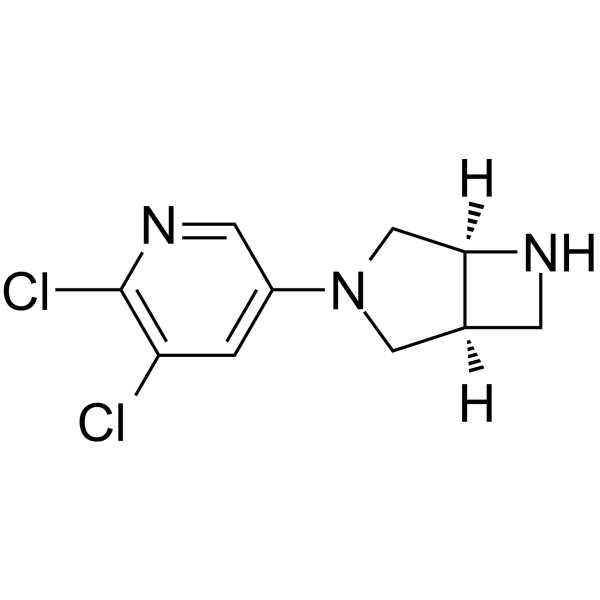
HY-14824
SofiniclinnAChR Agonist -
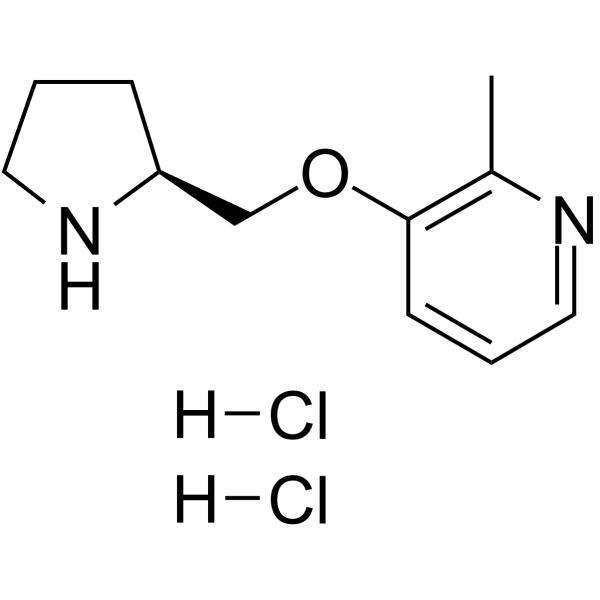
HY-110160
Pozanicline dihydrochloride -
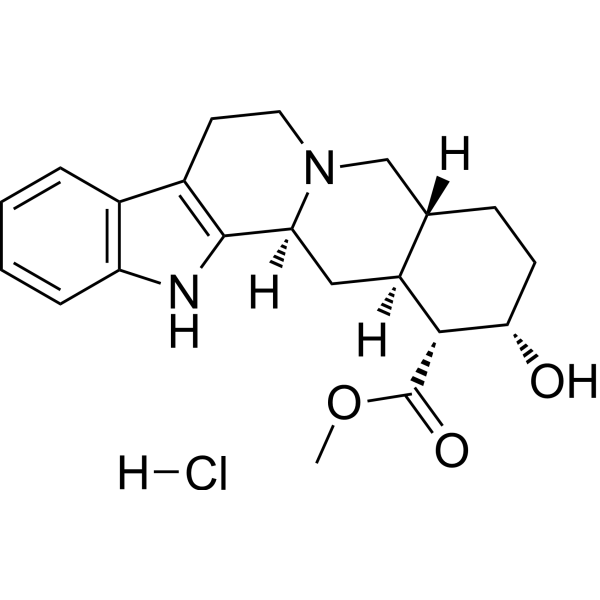
HY-N0127
Yohimbine HydrochlorideAdrenergic Receptor Antagonist -
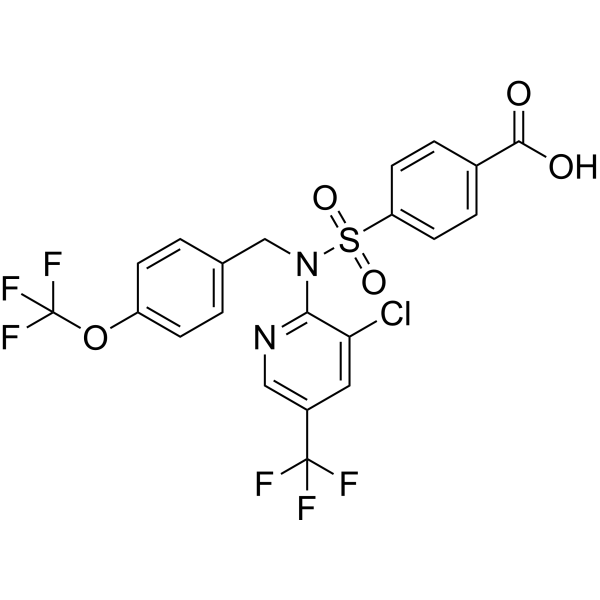
HY-18662
RQ-00203078TRPM8 Antagonist -
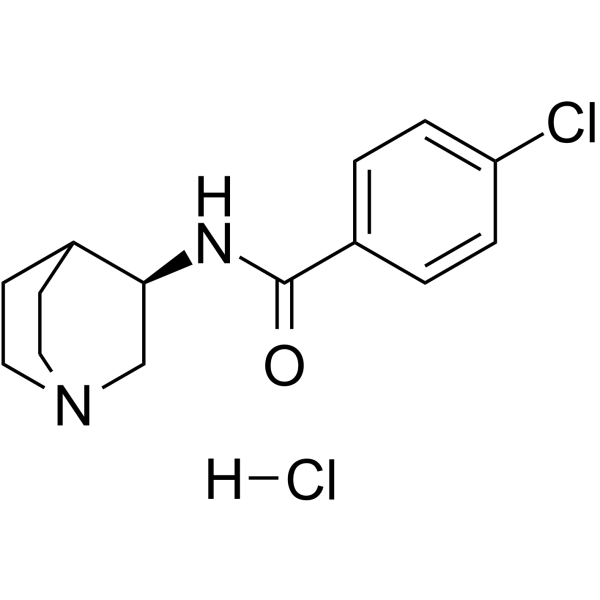
HY-12560A
PNU-282987α7 nAChR Agonist/5-HT3 antagonist -
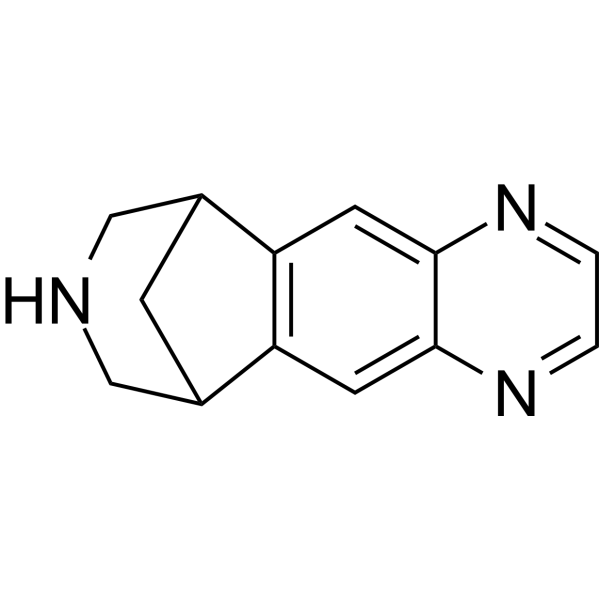
HY-10019
Vareniclineα4β2 nAChR Agonist -
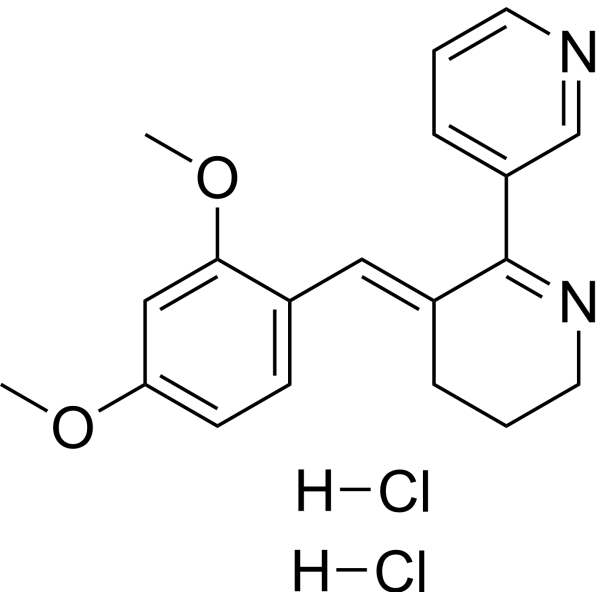
HY-14564A
GTS-21 dihydrochlorideα7-nAChR Agonist -
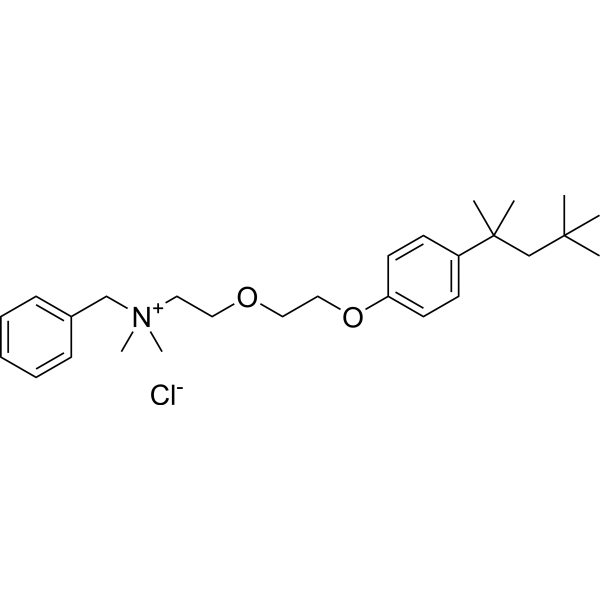
HY-B0942
Benzethonium chlorideMicrobiocidal Agent -
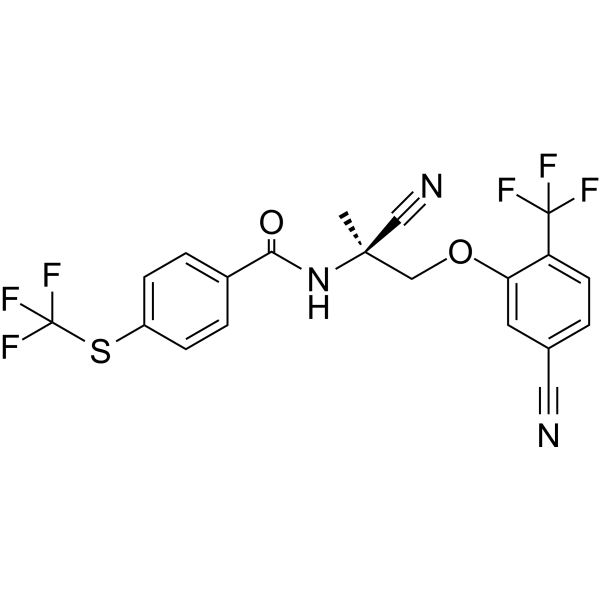
HY-14774
MonepantelmTOR Inhibitor -
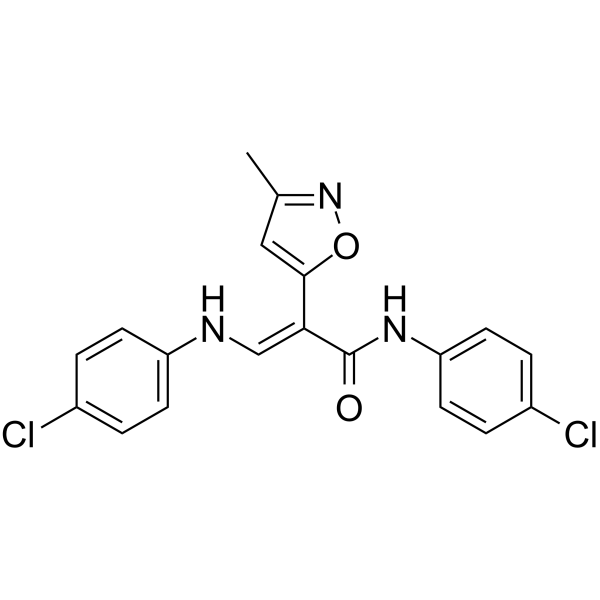
HY-12150
CCMIα7 nAChR PAM


Biological Activity
Description
IC50 & Target
Ki: 37 pM (nAChR)[1]
In Vitro
Tebanicline is a novel, potent cholinergic nAChR ligand with analgesic properties that shows preferential selectivity for neuronal nAChRs. It inhibits the binding of cytisine to α4β2 neuronal nAChRs with a Ki of 37 pM. Functionally, tebanicline is an agonist. At the transfected human α4β2 neuronal nAChR in K177 cells, with increased 86Rb+ efflux as a measure of cation efflux, ABT-594 has an EC50 value of 140 nM with an intrinsic activitycompared with (−)-nicotine of 130%; at the nAChR subtype expressed in IMR-32 cells, an EC50 of 340 nM; at the F11 dorsal root ganglion cell line, an EC50 of 1220 nM; and via direct measurement of ion currents, an EC50 value of 56,000 nM at the human α7 homo-oligimeric nAChR produced in oocytes[1]
MedChemExpress (MCE) has not independently confirmed the accuracy of these methods. They are for reference only.
In Vivo
MedChemExpress (MCE) has not independently confirmed the accuracy of these methods. They are for reference only.


Chemical Information
-
CAS No. 209326-19-2
-
Appearance Solid
-
Molecular Weight 271.57
-
Formula C9H13Cl3N2O
-
Color White to off-white
-
SMILES
[H]Cl.ClC(C=C1)=NC=C1OC[C@@H]2NCC2.[H]Cl
-
Synonyms
Ebanicline dihydrochloride; ABT-594 dihydrochloride
-
Shipping
Room temperature in continental US; may vary elsewhere.
-
Storage
4°C, sealed storage, away from moisture
* In solvent : -80°C, 6 months; -20°C, 1 month (sealed storage, away from moisture)


Solvent & Solubility
In Vitro:
DMSO : 100 mg/mL (368.23 mM; Need ultrasonic; Hygroscopic DMSO has a significant impact on the solubility of product, please use newly opened DMSO)
H2O : 100 mg/mL (368.23 mM; Need ultrasonic)
Please refer to the solubility information to select the appropriate solvent. Once prepared, please aliquot and store the solution to prevent product inactivation from repeated freeze-thaw cycles.
Storage method and period of stock solution: -80°C, 6 months; -20°C, 1 month (sealed storage, away from moisture). When stored at -80°C, please use it within 6 months. When stored at -20°C, please use it within 1 month.
* Note: If you choose water as the stock solution, please dilute it to the working solution, then filter and sterilize it with a 0.22 μm filter before use.
Please refer to the solubility information to select the appropriate solvent. Once prepared, please aliquot and store the solution to prevent product inactivation from repeated freeze-thaw cycles.
Storage method and period of stock solution: -80°C, 6 months; -20°C, 1 month (sealed storage, away from moisture). When stored at -80°C, please use it within 6 months. When stored at -20°C, please use it within 1 month.
* Note: If you choose water as the stock solution, please dilute it to the working solution, then filter and sterilize it with a 0.22 μm filter before use.
Concentration (start) × Volume (start) = Concentration (final) × Volume (final)
In Vivo:
Select the appropriate dissolution method based on your experimental animal and administration route.
- For the following dissolution methods, please ensure to first prepare a clear stock solution using an In Vitro approach and then sequentially add co-solvents:
- To ensure reliable experimental results, the clarified stock solution can be appropriately stored based on storage conditions. As for the working solution for In Vivo experiments, it is recommended to prepare freshly and use it on the same day.
- The percentages shown for the solvents indicate their volumetric ratio in the final prepared solution. If precipitation or phase separation occurs during preparation, heat and/or sonication can be used to aid dissolution.
Add each solvent one by one: 10% DMSO 40% PEG300 5% Tween-80 45% Saline
Solubility: ≥ 2.08 mg/mL (7.66 mM); Clear solution
This protocol yields a clear solution of ≥ 2.08 mg/mL (saturation unknown).
Taking 1 mL working solution as an example, add 100 μL DMSO stock solution (20.8 mg/mL) to 400 μL PEG300, and mix evenly; then add 50 μL Tween-80 and mix evenly; then add 450 μL Saline to adjust the volume to 1 mL.
Preparation of Saline: Dissolve 0.9 g sodium chloride in ddH₂O and dilute to 100 mL to obtain a clear Saline solution.
Add each solvent one by one: 10% DMSO 90% (20% SBE-β-CD in Saline)
Solubility: ≥ 2.08 mg/mL (7.66 mM); Clear solution
This protocol yields a clear solution of ≥ 2.08 mg/mL (saturation unknown).
Taking 1 mL working solution as an example, add 100 μL DMSO stock solution (20.8 mg/mL) to 900 μL 20% SBE-β-CD in Saline, and mix evenly.
Preparation of 20% SBE-β-CD in Saline (4°C, storage for one week): 2 g SBE-β-CD powder is dissolved in 10 mL Saline, completely dissolve until clear.
For the following dissolution methods, please prepare the working solution directly:
It is recommended to prepare fresh solutions and use them promptly within a short period of time.
The percentages shown for the solvents indicate their volumetric ratio in the final prepared solution. If precipitation or phase separation occurs during preparation, heat and/or sonication can be used to aid dissolution.
Add each solvent one by one: PBS
Solubility: 25 mg/mL (92.06 mM); Clear solution; Need ultrasonic
In Vivo Dissolution Calculator
Please enter the basic information of animal experiments:
-
-
-
-
Recommended: Prepare an additional quantity of animals to account for potential losses during experiments.
Working solution concentration: 0.22 mg/mL
This product has good water solubility, please refer to the measured solubility data in water/PBS/Saline for details.


Purity & Documentation
-
Data Sheet (277 KB)
-
SDS (252 KB)
- English - EN (252 KB)
- Français - FR (252 KB)
- Deutsch - DE (252 KB)
- Norwegian - NO (252 KB)
- Español - ES (252 KB)
- Swedish - SV (252 KB)
- Italian - IT (252 KB)
- Korean - KR (252 KB)
- Portuguese - PT (252 KB)
-
Handling Instructions (2659 KB)
References
[1]. Donnelly-Roberts DL, et al. ABT-594 [(R)-5-(2-azetidinylmethoxy)-2-chloropyridine]: a novel, orally effective analgesic acting via neuronal nicotinic acetylcholine receptors: I. In vitro characterization.J Pharmacol Exp Ther. 1998 May;285(2):777-86. [Content Brief]
[2]. Bannon AW, et al. ABT-594 [(R)-5-(2-azetidinylmethoxy)-2-chloropyridine]: a novel, orally effective antinociceptive agent acting via neuronal nicotinic acetylcholine receptors: II. In vivo characterization. J Pharmacol Exp Ther. 1998 May;285(2):787-94. [Content Brief]
[3]. Decker MW, et al. Antinociceptive effects of the novel neuronal nicotinic acetylcholine receptor agonist, ABT-594, in mice. Eur J Pharmacol. 1998 Apr 3;346(1):23-33. [Content Brief]
[4]. Decker MW, et al. The role of neuronal nicotinic acetylcholine receptors in antinociception: effects of ABT-594. J Physiol Paris. 1998 Jun-Aug;92(3-4):221-4. [Content Brief]


Complete Stock Solution Preparation Table
Please refer to the solubility information to select the appropriate solvent. Once prepared, please aliquot and store the solution to prevent product inactivation from repeated freeze-thaw cycles.
Storage method and period of stock solution: -80°C, 6 months; -20°C, 1 month (sealed storage, away from moisture). When stored at -80°C, please use it within 6 months. When stored at -20°C, please use it within 1 month.
| Optional Solvent | Concentration Solvent Mass | 1 mg | 5 mg | 10 mg | 25 mg |
|---|---|---|---|---|---|
| DMSO / H2O | 1 mM | 3.6823 mL | 18.4115 mL | 36.8229 mL | 92.0573 mL |
| 5 mM | 0.7365 mL | 3.6823 mL | 7.3646 mL | 18.4115 mL | |
| 10 mM | 0.3682 mL | 1.8411 mL | 3.6823 mL | 9.2057 mL | |
| 15 mM | 0.2455 mL | 1.2274 mL | 2.4549 mL | 6.1372 mL | |
| 20 mM | 0.1841 mL | 0.9206 mL | 1.8411 mL | 4.6029 mL | |
| 25 mM | 0.1473 mL | 0.7365 mL | 1.4729 mL | 3.6823 mL | |
| 30 mM | 0.1227 mL | 0.6137 mL | 1.2274 mL | 3.0686 mL | |
| 40 mM | 0.0921 mL | 0.4603 mL | 0.9206 mL | 2.3014 mL | |
| 50 mM | 0.0736 mL | 0.3682 mL | 0.7365 mL | 1.8411 mL | |
| 60 mM | 0.0614 mL | 0.3069 mL | 0.6137 mL | 1.5343 mL | |
| 80 mM | 0.0460 mL | 0.2301 mL | 0.4603 mL | 1.1507 mL | |
| 100 mM | 0.0368 mL | 0.1841 mL | 0.3682 mL | 0.9206 mL |
* Note: If you choose water as the stock solution, please dilute it to the working solution, then filter and sterilize it with a 0.22 μm filter before use.


Tebanicline dihydrochloride Related Classifications
HY-14316A Related Classifications
 Powered by Bioz