



Rivanicline
Based on 2 publication(s) in Google Scholar
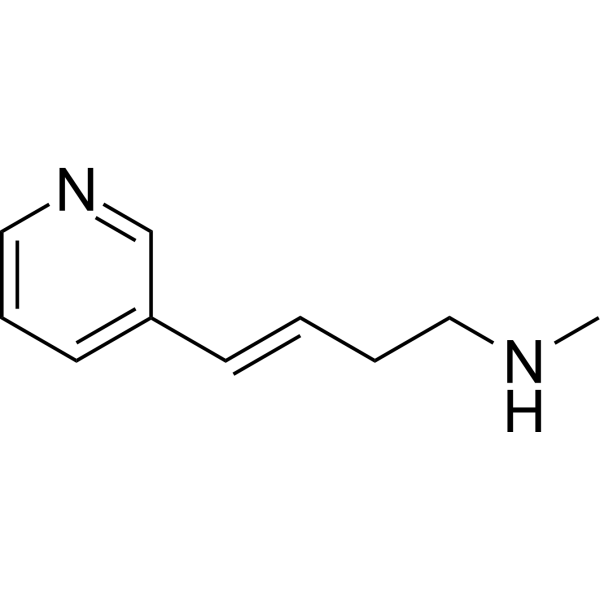
Rivanicline (RJR-2403) is a neuronal nicotinic receptor agonist. Rivanicline is highly selective for the rat brain cortex nAChRs (Ki = 26 nM, EC50 of 732 nM) and α4β2 subtype (Ki = 26 nM, EC50 = 16 μM). Rivanicline can significantly restore the learning impairment and cognitive dysfunction. Rivanicline can be used for the study of neurodegenerative diseases (such as schizophrenia or Alzheimer's disease).
Nur für Forschungszwecke. Wir verkaufen nicht an Patienten.
- CAS. Nr.: 15585-43-0
- Formel: C10H14N2
- Molecular Weight:162.23
-
Speicherung:
Please store the product under the recommended conditions in the Certificate of Analysis.

To place orders, for customer services and technical support, please contact: MedChemExpress USA
Tel: 609-228-6898 E-mail: [email protected] [email protected]


-
 Biologische Aktivität
-
Chemical Information
- Protokoll
- Reinheit & Dokumentation
- Verweise
-
 Help & FAQs


-
HY-12560A
PNU-282987α7 nAChR Agonist/5-HT3 antagonist -
HY-14564A
GTS-21 dihydrochlorideα7-nAChR Agonist -
HY-B0979
Lobeline hydrochlorideNicotinic Receptor Agonist -
HY-12151
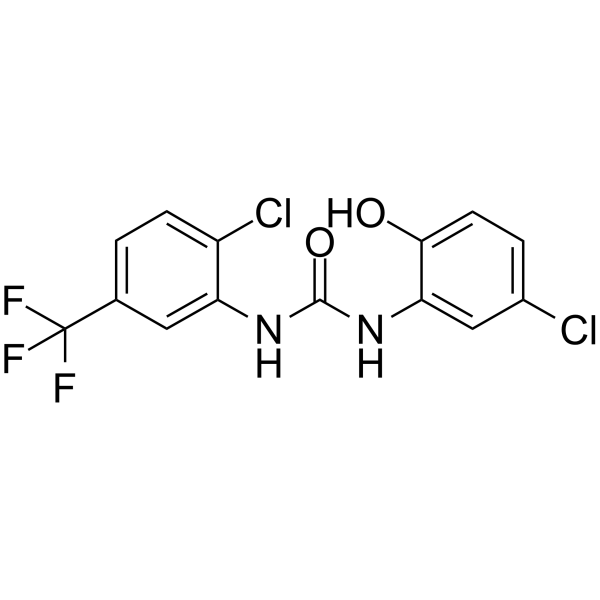
NS 1738nAChR Agonist -
HY-15430A
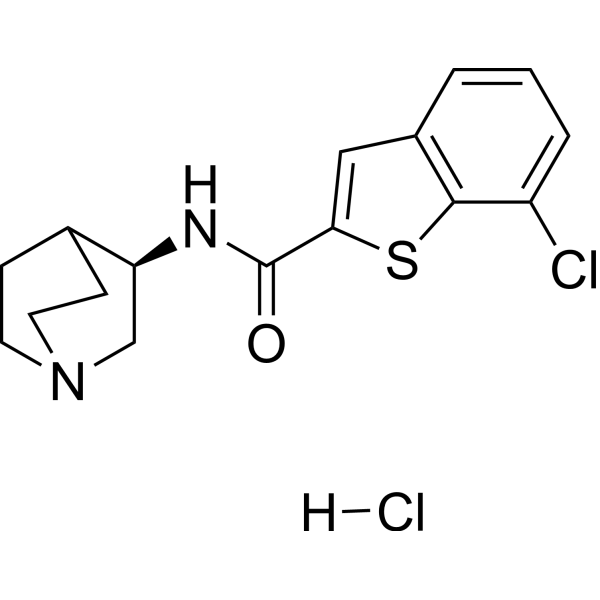
Encenicline hydrochloridenAChR Agonist -
HY-107675
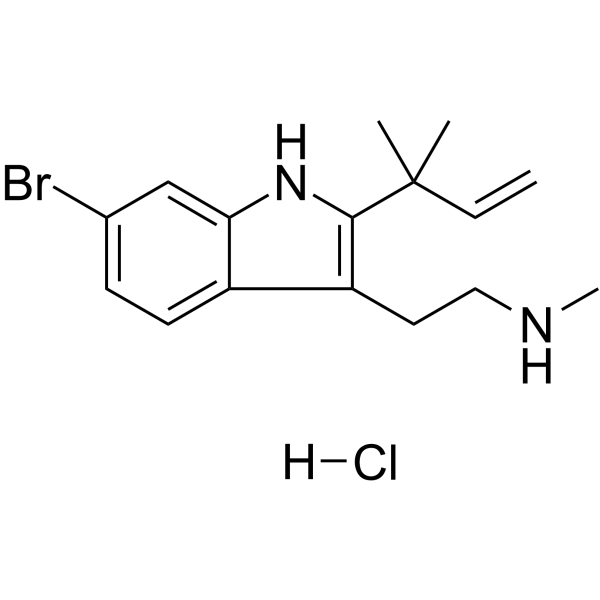
Desformylflustrabromine hydrochloridenAChR Agonist -
HY-B1395
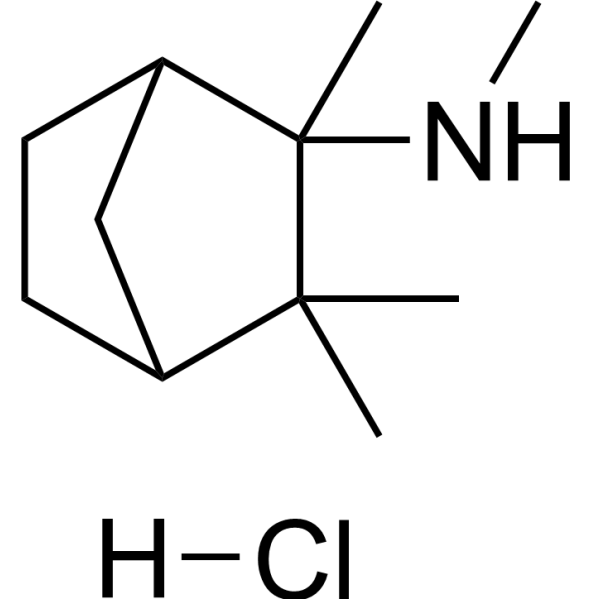
Mecamylamine hydrochloridenAChR Antagonist -
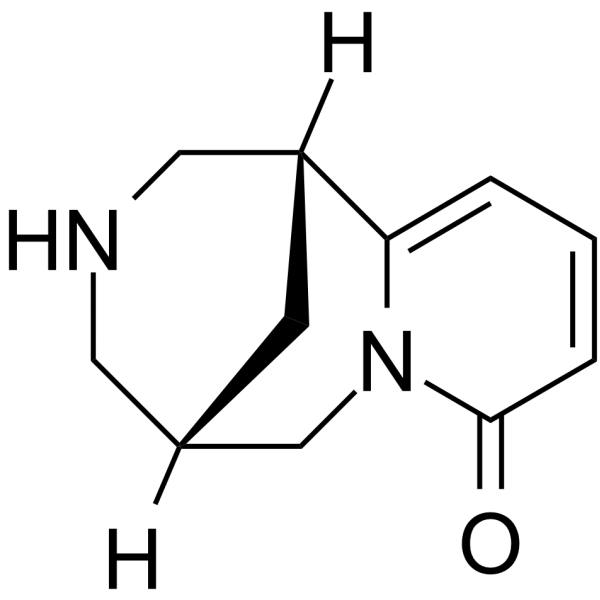
HY-N0175
CytisiniclinenAChR Agonist -
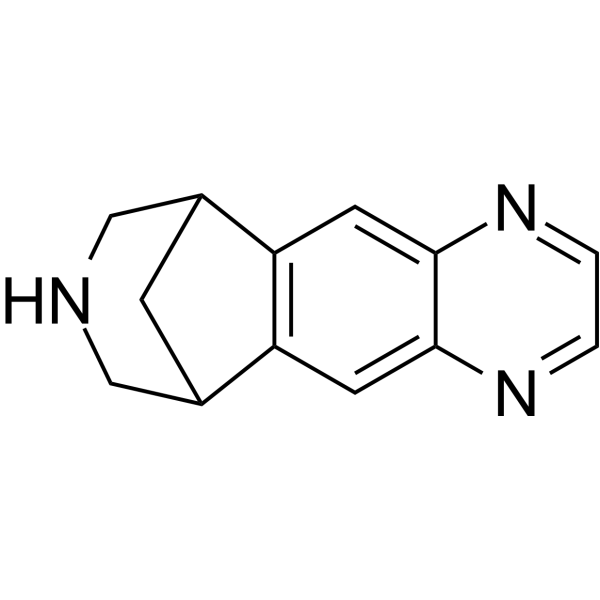
HY-10019
Vareniclineα4β2 nAChR Agonist -
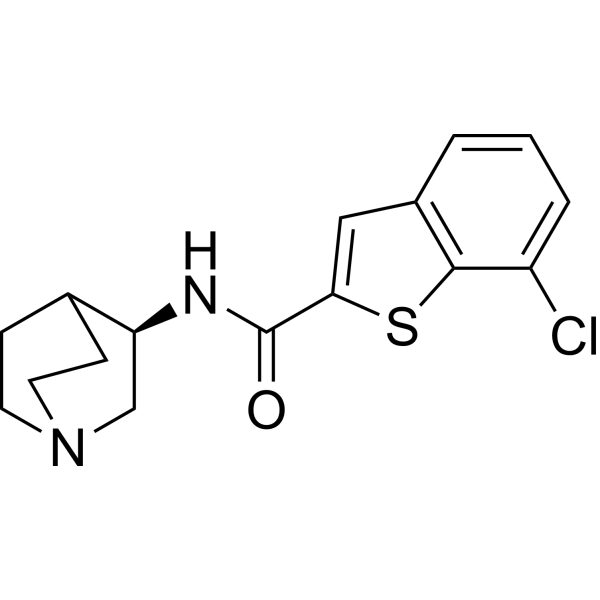
HY-15430
EnceniclinenAChR Agonist -

HY-B0979R
Lobeline hydrochloride (Standard)Nicotinic Receptor Agonist
Publications Citing Use of MedChemExpress (MCE) Rivanicline
More

Biologische Aktivität
Beschreibung
IC50 & Target
[3]|
α4β2 16 μM (EC50) |
α4β4 50 μM (EC50) |
α3β2 150 μM (EC50) |
α7 240 μM (EC50) |
α3β2α5 360 μM (EC50) |
α3β4 NA μM (EC50) |
Cellular Effect
|
Cell Line

|
Type | Value | Description | References |
|---|---|---|---|---|
| PC-12 | EC50 |
>1000 μM
Compound: 15
|
Compound was evaluated for functional potencies and efficacies at rat Nicotinic acetylcholine receptor subtype PC12 (ganglionic)
Compound was evaluated for functional potencies and efficacies at rat Nicotinic acetylcholine receptor subtype PC12 (ganglionic)
|
[PMID: 9435889] |
In Vivo
Rivanicline (75-125 µmol/kg, s.c., single dose) can cause a decrease in body temperature, respiratory rate, Y-maze activity and auditory startle response, but its potency is significantly lower than that of nicotine in mice physiological test battery model[2].
Rivanicline (2 mg/kg, i.p., single dose) restores the learning ability of mice in impairment of eyeblink conditioning model[4].
MedChemExpress (MCE) has not independently confirmed the accuracy of these methods. They are for reference only.
-
Animal Model:Scopolamine (1.3 μmol/kg) -induced passive amnesia model established in male wistar rats (200-220 g)[2]
-
Dosage:0.06, 0.6, 6 µmol/kg
-
Administration:Subcutaneous Injections (s.c.), 30 min before testing
-
Result:Reversed scopolamine-induced amnesia, increasing step-through latency at 0.6 µmol/kg.
No effect at 0.06 or 6 µmol/kg.
-
Animal Model:Ibotenic acid lesion radial arm maze model established in male Sprague-Dawley rats (250–270 g) [2]
-
Dosage:0, 0.3, 0.6, 0.9, 1.2 µmol/kg
-
Administration:Subcutaneous Injections (s.c.), 20 min before testing
-
Result:Improved working memory (place task) in lesioned rats.
-
Animal Model:Physiological test battery model established in C57BL/6 mice[2]
-
Dosage:75, 100 and 125 µmol/kg
-
Administration:Subcutaneous Injections (s.c.), single dose
-
Result:Was 15-50x less potent than nicotine in reducing body temperature, respiration, and locomotor activity.
-
Animal Model:MK-801 (0.02 mg/kg)-induced impairment of eyeblink conditioning model established in C57Bl/6 mice (3-5 months)[4]
-
Dosage:2 mg/kg
-
Administration:Intraperitoneal injection (i.p.), single dose
-
Result:Rescues learning by activating presynaptic nAChRs to enhance glutamate release.


Chemical Information
-
CAS. Nr. 15585-43-0
-
Molecular Weight 162.23
-
Formel C10H14N2
-
SMILES
CNCC/C=C/C1=CC=CN=C1
-
Synonyms
RJR-2403; (E)-Metanicotine
-
Versand
Room temperature in continental US; may vary elsewhere.
-
Speicherung
Please store the product under the recommended conditions in the Certificate of Analysis.


Publications (2)
-
Journal Impact Factor
-
Most Recent
-
Acta Pharmacol Sin
α4 nicotinic receptors on GABAergic neurons mediate a cholinergic analgesic circuit in the substantia nigra pars reticulata. [Abstract]2024 Jun;45(6):1160-1174. PMID: 38438581 -


Reinheit & Dokumentation
Verweise
[1]. Bencherif M, et al. RJR-2403: a nicotinic agonist with CNS selectivity I. In vitro characterization. J Pharmacol Exp Ther. 1996 Dec;279(3):1413-21. [Content Brief]
[2]. Lippiello PM, et al. RJR-2403: a nicotinic agonist with CNS selectivity II. In vivo characterization. J Pharmacol Exp Ther. 1996 Dec;279(3):1422-9. [Content Brief]
[3]. Papke RL, et al The activation and inhibition of human nicotinic acetylcholine receptor by RJR-2403 indicate a selectivity for the alpha4beta2 receptor subtype. J Neurochem. 2000 Jul;75(1):204-16. [Content Brief]
[4]. Rodríguez-Moreno A, et al. The nicotinic agonist RJR-2403 compensates the impairment of eyeblink conditioning produced by the noncompetitive NMDA-receptor antagonist MK-801. Neurosci Lett. 2006 Jul 10;402(1-2):102-7. [Content Brief]
[5]. Damaj MI, et al. Antinociceptive and pharmacological effects of metanicotine, a selective nicotinic agonist. J Pharmacol Exp Ther. 1999 Oct;291(1):390-8. [Content Brief]

Calculators
Konzentration (Stammlösung) × Volumen (Stammlösung) = Konzentration (Ziellösung) × Volumen (Ziellösung)


Rivanicline Related Classifications
HY-13225A Related Classifications
 Powered by Bioz