



A 844606
A 844606 is a highly potent and selective α4β2 nAChR agonist. A 844606 can be used in the study of schizophrenia, Huntington's disease, Alzheimer's disease, and Parkinson's disease.
For research use only. We do not sell to patients.
- CAS No.: 861119-08-6
- Formula: C20H20N2O2
- Molecular Weight:320.39
-
Storage:
Please store the product under the recommended conditions in the Certificate of Analysis.


To place orders, for customer services and technical support, please contact: MedChemExpress USA
Tel: 609-228-6898 E-mail: [email protected] [email protected]


-
 Biological Activity
-
Chemical Information
- Protocols
- Purity & Documentation
- References
-
 Help & FAQs


-
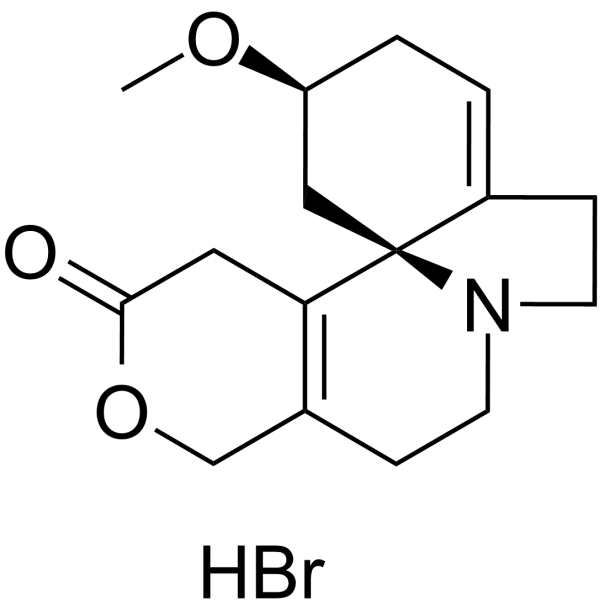
HY-107670
Dihydro-β-erythroidine hydrobromidenAChRs Antagonist -
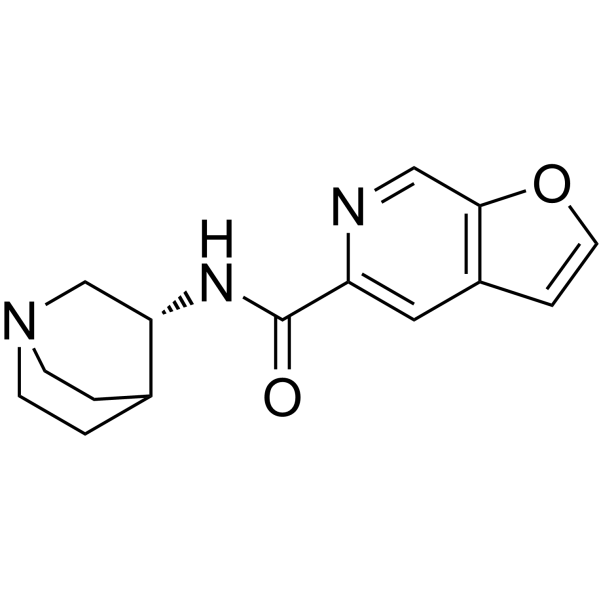
HY-105670
PHA-543613α7 nAChR Agonist -
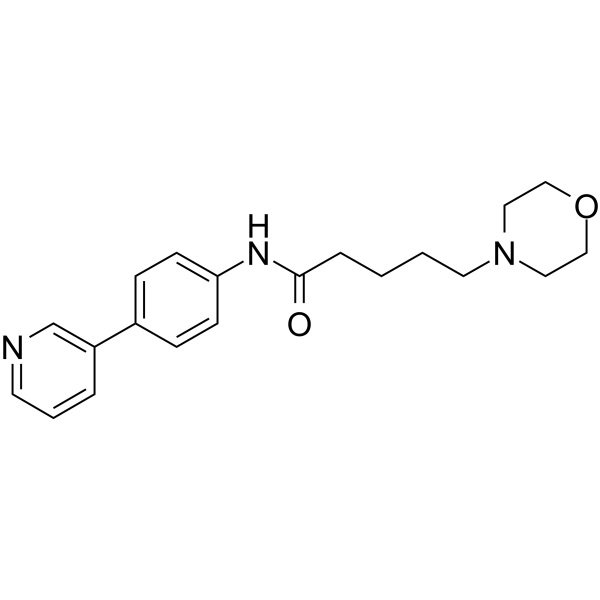
HY-107678
SEN12333α7 nAChR Agonist -
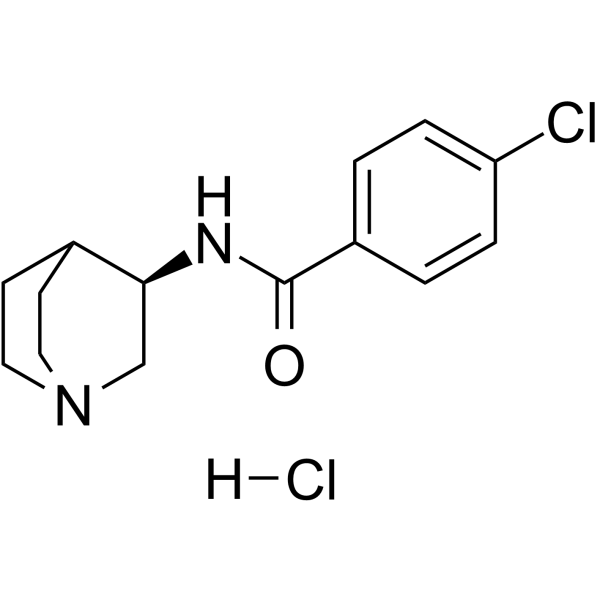
HY-12560A
PNU-282987α7 nAChR Agonist/5-HT3 antagonist -
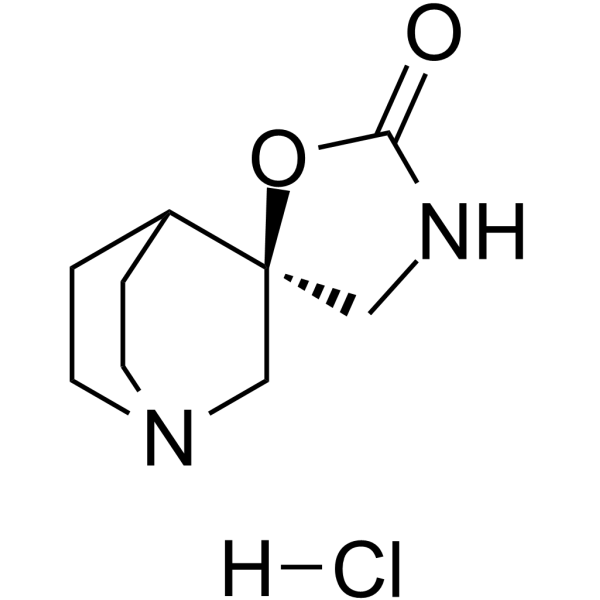
HY-135483A
AR-R17779 hydrochloridenAChR Agonist -
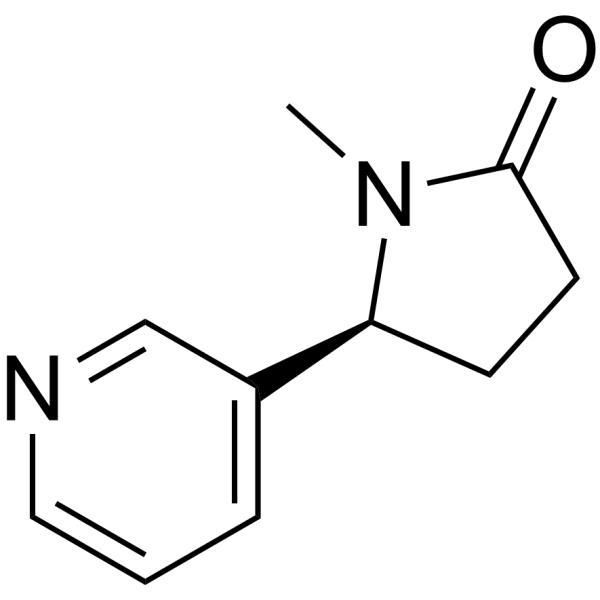
HY-B1178
CotinineEndogenous Metabolite -
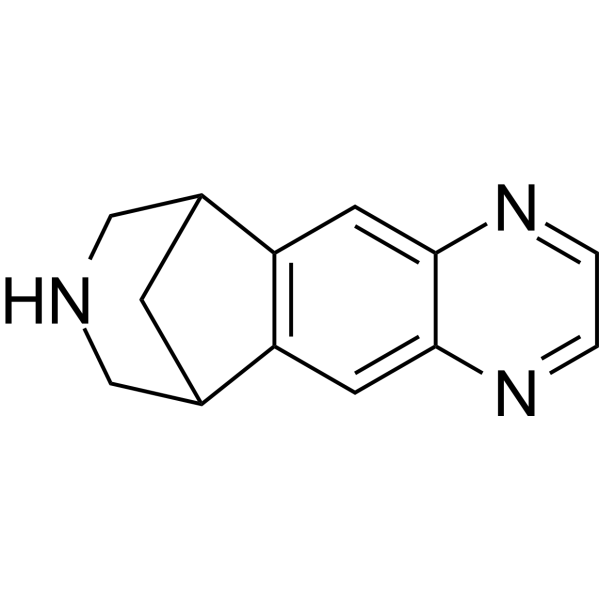
HY-10019
Vareniclineα4β2 nAChR Agonist -
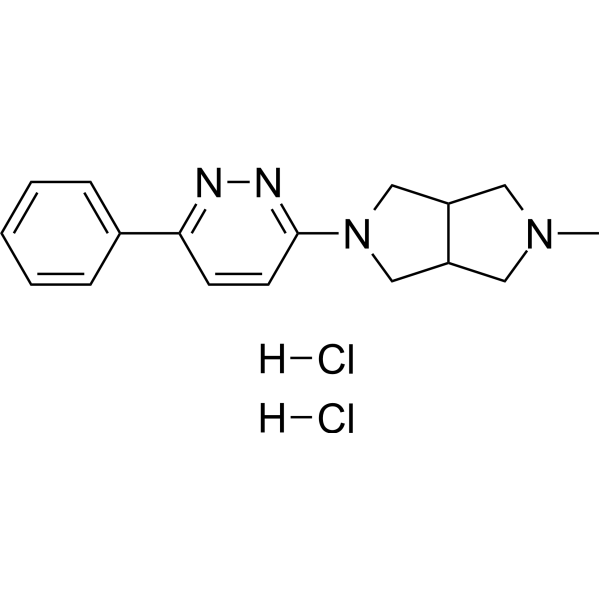
HY-59201A
A-582941 dihydrochlorideα7 nAChR Agonist -
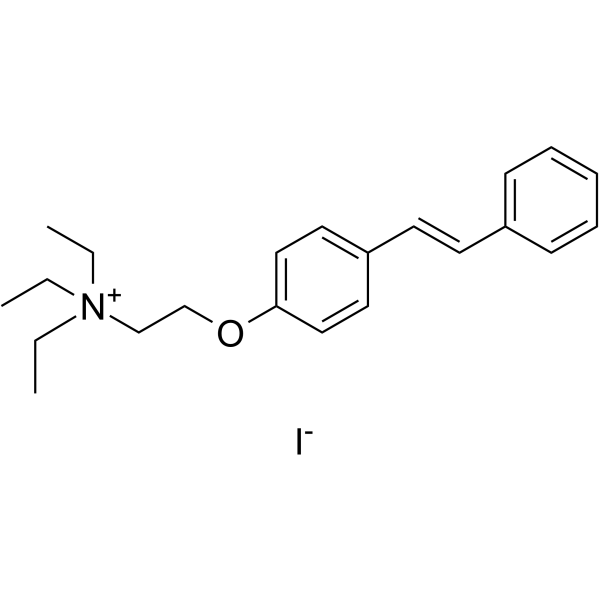
HY-107672
MG624nAChR Antagonist -
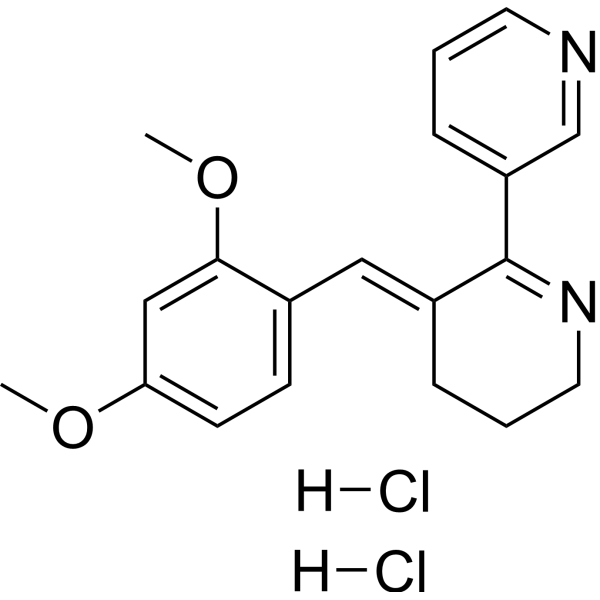
HY-14564A
GTS-21 dihydrochlorideα7-nAChR Agonist -
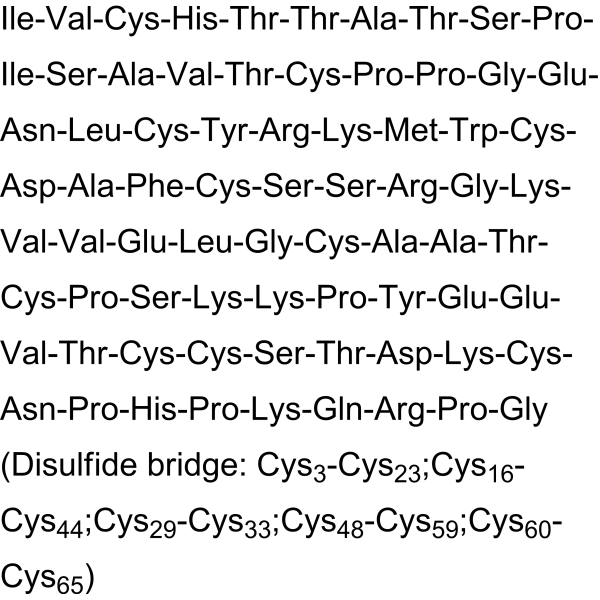
HY-P1264
α-BungarotoxinnAChRs Antagonist -
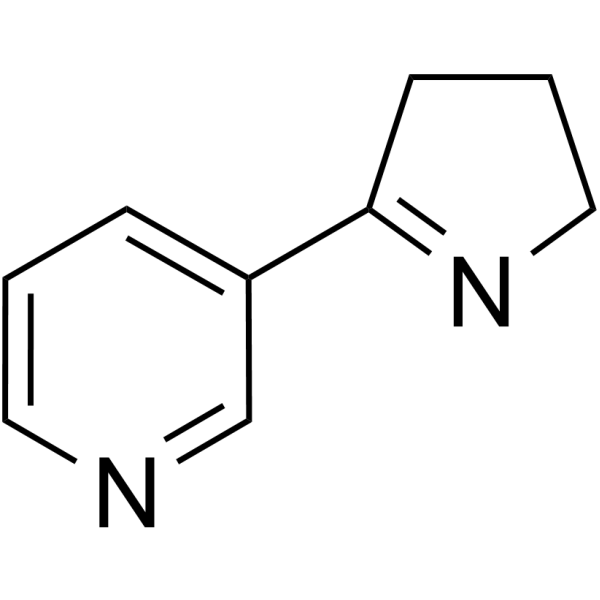
HY-W001909
Myosmine


Biological Activity
Description
Cellular Effect
|
Cell Line

|
Type | Value | Description | References |
|---|---|---|---|---|
| HEK293 | EC50 |
>100 μM
Compound: 52
|
Agonist activity at human recombinant alpha3beta4 nAChR in HEK293 cells by FLIPR assay
Agonist activity at human recombinant alpha3beta4 nAChR in HEK293 cells by FLIPR assay
|
[PMID: 22281189] |
| HEK293 | EC50 |
>100 μM
Compound: 52
|
Agonist activity at human recombinant alpha4beta2 nAChR in HEK293 cells by FLIPR assay
Agonist activity at human recombinant alpha4beta2 nAChR in HEK293 cells by FLIPR assay
|
[PMID: 22281189] |
| Oocyte | EC50 |
2.2 μM
Compound: 52
|
Agonist activity at human recombinant alpha7 nAChR expressed in xenopus oocytes by patch clamp assay
Agonist activity at human recombinant alpha7 nAChR expressed in xenopus oocytes by patch clamp assay
|
[PMID: 22281189] |


Chemical Information
-
CAS No. 861119-08-6
-
Molecular Weight 320.39
-
Formula C20H20N2O2
-
SMILES
O=C1C2=C(OC3=CC=C(N4CC5CN(CC5C4)C)C=C31)C=CC=C2
-
Shipping
Room temperature in continental US; may vary elsewhere.
-
Storage
Please store the product under the recommended conditions in the Certificate of Analysis.

Protocols
-
Human pluripotent stem cell midbrain dopaminergic neuron differentiation
Human pluripotent stem cells are directed toward midbrain dopaminergic neurons by first inducing a neural floor-plate-like progenitor state, then patterning cells with ventralizing SHH signaling and midbrain/WNT-FGF cues, and finally maturing progenitors into neurons expressing dopaminergic markers such as TH, NURR1/NR4A2, PITX3, DAT/SLC6A3, VMAT2/SLC18A2, GIRK2/KCNJ6, FOXA2, LMX1A, and EN1. The main readouts are loss of pluripotency, acquisition of FOXA2+/LMX1A+ midbrain floor-plate progenitors, emergence of βIII-tubulin+/MAP2+ neurons, and production of TH+ dopaminergic neurons with molecular, dopamine-release, and electrophysiological features of midbrain dopaminergic identity.
-
Alzheimer’s Disease Modeling
Alzheimer’s Disease (AD) is a neurodegenerative disorder characterized by a progressive decline in cognitive functions and loss of specific types of neurons and synapses. Alzheimer's symptoms can be simulated in mice by injecting drugs (such as Aβ) or genetically modified.


Purity & Documentation
References

Calculators
Concentration (start) × Volume (start) = Concentration (final) × Volume (final)


A 844606 Related Classifications
HY-107677 Related Classifications
 Powered by Bioz