



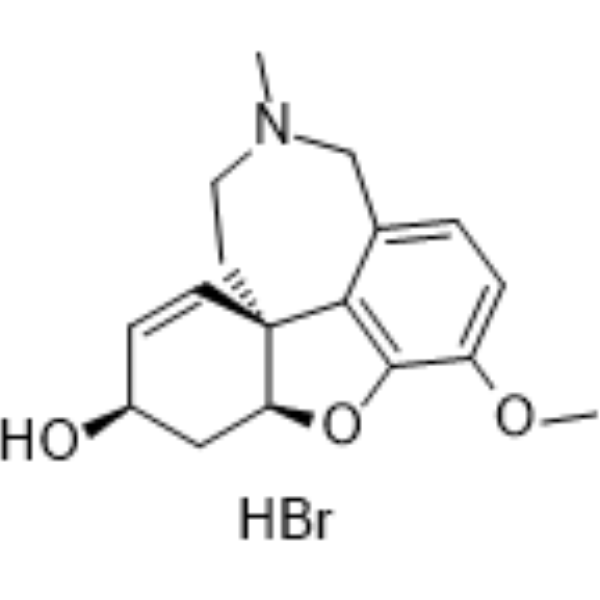
Galanthamine hydrobromide
Based on 16 publication(s) in Google Scholar
Galanthamine hydrobromide (Galantamine hydrobromide) is a selective, reversible, competitive, alkaloid AChE inhibitor, with an IC50 of 0.35 µM. Galanthamine hydrobromide is a potent allosteric potentiating ligand (APL) of human α3β4, α4β2, α6β4 nicotinic receptors ( nAChRs). Galanthamine hydrobromide is developed for the research of Alzheimer's disease (AD).
Para uso exclusivo en investigación. No vendemos a pacientes.
- Pureza : 99.93%
- No. CAS: 1953-04-4
- Fòrmula: C17H22BrNO3
- Peso molecular:368.27
-
Almacenamiento:
4°C, sealed storage, away from moisture
* In solvent : -80°C, 6 months; -20°C, 1 month (sealed storage, away from moisture)

To place orders, for customer services and technical support, please contact: MedChemExpress USA
Tel: 609-228-6898 E-mail: [email protected] [email protected]


-
 Actividad biológica
-
Chemical Information
-
Solvente y solubilidad
- Protocolo
- Pureza y Documentación
- Referencias
-
 Help & FAQs


-
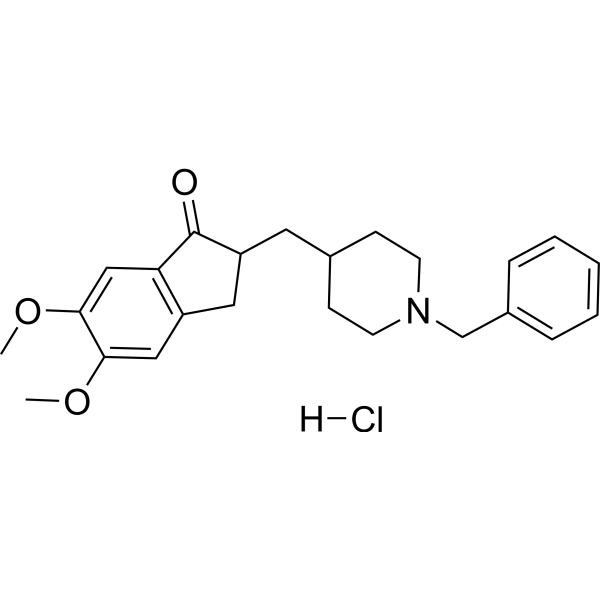
HY-B0034
Donepezil HydrochlorideAChE Inhibitor -
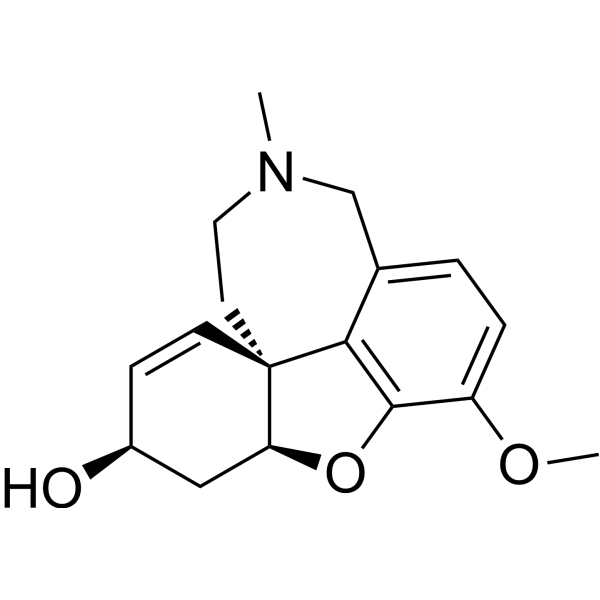
HY-76299
GalanthamineCholinesterase (ChE) Inhibitor -

HY-76299R
Galanthamine (Standard)Cholinesterase (ChE) Inhibitor -
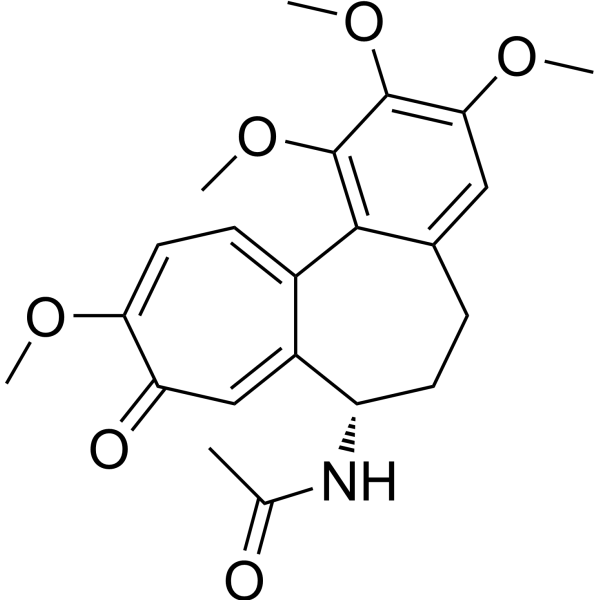
HY-16569
ColchicineTubulin Inhibitor -
HY-A0009R
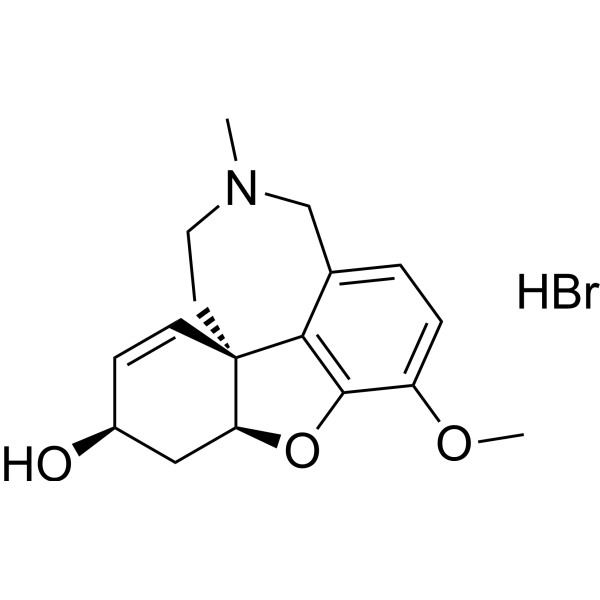
Galanthamine hydrobromide (Standard)AChE Inhibitor -
HY-N0219
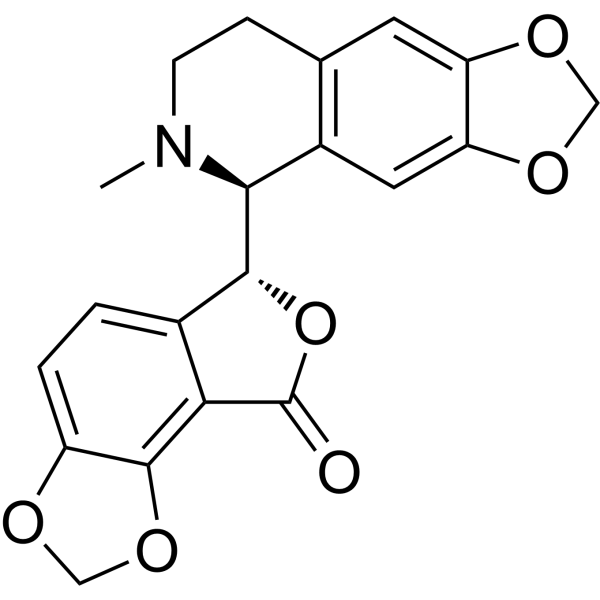
BicucullineGABAA Receptor Antagonist -
HY-17368
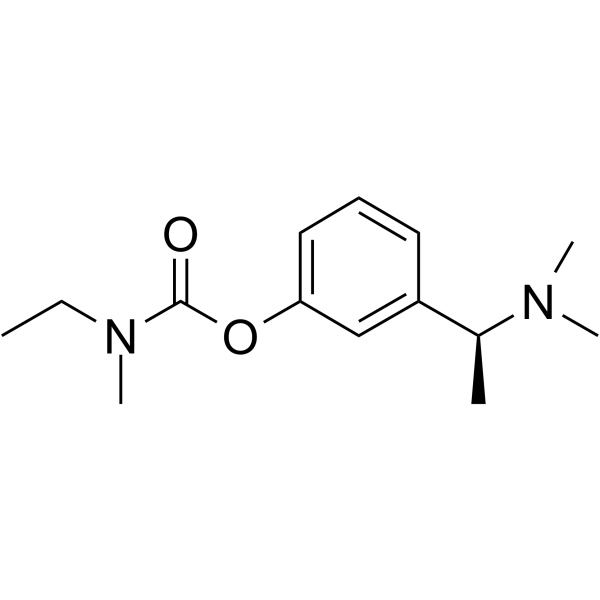
RivastigmineCholinesterase Inhibitor -
HY-17465
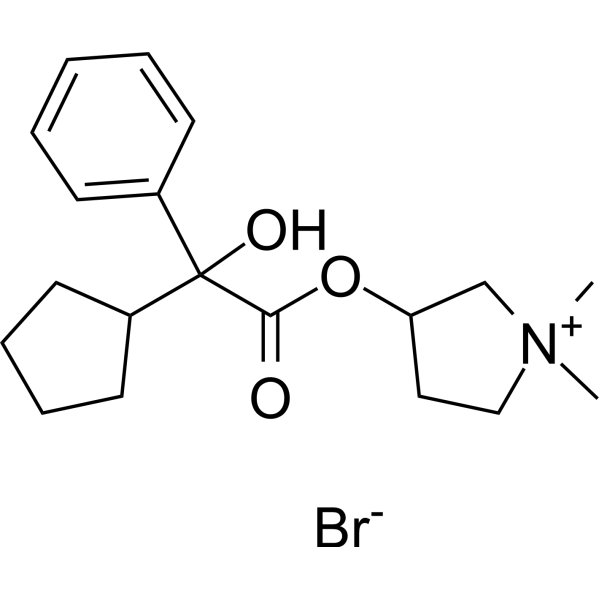
GlycopyrrolateMuscarinic Receptor Antagonist -
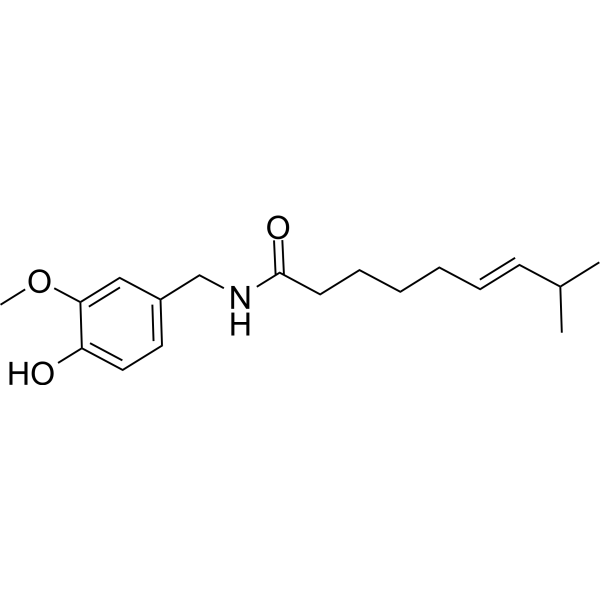
HY-10448
CapsaicinTRPV1 Agonist -
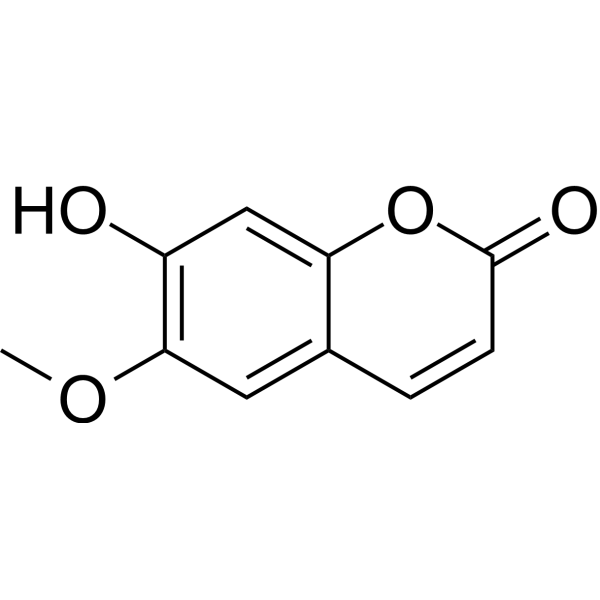
HY-N0342
ScopoletinCholinesterase (ChE) Inhibitor -
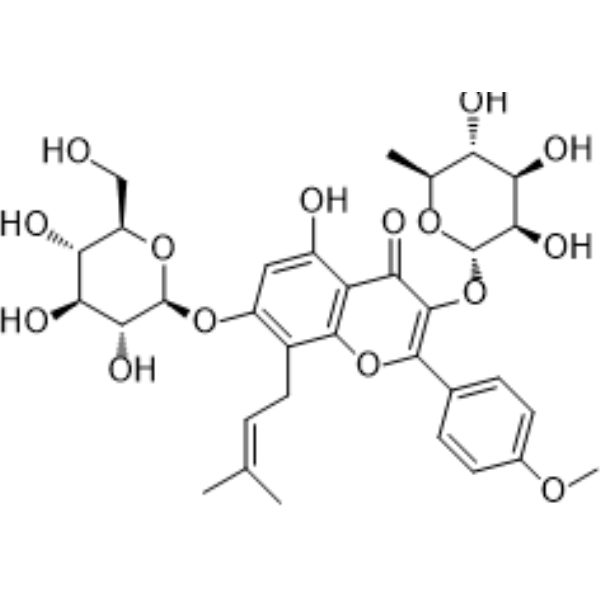
HY-N0014
IcariinPPAR Activator -

HY-16569R
Colchicine (Standard)Tubulin Inhibitor
Publications Citing Use of MedChemExpress (MCE) Galanthamine hydrobromide
More- Nat Commun. 2023 Apr 17;14(1):2182. [Abstract]
- Acta Pharmacol Sin. 2024 Jun;45(6):1160-1174. [Abstract]
- Antioxidants (Basel). 2022 Jun 23;11(7):1228. [Abstract]
- Antioxidants (Basel). 2022 Feb 14;11(2):385. [Abstract]
- Free Radic Biol Med. 2019 Dec:145:20-32. [Abstract]
- PLoS Biol. 2024 Jun 27;22(6):e3002672. [Abstract]
- Biochem Pharmacol. 2020 Oct:180:114139. [Abstract]
- Bioorg Chem. 2026 Oct 5:181:110451.
- Microorganisms. 2022 Oct 21;10(10):2089. [Abstract]
- J Chromatogr A. 2023 Oct 11:1708:464330. [Abstract]
- J Pharmacol Sci. 2022 Apr;148(4):364-368. [Abstract]
- Asian Pac J Trop Med. 2018, 8(10):500-512.
- bioRxiv. 2025 Sep 21.
- Heliyon. 2024 Jun 3;10(11):e32322. [Abstract]
- bioRxiv. 2024 Apr 3:2023.06.02.542933. [Abstract]
- Research Square Preprint. June 16th, 2022.


Actividad biológica
Descripciòn
IC50 & Target
|
AChE |
In Vitro
Galanthamine hydrobromide is 53-fold selectivity for AChE over butyrylcholinesterase[2].
Galanthamine hydrobromide (25-1000 µM) inhibits both Aβ 1-40 (50 µM) and Aβ 1-42 (50 µM) aggregation[4].
Galanthamine hydrobromide (25-1000 µM) protects against Aβ(1-40) and Aβ(1-42) toxicity in SH-SY5Y cells[4].
Galanthamine hydrobromide also dramatically reduces Aβ(1-40)-induced cellular apoptosis[4].
MedChemExpress (MCE) has not independently confirmed the accuracy of these methods. They are for reference only.
In Vivo
Galanthamine hydrobromide (10 mg/kg; i.g.) displays short elimination half-life of approximately 2 h in wild-type mice[6].
MedChemExpress (MCE) has not independently confirmed the accuracy of these methods. They are for reference only.
-
Animal Model:APP23 mice[5]
-
Dosage:1.25 mg/kg, 2.5 mg/kg
-
Administration:Intraperitoneal injection, daily, 1 week
-
Result:Effectively remedied the spatial learning deficit.
-
Animal Model:Female 57B1/6J wild type[6]
-
Dosage:10 mg/kg
-
Administration:Oral gavage (Pharmacokinetic Analysis)
-
Result:Cmax (0.31 µg/mL), t1/2β (1.6 h), AUC0-24h (0.67 µg • h/mL).


Chemical Information
-
No. CAS 1953-04-4
-
Appearance Solid
-
Peso molecular 368.27
-
Fòrmula C17H22BrNO3
-
Color White to off-white
-
SMILES
O[C@@H]1C[C@@H]2OC3=C4C(CN(C)CC[C@]42C=C1)=CC=C3OC.Br
-
Synonyms
Galantamine hydrobromide
-
Structure Classification
-
Initial Source
-
Envío
Room temperature in continental US; may vary elsewhere.
-
Almacenamiento
4°C, sealed storage, away from moisture
* In solvent : -80°C, 6 months; -20°C, 1 month (sealed storage, away from moisture)


Publications (16)
-
Journal Impact Factor
-
Most Recent
-
Nat Commun
Plasticity in ventral pallidal cholinergic neuron-derived circuits contributes to comorbid chronic pain-like and depression-like behaviour in male mice. [Abstract]2023 Apr 17;14(1):2182. PMID: 37069246 -
Acta Pharmacol Sin
α4 nicotinic receptors on GABAergic neurons mediate a cholinergic analgesic circuit in the substantia nigra pars reticulata. [Abstract]2024 Jun;45(6):1160-1174. PMID: 38438581 -
Antioxidants (Basel)
Bioactive Components from Ampelopsis japonica with Antioxidant, Anti-α-Glucosidase, and Antiacetylcholinesterase Activities. [Abstract]2022 Jun 23;11(7):1228. PMID: 35883719 -
Antioxidants (Basel)
Comparison of Various Solvent Extracts and Major Bioactive Components from Unsalt-Fried and Salt-Fried Rhizomes of Anemarrhena asphodeloides for Antioxidant, Anti-α-Glucosidase, and Anti-Acetylcholinesterase Activities. [Abstract]2022 Feb 14;11(2):385. PMID: 35204266 -
Free Radic Biol Med
Early administration of galantamine from preplaque phase suppresses oxidative stress and improves cognitive behavior in APPswe/PS1dE9 mouse model of Alzheimer's disease. [Abstract]2019 Dec:145:20-32. PMID: 31536772 -
PLoS Biol
2024 Jun 27;22(6):e3002672. PMID: 38935621 -
Biochem Pharmacol
Galantamine improves enhanced impulsivity, impairments of attention and long-term potentiation induced by prenatal nicotine exposure to mice. [Abstract]2020 Oct:180:114139. PMID: 32652142 -
-
Microorganisms
Screening of Endophytic Bacteria of Leucojum aestivum 'Gravety Giant' as a Potential Source of Alkaloids and as Antagonist to Some Plant Fungal Pathogens. [Abstract]2022 Oct 21;10(10):2089. PMID: 36296365 -
J Chromatogr A
Fluorescent probe for the detection of acetylcholinesterase inhibitors using high performance thin layer chromatography effect-directed assay in complex matrices. [Abstract]2023 Oct 11:1708:464330. PMID: 37696130 -
J Pharmacol Sci
Effects of galantamine on social interaction impairments in cholecystokinin receptor-2 overexpression mice. [Abstract]2022 Apr;148(4):364-368. PMID: 35300811 -
-
-
Heliyon
Non-competitive inhibition of acetylcholinesterase by jaboticaba (Myrciaria cauliflora) peel ethanolic extracts. [Abstract]2024 Jun 3;10(11):e32322. PMID: 38912491 -
bioRxiv
An efficient behavioral screening platform classifies natural products and other chemical cues according to their chemosensory valence in C. elegans. [Abstract]2024 Apr 3:2023.06.02.542933. PMID: 37333363 -


Solvente y solubilidad
In Vitro:
H2O : 16.67 mg/mL (45.27 mM; ultrasonic and warming and heat to 80°C)
DMSO : 12.5 mg/mL (33.94 mM; ultrasonic and warming and heat to 60°C; Hygroscopic DMSO has a significant impact on the solubility of product, please use newly opened DMSO)
Please refer to the solubility information to select the appropriate solvent. Once prepared, please aliquot and store the solution to prevent product inactivation from repeated freeze-thaw cycles.
Storage method and period of stock solution: -80°C, 6 months; -20°C, 1 month (sealed storage, away from moisture). When stored at -80°C, please use it within 6 months. When stored at -20°C, please use it within 1 month.
* Note: If you choose water as the stock solution, please dilute it to the working solution, then filter and sterilize it with a 0.22 μm filter before use.
Please refer to the solubility information to select the appropriate solvent. Once prepared, please aliquot and store the solution to prevent product inactivation from repeated freeze-thaw cycles.
Storage method and period of stock solution: -80°C, 6 months; -20°C, 1 month (sealed storage, away from moisture). When stored at -80°C, please use it within 6 months. When stored at -20°C, please use it within 1 month.
* Note: If you choose water as the stock solution, please dilute it to the working solution, then filter and sterilize it with a 0.22 μm filter before use.
Concentration (start) × Volume (start) = Concentration (final) × Volume (final)
In Vivo:
Select the appropriate dissolution method based on your experimental animal and administration route.
- For the following dissolution methods, please ensure to first prepare a clear stock solution using an In Vitro approach and then sequentially add co-solvents:
- To ensure reliable experimental results, the clarified stock solution can be appropriately stored based on storage conditions. As for the working solution for In Vivo experiments, it is recommended to prepare freshly and use it on the same day.
- The percentages shown for the solvents indicate their volumetric ratio in the final prepared solution. If precipitation or phase separation occurs during preparation, heat and/or sonication can be used to aid dissolution.
Add each solvent one by one: 10% DMSO 40% PEG300 5% Tween-80 45% Saline
Solubility: ≥ 1.25 mg/mL (3.39 mM); Clear solution
This protocol yields a clear solution of ≥ 1.25 mg/mL (saturation unknown).
Taking 1 mL working solution as an example, add 100 μL DMSO stock solution (12.5 mg/mL) to 400 μL PEG300, and mix evenly; then add 50 μL Tween-80 and mix evenly; then add 450 μL Saline to adjust the volume to 1 mL.
Preparation of Saline: Dissolve 0.9 g sodium chloride in ddH₂O and dilute to 100 mL to obtain a clear Saline solution.
Add each solvent one by one: 10% DMSO 90% (20% SBE-β-CD in Saline)
Solubility: ≥ 1.25 mg/mL (3.39 mM); Clear solution
This protocol yields a clear solution of ≥ 1.25 mg/mL (saturation unknown).
Taking 1 mL working solution as an example, add 100 μL DMSO stock solution (12.5 mg/mL) to 900 μL 20% SBE-β-CD in Saline, and mix evenly.
Preparation of 20% SBE-β-CD in Saline (4°C, storage for one week): 2 g SBE-β-CD powder is dissolved in 10 mL Saline, completely dissolve until clear.
For the following dissolution methods, please prepare the working solution directly:
It is recommended to prepare fresh solutions and use them promptly within a short period of time.
The percentages shown for the solvents indicate their volumetric ratio in the final prepared solution. If precipitation or phase separation occurs during preparation, heat and/or sonication can be used to aid dissolution.
Add each solvent one by one: PBS
Solubility: 10 mg/mL (27.15 mM); Clear solution; Need ultrasonic
In Vivo Dissolution Calculator
Please enter the basic information of animal experiments:
-
-
-
-
Recommended: Prepare an additional quantity of animals to account for potential losses during experiments.
Working solution concentration: 0.22 mg/mL
This product has good water solubility, please refer to the measured solubility data in water/PBS/Saline for details.


Pureza y Documentación
-
Ficha de datos (283 KB)
-
SDS (480 KB)
- English - EN (480 KB)
- Français - FR (480 KB)
- Deutsch - DE (480 KB)
- Norwegian - NO (480 KB)
- Español - ES (480 KB)
- Swedish - SV (480 KB)
- Italian - IT (480 KB)
- Korean - KR (480 KB)
- Portuguese - PT (480 KB)
-
Instrucciones de manejo (2659 KB)
Referencias
[1]. L J Scott, et al. Galantamine: a review of its use in Alzheimer's disease. Drugs. 2000 Nov;60(5):1095-122. [Content Brief]
[2]. Marek Samochocki, et al. Galantamine is an allosterically potentiating ligand of neuronal nicotinic but not of muscarinic acetylcholine receptors. Pharmacol Exp Ther. 2003 Jun;305(3):1024-36. [Content Brief]
[3]. Acharya Balkrishna, et al. Anti-Acetylcholinesterase Activities of Mono-Herbal Extracts and Exhibited Synergistic Effects of the Phytoconstituents: A Biochemical and Computational Study. Molecules. 2019 Nov; 24(22): 4175. [Content Brief]
[4]. Balpreet Matharu, et al. Galantamine inhibits beta-amyloid aggregation and cytotoxicity. J Neurol Sci. 2009 May 15;280(1-2):49-58. [Content Brief]
[5]. Debby Van Dam, et al. Symptomatic effect of donepezil, rivastigmine, galantamine and memantine on cognitive deficits in the APP23 model. Psychopharmacology (Berl). 2005 Jun;180(1):177-90. [Content Brief]
[6]. Johan Monbaliu, et al. Pharmacokinetics of galantamine, a cholinesterase inhibitor, in several animal species. Arzneimittelforschung. 2003;53(7):486-95. [Content Brief]


Complete Stock Solution Preparation Table
Please refer to the solubility information to select the appropriate solvent. Once prepared, please aliquot and store the solution to prevent product inactivation from repeated freeze-thaw cycles.
Storage method and period of stock solution: -80°C, 6 months; -20°C, 1 month (sealed storage, away from moisture). When stored at -80°C, please use it within 6 months. When stored at -20°C, please use it within 1 month.
| Optional Solvent | Concentration Solvent Mass | 1 mg | 5 mg | 10 mg | 25 mg |
|---|---|---|---|---|---|
| DMSO / H2O | 1 mM | 2.7154 mL | 13.5770 mL | 27.1540 mL | 67.8850 mL |
| 5 mM | 0.5431 mL | 2.7154 mL | 5.4308 mL | 13.5770 mL | |
| 10 mM | 0.2715 mL | 1.3577 mL | 2.7154 mL | 6.7885 mL | |
| 15 mM | 0.1810 mL | 0.9051 mL | 1.8103 mL | 4.5257 mL | |
| 20 mM | 0.1358 mL | 0.6788 mL | 1.3577 mL | 3.3942 mL | |
| 25 mM | 0.1086 mL | 0.5431 mL | 1.0862 mL | 2.7154 mL | |
| 30 mM | 0.0905 mL | 0.4526 mL | 0.9051 mL | 2.2628 mL | |
| H2O | 40 mM | 0.0679 mL | 0.3394 mL | 0.6788 mL | 1.6971 mL |
* Note: If you choose water as the stock solution, please dilute it to the working solution, then filter and sterilize it with a 0.22 μm filter before use.


Galanthamine hydrobromide Related Classifications
HY-A0009 Related Classifications
 Powered by Bioz