
1. Search Result
Search Result
Results for "

Angiotensin (I)

" in MedChemExpress (MCE) Product Catalog:

91

Inhibitors & Agonists

1

Biochemical Assay Reagents

36

Peptides

7

Natural
Products

10

Isotope-Labeled Compounds

7

Antibodies

Cat. No. Product Name Target Research Areas Chemical Structure
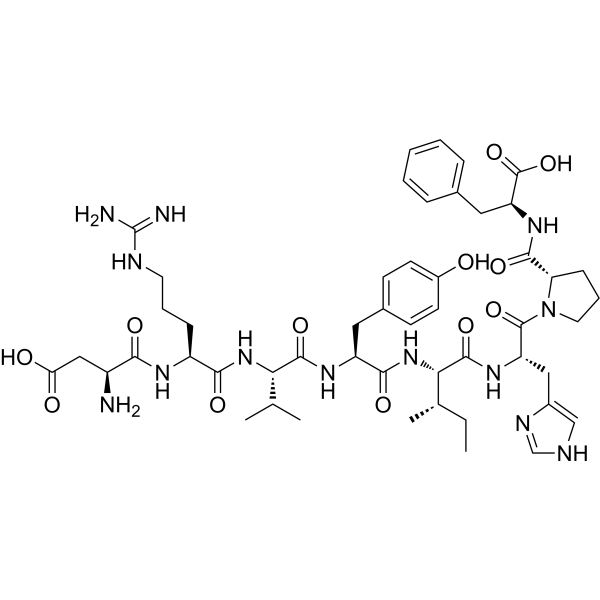
  • HY-13948
    Angiotensin II human
    Maximum Cited Publications
    222 Publications Verification

    Angiotensin II; Ang II; DRVYIHPF

    Angiotensin Receptor Apoptosis Cardiovascular Disease Infection Metabolic Disease Inflammation/Immunology Cancer
    Angiotensin II (Angiotensin II) is a vasoconstrictor and a major bioactive peptide of the renin/angiotensin system. Angiotensin II human plays a central role in regulating human blood pressure, which is mainly mediated by interactions between Angiotensin II and the G-protein-coupled receptors (GPCRs) Angiotensin II type 1 receptor (AT1R) and Angiotensin II type 2 receptor (AT2R). Angiotensin II human stimulates sympathetic nervous stimulation, increases aldosterone biosynthesis and renal actions. Angiotensin II human induces growth of vascular smooth muscle cells, increases collagen type I and III synthesis in fibroblasts, leading to thickening of the vascular wall and myocardium, and fibrosis. Angiotensin II human also induces apoptosis. Angiotensin II induces capillary formation from endothelial cells via the LOX-1 dependent redox-sensitive pathway .
    Angiotensin II human
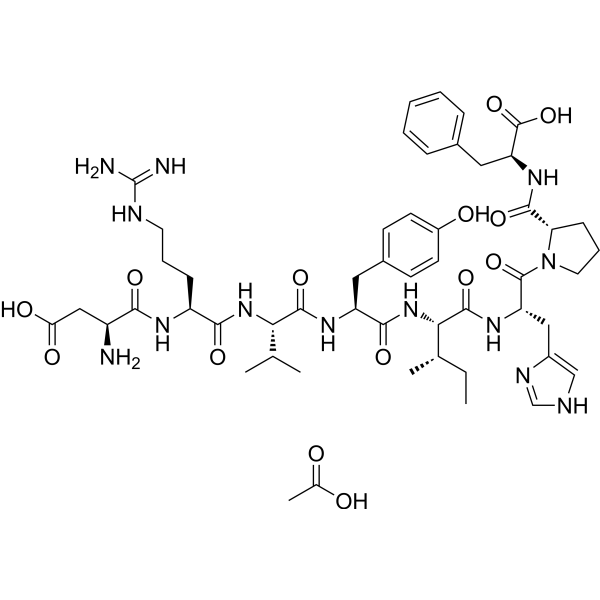
  • HY-13948A
    Angiotensin II human acetate
    Maximum Cited Publications
    222 Publications Verification

    Angiotensin II acetate; Ang II acetate; DRVYIHPF acetate

    Angiotensin Receptor Apoptosis Cardiovascular Disease Infection Metabolic Disease Inflammation/Immunology Cancer
    Angiotensin II human (Angiotensin II) acetate is a vasoconstrictor and a major bioactive peptide of the renin/angiotensin system. Angiotensin II human acetate plays a central role in regulating human blood pressure, which is mainly mediated by interactions between Angiotensin II and the G-protein-coupled receptors (GPCRs) Angiotensin II type 1 receptor (AT1R) and Angiotensin II type 2 receptor (AT2R). Angiotensin II human acetate stimulates sympathetic nervous stimulation, increases aldosterone biosynthesis and renal actions. Angiotensin II human acetate induces growth of vascular smooth muscle cells, increases collagen type I and III synthesis in fibroblasts, leading to thickening of the vascular wall and myocardium, and fibrosis. Angiotensin II human acetate also induces apoptosis. Angiotensin II human acetate induces capillary formation from endothelial cells via the LOX-1 dependent redox-sensitive pathway .
    Angiotensin II human acetate
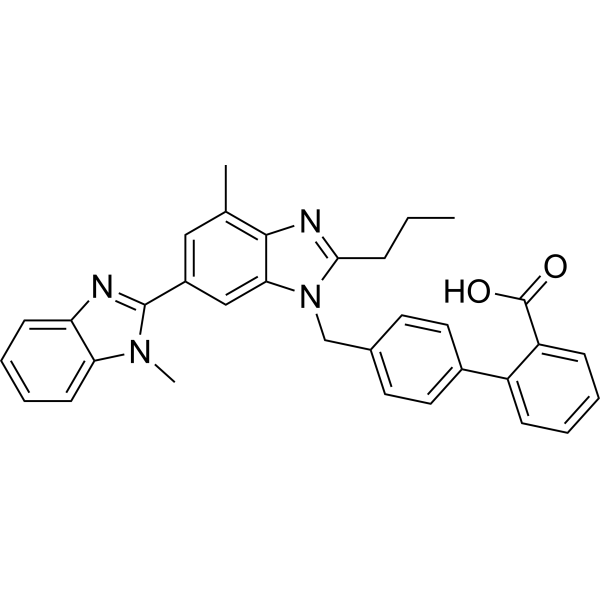
  • HY-13955
    Telmisartan
    15+ Cited Publications

    BIBR 277

    Angiotensin Receptor Autophagy Cardiovascular Disease Endocrinology Cancer
    Telmisartan is a potent, long lasting antagonist of angiotensin II type 1 receptor (AT1), selectively inhibiting the binding of 125I-AngII to AT1 receptors with IC50 of 9.2 nM.
    Telmisartan
  • HY-137875

    N-Benzoyl-Gly-His-Leu hydrate

    Angiotensin-converting Enzyme (ACE) Amino Acid Derivatives Cardiovascular Disease
    Hippuryl-His-Leu-OH (N-Benzoyl-Gly-His-Leu) hydrate is a specific substrate for angiotensin-converting enzyme ACE I and is a molecular tool used for ACE activity detection in in vitro experiments. Hippuryl-His-Leu-OH hydrate is hydrolyzed by ACE through competitive binding. Under ACE catalysis, Hippuryl-His-Leu-OH hydrate undergoes hydrolysis to produce hippuric acid (HA). The amount of HA produced can be used to quantitatively assess ACE activity or screen for ACE inhibitors. The His-Leu released from Hippuryl-His-Leu-OH hydrate can also react with o-phthalaldehyde or Fluorescamine (HY-D0715) for fluorescence detection. Hippuryl-His-Leu-OH hydrate can be applied to the in vitro screening of ACE inhibitors for hypertension and cardiovascular diseases, and is also used in the study of changes in ACE activity during physiological and pathological processes such as renal compensatory hypertrophy .
    Hippuryl-His-Leu-OH hydrate
  • HY-P1032
    Angiotensin I (human, mouse, rat)
    3 Publications Verification

    Endogenous Metabolite Angiotensin-converting Enzyme (ACE) Cardiovascular Disease
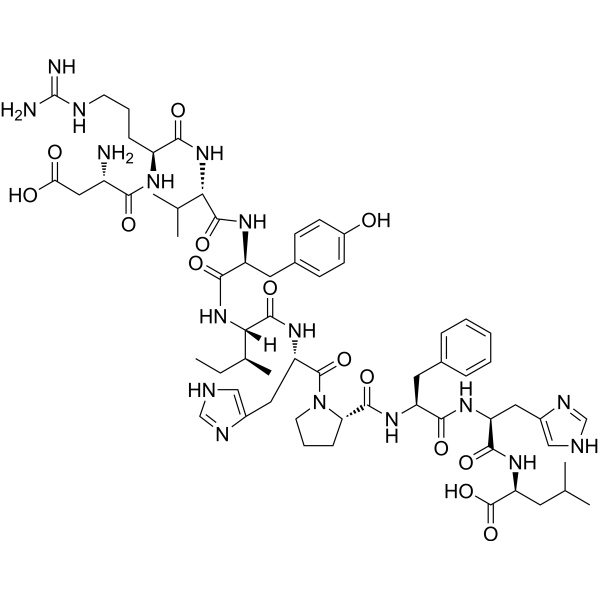
    Angiotensin I is a decapeptide hormone. Angiotensin I is the precursor of Angiotensin II (HY-13948). Angiotensin I can be used in the study of cardiovascular diseases such as hypertension and vasospasm .
    Angiotensin I (human, mouse, rat)
  • HY-P1656
    (D-Pro7)-Angiotensin I/II (1-7)
    1 Publications Verification

    Angiotensin Receptor Mas-related G-protein-coupled Receptor (MRGPR) Cardiovascular Disease
    (D-Pro7)-Angiotensin I/II (1-7) is a potent Mas receptor inhibitor with a Ki of 0.001 μM for rat receptors. (D-Pro7)-Angiotensin I/II (1-7) competitively blocks the binding of Angiotensin-(1-7) to the Mas receptor and attenuates the vasodilatory effect of rat aortas under physiological and hypertensive conditions. (D-Pro7)-Angiotensin I/II (1-7) can be used for studies on the function of the renin-angiotensin system and the pathological mechanisms of hypertension .
    (D-Pro7)-Angiotensin I/II (1-7)
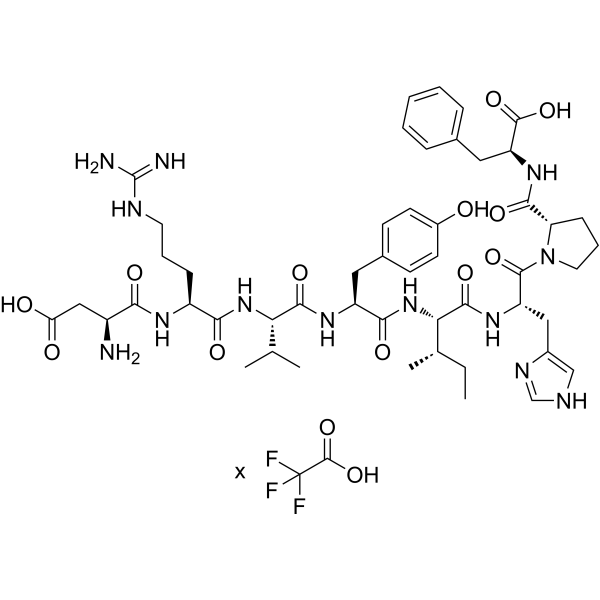
  • HY-13948B
    Angiotensin II human TFA
    Maximum Cited Publications
    222 Publications Verification

    Angiotensin II TFA; Ang II TFA; DRVYIHPF TFA

    Angiotensin Receptor Apoptosis Cardiovascular Disease Metabolic Disease Cancer
    Angiotensin II human (Angiotensin II) TFA is a vasoconstrictor and a major bioactive peptide of the renin/angiotensin system. Angiotensin II human TFA plays a central role in regulating human blood pressure, which is mainly mediated by interactions between Angiotensin II and the G-protein-coupled receptors (GPCRs) Angiotensin II type 1 receptor (AT1R) and Angiotensin II type 2 receptor (AT2R). Angiotensin II human TFA stimulates sympathetic nervous stimulation, increases aldosterone biosynthesis and renal actions. Angiotensin II human TFA induces growth of vascular smooth muscle cells, increases collagen type I and III synthesis in fibroblasts, leading to thickening of the vascular wall and myocardium, and fibrosis. Angiotensin II human TFA also induces apoptosis. Angiotensin II human TFA induces capillary formation from endothelial cells via the LOX-1 dependent redox-sensitive pathway .
    Angiotensin II human TFA
  • HY-114782

    L-Tyrosyl-L-tyrosine

    Angiotensin-converting Enzyme (ACE) Cardiovascular Disease
    H-Tyr-Tyr-OH (L-Tyrosyl-L-tyrosine) is an antihypertensive peptide. H-Tyr-Tyr-OH inhibits angiotensin I-converting enzyme (ACE) with an IC50 value of 0.028 mg/mL. H-Tyr-Tyr-OH can be used for the research of high blood pressure .
    H-Tyr-Tyr-OH
  • HY-P2983

    Kininase II; CD143

    Endogenous Metabolite Cardiovascular Disease Cancer
    Angiotensin-converting enzyme (Kininase II) is a dicarboxypeptidase, it converts inactive Angiotensin I (Ang I) to active Ang II and degrades active bradykinin (BK). Angiotensin-converting enzyme is a potent vasoconstrictor, is often used in biochemical studies .
    Angiotensin-converting enzyme
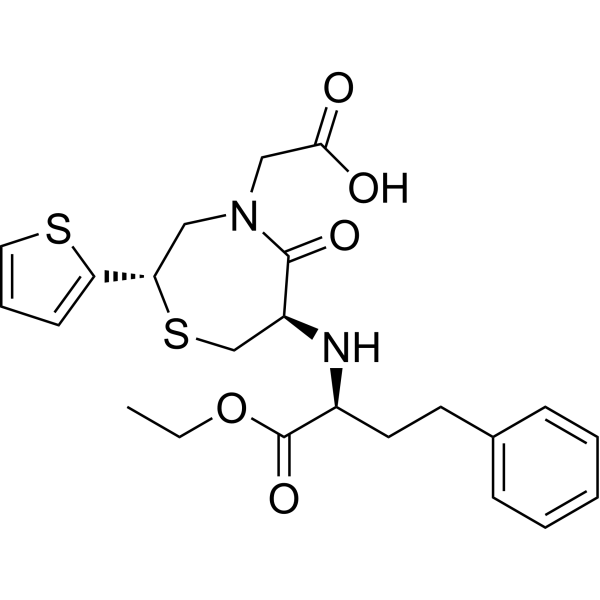
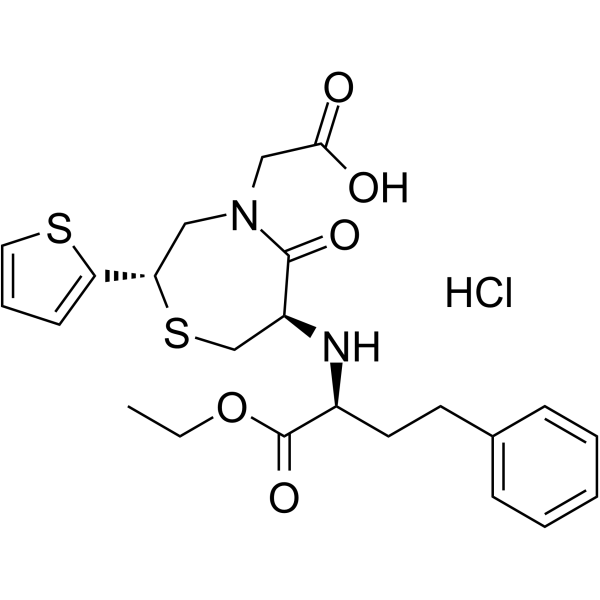
  • HY-B0384
    Temocapril hydrochloride
    2 Publications Verification

    Angiotensin-converting Enzyme (ACE) Cardiovascular Disease
    Temocapril hydrochloride is an orally active angiotensin-converting enzyme (ACE) inhibitor. Temocapril hydrochloride can be used for the research of hypertension, congestive heart failure, acute myocardial infarction, insulin resistance, and renal diseases .
    Temocapril hydrochloride
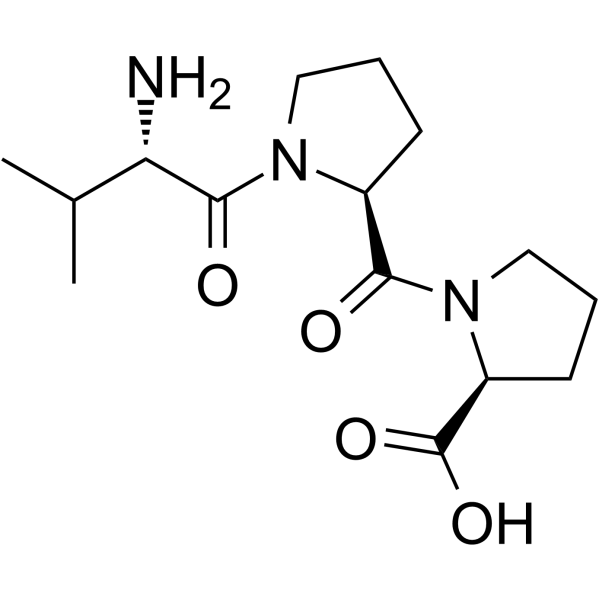
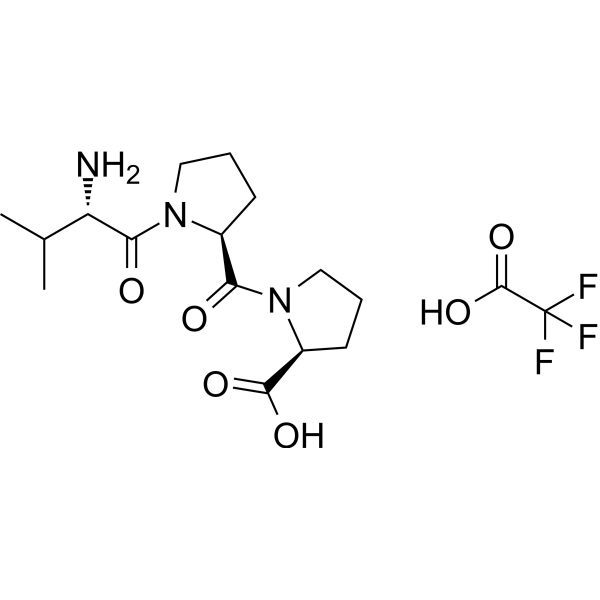
  • HY-114161
    H-Val-Pro-Pro-OH
    1 Publications Verification

    Angiotensin Receptor Cardiovascular Disease Metabolic Disease Inflammation/Immunology Endocrinology
    H-Val-Pro-Pro-OH, a milk-derived proline peptides derivative, is an inhibitor of Angiotensin I converting enzyme (ACE), with an IC50 of 9 μM.
    H-Val-Pro-Pro-OH
  • HY-P1853

    Angiotensin-converting Enzyme (ACE) Cardiovascular Disease
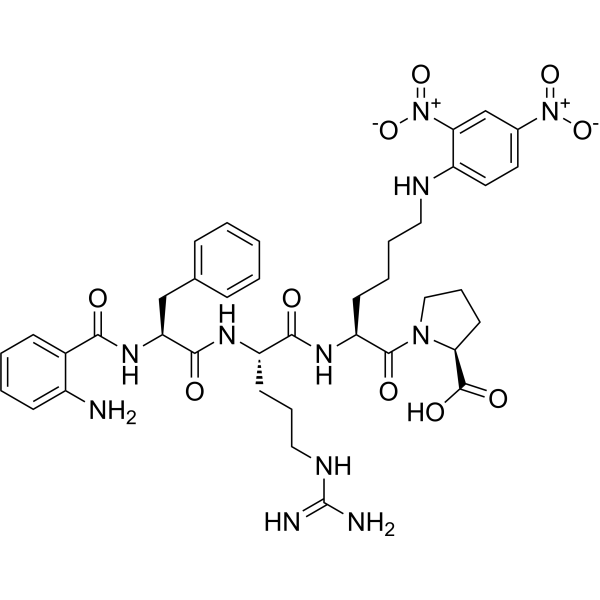
    Abz-FR-K(Dnp)-P-OH is an angiotensin I-converting enzyme (ACE) substrate and an internally quenched fluorogenic substrate for real time fluorescent assay .
    Abz-FR-K(Dnp)-P-OH
  • HY-P1839A

    Angiotensin Receptor Cardiovascular Disease
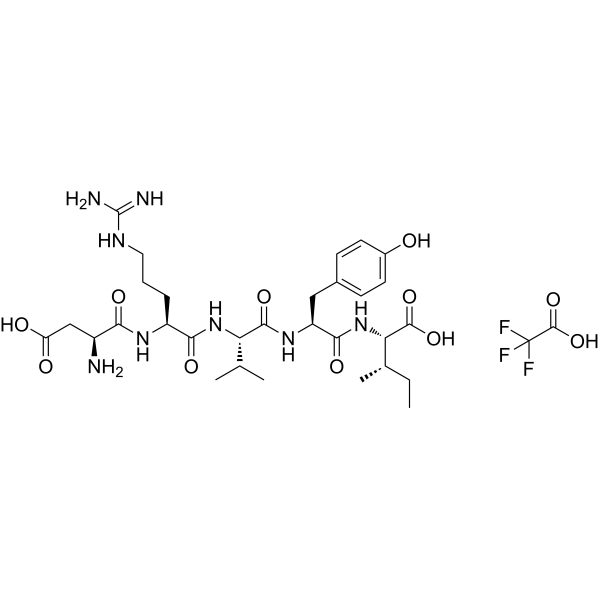
    Angiotensin I/II 1-5 TFA is a peptide that contains the amino acids 1-5, which is converted from Angiotensin I/II. Angiotensin I is formed by the action of renin on angiotensinogen. Angiotensin II is produced from angiotensin I. Angiotensin II has been investigated for the treatment, basic science, and diagnostic of Hypertension, Renin Angiotensin System, and Idiopathic Membranous Nephropathy .
    Angiotensin I/II (1-5) TFA
  • HY-P3012

    Cathepsin ERK p38 MAPK PKC Protease Activated Receptor (PAR) MMP Inflammation/Immunology
    Cathepsin G is a pH-dependent serine protease. Cathepsin G hydrolyzes diverse synthetic and protein substrates and remodels extracellular matrix. Cathepsin G exerts immunomodulatory effects via recruiting phagocytes, enhancing T cell motility, activating ERK1/2 and p38 MAPK signaling, and mediating PKCζ membrane translocation. Cathepsin G regulates inflammatory responses by cleaving inflammatory mediators. Cathepsin G participates in vascular regulation by converting angiotensin I to angiotensin II. Cathepsin G induces PAR4-dependent platelet activation, facilitates platelet-neutrophil aggregation, and mediates VITT-related NETosis, thrombus formation. Cathepsin G can be used for the research of immune thrombotic thrombocytopenia, cardiovascular disease, and select autoimmune and inflammatory diseases .
    Cathepsin G
  • HY-100713
    Temocapril
    2 Publications Verification

    Angiotensin-converting Enzyme (ACE) Cardiovascular Disease
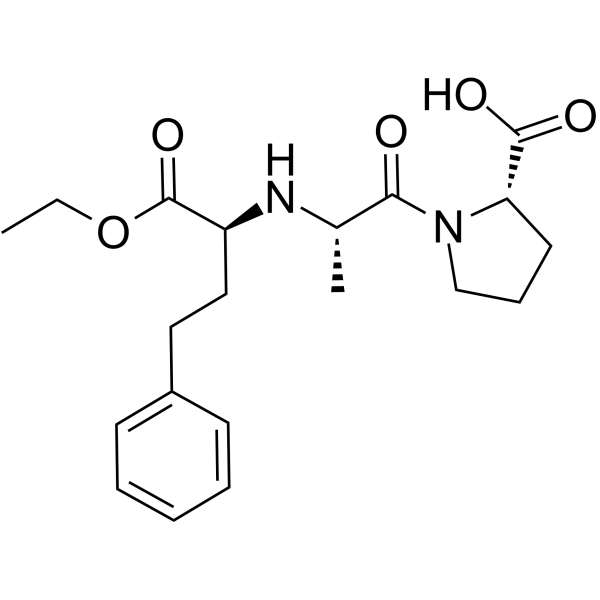
    Temocapril is an orally active angiotensin-converting enzyme (ACE) inhibitor. Temocapril can be used for the research of hypertension, congestive heart failure, acute myocardial infarction, insulin resistance, and renal diseases .
    Temocapril
  • HY-P3136

    TRV120055

    Angiotensin Receptor ERK Cardiovascular Disease
    TRV055 (TRV120055) is a G protein-biased agonist of angiotensin II type 1 receptors (AT1Rs). TRV120055 induces fibroblast proliferation, overexpression of collagen I and α-SMA, and stress fibre formation in human cardiac fibroblasts. TRV055 activates AT1 receptor/Gαq-mediated signaling pathways, upregulates TGF-β1 and p-ERK1/2. TRV055 induces collagen secretion in adult rat myofibroblasts at a level comparable to Ang II. TRV055 can be used to study the role of G protein-biased signaling of AT1Rs in regulating fibrotic responses [1]
    TRV055
  • HY-127026

    Angiotensin-converting Enzyme (ACE) Cardiovascular Disease
    Quinaprilat is an orally active non-mercapto Angiotensin Converting Enzyme (ACE) inhibitor, the active metabolite of Quinapril. Quinaprilat specifically blocks the conversion of angiotensin I to the vasoconstrictor angiotensin II and inhibits the degradation of bradykinin. Quinaprilat acts as anti-hypertensive agent and vasodilator .
    Quinaprilat
  • HY-P4545

    Angiotensin Receptor Others
    Abz-Gly-p-nitro-Phe-Pro-OH is the fluorescent substrate angiotensin I converting enzyme (ACE-I) with 355 nm excitation and 405 nm emission wavelengths .
    Abz-Gly-p-nitro-Phe-Pro-OH
  • HY-A0116A

    Trandolaprilat hydrate; RU 44403 hydrate

    Angiotensin-converting Enzyme (ACE) Endogenous Metabolite Cardiovascular Disease
    Trandolaprilate hydrate is a potent angiotensin-converting enzyme (ACE) inhibitor. Trandolaprilate hydrate partially inhibits angiotensin-I-mediated c-fos induction. Trandolaprilate is main bioactive metabolite of Trandolapril. Trandolaprilate shows high lipophilicity .
    Trandolaprilate hydrate
  • HY-E70421

    Angiotensin Receptor Others
    Butelase 1 ligase can be used for the cyclization of food-derived angiotensin I converting enzyme (ACE) inhibitory peptides, and thus improves the stability and bioactivity of ACE inhibitory peptides .
    Peptide ligase
  • HY-P1829A

    Angiotensin Receptor Cardiovascular Disease
    Angiotensin I/II (1-6) TFA contains the amino acids 1-6 and is converted from Angiotensin I/II peptide. The precursor angiotensinogen is cleaved by renin to form angiotensin I. Angiotensin I ishydrolyzed by angiotensin-converting enzyme (ACE) to form the biologically active angiotensin II. Angiotensin II has been investigated for the treatment, basic science, and diagnostic of Hypertension, Renin Angiotensin System, and Idiopathic Membranous Nephropathy .
    Angiotensin I/II (1-6) TFA
  • HY-N12763

    SNH

    Bacterial Renin Inflammation/Immunology
    Sodium new houttuyfonate (SNH) is a partially reversible NDM-1 inhibitor with an IC50 of 14.2 μM. Sodium new houttuyfonate is an inhibitor against renin and angiotensin I converting enzyme (ACE). Sodium new houttuyfonate can recover the antibacterial activity of Meropenem (HY-13678) against E. coli BL21/pET15b-blaNDM-1 .
    Sodium new houttuyfonate
  • HY-P1032S2

    Isotope-Labeled Compounds Endogenous Metabolite Others
    Angiotensin I-13C6,15N (human, mouse, rat) TFA is 13C and 15N labeled Angiotensin I (human, mouse, rat) TFA. Angiotensin I-13C6,15N (human, mouse, rat) TFA is a precursor of angiotensin II and is cleaved into angiotensin II by angiotensin converting enzyme (ACE) .
    Angiotensin I-13C6,15N (human, mouse, rat) TFA
  • HY-P3136A

    TRV120055 hydrochloride

    Angiotensin Receptor Cardiovascular Disease
    TRV055 (TRV120055) hydrochloride is a G protein-biased agonist of angiotensin II type 1 receptors (AT1Rs). TRV055 hydrochloride induces fibroblast proliferation, overexpression of collagen I and α-SMA, and stress fibre formation in human cardiac fibroblasts. RV055 hydrochloride activates AT1 receptor/Gαq-mediated signaling pathways, upregulates TGF-β1 and p-ERK1/2. RV055 hydrochloride induces collagen secretion in adult rat myofibroblasts at a level comparable to Ang II. RV055 hydrochloride can be used to study the role of G protein-biased signaling of AT1Rs in regulating fibrotic responses [1]
    TRV055 hydrochloride
  • HY-P1829

    Angiotensin Receptor Cardiovascular Disease
    Angiotensin I/II 1-6 contains the amino acids 1-6 and is converted from Angiotensin I/II peptide. The precursor angiotensinogen is cleaved by renin to form angiotensin I. Angiotensin I ishydrolyzed by angiotensin-converting enzyme (ACE) to form the biologically active angiotensin II. Angiotensin II has been investigated for the treatment, basic science, and diagnostic of Hypertension, Renin Angiotensin System, and Idiopathic Membranous Nephropathy .
    Angiotensin I/II (1-6)
  • HY-P11300

    Angiotensin-converting Enzyme (ACE) Cardiovascular Disease
    YKYY, a antihypertensive peptide, is an Angiotensin I-converting enzyme (ACE) inhibitor with an IC50 of 64.2 μM. YKYY can be isolated for the peptic digest of wakame Undaria pinnatifida. YKYY can be used for hypertension research .
    YKYY
  • HY-P11300A

    Angiotensin-converting Enzyme (ACE) Cardiovascular Disease
    YKYY TFA is a blood pressure-lowering peptide isolated from the digest of Undaria pinnatifida. It is an angiotensin I-converting enzyme (ACE) inhibitor with an IC50 of 64.2 μM. YKYY FTA can be used in hypertension research .
    YKYY TFA
  • HY-P10173

    Angiotensin-converting Enzyme (ACE) Others
    Abz-LFK(Dnp)-OH is an angiotensin I-converting enzyme (ACE) peptide substrate. Abz-LFK(Dnp)-OH is selective for the C domain of ACE. Abz-LFK(Dnp)-OH can be used to assess ACE activity .
    Abz-LFK(Dnp)-OH
  • HY-13948BS

    Angiotensin II-13C6,15N TFA; Ang II-13C6,15N TFA; DRVY(I-13C6,15N)HPF TFA

    Isotope-Labeled Compounds Cancer
    Angiotensin II human- 13C6, 15N TFA (Ang II- 13C6, 15N TFA) is 13C- and 15N-labeled Angiotensin II human (TFA) (HY-13948B). Angiotensin II human (Angiotensin II) TFA is a vasoconstrictor and a major bioactive peptide of the renin/angiotensin system. Angiotensin II human TFA plays a central role in regulating human blood pressure, which is mainly mediated by interactions between Angiotensin II and the G-protein-coupled receptors (GPCRs) Angiotensin II type 1 receptor (AT1R) and Angiotensin II type 2 receptor (AT2R). Angiotensin II human TFA stimulates sympathetic nervous stimulation, increases aldosterone biosynthesis and renal actions .
    Angiotensin II human-13C6,15N TFA
  • HY-P10172

    Angiotensin-converting Enzyme (ACE) Neurological Disease
    Abz-SDK(Dnp)P-OH is a fluorescence peptide. Abz-SDK(Dnp)P-OH is the substrate of angiotensin I-converting enzyme (ACE). Abz-SDK(Dnp)P-OH has fluorescent donor-acceptor pair Abz and Dnp (2,4-dinitrophenyl) .
    Abz-SDK(Dnp)P-OH
  • HY-13955S2

    BIBR 277-13C,d3

    Isotope-Labeled Compounds Angiotensin Receptor Autophagy Cardiovascular Disease Endocrinology
    Telmisartan- 13C,d3 is the 13C- and deuterium labeled Telmisartan. Telmisartan is a potent, long lasting antagonist of angiotensin II type 1 receptor (AT1), selectively inhibiting the binding of 125I-AngII to AT1 receptors with IC50 of 9.2 nM.
    Telmisartan-13C,d3
  • HY-P2643

    Endogenous Metabolite Cardiovascular Disease
    Angiotensin I/II (4-8), a major metabolite of Angiotensin II, is a C-terminal 4-8 pentapeptide .
    Angiotensin I/II (4-8)
  • HY-A0116

    Trandolaprilat; RU 44403

    Angiotensin-converting Enzyme (ACE) Endogenous Metabolite Cardiovascular Disease
    Trandolaprilate is a potent angiotensin-converting enzyme (ACE) inhibitor. Trandolaprilate partially inhibits angiotensin-I-mediated c-fos induction. Trandolaprilate is main bioactive metabolite of Trandolapril. Trandolaprilate shows high lipophilicity .
    Trandolaprilate
  • HY-P1792

    Angiotensin Receptor Metabolic Disease Endocrinology
    Angiotensin II (1-4), human is an endogenous peptide produced from AT I by angiotensin-converting-enzyme (ACE). Angiotensin II binds the AT II type 1 (AT1) receptor, stimulating GPCRs in vascular smooth muscle cells and increasing intracellular Ca 2+ levels. Angiotensin II also acts at the Na +/H + exchanger in the proximal tubules of the kidney .
    Angiotensin II (1-4), human
  • HY-A0116R

    Trandolaprilat (Standard); RU 44403 (Standard)

    Reference Standards Angiotensin-converting Enzyme (ACE) Endogenous Metabolite Cardiovascular Disease
    Trandolaprilate (Standard) is the analytical standard of Trandolaprilate. This product is intended for research and analytical applications. Trandolaprilate is a potent angiotensin-converting enzyme (ACE) inhibitor. Trandolaprilate partially inhibits angiotensin-I-mediated c-fos induction. Trandolaprilate is main bioactive metabolite of Trandolapril. Trandolaprilate shows high lipophilicity .
    Trandolaprilate (Standard)
  • HY-P1839

    Angiotensin Receptor Cardiovascular Disease
    Angiotensin I/II 1-5 is a peptide that contains the amino acids 1-5, which is converted from Angiotensin I/II. Angiotensin I is formed by the action of renin on angiotensinogen. Angiotensin II is produced from angiotensin I. Angiotensin II has been investigated for the treatment, basic science, and diagnostic of Hypertension, Renin Angiotensin System, and Idiopathic Membranous Nephropathy .
    Angiotensin I/II (1-5)
  • HY-13955S

    Angiotensin Receptor Autophagy Cardiovascular Disease Endocrinology
    Telmisartan-d3 is the deuterium labeled Telmisartan. Telmisartan is a potent, long lasting antagonist of angiotensin II type 1 receptor (AT1), selectively inhibiting the binding of 125I-AngII to AT1 receptors with IC50 of 9.2 nM .
    Telmisartan-d3
  • HY-122949
    Momordicine I
    2 Publications Verification

    Apoptosis Autophagy DGK Mitochondrial Metabolism NO Synthase PI3K Akt Interleukin Related Src AMPK mTOR NF-κB c-Met/HGFR STAT Keap1-Nrf2 Reactive Oxygen Species (ROS) Oxidative Phosphorylation Endogenous Metabolite Cardiovascular Disease Metabolic Disease Inflammation/Immunology Cancer
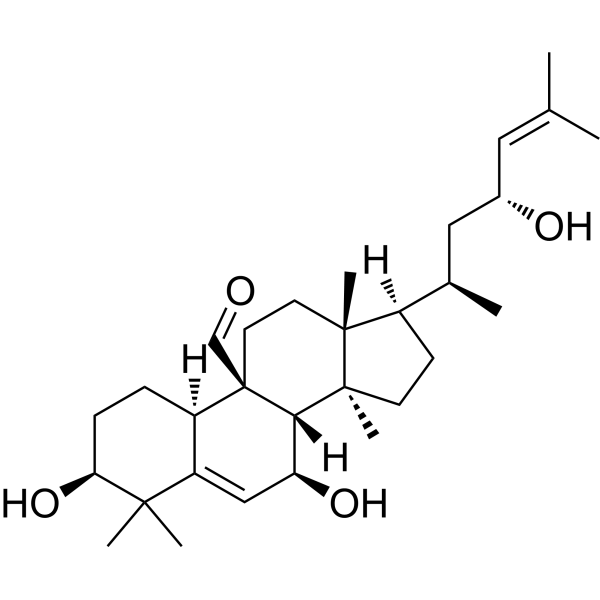
    Momordicine I is a cucurbitane-type triterpenoids. Momordicine I suppresses glioma growth by promoting apoptosis and impairing mitochondrial oxidative phosphorylation. Momordicine I inhibits glycolysis, lipid metabolism, induces autophagy in HNC cells to suppress head and neck cancer growth. Momordicine I alleviates isoproterenol-induced cardiomyocyte hypertrophy through suppression of PLA2G6 and DGK-ζ. Momordicine I exerts its cardiovascular benefits by upregulating nitric oxide, inhibiting the activity of angiotensin-converting enzyme (ACE), activating the PI3K/Akt pathway, reducing oxidative stress and inflammation. Momordicine I inhibits AKT1, IL-6, and SRC, suggesting its potential application in type 2 diabetes .
    Momordicine I
  • HY-13955S3

    BIBR 277-d7

    Isotope-Labeled Compounds Autophagy Angiotensin Receptor Cardiovascular Disease
    Telmisartan-d7 (BIBR 277-d7) is a deuterium labeled Telmisartan (HY-13955). Telmisartan is a potent, long lasting antagonist of angiotensin II type 1 receptor (AT1), selectively inhibiting the binding of 125I-AngII to AT1 receptors with IC50 of 9.2 nM.
    Telmisartan-d7
  • HY-19165

    Angiotensin Receptor Cardiovascular Disease
    CI-996 is a potent, selective, orally active angiotensin II (Ang II) type 1 (AT1) receptor antagonist. In rat liver membranes CI-996 displaces specifically bind [ 125I]Ang II with an IC50 of 0.8 nM. CI-996 has blood pressure-lowering activity .
    CI-996
  • HY-P4551

    N-Benzoyl-Gly-His-Leu

    Angiotensin-converting Enzyme (ACE) Amino Acid Derivatives Cardiovascular Disease
    Hippuryl-His-Leu-OH (N-Benzoyl-Gly-His-Leu) is a specific substrate for angiotensin-converting enzyme (ACE I) and a molecular tool used for ACE activity detection in in vitro experiments. Hippuryl-His-Leu-OH is hydrolyzed by ACE through competitive binding. Under ACE catalysis, Hippuryl-His-Leu-OH undergoes hydrolysis to produce hippuric acid (HA). The amount of HA produced can be used to quantitatively assess ACE activity or screen for ACE inhibitors. The released His-Leu can also react with o-phthalaldehyde or Fluorescamine (HY-D0715) for fluorescence detection. Hippuryl-His-Leu-OH can be applied to the in vitro screening of ACE inhibitors for hypertension and cardiovascular diseases, and is also used in the study of ACE activity changes in physiological and pathological processes such as renal compensatory hypertrophy .
    Hippuryl-His-Leu-OH
  • HY-P1444

    Dopamine Receptor Neurological Disease
    Acein is a novel nonapeptide, H-Pro-Pro-Thr-Thr-Thr-Lys-Phe-Ala-Ala-OH. Acein can promote the release of dopamine. Acein targets angiotensin converting enzyme (ACE I). Angiotensin converting enzyme (ACE I) can be used in nervous system related research .
    Acein
  • HY-A0230A

    SCH 33844 hydrochloride

    Angiotensin-converting Enzyme (ACE) Cardiovascular Disease
    Spirapril (SCH 33844) hydrochloride is a potent angiotensin converting enzyme (ACE) inhibitor with antihypertensive activity. Spirapril competitively binds to ACE and prevents the conversion of angiotensin I to angiotensin II. Spirapril is an orally active proagent of Spiraprilat and can be used for the research of hypertension, congestive heart failure .
    Spirapril hydrochloride
  • HY-B0477A

    CI-906 free acid

    Angiotensin-converting Enzyme (ACE) Cardiovascular Disease
    Quinapril is a potent, orally active, non-peptide and nonsulfhydryl inhibitor of angiotensin-converting enzyme (ACE). Quinapril specifically interrupts the conversion of angiotensin I to angiotensin II in both plasma and tissue. Quinapril is enzymatically hydrolyzed to a pharmacologically active diacid form quinaprilat. Quinapril is efficacious in hypertensive models .
    Quinapril
  • HY-P3545

    Angiotensin Receptor Cardiovascular Disease
    5-Valine-angiotensin I is an Ang I peptide belonging to angiotensin I. 5-Valine-angiotensin I induces muscle contraction, can be used for renin-angiotensin system studies. Angiotensin I is a putative neurotransmitter, is the precursor of angiotensin II and of angiotensin fragment 1-7, which are involved in regulation of fluid volume and the release of aldosterone .
    5-Valine-angiotensin I
  • HY-121232

    CV-3317

    Angiotensin-converting Enzyme (ACE) Cardiovascular Disease
    Delapril (CV-3317) is an orally active angiotensin I converting enzyme (ACE) inhibitor. Delapril has antihypertensive activity .
    Delapril
  • HY-10382

    Angiotensin Receptor Cardiovascular Disease
    EXP-6803 is a specific nonpeptide angiotensin II receptor antagonist with antihypertensive activity. EXP-6803 inhibits the contractile response to angiotensin II with a pA2 value of 7.20. EXP-6803 effectively blocks responses to angiotensin I and II while not affecting responses to bradykinin or acetylcholine in guinea pig ileum. EXP-6803 can be used for hypertension research .
    EXP-6803
  • HY-P1032F

    Endogenous Metabolite Endocrinology
    Biotinyl-Angiotensin I (human, mouse, rat) is biotin-labeled Angiotensin I . Angiotensin I (human, mouse, rat) is the precursor to the vasoconstrictor peptide angiotensin II, cleaved by the angiotensin-converting enzyme (ACE) .
    Biotinyl-Angiotensin I (human, mouse, rat)
  • HY-W585934

    Fru-Phe

    Angiotensin-converting Enzyme (ACE) Cardiovascular Disease
    Fructose-phenylalanine (Fru-Phe) is a non-competitive angiotensin-converting enzyme (ACE) inhibitor (IC50 =0.19 mM) with antioxidant activities. Fructose-phenylalanine forms a stable complex with Zn 2+ ions at the ACE active site, blocking the conversion of angiotensin I to II and thereby lowering blood pressure. Fructose-phenylalanine is promising for research of cardiovascular diseases .
    Fructose-phenylalanine
  • HY-P3006

    Drug Metabolite Cardiovascular Disease
    Des-Leu10-angiotensin I is a nonapeptide that inhibits rabbit lung angiotensin-converting enzyme peptidyl-dipeptide hydrolase with a Ki value of 31 μM, which is generated from angiotensin I by the action of carboxypeptidase-like activities residing in the human platelet and mast cell .
    Des-Leu10-angiotensin I

Inquiry Online

Your information is safe with us. * Required Fields.

Salutation


Country or Region *

Applicant Name *


Organization Name *

Department *


Email Address *


Product Name *

Cat. No.


Requested quantity *

Phone Number *


Remarks

Inquiry Online

Inquiry Information

Product Name:
Cat. No.:
Quantity:
MCE Japan Authorized Agent:

