



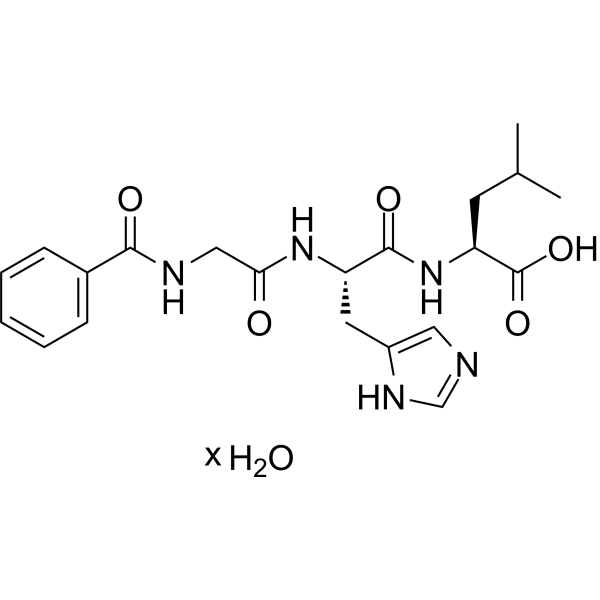
Hippuryl-His-Leu-OH hydrate

Based on 1 Customer Validation
Hippuryl-His-Leu-OH (N-Benzoyl-Gly-His-Leu) hydrate is a specific substrate for angiotensin-converting enzyme ACE I and is a molecular tool used for ACE activity detection in in vitro experiments. Hippuryl-His-Leu-OH hydrate is hydrolyzed by ACE through competitive binding. Under ACE catalysis, Hippuryl-His-Leu-OH hydrate undergoes hydrolysis to produce hippuric acid (HA). The amount of HA produced can be used to quantitatively assess ACE activity or screen for ACE inhibitors. The His-Leu released from Hippuryl-His-Leu-OH hydrate can also react with o-phthalaldehyde or Fluorescamine (HY-D0715) for fluorescence detection. Hippuryl-His-Leu-OH hydrate can be applied to the in vitro screening of ACE inhibitors for hypertension and cardiovascular diseases, and is also used in the study of changes in ACE activity during physiological and pathological processes such as renal compensatory hypertrophy.
For research use only. We do not sell to patients.
- Purity : 99.88%
- CAS No.: 207386-83-2
- Formula: C21H27N5O5.xH2O
- Molecular Weight:429.47 (free acid)
-
Storage:
Sealed storage, away from moisture.
Powder -80°C, 2 years , -20°C, 1 year* In solvent : -80°C, 6 months; -20°C, 1 month (sealed storage, away from moisture)

To place orders, for customer services and technical support, please contact: MedChemExpress USA
Tel: 609-228-6898 E-mail: [email protected] [email protected]


-
 Biological Activity
-
Chemical Information
-
Solvent & Solubility
- Purity & Documentation
- References
-
 Help & FAQs


-

HY-P2983
Angiotensin-converting enzyme -
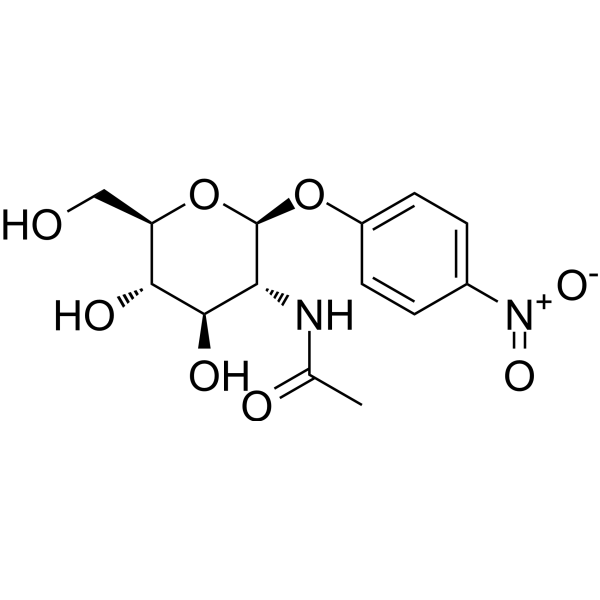
HY-W011183
4-Nitrophenyl-N-acetyl-β-D-glucosaminide -
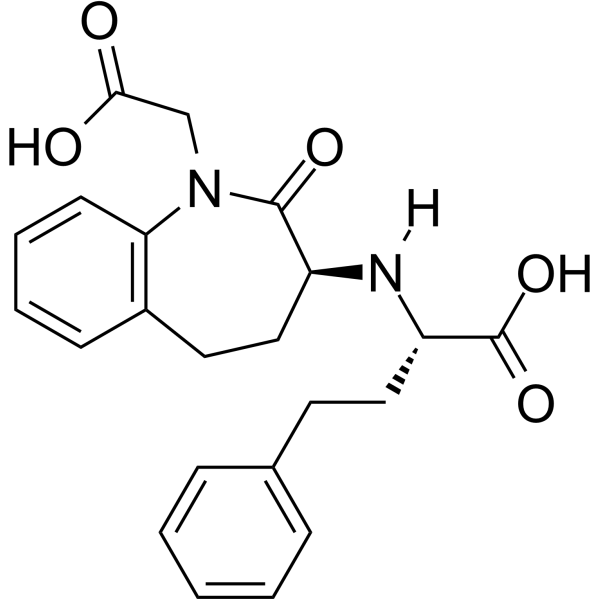
HY-118472
Benazeprilat -
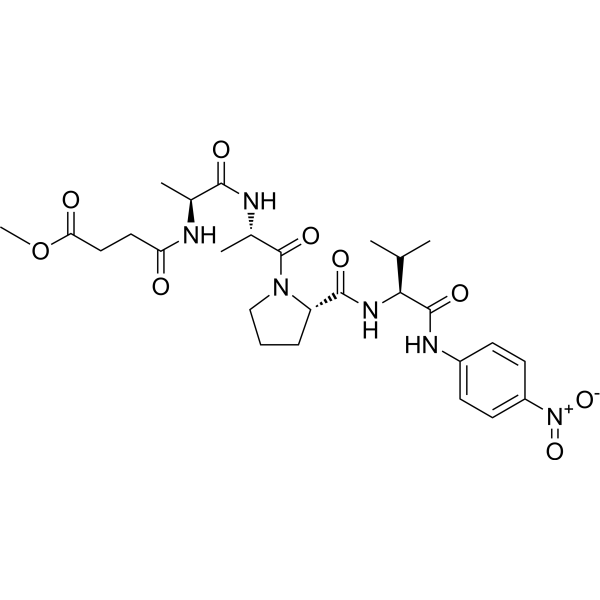
HY-P2685
MeOSuc-Ala-Ala-Pro-Val-pNA -
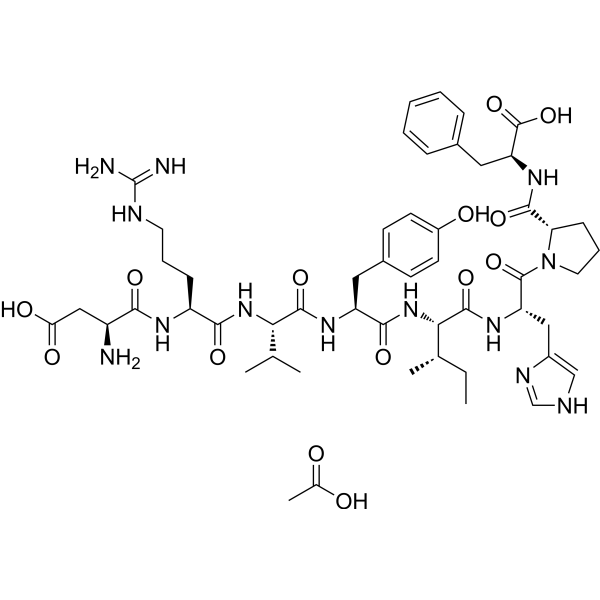
HY-13948A
Angiotensin II human acetate -

HY-118472R
Benazeprilat (Standard) -
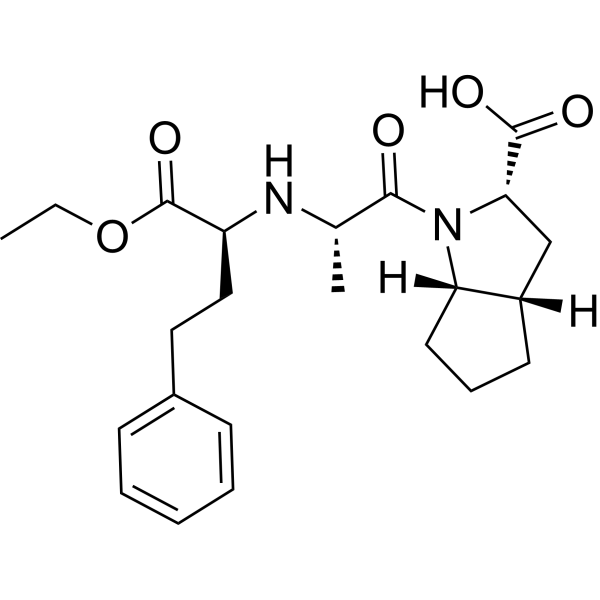
HY-B0279
Ramipril -
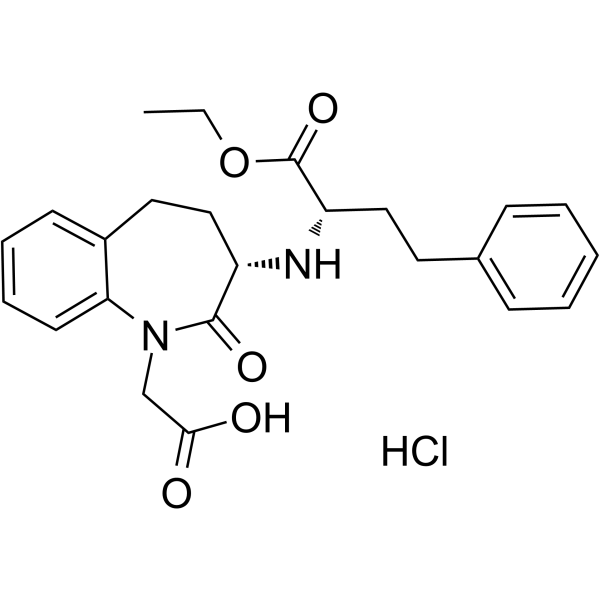
HY-B0093A
Benazepril hydrochloride -
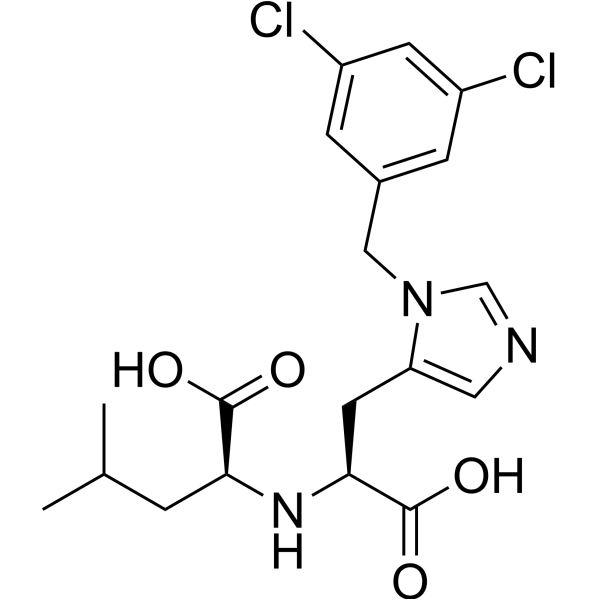
HY-19414
MLN-4760 -
![N-[3-(2-Furyl)acryloyl]-Phe-Gly-Gly](https://file.medchemexpress.com/product_pic/hy-w010991.gif)
HY-W010991
N-[3-(2-Furyl)acryloyl]-Phe-Gly-Gly -
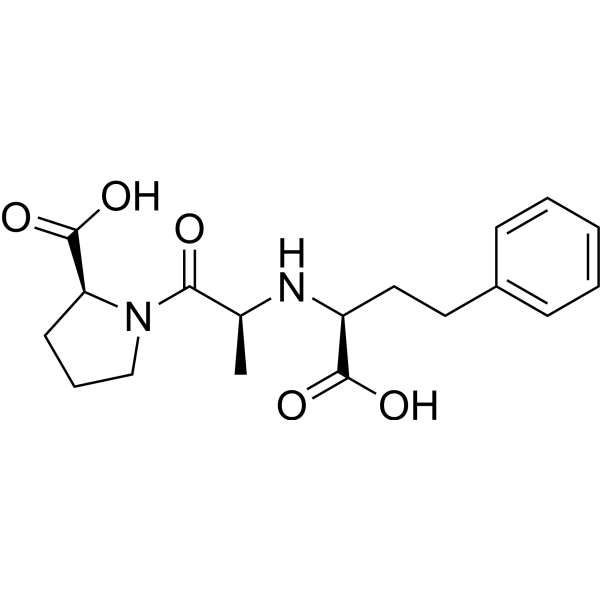
HY-B0231A
Enalaprilat -
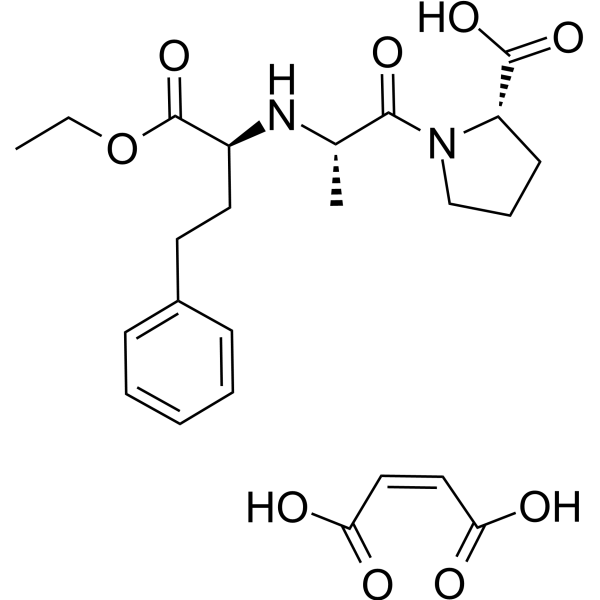
HY-B0331A
Enalapril maleate


Biological Activity
Description
In Vitro
Hippuryl-His-Leu-OH hydrate (8.3 mM; incubated with the enzyme source for 15 minutes, then incubated with the substrate for 30 minutes) can be hydrolyzed by angiotensin-converting enzyme (ACE) to produce hippuric acid. The ACE inhibitory activity of substances such as Parkia biglobosa extract can be evaluated by detecting the amount of hippuric acid produced[1].
Hippuryl-His-Leu-OH hydrate (1 mM, 0.1 mM; incubated at 37°C for 150 min) as an ACE-specific substrate, its hydrolyzed product, hippuric acid, after solid-phase extraction (SPE) treatment, can be quantitatively detected by LC/SID-ESI-MS/MS technology, enabling efficient screening of ACE inhibitors in complex natural pigments and foods[2].
Hippuryl-His-Leu-OH hydrate is used as a substrate for spectrophotometric detection of ACE activity in serum and tissues. The generated hippuric acid has a characteristic absorption peak at 228 nm, which reflects the catalytic activity level of ACE[3].
MedChemExpress (MCE) has not independently confirmed the accuracy of these methods. They are for reference only.
In Vivo
MedChemExpress (MCE) has not independently confirmed the accuracy of these methods. They are for reference only.


Chemical Information
-
CAS No. 207386-83-2
-
Appearance Solid
-
Molecular Weight 429.47 (free acid)
-
Formula C21H27N5O5.xH2O
-
Color White to off-white
-
Synonyms
N-Benzoyl-Gly-His-Leu hydrate
-
Shipping
Room temperature in continental US; may vary elsewhere.
-
Storage
Sealed storage, away from moisture
Powder -80°C 2 years -20°C 1 year * In solvent : -80°C, 6 months; -20°C, 1 month (sealed storage, away from moisture)


Solvent & Solubility
In Vitro:
DMSO : 100 mg/mL (Need ultrasonic; Hygroscopic DMSO has a significant impact on the solubility of product, please use newly opened DMSO)
H2O : 14.29 mg/mL (Need ultrasonic)


Purity & Documentation
-
Data Sheet (274 KB)
-
SDS (394 KB)
- English - EN (394 KB)
- Français - FR (394 KB)
- Deutsch - DE (394 KB)
- Norwegian - NO (394 KB)
- Español - ES (394 KB)
- Swedish - SV (394 KB)
- Italian - IT (394 KB)
- Korean - KR (394 KB)
- Portuguese - PT (394 KB)
-
Handling Instructions (2659 KB)
References
[2]. Inoue K, et al. Screening assay of angiotensin-converting enzyme inhibitory activity from complex natural colourants and foods using high-throughput LC-MS/MS. Food Chem. 2011 Jun 15;126(4):1909-15. [Content Brief]
[3]. Babić N, et al. Angiotensin converting enzyme activity in compensatory renal hypertrophy. Bosn J Basic Med Sci. 2007 Feb;7(1):79-83. [Content Brief]

Calculators
Concentration (start) × Volume (start) = Concentration (final) × Volume (final)


Hippuryl-His-Leu-OH hydrate Related Classifications
HY-137875 Related Classifications
 Powered by Bioz