Search Result
Results for "
DPPH free radical-scavenging activity
" in MedChemExpress (MCE) Product Catalog:
1
Biochemical Assay Reagents
| Cat. No. |
Product Name |
Target |
Research Areas |
Chemical Structure |
-
- HY-112053
-
|
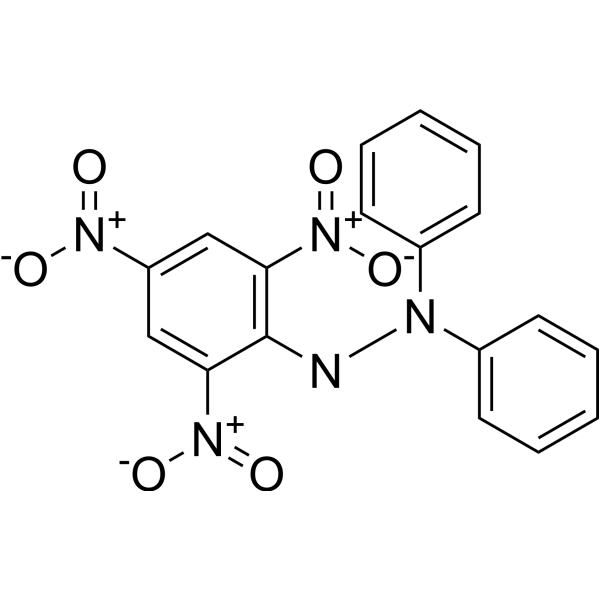
2,2-Diphenyl-1-picrylhydrazyl
|
Reactive Oxygen Species (ROS)
|
Metabolic Disease
|
|
DPPH (2,2-Diphenyl-1-picrylhydrazyl) is a stable free radical that can be used to measure the radical scavenging activity of antioxidants. The odd electron of nitrogen atom in DPPH is reduced by receiving a hydrogen atom from antioxidants to the corresponding hydrazine. DPPH method may be utilized in aqueous and nonpolar organic solvents and can be used to examine both hydrophilic and lipophilic antioxidants .
|
-
-
- HY-P1934A
-
|
|
Fungal
Bacterial
IFNAR
Reactive Oxygen Species (ROS)
|
Infection
Inflammation/Immunology
Cancer
|
|
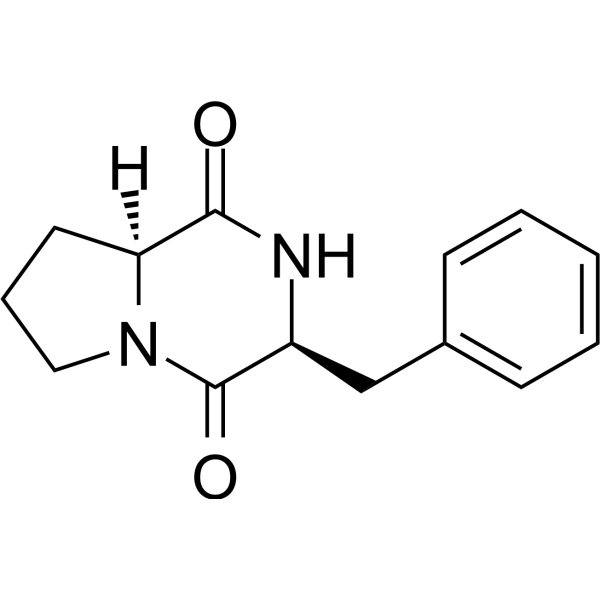
Cyclo(L-Phe-L-Pro), isolated from Pseudomonas fluorescens and Pseudomonas alcaligenes cell-free culture supernatants is an antifungal cyclic dipeptide . Cyclo(L-Phe-L-Pro) inhibits IFN-β production by interfering with retinoic-acid-inducible gene-I (RIG-I) activation . Cyclo(L-Phe-L-Pro) exhibits free-radical scavenging activity with the IC50 of 24 µM in the DPPH assay .
|
-
-
- HY-N1417
-
Sesamol
2 Publications Verification
|
Apoptosis
|
Cancer
|
|
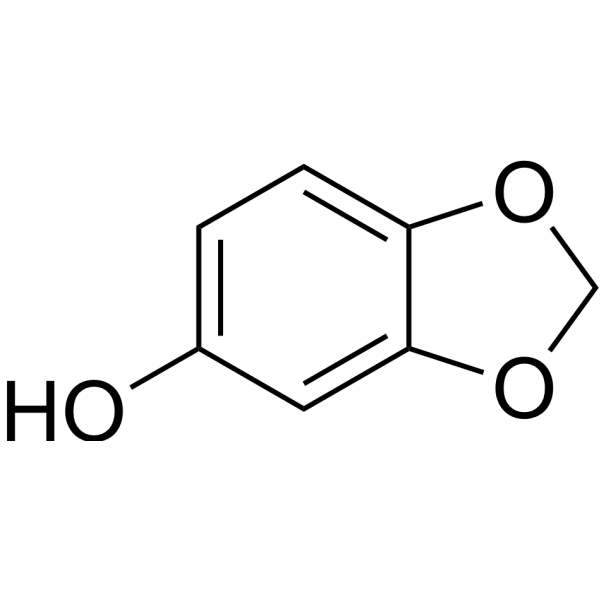
Sesamol is a constituent of sesame oil. Sesamol shows a free radical scavenging activity. Sesamol shows an IC50=5.95±0.56 μg/mL in the DPPH assay. Anti-oxidant activities . Anticancer activities .
|
-
-
- HY-W019885A
-
|
Sodium triphosphate pentabasic, 98%
|
Environmental Pollutants
Biochemical Assay Reagents
|
Others
|
|
Sodium tripolyphosphate (STPP), 98% is an inorganic, non-toxic polyphosphate crosslinker, inducer and enhancer. Sodium tripolyphosphate (STPP), 98% induces the formation of unique needle-like microcrystals in sodium alginate-chitosan composite films. Sodium tripolyphosphate (STPP), 98% enhances the DPPH free radical scavenging activity of sodium alginate-chitosan composite films .
|
-

-
- HY-127170
-
|
|
Lipoxygenase
Tyrosinase
|
Metabolic Disease
Inflammation/Immunology
|
|
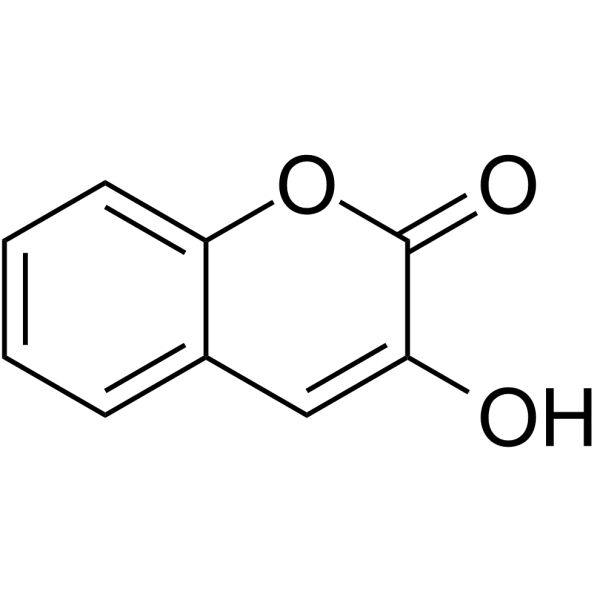
3-Hydroxycoumarin is an inhibitor of tyrosinase and lipoxygenase with an IC50 for recombinant human tyrosinase (rHT) of 26 μM, and a Ki of 3.39 μM; its IC50 for LOX is 9.5 μM. 3-Hydroxycoumarin has DPPH free radical scavenging activity (IC50 = 31.2 μM). 3-Hydroxycoumarin has photoprotective effects on sea urchin zygotes and embryos .
|
-
-
- HY-112053R
-
|
2,2-Diphenyl-1-picrylhydrazyl (Standard)
|
Reactive Oxygen Species (ROS)
Reference Standards
|
Metabolic Disease
|
|
DPPH (Standard) is the analytical standard of DPPH. This product is intended for research and analytical applications. DPPH (2,2-Diphenyl-1-picrylhydrazyl) is a stable free radical that can be used to measure the radical scavenging activity of antioxidants. The odd electron of nitrogen atom in DPPH is reduced by receiving a hydrogen atom from antioxidants to the corresponding hydrazine. DPPH method may be utilized in aqueous and nonpolar organic solvents and can be used to examine both hydrophilic and lipophilic antioxidants .
|
-

-
- HY-131803
-
|
|
Nucleoside Antimetabolite/Analog
|
Inflammation/Immunology
|
|
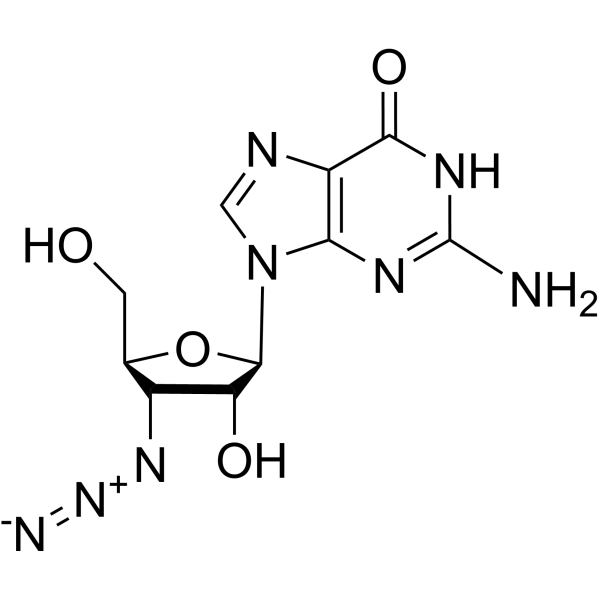
Urolignoside is an antioxidant with free radical scavenging activity. Urolignoside potently scavenges DPPH radical, and exhibits antioxidant to β-carotene-lineoleate model . 3'-Azido-3'-deoxyguanosine is a click chemistry reagent, it contains an Azide group and can undergo copper-catalyzed azide-alkyne cycloaddition reaction (CuAAc) with molecules containing Alkyne groups. It can also undergo strain-promoted alkyne-azide cycloaddition (SPAAC) reactions with molecules containing DBCO or BCN groups.
|
-
-
- HY-W002773
-
|
|
Endogenous Metabolite
|
Others
|
|
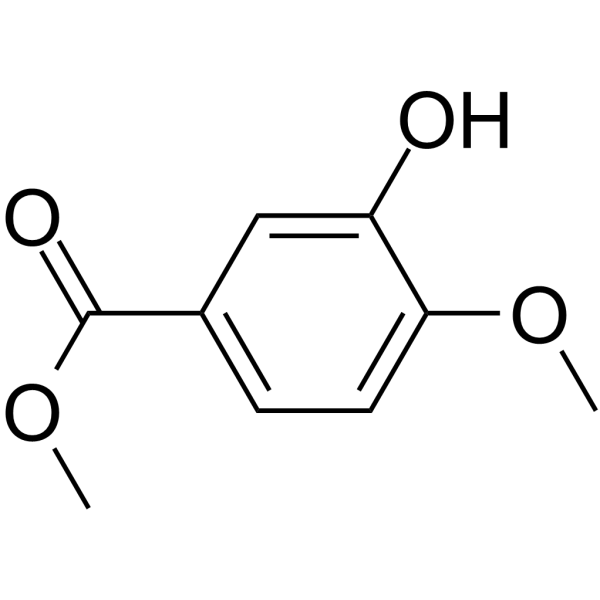
Methyl isovanillate is a secondary metabolite isolated from Vitex agnus-castus. Methyl isovanillate does not exhibit significant activity in the DPPH free radical scavenging experiment .
|
-
-
- HY-N3421
-
|
|
Interleukin Related
TNF Receptor
Influenza Virus
|
Infection
Inflammation/Immunology
Cancer
|
|
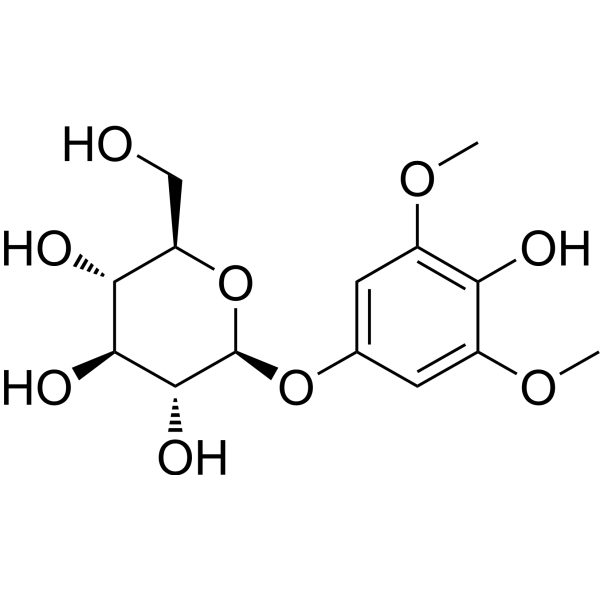
Koaburaside is a cytoprotective and anti-inflammatory natural compound. Koaburaside shows antioxidant activity with an IC50 of 9.0 μM for DPPH-free radical scavenging assay. Koaburaside inhibits histamine release and expressions of IL-6 and TNF-α in human mast cells. Koaburaside also effectively inhibits influenza A neuraminidase .
|
-
-
- HY-130294
-
|
|
Elastase
|
Inflammation/Immunology
|
|
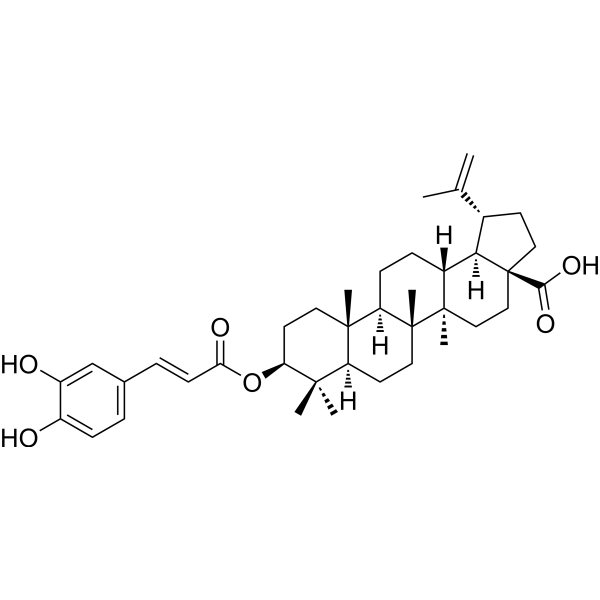
Pyracrenic acid is an elastase inhibitor (IC50 = 2.42 µM), can be obtained from the bark of Pyracantha crenulata. Pyracrenic acid has DPPH free radical scavenging activity and anti-inflammatory activity .
|
-
-
- HY-W104752
-
-

-
- HY-175862
-
|
|
Aldose Reductase
Reactive Oxygen Species (ROS)
PI3K
Akt
SOD
p38 MAPK
Keap1-Nrf2
|
Metabolic Disease
|
|
ALR2-IN-9 is a potent ALR2 inhibitor (IC50 = 21.8 nM) with excellent antioxidant activity (EC50 for DPPH radical scavenging = 2.8 μM). ALR2-IN-9 interacts directly with Reactive Oxygen Species (ROS)/Reactive Nitrogen Species (RNS) and interrupts the free radical chain reactions, and as an endogenous enzymatic antioxidant regulator, which regulates enzyme functions of CAT and SOD. ALR2-IN-9 regulates PI3K/Akt/Nrf2 pathway to attenuate hyperglycemia-mediated mitochondrial superoxide overproduction in vitro, and ameliorates CuSO4- and H2O2-induced oxidative stress in vivo. ALR2-IN-9 prolongs lifespan of C. elegans via the regulation of stress response genes such as PMK-1. ALR2-IN-9 is a promising anti-aging drug candidate. ALR2-IN-9 can be used for diabetic complication research .
|
-

-
- HY-133183
-
|
|
Biochemical Assay Reagents
|
Others
|
|
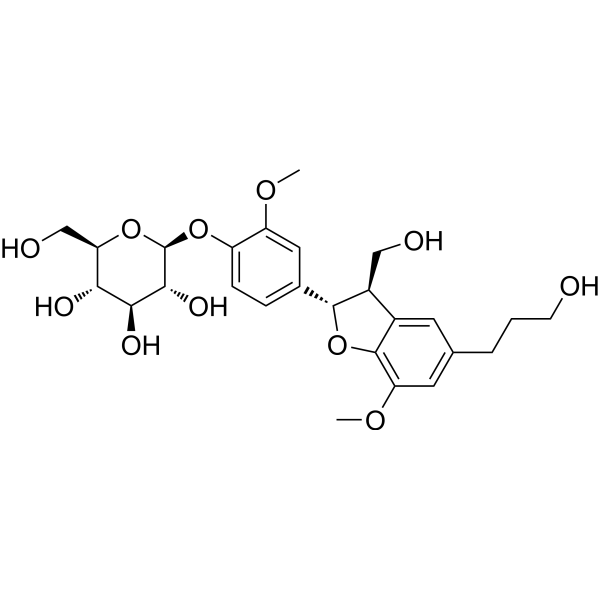
Urolignoside is an antioxidant with free radical scavenging activity. Urolignoside potently scavenges DPPH radical, and exhibits antioxidant to β-carotene-lineoleate model .
|
-
-
- HY-N8169
-
|
|
Others
|
Others
|
|
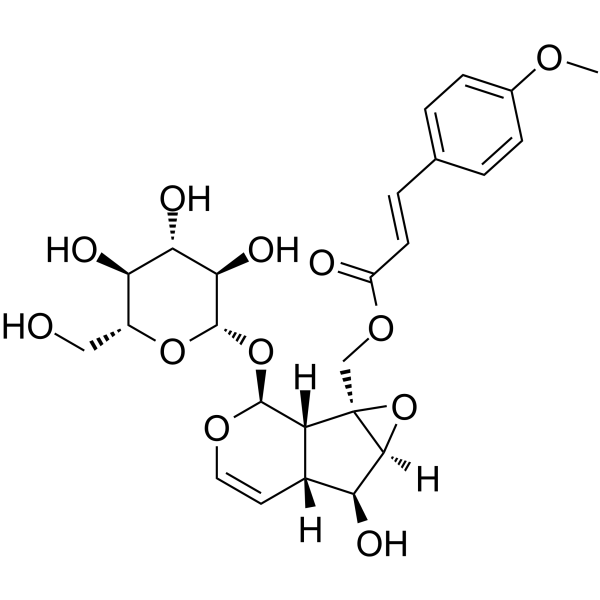
10-O-Trans-p-methoxycinnamoylcatalpol has antioxidant activity with the IC50 value of 0.37 μM/mL in DPPH free radical scavenging assay .
|
-
-
- HY-N7518
-
|
|
MMP
|
Inflammation/Immunology
|
|
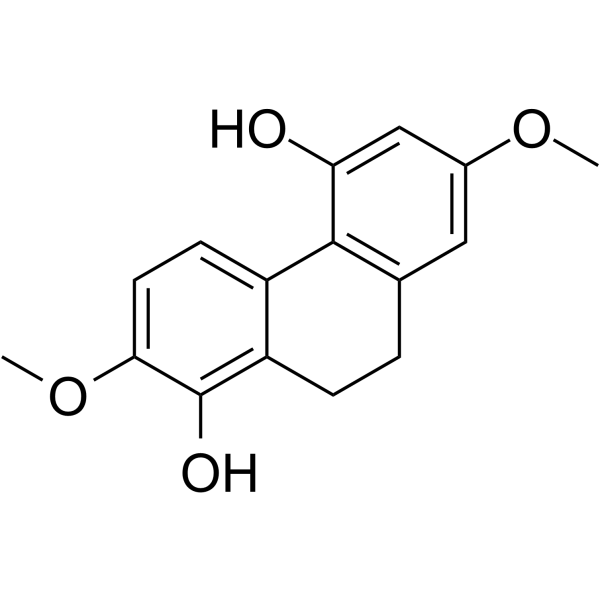
Eulophiol shows the 1,1-diphenyl-2-picrylhydrazyl (DPPH) free radical scavenging activity with an EC50 of 27.7μM. Antioxidant activity .
|
-
-
- HY-W714006
-
|
|
Reactive Oxygen Species (ROS)
|
Metabolic Disease
|
|
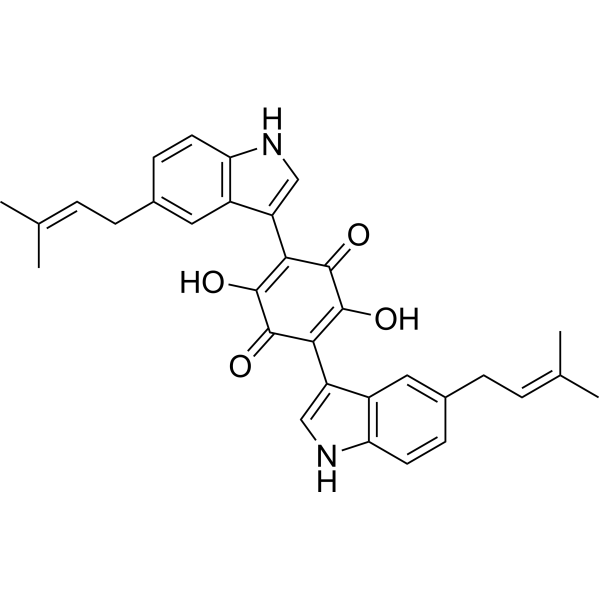
Cochliodinol (compound 1) is a metabolite derived from the Apis mellifera ligustica. Cochliodinol has strong free radical scavenging activity of 2, 2-diphenyl-1-picrohydrazine (DPPH) (IC50=3.06 μg/mL) .
|
-
-
- HY-N10294
-
|
|
HIV
|
Infection
Inflammation/Immunology
|
|
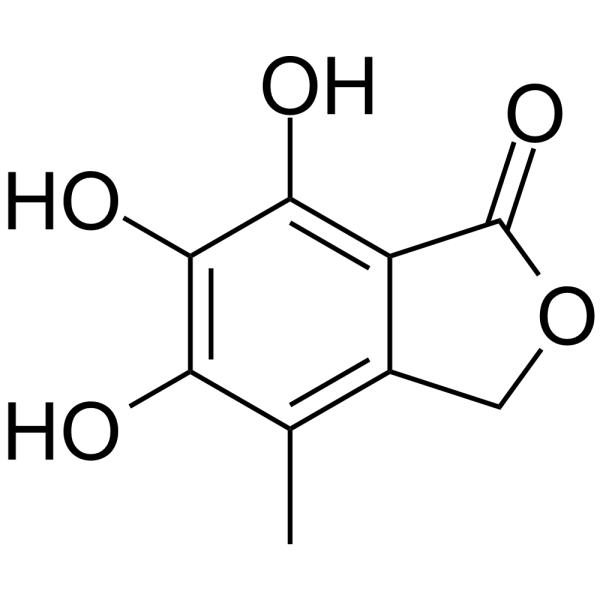
Epicoccone B, firstly reported from C. globosum, exhibits the DPPH free radical scavenging ability with IC50 value of 10.8 μM, and has potent α-glucosidase inhibition with IC50 value of 27.3 μM. Anti-HIV activity .
|
-
-
- HY-N1417R
-
|
|
Reference Standards
Apoptosis
|
Cancer
|
|
Sesamol (Standard) is the analytical standard of Sesamol. This product is intended for research and analytical applications. Sesamol is a constituent of sesame oil. Sesamol shows a free radical scavenging activity. Sesamol shows an IC50=5.95±0.56 μg/mL in the DPPH assay. Anti-oxidant activities . Anticancer activities .
|
-

-
- HY-N8012
-
|
|
COX
NO Synthase
|
Others
|
|
Multinoside A (compound 6) is an antioxidant with DPPH free radical scavenging activity (IC50=54.3 μg/mL). Multinoside A can also downregulate COX-2 expression (IC50=9.6 μg/mL) and inhibit NO production (IC50=43.9 μg/mL) .
|
-

-
- HY-N15578
-
|
|
Others
|
Others
|
|
Actinidioionoside (Compound 2) is a megastigmane glucoside compound found in Borago officinalis L. Actinidioionoside has DPPH free radical scavenging activity (IC50: 41.3 μM). Actinidioionoside has no significant cytotoxicity against A549 human lung cancer cells (IC50 > 100 μM). Actinidioionoside can be used in antioxidant studies .
|
-

-
- HY-P1934AR
-
|
|
Reference Standards
Fungal
Bacterial
IFNAR
Reactive Oxygen Species (ROS)
|
Infection
Inflammation/Immunology
Cancer
|
|
Gallic acid (hydrate) (Standard) is the analytical standard of Gallic acid (hydrate). This product is intended for research and analytical applications. Cyclo(L-Phe-L-Pro), isolated from Pseudomonas fluorescens and Pseudomonas alcaligenes cell-free culture supernatants is an antifungal cyclic dipeptide . Cyclo(L-Phe-L-Pro) inhibits IFN-β production by interfering with retinoic-acid-inducible gene-I (RIG-I) activation . Cyclo(L-Phe-L-Pro) exhibits free-radical scavenging activity with the IC50 of 24 µM in the DPPH assay .
|
-

-
- HY-N13142
-
|
|
Others
|
Inflammation/Immunology
|
|
Luteolin 7-O-[β-D-apiofuranosyl-(1→6)]-β-D-glucopyranoside (compound 3) is a flavonoid with antioxidant activity, which can be isolated from Margaritopsis carrascoana. Luteolin 7-O-[β-D-apiofuranosyl-(1→6)]-β-D-glucopyranoside has good DPPH free radical scavenging activity (IC50=0.188 mg/mL) .
|
-
![Luteolin 7-O-[β-D-apiofuranosyl-(1→6)]-β-D-glucopyranoside](//file.medchemexpress.com/product_pic/hy-n13142.gif)
-
- HY-149517
-
|
|
EGFR
Raf
Caspase
Bcl-2 Family
Apoptosis
|
Inflammation/Immunology
Cancer
|
|
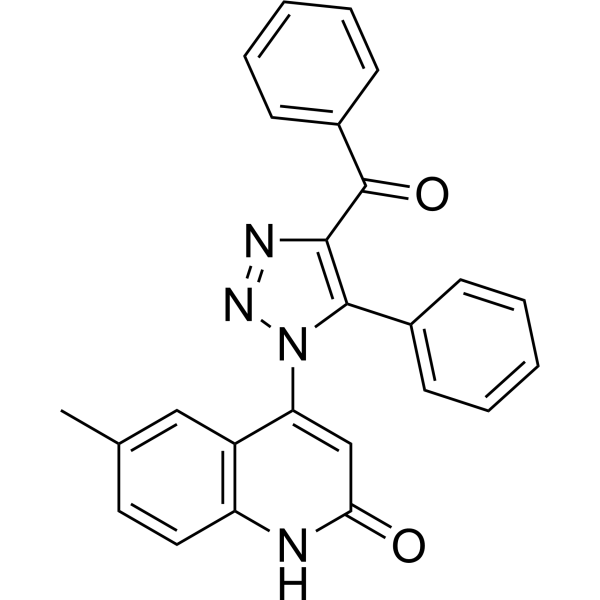
EGFR/BRAFV600E-IN-2 (compound 3g) is a potential multi-target inhibitor of EGFR, BRAF V600E, and EGFR T790M, and an inducer of apoptosis. EGFR/BRAFV600E-IN-2 can activate caspase-3, 8, and Bax, and downregulate the anti-apoptotic protein Bcl2, inducing apoptosis. EGFR/BRAF V600E-IN-2 also has antioxidant activity and DPPH free radical scavenging potency .
|
-
-
- HY-175851
-
|
|
Adenosine Receptor
|
Neurological Disease
|
|
A2AAR antagonist 5 is a selective A2AAR antagonist. A2AAR antagonist 5 inhibits NECA-stimulated adenylyl cyclase activity in hA2AAR-expressing CHO cells with an IC50 value of 1863 nM. A2AAR antagonist 5 possesses strong free radical scavenging activity, with an EC50 value of 22.21 μM in the DPPH assay. A2AAR antagonist 5 exerts notable neuroprotective effects in in vitro cerebral ischemia models. A2AAR antagonist 5 can be used for the study of cerebral ischemia .
|
-

-
- HY-170561
-
|
|
Cholinesterase (ChE)
|
Neurological Disease
|
|
AChE/BuChE-IN-6 (Compound 11f) is an inhibitor of AChE and BuChE, with IC50 values of 1.24 and 1.85 μg/mL, respectively. AChE/BuChE-IN-6 also exhibits strong DPPH free radical scavenging activity (IC50 = 3.15 μg/mL). In vivo toxicity studies indicate that AChE/BuChE-IN-6 is safe, showing no significant differences in blood and biochemical markers compared to the control group after long-term administration, and no abnormalities were observed in liver and kidney tissues. AChE/BuChE-IN-6 holds promise for research into Alzheimer's disease .
|
-

-
- HY-N15727
-
|
|
Others
|
Inflammation/Immunology
|
|
2,5-Dimethylchromone-7-O-β-D-glucopyranoside is an orally active chromone glycoside found in the underground parts of Rheum australe. 2,5-Dimethylchromone-7-O-β-D-glucopyranoside shows a DPPH radical scavenging activity with an IC50 value of 66.9 μM. 2,5-Dimethylchromone-7-O-β-D-glucopyranoside scavenges free radicals by providing hydrogen atoms through phenolic hydroxyl groups, inhibiting lipid peroxidation. 2,5-Dimethylchromone-7-O-β-D-glucopyranoside is promising for research of oxidative stress-related diseases such as inflammation and skin diseases .
|
-

-
- HY-W450115
-
|
|
Reactive Oxygen Species (ROS)
|
Inflammation/Immunology
|
|
USF 2550A is a class of fungus-derived 2-pyran compound with DPPH free radical scavenging activity. USF 2550A binds to DPPH free radicals in organic solvents to form adducts, thereby achieving free radical scavenging; in acetate buffer, the formed adducts undergo degradation, and the degradation products can continuously scavenge free radicals. USF 2550A can be used in antioxidant-related research .
|
-

-
- HY-N9799
-
|
|
NO Synthase
Reactive Oxygen Species (ROS)
|
Inflammation/Immunology
|
|
Pholidotol C is a stilbene compound with nitric oxide (NO) production inhibitory activity and DPPH free radical scavenging activity (IC50 values ??of 28.6 μM and 21.9 μM, respectively). Pholidotol C exerts its anti-inflammatory and antioxidant activities through mechanisms involving the inhibition of NO production in activated macrophages and free radical scavenging, and can be used in research on inflammation-related diseases. Pholidotol C can be extracted from the dried whole plant of Pholidota chinensis (an orchid of the genus Pholidota) .
|
-

-
- HY-N17551
-
|
|
Drug Derivative
|
Others
|
|
Odoratumone A (Compound 1/11) is a homoisoflavonoid identified in the rhizomes of Polygonatum odoratum (Mill.) Druce. Odoratumone A exhibits DPPH free radical scavenging activity (IC50 = 32.8 μg/mL) and exerts antioxidant properties. Odoratumone A is applicable for antioxidant research .
|
-

-
- HY-N17774
-
|
|
Reactive Oxygen Species (ROS)
|
Others
|
|
2,3,4,6-Tetragalloylglucose is a hydrolyzable tannin with antioxidant activity, exhibiting DPPH free radical scavenging activity (IC50=11.35 μM). 2,3,4,6-Tetragalloylglucose can be isolated from the endocarp of Juglans regia (walnut).
|
-

-
- HY-N13285
-
|
(-)-EGC-4'-O-ME
|
Drug Derivative
|
Metabolic Disease
Inflammation/Immunology
|
|
(-)-Epigallocatechin-4'-O-methylether ((-)-EGC-4'-O-ME) is an orally active natural phenolic catechin with antioxidant, free radical-scavenging and hepatoprotective activities. (-)-Epigallocatechin-4'-O-methylether interferes with radiation-induced free radical formation, scavenges DPPH free radicals, inhibits carbon tetrachloride-induced increases in serum GOT and GPT, suppresses carbon tetrachloride-induced TBA-RS formation, and counteracts carbon tetrachloride-induced hepatocyte toxicity. (-)-Epigallocatechin-4'-O-methylether binds specifically to human serum albumin. (-)-Epigallocatechin-4'-O-methylether can be used in studies related to liver injury .
|
-

-
- HY-N19669
-
-

-
- HY-W002773R
-
|
|
Endogenous Metabolite
Reference Standards
|
Others
|
|
Methyl isovanillate (Standard) is the analytical standard of Methyl isovanillate (HY-W002773). This product is intended for research and analytical applications. Methyl isovanillate is a secondary metabolite isolated from Vitex agnus-castus. Methyl isovanillate does not exhibit significant activity in the DPPH free radical scavenging experiment .
|
-

-
- HY-N11962A
-
|
|
Cholinesterase (ChE)
|
Neurological Disease
|
|
2,3,9,10-Tetrahydroxyberberine bromide is an acetylcholinesterase AChE inhibitor (IC50=7.8 μM). 2,3,9,10-Tetrahydroxyberberine bromide exhibits DPPH free radical scavenging activity (IC50=43 μM) and is applicable to research related to Alzheimer's disease .
|
-

-
- HY-N17763
-
|
|
Others
|
Inflammation/Immunology
|
|
Styraxlignolide G is a furanofuran-type lignan compound that can be isolated from the stem bark of Styrax japonica. Styraxlignolide G exhibits very weak DPPH free radical scavenging activity, while its hydrolyzed aglycone molecule possesses antioxidant activity (IC50=186.7 μM) and is involved in antioxidant-related regulation in the body. Styraxlignolide G can be used in the study of inflammatory diseases.
|
-

-
- HY-N18001
-
|
|
COX
|
Inflammation/Immunology
|
|
Plantanone A is a COX inhibitor with an IC50 of 33.37 μM against ovine COX-1 and an IC50 of 46.16 μM against ovine COX-2. Plantanone A exhibits weak DPPH radical scavenging activity (IC50: 467.7 μM). Plantanone A can be used in the research of inflammation-related diseases .
|
-

-
- HY-N17611
-
|
4'-O-Methylscutellarein
|
Xanthine Oxidase
|
Cardiovascular Disease
Neurological Disease
|
|
5,6,7-Trihydroxy-4'-methoxyflavone (4'-O-Methylscutellarein) is a flavonoid and a weak inhibitor of xanthine oxidase. 5,6,7-Trihydroxy-4'-methoxyflavone possesses antithrombotic and antioxidant activities. 5,6,7-Trihydroxy-4'-methoxyflavone has an IC50 value of 25.29 µM for DPPH free radical scavenging. 5,6,7-Trihydroxy-4'-methoxyflavone can also inhibit H2O2-induced damage to PC12 cells. 5,6,7-Trihydroxy-4'-methoxyflavone is applicable for the research of diseases such as cerebrovascular disorders .
|
-

| Cat. No. |
Product Name |
Type |
-
- HY-W019885A
-
|
Sodium triphosphate pentabasic, 98%
|
Biochemical Assay Reagents
|
|
Sodium tripolyphosphate (STPP), 98% is an inorganic, non-toxic polyphosphate crosslinker, inducer and enhancer. Sodium tripolyphosphate (STPP), 98% induces the formation of unique needle-like microcrystals in sodium alginate-chitosan composite films. Sodium tripolyphosphate (STPP), 98% enhances the DPPH free radical scavenging activity of sodium alginate-chitosan composite films .
|
| Cat. No. |
Product Name |
Target |
Research Area |
-
- HY-P1934A
-
|
|
Fungal
Bacterial
IFNAR
Reactive Oxygen Species (ROS)
|
Infection
Inflammation/Immunology
Cancer
|
|
Cyclo(L-Phe-L-Pro), isolated from Pseudomonas fluorescens and Pseudomonas alcaligenes cell-free culture supernatants is an antifungal cyclic dipeptide . Cyclo(L-Phe-L-Pro) inhibits IFN-β production by interfering with retinoic-acid-inducible gene-I (RIG-I) activation . Cyclo(L-Phe-L-Pro) exhibits free-radical scavenging activity with the IC50 of 24 µM in the DPPH assay .
|
-
- HY-P1934AR
-
|
|
Reference Standards
Fungal
Bacterial
IFNAR
Reactive Oxygen Species (ROS)
|
Infection
Inflammation/Immunology
Cancer
|
|
Gallic acid (hydrate) (Standard) is the analytical standard of Gallic acid (hydrate). This product is intended for research and analytical applications. Cyclo(L-Phe-L-Pro), isolated from Pseudomonas fluorescens and Pseudomonas alcaligenes cell-free culture supernatants is an antifungal cyclic dipeptide . Cyclo(L-Phe-L-Pro) inhibits IFN-β production by interfering with retinoic-acid-inducible gene-I (RIG-I) activation . Cyclo(L-Phe-L-Pro) exhibits free-radical scavenging activity with the IC50 of 24 µM in the DPPH assay .
|
| Cat. No. |
Product Name |
Category |
Target |
Chemical Structure |
-
- HY-P1934A
-
-
-
- HY-N1417
-
-
-
- HY-127170
-
-
-
- HY-W002773
-
-
-
- HY-N3421
-
-
-
- HY-130294
-
-
-
- HY-133183
-
-
-
- HY-N8169
-
-
-
- HY-N7518
-
-
-
- HY-W714006
-
-
-
- HY-N10294
-
-
-
- HY-N1417R
-
-
-
- HY-N8012
-
-
-
- HY-N15578
-
-
-
- HY-P1934AR
-
|
|
Natural Products
Microorganisms
Source Classification
|
Reference Standards
Fungal
Bacterial
IFNAR
Reactive Oxygen Species (ROS)
|
|
Gallic acid (hydrate) (Standard) is the analytical standard of Gallic acid (hydrate). This product is intended for research and analytical applications. Cyclo(L-Phe-L-Pro), isolated from Pseudomonas fluorescens and Pseudomonas alcaligenes cell-free culture supernatants is an antifungal cyclic dipeptide . Cyclo(L-Phe-L-Pro) inhibits IFN-β production by interfering with retinoic-acid-inducible gene-I (RIG-I) activation . Cyclo(L-Phe-L-Pro) exhibits free-radical scavenging activity with the IC50 of 24 µM in the DPPH assay .
|
-
-
- HY-N13142
-
-
-
- HY-N15727
-
|
|
Rheum australe D. Don
Polygonaceae
Plants
Saccharides
Monosaccharides
Source Classification
|
Others
|
|
2,5-Dimethylchromone-7-O-β-D-glucopyranoside is an orally active chromone glycoside found in the underground parts of Rheum australe. 2,5-Dimethylchromone-7-O-β-D-glucopyranoside shows a DPPH radical scavenging activity with an IC50 value of 66.9 μM. 2,5-Dimethylchromone-7-O-β-D-glucopyranoside scavenges free radicals by providing hydrogen atoms through phenolic hydroxyl groups, inhibiting lipid peroxidation. 2,5-Dimethylchromone-7-O-β-D-glucopyranoside is promising for research of oxidative stress-related diseases such as inflammation and skin diseases .
|
-
-
- HY-W450115
-
-
-
- HY-N9799
-
-
-
- HY-N17551
-
-
-
- HY-N17774
-
-
-
- HY-N13285
-
|
(-)-EGC-4'-O-ME
|
Structural Classification
Ouratea Aubl.
Phenols
Polyphenols
Plants
Source Classification
|
Drug Derivative
|
|
(-)-Epigallocatechin-4'-O-methylether ((-)-EGC-4'-O-ME) is an orally active natural phenolic catechin with antioxidant, free radical-scavenging and hepatoprotective activities. (-)-Epigallocatechin-4'-O-methylether interferes with radiation-induced free radical formation, scavenges DPPH free radicals, inhibits carbon tetrachloride-induced increases in serum GOT and GPT, suppresses carbon tetrachloride-induced TBA-RS formation, and counteracts carbon tetrachloride-induced hepatocyte toxicity. (-)-Epigallocatechin-4'-O-methylether binds specifically to human serum albumin. (-)-Epigallocatechin-4'-O-methylether can be used in studies related to liver injury .
|
-
-
- HY-N19669
-
-
-
- HY-W002773R
-
-
-
- HY-N17763
-
-
-
- HY-N18001
-
-
-
- HY-N17611
-
|
4'-O-Methylscutellarein
|
Structural Classification
Flavonoids
Flavones
Labiatae
Plants
Medicago truncatula Gaertn.
Source Classification
|
Xanthine Oxidase
|
|
5,6,7-Trihydroxy-4'-methoxyflavone (4'-O-Methylscutellarein) is a flavonoid and a weak inhibitor of xanthine oxidase. 5,6,7-Trihydroxy-4'-methoxyflavone possesses antithrombotic and antioxidant activities. 5,6,7-Trihydroxy-4'-methoxyflavone has an IC50 value of 25.29 µM for DPPH free radical scavenging. 5,6,7-Trihydroxy-4'-methoxyflavone can also inhibit H2O2-induced damage to PC12 cells. 5,6,7-Trihydroxy-4'-methoxyflavone is applicable for the research of diseases such as cerebrovascular disorders .
|
-
| Cat. No. |
Product Name |
|
Classification |
-
- HY-131803
-
|
|
|
Azide
|
|
Urolignoside is an antioxidant with free radical scavenging activity. Urolignoside potently scavenges DPPH radical, and exhibits antioxidant to β-carotene-lineoleate model . 3'-Azido-3'-deoxyguanosine is a click chemistry reagent, it contains an Azide group and can undergo copper-catalyzed azide-alkyne cycloaddition reaction (CuAAc) with molecules containing Alkyne groups. It can also undergo strain-promoted alkyne-azide cycloaddition (SPAAC) reactions with molecules containing DBCO or BCN groups.
|
Your information is safe with us. * Required Fields.
Inquiry Information
- Product Name:
- Cat. No.:
- Quantity:
- MCE Japan Authorized Agent:





![Luteolin 7-O-[β-D-apiofuranosyl-(1→6)]-β-D-glucopyranoside](http://file.medchemexpress.com/product_pic/hy-n13142.gif)





