
1. Search Result
Search Result
Results for "

TANDEM

" in MedChemExpress (MCE) Product Catalog:

56

Inhibitors & Agonists

1

Screening Libraries

9

Fluorescent Dye

4

Peptides

2

Inhibitory Antibodies

4

Natural
Products

1

Isotope-Labeled Compounds

3

Antibodies

Cat. No. Product Name Target Research Areas Chemical Structure
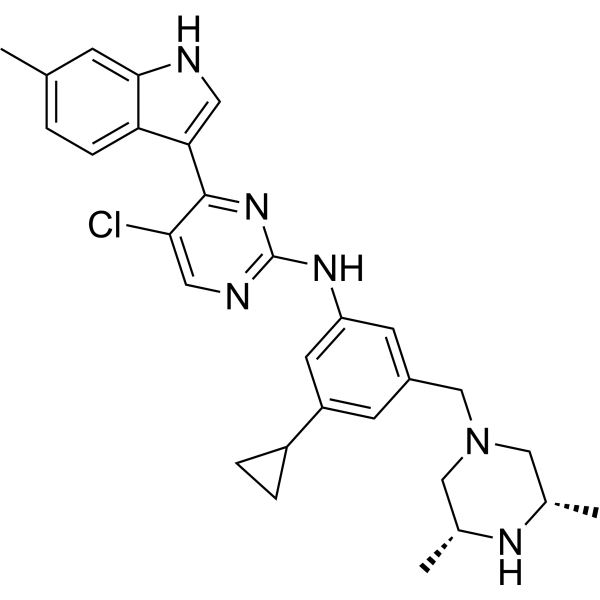
  • HY-145015

    HM43239

    FLT3 Apoptosis Cancer
    Tuspetinib (HM43239) is an orally active and selective FLT3 inhibitor with IC50s of 1.1 nM, 1.8 nM and 1.0 nM for FLT3 WT, FLT3 internal tandem duplication (ITD) and FLT3 D835Y kinases, respectively. Tuspetinib inhibits the kinase activity of FLT3 as a reversible type I inhibitor and modulates p-STAT5, p-ERK, SYK, JAK1/2, and TAK1. Tuspetinib inhibits the proliferation and induces the apoptosis of leukemic cells .
    Tuspetinib
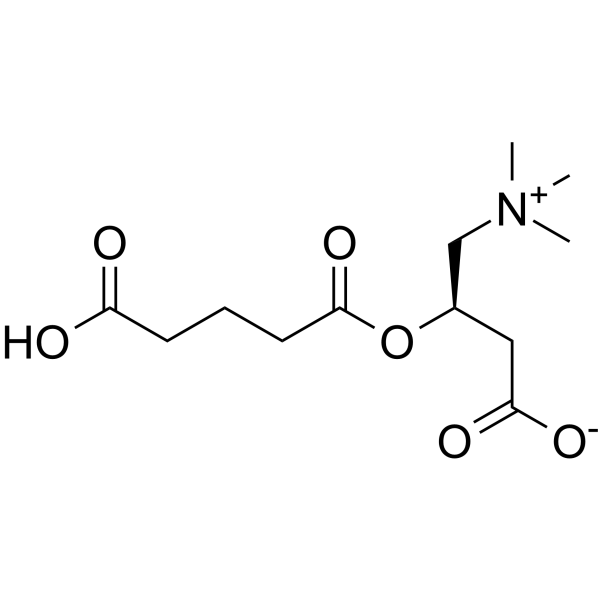
  • HY-113005

    Endogenous Metabolite Metabolic Disease
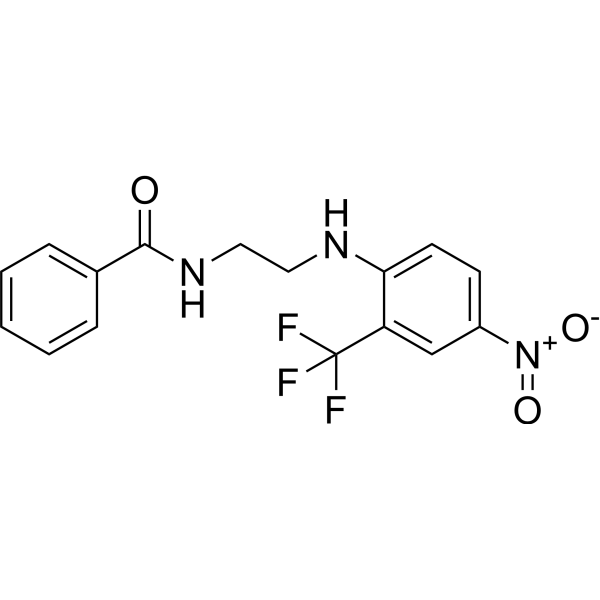
    Glutarylcarnitine is the diagnostic metabolite for malonic aciduria and glutaric aciduria type I monitored in most tandem mass spectrometry newborn screening programmes.
    Glutarylcarnitine
  • HY-172581

    FLT3 Apoptosis Ras p38 MAPK PI3K Akt JAK STAT Cancer
    Clifutinib is an orally active and selective internal tandem duplication mutation of FMS-like tyrosine kinase 3 (FLT3-ITD) inhibitor with an IC50 value of 15.1 nM. Clifutinib exerts strong antiproliferative effects on FLT3-ITD acute myeloid leukemia (AML) cell lines (MV-4-11: IC50 = 1.5 nM; MOLM-13: IC50 = 1.4 nM). Clifutinib inhibits the activity of FLT3-ITD kinase and blocks the downstream RAS/MAPK, PI3K/AKT, and JAK/STAT5 signaling pathways of FLT3. Clifutinib induces apoptosis of acute myeloid leukemia (AML) cells with FLT3-ITD mutations. Clifutinib demonstrates significant antitumor efficacy in mice bearing MV-4-11 or MOLM-13 xenografts. Clifutinib is promising for research of relapsed/refractory FLT3-ITD-positive acute myeloid leukemia .
    Clifutinib
  • HY-141539
    SETDB1-TTD-IN-1
    5 Publications Verification

    Histone Methyltransferase Cancer
    SETDB1-TTD-IN-1 is a potent, selective and endogenous binder competitive ligand of SET domain bifurcated protein 1 tandem tudor domain (SETDB1-TTD) that binds to TTD, with a Kd of 88 nM. SETDB1-TTD-IN-1 increases SETDB1 methyltransferase activity. SETDB1-TTD-IN-1 can be used for the research of biological functions and disease associations of SETDB1-TTD .
    SETDB1-TTD-IN-1
  • HY-126020
    Bractoppin
    3 Publications Verification

    DNA/RNA Synthesis RAD51 Cancer
    Bractoppin is a potent and selective agent-like inhibitor of phosphopeptide recognition by the human BRCA1 tandem(t) BRCT domain (binding IC50: 74 nM). Bractoppin diminishes BRCA1 recruitment to DNA breaks, in turn suppressing damage-induced G2 arrest and assembly of the recombinase, RAD51. Bractoppin preferentially inhibits BRCA1 tBRCT-dependent steps in the DNA damage response .
    Bractoppin
  • HY-P11017

    p38 MAPK Cadherin Inflammation/Immunology
    LNSMGQD is a cyclic peptide fragment derived from desmoglein 1 (amino acids 81-86), which mimics trans-interactions and acts as part of the tandem peptide binding interface of desmoglein 2. LNSMGQD not only binds to desmoglein 1 and 3, but also effectively inhibits their homophilic trans-interactions, while reducing the probability of homophilic or heterophilic binding between desmoglein 2 and Dsc2, N-cadherin and E-cadherin. LNSMGQD is applicable to the research on disease mechanisms such as Crohn's disease and pemphigus vulgaris .
    LNSMGQD
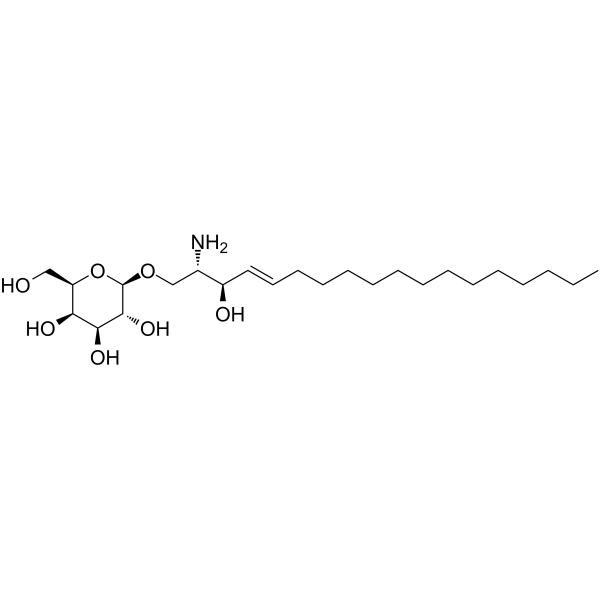
  • HY-136490

    Galactosylsphingosine

    PKC Neurological Disease Cancer
    Psychosine (Galactosylsphingosine), a substrate of the galactocerebrosidase (GALC) enzyme, is a potential biomarker for Krabbe disease . Psychosine is a highly cytotoxic lipid, capable of inducing cell death in a wide variety of cell types including, most relevantly to globoid cell leukodystrophy (GLD), oligodendrocytes. Psychosine causes cell death at least in part via apoptosis. Psychosine also is an inhibitor of PKC .
    Psychosine
  • HY-156257
    UNC9512
    1 Publications Verification

    DNA/RNA Synthesis Cancer
    UNC9512 is a selective 53BP1 inhibitor with an IC50 of 0.46 μM, and a Kd values of 0.17 μM. UNC9512 binds 53BP1 and its tandem Tudor domain, disrupts histone H4 interaction, and inhibits 53BP1 activity. UNC9512 can be used as a probe for DNA damage repair and Gene editing .
    UNC9512
  • HY-P99958

    AMV-564; TandAb T564

    Transmembrane Glycoprotein Cancer
    Vixtimotamab (AMV-564; TandAb T564) is a bispecific tetravalent tandem diabody (TandAb) that targets human CD33 and human CD3 antigens. Vixtimotamab can be used for the research of acute myeloid leukemia (AML) .
    Vixtimotamab
  • HY-125292

    Histone Methyltransferase Ligands for E3 Ligase Cancer
    NV03 is a potent and selective antagonist of Ubiquitin-like with PHD and RING finger domains 1 (UHRF1)-H3K9me3 interaction by binding to UHRF1 tandem tudor domain, with a Kd of 2.4 μM. NV03 is also a ligand for E3 ligase. NV03 can be studied in anticancer research .
    NV03
  • HY-160528
    IBG3
    1 Publications Verification

    Epigenetic Reader Domain Molecular Glues Cancer
    IBG3 is a Molecular glue degrader targeting BRD2 and BRD4, with DC50 values of 8.6 pM and 6.7 pM, respectively. IBG3 binds simultaneously to the tandem bromodomains of BRD2/BRD4, induces intramolecular conformational changes, enhances the affinity of BRD2/BRD4 for DCAF16, and promotes ubiquitination and degradation. IBG3 is applicable to the research of chronic myeloid leukemia .
    IBG3
  • HY-141539A
    SETDB1-TTD-IN-1 TFA
    5 Publications Verification

    Histone Methyltransferase Cancer
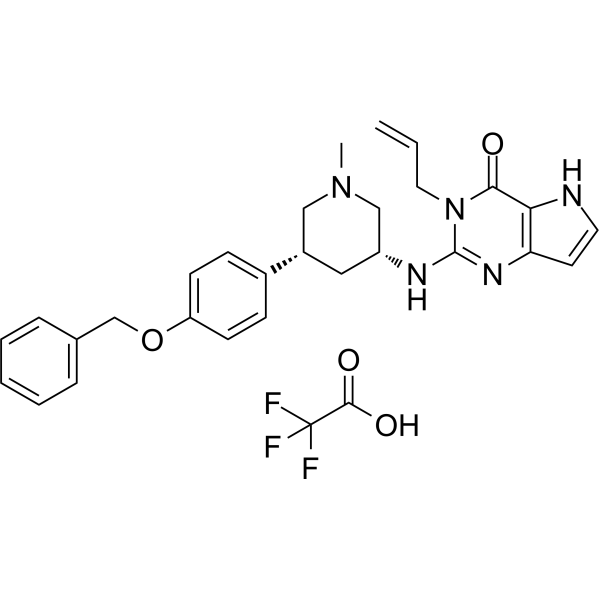
    SETDB1-TTD-IN-1 TFA is a potent, selective and endogenous binder competitive ligand of SET domain bifurcated protein 1 tandem tudor domain (SETDB1-TTD) that binds to TTD, with a Kd of 88 nM. SETDB1-TTD-IN-1 TFA increases SETDB1 methyltransferase activity. SETDB1-TTD-IN-1 TFA can be used for the research of biological functions and disease associations of SETDB1-TTD .
    SETDB1-TTD-IN-1 TFA
  • HY-139064

    Potassium Channel Neurological Disease Inflammation/Immunology
    NPBA, a potassium K2P channel TASK-3 (KCNK9) agonist, is a tandem pore domain weak inward rectifying K + channel (TWIK2) channel blocker. NPBA suppresses NLRP3 inflammasome activation in macrophages .
    NPBA
  • HY-170361

    Methylenetetrahydrofolate Dehydrogenase (MTHFD) Cancer
    MTHFD2-IN-5 (Compound 16e) is a selective MTHFD2 inhibitor with an IC50 of 66 nM. MTHFD2-IN-5 selectively inhibits MTHFD2. MTHFD2-IN-5 exhibits anticancer activity against acute myeloid leukemia. MTHFD2-IN-5 acts synergistically with Alimta to inhibit the proliferation of acute myeloid leukemia cells .
    MTHFD2-IN-5
  • HY-113005A

    Endogenous Metabolite Metabolic Disease
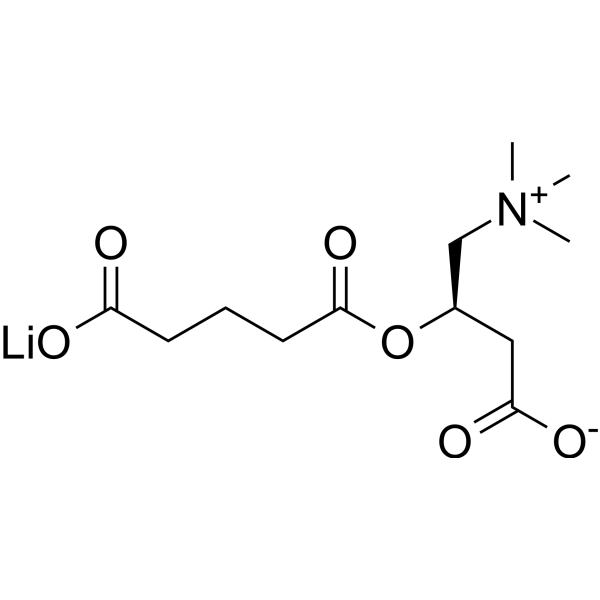
    Glutarylcarnitine lithium is the diagnostic metabolite for malonic aciduria and glutaric aciduria type I monitored in most tandem mass spectrometry newborn screening programmes .
    Glutarylcarnitine lithium
  • HY-113005S

    Isotope-Labeled Compounds Endogenous Metabolite Metabolic Disease
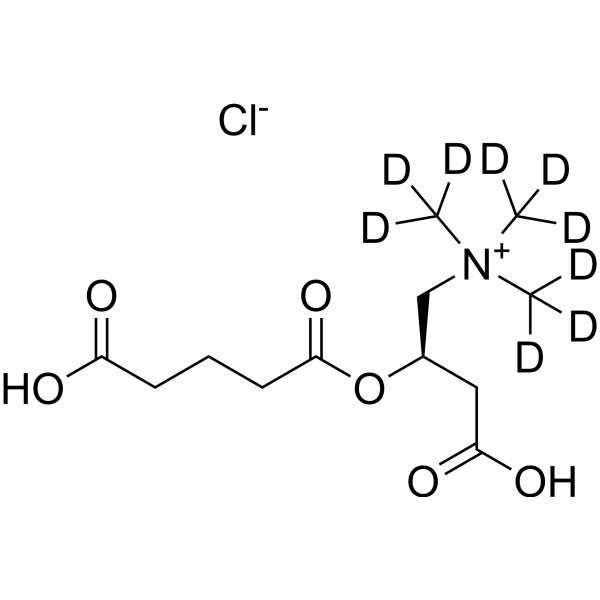
    Glutarylcarnitine-d9 (chloride) is the deuterium labeled Glutarylcarnitine chloride. Glutarylcarnitine is the diagnostic metabolite for malonic aciduria and glutaric aciduria type I monitored in most tandem mass spectrometry newborn screening programmes.
    Glutarylcarnitine-d9 chloride
  • HY-131230

    Target Protein Ligand-Linker Conjugates Cancer
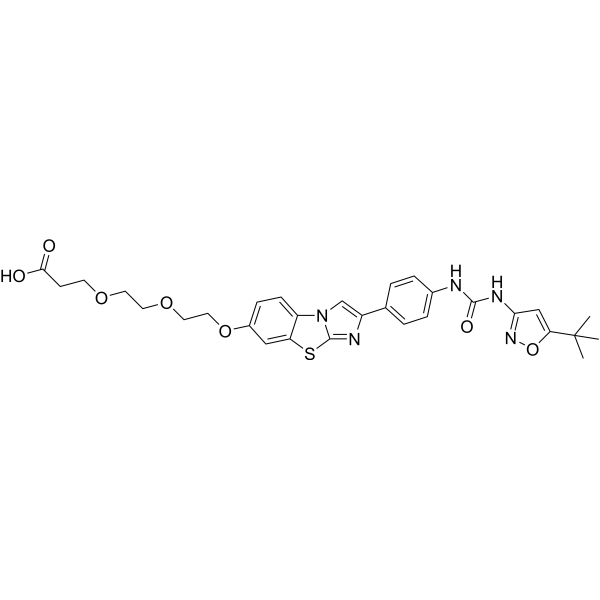
    Desmorpholinyl Quizartinib-PEG2-COOH incorporates a ligand for FLT-3, and a PEG-based PROTAC linker. Desmorpholinyl Quizartinib-PEG2-COOH can be used in the synthesis of PROTAC FLT-3 degrader 1 (HY-114323). PROTAC FLT-3 degrader 1 is a PROTAC FLT-3 internal tandem duplication (ITD) degrader with an IC50 0.6 nM .
    Desmorpholinyl Quizartinib-PEG2-COOH
  • HY-110026

    FLT3 Cancer
    GTP-14564 is a tyrosine kinase inhibitor targeting to internal tandem duplication (ITD) and FLT3. GTP-14564 inhibits FLT3 ligand-dependent growth in Ba/F3 leukemia cells .
    GTP-14564
  • HY-111249

    FLT3 Cancer
    TTT 3002 is a potent and orally active FLT3 inhibitor. TTT 3002 potently inhibits FLT3 phosphorylation by activating mutations at residue D835, with an IC50 of 0.2 nM. TTT 3002 can be used for AML (acute myeloid leukemia) research .
    TTT 3002
  • HY-145015A

    HM43239 hydrate

    FLT3 Apoptosis Cancer
    Tuspetinib (HM43239) hydrate is an orally active and selective FLT3 inhibitor with IC50s of 1.1 nM, 1.8 nM and 1.0 nM for FLT3 WT, FLT3 internal tandem duplication (ITD) and FLT3 D835Y kinases, respectively. Tuspetinib hydrate inhibits the kinase activity of FLT3 as a reversible type I inhibitor and modulates p-STAT5, p-ERK, SYK, JAK1/2, and TAK1. Tuspetinib hydrate inhibits the proliferation and induces the apoptosis of leukemic cells .
    Tuspetinib hydrate
  • HY-145015B

    HM43239 dihydrochloride

    FLT3 Apoptosis Cancer
    Tuspetinib (HM43239) dihydrochloride is an orally active and selective FLT3 inhibitor with IC50s of 1.1 nM, 1.8 nM and 1.0 nM for FLT3 WT, FLT3 internal tandem duplication (ITD) and FLT3 D835Y kinases, respectively. Tuspetinib dihydrochloride inhibits the kinase activity of FLT3 as a reversible type I inhibitor and modulates p-STAT5, p-ERK, SYK, JAK1/2, and TAK1. Tuspetinib dihydrochloride inhibits the proliferation and induces the apoptosis of leukemic cells .
    Tuspetinib dihydrochloride
  • HY-P2088

    Des-N-tetramethyltriostin A

    Antibiotic Cancer
    TANDEM (Des-N-tetramethyltriostin A) is a synthetic antibiotic drug that has the activity of inhibiting the growth of tumor cells. TANDEM can be used in combination with chemotherapy to enhance the inhibitory effect. TANDEM has shown significant inhibitory effects on a variety of cancer cell lines in in vitro experiments. The structure of TANDEM allows it to effectively target tumor cells during the inhibition process. TANDEM's mechanism of action involves interfering with cell proliferation and survival pathways .
    TANDEM
  • HY-W012890

    Valeric acid hydrazide

    Biochemical Assay Reagents Others
    Pentanehydrazide (Valeric acid hydrazide) is a biochemical reagent that can act as an effective alkylating agent in the copper-catalyzed oxidative cyclization of N-arylacrylamides and participate in the tandem acylation reaction .
    Pentanehydrazide
  • HY-120410

    Biochemical Assay Reagents Neurological Disease
    DL-4662 is a 3,4-dimethoxy derivative that can be identified using techniques such as, GC-EI-MS, LC-tandem mass spectrometry and NMR spectroscopy .
    DL-4662
  • HY-113005R

    Endogenous Metabolite Reference Standards Metabolic Disease
    Glutarylcarnitine (Standard) is the analytical standard of Glutarylcarnitine. This product is intended for research and analytical applications. Glutarylcarnitine is the diagnostic metabolite for malonic aciduria and glutaric aciduria type I monitored in most tandem mass spectrometry newborn screening programmes.
    Glutarylcarnitine (Standard)
  • HY-125831

    Biochemical Assay Reagents Others
    ITIC-4F is an indacenodithienothiophene (IDTT)-based postfullerene electron acceptor. ITIC-4F has broad applicability in high-efficiency binary and ternary single-junction as well as tandem polymer solar cells (PSCs) .
    ITIC-4F
  • HY-162510

    NF-κB Cancer
    SPDZi1 is a potent and selective syntenin inhibitor that binds to PDZ1 and PDZ2 domains of syntenin. SPDZi1 binds to the syntenin PDZ tandem (STNPDZ) with a Kd of 3.6 μM. SPDZi1 suppresses glioblastoma and reduces the activation of NF-κB, a downstream effector of syntenin .
    SPDZi1
  • HY-146680

    FLT3 RET CDK MAP4K Cancer
    FLT3/ITD-IN-4 (Compound 16) is a selective FMS-like tyrosine kinase 3 internal tandem duplications (FLT3-ITD) inhibitor with an IC50 of 2.3 nM. FLT3/ITD-IN-4 can be used for acute myeloid leukemia research .
    FLT3/ITD-IN-4
  • HY-144709

    FLT3 Cancer
    FLT3/ITD-IN-1 (Compound 1) is a potent FLT3 internal tandem duplications (FLT3-ITD) inhibitor with IC50 values of 38.2 nM and 144.1 nM against FLT3 and FLT3-ITD, respectively. FLT3/ITD-IN-1 displays excellent antiproliferative activities against acute myeloid leukemia cell lines .
    FLT3/ITD-IN-1
  • HY-P5472

    Transmembrane Glycoprotein Others
    Tumour-associated MUC1 epitope is a biological active peptide. (This sequence is the hallmark of MUC1 mucin. MUC1 is a highly glycosylated type I transmembrane glycoprotein with a unique extracellular domain consisting of a variable number of tandem repeats (VNTR) of this 20 amino acid peptide. It is overexpressed on the cell surface of many human adenocarcinomas and hematological malignancies, including multiple myeloma and B-cell lymphoma, making MUC1 broadly applicable target for immunotherapeutic strategies.)
    Tumour-associated MUC1 epitope
  • HY-173214

    FLT3 Apoptosis Cancer
    FLT3-ITD-IN-3 (13v), an orally active FLT3-ITD (FLT3 internal tandem duplication) inhibitor, disrupts FLT3 signal transduction and induced G0/G1 cell cycle arrest and apoptosis. FLT3-ITD-IN-3 (13v) is used in the research of acute myeloid leukemia (AML) .
    FLT3-ITD-IN-3
  • HY-123201

    FLT3 Cancer
    KRN383 analog is an analog of KRN383. KRN383 is an orally active Flt3 inhibitor that inhibits the autophosphorylation of Flt3 bearing internal tandem duplications (ITDs) and the Asp835Tyr (D835Y) point mutation with IC50 values of < or =5.9 and 43 nM, respectively. KRN383 also inhibits the proliferation of the ITD-positive cell lines with IC50 values of < or =2.9 nM. KRN383 can be used for the research of acute myeloid leukemia .
    KRN383 analog
  • HY-144711

    FLT3 Cancer
    FLT3/ITD-IN-3 (Compound 19) is a potent FLT3 internal tandem duplications (FLT3-ITD) inhibitor with IC50 values of 0.3, 0.4 and 0.9 nM against FLT3 D835Y, FLT3 and FLT3-ITD, respectively. FLT3/ITD-IN-3 potently inhibits the phosphorylation of FLT3 and displays excellent antiproliferative activities against acute myeloid leukemia cell lines .
    FLT3/ITD-IN-3
  • HY-144710

    FLT3 Cancer
    FLT3/ITD-IN-2 (Compound 17) is a potent FLT3 internal tandem duplications (FLT3-ITD) inhibitor with IC50 values of 0.3, 0.4 and 1.0 nM against FLT3 D835Y, FLT3 and FLT3-ITD, respectively. FLT3/ITD-IN-2 potently inhibits the phosphorylation of FLT3 and displays excellent antiproliferative activities against acute myeloid leukemia cell lines .
    FLT3/ITD-IN-2
  • HY-E70724

    FLT3 Cancer
    FLT3 (FMS-like tyrosine kinase 3, CD135) is a type 3 receptor tyrosine kinase that plays important roles in cell survival, proliferation, and differentiation during normal hematopoiesis. FLT3 is one of the most frequently mutated genes in acute myeloid leukemia (AML). FLT3 ITD is a internal tandem duplication (ITD) mutation of FLT3 that may be present in AML cells. FLT3 ITD Recombinant Human Active Protein Kinase is a recombinant FLT3 ITD protein that can be used to study FLT3 ITD-related functions .
    FLT3 ITD Recombinant Human Active Protein Kinase
  • HY-175473

    FLT3 Apoptosis Cancer
    HI042 is a FMS-like Tyrosine Kinase 3 (FLT3) inhibitor. HI042 shows IC50 values of 0.62 μM for MOLM-13, 0.33 μM for MV4-11, and 0.89 μM for OCI-AML3 cells. HI042 selectively reduces the viability of FLT3-internal tandem duplication (FLT3-|TD) mutations-positive cell lines, induces apoptosis, disrupts cell cycle progression, and diminishes the clonogenic potential. HI042 can be used for the research of acute myeloid leukemia (AML) .
    HI042
  • HY-179840

    Others Metabolic Disease
    Tandem facial amphiphile-1 is a detergent.
    Tandem facial amphiphile-1
  • HY-170576

    FLT3 STAT Apoptosis Cancer
    FLT3-IN-28 (Compound 12y) is an orally active FLT3 inhibitor with antitumor activity. FLT3-IN-28 selectively inhibits cancer cells harboring the FLT3 internal tandem duplication (ITD) mutation, with IC50 values of 85, 290, 130, 65, and 220 nM for BaF3-FLT3-ITD, BaF3-TEL-VEGFR2, MV4-11, MOLM-13, and MOLM-14 cell lines respectively (MV4-11 and MOLM-13/14 are acute myeloid leukemia (AML) cell lines carrying the FLT3-ITD mutation). Additionally, FLT3-IN-28 can downregulate the phosphorylation levels of FLT3 and STAT5 in MOLM-13 cells and induce cell cycle arrest and Apoptosis. FLT3-IN-28 has an oral bioavailability of 19.2% in SD rats and can prolong survival in a dose-dependent manner in NSG mice xenografted with MOLM-13 cells. FLT3-IN-28 holds promise for research in cancer fields related to FLT3-ITD .
    FLT3-IN-28
  • HY-183603

    DNA/RNA Synthesis Cancer
    FRC-222 is a CHD1 tandem chromodomain inhibitor with a Kd of 0.15 μM and an IC50 of 0.18 μM. FRC-222 binds to the H3K4me3 binding site of CHD1 tandem chromodomain via aromatic cage interactions and extended ligand contacts. FRC-222 can be used for the research of prostate cancer[1].
    FRC-222
  • HY-183602

    DNA/RNA Synthesis Cancer
    FRC-303 is a CHD1 inhibitor with a Kd of 0.14 μM and an IC50 of 0.18 μM. FRC-303 binds to the H3K4me3 binding site of CHD1 tandem chromodomain, forms aromatic cage interactions and extended ligand contacts, acts as a methyl-lysine mimic, and occupies natural peptide ligand-binding regions. FRC-303 can be used for the research of prostate cancer .
    FRC-303
  • HY-180588

    ADC Linker Cancer
    RED-601 is a tandem-cleavable ADC linker. RED-601 can be used for synthesis of ADCs, such as XB010 .
    RED-601
  • HY-D3327

    Fluorescent Dye Others
    PE-AF700 is a tandem fluorescent dye used for flow cytometry, consisting of the donor phycoerythrin (PE) and the acceptor Alexa Fluor 700 (AF700) (Ex/Em = 488 nm/715 nm) .
    PE-AF700
  • HY-D3320

    Fluorescent Dye Others
    APC-AF700 is a tandem fluorochrome conjugate for flow cytometry. APC-AF700 can be incorporated into 10-color and 12-color flow cytometry antibody panels (Ex/Em = 633/715 nm) .
    APC-AF700
  • HY-113005AR

    Endogenous Metabolite Reference Standards Metabolic Disease
    Glutarylcarnitine (lithium) (Standard) is the analytical standard of Glutarylcarnitine (lithium). This product is intended for research and analytical applications. Glutarylcarnitine lithium is the diagnostic metabolite for malonic aciduria and glutaric aciduria type I monitored in most tandem mass spectrometry newborn screening programmes .
    Glutarylcarnitine lithium (Standard)
  • HY-127151

    Levophencynonate hydrochloride

    Endogenous Metabolite Neurological Disease
    Levophencynonate is a muscarinic receptor antagonist with anticholinergic activity. The biological activity of levophencynonate makes it a key target for the determination of its concentration in human plasma in medical research. Levophencynonate was analyzed by high performance liquid chromatography tandem mass spectrometry (HPLC-MS/MS) and showed good specificity and linearity .
    R-(-)-Phencynonate hydrochloride
  • HY-135543

    Endogenous Metabolite Neurological Disease
    Levophencynonate is a muscarinic receptor antagonist with anticholinergic activity. The biological activity of levophencynonate makes it a key target for the determination of its concentration in human plasma in medical research. Levophencynonate was analyzed by high performance liquid chromatography tandem mass spectrometry (HPLC-MS/MS) and showed good specificity and linearity .
    Levophencynonate
  • HY-D3328

    Fluorescent Dye Others
    APC-Cy5.5 is a tandem dye widely used in flow cytometry. It consists of the energy donor allophycocyanin (APC) and the energy acceptor Cy5.5, and operates via the fluorescence resonance energy transfer mechanism (Ex/Em = 650 nm/690 nm) .
    APC-Cy5.5
  • HY-D3276

    Fluorescent Dye Others
    PE-Cy7 is a tandem fluorescent dye composed of R-phycoerythrin (PE) coupled with the near-infrared dye Cy7. It is primarily excited by a 488 nm laser, with a maximum emission wavelength of approximately 780 nm. PE-Cy7 is widely used in flow cytometry and immunofluorescence staining.
    PE-Cy7
  • HY-D3330

    Fluorescent Dye Others
    APC-Cy7 is an APC-tandem fluorochrome (allophycocyanin-cyanine 7) and degradable fluorochrome, with maximum absorption at ~650 nm, peak emission at 767 nm when excited by a 633 nm red laser, and cell-dependent degradation. APC-Cy7 undergoes time-dependent degradation (decoupling) when bound to peripheral blood leukocytes, leading to nonspecific APC channel signal, with degradation cell type-dependent. APC-Cy7 shows reduced degradation when immunolabeled cells have inhibited metabolic activity or are incubated with vitamin C. APC-Cy7 serves as a tandem fluorochrome in multiparametric flow cytometry for detection of leukocyte surface proteins when conjugated to specific antibodies (Ex/Em = 650 nm/778 nm) .
    APC-Cy7
  • HY-D3260

    Fluorescent Dye Others
    PerCP-Cy5.5 is a tandem fluorescent dye composed of a polydinoflavin-chlorophyll protein complex (PerCP) coupled with the anthocyanin dye Cy5.5. PerCP-Cy5.5 is widely used in multicolor flow cytometry analysis (Ex/Em = 48/677-695 nm).
    PerCP-Cy5.5

Inquiry Online

Your information is safe with us. * Required Fields.

Salutation


Country or Region *

Applicant Name *


Organization Name *

Department *


Email Address *


Product Name *

Cat. No.


Requested quantity *

Phone Number *


Remarks

Inquiry Online

Inquiry Information

Product Name:
Cat. No.:
Quantity:
MCE Japan Authorized Agent:

