





1. Search Result
Search Result
Pathways Recommended: Stem Cell/Wnt Cell Cycle/DNA Damage
Results for "

acute t cell leukemia

" in MedChemExpress (MCE) Product Catalog:

65

Inhibitors & Agonists

1

Fluorescent Dyes

1

Biochemical Assay Reagents

3

Peptides

13

Inhibitory Antibodies

1

Natural
Products

2

Oligonucleotides

1

GMP Molecules

Cat. No. Product Name Target Research Areas Chemical Structure
  • HY-P9963
    Blinatumomab
    2 Publications Verification

    bscCD19xCD3; AMG-103; MEDI-538; MT-103; BLINCYTO

    CD19 Cancer
    Blinatumomab (Anatumomab) is a bispecific monoclonal antibody with two binding sites, one for CD3E on T cells and one for CD19 on B cells. Blinatumomab can be used in research for acute lymphoblastic leukemia .
    Blinatumomab
  • HY-P99014
    Cusatuzumab
    1 Publications Verification

    ARGX-110

    Fc Receptor (FcR) NF-κB Inflammation/Immunology Cancer
    Cusatuzumab (ARGX-110) is a selective competitive blocker targeting CD70 (with an equilibrium dissociation constant of 17 pM for binding to human CD70). Cusatuzumab also possesses enhanced antibody-dependent cell-mediated cytotoxicity (ADCC) activity. It is a humanized IgG1 monoclonal antibody, artificially synthesized through humanization and genetic engineering modifications (CH2 region mutation to enhance effector function). Cusatuzumab has a dual mechanism of action: firstly, it competitively blocks the interaction between CD70 and CD27, inhibiting the CD27-NF-κB signaling pathway, reducing regulatory T cell (Treg) activation and tumor cell proliferation; secondly, by enhancing binding to FcγRIIIa, it mediates ADCC and antibody-dependent cellular phagocytosis (ADCP), directly lysing CD70-positive tumor cells. Cusatuzumab can efficiently eliminate leukemia stem cells (LSCs), induce tumor cell differentiation and apoptosis, restore immune surveillance, and target CD70-positive tumors. Cusatuzumab is used in the study of acute myeloid leukemia (AML) .
    Cusatuzumab
  • HY-13701
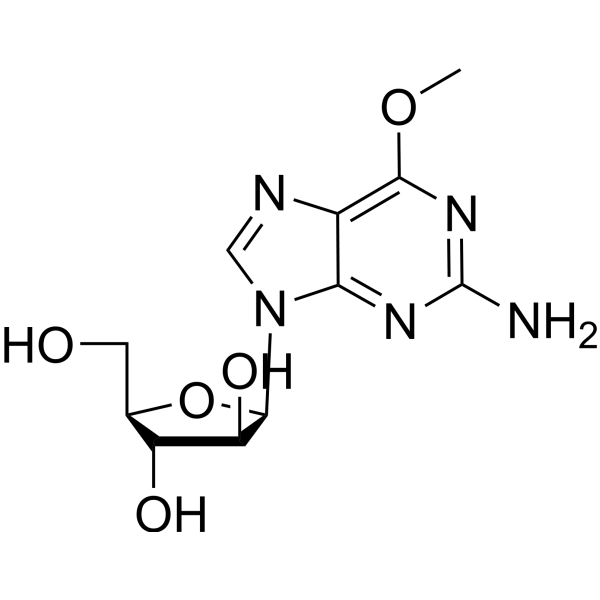
    Nelarabine
    3 Publications Verification

    506U78; GW 506U78; Nelzarabine

    Nucleoside Antimetabolite/Analog Apoptosis Cancer
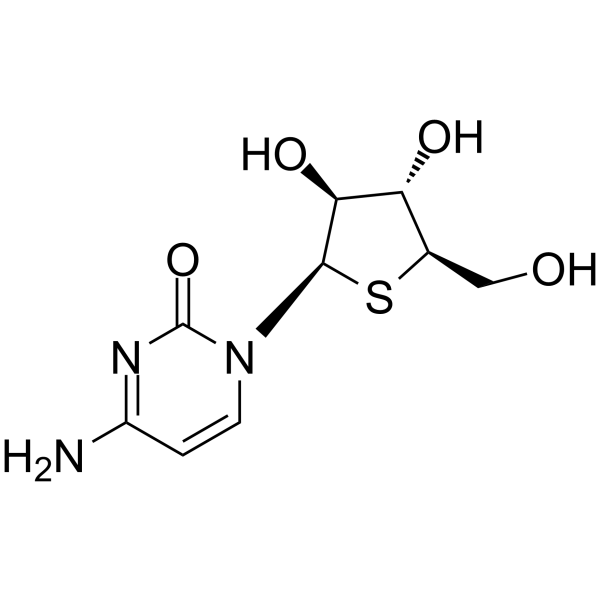
    Nelarabine (506U78) is a nucleoside analogue and can be used for the research of T cell acute lymphoblastic leukemia (T-ALL) .
    Nelarabine
  • HY-P99521

    XmAb14045

    CD3 Inflammation/Immunology Cancer
    Vibecotamab (XmAb14045) is a potent bispecific antibody targeting both CD123 and CD3. Vibecotamab targets T cell-mediated killing of CD123-expressing cells, regardless of T cell antigen specificity. Vibecotamab is a full length immunoglobulin molecule. Vibecotamab can be studied in research for diseases such as Myelodysplastic syndrome and acute myeloid leukemia. Recommend Isotype Control: half-IG G1-kappa/(scFv-heavy-lambda)-h-CH2-CH3 .
    Vibecotamab
  • HY-150725

    IFNAR TNF Receptor Infection Inflammation/Immunology Cancer
    ODN 1585 is a potent inducer of IFN and TNFα production. ODN 1585 is a potent stimulator of NK (natural killer) function. ODN 1585 increases CD8+ T-cell function, including the CD8+ T cell-mediated production of IFN-γ. ODN 1585 induces regression of established melanomas in mice. ODN 1585 can confer complete protection against malaria in mice. ODN 1585 can be used for acute myelogenous leukemia (AML) and malaria research. ODN 1585 can be used as a vaccine adjuvant .
    ODN 1585
  • HY-176244

    Histone Acetyltransferase Cancer
    KI-TOX-A3 is a TOX protein-protein interaction inhibitor that blocks the TOX-KAT7 protein-protein interaction with an IC50 of 0.51 μM. KI-TOX-A3 induces proteasomal degradation of TOX, restores KAT7-mediated H3K14 acetylation, reverses exhaustion of CD8 + T cells, and inhibits the proliferation of T cell acute lymphoblastic leukemia (T-ALL) cells. KI-TOX-A3 shows promise for use in studies of hematological malignancies such as T-ALL .
    KI-TOX-A3
  • HY-P99623

    MGD006; S80880

    CD3 Cancer
    Flotetuzumab (MGD006; S80880) is an investigational CD123/CD3 bispecific dual-affinity retargeting antibody (DART) molecule. Flotetuzumab reactivates T cells by simultaneously binding to CD123 in target cells and CD3 in effector T cells, leading to T-cell-mediated cytotoxicity in target cells. Flotetuzumab shows inhibitory effect on a mouse model of patient-derived xenograft (PDX) in acute myeloid leukemia (AML) .
    Flotetuzumab
  • HY-15815
    Bromosporine
    5 Publications Verification

    Epigenetic Reader Domain Apoptosis CDK HIV Cancer
    Bromosporine, a chemical probe, is a potent BET inhibitor with an IC50 value of 2.1 μM for PCAF. Bromosporine can arrest cell cycle and induce apoptosis in cancer cells. Bromosporine exhibits excellent antitumor activity in xenograft mice model when combined with 5-Fluorouracil (HY-90006). Bromosporine can increase CDK9 T-loop phosphorylation in HIV-1 latency models, resulting the protection of reactivate HIV-1 replication from latency. Bromosporine can be used to research colorectal cancer, acute myeloid leukemia (AML) and AIDS .
    Bromosporine
  • HY-N0444

    Reactive Oxygen Species (ROS) NF-κB HBV Apoptosis Bacterial Fungal Parasite Infection Neurological Disease Metabolic Disease Inflammation/Immunology Cancer
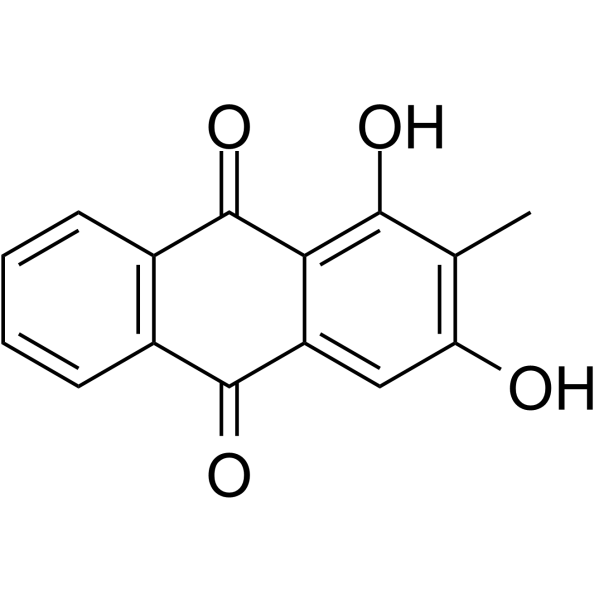
    Rubiadin is an orally active free radical scavenger that inhibits the activation of the NF-κB pathway. Rubiadin inhibits osteoclast formation, bone resorption, lipid peroxidation, HBV DNA replication and cancer cell proliferation; reduces pro-inflammatory cytokine levels; induces cancer cell apoptosis; and possesses antifungal, antimalarial, antibacterial and anticonvulsant activities. Rubiadin can be used in the research of osteoporosis, acute inflammation, chronic inflammation, carbon tetrachloride-induced liver injury, Alzheimer's disease, breast cancer, iron overload disorders, hepatitis B virus infection, colon cancer, liver cancer, T-lymphocytic leukemia, cervical cancer, diabetic nephropathy, epileptic seizures, fungal infections, malaria and bacterial infections .
    Rubiadin
  • HY-P99950

    ALX148

    CD47 Cancer
    Evorpacept (ALX148) is a high-affinity CD47-blocking fusion protein with an inactive human immunoglobulin Fc region. Evorpacept binds to CD47, blocks the interaction of the CD47-SIRPα immune checkpoint, and inhibits the binding of wild-type SIRPα to CD47. Evorpacept is applicable to research related to acute myeloid leukemia .
    Evorpacept
  • HY-P99910

    AMG-330

    CD3 Transmembrane Glycoprotein Inflammation/Immunology Cancer
    Eluvixtamab (AMG-330) is a bispecific T-cell engager. Eluvixtamab binds to CD33 and CD3 on T cells, thereby promoting T cell-mediated cytotoxicity against CD33+ cells. Eluvixtamab can be used in the research of tumors such as relapsed/refractory acute myeloid leukemia .
    Eluvixtamab
  • HY-13660
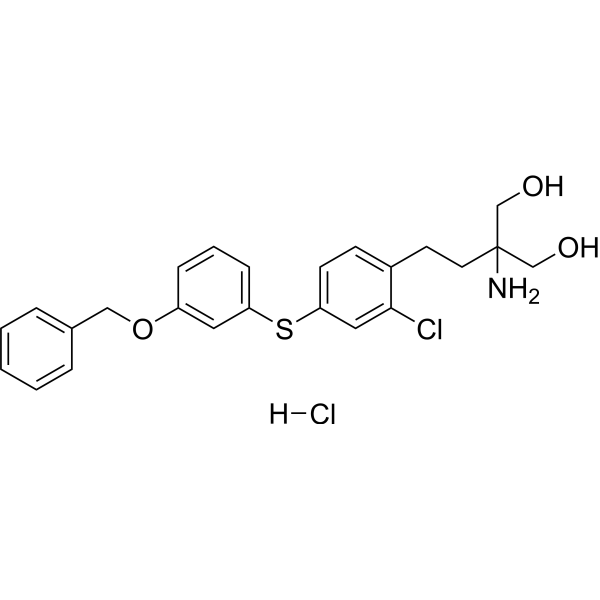
    Mocravimod hydrochloride
    2 Publications Verification

    KRP-203

    LPL Receptor Reactive Oxygen Species (ROS) Akt GSK-3 JAK STAT Metabolic Disease Inflammation/Immunology Cancer
    Mocravimod (hydrochloride) is an orally active sphingosine-1-phosphate receptor (S1PR) modulator that blocks the signal required by T cells to egress from lymph nodes and other lymphoid organs. Mocravimod (hydrochloride) preferentially binds to S1PR1 over S1PR2 and S1PR3 in cardiomyocytes. Mocravimod (hydrochloride) significantly lowered the concentration of reactive oxygen species (ROS), prevented mitochondrial permeability transition pore opening, boosted mitochondrial membrane potential (MMP), and increased phosphorylation of AKT, EKR, GSK-3β, JAK2, and STAT3. Mocravimod (hydrochloride) retains T cell effector function. Mocravimod (hydrochloride) can be used for the study of acute myelogenous leukemia, diabetes and Myocardial Ischemia-Reperfusion Injury (MIRI) .
    Mocravimod hydrochloride
  • HY-109038
    Mocravimod
    2 Publications Verification

    KRP-203 free base

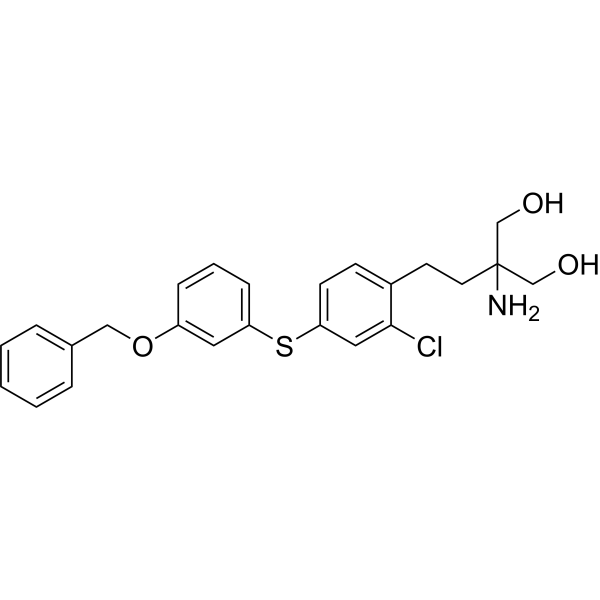
    LPL Receptor Reactive Oxygen Species (ROS) Mitochondrial Metabolism Akt GSK-3 JAK STAT Cardiovascular Disease Metabolic Disease Inflammation/Immunology Cancer
    Mocravimod (KRP-203 free base) is a sphingosine-1-phosphate receptor (S1PR) modulator that blocks the signal required by T cells to egress from lymph nodes and other lymphoid organs. Mocravimod preferentially binds to S1PR1 over S1PR2 and S1PR3 in cardiomyocytes. Mocravimod significantly lowered the concentration of reactive oxygen species (ROS), prevented mitochondrial permeability transition pore opening, boosted mitochondrial membrane potential (MMP), and increased phosphorylation of AKT, EKR, GSK-3β, JAK2, and STAT3. Mocravimod retains T cell effector function. Mocravimod can be used for the study of acute myelogenous leukemia, diabetes and Myocardial Ischemia-Reperfusion Injury (MIRI) .
    Mocravimod
  • HY-175287

    Integrin Cancer
    α5β1 integrin agonist-2 (Compound 2) is a selective α5β1 integrin agonist (EC50 = 45.98 nM). α5β1 integrin agonist-2 induces integrin activation. α5β1 integrin agonist-2 is applicable to the research of leukemia .
    α5β1 integrin agonist-2
  • HY-P99916

    AMG-427

    FLT3 CD3 TNF Receptor Inflammation/Immunology Cancer
    Emirodatamab (AMG-427) is a bispecific T-cell engager (BiTE). Emirodatamab simultaneously binds FLT3 on the surface of acute myeloid leukemia (AML) cells and CD3 on the surface of T cells, thereby precisely recruiting immune effector cells to tumor sites. Emirodatamab potently induces T cell activation, secretion of proinflammatory cytokines (such as IFNγ, TNFα), and specific cytotoxicity, effectively lysing FLT3-positive tumor cells and inhibiting their growth. Emirodatamab not only significantly prolongs survival in mouse xenograft models and eliminates diseased cells in primates, but also exhibits a synergistic enhancement effect when combined with PD-1 blockade therapy. Emirodatamab is used in studies of acute myeloid leukemia, especially relapsed or refractory cases .
    Emirodatamab
  • HY-161828

    PROTACs CDK Cancer
    JWZ-5-13 is a CDK7 PROTAC degrader. JWZ-5-13 inhibits the proliferation of cancer cells. JWZ-5-13 is applicable to the research of ovarian cancer, diffuse large B-cell lymphoma, acute T-lymphoblastic leukemia and non-small cell lung cancer .
    JWZ-5-13
  • HY-103275

    NSC 680410

    Bcr-Abl Apoptosis Cancer
    Adaphostin (NSC 680410), the adamantyl ester of AG957, is a potent p210 bcr/abl inhibitor (IC50=14 μM). Adaphostin induces apoptosis in T-lymphoblastic human leukemia cell lines (IC50 ranging from 17 to 216 nM). Adaphostin has significant and selective activity against chronic and acute myeloid leukemia cells. Adaphostin increased the level of reactive oxygen species (ROS) within CLL B cells .
    Adaphostin
  • HY-P99914

    GNC-038

    PD-1/PD-L1 CD19 TNF Receptor CD3 Interleukin Related IFNAR Inflammation/Immunology Cancer
    Emfizatamab (GNC-038) is a monoclonal antibody against CD19/CD3E/TNFRSF9/PD-L1. Emfizatamab exhibits antitumor activity, being capable of activating CD3 and 4-1BB signals on T cells, as well as targeting the high expression of CD19 or PD-L1 on tumor cells. Emfizatamab functions as a CD19-specific T cell engager by mediating direct antitumor activity. Emfizatamab can also overcome the inhibition of T cells by PD-L1. Emfizatamab can be used in the research of tumors such as R/R non-Hodgkin lymphoma or acute lymphoblastic leukemia .
    Emfizatamab
  • HY-175802

    HYBI-084

    WDR5 Potassium Channel Inflammation/Immunology Cancer
    HBI-2375 (HYBI-084) is a brain-penetrant WDR5 inhibitor with an IC50 of 4.48 nM. HBI-2375 binds to the WINR5 and disrupts MLL1-WDR5 protein-protein interactions. HBI-2375 inhibits cancer cells proliferation and shows anti-tumor activity in AML mouse models, and increases tumor CD8 + cytotoxic T lymphocyte infiltration. HBI-2375 inhibits hERG with an IC50 of 17 µM .
    HBI-2375
  • HY-168022
    CAM2602
    1 Publications Verification

    Aurora Kinase Cancer
    CAM2602 is an orally active Aurora A-TPX2 protein−protein interaction inhibitor with a human Kd of 19 nM for Aurora A. CAM2602 increases the proportion of PH3 positive cells while reducing P-T288 Aurora A levels. CAM2602 arrests tumor xenograft growth in mice. CAM2602 can be used for the research of cancer, such as acute T cell leukemia .
    CAM2602
  • HY-150725C

    TNF Receptor IFNAR Infection Inflammation/Immunology Cancer
    ODN 1585 sodium is a potent inducer of IFN and TNFα production. ODN 1585 sodium is a potent stimulator of NK (natural killer) function. ODN 1585 sodium increases CD8+ T-cell function, including the CD8+ T cell-mediated production of IFN-γ. ODN 1585 sodium induces regression of established melanomas in mice. ODN 1585 sodium can confer complete protection against malaria in mice. ODN 1585 sodium can be used for acute myelogenous leukemia (AML) and malaria research. ODN 1585 sodium can be used as a vaccine adjuvant .
    ODN 1585 sodium
  • HY-P11288

    PACAP Receptor Apoptosis Cancer
    ANT308 is a vasoactive intestinal polypeptide (VIP receptor) antagonist. ANT308 significantly enhances the activation and proliferation of T cells. ANT308 inhibits the migration and metastasis, induces apoptosis of melanoma tumor cells by inhibiting VIP-VPAC2 signaling and reducing the expression of MCAM and N-cadherin. ANT308 can be used for the studies of acute myeloid leukemia (AML) and uveal melanoma (UVM) .
    ANT308
  • HY-P11288A

    PACAP Receptor Apoptosis Cancer
    ANT308 TFA is a vasoactive intestinal polypeptide (VIP receptor) antagonist. ANT308 TFA significantly enhances the activation and proliferation of T cells. ANT308 TFA inhibits the migration and metastasis, induces apoptosis of melanoma tumor cells by inhibiting VIP-VPAC2 signaling and reducing the expression of MCAM and N-cadherin. ANT308 TFA can be used for the study of acute myeloid leukemia (AML) and uveal melanoma (UVM) .
    ANT308 TFA
  • HY-171178

    p38 MAPK Cancer
    DK2403 (compound 25) is a MAP2K7 inhibitor (IC50= 0.01 μM). DK2403 can effectively inhibit MAP2K7 without significantly disrupting the larger kinase group and can be used to study childhood T-cell acute lymphoblastic leukemia .
    DK2403
  • HY-159884

    Tim3 TNF Receptor IFNAR Cancer
    MG-T-19 is an effective TIM-3 inhibitor that can suppress the interaction of TIM-3 with PtdSer, CEACAM1, and Gal-9. MG-T-19 can increase the production of tumor necrosis factor-α (TNF-α) and interferon-γ (IFN-γ) in peripheral blood mononuclear cells (PBMCs) from healthy donors, and enhance the ability of PBMCs to inhibit the proliferation of Kasumi-1 cells (an acute myelogenous leukemia cell line) .
    MG-T-19
  • HY-169789

    PI3K Metabolic Disease Cancer
    PKN3-IN-1 (compound 16) inhibits PKN3 (serine/threonine protein kinase 3) and GAK (cyclin G-associated kinase) with IC50 of 0.014 μM and Ki of 0.0044 μM respectively. PKN3-IN-1 is a potential tool compound to study the cell biology of PKN3 and its role in pancreatic and prostate cancer and T-cell acute lymphoblastic leukemia .
    PKN3-IN-1
  • HY-E70016

    TdT

    DNA/RNA Synthesis Others Cancer
    Terminal deoxyribonucleotidyltransferase (TdT) catalyses the condensation of deoxyribonucleotide triphosphates onto the 3' hydroxyl ends of DNA strands and adds N-regions to gene segment junctions during V(D)J recombination. Terminal deoxyribonucleotidyltransferase is expressed in immature, pre-B, pre-T lymphoid cells, and acute lymphoblastic leukemia/lymphoma cells .
    Terminal deoxyribonucleotidyltransferase
  • HY-164466

    Calcium Channel Notch Cancer
    CAD204520, a SERCA inhibitor (IC50 = 0.34 μM), targets mutated over wild type NOTCH1 proteins in T-cell acute lymphoblastic leukemia (T-ALL) and mantle cell lymphoma (MCL). CAD204520 can be used for T-ALL and MCL research .
    CAD204520
  • HY-162676

    PROTACs Src Cancer
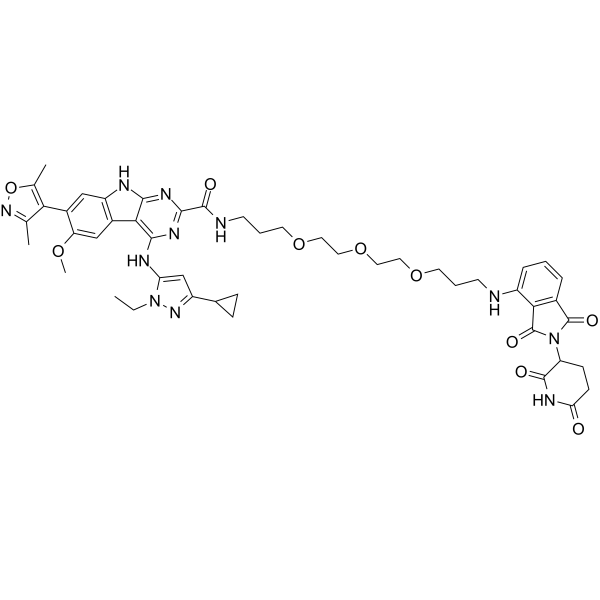
    SJ45566 a potent and orally active PROTAC-based LCK degrader, with a DC50 of 1.21 nM. SJ45566 can be used in the research for TCell Acute Lymphoblastic Leukemia .
    SJ45566
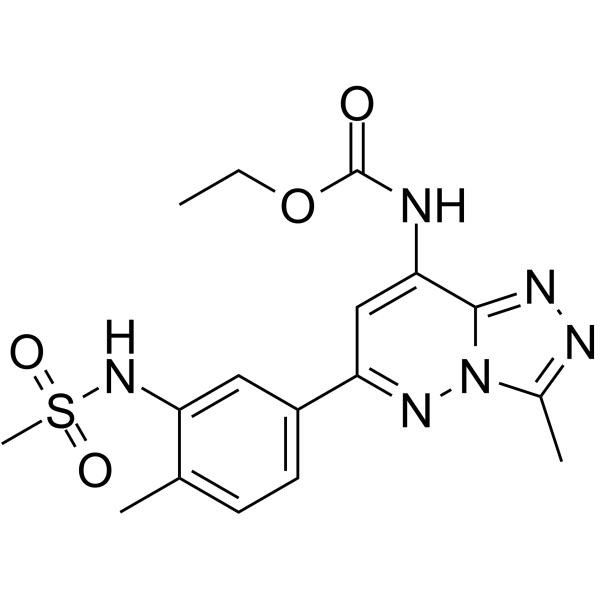
  • HY-175280

    Molecular Glues Src Cancer
    Lck degrader-1 (Compound 17) is a molecular glue degrader targeting lymphocyte-specific protein tyrosine kinase (LCK) (DC50=23.1 nM). Lck degrader-1 is promising for research of T-cell acute lymphoblastic leukemia (T-ALL) .
    Lck degrader-1
  • HY-136522

    Histone Demethylase Apoptosis Cancer
    S2116, a N-alkylated tranylcypromine (TCP) derivative, is a potent lysine-specific demethylase 1 (LSD1) inhibitor. S2116 increases H3K9 methylation and reciprocal H3K27 deacetylation at super-enhancer regions. S2116 induces apoptosis in TCP-resistant T-cell acute lymphoblastic leukemia (T-ALL) cells by repressing transcription of the NOTCH3 and TAL1 genes. S2116 significantly retardes the growth of T-ALL cells in xenotransplanted mice .
    S2116
  • HY-175281

    PROTACs Src Discoidin Domain Receptor Bcr-Abl Apoptosis Cancer
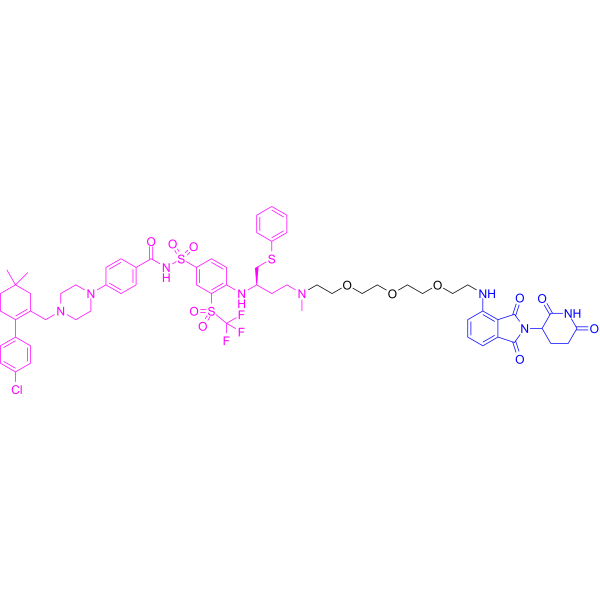
    SJ11646 is a Dasatinib (HY-10181)-based LCK PROTAC degrader with a DC50 of 0.00838 pM. SJ11646 has potent cytotoxicity against LCK-activated T-cell acute lymphoblastic leukemia (T-ALL) cells and primary leukemia samples with drastically prolonged suppression of LCK signaling, and induces T-ALL apoptosis. SJ11646 binds to 51 human kinases with a high affinity (particularly ABL1, KIT, and DDR1). SJ11646 has superior antileukemic efficacy in T-ALL mice model. . Pink: LCK ligand (HY-107447); Blue: CRBN ligase ligand (HY-163169); Black: linker (HY-76667)
    SJ11646
  • HY-P991543

    CD2 Inflammation/Immunology Cancer
    BTI-322 is a human IgG1κ antibody directed against the CD2 antigen on T cells and NK cells. BTI-322 can block primary and memory alloantigen proliferative responses in vitro. BTI-322 recognizes over 90% of E-rosette-forming peripheral blood lymphocytes and T-cell leukemias. BTI-322 has immunosuppressive activity. BTI-322 effectively inhibits T cell responses in vitro to allogeneic cells. BTI-322 can be used as a T-cell deplting agent. BTI-322 can be studied in research for renal allograft rejection and steroid-refractory acute graft-versus-host disease .
    BTI-322
  • HY-179234

    PROTACs RIP kinase Apoptosis Caspase PARP Cancer
    LD5097 is a highly effective and selective PROTAC degrader targeting RIPK1. LD5097 can rapidly and efficiently downregulate RIPK1 and significantly enhance TNFα-mediated apoptosis in Jurkat cells. LD5097 significantly increases the levels of cleaved caspase-3/7 and PARP. LD5097 can be used for the study of acute T-lymphoblastic leukemia .
    LD5097
  • HY-134778

    PD-1/PD-L1 Cancer
    BMS-103 is a PDL1 inhibitor (IC50 = 79.1 nM) (kd = 44 nM). BMS-103 reduces the survival rate of acute T-lymphoblastic leukemia cells and ovarian cells. BMS-103 can be used in research on acute T-lymphoblastic leukemia and cancers such as ovarian cancer .
    BMS-103
  • HY-134779

    PD-1/PD-L1 Cancer
    BMS-142 is a PDL1 inhibitor (IC50 = 96.7 nM) (kd = 13.2 nM). BMS-142 can reduce the survival rate of acute T-lymphoblastic leukemia cells and ovarian cancer cells. BMS-142 can be used in research on cancers such as acute T-lymphoblastic leukemia and ovarian cancer .
    BMS-142
  • HY-136523

    Histone Demethylase Apoptosis Cancer
    S2157, a N-alkylated tranylcypromine (TCP) derivative, is a potent lysine-specific demethylase 1 (LSD1) inhibitor. S2157 increases H3K9 methylation and reciprocal H3K27 deacetylation at super-enhancer regions. S2157 induces apoptosis in TCP-resistant T-cell acute lymphoblastic leukemia (T-ALL) cells by repressing transcription of the NOTCH3 and TAL1 genes. S2157 efficiently pass through the blood-brain barrier and can almost completely eradicate CNS leukemia in mice transplanted with T-ALL cells .
    S2157
  • HY-P990928

    APVO-436

    CD3 Interleukin Related Inflammation/Immunology Cancer
    Mipletamig (APVO-436) is a bispecific CD123 x CD3 monoclonal antibody. Mipletamig simultaneously binds to both CD3-expressing T cells and CD123-expressing cancer cells, thereby crosslinking CD123-expressing tumor cells and cytotoxic T lymphocytes (CTLs). This results in the activation and proliferation of T-cells and causes CTL-mediated cell lysis of CD123-expressing tumor cells. Mipletamig can be used for the study of acute myeloid leukemia (AML) .
    Mipletamig
  • HY-120372

    Notch Cancer
    BMS-871 is an orally active pan-Notch inhibitor with IC50 values ​​of 4/1/4/3 nM for Notch1/2/3/4, respectively. BMS-871 significantly inhibited the proliferation of TALL-1 and MDA-MB-157 cells and demonstrated significant antitumor activity in T-acute lymphoblastic leukemia and triple-negative breast cancer xenograft models. BMS-871 can be used to study leukemia and breast cancer .
    BMS-871
  • HY-P10371

    txCD47

    Reactive Oxygen Species (ROS) Thrombopoietin Receptor Mitochondrial Metabolism HSP HSV CD47 Infection Inflammation/Immunology Cancer
    PKHB1 (txCD47) is a CD47 agonist and Thrombospondin-1 peptide mimetic. PKHB1 activates CD47 and triggers Caspase-independent, calcium-dependent cell death via mitochondrial alterations, ROS production, endoplasmic reticulum morphological changes, and dissipation of mitochondrial membrane potential. PKHB1 induces the exposure of Calreticulin, HSP70, and HSP90, thereby driving immunogenic cell death. PKHB1 promotes intratumoral CD8 + T cell infiltration and inhibits breast tumorigenesis. PKHB1 reduces HSV-1 levels and alleviates the severity of herpes simplex keratitis. PKHB1 can be used in research related to breast cancer, herpes simplex keratitis, and T-cell acute lymphoblastic leukemia .
    PKHB1
  • HY-151194

    Histone Demethylase Cancer
    LSD1/2-IN-4, a PCPA derivative, is an inhibitor of lysine-specific demethylase 1 (LSD1) and lysine-specific demethylase 2 (LSD2). LSD1/2-IN-4 inhibits LSD1 and LSD2 with Ki values of 0.11 μM and 130 μM, respectively. LSD1/2-IN-4 can be used for the research of several cancers including T-cell acute lymphoblastic leukemia (TALL) .
    LSD1/2-IN-4
  • HY-P991328

    Notch Cancer
    MAb604.107 is a human monoclonal antibody (mAb) targeting NOTCH1. MAb604.107 inhibits the proliferation and CD34/CD44 expression of primary T-ALL cells. MAb604.107 has anti-tumor activity in four tumor xenograft mouse models: MDA-MB-231, HCC-1806, BT-474, and HCT-116. MAb604.107 can be used in T acute lymphoblastic leukemia research .
    MAb604.107
  • HY-13701R

    506U78 (Standard); GW 506U78 (Standard); Nelzarabine (Standard)

    Reference Standards Nucleoside Antimetabolite/Analog Apoptosis Cancer
    Nelarabine (Standard) is the analytical standard of Nelarabine. This product is intended for research and analytical applications. Nelarabine (506U78) is a nucleoside analogue and can be used for the research of T cell acute lymphoblastic leukemia (T-ALL) .
    Nelarabine (Standard)
  • HY-149981

    P-glycoprotein Cancer
    P-gp inhibitor 13 is a P-gp inhibitor. P-gp inhibitor 13 can reverse P-glycoprotein-mediated paclitaxel resistance in A2780/T cell. P-gp inhibitor 13 can be used for the research of advanced acute myeloid leukemia .
    P-gp inhibitor 13
  • HY-112255

    Glucocorticoid Receptor Cancer
    J9 is a small molecule that reverses Dexamethasone (HY-14648) resistance in T-cell acute lymphoblastic leukemia. J9 is lethal to CUTLL1 cells only in the presence of Dexamethasone. J9 inhibits CUTLL1 cell growth with an EC50 of 28 μM in combination with Dexamethasone .
    J9
  • HY-103275R

    NSC 680410 (Standard)

    Reference Standards Bcr-Abl Apoptosis Cancer
    Adaphostin (Standard) is the analytical standard of Adaphostin. This product is intended for research and analytical applications. Adaphostin (NSC 680410), the adamantyl ester of AG957, is a potent p210bcr/abl inhibitor (IC50=14 μM). Adaphostin induces apoptosis in T-lymphoblastic human leukemia cell lines (IC50 ranging from 17 to 216 nM). Adaphostin has significant and selective activity against chronic and acute myeloid leukemia cells. Adaphostin increased the level of reactive oxygen species (ROS) within CLL B cells .
    Adaphostin (Standard)
  • HY-169067

    Mtx-C

    DNA/RNA Synthesis p38 MAPK Bacterial Infection Cancer
    10-Methoxy-canthin-6-one (Mtx-C) is analkaloid derivative. 10-Methoxy-canthin-6-one can induce DNA damage by intercalating into DNA. 10-Methoxy-canthin-6-one can inhibit cancer cells proliferation, cause G2/M phase arrest and induce myeloid differentiation. T10-Methoxy-canthin-6-one can upregulate the expression of myeloperoxidase, CD15, CD11b, and CD14, as well as activation of p38 MAPK. 10-Methoxy-canthin-6-one also exhibits anti-bacterial activity. 10-Methoxy-canthin-6-one can be used for the researches of cancer and infection, such as acute myeloid leukemias (AML) .
    10-Methoxy-canthin-6-one
  • HY-182081

    Microtubule/Tubulin Interleukin Related Cancer
    Tubulin polymerization-IN-90 is a tubulin polymerization inhibitor. Tubulin polymerization-IN-90 disrupts tubulin polymerization by binding to the nocodazole-binding site on β-tubulin. Tubulin polymerization-IN-90 induces the release of extracellular vesicles marked by the tetraspanin CD63. Tubulin polymerization-IN-90 induces the release of IL-8 from cells. Tubulin polymerization-IN-90 reduces the viability of cancer cells. Tubulin polymerization-IN-90 can be used in the research of cancers such as acute T-lymphoblastic leukemia .
    Tubulin polymerization-IN-90
  • HY-P992389

    LILRB Cancer
    IO-202 is a high-affinity LILRB4/ILT3 binder and myeloid checkpoint inhibitor. IO-202 blocks APOE binding and LILRB4 activation to reverse T-cell suppression and enhance T-cell cytotoxicity, while eliminating LILRB4-high-expressing leukemic blasts via ADCC and ADCP mechanisms. IO-202 promotes dendritic cell maturation and antigen presentation, reshapes the phenotype of tumor-associated macrophages, and reduces myeloid-derived suppressor cells. IO-202 is widely applicable to research on relapsed/refractory acute myeloid leukemia (AML), chronic myelomonocytic leukemia (CMML), and solid tumors .
    IO-202
  • HY-181685

    LAG-3 TNF Receptor Cancer
    LAGi-DEL is a LAG-3 inhibitor, with Kd values of 97.33 nM and 271 nM in surface plasmon resonance (SPR) assay and microscale thermophoresis (MST) assay, respectively. LAGi-DEL blocks the LAG-3/MHC-II interaction, with an EC50 of 138 nM. LAGi-DEL restores T cell activation, enhances IFN-γ secretion and promotes immune-mediated cytotoxicity. LAGi-DEL can be used in the research of acute myeloid leukemia, lung cancer and melanoma .
    LAGi-DEL

Inquiry Online

Your information is safe with us. * Required Fields.

Salutation


Country or Region *

Applicant Name *


Organization Name *

Department *


Email Address *


Product Name *

Cat. No.


Requested quantity *

Phone Number *


Remarks

Inquiry Online

Inquiry Information

Product Name:
Cat. No.:
Quantity:
MCE Japan Authorized Agent:

