



Evorpacept

Based on 1 Customer Validation
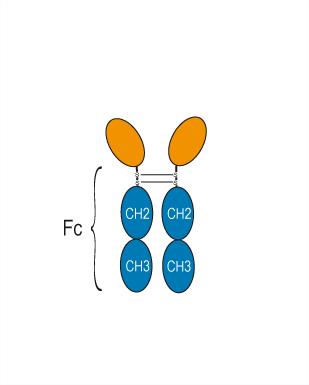
Evorpacept (ALX148) is a high-affinity CD47-blocking fusion protein with an inactive human immunoglobulin Fc region. Evorpacept binds to CD47, blocks the interaction of the CD47-SIRPα immune checkpoint, and inhibits the binding of wild-type SIRPα to CD47. Evorpacept is applicable to research related to acute myeloid leukemia.
For research use only. We do not sell to patients.
- Purity : 99.75%
- CAS No.: 2484949-51-9
- Molecular Weight:76.61 kDa
-
Storage:
Please store the product under the recommended conditions in the Certificate of Analysis.


To place orders, for customer services and technical support, please contact: MedChemExpress USA
Tel: 609-228-6898 E-mail: [email protected] [email protected]


-
 Biological Activity
-
Chemical Information
- Protocols
- Purity & Documentation
- References
-
 Help & FAQs






Biological Activity
Description
IC50 & Target
CD47
In Vitro
Evorpacept (ALX148) binds to the CD47-ECD of humans, cynomolgus monkeys, mice and rats with high affinity, and its affinity for human CD47 reaches the picomolar level at 25°C (Kd = 140 pM)[1].
Evorpacept (20 nM; 15 min on ice) binds to CD47 expressed on the surface of OE19, DLD-1, MM1.R, Raji, Z138, Daudi, CT26, and MC38 tumor cells[1].
Evorpacept (12.5 nM; 15 min on ice) blocks the binding of wild-type SIRPα to CD47 on Jurkat tumor cells by over 90%[1].
Evorpacept binds to human FcRn at 25°C, with a Kd of approximately 580 nM[1].
Evorpacept, when combined with Trastuzumab (HY-P9907), Cetuximab (HY-P9905), Daratumumab (HY-P9915) or Obinutuzumab (HY-P9910), enhances the antibody-dependent phagocytosis of OE19, DLD-1, MM1.R and Daudi tumor cells by human monocyte-derived macrophages[1].
MedChemExpress (MCE) has not independently confirmed the accuracy of these methods. They are for reference only.
In Vivo
Evorpacept (ALX148) (30 mg/kg; i.p.; two doses; 10 days apart) enhances the antitumor efficacy of anti-PD-L1 in female C57BL/6 mice bearing MC38 colon carcinoma, driving significant tumor growth inhibition, prolonged survival, and a robust intratumoral adaptive immune response[1].
Evorpacept (ALX148) (30 mg/kg; i.p.; single dose) modulates innate and adaptive immune responses, and enhances the antitumor efficacy of anti-PD-1 in female BALB/c mice bearing CT26 colon carcinoma, driving significant tumor growth inhibition, prolonged survival, and reduced immune suppression in the tumor microenvironment[1].
Evorpacept (ALX148) (10-30 mg/kg; i.p.; single dose) achieves dose-dependent CD47 occupancy in splenic and tumor tissues of female BALB/c mice bearing CT26-M/H HER2 tumors, with 30 mg/kg achieving near-maximal tumor CD47 occupancy and prolonged systemic exposure[1].
Evorpacept (ALX148) (10-30 mg/kg; i.v.; single dose) achieves complete CD47 occupancy on circulating T lymphocytes, with dose-dependent persistence of occupancy in female cynomolgus monkeys[1].
Evorpacept (ALX148) (i.p.; two doses; 5 days apart) in combination with anti-4-1BB significantly enhances survival in female BALB/c mice bearing CT26 colon carcinoma, compared to PBS[1].
Evorpacept synergizes with multiple antibody agents to boost tumor suppression and survival in diverse tumor models, whereas its monotherapy shows weak efficacy; it also reprograms CT26 tumor-associated macrophages into antitumor phenotypesy[3].
MedChemExpress (MCE) has not independently confirmed the accuracy of these methods. They are for reference only.
-
Animal Model:C57BL/6 (female, 6-8 weeks old, subcutaneous implantation of 0.5×10⁶ MC38 tumor cells)[1]
-
Dosage:30 mg/kg
-
Administration:i.p.; two doses; 10 days apart
-
Result:Showed minimal single-agent tumor growth inhibition.
Resulted in significantly enhanced tumor growth inhibition compared to anti-PD-L1 alone.
Significantly increased survival compared to PBS.
Significantly increased tumor-infiltrating CD8+ T cells, CD4+ T cells, effector memory CD8+ T cells, effector memory CD4+ T cells, IFNγ-expressing CD8+ T cells, and granzyme B-expressing CD8+ T cells compared to vehicle control.
-
Animal Model:BALB/c (female, 6-8 weeks old, subcutaneous implantation of 0.5×10⁶ CT26 tumor cells)[1]
-
Dosage:30 mg/kg
-
Administration:i.p.; single dose
-
Result:Showed minimal single-agent tumor growth inhibition.
Resulted in significantly enhanced tumor growth inhibition compared to anti-PD-1 alone.
Significantly increased survival.
Resulted in a nearly 3-fold increase in the ratio of M1 to M2 tumor-associated macrophages and a 4-fold decrease in splenic CD8- dendritic cells (DCs) compared to vehicle control.
Upregulated the activation marker CD86 on splenic CD8+ and CD8- DCs, increased splenic effector memory CD4+ T cells, central memory CD4+ T cells, central memory CD8+ T cells, KLRG1 expression on CD8+ T cells, and AH1-specific tumor-reactive CD8+ T cells compared to vehicle control.
Resulted in a 2.5-fold increase in the M1 to M2 macrophage ratio, a 1.7-fold decrease in monocytic myeloid-derived suppressor cells, a 2.2-fold increase in splenic CD8+ DCs, and increased IFNγ expression in tumor-infiltrating CD8+ T cells.
-
Animal Model:BALB/c (female, 6-8 weeks old, subcutaneous implantation of 0.5×10⁶ CT26-M/H HER2 tumor cells)[1]
-
Dosage:10, 30 mg/kg
-
Administration:i.p.; single dose
-
Result:Achieved dose-dependent CD47 occupancy in splenic and tumor tissues of female BALB/c mice bearing CT26-M/H HER2 tumors, with 30 mg/kg achieving near-maximal tumor CD47 occupancy and prolonged systemic exposure.
Conjugated
Unconjugated
Reconsititution
The product can be reconstituted/diluted with sterile PBS or saline.
Format
-
Homo sapiens SIRPA (signal regulatory protein alpha, SHPS1, SIRP, SIRPalpha)-IGHG1 (Fc (Fragment constant)
Application
ELISA, FACS, Functional assay


Chemical Information
-
CAS No. 2484949-51-9
-
Appearance Liquid
-
Molecular Weight 76.61 kDa
-
Color Colorless to light yellow
-
SMILES
[Evorpacept]
-
Synonyms
ALX148
-
Shipping
Shipping with dry ice.
-
Formulation
Please refer to the lot-specific COA for specific buffer information.
-
Storage
Please store the product under the recommended conditions in the Certificate of Analysis.


Purity & Documentation
-
Data Sheet (267 KB)
-
SDS (251 KB)
- English - EN (251 KB)
- Français - FR (251 KB)
- Deutsch - DE (251 KB)
- Norwegian - NO (251 KB)
- Español - ES (251 KB)
- Swedish - SV (251 KB)
- Italian - IT (251 KB)
- Korean - KR (251 KB)
- Portuguese - PT (251 KB)
-
Inhibitory Antibodies User Guide (603 KB)
References
[1]. Kauder SE, et al. ALX148 blocks CD47 and enhances innate and adaptive antitumor immunity with a favorable safety profile. PLoS One. 2018;13(8):e0201832. Published 2018 Aug 22. [Content Brief]
[3]. Kim TM, et al. Evorpacept plus rituximab for the treatment of relapsed or refractory non-Hodgkin lymphoma: results from the phase I ASPEN-01 study. Haematologica. 2025;110(9):2102-2112. [Content Brief]

Calculators
Concentration (start) × Volume (start) = Concentration (final) × Volume (final)


Evorpacept Related Classifications
HY-P99950 Related Classifications
 Powered by Bioz