Search Result
Results for "
anti-histamine agent
" in MedChemExpress (MCE) Product Catalog:
14
Isotope-Labeled Compounds
| Cat. No. |
Nom du produit |
Target |
Áreas de investigación |
Chemical Structure |
-
- HY-12532
-
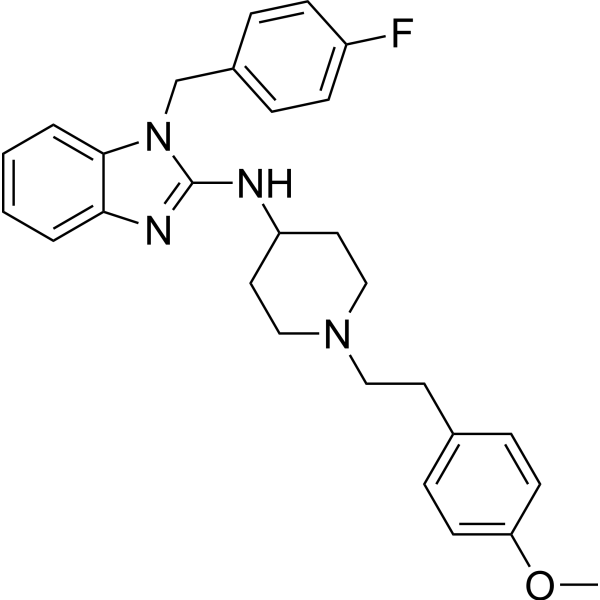
Astemizole
Maximum Cited Publications
8 Publications Verification
R 43512
|
Histamine Receptor
Potassium Channel
|
Inflammation/Immunology
Endocrinology
|
|
Astemizole (R 43512), a second-generation antihistamine agent to diminish allergic symptoms with a long duration of action, is a histamine H1-receptor antagonist, with an IC50 of 4 nM. Astemizole also shows potent hERG K + channel blocking activity with an IC50 of 0.9 nM. Astemizole has antipruritic effects .
|
-
-
- HY-B0520A
-
|
Benzatropine mesylate; Benzotropine mesylate; Benztropine methanesulfonate
|
Dopamine Receptor
mAChR
Histamine Receptor
|
Infection
Neurological Disease
Metabolic Disease
Cancer
|
|
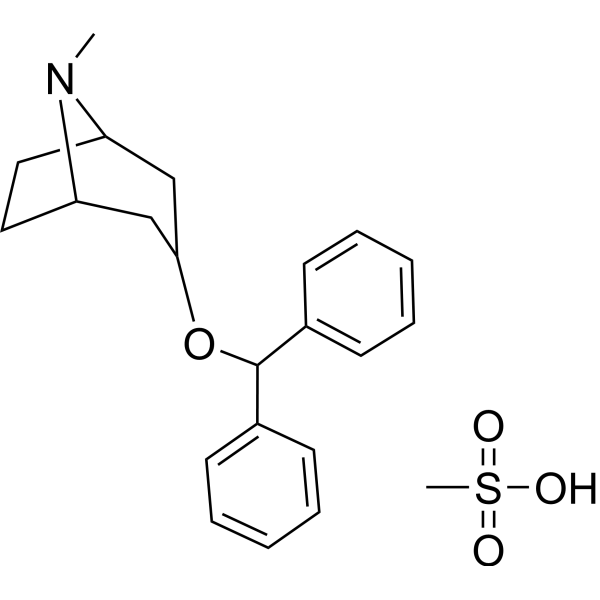
Benztropine mesylate (Benzatropine mesylate) is an orally active and BBB-permeable centrally acting anticholinergic agent that can be used for Parkinson's disease research. Benztropine mesylate is an anti-histamine agent and a dopamine re-uptake inhibitor. Benztropine mesylate is also a human D2 dopamine receptor allosteric antagonist. Benztropine mesylate also has anti-CSCs (cancer stem cells) effects .
|
-
-
- HY-B0349
-
|
Meclozine dihydrochloride
|
Histamine Receptor
Apoptosis
|
Neurological Disease
Endocrinology
Cancer
|
|
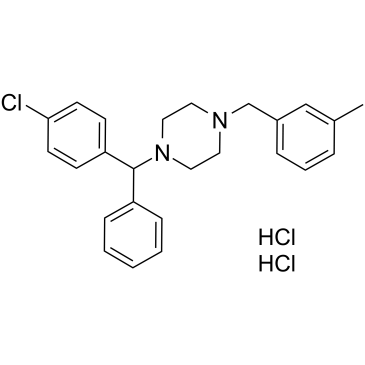
Meclizine (Meclozine) dihydrochloride, an antihistamine, reversibly inhibits the interaction of histamine at the H1 receptors. Meclizine dihydrochloride is a member of the piperazine class of H1 antagonists. Meclizine dihydrochloride is an effective anti-motion sickness agent. Meclizine dihydrochloride crosses the blood-brain barrier. Meclizine dihydrochloride can be used for the research of polyQ toxicity disorders, such as Huntington's disease. Meclizine dihydrochloride is an agonist ligand for mouse constitutive androstane receptor (CAR) and an inverse agonist for Human CAR .
|
-
-
- HY-B0548
-
|
|
Histamine Receptor
|
Inflammation/Immunology
Endocrinology
|
|
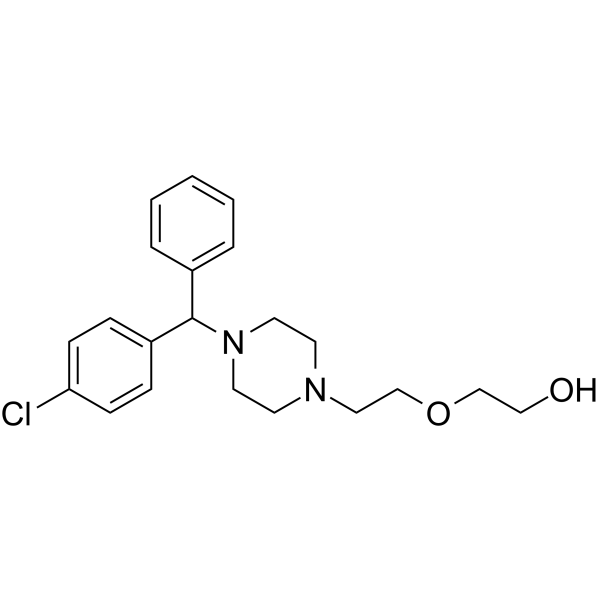
Hydroxyzine, a benzodiazepine antihistamine agent, acts as an orally active histamine H1-receptor and serotonin antagonist.
Hydroxyzine has anxiolytic effect and can be used for the research of generalised anxiety disorder .
|
-
-
- HY-W010841
-
|
(R)-Cetirizine dihydrochloride
|
Histamine Receptor
|
Inflammation/Immunology
Endocrinology
Cancer
|
|
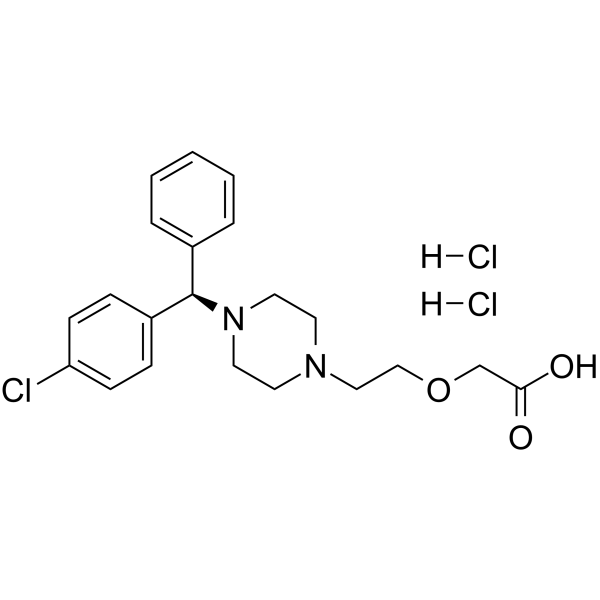
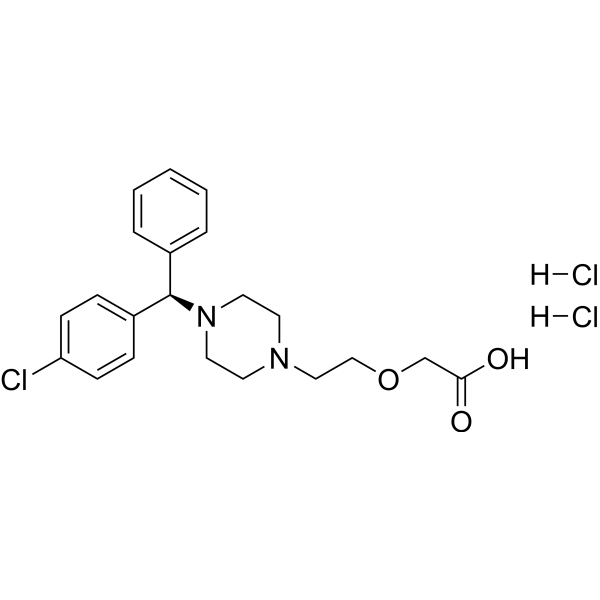
Levocetirizine dihydrochloride ((R)-Cetirizine dihydrochloride) is a third-generation peripheral H1-receptor antagonist. Levocetirizine dihydrochloride is an antihistaminic agent which is the R-enantiomer of Cetirizine. Levocetirizine dihydrochloride has a higher affinity for the histamine H1-receptor than (S)-Cetirizine and can effectively treat allergic rhinitis and chronic idiopathic urticaria .
|
-
-
- HY-Y0546
-
|
|
Environmental Pollutants
Endogenous Metabolite
Photosensitizer
|
Cancer
|
|
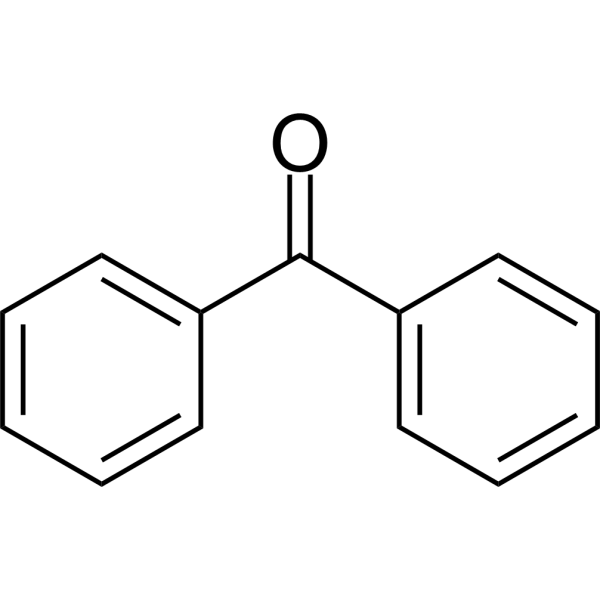
Benzophenone is an endogenous metabolite. Benzophenone is a photosensitizer, that absorbs UV light, transfers its energy to DNA, and triggers DNA damage. Benzophenone can be used as the fragrance enhancer, ultraviolet curing agent, additive in plastics, or the flavor ingredient. Benzophenone can also be used in the manufacturing of insecticides, agricultural chemicals, hypnotics, antihistamines, and other pharmaceuticals. Benzophenone exhibits certain carcinogenicity in mouse/rat models under long term exposure. Benzophenone exhibits estrogenic activity .
|
-
-
- HY-B0548A
-
|
|
Histamine Receptor
|
Inflammation/Immunology
Endocrinology
|
|
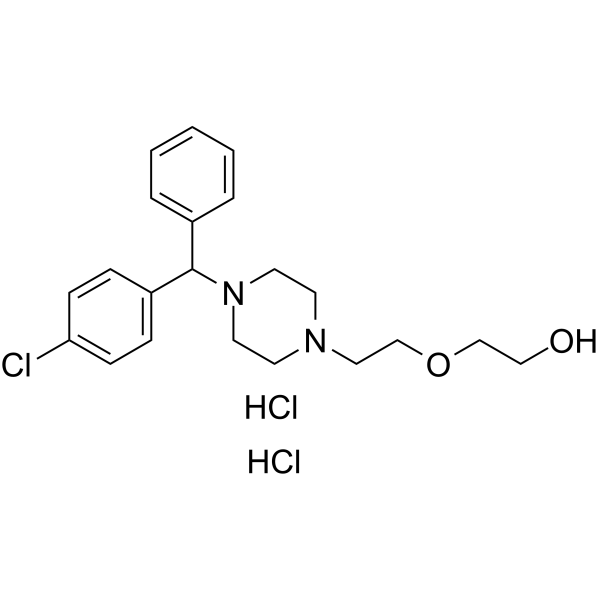
Hydroxyzine dihydrochloride, a benzodiazepine antihistamine agent, acts as a orally active histamine H1-receptor and serotonin antagonist. Hydroxyzine dihydrochloride has anxiolytic effect and can be used forthe research of generalised anxiety disorder .
|
-
-
- HY-B0814
-
|
(R)-Cetirizine
|
Histamine Receptor
|
Inflammation/Immunology
Endocrinology
Cancer
|
|
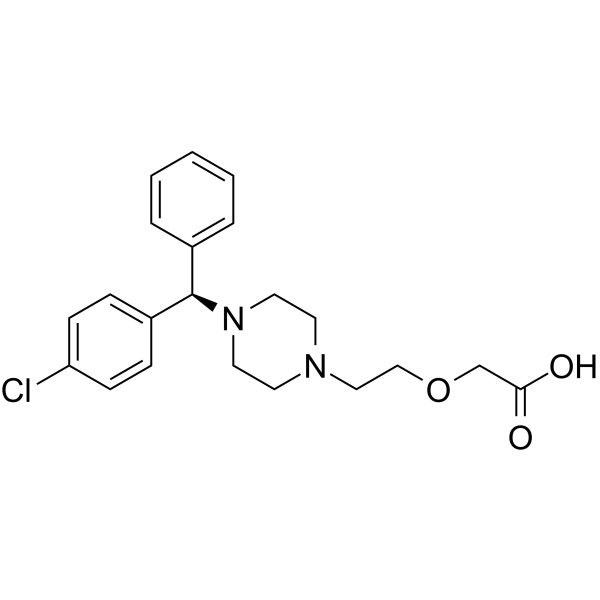
Levocetirizine ((R)-Cetirizine) is a third-generation peripheral H1-receptor antagonist. Levocetirizine is an antihistaminic agent which is the R-enantiomer of Cetirizine. Levocetirizine has a higher affinity for the histamine H1-receptor than (S)-Cetirizine and can effectively treat allergic rhinitis and chronic idiopathic urticaria .
|
-
-
- HY-B0970
-
|
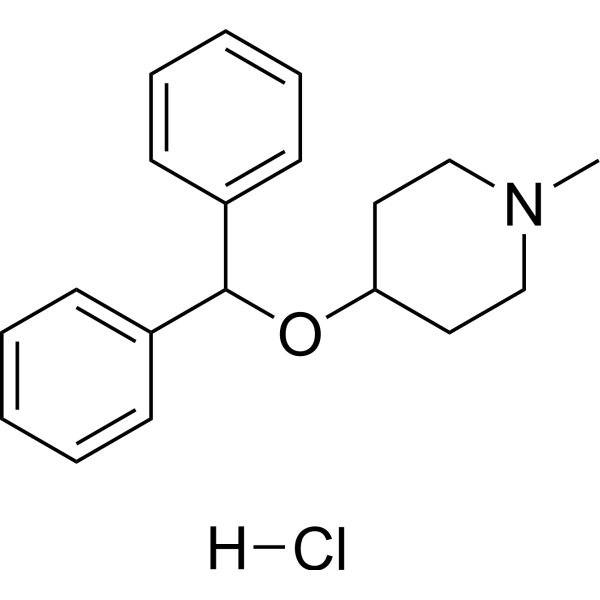
4-Diphenylmethoxy-1-methylpiperidine hydrochloride
|
Histamine Receptor
|
Neurological Disease
Endocrinology
|
|
Diphenylpyraline hydrochloride is a potent histamine H1?receptor antagonist. Diphenylpyraline hydrochloride acts as an orally active antihistamine agent?with antimuscarinic and antiallergic effects. Diphenylpyraline hydrochloride can be used for the relief of allergic conditions including rhinitis and hay fever, and in pruritic skin disorders in vivo.
|
-
-
- HY-B0520
-
|
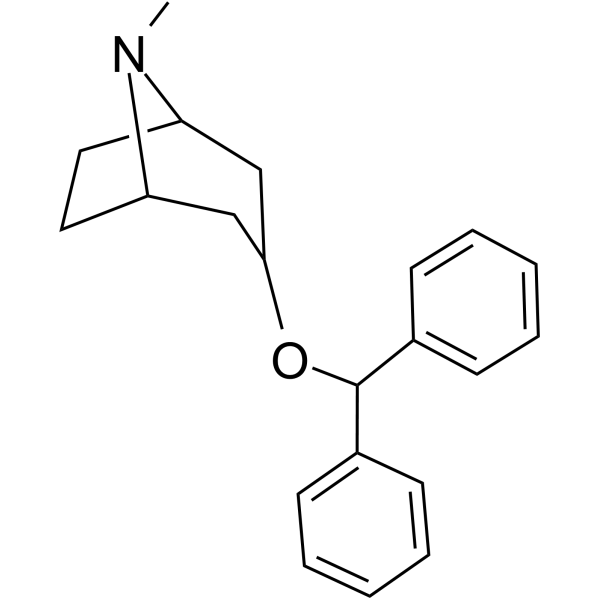
Benzatropine; Benzotropine
|
Dopamine Receptor
mAChR
Histamine Receptor
|
Cancer
|
|
Benztropine (Benzatropine; Benzotropine) is an orally active and BBB-permeable centrally acting anticholinergic agent that can be used for Parkinson's disease research . Benztropine is an anti-histamine agent and a dopamine re-uptake inhibitor. Benztropine is also a human D2 dopamine receptor allosteric antagonist. Benztropine mesylate also has anti-CSCs (cancer stem cells) effects .
|
-
-
- HY-B1483
-
|
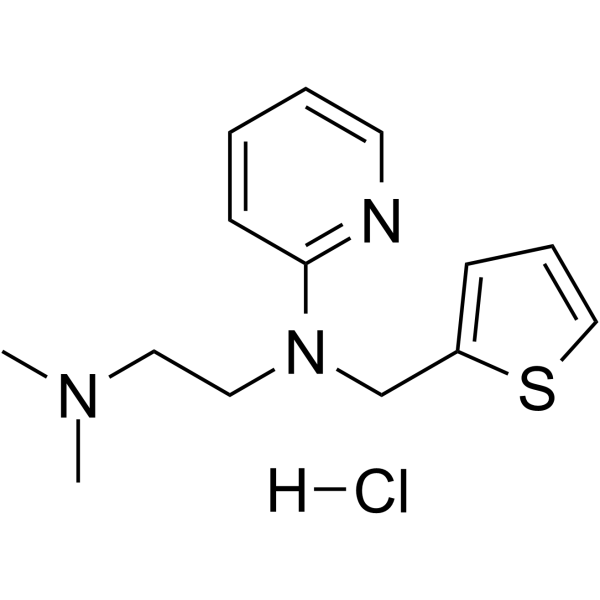
Thenylpyramine hydrochloride
|
Environmental Pollutants
Histamine Receptor
|
Inflammation/Immunology
|
|
Methapyrilene (Thenylpyramine) hydrochloride is an orally active H1-receptor antihistamine and an anticholinergic agent of the pyridine chemical class. Methapyrilene hydrochloride has hepatotoxicity and can be used as a hepatotoxin that cause periportal hepatic necrosis in vivo
|
-
-
- HY-B1607
-
|
|
Histamine Receptor
SARS-CoV
Filovirus
Parasite
|
Infection
Neurological Disease
Inflammation/Immunology
|
|
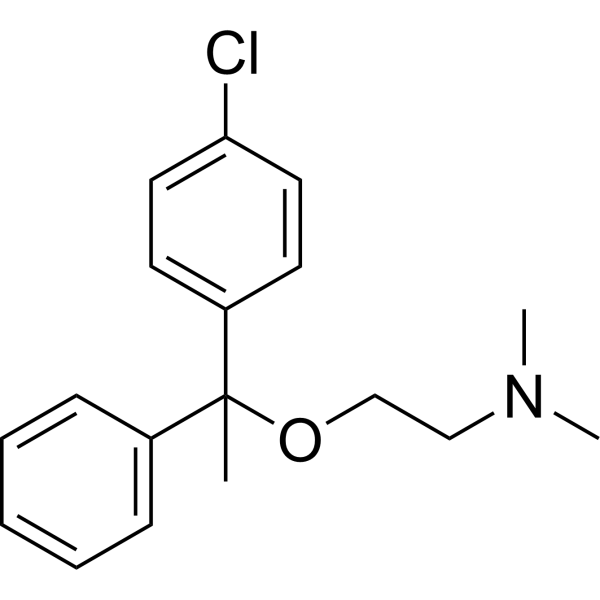
Chlorphenoxamine, an antihistamine and anticholinergic agent is a GPCR antagonist. Chlorphenoxamine inhibits multiple lethal viral diseases, such as SARS-CoV, MERS-CoV, EBOV and malaria. Chlorphenoxamine shows anti-filovirus activity against both EBOV and Marburg virus (MARV) with IC50s of 1.1 μM and 6.2 μM, respectively. Chlorphenoxamine is used for allergic conditions, urticaria, viral diseases and Parkinson’s disease .
|
-
-
- HY-136587
-
|
|
Histamine Receptor
mGluR
|
Inflammation/Immunology
|
|
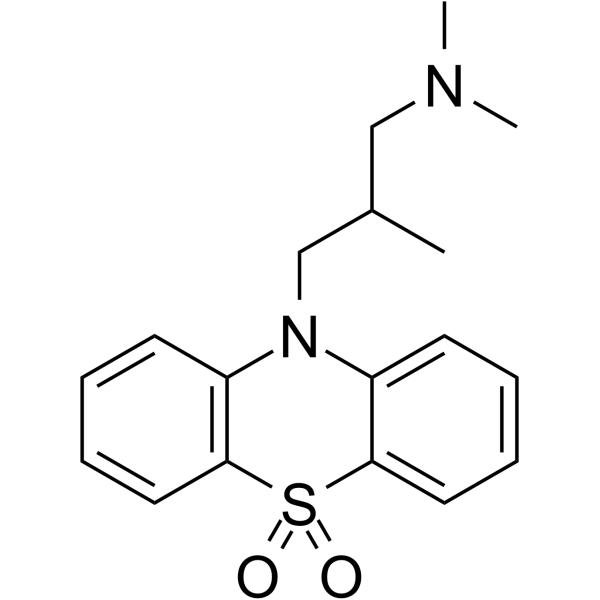
Oxomemazine is a phenothiazine-based histamine H1-receptor blocker. Oxomemazine is a selective antagonist for muscarinic M1 receptor, displays about 20-fold difference in the affinity for high (Ki = 84 nM, M1 receptor) and low (Ki = 1.65 μM, M2 receptor) affinity sites. Oxomemazine is an antihistamine and anticholinergic agent used for the study of cough treatment. Oxomemazine is protective against anaphylactic microshock in guinea pigs .
|
-
-
- HY-B1101A
-
|
Pimetixene maleate
|
5-HT Receptor
Histamine Receptor
|
Neurological Disease
Endocrinology
|
|
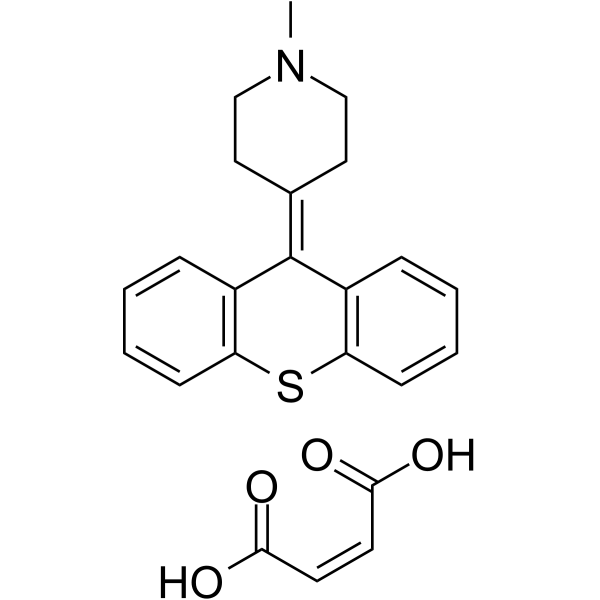
Pimethixene maleate is antihistamine and antiserotonergic compound, acts as an antimigraine agent.
Pimethixene maleate is a highly potent antagonist of 5-HT1A, 5-HT2A, 5-HT2B, 5-HT2C, histamine H1, dopamine D2 and D4.4 as well as muscarinic M1 and M2 receptors, with pKis of 7.63, 10.22, 10.44, 8.42, 10.14, 8.19, 7.54, 8.61 and 9.38, respectively .
|
-
-
- HY-B0801S
-
-
-
- HY-U00051
-
|
|
Histamine Receptor
Dopamine Receptor
|
Neurological Disease
|
|
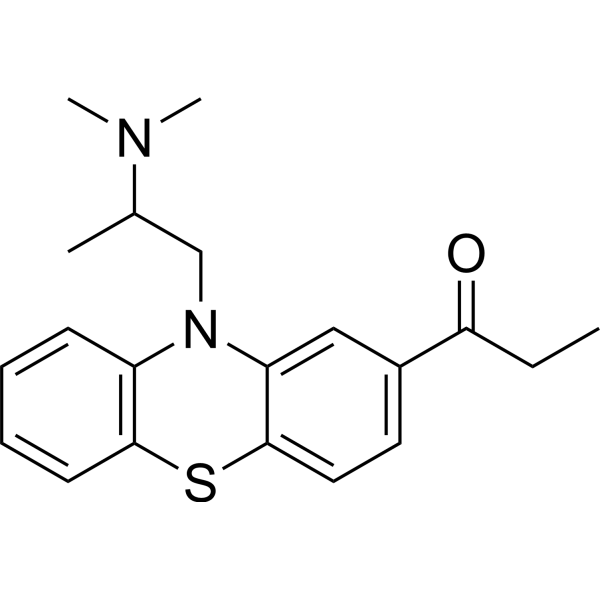
Propiomazine is an orally active antihistamine agent. Propiomazine is a potent prolactin (PRL) release stimulant, whose effect depends on the antagonism of the dopaminergic system and can inhibit the secretion of luteinizing hormone (LH). Propiomazine is mainly used for anesthesia assistance, mental disorders and anxiety-induced sedation, and can also be used in research related to insomnia .
|
-
-
- HY-Y0546S
-
|
|
Isotope-Labeled Compounds
Endogenous Metabolite
Photosensitizer
|
Cancer
|
|
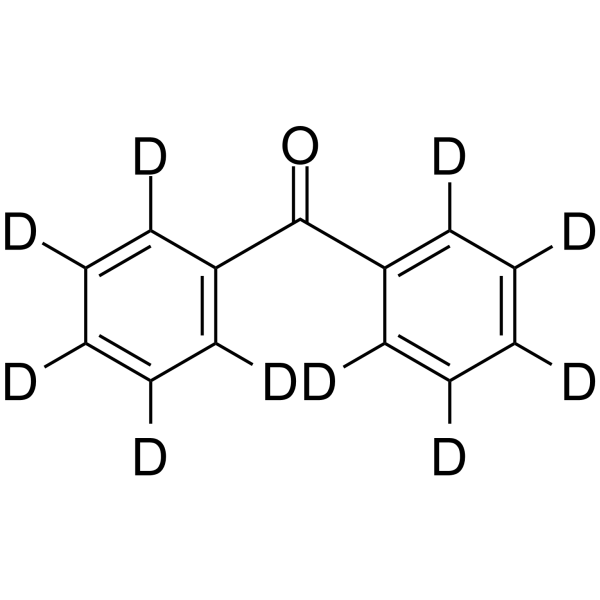
Benzophenone-d10 is the deuterium labeled Benzophenone (HY-Y0546). Benzophenone is an endogenous metabolite. Benzophenone is a photosensitizer, that absorbs UV light, transfers its energy to DNA, and triggers DNA damage. Benzophenone can be used as the fragrance enhancer, ultraviolet curing agent, additive in plastics, or the flavor ingredient. Benzophenone can also be used in the manufacturing of insecticides, agricultural chemicals, hypnotics, antihistamines, and other pharmaceuticals. Benzophenone exhibits certain carcinogenicity in mouse/rat models under long term exposure. Benzophenone exhibits estrogenic activity .
|
-
-
- HY-N7293
-
|
|
Histamine Receptor
|
Inflammation/Immunology
|
|
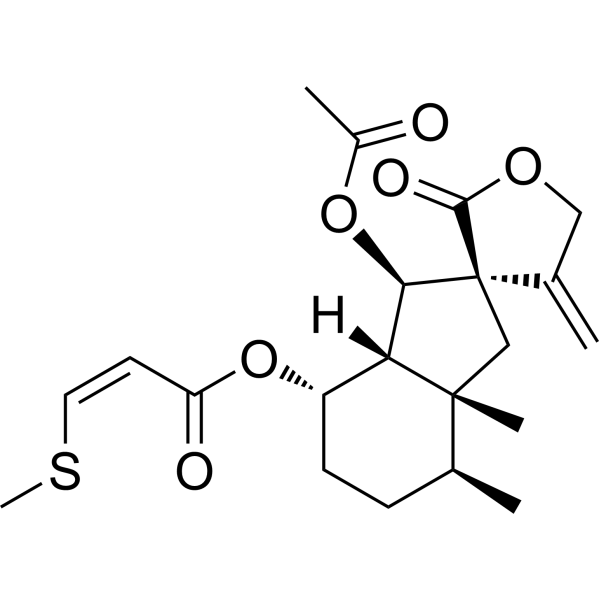
Bakkenolide D is a sesquiterpene lactone. Bakkenolide D is the major component of Bakkenolides in Petasites tricholobus. Bakkenolide D exhibits anti-allergic and antihistamine activities, and can be used in studies related to allergic rhinitis .
|
-
-
- HY-B1733
-
-
-
- HY-W010841R
-
|
(R)-Cetirizine dihydrochloride (Standard)
|
Reference Standards
Histamine Receptor
|
Inflammation/Immunology
Endocrinology
|
|
Levocetirizine (dihydrochloride) (Standard) is the analytical standard of Levocetirizine (dihydrochloride). This product is intended for research and analytical applications. Levocetirizine dihydrochloride ((R)-Cetirizine dihydrochloride) is a third-generation peripheral H1-receptor antagonist. Levocetirizine dihydrochloride is an antihistaminic agent which is the R-enantiomer of Cetirizine. Levocetirizine dihydrochloride has a higher affinity for the histamine H1-receptor than (S)-Cetirizine and can effectively treat allergic rhinitis and chronic idiopathic urticaria .
|
-
-
- HY-B0814R
-
|
(R)-Cetirizine (Standard)
|
Histamine Receptor
Reference Standards
|
Inflammation/Immunology
Endocrinology
Cancer
|
|
Levocetirizine (Standard) is the analytical standard of Levocetirizine. This product is intended for research and analytical applications. Levocetirizine ((R)-Cetirizine) is a third-generation peripheral H1-receptor antagonist. Levocetirizine is an antihistaminic agent which is the R-enantiomer of Cetirizine. Levocetirizine has a higher affinity for the histamine H1-receptor than (S)-Cetirizine and can effectively treat allergic rhinitis and chronic idiopathic urticaria .
|
-

-
- HY-B0349A
-
|
Meclozine
|
Histamine Receptor
Apoptosis
|
Neurological Disease
Inflammation/Immunology
|
|
Meclizine (Meclozine), an antihistamine, reversibly inhibits the interaction of histamine at the H1 receptors. Meclizine is a member of the piperazine class of H1 antagonists. Meclizine is an effective anti-motion sickness agent. Meclizine crosses the blood–brain barrier. Meclizine is an agonist ligand for mouse constitutive androstane receptor (CAR) and an inverse agonist for Human CAR. Meclizine can be used for the research of polyQ toxicity disorders, such as Huntington's disease .
|
-

-
- HY-B0814S1
-
|
(R)-Cetirizine-d4
|
Isotope-Labeled Compounds
|
Inflammation/Immunology
|
|
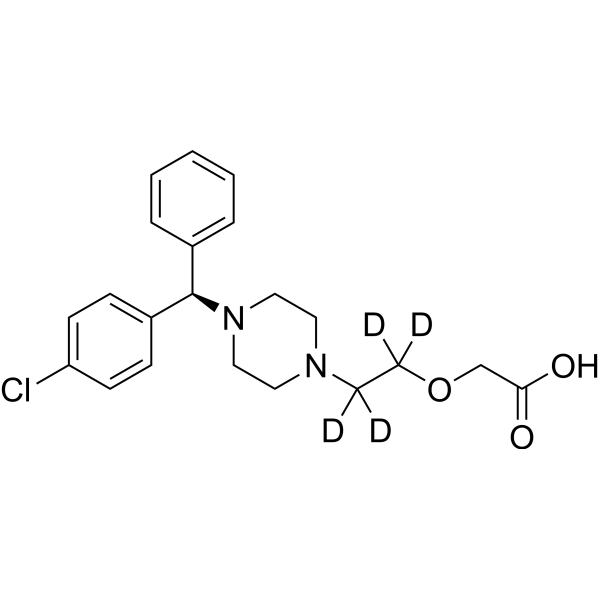
Levocetirizine-d4 ((R)-Cetirizine-d4) is the deuterium-labeled Levocetirizine (HY-B0814) . Levocetirizine ((R)-Cetirizine) is a third-generation peripheral H1-receptor antagonist. Levocetirizine is an antihistaminic agent which is the R-enantiomer of Cetirizine. Levocetirizine has a higher affinity for the histamine H1-receptor than (S)-Cetirizine and can effectively treat allergic rhinitis and chronic idiopathic urticaria .
|
-
-
- HY-Y0546S2
-
|
|
Isotope-Labeled Compounds
Endogenous Metabolite
Photosensitizer
|
Cancer
|
|
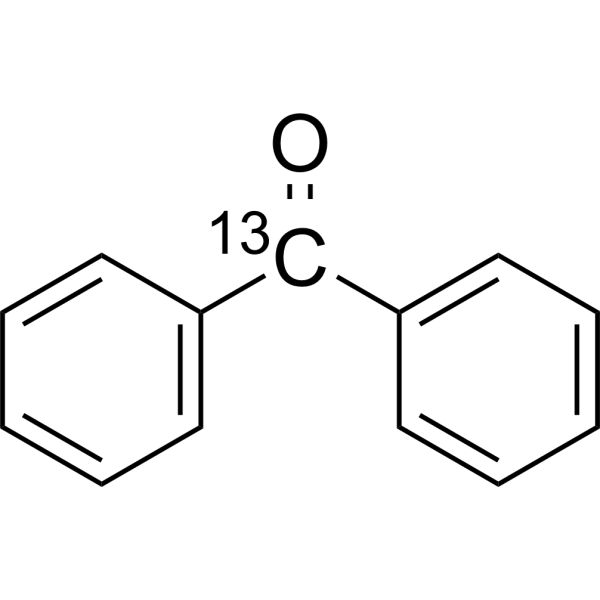
Benzophenone- 13C is the 13C labeled Benzophenone (HY-Y0546). Benzophenone is an endogenous metabolite. Benzophenone is a photosensitizer, that absorbs UV light, transfers its energy to DNA, and triggers DNA damage. Benzophenone can be used as the fragrance enhancer, ultraviolet curing agent, additive in plastics, or the flavor ingredient. Benzophenone can also be used in the manufacturing of insecticides, agricultural chemicals, hypnotics, antihistamines, and other pharmaceuticals. Benzophenone exhibits certain carcinogenicity in mouse/rat models under long term exposure. Benzophenone exhibits estrogenic activity .
|
-
-
- HY-B1101
-
|
Pimetixene
|
5-HT Receptor
Histamine Receptor
|
Neurological Disease
Endocrinology
|
|
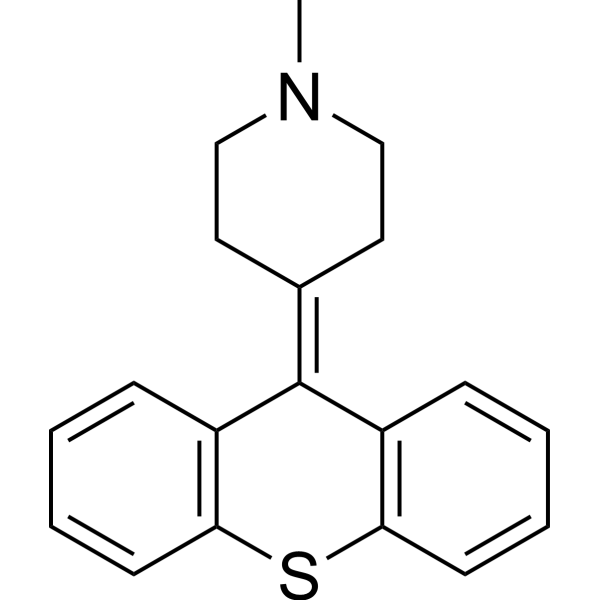
Pimethixene is antihistamine and antiserotonergic compound, acts as an antimigraine agent.
Pimethixene is a highly potent antagonist of 5-HT1A, 5-HT2A, 5-HT2B, 5-HT2C, histamine H1, dopamine D2 and D4.4 as well as muscarinic M1 and M2 receptors, with pKis of 7.63, 10.22, 10.44, 8.42, 10.14, 8.19, 7.54, 8.61 and 9.38, respectively .
|
-
-
- HY-101678
-
-

-
- HY-B0548AS1
-
|
Vistaril-d4' dihydrochloride; Atarax-d4' dihydrochloride
|
Histamine Receptor
|
Inflammation/Immunology
Endocrinology
|
|
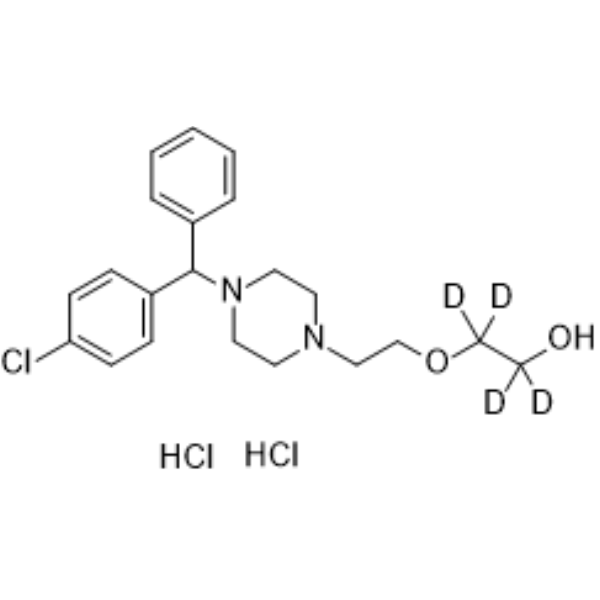
Hydroxyzine-d4 (dihydrochloride) is the deuterium labeled Hydroxyzine dihydrochloride. Hydroxyzine dihydrochloride, a benzodiazepine antihistamine agent, acts as a orally active histamine?H1-receptor and serotonin antagonist. Hydroxyzine dihydrochloride has anxiolytic effect and can be used forthe research of generalised anxiety disorder .
|
-
-
- HY-176248
-
|
|
Histamine Receptor
Serotonin Transporter
|
Neurological Disease
Inflammation/Immunology
|
|
Dimephosphon is an anti-inflammatory agent with antihistamine and antiserotonin activities. Dimephosphon helps maintain the conduction function of the spinal cord and reduces the excitability of spinal motor neurons in the area surrounding the lesion. Dimephosphon directly activates lymphatic vessel movement and improves lymphatic circulation. Dimephosphon can be used for the study of inflammatory edema, acute spinal cord injury and lymphatic circulation disorders .
|
-

-
- HY-12532R
-
|
R 43512 (Standard)
|
Reference Standards
Histamine Receptor
Potassium Channel
|
Inflammation/Immunology
Endocrinology
|
|
Astemizole (Standard) is the analytical standard of Astemizole. This product is intended for research and analytical applications. Astemizole (R 43512), a second-generation antihistamine agent to diminish allergic symptoms with a long duration of action, is a histamine H1-receptor antagonist, with an IC50 of 4 nM. Astemizole also shows potent hERG K + channel blocking activity with an IC50 of 0.9 nM. Astemizole has antipruritic effects .
|
-

-
- HY-B0520AS1
-
|
|
Dopamine Receptor
Histamine Receptor
mAChR
|
Cancer
|
|
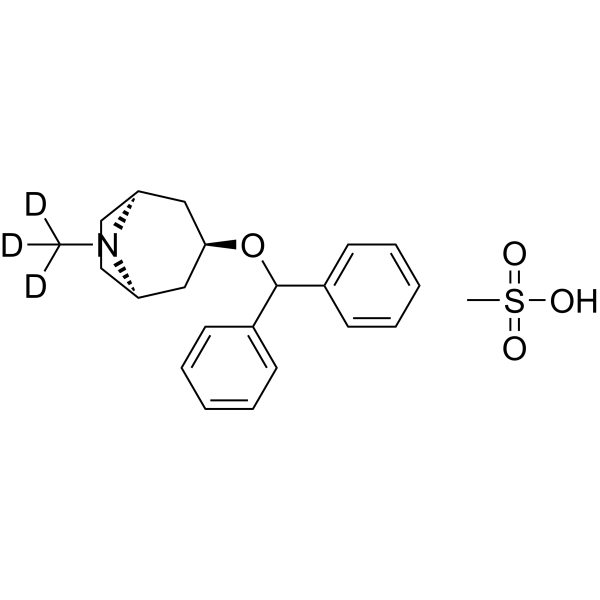
Benztropine-d3 (mesylate) is the deuterium labeled Benztropine mesylate . Benztropine mesylate (Benzatropine mesylate) is an orally active centrally acting anticholinergic agent that can be used for Parkinson's disease research. Benztropine mesylate is an anti-histamine agent and a dopamine re-uptake inhibitor. Benztropine mesylate is also a human D2 dopamine receptor allosteric antagonist. Benztropine mesylate also has anti-CSCs (cancer stem cells) effects .
|
-
-
- HY-B0520AR
-
|
Benzatropine mesylate (Standard); Benzotropine mesylate (Standard); Benztropine methanesulfonate (Standard)
|
Reference Standards
Dopamine Receptor
mAChR
Histamine Receptor
|
Neurological Disease
Cancer
|
|
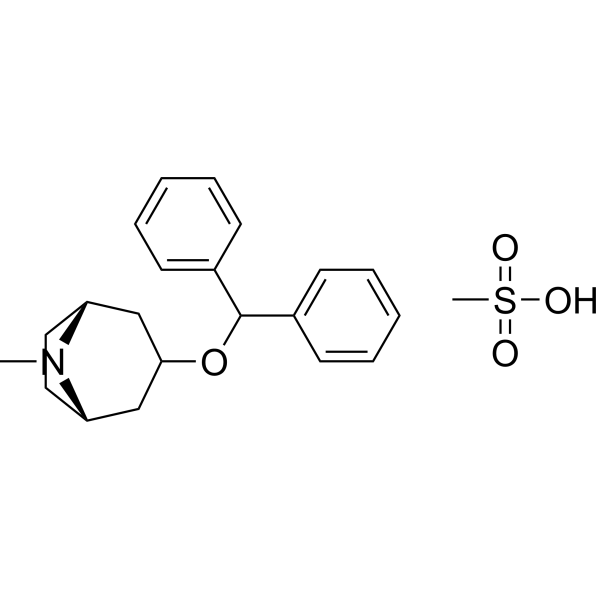
Benztropine (mesylate) (Standard) is the analytical standard of Benztropine (mesylate). This product is intended for research and analytical applications. Benztropine mesylate (Benzatropine mesylate) is an orally active centrally acting anticholinergic agent that can be used for Parkinson's disease research. Benztropine mesylate is an anti-histamine agent and a dopamine re-uptake inhibitor. Benztropine mesylate is also a human D2 dopamine receptor allosteric antagonist. Benztropine mesylate also has anti-CSCs (cancer stem cells) effects .
|
-
-
- HY-B0520AS
-
|
|
Isotope-Labeled Compounds
Dopamine Receptor
mAChR
Histamine Receptor
|
Neurological Disease
Cancer
|
|
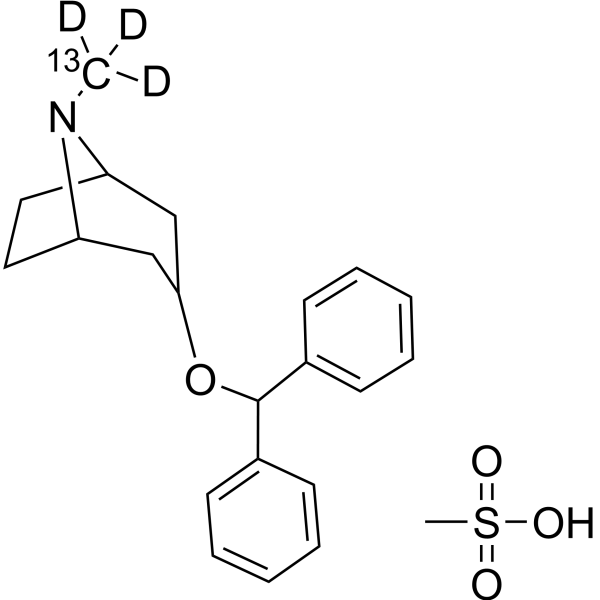
Benztropine- 13C,d3 (mesylate) is the 13C- and deuterium labeled Benztropine (mesylate). Benztropine mesylate (Benzatropine mesylate) is an orally active centrally acting anticholinergic agent that can be used for Parkinson's disease research. Benztropine mesylate is an anti-histamine agent and a dopamine re-uptake inhibitor. Benztropine mesylate is also a human D2 dopamine receptor allosteric antagonist. Benztropine mesylate also has anti-CSCs (cancer stem cells) effects .
|
-
-
- HY-A0157A
-
|
Dimetotiazine mesylate; Fonazine mesylate
|
Histamine Receptor
5-HT Receptor
|
Neurological Disease
|
|
Dimethothiazine mesylate is an orally active tricyclic anti-histamine, anti-5-HT agent with a high activity against decerebrate rigidity, a little sedative activity and little soporific action. Dimethothiazine mesylate can reduce or abolish the effects of both static and dynamic fusimotor activity on the muscle spindle in decerebrate cat. Dimethothiazine mesylate can be used to research hemicrania and spasticity .
|
-

-
- HY-A0157B
-
|
Dimetotiazine hydrochloride; Fonazine hydrochloride
|
Histamine Receptor
5-HT Receptor
|
Neurological Disease
|
|
Dimethothiazine hydrochloride is an orally active tricyclic anti-histamine, anti-5-HT agent with a high activity against decerebrate rigidity, a little sedative activity and little soporific action. Dimethothiazine hydrochloride can reduce or abolish the effects of both static and dynamic fusimotor activity on the muscle spindle in decerebrate cat. Dimethothiazine hydrochloride can be used to research hemicrania and spasticity .
|
-

-
- HY-A0157
-
|
Dimetotiazine; Fonazine
|
Histamine Receptor
5-HT Receptor
|
Neurological Disease
|
|
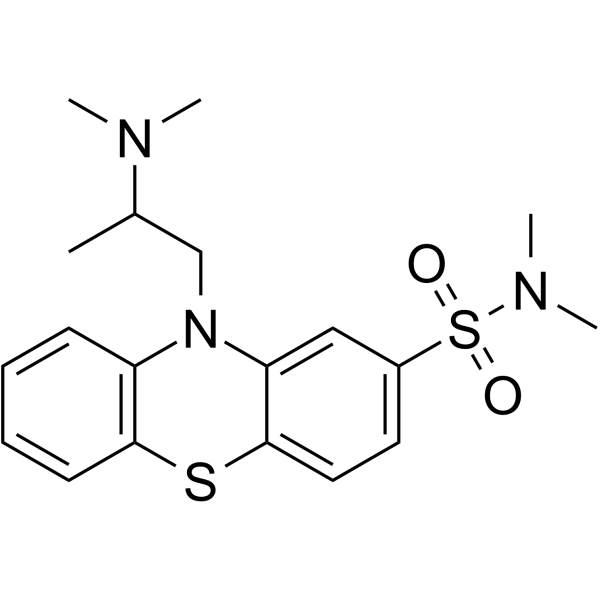
Dimethothiazine (Dimetotiazine; Fonazine) is an orally active tricyclic anti-histamine, anti-5-HT agent with a high activity against decerebrate rigidity, a little sedative activity and little soporific action. Dimethothiazine can reduce or abolish the effects of both static and dynamic fusimotor activity on the muscle spindle in decerebrate cat. Dimethothiazine can be used to research hemicrania and spasticity .
|
-
-
- HY-135475
-
-

-
- HY-N1514R
-
|
|
Reference Standards
P-glycoprotein
|
Cancer
|
|
Doxylamine (succinate) (Standard) is the analytical standard of Doxylamine (succinate). This product is intended for research and analytical applications. Doxylamine (succinate), a first generation antihistamine, is a histamine (H1) receptor antagonist. Doxylamine is also a local analgesic agent and effective hypnotic agent .
|
-

-
- HY-101314
-
|
Tropine 4-chlorobenzhydryl ether hydrochloride
|
Dopamine Transporter
|
Neurological Disease
|
|
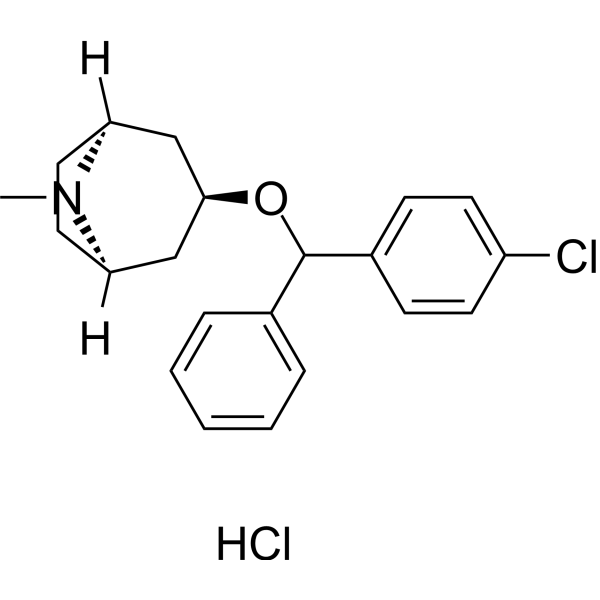
3-CPMT (Tropine 4-chlorobenzhydryl ether hydrochloride) is a potent dopamine uptake inhibitor . 3-CPMT (Tropine 4-chlorobenzhydryl ether hydrochloride) acts as a potent long-acting antihistaminic agent .
|
-
-
- HY-13762
-
|
|
Cytochrome P450
|
Cancer
|
|
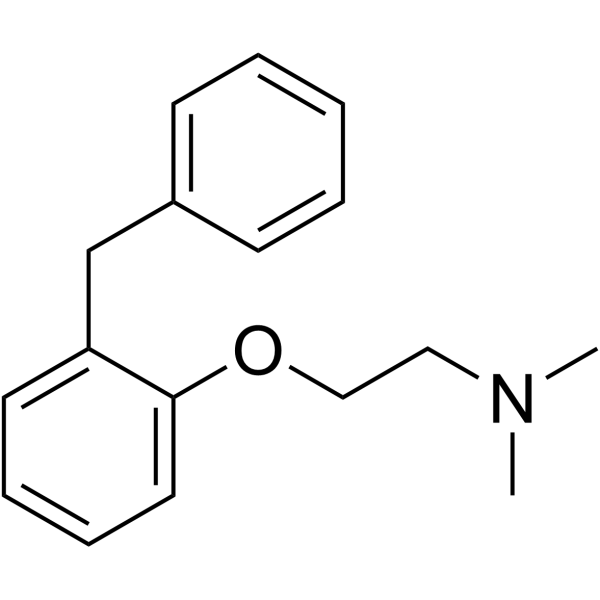
Tesmilifene is an antihistamine agent and a chemical sensitizer. Tesmilifene targets cytochrome P450, exhibits hormonal effects on DNA synthesis in MCF-7 cells, and stimulates the tumor growth in mouse/rat models. Tesmilifene overcomes multidrug resistance .
|
-

-
- HY-123432
-
|
|
Histamine Receptor
|
Inflammation/Immunology
|
|
AHR-13268D is an oral active antiallergic and antihistaminic agent, with bioavailable approximately 88%. AHR-13268D is a potent inhibitor of histamine release from rat peritoneal mast cells, with the IC50 of 0.51 nM .
|
-

-
- HY-107431
-
|
|
Histamine Receptor
|
Inflammation/Immunology
|
|
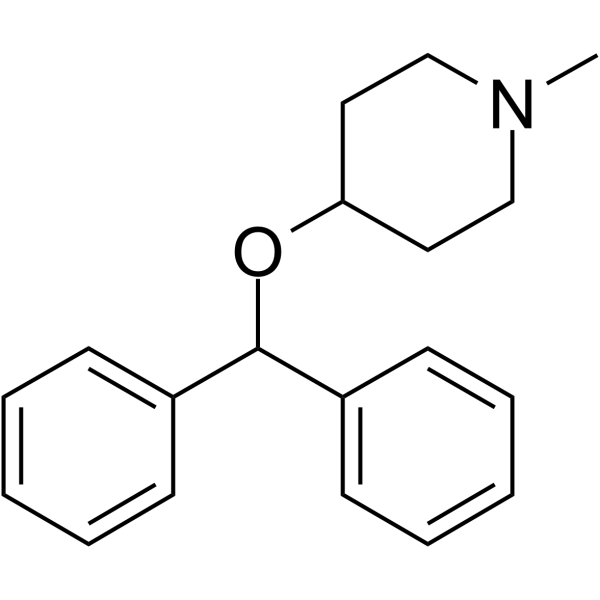
Diphenylpyraline is a potent histamine H1 receptor antagonist. Diphenylpyraline acts as an orally active antihistamine agent with antimuscarinic and antiallergic effects. Diphenylpyraline can be used for the research of allergic diseases, including rhinitis and hay fever, and pruritic skin disorders et.al .
|
-
-
- HY-B0548AS2
-
|
|
Isotope-Labeled Compounds
Histamine Receptor
|
Inflammation/Immunology
Endocrinology
|
|
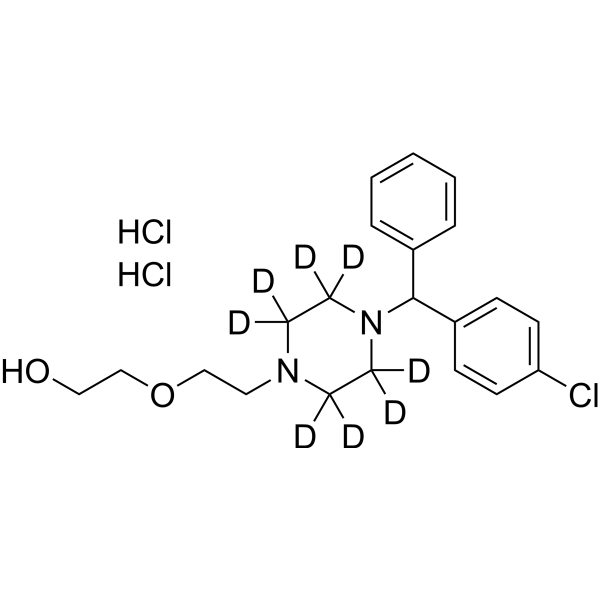
Hydroxyzine-d8 (dihydrochloride) is the deuterium labeled Hydroxyzine dihydrochloride. Hydroxyzine dihydrochloride, a benzodiazepine antihistamine agent, acts as a orally active histamine?H1-receptor and serotonin antagonist. Hydroxyzine dihydrochloride has anxiolytic effect and can be used forthe research of generalised anxiety disorder .
|
-
-
- HY-B0548R
-
|
|
Reference Standards
Histamine Receptor
|
Inflammation/Immunology
Endocrinology
|
|
Hydroxyzine (Standard) is the analytical standard of Hydroxyzine. This product is intended for research and analytical applications. Hydroxyzine, a benzodiazepine antihistamine agent, acts as an orally active histamine H1-receptor and serotonin antagonist. Hydroxyzine has anxiolytic effect and can be used for the research of generalised anxiety disorder .
|
-

-
- HY-B0548AR
-
|
|
Reference Standards
Histamine Receptor
|
Inflammation/Immunology
Endocrinology
|
|
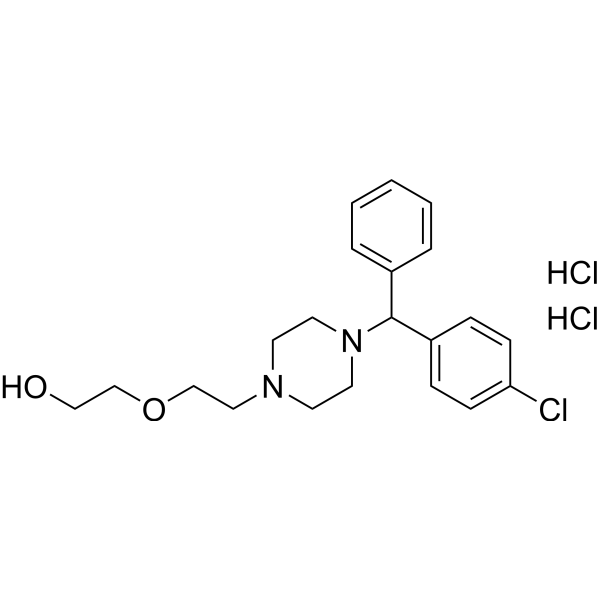
Hydroxyzine (dihydrochloride) (Standard) is the analytical standard of Hydroxyzine (dihydrochloride). This product is intended for research and analytical applications. Hydroxyzine dihydrochloride, a benzodiazepine antihistamine agent, acts as a orally active histamine H1-receptor and serotonin antagonist. Hydroxyzine dihydrochloride has anxiolytic effect and can be used forthe research of generalised anxiety disorder .
|
-
-
- HY-13762S
-
|
|
Isotope-Labeled Compounds
Cytochrome P450
|
Cancer
|
|
Tesmilifene-d4 is the deuterium labeled Tesmilifene (HY-13762). Tesmilifene is an antihistamine agent and a chemical sensitizer. Tesmilifene targets cytochrome P450, exhibits hormonal effects on DNA synthesis in MCF-7 cells, and stimulates the tumor growth in mouse/rat models. Tesmilifene overcomes multidrug resistance .
|
-

-
- HY-U00051A
-
|
|
Histamine Receptor
|
Neurological Disease
|
|
Propiomazine hydrochloride is an orally active antihistamine agent. Propiomazine hydrochloride is a potent prolactin (PRL) release stimulant, whose effect depends on the antagonism of the dopaminergic system and can inhibit the secretion of luteinizing hormone (LH). Propiomazine hydrochloride is mainly used for anesthesia assistance, mental disorders and anxiety-induced sedation, and can also be used in research related to insomnia .
|
-

-
- HY-14939A
-
|
|
Histamine Receptor
|
Inflammation/Immunology
|
|
Vapitadine hydrochloride (Compound 3a) is a selective, orally active and nonsedating antihistamine agent, which exhibits a good binding affinity with human cloned histamine H1 receptor with a Ki of 19 nM. Vapitadine hydrochloride decreases the histamine-induced lethality (ED50 is 0.056-1.2 mg/kg), antagonizes the cutaneous reactions to histamine (ED50 is 0.51-1.4 mg/kg) in rats .
|
-

-
- HY-107431R
-
|
|
Reference Standards
Histamine Receptor
|
Inflammation/Immunology
|
|
Diphenylpyraline (Standard) is the analytical standard of Diphenylpyraline. This product is intended for research and analytical applications. Diphenylpyraline is a potent histamine H1?receptor antagonist. Diphenylpyraline acts as an orally active antihistamine agent?with antimuscarinic and antiallergic effects. Diphenylpyraline can be used for the research of allergic diseases, including rhinitis and hay fever, and pruritic skin disorders et.al .
|
-

-
- HY-U00051AS1
-
|
|
Isotope-Labeled Compounds
|
Neurological Disease
|
|
(R)-Propiomazine-d6 hydrochloride is deuterium labeled Propiomazine hydrochloride. Propiomazine hydrochloride is an orally active antihistamine agent. Propiomazine hydrochloride is a potent prolactin (PRL) release stimulant, whose effect depends on the antagonism of the dopaminergic system and can inhibit the secretion of luteinizing hormone (LH). Propiomazine hydrochloride is mainly used for anesthesia assistance, mental disorders and anxiety-induced sedation, and can also be used in research related to insomnia.
|
-

-
- HY-U00051AS
-
|
|
Isotope-Labeled Compounds
Histamine Receptor
|
Neurological Disease
|
|
Propiomazine-d6 hydrochloride is deuterium labeled Propiomazine hydrochloride. Propiomazine hydrochloride is an orally active antihistamine agent. Propiomazine hydrochloride is a potent prolactin (PRL) release stimulant, whose effect depends on the antagonism of the dopaminergic system and can inhibit the secretion of luteinizing hormone (LH). Propiomazine hydrochloride is mainly used for anesthesia assistance, mental disorders and anxiety-induced sedation, and can also be used in research related to insomnia.
|
-

- HY-U00051AS2
-
|
|
Isotope-Labeled Compounds
|
Neurological Disease
|
|
(S)-Propiomazine-d6 hydrochloride is deuterium labeled Propiomazine hydrochloride. Propiomazine hydrochloride is an orally active antihistamine agent. Propiomazine hydrochloride is a potent prolactin (PRL) release stimulant, whose effect depends on the antagonism of the dopaminergic system and can inhibit the secretion of luteinizing hormone (LH). Propiomazine hydrochloride is mainly used for anesthesia assistance, mental disorders and anxiety-induced sedation, and can also be used in research related to insomnia.
|
-

- HY-B0814S
-
|
(R)-Cetirizine-d4 dihydrochloride
|
Isotope-Labeled Compounds
Histamine Receptor
|
Inflammation/Immunology
Endocrinology
|
|
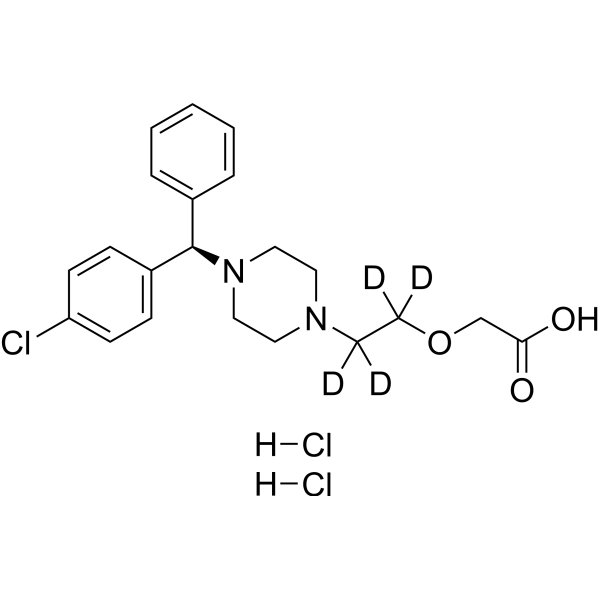
Levocetirizine-d4 (dihydrochloride) is the deuterium labeled Levocetirizine. Levocetirizine ((R)-Cetirizine) is a third-generation peripheral H1-receptor antagonist. Levocetirizine is an antihistaminic agent which is the R-enantiomer of Cetirizine. Levocetirizine has a higher affinity for the histamine H1-receptor than (S)-Cetirizine and can effectively treat allergic rhinitis and chronic idiopathic urticaria[1].
|
-
- HY-167633
-
|
|
mGluR
Histamine Receptor
|
Neurological Disease
|
|
Oxomemazine hydrochloride is a phenothiazine-based histamine H1-receptor blocker with pronounced antimuscarinic properties. Oxomemazine hydrochloride is a selective antagonist for muscarinic M1 receptor, displays about 20-fold difference in the affinity for high (Ki= 84 nM, M1 receptor) and low (Ki= 1.65 μM, M2 receptor) affinity sites [1]. Oxomemazine hydrochloride an antihistamine and anticholinergic agent used for the study of cough treatment .
|
-

- HY-B0349B
-
|
Meclozine dihydrochloride monohydrate
|
Histamine Receptor
Apoptosis
|
Neurological Disease
Inflammation/Immunology
|
|
Meclizine (Meclozine) dihydrochloride monohydrate, an antihistamine, reversibly inhibits the interaction of histamine at the H1 receptors. Meclizine dihydrochloride is a member of the piperazine class of H1 antagonists. Meclizine dihydrochloride monohydrate is an effective anti-motion sickness agent. Meclizine dihydrochloride monohydrate crosses the blood-brain barrier. Meclizine dihydrochloride monohydrate is an agonist ligand for mouse constitutive androstane receptor (CAR) and an inverse agonist for Human CAR. Meclizine dihydrochloride monohydrate can be used for the research of polyQ toxicity disorders, such as Huntington's disease .
|
-

- HY-B1607R
-
|
|
Reference Standards
Histamine Receptor
SARS-CoV
Filovirus
Parasite
|
Infection
Neurological Disease
Inflammation/Immunology
|
|
Chlorphenoxamine (Standard) is the analytical standard of Chlorphenoxamine (HY-B1607). This product is intended for research and analytical applications. Chlorphenoxamine, an antihistamine and anticholinergic agent is a GPCR antagonist. Chlorphenoxamine inhibits multiple lethal viral diseases, such as SARS-CoV, MERS-CoV, EBOV and malaria. Chlorphenoxamine shows anti-filovirus activity against both EBOV and Marburg virus (MARV) with IC50s of 1.1 μM and 6.2 μM, respectively. Chlorphenoxamine is used for allergic conditions, urticaria, viral diseases and Parkinson’s disease.
|
-

- HY-B0349R
-
|
Meclozine dihydrochloride (Standard)
|
Reference Standards
Histamine Receptor
Apoptosis
|
Neurological Disease
Endocrinology
Cancer
|
|
Meclizine (dihydrochloride) (Standard) is the analytical standard of Meclizine (dihydrochloride). This product is intended for research and analytical applications. Meclizine (Meclozine) dihydrochloride, an antihistamine, reversibly inhibits the interaction of histamine at the H1 receptors. Meclizine dihydrochloride is a member of the piperazine class of H1 antagonists. Meclizine dihydrochloride is an effective anti-motion sickness agent. Meclizine dihydrochloride crosses the blood-brain barrier. Meclizine dihydrochloride can be used for the research of polyQ toxicity disorders, such as Huntington's disease. Meclizine dihydrochloride is an agonist ligand for mouse constitutive androstane receptor (CAR) and an inverse agonist for Human CAR .
|
-

- HY-Y0546S1
-
|
|
Isotope-Labeled Compounds
Endogenous Metabolite
Photosensitizer
|
Cancer
|
|
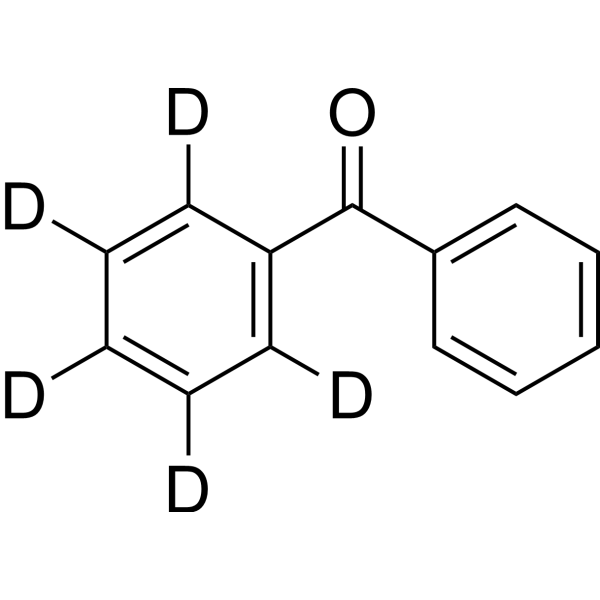
Benzophenone-d5 is the deuterium labeled Benzophenone (HY-Y0546). Benzophenone is an endogenous metabolite. Benzophenone is a photosensitizer, that absorbs UV light, transfers its energy to DNA, and triggers DNA damage. Benzophenone can be used as the fragrance enhancer, ultraviolet curing agent, additive in plastics, or the flavor ingredient. Benzophenone can also be used in the manufacturing of insecticides, agricultural chemicals, hypnotics, antihistamines, and other pharmaceuticals. Benzophenone exhibits certain carcinogenicity in mouse/rat models under long term exposure. Benzophenone exhibits estrogenic activity .
|
-
- HY-136587R
-
|
|
Reference Standards
Histamine Receptor
mGluR
|
Inflammation/Immunology
|
|
Oxomemazine (Standard) is the analytical standard of Oxomemazine (HY-136587). This product is intended for research and analytical applications. Oxomemazine is a phenothiazine-based histamine H1-receptor blocker. Oxomemazine is a selective antagonist for muscarinic M1 receptor, displays about 20-fold difference in the affinity for high (Ki = 84 nM, M1 receptor) and low (Ki = 1.65 μM, M2 receptor) affinity sites. Oxomemazine is an antihistamine and anticholinergic agent used for the study of cough treatment. Oxomemazine is protective against anaphylactic microshock in guinea pigs .
|
-

- HY-Y0546R
-
|
|
Reference Standards
Endogenous Metabolite
Photosensitizer
|
Cancer
|
|
Benzophenone (Standard) is the analytical standard of Benzophenone. This product is intended for research and analytical applications. Benzophenone standard is a photosensitizer, that absorbs UV light, transfers its energy to DNA, and triggers DNA damage. Benzophenone standard can be used as the fragrance enhancer, ultraviolet curing agent, additive in plastics, or the flavor ingredient. Benzophenone standard can also be used in the manufacturing of insecticides, agricultural chemicals, hypnotics, antihistamines, and other pharmaceuticals. Benzophenone standard exhibits certain carcinogenicity in mouse/rat models under long term exposure. Benzophenone standard exhibits estrogenic activity .
|
-

- HY-B1101AR
-
|
Pimetixene maleate (Standard)
|
Reference Standards
5-HT Receptor
Histamine Receptor
|
Neurological Disease
Endocrinology
|
|
Pimethixene maleate (Standard) is the analytical standard of Pimethixene maleate. This product is intended for research and analytical applications. Pimethixene maleate is antihistamine and antiserotonergic compound, acts as an antimigraine agent.
Pimethixene maleate is a highly potent antagonist of 5-HT1A, 5-HT2A, 5-HT2B, 5-HT2C, histamine H1, dopamine D2 and D4.4 as well as muscarinic M1 and M2 receptors, with pKis of 7.63, 10.22, 10.44, 8.42, 10.14, 8.19, 7.54, 8.61 and 9.38, respectively .
|
-

- HY-121215
-
-

- HY-118729
-
-

- HY-13762A
-
|
|
Cytochrome P450
|
Cancer
|
|
Tesmilifene hydrochloride is an antihistamine agent and a chemical sensitizer. Tesmilifene hydrochloride targets cytochrome P450, exhibits hormonal effects on DNA synthesis in MCF-7 cells, and stimulates the tumor growth in mouse/rat models. Tesmilifene hydrochloride overcomes multidrug resistance .
|
-

- HY-U00051B
-
|
|
Histamine Receptor
Dopamine Receptor
|
Neurological Disease
|
|
Propiomazine maleate is an orally active antihistamine agent. Propiomazine maleate is a potent prolactin (PRL) release stimulant, whose effect depends on the antagonism of the dopaminergic system and can inhibit the secretion of luteinizing hormone (LH). Propiomazine maleate is mainly used for anesthesia assistance, mental disorders and anxiety-induced sedation, and can also be used in research related to insomnia .
|
-

- HY-B1607A
-
|
|
Histamine Receptor
SARS-CoV
Filovirus
Parasite
|
Infection
Neurological Disease
Inflammation/Immunology
|
|
Chlorphenoxamine hydrochloride, an antihistamine and anticholinergic agent is a GPCR antagonist. Chlorphenoxamine hydrochloride inhibits multiple lethal viral diseases, such as SARS-CoV, MERS-CoV, EBOV and malaria. Chlorphenoxamine hydrochloride shows anti-filovirus activity against both EBOV and Marburg virus (MARV) with IC50s of 1.1 μM and 6.2 μM, respectively. Chlorphenoxamine hydrochloride is used for allergic conditions, urticaria, viral diseases and Parkinson’s disease .
|
-

| Cat. No. |
Nom du produit |
Category |
Target |
Chemical Structure |
-
- HY-Y0546
-
|
|
Structural Classification
Microorganisms
Classification of Application Fields
Ketones, Aldehydes, Acids
Metabolic Disease
Endogenous metabolite
Disease Research Fields
Source Classification
|
Environmental Pollutants
Endogenous Metabolite
Photosensitizer
|
|
Benzophenone is an endogenous metabolite. Benzophenone is a photosensitizer, that absorbs UV light, transfers its energy to DNA, and triggers DNA damage. Benzophenone can be used as the fragrance enhancer, ultraviolet curing agent, additive in plastics, or the flavor ingredient. Benzophenone can also be used in the manufacturing of insecticides, agricultural chemicals, hypnotics, antihistamines, and other pharmaceuticals. Benzophenone exhibits certain carcinogenicity in mouse/rat models under long term exposure. Benzophenone exhibits estrogenic activity .
|
-
-
- HY-N7293
-
-
-
- HY-N1514R
-
-
-
- HY-Y0546R
-
|
|
Structural Classification
Microorganisms
Ketones, Aldehydes, Acids
Endogenous metabolite
Source Classification
|
Reference Standards
Endogenous Metabolite
Photosensitizer
|
|
Benzophenone (Standard) is the analytical standard of Benzophenone. This product is intended for research and analytical applications. Benzophenone standard is a photosensitizer, that absorbs UV light, transfers its energy to DNA, and triggers DNA damage. Benzophenone standard can be used as the fragrance enhancer, ultraviolet curing agent, additive in plastics, or the flavor ingredient. Benzophenone standard can also be used in the manufacturing of insecticides, agricultural chemicals, hypnotics, antihistamines, and other pharmaceuticals. Benzophenone standard exhibits certain carcinogenicity in mouse/rat models under long term exposure. Benzophenone standard exhibits estrogenic activity .
|
-
| Cat. No. |
Nom du produit |
Chemical Structure |
-
- HY-B0801S
-
2 Publications Verification
|
|
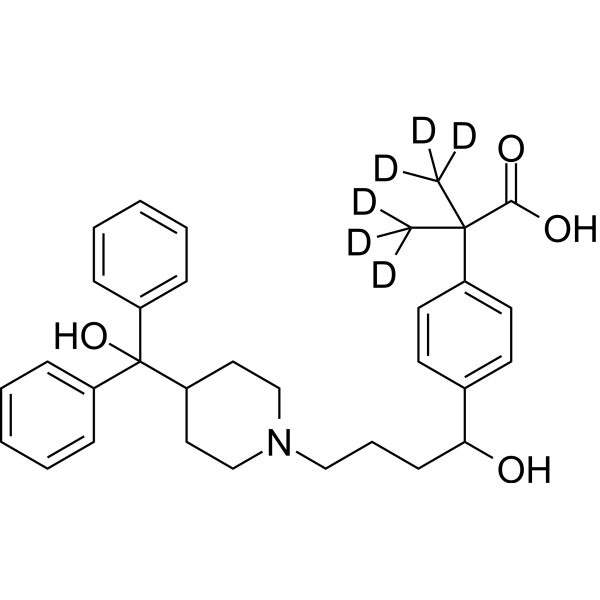
Fexofenadine-d6 (MDL-16455-d6) is deuterium labeled Fexofenadine, which is an antihistamine pharmaceutical agent.
|
-
-
- HY-Y0546S
-
|
|
|
Benzophenone-d10 is the deuterium labeled Benzophenone (HY-Y0546). Benzophenone is an endogenous metabolite. Benzophenone is a photosensitizer, that absorbs UV light, transfers its energy to DNA, and triggers DNA damage. Benzophenone can be used as the fragrance enhancer, ultraviolet curing agent, additive in plastics, or the flavor ingredient. Benzophenone can also be used in the manufacturing of insecticides, agricultural chemicals, hypnotics, antihistamines, and other pharmaceuticals. Benzophenone exhibits certain carcinogenicity in mouse/rat models under long term exposure. Benzophenone exhibits estrogenic activity .
|
-
-
- HY-B0814S1
-
|
|
|
Levocetirizine-d4 ((R)-Cetirizine-d4) is the deuterium-labeled Levocetirizine (HY-B0814) . Levocetirizine ((R)-Cetirizine) is a third-generation peripheral H1-receptor antagonist. Levocetirizine is an antihistaminic agent which is the R-enantiomer of Cetirizine. Levocetirizine has a higher affinity for the histamine H1-receptor than (S)-Cetirizine and can effectively treat allergic rhinitis and chronic idiopathic urticaria .
|
-
-
- HY-Y0546S2
-
|
|
|
Benzophenone- 13C is the 13C labeled Benzophenone (HY-Y0546). Benzophenone is an endogenous metabolite. Benzophenone is a photosensitizer, that absorbs UV light, transfers its energy to DNA, and triggers DNA damage. Benzophenone can be used as the fragrance enhancer, ultraviolet curing agent, additive in plastics, or the flavor ingredient. Benzophenone can also be used in the manufacturing of insecticides, agricultural chemicals, hypnotics, antihistamines, and other pharmaceuticals. Benzophenone exhibits certain carcinogenicity in mouse/rat models under long term exposure. Benzophenone exhibits estrogenic activity .
|
-
-
- HY-B0548AS1
-
|
|
|
Hydroxyzine-d4 (dihydrochloride) is the deuterium labeled Hydroxyzine dihydrochloride. Hydroxyzine dihydrochloride, a benzodiazepine antihistamine agent, acts as a orally active histamine?H1-receptor and serotonin antagonist. Hydroxyzine dihydrochloride has anxiolytic effect and can be used forthe research of generalised anxiety disorder .
|
-
-
- HY-B0520AS1
-
|
|
|
Benztropine-d3 (mesylate) is the deuterium labeled Benztropine mesylate . Benztropine mesylate (Benzatropine mesylate) is an orally active centrally acting anticholinergic agent that can be used for Parkinson's disease research. Benztropine mesylate is an anti-histamine agent and a dopamine re-uptake inhibitor. Benztropine mesylate is also a human D2 dopamine receptor allosteric antagonist. Benztropine mesylate also has anti-CSCs (cancer stem cells) effects .
|
-
-
- HY-B0520AS
-
|
|
|
Benztropine- 13C,d3 (mesylate) is the 13C- and deuterium labeled Benztropine (mesylate). Benztropine mesylate (Benzatropine mesylate) is an orally active centrally acting anticholinergic agent that can be used for Parkinson's disease research. Benztropine mesylate is an anti-histamine agent and a dopamine re-uptake inhibitor. Benztropine mesylate is also a human D2 dopamine receptor allosteric antagonist. Benztropine mesylate also has anti-CSCs (cancer stem cells) effects .
|
-
-
- HY-B0548AS2
-
|
|
|
Hydroxyzine-d8 (dihydrochloride) is the deuterium labeled Hydroxyzine dihydrochloride. Hydroxyzine dihydrochloride, a benzodiazepine antihistamine agent, acts as a orally active histamine?H1-receptor and serotonin antagonist. Hydroxyzine dihydrochloride has anxiolytic effect and can be used forthe research of generalised anxiety disorder .
|
-
-
- HY-13762S
-
|
|
|
Tesmilifene-d4 is the deuterium labeled Tesmilifene (HY-13762). Tesmilifene is an antihistamine agent and a chemical sensitizer. Tesmilifene targets cytochrome P450, exhibits hormonal effects on DNA synthesis in MCF-7 cells, and stimulates the tumor growth in mouse/rat models. Tesmilifene overcomes multidrug resistance .
|
-
-
- HY-U00051AS1
-
|
|
|
(R)-Propiomazine-d6 hydrochloride is deuterium labeled Propiomazine hydrochloride. Propiomazine hydrochloride is an orally active antihistamine agent. Propiomazine hydrochloride is a potent prolactin (PRL) release stimulant, whose effect depends on the antagonism of the dopaminergic system and can inhibit the secretion of luteinizing hormone (LH). Propiomazine hydrochloride is mainly used for anesthesia assistance, mental disorders and anxiety-induced sedation, and can also be used in research related to insomnia.
|
-
-
- HY-U00051AS
-
|
|
|
Propiomazine-d6 hydrochloride is deuterium labeled Propiomazine hydrochloride. Propiomazine hydrochloride is an orally active antihistamine agent. Propiomazine hydrochloride is a potent prolactin (PRL) release stimulant, whose effect depends on the antagonism of the dopaminergic system and can inhibit the secretion of luteinizing hormone (LH). Propiomazine hydrochloride is mainly used for anesthesia assistance, mental disorders and anxiety-induced sedation, and can also be used in research related to insomnia.
|
-
-
- HY-U00051AS2
-
|
|
|
(S)-Propiomazine-d6 hydrochloride is deuterium labeled Propiomazine hydrochloride. Propiomazine hydrochloride is an orally active antihistamine agent. Propiomazine hydrochloride is a potent prolactin (PRL) release stimulant, whose effect depends on the antagonism of the dopaminergic system and can inhibit the secretion of luteinizing hormone (LH). Propiomazine hydrochloride is mainly used for anesthesia assistance, mental disorders and anxiety-induced sedation, and can also be used in research related to insomnia.
|
-
-
- HY-B0814S
-
|
|
|
Levocetirizine-d4 (dihydrochloride) is the deuterium labeled Levocetirizine. Levocetirizine ((R)-Cetirizine) is a third-generation peripheral H1-receptor antagonist. Levocetirizine is an antihistaminic agent which is the R-enantiomer of Cetirizine. Levocetirizine has a higher affinity for the histamine H1-receptor than (S)-Cetirizine and can effectively treat allergic rhinitis and chronic idiopathic urticaria[1].
|
-
-
- HY-Y0546S1
-
|
|
|
Benzophenone-d5 is the deuterium labeled Benzophenone (HY-Y0546). Benzophenone is an endogenous metabolite. Benzophenone is a photosensitizer, that absorbs UV light, transfers its energy to DNA, and triggers DNA damage. Benzophenone can be used as the fragrance enhancer, ultraviolet curing agent, additive in plastics, or the flavor ingredient. Benzophenone can also be used in the manufacturing of insecticides, agricultural chemicals, hypnotics, antihistamines, and other pharmaceuticals. Benzophenone exhibits certain carcinogenicity in mouse/rat models under long term exposure. Benzophenone exhibits estrogenic activity .
|
-
Your information is safe with us. * Required Fields.
Inquiry Information
- Nom du produit:
- Cat. No.:
- Quantité:
- MCE Japan Authorized Agent:








