



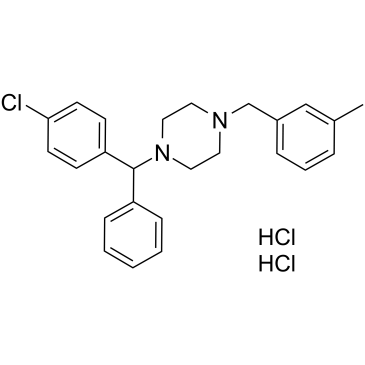
Meclizine dihydrochloride
Based on 5 publication(s) in Google Scholar
Meclizine (Meclozine) dihydrochloride, an antihistamine, reversibly inhibits the interaction of histamine at the H1 receptors. Meclizine dihydrochloride is a member of the piperazine class of H1 antagonists. Meclizine dihydrochloride is an effective anti-motion sickness agent. Meclizine dihydrochloride crosses the blood-brain barrier. Meclizine dihydrochloride can be used for the research of polyQ toxicity disorders, such as Huntington's disease. Meclizine dihydrochloride is an agonist ligand for mouse constitutive androstane receptor (CAR) and an inverse agonist for Human CAR.
For research use only. We do not sell to patients.
- Purity : 99.94%
- CAS No.: 1104-22-9
- Formula: C25H29Cl3N2
- Molecular Weight:463.87
-
Storage:
4°C, sealed storage, away from moisture
* In solvent : -80°C, 6 months; -20°C, 1 month (sealed storage, away from moisture)

To place orders, for customer services and technical support, please contact: MedChemExpress USA
Tel: 609-228-6898 E-mail: [email protected] [email protected]


-
 Biological Activity
-
Chemical Information
-
Solvent & Solubility
- Purity & Documentation
- References
-
 Help & FAQs


-
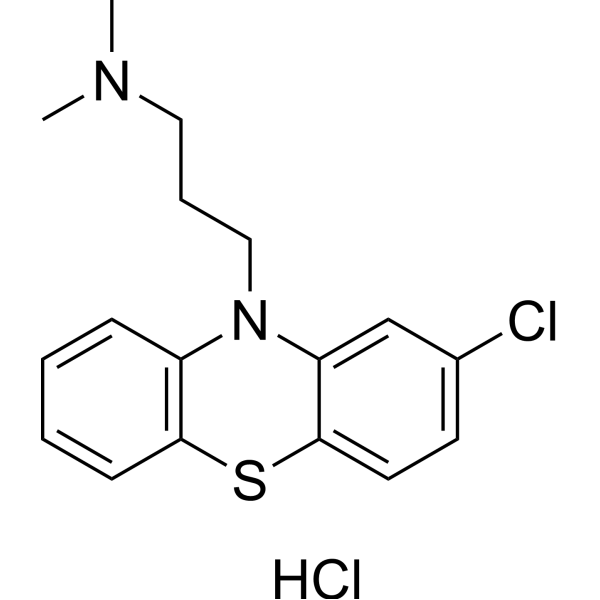
HY-B0407A
Chlorpromazine hydrochloride -

HY-B0349R
Meclizine dihydrochloride (Standard) -
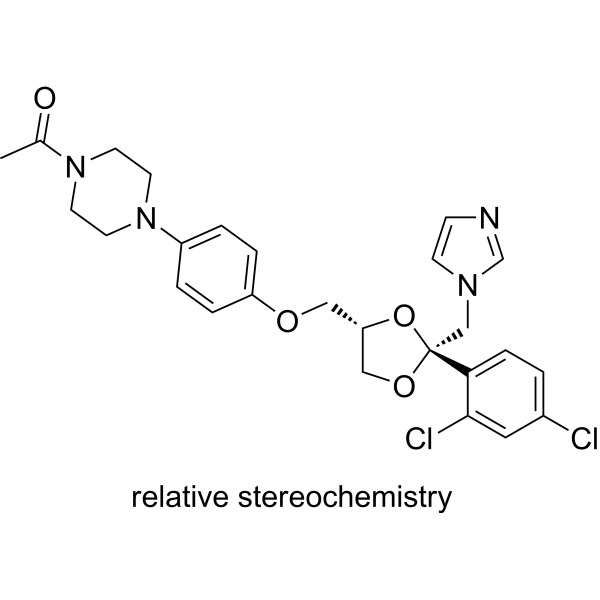
HY-B0105
Ketoconazole -
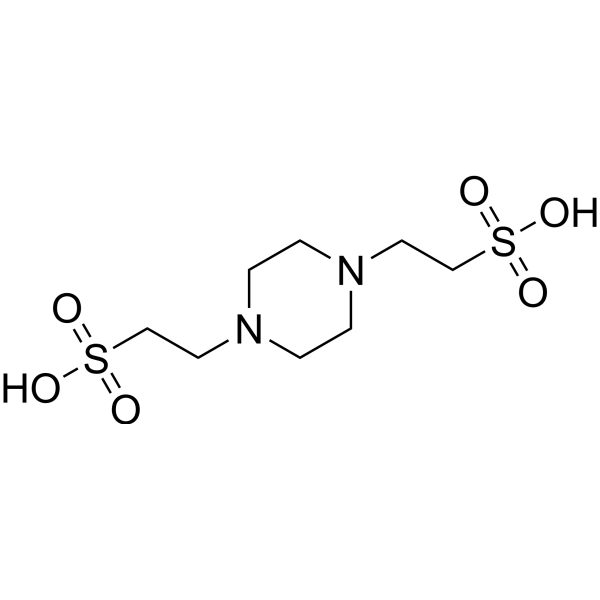
HY-D0875
PIPES -
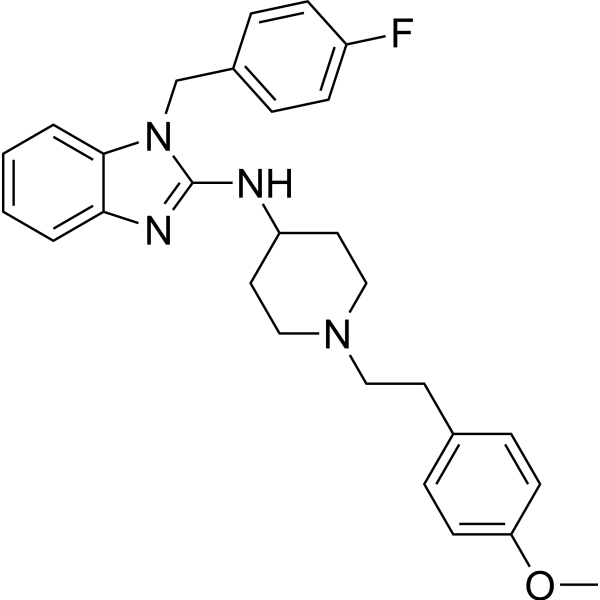
HY-12532
Astemizole -
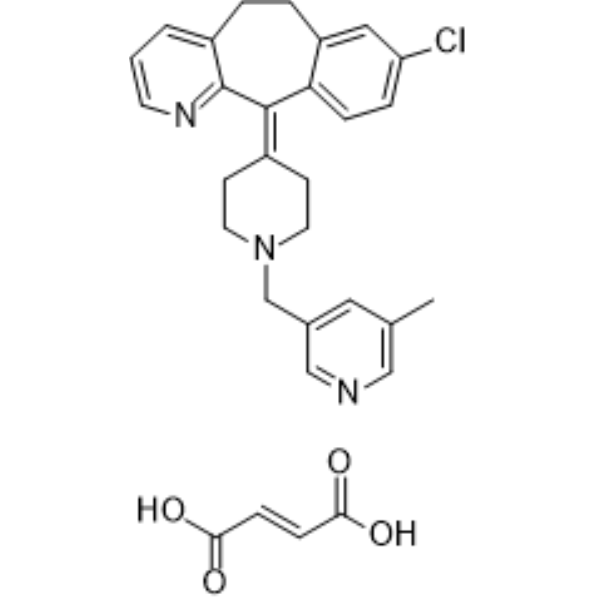
HY-13511A
Rupatadine Fumarate -
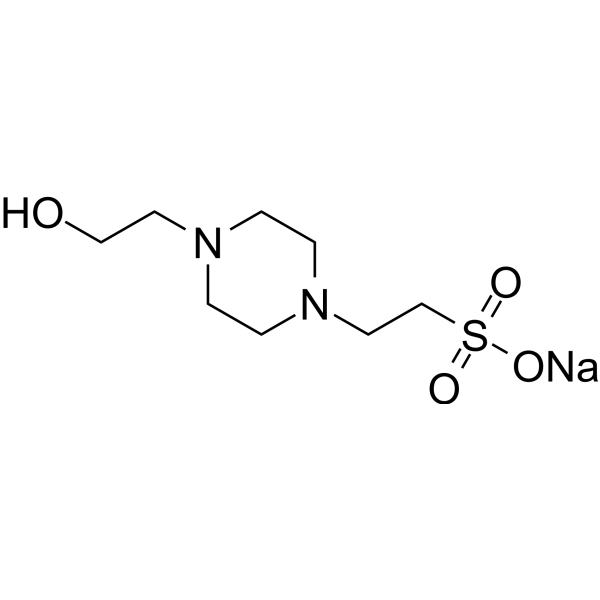
HY-108535
HEPES sodium -
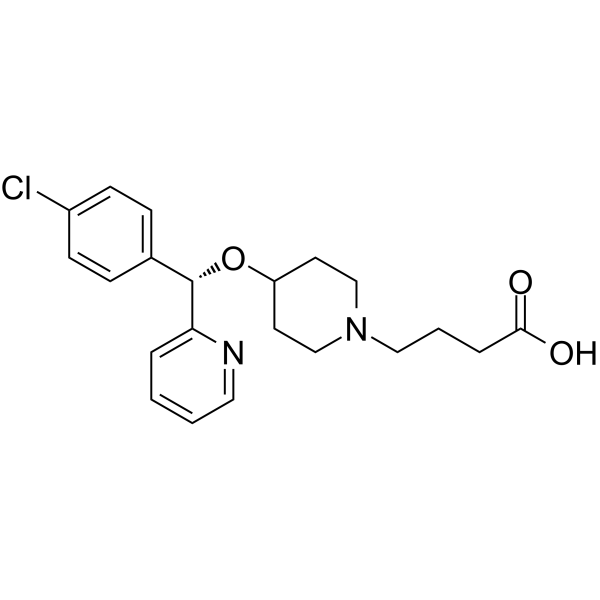
HY-I0021
Bepotastine -
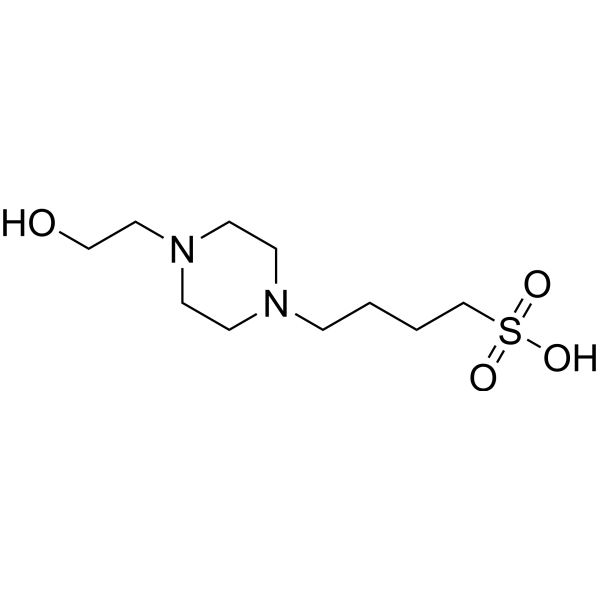
HY-W105704
HEPBS -
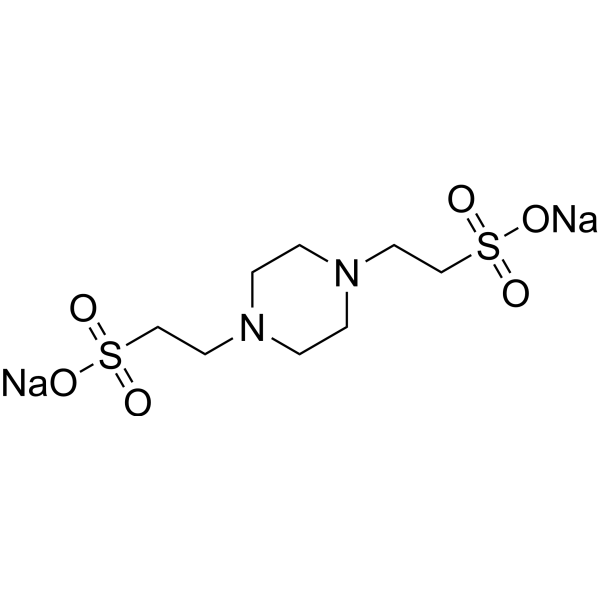
HY-W040147
PIPES disodium -
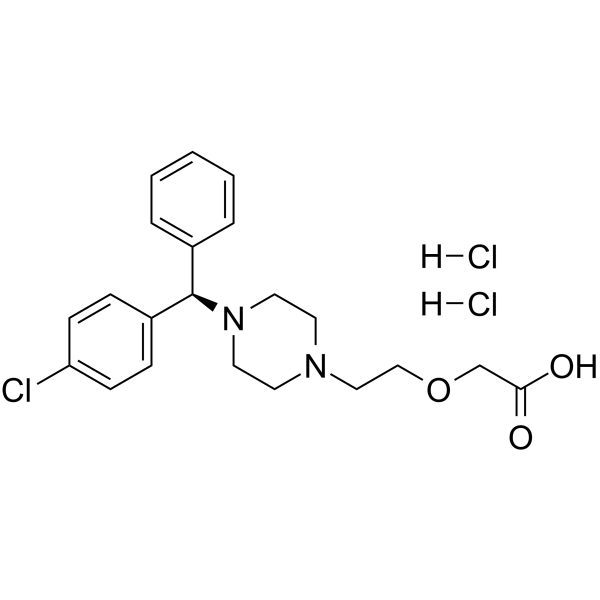
HY-W010841
Levocetirizine dihydrochloride -
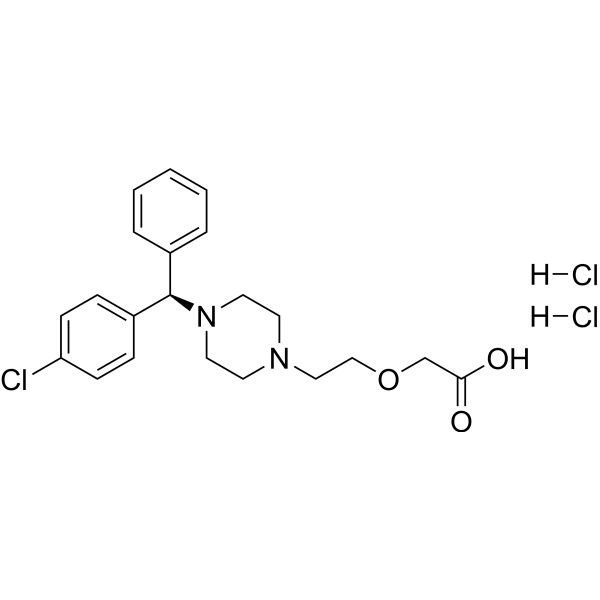
HY-W010841R
Levocetirizine dihydrochloride (Standard)
Publications Citing Use of MedChemExpress (MCE) Meclizine dihydrochloride
MoreAll Histamine Receptor Isoforms
More

Biological Activity
Description
IC50 & Target
[1]|
H1 Receptor |
In Vitro
Meclizine (Meclozine; 50 μM; 24 hours) dihydrochloride significantly increases cell survival in STHdhQ111/111 cells at 24 h after the removal of serum, evidently by suppressing apoptosis, based on caspase 3 and 7 cleavage. The rescue is dose-dependent with an EC50 of 17.3 μm, and a maximum efficacy of 218% increased survival over vehicle. Meclizine dihydrochloride protects striatal cells expressing polyglutamine (polyQ)-expanded huntingtin from serum withdrawal-induced apoptosis of mutant (STHdhQ111/111) and wild-type (STHdhQ7/7) striatal cells[2].
MedChemExpress (MCE) has not independently confirmed the accuracy of these methods. They are for reference only.
-
Cell Line:The murine striatal cells expressing wild-type (STHdhQ7/7) or mutant (STHdhQ111/111) huntingtin protein
-
Concentration:50 µM
-
Incubation Time:24 hours
-
Result:Significantly increased cell survival in STHdhQ111/111 cells at 24 h after the removal of serum.
-
Cell Line:Mutant (STHdhQ111/111) and wild-type (STHdhQ7/7) striatal cells
-
Concentration:50 µM
-
Incubation Time:0, 4, 10, 24 hours
-
Result:Suppressed apoptosis, based on caspase 3 and 7 cleavage.
In Vivo
MedChemExpress (MCE) has not independently confirmed the accuracy of these methods. They are for reference only.
-
Animal Model:8-10 wk old male C57BL/6 mice[4]
-
Dosage:10, 30, 60 or 100 mg/kg
-
Administration:Administered intraperitoneally
-
Result:Protected mice from kidney ischemia-reperfusion injury.
Clinical Trial
| NCT Number | Sponsor | Condition | Start Date |
Phase

|
|---|---|---|---|---|
| NCT01329991 | Plexxikon| | 2011-05 | PHASE1 |


Chemical Information
-
CAS No. 1104-22-9
-
Appearance Solid
-
Molecular Weight 463.87
-
Formula C25H29Cl3N2
-
Color White to off-white
-
SMILES
CC1=CC(CN2CCN(C(C3=CC=C(Cl)C=C3)C4=CC=CC=C4)CC2)=CC=C1.Cl.Cl
-
Synonyms
Meclozine dihydrochloride
-
Shipping
Room temperature in continental US; may vary elsewhere.
-
Storage
4°C, sealed storage, away from moisture
* In solvent : -80°C, 6 months; -20°C, 1 month (sealed storage, away from moisture)


Publications (5)
-
Journal Impact Factor
-
Most Recent
-
Phytomedicine
Ergothioneine alleviates hepatic steatosis by modulating PCYT2 to restore the phosphatidylethanolamine-ACOT8 homeostasis. [Abstract]2026 Aug:158:158238. PMID: 42275877 -
Am J Obstet Gynecol
Meclizine Improves Endometrial Repair and Reduces Simulated Menstrual Bleeding in Mice with Induced Adenomyosis. [Abstract]2024 Jul;231(1):113.e1-113.e13. PMID: 38367751 -
Ren Fail
2023 Dec;45(1):2230318. PMID: 37427767 -
J Biochem Mol Toxicol
Dihydroartemisinin Suppresses LOXL2-Mediated Glycerophospholipid Metabolic Reprogramming to Induce Cuproptosis in Colorectal Cancer Cells. [Abstract]2025 Aug;39(8):e70420. PMID: 40746272 -
Diabet Med
Wnt inhibitory factor 1 inhibits glycolysis through the HIF1α/PFKFB3 signalling pathway to regulate macrophage polarization and alleviate diabetic retinopathy. [Abstract]2026 May;43(5):e70285. PMID: 41814504


Solvent & Solubility
In Vitro:
DMSO : ≥ 33.33 mg/mL (71.85 mM; Hygroscopic DMSO has a significant impact on the solubility of product, please use newly opened DMSO)
* "≥" means soluble, but saturation unknown.
Please refer to the solubility information to select the appropriate solvent. Once prepared, please aliquot and store the solution to prevent product inactivation from repeated freeze-thaw cycles.
Storage method and period of stock solution: -80°C, 6 months; -20°C, 1 month (sealed storage, away from moisture). When stored at -80°C, please use it within 6 months. When stored at -20°C, please use it within 1 month.
Please refer to the solubility information to select the appropriate solvent. Once prepared, please aliquot and store the solution to prevent product inactivation from repeated freeze-thaw cycles.
Storage method and period of stock solution: -80°C, 6 months; -20°C, 1 month (sealed storage, away from moisture). When stored at -80°C, please use it within 6 months. When stored at -20°C, please use it within 1 month.
Concentration (start) × Volume (start) = Concentration (final) × Volume (final)
In Vivo:
Select the appropriate dissolution method based on your experimental animal and administration route.
- For the following dissolution methods, please ensure to first prepare a clear stock solution using an In Vitro approach and then sequentially add co-solvents:
- To ensure reliable experimental results, the clarified stock solution can be appropriately stored based on storage conditions. As for the working solution for In Vivo experiments, it is recommended to prepare freshly and use it on the same day.
- The percentages shown for the solvents indicate their volumetric ratio in the final prepared solution. If precipitation or phase separation occurs during preparation, heat and/or sonication can be used to aid dissolution.
Add each solvent one by one: 10% DMSO 40% PEG300 5% Tween-80 45% Saline
Solubility: ≥ 2.5 mg/mL (5.39 mM); Clear solution
This protocol yields a clear solution of ≥ 2.5 mg/mL (saturation unknown).
Taking 1 mL working solution as an example, add 100 μL DMSO stock solution (25.0 mg/mL) to 400 μL PEG300, and mix evenly; then add 50 μL Tween-80 and mix evenly; then add 450 μL Saline to adjust the volume to 1 mL.
Preparation of Saline: Dissolve 0.9 g sodium chloride in ddH₂O and dilute to 100 mL to obtain a clear Saline solution.
Add each solvent one by one: 10% DMSO 90% (20% SBE-β-CD in Saline)
Solubility: ≥ 2.5 mg/mL (5.39 mM); Clear solution
This protocol yields a clear solution of ≥ 2.5 mg/mL (saturation unknown).
Taking 1 mL working solution as an example, add 100 μL DMSO stock solution (25.0 mg/mL) to 900 μL 20% SBE-β-CD in Saline, and mix evenly.
Preparation of 20% SBE-β-CD in Saline (4°C, storage for one week): 2 g SBE-β-CD powder is dissolved in 10 mL Saline, completely dissolve until clear.
For the following dissolution methods, please prepare the working solution directly:
It is recommended to prepare fresh solutions and use them promptly within a short period of time.
The percentages shown for the solvents indicate their volumetric ratio in the final prepared solution. If precipitation or phase separation occurs during preparation, heat and/or sonication can be used to aid dissolution.
Add each solvent one by one: 15% Cremophor EL 85% Saline
Solubility: 10 mg/mL (21.56 mM); Clear solution; Need ultrasonic
In Vivo Dissolution Calculator
Please enter the basic information of animal experiments:
-
-
-
-
Recommended: Prepare an additional quantity of animals to account for potential losses during experiments.
Please enter your animal formula composition:
-
%DMSO +
Recommended: Keep the proportion of DMSO in working solution below 2% if your animal is weak.
-
%+
-
+%Tween-80 + +
-
%Saline +
The co-solvents required include: DMSO, . All of co-solvents are available by MedChemExpress (MCE). , Tween 80. All of co-solvents are available by MedChemExpress (MCE).
Working solution concentration: 0.22 mg/mL
Method for preparing stock solution: mg drug dissolved in μL DMSO. Stock solution concentration: mg/mL. * In solvent : -80°C, 6 months; -20°C, 1 month (sealed storage, away from moisture)
1. Take μL DMSO stock solution;
2. Add μL .
μL , mix evenly;
3. Then add μL Tween 80, mix evenly;
4. Then add μL
Please ensure that the stock solution in the first step is dissolved to a clear state, and add co-solvents in sequence. You can use ultrasonic heating (ultrasonic cleaner, recommended frequency 20-40 kHz), vortexing, etc. to assist dissolution.


Purity & Documentation
-
Data Sheet (280 KB)
-
SDS (419 KB)
- English - EN (419 KB)
- Français - FR (419 KB)
- Deutsch - DE (419 KB)
- Norwegian - NO (419 KB)
- Español - ES (419 KB)
- Swedish - SV (419 KB)
- Italian - IT (419 KB)
- Korean - KR (419 KB)
- Portuguese - PT (419 KB)
-
Handling Instructions (2659 KB)
References
[1]. Priti N. Patel, et al. Safety and Efficacy in the Treatment and Prevention of Motion Sickness.
[2]. Vishal M Gohil, et al. Meclizine is neuroprotective in models of Huntington's disease. Hum Mol Genet. 2011 Jan 15;20(2):294-300. [Content Brief]
[3]. Wendong Huang, et al. Meclizine Is an Agonist Ligand for Mouse Constitutive Androstane Receptor (CAR) and an Inverse Agonist for Human CAR [Content Brief]
[4]. Seiji Kishi, et al. Meclizine Preconditioning Protects the Kidney Against Ischemia-Reperfusion Injury. EBioMedicine. 2015 Jul 29;2(9):1090-101. [Content Brief]


Complete Stock Solution Preparation Table
Please refer to the solubility information to select the appropriate solvent. Once prepared, please aliquot and store the solution to prevent product inactivation from repeated freeze-thaw cycles.
Storage method and period of stock solution: -80°C, 6 months; -20°C, 1 month (sealed storage, away from moisture). When stored at -80°C, please use it within 6 months. When stored at -20°C, please use it within 1 month.
| Optional Solvent | Concentration Solvent Mass | 1 mg | 5 mg | 10 mg | 25 mg |
|---|---|---|---|---|---|
| DMSO | 1 mM | 2.1558 mL | 10.7789 mL | 21.5578 mL | 53.8944 mL |
| 5 mM | 0.4312 mL | 2.1558 mL | 4.3116 mL | 10.7789 mL | |
| 10 mM | 0.2156 mL | 1.0779 mL | 2.1558 mL | 5.3894 mL | |
| 15 mM | 0.1437 mL | 0.7186 mL | 1.4372 mL | 3.5930 mL | |
| 20 mM | 0.1078 mL | 0.5389 mL | 1.0779 mL | 2.6947 mL | |
| 25 mM | 0.0862 mL | 0.4312 mL | 0.8623 mL | 2.1558 mL | |
| 30 mM | 0.0719 mL | 0.3593 mL | 0.7186 mL | 1.7965 mL | |
| 40 mM | 0.0539 mL | 0.2695 mL | 0.5389 mL | 1.3474 mL | |
| 50 mM | 0.0431 mL | 0.2156 mL | 0.4312 mL | 1.0779 mL | |
| 60 mM | 0.0359 mL | 0.1796 mL | 0.3593 mL | 0.8982 mL |


Meclizine dihydrochloride Related Classifications
HY-B0349 Related Classifications
 Powered by Bioz